ASSEMBLY COMPRISING A CONTINUOUS STRUCTURAL ELEMENT FOR AIRCRAFT AND A FITTING
US20250346341A1
2025-11-13
19/201,286
2025-05-07
Smart Summary: An assembly is designed for aircraft, featuring a long structural piece and a fitting. This structural piece has two flanges on the outside and inside, with a web connecting them. One part of the inner flange has a wavy shape, causing the height of the web to change in that area. The fitting includes at least one hole and is made to attach to the web where the inner flange is wavy. When put together, the fitting connects to the web without blocking the hole. 🚀 TL;DR
Abstract:
An assembly with a continuous structural element for aircraft and a fitting. The continuous structural element has an outer flange, an inner flange and a web between the flanges. The inner flange has at least one portion with a wavy shape such that the height of the web increases or decreases in that portion. The fitting has at least one through hole and is configured to fit the web at the portion of the inner flange with a wavy shape so that in an assembled state the fitting is joined to the web in such a way that the at least one through hole of the fitting is not covered by the web.
Inventors:
- Nuria COLMENAREJO MATELLANO 6 🇪🇸 Getafe, Spain
- Jorge Ballestero Méndez 4 🇪🇸 Getafe, Spain
- Ana FERNÁNDEZ RAMÍREZ 4 🇪🇸 GETAFE, Spain
- David MARTÍN CALVO 4 🇪🇸 GETAFE, Spain
- Esther SOLA CASADO 4 🇪🇸 GETAFE, Spain
- Raúl GÓMEZ VIZCAÍNO 3 🇪🇸 GETAFE, Spain
Applicant:
Interested in similar patents?
Get notified when new applications in this technology area are published.
Classification:
B64C1/061 » CPC main
Fuselages; Constructional features common to fuselages, wings, stabilising surfaces and the like; Frames; Stringers; Longerons ; Fuselage sections Frames
F16B5/04 » CPC further
Joining sheets or plates, e.g. panels, to one another or to strips or bars parallel to them by means of riveting
B64C1/06 IPC
Fuselages; Constructional features common to fuselages, wings, stabilising surfaces and the like Frames; Stringers; Longerons ; Fuselage sections
Description
CROSS-REFERENCES TO RELATED APPLICATIONS
This application claims the benefit of European Patent Application Number 24174930.8 filed on May 8, 2024, the entire disclosure of which is incorporated herein by way of reference.
FIELD OF THE INVENTION
The present invention relates to an assembly comprising a continuous structural element for aircraft (such as a frame, a beam, etc.) and a fitting. It is particularly applicable to zones with high input punctual load levels and with space problems for assembling large elements to continuous structural elements in aircraft.
BACKGROUND OF THE INVENTION
In continuous structural elements for aircraft (such as frames, beams, etc.) the inner flange is a copy of the shape of the outer flange (which copies the shape of the skin to which it is attached, with slight changes in the web height of the continuous structural element).
For these elements, in case of joining elements through fittings with lugs, these lugs need to be outside the inner flange in order to be able to have access during the assembly process.
These prior art configurations provide options to join different elements to continuous structural elements such as frames or beams. However, there is a need to provide an assembly that takes up little space and therefore maximizes the usable space for the elements to be joined.
SUMMARY OF THE INVENTION
Thus, it is an object of the invention to provide an assembly comprising a continuous structural element for aircraft and a fitting that is able to overcome the mentioned drawbacks.
The invention provides an assembly comprising a continuous structural element for aircraft and a fitting, wherein:
-
- the continuous structural element for aircraft comprises an outer flange, an inner flange and a web between the outer flange and the inner flange, the inner flange have having at least one portion with a wavy shape such that the height of the web increases or decreases in the at least one portion of the web corresponding to the at least one portion of the inner flange with a wavy shape, and
- the fitting comprises at least one through hole and is configured to fit one portion of the web corresponding to one portion of the inner flange with a wavy shape, such that in an assembled state the fitting is joined to the portion of the web corresponding to one portion of the inner flange with a wavy shape by connecting means, in such a way that the at least one through hole of the fitting is not covered by the web.
The assembly of the invention has the following advantages:
Maximizes the usable space for the elements to be connected, mainly for large elements.
Splits the load into a larger area.
It is easy to inspect, maintain and repair.
Continuous support of the skin in the direction of wavy structural element
Other features and advantages of the present invention will become apparent from the following detailed description of an illustrative embodiment and not limiting its purpose in connection with the accompanying figures.
BRIEF DESCRIPTION OF THE DRAWINGS
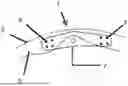
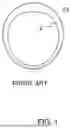
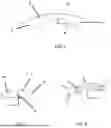
FIG. 1 shows a section of a prior art frame as a continuous structural element for aircraft, and a skin.
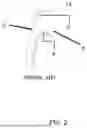
FIG. 2 shows a section of a prior art frame, showing its elements, and a skin.
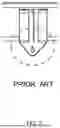
FIG. 3 shows the joining of elements through fittings with lugs in the prior art.
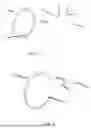
FIG. 4 shows an area with a wavy contour of the continuous structural element for aircraft.
FIG. 5 shows a fitting of the invention.
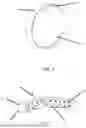
FIG. 6 shows an assembly comprising a continuous structural element for aircraft and the fitting of FIG. 5.
FIG. 7 shows a first step of an installation method of the present invention with an element with lugs on an assembly comprising a continuous structural element for aircraft and a fitting.
FIG. 8 shows a second step of the installation method from FIG. 7.
FIG. 9 shows a final step of the installation method from FIG. 7.
FIG. 10 shows an assembly comprising a continuous structural element for aircraft and a fitting of the invention, with a different riveting pattern.
DETAILED DESCRIPTION OF THE PREFERRED EMBODIMENTS
FIG. 3 shows the joining of two elements through a fitting with a lug in the prior art, in which the lug needs to be outside the inner flange in order to be able to have access during the assembly process.
FIG. 2 is a section of a frame, showing the skin 13, the outer flange 3, the inner flange 4 and the web 5 between the outer flange 3 and the inner flange 4.
The assembly 1 comprising a continuous structural element 2 for aircraft and a fitting 7 of the invention is shown in FIG. 6. In this assembly 1 the continuous structural element 2 for aircraft (see FIG. 4) comprises an outer flange 3, an inner flange 4 and a web 5 between the outer flange 3 and the inner flange 4. The inner flange 4 has at least one portion with a wavy shape 6 such that the height of the web 5 increases or decreases in the portions of the web 5 corresponding to the at least one portion of the inner flange 4 with a wavy shape 6.
The assembly 1 also comprises a fitting 7 (shown in FIG. 5), which comprises at least one through hole 8 and is configured to fit one portion of the web 5 corresponding to one portion of the inner flange 4 with a wavy shape 6, being able to fit into the gap left by the wavy contour in the portion of the web 5 with a lower height.
In an assembled state the fitting 7 is joined to the portion of the web 5 corresponding to one portion of the inner flange 4 with a wavy shape 6 by connecting means, in such a way that the at least one through hole 8 of the fitting 7 is not covered by the web 5.
The fitting 7 can be joined to the portion of the web 5 corresponding to one portion of the inner flange 4 with a wavy shape 6 by several rivets 9.
The fitting 7 can comprise two sections 10.
As for the continuous structural element 2 for aircraft, it can be a frame or a beam.
A method to install an element 11 with lugs 12 on the assembly 1 comprising a continuous structural element 2 for aircraft and a fitting 7 of the invention, the lugs 12 comprising a through hole 14, comprises the following steps:
-
- bringing the fitting 7 into contact with the web 5 of the continuous structural element 2 for aircraft,
- joining the fitting 7 to the continuous structural element 2 for aircraft, and
- joining the element 11 with lugs 12 to the fitting 7.
This last joining can be performed with a lug bolt or by riveting. For the lug bolt option, the lug bolt crosses the through hole 14 of the lug 12 of the element 11 with lugs 12 and the through hole 8 of the fitting 7 (FIG. 9). For the riveting option, the element 11 with lugs 12 is joined to the fitting 7 by means of rivets 9 or other connecting means.
According to another method to install an element 11 with lugs 12, in a first step the element 11 with lugs 12 is introduced into the continuous structural element 2 for aircraft with the lugs 12 under the space allowance given by the wavy shape 6 (FIG. 7). Afterwards the fitting 7 is brought into contact with the web 5 of the continuous structural element 2 for aircraft (FIG. 8), and finally the fitting 7 is joined to the continuous structural element 2 for aircraft and to the element 11 with lugs 12. The fittings 7 can be fastened to the continuous structural element 2 for aircraft in different ways, for instance, by riveting (as seen in FIGS. 6 and 10). FIG. 10 shows a riveting pattern that comprises rivets 9 near the part of the web 5 with less height.
Although the present invention has been fully described in connection with preferred embodiments, it is apparent that modifications can be made within the scope, not considering this as limited by these embodiments, but by the content of the following claims.
While at least one exemplary embodiment of the present invention(s) is disclosed herein, it should be understood that modifications, substitutions and alternatives may be apparent to one of ordinary skill in the art and can be made without departing from the scope of this disclosure. This disclosure is intended to cover any adaptations or variations of the exemplary embodiment(s). In addition, in this disclosure, the terms “comprise” or “comprising” do not exclude other elements or steps, the terms “a” or “one” do not exclude a plural number, and the term “or” means either or both. Furthermore, characteristics or steps which have been described may also be used in combination with other characteristics or steps and in any order unless the disclosure or context suggests otherwise. This disclosure hereby incorporates by reference the complete disclosure of any patent or application from which it claims benefit or priority.
Claims
Claimed is:1. An assembly comprising:
a continuous structural element for aircraft; and,
a fitting,
wherein the continuous structural element comprises
an outer flange,
an inner flange, and
a web between the outer flange and the inner flange,
the inner flange having at least one portion with a wavy shape such that a height of the web increases or decreases at the at least one portion of the inner flange,
wherein the fitting comprises at least one through hole and is configured to fit a portion of the web at the at least one portion of the inner flange with the wavy shape such that in an assembled state the fitting is joined to the portion of the web by connecting means so that the at least one through hole of the fitting is not covered by the web.
2. The assembly according to claim 1, wherein the connecting means comprises a plurality of rivets which form a riveting pattern.
3. The assembly according to claim 2, wherein the riveting pattern comprises rivets proximate a part of the web having a reduced height.
4. The assembly according to claim 1, wherein the fitting comprises two sections.
5. The assembly according to claim 1, wherein the continuous structural element is a frame.
6. The assembly according to claim 1, wherein the continuous structural element is a beam.
Images & Drawings included:
Sources:
- United States Patent and Trademark Office - verify current appl. status at the USPTO↗
Recent applications in this class:
- » 20250313326 2025-10-09
ADDITIVE MANUFACTURED AIRFRAME STRUCTURE HAVING A PLURALITY OF REINFORCEMENT ELEMENTS - » 20250121926 2025-04-17
BEADED COMPOSITE STRUCTURAL WEB - » 20240336345 2024-10-10
AERIAL VEHICLE AIRFRAME DESIGN AND MANUFACTURING - » 20240317382 2024-09-26
Beaded composite structural web - » 20240253760 2024-08-01
BLENDED WING BODY AIRCRAFT AIRFRAME AND METHOD OF MANUFACTURE - » 20240217644 2024-07-04
FRAME ASSEMBLY AND METHOD FOR MANUFACTURING FRAME ASSEMBLY - » 20240217643 2024-07-04
FUSELAGE HAVING AN AIR DISTRIBUTION SYSTEM - » 20240208633 2024-06-27
ADDITIVE MANUFACTURED AIRCRAFT STRUCTURE WITH REINFORCEMENTS AND METHOD OF MAKING THE SAME - » 20240199188 2024-06-20
SUPPORT DEVICE AND SUPPORT METHOD - » 20240124117 2024-04-18
STRUCTURAL FRAMEWORK COMPONENTS