Polymeric Sublayer-Formulation Based On Resins Having High Thermomechanical Properties (PEEK, PES, PAI, PBI, ETC) For Reinforcing The Mechanical Resistance, In Particular To Heat, Of Fluorinated Coatings
US20250351993A1
2025-11-20
18/719,950
2022-12-16
Smart Summary: A new type of coating is designed to improve the strength and heat resistance of materials. It includes a mix of special polymers that help reinforce the coating on metal surfaces. The formula uses a specific balance of different polymers to achieve the best performance. Additionally, it contains some inorganic fillers to enhance its properties further. This coating can also include small amounts of other materials like pigments for color. 🚀 TL;DR
Abstract:
A tie sub layer of a release coating on a metal support includes between 20% and 80% by weight of the total weight of the sub layer of one or more polymers selected from the group consisting of polyaryletherketones (PAEK), polyethyleneimines (PEI), polyimides (PI), polyamide imides (PAI) and polybenzymidazoles (PBI), with a weight ratio PAEK:(PEI+PI+PAI+PBI) of between 1:1 and 15:I; at least 20%, preferably at least 25%, by weight of the total weight of the sublayer of one or more polymers selected from the group consisting of phenylene polysulfides (PPS) and polyethersulfones (PES); less than 40%, preferably less than 30%, by weight of the total weight of the sub layer of reinforcing inorganic fillers, preferably between 5% and 25% by weight; between 0% and 5% by weight of the total weight of the sub layer of one or more fluorocarbon or acrylic resins; and optionally one or more pigments.
Assignee:
- SEB S.A. 463 🇫🇷 Ecully, France
Applicant:
Interested in similar patents?
Get notified when new applications in this technology area are published.
Classification:
A47J36/025 » CPC main
Parts, details or accessories of cooking-vessels; Selection of specific materials, e.g. heavy bottoms with copper inlay or with insulating inlay Vessels with non-stick features, e.g. coatings
B05D3/0254 » CPC further
Pretreatment of surfaces to which liquids or other fluent materials are to be applied; After-treatment of applied coatings, e.g. intermediate treating of an applied coating preparatory to subsequent applications of liquids or other fluent materials by baking After-treatment
B05D5/086 » CPC further
Processes for applying liquids or other fluent materials to surfaces to obtain special surface effects, finishes or structures to obtain an anti-friction or anti-adhesive surface involving the use of fluoropolymers having an anchoring layer
B05D2202/00 » CPC further
Substrate
B05D2202/00 » CPC further
Metallic substrate
B05D2506/15 » CPC further
Halogenated polymers; Fluorinated polymers Polytetrafluoroethylene [PTFE]
A47J36/02 IPC
Parts, details or accessories of cooking-vessels Selection of specific materials, e.g. heavy bottoms with copper inlay or with insulating inlay
B05D3/02 IPC
Pretreatment of surfaces to which liquids or other fluent materials are to be applied; After-treatment of applied coatings, e.g. intermediate treating of an applied coating preparatory to subsequent applications of liquids or other fluent materials by baking
B05D5/08 IPC
Processes for applying liquids or other fluent materials to surfaces to obtain special surface effects, finishes or structures to obtain an anti-friction or anti-adhesive surface
Description
The invention applies in the field of non-stick coatings for cooking surfaces of culinary articles and electrical cooking appliances.
Culinary items coated in PTFE (polytetrafluoroethylene) are popular on the market because they allow cooking that requires little or no added fat and are easy of maintenance. However, an inherent weakness of these coatings is their low mechanical resistance, particularly when hot.
To overcome this, numerous technical solutions have been proposed which consist of reinforcing the coating with hard fillers or by the interposition of hard sublayers of inorganic or organic type.
In the case of primers reinforced with hard organic or inorganic fillers, significant improvements in abrasion resistance are actually observed but impacts on the metal when cooking foods such as pork ribs or when using metal spatulas are also observed.
In the case of hard inorganic bases such as, for example, those made from enamel or else metal oxides, the resistance to abrasion is further improved and the problem of impacts is limited without, however, being eliminated.
Organic polymer sublayers are also known. These sublayers actually allow to considerably reduce the appearance of the scratch or even eliminate it. This strategy is therefore very interesting. The polymers used are very often thermoplastics with high thermal resistance and a high melting point such as for example polyaryletherketone and in particular oxy-1,4-phenylenephenylene-oxy-1,4-phenylene-carbonyl-1,4-phenylene or PEEK or else phenylene sulfides.
The PEEK polymer is interesting in culinary articles since it has a high melting point (343° C.) and excellent thermal stability under conditions of use at 260° C.
The following coating techniques can be carried out to obtain a sublayer from this type of polymer: spray coating, roller coating, curtain coating, pad printing, screen printing, thermal projection, electrostatic spraying, inkjet.
In application WO 2000/54895, the use of a sublayer composed only of PEEK (with particle sizes comprised between 5 μm and 100 μm, and with a d50 preferably of 20 μm) deposited on a metal substrate, with a coverage comprised between 60% to 95% of the surface of the article then covered with a mono- or multi-layer non-stick coating, based on fluoro resins and fluoro copolymers. The PEEK sublayer is deposited either by pad printing or screen printing, or by spray in the form of a dispersion.
The thickness of this PEEK layer is comprised between 5 μm and 100 μm.
The disadvantage of the method as described is that it requires double baking of the fluorinated coating based on PEEK. The first cooking requires a temperature higher than the melting point of the polymer making up the sublayer (that is to say between 380 and 400° C. for PEEK) in order to allow its adhesion to the metal substrate. The article must then be cooled significantly, which is very costly in terms of time and energy, but essential in order to be able to apply the successive fluorinated layers which will be sintered during a second baking at high temperature (>420° C.).
In application WO 2010/130954, a hard sublayer forming a continuous network, deposited discontinuously on the interior bottom of the culinary article, is described. The material making up this layer is a ceramic (alumina-titanium mixture) or a metal or a polymer (PAI, PEI, PI, PES, PPS, PEK or PEEK). The surface of the culinary article covered by this material is comprised between 30% to 80% and the dimension between the drops deposited is comprised between 2 μm to 50 μm. The surface of this hard layer has a roughness with a Ra of 2 μm to 12 μm, preferably 4 μm to 8 μm.
This material is sprayed by a flame spray method in powder form with a particle size preferably comprised between 20 μm and 45 μm.
It is necessary to strongly preheat the metal substrate before deposition of the powders by spray flame above 180° C.
The fluorinated layers are then deposited by spray coating once the deposition has cooled to room temperature. A single sintering at 430° C. is then carried out.
In patent FR 2871038, the use of a PEEK sublayer is mentioned, with a PAI resin and fluorinated resins deposited on a metal substrate then covered with a non-stick coating in one or more layers and without the presence of PEEK in these upper layers.
The sublayer is composed of a mixture of PAI, PEEK and PTFE such that the PTFE is comprised between 9 to 15%/w and the PAI resin is comprised between 4 to 5%/w.
In all cases the level of PEEK in dry matter in the final fluorinated film is of the order of 0.12% to 1.1%/w, preferably 0.12% to 0.9%/w.
PEEK powder has a particle size D50 of 5 to 35 μm.
In all cases, the first coating layer contains fluoride resins.
This liquid coating is deposited by spray. Upper layers of fluorinated coatings also containing one or more primers are then deposited by spray. The sintering of all these layers is carried out in a single baking of 400 to 420° C.
The disadvantage of this application method is that the level of PEEK resin in the first layer is very low and does not achieve sufficient mechanical performance to have an anti-scratch coating.
In application WO 00/054896, the use of a PEEK sublayer without fluorinated resin consisting of at least 50% by weight of PEEK powder is mentioned, so that the surface covered in PEEK is comprised between 60% to 95% of the surface of the article.
This primer which contains at least 50% PEEK, may also contain a mixture with other pure or mixed thermostable resins such as polyphenylene sulphide (PPS), polyetherimide (PEI), polyimide (PI), polyetherketone (PEK), polyethersulfone (PES), polyamideimide (PAI).
It can also contain fillers selected from metal oxides: silica, mica, or lamellar fillers. It does not include any fluoride resin.
The first cooking is carried out at a high temperature of at least 260° C., preferably greater than or equal to 340° C. to melt the PEEK.
PEEK is in powder form with a particle size comprised between 4 μm and 80 μm, with a d50 preferably of 20 μm. The thickness of this sublayer is comprised between 5 μm and 100 μm.
This liquid coating is deposited by spray. Upper layers of fluorinated coatings or even primers with fluorinated topcoats are then deposited by spray. The sintering of all these layers is carried out in two bakings, a second baking to sinter the fluorinated coating, between 400° C. to 420° C.
In patent U.S. Pat. No. 6,596,380 B1, mention is made of an anti-scratch fluorinated coating the first layer of which contains at least 50% by weight of PEEK (preferably between 60% and 95%), mixed with a thermostable polymer resin such as PPS, PEI, PI, PAI and mixtures thereof and fillers such as metal oxides, silica, micas, and in the absence of any fluorinated resin. This first layer has a thickness comprised between 5 and 100 μm.
PEEK is a powder with a particle size of 4 μm to 80 μm with a d50 of around 20 μm. However, the method for obtaining such a coating necessarily involves double baking/sintering between 400 and 420° C.
Definitions
The expression “culinary article”, must be understood, within the meaning of the present invention, as an object intended for cooking. Culinary articles within the meaning of the present invention comprise objects intended to be heated to cook or reheat food carried by the cooking element or contained in the cooking element and electrical cooking appliances.
The expression “object intended to be heated to cook or reheat the food carried by the cooking element or contained in the cooking element”, must be understood, within the meaning of the present invention, as an object which will be heated by an external heating system, such as a cooking hearth, and which is capable of transmitting the heat energy provided by this external heating system to a material or food in contact with said object. Such an object may in particular be a frying pan, a pot, a sauté pan, a pan or pot for fondue or raclette, a stewpot, a wok, a sauté pan, a crepe maker, a cooking pot, a casserole dish, a culinary mold.
The expression “electric cooking appliance”, must be understood, within the meaning of the present invention, as an object intended for cooking, configured to produce heat.
The expression “object configured to produce heat”, within the meaning of the present invention, must be understood as a heating object having its own heating system.
Such an object may in particular be a grill, a plancha, a cooker or bread machine tank, an electric crepe maker, an electric raclette appliance, an electric fondue appliance, an electric grill, an electric plancha, an electric cooker, a bread machine.
SUMMARY OF THE INVENTION
This invention describes the manufacture of a culinary article resistant to cold and hot scratches while being a non-stick article.
To overcome all these problems, the inventors have identified an optimal tie sublayer.
The formulation of this sublayer also allows a coating with a limited number of layers and a single sintering method under standard conditions, which makes the process industrializable without additional investment.
Upper fluorinated layers are then applied by spray, obtaining excellent release of the coating. The presence of reinforcing fillers (alumina, silicon carbide, etc.) is also possible in the fluorinated layers. The coating obtained is produced with a single sintering condition at 420-430° C. Excellent anti-scratch performance is obtained while maintaining the cost of the coating at industrially acceptable prices.
This type of coating allows to significantly increase the scratch resistance of the coating both at room temperature and at high temperature (180° C.) while minimizing method costs and maintaining excellent release and adhesion properties.
A first object of the invention relates to a tie sublayer of a non-stick coating on a metal support, characterized in that it comprises:
-
- a) between 20% and 80% by weight of the total weight of the sublayer of one or more polymers selected from the group consisting of polyaryletherketones (PAEK), polyethyleneimines (PEI), polyimides (PI), polyamide imides (PAI) and polybenzymidazoles (PBI), with a weight ratio PAEK:(PEI+PI+PAI+PBI) of between 1:1 and 15:1,
- b) at least 20%, preferably at least 25%, by weight of the total weight of the sublayer of one or more polymers selected from the group consisting of polyphenylene sulfides (PPS) and polyethersulfones (PES),
- c) less than 40%, preferably less than 30%, by weight of the total weight of the sublayer of reinforcing inorganic fillers, preferably between 5 and 25% by weight,
- d) between 0 and 5% by weight of the total weight of the sublayer of one or more fluorocarbon or acrylic resins,
- e) optionally one or more pigments.
A second object of the invention relates to a culinary article (1) comprising a metal support (2) having an internal face (21) intended for cooking food covered with a tie sublayer (3) according to the invention then one or more layers of a non-stick coating.
A third object of the invention relates to a method for manufacturing a culinary article (1) comprising a metal support (2) having an internal face (21) intended for cooking food covered with a tie sublayer (3) then one or more layers of a non-stick coating characterized by the following steps:
-
- i. A step of providing a metal support (2), comprising two opposite faces,
- ii. A step of shaping said support (2) to give it the shape of a cap (3), which comprises a bottom (211) and a side wall (212) rising from the bottom (211), and thus define an internal concave face (21) adapted to receive food and a convex external face (22), said step ii) being carried out either before step iv) of producing the tie sublayer (3), or after step v) of producing the non-stick coating,
- iii. Optionally, a step of treating the internal face (21) of the support (2), to obtain a treated internal face favoring the adhesion of a sublayer (3) on the support (2)
- iv. Depositing, on the internal face (21) of the support (2), one or more continuous layers of the tie sublayer (3) comprising
- a) between 20% and 80% by weight of the total weight of the sublayer of one or more polymers selected from the group consisting of polyaryletherketones (PAEK), polyethyleneimines (PEI), polyimides (PI), polyamide imides (PAI) and polybenzymidazoles (PBI), with a weight ratio PAEK:(PEI+PI+PAI+PBI) of between 1:1 and 15:1,
- b) at least 20%, preferably at least 25%, by weight of the total weight of the sublayer of one or more polymers selected from the group consisting of polyphenylene sulfides (PPS) and polyethersulfones (PES),
- c) less than 40%, preferably less than 30%, by weight of the total weight of the sublayer of reinforcing inorganic fillers, preferably between 5 and 25% by weight,
- d) optionally one or more fluorocarbon or acrylic resins,
- e) optionally one or more pigments,
- v. Depositing one or more layers of a non-stick coating based on fluorocarbon resins, preferably two layers, on said tie sublayer (3) deposited in step (iv),
characterized in that it comprises in overall only a single sintering step (vi) at T° C.>400° C., after the deposition of the various layers.
DETAILED DESCRIPTION
The object of the present invention is therefore a tie sublayer, a non-stick coating, a culinary article and a method for manufacturing such an article which overcomes the disadvantages of the prior art.
A first object of the invention relates to a tie sublayer of a non-stick coating on a metal support, characterized in that it comprises:
-
- a) between 20% and 80% by weight of the total weight of the sublayer of one or more polymers selected from the group consisting of polyaryletherketones (PAEK), polyethyleneimines (PEI), polyimides (PI), polyamide imides (PAI) and polybenzymidazoles (PBI), with a weight ratio PAEK: (PEI+PI+PAI+PBI) of between 1:1 and 15:1,
- b) at least 20%, preferably at least 25%, by weight of the total weight of the sublayer of one or more polymers selected from the group consisting of polyphenylene sulfides (PPS) and polyethersulfones (PES),
- c) less than 40%, preferably less than 30%, by weight of the total weight of the sublayer of reinforcing inorganic fillers, preferably between 5 and 25% by weight,
- d) between 0 and 5%, preferably between 0 to 4%, particularly preferably 0 to 3%, by weight of the total weight of the sublayer of one or more fluorocarbon or acrylic resins,
- e) possibly one or more pigments.
Advantageously, when the polymers a) represent 20 to 40% of the sublayer according to the invention, the weight ratio PAEK: (PEI+PI+PAI+PBI) is comprised between 6:1 and 12:1.
Advantageously, when the polymers a) represent 40 to 80% of the sublayer according to the invention, the PAEK: (PEI+PI+PAI+PBI) weight ratio is comprised between 12:1 and 15:1.
Advantageously, the polymers b) represent 25 to 40% by weight of the total weight of the sublayer, preferably 25 to 35%.
The weight ratio between polymers a) and polymers b) is advantageously between 2:5 and 2:3, preferably between 1:2 and 1:3.
In a particular embodiment, the tie sublayer of a non-stick coating on a metal support according to the invention does not comprise fluorocarbon or acrylic resins, in particular not fluorocarbon resin(s), advantageously not PTFE.
Advantageously, the pigment(s) e) represent less than 30%, preferably less than 20%, by weight of the total weight of the sublayer.
Advantageously, the polyaryletherketone(s) (PAEK) is(are) selected from the group consisting of: polyetherketones (PEK), polyetheretherketone (PEEK), polyetherketoneketones (PEKK), polyetheretherketoneketones (PEEKK) and polyetherketoneetherketoneketones (PEKEKK), particularly preferably is(are) PEEK.
Advantageously, the polymer(s) (a) is(are) selected from the group consisting of polyaryl ether ketones (PAEK) and polyamide imides (PAI) and mixtures thereof. Particularly preferably, part (a) is a mixture of PAEK and PAI polymers.
Advantageously, the polymer(s) (a) is(are) selected from the group consisting of polyetheretherketones (PEEK) and polyamide imides (PAI) and mixtures thereof. Particularly preferably, part (a) is a mixture of PEEK and PAI polymers.
Advantageously, the polymer(s) (b) is(are) polyethersulfone(s) (PES).
In a preferred embodiment of the invention, parts (a) and (b) are a mixture consisting of PEEK, PAI and PES polymers.
The reinforcing inorganic filler(s) is(are) preferably selected from the group consisting of metal oxides, carbides, nitrides, preferably alumina, silicon carbides and fumed silica.
The fluorocarbon resin(s) is/are advantageously selected from the group consisting of: polytetrafluoroethylene (PTFE), the copolymer of tetrafluoroethylene and perfluoro-propylvinyl ether (PFA), the copolymer of tetrafluoroethylene and hexafluoropropylene (FEP) and mixtures thereof, particularly preferably comprise PTFE.
The acrylic resin(s) is/are advantageously selected from the group consisting of: polymers resulting from an emulsion polymerization of different monomers with other acrylic-based monomers.
The organic or inorganic pigment(s) is/are selected from the group consisting of pigment powders known to the person skilled in the art in the field, for example titanium dioxide, carbon black, graphite, certain thermochromic pigments such as bismuth oxide, vanadium oxide or organic perylene pigments.
The tie sublayer of a non-stick coating on a metal support according to the invention may further comprise one or more solvents, which are preferably polar aprotic, preferably unlabeled, for example N-formylmorpholine (NFM), N-Methyl Imidazole (NMI), N-ButylPyrrolidone (NBP), dimethyl sulfoxide (DMSO), or alcoholic solvents, for example Propylene Glycol (PPG), Diethylene glycol.
The tie sublayer of a non-stick coating on a metal support according to the invention may further comprise one or more surfactants.
The tie sublayer of a non-stick coating on a metal support according to the invention may further comprise one or more anti-foaming agents.
In a preferred embodiment of the invention, the tie sublayer according to the invention is a mixture consisting of PEEK, PAI, PES, PTFE and optionally fillers, acrylic resins and pigments.
A second object of the invention relates to a coating of the metal support of a culinary article comprising, from the metal support, the tie sublayer according to the invention covered with one or more layers of a non-stick coating.
Said non-stick coating is advantageously based on fluorocarbon resins.
Said non-stick coating preferably comprises two layers.
A third object of the invention relates to a culinary article (1) comprising a metal support (2) having an internal face (21) intended for cooking food covered with a tie sublayer (3) according to the invention then one or more layers of a non-stick coating.
Advantageously, said metal support (2) is a mono-layer support made of aluminum or aluminum alloy, cast aluminum, stainless steel, cast steel or copper, or a multi-layer support comprising from the outside towards the inside the following layers ferritic stainless steel/aluminum/austenitic stainless steel or stainless steel/aluminum/copper/aluminum/austenitic stainless steel, or a foundry aluminum cap, aluminum or aluminum alloys lined with a stainless steel exterior base.
Said metal support (2) (disk or shaped article) on which the tie sublayer according to the invention is applied may have a roughness obtained by sandblasting, shot blasting, stamping, brushing or chemical attack.
The thickness of the tie sublayer (3) is advantageously comprised between 10 and 100 μm, preferably between 20 μm and 80 μm, preferably between 30 and 60 μm.
The culinary article (1) according to the invention is preferably a frying pan or a pot.
A third object of the invention relates to a method for manufacturing a culinary article (1) comprising a metal support (2) having an internal face (21) intended for cooking food covered with a tie sublayer (3) then one or more layers of a non-stick coating characterized by the following steps:
-
- i. A step of providing a metal support (2), comprising two opposite faces,
- ii. A step of shaping said support (2) to give it the shape of a cap (3), which comprises a bottom (211) and a side wall (212) rising from the bottom (211), and thus define an internal concave face (21) adapted to receive food and a convex external face (22), said step ii) being carried out either before step iv) of producing the tie sublayer (3), or after step v) of producing the non-stick coating,
- iii. Optionally, a step of treating the internal face (21) of the support (2), to obtain a treated internal face favoring the adhesion of a sublayer (3) on the support (2)
- iv. Depositing, on the internal face (21) of the support (2), one or more continuous layers of the tie sublayer (3) comprising
- a) between 20% and 80% by weight of the total weight of the sublayer of one or more polymers selected from the group consisting of polyaryletherketones (PAEK), polyethyleneimines (PEI), polyimides (PI), polyamide imides (PAI) and polybenzymidazoles (PBI), with a weight ratio PAEK:(PEI+PI+PAI+PBI) of between 1:1 and 15:1,
- b) at least 20%, preferably at least 25%, by weight of the total weight of the sublayer of one or more polymers selected from the group consisting of polyphenylene sulfides (PPS) and polyethersulfones (PES),
- c) less than 40%, preferably less than 30%, by weight of the total weight of the sublayer of reinforcing inorganic fillers, preferably between 5 and 25% by weight,
- d) optionally one or more fluorocarbon or acrylic resins,
- e) optionally one or more pigments,
- v. Depositing one or more layers of a non-stick coating based on fluorocarbon resins, preferably two layers, on said tie sublayer (3) deposited in step (iv),
characterized in that it comprises in overall, only a single sintering step (vi) at T° C.>400° C., after the deposition of the various layers.
The method for manufacturing a culinary article (1) comprising a metal support (2) having an internal face (21) intended for cooking food covered with a tie sublayer (3) then with one or multiple layers of a non-stick coating does not comprise two sintering steps or two cooking steps. The manufacturing method according to the invention does not comprise three sintering steps or three cooking steps. The manufacturing method according to the invention comprises a single step of cooking by sintering.
In a preferred embodiment, the tie sublayer (3) deposited in step iv comprises from 0 to 5%, preferably from 0 to 4%, particularly preferably from 0 to 3%, of one or more fluorocarbon or acrylic resin(s).
In a particular embodiment, the tie sublayer (3) deposited in step iv does not comprise any fluorocarbon resin(s), in particular no PTFE.
Advantageously, the metal support (2) of step i. comes in disk shape.
Advantageously, the tie sublayer (3) is deposited by spray, by coating, by screen printing or by roller.
Advantageously, the sintering temperature is comprised between 400° C. and 440° C.
FIGURES
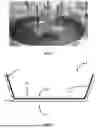
FIG. 1: Photograph of the HOT BLADE test 3 rotating metal tips on the coating of the interior side of the culinary article which is placed on a heat source.
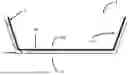
FIG. 2: Diagram of a culinary article according to the invention
EXAMPLES
1) Performance Tests Carried Out on the Coatings
Mechanical Durability Evaluation Tests-Scratch Resistance
The excellent mechanical performance of this coating is evaluated using the hot blade test.
This test method evaluates the scratch resistance of a coating using a mobile system composed of 3 hard tips (ballpoint pens). This test also known as “tiger paw” induces a rotation around its axis and describes an epicyclic movement on the coated surface. The test is carried out under heat. The degradation of the coating (appearance of spots on the metal, scratches, delamination of the coating) is evaluated visually after different time cycles.
Release tests with carbonized milk are carried out after each of the previous cycles.
This test ultimately allows three output data to be evaluated:
-
- Delamination of the fluorinated coating on a metallic surface or fluorinated inter-layers after a test time (duration).
- The appearance of the scratch on the metal: Scratch on the metal after a test time (duration).
- Loss of release (AA=0) at a test time (duration).
Evaluation of the Corrosion Resistance of a Layer of Semi-Finished or Primer on a Shot-Blasted Aluminum Substrate
Regarding point 3, above, there is a test.
The corrosion resistance of a non-stick coating on a sandblasted aluminum substrate is evaluated, by evaluating its resistance to the diffusion of salt towards the corroding metal substrate.
For this purpose, we proceed as follows:
-
- The substrate coated with the fluorinated coating is immersed for 20 hours in an aqueous saline solution brought to a boil. This saline solution contains 10% by weight of sodium chloride. The protocol for this test is that defined in the AFNOR NF D21-511 $ 3.3.5 standard.
- At the end of each immersion, a visual inspection of the final appearance of the coating is carried out, which consists of noting the presence or absence of traces of corrosion (by visual observation with the naked eye or with a binocular magnifying glass). In practice, this involves detecting the possible presence of traces such as blisters with extended areas, white traces under the coating.
- This observation is followed by a grid test according to the ISO 2409 standard.
Evaluation of the Adhesion of a Layer of Semi-Finished or Primer on a Smooth Aluminum Substrate
There is a standardized grid test according to the ISO 2409 standard, followed by immersion of the coated article for 18 hours (consisting of an alternation of 3 cycles of 3 hours in boiling water and 3 cycles of 3 hours in oil at 200° C.). Then, it is observed whether or not the non-stick coating shows any detachment.
The rating is as follows: no square must be detached to obtain a rating of 100 (excellent adhesion); in the event of detachment, the value recorded is equal to the rating of 100 reduced by the number of detached squares
2) Exemplary Embodiments
Supports
-
- Sandblasted or shot-blasted aluminum supports then passed through a suitable surface treatment to eliminate organic contaminants.
Raw Materials
-
- Heterocyclic polymer resins:
- PolyAmide-Imide (PAI) resin with 29% dry extract in N-butylpyrrolidone (NBP),
- Resin in powder form: PolyAcide amic at 90% dry extract in N-methylpyrrolidone (NMP/Water), reference from SOLVAY, grade TORLON AI10LS,
- Resin in solvent: 9% polybenzimidazole (PBI) in dimethylacetamide (DMAc).
- Other aromatic polymer resins:
- PolyEtherEtherKetone (PEEK) powder resin, Vicote 704 from VICTREX, polymer powder with a d50 of 10 μm,
- PEKK powder resin, KEPSTAN 7002 PT from Arkema with a d50 of 20 μm,
- PEKK powder resin, KEPSTAN 6002 PT from Arkema with a d50 of 50 μm,
- PolyEtherSulfone (PES) powder resin, micronized grade from SOLVAY, polymer powder with a d50 of 40 μm.
- Fluorinated polymer resins (to be predispersed at 20% in PPG with UltraTurrax, 20 000 rpm):
- PTFE powder from 3M/DYNEON: TF 9207 Z,
- FEP powder from 3M/DYNEON: 6233PZ.
- Unlabeled polar aprotic solvents (that is to say non-toxic within the meaning of the present invention):
- N-formylmorpholine (NFM),
- N-Methyl Imidazole (NMI),
- N-ButylPyrrolidone (NBP).
- Alcohol solvent
- Propylene Glycol: PPG,
- Diethylene glycol: butyl diglycol.
- Surfactant and anti-foam agent
- Tego foamex K7 from Evonik,
- Genapol X089 from Clariant.
- Reinforcing fillers:
- Alumina, grade CAHP-F240 (particle size in d50: 50 μm),
- Silicon carbide, grades SIKA 400, SIKA 320,
- Pyrogenic silica,
- MICA MILL200/325.
- Pigment:
- Black 100,
- Blue CM13,
- Perylene brick red (wear indicator),
- Titanium,
- Talc,
- Graphite.
- Acrylic resin:
- Modarez PW336: 30% acrylic polymer solution in aqueous phase,
- Rohagit SD 15: 30% acrylic polymer solution in aqueous phase.
- Heterocyclic polymer resins:
Example 1
On a shaped aluminum disk (30 cm in diameter), previously degreased and sanded to obtain a roughness of 4 to 7 μm (Ra), a continuous layer SCD1 (SCD=tie sublayer) of the example 1 as described below.
Preparation of an aqueous semi-finished composition SF1 based on a heterocyclic polymer with an amine and unlabeled polar aprotic solvent.
An aqueous semi-finished composition SF1 is produced including the following compounds, their respective amounts being indicated below:
| PAI resin with 29% | 327.9 | g | |
| dry extract in NBP | |||
| NBP | 117.7 | g | |
| Triethylamine | 32.8 | g | |
| Demineralized Water | 521.6 | g | |
| TOTAL | 1000.0 | g | |
The implementation of the PAI includes a step of transition to the aqueous phase via obtaining a polyamide-amic acid salt. This step is carried out in a ball mill of the brand Discontimill®, at room temperature in the presence of amine.
The properties of the aqueous composition SF1 thus obtained are as follows:
-
- Theoretical dry extract: 9.5%
- Dry extract measured in the composition: 9.3%
Principle of Operation of the Jar Mill (Mechanical Milling)
Principle
Ball milling consists of loading a jar with the sample to be milled and so-called milling balls and rotating the jar around its axis at a certain speed. The rotation of the jar is generally carried out using a roller machine. The sample can be milled in dry form or dispersed in a suitable solvent (for example in water, in alcohol or in a solvent). The dispersion may also contain certain adjuvants (such as a dispersant or anti-foam agent).
Preparation of a semi-finished composition SF2 carried out in a ball mill for 20 minutes to obtain the milled paste below, referenced SF2.
The alcohol (PPG) and PTFE powder are pre-dispersed at very high speed with an ultra-turax system before incorporation into a mixture such as:
| Propylene glycol | 22.50 | g | |
| PTFE Powder | 20.70 | g | |
| NFM | 22.50 | g | |
| Genapol X089 | 4.50 | g | |
| Tego foamex K7 | 0.80 | g | |
| PEEK Vicote 704 | 13.10 | g | |
| PES | 15.90 | g | |
| TOTAL | 100 | g | |
Composition of the SCD1 Sublayer of Example 1
The final step is carried out in a Rayneri type disperser to obtain the tie sublayer below:
| SF1 | 13.0 | g | |
| SF2 | 58.9 | g | |
| water | 17.9 | g | |
| SIKA400 fillers | 10.2 | g | |
| TOTAL | 100 | g | |
The properties of the sublayer SCD1 of Example 1 thus obtained are as follows:
-
- The final mass ratio of the polymer resin mixture is as follows:
- PPEEK/PAI/PES/Filler/PTFE: 19/3/23/25/30:
- Theoretical dry extract: 40.7%
- Viscosity measured in AFNOR CA6 Cup: 50 sec
The thickness of this layer SCD1 of Example 1 is comprised between 50 μm to 100 μm, preferably 40 μm to 60 μm.
The substrate and the continuous sublayer as described above are coated with a multi-layer non-stick coating composed of a Mid-coat (6-8 μm) which is dried for 4 minutes at 100° C. and a finish (14-18 μm). The whole being finally heated at 430° C. for 11 minutes, that is to say that the process only comprises a single sintering step at T° C.>400° C., after the deposition of the various layers. The compositions are as follows:
Composition of the Mid-Coat (MD)
| PTFE dispersion (60% dry) | 375.2 | g | |
| PFA dispersion (50% dry) | 103.7 | g | |
| Lampblack (25% dry) | 47.7 | g | |
| Colloidal silica (30% dry) | 33.4 | g | |
| SF1 | 189.8 | g | |
| Spreading agents (surfactants) | 97.3 | g | |
| Water | 134.3 | g | |
| Propylene glycol | 18.6 | g | |
| Total | 1000.0 | g | |
Finishing Composition (F)
| PTFE dispersion (60% dry) | 80.42 | g | |
| PFA dispersion (50% dry) | 0.50 | g | |
| Lampblack (25% dry) | 0.2 | g | |
| Spreading agents (surfactants) | 2.23 | g | |
| Water | 8.02 | g | |
| Xylene | 6.50 | g | |
| Acrylic Resin Modarez PW336 | 0.60 | g | |
| Triethanolamine | 2.22 | g | |
| Metallic decor sequins | 0.20 | g | |
| Propylene glycol | 1.11 | g | |
| Total | 100.00 | g | |
Example 2
On a shaped aluminum disk (30 cm in diameter), previously degreased and sanded to obtain a roughness of 4 to 7 μm (Ra), a continuous layer SCD2 of example 2 is deposited as described below.
Principle of Operation of the Jar Mill (Mechanical Milling)
Prinicple
Ball milling consists of loading a jar with the sample to be milled and so-called milling balls and rotating the jar around its axis at a certain speed. The rotation of the jar is generally carried out using a roller machine. The sample can be milled in dry form or dispersed in a suitable solvent (for example in water, in alcohol or in a solvent). The dispersion may also contain certain adjuvants (such as a dispersant or anti-foam agent).
Preparation of a semi-finished composition SF3 carried out in a ball mill for 20 minutes to obtain the milled paste below, referenced SF3.
| Propylene glycol | 23.6 | g | |
| NFM | 23.6 | g | |
| Genapol X089 | 4.7 | g | |
| Tego foamex K7 | 1.9 | g | |
| Black Pigment 100 | 14.9 | g | |
| PEEK Vicote 704 | 14.2 | g | |
| PES | 17.1 | g | |
| TOTAL | 100 | g | |
Composition of the Sublayer SCD2 of Example 2
The final step is carried out in a Rayneri type disperser to obtain the tie sublayer below:
| SF1 | 10.8 | g | |
| SF3 | 55.4 | g | |
| water | 19.3 | g | |
| SIKA400 fillers | 12.4 | g | |
| Acrylic resin | 2.1 | g | |
| Rohagit SD 15 | |||
| TOTAL | 100 | g | |
The properties of the SCD2 sublayer of Example 2 thus obtained are as follows:
-
- The final mass ratio of the polymer resin mixture is as follows:
- PEEK/PAI/PES/Filler/Acrylic resin/Pigment: 19/3/23/30/5/20
- Theoretical dry extract: 41.1%
- Viscosity measured in AFNOR CA6 Cup: 45 sec
The thickness of this layer SCD2 of Example 2 is comprised between 50 μm to 100 μm, preferably 40 μm to 60 μm.
The substrate and the continuous sublayer as described above are coated with a multi-layer non-stick coating composed of a Mid-coat (6-8 μm) which is dried for 4 minutes at 100° C. and a finish (14-18 μm). The whole being finally heated at 430° C. for 11 minutes, that is to say that the method only includes a single sintering step at T° C.>400° C., after the deposition of the various layers.
The formulas for the mid-coat and the finish are given above.
Example 3
On a shaped aluminum disk (30 cm in diameter), previously degreased and sanded to obtain a roughness of 4 to 7 μm (Ra), a continuous layer SCD3 of Example 3 is deposited as described below.
Principle of Operation of the Jar Mill (Mechanical Milling)
Prinicple
Ball milling consists of loading a jar with the sample to be milled and so-called milling balls and rotating the jar around its axis at a certain speed. The rotation of the jar is generally carried out using a roller machine. The sample can be milled in dry form or dispersed in a suitable solvent (for example in water, in alcohol or in a solvent). The dispersion may also contain certain adjuvants (such as a dispersant or anti-foam agent).
Preparation of a semi-finished composition SF4 carried out in a ball mill for 20 minutes to obtain the milled paste below, referenced SF4.
The alcohol (PPG) and PTFE powder are pre-dispersed at very high speed with an ultra-turax system before incorporation into a mixture such as:
| Propylene glycol | 26.0 | g | |
| NFM | 17.3 | g | |
| Genapol X089 | 5.2 | g | |
| Tego foamex K7 | 1.4 | g | |
| Black Pigment 100 | 6.1 | g | |
| PTFE | 18.3 | g | |
| PEEK Vicote 704 | 10.4 | g | |
| PES | 15.3 | g | |
| TOTAL | 100 | g | |
Composition of the Sublayer SCD3 of Example 3
The final step is carried out in a Rayneri type disperser to obtain the tie sublayer below:
| SF1 | 11.7 | g | |
| SF4 | 67.4 | g | |
| water | 14.7 | g | |
| SIKA400 fillers | 6.2 | g | |
| TOTAL | 100 | g | |
The properties of the sublayer SCD3 of Example 3 thus obtained are as follows:
-
- The final mass ratio of the polymer resin mixture is as follows:
- PEEK/PAI/PES/Filler/PTFE/Pigment: 17/3/25/15/30/10
- Theoretical dry extract: 41.1%
- Viscosity measured in AFNOR CA6 Cup: 2.10 min
The thickness of this layer SCD3 of Example 3 is comprised between 50 μm to 100 μm, preferably 40 μm to 60 μm.
The substrate and the continuous sublayer as described above are coated with a multi-layer non-stick coating composed of a Mid-coat (6-8 μm) which is dried for 4 minutes at 100° C. and a finish (14-18 μm). The whole being finally heated at 430° C. for 11 minutes, that is to say that the method only comprises a single sintering step at T° C.>400° C., after the deposition of the various layers.
The formulas for the mid-coat and the finish are given above.
Example 4
On a shaped aluminum disk (30 cm in diameter), previously degreased and sanded to obtain a roughness of 4 to 7 μm (Ra), a continuous layer SCD4 of Example 4 is deposited as described below.
Principle of Operation of the Jar Mill (Mechanical Milling)
Principle
Ball milling consists of loading a jar with the sample to be milled and so-called milling balls and rotating the jar around its axis at a certain speed. The rotation of the jar is generally carried out using a roller machine. The sample can be milled in dry form or dispersed in a suitable solvent (for example in water, in alcohol or in a solvent). The dispersion may also contain certain adjuvants (such as a dispersant or anti-foam agent).
Preparation of a semi-finished composition SF5 carried out in a ball mill for 20 minutes to obtain the milled paste below, referenced SF5.
| Propylene glycol | 21.4 | g | |
| NFM | 21.4 | g | |
| Genapol X089 | 8.0 | g | |
| Tego foamex K7 | 1.5 | g | |
| Black Pigment 100 | 15.9 | g | |
| PEEK Vicote 704 | 12.9 | g | |
| PES | 18.9 | g | |
| TOTAL | 100 | g | |
Composition of the Sublayer SCD4 of Example 4
The final step is carried out in a Rayneri type disperser to obtain the tie sublayer below:
| SF1 | 11.7 | g | |
| SF5 | 56.3 | g | |
| water | 17.1 | g | |
| SIKA400 fillers | 12.8 | g | |
| Acrylic resin Rohagit SD 15 | 2.1 | g | |
| TOTAL | 100 | g | |
The properties of the sublayer SCD4 of Example 4 thus obtained are as follows:
-
- The final mass ratio of the polymer resin mixture is as follows:
- PEEK/PAI/PES/Filler/Acrylic resin/Pigment: 17/3/25/30/5/20
- Theoretical dry extract: 42.4%
- Viscosity measured in AFNOR CA6 Cup: 55 sec
The thickness of this layer SCD4 of Example 4 is comprised between 50 μm to 100 μm, preferably 40 μm to 60 μm.
The substrate and the continuous sublayer as described above are coated with a multi-layer non-stick coating composed of a Mid-coat (6-8 μm) which is dried for 4 minutes at 100° C. and a finish (14-18 μm). The whole being finally heated at 430° C. for 11 minutes, that is to say that the method only comprises a single sintering step at T° C.>400° C., after the deposition of the various layers.
The formulas for the mid-coat and the finish are given above.
Example 5
On a shaped aluminum disk (30 cm in diameter), previously degreased and sanded to obtain a roughness of 4 to 7 μm (Ra), a continuous layer SCD5 of Example 5 is deposited as described below.
Principle of Operation of the Jar Mill (Mechanical Milling)
Principle
Ball milling consists of loading a jar with the sample to be milled and so-called milling balls and rotating the jar around its axis at a certain speed. The rotation of the jar is generally carried out using a roller machine. The sample can be milled in dry form or dispersed in a suitable solvent (for example in water, in alcohol or in a solvent). The dispersion may also contain certain adjuvants (such as a dispersant or anti-foam agent).
Preparation of a semi-finished composition SF6 carried out in a ball mill for 20 minutes to obtain the milled paste below, referenced SF6.
The alcohol (PPG) and the PTFE and FEP powders are pre-dispersed at very high speed with an ultra-turax system before incorporation into a mixture such as:
| Propylene glycol | 23.6 | g | |
| PTFE powder | 15.6 | g | |
| FEP powder | 3.1 | g | |
| NFM | 19.9 | g | |
| Genapol X089 | 9.9 | g | |
| Tego foamex K7 | 1.6 | g | |
| PEEK Vicote 704 | 11.9 | g | |
| PES | 14.4 | g | |
| TOTAL | 100 | g | |
Composition of the Sublayer SCD5 of Example 5
The final step is carried out in a Rayneri type disperser to obtain the tie sublayer below:
| SF1 | 10.9 | g | |
| SF6 | 65.9 | g | |
| water | 12.9 | g | |
| SIKA400 fillers | 10.3 | g | |
| TOTAL | 100 | g | |
The properties of the SCD5 sublayer of Example 5 thus obtained are as follows:
-
- The final mass ratio of the polymer resin mixture is as follows:
- PEEK/PAI/PES/Filler/PTFE/FEP: 19/3/23/25/25/5
- Theoretical dry extract: 41.0%
- Viscosity measured in AFNOR CA6 Cup: 1 min 50
The thickness of this layer SCD5 of Example 5 is comprised between 50 μm to 100 μm, preferably 40 μm to 60 μm.
The substrate and the continuous sublayer as described above are coated with a multi-layer non-stick coating composed of a Mid-coat (6-8 μm) which is dried for 4 minutes at 100° C. and a finish (14-18 μm). The whole being finally heated at 430° C. for 11 minutes, that is to say that the method only comprises a single sintering step at T° C.>400° C., after the deposition of the various layers.
The formulas for the mid-coat and the finish are given above.
Example 6
On a shaped aluminum disk (30 cm in diameter), previously degreased and sanded to obtain a roughness of 4 to 7 μm (Ra), a continuous layer SCD6 of example 6 is deposited as described below.
Preparation of a semi-finished composition SF7 carried out in a ball mill for 20 minutes to obtain the milled paste below, referenced SF7.
| Propylene glycol | 20.1 | g | |
| NFM | 20.1 | g | |
| Genapol X089 | 6.7 | g | |
| Tego foamex K7 | 2.0 | g | |
| PEEK Vicote 704 | 40.3 | g | |
| PES | 10.8 | g | |
| TOTAL | 100 | g | |
Composition of the Sublayer SCD6 of Example 6
The final step is carried out in a Rayneri type disperser to obtain the hard sublayer below:
| SF1 | 18.5 | g | |
| SF7 | 72.1 | g | |
| Water | 9.4 | g | |
| TOTAL | 100 | g | |
The properties of the sublayer SCD6 of Example 6 thus obtained are as follows:
-
- The final mass ratio of the polymer resin mixture is as follows:
- PEEK/PAI/PES/: 75/5/20
- Theoretical dry extract: 38.5%
- Viscosity measured in AFNOR CA6 Cup: 1 min 40 sec
The thickness of this layer SCD6 of Example 6 is comprised between 50 μm to 100 μm, preferably 40 μm to 60 μm.
The substrate and the continuous sublayer as described above are coated with a multi-layer non-stick coating composed of a Mid-coat (6-8 μm) which is dried for 4 minutes at 100° C. and a finish (14-18 μm). The whole being finally heated at 430° C. for 11 minutes, that is to say that the method only comprises a single sintering step at T° C.>400° C., after the deposition of the various layers.
The formulas for the mid-coat and the finish are given above.
Example 7
On a shaped aluminum disk (30 cm in diameter), previously degreased and sanded to obtain a roughness of 4 to 7 μm (Ra), a continuous layer SCD7 of example 7 is deposited as described below.
Preparation of a semi-finished composition SF8 carried out in a ball mill for 20 minutes to obtain the milled paste below, referenced SF8.
The alcohol (PPG) and PTFE powders are pre-dispersed at very high speed with an ultra-turax system before incorporation into a mixture such as:
| Propylene glycol | 20.3 | g | |
| NFM | 20.3 | g | |
| Genapol X089 | 8.8 | g | |
| Tego foamex K7 | 1.5 | g | |
| PEEK Vicote 704 | 23.7 | g | |
| PES | 11.3 | g | |
| Black Pigment 100 PTFE | 2.8 | g | |
| 11.3 | g | ||
| TOTAL | 100 | g | |
Composition of the Sublayer SCD7 of Example 7
The final step is carried out in a Rayneri type disperser to obtain the hard sublayer below:
| SF1 | 11.8 | g | |
| SF8 | 71.7 | g | |
| Water | 12.5 | g | |
| SIKA 400 fillers | 4.0 | g | |
| TOTAL | 100 | g | |
The properties of the sublayer SCD7 of Example 7 thus obtained are as follows:
-
- The final mass ratio of the polymer resin mixture is as follows:
- PEEK/PAI/PES/Filler/PTFE/Pigment: 42/3/20/10/20/5
- Theoretical dry extract: 40.3%
- Viscosity measured in AFNOR CA6 Cup: 2 min 40 sec
The thickness of this layer SCD7 of Example 7 is comprised between 50 μm to 100 μm, preferably 40 μm to 60 μm.
The substrate and the continuous sublayer as described above are coated with a multi-layer non-stick coating composed of a Mid-coat (6-8 μm) which is dried for 4 minutes at 100° C. and a finish (14-18 μm). The whole being finally heated at 430° C. for 11 minutes, that is to say that the method only comprises a single sintering step at T° C.>400° C., after the deposition of the various layers.
The formulas for the mid-coat and the finish are given above.
Counterexample 1
On a shaped aluminum disk (30 cm in diameter), previously degreased and sanded to obtain a roughness of 4 to 7 μm (Ra), a continuous layer SCD8 of counterexample 1 is deposited as described below.
Preparation of a semi-finished composition SF9 carried out in a ball mill for 20 minutes to obtain the milled paste below, referenced SF9.
The alcohol (PPG) and PTFE powder are pre-dispersed at very high speed with an ultra-turax system before incorporation into a mixture such as:
| Propylene glycol | 21.7 | g | |
| PTFE powder | 21.1 | g | |
| NFM | 21.7 | g | |
| Genapol X089 | 8.7 | g | |
| Tego foamex K7 | 1.6 | g | |
| PEEK Vicote 704 | 25.3 | g | |
| TOTAL | 100 | g | |
Composition of the sublayer SCD8 of the counterexample 1 is carried out in a Rayneri type disperser to obtain the hard sublayer below:
| SF1 | 11.1 | g | |
| SF9 | 68.7 | g | |
| Water | 11.9 | g | |
| SIKA400 fillers | 8.3 | g | |
| TOTAL | 100 | g | |
The properties of the sublayer SCD8 of the counterexample 1 thus obtained are as follows:
-
- The final mass ratio of the polymer resin mixture is as follows:
- PEEK/PAI/Filler/PTFE: 42/3/20/35
- Theoretical dry extract: 41.2%
- Viscosity measured in AFNOR CA6 Cup: 1 min 0
The thickness of this layer SCD8 of counterexample 1 is comprised between 50 μm to 100 μm, preferably 40 μm to 60 μm.
The substrate and the continuous sublayer as described above are coated with a multi-layer non-stick coating composed of a Mid-coat (6-8 μm) which is dried for 4 minutes at 100° C. and a finish (14-18 μm). The whole being finally heated at 430° C. for 11 minutes.
The formulas for the mid-coat and the finish are given above.
Counterexample 2
On a shaped aluminum disk (30 cm in diameter), previously degreased and sanded to obtain a roughness of 4 to 7 μm (Ra), a continuous layer SCD8 of counterexample 1 as described above is deposited.
The thickness of this layer SCD8 of counterexample 1 is comprised between 50 μm to 100 μm, preferably 40 μm to 60 μm.
This sublayer is heated to 430° C. for 11 minutes then cooled to 25-30° C. for coating the following fluorinated layers:
A non-stick coating composed of a mid-coat (6-8 μm) which is dried for 4 minutes at 100° C. and a finish (14-18 μm). The whole being finally heated at 430° C. for 11 minutes.
The formulas for the mid-coat and the finish are given above.
This complete coating undergoes two sintering cycles at 430° C.
Counterexample 3
On a shaped aluminum disk (30 cm in diameter), previously degreased and sanded to obtain a roughness of 4 to 7 μm (Ra), a continuous layer SCD9 of counterexample 3 is deposited as described below.
Preparation of a semi-finished composition SF10 carried out in a ball mill for 20 minutes to obtain the milled paste below, referenced SF10.
| Propylene glycol | 24.2 | g | |
| NFM | 24.2 | g | |
| Genapol X089 | 8.1 | g | |
| Tego foamex K7 | 1.7 | g | |
| PEEK Vicote 704 | 28.3 | g | |
| Black Pigment 100 | 13.5 | g | |
| TOTAL | 100 | g | |
Composition of the sublayer SCD9 of counterexample 3 is carried out in a Rayneri type disperser to obtain the hard sublayer below:
| SF1 | 11.2 | g | |
| SF10 | 61.1 | g | |
| WATER | 13.3 | g | |
| SIKA400 fillers | 12.3 | g | |
| Acrylic resin Rohagit SD 15 | 2.1 | g | |
| TOTAL | 100 | g | |
The properties of the sublayer SCD9 of counterexample 3 thus obtained are as follows:
-
- The final mass ratio of the polymer resin mixture is as follows:
- PEEK/PAI/Filler/Acrylic resin/Pigment: 42/3/30/5/20
- Theoretical dry extract: 41.0%
- Viscosity measured in AFNOR CA6 Cup: 55 sec
The thickness of this SCD9 layer of counterexample 3 is comprised between 50 μm to 100 μm, preferably 40 μm to 60 μm.
The substrate and the continuous sublayer as described above are coated with a multi-layer non-stick coating composed of a Mid-coat (6-8 μm) which is dried for 4 minutes at 100° C. and a finish (14-18 μm). The whole being finally heated at 430° C. for 11 minutes.
The formulas for the mid-coat and the finish are given above.
Counterexample 4
On a shaped aluminum disk (30 cm in diameter), previously degreased and sanded to obtain a roughness of 4 to 7 μm (Ra), a continuous layer SCD10 of counterexample 4 is deposited as described below.
Preparation of a semi-finished composition SF11 carried out in a ball mill for 20 minutes to obtain the milled paste below, referenced SF11.
| Propylene glycol | 24.4 | g | |
| NFM | 24.4 | g | |
| Genapol X089 | 8.2 | g | |
| Tego foamex K7 | 1.8 | g | |
| PEEK Vicote 704 | 28.5 | g | |
| Black Pigment 100 | 12.7 | g | |
| TOTAL | 100 | g | |
Composition of the sublayer SCD10 of counterexample 4 is carried out in a Rayneri type disperser to obtain the hard sublayer below:
| SF11 | 81.8 | g | |
| SIKA400 fillers | 15.6 | g | |
| Acrylic resin Rohagit SD 15 | 2.6 | g | |
| TOTAL | 100 | g | |
The properties of the sublayer SCD10 of counterexample 4 thus obtained are as follows:
-
- The final mass ratio of the polymer resin mixture is as follows:
- PEEK/Filler/Acrylic resin/Pigment: 45/30/5/20
- Theoretical dry extract: 51.9%
- Viscosity measured in AFNOR CA6 Cup: 3 min 30 sec
The thickness of this layer SCD8 of counterexample 4 is comprised between 50 μm to 100 μm, preferably 40 μm to 60 μm.
The substrate and the continuous sublayer as described above are coated with a multi-layer non-stick coating composed of a Mid-coat (6-8 μm) which is dried for 4 minutes at 100° C. and a finish (14-18 μm). The whole being finally heated at 430° C. for 11 minutes.
The formulas for the mid-coat and the finish are given above.
Counterexample 6
On a shaped aluminum disk (30 cm in diameter), previously degreased and sanded to obtain a roughness of 4 to 7 μm (Ra), a continuous layer SCD11 of counterexample 6 is deposited as described below.
Preparation of a semi-finished composition SF12 carried out in a ball mill for 20 minutes to obtain the milled paste below, referenced SF12.
| Propylene glycol | 21.7 | g | |
| NFM | 21.7 | g | |
| Genapol X089 | 6.7 | g | |
| Tego foamex K7 | 0.3 | g | |
| PEEK Vicote 704 | 4.0 | g | |
| Black Pigment 100 | 16.0 | g | |
| PES | 29.6 | g | |
| TOTAL | 100 | g | |
Composition of the sublayer SCD11 of counterexample 6 is carried out in a Rayneri type disperser to obtain the hard sublayer below:
| SF12 | 51.9 | g | |
| SF1 | 11.1 | g | |
| WATER | 22.6 | g | |
| SIKA400 fillers | 12.4 | g | |
| Acrylic resin Rohagit SD 15 | 2.1 | g | |
| TOTAL | 100 | g | |
The properties of the sublayer SCD11 of counterexample 6 thus obtained are as follows:
-
- The final mass ratio of the polymer resin mixture is as follows:
- PEEK/PAI/PES/Filler/Acrylic resin/Pigment: 5/3/37/30/5/20
- Theoretical dry extract: 41.3%
- Viscosity measured in AFNOR CA6 Cup: 45 sec
The thickness of this layer SCD11 of counterexample 6 is comprised between 50 μm to 100 μm, preferably 40 μm to 60 μm.
The substrate and the continuous sublayer as described above are coated with a multi-layer non-stick coating composed of a Mid-coat (6-8 μm) which is dried for 4 minutes at 100° C. and a finish (14-18 μm). The whole being finally heated at 430° C. for 11 minutes.
The formulas for the mid-coat and the finish are given above.
3) Advantages Provided
The table below clearly shows the advantage provided by the use of a sublayer based on a mixture of thermostable polymer resins based on PEEK/PES/PAI with or without the presence of:
-
- Fluoride resins
- Fillers
- Acrylic resin
- Pigment
The anti-adhesiveness of the complete coating with the upper layers based on fluorinated resins is good.
The appearance of the scratch highlighted by the tests used (hot blade at 180° C.) is largely postponed or even non-existent for a configuration where the thickness of the sublayer is comprised between 50 μm and 100 μm, preferably between 40 μm and 60 μm.
This coating is obtained in a single sintering condition at 400-430° C. for 11 minutes while maintaining excellent adhesion performance to the metal substrate and inter-layer adhesion.
| Number of | Thickness of the | |||
| sintering | SCD sublayer | Non-Stick | ||
| Coating | SCD Composition | cycles | [μm] | Performance |
| example 1 | PEEK/PAI/PES/Filler/PTFE: | 1 | SCD1 | OK |
| SCD1 from example 1 | 19/3/23/25/30 | 40 μm to 60 μm | ||
| (SF2 + SF1) + MD + F | theoretical dry extract: 40.7% | |||
| example 2 | PEEK/PA/PES/Filler/Acrylic resin/Pigment: | 1 | SCD2 | OK |
| SCD2 from example 2 | 19/3/23/30/5/20 | 40 μm to 60 μm | ||
| (SF3 + SF1) + MD + F | theoretical dry extract: 41.1% | |||
| example 3 | PEEK/PAI/PES/Filler/PTFE/Pigment: | 1 | SCD3 | OK |
| SCD3 from example 3 | 17/3/25/15/30/10 | 40 μm to 60 μm | ||
| (SF4 + SF1) + MD + F | theoretical dry extract: 41.1% | |||
| example 4 | PEEK/PA/PES/Filler/Acrylic resin/Pigment: | 1 | SCD4 | OK |
| SCD4 from example 4 | 17/3/25/30/5/20 | 40 μm to 60 μm | ||
| (SF5 + SF1) + MD + F | theoretical dry extract: 42.4% | |||
| example 5 | PEEK/PAI/PES/Filler/PTFE/FPE: | 1 | SCD5 | OK |
| SCD5 from example 5 | 19/3/23/25/25/5 | 40 μm to 60 μm | ||
| (SF6 + SF1) + MD + F | theoretical dry extract: 41.0% | |||
| example 6 | PEEK/PAI/PES | 1 | SCD6 | OK |
| SCD6 of example 6 | PEEK/PAI/PES: 75/5/20 | 40 μm to 60 μm | ||
| (SF7 + SF1) + MD + F | theoretical dry extract: 38.5% | |||
| example 7 | PEEK/PAI/PES/Filler/PTFE/Pigment: | 1 | SCD7 | OK |
| SCD7 from example 7 | 37/3/25/10/20/5 | 40 μm to 60 μm | ||
| (SF8 + SF1) + M + F | theoretical dry extract: 40.3% | |||
| Counter example 1 | PEEK/PAI/Filler/PTFE: | 1 | SCD8 | OK |
| SCD8 + MD + F + | 42/3/20/35 | 40 μm to 60 μm | ||
| (SF9 + SF1) + MD + F | theoretical dry extract: 41.2% | |||
| Counter example 2 | PEEK/PAI/Filler/PTFE: | 2 | SCD8 | NOK |
| SCD8 + MD + F + | 42/3/20/35 | 40 μm to 60 μm | ||
| (SF9 + SF1) + MD + F | theoretical dry extract: 41.2% | |||
| Counter example 3 | PEEK/PA/Filler/Acrylic resin/Pigment: | 1 | SCD9 | NOK |
| SCD9 + MD + F | 42/3/30/5/20 | 40 μm to 60 μm | ||
| (SF10 + SF1) + MD + F | theoretical dry extract: 41.0% | |||
| Counter example 4 | PEEK/Filler/Acrylic resin/Pigment: | 1 | SCD10 | NOK |
| SCD10 + MD + F | 45/30/5/20 | 40 μm to 60 μm | ||
| (SF11 + SF1) + MD + F | theoretical dry extract: 51.9% | |||
| Counter example 6 | PEEK/PA/PES/Filler/Acrylic resin/Pigment: | 1 | SCD11 | OK |
| SCD11 + MD + F | 5/3/37/30/5/20 | 40 μm to 60 μm | ||
| (SF12 + SF1) + MD + F | theoretical dry extract: 53.8% | |||
| Adhesion | Hot Blade Test at 180° C. | Wear | corrosion | ||
| Coating | Test | Scratch Metal | indicator | resistance | |
| example 1 | OK | OK Compliant >2 h | No | OK | |
| SCD1 from example 1 | no scratches on the | ||||
| (SF2 + SF1) + MD + F | metal 5 h 30 | ||||
| example 2 | OK | OK Compliant >2 h | YES | OK | |
| SCD2 from example 2 | no scratches on the | ||||
| (SF3 + SF1) + MD + F | metal 4 h | ||||
| example 3 | OK | OK Compliant >2 h | YES | OK | |
| SCD3 from example 3 | no scratches on the | ||||
| (SF4 + SF1) + MD + F | metal 5 h | ||||
| example 4 | OK | OK Compliant >2 h | YES | OK | |
| SCD4 from example 4 | no scratches on the | ||||
| (SF5 + SF1) + MD + F | metal 3 h 30 | ||||
| example 5 | OK | OK Compliant >2 h | No | OK | |
| SCD5 from example 5 | no scratches on the | ||||
| (SF6 + SF1) + MD + F | metal 4 h | ||||
| example 6 | OK | OK Compliant >2 h | No | OK | |
| SCD6 of example 6 | no scratches on the | ||||
| (SF7 + SF1) + MD + F | metal 4 h | ||||
| example 7 | OK | OK Compliant >2 h | YES | OK | |
| SCD7 from example 7 | no scratches on the | ||||
| (SF8 + SF1) + M + F | metal 4 h | ||||
| Counter example 1 | OK | NOT Compliant | No | OK | |
| SCD8 + MD + F + | Scratches on the | ||||
| (SF9 + SF1) + MD + F | metal 1 h | ||||
| Counter example 2 | NOK | NOT Compliant | No | NOK | |
| SCD8 + MD + F + | Scratches on the | ||||
| (SF9 + SF1) + MD + F | metal 15 min | ||||
| Counter example 3 | OK | NOT Compliant | YES | OK | |
| SCD9 + MD + F | Scratches on the | ||||
| (SF10 + SF1) + MD + F | metal 15 min | ||||
| Counter example 4 | NOK | NOT Compliant | YES | NOK | |
| SCD10 + MD + F | Scratches on the | ||||
| (SF11 + SF1) + MD + F | metal 15 min | ||||
| Counter example 6 | OK | NOT Compliant | YES | OK | |
| SCD11 + MD + F | Scratches on the | ||||
| (SF12 + SF1) + MD + F | metal 5 min | ||||
Claims
1-18. (canceled)
19. A tie sublayer of a non-stick coating on a metal support, comprising:
a) between 20% and 80% by weight of the total weight of the sublayer of one or more polymers selected from the group consisting of polyaryletherketones (PAEK), polyethyleneimines (PEI), polyimides (PI), polyamide imides (PAI) and polybenzymidazoles (PBI), with a weight ratio PAEK:(PEI+PI+PAI+PBI) of between 1:1 and 15:1,
b) at least 20%, by weight of the total weight of the sublayer of one or more polymers selected from the group consisting of polyphenylene sulfides (PPS) and polyethersulfones (PES),
c) less than 40%, by weight of the total weight of the sublayer of reinforcing inorganic fillers,
d) between 0 and 5% by weight of the total weight of the sublayer of one or more fluorocarbon or acrylic resins.
20. The tie sublayer of a non-stick coating on a metal support according to claim 19, wherein the polyaryletherketone(s) (PAEK) is(are) selected from the group consisting of: polyetherketones (PEK), polyetheretherketone (PEEK), polyetherketoneketones (PEKK), polyetheretherketoneketones (PEEKK) and polyetherketoneetherketoneketones (PEKEKK).
21. The tie sublayer of a non-stick coating on a metal support according to claim 19, wherein the polymer(s) (a) is(are) selected from the group consisting of polyetheretherketones (PEEK) and polyamide imides (PAI).
22. The tie sublayer of a non-stick coating on a metal support according to claim 19, wherein the polymer(s) (b) is(are) polyethersulfone(s) (PES).
23. The tie sublayer of a non-stick coating on a metal support according to claim 19, wherein parts (a) and (b) are a mixture consisting of PEEK, PAI and PES polymers.
24. The tie sublayer of a non-stick coating on a metal support according to claim 19, wherein the reinforcing inorganic filler(s) is(are) selected from the group consisting of metal oxides, carbides, and nitrides.
25. The tie sublayer of a non-stick coating on a metal support according to claim 19, wherein the reinforcing inorganic filler(s) is(are) selected from the group consisting of alumina, silicon carbides and fumed silica.
26. The tie sublayer of a non-stick coating on a metal support according to any claim 19, wherein the fluorocarbon resin(s) is/are selected from the group consisting of: polytetrafluoroethylene (PTFE), the copolymer of tetrafluoroethylene and perfluoro-propylvinyl ether (PFA), the copolymer of tetrafluoroethylene and hexafluoropropylene (FEP) and mixtures thereof.
27. The tie sublayer of a non-stick coating on a metal support according to claim 19, further comprising one or more pigments.
28. The tie sublayer of a non-stick coating on a metal support according to claim 27, wherein in the pigment(s) is/are selected from the group consisting of: titanium dioxide, carbon black, graphite, and thermochromic pigments.
29. The tie sublayer of a non-stick coating on a metal support according to claim 19, further comprising one or more solvents.
30. The tie sublayer of a non-stick coating on a metal support according to claim 19, further comprising one or more surfactants.
31. The tie sublayer of a non-stick coating on a metal support according to claim 19, further comprising one or more anti-foaming agents.
32. A culinary article comprising a metal support having an internal face intended for cooking food covered with a tie sublayer as described in claim 19, then one or more layers of a non-stick coating.
33. The culinary article according to claim 32, wherein the metal support is a mono-layer support made of aluminum or aluminum alloy, cast aluminum, stainless steel, cast steel or copper, or a multi-layer support comprising from the outside towards the inside the following layers ferritic stainless steel/aluminum/austenitic stainless steel or stainless steel/aluminum/copper/aluminum/austenitic stainless steel, or a foundry aluminum cap, aluminum or aluminum alloys lined with a stainless steel exterior base.
34. The culinary article according to claim 32, wherein the tie sublayer presents a thickness comprised between 10 and 100 μm.
35. The culinary article according to claim 32, wherein said culinary article is a frying pan or a pot.
36. A method for manufacturing a culinary article, comprising a metal support having an internal face intended for cooking food covered with a tie sublayer then one or more layers of a non-stick coating, said method having the following steps:
i. a step of providing a metal support, comprising two opposite faces;
ii. a step of shaping said support to give it the shape of a cap which comprises a bottom and a side wall rising from the bottom, and thus define an internal concave face adapted to receive food and a convex external face, said step ii) being carried out either before step iii) of producing the tie sublayer, or after step iv) of producing the non-stick coating;
iii. depositing, on the internal face or on the bottom of the support, one or more continuous layers of the tie sublayer comprising
a) between 20% and 80% by weight of the total weight of the sublayer of one or more polymers selected from the group consisting of polyaryletherketones (PAEK), polyethyleneimines (PEI), polyimides (PI), polyamide imides (PAI) and polybenzymidazoles (PBI), with a weight ratio PAEK: (PEI+PI+PAI+PBI) of between 1:1 and 15:1,
b) at least 20%, by weight of the total weight of the sublayer of one or more polymers selected from the group consisting of polyphenylene sulfides (PPS) and polyethersulfones (PES),
c) less than 40% by weight of the total weight of the sublayer of reinforcing inorganic fillers,
iv. depositing one or more layers of a non-stick coating based on fluorocarbon resins, preferably two layers, on said tie sublayer deposited in step (iii),
wherein the process comprises in overall only a single sintering step (v) at T° C.>400° C., after the deposition of the various layers.
37. The method according to claim 36, wherein the adhesion sublayer (3) is deposited by spray, by coating, by screen printing or by roller.
38. The method according to claim 36, wherein the sintering temperature is comprised between 400° C. and 440° C.
39. The method according to claim 36, wherein step (ii) further comprises a (ii′) step of treating the internal face of the support, to obtain a treated internal face favoring the adhesion of a sublayer on the support.
40. The method according to claim 36, wherein the one or more continuous layers of the tie sublayer that are deposited in step (iii) further comprise one or more fluorocarbon or acrylic resins.
41. The method according to claim 36, wherein the one or more continuous layers of the tie sublayer that are deposited in step (iii) further comprise one or more fluorocarbon or acrylic resins.
Images & Drawings included:
Sources:
- United States Patent and Trademark Office - verify current appl. status at the USPTO↗
Recent applications in this class:
- » 20250344900 2025-11-13
Oil-Impregnated Wipe and Method for Seasoning Cast Iron and Carbon Steel Cookware - » 20250318679 2025-10-16
COOKING RELEASE SHEET AND METHOD OF MAKING SAME - » 20250221566 2025-07-10
PREPARATION METHOD OF LASER TITANIUM KITCHENWARE - » 20250185843 2025-06-12
ANODIZED AND SEASONED COOKING SURFACE AND PRODUCT OF MANUFACTURE FOR SUCH COOKING SURFACES - » 20250176755 2025-06-05
NONSTICK PAN AND MANUFACTURING METHOD THEREOF - » 20250160564 2025-05-22
Process for Manufacture of Non-Stick Pans and Non-Stick Pan - » 20250143508 2025-05-08
BAKEWARE, COOKWARE AND/OR GRILLWARE ITEM, METHOD OF COATING A BAKEWARE, COOKWARE AND/OR GRILLWARE ITEM, CARRIER FOR A COATING DEVICE, AND COATING DEVICE - » 20250134299 2025-05-01
Fluorinated Peek Composite Coating With High Mechanical Performance - » 20250049258 2025-02-13
High-Performance Sol-Gel/Peek Composite Coating - » 20250049257 2025-02-13
LASER TITANIUM KITCHENWARE AND PREPARATION METHOD THEREOF
Recent applications for this Assignee:
- » 20250354326 2025-11-20
Iron With Compact Base - » 20250351999 2025-11-20
Cooking Utensil For A Food Preparation Appliance - » 20250351995 2025-11-20
Food Preparation Appliance Comprising A Housing And A Removable Cooking Utensil - » 20250261786 2025-08-21
Milk Frothing Device And Corresponding Beverage Dispensing Machine - » 20250221594 2025-07-10
Vacuum Cleaner Equipped With A User Interface With Improved Sealing - » 20250221588 2025-07-10
Support Base For A Handheld Vacuum Cleaner - » 20250204715 2025-06-26
Food Preparation Appliance Comprising An Inner Lid - » 20250185836 2025-06-12
Electric Food Preparation Appliance - » 20250185834 2025-06-12
Electric Food Preparation Appliance - » 20250169663 2025-05-29
Cleaning Unit For Suction Head