HOOK AND CROSS STENTS WITH IMPROVED CHARACTERISTICS
US20250352321A1
2025-11-20
19/208,710
2025-05-15
Smart Summary: A new type of stent is designed to support blood vessels. It is made from a single thread that is woven into a tube with many open spaces. These spaces include larger ones arranged in a spiral and smaller ones in two additional spirals. The stent also has a strong thread running along its length for added support. This design aims to improve the stent's performance and effectiveness in medical use. 🚀 TL;DR
Abstract:
A stent comprises a tubular scaffold formed of a single filament that is woven to define a plurality of open cells; wherein the plurality of open cells includes a helical row of large open cells, a first helical row of small open cells, and a second helical row of small open cells; and a reinforcing filament extending substantially longitudinally along the tubular scaffold.
Inventors:
- Thomas Martin Keating 13 🇮🇪 Galway, Ireland
- Fionn Stapleton 17 🇮🇪 Galway, Ireland
- Gary Gilmartin 44 🇮🇪 Foxford, Ireland
- DANIEL TUCK 36 🇮🇪 Galway, Ireland
- CELINE GLYNN 8 🇮🇪 Galway, Ireland
- HARRY MULLEADY 8 🇮🇪 Galway, Ireland
- JOHN THOMAS O'DRISCOLL 7 🇮🇪 Galway, Ireland
Assignee:
- BOSTON SCIENTIFIC SCIMED, INC. 8,533 🇺🇸 Maple Grove, MN, United States
Applicant:
Interested in similar patents?
Get notified when new applications in this technology area are published.
Classification:
A61F2/04 » CPC main
Filters implantable into blood vessels; Prostheses, i.e. artificial substitutes or replacements for parts of the body; Appliances for connecting them with the body; Devices providing patency to, or preventing collapsing of, tubular structures of the body, e.g. stents; Prostheses implantable into the body Hollow or tubular parts of organs, e.g. bladders, tracheae, bronchi or bile ducts
A61F2/90 » CPC further
Filters implantable into blood vessels; Prostheses, i.e. artificial substitutes or replacements for parts of the body; Appliances for connecting them with the body; Devices providing patency to, or preventing collapsing of, tubular structures of the body, e.g. stents; Devices providing patency to, or preventing collapsing of, tubular structures of the body, e.g. stents; Stents in a form characterised by the wire-like elements; Stents in the form characterised by a net-like or mesh-like structure characterised by a net-like or mesh-like structure
D04B1/225 » CPC further
Weft knitting processes for the production of fabrics or articles not dependent on the use of particular machines; Fabrics or articles defined by such processes specially adapted for knitting goods of particular configuration Elongated tubular articles of small diameter, e.g. coverings or reinforcements for cables or hoses
D06N3/0009 » CPC further
Artificial leather, oilcloth or other material obtained by covering fibrous webs with macromolecular material, e.g. resins, rubber or derivatives thereof characterised by the substrate using knitted fabrics
D06N3/0088 » CPC further
Artificial leather, oilcloth or other material obtained by covering fibrous webs with macromolecular material, e.g. resins, rubber or derivatives thereof characterised by the application technique by directly applying the resin
A61F2002/041 » CPC further
Filters implantable into blood vessels; Prostheses, i.e. artificial substitutes or replacements for parts of the body; Appliances for connecting them with the body; Devices providing patency to, or preventing collapsing of, tubular structures of the body, e.g. stents; Prostheses implantable into the body; Hollow or tubular parts of organs, e.g. bladders, tracheae, bronchi or bile ducts Bile ducts
A61F2240/001 » CPC further
Manufacturing or designing of prostheses classified in groups - or or or or subgroups thereof Designing or manufacturing processes
D10B2509/06 » CPC further
Medical; Hygiene Vascular grafts; stents
D04B1/22 IPC
Weft knitting processes for the production of fabrics or articles not dependent on the use of particular machines; Fabrics or articles defined by such processes specially adapted for knitting goods of particular configuration
D06N3/00 IPC
Artificial leather, oilcloth or other material obtained by covering fibrous webs with macromolecular material, e.g. resins, rubber or derivatives thereof
Description
CROSS-REFERENCE TO RELATED APPLICATIONS
The application claims the benefit of U.S. Provisional Patent Application Ser. No. 63/648,382, filed on May 16, 2024, the disclosure of which is incorporated herein by reference.
TECHNICAL FIELD
The present disclosure pertains generally, but not by way of limitation, to medical devices and systems, and methods of treatment. More particularly, the present disclosure relates to stents, stent configurations, and methods of manufacture and use of a stent.
BACKGROUND
Implantable stents are devices that are placed in a body structure, such as a blood vessel, esophagus, trachea, biliary tract, colon, intestine, stomach or body cavity, to provide support and to maintain patency of the structure. These devices are manufactured by any one of a variety of different manufacturing methods and may be used according to any one of a variety of methods for a variety of applications. Of the known medical devices, delivery systems, and methods, each has certain advantages and disadvantages. For example, in some stents, the compressible and flexible properties that assist in stent delivery may also result in a stent that has a tendency to migrate from its originally deployed position in a body lumen. There is an ongoing need to provide alternative medical devices and delivery devices as well as alternative methods for manufacturing and using medical devices and delivery devices, such as those susceptible to migration in the anatomy.
BRIEF SUMMARY
This disclosure provides design, material, manufacturing method, and use alternatives for medical devices.
A first example is a stent comprising: a tubular scaffold formed of a single filament that is woven to define a plurality of open cells; wherein the plurality of open cells includes a helical row of large open cells, a first helical row of small open cells, and a second helical row of small open cells; and a reinforcing filament that extends substantially longitudinally along the tubular scaffold.
Alternatively or additionally to any of the examples herein, in another example wherein the reinforcing filament has a length that is substantially equal to a length of the tubular scaffold.
Alternatively or additionally to any of the examples herein, in another example, wherein the reinforcing filament is interwoven with a plurality of sections of the single filament
Alternatively or additionally to any of the examples herein, in another example, wherein the reinforcing filament is interwoven in an alternating over and under fashion with adjacent sections of the plurality of sections of the single filament.
Alternatively or additionally to any of the examples herein, in another example, wherein the reinforcing filament is in direct contact with the single filament.
Alternatively or additionally to any of the examples herein, in another example, wherein the reinforcing filament is an elongated planar strip.
Alternatively or additionally to any of the examples herein, in another example, wherein the reinforcing filament is formed of polyester, polytetrafluoroethylene, or a combination thereof.
Alternatively or additionally to any of the examples herein, in another example, wherein the reinforcing filament is included in a plurality of reinforcing filaments, and wherein each of the plurality of reinforcing filaments extends substantially longitudinally along the tubular scaffold.
Alternatively or additionally to any of the examples herein, in another example, wherein the plurality of reinforcing filaments comprise: a first reinforcing filament and a second reinforcing filament, wherein the first reinforcing filament and the second reinforcing filament are spaced apart circumferentially about the tubular scaffold.
Alternatively or additionally to any of the examples herein, in another example, wherein respective reinforcing filaments of the plurality of reinforcing filaments are the same shape.
Alternatively or additionally to any of the examples herein, in another example, wherein respective reinforcing filaments of the plurality of reinforcing filaments are the same size.
Alternatively or additionally to any of the examples herein, in another example, further comprising a polymeric covering fixedly attached to the tubular scaffold, wherein the reinforcing filament is embedded in the polymeric covering.
Alternatively or additionally to any of the examples herein, in another example, wherein the polymeric covering is formed of polyurethane, silicone, or a combination thereof.
Alternatively or additionally to any of the examples herein, in another example, wherein each of the large open cells has a greater perimeter than each of the small open cells; and wherein each of the large open cells has an area greater than an area of each the small open cells.
Alternatively or additionally to any of the examples herein, in another example, wherein a length of the tubular scaffold from a first end to a second end of the tubular scaffold is configured to change by less than 5% when shifting between a collapsed delivery configuration and an expanded deployed configuration.
Another example is a self-expanding stent, comprising: a tubular scaffold formed of a single filament; wherein the single filament is woven to form a plurality of open cells throughout the tubular scaffold; wherein each of the plurality of open cells is defined by at least two pairs of opposing linear sections of the single filament and at least two hooked sections of the single filament; wherein the single filament is woven to form the at least two pairs of opposing linear sections and the at least two hooked sections, and wherein the single filament includes first and second bends that are intertwined at each of the at least two hooked sections; a reinforcing filament extending substantially longitudinally along the tubular scaffold, wherein the reinforcing filament is formed of a different material than the tubular scaffold; and a polymeric covering fixedly attached to the tubular scaffold, wherein the reinforcing filament and the tubular scaffold are embedded in the polymeric covering.
Alternatively or additionally to any of the examples herein, in another example, wherein the single filament changes weaving direction at each of the first bend and the second bend.
Alternatively or additionally to any of the examples herein, in another example, wherein the plurality of open cells are arranged in a plurality of helical rows extending helically around the tubular scaffold, wherein at least one helical row of the plurality of helical rows comprises a plurality of open cells with a larger perimeter than the plurality of open cells of at least one other helical row of the plurality of helical rows.
Another examples is a method of forming a stent, the method comprising: receiving a tubular scaffold for of a single filament extending from a first end to a second end of the tubular scaffold, wherein the single filament is woven to form a plurality of open cells throughout the tubular scaffold, wherein each of the plurality of open cells is defined by at least two pairs of opposing linear sections of the filament and at least two hooked sections of the filament; interweaving a reinforcing filament with the tubular scaffold to form a reinforced framework, wherein the reinforcing filament is formed of a different material than the tubular scaffold; and covering the reinforced framework with a polymeric covering to form the stent, wherein a length of the tubular scaffold from the first end to the second end is configured to change by less than 5% when shifting between a collapsed delivery configuration and an expanded deployed configuration.
Alternatively or additionally to any of the examples herein, in another example, wherein covering the reinforced framework with the polymeric covering further comprises: overlaying the reinforced framework with at least one solid circumferential polymeric sleeve; and heating the at least one solid circumferential polymeric sleeve to cause the solid circumferential polymeric sleeve to reflow and form the polymeric covering.
The above summary of some embodiments is not intended to describe each disclosed embodiment or every implementation of the present disclosure. The Figures, and Detailed Description, which follow, more particularly exemplify these embodiments.
BRIEF DESCRIPTION OF THE DRAWINGS
The disclosure may be more completely understood in consideration of the following detailed description in connection with the accompanying drawings, in which:
FIG. 1A is a side view of an illustrative stent;
FIG. 1B is a view of a portion of the illustrative stent of FIG. 1A;
FIG. 1C is a section view of the portion the illustrative stent of FIG. 1B;
FIG. 1D is another section view of the portion of the illustrative stent of FIG. 1B;
FIG. 2 is a schematic view of the tubular scaffold of the stent of FIG. 1A;
FIG. 3 is a side view of the illustrative stent of FIG. 1A, where the stent includes a covering;
FIG. 4 is a side view of an illustrative stent including anti-migration features.
While the disclosure is amenable to various modifications and alternative forms, specifics thereof have been shown by way of example in the drawings and will be described in detail. It should be understood, however, that the intention is not to limit the disclosure to the particular embodiments described. On the contrary, the intention is to cover all modifications, equivalents, and alternatives falling within the spirit and scope of the disclosure.
DETAILED DESCRIPTION
The following description should be read with reference to the drawings, which are not necessarily to scale, wherein like reference numerals indicate like elements throughout the several views. The detailed description and drawings are intended to illustrate but not limit the disclosure. Those skilled in the art will recognize that the various elements described and/or shown may be arranged in various combinations and configurations without departing from the scope of the disclosure. The detailed description and drawings illustrate example embodiments of the disclosure.
For the following defined terms, these definitions shall be applied, unless a different definition is given in the claims or elsewhere in this specification.
All numeric values are herein assumed to be modified by the term “about,” whether or not explicitly indicated. The term “about”, in the context of numeric values, generally refers to a range of numbers that one of skill in the art would consider equivalent to the recited value (e.g., having the same function or result). In many instances, the term “about” may include numbers that are rounded to the nearest significant figure. Other uses of the term “about” (e.g., in a context other than numeric values) may be assumed to have their ordinary and customary definition(s), as understood from and consistent with the context of the specification, unless otherwise specified.
The recitation of numerical ranges by endpoints includes all numbers within that range, including the endpoints (e.g., 1 to 5 includes 1, 1.5, 2, 2.75, 3, 3.80, 4, and 5).
Although some suitable dimensions, ranges, and/or values pertaining to various components, features and/or specifications are disclosed, one of skill in the art, incited by the present disclosure, would understand desired dimensions, ranges, and/or values may deviate from those expressly disclosed.
As used in this specification and the appended claims, the singular forms “a”, “an”, and “the” include plural referents unless the content clearly dictates otherwise. As used in this specification and the appended claims, the term “or” is generally employed in its sense including “and/or” unless the content clearly dictates otherwise. It is to be noted that to facilitate understanding, certain features of the disclosure may be described in the singular, even though those features may be plural or recurring within the disclosed embodiment(s). Each instance of the features may include and/or be encompassed by the singular disclosure(s), unless expressly stated to the contrary. For example, a reference to one feature may be equally referred to all instances and quantities beyond one of said feature unless clearly stated to the contrary. As such, it will be understood that the following discussion may apply equally to any and/or all components for which there are more than one within the device, etc. unless explicitly stated to the contrary.
Relative terms such as “proximal”, “distal”, “advance”, “retract”, variants thereof, and the like, may be generally considered with respect to the positioning, direction, and/or operation of various elements relative to a user/operator/manipulator of the device, wherein “proximal” and “retract” indicate or refer to closer to or toward the user and “distal” and “advance” indicate or refer to farther from or away from the user. In some instances, the terms “proximal” and “distal” may be arbitrarily assigned to facilitate understanding of the disclosure, and such instances will be readily apparent to the skilled artisan. Other relative terms, such as “upstream”, “downstream”, “inflow”, and “outflow” refer to a direction of fluid flow within a lumen, such as a body lumen, a blood vessel, or within a device. Still other relative terms, such as “axial”, “circumferential”, “longitudinal”, “lateral”, “radial”, etc. and/or variants thereof generally refer to direction and/or orientation relative to a central longitudinal axis of the disclosed structure or device.
The term “extent” may be understood to mean the greatest measurement of a stated or identified dimension, unless the extent or dimension in question is preceded by or identified as a “minimum”, which may be understood to mean the smallest measurement of the stated or identified dimension. For example, “outer extent” may be understood to mean an outer dimension, “radial extent” may be understood to mean a radial dimension, “longitudinal extent” may be understood to mean a longitudinal dimension, etc. Each instance of an “extent” may be different (e.g., axial, longitudinal, lateral, radial, circumferential, etc.) and will be apparent to the skilled person from the context of the individual usage. Generally, an “extent” may be considered a greatest possible dimension measured according to the intended usage, while a “minimum extent” may be considered a smallest possible dimension measured according to the intended usage. In some instances, an “extent” may generally be measured orthogonally within a plane and/or cross-section, but may be, as will be apparent from the particular context, measured differently-such as, but not limited to, angularly, radially, circumferentially (e.g., along an arc), etc.
The terms “monolithic” and “unitary” shall generally refer to an element or elements made from or consisting of a single structure or base unit/element. A monolithic and/or unitary element shall exclude structure and/or features made by assembling or otherwise joining multiple discrete structures or elements together.
It is noted that references in the specification to “an embodiment”, “some embodiments”, “other embodiments”, etc., indicate that the embodiment(s) described may include a particular feature, structure, or characteristic, but every embodiment may not necessarily include the particular feature, structure, or characteristic. Moreover, such phrases are not necessarily referring to the same embodiment. Further, when a particular feature, structure, or characteristic is described in connection with an embodiment, it would be within the knowledge of one skilled in the art to implement the particular feature, structure, or characteristic in connection with other embodiments, whether or not explicitly described, unless clearly stated to the contrary. That is, the various individual elements described below, even if not explicitly shown in a particular combination, are nevertheless contemplated as being combinable or arrangeable with each other to form other additional embodiments or to complement and/or enrich the described embodiment(s), as would be understood by one of ordinary skill in the art.
For the purpose of clarity, certain identifying numerical nomenclature (e.g., first, second, third, fourth, etc.) may be used throughout the description and/or claims to name and/or differentiate between various described and/or claimed features. It is to be understood that the numerical nomenclature is not intended to be limiting and is exemplary only. In some embodiments, alterations of and deviations from previously used numerical nomenclature may be made in the interest of brevity and clarity. That is, a feature identified as a “first” element may later be referred to as a “second” element, a “third” element, etc. or may be omitted entirely, and/or a different feature may be referred to as the “first” element. The meaning and/or designation in each instance will be apparent to the skilled practitioner.
Additionally, it should be noted that in any given figure, some features may not be shown, or may be shown schematically, for clarity and/or simplicity. Additional details regarding some components and/or method steps may be illustrated in other figures in greater detail. It is noted that some reference numbers may be discussed but are not expressly shown with respect to a particular figure. Reference numbers discussed but not expressly shown may be shown in other figures. Similarly, some reference numbers shown but not expressly discussed may be discussed with respect to other figures herein. The systems, devices, and/or methods disclosed herein may provide a number of desirable features and benefits as described in more detail below.
Endoscopic retrograde cholangiopancreatography (ERCP) is primarily used to diagnose and treat conditions of the bile ducts, including, for example, gallstones, inflammatory strictures, leaks (e.g., from trauma, surgery, etc.), and cancer. Through the endoscope, the physician can see the inside of the stomach and the duodenum, and inject dyes into the ducts in the bile tree and pancreas so they can be seen on X-rays. These procedures may necessitate gaining and keeping access to the biliary duct, which may be technically challenging, may require extensive training and practice to gain proficiency, and may require one or more expensive tools in order to perform. Blockage of the biliary duct may occur in many of the disorders of the biliary system, including the disorders of the liver, such as, primary sclerosing cholangitis, stone formation, scarring in the duct, etc. This requires the need to drain blocked fluids from the biliary system, to treat the disorders.
During an ERCP procedure, a number of steps are typically performed while the patient is often sedated and anaesthetized. For example, an endoscope may be inserted through the mouth, down the esophagus, into the stomach, through the pylorus into the duodenum, to a position at or near the ampulla of Vater (the opening of the common bile duct and pancreatic duct). Due to the shape of the ampulla and the angle at which the common bile and pancreatic ducts meet the wall of the duodenum, the distal end of the endoscope is generally placed just past the ampulla. Due to positioning of the endoscope beyond the ampulla, the endoscopes used in these procedures are usually side-viewing endoscopes. The side-viewing feature provides imaging along the lateral aspect of the tip rather than from the end of the endoscope. This allows the clinician to obtain an image of the medial wall of the duodenum, where the ampulla of Vater is located, even though the distal tip of the endoscope is beyond the opening.
Applying a stent to a duct of the biliary tree may reduce obstructions and enable the duct (e.g., a bile duct and/or other suitable duct) to remain patent (e.g., open) in a presence of a stricture. When the stent is deployed from a delivery catheter, the stent radially expands and keeps the lumen patent, which may facilitate bile drainage through the duct.
Although embodiments of the present disclosure are described with specific reference to medical devices (e.g., stents) and systems for restriction or drainage of the gallbladder, pseudocysts, gastrojejunostomy, and/or the like, it should be appreciated that such medical devices may be used in a variety of medical procedures (e.g., external biliary drain conversion, enteroenterostomy, gastroduodenostomy and gastroileostomy, etc.) to establish and/or maintain a temporary or permanent restriction or open flow passage from, along, or between a variety of body organs, lumens, ducts, vessels, fistulas, cysts and spaces (e.g., the dermis, stomach, duodenum, jejunum, small intestine, gallbladder, kidneys, pancreas, biliary trees, pancreatic trees, bladder, ureter, abscesses, walled-off pancreatic necrosis, bile ducts, etc.). The devices may be inserted via different access points and approaches, e.g., percutaneously, endoscopically, laparoscopically or some combination thereof. The medical devices disclosed herein are self-expanding, but in other embodiments the medical devices may be expandable by other means, including, e.g., a balloon catheter. Moreover, such medical devices are not limited to restriction or drainage, but may facilitate access to organs, vessels, or body lumens for other purposes, such as creating a path to divert or bypass fluids or solids from one location to another, removing obstructions and/or delivering therapy, including non-invasive or minimally invasive manipulation of the tissue within the organ and/or the introduction of pharmacological agents via the open flow passage.
Stent deployment may be effected in any suitable manner. In some examples, stent deployment may include delivering a stent in a distal end of a delivery system (e.g., a co-axial delivery system and/or other suitable delivery system) to a target location or site within a patient (e.g., at a location of a biliary stricture and/or other suitable location), positioning a proximal handle of a delivery device against a chest or stomach of a practitioner (e.g., a physician, nurse, etc.), and pulling on a distal handle in a proximal direction towards the proximal handle. Pulling the distal handle in the proximal direction may slide a sheath (e.g., any suitable external tube, which may be known as an e-tube) covering the stent proximally to expose the stent while maintaining a position of an inner elongate member at the target location or site. As the sheath is withdrawn from the stent, the stent radially expands and shortens lengthwise (e.g., the stent foreshortens in a proximal direction). As a result of the shortening of the stent, the practitioner must consider an expected shortening (e.g., shortening in the proximal direction and/or other shortening) of the stent when positioning the stent and delivery device at the target location or site, which may result in poor alignment of the stent with the target location or site (e.g., relative to a location of a target stricture, etc.) and/or needing to re-position the stent after initial deployment.
Shortening of a stent during deployment may occur with stents having braided, knitted or overlapping structure. Stents formed by laser cutting a monolithic piece of material (e.g., a hypotube) may be less prone to shortening upon deployment than stents having a braided, knitted, or overlapping structure and as such, may provide practitioners with increased control over positioning of a stent across the target location or site relative to the control provided when using a braided, a knitting, or overlapping structure. Further, stents of a laser cut construction may have a lower constrained diameter (e.g., diameter when in the delivery device) relative to a constrained diameter of braided, knitted, or overlapping stents, which may facilitate delivering the stent to small diameter ducts, such as hepatic and/or other biliary ducts, using a small diameter delivery device (e.g., having a 6F diameter and/or another suitable diameter). In some cases, such a lower constrained diameter and a small diameter delivery device may facilitate dual stenting of the hepatic and/or other biliary ducts, where two delivery devices are placed through an endoscope to a target location or site and are used to deploy the stents simultaneously.
However, stents having a laser cut construction have drawbacks. For example, stents of a laser cut construction are often bare or uncovered, which results in tissue ingrowth at and/or around the stent that makes removal of the stent after a period of time difficult or impossible without injuring the patient. In another example, stents having a laser cut construction cannot be re-constrained after at least partial deployment during placement, which may complicate positioning the stent at the target location or site.
The stent configurations discussed herein may be configured to have a small constrained diameter and mitigate foreshortening during deployment of the stent. Additionally, the stent configurations discussed herein may be configured 1) to facilitate being re-constrained after at least partial deployment and 2) to be covered and/or coated to prevent or mitigate tissue ingrowth after initial deployment.
FIG. 1A depicts a side view of a stent 10 according to examples of the present disclosure. In this and other examples, the stent 10 includes a tubular scaffold 12 having a first end 20, a second end 22, and a body extending therebetween. The tubular scaffold 12 may define a lumen extending through the stent 10 from the first end 20 to the second end 22. The tubular scaffold 12 may be formed from a single filament 40, and the single filament 40 may be woven to form a plurality of open cells 110, 115 throughout a body of the stent 10. Each of the plurality of open cells 110, 115 may include opposing linear sections 111, 112 and apices 120 where two adjacent linear sections 111, 112 converge. As shown in the enlarged portion of FIG. 1A, the apices 120 may be locations where the filament 40 includes a pair of bends that are intertwined to form a hooked section 122. Thus, the filament 40 may bend and change direction at the bends such that a first segment 41 of the filament 40 on a first side of a bend extends in a first helical direction from the bend at the hooked section 122 and a second segment 42 of the filament 40 on a second side of the bend extends in a second helical direction from the bend at the hooked section 122. Both the first segment 41 and the second segment 42 of the filament 40 may extend toward the same end (e.g., the first end 20 or the second end 22) from the bend. The other bend in the filament 40 intertwined at the hooked section 122 can be similarly formed, with its first and second segments 41, 42 extending toward the opposite end (e.g., the second end 22 or the first end 20) to form the bend.
In some embodiments, the apices 120 of the open cells (110, 115) may include at least one hooked sections 122. In some embodiments, the single filament may include a bend at each of the at least one hooked sections 122. In some embodiments, the apices 120 of the open cells (110, 115) may include at least two hooked sections 122. In some embodiments, the single filament may include a first bend and second bend that are intertwined at each of the at least two hooked sections 122. In some instances, each of the apices 120 of the open cells (110, 115) may include a hooked section 122. In other words, in some instances each open cell 110, 115 may include four apices 120, with each apex 120 formed of a hooked section 122 of the filament 40.
Opposing pairs of the linear sections 111, 112 of each of the plurality of open cells 110, 115 may be in parallel or substantially parallel alignment with one another. In other words, the linear sections 111, 112 on opposite sides of the open cells 110, 115 that form each of the plurality of open cells 110, 115 may be parallel or substantially parallel to one another. Thus, each open cell 110, 115 may be defined by two pairs of opposing linear sections 111, 112 on opposite sides of the open cells 110, 115. Accordingly, the opposing linear sections 111, 112 of each of the plurality of open cells 110, 115 may be spaced apart from one another, on opposite sides of each of the plurality of open cells 110, 115. In this and other examples, the two opposing pairs of linear sections 111, 112 and the hooked sections 122 (e.g., four hooked sections 122) of each of the plurality of open cells 110, 115 form a perimeter of the open cell 110, 115 that is constructed of the single filament 40. The perimeter of the open cells 110, 115 may be defined as the combined length of the single filament 40 segments which forms the boundaries of each of the open cells 110, 115. The area of the open cells 110, 115 may be defined as the area contained within the perimeter (i.e., the boundary created by weaving of the single filament 40) of the open cells 110, 115. The perimeter of one or more of the open cells 110, 115 of the plurality of open cells 110, 115 may conform to various geometries and shapes.
The perimeter of one or more of the open cells (110, 115) of the plurality of open cells may conform to shapes and geometries including, but not limited to: a rhombus, a trapezoid, a square, a rectangle, a parallelogram, a diamond, any equivalent shape or geometry, or any combination or permutation of the aforementioned. In this and other examples, a first pair of opposing (e.g., parallel) segments of the single filament 40 may be intertwined with a second pair of opposing (e.g., parallel) segments of the single filament 40 to form the hooked sections 122 (e.g., four apices 120) of each of the plurality of open cells 110, 115. In other words, a first segment of the single filament 40 may be intertwined with a second segment of the single filament 40 to form a first hooked section 122 of an open cell 110, 115. Further, the second segment of the single filament 40 may be intertwined with a third segment of the single filament 40 to form a second hooked section 122 of an open cell 110, 115, the third segment of the single filament 40 may be intertwined with a fourth segment of the single filament 40 to form a third hooked section 122 of an open cell 110, 115, and the fourth segment of the single filament 40 may be intertwined with the first segment of the single filament 40 to form a fourth hooked section 122 of an open cell 110, 115. The aforementioned weaving and intertwining routine may be repeated indefinitely to form the body of the stent 10.
The plurality of open cells 110, 115 may be differentiated by rows of open cells 110, 115 in which the perimeter and/or area of the open cells 110, 115 varies from row to row. The rows of open cells 110, 115 may extend helically around the tubular scaffold 12 of the stent 10. In other words, the plurality of open cells 110, 115 may include a combination of small open cells 110 and large open cells 115, in which the large open cells have a perimeter and/or area greater than the small open cells 110.
The stent 10 may comprise a reinforcing filament 127. In some embodiments, the reinforcing filament 127 may be formed of polyester, polytetrafluoroethylene (PTFE), or a combination thereof, among other suitable materials such as those detailed herein. In some embodiments, the reinforcing filament 127 may be formed of polyester. In some embodiments, the reinforcing filament 127 may be formed of PTFE.
The reinforcing filament 127 may have a uniform width and/or uniform thickness. For instance, the reinforcing filament 127 may have a uniform width along an entire length (e.g., in a direction along or coaxial with the longitudinal axis of the stent 10), as illustrated in FIG. 1A. However, in some embodiments, the reinforcing filament 127 can have a variable width (e.g., different widths taken at two or more positions along the length of the reinforcing filament 127). The reinforcing filament 127 may have a uniform thickness (e.g., in the direction normal to the longitudinal axis of the stent 10) along an entire length (e.g., in a direction along or coaxial with the longitudinal axis of the stent 10) of the reinforcing filament. However, in some embodiments, the reinforcing filament 127 can have a variable thickness (e.g., different thicknesses at two or more positions along the length of the reinforcing filament 127).
The reinforcing filament 127 may be formed of a different material than a material of another portion of the stent 10 (e.g., different than a material of the tubular scaffold 12 and/or than a material of the polymeric covering 160). For instance, the reinforcing filament 127 may be formed of a different material than at least the tubular scaffold 12 of the stent 10. Thus, the reinforcing filament 127 may have a different material property (e.g., a higher tensile strength) than a corresponding material property of the tubular scaffold 12 of the stent 10. For example, the reinforcing filament 127 may be formed of a different material (e.g., a material having a higher tensile strength) than a material of the single filament 40 forming the tubular scaffold 12 of the stent 10. Thus, the presence of the reinforcing filament 127 may alter the overall properties of the stent 10, for example, increasing an overall tensile strength of the stent 10, thereby improving the characteristics of the stent 10 (e.g., mitigating any foreshortening of the stent 10). For example, the presence of the reinforcing filament 127 may prevent any elongation when the stent 10 is constrained for delivery, and thereby prevent any subsequent foreshortening of the stent 10 when the stent 10 is radially expanded at a delivery location. In some embodiments, the reinforcing filament 127 may have a tensile strength of about 500 pounds per square inch or more, about 1,000 pounds per square inch or more, about 1,500 pounds per square inch or more, or about 2,000 pounds per square inch or more, for example. In certain embodiments, the reinforcing filament 127 may possess a tensile strength several orders of magnitude greater than that of the polymeric covering 160. For instance, the reinforcing filament 127 could exhibit a tensile strength at least two, three, four, five, six, seven, eight, nine, or ten times greater than that of the polymeric covering 160. For example, in some embodiments, the tensile strength of the reinforcing filament 127 may be in a range from about 2,000 to about 3,000 pounds per square inch, while that of the polymeric covering 160 may be in a range from about 200 to about 300 pounds per square inch, among other possibilities.
In some embodiments, the reinforcing filament 127 may be manifested as an elongated planar strip, as illustrated in FIGS. 1A-1D. Having the reinforcing filament 127 be manifested as an elongate planar strip can promote aspects herein (e.g., mitigation of any foreshortening experienced by the stent 10), and yet can maintain a relatively small or thin profile of the stent 10. However, other configurations of the reinforcing filament 127 are possible. For instance, in some embodiments, the reinforcing filament 127 can be manifested as an elongate rod or other structure that can be interwoven with the tubular scaffold 12 of the stent 10.
The presence of the reinforcing filament 127 can promote aspects herein such as promoting mitigation of any foreshortening experienced by the stent 10, promoting conformability (e.g., to body lumen) of the stent 10, and/or mitigating any forces (e.g., axial and/or radial forces) imparted on the stent 10. As illustrated in FIG. 1A, the reinforcing filament 127 can extend substantially longitudinally along the tubular scaffold 12. For instance, the reinforcing filament 127 may extend continuously and substantially longitudinally along some or all of a length (in the same direction as the longitudinal axis 102) of the tubular scaffold 12. For example, in some embodiments the reinforcing filament 127 may have a length that is substantially equal to at least half a length of the tubular scaffold 12. However, in some embodiments the reinforcing filament 127 may have a length that is substantially equal to a length of the tubular scaffold 12, as illustrated in FIG. 1A. Having a length of the reinforcing filament 127 be substantially equal to a length of the tubular scaffold 12 can promote aspects herein such as promoting mitigation of any foreshortening experienced by the stent 10, promoting conformability of the stent 10, and/or mitigating any forces (e.g., axial and/or radial forces) imparted on the stent 10 along an entire length of the stent 10.
In some embodiments, the reinforcing filament 127 may be interwoven with the single filament 40 that forms the tubular scaffold 12. For instance, the reinforcing filament 127 may be interwoven two or more linear sections 111, 112 of the single filament 40 and/or may be interwoven with two or more apices 120 where the two or more linear sections 111, 112 of the single filament 40. For instance, as illustrated in FIG. 1A, and as described in greater detail in FIGS. 1B-1D, the reinforcing filament 127 may be interwoven in an alternating over and under fashion with linear sections 111, 112 and/or apices 120 where the linear sections converge. For instance, the reinforcing filament 127 may be interwoven in an alternating over and under fashion with respect to at least a plurality of apices 120. For example, as detailed in FIG. 1B the reinforcing filament 127 may pass substantially longitudinally along a given side (e.g., a top side) of a first apex 120 and may pass substantially longitudinally along a different side (e.g., a bottom side) of a second apex 120 that is adjacent (along a longitudinal axis of the stent 10) to the first apex 120. The reinforcing filament 127 can continue to pass along a side of additional apices 120 in this alternating over and under fashion. For instance, the reinforcing filament 127 can pass substantially longitudinally along at least each of the apices 120 in an alternating over and under fashion. Having the reinforcing filament 127 be interwoven with at least each of the apices 120 in an alternating over and under fashion can promote aspects herein such as promoting mitigation of any foreshortening experienced by the stent 10, promoting conformability of the stent 10, and/or mitigating any forces (e.g., axial and/or radial forces) imparted on the stent 10 along an entire length of the stent 10. For instance, in some embodiments, the reinforcing filament 127 may pass along and be interwoven in an alternating fashion with each of the apices 120 that are located along a common longitudinally extending plane, as illustrated in FIG. 1A. However, other configurations are possible. For instance, the reinforcing filament 127 may pass by the same respective side (e.g., top side) of two or more consecutive apices 120 located along a common longitudinally extending plane prior to passing by a different side (e.g., bottom side) of another of apex 120 of the single filament 40. That is, the reinforcing filament 127 can pass “over” a first subset of the apices 120 and can pass “under” a second subset (e.g., some or all of the remaining apices 120) of the single filament 40. Alternatively or in addition, the reinforcing filament 127 can pass “over” a first subset of the linear sections 111, 112 (e.g., at locations other than at apex) and can pass “under” a second subset (e.g., some or all) of the remaining linear sections 111, 112 of the single filament 40. In any case, interweaving the reinforcing filament 127 with some or all of the apices 120 and/or some or all of the linear sections 111, 112 (e.g., at locations other than an apex) can promote aspects herein.
FIG. 1C is a section view (taken along section line 129) of the portion of the stent 10 in FIG. 1B, while FIG. 1D is another section view (taken along section line 139) of the portion of the stent 10 in FIG. 1B. That is, FIG. 1C illustrates a first apex 120, while FIG. 1D illustrates a second apex 120 that is adjacent to the first apex 120. In some embodiments, the reinforcing filament 127 can be in direct contact with the single filament 40 such as being in direct contact with a plurality of apices including the first apex 20 in FIG. 1C and the second apex 120 in FIG. 1D. For example, reinforcing filament 127 can be in direct contact with at least a plurality of apices 120 (e.g., can be in direct contact with each apex of the plurality of apices 120). As used herein, “direct” contact refers to the absence of the intervening materials. For instance, as illustrated in FIG. 1C, the reinforcing filament 127 can be in direct contact with a side 162 (bottom side) of the first apex 120, while the reinforcing filament 127 can be in direct contact with a different respective side 164 (top side) of the second apex 120 in FIG. 1D.
While FIG. 1A illustrates the presence of an individual reinforcing filament 127, in some embodiments, the stent 10 can include a plurality of reinforcing filaments 127. For instance, FIGS. 3-4, illustrate the stent 10 including a plurality of reinforcing filaments. As illustrated in FIGS. 3-4, each of the plurality of reinforcing filaments 127 can extend substantially longitudinally along the tubular scaffold 12. For instance, each of the plurality of reinforcing filaments 127 may extend coaxially with or parallel to a longitudinal axis of the stent 10. However, in some embodiments a reinforcing filament may extend at an angle or be transverse to the longitudinal axis. For instance, in some embodiments some or all of the reinforcing filaments may pass helically along the tubular scaffold 12, among other possibilities.
As illustrated in FIGS. 3-4, the plurality of reinforcing filaments 127 may be spaced apart circumferentially about the tubular scaffold 12. For instance, each of the reinforcing filaments 127 may be spaced apart (e.g., radially) an equal distance circumferentially from an adjacent reinforcing filament 127, among other possible configurations. For instance, the plurality of reinforcing filaments 127 may include a first reinforcing filament 127a and a second reinforcing filament 127b, where the first reinforcing filament and the second reinforcing filament may be spaced apart circumferentially about the tubular scaffold 12, as illustrated in FIGS. 3-4.
In some embodiments, the first reinforcing filament 127a and a second reinforcing filament 127b can be interwoven with corresponding portions of the linear sections 111, 112 of the single filament 40 in the same manner. For instance, the first reinforcing filament 127a and a second reinforcing filament 127b can each pass “under” or “over” a corresponding portion of the same linear section, as illustrated in FIGS. 3-4. Having the first reinforcing filament 127a and a second reinforcing filament 127b can be interwoven with corresponding portions of the linear sections 111, 112 of the single filament 40 in the same manner can promote aspects herein. However, in some embodiments, the reinforcing filament 127a and a second reinforcing filament 127b can be interwoven with corresponding portions of the linear sections 111, 112 of the single filament 40 in the different manner. For instance, a first reinforcing filament 127a can pass “over” a respective portion of a linear section and the second reinforcing filament 127b can pass “under” a respective portion of the same linear section.
In some embodiments, the plurality of reinforcing filaments may be the same shape, the same size, or both the same shape and the same size. Having the plurality of reinforcing filaments be the same size, same shape, or both, can promote aspects herein. For instance, in some embodiments, each of the plurality of reinforcing filaments may be the same shape and same size (e.g., may have the same length along a longitudinal axis of the stent 10, same width traverse to the longitudinal axis of the stent 10, and may have the same thickness). However, in some embodiments one or more of the plurality of reinforcing filaments may have a different shape and/or size than another one of the plurality of reinforcing filaments. In some embodiments, each of the plurality of reinforcing filaments may be interwoven with the tubular scaffold 12, as illustrated in FIGS. 3-4.
In some embodiments, the stent 10 may comprise a polymeric covering 160, shown in the figures via dotted shading, coupled to the tubular scaffold 12 (e.g., the single filament 40). In some embodiments, the polymeric covering 160 may be fixedly attached to the tubular scaffold 12, the single filament 40, the apices 20, the reinforcing filament 127, and/or the plurality of linear sections 111, 112.
In some embodiments, the polymeric covering 160 may extend along an inner surface of the stent 10, the tubular scaffold 12, the single filament 40, the reinforcing filament 127, the apices 120, and/or plurality of linear sections 111, 112. In some embodiments, the polymeric covering 160 may extend along an outer surface of the of the stent 10, the tubular scaffold 12, the single filament 40, the reinforcing filament 127, the apices 120, and/or plurality of linear sections 111, 112. In at least some embodiments, the stent 10, the tubular scaffold 12, the single filament 40, the reinforcing filament 127, the apices 120, and/or plurality of linear sections 111, 112 may be embedded within the polymeric covering 160. For instance, as illustrated in FIGS. 1A-1D, each of the stent 10, the tubular scaffold 12, the single filament 40, the reinforcing filament 127, the apices 120, and/or plurality of linear sections 111, 112 may be embedded within the polymeric covering 160. In some embodiments, the anti-migration element (not illustrated) and/or a plurality of anti-migration elements (not illustrated), etc. may be embedded within the polymeric covering 160 or may extend (e.g., radially) out of the polymeric covering 160. Other configurations, including combinations thereof, are also contemplated. Some suitable but non-limiting examples of polymeric materials for the polymeric covering 160 are discussed below.
Turning to the schematic depiction of the tubular scaffold 12 shown in FIG. 2, in non-limiting examples, one row 130 of open cells 115 may include large open cells 115 with a greater perimeter and/or area than one or more rows 132 of small open cells 110. The rows of the plurality of open cells 110, 115 may be helically arranged, linearly arranged, or may ascribe to any known pattern, array or arrangement. In one instance, one helical row 130 of open cells 115 may include large open cells 115 with a greater perimeter and/or area than one or more helical rows 132 of small open cells 110. In other words, when viewed from the side of the body of the tubular scaffold 12 of the stent 10, the plurality of open cells 110, 115 may be arrayed in helically extending rows extending helically around the outer circumferential surface of the body of the tubular scaffold 12 of the stent 10. It can be appreciated that the plurality of rows of open cells 110, 115 may extend around the central longitudinal axis of the body of the tubular scaffold 12 of the stent 10 in a helical manner. Whereby the central longitudinal axis of the body of the tubular scaffold 12 of the stent 10 is defined as the axis running through the center of the body of the stent 10 in the longitudinal direction (i.e., along the length and longest dimension of the stent 10). In other non-limiting examples, the plurality of rows of open cells 110, 115 may extend around the central longitudinal axis of the body of the stent in a serpentine pattern (i.e., s-shaped or snake-shaped), a curvilinear pattern, a linear pattern, or any of the equivalent, the like, or any pattern desired.
In yet other non-limiting examples, at least one linear section 111 of each of the plurality of open cells 110, 115 is shared with at least one other linear section 111 of another open cell 110, 115 of each of the plurality of open cells 110, 115. In other words, and in this and other non-limiting examples, the segment of the single filament 40 defining a linear section 111 of one open cell 110, 115 may be the same segment of the single filament 40 defining a linear section 111 of another open cell 110, 115. Furthermore, the segment of the single filament 40 defining a linear section 112 of one open cell 115 may be the same segment of the single filament 40 defining a linear section 112 of another open cell 115.
In some instances, the tubular scaffold 12 may include at least one row of large open cells 115 with a greater perimeter and/or area than at least one row of small open cells 110. In other non-limiting examples, the tubular scaffold 12 may include at least two rows of large open cells 115 with a greater perimeter and/or area than at least one row of small open cells 110. In yet other non-limiting examples, the tubular scaffold 12 may include at least one row of large open cells 115 with a greater perimeter and/or area than the open cells of the remainder of the tubular scaffold 12 (i.e., greater than all of the rows of small open cells 110.
In an alternative embodiment, the tubular scaffold 12 may include open cells 110 all of similar or the same geometry. For example, in examples of the present disclosure, each open cell 110 of the plurality of open cells 110 of the tubular scaffold 12 may all conform to a rhombus shape in the deployed configuration of the stent 10. In this and other examples, the linear sections 111 of the plurality of open cells 110 may all be of the same length. In other non-limiting examples, the linear sections of the plurality of open cells may be of differing or varying lengths. In yet other non-limiting examples, the plurality of open cells may all conform to a trapezoidal shape in which one linear section of an open cell is longer than an opposing linear section of the same open cell. It is further contemplated that this pattern and all patterns contemplated may be extrapolated to the additional open cells of the plurality of cells 110, 115. In other non-limiting examples, the plurality of open cells may all conform to a diamond shape, a square shape, a parallelogram shape, a rectangular shape, a polygonal shape, a triangular shape or any suitable shape desired.
Additionally or alternatively, the size of the plurality of open cells 110, 115, i.e., the area encompassed by the perimeter of the open cell 110, 115, may vary from open cell to open cell. In other words, the large open cells 115 may include at least one side that has a greater length than the length of the sides of the small open cells 110. For instance, the large open cells 115 may include a first pair of opposing sides defined by a long linear section 112 and a second pair of opposing sides defined by a short linear section 111, such that the large open cells 115 form a parallelogram having adjacent sides of different length. Additionally, the small open cells 110 may include a first pair of opposing sides defined by a short liner section 111 and a second pair of opposing sides defined by another short linear section 111. The short linear sections 111 may have a length L1 and the long linear sections 112 may have length L2, wherein the length L2 of the long linear sections 112 is greater than the length L1 of the short linear sections 111. The short linear section 111 of the large open cells 115 may have a length L3. In some instances, the length L3 may be equal to the length L1, such that the small open cells 110 form a rhombus shape. In some instances, the length L3 may be different from the length L1, such that the small open cells 110 form a parallelogram having adjacent sides of different length.
As shown in FIG. 2, the helical row 130 of large open cells 115 may be positioned between a first helical row 132 of small open cells 110 and a second helical row 132 of small open cells 110, in some instances. Thus, the short linear section 111 of the large open cells 115 may be shared with an adjacent small open cell 110. The long linear section 112 of the large open cells 115 may be shared with an adjacent large open cell 115.
Each of the large open cells 115 of the helical row 130 of the large open cells 115 may have a longitudinal extent (i.e., length measured parallel to the central longitudinal axis X) that is greater than a longitudinal extent (i.e., length measured parallel to the central longitudinal axis X) of each of the small open cells 110 of the helical row 132 of the small open cells 110. Thus, the axial distance between opposing ends (e.g., opposing apices 120 or hooked regions 122) of each of the plurality of large open cells 115 may be greater than the axial distance between opposing ends (e.g., opposing apices 120 or hooked regions 122) of each of the plurality of small open cells 110.
In some instances, the tubular scaffold 12 may include one or more open cells 110 near the first end 20 of the stent 10 larger or smaller than an open cell 115 near the second end 22 of the stent 10, or near the midpoint of the stent 10 or vice-versa. In other non-limiting examples, the size of the plurality of open cells 110, 115 may vary along the length of the body of the tubular scaffold 12 of the stent 10. In yet other non-limiting examples, each of the open cells 110, 115 of the plurality of open cells may possess similar, equal or substantially equal sizes.
In yet other non-limiting examples, the size of the open cells 110, 115 of the plurality of open cells may vary within each row of the open cells 110, 115. In other words, an open cell 115 may possess greater size (i.e., the area encompassed by the perimeter of the open cell) than an adjacent open cell 110 in the same row. In yet other non-limiting examples, an open cell 110 may be of a smaller perimeter (i.e., a smaller size) than an adjacent open cell 115 in the same row. In other non-limiting examples, a pattern of smaller and larger open cells 110, 115 may repeat along the row, repeat alternately along the row, repeat intermittently along the row, or ascribe to any pattern, routine, scheme or variation desired. In yet other non-limiting examples, the size of the open cells 110, 115 of the plurality of open cells may vary between each row of the open cells 110, 115. For instance, and by non-limiting example, an open cell 115 of a first row may possess greater size (i.e., the area encompassed by the perimeter of the open cell) than an open cell 110 present in a different row, or vice-versa. In yet other non-limiting examples, an open cell of a first row may be of greater size than an open cell of a second row but smaller than an open cell of a third row. It is further contemplated that any pattern or variance of open cell 110, 115 sizes, areas, perimeters, lengths and any combination or permutation of open cell 110, 115 sizes, areas, perimeters, and lengths may be dependent on the row the open cell 110, 115 resides in and may be employed as is suitable for the purposes of the present disclosure.
As described herein, the single filament 40 may be woven such that at least one or more segments of the single filament 40 changes weaving direction after forming at least one hooked section 122 at the apices 120 of each of the plurality of open cells 110, 115. In other words, the single filament 40 may be woven such that one segment of the single filament 40 intertwines with another segment of the single filament 40 to form a hooked section 122 of an open cell 110, 115. It can be appreciated that the single filament 40 may be woven to form additional open cells 110, 115 throughout the body of the tubular scaffold 12 of the stent 10. The single filament 40 may be woven such that it forms at least two linear sections 111 and at least two hooked sections 112 of each of the plurality of open cells (110, 115). The single filament 40 may be woven such that a row of open cells (e.g., a helical row of large open cells 115) contains open cells 115 of a larger perimeter and/or area than open cells 110 in an adjacent row of open cells (e.g., a helical row of small open cells 110). This pattern may repeat, alternate, or follow any pattern desired.
As noted above, the hooked sections 122 of the open cells 110, 115 may be formed by intertwining at least two segments of the single filament 40. The hooked sections 122 may be formed by twisting or bending at least two segments of the single filament 40 such that the two segments of the single filament 40 intersect and intertwine at a cross point, thus forming a hooked section 122 at an apex 120 of an open cell 110, 115. This formation routine may be extrapolated throughout the entirety of the tubular scaffold 12 of the stent 10 to form the plurality of open cells 110, 115 by the single filament 40.
Additionally or alternatively, segments of the single filament 40 may intertwine by intersecting helically, through twisting, or through other known methods of intertwining. The segments of the single filament 40 may be bent to a desired radius of curvature at the apex 120 to form the hooked section 122. In this and other examples, the radius of curvature of the intertwining segments of the single filament 40 may be about 0.05 mm or less, about 0.10 mm or less, about 0.25 mm or less, about 0.35 mm or less, or about 0.5 mm or less, for example.
Additionally or alternatively, the thickness of the filament 40 may vary along the length of the filament 40. In other words, the filament 40 may be thinner (e.g., have a smaller diameter) at one end of the stent 10 (e.g., the first end 20 or the second end 22), but thicker (e.g., have a larger diameter) at the other end of stent 10 (e.g., the second end 22 or the first end 20), or vice-versa. In yet other non-limiting examples, the thickness (e.g., diameter) of the filament 40 may change or transition between multiple thicknesses over the length of the filament 40. In yet other non-limiting examples, the filament 40 may be hollow, partially hollow, intermittently hollow, substantially hollow, radiopaque, partially radiopaque, substantially radiopaque, or intermittently doped with radiopaque material.
Additionally or alternatively, a second filament may be incorporated into construction of the tubular scaffold 12 of the stent 10. The second filament may follow the same pattern as the first filament, or may be woven in an opposite pattern, or may be woven intermittently over the first filament, for example. Additionally or alternatively, a third filament may be incorporated into construction of the tubular scaffold 12 of the stent 10. In yet other non-limiting examples, four or more filaments may be incorporated into construction of the tubular scaffold 12 of the stent 10.
As described herein, each of the plurality of small open cells 110 of the tubular scaffold 12 of the stent 10 may include four hooked sections 122, with one formed at each apex of the small open cell 110, and two pairs of opposing (e.g., parallel) linear sections 111. Each of the plurality of large open cells 115 of the tubular scaffold 12 of the stent 10 may include four hooked sections 122, with one formed at each apex of the large open cell 115, a first pair of opposing (e.g., parallel) long linear sections 112 and a second pair of opposing (e.g., parallel) short linear sections 111. In yet other non-limiting examples, each of the plurality of open cells 110, 115 of the tubular scaffold 12 of the stent 10 may only a single hooked section 122, only two hooked sections 122, or only three hooked sections at the apices 120, wherein the remaining apices 120 may be formed by cross-over points of the single filament 40. Other combinations and permutations of the aforementioned are contemplated by the disclosure and well within the ambit of one of ordinary skill in the art.
The filament 40 of the tubular scaffold 12 of the stent 10 may be formed from one or more suitable materials. Example suitable materials include, but are not limited to, metals, metal alloys, shape memory alloys, polymers, nickel-titanium alloys, cobalt-chromium-nickel-molybdenum alloys, and/or other suitable materials enabling the tubular scaffold 12, and thus the stent 10, to be radially expanded into a shape when positioned at a target site. In some instances, the material may be selected to enable the stent 10 to be removed with relative ease as well. In some examples, the filament 40 may be formed from alloys such as, but not limited to, nitinol and/or Elgiloy®.
The body of the tubular scaffold 12 of the stent 10 may include a radially constrained configuration (e.g., unexpanded or delivery configuration), a radially unconstrained and expanded configuration (e.g., expanded or deployed configuration), and a partially constrained/unconstrained transition between the constrained and unconstrained configurations.
In various embodiments, the tubular scaffold 12 of the stent 10 may be partially or fully covered, uncovered, coated, or a combination thereof. Various stent embodiments described herein may include a full or partial covering, coating, or other membrane over an interior surface of the tubular scaffold 12 and/or over an exterior surface of the tubular scaffold 12. For example, a covering (e.g., coating, or other membrane) may comprise silicone, a polymer, or a combination thereof. For example, a cover may comprise polyurethane, polytetrafluoroethylene, expanded polytetrafluoroethylene, polyvinylidene fluoride, an aromatic polycarbonate-based thermoplastic urethane, and/or other like materials. A covering may include ingrowth promoting materials for interfacing with tissue. A covering may be applied by dip coating, roll coating, painting, spraying, other known disposition method, or a combination thereof. A covering, coating, or other membrane may inhibit tissue growth and/or minimize fluid leakage from within and/or without the stent.
FIG. 3 depicts an illustrative stent of the present disclosure. As shown in FIG. 3, a polymeric covering 160 is applied to the tubular scaffold 12 of the stent 10. The polymeric covering 160 may be any desired covering, including but not limited to a coating, a wrap, a sleeve, a sheath, a circumferential sleeve, a circumferential sheath, formed of any desired material. Applying a coating and/or covering is advantageous for myriad reasons. For instance, and by non-limiting example, applying a coating and/or covering may preclude tissue ingrowth within the lumen of the stent 10. By limiting tissue ingrowth, the stent 10 is less likely to become occluded with organic matter and allows proper perfusion and flow of biological fluids through the stent 10 during its life of implantation. Additional advantages conferred by a coated and/or covered stent include improved conformability of the body of the stent 10 as it is delivered through the tortuous anatomy of a subject or patient's body. Applying a coating and/or covering also increases the durability and effective lifetime of the stent, which in turn reduces the overall costs associated with manufacture and implementation. Applying the polymeric covering 160 may also embed the reinforcing filament 127 in the polymeric covering 160. For instance, as illustrated in FIG. 3, a plurality of reinforcing filaments 127 can be embedded in the polymeric covering 160.
The stent 10 may be a self-expanding stent (SES) or a self-expanding metallic stent (SEMS), meaning that the stent 10 may automatically expand into an expanded configuration (e.g., deployed configuration) once any constraints preventing expansion have been removed. In some instances, the stent 10 may not be a self-expanding stent, and thus may rely upon an inflatable balloon or other expandable structure to cause the stent 10 to expand from a collapsed configuration for delivery to its expanded configuration for deployment in a body lumen.
In some embodiments, the tubular scaffold 12 and/or the stent 10 may be configured to minimize and/or avoid foreshortening and/or a change in the length of the tubular scaffold 12 and/or the stent 10 as the tubular scaffold 12 and/or the stent 10 shifts between the collapsed delivery configuration and the expanded deployed configuration. In some embodiments, the length of the tubular scaffold 12 and/or the stent 10 from the first end 112 to the second end 114 may be configured to change by less than 10% when shifting between the collapsed delivery configuration and the expanded deployed configuration. In some embodiments, the length of the tubular scaffold 123 and/or the stent 10 from the first end 112 to the second end 114 may be configured to change by less than 7.5% when shifting between the collapsed delivery configuration and the expanded deployed configuration. In some embodiments, the length of the tubular scaffold 12 and/or the stent 10 from the first end 112 to the second end 114 may be configured to change by less than 5% when shifting between the collapsed delivery configuration and the expanded deployed configuration. In some embodiments, the length of the tubular scaffold 12 and/or the stent 10 from the first end 112 to the second end 114 may be configured to change by less than 2.5% when shifting between the collapsed delivery configuration and the expanded deployed configuration. In some embodiments, the length of the tubular scaffold 12 and/or the stent 10 from the first end 112 to the second end 114 may be configured to change by less than 1% when shifting between the collapsed delivery configuration and the expanded deployed configuration. Other configurations are also contemplated.
The stent 10 may be configured to bend into a U-shape and/or an S-shape without kinking. This provides an advantageous benefit in deployment of the stent 10 as stent 10 is able to comply with the tortuous anatomy of a patient or subject as the stent 10 is guided toward its terminal destination of deployment within a patient or subject. In other words, when stent 10 is deployed, for instance through a vessel or other body lumen, the stent 10 is able to bend along the curvature of the body lumen as the stent 10 is positioned through the body lumen of a patient or subject without causing undue trauma to the tissue of the patient or subject (e.g., lumens, vessels, organs, organ tissue, lumen walls, vessel walls, etc.). Owing to the weave of the filament 40 and flexibility of polymeric covering 160 (e.g., coating), the stent 10 is also able to revert into its radially expanded shape upon deployment, and maintain patency of a lumen, vessel, duct or the like at its terminal destination of deployment. In other words, the stent 10 may be delivered in a straight configuration for delivery into a patient through a device such as a catheter. As the stent 10 is navigated through the body lumen of a patient or subject, the stent 10 is able to bend with the curves of the body lumen of the patient or subject without causing undue trauma to the body lumen of the patient or subject. Upon reaching the desired area of treatment, the stent 10 may revert to its original radially expanded shape or configuration, or may further conform to the geometry of the desired area of treatment. For instance, and by non-limiting example, stent 10 may conform to a bend of the bile duct and/or pancreatic duct while maintaining patency in the bile duct or pancreatic duct.
A polymeric covering 160 (e.g., coating), when applied to the tubular scaffold 12 of the stent 10, may be applied to any suitable portion of the stent 10. The polymeric covering 160 (e.g., coating) may be applied to an entirety of the body of the tubular scaffold 12 of the stent 10, but this is not required and the polymeric covering 160 (e.g., coating) may be applied to only a portion of the tubular scaffold 12 of the stent 10 that is less than the entirety of the stent 10. For example, the polymeric covering 160 may not extend an entire length of the stent 10, leaving portions of the tubular scaffold 12 uncovered and devoid of the polymeric covering 160.
Embodiments herein provide method of forming a stent (e.g., method of forming the stent 10). The method can include receiving a tubular framework, as described herein. The method can include interweaving a reinforcing filament with the tubular framework to form a reinforced framework. For instance, the method can include interweaving the reinforcing filament in an alternating over and under fashion with the sections of the tubular framework, as described herein. In some instances, the method can include interweaving an individual reinforcing filament (e.g., only one reinforcing filament) with the tubular framework to form a reinforced framework including the individual reinforcing filament. However, in some instances the method can include interweaving a plurality of reinforcing filaments into the tubular framework to form the reinforced framework.
Subsequent to formation of the reinforced framework, the method can include covering the reinforced framework with a polymeric covering to form the stent. In some embodiments, covering the reinforced framework with a polymeric covering may include overlaying the reinforced framework with at least one solid circumferential polymeric sleeve; and heating the solid circumferential polymeric sleeve to cause the solid circumferential polymeric sleeve to reflow and form the polymeric covering. For example, the method can include covering the reinforced framework with a solid polymeric sleeve that overlays all of the reinforcing filament in the reinforced framework. Heating the at least one solid circumferential polymeric covering to a given temperature (e.g., 100 degrees Celsius, etc.) may cause the circumferential sleeve to reflow and thereby form a polymeric covering overlaying at least a portion of the reinforced framework (e.g., such that at least a portion of the reinforced framework is embedded in the polymeric covering). In some embodiments, the polymeric covering (e.g., formed from a circumferential sleeve) can be formed of polyurethane, silicone, or a combination thereof, among other possible materials. For instance, the circumferential polymeric sleeve can be formed of polyurethane. However, in some embodiments the circumferential polymeric sleeve can be formed of silicone.
In some embodiments, the circumferential polymeric sleeve can be manifested as an individual sleeve (e.g., disposed circumferentially about an exterior surface or being disposed about an interior (e.g., intraluminal surface) of the reinforced framework. However, in some embodiments, the circumferential polymeric sleeve can be manifested as two or more sleeves, such as a first sleeve (e.g., a polyurethane sleeve) disposed on an inside surface (e.g., intralumenal surface) of the reinforced framework and a second sleeve (e.g., a circumferential silicone sleeve) disposed about an exterior surface of the reinforced framework.
However, other methods of forming the polymeric covering are possible. For instance, in some embodiments the polymeric covering can for formed by applying a liquid polymeric covering to the reinforced framework. Applying the liquid polymeric covering may take the form of dip coating, spray coating, or otherwise applying a liquid polymeric covering to the reinforced framework such that the liquid polymeric covering subsequently becomes the polymeric covering on the reinforced framework. In any case, at least due to the presence of the reinforced framework (e.g., an interwoven reinforcing filament therein) in conjunction with the other elements of the stent, a length of the body portion from the first end to the second end is configured to change by less than 5% when shifting between a collapsed delivery configuration and an expanded deployed configuration, as described herein.
Some examples of suitable materials for the stents 10 and/or polymeric covering 160 may include polytetrafluoroethylene (PTFE), ethylene tetrafluoroethylene (ETFE), fluorinated ethylene propylene (FEP), polyoxymethylene (POM, for example, DELRIN® available from DuPont), polyether block ester, polyurethane (for example, Polyurethane 85A), polypropylene (PP), polyvinylchloride (PVC), polyether-ester (for example, ARNITEL® available from DSM Engineering Plastics), ether or ester based copolymers (for example, butylene/poly (alkylene ether) phthalate and/or other polyester elastomers such as HYTREL® available from DuPont), polyamide (for example, DURETHAN® available from Bayer or CRISTAMID® available from Elf Atochem), elastomeric polyamides, block polyamide/ethers, polyether block amide (PEBA, for example available under the trade name PEBAX®), ethylene vinyl acetate copolymers (EVA), silicones, polyethylene (PE), MARLEX® high-density polyethylene, MARLEX® low-density polyethylene, linear low density polyethylene (for example REXELL®), polyester, polybutylene terephthalate (PBT), polyethylene terephthalate (PET), polytrimethylene terephthalate, polyethylene naphthalate (PEN), polyetheretherketone (PEEK), polyimide (PI), polyetherimide (PEI), polyphenylene sulfide (PPS), polyphenylene oxide (PPO), poly paraphenylene terephthalamide (for example, KEVLAR®), polysulfone, nylon, nylon-12 (such as GRILAMID® available from EMS American Grilon), perfluoro (propyl vinyl ether) (PFA), ethylene vinyl alcohol, polyolefin, polystyrene, epoxy, polyvinylidene chloride (PVdC), poly (styrene-b-isobutylene-b-styrene) (for example, SIBS and/or SIBS 50A), polycarbonates, ionomers, biocompatible polymers, other suitable materials, or mixtures, combinations, copolymers thereof, polymer/metal composites, and the like.
FIG. 4 depicts an illustrative stent 210 of the present disclosure. The stent 210 includes a tubular scaffold 212 having a first end 220, a second end 222, and a body extending therebetween. The tubular scaffold 212 may define a lumen extending through the stent 210 from the first end 220 to the second end 222. Similar to the stent 10 described above, the tubular scaffold 212 may be formed from a single filament, and the single filament may be woven to form a plurality of open cells throughout the body of the stent 210. Similar to the stent 10 above, the a plurality of reinforcing filaments 127 can be embedded in a polymeric covering 160 of the stent 10.
In this and other examples, stent 10 may further include anti-migration features 230 formed by the single filament 40. The anti-migration features 230 may take the form of a fin, a protrusion, a projection, a spike, or any similar structure extending radially outward from the outer surface of the body of the stent 210. The anti-migration feature 230 may further include a vertex 231 formed by the single filament 40. The vertex 231 is formed as the apical region (i.e., the apex) of the anti-migration feature 230. For example, the vertex 231 may be a bend in the single filament 40 in which the filament 40 changes direction to reapproach the body of the stent 210. The anti-migration features 230 assist the functionality and efficacy of stent 210 by aiding to resist movement of the stent (i.e., migration) from the desired area of treatment after deployment. The anti-migration features 230 may be constructed in any geometry feasible for preventing unwanted migration of stent 210. Examples of geometric shapes and geometries contemplated for anti-migration features 230 include but are not limited to, triangular and/or pyramidal shaped, or any other desired shape.
The anti-migration features 230 of stent 10 may be formed from one of the segments of the filament 40 protruding radially outward from the outer surface of the body of the tubular scaffold 12 adjacent to one or more of a plurality of open cells 110, 115. In this and other examples, the filament 40 may be woven to form an open cell 110, 115 and then directly woven to form one or more anti-migration features 230 that protrude radially and radially outward from the body of the tubular scaffold 12 of the stent 210. In some instances, one or more of the anti-migration features 230 may be formed from a segment of the filament forming the long linear section 112 of a large open cell 115. In other instances, one or more of the anti-migration features 230 may be formed from a segment of the filament 40 forming the short linear section 111 of a small open cell 110 and/or a large open cell 115.
In this and other examples, the stent 210 may include a plurality of anti-migration features 230. The plurality of anti-migration features 230 may be of uniform shape and size, or may be of varying shapes and sizes. In this and other examples, the anti-migration features 230 may further include a vertex 231 formed as an apical region (i.e., apex) of the anti-migration features 230. In other non-limiting examples, the anti-migration features 230 may include multiple vertices 231 (i.e., multiple apexes and/or multiple apical regions). In other non-limiting examples, the stent 210 may include at least one anti-migration feature. In yet other non-limiting examples, the stent 210 may include at least two anti-migration features, at least three anti-migration features, at least four anti-migration features, at least five anti-migration features, at least six anti-migration features, at least seven anti-migration features, at least eight anti-migration features, at least nine anti-migration features or ten or more anti-migration features.
In yet other non-limiting examples, the stent 210 may include no more than one anti-migration feature, no more than two anti-migration features, no more than three anti-migration features, no more than four anti-migration features, no more than five anti-migration features, no more than six anti-migration features, no more than seven anti-migration features, no more than eight anti-migration features, no more than nine anti-migration features or no more than ten anti-migration features.
In other non-limiting examples, the anti-migration features 230 of the stent 210 may be spaced equally apart. In yet other non-limiting examples, the spacing between anti-migration features 230 of the stent 210 may vary, or may follow the rules of a mathematical function or formula. The anti-migration features 230 of the stent 210 may protrude radially outward from the body of the stent 210. In this and other examples, the anti-migration features 230 of the stent 210 may protrude radially outward from the body of the stent 210 by 0.25 mm. In yet other non-limiting examples, the anti-migration features 230 of the stent 210 may protrude radially outward from the body of the stent 210 by about 0.5 mm, by about 0.75 mm, by about 1 mm, by about 1.25 mm, by about 1.5 mm, by about 2 mm, by about 2.5 mm, by about 3 mm, or more.
In yet other non-limiting examples, the anti-migration features 230 of the stent 210 may project radially outwardly from the body of the stent 210 at any desired angle. In other words, the anti-migration features 230 of the stent 210 may project outwardly at an angle (e.g., oblique or perpendicular) with respect to the central longitudinal axis of the body of the stent 10. In this and other examples, the anti-migration features 230 of the stent 210 may project outwardly at an angle with respect to the central longitudinal axis of the body of the stent 210 ranging between 30 to 60 degrees with respect to the central longitudinal axis of the body of the stent 210. In other non-limiting examples, one or more of the anti-migration features 230 of the stent 210 may project outwardly at an angle ranging between 15 and 75 degrees with respect to the central longitudinal axis of the body of the stent 210. In yet other non-limiting examples, one or more of the anti-migration features 230 of the stent 210 may project outwardly at an angle ranging between 10 to 90 degrees with respect to the central longitudinal axis of the body of the stent 210. The anti-migration features 230 of the stent 210 may project outwardly at an angle with respect to the central longitudinal axis of the body of the stent 10 by about 5 degrees or more, by about 20 degrees or more, by about 30 degrees or more, by about 45 degrees or more, by about 60 degrees or more, by about 75 degrees or more, or by about 90 degrees, for example.
In other non-limiting examples, the angles of the anti-migration features 230 of the stent 210 may project outwardly at varying angles with respect to a central longitudinal axis of the body of the stent 210. In other words, one anti-migration feature 230 of the stent 210 may project at a different angle than one or more other anti-migration features 230 of the stent 210 with respect to the central longitudinal axis of the body of the stent 210. In yet other non-limiting examples, the angles of the anti-migration features 230 of the stent 210 may project outwardly at uniform angles with respect to a central longitudinal axis of the body of the stent 220. In other words, all anti-migration features 230 of the stent 210 may project at identical and equal angles as all other anti-migration features 230 of the stent 210.
Methods are also contemplated by the present disclosure. In a non-limiting example method, a single filament 40 may be woven to form a tubular scaffold having a plurality of open cells 110, 115 throughout the tubular scaffold; whereby the single filament 40 may be woven to form two opposing pairs of linear sections 111 of each of the plurality of open cells 110, 115 converging at apices of the open cells 110, 115; whereby at least two sections of the single filament 40 intertwine with at least two other sections of the single filament 40 to form a hooked section 112 at the apices of each of the plurality of open cells 110, 115.
Additionally or alternatively, methods are also contemplated in the same manner as above but may further include additional filaments. In other words, more than one filament may be woven to form at least a portion of the plurality of open cells 110, 115 throughout the body of the tubular scaffold 12; whereby multipole filaments may be woven together to form each of the plurality of open cells 110, 115; whereby the hooked sections 122 at the apices 120 of each of the plurality of open cells 110, 115 in formed by intertwining the multiple filaments.
All of the devices and/or methods disclosed and claimed herein can be made and executed without undue experimentation in light of the present disclosure. While the devices and methods of this disclosure have been described in terms of preferred embodiments, it may be apparent to those of skill in the art that variations can be applied to the devices and/or methods and in the steps or in the sequence of steps of the method described herein without departing from the concept, spirit and scope of the disclosure. All such similar substitutes and modifications apparent to those skilled in the art are deemed to be within the spirit, scope and concept of the disclosure as defined by the appended claims.
It should be understood that this disclosure is, in many respects, only illustrative. Changes may be made in details, particularly in matters of shape, size, and arrangement of steps without exceeding the scope of the disclosure. This may include, to the extent that it is appropriate, the use of any of the features of one example embodiment being used in other embodiments. The disclosure's scope is, of course, defined in the language in which the appended claims are expressed.
Claims
What is claimed is:1. A stent comprising:
a tubular scaffold formed of a single filament that is woven to define a plurality of open cells; wherein the plurality of open cells includes a helical row of large open cells, a first helical row of small open cells, and a second helical row of small open cells; and
a reinforcing filament that extends substantially longitudinally along the tubular scaffold.
2. The stent of claim 1, wherein the reinforcing filament has a length that is substantially equal to a length of the tubular scaffold.
3. The stent of claim 1, wherein the reinforcing filament is interwoven with a plurality of sections of the single filament.
4. The stent of claim 3, wherein the reinforcing filament is interwoven in an alternating over and under fashion with adjacent sections of the plurality of sections of the single filament.
5. The stent of claim 3, wherein the reinforcing filament is in direct contact with the single filament.
6. The stent of claim 1, wherein the reinforcing filament is an elongated planar strip.
7. The stent of claim 1, wherein the reinforcing filament is formed of polyester, polytetrafluoroethylene, or a combination thereof.
8. The stent of claim 1, wherein the reinforcing filament is included in a plurality of reinforcing filaments, and wherein each of the plurality of reinforcing filaments extends substantially longitudinally along the tubular scaffold.
9. The stent of claim 8, wherein the plurality of reinforcing filaments comprises: a first reinforcing filament and a second reinforcing filament, wherein the first reinforcing filament and the second reinforcing filament are spaced apart circumferentially about the tubular scaffold.
10. The stent of claim 8, wherein respective reinforcing filaments of the plurality of reinforcing filaments are the same shape.
11. The stent of claim 8, wherein respective reinforcing filaments of the plurality of reinforcing filaments are the same size.
12. The stent of claim 1, further comprising a polymeric covering fixedly attached to the tubular scaffold, wherein the reinforcing filament is embedded in the polymeric covering.
13. The stent of claim 12, wherein the polymeric covering is formed of polyurethane, silicone, or a combination thereof.
14. The stent of claim 1, wherein each of the large open cells has a greater perimeter than each of the small open cells; and wherein each of the large open cells has an area greater than an area of each the small open cells.
15. The stent of claim 1, wherein a length of the tubular scaffold from a first end to a second end of the tubular scaffold is configured to change by less than 5% when shifting between a collapsed delivery configuration and an expanded deployed configuration.
16. A self-expanding stent, comprising:
a tubular scaffold formed of a single filament; wherein the single filament is woven to form a plurality of open cells throughout the tubular scaffold; wherein each of the plurality of open cells is defined by at least two pairs of opposing linear sections of the single filament and at least two hooked sections of the single filament; wherein the single filament is woven to form the at least two pairs of opposing linear sections and the at least two hooked sections, and wherein the single filament includes first and second bends that are intertwined at each of the at least two hooked sections;
a reinforcing filament extending substantially longitudinally along the tubular scaffold, wherein the reinforcing filament is formed of a different material than the tubular scaffold; and
a polymeric covering fixedly attached to the tubular scaffold, wherein the reinforcing filament and the tubular scaffold are embedded in the polymeric covering.
17. The self-expanding stent of claim 16, wherein the single filament changes weaving direction at each of the first bend and the second bend.
18. The stent of claim 16, wherein the plurality of open cells is arranged in a plurality of helical rows extending helically around the tubular scaffold, wherein at least one helical row of the plurality of helical rows comprises a plurality of open cells with a larger perimeter than the plurality of open cells of at least one other helical row of the plurality of helical rows.
19. A method of forming a stent, the method comprising:
receiving a tubular scaffold for of a single filament extending from a first end to a second end of the tubular scaffold, wherein the single filament is woven to form a plurality of open cells throughout the tubular scaffold, wherein each of the plurality of open cells is defined by at least two pairs of opposing linear sections of the filament and at least two hooked sections of the filament;
interweaving a reinforcing filament with the tubular scaffold to form a reinforced framework, wherein the reinforcing filament is formed of a different material than the tubular scaffold; and
covering the reinforced framework with a polymeric covering to form the stent, wherein a length of the tubular scaffold from the first end to the second end is configured to change by less than 5% when shifting between a collapsed delivery configuration and an expanded deployed configuration.
20. The method of claim 19, wherein covering the reinforced framework with the polymeric covering further comprises:
overlaying the reinforced framework with at least one solid circumferential polymeric sleeve; and
heating the at least one solid circumferential polymeric sleeve to cause the solid circumferential polymeric sleeve to reflow and form the polymeric covering.
Images & Drawings included:
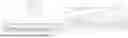
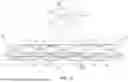
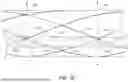
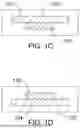
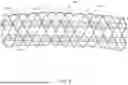
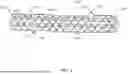
Sources:
- United States Patent and Trademark Office - verify current appl. status at the USPTO↗
Recent applications in this class:
- » 20250352323 2025-11-20
METHODS AND SYSTEMS FOR TREATING PULMONARY DISEASE - » 20250352322 2025-11-20
ROBOTIC SYSTEMS FOR DELIVERING ENDOBRONCHIAL IMPLANTS AND RELATED TECHNOLOGY - » 20250352320 2025-11-20
GYNECOLOGICAL PROTHETIC WITH ANCHOR MEMBERS AND EXPANDABLE CONNECTING LINKS, AND METHOD FOR CUSTOM-DESIGNNG THE SAME - » 20250331981 2025-10-30
ENDOPROSTHESIS WITH STRESS REDUCING FEATURES - » 20250318918 2025-10-16
STENTS AND PROCEDURES FOR PLACEMENT THEREOF - » 20250312135 2025-10-09
Airway Stent - » 20250302606 2025-10-02
VARIABLE LENGTH STENT - » 20250295485 2025-09-25
EXPANDABLE TISSUE ANCHOR - » 20250281274 2025-09-11
RADIAL ADJUSTING SELF-EXPANDING STENT WITH ANTI-MIGRATION FEATURES - » 20250248802 2025-08-07
ARTIFICIAL STOMACH
Recent applications for this Assignee:
- » 20250352763 2025-11-20
MEDICAL DEVICES FOR DELIVERING FLUID - » 20250352714 2025-11-20
MEDICAL SYSTEMS AND METHODS - » 20250352377 2025-11-20
INTRODUCER SHEATH WITH DEPLOYABLE GRAFT - » 20250352373 2025-11-20
STENT WITH HYBRID CONSTRUCTION - » 20250352372 2025-11-20
HOOKED WIRE STENT - » 20250352371 2025-11-20
ENDOPROSTHESIS WITH IMPROVED CHARACTERISTICS - » 20250352370 2025-11-20
ENDOPROSTHESIS WITH IMPROVED CHARACTERISTICS - » 20250352369 2025-11-20
PSEUDO HOOKED WIRE STENT - » 20250352368 2025-11-20
STENT DESIGN FOR ENHANCED DRAINAGE - » 20250352367 2025-11-20
HELICAL STENT WITH IMPROVED CHARACTERISTICS