LIQUID EJECTING HEAD AND LIQUID EJECTING APPARATUS
US20250353301A1
2025-11-20
19/207,744
2025-05-14
Smart Summary: A liquid ejecting head is designed to spray liquids precisely. It has different parts, including thin film piezoelectric bodies and common electrodes, stacked in a specific order. In one area, all the electrodes overlap, while in another area, only some of them do. This arrangement helps control how the liquid is ejected. The technology aims to improve the accuracy and efficiency of liquid dispensing. 🚀 TL;DR
Abstract:
A liquid ejecting head includes: in which when a region in an arrangement direction where the second thin film piezoelectric body overlaps all of the individual electrode, the first common electrode, and the second common electrode when viewed in a lamination direction is defined as an overlapping region, and a region in the arrangement direction where the second thin film piezoelectric body overlaps the first common electrode and the second common electrode and does not overlap the individual electrode when viewed in the lamination direction is defined as a non-overlapping region, the first common electrode, the first thin film piezoelectric body, the second thin film piezoelectric body, and the second common electrode are laminated in the stated order from the lower side to the upper side in the non-overlapping region.
Applicant:
Interested in similar patents?
Get notified when new applications in this technology area are published.
Classification:
B41J2/14233 » CPC main
Typewriters or selective printing mechanisms characterised by the printing or marking process for which they are designed characterised by bringing liquid or particles selectively into contact with a printing material; Ink jet; Nozzles; Structure thereof only for on-demand ink jet heads; Structure of print heads with piezoelectric elements of film type, deformed by bending and disposed on a diaphragm
B41J2/14 IPC
Typewriters or selective printing mechanisms characterised by the printing or marking process for which they are designed characterised by bringing liquid or particles selectively into contact with a printing material; Ink jet; Nozzles Structure thereof only for on-demand ink jet heads
Description
The present application is based on, and claims priority from JP Application Serial Number 2024-080157, filed May 16, 2024, the disclosure of which is hereby incorporated by reference herein in its entirety.
BACKGROUND
1. Technical Field
The present disclosure relates to a liquid ejecting head and a liquid ejecting apparatus.
2. Related Art
A liquid ejecting apparatus including a liquid ejecting head for ejecting liquid such as ink to a medium such as printing paper is proposed in the related art. A piezo-type ink jet printer is known as the liquid ejecting apparatus. In the piezo-type, a piezoelectric element that vibrates a diaphragm that constitutes a part of a wall surface of a pressure chamber is used. The diaphragm is vibrated by the piezoelectric element, and thus the liquid in the pressure chamber is ejected from a nozzle.
In a piezoelectric element provided in a liquid ejecting head disclosed in JP-A-2013-256137, a first common electrode, a lower piezoelectric layer of a thin film, an individual electrode, an upper piezoelectric layer of a thin film, and a second common electrode are laminated in order. That is, the piezoelectric element has a configuration in which two thin film piezoelectric bodies are laminated.
When the thin film piezoelectric bodies are laminated as in JP-A-2013-256137, an amount of displacement per unit voltage can be increased by nearly two times as compared with when the thin film piezoelectric body is formed as a single layer. Therefore, it is possible to improve ejection characteristics at the same voltage as the single layer, or to reduce a cost by replacing a component with a component having a lower rated voltage. However, in the configuration of the piezoelectric element disclosed in JP-A-2013-256137, there is a case where a decrease in displacement characteristics or reliability occurs.
SUMMARY
According to a preferred aspect of the present disclosure, there is provided a liquid ejecting head including: a pressure chamber substrate in which a plurality of pressure chambers are arranged in an arrangement direction; a diaphragm; a first common electrode that is provided to be shared by the plurality of pressure chambers and to which a reference voltage that does not change over time is applied; a first thin film piezoelectric body; an individual electrode that is individually provided for each of the plurality of pressure chambers so as to extend in an extending direction intersecting the arrangement direction and to which a driving voltage that changes over time is applied; a second thin film piezoelectric body; and a second common electrode that is provided to be shared by the plurality of pressure chambers and to which the reference voltage is applied, the pressure chamber substrate, the diaphragm, the first common electrode, the first thin film piezoelectric body, the individual electrode, the second thin film piezoelectric body, and the second common electrode being laminated in the stated order from a lower side to an upper side in a lamination direction intersecting the arrangement direction and the extending direction, in which when a region in the arrangement direction where the second thin film piezoelectric body overlaps all of the individual electrode, the first common electrode, and the second common electrode when viewed in the lamination direction is defined as an overlapping region, and a region in the arrangement direction where the second thin film piezoelectric body overlaps the first common electrode and the second common electrode and does not overlap the individual electrode when viewed in the lamination direction is defined as a non-overlapping region, the first common electrode, the first thin film piezoelectric body, the second thin film piezoelectric body, and the second common electrode are laminated in the stated order from the lower side to the upper side in the non-overlapping region.
According to another preferred aspect of the present disclosure, there is provided a liquid ejecting apparatus including: the liquid ejecting head; and a voltage application circuit for applying the reference voltage and the driving voltage.
BRIEF DESCRIPTION OF THE DRAWINGS
FIG. 1 is a schematic view illustrating a configuration of a liquid ejecting apparatus according to a first embodiment.
FIG. 2 is an exploded perspective view of a liquid ejecting head illustrated in FIG. 1.
FIG. 3 is a cross-sectional view of a part of the liquid ejecting head illustrated in FIG. 2.
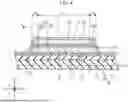
FIG. 4 is an enlarged cross-sectional view of a part of the liquid ejecting head illustrated in FIG. 3.
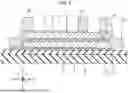
FIG. 5 is an enlarged cross-sectional view of a part of the liquid ejecting head illustrated in FIG. 3.
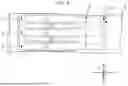
FIG. 6 is a diagram illustrating a planar disposition of individual electrodes illustrated in FIG. 4.
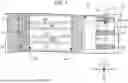
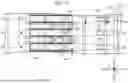
FIG. 7 is a plan view illustrating two conductors and a plurality of lead-out wiring lines illustrated in FIG. 5.
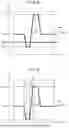
FIG. 8 is a diagram illustrating a driving voltage and a reference voltage.
FIG. 9 is a diagram illustrating examples of applied voltages applied to a first thin film piezoelectric body and a second thin film piezoelectric body.
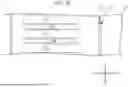
FIG. 10 is a plan view illustrating through-holes provided in the first thin film piezoelectric body and the second thin film piezoelectric body.
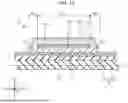
FIG. 11 is a plan view illustrating an overlapping region and a non-overlapping region of a piezoelectric element illustrated in FIG. 4.
FIG. 12 is a cross-sectional view of a piezoelectric element of a comparative example having no non-overlapping region.
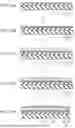
FIGS. 13A to 13E are a flowchart illustrating a manufacturing method of the piezoelectric element, which is a part of the manufacturing method of the liquid ejecting head.
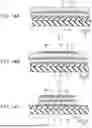
FIGS. 14A to 14C are a flowchart illustrating a manufacturing method of the piezoelectric element, which is a part of the manufacturing method of the liquid ejecting head.
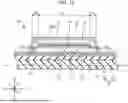
FIG. 15 is a cross-sectional view illustrating a piezoelectric element of a first modification example.
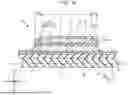
FIG. 16 is a cross-sectional view illustrating a piezoelectric element of a second modification example.
DESCRIPTION OF EMBODIMENTS
Hereinafter, preferred embodiments according to the present disclosure will be described with reference to the accompanying drawings. In the drawings, dimensions or scales of each section are different from the actual dimensions or scales as appropriate, and some sections are schematically illustrated for easy understanding. Further, the scope of the present disclosure is not limited to these embodiments unless it is noted in the following description that the present disclosure is particularly limited. The term “equal” includes not only a case of being strictly equal but also a case of having a difference in a measurement error range. In addition, the phrase “the element a and the element β are laminated” means that the element a and the element B are arranged in an up-down direction, and whether the element a and the element β are in direct contact with each other is not a problem.
The following description will be made by using an X axis, a Y axis, and a Z axis that intersect each other, as appropriate. One direction along an X axis will be referred to as an X1 direction, and a direction opposite to the X1 direction will be referred to as an X2 direction. Directions opposite to each other along the Y axis will be referred to as a Y1 direction and a Y2 direction. Directions opposite to each other along the Z axis will be referred to as a Z1 direction and a Z2 direction. Viewing in a direction along the Z axis will be referred to as a “plan view”. The Z axis is typically a vertical axis. The Z1 direction is an upper side, and the Z2 direction is a lower side. However, the Z axis need not be the vertical axis. The X axis, the Y axis, and the Z axis are typically orthogonal to each other, but are not limited to this, and intersect each other at, for example, an angle within a range of, for example, 80° or more and 100° or less. In addition, hereinafter, an “arrangement direction” is a direction along the Y axis and is, specifically, the Y1 direction or the Y2 direction. An “extending direction” is a direction along the X axis and is, specifically, the X1 direction or the X2 direction. A “lamination direction” is a direction intersecting the “arrangement direction” and the “extending direction” and is, specifically, the Z1 direction.
1. First Embodiment
1-1. Overall Configuration of Liquid Ejecting Apparatus 100
FIG. 1 is a configuration view schematically illustrating a liquid ejecting apparatus 100 according to a first embodiment. The liquid ejecting apparatus 100 is an ink jet printing apparatus that ejects ink, which is an example of liquid, to a medium M as liquid droplets. The medium M is typically printing paper. The medium M is not limited to the printing paper, and may be, for example, a printing target having any material such as a resin film or a cloth.
As illustrated in FIG. 1, the liquid ejecting apparatus 100 is equipped with a liquid container 90 for storing the ink. Examples of specific aspects of the liquid container 90 include a cartridge that can be attached to and detached from the liquid ejecting apparatus 100, a bag-shaped ink pack formed of a flexible film, and an ink tank that can be refilled with the ink. A type of the ink stored in the liquid container 90 is optional.
The liquid ejecting apparatus 100 includes a control unit 91, a transport mechanism 92, a moving mechanism 93, and a liquid ejecting head 1. The control unit 91 includes, for example, a processing circuit such as a central processing unit (CPU) or a field programmable gate array (FPGA) and a storage circuit such as a semiconductor memory, and controls the operation of each element of the liquid ejecting apparatus 100. The control unit 91 includes a voltage application circuit 910 that applies a voltage to cause a nozzle to eject the ink by controlling driving of a piezoelectric element 7, which will be described later, provided in the liquid ejecting head 1. The voltage application circuit 910 applies a reference voltage VBS and a driving voltage Com, which will be described later, to the piezoelectric element 7.
The transport mechanism 92 transports the medium M in the Y2 direction under the control of the control unit 91. The moving mechanism 93 reciprocates the liquid ejecting head 1 in the X1 direction and the X2 direction under the control of the control unit 91. In the example illustrated in FIG. 1, the moving mechanism 93 includes a substantially box-shaped transport body 931 called a carriage that accommodates the liquid ejecting head 1, and a transport belt 932 to which the transport body 931 is fixed. The number of liquid ejecting heads 1 mounted on the transport body 931 is not limited to one, and may be more than one. The liquid container 90 may be mounted on the transport body 931 in addition to the liquid ejecting head 1.
Under the control of the control unit 91, the liquid ejecting head 1 ejects the ink supplied from the liquid container 90 to the medium M from each of a plurality of nozzles toward the Z2 direction. The ejection is performed in parallel with the transport of the medium M via the transport mechanism 92 and the reciprocating movement of the liquid ejecting head 1 via the moving mechanism 93, so that an image is formed by the ink on a surface of the medium M.
The liquid ejecting apparatus 100 includes the liquid ejecting head 1, which will be described later, and the control unit 91. The control unit 91 includes the voltage application circuit 910 that causes a nozzle N to eject the ink. Since the liquid ejecting apparatus 100 includes the liquid ejecting head 1 having the following characteristics, it is possible to suppress a decrease in displacement characteristics or reliability of the piezoelectric element 7.
1-2. Overall Configuration of Liquid Ejecting Head 1
FIG. 2 is an exploded perspective view of the liquid ejecting head 1 illustrated in FIG. 1. FIG. 3 is a cross-sectional view of a part of the liquid ejecting head 1 illustrated in FIG. 2, and is a cross-sectional view taken along line III-III in FIG. 2. As illustrated in FIG. 2, the liquid ejecting head 1 includes a plurality of nozzles N arranged in the direction along the Y axis. In the example illustrated in FIG. 2, the plurality of nozzles N are divided into a first row L1 and a second row L2 arranged at intervals in the direction along the X axis. Each of the first row L1 and the second row L2 is a set of nozzles N linearly arranged in the direction along the Y axis. An element related to each nozzle N in the first row L1 and an element related to each nozzle N in the second row L2 in the liquid ejecting head 1 are substantially symmetrical with each other in the direction along the X axis. In the following description, the element corresponding to the first row L1 will be mainly described, and the description of the element corresponding to the second row L2 will be omitted as appropriate.
The positions of the plurality of nozzles N in the first row L1 and the positions of the plurality of nozzles N in the second row L2 in the direction along the Y axis may be the same as or may be different from each other. In addition, the element related to each nozzle N in one of the first row L1 and the second row L2 may be omitted.
As illustrated in FIGS. 2 and 3, the liquid ejecting head 1 includes a nozzle plate 11, a vibration absorber 12, a flow path substrate 13, a pressure chamber substrate 14, a diaphragm 15, a wiring substrate 16, a housing section 17, and a driving circuit 20. Each of the nozzle plate 11, the vibration absorber 12, the flow path substrate 13, the pressure chamber substrate 14, the diaphragm 15, the wiring substrate 16, and the housing section 17 is a plate-shaped member that is elongated in the direction along the Y axis. The nozzle plate 11, the flow path substrate 13, the pressure chamber substrate 14, the diaphragm 15, and the wiring substrate 16 are arranged in the stated order in the Z1 direction.
The nozzle plate 11 is a plate-shaped member in which the plurality of nozzles N are formed. Each of the plurality of nozzles N is a circular through-hole through which the ink passes. The nozzles N eject the ink by the vibration of the diaphragm 15. The nozzle plate 11 is bonded to the flow path substrate 13 using, for example, an adhesive.
The flow path substrate 13 is formed with a flow path for supplying the ink to the plurality of nozzles N. Specifically, in the flow path substrate 13, a space Ra, a plurality of supply flow paths 131, a plurality of communication flow paths 132, and a supply liquid chamber 133 are formed. The space Ra is an elongated opening extending in the direction along the Y axis in plan view when viewed in the direction along the Z axis. Each of the supply flow paths 131 and the communication flow paths 132 is a through-hole formed for each nozzle N. The supply liquid chamber 133 is an elongated space extending in the direction along the Y axis over the plurality of nozzles N, and allows the space Ra and the plurality of supply flow paths 131 to communicate with each other. Each of the plurality of communication flow paths 132 overlaps one nozzle N corresponding to the communication flow path 132 in plan view. The pressure chamber substrate 14 is bonded to the flow path substrate 13 using, for example, an adhesive.
In the pressure chamber substrate 14, a plurality of pressure chambers C0 are provided. The plurality of pressure chambers C0 are arranged in the direction along the Y axis as the “arrangement direction”. Each pressure chamber C0 is formed for each nozzle N, and is an elongated space extending in the direction along the X axis in plan view. The pressure chambers C0 are spaces located between the flow path substrate 13 and the diaphragm 15. The pressure chambers C0 communicate with the nozzles N via the communication flow paths 132 and communicate with the space Ra via the supply flow paths 131 and the supply liquid chamber 133.
Each of the nozzle plate 11, the flow path substrate 13, and the pressure chamber substrate 14 is manufactured by processing a silicon single crystal substrate by using, for example, dry etching or wet etching. However, other known methods may be used as appropriate for manufacturing each of the nozzle plate 11, the flow path substrate 13, and the pressure chamber substrate 14.
The diaphragm 15 is disposed on a surface of the pressure chamber substrate 14 facing the Z1 direction. The diaphragm 15 is a plate-shaped member that can elastically vibrate.
A plurality of piezoelectric elements 7 corresponding to the nozzles N are disposed on a surface of the diaphragm 15 facing the Z1 direction. Each piezoelectric element 7 has an elongated shape extending in the direction along the X axis in plan view. The plurality of piezoelectric elements 7 correspond to the plurality of pressure chambers C0, and are arranged in the direction along the Y axis. The piezoelectric elements 7 are deformed due to the application of a voltage. When the diaphragm 15 vibrates in conjunction with the deformation, the pressure in the pressure chamber C0 fluctuates, so that the ink is ejected from the nozzle N.
The housing section 17 is a case for storing the ink to be supplied to the plurality of pressure chambers C0. As illustrated in FIG. 3, a space Rb is formed in the housing section 17. The space Rb of the housing section 17 and the space Ra of the flow path substrate 13 communicate with each other. A space formed by the space Ra and the space Rb functions as a liquid storage chamber R that is a reservoir that stores the ink to be supplied to the plurality of pressure chambers C0. The ink is supplied to the liquid storage chamber R through an inlet 171 formed in the housing section 17. The ink in the liquid storage chamber R is supplied to the pressure chambers C0 through the supply liquid chamber 133 and each supply flow path 131.
The vibration absorber 12 is a flexible film that forms a wall surface of the liquid storage chamber R. The vibration absorber 12 is a compliance substrate that absorbs the fluctuation in the pressure of the ink in the liquid storage chamber R.
The wiring substrate 16 is a plate-shaped member in which wiring lines for electrically coupling the driving circuit 20 and the plurality of piezoelectric elements 7 are formed. A surface of the wiring substrate 16 facing the Z2 direction is bonded to the diaphragm 15 via a plurality of conductive bumps 16B. On the other hand, the driving circuit 20 is mounted on a surface of the wiring substrate 16 facing the Z1 direction. The driving circuit 20 is an integrated circuit (IC) chip that outputs the driving voltage Com and the reference voltage VBS for driving each piezoelectric element 7.
As illustrated in FIG. 2, an end portion of an external wiring line 21 is bonded to the surface of the wiring substrate 16 facing the Z1 direction. The external wiring line 21 is constituted of, for example, coupling components such as flexible printed circuits (FPCs) or flexible flat cables (FFCs). The wiring substrate 16 is formed with a plurality of wiring lines 22 that electrically couple the external wiring line 21 and the driving circuit 20, and a plurality of wiring lines 23 to which the driving voltage Com and the reference voltage VBS output from the driving circuit 20 are supplied.
The wiring substrate 16 is not limited to a rigid substrate, and may be, for example, a flexible printed circuit (FPC) or a flexible flat cable (FFC). In this case, the wiring substrate 16 may also serve as the external wiring line 21.
1-3. Diaphragm 15
FIGS. 4 and 5 are enlarged cross-sectional views of a part of the liquid ejecting head 1 illustrated in FIG. 3. The diaphragm 15 illustrated in FIGS. 4 and 5 vibrates in response to the vibration of the piezoelectric elements 7. The diaphragm 15 has, for example, a first layer 151 and a second layer 152. The first layer 151 and the second layer 152 are laminated in the stated order from the lower side to the upper side, that is, in the Z1 direction.
For example, the first layer 151 is an elastic film formed of silicon oxide (SiO2). The elastic film is formed by, for example, thermally oxidizing one surface of a silicon single crystal substrate. The second layer 152 is an insulating film formed of zirconium oxide (ZrO2), for example. The insulating film is formed by, for example, forming a zirconium layer using a sputtering method and thermally oxidizing the layer. Zirconium oxide has excellent electric insulation properties, mechanical strength, and toughness. Therefore, since the diaphragm 15 has the second layer 152 containing zirconium oxide, the characteristics of the diaphragm 15 can be enhanced.
In addition, another layer such as a metal oxide may be interposed between the first layer 151 and the second layer 152. In addition, a part or the entirety of the diaphragm 15 may be formed integrally with the pressure chamber substrate 14. The diaphragm 15 may be formed of a layer of a single material. FIG. 4 illustrates a neutral axis A1 of the diaphragm 15.
1-4. Piezoelectric Elements 7
As illustrated in FIGS. 4 and 5, the piezoelectric elements 7 are disposed on the diaphragm 15. The piezoelectric elements 7 overlap the above-described pressure chambers C0 in plan view. The piezoelectric elements 7 each include a first common electrode 71, a first orientation control layer 76, a first thin film piezoelectric body 72, an individual electrode 73, a second orientation control layer 77, a second thin film piezoelectric body 74, and a second common electrode 75. Among these components, the first common electrode 71 and the second common electrode 75 are provided to be shared by the plurality of piezoelectric elements 7 in principle. The first thin film piezoelectric body 72 and the second thin film piezoelectric body 74 are separated between the plurality of piezoelectric elements 7 by through-holes HO, which will be described later, in a range overlapping the pressure chambers C0 in plan view when viewed in the direction along the Z axis, but are coupled to each other in a range not overlapping the pressure chambers C0 and are a continuous member. However, each of the first thin film piezoelectric body 72 and the second thin film piezoelectric body 74 need not be a continuous member. In addition, the individual electrode 73 is individually provided for each piezoelectric element 7.
The pressure chamber substrate 14, the diaphragm 15, the first common electrode 71, the first thin film piezoelectric body 72, the individual electrode 73, the second thin film piezoelectric body 74, and the second common electrode 75 are laminated in the stated order from the lower side to the upper side in the Z1 direction, which is the “lamination direction”. In addition, the first orientation control layer 76 is provided between the first thin film piezoelectric body 72 and the first common electrode 71. The second orientation control layer 77 is provided between the second thin film piezoelectric body 74 and the individual electrode 73. In addition, another layer such as a layer for enhancing adhesion may be interposed as appropriate between the plurality of layers provided in the piezoelectric elements 7 or between the piezoelectric elements 7 and the diaphragm 15. Moreover, each of the first orientation control layer 76 and the second orientation control layer 77 may be omitted as appropriate.
1-4a. First Common Electrode 71
The first common electrode 71 is provided to be shared by the plurality of above-described pressure chambers C0. The first common electrode 71 has a strip shape extending in the direction along the Y axis so as to be continuous with the plurality of pressure chambers C0. The reference voltage VBS that does not change over time is applied to the first common electrode 71.
Examples of the material of the first common electrode 71 include a metal material such as platinum (Pt), iridium (Ir), aluminum (Al), nickel (Ni), gold (Au), or copper (Cu), or an alloy. The first common electrode 71 may be a single layer or may be a plurality of layers. The first common electrode 71 has, for example, a laminated structure in which a layer formed of platinum is laminated on a layer formed of iridium.
1-4b. Individual Electrodes 73
The individual electrodes 73 extend in the direction along the Y axis as the “extending direction intersecting the arrangement direction”. The driving voltage Com that changes over time is applied to the individual electrodes 73.
Examples of the material of the individual electrodes 73 include a metal material such as platinum, iridium, aluminum, nickel, gold, or copper, or an alloy. The individual electrodes 73 may be a single layer or may be a plurality of layers.
FIG. 6 is a diagram illustrating the planar disposition of the individual electrodes 73 of FIG. 4. As illustrated in FIG. 6, each individual electrode 73 has an elongated shape extending in the direction along the Y axis. The plurality of individual electrodes 73 are separated from each other and arranged along the Y axis. The individual electrodes 73 are individually provided for the plurality of pressure chambers C0. Each individual electrode 73 overlaps the corresponding one of the pressure chambers C0 when viewed in the Z1 direction.
1-4c. Second Common Electrode 75
The second common electrode 75 illustrated in FIGS. 4 and 5 is provided to be shared by the plurality of above-described pressure chambers C0. The second common electrode 75 has a strip shape extending in the direction along the Y axis so as to be continuous with the plurality of pressure chambers C0. The reference voltage VBS that does not change over time is applied to the second common electrode 75. Therefore, a common potential is applied to the first common electrode 71 and the second common electrode 75.
Examples of the material of the second common electrode 75 include a metal material such as platinum, iridium, aluminum, nickel, gold, or copper, or an alloy. The second common electrode 75 may be a single layer or may be a plurality of layers.
As illustrated in FIG. 6, the second common electrode 75 overlaps the plurality of individual electrodes 73 in plan view. The above-described first common electrode 71 also overlaps the plurality of individual electrodes 73 in plan view. As described above, the second common electrode 75 has a strip shape extending in the direction along the Y axis. Although not illustrated in detail, the second common electrode 75 is coupled to a wiring line for electrically coupling to the driving circuit 20 mounted on the wiring substrate 16 via the plurality of conductive bumps 16B described above. Therefore, the second common electrode 75 is electrically coupled to the driving circuit 20. In addition, the first common electrode 71 described above is in contact with the second common electrode 75 in a region that does not overlap the pressure chambers C0 in plan view when viewed in the direction along the Z axis, as illustrated in end portions in the Y1 direction and the Y2 direction of FIG. 4 and a side end portion in the X1 direction of FIG. 5. Due to the contact, the first common electrode 71 has the same potential as the second common electrode 75. In other words, the first common electrode 71 is electrically coupled to the driving circuit 20 via the second common electrode 75. In the present embodiment, the first common electrode 71 and the second common electrode 75 are in physical contact with each other, but another member may be interposed between the first common electrode 71 and the second common electrode 75, provided that they are electrically coupled to each other.
As illustrated in FIG. 5, two conductors 781 and 782 are disposed on the second common electrode 75. Each of the conductors 781 and 782 is a strip-shaped conductive film extending in the direction along the Y axis along an edge of the second common electrode 75 in the X1 direction or the X2 direction. The conductors 781 and 782 are formed of, for example, a conductive material having an electrically low resistance, such as gold. The conductors 781 and 782 suppress the voltage drop of the reference voltage VBS in the second common electrode 75. In addition, the conductors 781 and 782 also function as a weight for defining a vibration region of the diaphragm 15. In addition, the conductors 781 and 782 may be omitted.
FIG. 7 is a plan view illustrating the two conductors 781 and 782 and a plurality of lead-out wiring lines 731 illustrated in FIG. 5. In addition, in FIG. 7, for easy understanding, dots are added to the two conductors 781 and 782 and the plurality of lead-out wiring lines 731.
As illustrated in FIGS. 5 and 7, one end of each individual electrode 73 in a longitudinal direction along the X axis is coupled to the corresponding one of the lead-out wiring lines 731 via a coupling wiring line 730. The lead-out wiring lines 731 are coupled to a wiring line 70 extending along the Y axis. The wiring line 70 is electrically coupled to the driving circuit 20 mounted on the wiring substrate 16 via the plurality of conductive bumps 16B described above. Although not illustrated in detail, the first common electrode 71 is electrically coupled to the driving circuit 20 mounted on the wiring substrate 16 via the plurality of conductive bumps 16B described above, in the same manner as the second common electrode 75.
FIG. 8 is a diagram illustrating the driving voltage Com and the reference voltage VBS. In FIG. 8, the horizontal axis represents time, and the vertical axis represents voltage [V].
The voltage application circuit 910 described above applies a voltage to the piezoelectric elements 7. Specifically, the voltage application circuit 910 applies the voltage to the first thin film piezoelectric body 72 via the first common electrode 71 and the individual electrodes 73, and the first thin film piezoelectric body 72 is deformed in accordance with the voltage applied between the first common electrode 71 and the individual electrodes 73. Similarly, the voltage application circuit 910 applies the voltage to the second thin film piezoelectric body 74 via the second common electrode 75 and the individual electrodes 73, and the second thin film piezoelectric body 74 is deformed in accordance with the voltage applied between the second common electrode 75 and the individual electrodes 73.
The driving voltage Com corresponding to an ejection amount of the ink is applied to the individual electrodes 73. The driving voltage Com changes over time. The driving voltage Com includes a driving waveform WCom. The driving waveform WCom is repeated in a unit period Tu. The driving waveform WCom includes an intermediate voltage Ek, a maximum voltage En, and a minimum voltage Em. The maximum voltage En is a maximum value of the driving voltage Com. The minimum voltage Em is a minimum value of the driving voltage Com. The driving waveform WCom decreases from the intermediate voltage Ek to the minimum voltage Em to maintain the minimum voltage Em, then increases from the minimum voltage Em to the maximum voltage En to maintain the maximum voltage En, and then decreases to the intermediate voltage Ek. The driving waveform WCom illustrated in FIG. 8 is merely an example, and the driving voltage Com may have another waveform.
The constant reference voltage VBS is applied to each of the first common electrode 71 and the second common electrode 75 regardless of the ejection amount of the ink. The reference voltage VBS does not change over time and is constant. In the illustrated example, the reference voltage VBS is a voltage value higher than the minimum voltage Em of the driving voltage Com, but the present disclosure is not limited to this. In addition, the reference voltage VBS may be a GND potential, that is, 0 V.
FIG. 9 is a diagram illustrating an example of an applied voltage Ea applied to the first thin film piezoelectric body 72 and the second thin film piezoelectric body 74. The applied voltage Ea illustrated in FIG. 9 is obtained by subtracting the reference voltage VBS from the driving voltage Com illustrated in FIG. 8 at each time.
By applying the driving voltage Com and the reference voltage VBS, a voltage of a difference between the driving voltage Com and the reference voltage VBS is applied to the first thin film piezoelectric body 72 between the first common electrode 71 and the individual electrodes 73, and the first thin film piezoelectric body 72 is deformed. Similarly, by applying the driving voltage Com and the reference voltage VBS, a voltage of a difference between the driving voltage Com and the reference voltage VBS is applied to the second thin film piezoelectric body 74 between the second common electrode 75 and the individual electrodes 73, and the second thin film piezoelectric body 74 is deformed.
In FIG. 9, the horizontal axis represents time, and the vertical axis represents voltage [V]. The applied voltage Ea includes a waveform WEa. The waveform WEa includes an intermediate voltage EK, a maximum voltage EN, and a minimum voltage EM. The maximum voltage EN is a difference between the maximum voltage En of the driving voltage Com and the reference voltage VBS. The minimum voltage EM is a difference between the minimum voltage Em of the driving voltage Com and the reference voltage VBS. The waveform WEa illustrated in FIG. 9 is merely an example, and changes depending on the driving voltage Com and the reference voltage VBS.
Since the reference voltage VBS is constant, a voltage range RE of the applied voltage Ea is equal to a voltage range RE of the driving voltage Com.
1-4d. First Thin Film Piezoelectric Body 72 and Second Thin Film Piezoelectric Body 74
As described above, the first thin film piezoelectric body 72 illustrated in FIGS. 4 and 5 is disposed between the first common electrode 71 and the individual electrodes 73, and is deformed in accordance with a potential difference between the first common electrode 71 and the individual electrodes 73. The first thin film piezoelectric body 72 is formed of a composite oxide. The first orientation control layer 76 is disposed at a lower layer of the first thin film piezoelectric body 72. The orientation of the first thin film piezoelectric body 72 is controlled by the first orientation control layer 76.
In addition, as illustrated in FIG. 4, the first thin film piezoelectric body 72 has an upper surface 720 and two side wall surfaces 721. The upper surface 720 is a surface parallel to an X-Y plane and orthogonal to the Z1 direction. The upper surface 720 includes a first portion 7201 overlapping the individual electrodes 73 when viewed in the Z1 direction and a second portion 7202 not overlapping the individual electrodes 73 when viewed in the Z1 direction. Each side wall surface 721 is coupled to the upper surface 720 and is located in the Y1 direction or the Y2 direction of the upper surface 720. Each of the side wall surfaces 721 includes an inclined surface that is inclined with respect to the X-Y plane and the Z1 direction. Therefore, each side wall surface 721 is inclined with respect to the upper surface 720.
The second thin film piezoelectric body 74 is provided on the first portion 7201 of the upper surface 720 via the individual electrodes 73 and the second orientation control layer 77. The second thin film piezoelectric body 74 is provided on the second portion 7202 of the upper surface 720 via the second orientation control layer 77. In contrast, the side wall surfaces 721 are in contact with the second common electrode 75, and the second thin film piezoelectric body 74 is not present on the side wall surfaces 721. Therefore, the upper surface 720 overlaps the second thin film piezoelectric body 74 when viewed in the Z1 direction, but the side wall surfaces 721 do not overlap the second thin film piezoelectric body 74 when viewed in the Z1 direction.
As described above, the second thin film piezoelectric body 74 is disposed between the second common electrode 75 and the individual electrodes 73, and is deformed in accordance with a potential difference between the second common electrode 75 and the individual electrodes 73. In addition, the second thin film piezoelectric body 74 is formed of a composite oxide. The second orientation control layer 77 is disposed at a lower layer of the second thin film piezoelectric body 74. The orientation of the second thin film piezoelectric body 74 is controlled by the second orientation control layer 77 at the lower layer.
FIG. 10 is a plan view illustrating the through-holes HO provided in the first thin film piezoelectric body 72 and the second thin film piezoelectric body 74. As illustrated in FIG. 10, the first thin film piezoelectric body 72 and the second thin film piezoelectric body 74 are provided with the through-holes HO in a region corresponding to a gap between the pressure chambers C0 adjacent to each other when viewed in the Z1 direction. The first thin film piezoelectric body 72 and the second thin film piezoelectric body 74 are separated by the through-hole HO for each pressure chamber C0.
As described above, each of the first thin film piezoelectric body 72 and the second thin film piezoelectric body 74 is formed of a composite oxide. Specifically, each of the first thin film piezoelectric body 72 and the second thin film piezoelectric body 74 is formed of a piezoelectric material having a perovskite crystal structure.
Examples of the piezoelectric material include lead titanate (PbTiO3), lead zirconate titanate (PZT:Pb(Zr, Ti)O3), lead zirconite (PbZrO3), lead lanthanum titanate ((Pb, La), TiO3), lead lanthanum titanate zirconate ((Pb, La)(Zr, Ti)O3), lead zirconite niobate titanate (Pb(Zr, Ti, Nb)O3), and lead magnesium niobate zirconite titanate (Pb(Zr, Ti)(Mg, Nb)O3). Among these, lead zirconate titanate (PZT) is suitably used as a constituent material of the thin film piezoelectric bodies. In addition, the thin film piezoelectric bodies may contain a small amount of other elements such as impurities. Each of the first thin film piezoelectric body 72 and the second thin film piezoelectric body 74 may be a single layer or may be a plurality of layers.
The first thin film piezoelectric body 72 and the second thin film piezoelectric body 74 may be formed of the same material as each other, but it is preferable that the first thin film piezoelectric body 72 and the second thin film piezoelectric body 74 are formed of different materials. The desired physical properties of the first thin film piezoelectric body 72 and the second thin film piezoelectric body 74 may differ depending on the piezoelectric elements 7 to be used. Therefore, when the first thin film piezoelectric body 72 and the second thin film piezoelectric body 74 are formed of the same material, the degree of freedom in design is reduced, and it is difficult to set each of the first thin film piezoelectric body 72 and the second thin film piezoelectric body 74 to an optimum physical property value. When the first thin film piezoelectric body 72 and the second thin film piezoelectric body 74 are formed of different materials, it is possible to design the optimum physical property value for each of the first thin film piezoelectric body 72 and the second thin film piezoelectric body 74. Therefore, the desired piezoelectric elements 7 can be found.
From another viewpoint, it is preferable that the first thin film piezoelectric body 72 and the second thin film piezoelectric body 74 have the same material as each other. When the first thin film piezoelectric body 72 and the second thin film piezoelectric body 74 are formed of the same material, the manufacturing is easy, and it is easy to design desired physical properties by, for example, simply controlling a film thickness.
Each of the first thin film piezoelectric body 72 and the second thin film piezoelectric body 74 is a thin film. Specifically, the thin film in the present embodiment has a thickness of at least 5 μm or less, more preferably 2 μm or less. The thicknesses of the first thin film piezoelectric body 72 and the second thin film piezoelectric body 74 may be the same as each other or different from each other.
In the piezoelectric elements 7 including the first thin film piezoelectric body 72 and the second thin film piezoelectric body 74, the piezoelectric elements 7 and the diaphragm 15 are deformed to be bent in the Z1 direction, in an expansion period T2 illustrated in FIG. 9 in which the voltage decreases from the intermediate voltage EK to the minimum voltage EM to expand the pressure chambers C0. That is, the piezoelectric elements 7 are deformed upward so as to expand the pressure chambers C0. As a result, the ink is taken into the pressure chambers C0. Next, the piezoelectric elements 7 and the diaphragm 15 are deformed to be bent in the Z2 direction, in a contraction period T1 in which the voltage increases from the minimum voltage EM to the maximum voltage EN to contract the pressure chambers C0. That is, the piezoelectric elements 7 are deformed downward so as to contract the pressure chambers C0. As a result, the ink in the pressure chambers C0 is ejected from the nozzle.
1-4e. First Orientation Control Layer 76 and Second Orientation Control Layer 77
As illustrated in FIGS. 4 and 5, the first orientation control layer 76 is provided between the first thin film piezoelectric body 72 and the first common electrode 71. The second orientation control layer 77 is provided between the second thin film piezoelectric body 74 and the individual electrodes 73. In addition, the first orientation control layer 76 controls the orientation of the first thin film piezoelectric body 72, and the second orientation control layer 77 controls the orientation of the second thin film piezoelectric body 74.
Providing the first orientation control layer 76 and the second orientation control layer 77 makes it possible to perform the orientation control on each of the first thin film piezoelectric body 72 and the second thin film piezoelectric body 74. That is, the first orientation control layer 76 can preferentially orient the crystal of the first thin film piezoelectric body 72 in a predetermined plane orientation or adjust the degree of orientation of the predetermined plane orientation. Similarly, the second orientation control layer 77 can preferentially orient the crystal of the second thin film piezoelectric body 74 in a predetermined plane orientation or to adjust the degree of orientation of the predetermined plane orientation.
For example, the first orientation control layer 76 is capable of improving the piezoelectric characteristics of the piezoelectric elements 7 by preferentially orienting the crystal of the first thin film piezoelectric body 72 to a (100) plane as compared with when the crystal is preferentially oriented to a (110) plane. Similarly, the second orientation control layer 77 is capable of improving the piezoelectric characteristics of the piezoelectric elements 7 by preferentially orienting the crystal of the second thin film piezoelectric body 74 to a (100) plane as compared with when the crystal is preferentially oriented to a (110) plane. Therefore, it is possible to increase the displacement efficiency of the piezoelectric elements 7.
In addition, the crystal orientation of each of the first thin film piezoelectric body 72 and the second thin film piezoelectric body 74 can be analyzed by analyzing an X-ray diffraction intensity curve of an X-ray diffraction (XRD) method. In addition, the preferential orientation to the (100) plane means that the peak intensity corresponding to the (100) plane is higher than the peak intensity corresponding to the other direction, specifically, the (110) plane. In particular, when 50% or more, and further 80% or more of the crystals of the thin film piezoelectric bodies are oriented to the (100) plane, it is possible to increase the displacement efficiency of the piezoelectric elements 7.
For example, the first orientation control layer 76 can adjust the degree of orientation of the crystal of the first thin film piezoelectric body 72 to the (100) plane. Similarly, the first orientation control layer 76 can adjust the degree of orientation of the crystal of the first thin film piezoelectric body 72 to the (100) plane. Therefore, the degree of orientation of each of the first thin film piezoelectric body 72 and the second thin film piezoelectric body 74 can be set to a desired degree of orientation, by providing the first orientation control layer 76 that controls the orientation of the first thin film piezoelectric body 72 and the second orientation control layer 77 that controls the orientation of the second thin film piezoelectric body 74. Therefore, it is possible to set the optimum physical property value for each of the first thin film piezoelectric body 72 and the second thin film piezoelectric body 74.
Each of the first orientation control layer 76 and the second orientation control layer 77 contains, for example, titanium (Ti) or a composite oxide having a perovskite structure. The composite oxide having the perovskite structure contains, for example, any of nickel (Ni), lanthanum (La), bismuth (Bi), lead (Pb), titanium (Ti), and iron (Fe) as a constituent element.
Specifically, examples of the composite oxide having the perovskite structure include lead titanate (PbTiO3), lanthanum nickelate (LaNiO3), PbxBi(a-x)FeyTi(b-y)Oz, and PbxFeyTi(1-y)Oz. Each of the first orientation control layer 76 and the second orientation control layer 77 may be a single layer or may be a plurality of layers. Therefore, the material of each of the first orientation control layer 76 and the second orientation control layer 77 may be one type or may be a plurality of types.
In the above-described PbxBi(a-x)FeyTi(b-y)Oz, a>x and b>y. In addition, it is preferable that x/(a-x) satisfies 0.04<x/(a-x)<1.40. Furthermore, in order to perform the orientation to the (100) plane, it is more preferable that x/(a-x)<0.72. It is preferable that b=1, and it is preferable that a/b satisfies 0.8<(a/b)<1.4. In addition, it is preferable that z satisfies 2.8<z<3.2.
Examples satisfying these preferable ranges include, for example, a=1.2, b=1.0, x=0.1, and y=0.5.
In addition, in PbxFeyTi(1-y)Oz, 1.00≤x<2.00. In order to perform the orientation to the (100) plane, it is preferable that 1.00≤x<1.50. Further, 0.10≤y≤0.90. In order to perform the orientation to the (100) plane, it is preferable that 0.20≤y≤0.80. Further, z is typically 3.00. However, z need not be 3.00.
Hereinafter, PbxBi(a-x)FeyTi(b-y)Oz will be simply referred to as “PbBiFeTiO”. PbxFeyTi(1-y)Oz will be simply referred to as “PbFeTiO”.
In particular, it is preferable that each of the first orientation control layer 76 and the second orientation control layer 77 contains Bi, Fe, Ti, and Pb. Specifically, for example, it is preferable that each of the first orientation control layer 76 and the second orientation control layer 77 is PbBiFeTiO. PbBiFeTiO has excellent performance in the orientation control on the thin film piezoelectric bodies as compared with PbFeTiO, lanthanum nickelate, and titanium. Therefore, for example, the degree of orientation of the second thin film piezoelectric body 74 to the (100) plane can be increased. Therefore, it is possible to increase the piezoelectric efficiency of the second thin film piezoelectric body 74.
In addition, the second orientation control layer 77 containing PbBiFeTiO has a self-orientation property that is a property of being self-oriented in a predetermined plane orientation. Therefore, when the second orientation control layer 77 is PbBiFeTiO, the second orientation control layer 77 is less likely to be affected by the plane orientation of a base of the second orientation control layer 77. Therefore, the second orientation control layer 77 is self-oriented in the predetermined plane orientation without being affected by the base regardless of the plane orientation of the base. Therefore, the second thin film piezoelectric body 74 can be oriented in the same plane orientation as the second orientation control layer 77 under the influence of the plane orientation of the second orientation control layer 77. Specifically, the second orientation control layer 77 is oriented to the (100) plane. The orientation of the second thin film piezoelectric body 74 is controlled to the (100) plane by the second orientation control layer 77. If the second orientation control layer 77 does not have the self-orientation property, it is affected by the plane orientation of the base, and is oriented in a plane orientation other than the predetermined plane orientation.
From the viewpoint of the self-orientation property, the first orientation control layer 76 and the second orientation control layer 77 may be PbFeTiO. PbFeTiO has the self-orientation property in the same manner as PbBiFeTiO. It is considered that a layer formed of Ti and a layer formed of PbTiOx do not have the self-orientation property.
In addition, the thickness of the first orientation control layer 76 is less than the thickness of the first thin film piezoelectric body 72, and the thickness of the second orientation control layer 77 is less than the thickness of the second thin film piezoelectric body 74. Each thickness is an average length along the Z axis. The thickness of the first orientation control layer 76 and the thickness of the second orientation control layer 77 are not particularly limited, but are, for example, in a range of 20 nm or more and 200 nm or less. The respective thicknesses of the first orientation control layer 76 and the second orientation control layer 77 may be the same as each other or may be different from each other.
1-4f. Overlapping Region S1 and Non-Overlapping Region S2
FIG. 11 is a plan view illustrating an overlapping region S1 and a non-overlapping region S2 of the piezoelectric elements 7 illustrated in FIG. 4. In FIG. 11, for easy understanding, dots are added to the overlapping region S1 and the non-overlapping region S2.
As illustrated in FIGS. 4 and 11, the piezoelectric elements 7 include the overlapping region S1 and the non-overlapping region S2. The overlapping region S1 is a region in the Y1 direction, which is the “arrangement direction”, where the second thin film piezoelectric body 74 overlaps all of the individual electrodes 73, the first common electrode 71, and the second common electrode 75 when viewed in the Z1 direction, which is the “lamination direction”. The non-overlapping region S2 is a region in the Y1 direction where the second thin film piezoelectric body 74 overlaps the first common electrode 71 and the second common electrode 75 and does not overlap the individual electrodes 73 when viewed in the Z1 direction. The overlapping region S1 and the non-overlapping region S2 are located at the same position in the X direction and at positions adjacent to each other in the Y1 direction.
In the present embodiment, the overlapping region S1 and the non-overlapping region S2 are provided in a region between the conductors 781 and 782. As described above, the two conductors 781 and 782 also function as a weight for defining the vibration region of the diaphragm 15. The overlapping region S1 is an active portion as a region in which the piezoelectric elements 7 vibrate. In contrast, the non-overlapping region S2 is an inactive portion.
As illustrated in FIG. 11, each of the overlapping region S1 and the non-overlapping region S2 extends along the X axis. In addition, a plurality of overlapping regions S1 are provided. When viewed in the Z1 direction, the plurality of overlapping regions S1 are separated from each other, and are arranged in the Y1 direction, similarly to the plurality of individual electrodes 73. A plurality of non-overlapping regions S2 are provided. Two non-overlapping regions S2 are provided with one overlapping region S1 interposed therebetween when viewed in the Z1 direction. Therefore, one overlapping region S1 is located between two non-overlapping regions S2 when viewed in the Z1 direction. The two non-overlapping regions S2 may be coupled to each other in the Y1 direction, which is the arrangement direction.
FIG. 12 is a cross-sectional view of a piezoelectric element 7x of a comparative example that does not include the non-overlapping region S2. As illustrated in FIG. 12, the piezoelectric element 7x of the comparative example includes the overlapping region S1 but does not include the non-overlapping region S2. That is, a second thin film piezoelectric body 74x overlaps a first common electrode 71x and a second common electrode 75x when viewed in the Z1 direction, with no region that does not overlap the individual electrode 73x. In FIG. 12, an active portion S1x and an inactive portion S2x of the piezoelectric element 7x of the comparative example are illustrated. The active portion S1x is regarded as corresponding to the overlapping region S1.
The first thin film piezoelectric body 72x provided in the piezoelectric element 7x of the comparative example has an upper surface 720x and a side wall surface 721x. The upper surface 720x is a portion that overlaps the individual electrode 73 when viewed in the Z1 direction and is a surface parallel to the X-Y plane. The side wall surface 721x is a side surface inclined with respect to the Z1 direction. The second thin film piezoelectric body 74x is provided on the side wall surface 721x.
In the manufacturing of the piezoelectric element 7x of the comparative example, the first thin film piezoelectric body 72x is patterned by etching, and then the second thin film piezoelectric body 74x is formed. In this manufacturing, it is difficult to form the side wall surface 721x of the first thin film piezoelectric body 72x as a completely vertical surface with respect to the upper surface 720x by etching. The side wall surface 721x has an inclined surface formed at least locally.
In addition, as described above, in the piezoelectric element 7x of the comparative example, the second thin film piezoelectric body 74x is formed after the first thin film piezoelectric body 72x is etched, so that the second thin film piezoelectric body 74x is formed on the first common electrode 71x, on the side wall surface 721x of the first thin film piezoelectric body 72x, and on the individual electrode 73x. It is more difficult to control the film formation of the second thin film piezoelectric body 74x on the side wall surface 721x as compared with the film formation of the second thin film piezoelectric body 74x on the individual electrode 73x disposed on the upper surface 720x. This is because the side wall surface 721x is inclined with respect to the upper surface 720x. Therefore, there is a possibility that the second thin film piezoelectric body 74x cannot be well crystallized on the side wall surface 721x as compared with the upper surface 720x. Therefore, there is a possibility that the crystallinity of the second thin film piezoelectric body 74x differs between the side wall surface 721x and the upper surface 720x. As a result, there is a possibility that the displacement characteristics and the reliability of the second thin film piezoelectric body 74x decrease. In particular, the piezoelectric element 7x per one pressure chamber has a width in the X direction that is naturally longer than a width in the Y direction, but the same phenomenon may occur over the entire long width in the X direction. In addition, the side wall surfaces 721x are provided on both sides in the Y direction. Therefore, when the film formation of the second thin film piezoelectric body 74x is insufficient due to the side wall surface 721x in the Y direction, there is a possibility that the influence of the decrease in the displacement characteristics and the reliability becomes remarkably large.
The second thin film piezoelectric body 74 is not present on the side wall surfaces 721 in the Y direction. As will be described later, for example, the first thin film piezoelectric body 72 and the second thin film piezoelectric body 74 are collectively patterned by etching, and thus the second thin film piezoelectric body 74 is not present on the side wall surfaces 721 in the Y direction.
The side wall surfaces 721 are in contact with the second common electrode 75. In the piezoelectric elements 7 of the present embodiment, on the upper surface 720 of the first thin film piezoelectric body 72, there are a region in which the individual electrodes 73 are present and a region in which the individual electrodes 73 are not present, such that the contact between the individual electrodes 73 and the second common electrode 75 is avoided. That is, the piezoelectric elements 7 include the overlapping region S1 in which the second thin film piezoelectric body 74 overlaps the individual electrodes 73 when viewed in the Z1 direction, and the non-overlapping region S2 in which the second thin film piezoelectric body 74 does not overlap the individual electrodes 73 when viewed in the Z1 direction. In the non-overlapping region S2, the first common electrode 71, the first thin film piezoelectric body 72, the second thin film piezoelectric body 74, and the second common electrode 75 are laminated in the stated order from the lower side to the upper side.
As described above, with the piezoelectric elements 7 having the overlapping region S1 and the non-overlapping region S2, the second thin film piezoelectric body 74 is not formed on the side wall surfaces 721, so that the film formation failure of the second thin film piezoelectric body 74x on the side wall surface 721x of the comparative example is unlikely to occur. Therefore, in the present embodiment, the displacement characteristics and the reliability of the second thin film piezoelectric body 74 are unlikely to decrease. Therefore, according to the present embodiment, it is possible to suppress the decrease in the displacement characteristics and the reliability of the piezoelectric elements 7 as compared with the configuration in the related art.
As illustrated in FIG. 4, the upper surface 720 of the first thin film piezoelectric body 72 includes a first portion 7201 and a second portion 7202. The first portion 7201 is a portion present in the overlapping region S1, and the second portion 7202 is a portion present in the non-overlapping region S2. Each of the first portion 7201 and the second portion 7202 is a plane parallel to the X-Y plane and orthogonal to the Z1 direction.
A position P2 of the upper surface 720 of the first thin film piezoelectric body 72 in the non-overlapping region S2, that is, the position P2 of the second portion 7202 in the Z1 direction is the same as a position P1 of the upper surface 720 of the first thin film piezoelectric body 72 in the overlapping region S1, that is, the position P1 of the first portion 7201 in the Z1 direction. That is, the upper surface 720 of the first thin film piezoelectric body 72 does not have a step at a boundary between the overlapping region S1 and the non-overlapping region S2. That is, the upper surface 720 is a flat surface, which is continuous in the overlapping region S1 and the non-overlapping region S2. The upper surface 720 is parallel to the X-Y plane without being inclined with respect to the Z1 direction.
As described above, since the position P1 of the first portion 7201 and the position P2 of the second portion 7202 are the same as each other, the second thin film piezoelectric body 74 is not in contact with the side wall surfaces 721 having the inclined surface inclined with respect to the Z1 direction when viewed in the Z1 direction. Therefore, the film formation failure of the second thin film piezoelectric body 74x is unlikely to occur as in the related art.
In addition, since the position P1 and the position P2 are equal to each other, in the present embodiment, a thickness B of the first thin film piezoelectric body 72 in the non-overlapping region S2 is equal to a thickness A of the first thin film piezoelectric body 72 in the overlapping region S1.
In addition, the width of the non-overlapping region S2 is 25% or more and 43% or less of the width of the overlapping region S1. The width is the length in the X1 direction that is the extending direction. In addition, in the present embodiment, one piezoelectric element 7 has one overlapping region S1 and two non-overlapping regions S2 between which the overlapping region S1 is interposed. Therefore, the width of the non-overlapping region S2 and the total width of the two non-overlapping regions S2 are illustrated.
The non-overlapping region S2 is the inactive portion of the piezoelectric elements 7. Therefore, when the width of the non-overlapping region S2 is 25% or more and 43% or less of the width of the overlapping region S1, as compared with when the range is not satisfied, it is possible to suppress the decrease in the displacement amount and the reliability of the second thin film piezoelectric body 74 due to crystallization failure, while suppressing the decrease in the displacement amount of the piezoelectric element 7.
1-5. Manufacturing Method of Piezoelectric Elements 7
Each of FIGS. 13A to 13E and 14A to 14C is a diagram illustrating a manufacturing method of the piezoelectric elements 7 illustrated in FIG. 4. As illustrated in FIG. 13A, the first common electrode 71 is formed on the diaphragm 15. The first common electrode 71 is formed by using, for example, a known film forming technique such as a vapor deposition method or a sputtering method, and a known processing technique using photolithography, etching, or the like.
Then, as illustrated in FIG. 13B, the first orientation control layer 76 is formed on the first common electrode 71. The first orientation control layer 76 is formed by using, for example, a known film forming technique such as a vapor deposition method or a sputtering method.
Then, as illustrated in FIG. 13C, the first thin film piezoelectric body 72 is formed on the first orientation control layer 76. The first thin film piezoelectric body 72 is formed by, for example, forming a precursor layer of the first thin film piezoelectric body 72 by a sol-gel method and crystallizing the precursor layer by firing. In addition, the first thin film piezoelectric body 72 may be formed by using a sputtering method. However, when the sol-gel method is used, the first thin film piezoelectric body 72 having a thickness of 2 μm or less, and more preferably 1 μm or less can be suitably formed.
Then, as illustrated in FIG. 13D, the individual electrode 73 is formed on the first thin film piezoelectric body 72. As illustrated in FIG. 13D, for example, the individual electrode 73 is formed by patterning a film, which is formed by using a known film forming technique such as a vapor deposition method or a sputtering method, by etching.
Then, as illustrated in FIG. 13E, the second orientation control layer 77 is formed on the individual electrode 73. The second orientation control layer 77 is formed by using, for example, a known film forming technique such as a vapor deposition method or a sputtering method. Further, the second orientation control layer 77 has a portion formed on the first common electrode 71 in addition to the portion formed on the individual electrode 73.
Then, as illustrated in FIG. 14A, the second thin film piezoelectric body 74 is formed on the second orientation control layer 77. The second thin film piezoelectric body 74 is formed by, for example, forming a precursor layer of the second thin film piezoelectric body 74 by a sol-gel method and crystallizing the precursor layer by firing. In addition, the second thin film piezoelectric body 74 may be formed by using a sputtering method. However, when the sol-gel method is used, the second thin film piezoelectric body 74 having a thickness of 2 μm or less, and more preferably 1 μm or less can be suitably formed.
Then, as illustrated in FIG. 14B, a resist mask M1 formed by, for example, photolithography is formed on the second thin film piezoelectric body 74. Then, as illustrated in FIG. 14C, the second thin film piezoelectric body 74, the second orientation control layer 77, the first thin film piezoelectric body 72, and the first orientation control layer 76 are patterned by etching using the resist mask M1. Thereafter, the resist mask M1 is removed, and then the second common electrode 75 is formed.
As described above, in the present embodiment, the piezoelectric elements 7 of the liquid ejecting head 1 are manufactured by forming the second thin film piezoelectric body 74 without interposing the patterning after the first thin film piezoelectric body 72 is formed, and then collectively patterning the first thin film piezoelectric body 72 and the second thin film piezoelectric body 74. With such a method, the piezoelectric elements 7 can be manufactured easily and with high accuracy. In addition, with such a method, the piezoelectric elements 7 having the overlapping region S1 in which the second thin film piezoelectric body 74 overlaps the individual electrodes 73 when viewed in the Z1 direction and the non-overlapping region S2 in which the second thin film piezoelectric body 74 does not overlap the individual electrodes 73 when viewed in the Z1 direction can be easily and reliably formed. With such a method, the contact between the individual electrodes 73 and the second common electrode 75 can be avoided, and the piezoelectric elements 7 in which the second thin film piezoelectric body 74 is not present on the side wall surfaces 721 in the Y direction and the second common electrode 75 is provided can be easily formed. With the piezoelectric elements 7 manufactured in this way, it is not necessary to form the second thin film piezoelectric body 74 on the side wall surfaces 721 in the Y direction, and thus it is possible to suppress the decrease in the displacement characteristics and the reliability of the piezoelectric elements 7.
The manufacturing method of the piezoelectric elements 7 is not limited to the above-described method. For example, when the same configuration is obtained, the individual electrodes 73 may be formed after the first thin film piezoelectric body 72 is patterned by etching.
2. Modification Example
The embodiments described above may be modified in various ways. A specific modification aspect that can be applied to the embodiments described above will be described below.
2-1. First Modification Example
FIG. 15 is a cross-sectional view of a piezoelectric element 7A of a first modification example. In the example illustrated in FIG. 15, an upper surface 720A of the first thin film piezoelectric body 72 has a step. The thickness B of a portion in the non-overlapping region S2 where the first thin film piezoelectric body 72 is provided among the thicknesses of the first thin film piezoelectric body 72 in the Z1 direction is larger than the thickness A of a portion in the non-overlapping region S2 where the first thin film piezoelectric body 72 is not provided among the thicknesses of the first thin film piezoelectric body 72 in the Z1 direction. Therefore, a boundary surface between the overlapping region S1 and the non-overlapping region S2 of the first thin film piezoelectric body 72 is inclined. In addition, the thickness B of the first thin film piezoelectric body 72 in the non-overlapping region S2 is smaller than a thickness C of the first thin film piezoelectric body 72 in the overlapping region S1 and is 50% or more of the thickness C.
In the first modification example as well, since the piezoelectric element 7A has the overlapping region S1 and the non-overlapping region S2, the contact between the individual electrode 73 and the second common electrode 75 can be avoided, and the piezoelectric element 7 in which the second thin film piezoelectric body 74 is not present on the side wall surfaces 721 and the second common electrode 75 is provided can be easily formed. Therefore, it is possible to suppress the decrease in the displacement characteristics and the reliability of the piezoelectric element 7A.
2-2. Second Modification Example
FIG. 16 is a cross-sectional view of a piezoelectric element 7B of a second modification example. In the example illustrated in FIG. 16, an upper surface of the second thin film piezoelectric body 74 has a step. Therefore, an upper surface of the second common electrode 75 also has a step following the upper surface of the second thin film piezoelectric body 74. A second position P4 of the upper surface of the second thin film piezoelectric body 74 in the non-overlapping region S2 is located below a first position P3 of the upper surface of the second thin film piezoelectric body 74 in the overlapping region S1.
In the second modification example as well, since the piezoelectric element 7B has the overlapping region S1 and the non-overlapping region S2, the contact between the individual electrode 73 and the second common electrode 75 can be avoided, and the piezoelectric element 7 in which the second thin film piezoelectric body 74 is not present on the side wall surfaces 721 and the second common electrode 75 is provided can be easily formed. Therefore, it is possible to suppress the decrease in the displacement characteristics and the reliability of the piezoelectric element 7B.
In addition, with the piezoelectric element 7B in which the upper surface of the second thin film piezoelectric body 74 has a step and the second position P4 is located below the first position P3, it is possible to achieve both the assurance of the adhesion to the first common electrode 71 located in the lower layer of the second thin film piezoelectric body 74 and the suppression of damage to the second thin film piezoelectric body 74 as compared with when the step is not provided. Therefore, the reliability of the piezoelectric element 7 can be improved. When the step is not provided, there is a possibility that damage occurs due to strain or the like that may occur at the boundary between the overlapping region S1 and the non-overlapping region S2 in the upper portion of the second thin film piezoelectric body 74. In addition, it is preferable that the lower portion of the second thin film piezoelectric body 74 is ensured to have a certain width along the X1 direction such that the solid bonding force to the first common electrode 71 of the second thin film piezoelectric body 74 is increased. As a result, it is possible to improve the adhesion to the first common electrode 71 located at the lower layer of the second thin film piezoelectric body 74.
2-3. Other Modification Examples
The “liquid ejecting head” may be a circulation type head having a so-called circulation flow path.
The “liquid ejecting apparatus” can be adopted in various apparatuses, such as a facsimile machine and a copying machine, in addition to an apparatus dedicated to printing. Use of the liquid ejecting apparatus is not limited to printing. For example, a liquid ejecting apparatus that ejects a solution of a coloring material is used as a manufacturing apparatus that forms a color filter of a display device, such as a liquid crystal display panel. In addition, a liquid ejecting apparatus that ejects a solution of a conductive material is used as a manufacturing apparatus that forms a wiring line or an electrode of a wiring substrate. In addition, a liquid ejecting apparatus that ejects a solution of an organic substance related to an organism is used as a manufacturing apparatus that manufactures a biochip, for example.
Although the present disclosure is described above based on the preferred embodiments, the present disclosure is not limited to the above-described embodiments. The configuration of each section of the present disclosure can be replaced with any configuration having the same function in the above-described embodiments, and any configuration can be added.
Claims
What is claimed is:1. A liquid ejecting head comprising:
a pressure chamber substrate in which a plurality of pressure chambers are arranged in an arrangement direction;
a diaphragm;
a first common electrode that is provided to be shared by the plurality of pressure chambers and to which a reference voltage that does not change over time is applied;
a first thin film piezoelectric body;
an individual electrode that is individually provided for each of the plurality of pressure chambers so as to extend in an extending direction intersecting the arrangement direction and to which a driving voltage that changes over time is applied;
a second thin film piezoelectric body; and
a second common electrode that is provided to be shared by the plurality of pressure chambers and to which the reference voltage is applied,
the pressure chamber substrate, the diaphragm, the first common electrode, the first thin film piezoelectric body, the individual electrode, the second thin film piezoelectric body, and the second common electrode being laminated in a stated order from a lower side to an upper side in a lamination direction intersecting the arrangement direction and the extending direction, wherein
when a region in the arrangement direction where the second thin film piezoelectric body overlaps all of the individual electrode, the first common electrode, and the second common electrode when viewed in the lamination direction is defined as an overlapping region, and a region in the arrangement direction where the second thin film piezoelectric body overlaps the first common electrode and the second common electrode and does not overlap the individual electrode when viewed in the lamination direction is defined as a non-overlapping region,
the first common electrode, the first thin film piezoelectric body, the second thin film piezoelectric body, and the second common electrode are laminated in a stated order from the lower side to the upper side in the non-overlapping region.
2. The liquid ejecting head according to claim 1, wherein
a thickness of a portion in the non-overlapping region where the first thin film piezoelectric body is provided among thicknesses of the first thin film piezoelectric body in the lamination direction is larger than a thickness of a portion in the non-overlapping region where the first thin film piezoelectric body is not provided among the thicknesses of the first thin film piezoelectric body in the lamination direction.
3. The liquid ejecting head according to claim 1, wherein
a position of an upper surface of the first thin film piezoelectric body in the non-overlapping region is the same as a position of an upper surface of the first thin film piezoelectric body in the overlapping region.
4. The liquid ejecting head according to claim 1, wherein
a position of an upper surface of the second thin film piezoelectric body in the overlapping region is a first position, and
a position of an upper surface of the second thin film piezoelectric body in the non-overlapping region is a second position that is located lower than the first position.
5. The liquid ejecting head according to claim 1, wherein
a width of the non-overlapping region is 25% or more and 43% or less of a width of the overlapping region.
6. The liquid ejecting head according to claim 1, wherein
the overlapping region and the non-overlapping region are located at the same position in the extending direction and at positions adjacent to each other in the arrangement direction.
7. A liquid ejecting apparatus comprising:
the liquid ejecting head according to claim 1; and
a voltage application circuit for applying the reference voltage and the driving voltage.
Images & Drawings included:
Sources:
- United States Patent and Trademark Office - verify current appl. status at the USPTO↗
Similar patent applications:
- » 20100302295
Liquid ejecting head inspection apparatus, liquid ejecting apparatus, and inspection method of liquid ejecting head inspection apparatus - » 20130258000
Liquid ejecting head, liquid ejecting apparatus, piezoelectric element, and methods of manufacturing liquid ejecting head, liquid ejecting apparatus, and piezoelectric element - » 20200070520
LIQUID EJECTING HEAD, LIQUID EJECTING APPARATUS, LIQUID EJECTING HEAD CLEANING METHOD, AND LIQUID EJECTING HEAD MANUFACTURING METHOD - » 20080062436
Liquid ejecting head alignment apparatus and liquid ejecting head alignment method - » 20120218333
DRIVE APPARATUS FOR LIQUID EJECTION HEAD, LIQUID EJECTION APPARATUS AND INKJET RECORDING APPARATUS - » 20150273821
Liquid ejecting apparatus, head unit, and method of controlling liquid ejecting apparatus - » 20120105530
Control apparatus for a liquid ejecting head, liquid ejecting apparatus, and control method for a liquid ejecting head - » 20110169378
ACTUATOR APPARATUS AND METHODS OF MANUFACTURING ACTUATOR APPARATUS, LIQUID EJECTING HEAD, AND LIQUID EJECTING APPARATUS - » 20150124015
DRIVE APPARATUS FOR LIQUID EJECTION HEAD, LIQUID EJECTION APPARATUS AND INKJET RECORDING APPARATUS - » 20160121605
DRIVE APPARATUS FOR LIQUID EJECTION HEAD, LIQUID EJECTION APPARATUS AND INKJET RECORDING APPARATUS
Recent applications in this class:
- » 20250353300 2025-11-20
LIQUID EJECTING HEAD AND LIQUID EJECTING APPARATUS - » 20250353299 2025-11-20
LIQUID DISCHARGE HEAD, LIQUID DISCHARGE DEVICE AND PIEZOELECTRIC ELEMENT - » 20250340057 2025-11-06
INK-JET HEAD - » 20250332833 2025-10-30
LIQUID EJECTING HEAD AND LIQUID EJECTING APPARATUS - » 20250332832 2025-10-30
LIQUID EJECTING HEAD AND LIQUID EJECTING APPARATUS - » 20250326225 2025-10-23
LIQUID DISCHARGE HEAD AND RECORDING DEVICE - » 20250303719 2025-10-02
Head Unit And Liquid Ejection Apparatus - » 20250303718 2025-10-02
Liquid Ejecting Head And Liquid Ejecting Apparatus - » 20250303717 2025-10-02
LIQUID EJECTING HEAD AND LIQUID EJECTING APPARATUS - » 20250303716 2025-10-02
LIQUID EJECTING HEAD AND LIQUID EJECTING APPARATUS