METHOD OF PREPARING A BASE OIL FROM TIRE PYROLYSIS OIL AND A BASE OIL OBTAINABLE USING THE METHOD
US20250354066A1
2025-11-20
19/127,562
2023-11-13
Smart Summary: A new way has been developed to create base oil from tire pyrolysis oil (TPO). This process results in a base oil that has at least 1% biogenic carbon content, meaning it comes from natural sources. The base oil produced has a viscosity index (VI) of 110 or lower, which affects how thick or thin the oil is. Additionally, the final product does not contain any oxygen. This method provides a useful and environmentally friendly option for producing base oil. 🚀 TL;DR
Abstract:
A method of preparing a base oil from tire pyrolysis oil (TPO), and a base oil obtainable by means of the method exhibiting a biogenic carbon content as measured by ASTM D6866 of at least 1% by weight, a viscosity index (VI) of no more than 110 and containing no oxygen are described.
Inventors:
- Ann-Louise Jonsson 1 🇸🇪 Huddinge, Sweden
- Marika Rangstedt 1 🇸🇪 Stockholm, Sweden
- Tallal Belkheiri 1 🇸🇪 Stockholm, Sweden
- Elisabeth Bemm 1 🇸🇪 Stockholm, Sweden
Applicant:
Interested in similar patents?
Get notified when new applications in this technology area are published.
Classification:
C10G1/002 » CPC main
Production of liquid hydrocarbon mixtures from oil-shale, oil-sand, or non-melting solid carbonaceous or similar materials, e.g. wood, coal in combination with oil conversion- or refining processes
C10G1/02 » CPC further
Production of liquid hydrocarbon mixtures from oil-shale, oil-sand, or non-melting solid carbonaceous or similar materials, e.g. wood, coal by distillation
C10G1/10 » CPC further
Production of liquid hydrocarbon mixtures from oil-shale, oil-sand, or non-melting solid carbonaceous or similar materials, e.g. wood, coal from rubber or rubber waste
C10G65/04 » CPC further
Treatment of hydrocarbon oils by two or more hydrotreatment processes only plural serial stages only including only refining steps
C10G2300/202 » CPC further
Aspects relating to hydrocarbon processing covered by groups -; Characteristics of the feedstock or the products; Impurities Heteroatoms content, i.e. S, N, O, P
C10G2300/302 » CPC further
Aspects relating to hydrocarbon processing covered by groups -; Characteristics of the feedstock or the products; Physical properties of feedstocks or products Viscosity
C10G2300/4006 » CPC further
Aspects relating to hydrocarbon processing covered by groups -; Characteristics of the process deviating from typical ways of processing Temperature
C10G2300/4012 » CPC further
Aspects relating to hydrocarbon processing covered by groups -; Characteristics of the process deviating from typical ways of processing Pressure
C10G2300/4018 » CPC further
Aspects relating to hydrocarbon processing covered by groups -; Characteristics of the process deviating from typical ways of processing Spatial velocity, e.g. LHSV, WHSV
C10G2400/10 » CPC further
Products obtained by processes covered by groups - Lubricating oil
C10G1/00 IPC
Production of liquid hydrocarbon mixtures from oil-shale, oil-sand, or non-melting solid carbonaceous or similar materials, e.g. wood, coal
Description
FIELD OF THE INVENTION
The present invention relates to a method of preparing a base oil from tire pyrolysis oil, and a base oil obtainable by means of the method exhibiting a biogenic carbon content of at least 1% as established using method ASTM D6866.
BACKGROUND ART
Waste tires are abundant and there is a growing interest in transforming waste tires into useful products, such as carbon black, fuels and oils. It is known to prepare pyrolysis oil, also referred to as pyrolytic oil, from waste tires. Such pyrolytic oil is also referred to as end-of-life tire pyrolytic oil, scrap tire pyrolytic oil, waste tire pyrolytic oil.
It would be desirable to be able to prepare from tire pyrolysis oil (TPO) a base oil, which can be used in any typical specialty oil application such as, but not limited to, metalworking fluids, lubricating oils, greases, transmission fluids, oils for tires and other rubber com-pounds.
Okoro et al. in “Modification of waste tire pyrolytic oil as base fluid for synthetic lube oil blending and production: waste tire utilization approach”, Journal of Material Cycles and Waste Management, 27 Mar. 2020, i.a. conclude that the waste tire pyrolytic oil can be used as base oil for lubricants after distillation so as to remove light hydrocarbon components and sulfur. The resulting base oil produced in the study by Okoro et al. is however said to be a dark-brown oily liquid with a strong acrid smoky smell probably due to its sulfur content (1.58 wt %). The aniline point of 18° C. reported for the waste tire pyrolytic oil therein is indicative of a high content of aromatics. However, an aniline point for the base oil obtained therein has not been reported. For a base oil to be commercially acceptable, a lower sulfur content, such as maximum 1.0 wt %, is generally required. Also, the appearance should preferably be clear and bright, and the aniline point typically at least 50° C. Okoro et al. suggest that additives can be used to influence the physical and chemical properties of the base oil produced from the waste tire.
There is still a need for alternative methods of preparing a base oil. Preferably, the base oil should meet basic criteria for conventional commercial base oils, such as sulfur content, appearance, and aniline point.
It is an object of the present invention to provide a method for preparing a base oil from TPO having an acceptable sulfur content, i.e. a sulfur content of maximum 1.0 wt %.
SUMMARY OF THE INVENTION
According to the present invention the object has been achieved by subjecting a TPO feed to a hydroprocessing step comprising a hydrotreatment step, and a subsequent distillation step, or to a distillation step, and a subsequent hydroprocessing step comprising a hydrotreatment step. By means of the inventive method a base oil can be obtained which meets the basic criteria for conventional commercial base oils, such as relating to sulfur content, and preferably also to one or more of the following: appearance, aniline point (related to aromaticity), and acidity. TPO typically has a high acidity. According to the inventive method, a base oil having an acceptable acidity can be obtained from TPO.
According to the invention, the order of the distillation step and the hydroprocessing step is not critical.
Accordingly, in one aspect the invention relates to a method of preparing a base oil from a tire pyrolysis oil, comprising the steps of: subjecting a tire pyrolysis oil to a hydroprocessing step comprising a hydrotreatment step, so as to obtain a hydroprocessed tire pyrolysis oil, wherein the hydrotreatment step is carried out at a pressure within the range of 50-170 bar, a temperature within the range of 290-370° C., and a liquid hourly space velocity within the range of 0.4-2.0 h−1 in the presence of a base metal catalyst; and, distillation of the hydroprocessed tire pyrolysis oil obtained from the hydroprocessing step so as to obtain at least two fractions, thereby obtaining a base oil as at least one of the fractions.
In another aspect the invention relates to a method of preparing a base oil from a tire pyrolysis oil, comprising the steps of: distillation of a tire pyrolysis oil so as to obtain one or more fractions; and, subjecting the one or more fractions obtained from the distillation step to a hydroprocessing step comprising a hydrotreatment step, wherein the hydrotreatment step is carried out at a pressure within a range of 50-170 bar, a temperature within a range of 290-370° C., and a liquid hourly space velocity within a range of 0.4-2.0 h−1 in the presence of a base metal catalyst, so as to obtain one or more hydroprocessed fractions, thereby obtaining one or more base oils.
The conditions used in the inventive hydroprocessing step are selected such as to minimize the extent of hydrocracking, to minimize viscosity reduction, and such as to minimize any ring-opening reactions. Thereby, a more naphthenic character of the resulting product can be obtained.
In a preferred embodiment, a catalytic dewaxing step is included in the hydroprocessing step of the inventive methods, which step is preferably carried out after the hydrotreatment step. The catalytic dewaxing step can be used for improving the low temperature properties of the base oil obtained.
The inventive method allows for using a co-feed, such as any one of plastic waste pyrolytic oil, crude oil, crude oil distillates, VGO, used oil, and waste oil, or a mixture of any thereof.
Accordingly, in one embodiment a waste oil, a used oil, a pyrolytic plastic waste oil, a crude oil, a crude oil distillate, VGO or a combination of any thereof is provided as a co-feed with the TPO. The co-feed could be used within a range of 5-95% by weight, more preferably up to 70%, and more preferred up 30% by weight.
When the TPO has been prepared from tires of a rubber having a content of biogenic carbon, such as natural rubber, the TPO will exhibit a content of biogenic carbon. Especially truck tires are high in natural rubber.
According to the present invention it has been found that a resulting base oil will exhibit a similar content of biogenic carbon as that of the feed used. Accordingly, for a high biogenic content of the resulting base oil, a TPO prepared from truck tires is preferred. As an example, when using a feed having a content of biogenic carbon of at least 5% by weight, the resulting base oil will exhibit a content of biogenic carbon of at least 5% by weight. A TPO obtained from truck tires can exhibit a content of biogenic carbon of about 50% by weight.
Accordingly, in another aspect, the present invention relates to an essentially oxygen free base oil having a sulfur content of no more than 1% by weight obtainable by means of the above method exhibiting a biogenic carbon content as established using ASTM method D6866 of at least 1% by weight, and a viscosity index (VI) of no more than 110.
A drawback of the prior art non-TPO derived biogenic base oils, typically having a biogenic carbon content in the range of 50-100%, is an overly high viscosity index, typically of above 120. Moreover, other prior art biogenic base oils prepared from plant-derived feed-stocks tend to contain oxygen which negatively affects the performance and stability of the base oil.
In summary, by virtue of using TPO, a stable base oil can be obtained having a biogenic content derived from a corresponding biogenic content of the rubber from which the TPO has been obtained, while at the same time a hydrodeoxygenation (HDO) step can be avoided, which base oil additionally has higher viscosity than known virtually oxygen free alternative base oils having a biogenic content.
A TPO typically exhibits an oxygen content of below 5% by weight, more typically an oxygen content below 2% by weight, such as e.g. an oxygen content of 1-2% by weight.
Further embodiments and advantages of the invention will be apparent from the following detailed description and appended dependent claims.
The term “tire pyrolytic oil” as used herein is intended to embrace any oil which is obtained from pyrolysis of rubber from tires. Such oil may also be referred to as end-of-life tire pyrolytic oil, scrap tire pyrolytic oil, waste tire pyrolytic oil and the like.
The term “base oil” as used herein is intended to refer to a product meeting basic criteria for conventional commercial base oils, in particular a maximum sulfur content of 1% by weight, and preferably also one or more of the following: appearance, aromaticity (indicated by aniline point), and acidity.
BRIEF DESCRIPTION OF THE ATTACHED DRAWING
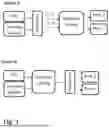
FIG. 1 shows schematically an overview of the inventive process, wherein, in Route A, the distillation step precedes the hydroprocessing step, and in Route B, the hydroprocessing step precedes the distillation step. In the embodiments shown, the distillation step results in two or more fractions, at least one of which is a base oil (Route B), or a fraction becoming a base oil after hydroprocessing (Route A).
DETAILED DESCRIPTION OF THE INVENTION
The inventive method is based on a hydroprocessing step which comprises a hydrotreatment step, and a distillation step.
According to the invention, it has been found that, with a sulfur level of maximum 1% by weight obtained by the above two steps, also a suitable base oil aromaticity, and thus aniline point, is secured with same process steps. The aniline point is affected by viscosity and aromaticity and will typically be well above 50° C. even for a base oil based on TPO.
In the distillation step, the feedstock (see Route A in FIG. 1), or the effluent from the hydroprocessing step (see Route B in FIG. 1) is distilled into 2 or more fractions. The distillation step is typically carried out in a distillates boiling range of 280-500° C.
A catalytic dewaxing step is preferably included in the hydroprocessing step in order to obtain a base oil with improved low temperature properties. The catalytic dewaxing step is carried out using a base metal dewaxing catalyst. When included, the catalytic dewaxing step is typically carried out within the following ranges: a pressure within a range of 100-160 bar; a temperature within a range of 350-400° C.; an LHSV within a range of 0.4-2.0 h−1. When included, the hydrofinishing step is carried out at similar ranges as those set forth above for the hydroprocessing step.
The inventive method allows for using a co-feed, such as plastic waste pyrolytic oil, crude oil, crude oil distillate, VGO, a used oil, or a waste oil, or a mixture of any thereof.
The feedstock to the inventive methods should preferably meet certain criteria for the level of impurities therein, especially for plastic waste pyrolysis oil when used as co-feed.
In particular the contents of the following contaminants in a feedstock or a co-feed to be used in the inventive methods may have to be reduced: particles, water, halogens, nota-bly chlorine and bromine, and silicone.
For this purpose, depending on the purity of the feedstock and co-feed to be used in the methods, a pre-treatment step for reducing the presence of one or more of the above contaminants is preferably included in the inventive methods.
A base metal catalyst is used in the hydrotreatment step. The catalyst is preferably based on Ni, Mo, Co, W, or on a combination of any thereof.
A base metal catalyst is used in the catalytic dewaxing step. The catalyst is preferably based on Ni, Mo, W, or on a combination of any thereof.
A hydrofinishing step is preferably included in the hydroprocessing step of the inventive methods. The order of the different steps in the hydroprocessing step, when used, is preferably the following: hydrotreatment, catalytic dewaxing, and finally hydrofinishing.
The inventive method does not require the use of a noble metal catalyst. Hence, a high-pressure separation step and associated equipment for separating undesired gases, such as NH3, H2S and the like, the presence of which gases would deactivate a noble metal catalalyst if used, are not required according to the invention.
In preferred embodiments, the catalysts used in the inventive method are selected from base metal catalysts.
In preferred embodiments, the inventive method does not include a hydrodeoxygenation (HDO) step.
In preferred embodiments, the inventive method does not include a hydrodcracking step.
In a preferred embodiment the resulting base oil is suitable for use at low temperatures, and includes a substantial biogenic carbon content. The base oil has a viscosity of 3-700 cSt at 40° C., preferably a viscosity of 3-450 cSt at 40° C. The base oil will typically be of naphthenic type.
The viscosity index of the base oil is preferably no more than 110, more preferably no more than 100, and especially preferred no more than 95.
The inventive base oil preferably has a nitrogen content of below 100 ppm, more preferably below 40 ppm, such as below 20 ppm, and more preferably below 10 ppm, and preferably has a sulfur content of below 100 ppm, more preferably below 50 ppm, especially below 20 ppm.
The inventive base oil preferably exhibits an aromatic content suitable for typical base oil applications, including a polycyclic aromatic hydrocarbon (PAH) content of 10 specified PAHs below 10 mg/kg as established using method of measurement EN 16143, and a PCA content established according to IP346 of below 3% by weight.
The aniline point of the inventive base oil as established using the standard method ASTM D 611 is typically at least 50° C.
The base oil preferably has low temperature properties suitable for the base oil applications according to the oil standard methods ASTM D7346 and ASTM D97.
The base oil obtainable by means of the method preferably exhibits a biogenic carbon content of at least 1%, preferably at least 5%, more preferably at least 10%, more preferably at least 30%, and more preferably at least 50%, as established using method ASTM D6866. As described above, the feed to the process, i.e. TPO only or TPO with co-feed, should be selected so as to exhibit a content of biogenic carbon corresponding to the de-sired content of biogenic carbon of the resulting base oil.
EXAMPLES
Example 1
In this example, a base oil was prepared from a commercially available TPO. The properties of the TPO used have been set forth in Table 1 below, along with the standard measurement methods used. In the example the TPO was in a first step subjected to a TPO distillation/fractionation step to obtain a TPO distillate. Thereafter, in a second step, the TPO distillate was subjected to hydrotreatment to obtain a base oil. In a third step, the properties of the resulting base oil were further improved by subjecting the base oil to a dewaxing step. In a fourth step, the improved base oil from the third step was subjected to hydrofinishing. The details of the method will be further described below.
The properties of the TPO used have been set forth in Table 1 below.
| TABLE 1 |
| TPO properties |
| Property | Unit | Value | Standard Method |
| Density at 15° C. | [kg/m3] | 964 | ASTM D7042 |
| Viscosity at 40° C. | [cSt] | 53 | ASTM D7042 |
| Viscosity at 100° C. | [cSt] | 5.8 | ASTM D7042 |
| Viscosity index | 14 | ASTM D2270 | |
| CA (IR) | [%] | 35 | Brandes IEC 60590 |
| CP (IR) | [%] | 44 | Brandes IEC 60590 |
| CN (IR) | [%] | 21 | Brandes IEC 60590 |
| Pour point | [° C.] | 21 | ASTM D7346 |
| Sulfur | [ppm] | 9300 | ASTM D2622 |
| Nitrogen | [ppm] | 5700 | ASTM D4629 |
| Biogenic carbon | [%] | 52 | ASTM D 6866 |
| Simulated distillation | ASTM D2887 | ||
| 5% | [° C.] | 250 | |
| 50% | [° C.] | 401 | |
| 95% | [° C.] | 557 | |
The TPO was subjected to distillation. Thereafter fractions obtained from the distillation were blended to make the TPO distillate feed used in Example 1. Table 2 shows the properties of the TPO distillate feed along with the measurement methods used.
| TABLE 2 |
| TPO distillate feed used in Example 1. |
| Property | Unit | Value | Standard Method |
| Density at 15° C. | [kg/m3] | 958 | ASTM D7042 |
| Viscosity at 40° C. | [cSt] | 40 | ASTM D7042 |
| Viscosity at 100° C. | [cSt] | 4.8 | ASTM D7042 |
| Viscosity index | −25 | ASTM D2270 | |
| Refractive index | 1.532 | ASTM D1747 | |
| CA (IR) | [%] | 37 | Brandes IEC 60590 |
| CP (IR) | [%] | 43 | Brandes IEC 60590 |
| CN (IR) | [%] | 20 | Brandes IEC 60590 |
| Pour point | [° C.] | 0 | ASTM D7346 |
| Sulfur | [ppm] | 7420 | ASTM D2622 |
| Nitrogen | [ppm] | 3460 | ASTM D4629 |
| Simulated distillation | ASTM D2887 | ||
| 5% | [° C.] | 286 | |
| 50% | [° C.] | 389 | |
| 95% | [° C.] | 429 | |
The hydrotreatment step (2) was carried out with a base metal catalyst (NiMo), with the objective to remove sulfur, nitrogen and to saturate aromatics. The operating conditions of step 2 are shown in the Table 3 below, and properties of the resulting product from step 2, i.e. a base oil, are shown in Table 4 below.
| TABLE 3 |
| Hydrotreatment operating conditions of step 2: |
| Property | Unit | Value | |
| Pressure | [barg] | 150 | |
| Temperature | [° C.] | 340 | |
| LHSV | [h−1] | 0.50 | |
| H2/oil | [m3/m3] | 1000 | |
| TABLE 4 |
| Properties of the liquid product (base oil) from step 2: |
| Property | Unit | Value | Standard Method | |
| Density | [kg/m3] | 899 | ASTM D7042 | |
| Viscosity at 40° C. | [cSt] | 13.9 | ASTM D7042 | |
| Viscosity at 100° C. | [cSt] | 3.0 | ASTM D7042 | |
| Viscosity Index | 48 | ASTM D2270 | ||
| Sulfur | [ppm] | 336 | ASTM D2622 | |
| Nitrogen | [ppm] | 8.6 | ASTM D4629 | |
| Pour point (CPP) | [° C.] | 0 | ASTM D7346 | |
| CA(IR) | [%] | 12 | Brandes IEC 60590 | |
| CP(IR) | [%] | 46 | Brandes IEC 60550 | |
| CN(IR) | [%] | 42 | Brandes IEC 60590 | |
| Aniline point | [° C.] | 76 | ASTM D 611 | |
| Biogenic carbon | [%] | 50 | ASTM D 6866 | |
The objective of step 3 is to improve cold flow properties of the liquid product from step 2. In this step a commercial metal-based catalyst (Nickel) with Zeolite was used, and it was carried out in the same reactor as subsequent step 4. The catalyst used in step 4 (NiMo) is similar to the step 1 catalyst. Steps 3 and 4, which are carried out in sequence in the same reactor, have similar operating conditions as shown in the table 5 below.
Olefin saturation and color adjustment is occurring in the final hydrofinishing step (4).
| TABLE 5 |
| Dewaxing (step 3) and hydrofinishing |
| (step 4) operating conditions: |
| Property | Unit | Value | |
| Pressure | [barg] | 150 | |
| Temperature | [° C.] | 370 | |
| LHSV* | [h−1] | 1.0 | |
| H2/oil | [m3/m3] | 1000 | |
| *based on total catalyst volume |
The properties of the product from steps 3 and 4 are set forth in the below Table 6.
| TABLE 6 |
| Product Properties: |
| Property | Unit | Value | Standard Method |
| Density | [kg/m3] | 893 | ASTM D7042 |
| Viscosity at 40° C. | [cSt] | 11 | ASTM D7042 |
| Viscosity at 100° C. | [cSt] | 2.6 | ASTM D7042 |
| Viscosity Index | 47 | ASTM D2270 | |
| Sulfur | [ppm] | 4.4 | ASTM D2622 |
| Nitrogen | [ppm] | 1.5 | ASTM D4629 |
| Pour point (CPP) | [° C.] | −60 | ASTM D7346 |
| CA(IR) | [%] | 8 | Brandes IEC 60590 |
| CP(IR) | [%] | 44 | Brandes IEC 60590 |
| CN(IR) | [%] | 48 | Brandes IEC 60590 |
| Aniline point | [° C.] | 78 | ASTM D611 |
| Biogenic carbon | [%] | 50 | ATM D 6866 |
| Simulated Distillation | ASTM D2887 | ||
| 5% | [° C.] | 182 | |
| 50% | [° C.] | 362 | |
| 95% | [° C.] | 430 | |
Example 2
In this example, a base oil was prepared from a commercially available TPO. The properties of the TPO used have been set forth in Table 7 below, along with the standard measurement methods used. In the example the TPO was in a first step subjected to a TPO distillation/fractionation step to obtain a TPO distillate. Thereafter, in a second step, the TPO distillate was subjected to hydrotreatment to obtain a base oil. In a third step, the properties of the resulting base oil, especially the low temperature properties, were further improved by subjecting the base oil to a dewaxing step. In a fourth step, the improved base oil from the 3rd step was subjected to hydrofinishing. The objectives, method steps, and catalysts for steps 2, 3, and 4, are the same as those in Example 1. However, the feed properties, operating conditions and products properties are different. The details of the method will be further described below.
| TABLE 7 |
| TPO properties |
| Property | Unit | Value | Standard Method |
| Density at 15° C. | [kg/m3] | 964 | ASTM D7042 |
| Viscosity at 40° C. | [cSt] | 49 | ASTM D7042 |
| Viscosity at 100° C. | [cSt] | 5.6 | ASTM D7042 |
| Viscosity index | 14 | ASTM D2270 | |
| Refractive index | 1.517 | ASTM D1747 | |
| CA (IR) | [%] | 34 | Brandes IEC 60590 |
| CP (IR) | [%] | 52 | Brandes IEC 60590 |
| CN (IR) | [%] | 14 | Brandes IEC 60590 |
| Pour point | [° C.] | 12 | ASTM D7346 |
| Sulfur | [ppm] | 9300 | ASTM D2622 |
| Nitrogen | [ppm] | 5410 | ASTM D4629 |
| Biogenic carbon | [%] | 53 | ASTM D 6866 |
| Total Acid Number | mg KOH/g | 5.2 | ASTM D974 |
| Simulated Distillation | ASTM D2887 | ||
| 5% | [° C.] | 245 | |
| 50% | [° C.] | 391 | |
| 95% | [° C.] | 521 | |
| TABLE 8 |
| Hydrotreatment (step 2) operating conditions: |
| Property | Unit | Value | |
| Pressure | [barg] | 160 | |
| Temperature | [° C.] | 360 | |
| LHSV | [h−1] | 0.50 | |
| H2/oil | [m3/m3] | 1000 | |
| TABLE 9 |
| Properties of the liquid product (base |
| oil) from step 2 (hydrotreatment): |
| Property | Unit | Value | Standard Method |
| Density | [kg/m3] | 914 | ASTM D7042 |
| Viscosity at 40° C. | [cSt] | 28 | ASTM D7042 |
| Viscosity at 100° C. | [cSt] | 4.4 | ASTM D7042 |
| Viscosity Index | 24 | ASTM D2270 | |
| Sulfur | [ppm] | 26 | ASTM D2622 |
| Nitrogen | [ppm] | 8.6 | ASTM D4629 |
| Pour point (PP) | [° C.] | 9 | ASTM D7346 |
| CA(IR) | [%] | 14 | Brandes IEC 60590 |
| CP(IR) | [%] | 43 | Brandes IEC 60590 |
| CN(IR) | [%] | 43 | Brandes IEC 60590 |
| Aniline point | [° C.] | 77 | ASTM D611 |
| Biogenic carbon | [%] | 51 | ASTM D 6866 |
| Appearance at 15° C. | Clear and | ASTM D4176 | |
| Bright | |||
| Total Acid Number | mg KOH/g | <0.03 | ASTM D974 |
As can be seen from a comparison of Tables 7 and 9, the high acidity of the TPO used has not affected the resulting base oil. This demonstrates that a base oil having an acceptable acidity can be obtained from TPO using the inventive method.
| TABLE 10 |
| Dewaxing and Hydrofinishing (steps 3 and 4) operating conditions: |
| Property | Units | Value | |
| Pressure | [barg] | 150 | |
| Temperature | [° C.] | 370 | |
| LHSV* | [h−1] | 0.5 | |
| H2/oil | [m3/m3] | 1000 | |
| *based on total catalyst volume |
| TABLE 11 |
| Product Properties of the improved base |
| oil obtained from steps 3 and 4: |
| Property | Unit | Product | Standard Method |
| Density | [kg/m3] | 893.5 | ASTM D7042 |
| Viscosity at 40° C. | [cSt] | 11 | ASTM D7042 |
| Viscosity at 100° C. | [cSt] | 2.6 | ASTM D7042 |
| Viscosity Index | 18 | ASTM D2270 | |
| Sulfur | [ppm] | 4.4 | ASTM D2622 |
| Nitrogen | [ppm] | 1.5 | ASTM D4629 |
| Pour point (CPP) | [° C.] | −60 | ASTM D7346 |
| CA(IR) | [%] | 8 | Brandes IEC 60590 |
| CP(IR) | [%] | 44 | Brandes IEC 60590 |
| CN(IR) | [%] | 48 | Brandes IEC 60590 |
| Aniline point | [° C.] | 78 | ASTM D611 |
| Biogenic carbon | [%] | 50 | ASTM D 6866 |
| Simulated Distillation | ASTM D2887 | ||
| 5% | [° C.] | 182 | |
| 50% | [° C.] | 362 | |
| 95% | [° C.] | 430 | |
Assessment of samples of the base oils in Tables 4 and 9 shows an average biogenic carbon content according to ASTM D6866 of 50% and a PAH content of less than 10 ppm of the 10 specific PAH according to EN 16143.
Miscibility experiments confirm miscibility of TPO with the different co-feeds listed, and experience based on the chemical composition of the fluids and from conventional refining support coprocessing capability.
Claims
1. A method of preparing a base oil having a sulfur content of no more than 1% by weight from a tire pyrolysis oil, comprising the following steps:
subjecting a tire pyrolysis oil to a hydroprocessing step comprising a hydrotreatment step, so as to obtain a hydroprocessed tire pyrolysis oil, wherein the hydrotreatment step is carried out at a pressure within the range of 50-170 bar, a temperature within the range of 290-370° C., and a liquid hourly space velocity within the range of 0.4-2.0 h−1 in the presence of a base metal catalyst; and,
distillation of the hydroprocessed tire pyrolysis oil obtained from the hydroprocessing step so as to obtain at least two fractions, of which fractions at least one is a base oil.
2. A method of preparing a base oil having a sulfur content of no more than 1% by weight from a tire pyrolysis oil, comprising the following steps:
distillation of a tire pyrolysis oil so as to obtain one or more fractions; and,
subjecting the one or more fractions obtained from the distillation step to a hydroprocessing step comprising a hydrotreatment step, wherein the hydrotreatment step is carried out at a pressure within a range of 50-170 bar, a temperature within a range of 290-370° C., and a liquid hourly space velocity within a range of 0.4-2.0 h−1 in the presence of a base metal catalyst, so as to obtain one or more hydroprocessed products, of which products at least one is a base oil.
3. The method of claim 1, wherein the hydroprocessing step additionally includes a catalytic dewaxing step in the presence of a base metal catalyst.
4. The method of claim 3, wherein the catalytic dewaxing step is carried out at a pressure within a range of 100-160 bar; a temperature within a range of 350-400° C.; an LHSV within a range of 0.4-2.0 h−1
5. The method of claim 1, wherein the hydroprocessing step additionally includes a hydrofinishing step.
6. The method of claim 1, wherein a waste oil, a used oil, a pyrolytic plastic waste oil, crude oil, crude oil distillate, VGO, or a combination of any thereof, is provided as a co-feed into the process and is treated together with the tire pyrolysis oil.
7. The method of claim 1, wherein the catalysts used in the method are selected from base metal catalysts.
8. The method of claim 1, wherein the tire pyrolysis oil exhibits a biogenic carbon content as established according to the method ASTM D6866 of at least 1% by weight.
9. The method of claim 1, wherein the tire pyrolysis oil exhibits a biogenic carbon content as established according to the method ASTM D6866 of at least 5%.
10. A base oil having a sulfur content of no more than 1% by weight, characterized in exhibiting a biogenic carbon content as established according to the method ASTM D6866 of at least 1% by weight, a viscosity index (VI) of no more than 110 and containing essentially no oxygen.
11. The base oil of claim 9, having a biogenic carbon content as established according to the method ASTM D6866 of at least about 5%.
12. The base oil of claim 10, having a viscosity of 3-700 cSt at 40° C.
13. The method of claim 2, wherein the hydroprocessing step additionally includes a catalytic dewaxing step in the presence of a base metal catalyst.
14. The method of claim 13, wherein the catalytic dewaxing step is carried out at a pressure within a range of 100-160 bar; a temperature within a range of 350-400° C.; an LHSV within a range of 0.4-2.0 h−1
15. The method of claim 2, wherein the hydroprocessing step additionally includes a hydrofinishing step.
16. The method of claim 2, wherein a waste oil, a used oil, a pyrolytic plastic waste oil, crude oil, crude oil distillate, VGO, or a combination of any thereof, is provided as a co-feed into the process and is treated together with the tire pyrolysis oil.
17. The method of claim 2, wherein the catalysts used in the method are selected from base metal catalysts.
18. The method of claim 2, wherein the tire pyrolysis oil exhibits a biogenic carbon content as established according to the method ASTM D6866 of at least 1% by weight.
19. The method of claim 2, wherein the tire pyrolysis oil exhibits a biogenic carbon content as established according to the method ASTM D6866 of at least 5%.
Images & Drawings included:

Sources:
- United States Patent and Trademark Office - verify current appl. status at the USPTO↗
Recent applications in this class:
- » 20250346817 2025-11-13
CONVERSION OF WASTE PLASTIC AND OIL BLEND WITH A CONTAMINANT REMOVAL STEP - » 20250346816 2025-11-13
MELTING AND DISSOLVING WASTE PLASTIC INTO VGO - » 20250340783 2025-11-06
PROCESS FOR STABLE BLEND OF WASTE PLASTIC WITH PETROLEUM FEED FOR FEEDING TO OIL REFINERY UNITS AND PROCESS OF PREPARING SAME - » 20250340782 2025-11-06
PROCESS FOR STABLE BLEND OF WASTE PLASTIC WITH PETROLEUM FEED FOR FEEDING TO OIL REFINERY UNITS AND PROCESS OF PREPARING SAME - » 20250257266 2025-08-14
PRODUCTION OF HALIDE FREE HYDROCARBONS - » 20250230364 2025-07-17
CHEMICAL RECYCLING OF PLASTIC-DERIVED STREAMS TO A CRACKER SEPARATION ZONE WITH ENHANCED SEPARATION EFFICIENCY - » 20250215326 2025-07-03
PROCESS FOR PRODUCING JET FUEL FROM LIGNIN - » 20250188358 2025-06-12
PROCESSES FOR COFEEDING WASTE PLASTIC AND BIO FEEDSTOCKS TO A REFINERY PROCESSING UNIT - » 20250163331 2025-05-22
METHODS AND SYSTEMS FOR MIXING DISSIMILAR HYDROCARBON FEEDSTOCK MATERIALS TO FORM HYDROCARBON FEEDSTOCK BLENDS FOR SUBSEQUENT PROCESSING - » 20250109338 2025-04-03
INTEGRATED MIXED PLASTIC PYROLYSIS WITH HEAVY OIL PRODUCT THERMAL CRACKING