THINNER COMPOSITION, AND METHOD FOR PRODUCING SEMICONDUCTOR DEVICE USING THINNER COMPOSITION
US20250354093A1
2025-11-20
18/881,364
2023-07-03
Smart Summary: A new thinner composition is designed for use in making semiconductor devices. It contains a special solvent made from specific chemical compounds. These compounds have different groups, such as alkyl or aryl, which are types of carbon-based structures. The thinner helps in the production process of semiconductors, making it easier to work with materials. Overall, this composition aims to improve the efficiency and effectiveness of semiconductor manufacturing. 🚀 TL;DR
Abstract:
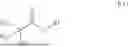
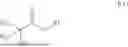
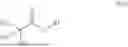
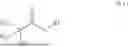
A thinner composition includes: (B) a solvent containing: (B1) a compound represented by the following general formula (b-1):
wherein R0 is an alkyl group having 1 to 10 carbon atoms, an aryl group having 6 to 10 carbon atoms, or an acyl group having 1 to 10 carbon atoms, and R1 is a hydrogen atom or an alkyl group having 1 to 10 carbon atoms.
Inventors:
- Masayuki Katagiri 21 🇯🇵 Niigata, Japan
- Hideyuki Sato 23 🇯🇵 Niigata, Japan
- Masatoshi ECHIGO 46 🇯🇵 Tokyo, Japan
- Takumi OKADA 6 🇯🇵 Niigata, Japan
- Shu SUZUKI 9 🇯🇵 Kanagawa, Japan
- Ryosuke HOSHINO 5 🇯🇵 Niigata, Japan
Assignee:
- Mitsubishi Gas Chemical Company, Inc. 1,403 🇯🇵 Tokyo, Japan
Applicant:
Interested in similar patents?
Get notified when new applications in this technology area are published.
Classification:
C11D7/5022 » CPC main
Compositions of detergents based essentially on non-surface-active compounds; Solvents; Organic solvents containing oxygen
G03F7/168 » CPC further
Photomechanical, e.g. photolithographic, production of textured or patterned surfaces, e.g. printing surfaces; Materials therefor, e.g. comprising photoresists; Apparatus specially adapted therefor; Coating processes; Apparatus therefor Finishing the coated layer, e.g. drying, baking, soaking
C11D7/50 IPC
Compositions of detergents based essentially on non-surface-active compounds Solvents
G03F7/16 IPC
Photomechanical, e.g. photolithographic, production of textured or patterned surfaces, e.g. printing surfaces; Materials therefor, e.g. comprising photoresists; Apparatus specially adapted therefor Coating processes; Apparatus therefor
Description
TECHNICAL FIELD
The present invention relates to a thinner composition, and a method for manufacturing a semiconductor device using the thinner composition, and particularly relates to a thinner composition for removing a photoresist film or a photoresist underlayer film.
BACKGROUND ART
In the manufacture of semiconductor devices and liquid crystal devices, fine processing is performed by lithography involving use a photoresist material. In a lithography process, a photosensitive resin composition is applied to a wafer, a designed pattern is transferred thereon, and then, a fine circuit pattern such as a semiconductor integrated circuit is prepared through an etching process. This is carried out by a method for preparing a fine circuit pattern to be obtained, the method including the application, exposure, development, etching, and stripping processes. In particular, in the manufacture of semiconductor devices, further miniaturization of pattern dimensions has been required along with increases in the integration and speed of LSI, in recent years. To correspond to such miniaturization of pattern dimensions, the light source for lithography used upon forming resist patterns has been shifted from KrF excimer laser (248 nm) to ArF excimer laser (193 nm) and EUV (extreme ultraviolet) light source (13.5 nm), which have a shorter wavelength, so that the fine processing is sensitive to a contaminant source. Accordingly, the residue of the photoresist, BARC, SOC, and SOG applied to a substrate in the application process, and a contamination there with may serve as contaminant sources in the exposure process, and are therefore required to be removed in advance. In this regard, a thinner composition has been used in an edge bead removing (EBR) process.
In recent years, due to the application of a photoresist or an underlayer film thereof for which a light source having a short wavelength is used, the amount of the photoresist or the underlayer film thereof used have a great influence on the manufacturing cost of the integrated circuit. Thus, it is required to reduce the amount of the photoresist or the underlayer film thereof used to save costs. For this purpose, there has been applied a reducing resist consumption (RRC) process that performs prewetting treatment in which a thinner composition is applied to the surface of a substrate to wet the surface before the application of the photoresist or the underlayer film thereof, thereby allowing the photoresist to be uniformly applied to the entire surface of the substrate even with a small amount of the photoresist or the underlayer film thereof.
Although thinner compositions to be used in various EBR processes and RRC processes have conventionally been developed, a thinner composition that enables those processes to be achieved at a high level has not been developed.
CITATION LIST
Patent Literature
-
- Patent Literature 1: Japanese Patent Laid-Open No. 2001-188359
- Patent Literature 2: Japanese Patent Laid-Open No. 2005-227770
- Patent Literature 3: Japanese Patent Laid-Open No. 2015-232708
SUMMARY OF INVENTION
Technical Problem
Thus, as for the thinner composition used in, for example, the EBR process or the RRC process in the manufacture of various devices, there is a need for the development of a thinner composition that can be sufficiently applied to the EBR process for a wide variety of photoresists and underlayer films thereof and has a high RRC efficiency to reduce the manufacturing cost.
Solution to Problem
The present inventors have intensively studied to solve the above problems, and as a result, have found that the above problems can be solved by a thinner composition which contains a solvent including a compound having a specific structure. That is, the present invention is as follows.
<1> A thinner composition comprising:
-
- (B) a solvent comprising: (B1) a compound represented by the following general formula (b-1):
wherein R0 is an alkyl group having 1 to 10 carbon atoms, an aryl group having 6 to 10 carbon atoms, or an acyl group having 1 to 10 carbon atoms, and R1 is a hydrogen atom or an alkyl group having 1 to 10 carbon atoms.
<2> The thinner composition according to the above <1>, wherein the solvent (B) comprises neither methyl 2-methoxyisobutyrate (MBM), nor methyl 2-formyloxyisobutyrate (FBM), nor methyl 2-acetoxyisobutyrate (ABM).
<3> The thinner composition according to the above <1> or <2>, wherein R0 in the general formula (b-1) is a methyl group, an ethyl group, an n-propyl group, an i-propyl group, an n-butyl group, an i-butyl group, an s-butyl group, a t-butyl group, a cyclopropyl group, a cyclopentyl group, a cyclohexyl group, a phenyl group, a naphthyl group, a formyl group, an acetyl group, a propionyl group, or a benzoyl group.
<4> The thinner composition according to any one of the above <1> to <3>, wherein R1 in the general formula (b-1) is a hydrogen atom, a methyl group, an ethyl group, an n-propyl group, an i-propyl group, an n-butyl group, an i-butyl group, an s-butyl group, or a t-butyl group.
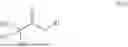
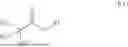
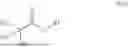
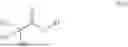
<5> The thinner composition according to any one of the above <1> to <4>, wherein the solvent (B) comprises, as (B2) a solvent other than the compound (B1), a compound represented by the following general formula (b-2):
wherein R1 is a hydrogen atom or an alkyl group having 1 to 10 carbon atoms. <6> The thinner composition according to the above <5>, wherein the solvent (B) comprises one or more selected from the group consisting of methyl α-hydroxyisobutyrate and α-hydroxyisobutyric acid, as the solvent (B2).
<7> The thinner composition according to the above <5> or <6>, wherein the solvent (B2) is contained in an amount less than 100% by mass, based on the total amount (100% by mass) of the thinner composition.
<8> The thinner composition according to the above <5> or <6>, wherein the solvent (B2) is contained in an amount of 100% by mass or less based on the total amount (100% by mass) of the compound (B1).
<9> A method for manufacturing a semiconductor device, comprising:
-
- a step of applying the thinner composition according to any one of the above <1> to <8> to a substrate before applying a photoresist film material or a photoresist underlayer film material to the substrate.
<10> A method for manufacturing a semiconductor device, comprising:
-
- a step of applying the thinner composition according to any one of the above <1> to <8> to a substrate, after applying a photoresist film material or a photoresist underlayer film material to the substrate and before an exposure step.
<11> A method for manufacturing a semiconductor device comprising:
-
- a step of forming a photoresist film or a photoresist underlayer film on a substrate, and
- a step of removing the photoresist film or the photoresist underlayer film by using the thinner composition according to any one of the above <1> to <8>.
<12> The method for manufacturing a semiconductor device according to the above <11>, wherein the photoresist film or the photoresist underlayer film is removed by bringing the thinner composition into contact with an edge and/or a back surface of the substrate on which the photoresist film or the photoresist underlayer film is formed.
<13> The method for manufacturing a semiconductor device according to the above <12>, wherein the photoresist film or the photoresist underlayer film is removed by spraying the thinner composition to the edge and/or the back surface of the substrate on which the photoresist film or the photoresist underlayer film is formed, while rotating the substrate.
<14> The method for manufacturing a semiconductor device according to any one of the above <11> to <13>, further comprising a step of drying the thinner composition remained on the substrate, after the step of removing the photoresist film or the photoresist underlayer film.
<15> The method for manufacturing a semiconductor device according to any one of the above <11> to <14>, further comprising:
-
- a step of soft baking the photoresist film,
- a step of partially exposing the soft baked photoresist film to light via a mask, and
- a step of developing the exposed photoresist film with a developer to form a photoresist pattern.
<16> The method for manufacturing a semiconductor device according to any one of the above <11> to <15>, wherein in a case where the photoresist film or the photoresist underlayer film is formed on an edge and/or a back surface of the substrate, the method further comprises a step of removing the photoresist film or the photoresist underlayer film on the edge and/or the back surface of the substrate after the photoresist film or the photoresist underlayer film is formed on the substrate.
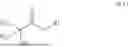
<17> A solvent composition comprising: (B) a solvent comprising (B1) a compound represented by the following general formula (b-1):
wherein R0 is an alkyl group having 1 to 10 carbon atoms, an aryl group having 6 to 10 carbon atoms, or an acyl group having 1 to 10 carbon atoms, and R1 is a hydrogen atom or an alkyl group having 1 to 10 carbon atoms.
<18> The solvent composition according to the above <17>, wherein the solvent (B) comprises neither methyl 2-methoxyisobutyrate (MBM), nor methyl 2-formyloxyisobutyrate (FBM), nor methyl 2-acetoxyisobutyrate (ABM).
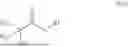
<19> The solvent composition according to the above <17> or <18>, wherein the solvent (B) comprises, as (B2) a solvent other than the compound (B1), a compound represented by the following general formula (b-2).
wherein R1 is a hydrogen atom or an alkyl group having 1 to 10 carbon atoms.
<20> The solvent composition according to the above <19>, wherein the solvent (B2) is contained in an amount of less than 100% by mass and 0.0001% by mass or more, based on the total amount (100% by mass) of the solvent composition.
Advantageous Effects of Invention
The thinner composition of a suitable aspect of the present invention enables suitable treatment of substrates for the manufacture of various devices (in particular, semiconductor devices) and removal of a photoresist or an underlayer film thereof.
DESCRIPTION OF EMBODIMENTS
[Thinner Composition]
The thinner composition of the present invention contains: (B) a solvent containing: (B1) a compound represented by the general formula (b-1) (hereinafter, also referred to as the “component (B)”).
<Component (B): Solvent>
The thinner composition of one aspect of the present invention contains: (B) a solvent containing: (B1) a compound represented by the following general formula (b-1).
The compound (B1) may be used singly or in combination of two or more thereof.
In the above formula (b-1), R0 is an alkyl group having 1 to 10 carbon atoms, an aryl group having 6 to 10 carbon atoms, or an acyl group having 1 to 10 carbon atoms, and R1 is a hydrogen atom or an alkyl group having 1 to 10 carbon atoms.
In one aspect of the present invention, R0 in the general formula (b-1) is preferably a methyl group, an ethyl group, an n-propyl group, an i-propyl group, an n-butyl group, an i-butyl group, an s-butyl group, a t-butyl group, a cyclopropyl group, a cyclopentyl group, a cyclohexyl group, a phenyl group, a naphthyl group, a formyl group, an acetyl group, a propionyl group, or a benzoyl group, and more preferably a methyl group, an acetyl group, or a formyl group.
In one aspect of the present invention, R1 in the general formula (b-1) is preferably a hydrogen atom, a methyl group, an ethyl group, an n-propyl group, an i-propyl group, an n-butyl group, an i-butyl group, an s-butyl group, or a t-butyl group, and more preferably a methyl group, an i-propyl group, an n-butyl group, or an i-butyl group.
Provided that, in one aspect of the present invention, the solvent (B) preferably contains neither methyl 2-methoxyisobutyrate (MBM), nor methyl 2-formyloxyisobutyrate (FBM), nor methyl 2-acetoxyisobutyrate (ABM), in view of EBR performance and rework performance, and the in-plane uniformity of a coating film obtained upon use as a prewetting liquid.
In the thinner composition of one aspect of the present invention, the solvent (B) preferably contains, as (B2) a solvent other than the compound (B1), a compound represented by the following general formula (b-2):
-
- wherein R1 is a hydrogen atom or an alkyl group having 1 to 10 carbon atoms. The alkyl group may be a linear alkyl group or a branched alkyl group.
Examples of the alkyl group capable of being selected as R1 include a methyl group, an ethyl group, an n-propyl group, an i-propyl group, an n-butyl group, an 1-butyl group, an s-butyl group, or a t-butyl group, a pentyl group, a hexyl group, a heptyl group, an octyl group, a 2-ethylhexyl group, a nonyl group, and a decyl group.
Among these, R1 in the general formula (b-2) is preferably a hydrogen atom, a methyl group, an ethyl group, an n-propyl group, an i-propyl group, an n-butyl group, an i-butyl group, an s-butyl group, or a t-butyl group, in one aspect of the present invention.
In particular, the solvent (B) preferably contains one or more selected from the group consisting of methyl 2-hydroxyisobutyrate (HBM) and 2-hydroxyisobutyric acid, as the solvent (B2).
In the thinner composition of one aspect of the present invention, examples of the solvent (B2) include lactones such as γ-butyrolactone; ketones such as acetone, methyl ethyl ketone, cyclohexanone, methyl-n-pentyl ketone, methyl isopentyl ketone, and 2-heptanone; polyhydric alcohols such as ethylene glycol, diethylene glycol, propylene glycol, and dipropylene glycol; compounds having an ester bond such as ethylene glycol monoacetate, diethylene glycol monoacetate, propylene glycol monoacetate, and dipropylene glycol monoacetate; compounds having an ether bond, such as mono alkyl ethers such as monomethyl ether, monoethyl ether, monopropyl ether, and monobutyl ether or monophenyl ethers of the polyhydric alcohol or the compounds having an ester bond; cyclic ethers such as dioxane, and esters other than the compound (B1), such as methyl lactate, ethyl lactate, methyl acetate, ethyl acetate, butyl acetate, methyl pyruvate, ethyl pyruvate, methyl β-methoxyisobutyrate, methyl methoxypropionate, ethyl ethoxypropionate, and methyl β-formyl oxyisobutyrate; aromatic organic solvents such as anisole, ethylbenzyl ether, cresyl methyl ether, diphenyl ether, dibenzyl ether, phenetole, butyl phenyl ether, ethylbenzene, diethylbenzene, pentylbenzene, isopropylbenzene, toluene, xylene, cymene, and mesitylene; and dimethylsulfoxide (DMSO).
These solvents (B2) may be used singly or in combination of two or more thereof.
However, in the thinner composition of the present invention, the content of the compound (B1) in the component (B) is preferably 20 to 100% by mass, more preferably 30 to 100% by mass, further preferably 50 to 100% by mass, further more preferably 60 to 100% by mass, and particularly preferably 70 to 100% by mass, based on the total amount (100% by mass) of the component (B) contained in the thinner composition, in view of achieving not only an EBR process but also an RRC process at the same time.
In the thinner composition of one aspect of the present invention, the content of the compound (B1) is preferably 66.67% by mass or more in view of RRC performance, more preferably 80% by mass or more in view of EBR performance, still more preferably 90% by mass or more in view of rework performance, still more preferably 99% by mass or more in view of the in-plane uniformity of a coating film obtained upon use as a prewetting liquid, and particularly preferably 99.9% by mass or more in view of suppressing the defect of the coating film obtained upon use as a prewetting liquid, based on the total amount (100% by mass) of the solvent (B).
The component (B) used in one aspect of the present invention preferably contains methyl 3-hydroxyisobutyrate as the solvent (B2), in view of excellent solubility of an acid generating agent, EBR performance and rework performance, excellent in-plane uniformity of a coating film obtained upon use as a prewetting liquid, and improving the production yield of a semiconductor device. It is preferable to contain methyl 3-hydroxyisobutyrate, in view of a small contact angle and RRC performance. The method for mixing methyl 3-hydroxyisobutyrate is not particularly limited, and they can be contained by either a method including adding methyl 3-hydroxyisobutyrate to the compound (B1), or a method including mixing the component (B) by forming any of them as a by-product or incorporating any of them in the manufacturing process of the compound (B1).
The content of the solvent (B2) is not particularly limited, and is preferably less than 100% by mass, more preferably 50% by mass or less, 40% by mass or less, 30% by mass or less, 20% by mass or less, 10% by mass or less, 5% by mass or less, 1% by mass or less, further preferably 0.1% by mass or less, and particularly preferably 0.01% by mass or less, based on the total amount (100% by mass) of the thinner composition, in view of shortening the drying time of the thinner composition to improve productivity. The content thereof is preferably 0.0001% by mass or more, more preferably 0.001% by mass or more, and further preferably 0.01% by mass or more, in view of excellent in-plane uniformity of a coating film obtained upon use as a prewetting liquid and improving the production yield of a semiconductor device.
The content of the solvent (B2) is preferably 100% by mass or less, and more preferably 50% by mass or less, 40% by mass or less, 30% by mass or less, 20% by mass or less, 10% by mass or less, 5% by mass or less, or 1% by mass or less, further preferably 0.1% by mass or less, and particularly preferably 0.01% by mass or less, based on the total amount (100% by mass) of the compound (B1), in view of improving productivity by shortening the drying time of the thinner composition. The content thereof is preferably 0.0001% by mass or more, more preferably 0.001% by mass or more, and further preferably 0.01% by mass or more, in view of excellent in-plane uniformity of a coating film obtained upon use as a prewetting liquid and improving the production yield of a semiconductor device.
In the thinner composition of the present invention, the content of the component (B) may be appropriately set depending on the application, and may be 50% by mass or more, 54% by mass or more, 58% by mass or more, 60% by mass or more, 65% by mass or more, 69% by mass or more, 74% by mass or more, 77% by mass or more, 80% by mass or more, 82% by mass or more, 84% by mass or more, 88% by mass or more, 90% by mass or more, 94% by mass or more, or 97% by mass or more, based on the total amount (100% by mass) of the thinner composition. The upper limit value of the content of the component (B) may be appropriately set, and the content may be 99% by mass or less, 98% by mass or less, 96% by mass or less, 93% by mass or less, 91% by mass or less, 86% by mass or less, 81% by mass or less, 76% by mass or less, 71% by mass or less, 66% by mass or less, or 61% by mass or less, based on the total amount (100% by mass) of the thinner composition.
The range of the content of the component (B) can be specified by any combination of an upper limit value and a lower limit value appropriately selected from the options each mentioned above.
The thinner composition of the present invention may contain other components other than the above component (B), depending on the application. Examples of other components include one or more selected from the group consisting of a surfactant and an antioxidant. Each content of these other components is appropriately selected depending on the type of the component, and is preferably 0.000000001 to 1 part by mass, more preferably 0.000001 to 0.1 parts by mass, and further preferably 0.00001 to 0.001 parts by mass, per 1 part by mass of the component (B) contained in the thinner composition.
As the surfactant used in one aspect of the present invention, one known in the art can be used without particular limitation. Preferred examples thereof include ethylene glycol methyl ether, ethylene glycol dimethyl ether, ethylene glycol ethyl ether, ethylene glycol methyl ethyl ether, ethylene glycol diethyl ether, diethylene glycol methyl ether, diethylene glycol dimethyl ether, diethylene glycol ethyl ether, diethylene glycol methyl ethyl ether, diethylene glycol diethyl ether, diethylene glycol propyl ether, diethylene glycol methyl propyl ether, diethylene glycol ethyl propyl ether, and diethylene glycol dipropyl ether. These can be each used singly, or as a mixture of two or more thereof.
As the antioxidant used in one aspect of the present invention, one known in the art can be used without particular limitation, and examples thereof include a tocopherol antioxidant, a phenol antioxidant, a hindered amine antioxidant, a phosphorus antioxidant, a sulfur antioxidant, a benzotriazole antioxidant, a benzophenone antioxidant, a hydroxylamine antioxidant, a salicylic acid ester antioxidant, and a triazine antioxidant.
Tocopherol Antioxidant
A tocopherol compound is typically vitamin E, and is also a naturally derived chemical substance. Thus, the tocopherol compound is highly safety and low in environmental load. In addition, the tocopherol compound is oil-soluble and liquid at ambient temperature, and is thus excellent in compatibility with the thinner composition and the like, and also excellent in deposition resistance.
Examples of the tocopherol compound include tocopherol and a derivative thereof, and tocotrienol and a derivative thereof. Tocopherol and tocotrienol are known to have a distinction such as a natural type compound (d-form), a non-natural type compound (1-form), and a racemate (dl-form) which is an equivalent mixture thereof. Some natural type compounds (d-form) and racemates (dl-form) are used as a food additive, for example, and are thus preferable.
Specific examples of tocopherol include d-α-tocopherol, dl-α-tocopherol, d-β-tocopherol, dl-β-tocopherol, d-γ-tocopherol, dl-γ-tocopherol, d-δ-tocopherol, and dl-δ-tocopherol.
Specific examples of tocotrienol include d-α-tocotrienol, dl-α-tocotrienol, d-β-tocotrienol, dl-β-tocotrienol, d-γ-tocotrienol, dl-γ-tocotrienol, d-δ-tocotrienol, and dl-δ-tocotrienol.
Specific examples of the tocopherol derivative include acetic acid esters, nicotinic acid esters, linoleic acid esters, and succinic acid esters of the above tocopherols. Specific examples of the tocotrienol derivative include acetic acid esters of the above tocotrienols.
Phenol Antioxidant
Examples of the phenol antioxidant include hindered phenol antioxidants. Examples of the hindered phenol antioxidant include 2,4-bis[(laurylthio)methyl]-o-cresol, 1,3,5-tris(3,5-di-t-butyl-4-hydroxybenzyl), 1,3,5-tris(4-t-butyl-3-hydroxy-2,6-dimethylbenzyl), 2,4-bis-(n-octylthio)-6-(4-hydroxy-3,5-di-t-butylanilino)-1,3,5-triazine, pentaerythritol tetrakis[3-(3,5-di-tert-butyl-4-hydroxyphenyl)propionate], 2,6-di-t-butyl-4-nonylphenol, 2,2′-isobutylidene-bis-(4,6-dimethyl-phenol), 4,4′-butylidene-bis-(2-t-butyl-5-methylphenol), 2,2′-thio-bis-(6-t-butyl-4-methylphenol), 2,5-di-t-amyl-hydroquinone, 2,2′-thiodiethylbis-(3,5-di-t-butyl-4-hydroxyphenyl)-propionate, 1,1,3-tris-(2′-methyl-4′-hydroxy-5′-t-butylphenyl)-butane, 2,2′-methylene-bis-(6-(1-methyl-cyclohexyl)-p-cresol), 2,4-dimethyl-6-(1-methyl-cyclohexyl)-phenol, N,N-hexamethylenebis(3,5-di-t-butyl-4-hydroxy-hydrocinnamamide), 4,4′-butylidenebis-(6-t-butyl-3-methylphenol), 2,2′-methylenebis-(4-ethyl-6-t-butylphenol), and butylhydroxyanisole. Moreover, oligomer-type and polymer-type compounds having a hindered phenol structure can also be used.
Other examples of the phenol antioxidant include dibutylhydroxytoluene (BHT) and hydroquinone, in addition to the aforementioned hindered phenol antioxidants.
Hindered Amine Antioxidant
Examples of the hindered amine antioxidant include bis(2,2,6,6-tetramethyl-4-piperidyl) sebacate, bis(N-methyl-2,2,6,6-tetramethyl-4-piperidyl) sebacate, N,N′-bis(2,2,6,6-tetramethyl-4-piperidyl)-1,6-hexamethylene diamine, 2-methyl-2-(2,2,6,6-tetramethyl-4-piperidyl)amino-N-(2,2,6,6-tetramethyl-4-piperidyl)propionamide, tetrakis(2,2,6,6-tetramethyl-4-piperidyl)butane 1,2,3,4-tetracarboxylate, poly[{6-(1,1,3,3-tetramethylbutyl)imino-1,3,5-triazine-2,4-diyl}{(2,2,6,6-tetramethyl-4-piperidyl)imino}hexamethyl{(2,2,6,6-tetramethyl-4-piperidyl)imino}], poly[(6-morpholino-1,3,5-triazine-2,4-diyl){(2,2,6,6-tetramethyl-4-piperidyl)imino}hexamethine{(2,2,6,6-tetramethyl-4-piperidyl)imino}], a polycondensate of dimethyl succinate and 1-(2-hydroxyethyl)-4-hydroxy-2,2,6,6-tetramethylpiperidine, and N,N′-4,7-tetrakis[4,6-bis{N-butyl-N-(1,2,2,6,6-pentamethyl-4-piperidyl)amino}-1,3,5-triazin-2-yl]-4,7-diazadecane-1,10-diamine. Moreover, oligomer-type and polymer-type compounds having a hindered amine structure can also be used.
Phosphorus Antioxidant
Examples of the phosphorus antioxidant include tris(isodecyl) phosphite, tris(tridecyl) phosphite, phenyl isooctyl phosphite, phenyl isodecyl phosphite, phenyl di(tridecyl) phosphite, diphenyl isooctyl phosphite, diphenyl isodecyl phosphite, diphenyl tridecyl phosphite, triphenyl phosphite, tris(nonylphenyl) phosphite, 4,4′-isopropylidene diphenol alkylphosphite, trisnonylphenyl phosphite, trisdinonylphenyl phosphite, tris(2,4-di-t-butylphenyl) phosphite, tris(biphenyl) phosphite, distearyl pentaerythritol diphosphite, di(2,4-di-t-butylphenyl)pentaerythritol diphosphite, di(nonylphenyl)pentaerythritol diphosphite, phenylbisphenol A pentaerythritol diphosphite, tetratridecyl 4,4′-butylidenebis(3-methyl-6-t-butylphenol) diphosphite,hexatridecyl 1,1,3-tris(2-methyl-4-hydroxy-5-t-butylphenyl)butane triphosphite, 3,5-di-t-butyl-4-hydroxybenzyl phosphite diethyl ester, sodiumbis(4-t-butylphenyl) phosphite, sodium-2,2-methylene-bis(4,6-di-t-butylphenyl)-phosphite, 1,3-bis(diphenoxyphosphonyloxy)-benzene, tris(2-ethylhexyl) phosphite, triisodecyl phosphite, and ethylbis(2,4-ditert-butyl-6-methylphenyl) phosphite. Moreover, oligomer-type and polymer-type compounds having a phosphite structure can also be used.
Sulfur Antioxidant
Examples of the sulfur antioxidant include 2,2-thio-diethylenebis[3-(3,5-di-t-butyl-4-hydroxyphenyl)propionate], 2,4-bis[(octylthio)methyl]-o-cresol, 2,4-bis[(laurylthio)methyl]-o-cresol, didodecyl 3,3′-thiodipropionate, dioctadecyl 3,3′-thiodipropionate, and ditetradecyl 3,3′-thiodipropionate. Moreover, oligomer-type and polymer-type compounds having a thioether structure can also be used.
Benzotriazole Antioxidant
As the benzotriazole antioxidant, oligomer-type and polymer-type compounds having a benzotriazole structure can be used.
Benzophenone Antioxidant
Examples of the benzophenone antioxidant include 2-hydroxy-4-methoxybenzophenone, 2,4-dihydroxybenzophenone, 2-hydroxy-4-n-octoxybenzophenone, 4-dodecyloxy-2-hydroxybenzophenone, 2-hydroxy-4-octadecyloxybenzophenone,2,2′dihydroxy-4-methoxybenzophenone, 2,2′dihydroxy-4,4′-dimethoxybenzophenone, 2,2′,4,4′-tetrahydroxybenzophenone, 2-hydroxy-4-methoxy-5-sulfobenzophenone, 2-hydroxy-4-methoxy-2′-carboxybenzophenone, and 2-hydroxy-4-chlorobenzophenone. Moreover, oligomer-type and polymer-type compounds having a benzophenone structure can also be used.
Hydroxylamine Antioxidant
Examples of the hydroxylamine antioxidant include hydroxylamine, hydroxylamine nitrate, hydroxylamine sulfate, hydroxylamine phosphate, hydroxylamine hydrochloride, hydroxylamine citrate, and hydroxylamine oxalate.
Salicylic Acid Ester Antioxidant
Examples of the salicylic acid ester antioxidant include phenyl salicylate, p-octylphenyl salicylate, and p-tertbutylphenyl salicylate. Moreover, oligomer-type and polymer-type compounds having a salicylic acid ester structure can also be used.
Triazine Antioxidant
Examples of the triazine antioxidant include 2,4-bis(allyl)-6-(2-hydroxyphenyl)1,3,5-triazine. Moreover, oligomer-type and polymer-type compounds having a triazine structure can also be used.
Such a thinner composition of the present invention has excellent dissolving power for various photoresist films, photoresist underlayer films (films applied to the underlayer of a photoresist, such as a bottom antireflection coating (BARC) and a spin-on-carbon film) and photoresist upper layer films (top antireflection coating (TARC)), whereby the thinner composition of the present invention may improve EBR characteristics, rework characteristics, and application performance of the photoresist film, the photoresist underlayer film, and the photoresist upper layer film, and furthermore, is excellent in RRC characteristics. In particular, in the case of the respective photoresists for g-line, i-line, KrF, ArF, EUV, and EB, the basic structures of these photoresists are different from each other. Although the formulation and content of the organic solvent is required to be controlled to improve the dissolving power and application properties for all of them, the thinner composition of the present invention satisfies such a requirement.
<Method for Manufacturing Semiconductor Device>
One embodiment of the present invention is a method for manufacturing a semiconductor device, the method involving use of the thinner composition according to the present invention.
More specifically, one embodiment of the present invention is a method for manufacturing a semiconductor device, the method including a step of applying the above thinner composition of the present invention to a substrate, before applying a photoresist film material, a photoresist upper layer film material, or a photoresist underlayer film material to the substrate.
Another embodiment of the present invention is a method for manufacturing a semiconductor device, the method including a step of applying the above thinner composition of the present invention to a substrate, after applying a photoresist film material or a photoresist underlayer film material to the substrate and before an exposure step.
Still another embodiment of the present invention is a method for manufacturing a semiconductor device, the method including a step of forming a photoresist film or a photoresist underlayer film on a substrate, and a step of removing the photoresist film or the photoresist underlayer film by using the above thinner composition of the present invention.
In the embodiment, a mode is preferable in which the photoresist film or the photoresist underlayer film is removed by bringing the thinner composition into contact with an edge and/or a back surface of the substrate on which the photoresist film or the photoresist underlayer film is formed.
In the embodiment, another mode is also preferable in which the photoresist film or the photoresist underlayer film is removed by spraying the thinner composition to the edge and/or the back surface of the substrate on which the photoresist film or the photoresist underlayer film is formed, while rotating the substrate.
Still another mode is also preferable in which the method further includes a step of drying the thinner composition remained on the substrate, after the step of removing the photoresist film or the photoresist underlayer film.
Yet another mode is also preferable in which the method further includes a step of soft baking the photoresist film, a step of partially exposing the soft baked photoresist film to light via a mask, and a step of developing the exposed photoresist film with a developer to form a photoresist pattern.
Further, in a case where the photoresist film or the photoresist underlayer film is formed on the edge and/or the back surface of the substrate, yet another mode is also preferable in which the method further includes a step of removing the photoresist film or the photoresist underlayer film on the edge and/or the back surface of the substrate after the photoresist film or the photoresist underlayer film is formed on the substrate.
When the photoresist or the photoresist underlayer film is applied after treating the substrate with the thinner composition, the substrate can be coated with a small amount of the photoresist or the photoresist underlayer film, so that process cost and productivity are improved.
The method for manufacturing a semiconductor device of the present invention can include a step of treating the substrate with the thinner composition, then applying a photoresist or a photoresist underlayer film, and before an exposure step, further treating the substrate with the thinner composition.
By further treating the substrate with the thinner composition in the above step, the unnecessary photoresist or photoresist underlayer film applied to the periphery or rear surface of the substrate can be quickly and effectively removed before the exposure step.
EXAMPLES
Hereinafter, the present invention will be described by way of Examples, but the present invention is not limited by these Examples in any way. The measurement values in Examples were found by using the following method or apparatus.
(1) Content of Constitutional Unit of Resin
The content of the constitutional unit of a resin was measured by performing 1024 scans in the quantitative mode of 13C using 13C-NMR (model name “JNM-ECA500”, manufactured by JEOL Ltd., 125 MHz) with heavy chloroform as a solvent.
(2) Weight Average Molecular Weight (Mw), Number Average Molecular Weight (Mn), and Molecular Weight Distribution (Mw/Mn) of Resin
Mw and Mn of the resin were measured, in terms of polystyrene as a standard, by gel permeation chromatography (GPC) under the following conditions.
-
- Apparatus name: LaChrom series manufactured by Hitachi, Ltd.
- Detector: RI detector L-2490
- Column: two TSKgel GMHHR-M columns manufactured by Tosoh Corporation+guard column HHR-H
- Solvent: THF (with a stabilizer)
- Flow rate: 1 mL/min
- Column temperature: 40° C.
Then, the ratio of the calculated Mw to Mn [Mw/Mn] of the resin was calculated as the value of the molecular weight distribution of the resin.
The solvents used in the following Examples and Comparative Examples were as follows.
<Component (B1)>
-
- ABM: methyl 2-acetoxyisobutyrate, a compound in which R0 is an acetyl group and R1 is a methyl group in the general formula (b-1).
- iPAIB: isopropyl 2-acetoxyisobutyrate, a compound in which R0 is an acetyl group and R1 is an i-propyl group in the general formula (b-1).
<Component (B2)>
-
- PGMEA: propylene glycol monomethyl ether acetate
- HBM: methyl 2-hydroxyisobutyrate
The resins used in the following Examples and Comparative Examples are as follows.
-
- (i) Cresol novolac resin EP4080G (manufactured by ASAHI YUKIZAI CORPORATION)
- (ii) A copolymer having a constitutional unit of hydroxystyrene/t-butyl acrylate/styrene=3/1/1 (molar ratio) (manufactured by Maruzen Petrochemical Co., Ltd., Mw=12,000)
- (iii) A copolymer having a constitutional unit of MADM (2-methyl-2-adamantyl methacrylate)/GBLM (α-methacryloxy-γ-butyrolactone)=25/75 (molar ratio) (Mn=3770)
- (iv) XBisN-1: 13-(biphenyl-4-yl)-13H-dibenzoxanthene-3,10-diol (synthesized with reference to “WO2013/024778”)
The acid generating agents used in Examples and Comparative Examples are as follows.
-
- Acid generating agent (i): WPAG336 (manufactured by FUJIFILM Wako Pure Chemical Corporation)
- Acid generating agent (ii): WPAG145 (manufactured by FUJIFILM Wako Pure Chemical Corporation)
- Acid generating agent (iii): triphenylsulfonium nonafluorobutanesulfonate (manufactured by Sigma-Aldrich)
- Acid generating agent (iv): TPS-C1 (manufactured by Heraeus)
- Acid generating agent (v): TPS-N3 (manufactured by Heraeus)
- Acid generating agent (vi): DTBPIO-C1 (manufactured by Heraeus)
- Acid generating agent (vii): MDT (manufactured by Heraeus)
[Evaluation of Dissolving Power]
Examples 1a to 4a, 1b to 7b, Comparative Examples 1a to 4a, 1b to 7b
The evaluation of dissolving power for the resins (i) to (iv) and the acid generating agents (i) to (vii) shown in Table 1 to Table 2 was performed for methyl 2-acetoxyisobutyrate (ABM) as the solvent in Examples and propylene glycol monomethyl ether acetate (PGMEA) as the solvent in Comparative Examples.
Each resin was put in each solvent so that the resin concentration was (i) 30 wt %, (ii) 35 wt %, (iii) 15 wt %, and (iv) 25 wt %, and the state after stirring at room temperature for 24 hours was visually evaluated according to the following criteria.
-
- Rank A: Dissolved (clear solution was visually observed)
- Rank C: Insoluble (cloudy solution was visually observed)
Each of the acid generating agents (i) to (vii) was put in each solvent so that the acid generating agent concentration was 10 wt %, and the state after stirring at room temperature for 1 hour was visually evaluated according to the following criteria.
-
- Rank A: Dissolved (clear solution was visually observed)
- Rank C: Insoluble (cloudy solution was visually observed)
The results are shown in Table 1 to Table 2.
| TABLE 1 | ||||
| Resin | Resin | Resin | Resin | |
| (i) | (ii) | (iii) | (iv) | |
| Example | 1a | 2a | 3a | 4a | |
| ABM | A | A | A | A | |
| Comparative | 1a | 2a | 3a | 4a | |
| Example | |||||
| PGMEA | A | A | A | C | |
| TABLE 2 | |||||||
| Acid | Acid | Acid | Acid | Acid | Acid | Acid | |
| generating | generating | generating | generating | generating | generating | generating | |
| agent | agent | agent | agent | agent | agent | agent | |
| (i) | (ii) | (iii) | (iv) | (v) | (vi) | (vii) | |
| Example | 1b | 2b | 3b | 4b | 5b | 6b | 7b |
| ABM | A | A | A | A | A | A | A |
| Comparative | 1b | 2b | 3b | 4b | 5b | 6b | 7b |
| Example | |||||||
| PGMEA | C | C | A | A | A | A | A |
When the thinner compositions of the present invention were used, the solubility of the resins (i) to (iv) and the acid generating agents (i) to (vii) was excellent, and in particular, it is demonstrated that the thinner compositions of the present invention were useful as the thinner composition for EBR applications and rework applications. On the other hand, when the thinner compositions of Comparative Examples were used with respect to the solubility of the resins (i) to (iv) and the acid generating agents (i) to (vii), some were found to be insoluble, and it was demonstrated that the thinner compositions of Comparative Examples were not useful as the thinner composition.
Thus, when the thinner composition that satisfies the requirement of the present embodiment is used, good solubility can be provided as compared with the thinner compositions of Comparative Examples, which do not satisfy the requirement. Also, thinner compositions other than those described in Examples exhibit the same effect, as long as the above requirement of the present embodiment is satisfied.
[Evaluation of Solubility]
Using each solvent shown in Table 3 and Table 4, each of the thinner compositions of Examples A1-1 to 2-3 and Comparative Examples A1-1 to 2-1 was prepared. The evaluation of dissolving power of these thinner compositions was performed for the resins (i) to (iv) and the acid generating agents (i) to (ii) shown in Table 3 and Table 4.
<Solvent>
-
- ABM: methyl 2-acetoxyisobutyrate (synthesized with reference to “WO2020/004466”)
- iPAIB: isopropyl 2-acetoxyisobutyrate (synthesized with reference to “WO2020/004466”)
- HBM: methyl 2-hydroxyisobutyrate (manufactured by Mitsubishi Gas Chemical Company, Inc.)
- PGMEA: propylene glycol monomethyl ether acetate (manufactured by Tokyo Kasei Kogyo Co., Ltd.)
<Resin>
-
- (i) Cresol novolac resin EP4080G (manufactured by ASAHI YUKIZAI CORPORATION)
- (ii) a copolymer having constitutional units of hydroxystyrene/t-butyl acrylate/styrene=3/1/1 (molar ratio) (manufactured by Maruzen Petrochemical Co., Ltd., Mw=12,000)
- (iii) A copolymer having a constitutional unit of MADM (2-methyl-2-adamantyl methacrylate)/GBLM (α-methacryloxy-γ-butyrolactone)=25/75 (molar ratio) (Mn=3770)
- (iv) XBisN-1: 13-(biphenyl-4-yl)-13H-dibenzoxanthene-3,10-diol (synthesized with reference to “WO2013/024778”)
<Acid Generating Agent>
-
- (i): WPAG-336 (manufactured by FUJIFILM Wako Pure Chemical Corporation)
- (ii): WPAG-145 (manufactured by FUJIFILM Wako Pure Chemical Corporation)
Each resin was added to each thinner composition shown in Table 3 and Table 4 such that the resin concentration was (i) 30 wt %, (ii) 35 wt %, (iii) 15 wt %, and (iv) 25 wt % and each acid generating agent was added to the mixture such that the acid generating agent concentration shown in Table 3 and Table 4 was 1 wt %. The state after stirring at room temperature for 24 hours was visually evaluated according to the following criteria.
-
- Rank S: Dissolved (clear solution was visually found)
- Rank A: Almost dissolved (almost clear solution was visually found)
- Rank C: Insoluble (cloudy solution was visually found)
The results are shown in Table 3 and Table 4.
| TABLE 3 | |||||
| Resin | Resin | Resin | Resin | ||
| (i) | (ii) | (iii) | (iv) | ||
| Acid | Acid | Acid | Acid | ||
| gen- | gen- | gen- | gen- | ||
| erating | erating | erating | erating | ||
| agent | agent | agent | agent | ||
| Solvent | (i) | (i) | (i) | (i) | |
| Example A1-1 | ABM | S | S | A | S |
| Example A1-2 | iPAIB/HBM | S | S | S | S |
| (9:1 weight ratio) | |||||
| Example A1-3 | iPAIB/HBM | S | S | S | S |
| (5:5 weight ratio) | |||||
| Comparative | PGMEA | C | C | C | C |
| Example A1-1 | |||||
| TABLE 4 | |||||
| Resin | Resin | Resin | Resin | ||
| (i) | (ii) | (iii) | (iv) | ||
| Acid | Acid | Acid | Acid | ||
| gen- | gen- | gen- | gen- | ||
| erating | erating | erating | erating | ||
| agent | agent | agent | agent | ||
| Solvent | (ii) | (ii) | (ii) | (ii) | |
| Example A2-1 | ABM | S | S | A | S |
| Example A2-2 | iPAIB/HBM | S | S | S | S |
| (9:1 weight ratio) | |||||
| Example A2-3 | iPAIB/HBM | S | S | S | S |
| (5:5 weight ratio) | |||||
| Comparative | PGMEA | C | C | C | C |
| Example A2-1 | |||||
It is found from Table 3 that the thinner compositions prepared in Examples A1-1 to A1-3 are excellent in the solubility of the resin and the acid generating agent as compared with the thinner composition of Comparative Example A1-1.
It is found from Table 4 that the thinner compositions prepared in Examples A2-1 to A2-3 are excellent in the solubility of the resin and the acid generating agent as compared with the thinner composition of Comparative Example A2-1.
The thinner composition of the present invention has excellent dissolving power for various photoresist films, photoresist underlayer films (films applied to the underlayer of a photoresist, such as a bottom antireflection coating (BARC) and a spin-on-carbon film) and photoresist upper layer films (top antireflection coating (TARC)), whereby the thinner composition of the present invention may improve EBR characteristics, rework characteristics, and application performance of the photoresist film, the photoresist underlayer film, and the photoresist upper layer film, and furthermore, is excellent in RRC characteristics. In particular, in the case of the respective photoresists for g-line, i-line, KrF, ArF, EUV, and EB, the basic structures of the photoresist are different from each other. Although the formulation and content of the organic solvent is required to be controlled to improve the dissolving power and application properties for all of them, the thinner composition of the present invention satisfies such a requirement. Also, thinner compositions other than those described in Examples exhibit the same effect, as long as the above requirement of the present embodiment is satisfied.
Claims
1. A thinner composition comprising:
(B) a solvent comprising: (B1) a compound represented by the following general formula (b-1):
wherein R0 is an alkyl group having 1 to 10 carbon atoms, an aryl group having 6 to 10 carbon atoms, or an acyl group having 1 to 10 carbon atoms, and R1 is a hydrogen atom or an alkyl group having 1 to 10 carbon atoms.
2. The thinner composition according to claim 1, wherein the solvent (B) comprises neither methyl 2-methoxyisobutyrate (MBM), nor methyl 2-formyloxyisobutyrate (FBM), nor methyl 2-acetoxyisobutyrate (ABM).
3. The thinner composition according to claim 1, wherein R0 in the general formula (b-1) is a methyl group, an ethyl group, an n-propyl group, an i-propyl group, an n-butyl group, an i-butyl group, an s-butyl group, a t-butyl group, a cyclopropyl group, a cyclopentyl group, a cyclohexyl group, a phenyl group, a naphthyl group, a formyl group, an acetyl group, a propionyl group, or a benzoyl group.
4. The thinner composition according to claim 1, wherein R1 in the general formula (b-1) is a hydrogen atom, a methyl group, an ethyl group, an n-propyl group, an i-propyl group, an n-butyl group, an i-butyl group, an s-butyl group, or a t-butyl group.
5. The thinner composition according to claim 1, wherein the solvent (B) comprises, as (B2) a solvent other than the compound (B1), a compound represented by the following general formula (b-2):
wherein R1 is a hydrogen atom or an alkyl group having 1 to 10 carbon atoms.
6. The thinner composition according to claim 5, wherein the solvent (B) comprises one or more selected from the group consisting of methyl α-hydroxyisobutyrate and α-hydroxyisobutyric acid, as the solvent (B2).
7. The thinner composition according to claim 5, wherein the solvent (B2) is contained in an amount of less than 100% by mass based on the total amount (100% by mass) of the thinner composition.
8. The thinner composition according to claim 5, wherein the solvent (B2) is contained in an amount of 100% by mass or less based on the total amount (100% by mass) of the compound (B1).
9. A method for manufacturing a semiconductor device, comprising:
applying the thinner composition according to claim 1 to a substrate, before applying a photoresist film material or a photoresist underlayer film material to the substrate.
10. A method for manufacturing a semiconductor device, comprising:
applying the thinner composition according to claim 1 to a substrate, after applying a photoresist film material or a photoresist underlayer film material to the substrate and before an exposure.
11. A method for manufacturing a semiconductor device comprising:
forming a photoresist film or a photoresist underlayer film on a substrate, and
removing the photoresist film or the photoresist underlayer film by using the thinner composition according to claim 1.
12. The method for manufacturing the semiconductor device according to claim 11, wherein the photoresist film or the photoresist underlayer film is removed by bringing the thinner composition into contact with an edge and/or a back surface of the substrate on which the photoresist film or the photoresist underlayer film is formed.
13. The method for manufacturing the semiconductor device according to claim 12, wherein the photoresist film or the photoresist underlayer film is removed by spraying the thinner composition to the edge and/or the back surface of the substrate on which the photoresist film or the photoresist underlayer film is formed, while rotating the substrate.
14. The method for manufacturing the semiconductor device according to claim 11, further comprising drying the thinner composition remained on the substrate, after the removing of the photoresist film or the photoresist underlayer film.
15. The method for manufacturing the semiconductor device according to claim 11, further comprising:
soft baking the photoresist film,
partially exposing the soft baked photoresist film to light via a mask, and
developing the exposed photoresist film with a developer to form a photoresist pattern.
16. The method for manufacturing the semiconductor device according to claim 11, wherein in a case where the photoresist film or the photoresist underlayer film is formed on an edge and/or a back surface of the substrate, the method further comprising removing the photoresist film or the photoresist underlayer film on the edge and/or the back surface of the substrate after the photoresist film or the photoresist underlayer film is formed on the substrate.
17. A solvent composition comprising: (B) a solvent comprising (B1) a compound represented by the following general formula (b-1):
wherein R0 is an alkyl group having 1 to 10 carbon atoms, an aryl group having 6 to 10 carbon atoms, or an acyl group having 1 to 10 carbon atoms, and R1 is a hydrogen atom or an alkyl group having 1 to 10 carbon atoms.
18. The solvent composition according to claim 17, wherein the solvent (B) comprises neither methyl 2-methoxyisobutyrate (MBM), nor methyl 2-formyloxyisobutyrate (FBM), nor methyl 2-acetoxyisobutyrate (ABM).
19. The solvent composition according to claim 17, wherein the solvent (B) comprises, as (B2) a solvent other than the compound (B1), a compound represented by the following general formula (b-2):
wherein R1 is a hydrogen atom or an alkyl group having 1 to 10 carbon atoms.
20. The solvent composition according to claim 19, wherein the solvent (B2) is contained in an amount of less than 100% by mass and 0.0001% by mass or more based on the total amount (100% by mass) of the solvent composition.
Images & Drawings included:

Sources:
- United States Patent and Trademark Office - verify current appl. status at the USPTO↗
Similar patent applications:
Recent applications in this class:
- » 20250326999 2025-10-23
CHEMICAL SOLUTION, CHEMICAL SOLUTION-HOUSING ARTICLE, PATTERN FORMING METHOD, AND METHOD FOR PRODUCING ELECTRONIC DEVICE - » 20250320440 2025-10-16
CLEANING COMPOSITION AND METHOD OF FORMING PHOTORESIST PATTERN USING THE SAME - » 20250320439 2025-10-16
CLEANING COMPOSITION AND METHOD OF FORMING PHOTORESIST PATTERN USING THE SAME - » 20250277172 2025-09-04
CLEANING PRODUCT WITH ADHESIVE-INHIBITING PROPERTIES - » 20250270483 2025-08-28
CLEANING COMPOSITION AND METHOD OF FORMING PHOTORESIST PATTERN USING THE SAME - » 20250263640 2025-08-21
RINSE COMPOSITION AND METHOD FOR MANUFACTURING DEVICE USING THE SAME - » 20250236823 2025-07-24
PHOTORESIST CLEANING COMPOSITION AND METHOD OF FORMING PHOTORESIST PATTERN USING THE SAME - » 20250236822 2025-07-24
CLEANING COMPOSITION AND METHOD OF FORMING PHOTORESIST PATTERN USING THE SAME - » 20240400950 2024-12-05
ALL-NATURAL CLEANER, LUBRICANT AND PROTECTANT COMPOSITION - » 20240368505 2024-11-07
FLUORINE-FREE CLEANING AGENT, PREPARATION METHOD THEREFOR AND USE THEREOF
Recent applications for this Assignee:
- » 20250355140 2025-11-20
POLARIZING SHEET - » 20250355139 2025-11-20
HARD COAT FILM AND RESIN MOLDED ARTICLE USING SAME - » 20250346734 2025-11-13
POLYACETAL RESIN COMPOSITION - » 20250346548 2025-11-13
METHOD FOR PRODUCING METHANOL AND METHANOL PRODUCTION APPARATUS - » 20250340696 2025-11-06
RESIN OBTAINED FROM CYCLIC DIOL COMPOUND, AND OPTICAL LENS CONTAINING SAME - » 20250326889 2025-10-23
THERMOPLASTIC RESIN AND OPTICAL MEMBER - » 20250321485 2025-10-16
RESIST AUXILIARY FILM COMPOSITION, AND PATTERN FORMING METHOD USING SAME - » 20250313798 2025-10-09
NOVEL LACTIC ACID BACTERIUM, AND COMPOSITION, FOOD OR BEVERAGE, AND PHARMACEUTICAL PRODUCT CONTAINING LACTIC ACID BACTERIUM - » 20250304548 2025-10-02
COMPOSITION, AND METHOD FOR PRODUCING TRIOXANE USING SAME - » 20250282910 2025-09-11
THERMOPLASTIC RESIN, METHOD FOR MANUFACTURING SAME, AND OPTICAL LENS