SEMITRANSPARENT AND OPAQUE SILICONE CUP
US20250366641A1
2025-12-04
18/679,117
2024-05-30
Smart Summary: A new type of cup is made from silicone, which gives it a flexible and durable design. It has a bottom and a sidewall, making it easy to hold and use. The cup can be either semitransparent or opaque, allowing for different styles. Its flexibility means it can bend without breaking, and it can withstand pressure without getting damaged. This makes it a practical choice for everyday use. 🚀 TL;DR
Abstract:
According to an aspect of the present invention, there is provided a cup, comprising: a bottom; and a sidewall, wherein: the cup is made of silicone; the cup is flexible; and the cup is resistant to force.
Applicant:
Interested in similar patents?
Get notified when new applications in this technology area are published.
Classification:
A47G19/2205 » CPC main
Table service; Drinking vessels or saucers used for table service Drinking glasses or vessels
A47G19/22 IPC
Table service Drinking vessels or saucers used for table service
Description
BACKGROUND
Inventions related to beverage cups have been described in the prior art patent literature.
For example, US8074827 discloses that a beverage cup for containing, dispensing, and drinking a beverage in a weightless environment, the beverage cup comprising: a closed bottom; an open top adjacent a rim, the rim delimiting a size and a shape of the open top corresponding to a size and a shape of the closed bottom; a first sidewall; a second sidewall coupled to the first sidewall continuously along a common vertical axis and forming an acute angle with a sharp vertex between the first sidewall and the second sidewall, the common vertical axis extending continuously between the closed bottom and the open top; a curvilinear rear wall disposed opposite from the common vertical axis and integrally joining the first sidewall and the second sidewall; and, a cavity defined by a continuous interior surface bounded by the curvilinear rear wall and the open top, the continuous interior surface extending downward from the sharp vertex in a curvilinear direction, the cavity capable of containing and dispensing a beverage disposed in the cavity when the beverage cup is located in a weightless environment, and the continuous interior surface is substantially wetting along the common vertical axis when the beverage is being dispensed by a user in the weightless environment.
Nevertheless, prior art suffers from limitations including lack of durability and lack of aesthetics.
SUMMARY OF INVENTION
Therefore, the disclosure of the present invention provides drinkware that is opaque and/or semitransparent, flexible, and unbreakable by force, made of food grade silicone.
According to an aspect of the present invention, there is provided a cup, comprising: a bottom; and a sidewall, wherein: the cup is made of silicone; the cup is flexible; and the cup is resistant to force.
BRIEF DESCRIPTION OF THE DRAWINGS
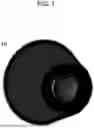
FIG. 1 is an illustration of the opaque unbreakable drinkware according to an embodiment of the present invention.
FIG. 2 is an illustration of the semitransparent unbreakable drinkware according to an embodiment of the present invention.
DETAILED DESCRIPTION
Glass, plastic, or other transparent drinkware are easy to break during storage, transportation, or usage. When they do break, they can be hazardous; If there is no handle or additional protection, they will also burn people when filled with hot liquid.
Glass drinkware provides transparency, but is easily broken. It cannot protect the hand from hot water without a handle.
Plastic drinkware can provide transparency, but can be broken in use or during transport, may contain materials that's harmful to human, and introduces microplastic to the environment. It cannot protect the hand from hot water without a handle.
Ceramic drinkware is too heavy, and cannot protect the hand from hot water without a handle.
Other silicone drinkware does not have enough structural support to be unbreakable which is based on the shape(s) of the cup of the present invention.
Thus, the present invention provides opaque or semitransparent unbreakable drinkware. Embodiments of the present invention will be described with reference to the appended drawings.
FIG. 1 is an illustration of the opaque unbreakable drinkware 10 according to an embodiment of the present invention which is made of nearly unbreakable silicone.
FIG. 2 is an illustration of the semitransparent unbreakable drinkware 20 according to an embodiment of the present invention which is made of nearly unbreakable silicone.
Silicone coloring powder is one of the most commonly used and recommended silicone coloring methods and can be used to color embodiments of the present invention. This coloring powder is relatively quick to dissolve, but may not disperse as easily as other methods. Liquid dyes may distribute more evenly but also require an attentive mix and careful curing.
The silicone used in embodiments may have a minimum tensile strength of 870 psi (6 MPA). It is semi-translucent so that it is configured for letting some light through.
An exemplary embodiment of the present invention contains approximately 300 mL to 2 L in volume, but could be less or more in other embodiments.
The illustrations of embodiments described herein are intended to provide a general understanding of the structure of various embodiments, and they are not intended to serve as a complete description of all the elements and features of apparatus and systems that might make use of the structures described herein. Many other embodiments will be apparent to those of skill in the art upon reviewing the above description. Other embodiments may be utilized and derived therefrom, such that structural and logical substitutions and changes may be made without departing from the scope of this disclosure. Figures are also merely representational and may not be drawn to scale. Similar numerals designate similar elements among the several figures. Certain proportions thereof may be exaggerated, while others may be minimized. Accordingly, the specification and drawings are to be regarded in an illustrative rather than a restrictive sense. Thus, although specific embodiments have been illustrated and described herein, it should be appreciated that any arrangement calculated to achieve the same purpose may be substituted for the specific embodiments shown. This disclosure is intended to cover any and all adaptations or variations of various embodiments. Combinations of the above embodiments, and other embodiments not specifically described herein, will be apparent to those of skill in the art upon reviewing the above description. Therefore, it is intended that the disclosure not be limited to the particular embodiment(s) disclosed.
Claims
What is claimed is:1. A cup, comprising:
a bottom; and
a sidewall, wherein:
the cup is made of silicone:
the cup is flexible; and
the cup is resistant to force.
2. The cup of claim 1, wherein the cup is semitransparent.
3. The cup of claim 1, wherein the cup is opaque.
4. The cup of claim 1, wherein the sidewall is cylindrical.
5. The cup of claim 1, wherein the cup bottom is circular.
6. The cup of claim 1, wherein the cup contains 300 mL to 2 L in liquid volume.
7. The cup of claim 1, wherein the cup is black.
8. The cup of claim 1, wherein the cup is colored.
9. The cup of claim 1, wherein the cup is colored one or more or red, blue, yellow, green, purple, gray, pink, white, and brown.
Images & Drawings included:


Sources:
- United States Patent and Trademark Office - verify current appl. status at the USPTO↗
Recent applications in this class:
- » 20250366642 2025-12-04
FULLY TRANSPARENT UNBREAKABLE DRINKWARE - » 20250275640 2025-09-04
WINE GLASS - » 20250255422 2025-08-14
GLASS BOTTOM CERAMIC VESSEL - » 20250235020 2025-07-24
CONTAINER WITH TEXTURED SURFACE - » 20250057344 2025-02-20
SINGLE-SERVE BEVERAGE CUP - » 20250049238 2025-02-13
Metal Shot Cup - » 20250000285 2025-01-02
CONTAINER - » 20240389775 2024-11-28
GLASSWARE FOR MAKING A MULTI-LAYER BEVERAGE, AND A METHOD OF USING THE SAME - » 20240389774 2024-11-28
GLASSWARE FOR MAKING A MULTI-LAYER BEVERAGE, AND A METHOD OF USING THE SAME - » 20240358174 2024-10-31
Tasting Glass