EMBEDDING NEURAL NETWORK ON SILICON THROUGH INTEGRATED READ-ONLY MEMORY MULTIPLY-ADDER
US20250390553A1
2025-12-25
19/327,558
2025-09-12
Smart Summary: A new type of integrated circuit (IC) can run a neural network model. It has special cells that do matrix multiplication, which is important for the model's calculations. Each cell contains a memory that stores important numbers (weights), multipliers to combine these numbers with inputs (activations), and adders to sum the results. These cells can also manage how weights are used and how inputs are selected for multiplication. The process happens over several clock cycles, allowing the IC to handle different sizes of data efficiently. 🚀 TL;DR
Abstract:
An integrated circuit (IC) device may implement a neural network model. The IC device may include integrated cells for performing matrix multiplication (MatMul) operations in the model. An integrated cell may include a sequential read-only memory (ROM) cell, multipliers, and adder. The sequential ROM cell may store weights. The multiplier may multiply the weights with activations. The adders may sum the products. The integrated cells may also include counters, which control weight fetching from sequential ROM cells to the multipliers, or multiplexers, which select and distribute appropriate activations to multipliers. The integrated cells may execute a MatMul operation through multiple clock cycles. The MatMul operation may be decomposed based on sizes of the weight matrix or activation matrix and features of the integrated cell array. The integrated cells may perform a part of the MatMul operation in each clock cycle. The integrated cells may be coupled with add units.
Inventors:
- CARLETON L. MOLNAR 8 🇺🇸 Northborough, MA, United States
- Yaron Klein 15 🇮🇱 Rosh Haayin, Israel
- Yuval Vered 9 🇮🇱 Tel-Aviv, Israel
- John Crouter 4 🇺🇸 Fair Oaks, CA, United States
- Urmi Pandya 1 🇺🇸 Wheaton, IL, United States
Applicant:
Interested in similar patents?
Get notified when new applications in this technology area are published.
Classification:
G06F17/16 » CPC main
Digital computing or data processing equipment or methods, specially adapted for specific functions; Complex mathematical operations Matrix or vector computation, e.g. matrix-matrix or matrix-vector multiplication, matrix factorization
Description
CROSS-REFERENCE TO RELATED APPLICATION
This application claims the benefit of U.S. Provisional Patent Application No. 63/728,418, filed Dec. 5, 2024, and titled “HARDWARE-EMBEDDED NEURAL NETWORK WITH MATRIX READ-ONLY MEMORY MULTIPLY-ADDER,” which is incorporated by reference in its entirety for all purposes.
TECHNICAL FIELD
This disclosure relates generally to artificial intelligence (AI), and more specifically, embedding neural networks (also referred to as “deep neural networks” or “DNNs”) on silicon through integrated read-only memory (ROM) multiply-adders.
BACKGROUND
DNNs are used extensively for a variety of AI applications ranging from natural language processing to computer vision, speech recognition, and image processing due to their ability to achieve high accuracy. However, the high accuracy comes at the expense of significant computation cost. DNNs have extremely high computing demands as there can be a large number of operations as well as a large amount of data to read and write. Therefore, techniques to improve efficiency of DNNs are needed.
BRIEF DESCRIPTION OF THE DRAWINGS
Embodiments can be readily understood by the following detailed description in conjunction with the accompanying drawings. To facilitate this description, like reference numerals designate like structural elements. Embodiments are illustrated by way of example, and not by way of limitation, in the figures of the accompanying drawings.
FIG. 1 illustrates an integrated circuit (IC) device that implements a model on silicon, in accordance with various embodiments.
FIG. 2A illustrates an IC device with separate memories and multiply-adders, in accordance with various embodiments.
FIG. 2B illustrates an IC device with integrated cells, in accordance with various embodiments.
FIG. 3 illustrates an inference process of a DNN model, in accordance with various embodiments.
FIG. 4 illustrates an integrated cell, in accordance with various embodiments.
FIG. 5 illustrates an integrated cell with a ROM-multiply-adder architecture, in accordance with various embodiments.
FIG. 6 illustrates an integrated cell capable of handling different types of weights, in accordance with various embodiments.
FIG. 7 illustrates an integrated cell array with a single column, in accordance with various embodiments.
FIG. 8 illustrates an integrated cell array with multiple columns and rows, in accordance with various embodiments.
FIG. 9 illustrates time multiplexing for an exemplary matrix multiplication (MatMul) operation, in accordance with various embodiments.
FIG. 10 illustrates time multiplexing for another exemplary MatMul operation, in accordance with various embodiments.
FIG. 11A illustrates an integrated cell with a repair unit, in accordance with various embodiments.
FIG. 11B illustrates decomposing an exemplary MatMul operation, in accordance with various embodiments.
FIG. 12 illustrates decomposing another exemplary matrix multiplication operation, in accordance with various embodiments.
FIG. 13 illustrates a mirrored layout, in accordance with various embodiments.
FIG. 14 illustrates a 16×16 integrated cell, in accordance with various embodiments.
FIG. 15 illustrates a sequential ROM, in accordance with various embodiments.
FIG. 16 is a flowchart showing a method of executing a DNN, in accordance with various embodiments.
FIG. 17 illustrates an example transformer model, in accordance with various embodiments.
FIG. 18 illustrates the first inference process of a transformer model, in accordance with various embodiments.
FIG. 19 illustrates subsequent inference processes of the transformer model, in accordance with various embodiments.
FIG. 20 is a block diagram of an example computing device, in accordance with various embodiments.
DETAILED DESCRIPTION
The last decade has witnessed a rapid rise in AI based data processing, particularly based on neural networks (also referred to as deep neural networks (DNNs)). DNNs are widely used in various domains (e.g., language processing, computer vision, speech recognition, autonomous driving, image processing, video processing, etc.) mainly due to their ability to achieve beyond human-level accuracy. A DNN typically includes a sequence of layers. A DNN layer may include one or more deep learning operations (also referred to as “neural network operations”), such as embedding operation, MatMul operation, layer normalization, batch normalization, activator operations (e.g., Sigmoid linear unit (SiLU) operation, SoftMax operation, etc.), pooling, elementwise operation, linear operation, nonlinear operation, and so on.
Neural network operations may be tensor operations. Input or output data of neural network operations may be arranged in data structures called tensors. Taking a convolutional layer for example, the input tensors include an activation tensor (also referred to as “input feature map (IFM)” or “input activation tensor”) including one or more activations (also referred to as “input elements”) and a weight tensor. The weight tensor may be a kernel (a 2D weight tensor), a filter (a 3D weight tensor), or a group of filters (a 4D weight tensor). A convolution may be performed on the input activation tensor and weight tensor to compute an output activation tensor in the convolutional layer.
A tensor is a data structure having multiple elements across one or more dimensions. Examples of tensors include vector (which is one-dimensional (1D) tensor), matrix (which is two-dimensional (2D) tensor), 3D tensors, four-dimensional (4D) tensors, and even higher dimensional tensors. A dimension of a tensor may correspond to an axis, e.g., an axis in a coordinate system. A dimension may be measured by the number of data points along the axis. The dimensions of a tensor may define the shape of the tensor. A DNN layer may receive one or more input tensors and compute an output tensor from the one or more input tensors. In some embodiments, a 3D tensor may have an X-dimension, a Y-dimension, and Z-dimension. The X-dimension of a tensor may be the horizontal dimension, the length of which may be the width of the tensor; the Y-dimension may be the vertical dimension, the length of which may be the height of the tensor; and the Z-dimension may be the channel dimension, the length of which may be the number of channels. The coordinates of the elements along a dimension may be integers in an inclusive range from 0 to (L−1), where L is the length of the tensor in the dimension. For instance, the x coordinate of the first element in a row may be 0, the x coordinate of the second element in a row may be 1, and so on. Similarly, the y coordinate of the first element in a column may be 0, the y coordinate of the second element in a column may be 1, and so on. A 4D tensor may have a fourth dimension, which may indicate the number of batches in the operation.
The deployment and execution of complex models are usually carried out on high-performance graphics processing units (GPUs). While GPUs provide the computational horsepower to handle these sophisticated models, they typically come with significant drawbacks, including high power consumption and latency issues. These limitations can be especially problematic in environments where real-time processing and power efficiency are critical, such as in mobile devices, edge computing, and Internet of Things (IoT) applications.
Some approaches for implementing key operations in these models usually involve using separate memories, multipliers, and adders. Thes approaches can introduce inefficiencies due to significant routing overhead between the memories, logic, and other components, requiring extensive use of fabric to interconnect these elements. As a result, the overall multiplier design becomes less efficient, leading to increased power consumption and latency.
Executing advanced models like Transformers and Large Language Models (LLMs) on GPUs presents inherent challenges due to various technical constraints. The currently available methodology for implementing key operations in these models usually involves using separate sequential ROMs, multipliers, and tree adders. This approach can introduce inefficiencies due to significant routing overhead between the sequential ROMs, logic, and other components, requiring extensive use of fabric to interconnect these elements. This can not only make the overall multiplier design less efficient but also increase power consumption and latency, further exacerbating the performance and efficiency issues in real-time and power-sensitive applications. Also, a major issue revolves around the physical dimensions of the models. Large models like Transformers and LLMs require more space on the silicon chip. This limitation can restrict the maximum size of the model that can fit within a given form factor, thereby limiting the deployment of larger and potentially more powerful models. There are also model size and performance limitations. On AI personal computers (PCs) or any edge solutions, even when using a neural processing unit (NPU), there can still be significant limitations regarding the size of the model that can be deployed and the performance that can be achieved. NPUs, while designed to be more efficient than GPUs, are still constrained by memory and computational capacity, which hampers their ability to fully leverage larger models
Additionally, the architecture of many contemporary processing units contributes to inefficiencies. For instance, central processing unit (CPU) is typically designed for general purpose processing with a few powerful cores. CPUs typically contain components such as control units, ALUs, cache, and a bus system. The small number of powerful cores is usually not well-suited for the parallel processing demands of advanced AI models. Optimized for parallel processing, GPUs typically have many smaller, simpler cores, each with its own control and cache. While this structure is efficient for data-parallel tasks, it still faces limitations in terms of memory and computational capacity when handling large AI models. Specifically designed for AI workloads, NPUs typically contain specialized units known as processing elements for neural network computations, along with activation function blocks and data conversion units. Despite their specialized nature, NPUs can still be constrained by static random-access memory (SRAM) and bus systems, which can limit their performance with very large models.
Currently available methodology employed in the chip design is usually involved using separate memories that held the data, alongside distinct multipliers and adders that processed this data. This approach necessitates considerable routing between the memories, multipliers, and adders, as well as other parts of the logic fabric. Consequently, this can lead to inefficiencies due to the significant routing overhead and the latency introduced by the interconnections. The separate components usually communicate extensively, which not only increases the complexity of the design but also results in a less efficient overall multiplier.
Embodiments of this disclosure may improve on at least some of the challenges and issues described above by embedding a DNN on an IC device (e.g., a silicon die or chip) that includes one or more integrated cells. In an example, an integrated cell is a cell with integrated memory, multipliers, adders that can be stitched together creating a much more efficient overall design and eliminating much of the need for huge fabrics. Integrated cell is also referred to as “integrated memory cell,” “integrated unit,” or “processing unit” in some implementations. The memory in the cell may be a ROM, such as a sequential ROM. An example of the DNN is a transformer-based model, such as an LLM. This innovative design improves efficiency by reducing the need for extensive routing and large fabric areas, addressing the limitations of current methodologies that utilize separate memories, multipliers, and adders.
In various embodiments of this disclosure, a DNN is embedded onto an IC device. The IC device may implement the model architecture and internal parameters (e.g., weights) of the DNN. The IC device may include a dot unit with integrated cells for performing MatMul operations in the DNN. An exemplary integrated cell includes a sequential ROM cell, multipliers, and an adder that are integrated together. The sequential ROM cell may store weights of a MatMul operation. The multiplier may multiply the weights with activations of the MatMul operation. The adders may sum the products computed by the multipliers. An integrated cell may also include a counter that controls fetching appropriate weights from the sequential ROM cell to the multipliers. The integrated cell may also include one or more MUXs, which select and distribute appropriate activations to the multipliers. For instance, the MUX(s) may select the activations from activations of multiple layers of the DNN. The integrated cells may be arranged in an array with one or more columns or rows. In some cases, the integrated cell array may execute the MatMul operation through a single cycle. In other cases (such as cases where the MatMul operation has one or more matrices with odd sizes), the integrated cell array may execute the MatMul operation through multiple clock cycles. The MatMul operation may be decomposed based on sizes of the weight tensor or activation tensor and features of the integrated cell array (such as the number of integrated cells, the number of row, the number of columns, etc.). The integrated cell array may perform a part of the MatMul operation in each clock cycle. In an example, the integrated cell array may compute a part of the output tensor of the MatMul operation in each clock cycle. In another example, the integrated cell array may compute intermediate results in each clock cycle, and the IC device may perform accumulations of the intermediate results to compute the final results.
By embedding sequential ROM, multipliers, and adders into unified cells, the approach in this disclosure can eliminate significant routing overhead and logic separation, leading to a more compact and efficient multiplier design. This approach can minimize or even eliminate the need for large fabrics, enhancing overall performance and power efficiency. The integrated cells can be interconnected seamlessly, creating a scalable and adaptable architecture suited for various computational tasks.
The approach in this disclosure may ensure that the matrix sequential ROM multiply-adder can leverage high memory capacity and low latency, critical for managing complex computational tasks. This integrated approach can offer greater scalability and flexibility compared to traditional monolithic die designs. By embedding sequential ROM, multipliers, and adders into the hardware, the overall architecture can be optimized for processing speed, power efficiency, and performance, resulting in a more efficient and effective solution for a wide range of applications.
For purposes of explanation, specific numbers, materials and configurations are set forth in order to provide a thorough understanding of the illustrative implementations. However, it can be apparent to one skilled in the art that the present disclosure may be practiced without the specific details or/and that the present disclosure may be practiced with only some of the described aspects. In other instances, well known features are omitted or simplified in order not to obscure the illustrative implementations.
Further, references are made to the accompanying drawings that form a part hereof, and in which is shown, by way of illustration, embodiments that may be practiced. It is to be understood that other embodiments may be utilized, and structural or logical changes may be made without departing from the scope of the present disclosure. Therefore, the following detailed description is not to be taken in a limiting sense.
Various operations may be described as multiple discrete actions or operations in turn, in a manner that is most helpful in understanding the claimed subject matter. However, the order of description should not be construed as to imply that these operations are necessarily order dependent. In particular, these operations may not be performed in the order of presentation. Operations described may be performed in a different order from the described embodiment. Various additional operations may be performed or described operations may be omitted in additional embodiments.
For the purposes of the present disclosure, the phrase “A or B” or the phrase “A and/or B” means (A), (B), or (A and B). For the purposes of the present disclosure, the phrase “A, B, or C” or the phrase “A, B, and/or C” means (A), (B), (C), (A and B), (A and C), (B and C), or (A, B, and C). The term “between,” when used with reference to measurement ranges, is inclusive of the ends of the measurement ranges.
The description uses the phrases “in an embodiment” or “in embodiments,” which may each refer to one or more of the same or different embodiments. The terms “comprising,” “including,” “having,” and the like, as used with respect to embodiments of the present disclosure, are synonymous. The disclosure may use perspective-based descriptions such as “above,” “below,” “top,” “bottom,” and “side” to explain various features of the drawings, but these terms are simply for ease of discussion, and do not imply a desired or required orientation. The accompanying drawings are not necessarily drawn to scale. Unless otherwise specified, the use of the ordinal adjectives “first,” “second,” and “third,” etc., to describe a common object, merely indicates that different instances of like objects are being referred to and are not intended to imply that the objects so described must be in a given sequence, either temporally, spatially, in ranking or in any other manner.
In the following detailed description, various aspects of the illustrative implementations are described using terms commonly employed by those skilled in the art to convey the substance of their work to others skilled in the art.
The terms “substantially,” “close,” “approximately,” “near,” and “about,” generally refer to being within +/−20% of a target value as described herein or as known in the art. Similarly, terms indicating orientation of various elements, e.g., “coplanar,” “perpendicular,” “orthogonal,” “parallel,” or any other angle between the elements, generally refer to being within +/−5-20% of a target value as described herein or as known in the art.
In addition, the terms “comprise,” “comprising,” “include,” “including,” “have,” “having” or any other variation thereof, are intended to cover a non-exclusive inclusion. For example, a method, process, device, or DNN accelerator that comprises a list of elements is not necessarily limited to only those elements but may include other elements not expressly listed or inherent to such method, process, device, or DNN accelerators. Also, the term “or” refers to an inclusive “or” and not to an exclusive “or.”
The systems, methods and devices of this disclosure each have several innovative aspects, no single one of which is solely responsible for all desirable attributes disclosed herein. Details of one or more implementations of the subject matter described in this specification are set forth in the description below and the accompanying drawings.
FIG. 1 illustrates an IC device 100 that implements a model on silicon, in accordance with various embodiments. In some embodiments, the IC device 100 may be a hardware implementation of a DNN, such as a transformer-based model. An example of the DNN is an LLM. At least part of the model architecture, weights, and flow of the DNN can be embedded into the IC device 100. For instance, the IC device 100 may include memories that store the weights of the DNN. The IC device 100 may also include compute units that are mapped to the operators in the DNN. In some embodiments, the IC device 100 may be a chip, such as a silicon chip.
As shown in FIG. 1, the IC device 100 includes a flow control unit 111, tokenizer unit 112, embedder unit 113, root mean square (RMS) normalizer unit 114, rotary embedder unit 115, SiLU unit 116, SoftMax unit 117, sampler unit 118, embedding dot unit 120, and attention dot unit 130. A unit in the IC device 100 may be a circuit or may include multiple circuits. In other embodiments, the IC device 100 may include fewer, more, or different components. For example, the base die 110 may include more than one flow control unit 111, tokenizer unit 112, embedder unit 113, RMS normalizer unit 114, rotary embedder unit 115, SiLU unit 116, SoftMax unit 117, sampler unit 118, embedding dot unit 120, or attention dot unit 130. As another example, the units may be arranged in fewer, more, or different dies of the IC device 100. Further, functionality attributed to a component of IC device 100 may be accomplished by a different component included in the IC device 100 or a different device.
The flow control unit 111 manages data flow between various components of the IC device 100. In some embodiments, the flow control unit 111 plays a role in orchestrating various components (e.g., units) of the IC device 100 to execute operations according to a predetermined timing sequence. The flow control unit 111 may also be referred to as a sequencer unit, which can orchestrate one or more other components of the IC device 100 according to a predetermined timing sequence of the DNN. In an example, the flow control unit 111 may control and ensure that the tokenizer unit 112 converts input tokens and passes them to the embedding sections, such as the embedder unit 113, the rotary embedder unit 115, and embedding dot unit 120; the embeddings are then processed and passed to the attention dot unit 130 for attention computation; the attention results are then normalized by the RMS normalizer unit 114, activated by the SiLU unit 116, and passed through the SoftMax unit 117 to generate output probabilities; finally, the sampler unit 118 samples from the output distribution and generates the final output tokens.
In some embodiments, the DNN operates in a feedforward manner. In an example, the DNN may include a sequence of layers. A layer may have one or more operators. For a layer having multiple operators, the operators may be arranged in the sequence. Each operator may correspond to a neural network operation. For example, a MatMul operator specifies a MatMul operation. The sequence of all the operators in the DNN may be predetermined as a part of the model architecture of the DNN. In some embodiments, the spatial shape of the input tensor(s) and output tensor of an operator can also be predetermined. During inference, data flows through the operators in the DNN in the predetermined sequence. The predetermined sequence of the operators in the DNN can be mapped into a timing sequence of various components of the IC device 100 executing the corresponding neural network operations. The timing sequence of neural network operations may include stages of operations, one following another. In a particular time slot or stage in the timing sequence, data can be moved in, processed, and moved out to be processed in the next/following time slot, in a feedforward, progressive manner.
In some embodiments, the flow control unit 111 may implement digital logic to generate clock edges/signals (e.g., control signals, timing signals, enable signals, disable signals, trigger signals, etc.) to orchestrate operations to be performed according to the timing sequence. The flow control unit 111 may control data flow into or out of one or more other components of the IC device 100. The flow control unit 111 may also enable or disable one or more other components of the IC device 100 according to a predetermined timing sequence.
The tokenizer unit 112 is a hardware implementation of a tokenizer in the DNN. In an example, the tokenizer unit 112 is a hardware-based tokenizer for a DNN. The tokenizer unit 112 may convert raw data (e.g., words) to tokens. For instance, the tokenizer unit 112 may use the DNN's vocabulary to convert works received from a user to tokens that can be further processed by other operators in the DNN. The vocabulary may be predefined vocabulary. In some embodiments, the vocabulary of the DNN is implemented on the tokenizer unit 112. For instance, the vocabulary may be stored in a data storage unit of the tokenizer unit 112. The tokenizer unit 112, after receiving words, may compare the words with the vocabulary to determine indices of tokens corresponding to the words. The tokenizer unit 112 may output the token indices.
In some embodiments, the tokenizer unit 112 includes a cycle buffer, comparator, memory, ID block, and multiplexer (MUX). The cycle buffer may receive and store data received by the tokenizer unit 112. The data may be the input data of the DNN. The input data may be one or more words that need to be tokenized. In some embodiments, the tokenizer unit 112 may have a different type of data storage unit from the cycle buffer for storing input data. The comparator retrieves input data from the cycle buffer and compares the word(s) with the vocabulary of the DNN. The vocabulary of the DNN is stored in the memory. The memory may be a ROM, such as a sequential ROM. The memory may store a list of vocabulary entries, which are predefined words or tokens. Each vocabulary entry corresponds to a unique Token ID. The ID block stores the Token IDs associated with each vocabulary entry. When the comparator finds a match in the vocabulary, the ID block receives the corresponding Token ID. After a Token ID is retrieved, it is output through the ID block. The comparator may access the vocabulary in the memory to find a match for each word in the input data. When a match is found, the corresponding Token ID is fetched from the ID block and provided to the MUX. The MUX may output the Token ID as an output of the tokenizer unit 112. In some embodiments, the output of the Token ID from the MUX may be controlled by a signal from the comparator. The signal may indicate that a match has been found.
The embedder unit 113 may implement an embedder (e.g., an embedding layer) of the DNN. The embedder unit 113 may execute the embedding layer to convert tokens (such as tokens generated by and received from the tokenizer unit 112) to embedding vectors. In some embodiments, the embedder unit 113 may include look-up tables that map tokens to embedding elements. The look-up tables may output embedding elements corresponding to input tokens. The embedding elements may constitute the embedding vector of the input tokens.
In an example, the embedder unit 113 includes 256 look-up tables. The look-up tables may have the same storage size, e.g., 1000 KB. Each of the look-up tables may have 112,000 lines. In some embodiments, the look-up tables may be implemented on one or more ROMs. In an example, the 256 look-up tables are implemented on 256 ROMs, respectively. The embedder unit 113 may receive an input token. In the example shown in FIG. 1, the embedder unit 113 receives an input token represented by 15 bits. The input token may have an integer format. The embedder unit 113 may also receive control signals. For instance, the embedder unit 113 receives an embedder cycle signal, which may have 10 bits. The embedder unit 113 also receives an embedder run signal, which may have 1 bit. The embedder unit 113 may also receive an embedder on/off signal, which may have 1 bit.
The output of the embedder unit 113 may be an embedding vector. For instance, the embedder unit 113 may produce an embedding vector with floating-point (e.g., FP16) data elements. The dimension of the embedding vector may indicate the total number of data elements in the embedding vector. In an example, the dimension of the embedding vector may be 10,096. In some embodiments, the embedder unit 113 may receive 32,000 tokens. The total embedder size may be 250 MB, which equals 10,096×32,000×2B. Each of the tokens in the vocabulary may be broken into 16 chunks of 256 numbers. In some embodiments (e.g., embodiments where the look-up tables are stored in ROMs), the first out of 16 numbers may be read from the table. Reading from the ROM may be sequential for 16 cycles, so the next line is to be pre-charged but it may be unnecessary to pre-charge other lines. Within each cycle, the 256 look-up tables may output 256 embedding vector elements, respectively. The embedder unit 113 may return 256 elements every clock cycle for 16 clocks cycles. After finishing the 16 cycles, the embedder unit 113 may be idle for about 10,000 cycles. Power gating may be used.
The RMS normalizer unit 114 may normalize data using RMS normalization. The RMS normalizer unit 114 may implement one or more RMS normalizer functions in the DNN. An RMS normalizer function may be denoted as:
x i · W R M S i ∑ j = 0 4 , 0 9 6 x j 2 4 , 096 + 1 0 - 5
-
- In some embodiments, the RMS normalizer unit 114 may receive an input vector (e.g., 4096 FP16 elements) and return an RMS-normalized vector (e.g., 4096 elements in FP8 format). The RMS normalizer unit 114 may receive 256 elements every clock for 16 clocks cycles. The RMS normalizer unit 114 may include tree adder 1502 to add a number of values (e.g., 256 values) together simultaneously. The RMS normalizer unit 114 may include ROM 1504 storing a look-up table comprising one or more precomputed values of the function:
f ( x ) = x 4 , 096 + 1 0 - 5 - 1 .
The rotary embedder unit 115 may apply rotary positional embeddings on input data. The rotary embedder unit 115 is the hardware implementation of one or more rotary position encoders in the DNN. The rotary embedder unit 115 may produce rotary positional encoded embeddings. In some embodiments, the rotary embedder unit 115 may provide the functionality of a sine cosine unit without the need to calculate/compute sine and cosine in real-time. The rotary embedder unit 115 may have a sine cosine unit that has a look-up table implementation. In some embodiments, the rotary embedder unit 115 may include a look-up table comprising one or more precomputed values of a cosine function
( e . g . , f ( t ) = cos ( 1 0 - h n 1 6 · t ) ) .
The rotary embedder unit 115 may include another look-up table comprising one or more precomputed values of sine function
( e . g . , f ( t ) = sin ( 10 - h n 1 6 · t ) ) .
The SiLU unit 116 is a hardware implementation of one or more SiLU activators in the DNN. The SiLU unit 116 may include a look-up table having one or more precomputed values of a SiLU function:
f ( x ) = x 1 + e - x
In some cases, the SiLU unit 116 includes a MUX controller and a MUX. The MUX controller may check whether the input value meets a particular condition and selects a particular value to use as the output of SiLU unit 116. The MUX controller may output a 2-bit value as selection signal for the MUX, to select one of three possible values to use as the output. For example, when the sign bit is 0 and the most-significant bits (MSBs) of the input are “11”, the input is selected by the MUX and passed on to use as the output. When the sign bit is 1 and the MSBs of the input are “11”, the value of “0” is selected by the MUX to use as the output. Otherwise, the value from the look-up table is used as the output.
The SoftMax unit 117 is a hardware implementation of one or more SoftMax activators in the DNN. The SoftMax unit 117 may implement a SoftMax function for output probability distribution. In some embodiments, the SoftMax unit 117 may execute a SoftMax function using one or more look-up tables that are pre-configured with precomputed data. The SoftMax function may be:
e x i - x ma x 128 ∑ j = 0 t e x j - x ma x 128
-
- In some embodiments, the SoftMax unit 117 includes look-up table implementation of the SoftMax function instead of a compute-oriented solution. In some embodiments, the SoftMax unit 117 receives an input vector of t FP16 elements (1<t<512) and returns the SoftMax normalized vector of the same size. The SoftMax unit 117 receives 16 numbers per cycle for up to 32 cycles and returns 16 numbers per cycle for up to 32 cycles.
In an example, the SoftMax unit 117 receives an input vector including 16 elements, each of which is a FP16 value, in a clock cycle. The total number of bits of the input vector is 256. The SoftMax unit 117 may also receive a compare control signal, normalize control signal, exponent control signal, multiply control signal, on/off control signal, other types of control signals, or some combination thereof. A control signal may have 1 bit. The output of the SoftMax unit 117 may be 16 elements with UFP16 format. The total number bits may be 240. The SoftMax unit 117 may execute the SoftMax function using 16 clock cycles. Numbers may be stored in a first-in-first-out (FIFO) buffer while they are compared to find the largest number in the vector. The FIFO buffer may output numbers. The largest number may be subtracted. The subtraction result is provided to a look-up table. The output of the look-up table enters a second FIFO. Numbers may be pulled out of the second FIFO and multiplied by the normalization value. It may take a total of 24 cycles to compute the output. The 24 cycles may include 8 latency cycles and 16 piping cycles
In some embodiments, the SoftMax unit 117 may be included in the attention dot unit 131 to perform SoftMax on an input vector (e.g., FP16 vector) and to output a SoftMax-ed vector (e.g., FP16 vector). The SoftMax unit 117 may include a look-up table comprising one or more precomputed values of an exponent function:
f ( x ) = e x 128 .
The SoftMax unit 117 may include another look-up table comprising one or more precomputed values of a reciprocal function:
f ( x ) = 1 x .
The SoftMax unit 117 may include a tree adder that can add a number of values (e.g., 18 values) together simultaneously.
The sampler unit 118 is a hardware implementation of one or more samplers in the DNN. The sampler unit 118 may sample from the output distribution. In some embodiments, the sampler unit 118 may receive an input vector and compare elements of the input vector to find the largest value. The sampler unit 118 may determine the index of the largest number and return a token. In some embodiments, the sampler unit 118 may receive a logits vector. In an example, the vector may include 32,000 elements. In some embodiments, the sampler unit 118 may receive 256 input elements for a cycle and may take 125 cycles to process the 32,000. The input elements may be in FP16 format. The total number of bits for the 256 input elements may be 4,096 bits. In some embodiments, the 256 input elements may be received from 256 MatMul units, such as 256 attention dot units, respectively. In some embodiments, the sampler unit 118 may implement a deterministic sampler having zero temperature. The sampler unit 118 may also receive control signals, such as an on/off signal indicating whether the sampler unit 118 is to be on or off, a restart signal indicating whether to restart the sampler unit 118, and a run signal. A control signal may have 1 bit. The sampler unit 118 may determine an index, such as a 32-bit index, corresponding to the largest number in the input vector. The index may correspond to an output token. In some embodiments, the output token may be a 15-bit integer.
In some embodiments, the sampler unit 118 includes 256 sampling comparators. In other embodiments, the sampler unit 118 may include a different number of sampling comparators. With the 256 sampling comparators, the sampler unit 118 can compare 256 input elements every clock cycle and keeps the index and value of the largest number. Each sampling comparator may compare two logits or values in a single clock cycle and return the larger number of its index (token). Each value may have 16 bits and may be in the FP16 format. The index (token) may be a 15-bit integer. The output may include the larger value as well as the index of the larger value. In a situation where more than one number has the largest value, the sampler unit 118 may return the token with the lowest index out of the equal tokens. When finishing the 125 clock cycles, the sampler unit 118 returns the token of the largest value in the input vector. For instance, the sampler unit 118 may output the index of the largest value in the input vector.
In some embodiments, the sampler unit 118 may have sampling comparators arranged in a tree or hierarchical structure to efficiently compare a large number of values (e.g., hundreds or thousands of values or more) simultaneously. For instance, each comparator in the first tier may compare two values in the input vector and select the larger value, each comparator in the second tier may compare two values from two comparators, respectively, in the first tier, each comparator in the third tier may compare two values from two comparators, respectively, in the second tier, and so on. The last tier may include a comparator that outputs the largest value of the input vector. In some embodiments, the sampler unit 118 may have a latency of 9 clock cycles. Every layer of comparators may be pipeline. In some embodiments, the sampler unit 118 may have power gating.
The embedding dot unit 120 is hardware implementation of embedding computations in the DNN. For instance, the embedding dot unit 120 may implement MatMul operators and add operators in the DNN, such as the MatMul operators and add operators in one or more encoders of the DNN. The embedding dot unit 120 may handle the initial embedding of tokens, performing matrix multiplications to transform input data into a suitable format for the DNN. The embedding dot unit 120 may convert input tokens into dense vector representations, which may be essential for subsequent processing in the DNN. In some embodiments, the embedding dot unit 120 are compute-in-memory units, which hold the static weights of the DNN. The static weights may be weights that do not change during inference of the DNN. The embedding dot unit 121 includes a plurality of ROM-multiply-add units 122 (individually referred to as “ROM-multiply-add unit 122”) and an add unit 123. ROM-multiply-add units may also be referred to as ROM-Mul-add units or ROMUL-add units hereinbelow. This ROM-based design can ensure efficient storage and quick access to static weights, enhancing the speed and efficiency of embedding operations.
In some embodiments, each ROM-multiply-add unit 122 may be an integrated cell in which a ROM cell, multipliers, and at least one adder (also referred to as “add unit”) are integrated. In some embodiments, the ROM-multiply-add units 122 may perform MatMul operations. A MatMul operation may be performed on a weight tensor and an activation tensor. The activation tensor may be the output of the previous operators in the DNN. Weight tensors used by the ROM-multiply-add units 122 may be stored in the ROMs of the ROM-multiply-add units 122. The ROMs may be sequential ROMs. Sequence ROM is a type of memory storage, utilizing ROMs, that allows data to be read sequentially but not written or modified after the values have been etched onto the ROM. The rest of the ROM can be shut down to reduce power and area.
In some embodiments, the embedding dot unit 120 may include one or more integrated cell arrays. An integrated cell array include integrated cells arranged in column(s) and row(s). in some embodiments, an integrated array in the embedding dot unit 120 may be designed for certain MatMul operations in the DNN so that the efficiency of t he embedding dot unit 120 may be optimized for these MatMul operations. For instance, the number of integrated cells or the layout of the integrated cell array may match or be optimal for matrix sizes of the MatMul operations. Examples of matrix sizes include sizes of weight matrices, sizes of activation matrices, or sizes of output matrices. The integrated cell array can perform other MatMul operations that have different matrix sizes. For instance, a MatMul operation having unoptimized matrix sizes may be converted by adding one or more multiplication or addition operations. The MatMul operation (or the converted MatMul operation) may be decomposed so that the execution of the MatMul operation may be performed by the integrated cell array through multiple clock cycles. The clock cycles may be controlled or orchestrated by the flow control unit 111. The flow control unit 111 may generate and provide control signals for controlling counters or multiplexers (MUXs) in integrated cells so that appropriate activations and weights are distributed to the integrated cells. Certain aspects of integrated cells are described below in conjunction with FIGS. 4-6. Certain aspects of integrated cell arrays are described below in conjunction with FIG. 7 and FIG. 8. Certain aspects of decomposing MatMul operations for distributing workload to integrated cells are described below in conjunction with FIGS. 9-12.
The attention dot unit 130 is hardware implementation of attention computations in the DNN. For instance, the attention dot unit 130 may implement MatMul operators and add operators in the DNN, such as the MatMul operators and add operators in one or more decoders of the DNN. The attention mechanism may be critical for understanding the relationships between different parts of the input sequence. The attention dot unit 130 may focus on the computation of attention scores and the weighted sum of value vectors, which may be critical for capturing dependencies and relationships between different parts of the input data. The attention dot unit 130 may be compute-in-memory dies. The attention dot unit 130 may utilize sequential RAM to handle the dynamic nature of attention computations. This sequential RAM-based design can allow for fast and efficient computation of attention scores, leveraging high memory bandwidth and low latency to optimize performance.
As shown in FIG. 1, the attention dot unit 131 includes a plurality of RAM-multiply-add units 132 (individually referred to as “RAM-multiply-add unit 132”) and an add unit 133. In some embodiments, each RAM-multiply-add unit 132 may include one or more multipliers, RAMs, and tree adders. In one implementation, a RAM-multiply-add unit 132 may carry out a (128-elements) dot product operation between FP16 input vector and FP16 K or V vector cached in one or more RAMs, e.g., every cycle. The dot product operation can be performed using the one or more multipliers and one or more tree adders in the RAM-multiply-add unit 132. A multiplier may multiple two values, such as two floating-point values. In an example, the attention dot unit 131 one or more FP16/FP16 multipliers. A multiplier may be specifically designed to perform multiplication of data having predetermined representations (e.g., FP4, FP6, FP8, FP12, FP16, INT8, etc.). One or more multipliers in the attention dot unit 131 may receive data from one or more RAMs. One or more tree adders may add multiplication results produced by one or more multipliers together.
The RAMs can store and provide data to one or more circuits performing logic operations in the RAM-multiply-add units 132. In some embodiments, a RAM-multiply-add unit 132 may receive an input number and multiplies it by a number from the RAM of the RAM-multiply-add unit 132 in every clock cycle. In some embodiments, a RAM may be a sequential read/write memory, such as a sequential read/write SRAM. A sequential read/write memory can be used with or in an attention dot unit to supply weights to a multiplier in the RAM-multiply-add unit 132. A RAM that can be read sequentially or written sequentially may have drastically simplified logic and circuitry for reads or writes. The RAM may be used in a special configuration where it is not dynamically readable but is built up sequentially to reduce power and area.
In some embodiments, a RAM of a RAM-multiply-add unit 132 may be placed in proximity to the circuits performing logic operations in the RAM-multiply-add unit 132. The RAM may store intermediate values of the DNN. The intermediate values may be dynamic during the DNN inference, meaning their values may change. For instance, the RAM may store a key-value (KV) cache. New keys or values may be written into the RAM as they are generated. The RAM may be referred to as KV RAM. In embodiments where the RAM is a SRAM, it may be referred to as a KV SRAM. KV RAM can enable storing the attention history (e.g., cached keys and values) of a transformer block. In an exemplary implementation, 64 SRAMs may be used to store the 32 layers and K vs. V separately, so the SRAM can read lines sequentially. The tree adders in the RAM-multiply-add units 132 may add multiplication results produced by the multipliers together. A tree adder may also be referred to as an adder tree and may include adders arranged in a tree structure. The add unit 133 may add outputs of the RAM-multiply-add units 132.
Certain aspects of hardware implementing models on silicon are further described in U.S. patent application Ser. No. 19/281,006, filed on Jul. 25, 2025, U.S. patent application Ser. No. 19/275,640, filed on Jul. 21, 2025, and U.S. patent application Ser. No. 19/244,318, filed on Jun. 20, 2025, each of which is hereby incorporated by reference in its entirety.
FIG. 2A illustrates an IC device 200 with separate memories and multiply-adders, in accordance with various embodiments. The model-on-silicon device 200 includes memories 210 (individually referred to as “memory 210”) and logic units 220 (individually referred to as “logic unit 220”). As shown in FIG. 2A, a memory 210 is coupled to a logic unit 220 but is separate from the logic unit 220. The logic unit 220 may include one or more multiply-adders. The multiply-adders may be used to perform neural network operations in DNNs, such as MatMul operations, etc. Logic fabrics 230 are used to facilitate communication and data transfer. The design in FIG. 2A can make the multiply-adders less efficient as there is significant routing between the memory 210, logic unit 220 and logic fabrics 230.
FIG. 2B illustrates an IC device 205 with integrated cells 215, in accordance with various embodiments. For the purpose of illustration and simplicity, the integrated cells 215 (individually referred to as “integrated cell 215”) are represented by rectangles in FIG. 2B. The integrated cells 215 are arranged in an array that has 19 columns and 12 rows. In other embodiments, the IC device 205 may include fewer or more integrated cells 215. Also, the array may have a different size or shape. Each integrated cell 215 includes one or more memories integrated with one or more multipliers and one or more adders. In some embodiments, the one or more memories may be one or more sequential ROMs. Certain aspects regarding integrated cells are described below in conjunction with FIGS. 4-6. Certain aspects regarding sequential ROMs are described below in conjunction with FIG. 15.
The integrated sequential ROMs, multipliers, adders may be stitched together to create a design that is more efficient than the design in FIG. 2A by eliminating much of the need for huge fabrics, where the same amount of sequential ROMs can be computed. This pivotal innovation lies in its unique approach to optimize dot units in hardware embedding DNNs by integrating sequential ROM, multipliers, and adders into unified cells. This integration can address the inefficiencies of currently available designs that use separate memories and logic units, which require extensive routing and large fabric areas. By consolidating these components into single or multiple cells that can be stitched together, the approach in this disclosure can significantly reduce routing overhead and enhance overall performance and power efficiency. In this new design, MatMul operations in DNNs can be performed within the integrated cells, eliminating the need for separate memory and computation units. This approach is distinct from currently available methodologies, where memory and compute functions are separated, leading to inefficiencies.
FIG. 3 illustrates an inference process of a DNN model 300, in accordance with various embodiments. In the embodiment of FIG. 3, the DNN model 300 is a transformer-based model. For instance, the DNN model 300 may be LLM, speech recognition model, and so on. The DNN model 300 may process input embeddings through a series of highly optimized neural network operations to generate output. The DNN MODEL 300 may be embedded on an IC device, such as the IC device 100 in FIG. 1. For instance, the weights of the DNN model 300 may be stored in memories of the IC device 100, and operators in the DNN model 300 may be mapped to compute units of the IC device 100.
As shown in FIG. 3, the DNN model 300 includes RMS normalizers 310A and 310B, MatMul operators 320A-3201, SoftMax activator 330, add operators 340A and 340B, product operator 350, rotary embedders 360A and 360B, and SiLU activator 370. These operators are arranged in a sequence as shown in FIG. 3. The sequence may indicate a timing sequence of the operators during the inference process. For the purpose of illustration, RMS normalizer is shown as “RMS norm” in FIG. 3, MatMul operator is shown as “MatMul” in FIG. 3, SoftMax activator is shown as “SoftMax” in FIG. 3, add operator is shown as “add” in FIG. 3, and product operator is shown as “product” in FIG. 3. In other embodiments, the DNN model 300 may include fewer, more, or different components. Also, the arrangement of the components in the DNN model 300 may be different.
The RMS normalizer 310A can standardize input data, such as input embeddings. The RMS normalizer 310A may perform an RMS normalization on an input to the DNN model 300 using a weight vector 301. In an example, the spatial size of the weight vector 301 may be 4, meaning the weight vector 301 includes 4 data elements in it. The RMS normalization may be denoted as
y = x i · W RM S i ∑ j = 0 4 , 096 x j 2 4 , 096 + 10 - 5 ,
where i and j are indices, x is the input, WRMS is the weight (which may be referred to as RMS attention weights), and y is the output. The weight vector 301 may also denoted as Wn1. The RMS normalization can normalize input data elements of the DNN model 300 based on the RMS of the activations. The normalization may stabilize the inputs and ensure that the attention weights can be computed on approximately scaled inputs, leading to better training stability and faster convergence. The output of the RMS normalizer 310A may be one or more tokens. In an example, the token may be represented by a 15-bit integer. The output of the RMS normalizer 310A is a vector. In an example, the dimension of the vector is 4.
At least some of the MatMul operators 320A-320F can handle the transformation and integration of embedding vectors across different layers. As shown in FIG. 3, the output of the RMS normalizer 310A is provided to the MatMul operator 320A. The MatMul operator 320A performs MatMul on the output of the RMS normalizer 310A and a weight matrix 302. The weight matrix 302 may be a matrix of query weights, which may be denoted as WQ. The MatMul result is provided to the MatMul operator 320B. The output of the RMS normalizer 310A is also provided to the MatMul operator 320B. The MatMul operator 320B performs MatMul on the output of the RMS normalizer 310A and a weight matrix 303. The weight matrix 303 may be a matrix of key weights, which may be denoted as WK. The output of the RMS normalizer 310A is also provided to the MatMul operator 320C. The MatMul operator 320C performs MatMul on the output of the RMS normalizer 310A and a weight matrix 304. The weight matrix 304 may be a matrix of value weights, which may be denoted as WV. The MatMul result of the MatMul operator 320A, MatMul operator 320B, or MatMul operator 320C may be a vector. In an example, the spatial size of the weight matrix 302, weight matrix 303, or weight matrix 304 is 4×4; and the dimension of the vector computed by the MatMul operator 320A, MatMul operator 320B, or MatMul operator 320C is 4.
The MatMul result computed by the MatMul operator 320A is provided to the rotary embedder 360A. The rotary embedder 360A may apply a weight matrix 305 on input data. The weight matrix 305 is represented by WR in FIG. 3. The rotary embedder 360A may produce rotary positional encoded embeddings. In some embodiments, the operation of the rotary embedder 360A may be:
f ( x i ) = x i · w r - x i + 1 · w i , and f ( x i + 1 ) = x i · w i + x i + 1 · w r .
where x is the input to the MatMul operator 320A, and w is weight. In an example, the dimension of the weight matrix 305 is 128×512.
The MatMul result computed by the MatMul operator 320B is provided to the rotary embedder 360B. The rotary embedder 360B may apply a weight matrix 306 on input data. The weight matrix 306 is represented by WR in FIG. 3. The rotary embedder 360B may produce rotary positional encoded embeddings. In some embodiments, the operation of the rotary embedder 360B may be:
f ( x i ) = x i · w r - x i + 1 · w i , and f ( x i + 1 ) = x i · w i + x i + 1 · w r .
where x is the input to the MatMul operator 320B, and w is weight. In an example, the dimension of the weight matrix 306 is 128×512.
The output of the rotary embedder 360A or rotary embedder 360B may be a vector. In an example, the dimension of the vector is 4. The output of the rotary embedder 360A is provided to the MatMul operator 320D. The MatMul operator 320D also receives keys from a KV cache 307. The cache 307 receives keys from the rotary embedder 360B. the MatMul operator 320D may perform a MatMul operation on the keys and the output of the rotary embedder 360A to compute a vector. In an example, the keys may be in a matrix, e.g., a matrix with a dimension of 2×<1024, in which <1024 may be a timestamp dimension T; the data received from the rotary embedder 360A may be a vector with a dimension of 2; and the output of the MatMul operator 320D may be a vector with a dimension of <1024.
The output of the MatMul operator 320D is provided to the SoftMax activator 330. The SoftMax activator 330 may apply a SoftMax function on the output of the MatMul operator 320D. The SoftMax function may be denoted as
e x i - x ma x 64 ∑ j = 0 t e x j - x ma x 64 .
In an example, the output of the SoftMax activator 330 may be a vector with a dimension of <1024.
The output of the SoftMax activator 330 is provided to the MatMul operator 320E. The MatMul operator 320E also receives values from the cache 307. In some embodiments, at least some of the values are computed by the rotary embedder 360B. In an example, the values may be in a matrix, e.g., a matrix with a dimension of <1024×2, in which <1024 may be a timestamp dimension T; and the output of the MatMul operator 320E may be a vector with a dimension of 2. In some embodiments, T=1 for the first token. The context size may be denoted as Max T. In some embodiments, the MatMul operator 320D, SoftMax activator 330, and MatMul operator 320E may constitute a multi-headed attention block 314. In some embodiments, the DNN model 300 may include a plurality of multi-headed attention blocks 314 that can run in parallel. For instance, two embedding vectors may be split to two heads sized 2. The multi-headed attention block 314 may be a multi-headed attention layer.
The output of the MatMul operator 320E is input into the MatMul operator 320F. The MatMul operator 320F also receives a weight matrix 308. The weight matrix 308 is shown as Wo in FIG. 3. In an example, the dimensions of the weight matrix 308 is 4×4. The data received by the MatMul operator 320F from the MatMul operator 320E may be a vector, whose dimension may be 4. The output of the MatMul operator 320F may be a vector, whose dimension may be 4.
The output of the MatMul operator 320F is provided to the add operator 340A. The operators 340A may perform an elementwise addition on the output of the MatMul operator 320F and the input to the RMS normalizer 310. In some embodiments, the elementwise addition is denoted as f(x, y)=x+y. In an example, the two inputs to the operators 340A may each be a vector with a dimension of 4, and the output of the operators 340B may also be a vector with a dimension of 4.
The output of the operators 340A is provided to the RMS normalizer 310B. The RMS normalizer 310B can standardize data it receives. The RMS normalizer 310B may perform an RMS normalization on the output of the operators 340A using a weight vector 309. In an example, the spatial size of the weight vector 301 may be 4. The RMS normalization may be denoted as
y = x i · W RM S i ∑ j = 0 4 , 096 x j 2 4 , 096 + 10 - 5 ,
where i anu j are indices, x is the input, WRMS is the weight (which may be referred to as RMS attention weights), and y is the output. The weight vector 309 may also denoted as Wn2. The RMS normalization can normalize data elements based on the RMS of the data elements. The normalization may stabilize the inputs and ensure that the attention weights can be computed on approximately scaled inputs, leading to better training stability and faster convergence. The output of the RMS normalizer 310B may be one or more tokens. In an example, the token may be represented by a 15-bit integer. In some embodiments, the output of the RMS normalizer 310B is a vector. In an example, the dimension of the vector is 4.
The output of the RMS normalizer 310B is provided to the MatMul operator 320G. The MatMul operator 320G also receives a weight matrix 311. The weight matrix 311 is shown as W1 in FIG. 3. In an embodiment, the spatial shape of the weight matrix 311 is 4×10, the dimension of the output of the RMS normalizer 310B is 4, and the dimension of the output of the 320G is 10. The output of the MatMul operator 320G is provided to the SiLU activator 370. The SiLU activator 370 may apply a SiLU function on the output of the MatMul operator 320G. the SiLU function may be denoted as
f ( x ) = x 1 + e - x .
The SILU activator 3/0 may perform the SiLU operation in an elementwise manner, meaning for every data element input into the SiLU activator 370, the SiLU activator 370 applies the SiLU function and computes an output data element. In an example, the input to the SiLU activator 370 is a vector including 10 data elements, and the output of the SiLU activator 370 is also a vector including 10 data elements.
The output of the RMS normalizer 310B is also provided to the MatMul operator 320H. The MatMul operator 320H also receives a weight matrix 312. The weight matrix 312 is shown as W3 in FIG. 3. In an embodiment, the spatial shape of the weight matrix 312 is 4×10, the dimension of the output of the RMS normalizer 310B is 4, and the dimension of the output of the 320H is 10.
The output of the MatMul operator 320H is provided to the product operator 350. The product operator 350 also receives the output of the SiLU activator 370. The product operator 350 may perform an elementwise multiplication on the two inputs. The elementwise multiplication may be denoted as f(x, y)=x·y. In some embodiments, the two inputs are each a vector including 10 data elements, and the output of the product operator 350 is also a vector including 10 data elements.
The output of the product operator 350 is provided to the MatMul operator 320I. The MatMul operator 320I also receives a weight matrix 313. The weight matrix 313 is shown as W2 in FIG. 3. In an embodiment, the spatial shape of the weight matrix 313 is 10×4, the dimension of the output of the product operator 350 is 10, and the dimension of the output of the 320I is 4. In some embodiments, the MatMul operator 320G, 320H, product operator 350, and MatMul operator 320I may constitute a feed forward neural network 315. The 315 may be denoted as W2(Silu(W1(x))×W3(x)). The feed forward neural network 315can ensure rapid and effective data processing.
The output of the MatMul operator 320I is provided to the add operator 340B. the operators 340B also receives the output of the operators 340A. The operators 340B may perform an elementwise addition on the two inputs. The elementwise addition may be denoted as f(x, y)=x+y. In an example, the two inputs are each a vector including 4 data elements, and the output of the operators 340B is also a vector including 4 data elements. The output of the operators 340B may be an output of the DNN model 300.
FIG. 4 illustrates an integrated cell 400, in accordance with various embodiments. The integrated cell 400 can perform MatMul operations, such as MatMul operations in multi-headed attention blocks of DNNs. In some embodiments, the integrated cell 400 may perform vector multiplications. The integrated cell 400 may be an example of the ROM-multiply-add units 122 in FIG. 1. As shown in FIG. 4, the integrated cell 400 includes a memory array 410 and a computational unit 420. The memory array 410 and computational unit 420 are communicatively coupled. In other embodiments, the integrated cell 400 may include multiple memory arrays or computational units.
The memory array 410 may be the main storage area where the data (bits) are stored. In the context of a vector multiplication, the memory array 410 stores the vectors to be multiplied. The memory array 410 includes bit lines 425 (individually referred to as “bit line 425”), wordlines 430 (individually referred to as “wordline 430”), memory cells 440 (individually referred to as “memory cell 440”), a row driver 450, and a column driver 460. In other embodiments, the memory array 410 may include fewer, more, or different components.
A memory cell 440 is coupled to a bit line 425 and a wordline 430. In some embodiments, the memory cells in the memory array 410 are arranged in rows and columns. A row of memory cells may be coupled to a wordline 430. The wordline 430 may be used to access the memory cells 440 in the row. For instance, when the wordline 430 is activated, the row of memory cells 440 may be selected and accessed for data read operations or data write operations. The wordlines 430 may also be referred to as row select lines. A column of memory cells 440 may be connected to a bit line 425. The bit line 425 may be used to access the memory cells 440 in the column. For instance, when the bit line 425 is activated, the column of memory cells 440 may be selected and accessed for data read operations or data write operations. In some embodiments, each column of memory cells 440 is connected to two bit lines 425: a first bit line 425 and a second bit line 425 that is the inverse of the first bit line 425. A bit of data may be stored in a column of memory cells 440.
The row driver 450 may select which rows of memory cells 440 to be accessed based on memory addresses received from a logic circuit, such as the bit line 425. In some embodiments, the row driver 450 may receive an input signal with information indicating a memory address. The row driver 450 may decode the memory address and select the row(s) corresponding to the memory address. The row driver 450 may further activate the row(s), e.g., by selecting and enabling the wordline 430 of each selected row. After a row is selected and activated, the logic circuit can perform read or write operations on the memory cells in the row. In some embodiments, the row driver 450 may further include a row driver for each wordline 430 to drive a signal down the wordline 430. The row driver 450 may include a digital circuit that can be used to decode memory addresses, select rows of memory cells, or activate wordlines 430. The digital circuit may include one or more logic gates. In some embodiments, the row driver 450 may include one or more inverters to drive the wordline 430.
The column driver 460 selects which column(s) of memory cells to be accessed based on memory addresses received from a logic circuit, such as the bit line 425. The column driver 460 may decode a column address and activate the corresponding column of memory cells 440. The column driver 460 may include a digital circuit that can take the column address as input and generate one or more control signals that activate the corresponding column of memory cells 440. The digital circuit may include a combination of logic gates, such as AND gates and inverters, to decode the address and generate control signals. The number of inputs and outputs of the column driver 460 may depend on the size of the memory array 410. For example, in a memory system with 8 columns, the memory column decoder would have 3 address inputs (since 2{circumflex over ( )}3=8) and 8 output signals, each corresponding to a specific column. When a particular column address is provided, the column driver 460 may activate the corresponding output signal, enabling the memory cells in that column for read or write operations. The row driver 450 and column driver 460 can facilitate efficient and accurate access to specific rows of memory cells within the memory array 410 and can support retrieval and storage of data in computer systems.
The row driver 450 or column driver 460 may include a buffer. The buffer may temporarily store data, such as signals received by or generated by the integrated cell 400. In some embodiments, the buffer may facilitate transmission of signals between the integrated cell 400 and another integrated cell 400 or between the integrated cell 400 and a control circuit. The buffer can speed up signal transmission in embodiments where there is a relatively large distance (e.g., 1 micron or greater) between the integrated cell 400 and the other integrated cell 400 or between the integrated cell 400 and the control circuit.
In some embodiments, signals may pass through the buffer before they arrive at the memory array 410. For example, a read request may be sent from a logic circuit, arrive at the integrated cell 400, then pass through the buffer to the row driver 450, the column driver 460, the memory array 410, or some combination thereof. The read data may travel back from the memory array 410 to the logic circuit through the buffer. In an embodiment, the read request may be stored in the buffer temporarily before the read request is transmitted to the row driver 450, the column driver 460, or the memory array 410. Similarly, the read data may be stored in the buffer temporarily before the read data is transmitted to the control circuit.
The row driver 450 or column driver 460 may include a sense amplifier. The sense amplifier may amplify and restore weak signals, e.g., to a more robust and usable level. In some embodiments, for reading data from the memory array 410, the sense amplifier may detect and amplify the small voltage difference between the stored data states, typically representing binary values of 0 and 1. By amplifying this voltage difference, the sense amplifier can enable accurate and reliable data retrieval. In some embodiments (e.g., embodiments having high speed data transmission), the sense amplifier may amplify weak signals to avoid signal degradation and noise during signal propagation so that the signals can be more immune to noise, which can enable more accurate data recovery. The sense amplifier may be a latch-based sense amplifier, differential sense amplifier, dynamic sense amplifier, or other types of sense amplifiers.
The computational unit 420 includes a multiplier 470, multiplier 480, and adder 490. The multiplier 470 and multiplier 480 can perform multiplication operations on the data vectors stored in the memory array 410. The row driver 450 and column driver 460 may select the right weights and activations to be sent to the multiplier 470 and multiplier 480 for performing the multiplication operations. For example, the multiplier 470 may receive W1 (weight) and A1 (activation) and output the product W1×A1, and the multiplier 470 may receive W2 (weight) and A2 (activation) and output the product W2×A2. The adder 490 may then sum the results of the multiplications performed by the multiplier 470 and multiplier 480. In the example, it sums W1×A1 and W2×A2 to produce the final result, which would be an output of the integrated cell 400.
The architecture of the integrated cell 400 integrates computation within the memory array itself, thereby reducing data movement and improving efficiency for vector multiplication operations. This architecture can reduce data movement. By integrating computation within the memory array, this architecture can minimize the need to move data between memory and processing units. This architecture can also improve efficiency. The close proximity of storage and computation units can lead to faster and more energy-efficient operations, particularly beneficial for tasks like vector multiplication commonly used in machine learning and signal processing.
FIG. 5 illustrates an integrated cell 500 with a ROM-multiply-adder architecture, in accordance with various embodiments. The integrated cell 500 can perform MatMul operations, such as MatMul operations in multi-headed attention blocks of DNNs. The integrated cell 500 may be an example of the ROM-multiply-add units 122 in FIG. 1. As shown in FIG. 5, the integrated cell 500 includes a ROM cell 510, multiplier 520, multiplier 530, adder 540, and flip-flop 550. In other embodiments, the integrated cell 500 may include fewer, more, or different components. For example, the integrated cell 500 may include multiple ROM cells, adders, or flip-flops. As another example, the integrated cell 500 may include one multiplier or more than two multipliers. In the embodiments of FIG. 5, the ROM cell 510, multiplier 520, multiplier 530, adder 540, and flip-flop 550 are integrated within a single cell, i.e., the integrated cell 500.
The ROM cell 510 may be a sequential ROM cell. The integrated cell 500 may be a matrix sequential ROM-multiply-add unit. In an example, the ROM cell 510 is 8× the size of a weight. The ROM cell 510 may store values (e.g., weights) that are directly fed into the multiplier 520 and multiplier 530. For instance, the ROM cell 510 may store two weights (e.g., W1×2) at a time. The depth of the ROM cell 510 may be one. The depth of the ROM cell 510 may indicate the number of rows or the number of wordlines in the ROM cell 510.
The multiplier 520 and multiplier 530 may be two 8×8 multipliers. The multiplier 520 and multiplier 530 may take inputs A1 and A2 along with the sequential ROM outputs (W1 and W2) and compute the products (W1A1 and W2A2), respectively. Each weight or activation may be 8-bit wide. The results of these multiplications are then fed into the adder 540. For instance, the adder 540 may receive W1A1 from the multiplier 520 and receive W2A2 from the multiplier 530. The adder 540 then sums the products to generate an output (O1). O1 may be referred to as a 1×1 matrix, which may be a scaler. The output may be stored in the flip-flop 550 before it is output from the integrated cell 500.
The integrated cell design shown in FIG. 5 can enhance DNN inference efficiency by minimizing the routing complexity and interconnecting delays that are typically associated with separate memories and multipliers in traditional designs. The integration into a singular, more cohesive structure can eliminate the need for extensive fabric, thereby optimizing overall performance and area utilization on the chip.
FIG. 6 illustrates an integrated cell 600 capable of handling different types of weights, in accordance with various embodiments. The integrated cell 600 can perform MatMul operations, such as MatMul operations in multi-headed attention blocks of DNNs. The integrated cell 600 may be an example of the ROM-multiply-add units 122 in FIG. 1. As shown in FIG. 6, the integrated cell 600 includes a ROM cell 610, multiplier 620, multiplier 630, adder 640, flip-flop 650, counter 660, multiplexer (MUX) 670, and MUX 680. In other embodiments, the integrated cell 600 may include fewer, more, or different components. In the embodiments of FIG. 6, the ROM cell 610, multiplier 620, multiplier 630, adder 640, flip-flop 650, counter 660, multiplexer (MUX) 670, and MUX 680 are integrated within a single cell, i.e., the integrated cell 600.
The ROM cell 610 may be a sequential ROM cell. The ROM cell 610 may store values (e.g., weights) that are directly fed into the multiplier 620 and multiplier 630. The ROM cell 610 may have more rows than the ROM cell 510 in FIG. 5. In some embodiments, the ROM cell 610 may have a depth that is configured to accommodate different types of weights for various layers of a DNN model. The depth of the ROM cell 610 (e.g., the number of wordlines in the ROM cell 610) may equal the product of multiplying the number of weight types and the number of layers accommodated by the ROM cell 610. In an example, the ROM cell 610 may accommodate 4 types of weights across 32 layers, resulting in a total depth of 128. The types of weights stored in the ROM cell 610 may include WQ, WK, WV, WO, and so on. The counter 660 may facilitate transmission of appropriate weights to the multiplier 620 and multiplier 630 for multiplications. In some embodiments, the counter 660 may be controlled by one or more control signals, such as a next (nxt) signal and a reset (rst) signal, to iterate through the rows or columns of the ROM cell 610 for sequentially providing the appropriate weights (e.g., W1, W2) for multiplication.
The counter 660 can ensure that the correct weights are fetched for each layer and weight type, while the MUX 670 and MUX 680 can select the corresponding activation inputs and facilitate transmitting appropriate activations of appropriate layers to the multiplier 620 and multiplier 630. In some embodiments, the counter 660 may have a nxt pin and a rst pin for receiving the two types of signals, respectively. Each time new weights are needed, the nxt pin may be toggled and the correct activation may be mux-ed in through the MUX 670 and MUX 680.
The multiplier 620 and multiplier 630 may be two 8×8 multipliers. The multiplier 620 and multiplier 630 may take inputs A1 and A2 along with the sequential ROM outputs (W1 and W2) and compute the products (W1A1 and W2A2), respectively. Each weight or activation may be 8-bit wide. The results of these multiplications are then fed into the adder 640. For instance, the adder 640 may receive W1A1 from the multiplier 620 and receive W2A2 from the multiplier 630. The adder 640 then sums the products to generate an output (O1). O1 may be referred to as a 1×1 matrix, which may be a scaler. The output may be stored in the flip-flop 650 before it is output from the integrated cell 600.
FIG. 6 shows an enhanced version of the optimized matrix sequential ROM multiply-adder design. The design in FIG. 6 can be tailored to handle different types of weights for various layers in a DNN, such as the DNN model 300 in FIG. 3. Despite the enhanced flexibility and reusability of this design, it may produce a single output (O1). However, for a complete matrix-vector multiplication, especially when dealing with multiple weight types and layers, there may be two outputs (O1 and O2) to fully represent the 2×2 weight matrix multiplication result. This limitation may indicate the need for an additional adder and appropriate routing to generate the second output, ensuring the design can handle the full complexity of the matrix operations required for neural network computations.
FIG. 7 illustrates an integrated cell array 700 with a single column, in accordance with various embodiments. The integrated cell array 700 is a column of integrated cells. The integrated cell array 700 can perform MatMul operations, such as MatMul operations in multi-headed attention blocks of DNNs. The integrated cell array 700 may be an example of the ROM-multiply-add units 122 in FIG. 1. The integrated cell array 700 in FIG. 7 includes an integrated cell 710 stacked over another integrated cell 720. The integrated cell 710 and integrated cell 720 each include the components of the integrated cell 600 in FIG. 6. For the purpose of illustration and simplicity, the MUX 670 and MUX 680 are not shown in FIG. 7. In other embodiments, the integrated cell array 700 may include more than two integrated cells. The integrated cells in the integrated cell array 700 may be non-identical. Also, the integrated cell 710 or integrated cell 720 may include fewer, more, or different components.
The design in FIG. 7 is an optimized hardware design for matrix-vector multiplication using a multiply-adder architecture. In an example, the ROM cell 610 in each integrated cell of the integrated cell array 700 may store elements of the weight matrix (W) (e.g., with size 8× the input width). Inputs (A1) and (A2) represent the elements of the activation vector (A). The ROM outputs (W1) and (W2) include the weight matrix elements, which are multiplied by the respective activation inputs using the multipliers. The multiplier outputs (products) are then summed by the adder to generate the final output (O1) and (O2). This setup can effectively perform the matrix-vector multiplication of a 2×2 weight matrix (W) by a 2×1 activation vector (A) to produce a 2×1 output vector (O). In an example, the activator vector
A = [ a 1 a 2 ] ,
the weight matrix
W = [ w 11 w 12 w 2 1 w 2 2 ] ,
and the output vector
O = [ w 1 1 · a 1 + w 12 · a 2 w 21 · a 1 + w 22 · a 2 ] = [ O 1 O 2 ] .
The inclusion of counters can help in iterating through the ROM cells for sequential data processing. This design can be expanded by adding more rows and columns to accommodate larger matrices, thus providing a scalable and efficient solution for matrix operations in hardware.
FIG. 8 illustrates an integrated cell array 800 with multiple columns and rows, in accordance with various embodiments. The integrated cell array 800 is an array of integrated cells 810, individually referred to as “integrated cells 810.” The integrated cell array 800 can perform MatMul operations, such as MatMul operations in multi-headed attention blocks of DNNs. The integrated cell array 800 may be an example of the ROM-multiply-add units 122 in FIG. 1. The integrated cell array 800 in FIG. 8 includes eight integrated cells 810 arranged in two columns and four rows. The integrated cells 810 each include the components of the integrated cell 600 in FIG. 6. For the purpose of illustration and simplicity, the MUX 670 and MUX 680 are not shown in FIG. 8. Each integrated cell 810 also includes an additional adder 820. The additional adder 820 may compute the sum of the output of the adder 640 with an output from another integrated cell 810. In other embodiments, the integrated cell array 800 fewer, more, or different components. For example, the integrated cell array 800 may include a different number of integrated cells. The integrated cells in the integrated cell array 800 may be non-identical. As another example, the shape of the integrated cell array 800 (e.g., the number of rows or the number of columns) may be different.
FIG. 8 shows an expanded matrix sequential ROM multiply-adder design. This design can handle the multiplication of a 4×1 activation vector (A) by a 4×4 weights matrix (W), producing a 4×1 output vector (O). Each of the eight integrated cells 810 may handle specific rows and columns of the matrix-vector multiplication. In an example, the activator vector is
A = [ a 1 a 2 a 3 a 4 ] ,
the weight matrix
W = [ w 11 w 12 w 13 w 14 w 21 w 22 w 23 w 24 w 31 w 32 w 33 w 34 w 41 w 42 w 43 w 44 ] ,
and the output vector is:
O = [ w 1 1 · a 1 + w 12 · a 2 + w 13 · a 3 + w 14 · a 4 w 2 1 · a 1 + w 22 · a 2 + w 23 · a 3 + w 24 · a 4 w 3 1 · a 1 + w 32 · a 2 + w 33 · a 3 + w 34 · a 4 w 4 1 · a 1 + w 42 · a 2 + w 43 · a 3 + w 44 · a 4 ] = [ O 1 O 2 O 3 O 4 ] .
In some embodiments, each row of the integrated cell array 800 may correspond to and compute a particular one of the output elements (O1) to (O4). The sequential ROM cells in the integrated cell array 800 may store different subsets of the weight matrix elements, ensuring that each unit processes the appropriate weights for its corresponding output calculation. For each row, the multipliers take the four activations and the weights from the sequential ROM cells, computing the products. The adders then sum these products to generate the output (O1) to (O4). The counters may control the iteration through the sequential ROM cells, and the MUXs may ensure the correct activation inputs are selected.
FIG. 9 illustrates time multiplexing for an exemplary MatMul operation, in accordance with various embodiments. In some embodiments, the time multiplexing mechanism shown in FIG. 9 may be used for MatMul operations with odd sized matrices. Whether matrices are odd sized or not may depend on the architecture of the hardware that performs the MatMul operation. For instance, the sizes of the weight tensor and activation tensor of an MatMul operation may determine the total number of multiply-accumulate (MAC) operations in the MatMul operation. When the total number of MAC operations does not match the dimension(s) of the hardware, the MatMul operation may be considered as an MatMul operation with odd sized matrices, which is also referred to as an odd sized MatMul operation. To optimize the efficiency of the hardware running an odd sized MatMul operation, time multiplexing may be used. Additionally or alternatively, the MatMul operation may be converted.
As an example, FIG. 9 shows time multiplexing for a MatMul operation with a 10×4 weight matrix and a 4×1 activation vector. Given the size of the weight matrix and activation vector, the MatMul operation includes 10 MAC operations for computing 10 output elements. The MatMul operation may be an example of the MatMul operator 320G and MatMul operator 320H in FIG. 3. In embodiments where the MatMul operation is performed by an integrated cell array with four rows, such as the integrated cell array 800, the MatMul operation may be converted by adding two extra MAC operations so that the total number of MAC operation would be a multiple of the number of rows of the integrated cell array. The converted MatMul operation may be carried out through three computational cycles of the integrated cell array. In some embodiments, the computational cycles are clock cycles, which may be determined by a flow control unit, such as the flow control unit 111 in FIG. 1.
For instance, the MatMul operation may be converted to:
[ w 1 1 · a 1 + w 21 · a 2 + w 31 · a 3 + w 41 · a 4 w 12 · a 1 + w 22 · a 2 + w 32 · a 3 + w 42 · a 4 w 13 · a 1 + w 23 · a 2 + w 33 · a 3 + w 43 · a 4 w 14 · a 1 + w 24 · a 2 + w 34 · a 3 + w 44 · a 4 w 15 · a 1 + w 25 · a 2 + w 35 · a 3 + w 45 · a 4 w 16 · a 1 + w 26 · a 2 + w 36 · a 3 + w 46 · a 4 w 17 · a 1 + w 27 · a 2 + w 37 · a 3 + w 47 · a 4 w 18 · a 1 + w 28 · a 2 + w 38 · a 3 + w 48 · a 4 w 19 · a 1 + w 29 · a 2 + w 39 · a 3 + w 49 · a 4 w 110 · a 1 + w 210 · a 2 + w 310 · a 3 + w 410 · a 4 0 · a 1 + 0 · a 2 + 0 · a 3 + 0 · a 4 0 · a 1 + 0 · a 2 + 0 · a 3 + 0 · a 4 ] = [ O 1 O 2 O 3 O 4 O 5 O 6 O 7 O 8 O 10 0 0 ] ,
in which two extra MAC operations are added. O1 through O4 may be computed in the first clock cycle (shown as “clk1” in FIG. 9), O5 through O8 may be computed in the second clock cycle (shown as “clk2” in FIG. 9), and the rest may be computed in the third clock cycle (shown as “clk3” in FIG. 9).
During each clock cycle, the activations may remain unchanged. For instance, the integrated cells 810 in the first column receive a1 and a2, which are used by these integrated cells 810 for all the three clock cycles. The integrated cells 810 in the second column receive a3 and a4, which are used by these integrated cells 810 for all the three clock cycles. The weights processed by the integrated cells 810 may be updated for each clock cycle, e.g., by the counters in the integrated cell array 800. For the first clock cycle: the first row of the integrated cell array 800 may receive w11, w21, w31, and w41; the second row of the integrated cell array 800 may receive w12, w22, w32, and w42; the third row of the integrated cell array 800 may receive w13, w23, w33, and w43; the fourth row of the integrated cell array 800 may receive w14, w24, w34, and w44. For the second clock cycle: the first row of the integrated cell array 800 may receive w15, w25, w35, and w45; the second row of the integrated cell array 800 may receive w16, w26, w36, and w46; the third row of the integrated cell array 800 may receive w17, w27, w37, and w47; the fourth row of the integrated cell array 800 may receive w18, w28, w38, and w48. For the third clock cycle: the first row of the integrated cell array 800 may receive w19, w29, w39, and w49; the second row of the integrated cell array 800 may receive w110, w210, w310, and w410; the third row of the integrated cell array 800 may receive 0, 0, 0, and 0; the fourth row of the integrated cell array 800 may receive 0, 0, 0, and 0.
With the time multiplexing, the integrated cell array 800 can perform this odd sized MatMul operation without changing the hardware architecture. The time multiplexing mechanism can facilitate the integrated cell array 800 to perform other odd sized MatMul operations. This approach can optimize resource utilization and avoid unnecessary hardware expansion. FIG. 9 shows a series of flip-flops 910A-910J, which may store the 10 output elements of the MatMul operation, respectively.
FIG. 10 illustrates time multiplexing for another exemplary matrix multiplication operation, in accordance with various embodiments. For the purpose of illustration, the MatMul operation in the example of FIG. 10 has a 4×10 weight matrix and a 10×1 activation vector. The MatMul operation may be an example of the MatMul operator 320I in FIG. 3. The MatMul operation may be performed by the integrated cell array 800 through three clock cycles (clk1, clk2, and clk3). The integrated cell array 800 is coupled with four add units 1010 (individually referred to as “add unit 1010”). As shown in FIG. 10, each add unit 1010 is coupled with a different row in the integrated cell array 800 to sum outputs of the integrated cells 810 in the row. In other embodiments, each add unit 1010 may be coupled with a different column of the integrated cell array 800 to sum outputs of the integrated cells 810 in the column.
The MatMul operation may be converted to:
[ w 1 1 · a 1 + w 21 · a 2 + w 31 · a 3 + w 41 · a 4 + w 51 · a 5 + w 61 · a 6 + w 71 · a 7 + w 81 · a 8 + w 91 · a 9 + w 101 · a 10 ‐ w 12 · a 1 + w 22 · a 2 + w 32 · a 3 + w 42 · a 4 + w 52 · a 5 + w 62 · a 6 + w 72 · a 7 + w 82 · a 8 + w 92 · a 9 + w 102 · a 10 ‐ w 13 · a 1 + w 23 · a 2 + w 33 · a 3 + w 43 · a 4 + w 53 · a 5 + w 63 · a 6 + w 73 · a 7 + w 83 · a 8 + w 93 · a 9 + w 103 · a 10 ‐ w 14 · a 1 + w 24 · a 2 + w 34 · a 3 + w 44 · a 4 + w 54 · a 5 + w 64 · a 6 + w 74 · a 7 + w 84 · a 8 + w 94 · a 9 + w 104 · a 10 ‐ ? ? indicates text missing or illegible when filed
The MatMul operation may be partitioned into 12 MAC operations. Each clock cycle may correspond to four MAC operations output of the 12 MAC operations. For instance, in the first clock cycle (clk1), the integrated cell array 800 may compute:
[ w 11 · a 1 + w 21 · a 2 + w 31 · a 3 + w 41 · a 4 w 12 · a 1 + w 22 · a 2 + w 32 · a 3 + w 42 · a 4 w 13 · a 1 + w 23 · a 2 + w 33 · a 3 + w 43 · a 4 w 14 · a 1 + w 24 · a 2 + w 34 · a 3 + w 44 · a 4 ] .
In the second clock cycle (clk2), the integrated cell array 800 may compute:
[ w 51 · a 5 + w 61 · a 6 + w 71 · a 7 + w 81 · a 8 w 52 · a 5 + w 62 · a 6 + w 72 · a 7 + w 82 · a 8 w 53 · a 5 + w 63 · a 6 + w 73 · a 7 + w 83 · a 8 w 54 · a 5 + w 64 · a 6 + w 74 · a 7 + w 87 · a 8 ] .
In the second clock cycle (clk3), the integrated cell array 800 may compute:
[ w 91 · a 9 + w 101 · a 10 + 0 · a 11 + 0 · a 12 w 92 · a 9 + w 102 · a 10 + 0 · a 11 + 0 · a 12 w 93 · a 9 + w 103 · a 10 + 0 · a 11 + 0 · a 12 w 94 · a 9 + w 104 · a 10 + 0 · a 11 + 0 · a 12 ] .
During each clock cycle, the activations and weights provided to the integrated cells 810 may be updated, e.g., by using the MUXs or counters in the integrated cell array 800. The results of the MAC operations performed in a clock cycle may be accumulated and saved for the next cycle. For instance, the add units 1010 may each include a flip-flop for storing the output of the corresponding row after the first clock cycle. After the second clock cycle, each add unit 1010 may receive the output of the corresponding row and sum it with the output of the row from the first clock cycle. The intermediate sum may be stored in the flip-flop of the add unit 1010. After the third clock cycle, each add unit 1010 may receive the new output of the corresponding row and sum it with the intermediate sum to compute the final output. For instance, O1 may be the sum of the three results that are computed by the first row of the integrated cell array 800 in the three clock cycles, respectively; O2 may be the sum of the three results that are computed by the first row of the integrated cell array 800 in the three clock cycles, respectively; O3 may be the sum of the three results that are computed by the first row of the integrated cell array 800 in the three clock cycles, respectively; and O4 may be the sum of the three results that are computed by the first row of the integrated cell array 800 in the three clock cycles, respectively.
In some embodiments, the size of each sequential ROM cell may expand 8× for each weight, accommodating the larger weights matrix. In the third clock cycle (clk3), the last two entries may be forced to zero to ensure that no data elements other than the needed outputs are computed. The architecture of the integrated cell array 800 features multiple integrated cells, each performing the required multiplications and additions. As described above, each integrated cell may include a sequential ROM cell, counter, multipliers, and one or more adders, with the final output elements being accumulated and stored in flip-flops for subsequent operations. This design can efficiently utilize the existing hardware, allowing for the multiplication of larger matrices without the need for additional resources.
FIG. 11A illustrates an integrated cell 1100 with a repair unit 1130, in accordance with various embodiments. The integrated cell 1100 also includes a ROM cell 1110, eight multipliers 1120 (individual referred to as “multiplier 1120”), an adder 1140, a flip-flop 1150, and a counter 1160. In other embodiments, the integrated cell 1100 may include fewer, more, or different components. In some embodiments, the ROM cell 1110 has a depth of 64. The ROM cell 1110 may be a 8×8 sequential ROM unit. The repair unit 1130 may support Design for Testability (DFX) for the ROM cell 1110. The repair unit 1130 with DFX can make it easier to develop and apply tests to the integrated cell 1100. At least the ROM cell 1110 and eight multipliers 1120 may constitute a 8×1 ROMUL unit. The integrated cell 1100 may be a 8×1 ROMUL-ADD unit. Each multiplier 1120 may be a 8×8 multiplier. In some embodiments, each multiplier 1120 may receive a weight and an activation and multiply the weight with the activation to compute a product. The weight or activation may be an 8-bit floating-point value. The products of the multipliers 1120 may be 10-bit floating-point values. The products of the multipliers 1120 are provided to the adder 1140, which computes a sum. The sum may be a 16-bit floating-point value. The sum may be stored in the flip-flop 1150. The counter 1160 may facilitate transmission of appropriate weights from the ROM cell 1110 to the multipliers 1120.
The integrated cell 1100 may be used to perform MatMul operations with relatively large matrices. In some embodiments, a 4×4 matrix may be too small to be practical. The matrix sizes of MatMul operations in a DNN may fall between 4×4 and 256×256, with a more likely optimal range being around 32×32. This range may strike a balance where sequential ROM densities are more efficient and manageable, and the delays between cells necessitate a flip-flop to maintain synchronization. FIG. 11B illustrates decomposing an exemplary MatMul operation, in accordance with various embodiments. FIG. 11B shows partition of a large matrix 1101. The large matrix 1101 may be a weight matrix, activation matrix, or output matrix of the MatMul operation. As an example, the matrix 1101 is a 256×256 matrix. The matrix 1101 is divided into smaller, more manageable 64×64 submatrices 1102, individually referred to as “submatrix 1102”. Each submatrix 1102 may be further decomposed into 8×8 blocks. Each block may be stored in the ROM cell 1110 and processed by the multipliers 1120 and adder 1140. This hierarchical approach can ensure scalability and efficiency in hardware design. Additionally, as sequential ROM sizes increase, incorporating a repair mechanism with DFX can ensure reliability and maintainability of the system. This approach can allow the architecture to handle larger matrix computations while optimizing resource usage and ensuring robust performance.
FIG. 12 illustrates decomposing an exemplary matrix multiplication operation, in accordance with various embodiments. For the purpose of illustration, the example shown in FIG. 12 is a MatMul operation with a 4096×4096 matrix. The 4096×4096 matrix is dividied into 16 256×256 matrices. Each 256×256 matrix is further dividied into 16 64×64 submatrices. The 16 sets of activations are multiplexed usign a MUX 1210, allowing for efficient data processing within the system. Each set of 16 64×64 submatrices may be processed sequentially, e.g., by one or more integrated cells, such as the integrated cell 1100 as described above. The results from each submatrix may be accumulated by accumulators 1220. This hierarchical and modular approach can ensure that the computation of large matrices is both feasible and efficient, leveraging smaller, optimized matrix operations to achieve the overall result. The accumulation of results from each subset ensures that the final output is correctly computed, maintaining the integrity of the large-scale matrix operation. This method can allow for the scalability of hardware resources and efficient management of computational tasks.
FIG. 13 illustrates a mirrored layout 1300, in accordance with various embodiments. The mirrored layout 1300 includes integrated cells 1310 (individually referred to as “integrated cell 1310”), an add unit 1320A, and an add unit 1320B. The integrated cells 1310 are arranged in four columns 1330A-1330D (collectively referred to as “columns 1330” or “column 1330”). Each column 1330 includes four integrated cells 1310 stacked together. in other embodiments, the mirrored layout 1300 may include fewer, more, or different components. Also, the components (e.g., the integrated cells 1310) may be arranged differently.
In some embodiments, each integrated cells 1310 may include a ROM cell, a plurality of multipliers, one or more adders, a flip-flop, a counter, and one or more MUXs. The integrated cells 1310 may perform multiplications and additions in a MatMul operation. In an example, each integrated cell 1310 may be a 64×64 unit. Each column 1330 may receive 64 activations in each cycle. The add unit 1320A receives outputs of the integrated cells 1310 in the column 1330A and column 1330B and may compute the sum of the outputs of the integrated cell 1310 in the column 1330A and column 1330B. The add unit 1320B receives outputs of the integrated cells 1310 in the column 1330C and column 1330D and may compute the sum of the outputs of the integrated cells 1310 in the column 1330C and column 1330D.
Mirrored layouts like the mirrored layout 1300 in FIG. 13 can efficiently handle large matrix operations. Mirrored layouts can ensure that data flows symmetrically, optimizing the use of space and routing within the hardware architecture. The central add units may accumulate results from each integrated cell, facilitating efficient data processing and ensuring that the outputs are correctly computed. This design can enhance parallelism and scalability, making it suitable for high-performance computational tasks.
FIG. 14 illustrates a 16×16 integrated cell 1400, in accordance with various embodiments. The integrated cell 1400 may also be referred to as a 16×16 ROM-MUL-ADD unit. The integrated cell 1400 includes eight integrated cells 1410 (individually referred to as “integrated cell 1410”) and adders 1420 (individually referred to as “adder 1420”). In some embodiments, each integrated cell 1410 is the integrated cell 1100 shown in FIG. 11A. The adders 1420 may sum outputs of the integrated cells 1410. In the example of FIG. 14, the integrated cells 1410 are arranged in four columns and two rows. The first column and second column may each receive activations 1-8, and the third column and fourth column may each receive activations 9-16.
The 16×16 unit architecture in FIG. 14 can utilize 8 sequential ROM cells in the 8 integrated cells 1410, respectively. Each sequential ROM cell may be designed for specific bit-widths, ensuring efficient handling of large-scale data. The activations may flow vertically through the integrated cell 1400, intersecting with the horizontal data paths at the sequential ROM cells. The intermediate results are processed by the adders 1420, which can accumulate the outputs from the ROM cells. This modular approach can enable efficient and scalable matrix operations, leveraging the strengths of each sequential ROM cell and ensuring optimal data flow and processing within the architecture. The design can ensure high performance by efficiently managing the activations and intermediate results, making it suitable for complex computational tasks.
The currently available methodology on the chip typically relies on separate memories, multipliers, and adders, which can result in inefficiencies due to significant routing between the memories, logic, and other components. In contrast, the design of integrated cells described hereinabove can enhance these elements, facilitating direct data access and computation within the same cell or closely connected cells. This can not only reduce latency but also conserve chip area, leading to a more streamlined and effective design.
A significant challenge in deploying efficient computation models is the physical space constraints and routing complexities on a silicon chip. The integrated cell design can address this by integrating sequential ROM, multipliers, and adders within a single cell or array of cells. This design can eliminate the need for extensive routing between separate components, thereby saving space and reducing data movement. The modular nature of the cells can allow for scalable and flexible deployment, adapting to various computational needs and future technological advancements, while optimizing performance and efficiency.
In contrast to currently available designs that use separate sequential ROMs, multipliers, adders, the integrated approach in this disclosure can significantly reduce the routing overhead, leading to enhanced efficiency. By embedding sequential ROM, multipliers, and adders within the same cell, it can minimize data movement and routing delays, thus reducing power consumption and latency. This integration can result in a more compact and efficient design, providing a substantial performance boost compared to conventional architectures. The optimized matrix sequential ROM multiply-adder can enhance the overall system performance, making it a more cost-effective solution for a variety of computational tasks.
The power efficiency and performance improvements offered by the approach in this disclosure can make it ideal for edge computing, mobile, and IoT applications where resources are constrained, and low latency is critical. By eliminating the need for extensive routing and reducing data movement, the integrated design in this disclosure can support real-time computing requirements more effectively. This makes the solution highly suitable for time-sensitive applications, ensuring quick and efficient processing of computational tasks.
FIG. 15 illustrates a sequential ROM 1500, in accordance with various embodiments. Sequential ROM is a type of memory storage, utilizing ROMs, that allows data to be read sequentially but not written or modified after the values have been etched onto the ROM. The rest of the ROM can be shut down to reduce power and area. The sequential ROM 1500 may be a ROM cell in an integrated cell, such as the integrated cells described above.
For the purpose of illustration, the sequential ROM 1500 in FIG. 15 has six wordlines. The sequential ROM 1500 can power up an active current wordline and an active next wordline at a time, while other wordlines can be powered down. The active current wordline refers to the wordline having data being used or processed by a circuit to perform an operation during a time slot in the predetermined timing sequence. The active next wordline refers to the wordline having data being used or processed by the circuit to perform an operation during a further/next time slot in the predetermined timing sequence. The sequential ROM 1500 can power down the rest of the wordlines, or the rest of the wordlines in the sequential ROM 1500 can remain powered down. At the next clock or time slot, the active current wordline is powered down, the active next wordline is already powered up, and a further active next wordline is powered up. At every clock or time slot, two wordlines may be powered up in the sequential ROM 1500. The two active wordlines that are powered up may get moved by one wordline down the sequential ROM at every clock or time slot.
In some embodiments, one or more sequential ROMs may be provided on the chip to store various weight matrices for a transformer model:
| Num. Lines | Layer | Matrix | |
| 16 | 0 | WQ | |
| 4 | 0 | WK | |
| 4 | 0 | WV | |
| 16 | 0 | WO | |
| 112 | 0 | W1 | |
| 56 | 0 | W2 | |
| . . . | . . . | . . . | |
| 16 | 31 | WQ | |
| 4 | 31 | WK | |
| 4 | 31 | WV | |
| 16 | 31 | WO | |
| 112 | 31 | W1 | |
| 56 | 31 | W2 | |
| 16 | 31 | WQ | |
| 501 | — | Wcls | |
In some embodiments, an IC device implementing a DNN may have 1,048,576 ROMs (e.g., sequential ROMs) for storing weights. A ROM may hold weights in FP6 format. A ROM output may be a 6-bit value. A weights ROM may hold a specific weight matrix column, since a weights ROM can output a single number out of the 4096-element vector being multiplied in the EDU. A weights ROM may hold one of 256 weight matrix rows, e.g., when there are 256 embedding dot units working in parallel and producing 256 numbers per clock cycle. A ROM may hold matrix rows 1, 257, . . . , and another ROM can hold matrix rows 2, 258, and so forth. In some cases, a weights ROM may hold elements from (all) weights matrices in (all) layers, since a weights ROM sequentially outputs the number the matrix multiplier is using for (all) transformers and matrices, as the weights multipliers are shared across all layers and weights matrices. The weights ROM may hold (only) the linear layers' weights. There may be one or more dedicated ROMs for the embedder unit and layer normalizer unit.
FIG. 16 is a flowchart showing a method 1600 of executing a DNN, in accordance with various embodiments. The method 1600 may be performed by the IC device 100 in FIG. 1. Although the method 1600 is described with reference to the flowchart illustrated in FIG. 16, many other methods for DNN execution may alternatively be used. For example, the order of execution of the steps in FIG. 16 may be changed. As another example, some of the steps may be changed, eliminated, or combined.
The IC device 100 identifies 1610 one or more matrix sizes of a MatMul operation in the DNN. The one or more matrix sizes may include one or more sizes of a weight matrix of the MatMul operation, one or more sizes of an activation matrix of the MatMul operation, or one or more sizes of an output matrix of the MatMul operation. In some embodiments, the MatMul operation is an operation of a feed forward neural network in the DNN.
The IC device 100 determines 1620, based on the one or more matrix sizes and the feature of the hardware device, a plurality of clock cycles to be performed by a hardware device. The hardware device comprises a plurality of integrated cells. An integrated cell comprises a sequential ROM cell, a plurality of multipliers, and an adder. In some embodiments, the hardware device is a dot unit, such as the embedding dot unit 120 in FIG. 1. In some embodiments, the hardware device includes an integrated cell array. In some embodiments, the IC device 100 converts the MatMul operation by adding one or more multiplications or additions of the MatMul operation based on the one or more matrix sizes and the feature of the hardware device. The IC device 100 determines the plurality of clock cycles based on the converted MatMul operation.
The IC device 100 distributes 1630 activations and weights of the MatMul operation to the plurality of integrated cells for the plurality of clock cycles. In some embodiments, the IC device 100 distributes the activations to the plurality of integrated cells for a first clock cycle of the plurality of clock cycles. The activations remain in the plurality of integrated cells for one or more other clock cycles of the plurality of clock cycles. In some embodiments, for each of the plurality of clock cycles, the IC device 100 distributes a different subset of the weights to the plurality of integrated cells. In some embodiments, for each of the plurality of clock cycles, the IC device 100 distributes a different subset of the weights and a different set of the activations to the plurality of integrated cells
The IC device 100 executes 1640, by the plurality of integrated cells, multiplications and additions in the MatMul operation with the distributed activations and weights. In some embodiments, the plurality of integrated cells is to compute different output elements of the MatMul operation in different clock cycles. In some embodiments, the plurality of integrated cells computes intermediate values in the plurality of clock cycles. The hardware device is to accumulate the intermediate values to compute an output element of the MatMul operation.
FIG. 17 illustrates an example transformer-based model 1700, in accordance with various embodiments. The transformer-based model 1700 is an example of the DNNs described above. The transformer-based model 1700 may be embedded on a chip. An example of the chip is the IC device 100 in FIG. 1. As shown in FIG. 17, the transformer-based model 1700 includes an encoder block 1710, a decoder block 1720, and a head block 1730. In other embodiment, different or additional components may be included in the transformer-based model 1700. Further, functionality attributed to a component of the transformer-based model 1700 may be accomplished by a different component included in the transformer-based model 1700 or a different model or module.
The encoder block 1710 receives input sequences and generates matrix representations of the input sequences. In the embodiments of FIG. 17, the encoder block 1710 receives an input 1701 and generates an encoder output 1702. The input 1701 may be an input prompt. In some embodiments, the input 1701 may include one or more input tokens, such as words, phrases, sentences, images, audio signals, other types of input tokens, or some combination thereof. In an example, the input 1701 may include a prompt received from a user of the transformer-based model 1700. The prompt may include a question or request made by the user. A word in the prompt may be an input token. In some embodiments, the encoder output 1702 may include one or more vectors that are contextualized representations of the input 1701. Each vector in the encoder output 1702 may represent a token in the input 1701 with contextual understanding.
The encoder block 1710 includes an embedding layer 1713, a positional encoding layer 1715, and a plurality of layers 1740 (individually referred to as “layer 1740”). In other embodiments, the encoder block 1710 may have different, fewer, or more components. Also, the arrangement of the components in the encoder block 1710 may be different from the arrangement shown in FIG. 17. For the purpose of illustration, the encoder block 1710 has N layers in FIG. 17, where N is an integer. Each layer 1740 may include one or more neural network operations. The layers 1740 may transform a sequence of embeddings into a representation that encapsulates the learned information from the input 1701. Different layers 1740 may have different internal parameters, e.g., different weights, bias, or other types of internal parameters. In some embodiments, the layers 1740 have identical components. The components in a layer 1740 may be layers and may also be referred to as sub-layers of the layer 1740. As shown in FIG. 17, a layer 1740 includes four sub-layers: a multi-head attention (MHA) layer 1741, an add & norm layer 1742, a feed forward layer 1743, and another add & norm layer 1744.
The decoder block 1720 iteratively generates outputs 1703 using encoded representations generated by the encoder block 1710. The decoder block 1720 includes an embedding layer 1723, a positional encoding layer 1725, and a plurality of layers 1750 (individually referred to as “layer 1750”). For the purpose of illustration, the decoder block 1720 has N layers in FIG. 17, where N is an integer. In the embodiments of FIG. 17, the number of layers 1750 in the decoder block 1720 is the same as the number of layers 1740 in the encoder block 1710. In other embodiments, the number of layers 1750 in the decoder block 1720 may be different from the number of layers 1740 in the encoder block 1710. Each layer 1750 may include one or more neural network operations. Different layers 1750 may have different internal parameters. In some embodiments, the layers 1750 may have identical components. The components in a layer 1750 may be layers and may also be referred to as sub-layers of the layer 1750. As shown in FIG. 17, a layer 1750 includes six sub-layers: an MHA layer 1751, an add & norm layer 1752, another MHA layer 1753, another add & norm layer 1754, a feed forward layer 1755, and another add & norm layer 1756.
In some embodiments, a sequence of inference stages is performed in the decoder block 1720 using encoder outputs, e.g., the encoder output 1702. A matrix may be predicted through each inference stage. The outputs 1703 may include a plurality of matrices. Each matrix may be further processed in the head block 1730 to predict a token. The plurality of matrices may be used to predict a sequence of tokens. For the first inference stage, the decoder block 1720 may receive one or more start tokens as input tokens and compute a first matrix from the input tokens and the output of the encoder block 1710. The first matrix may be used by the head block 1730 to predict a first token. The predicted token may be used as a new input token, in addition to the start token(s), in the second inference stage. Similarly, a second token may be predicted through the second inference stage and may be used in the third inference stage. This iteration may continue till all the inference stages are complete.
The head block 1730 receives the output of the decoder block 1720 and processes it in a linear layer 1733 and a SoftMax layer 1735. A linear operation may be performed on the output of the decoder block 1720 in the linear layer 1733. The linear operation may include a multiplication of the output of the decoder block 1720 with a weight matrix. The output of the linear layer 1733 may be a vector. In some embodiments, the head block 1730 may function as a classifier. The number of data elements in the vector computed in the linear layer 1733 may depend on the number of classes involved. In an example where there are M classes, where M is an integer, the vector computed in the linear layer 1733 may have M data elements representing the prediction for the M classes, respectively.
The output of the linear layer 1733 may be input into the SoftMax layer 1735. A SoftMax function may be applied on the output of the linear layer 1733 to compute probability scores. A probability score may have a value in the range from 0 to 17. In some embodiments, a probability value is computed for each data element in the vector computed in the linear layer 1733. The highest one of the probability scores may be the key. The corresponding index of the key may point to the token that the transformer-based model 1700 predicts as the next in the sequence. The final output of the transformer-based model 1700 may be the sequence of predicted tokens. In some embodiments, the head block 1730 may be a language modeling head.
An embedding layer (e.g., the embedding layer 1713 or the embedding layer 1723) converts an input of the embedding layer (e.g., the input 1701 or the outputs 1703) into one or more embeddings. An embedding may be a vector, which is also referred to as an embedding vector or a vector embedding. The vector embedding may include a sequence of data elements. In some embodiments, the embedding layer 1713 may generate a plurality of embeddings, each of which may be converted from a different input token in the input 1701. The embeddings may capture the semantic meaning of the tokens in the input 1701. The embeddings may be numerical representations that capture the relationships or meanings of words, phrases, or other data types. In an example where the input 1701 is a prompt including a sequence of words, the embedding layer 1713 may generate an embedding from each word in the input 1701. The embedding layer 1723 in the decoder block 1720 may generate a plurality of embeddings from tokens received by the decoder block 1720 in a similar manner as the embedding layer 1713.
A positional encoding layer (e.g., the positional encoding layer 1715 or the positional encoding layer 1725) performs positional encoding on embeddings generated in the corresponding embedding layer. In some embodiments, the positional encoding layer may apply one or more positional encoding vectors (e.g., a positional encoding vector 1704 or positional encoding vector 1705) on vector embeddings from the corresponding embedding layer to generate new vector embeddings that represent the embeddings with positional context. The positional encoding vector may encode information about the position of the embedding in a sequence of embeddings. In some embodiments, the positional encoding layer performs an addition operation on a positional encoding vector and a vector embedding. The addition operation may be elementwise addition. The positional encoding layer may output an embedding matrix that includes the vector embeddings computed in the positional encoding layer.
An MHA layer (e.g., the MHA layer 1741, the MHA layer 1751, or the MHA layer 1753) may implement a multi-head attention mechanism, which may be a multi-head self-attention mechanism or a multi-head cross-attention mechanism. In some embodiments, the MHA layer 1741 or the MHA layer 1751 may implement a self-attention mechanism. For self-attention, the queries, keys, and values may come from the same place. For instance, for the MHA layer 1741, the queries, keys, and values may all come from the positional encoding layer 1715. For the MHA layer 1751, the queries, keys, and values may all come from the positional encoding layer 1725. The self-attention mechanism may enable the transformer-based model 1700 to relate each token with other tokens. The MHA layer may compute attention scores from embeddings generated in the corresponding positional encoding layer. In some embodiments, the MHA layer may receive one or more queries, one or more keys, and one or more values. In some embodiments, the MHA layer has a number of heads that receive different linearly projected versions of the queries, keys, and values and produce outputs in parallel that are then used to generate the final result.
In some embodiments, the queries, keys, and values input into the MHA layer 1741 may be computed from vector embeddings generated by the positional encoding layer 1715. The queries, keys, and values input into the MHA layer 1751 may be computed from vector embeddings generated by the positional encoding layer 1725. A query, key, or value may be a vector the represents a token in a sequence. In some embodiments, a query matrix Q∈N×h may be computed by multiply an embedding matrix X∈N×d (e.g., an embedding matrix computed in a positional encoding layer) with a weight matrix Wq∈d×h, where d is the dimension of a vector embedding, N is the number of vector embeddings in the embedding matrix, and h is the number of attention heads. Each row in the query matrix may be a query. A key matrix K∈N×h may be computed by multiple an embedding matrix X∈N×d (e.g., an embedding matrix computed in a positional encoding layer) with a weight matrix Wk∈d×h. Each row in the key matrix may be a key. A value matrix V∈N×h may be computed by multiple an embedding matrix X∈N×d (e.g., an embedding matrix computed in a positional encoding layer) with a weight matrix Wv∈d×h. Each row in the value matrix may be a value.
In some embodiments, the MHA layer 1751 may implement masked multi-head self-attention. The MHA layer 1751 may prevent positions from attending to subsequent positions. For instance, each token in the sequence may not be influenced by future tokens. This masking can ensure that the predictions of a particular position can depend on known outputs at positions before it and not depend on unknown outputs at positions after it.
In some embodiments, the MHA layer 1753 may implement a cross-attention mechanism, such as encoder-decoder cross-attention. The MHA layer 1753 may use outputs from the previous layer (i.e., the add & norm layer 1752) as queries and use outputs from the encoder block 1710 as keys and values. The cross-attention can align the encoder's input with the decoder's, empowering the decoder block 1720 to identify and emphasize the most relevant parts of the encoder's input.
In some embodiments, an MHA layer includes linear layers, a MatMul layer, a scale layer, a SoftMax layer, another MatMul layer, a concatenation layer, and another linear layer. These layers may be arranged in a sequence. The MHA layer may receive three input matrices: a query matrix, a key matrix, and a value matrix, which are inputs of three linear layers, respectively. The linear layers may include matrix multiplication (MatMul) operations. For instance, a first linear layer may perform a multiplication of the query matrix with a weight matrix to compute a first parameter matrix. The first parameter matrix may be denoted as
Q W i Q ,
where Q is the query matrix and
W i Q ∈ ℝ d m o d e l × d q
is the weight matrix. A second linear layer may perform a multiplication of the key matrix with a weight matrix to compute a second parameter matrix. The second parameter matrix may be denoted as
KW i K ,
where K is the key matrix and
W i K ∈ ℝ d m o d e l × d k
is the weight matrix. A third linear layer may perform a multiplication of the value matrix with a weight matrix to compute a third parameter matrix. The third parameter matrix may be denoted as
VW i V ,
where V is the value matrix and
W i V ∈ ℝ d m o d e l × d k
is the weight matrix. i may indicate the index of the head. dq is the dimension of a query vector. dk is the dimension of a key vector. dv is the dimension of a value vector. In some embodiments, dq=dk=dv=dmodel/h. In some embodiments, the linear layers may be in a linear block of the MHA layer. In some embodiments, the MHA layer may include multiple linear blocks. For instance, the MHA layer includes h linear blocks. The linear blocks may have the same layers as each other. Each linear block may compute three parameter matrices from the query matrix, key matrix, and value matrix, respectively.
The MatMul layer, scale layer, mask layer, SoftMax layer, and MatMul layer may be in an attention block of the MHA layer. The attention block may implement a scaled dot product attention mechanism. In some embodiments, the MHA layer includes a plurality of attention blocks that includes the attention block. For the purpose of illustration, the MHA layer includes h attention blocks. The attention blocks may have the same layers as each other. A linear block and an attention block may constitute a head of the MHA layer. When the MHA layer has h linear blocks and h attention blocks, the MHA layer has h heads. A head may be denoted as
head i = Attention ( QW i Q , KW i K , VW i V ) .
A matrix multiplication operation may be performed on parameter matrices in the MatMul layer, which computes a score matrix. In some embodiments, the score matrix may establish the degree of emphasis each token should place on other tokens. The score matrix may include a plurality of scores. Each token may be assigned a score in relation to other tokens within the same time step. A higher score may indicate a higher focus or emphasis. The score matrix may be scaled in the scale layer. In some embodiments, the score matrix is scaled down in the scale layer by dividing the scores in the score matrix by the square root of the dimension of the query vector and the key vector, which may be denoted as √{square root over (dk)}. The output of the scale layer may be a scaled matrix, which includes adjusted scores. The mask layer may be optional in some embodiments. The mask layer may add an attention mask (which may be an input to the attention block) to the output of the scale layer to mask out some elements in the output of the scale layer. The positions of the masked-out elements may be defined by the attention mask. A SoftMax function may be applied on the scaled matrix in the SoftMax layer to compute an attention weight matrix. The attention weight matrix includes attention weights. The attention weights may be probability values ranging from 0 to 1. The SoftMax function may emphasize high scores while diminishing low scores, which can enhance the model's ability to determine which tokens should get more attention.
In the MatMul layer, a matrix multiplication operation is performed on the attention weight matrix computed in the SoftMax layer and the parameter matrix computed from value matrix in the corresponding linear layer. The result of the matrix multiplication operation is a single-head output matrix, which is an output of the attention block.
When the MHA layer has h attention blocks, there may be h single-head output matrices. The single-head output matrices are concatenated in the concatenation layer to form a concatenated matrix. A linear operation (also referred to as “linear transformation”) is performed on the concatenated matrix using a weight matrix in the linear layer. In some embodiments, the MHA may be denoted as MultiHead(Q, K, V)=Concat (head1, head2, . . . , headh)Wo, where Concat denotes concatenation, and Wo∈hdv×dmodel is the weight matrix in the corresponding linear layer.
An add & norm layer in the transformer-based model 1700, such as the add & norm layer 1742, 1744, 1752, 1754, and 1756, has an addition operation followed by a layer normalization operation. The addition operation may be an addition of the output of the preceding layer and the input of the preceding layer. The preceding layer is a layer that is arranged right before the add & norm layer. For example, the preceding layer of the add & norm layer 1742 is the MHA layer 1741. As another example, the preceding layer of the add & norm layer 1754 is the MHA layer 1753.
Then the layer normalization operation is applied on the result of the addition operation, which may be denoted as LayerNorm(x+sublayer(x)), where LayerNorm denotes layer normalization, x is the input of the preceding layer, and sublayer(x) denotes the output of the preceding layer. In some embodiments, the layer normalization operation may include a sequence of computations. In an example, the layer normalization operation may include a mean computation, which may be denoted as
μ x y = 1 Z × ∑ z = 1 Z A xyz ,
where Axyz denotes a data element in the input tensor, x may be the positional index of the data element in one of the spatial dimensions, y may be the positional index of the data element in the other one of the spatial dimensions, z may be the positional index of the data element in the channel dimension, and μxy denotes the output of the mean computation, which may be a 2D matrix. The mean computation may be channel-wise reduction operation. The layer normalization operation may convert μxy to a 3D tensor μxyz, e.g., by replicating every data element over z output points.
The layer normalization operation may also include an elementwise subtraction, which may be denoted as Dxyz=Axyz−μxyz. The layer normalization operation may further include a variance computation denoted as
σ x y 2 = ∑ z = 1 Z D x y z 2
and a division computation denoted as
M x y = 1 1 Z × ( σ x y 2 + ϵ × Z ) .
Mxy may be a 2D tensor. The layer normalization operation may also convert Mxy to a 3D tensor Mxyz, e.g., by replicating every data element over z output points. Further, the layer normalization operation may have an element multiplication denoted as
A xyz ′ = A xyz - μ xyz 1 Z × ( σ xy 2 + ϵ ) = ( A xyz - μ xyz ) × 1 1 Z × ( σ xy 2 + ϵ ) = D xyz × M xyz .
The layer normalization operation may further compute
A xyz ″ = A xyz ′ + β z γ z and L N x y z = A xyz ″ × γ z . L N x y z
may be the output of the layer normalization operation.
A feed forward layer (e.g., the feed forward layer 1743 and the feed forward layer 1755) may be a position-wise fully-connected feed forward network. In an example, the feed forward layer may include two linear layers with an activation function in between. An example of the activation function is Rectified Linear Unit (ReLU).
FIGS. 18 and 19 illustrate inferences of a transformer model 1800, in accordance with various embodiments. FIG. 18 illustrates the first inference process of the transformer model 1800, in accordance with various embodiments. The transformer model 1800 includes an encoder 1810, a decoder 1820, and a head 1830. An example of the transformer model 1800 may be the transformer-based model 1700 in FIG. 17. In the embodiments of FIG. 18, the encoder 1810 receives an input tensor 1801. The input tensor 1801 may be a feature map extracted from one or more images, text documents, audio files, videos, other types of data, or some combination thereof. The encoder 1810 generates an output tensor 1802 from the input tensor 1801. The shape of the output tensor 1802 may be denoted as [batch size, SLencoder, dmodel], where SLencoder may be the dimension along the X axis (i.e., the width of the output tensor 1802), and dmodel may be the dimension along the Y axis (i.e., the height of the output tensor 1802). The encoder 1810 may include a plurality of layers arranged in a sequence, such as the layers inside the encoder 1810 in FIG. 17. The output tensor 1802 is provided to the decoder 1820.
The decoder 1820 receives the output tensor 1802 and an input sequence 1803. The input sequence 1803 may be a sequence of tokens. A token may be a numerical representation of an input signal, such as word, image, audio signal, video signal, etc. The dimension of the input sequence 1803, which may be denoted as SLinput, may be the total number of tokens in the input sequence 1803. For the purpose of illustration and simplicity, SLinput is 4. In other embodiments, the input sequence 1803 may have a different shape. For instance, the input sequence 1803 may be a 2D tensor. The dimension of the 2D tensor along the X axis may be SLinput, while the dimension of the 2D tensor along the Y axis may be a batch size indicating the number of batches in the input sequence 1803.
The decoder 1820 computes an output tensor 1804, a self-attention key tensor 1805, a self-attention value tensor 1806, a cross-attention key tensor 1807, and a cross-attention value tensor 1808. In some embodiments, the shape of the output tensor 1804 may be denoted as [batch size, SLinput, dmodel]. The shape of the self-attention key tensor 1805 or the shape of the self-attention value tensor 1806 may be denoted as N×[batch size, h, SLinput, dhead], where N is the number of identical layers in the decoder (e.g., the number of layers 850 in the decoder block 820), h is the total number of heads in a MHA layer, and dhead is the dimension of a query vector, key vector, or value vector. In some embodiments, dmodel=h×dhead. The shape of the cross-attention key tensor 1807 or the shape of the cross-attention value tensor 1808 may be denoted as N×[batch size, h, SLencoder, dhead].
The output tensor 1804 may be provided to the head 1830 and the head 1830 outputs a predicted token 1809. The shape of the token 1809 may be denoted as [batch size, 1]. For the purpose of illustration and simplicity, batch size is 1 in FIG. 18. In other embodiments, batch size may be a larger number. The predicted token 1809 may be stored in a buffer. In some embodiments, the predicted token 1809 may be used to update the input sequence 1803. For instance, the predicted token 1809 may be added to the right of the input sequence 1803. The updated input sequence may be used as the input sequence in the second inference phase. In the second inference phase, the decoder 1820 may receive the updated input sequence and the output tensor 1802 for predicting another token. The output tensor 1802 may remain the same during inference of the decoder 1820. Certain aspects of subsequent inference processes are described below in conjunction with FIG. 19.
In some embodiments, the self-attention key tensor 1805 and the self-attention value tensor 1806 may be provided to a self-attention layer in the decoder 1820, an example of such a self-attention layer is the MHA layer 151. The self-attention key tensor 1805 may be stored in a self-attention key cache. The self-attention key cache may have the same shape as the self-attention key tensor 1805. The self-attention value tensor 1806 may be stored in a self-attention value cache. The self-attention value cache may have the same shape as the self-attention value tensor 1806.
In some embodiments, the decoder 1820 computes the self-attention key tensor 1805 and the self-attention value tensor 1806 from the input sequence 1803. The input sequence 1803 may be dynamic during inference of the decoder 1820. For instance, a new token may be added to the input sequence 1803 after each inference phase, as described above. As the input sequence 1803 changes, the self-attention key tensor 1805 and the self-attention value tensor 1806 would also change. For instance, the dimension of the self-attention key tensor 1805 or the self-attention value tensor 1806 along the X axis may increase as SLinput increases. The self-attention key cache and the self-attention value cache may change during all the inference phases of the decoder 1820 to accommodate the changes in the self-attention key tensor 1805 and the self-attention value tensor 1806.
In some embodiments, the cross-attention key tensor 1807 and the cross-attention value tensor 1806 may be provided to a cross-attention layer in the decoder 1820, an example of such a cross-attention layer is the MHA layer 153. The cross-attention key tensor 1807 may be stored in a cross-attention key cache. The cross-attention key cache may have the same shape as the cross-attention key tensor 1807. The cross-attention value tensor 1808 may be stored in a cross-attention value cache. The cross-attention value cache may have the same shape as the cross-attention value tensor 1808. In some embodiments, the decoder 1820 computes the cross-attention key tensor 1807 and the cross-attention value tensor 1806 from the output tensor 1802 generated in the encoder 1810. As the output tensor 1802 does not change during inference of the decoder 1820, the cross-attention key tensor 1807 and the cross-attention value tensor 1806 may remain the same during all the inference phases of the decoder 1820. The cross-attention key cache and the cross-attention value cache may remain the same during all the inference phases of the decoder 1820.
FIG. 19 illustrates subsequent inference processes of the transformer model 1800, in accordance with various embodiments. In the second inference phase, the decoder 1820 may reuse the self-attention key tensor 1805, self-attention value tensor 1806, cross-attention key tensor 1807, and cross-attention value tensor 1808. The decoder 1820 also receives the predicted token 1809. The decoder 1820 may compute self-attention key vectors from the predicted token 1809 and concatenate the self-attention key vectors with the self-attention key tensor 1805 to generate a new self-attention key tensor 1815. For instance, a self-attention key vector for each head may be added to the right of a self-attention key matrix in the self-attention key tensor 1805, and the self-attention key vector and the self-attention key matrix may correspond to the same head. The elements highlighted with a dot pattern in the self-attention key tensor 1815 are the self-attention key vectors generated from the predicted token 1809.
Similarly, the decoder 1820 may compute self-attention value vectors from the predicted token 1809 and concatenate the self-attention value vectors with the self-attention value tensor 1806 to generate a new self-attention value tensor 1816. For instance, a self-attention value vector for each head may be added to the right of a self-attention value matrix in the self-attention value tensor 1806, and the self-attention value vector and the self-attention value matrix may correspond to the same head. The elements highlighted with a dot pattern in the self-attention value tensor 1816 are the self-attention value vectors generated from the predicted token 1809.
The decoder 1820 also generates an output tensor 1814. The decoder 1820 may generate the output tensor 1814 using the new self-attention key tensor 1815 and new self-attention value tensor 1816. The output tensor 1814 is used by the head 1830 to generate another predicted token 1819. The predicted token 1819 is the output of the transformer model 1800 in the second inference phase.
One or more other subsequent inference processes may be conducted. In each subsequent inference phase, the decoder 1820 receives a token predicted in the previous inference phase, a self-attention key tensor generated in the previous inference phase, a self-attention value tensor generated in the previous inference phase, the cross-attention key tensor 1807, and the cross-attention value tensor 1808. The decoder 1820 may, in the subsequent inference phase, generate a larger self-attention key tensor and a larger self-attention value tensor, in addition to an output tensor which can be used by the head 1830 to predict a new token.
In embodiments where the total number of inference phases is N, the input sequence 1803 is updated to an input sequence 1813 after N−1 inference phases. In the last inference phase (i.e., the Nth inference phase), the decoder 1820 may receive the predicted token generated in the (N−1)th inference phase, the self-attention key tensor generated in the (N−1)th inference phase, the self-attention value tensor generated in the (N−1)th inference phase, the cross-attention key tensor 1807, and the cross-attention value tensor 1808. The decoder 1820 may generate a self-attention key tensor 1825 and a self-attention value tensor 1826 using the predicted token generated in the (N−1)th inference phase, the self-attention key tensor generated in the (N−1)th inference phase, and the self-attention value tensor generated in the (N−1)th inference phase. The dimensions of the self-attention key tensor 1825 or self-attention value tensor 1826 along the X axis is SLinput+N. The decoder 1820 also generates an output tensor 1824, which is used by the head 1830 to generate the last predicted token 1829. The N tokens predicted by the transformer model in the N inference phases may constitute an output tensor 1839, which may be the final output of the transformer model.
FIG. 20 is a block diagram of an example computing device 2000, in accordance with various embodiments. A number of components are illustrated in FIG. 20 as included in the computing device 2000, but any one or more of these components may be omitted or duplicated, as suitable for the application. In some embodiments, some or all of the components included in the computing device 2000 may be attached to one or more motherboards. In some embodiments, some or all of these components are fabricated onto a single system on a chip (SoC) die. Additionally, in various embodiments, the computing device 2000 may not include one or more of the components illustrated in FIG. 20, but the computing device 2000 may include interface circuitry for coupling to the one or more components. For example, the computing device 2000 may not include a display device 2006, but may include display device interface circuitry (e.g., a connector and driver circuitry) to which a display device 2006 may be coupled. In another set of examples, the computing device 2000 may not include an audio input device 2018 or an audio output device 2008 but may include audio input or output device interface circuitry (e.g., connectors and supporting circuitry) to which an audio input device 2018 or audio output device 2008 may be coupled.
The computing device 2000 may include a processing device 2002 (e.g., one or more processing devices). The processing device 2002 processes electronic data from registers and/or memory to transform that electronic data into other electronic data that may be stored in registers and/or memory. The computing device 2000 may include a memory 2004, which may itself include one or more memory devices such as volatile memory (e.g., DRAM), nonvolatile memory (e.g., ROM, high bandwidth memory (HBM), flash memory, solid state memory, and/or a hard drive. In some embodiments, the memory 2004 may include memory that shares a die with the processing device 2002. In some embodiments, the memory 2004 includes one or more non-transitory computer-readable media storing instructions executable to perform operations for DNN execution, such as operations performed by the IC device 100 in FIG. 1 or the method 1600 in FIG. 16. The instructions stored in the one or more non-transitory computer-readable media may be executed by the processing device 2002.
In some embodiments, the computing device 2000 may include a communication chip 2012 (e.g., one or more communication chips). For example, the communication chip 2012 may be configured for managing wireless communications for the transfer of data to and from the computing device 2000. The term “wireless” and its derivatives may be used to describe circuits, devices, systems, methods, techniques, communications channels, etc., that may communicate data through the use of modulated electromagnetic radiation through a nonsolid medium. The term does not imply that the associated devices do not contain any wires, although in some embodiments they might not.
The communication chip 2012 may implement any of a number of wireless standards or protocols, including but not limited to Institute for Electrical and Electronic Engineers (IEEE) standards including Wi-Fi (IEEE 802.10 family), IEEE 802.16 standards (e.g., IEEE 802.16-2005 Amendment), Long-Term Evolution (LTE) project along with any amendments, updates, and/or revisions (e.g., advanced LTE project, ultramobile broadband (UMB) project (also referred to as “3GPP2”), etc.). IEEE 802.16 compatible Broadband Wireless Access (BWA) networks are generally referred to as WiMAX networks, an acronym that stands for worldwide interoperability for microwave access, which is a certification mark for products that pass conformity and interoperability tests for the IEEE 802.16 standards. The communication chip 2012 may operate in accordance with a Global System for Mobile Communication (GSM), General Packet Radio Service (GPRS), Universal Mobile Telecommunications System (UMTS), High Speed Packet Access (HSPA), Evolved HSPA (E-HSPA), or LTE network. The communication chip 2012 may operate in accordance with Enhanced Data for GSM Evolution (EDGE), GSM EDGE Radio Access Network (GERAN), Universal Terrestrial Radio Access Network (UTRAN), or Evolved UTRAN (E-UTRAN). The communication chip 2012 may operate in accordance with Code-division Multiple Access (CDMA), Time Division Multiple Access (TDMA), Digital Enhanced Cordless Telecommunications (DECT), Evolution-Data Optimized (EV-DO), and derivatives thereof, as well as any other wireless protocols that are designated as 3G, 4G, 5G, and beyond. The communication chip 2012 may operate in accordance with other wireless protocols in other embodiments. The computing device 2000 may include an antenna 2022 to facilitate wireless communications and/or to receive other wireless communications (such as AM or FM radio transmissions).
In some embodiments, the communication chip 2012 may manage wired communications, such as electrical, optical, or any other suitable communication protocols (e.g., the Ethernet). As noted above, the communication chip 2012 may include multiple communication chips. For instance, a first communication chip 2012 may be dedicated to shorter-range wireless communications such as Wi-Fi or Bluetooth, and a second communication chip 2012 may be dedicated to longer-range wireless communications such as global positioning system (GPS), EDGE, GPRS, CDMA, WiMAX, LTE, EV-DO, or others. In some embodiments, a first communication chip 2012 may be dedicated to wireless communications, and a second communication chip 2012 may be dedicated to wired communications.
The computing device 2000 may include battery/power circuitry 2014. The battery/power circuitry 2014 may include one or more energy storage devices (e.g., batteries or capacitors) and/or circuitry for coupling components of the computing device 2000 to an energy source separate from the computing device 2000 (e.g., AC line power).
The computing device 2000 may include a display device 2006 (or corresponding interface circuitry, as discussed above). The display device 2006 may include any visual indicators, such as a heads-up display, a computer monitor, a projector, a touchscreen display, a liquid crystal display (LCD), a light-emitting diode display, or a flat panel display, for example.
The computing device 2000 may include an audio output device 2008 (or corresponding interface circuitry, as discussed above). The audio output device 2008 may include any device that generates an audible indicator, such as speakers, headsets, or earbuds, for example.
The computing device 2000 may include an audio input device 2018 (or corresponding interface circuitry, as discussed above). The audio input device 2018 may include any device that generates a signal representative of a sound, such as microphones, microphone arrays, or digital instruments (e.g., instruments having a musical instrument digital interface (MIDI) output).
The computing device 2000 may include a GPS device 2016 (or corresponding interface circuitry, as discussed above). The GPS device 2016 may be in communication with a satellite-based system and may receive a location of the computing device 2000, as known in the art.
The computing device 2000 may include another output device 2010 (or corresponding interface circuitry, as discussed above). Examples of the other output device 2010 may include an audio codec, a video codec, a printer, a wired or wireless transmitter for providing information to other devices, or an additional storage device.
The computing device 2000 may include another input device 2020 (or corresponding interface circuitry, as discussed above). Examples of the other input device 2020 may include an accelerometer, a gyroscope, a compass, an image capture device, a keyboard, a cursor control device such as a mouse, a stylus, a touchpad, a bar code reader, a Quick Response (QR) code reader, any sensor, or a radio frequency identification (RFID) reader.
The computing device 2000 may have any desired form factor, such as a handheld or mobile computer system (e.g., a cell phone, a smart phone, a mobile internet device, a music player, a tablet computer, a laptop computer, a netbook computer, an ultrabook computer, a personal digital assistant (PDA), an ultramobile personal computer, etc.), a desktop computer system, a server or other networked computing component, a printer, a scanner, a monitor, a set-top box, an entertainment control unit, a vehicle control unit, a digital camera, a digital video recorder, or a wearable computer system. In some embodiments, the computing device 2000 may be any other electronic device that processes data.
The following paragraphs provide various examples of the embodiments disclosed herein.
Example 1 provides an apparatus for executing a DNN model, the apparatus including one or more integrated memory cells, an integrated memory cell including a sequential ROM cell, the sequential ROM cell to store weights of a MatMul operation of the DNN model, a plurality of multipliers coupled with the sequential ROM cell, the plurality of multipliers to receive the weights from the sequential ROM cell and to multiply the weights with activations of the MatMul operation, and an adder coupled with the plurality of multipliers, the adder to compute a sum of products computed by the plurality of multipliers.
Example 2 provides the apparatus of example 1, in which the integrated memory cell further includes a counter, the counter to control an iteration through a plurality of sequential ROM cells of the apparatus for fetching the weights from the sequential ROM cell to the plurality of multipliers, the plurality of sequential ROM cells including the sequential ROM cell.
Example 3 provides the apparatus of example 1 or 2, in which the integrated memory cell further includes one or more multiplexers coupled with the plurality of multipliers, the one or more multiplexers to select the activations of the MatMul operation from activations of a plurality of MatMul operations of the DNN model.
Example 4 provides the apparatus of any one of examples 1-3, in which the integrated memory cell further includes a flip-flop coupled with the adder, the flip-flop to store the sum.
Example 5 provides the apparatus of any one of examples 1-4, in which the apparatus is to operate in a sequence of clock cycles for executing the MatMul operation, the integrated memory cell to process different subsets of the weights in different clock cycles of the sequence of clock cycles.
Example 6 provides the apparatus of example 5, in which the integrated memory cell is to process the activations in each clock cycle of the sequence of clock cycles.
Example 7 provides the apparatus of any one of examples 1-6, in which the one or more integrated memory cells are a plurality of integrated memory cells arranged in one or more columns or one or more rows.
Example 8 provides the apparatus of example 7, further including an add unit coupled with a column or row, the add unit to sum outputs of integrated memory cells in the column or row.
Example 9 provides the apparatus of any one of examples 1-8, in which the one or more integrated memory cells are a plurality of integrated memory cells arranged in a plurality of columns, the plurality of columns including a first column and second column, in which the apparatus further includes an add unit coupled to the first column and second column, the add unit to compute a sum of values computed by the first column and second column.
Example 10 provides the apparatus of example 9, in which the plurality of columns includes a third column and fourth column, in which the apparatus further includes an additional add unit coupled to the third column and fourth column, the additional add unit to compute a sum of values computed by the third column and fourth column.
Example 11 provides one or more non-transitory computer-readable media storing instructions executable to perform operations, the operations including identifying one or more matrix sizes of a MatMul operation in a DNN model; determining, based on the one or more matrix sizes and a feature of the hardware device, a plurality of clock cycles to be performed by a hardware device, the hardware device including a plurality of integrated memory cells, an integrated memory cell including a sequential ROM cell, a plurality of multipliers, and an adder; distributing activations and weights of the MatMul operation to the plurality of integrated memory cells for the plurality of clock cycles; and executing, by the plurality of integrated memory cells, multiplications and additions in the MatMul operation with the distributed activations and weights.
Example 12 provides the one or more non-transitory computer-readable media of example 11, in which determining the plurality of clock cycles includes converting the MatMul operation by adding one or more multiplications or additions of the MatMul operation based on the one or more matrix sizes and the feature of the hardware device; and determining the plurality of clock cycles based on the converted MatMul operation.
Example 13 provides the one or more non-transitory computer-readable media of example 11 or 12, in which the MatMul operation is an operation of a feed forward neural network in the DNN model.
Example 14 provides the one or more non-transitory computer-readable media of any one of examples 11-13, in which the plurality of integrated memory cells is to compute different output elements of the MatMul operation in different clock cycles.
Example 15 provides the one or more non-transitory computer-readable media of example 14, in which distributing the activations and weights includes distributing the activations to the plurality of integrated memory cells for a first clock cycle of the plurality of clock cycles, in which the activations remain in the plurality of integrated memory cells for one or more other clock cycles of the plurality of clock cycles; and for each of the plurality of clock cycles, distributing a different subset of the weights to the plurality of integrated memory cells.
Example 16 provides the one or more non-transitory computer-readable media of any one of examples 11-13, in which the plurality of integrated memory cells computes intermediate values in the plurality of clock cycles, the hardware device to accumulate the intermediate values to compute an output element of the MatMul operation.
Example 17 provides the one or more non-transitory computer-readable media of example 16, in which distributing the activations and weights includes for each of the plurality of clock cycles, distributing a different subset of the weights and a different set of the activations to the plurality of integrated memory cells.
Example 18 provides a method, including identifying one or more matrix sizes of a MatMul operation in a DNN model; determining, based on the one or more matrix sizes and a feature of the hardware device, a plurality of clock cycles to be performed by a hardware device, the hardware device including a plurality of integrated memory cells, an integrated memory cell including a sequential ROM cell, a plurality of multipliers, and an adder; distributing activations and weights of the MatMul operation to the plurality of integrated memory cells for the plurality of clock cycles; and executing, by the plurality of integrated memory cells, multiplications and additions in the MatMul operation with the distributed activations and weights.
Example 19 provides the method of example 18, in which determining the plurality of clock cycles includes converting the MatMul operation by adding one or more multiplications or additions of the MatMul operation based on the one or more matrix sizes and the feature of the hardware device; and determining the plurality of clock cycles based on the converted MatMul operation.
Example 20 provides the method of example 18 or 19, in which the MatMul operation is an operation of a feed forward neural network in the DNN model.
Example 21 provides the method of any one of examples 18-20, in which the plurality of integrated memory cells is to compute different output elements of the MatMul operation in different clock cycles.
Example 22 provides the method of example 21, in which distributing the activations and weights includes distributing the activations to the plurality of integrated memory cells for a first clock cycle of the plurality of clock cycles, in which the activations remain in the plurality of integrated memory cells for one or more other clock cycles of the plurality of clock cycles.
Example 23 provides the method of example 21 or 22, in which distributing the activations and weights includes for each of the plurality of clock cycles, distributing a different subset of the weights to the plurality of integrated memory cells.
Example 24 provides the method of any one of examples 18-20, in which the plurality of integrated memory cells computes intermediate values in the plurality of clock cycles, the hardware device to accumulate the intermediate values to compute an output element of the MatMul operation.
Example 25 provides the method of example 24, in which distributing the activations and weights includes for each of the plurality of clock cycles, distributing a different subset of the weights and a different set of the activations to the plurality of integrated memory cells.
The above description of illustrated implementations of the disclosure, including what is described in the Abstract, is not intended to be exhaustive or to limit the disclosure to the precise forms disclosed. While specific implementations of, and examples for, the disclosure are described herein for illustrative purposes, various equivalent modifications are possible within the scope of the disclosure, as those skilled in the relevant art can recognize. These modifications may be made to the disclosure in light of the above detailed description.
Claims
1. An apparatus for executing a neural network model, the apparatus comprising:
one or more integrated memory cells, an integrated memory cell comprising:
a sequential read-only memory (ROM) cell, the sequential ROM cell to store weights of a matrix multiplication operation of the neural network model,
a plurality of multipliers coupled with the sequential ROM cell, the plurality of multipliers to receive the weights from the sequential ROM cell and to multiply the weights with activations of the matrix multiplication operation, and
an adder coupled with the plurality of multipliers, the adder to compute a sum of products computed by the plurality of multipliers.
2. The apparatus of claim 1, wherein the integrated memory cell further comprises a counter, the counter to control an iteration through a plurality of sequential ROM cells of the apparatus for fetching the weights from the sequential ROM cell to the plurality of multipliers, the plurality of sequential ROM cells including the sequential ROM cell.
3. The apparatus of claim 1, wherein the integrated memory cell further comprises one or more multiplexers coupled with the plurality of multipliers, the one or more multiplexers to select the activations of the matrix multiplication operation from activations of a plurality of matrix multiplication operations of the neural network model.
4. The apparatus of claim 1, wherein the integrated memory cell further comprises a flip-flop coupled with the adder, the flip-flop to store the sum.
5. The apparatus of claim 1, wherein the apparatus is to operate in a sequence of clock cycles for executing the matrix multiplication operation, the integrated memory cell to process different subsets of the weights in different clock cycles of the sequence of clock cycles.
6. The apparatus of claim 5, wherein the integrated memory cell is to process the activations in each clock cycle of the sequence of clock cycles.
7. The apparatus of claim 1, wherein the one or more integrated memory cells are a plurality of integrated memory cells arranged in one or more columns or one or more rows.
8. The apparatus of claim 7, further comprising:
an add unit coupled with a column or row, the add unit to sum outputs of integrated memory cells in the column or row.
9. The apparatus of claim 1, wherein the one or more integrated memory cells are a plurality of integrated memory cells arranged in a plurality of columns, the plurality of columns comprising a first column and second column, wherein the apparatus further comprises an add unit coupled to the first column and second column, the add unit to compute a sum of values computed by the first column and second column.
10. The apparatus of claim 9, wherein the plurality of columns comprises a third column and fourth column, wherein the apparatus further comprises an additional add unit coupled to the third column and fourth column, the additional add unit to compute a sum of values computed by the third column and fourth column.
11. One or more non-transitory computer-readable media storing instructions executable to perform operations, the operations comprising:
identifying one or more matrix sizes of a matrix multiplication operation in a neural network model;
determining, based on the one or more matrix sizes and a feature of the hardware device, a plurality of clock cycles to be performed by a hardware device, the hardware device comprising a plurality of integrated memory cells, an integrated memory cell comprising a sequential read-only memory cell, a plurality of multipliers, and an adder;
distributing activations and weights of the matrix multiplication operation to the plurality of integrated memory cells for the plurality of clock cycles; and
executing, by the plurality of integrated memory cells, multiplications and additions in the matrix multiplication operation with the distributed activations and weights.
12. The one or more non-transitory computer-readable media of claim 11, wherein determining the plurality of clock cycles comprises:
converting the matrix multiplication operation by adding one or more multiplications or additions of the matrix multiplication operation based on the one or more matrix sizes and the feature of the hardware device; and
determining the plurality of clock cycles based on the converted matrix multiplication operation.
13. The one or more non-transitory computer-readable media of claim 11, wherein the matrix multiplication operation is an operation of a feed forward neural network in the neural network model.
14. The one or more non-transitory computer-readable media of claim 11, wherein the plurality of integrated memory cells is to compute different output elements of the matrix multiplication operation in different clock cycles.
15. The one or more non-transitory computer-readable media of claim 14, wherein distributing the activations and weights comprises:
distributing the activations to the plurality of integrated memory cells for a first clock cycle of the plurality of clock cycles, wherein the activations remain in the plurality of integrated memory cells for one or more other clock cycles of the plurality of clock cycles; and
for each of the plurality of clock cycles, distributing a different subset of the weights to the plurality of integrated memory cells.
16. The one or more non-transitory computer-readable media of claim 11, wherein the plurality of integrated memory cells computes intermediate values in the plurality of clock cycles, the hardware device to accumulate the intermediate values to compute an output element of the matrix multiplication operation.
17. The one or more non-transitory computer-readable media of claim 16, wherein distributing the activations and weights comprises:
for each of the plurality of clock cycles, distributing a different subset of the weights and a different set of the activations to the plurality of integrated memory cells.
18. A method, comprising:
identifying one or more matrix sizes of a matrix multiplication operation in a neural network model;
determining, based on the one or more matrix sizes and a feature of the hardware device, a plurality of clock cycles to be performed by a hardware device, the hardware device comprising a plurality of integrated memory cells, an integrated memory cell comprising a sequential read-only memory cell, a plurality of multipliers, and an adder;
distributing activations and weights of the matrix multiplication operation to the plurality of integrated memory cells for the plurality of clock cycles; and
executing, by the plurality of integrated memory cells, multiplications and additions in the matrix multiplication operation with the distributed activations and weights.
19. The method of claim 18, wherein the plurality of integrated memory cells is to compute different output elements of the matrix multiplication operation in different clock cycles.
20. The method of claim 18, wherein the plurality of integrated memory cells computes intermediate values in the plurality of clock cycles, the hardware device to accumulate the intermediate values to compute an output element of the matrix multiplication operation.
Images & Drawings included:
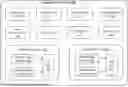


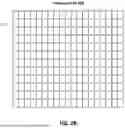
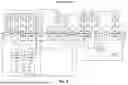
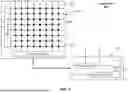
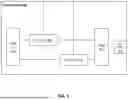
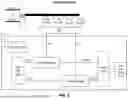
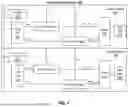
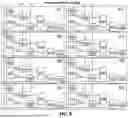
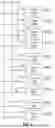
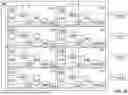
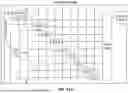
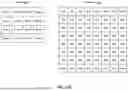
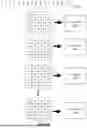
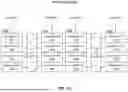
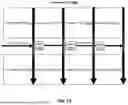
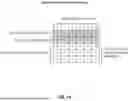

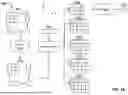
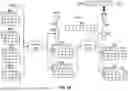
















Sources:
- United States Patent and Trademark Office - verify current appl. status at the USPTO↗
Recent applications in this class:
- » 20250390552 2025-12-25
ACCELERATOR FOR ARRAY MULTIPLICATION - » 20250390551 2025-12-25
CALCULATION DEVICE AND CALCULATION METHOD - » 20250390550 2025-12-25
Method for accelerated solving of large sparse matrix, system and storage medium thereof - » 20250390549 2025-12-25
SYSTEM AND METHOD FOR TWO-VARIABLE NUMBER THEORETIC TRANSFORMS - » 20250384107 2025-12-18
IRREGULAR SPARSE MATRIX MULTIPLY - » 20250378134 2025-12-11
DATA PROCESSING CHIP, AND DATA PROCESSING METHOD AND DEVICE - » 20250378133 2025-12-11
Shared Partial Products for a Dot Product Operation in Hardware - » 20250371104 2025-12-04
HYBRID SPECULATIVE DECODING SYSTEM WITH MODELS ON SILICON - » 20250371103 2025-12-04
Tensor Circuits And Methods For Multiplying With Sparse Weights - » 20250363187 2025-11-27
SYSTEMS AND METHODS FOR MAPPING MATRIX CALCULATIONS TO A MATRIX MULTIPLY ACCELERATOR