FASTENER STRINGER PROVIDED WITH ROWS OF METAL ELEMENTS, SLIDE FASTENER PROVIDED WITH SAME, AND ARTICLE PROVIDED WITH SLIDE FASTENER
US20260000161A1
2026-01-01
18/840,191
2022-03-29
Smart Summary: A fastener stringer has a tape with metal elements attached to one edge. Near this edge, a special thread that dissolves in water is used. When the water-soluble thread is dissolved, it weakens the grip of the metal elements. This process can also cause the tape to split into two pieces. This design allows for easier separation or adjustment of the fastener when needed. 🚀 TL;DR
Abstract:
A fastener stringer includes a fastener tape having a first side edge and a second side edge opposite to the first side edge, and a row of metal elements attached along the first side edge; wherein a water-soluble thread is used in a portion of the fastener tape that is closer to the first side edge than a center line C of the fastener tape, and the fastener stringer is configured such that by dissolving the water-soluble thread, an attachment strength of the row of metal elements is reduced and/or the fastener tape separates into at least two parts starting from the water-soluble thread.
Inventors:
- Mitsuo Tsuzuyama 3 🇯🇵 Kurobe-shi, Toyama, Japan
- Chikako Hiromi 4 🇯🇵 Kurobe-shi, Toyama, Japan
- Takuya KOIZUMI 1 🇯🇵 Kurobe-shi, Toyama, Japan
Applicant:
Interested in similar patents?
Get notified when new applications in this technology area are published.
Classification:
A44B19/34 » CPC main
Slide fasteners; Details Stringer tapes ; Flaps secured to stringers for covering the interlocking members
Description
FIELD OF THE INVENTION
The present invention relates to a fastener stringer provided with a row of metal elements. The present invention also relates to a slide fastener provided with such a fastener stringer. The present invention also relates to an article provided with such a slide fastener.
BACKGROUND OF THE INVENTION
Slide fasteners are opening/closing devices used not only for everyday items such as clothing, bags, shoes, and miscellaneous goods, but also for industrial items. In general, slide fasteners are mainly composed of three parts: a pair of long fastener tapes; a plurality of elements that are the interlocking portion of the fastener attached along one side edge of each of the fastener tapes; and a slider that controls opening and closing of the fastener by engaging or separating the opposing elements.
In recent years, from the perspective of SDGs, the need for recycling of clothing and other goods has been increasing. Therefore, it is an important issue to improve the recyclability of articles provided with slide fasteners as well.
Patent Literature 1 (U.S. Pat. No. 10,125,452 B2) discloses an invention, in which electromagnetic energy such as radio waves or microwaves is irradiated to a textile product consisting of at least two parts communicating by a fiber-containing connector, such that the mechanical properties of the connector are degraded and the textile product is decomposed.
Also, although not invented for the purpose of recycling, Patent Literature 2 (Japanese Utility Model Registration No. 3192377) discloses a slide fastener that can be separated (destroyed) by applying external force without operating the slider when it is necessary to take off clothes immediately. Specifically, Patent Literature 2 discloses a slide fastener in which at least one of a pair of fastener tapes is provided with a fragile portion, characterized in that by applying an external force to the fastener tape, it separates starting from the fragile portion. An intermittent slit and a melted portion are mentioned as a fragile portion. It is also described that by forming the fastener tape with a nonwoven fabric, the fastener tape itself becomes a fragile portion.
PRIOR ART
Patent Literature
[Patent Literature 1] U.S. Pat. No. 10,125,452 B2
[Patent Literature 2] Japanese Utility Model Registration No. 3192377
SUMMARY OF THE INVENTION
In the invention described in Patent Literature 1, it is necessary to irradiate electromagnetic energy such as radio waves or microwaves to decompose the textile product. However, in order to irradiate such electromagnetic energy, it is necessary to prepare a special irradiation device, and disassembly work is time-consuming.
The slide fastener described in Patent Literature 2 can be separated (broken) by simply applying an external force due to the provided fragile portion. However, the fact that the slide fastener separates (breaks) simply by applying an external force means that the slide fastener does not have sufficient strength. Although such slide fasteners are useful in special applications such as medical applications, they lack versatility. In addition, since recycling is not the purpose, there is a lack of perspective regarding the recyclability of goods.
As described above, in the prior art, no sufficient consideration has been given to ways to improve the recyclability of slide fasteners, especially slide fasteners provided with metal elements. The present invention was created against the background of the above circumstances, and one object of the present invention is to provide a fastener stringer that allows metal elements or a part of the fastener tape including metal elements to be easily separated from an article without using a special equipment. Further, another object of the present invention is to provide a slide fastener provided with such a fastener stringer. Further, another object of the present invention is to provide an article provided with such a slide fastener.
A fastener stringer, comprising a fastener tape having a first side edge and a second side edge opposite to the first side edge, and a row of metal elements attached along the first side edge,
wherein a water-soluble thread is used in a portion of the fastener tape that is closer to the first side edge than a center line C of the fastener tape, and the fastener stringer is configured such that by dissolving the water-soluble thread an attachment strength of the row of metal elements is reduced and/or the fastener tape separates into at least two parts starting from the water- soluble thread.
The fastener stringer according to [1], wherein the row of metal elements is swaged and fixed so as to sandwich at least one core string provided along the first side edge of the fastener tape, and the water-soluble thread constitutes at least a part of the at least one core string.
The fastener stringer according to [1] or [2], wherein the at least one core string comprises at least one core thread and a sheath thread woven around the core thread, and the water-soluble thread constitutes at least a part of the core thread.
The fastener stringer according to any one of [1] to [3], comprising at least one core string sewn along the first side edge of the fastener tape by the water-soluble thread, and wherein the row of metal elements is swaged and fixed so as to sandwich the at least one core string.
The fastener stringer according to any one of [1] to [4], wherein the fastener tape comprises: a first fastener tape portion having the first side edge and having a first width extending in a direction orthogonal to the first side edge; and a second fastener tape portion having the second side edge and having a second width extending in a direction orthogonal to the second side edge,
wherein an average value of the first width is smaller than an average value of the second width, and the first fastener tape portion and the second fastener tape portion are sewn together with the water-soluble thread.
A slide fastener comprising the fastener stringer according to any one of [1] to [5].
An article comprising the slide fastener according to [6], wherein the slide fastener is sewn along the second side edge of the fastener tape.
The article according to [7], wherein the fastener tape comprises a same material as that used in the article.
According to one embodiment of the article provided with a slide fastener of the present invention, metal elements or a part of the fastener tape including metal elements are possible to be easily separated from the article with a simple operation of dissolving the water-soluble thread and without using a special equipment.
BRIEF DESCRIPTION OF THE DRAWINGS
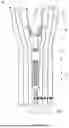
FIG. 1 is a schematic front view of a slide fastener according to an embodiment of the present invention.
FIG. 2 is a schematic front view showing a slide fastener according to an embodiment of the present invention separated by dissolving a water- soluble thread that sewing together a first fastener tape portion and a second fastener tape portion.
FIG. 3 is a schematic perspective view for explaining how the metal elements are swaged and fixed to the core portion of the fastener tape.
FIG. 4-1 is a schematic perspective view showing a first structural example of a core portion of a fastener tape.
FIG. 4-2 is a schematic perspective view showing a second structural example of the core portion of the fastener tape.
FIG. 4-3 is a schematic cross-sectional view showing a third structural example of the core portion of the fastener tape.
DETAILED DESCRIPTION OF THE INVENTION
Hereinafter, embodiments of the present invention will now be described in detail with reference to the drawings. It should be understood that the present invention is not intended to be limited to the following embodiments, and any change, improvement or the like of the design may be appropriately added based on ordinary knowledge of those skilled in the art without departing from the spirit of the present invention.
As used herein, terms such as front and back, left and right, and upper and lower may be used to describe the relative positional relationship of members or parts. The vertical direction corresponds to the longitudinal direction of the slide fastener (vertical direction in FIG. 1), the left-right direction corresponds to the width direction of the slide fastener (horizontal direction in FIG. 1), and the front-back direction corresponds to the thickness direction of the slide fastener (depth direction in FIG. 1). Of course, the vertical direction does not need to coincide with the real vertical direction (direction of gravity). That is, the directional terms referred to in this specification are to be understood in terms of the slide fastener and not in terms of the real vertical direction (direction of gravity), and are independent of the vertical direction (direction of gravity).
1. Slide Fastener
FIG. 1 shows a schematic front view of a slide fastener 10 according to an embodiment of the present invention. The slide fastener 10 comprises a pair of fastener stringers 7 comprising a fastener tape 1 having a first side edge 1a and a second side edge 1b opposite to the first side edge 1a, and a row of metal elements 3 attached along the first side edge 1a. The slide fastener 10 comprises a slider 6 that is disposed between a pair of opposing rows of metal elements 3 and is vertically slidable for engaging and disengaging the metal elements 3. The fastener tape 1 includes a core portion 2 on the first side edge 1a. The plurality of metal elements 3 are swaged and fixed to the core portion 2 at predetermined intervals. At the upper and lower ends of the row of metal elements 3, an upper stopper 4 and a lower stopper 5 are swaged and fixed to the core portion 2 of the fastener tape 1.
A fastener tape with a row of elements attached along one side edge is called a fastener stringer, and a pair of fastener stringers in which the rows of elements are engaged with each other is called a fastener chain. In addition, the lower stopper may be a separable fitting component having an insert pin, a box rod, and a box body, and the slide fastener may be separated into left and right sides by opening and separating the slider. Other embodiments that are not shown are also possible.
As the fastener tape 1 used in this embodiment, a general-purpose fastener tape can be used, except that a water-soluble thread may be used, and no special configurations are required. The material of the fastener tape 1 is not limited, but may be, for example, natural fibers such as cotton, natural resin fibers, or synthetic resin fibers. Generally, fastener tapes are constructed by weaving or knitting these fibers. The fastener tape 1 can typically be made of cotton, polyester, polyamide, polypropylene, acrylic, or the like. Among these, polyester is preferred because it has excellent horizontal tensile strength. In addition, considering the recyclability of the part of the fastener tape described later, cotton is preferable.
As the materials for the metal elements, the slider, the lower stopper, and the upper stopper, copper (pure copper), copper alloy (red copper, brass, nickel silver, etc.), aluminum alloy (Al—Cu alloy, Al—Mn alloy, Al—Si alloy, Al—Mg alloy, Al—Mg—Si alloy, Al—Zn—Mg alloy, Al—Zn—Mg—Cu alloy, and the like), titanium, titanium alloy, zinc, zinc alloy, iron, iron alloy (stainless steel, and the like), and the like can be used, but the present invention is not limited thereto. The surface of the metal element may be further subjected to surface treatments such as plating, chemical conversion treatment, gloss polishing, and electrodeposition coating.
In one embodiment of the present invention, a water-soluble thread 8 is used in a portion of the fastener tape that is closer to the first side edge 1a than the center line C (extending in the longitudinal direction) of the fastener tape 1. This portion of fastener tape includes a core portion 2. The fastener stringer 7 is configured such that, by dissolving this water-soluble thread in a liquid, such as water, the attachment strength of the rows of metal elements 3 is reduced, and/or the fastener tape 1 separates into at least two parts starting from this water-soluble thread. For this reason, for slide fasteners sewn onto an article, after the metal elements have been separated from the fastener tape, or after the part of the fastener tape including the metal elements has been separated from the part of the fastener tape sewn to the article, it is possible to increase the proportion of the portion of fastener tape that remains being sewn onto the article. In a preferred embodiment, no water-soluble thread is used closer to the second side edge 1b side than the center line C (extending in the longitudinal direction) of the fastener tape 1.
As the water-soluble thread, any known water-soluble thread can be used. As used herein, “water-soluble thread” means a thread exhibiting a weight loss rate of 50% by mass or more when it has been left for 10 minutes in water at 95° C. or in a 2% by mass aqueous solution of sodium hydroxide at 95° C. at a bath ratio (thread weight: liquid weight)=1:50. Among the “water-soluble threads”, threads exhibiting a weight loss rate of 50% by mass or more when it has been left in water at 95° C. for 10 minutes at a bath ratio (thread weight: liquid weight) of 1:50 are preferable, and threads exhibiting a weight loss rate of 80% by mass or more when it has been left in water at 95° C. for 10 minutes at a bath ratio (thread weight: liquid weight) of 1:50 are more preferable.
As the water-soluble thread, those have a tensile strength of 3 cN/dtx or more, for example, 3 to 5 cN/dtx can be used. Further, the water-soluble thread preferably has a seam tensile strength of 350N or more when used as a sewing thread, and for example, a high tensile strength of 350 to 500N. The tensile strength of the thread refers to the single thread tensile strength (standard time) measured by the JIS method specified in JIS L1095: 2010. The seam tensile strength refers to the grab method (stitch horizontal method, standard seam tensile strength) specified in JIS L1093: 2011.
Examples of water-soluble threads include water-soluble polyvinyl alcohol-based (PVA-based) synthetic fiber threads. Water-soluble PVA-based synthetic fibers that have excellent dimensional stability under high humidity are preferred. Such PVA-based synthetic fibers can be produced, for example, by the production methods described in Japanese Patent Application Publication No. H07-090714 and Japanese Patent Application Publication No. H11-146988. That is, a spinning stock solution obtained by dissolving a PVA-based polymer whose dissolution temperature in water is 100° C. or less in an organic solvent (solidifying solvent) is wet spun or wet/dry spun in a solidifying bath mainly containing an organic solvent having solidifying ability for the polymer, and 2 to 8 times wet stretching is applied to extract the stock solvent from the fiber with the solidifying solvent, and perform drying. Then, the water-soluble thread can then be obtained by performing a dry heat shrinkage treatment of 3 to 40% at 80 to 250° C. and under multistage temperature-raising conditions. Examples of such water-soluble PVA-based synthetic fibers include product name “KURALON K-II (registered trademark)” manufactured by Kuraray Co., Ltd. and product name “SOLVRON (registered trademark)” manufactured by NITIVY Co., Ltd.
Further, examples of water-soluble threads include easily alkali-soluble threads such as copolymerized polyester threads and polylactic acid threads. Easily alkali-soluble copolymerized polyester threads can be manufactured, for example, by directly reacting terephthalic acid and ethylene glycol, and when the esterification rate becomes 80 to 95%, adding methyl ester of isophthalic acid containing a metal sulfonate group in an amount of 2 to 3 mol % based on the acid component in the oligomer, and then adding polyalkylene glycol in an amount of 10 to 13% by weight based on the polymer so that the product of both is in the range of 26 to 30, and carrying out a polymerization reaction under a reduced pressure. A specific example of such a copolymerized polyester thread is product name “Bellpure (registered trademark)” manufactured by KB Seiren, Ltd. Examples of readily alkali-soluble polylactic acid threads include product name “TERRAMAC (registered trademark)” manufactured by UNITIKA Ltd., product name “GEODYNA (Plastarch) (registered trademark)” manufactured by Kuraray Co., Ltd., “ecodear (registered trademark)” manufactured by Toray Industries, Inc., and the like.
Next, an example of an embodiment in which a fastener stringer is configured such that the attachment strength of the row of metal elements is reduced by dissolving the water-soluble thread will be described. There is no particular limitation on the embodiments, as long as the dissolution of the water-soluble thread reduces the attachment strength of the row of metal elements. In one embodiment, the row of metal elements is swaged and fixed so as to sandwich at least one core string provided along the first side edge of the fastener tape, and the water-soluble thread constitutes at least a portion of the at least one core string.
FIG. 3 shows how the metal element 3 is swaged and fixed to the core portion 2 of the fastener tape 1. The metal element 3 comprises a pair of leg portions 31a and 31b that sandwich the fastener tape 1 from the front and back; and a head portion 32 having an engagement area (In FIG. 3, the engagement protrusion 32a and the engagement recess 32b) for connecting each leg portion 31a, 31b and engaging with an opposing metal element 3 over the expanding-shaped core portion 2 formed on the first side edge 1a of the fastener tape 1 when forming a fastener chain. The engagement protrusion 32a is formed to protrude in the element arrangement direction A (vertical direction) shown in FIG. 3, and the engagement recess 32b is formed on the opposite side of the element arrangement direction A with respect to the engagement protrusion 32a.
The core portion 2 can be provided with at least one core string 21 extending along the first side edge 1a. In this case, the metal element 3 is fixed to the core portion 2 by crimping the leg portions 31a and 31b so as to sandwich the core string 21. Therefore, when the water-soluble thread constitutes at least a part of at least one, preferably half or more, and more preferably all the core strings 21, as the water-soluble threads constituting the core string 21 are dissolved, the core portion 2 is contracted, so that the attachment strength of the row of metal elements 3 is reduced. In a preferred embodiment, at least one core string 21 has at least one, preferably two or more core threads 21a and a sheath thread 21b knitted around the core thread 21a, and the water-soluble thread constitutes at least a portion, preferably all, of the core thread 21a. The water-soluble thread may constitute at least a portion of the sheath thread 21b.
FIGS. 4-1 and 4-2 show schematic perspective views of a structural example of the core portion 2 in which the water-soluble thread constitutes at least a part of at least one core string 21.
In the first structural example shown in FIG. 4-1, the core portion 2 formed on the first side edge 1a of a woven fabric fastener tape 1 has a single core string 21 that is integrally woven with a hollow weave structure. The core string 21 has two or more core threads 21a and a sheath thread 21b woven around the core thread 21a, and the water-soluble thread constitutes at least a part, preferably all, of the core thread 21a. In addition to or instead of the core thread 21a, a water-soluble thread may constitute at least a part, preferably all, of the sheath thread 21b. The metal element 3 is swaged and fixed so as to sandwich the single core string 21 provided along the first side edge 1a.
In the second structural example shown in FIG. 4-2, the core portion 2 formed on the first side edge 1a of a woven fabric fastener tape 1 has two core strings 21 that are integrally woven with a bead weave structure. In the second structural example, the two core strings 21 are provided in parallel in the thickness direction of the fastener tape 1 along the first side edge 1a. Each of the core strings 21 has two or more core threads 21a and a sheath thread 21b woven around the core threads 21a, and the water-soluble thread constitutes at least a portion, preferably all, of the core threads 21a. In addition to or instead of the core thread 21a, a water-soluble thread may constitute at least a portion, preferably all, of the sheath thread 21b. The metal element 3 is swaged and fixed so as to sandwich the two core strings 21 provided along the first side edge 1a.
In another embodiment in which the fastener stringer is configured such that the dissolution of the water-soluble threads reduces the attachment strength of the row of metal elements, at least one core string is sewn along the first side edge of the fastener tape with a water-soluble thread. In this case, when the water-soluble thread sewing the core string dissolves, the core string becomes easy to separate from the fastener tape. For this reason, the row of metal elements swaged and fixed to the core string also tend to separate from the fastener tape together with the core string, thereby reducing the attachment strength.
FIG. 4-3 shows a schematic cross-sectional view of an example structure of a core portion including at least one core string sewn along the first side edge of the fastener tape with a water-soluble thread. In the third structural example shown in FIG. 4-3, the core portion 2 formed on the first side edge 1a of a woven or knitted fastener tape 1 has two core strings 21 sewn to the front and back sides of the fastener tape 1 with sewing threads. The sewing thread can be, for example, composed of a needle thread 23a forming a first sewing line on the first main surface 1c side of the fastener tape 1, and a looper thread 23b forming a second sewing line on the second main surface 1d side of the fastener tape 1. There are no particular restrictions on the sewing, but examples include chain stitching and lock stitching. For chain stitching, since the amount of the needle thread and the looper thread used is different, in order to ensure correct attachment and strength of the elements, the upper stopper, the lower stopper, and the like, it is desirable to adjust the thicknesses of the two threads and the thickness of the core thread. Specifically, it is preferable to make the needle thread 23a thicker than the looper thread 23b, and to make the core string 21 sewn to the needle thread 23a thicker than the core string 21 sewn to the looper thread 23b. For lock stitching, it is preferable that the needle thread 23a and the looper thread 23b have the same thickness, and that the core string 21 sewn to the needle thread 23a has the same thickness as the core string 21 sewn to the looper thread 23b.
Next, the embodiment, in which the fastener stringer is configured such that when the water-soluble thread dissolves, the fastener tape separates into at least two parts starting from the water-soluble thread, will be described. There is no particular limitation on the embodiment as long as the fastener tape is separated into at least two parts starting from the water-soluble thread by dissolving the water-soluble thread.
Referring to FIG. 1, in one embodiment, the fastener tape 1 comprises: a first fastener tape portion 11 having a first side edge 1a and having a first width W1 extending in a direction orthogonal to the first side edge 1a; and a second fastener tape portion 12 having a second side edge 1b and having a second width W2 extending in a direction orthogonal to the second side edge 1b; wherein the average value of the first width W1 is smaller than the average value of the second width W2, and the first fastener tape portion 11 and the second fastener tape portion 12 are sewn by the water-soluble thread 8. In this embodiment, by dissolving the water-soluble thread 8 which is a sewing thread, the fastener tape 1 can be separated into the first fastener tape portion 11 including the row of metal elements 3 and the second fastener tape portion 12 (FIG. 2).
From the viewpoint of increasing the proportion of the second fastener tape portion 12 remaining sewn to the article after the first fastener tape portion 11 including the metal elements 3 is separated from the article, the ratio of the average value of the second width W2 to the average value of the first width W1 is preferably 1.1 or more, more preferably 1.5 or more, and even more preferably 2.0 or more. Although no particular upper limit is set for the ratio, considering the width that the fastener tape 1 normally has, it is usually 4.0 or less, and typically 3.0 or less.
In the above embodiment, the fastener tape 1 can be separated into two by dissolving the water-soluble thread 8. However, in order to be able to separate the fastener tape 1 into three or more parts, the fastener tape may be composed of three or more fastener tape portions, and each fastener tape portions may be sewn with the water-soluble thread. Further, in another embodiment, a part or all of the fastener tape portion itself closer to the first side edge 1a than the center line C (extending in the longitudinal direction) of the fastener tape 1 may be woven or knitted with the water-soluble thread.
2. Article
A slide fastener according to an embodiment of the present invention can be attached to various articles, and particularly functions as an opening/closing tool. There are no particular restrictions on articles equipped with the slide fastener, but examples thereof include daily necessities such as clothing, bags, shoes, and miscellaneous goods, as well as industrial articles such as water storage tanks, fishing nets, and space suits. The slide fastener can be sewn onto the article. For example, the slide fastener can be sewn along the second side edge of the fastener tape. FIG. 1 schematically shows a sewing thread 13 used when sewing the slide fastener 10 onto an article. The sewing line formed by the sewing thread 13 along the second side edge 1b is preferably located in a portion of the fastener tape that is closer to the second side edge 1b than the center line C of the fastener tape 1.
Although a water-soluble thread can be used for the sewing thread 13, but for a slide fastener sewn on an article, it is preferred that sewing thread 13 be a water-insoluble thread to increase recycling rates, considering that the part of the fastener tape that remains sewn onto the article will be recycled together with the article after the metal elements have been separated from the fastener tape, or after the part of the fastener tape including the metal elements has been separated from the part of the fastener tape sewn to the article.
Further, considering that the remaining part of the fastener tape is recycled together with the article, it is preferable that the fastener tape includes the same material as that used in the article. For example, if the article comprises polyester, it is preferred that the fastener tape also comprise polyester. As used herein, the “same material” means materials with a common basic chemical structure, and in the case of a polymer, materials with a common type of bond between monomers. The molecular weight, and position and type of functional groups do not need to be the same. For example, materials that has the common leftmost “fiber” indication in the Attached Table 5 of the Textile Goods Quality Labeling Regulations of the Household Goods Quality Labeling Act can be regarded as the “same material”. Examples of the types of “fiber” include cotton, acetate fiber, viscose fiber, nylon fiber, polyester synthetic fiber, polyurethane synthetic fiber, polyethylene synthetic fiber, and vinylon fiber.
A slide fastener according to an embodiment of the present invention comprises a water-soluble thread in a portion of the fastener tape that is closer to the first side edge than the center line C of the fastener tape. Therefore, for a slide fastener sewn on an article, it is possible to increase the proportion of the part of the fastener tape that remains sewn onto the article after the metal elements have been separated from the fastener tape, or after the part of the fastener tape including the metal elements has been separated from the part of the fastener tape sewn to the article. Therefore, when the remaining part of the fastener tape is recycled together with the article, the effect of improving the recycling rate can be obtained. In addition, when the metal elements are removed from the used article and re-formed for recycle, or when the metal elements are repaired for reuse, it is preferable to have fewer impurities from the viewpoint of transportation costs, work burden, work environment, and CO2 emissions reduction, so there is an advantage of reducing the amount of the fastener tape which becomes an impurity.
EXAMPLES
Description of Reference Numerals
-
- 1: Fastener tape
- 1a: First side edge
- 1b: Second side edge
- 1c: First main surface
- 1d: Second main surface
- 2: Core portion
- 3: Metal element
- 4: Upper stopper
- 5: Lower stopper
- 6: Slider
- 7: Fastener stringer
- 8: Water-soluble thread
- 10: Slide fastener
- 11: First fastener tape portion
- 12: Second fastener tape portion
- 13: Sewing thread
- 21: Core string
- 21a: Core thread
- 21b: Sheath thread
- 23a: Needle thread
- 23b: Looper thread
- 31a: Leg portion
- 31b: Leg portion
- 32: Head portion
- 32a: Engagement protrusion
- 32b: Engagement recess
Claims
1. A fastener stringer, comprising a fastener tape having a first side edge and a second side edge opposite to the first side edge, and a row of metal elements attached along the first side edge;
wherein a water-soluble thread is used in a portion of the fastener tape that is closer to the first side edge than a center line C of the fastener tape, and the fastener stringer is configured such that by dissolving the water-soluble thread, an attachment strength of the row of metal elements is reduced and/or the fastener tape separates into at least two parts starting from the water-soluble thread.
2. The fastener stringer according to claim 1, wherein the row of metal elements is swaged and fixed so as to sandwich at least one core string provided along the first side edge of the fastener tape, and the water-soluble thread constitutes at least a part of the at least one core string.
3. The fastener stringer according to claim 1, wherein the at least one core string comprises at least one core thread and a sheath thread woven around the core thread, and the water-soluble thread constitutes at least a part of the core thread.
4. The fastener stringer according to claim 1, comprising at least one core string sewn along the first side edge of the fastener tape by the water-soluble thread, and wherein the row of metal elements is swaged and fixed so as to sandwich the at least one core string.
5. The fastener stringer according to claim 1, wherein the fastener tape comprises: a first fastener tape portion having the first side edge and having a first width extending in a direction orthogonal to the first side edge;
and a second fastener tape portion having the second side edge and having a second width extending in a direction orthogonal to the second side edge,
wherein an average value of the first width is smaller than an average value of the second width, and the first fastener tape portion and the second fastener tape portion are sewn together with the water-soluble thread.
6. A slide fastener comprising the fastener stringer according to claim 1.
7. An article comprising the slide fastener according to claim 6, wherein the slide fastener is sewn along the second side edge of the fastener tape.
8. The article according to claim 7, wherein the fastener tape 1 comprises a same material as that used in the article.
Images & Drawings included:



Sources:
- United States Patent and Trademark Office - verify current appl. status at the USPTO↗
Recent applications in this class:
- » 20250302159 2025-10-02
RETRACTABLE ZIPPER WITH Y-SHAPED TAPE - » 20250275610 2025-09-04
UNIVERSAL INTERLOCKING CLOSURE DEVICE - » 20240398073 2024-12-05
FASTENER CHAIN - » 20240349849 2024-10-24
Zipper Tape Applicator Device - » 20240335011 2024-10-10
Flat bottom resin zipper - » 20240315403 2024-09-26
SLIDE FASTENER - » 20240156216 2024-05-16
ZIPPER ASSEMBLY - » 20240115015 2024-04-11
Tape, zipper tape, and container with tape and method for manufacture therefor - » 20240074547 2024-03-07
FASTENER TAPE - » 20230404221 2023-12-21
Curved Zippers and Methods, Systems, and Devices for Making Same