MEMBRANE SEPARATION SYSTEM
US20260001032A1
2026-01-01
19/317,257
2025-09-03
Smart Summary: A membrane separation system uses a special membrane to separate different gases. It has two paths: one for the mixed gas and another for the gas that passes through the membrane. The mixed gas contains a gas that can pass through the membrane and another component that can turn into a liquid. As the mixed gas moves through the system, the gas that permeates goes into the second path. The liquid component collects at the end of the first path. 🚀 TL;DR
Abstract:
A membrane separation system includes a membrane separator including a separation membrane. The membrane separator has a first flow path and a second flow path. A mixed gas is to be supplied to the first flow path. The mixed gas contains: a permeate gas that is allowed to permeate through the separation membrane; and a condensable component in a gaseous state. The permeate gas that has permeated through the separation membrane is allowed to flow through the second flow path. The membrane separation system is configured so that the condensable component in a liquid state is present in a downstream end portion of the first flow path in a direction of passage of the mixed gas.
Inventors:
- Sota MAEHARA 35 🇯🇵 Nagoya-Shi, Japan
- Kazuki Iida 27 🇯🇵 Nagoya-shi, Japan
- Hirofumi KAN 39 🇯🇵 Nagoya-shi, Japan
- Katsuya SHIMIZU 8 🇯🇵 Owariasahi-Shi, Japan
Assignee:
- NGK Insulators, Ltd. 2,230 🇯🇵 Nagoya-City, Japan
Applicant:
Interested in similar patents?
Get notified when new applications in this technology area are published.
Classification:
B01D53/22 » CPC main
Separation of gases or vapours; Recovering vapours of volatile solvents from gases; Chemical or biological purification of waste gases, e.g. engine exhaust gases, smoke, fumes, flue gases, aerosols, by diffusion
C09K5/041 » CPC further
Heat-transfer, heat-exchange or heat-storage materials, e.g. refrigerants; Materials for the production of heat or cold by chemical reactions other than by combustion; Materials undergoing a change of physical state when used the change of state being from liquid to vapour or for compression-type refrigeration systems
F25B43/04 » CPC further
Arrangements for separating or purifying gases or liquids ; Arrangements for vaporising the residuum of liquid refrigerant, e.g. by heat for withdrawing non-condensible gases
C09K2205/102 » CPC further
Aspects relating to compounds used in compression type refrigeration systems; Components Alcohols
C09K5/04 IPC
Heat-transfer, heat-exchange or heat-storage materials, e.g. refrigerants; Materials for the production of heat or cold by chemical reactions other than by combustion; Materials undergoing a change of physical state when used the change of state being from liquid to vapour or
Description
CROSS-REFERENCE TO RELATED APPLICATIONS
This application is a continuation under 35 U.S.C. 120 of International Application PCT/JP2024/014561 having the International Filing Date of 10 Apr. 2024 and having the benefit of the earlier filing date of Japanese Application No. 2023-071639 filed on 25 Apr. 2023. Each of the identified applications is fully incorporated herein by reference.
BACKGROUND OF THE INVENTION
1. Field of the Invention
The present disclosure relates to a membrane separation system.
2. Description of the Related Art
During a refrigeration cycle used in air-conditioning apparatus and the like, a non-condensable component such as air may be entrapped into a condensable component such as a refrigerant vapor, and a mixed gas may be generated therefrom. In this case, it is desired that the non-condensable component be separated from the mixed gas to recover the condensable component. There has been proposed, for example, a non-condensable gas purge system that cools a mixed gas to liquify a condensable component to thereby separate the condensable component from a non-condensable component (see, for example, Patent Literature 1). However, the non-condensable gas purge system described in Patent Literature 1 requires the cooling of the mixed gas to below a condensation point, and thus has a problem in that large energy is required for the separation of the condensable component.
CITATION LIST
Patent Literature
- [PTL 1] JP 2019-515230 A1
SUMMARY OF THE INVENTION
A primary object of the present disclosure is to provide a membrane separation system that enables the separation of a condensable component in a liquid state with less energy.
[1] According to an embodiment of the present disclosure, there is provided a membrane separation system, which includes a membrane separator including a separation membrane. The membrane separator has a first flow path and a second flow path. A mixed gas containing: a permeate gas that is allowed to permeate through the separation membrane; and a condensable component in a gaseous state is to be supplied to the first flow path. The permeate gas that has permeated through the separation membrane is allowed to flow through the second flow path. The membrane separation system is configured so that the condensable component in a liquid state is present in a downstream end portion of the first flow path in a direction of passage of the mixed gas.
[2] In the membrane separation system according to the above-mentioned item [1], the first flow path may be inclined downward in a vertical direction as extending toward a downstream side in the direction of passage of the mixed gas.
[3] In the membrane separation system according to the above-mentioned item [1] or [2], when an upstream end portion of the first flow path in the direction of passage is defined as 0%, and the downstream end portion of the first flow path is defined as 100%, the membrane separation system may be configured so that the condensable component in a liquid state is present in at least part of a range of 20% or more and 100% or less of the first flow path.
[4] In the membrane separation system according to any one of the above-mentioned items [1] to [3], the membrane separation system may be configured so that the condensable component in a liquid state is present on at least part of a surface defining the first flow path.
[5] In the membrane separation system according to any one of the above-mentioned items [1] to [4], when a start point of a steady operation for supplying the mixed gas to the first flow path to separate the condensable component in a liquid state is defined as 0%, and an end point of the steady operation is defined as 100%, an average value of a gas permeation amount at which a gas permeates through the separation membrane during a period of from 90% to 100% of the steady operation may be 0.5 or more with respect to an average value of a gas permeation amount at which a gas permeates through the separation membrane during a period of from 45% to 55% of the steady operation.
[6] In the membrane separation system according to any one of the above-mentioned items [1] to [5], a protective layer may be formed on a surface of the separation membrane. The protective layer faces the first flow path.
[7] In the membrane separation system according to any one of the above-mentioned items [1] to [6], the separation membrane may be an inorganic membrane.
[8] The membrane separation system according to any one of the above-mentioned items [1] to [7] may further include a recovery unit. The recovery unit is capable of recovering the condensable component in a liquid state.
[9] In the membrane separation system according to any one of the above-mentioned items [1] to [8], the membrane separator may further include a separation membrane container that houses the separation membrane. The separation membrane container may have a gas inlet, a first gas outlet, and a second gas outlet. The gas inlet is in communication with an upstream end portion of the first flow path in the direction of passage. The first gas outlet is in communication with the downstream end portion of the first flow path in the direction of passage. The second gas outlet is in communication with the second flow path.
According to the embodiment of the present disclosure, the membrane separation system that enables the separation of the condensable component in a liquid state with less energy is provided.
BRIEF DESCRIPTION OF THE DRAWINGS
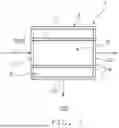
FIG. 1 is a schematic configuration view of a membrane separation system according to one embodiment of the present disclosure.
FIG. 2 is a schematic configuration view of a membrane separation system according to another embodiment of the present disclosure.
FIG. 3 is an explanatory schematic configuration view for illustrating the arrangement of a separation membrane of FIG. 1.
FIG. 4 is a schematic configuration view of a membrane separation system according to still another embodiment of the present disclosure.
FIG. 5 is a schematic configuration view of a separation membrane complex including the separation membrane of FIG. 1.
FIG. 6 is a schematic cross-sectional view of the separation membrane complex of FIG. 5.
FIG. 7 is a schematic perspective view of one modification example of the separation membrane complex.
FIG. 8 is a schematic cross-sectional view of the separation membrane complex of FIG. 7.
DESCRIPTION OF THE EMBODIMENTS
Embodiments of the present disclosure are described below with reference to the drawings. However, the present disclosure is not limited to these embodiments. For clearer illustration, some widths, thicknesses, shapes, and the like of respective portions may be schematically illustrated in the drawings in comparison to the embodiments. However, the widths, the thicknesses, the shapes, and the like are merely an example, and do not limit understanding of the present disclosure.
A. Outline of Membrane Separation System
FIG. 1 is a schematic configuration view of a membrane separation system according to one embodiment of the present disclosure.
A membrane separation system 100 in the illustrated example includes a membrane separator 1 including a separation membrane 11. The membrane separator 1 has a first flow path A and a second flow path B. A mixed gas containing: a permeate gas that is allowed to permeate through the separation membrane 11; and a condensable component in a gaseous state is supplied to the first flow path A. The permeate gas that has permeated through the separation membrane 11 flows through the second flow path B. The membrane separation system 100 is configured so that the condensable component in a liquid state is present in a downstream end portion of the first flow path A in a direction of passage of the mixed gas.
With the configuration as described above, when the mixed gas containing the permeate gas and the condensable component in a gaseous state is supplied to the first flow path, the separation membrane allows at least part of the permeate gas contained in the mixed gas, to permeate therethrough and to flow into the second flow path. Thus, the partial pressure of the condensable component in the mixed gas passing through the first flow path increases as the mixed gas flows downstream in the direction of passage. As a result, the condensable component can be smoothly liquified and can be present in the downstream end portion of the first flow path in the direction of passage. Thus, the membrane separation system as described above can separate and recover the condensable component in a liquid state with less energy despite its simple configuration.
Examples of the permeate gas contained in the mixed gas include air.
The condensable component contained in the mixed gas preferably contains a refrigerant. Examples of the refrigerant include glycols and fluorine-containing compounds. The condensable components may be used alone or in combination. Of the condensable components, glycols are preferred.
The separation membrane 11 typically has a cylindrical shape extending in the direction of passage of the mixed gas. The separation membrane 11 having a cylindrical shape includes the first flow path A defined inside the separation membrane 11. The length of the first flow path A may be suitably and appropriately adjusted.
Although not shown, the outer side of the separation membrane 11 having a cylindrical shape may be in contact with the first flow path A. In this case, the inner side of the separation membrane 11 can define the second flow path B.
In the illustrated example, the membrane separator 1 includes a single separation membrane 11. The membrane separator 1 may include a plurality of separation membranes 11 as illustrated in FIG. 2. In the illustrated example, the plurality of separation membranes 11 are connected in series so that the internal spaces of the separation membranes 11 are in communication with each other. In this case, separation membranes 11 adjacent to each other among the plurality of separation membranes 11 may be connected to each other through intermediation of a connection line 16.
In the membrane separator 1 including the plurality of separation membranes 11, the internal spaces of the plurality of separation membranes 11 and, when required, the internal spaces of the connection lines 16 define the first flow path A.
For convenience, the first flow path A is described below for the membrane separator 1 including a single separation membrane 11 illustrated in FIG. 1, FIG. 3, and FIG. 4. However, the first flow path A in the membrane separator 1 including the plurality of separation membranes 11 can also be described in the same manner.
As illustrated in FIG. 1, in one embodiment, the membrane separation system 100 is configured so that the condensable component in a liquid state is present on at least part of the surface defining the first flow path A. The configuration as described above allows the condensable component in a liquid state to be smoothly discharged from the first flow path along the surface. Thus, excessive accumulation of the condensable component in a liquid state in the first flow path can be prevented.
In one embodiment, when an upstream end portion of the first flow path A in the direction of passage is defined as 0%, and the downstream end portion of the first flow path A is defined as 100%, the membrane separation system 100 is configured so that the condensable component in a liquid state is present in at least part of a range of 20% or more and 100% or less of the first flow path A. In addition to the condensable component in a liquid state, the condensable component in a gaseous state may be present in the range of 20% or more and 100% or less of the first flow path A. Meanwhile, the condensable component in a gaseous state is present and the condensable component in a liquid state is not typically present, in the range of 0% or more and less than 20% of the first flow path A. With the configuration as described above, the separation membrane allows the permeate gas to efficiently permeate therethrough in the range of 0% or more and less than 20% of the first flow path, in which the partial pressure of the permeate gas in the mixed gas is relatively large, and the condensable component can be stably liquified in the range of 20% or more and 100% or less of the first flow path A, in which the partial pressure of the condensable component in the mixed gas is relatively large.
In one embodiment, the membrane separation system 100 further includes a recovery unit 7. The recovery unit 7 can recover the condensable component in a liquid state. The recovery unit 7 may have any appropriate configuration. The recovery unit 7 can typically recover the condensable component in a liquid state that has been discharged from the downstream end portion of the first flow path A. The presence or absence of the condensable component in a liquid state in the downstream end portion of the first flow path A may be determined based on the presence or absence of any condensable component in a liquid state to be recovered by the recovery unit.
As illustrated in FIG. 3, the first flow path A may be inclined downward in a vertical direction as extending toward a downstream side in the direction of passage of the mixed gas. In one embodiment, at least part of the separation membrane 11 is arranged such that the downstream end portion of the first flow path A is positioned lower than the upstream end portion in the vertical direction. In the illustrated example, the whole of the separation membrane 11 is arranged so as to be inclined with respect to a horizontal direction. When the first flow path is inclined as described above, the accumulation of the condensable component in a liquid state in the first flow path can be stably prevented. In particular, when the membrane separation system includes the recovery unit, the condensable component in a liquid state can be smoothly discharged toward the recovery unit.
An angle θ formed between the direction in which the first flow path extends and the horizontal direction can be suitably and appropriately adjusted based on the orientation of a gas flow, a surface tension, the diameter of the first flow path and the like. The angle θ formed between the direction in which the first flow path extends and the horizontal direction is, for example, more than 0° and 90° or less. When the angle θ formed between the direction in which the first flow path extends and the horizontal direction is steep, the discharge speed of the condensable component in a liquid state can be improved. Meanwhile, when the angle θ formed between the direction in which the first flow path extends and the horizontal direction is gentle, the condensable component in a liquid state can be accumulated in the lower part of the first flow path, and thus the condensable component in a liquid state in the upper part of the first flow path can be reduced. That is, when the angle θ formed between the direction in which the first flow path extends and the horizontal direction is gentle, a coverage of the first flow path can be reduced. Thus, it is preferred that improvement in the discharge speed of the condensable component in a liquid state and a low coverage of the first flow path be achieved in a well-balanced manner by appropriately adjusting the angle θ formed between the direction in which the first flow path extends and the horizontal direction.
The lower limit value of the angle θ described above is preferably a sliding angle for the resulting condensable component in a liquid state. The setting of the lower limit value as described above allows the condensable component in a liquid state to be efficiently discharged.
The sliding angle for the resulting condensable component in a liquid state can be obtained experimentally by, for example, the tilting method. When the sliding angle is obtained experimentally, a sample cut out from the separation membrane or, for example, a flat plate-shaped sample that has been prepared so as to be substantially the same as the actual separation membrane for the measurement of an inclination angle may be used for a solid. Further, a simulant liquid that has been prepared in accordance with the properties of the condensable component can be used for a liquid. Typically, 10 mg of the simulant liquid can be used. A device used for the calculation of the sliding angle for the condensable component in a liquid state by the tilting method is not limited to any particular device. For example, B100W manufactured by ASUMI GIKEN, Limited or an extension device based thereon can be used.
The sliding angle for the resulting condensable component in a liquid state can also be estimated with known adhesion energy.
The sliding angle may vary depending on the gas flow through the first flow path. Specifically, the condensable component in a liquid state is thrust by the gas flow. Thus, as the flow rate of the gas increases, the sliding angle may decrease. In this case, an actual sliding angle can be estimated by, for example, appropriately correcting the influence of the gas flow rate for the sliding angle that has been experimentally obtained by the tilting method.
The upper limit value of the angle θ is preferably 80°. The coverage of the first flow path can be estimated by the following formula. Coverage=1−0.5×cos (θ)
That is, when the angle θ is 0°, the condensable component in a liquid state can be accumulated in the lower part of the first flow path as described above, and thus the coverage is 0.5. Further, when the angle θ is 90°, an upper part and a lower part of the first flow path are not distinguishably defined, and thus the coverage is 1. In this case, it is generally known that the permeation performance of the separation membrane in a covered area is significantly reduced due to a reduction in effective membrane area or the like. The permeation performance of the separation membrane in the covered area may be reduced to, for example, about 10% of the permeation performance of the separation membrane in an uncovered area. As a result of calculating a relationship between the angle θ and the degree of reduction in permeation performance of the separation membrane based on the above-mentioned findings, it has been found that the permeation performance of the separation membrane is significantly reduced when the angle θ is set larger than 80°. Thus, the coverage of the first flow path is reduced by setting the angle θ to 80° or less, to thereby enable effective expression of the permeation performance of the separation membrane.
Further, when the membrane separation system includes the recovery unit, the flow rate of the mixed gas supplied to the first flow path A of the separation membrane system 100 may be temporarily increased. In this manner, the condensable component in a liquid state in the first flow path can be discharged from the membrane separation system. Temporarily increasing the flow rate is suitable when, in particular, the condensable component in a liquid state is accumulated or the condensable component in a liquid state has a high viscosity because the condensable component in a liquid state can be smoothy discharged toward the recovery unit.
As illustrated in FIG. 1, in one embodiment, the membrane separator 1 further includes a separation membrane container 2 that houses the separation membrane 11. In a space outside the separation membrane 11, the inner surface of the separation membrane container 2 typically defines the second flow path B. The separation membrane container 2 has a gas inlet 21, a first gas outlet 22, and a second gas outlet 23. The gas inlet 21 is in communication with the upstream end portion of the first flow path A. The mixed gas can pass through the gas inlet 21 during a steady operation described later. The first gas outlet 22 is in communication with the downstream end portion of the first flow path A. A treated gas in which the permeate gas and the condensable component have been reduced after passing through the first flow path A can pass through the first gas outlet 22 during the steady operation described later.
The second gas outlet 23 is in communication with the second flow path B. The second gas outlet 23 allows the permeate gas to be discharged from the second flow path B during the steady operation described later.
In one embodiment, the membrane separation system 100 further includes a supply unit 6. The supply unit 6 can supply the mixed gas containing the permeate gas and the condensable component in a gaseous state to the first flow path A of the membrane separator 1. In the illustrated example, the supply unit 6 includes a supply line 61.
The supply line 61 is a pipe for supplying the mixed gas to the first flow path A. Although not shown, the upstream end portion of the supply line 61 in a direction of supply of the mixed gas is connected to, for example, a storage tank for storing the mixed gas. The downstream end portion of the supply line 61 in the direction of supply of the mixed gas is typically connected to the separation membrane container 2 so as to be in communication with the gas inlet 21.
The membrane separation system 100 may further include any appropriate component as long as the effects of the present disclosure are not inhibited. The any appropriate component is, for example, a component capable of adjusting the temperature and/or the pressure of the mixed gas in the first flow path (for example, a cooling mechanism, a compression mechanism).
As illustrated in FIG. 4, in one embodiment, the supply unit 6 further includes a pressure-increasing device 62. The pressure-increasing device 62 is provided to the supply line 61, and can adjust the pressure of the mixed gas passing through the supply line 61. In this manner, the temperature and/or the pressure of the mixed gas in the first flow path can be smoothly adjusted.
Now, the details of the separation membrane are described.
B. Separation Membrane
The separation membrane 11 is formed so as to allow the permeate gas to relatively easily permeate therethrough and to allow the condensable component in a gaseous state to permeate therethrough less easily than the permeate gas. In other words, the permeation speed of the condensable component in a gaseous state through the separation membrane is sufficiently smaller than the permeation speed of the permeate gas. Thus, the partial pressure of the condensable component in the mixed gas passing through the first flow path increases as the mixed gas flows toward the downstream side in the direction of passage.
When the start point of the steady operation described later is defined as 0%, and the end point thereof is defined as 100%, the average value of a gas permeation amount at which a gas permeates through the separation membrane 11 during a period of from 90% to 100% of the steady operation (hereinafter referred to as “end-period average gas permeation amount”) is, for example, 0.5 or more, preferably 0.7 or more, more preferably 0.9 or more with respect to the average value of a gas permeation amount at which a gas permeates through the separation membrane 11 during a period of from 45% to 55% of the steady operation (hereinafter referred to as “intermediate-period average gas permeation amount”). Meanwhile, the upper limit of the end-period average gas permeation amount with respect to the intermediate-period average gas permeation amount is typically 1.0. That is, the separation membrane is formed such that the end-period average gas permeation amount falls within such ranges. Thus, even when the condensable component in a liquid state is generated, the separation membrane can ensure a sufficient gas permeation amount.
Examples of the separation membrane 11 include organic membranes and inorganic membranes. Of those, an inorganic membrane is preferred. When the separation membrane is formed of an organic membrane, examples of the structure thereof include hollow fiber structures and spiral structures. Meanwhile, when the separation membrane is formed of an inorganic membrane, the first flow path can be designed with a larger diameter because the inorganic membrane has stiffness superior to that of an organic membrane. As a result, in comparison to a case in which the separation membrane is formed of an organic membrane, pressure loss in the first flow path can be markedly reduced even when a fluid flowing through the first flow path is in a gas-liquid mixed phase.
The thickness of the separation membrane 11 can be suitably and appropriately adjusted.
As illustrated in FIG. 5, in one embodiment, the separation membrane 11 is supported by a substrate 12. In other words, the membrane separator 1 further includes the substrate 12. The separation membrane 11 and the substrate 12 form a separation membrane complex 10.
The substrate 12 may have any appropriate shape. Examples of the shape of the substrate 12 include a cylindrical shape, a honeycomb shape, and a plate-like shape.
In one embodiment, the substrate 12 is a porous substrate. The porous substrate has, for example, a monolith-type structure including: a framework being continuous in a three-dimensional network pattern; and communication holes defined by the framework.
The porous substrate may be formed of any appropriate material. Typical examples of a material for the porous substrate include a ceramic sintered body. Examples of the ceramic sintered body include alumina, silica, mullite, zirconia, titania, yttria, silicon nitride, silicon carbide, and cordierite. The ceramic sintered bodies may be used alone or in combination. Of the ceramic sintered bodies, alumina is preferred.
The porous substrate may contain an inorganic binding material. Examples of the inorganic binding material include titania, mullite, easily sinterable alumina, silica, glass frit, clay mineral, and easily sinterable cordierite. The inorganic binding materials may be used alone or in combination.
The porous substrate may be made up of a single layer or may have a multilayer structure in which multiple layers are stacked. In one embodiment, as illustrated in FIG. 6, the porous substrate has a multilayer structure including a plurality of layers being different in pore diameter. In this case, it is preferred that the pore diameter of the layer closer to the separation membrane 11 be smaller.
The average pore diameter of the porous substrate is, for example, from 0.01 μm to 70 μm, preferably from 0.05 μm to 25 μm. The average pore diameter of the porous substrate on the separation membrane side is from 0.01 μm to 1 μm, preferably from 0.05 μm to 0.5 μm. With regard to the distribution of the pore diameters in the whole including the surface and inside of the porous substrate, D5 is, for example, from 0.01 μm to 50 μm, D50 is, for example, from 0.05 μm to 70 μm, and D95 is, for example, from 0.1 μm to 2,000 μm. The porosity of the porous substrate on the separation membrane side is, for example, from 25% to 50%. The average pore diameter of the porous substrate can be measured with, for example, a mercury porosimeter, a perm porometer, or a nano-perm porometer.
In one embodiment, the substrate 12 is a cylindrical substrate 12a. Examples of the sectional shape of the cylindrical substrate 12a in the direction orthogonal to the lengthwise direction of the cylindrical substrate 12a include a triangle, a quadrangle, a pentagon, a hexagon, a higher polygon, a circle, and an ellipse. Of those, a circle is preferred. The outer diameter and the length of the cylindrical substrate may be appropriately set in accordance with its purpose.
In the illustrated example, the separation membrane 11 is formed on the inner surface of the cylindrical substrate 12a. The separation membrane 11 may be formed entirely on the inner surface of the cylindrical substrate 12a as in the illustrated example or may be formed partially on the inner surface of the cylindrical substrate 12a. The internal space of the cylindrical substrate 12a (space defined by the inner peripheral surface of the cylindrical substrate) includes the first flow path A, and the outer peripheral surface of the cylindrical substrate 12a and the inner surface of the separation membrane container 2 (see FIG. 1) define the second flow path B.
In another embodiment, as illustrated in FIG. 7 and FIG. 8, the substrate 12 is a honeycomb-shaped substrate 12b. The honeycomb-shaped substrate 12b includes a partition wall 123 that defines a plurality of cells 124. The cells 124 are each formed in a cylindrical shape so as to penetrate the honeycomb-shaped substrate 12b in its lengthwise direction.
The cells 124 each extend from a first end surface E1 (inflow end surface) of the honeycomb-shaped substrate 12b to a second end surface E2 (outflow end surface) thereof in the lengthwise direction (axial direction) of the honeycomb-shaped substrate 12b (see FIG. 8). The cells 124 each have any appropriate shape in a cross section in a direction perpendicular to the lengthwise direction of the honeycomb-shaped substrate 12b. Examples of the sectional shape of the cells include a triangle, a quadrangle, a pentagon, a hexagon, a higher polygon, a circle, and an ellipse. The sectional shapes and sizes of the cells may be all the same, or may be at least partly different. Of such sectional shapes of the cells, for example, a circle is preferred.
The distance between the center axes of the plurality of cells 124 is, for example, from 0.3 mm to 20 mm. A cell density in a cross section in the direction perpendicular to the lengthwise direction of the honeycomb-shaped substrate (that is, the number of cells 124 per unit area) may be appropriately set in accordance with purposes. The cell density may be, for example, from 0.5 cells/cm2 to 320 cells/cm2. When the cell density falls within such range, the strength and effective geometric surface area (GSA) of the honeycomb-shaped substrate can be sufficiently ensured.
The honeycomb-shaped substrate 12b has any appropriate shape (overall shape). The shape of the honeycomb-shaped substrate is, for example, a cylinder with a circle as its bottom, an elliptic cylinder with an ellipse as its bottom, a prismatic column with a polygon as its bottom, or a column with an indefinite shape as its bottom. The honeycomb-shaped substrate 12b of the illustrated example has a cylindrical shape. The outer diameter and length of the honeycomb-shaped substrate may be appropriately set in accordance with purposes.
In the illustrated example, the separation membrane 11 is formed on the inner surface of each of the plurality of cells 124. The separation membrane 11 may be formed entirely on the inner surface of the cell 124 or may be formed partially on the inner surface of the cell 124. The internal space of each of the plurality of cells 124 (space defined by the inner peripheral surface of the cell) includes the first flow path A, and the outer peripheral surface of the honeycomb-shaped substrate 12b and the inner surface of the separation membrane container 2 (see FIG. 1) define the second flow path B.
In one embodiment, a protective layer 13 is formed on the surface of the separation membrane 11. In the illustrated example, the protective layer 13 is positioned on the side opposite to the substrate 12 with respect to the separation membrane 11, and faces the first flow path A. The configuration as described above can prevent the direct contact of the condensable component in a liquid state with the separation membrane. Thus, as compared with the case in which the separation membrane faces the first flow path, the performance of the separation membrane can be sufficiently ensured in the steady operation. As a result, in the steady operation, the average values of the gas permeation amounts described above (the end-period average gas permeation amount and the intermediate-period average gas permeation amount) can be stably achieved.
Examples of a material for the protective layer 13 include materials that are inhibited from being mixed with the condensable component in a liquid state. The material for the protective layer 13 can be typically selected based on a solubility parameter. The material for the protective layer 13 may be in a liquid state or a solid state at room temperature (23° C.) and normal pressure (0.1 MPaA (absolute pressure)). In terms of the durability of the membrane separator, it is preferred that the material for the protective layer be solid. Meanwhile, when the material for the protective layer is liquid, the protective layer can be additionally formed on the separation membrane.
The protective layer 13 may be formed entirely on the surface of the separation membrane 11 or may be formed partially on the surface of the separation membrane 11. For example, the protective layer 13 may be formed only on a portion in which the condensable component in a liquid state can be present. The thickness of the protective layer 13 can be suitably and appropriately adjusted.
C. Details of Operating Method for Membrane Separation System (Recovery Method for Condensable Component in Liquid State)
Next, an operating method for the membrane separation system is described.
In the operating method for the membrane separation system 100, the mixed gas is supplied to the first flow path A to separate and recover the condensable component in a liquid state during the steady operation. More specifically, the steady operation of the membrane separation system 100 is performed while various conditions are suitably and appropriately adjusted so that the condensable component in a liquid state is present in the first flow path A as described above. The start point and the end point of the steady operation can be suitably and appropriately set. For example, the start point of supply of the mixed gas to the first flow path A may be set as the start point of the steady operation, and the end point of supply of the mixed gas to the first flow path A may be set as the end point of the steady operation.
Examples of the conditions that can be adjusted in the steady operation include the temperature and/or the pressure of the mixed gas supplied to the first flow path, a pressure in the second flow path, and the flow rate of the mixed gas.
With adjustment of the conditions described above, in the membrane separation system 100, the permeate gas is typically separated in the gas permeation amounts described above from the mixed gas so that the condensable component in a liquid state is separated and recovered with less energy.
The membrane separation system according to the embodiment of the present disclosure is used for the separation of a condensable component from a mixed gas, and in particular, can be suitably used for the separation of a refrigerant from a mixed gas.
Claims
What is claimed is:1. A membrane separation system, comprising a membrane separator including a separation membrane,
wherein the membrane separator has:
a first flow path to which a mixed gas containing: a permeate gas that is allowed to permeate through the separation membrane; and a condensable component in a gaseous state is to be supplied; and
a second flow path through which the permeate gas that has permeated through the separation membrane is allowed to flow, and
wherein the membrane separation system is configured so that the condensable component in a liquid state is present in a downstream end portion of the first flow path in a direction of passage of the mixed gas.
2. The membrane separation system according to claim 1, wherein the first flow path is inclined downward in a vertical direction as extending toward a downstream side in the direction of passage of the mixed gas.
3. The membrane separation system according to claim 1, wherein, when an upstream end portion of the first flow path in the direction of passage is defined as 0%, and the downstream end portion of the first flow path is defined as 100%, the membrane separation system is configured so that the condensable component in a liquid state is present in at least part of a range of 20% or more and 100% or less of the first flow path.
4. The membrane separation system according to claim 3, wherein the membrane separation system is configured so that the condensable component in a liquid state is present on at least part of a surface defining the first flow path.
5. The membrane separation system according to claim 1, wherein, when a start point of a steady operation for supplying the mixed gas to the first flow path to separate the condensable component in a liquid state is defined as 0%, and an end point of the steady operation is defined as 100%, an average value of a gas permeation amount at which a gas permeates through the separation membrane during a period of from 90% to 100% of the steady operation is 0.5 or more with respect to an average value of a gas permeation amount at which a gas permeates through the separation membrane during a period of from 45% to 55% of the steady operation.
6. The membrane separation system according to claim 5, wherein a protective layer is formed on a surface of the separation membrane, and faces the first flow path.
7. The membrane separation system according to claim 5, wherein the separation membrane is an inorganic membrane.
8. The membrane separation system according to claim 1, further comprising a recovery unit configured to recover the condensable component in a liquid state.
9. The membrane separation system according to claim 1,
wherein the membrane separator further includes a separation membrane container that houses the separation membrane, and wherein the separation membrane container has:
a gas inlet in communication with an upstream end portion of the first flow path in the direction of passage;
a first gas outlet in communication with the downstream end portion of the first flow path in the direction of passage; and
a second gas outlet in communication with the second flow path.
Images & Drawings included:



Sources:
- United States Patent and Trademark Office - verify current appl. status at the USPTO↗
Similar patent applications:
- » 20260001039
MEMBRANE SEPARATION SYSTEM AND METHOD FOR OPERATING MEMBRANE SEPARATION SYSTEM - » 20210039048
Membrane separation system and operation method for membrane separation system - » 20250205615
MEMBRANE SEPARATION SYSTEM AND METHOD FOR OPERATING MEMBRANE SEPARATION SYSTEM - » 20140374355
PRETREATMENT DEVICE FOR MEMBRANE SEPARATION, MEMBRANE SEPARATING SYSTEM AND MEMBRANE SEPARATING METHOD - » 20220080430
Eggshell membrane separation system and eggshell membrane separation method - » 20250196067
MEMBRANE SEPARATION SYSTEM AND METHOD FOR OPERATING MEMBRANE SEPARATION DEVICE - » 20250387759
MEMBRANE SEPARATION DEVICE, MEMBRANE SEPARATION SYSTEM, AND METHOD FOR OPERATING MEMBRANE SEPARATION DEVICE - » 20250312741
MEMBRANE SEPARATION DEVICE, MEMBRANE SEPARATION SYSTEM, AND METHOD FOR OPERATING MEMBRANE SEPARATION DEVICE - » 20250312742
MEMBRANE SEPARATION SYSTEM AND METHOD FOR OPERATING MEMBRANE SEPARATION DEVICE - » 20140183132
SEPARATION MEMBRANE CLEANING SYSTEM AND SEPARATION MEMBRANE CLEANING METHOD USING THE SAME
Recent applications in this class:
- » 20250352943 2025-11-20
METHOD AND SYSTEM FOR UPGRADING BIOGAS - » 20250041790 2025-02-06
Gas Separation Apparatus - » 20240399295 2024-12-05
HYDROGEN PURIFICATION DEVICES - » 20240082780 2024-03-14
METHOD FOR PURIFICATION OF ELECTRONIC GASES AND A PURIFICATION DEVICE FOR THE METHOD - » 20240001292 2024-01-04
GAS SEPARATION MEMBRANE OPERATION METHOD - » 20230264142 2023-08-24
GAS SEPARATION METHOD AND GAS SEPARATION APPARATUS - » 20230191316 2023-06-22
PROCESSES, APPARATUSES, AND SYSTEMS FOR DIRECT AIR CARBON CAPTURE UTILIZING WASTE HEAT AND EXHAUST AIR - » 20230135426 2023-05-04
Liquid fuel synthesis system - » 20230043612 2023-02-09
VENTILATION COMPONENT - » 20220305434 2022-09-29
Processes, apparatuses, and systems for direct air carbon capture utilizing waste heat and exhaust air
Recent applications for this Assignee:
- » 20260001063 2026-01-01
REACTOR, METHOD FOR PRODUCING METAL NITRIDE CATALYST, AND METHOD FOR SYNTHESIZING AMMONIA - » 20260001030 2026-01-01
REACTOR AND GAS RECOVERY DEVICE - » 20260001027 2026-01-01
ACID GAS CAPTURE SYSTEM AND ACID GAS CAPTURE METHOD - » 20260001026 2026-01-01
ACID GAS CAPTURE SYSTEM AND ACID GAS CAPTURE METHOD - » 20250391657 2025-12-25
BASE SUBSTRATE - » 20250387746 2025-12-25
REACTOR AND GAS RECOVERY DEVICE - » 20250387744 2025-12-25
REACTOR AND GAS RECOVERY DEVICE - » 20250367604 2025-12-04
OPERATING METHOD FOR SEPARATION DEVICE - » 20250364307 2025-11-27
MEMBER FOR SEMICONDUCTOR MANUFACTURING APPARATUS - » 20250360468 2025-11-27
SEPARATION MEMBRANE COMPLEX AND METHOD OF PRODUCING SEPARATION MEMBRANE COMPLEX