LIQUID CRYSTAL COMPOSITION AND LIQUID CRYSTAL DISPLAY DEVICE
US20260002076A1
2026-01-01
19/135,547
2023-11-07
Smart Summary: A new liquid crystal composition has been developed for use in display devices. It includes specific chemical compounds that improve its performance. This composition offers better optical properties, such as clarity and contrast, while also being efficient at low temperatures. It has a lower resistance to movement, making it quicker to respond. Overall, this innovation enhances the quality and functionality of liquid crystal displays. 🚀 TL;DR
Abstract:
The present invention provides a liquid crystal composition and a liquid crystal display device. The liquid crystal composition comprises at least one compound of general formula I and at least one compound selected from compounds of general formula II-1 and/or general formula II-2. The liquid crystal composition provided in the present invention has an appropriate optical anisotropy, an appropriate clearing point, a lower rotational viscosity, a higher Kave value and a higher ε⊥/Δε ratio, and has higher transmittance and contrast rate, and a remarkable low-temperature storage performance at the same time.
Inventors:
- Huijuan DAI 4 🇨🇳 Nanjing, China
- Panpan WANG 7 🇨🇳 Nanjing, China
- Di HE 7 🇨🇳 Nanjing, China
- Wenquan DING 8 🇨🇳 Nanjing, China
- Lifang YAO 4 🇨🇳 Nanjing, China
- Fei ZHAO 3 🇨🇳 Nanjing, China
Assignee:
- Jiangsu Hecheng Display Technology Co., Ltd. 13 🇨🇳 Nanjing, China
Applicant:
Interested in similar patents?
Get notified when new applications in this technology area are published.
Classification:
C09K19/3491 » CPC main
Liquid crystal materials characterised by the chemical structure of the liquid crystal components, e.g. by a specific unit; Non-steroidal liquid crystal compounds containing at least one heterocyclic ring having sulfur as hetero atom
C09K2019/0466 » CPC further
Liquid crystal materials characterised by the chemical structure of the liquid crystal components, e.g. by a specific unit characterized by a linking chain between rings or ring systems, a bridging chain between extensive mesogenic moieties or an end chain group the linking chain being a -CFO- chain
C09K19/34 IPC
Liquid crystal materials characterised by the chemical structure of the liquid crystal components, e.g. by a specific unit; Non-steroidal liquid crystal compounds containing at least one heterocyclic ring
C09K19/04 IPC
Liquid crystal materials characterised by the chemical structure of the liquid crystal components, e.g. by a specific unit
Description
TECHNICAL FIELD
The present invention belongs to the technical field of liquid crystal materials, specifically relates to a liquid crystal composition and a liquid crystal display device, and especially relates to a liquid crystal composition having a positive dielectric anisotropy, as well as a liquid crystal display device.
BACKGROUND ARTS
Liquid crystal materials are mixtures of organic rod-shaped small molecular compounds that have both the fluidity of a liquid and the anisotropy of a crystal at a certain temperature. Liquid crystal display devices work by utilizing the optical anisotropy and dielectric anisotropy of the liquid crystal material itself, and now have been broadly used. Based on the operating modes of the liquid crystal molecules, liquid crystal display elements can be classified into the following types: PC (phase change), TN (twist nematic), STN (super twisted nematic), DS (dynamic scattering), FLC (ferroelectric liquid crystal), GH (guest-host), ECB (electrically controlled birefringence), OCB (optically compensated bend), IPS (in-plane switching), VA (vertical alignment), FFS (fringe field switching), FPA (field-induced photo-reactive alignment) and so forth.
The basic electro-optical properties of the IPS mode with uniformly arranged and twistedly arranged nematic-phase liquid crystals have been experimentally investigated in the early 1970s, and the IPS mode is characterized by fabricating a pair of electrodes on the same substrate and no electrodes on the other substrate, and controlling the arrangement of the liquid crystal molecules by applying a transverse electric field between the pair of electrodes, and this mode can thus be referred to as a transverse-field mode. In the IPS mode, nematic-phase liquid crystal molecules are arranged in the two substrates uniformly and parallelly, and two polarizers are placed orthogonally. When no electric field is applied in the IPS mode, the incident light is blocked by the two orthogonal polarizers and a dark state is present; and when an electric field is applied, liquid crystal molecules rotate, causing a delay, and light thereby leaks from the two orthogonal polarizers. The advantages of using panels with IPS mode are large viewing angle and accurate color reproduction, but the disadvantages are more significant light leakage and slower response speed.
With the wide application of TFT-type LCDs, the requirements on the performance thereof constantly increase. High image display quality requires those having a faster response speed, a lower energy consumption, and higher low-temperature reliability, in addition to higher contrast rate and transmittance, especially for the IPS-type liquid crystal display mode. This means that liquid crystal materials need to have higher contrast rate and transmittance, higher elasticity constants, higher dielectric constants and low-temperature reliability, and the increase of these properties needs improvements of liquid crystal materials.
According to the equation of the transmittance for IPS mode T∝|Δε/ε⊥ (T represents transmittance, “∝” represents the “inverse proportion” relationship, and ε⊥ represents the dielectric constant perpendicular to the direction of the molecular axis). If an improvement of the transmittance of the liquid crystal is wanted, it might attempt to decrease the Δε of liquid crystal medium. But in general, the adjustment range for the drive voltage of the same product is limited. In addition, the liquid crystal molecules will tilt towards the Z axis under the action of the vertical component of the edge electric field, resulting in the change of its optical anisotropy. According to the equation
T = sin 2 ( 2 χ ) sin 2 ( πΔ nd λ )
(wherein, χ is the angle between the optical axis of the liquid crystal layer and the optical axis of the polarizer, Δn is the optical anisotropy, d is the cell gap, and λ is the wavelength), it can be seen that effective Δn*d will affect T. If an improvement of the transmittance of the positive liquid crystal is wanted, increasing Δn*d can be taken into consideration, but the retardation amount for each product is designed to be fixed.
In another aspect, based on the light leakage performance test of traditional IPS-LCD, the main causes of the light leakage issues of liquid crystal display device are as follows: LC scattering, rubbing uniformity, CF/TFT scattering, and polarize ability, wherein, LC scattering accounts for 63% of the factors affecting light leakage performance.
According to the following equation: LC Scattering
∝ d · Δ n 2 · ( n e + n o ) 2 K ave ,
-
- wherein, d represents the cell gap of the liquid crystal cell, ne represents the refractive index of extraordinary light, no represents the refractive index of ordinary light.
In order to increase the LC scattering of the liquid crystal materials, increasing average elastic constant Kave (wherein, Kave=(K11+K22+K33)/3) is needed to improve the LC scattering. In the situation of increasing the Kave, the light leakage of the liquid crystal material can be decreased.
In addition, the relationship between the contrast rate (CR) and the luminance (L) is as follows:
C R = L 2 5 5 / L 0 × 100 % ,
wherein, L255 is the on-state luminance, and L0 is the off-state luminance. It can be seen that CR is significantly affected by the change of L0. In the off state, L0 has nothing to do with the dielectric performance of the liquid crystal molecule, but is related to the LC Scattering of the liquid crystal material itself. The smaller the LC Scattering, the smaller the L0, and the CR is thereby significantly increased.
In view of the above, common methods for improving the contrast rate and transmittance may be considered from the following two aspects: (1) keeping the dielectric anisotropy Δε of the liquid crystal composition unchanged, the transmittance may be effectively improved by increasing ε⊥; (2) increasing the value of the average elastic constant Kave of a liquid crystal composition, such that the liquid crystal molecules become more organized, and have less light leakage, and thereby improving the transmittance. However, the ε⊥/Δε ratio of the liquid crystal composition provided in the prior art is lower and Kave is lower, causing an insufficient transmittance, a slow response and a poor low-temperature storage performance. Therefore, how to provide a liquid crystal composition that can solve the above problems is still an urgent technical problem to be solved in this field.
SUMMARY OF THE INVENTION
Regarding the disadvantages in the prior art, it is an object of the present invention to provide a liquid crystal composition and a liquid crystal display device. Via designing the specific constitution of the liquid crystal composition and the structures of the compounds, the liquid crystal composition provided in the present invention has a higher Kave value and a higher ε⊥/Δε ratio, and the liquid crystal composition obtained thereby has higher transmittance and contrast rate, and a remarkable low-temperature storage performance at the same time.
To realize this object, the present invention adopts the following technical solutions:
In a first aspect, the present application provides a liquid crystal composition comprising at least one compound of general formula I and at least one compound selected from general formula II-1 and/or general formula II-2:
-
- wherein, R1 represents —H, C1-12 (for example, it can be C1, C2, C3, C4, C5, C6, C7, C8, C9, C10, C11 or C12) halogenated or unhalogenated linear alkyl, C3-12 (for example, it can be C3, C4, C5, C6, C7, C8, C9, C10, C11 or C12) halogenated or unhalogenated branched alkyl, C1-12 (for example, it can be C1, C2, C3, C4, C5, C6, C7, C8, C9, C10, C11 or C12) halogenated or unhalogenated alkoxy, C2-12 (for example, it can be C2, C3, C4, C5, C6, C7, C8, C9, C10, C11 or C12) halogenated or unhalogenated alkenyl, C2-12 (for example, it can be C2, C3, C4, C5, C6, C7, C8, C9, C10, C11 or C12) halogenated or unhalogenated alkenoxy,
-
- R21 and R32 each independently represents C1-12 (for example, it can be C1, C2, C3, C4, C5, C6, C7, C8, C9, C10, C11 or C12) alkyl, C1-12 (for example, it can be C1, C2, C3, C4, C5, C6, C7, C8, C9, C10, C11 or C12) alkoxy, C2-12 (for example, it can be C2, C3, C4, C5, C6, C7, C8, C9, C10, C11 or C12) alkenyl, or C2-12 (for example, it can be C2, C3, C4, C5, C6, C7, C8, C9, C10, C11 or C12) alkenoxy;
- R22 represents halogen atom, C1-5 (for example, it can be C1, C2, C3, C4 or C5) halogenated alkyl, C1-5 (for example, it can be C1, C2, C3, C4 or C5) halogenated alkoxy, C2-5 (for example, it can be C2, C3, C4 or C5) halogenated alkenyl, or C2-5 (for example, it can be C2, C3, C4 or C5) halogenated alkenoxy;
- R31 represents —H, C1-12 (for example, it can be C1, C2, C3, C4, C5, C6, C7, C8, C9, C10, C11 or C12) alkyl, or C1-12 (for example, it can be C1, C2, C3, C4, C5, C6, C7, C8, C9, C10, C11 or C12) alkoxy;
- ring
-
- represents
-
- ring
-
- represents
-
- wherein one or at least two —CH2— in
-
- can be replaced by —O—, one or at least two single bond in the rings can be replaced by double bond, wherein one or at least two —H on
can each be independently replaced by —F, —Cl, —CN, —CH3 or —OCH3, one or at least two —CH═ in the rings can each be independently replaced by —N═;
-
- ring
-
- ring
-
- ring
-
- and ring
-
- each independently represents
-
- one or at least two —CH2— in
-
- can be replaced by —O—, one or at least two single bond in the rings can be replaced by double bond, and at least one single bond in the rings in at least one of ring
-
- and ring
-
- is replaced by double bond, at least one single bond in the rings in at least one of ring
-
- and ring
-
- is replaced by double bond;
- L1 and L2 each independently represents halogen atom;
- X1 and X2 each independently represents —O— or —S—;
- Z1 represents single bond, —CO—O—, —O—CO—, —CH2O—, —OCH2—, —CH═CH—, —C≡C—, —CH2CH2—, —CF2CF2—, —(CH2)4—, —CF2O— or —OCF2—;
- n1 represents 0, 1 or 2, when n1 represents 2, ring
can be the same or different, Z1 can be the same or different; and
-
- n2 represents 0, 1, 2, 3 or 4.
Via designing the specific constitution of the liquid crystal composition and the structures of the compounds, and further using at least one compound of general formula I and at least one compound of general formula II in conjunction, the liquid crystal composition obtained in the present invention has a higher Kave value and a higher ε⊥/Δε ratio, and has higher transmittance and contrast rate, and a remarkable low-temperature storage performance at the same time.
In the present invention, the halogen atom includes fluorine atom, chlorine atom, bromine atom and iodine atom (the same below).
The followings are preferred technical solutions of the present invention, but not used as limitations of the technical solutions provided by the present invention. The objections and beneficial effects of the present invention can be better achieved and realized via the following preferred technical solutions.
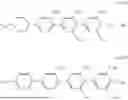
In some embodiments of the present invention, the compound of general formula I is any one or the combination of at least two of the compounds with the following structures:
-
- wherein, ring
-
- X1, X2, L1, L2, Z1, and R1 have the same protection scopes as aforesaid.
In some embodiments of the present invention, ring
represents
In some embodiments of the present invention, the compound of general formula I is the compound with the general formula I-1.
In some embodiments of the present invention, in the liquid crystal composition, percentage by weight of the compound of general formula I is 0.1%-20%, for example, it can be 0.1%, 1%, 2%, 3%, 4%, 5%, 6%, 7%, 8%, 10%, 12%, 14%, 15%, 16%, 17%, 18%, 19%, 20% or the like, further preferably, 1%-10%.
In some embodiments of the present invention, it is preferred to adjust the content of the compound of general formula I, such that the liquid crystal composition comprising the same has a higher Kave value and a higher ε⊥/Δε ratio, and has higher transmittance and contrast rate, and a remarkable low-temperature storage performance at the same time.
In some embodiments of the present invention, the compound of general formula II-1 is any one or the combination of at least two of the compounds with the following structures:
-
- wherein, R21, R31 and n2 have the same protection scopes as aforesaid.
In some embodiments of the present invention, in the liquid crystal composition, percentage by weight of the compound of general formula II-1 is 0.1%-20%, for example, it can be 0.1%, 1%, 2%, 3%, 4%, 5%, 6%, 7%, 8%, 10%, 12%, 14%, 15%, 16%, 17%, 18%, 19%, 20% or the like, further preferably, 1%-10%.
In some embodiments of the present invention, the compound of general formula II-2 is any one or the combination of at least two of the compounds with the following structures:
-
- wherein, R22 and R32 have the same protection scopes as aforesaid.
In some embodiments of the present invention, in the liquid crystal composition, percentage by weight of the compound of general formula II-2 is 0.1%-20%, for example, it can be 0.1%, 1%, 2%, 3%, 4%, 5%, 6%, 7%, 8%, 10%, 12%, 14%, 15%, 16%, 17%, 18%, 19%, 20% or the like, further preferably, 1%-10%.
In some embodiments of the present invention, the liquid crystal composition comprises at least one of the compounds of general formula II-1 and general formula II-2.
In some embodiments of the present invention, in the liquid crystal composition, sum of percentages by weight of the compounds of general formula II-1 and general formula II-2 is 0.1%-30%, for example, it can be 0.1%, 1%, 2%, 3%, 4%, 5%, 6%, 7%, 8%, 10%, 12%, 14%, 15%, 16%, 17%, 18%, 19%, 20%, 21%, 22%, 23%, 24%, 25%, 26%, 27%, 28%, 29%, 30% or the like, further preferably, 1%-15%
In some embodiments of the present invention, it is preferred to adjust the content of the compound of general formula II-1 and/or the compound of general formula II-2, such that the liquid crystal composition comprising the same has a higher Kave value and a higher ε⊥/Δε ratio, and has higher transmittance and contrast rate, and a remarkable low-temperature storage performance at the same time.
In some embodiments of the present invention, the liquid crystal composition further comprises at least one compound of general formula III:
-
- wherein, R2 represents C1-12 (for example, it can be C1, C2, C3, C4, C5, C6, C7, C8, C9, C10, C11 or C12) linear alkyl, C3-12 (for example, it can be C3, C4, C5, C6, C7, C8, C9, C10, C11 or C12) branched alkyl,
-
- wherein one or at least two nonadjacent —CH2— in the C1-12 linear alkyl, C3-12 branched alkyl,
-
- can each be independently replaced by —CH═CH—, —C≡C—, —O—, —CO—, —CO—O— or —O—CO—, and one or at least two —H in the C1-12 linear alkyl and C3-12 branched alkyl can each be independently replaced by —F or —Cl;
- Z2 represents single bond, —CH2CH2—, —CF2CF2—, —CO—O—, —O—CO—, —O—CO—O—, —CH—CH—, —CF═CF—, —CH2O— or —OCH2—;
- X3 represents —O— or —CH2—;
- X4 represents —F or —H; and
- X5 represents halogen atom, C1-5 (for example, it can be C1, C2, C3, C4 or C5) halogenated alkyl, C1-5 (for example, it can be C1, C2, C3, C4 or C5) halogenated alkoxy, C2-5 (for example, it can be C2, C3, C4 or C5) halogenated alkenyl, or C2-5 (for example, it can be C2, C3, C4 or C5) halogenated alkenoxy.
In some embodiments of the present invention, the liquid crystal composition comprises at least one (for example, it can be two, three, four, five, or six) compound of general formula III wherein Z2 represents single bond.
In some embodiments of the present invention, the liquid crystal composition comprises at least one (for example, it can be two, or three) compound of general formula III wherein Z2 represents —CH2CH2—.
In some embodiments of the present invention, the liquid crystal composition comprises at least one (for example, it can be two, three, four, five, or six) compound of general formula III wherein Z represents single bond, and at least one (for example, it can be two, or three) compound of general formula III wherein Z2 represents —CH2CH2—.
In some embodiments of the present invention, in the liquid crystal composition, percentage by weight of the compound of general formula III is 0.1%-20%, for example, it can be 0.1%, 1%, 2%, 3%, 4%, 5%, 6%, 7%, 8%, 10%, 12%, 14%, 15%, 16%, 17%, 18%, 19%, 20% or the like, further preferably, 5%-15%.
In some embodiments of the present invention, it is preferred to adjust the content of the compound of general formula III, such that the liquid crystal composition comprising the same has a higher Kave value and a higher ε⊥/Δε ratio, and has higher transmittance and contrast rate, and a remarkable low-temperature storage performance at the same time.
In some embodiments of the present invention, the liquid crystal composition further comprises at least one compound of general formula N:
-
- wherein, RN1 and RN2 each independently represents C1-12 (for example, it can be C1, C2, C3, C4, C5, C6, C7, C8, C9, C10, C11 or C12) linear alkyl, C3-12 (for example, it can be C3, C4, C5, C6, C7, C8, C9, C10, C11 or C12) branched alkyl,
-
- wherein one or at least two nonadjacent —CH2— in the C1-12 linear alkyl and C3-12 branched alkyl can each be independently replaced by —CH═CH—, —C≡C—, —O—, —CO—, —CO—O— or —O—CO—;
- ring
-
- and ring
each independently represents
-
- wherein one or at least two —CH2— in
can be replaced by —O—, one or at least two single bond in the rings can be replaced by double bond; one or at least two —H on
-
- can each be independently replaced by —F, —Cl or —CN, one or at least two —CH═ in the rings can be replaced by —N═;
- ZN1 and ZN2 each independently represents single bond, —CO—O—, —O—CO—, —CH2O—, —OCH2—, —CH═CH—, —C≡C—, —CH2CH2—, —CF2CF2—, —(CH2)4—, —CF2O— or —OCF2—;
- LN1 and LN2 each independently represents —H, C1-3 (for example, it can be C1, C2 or C3) alkyl, or halogen atom; and
- nN1 represents 0, 1, 2 or 3, nN2 represents 0 or 1, and 0≤nN1+nN2≤3, wherein when nN1 represents 2 or 3, ring
-
- can be the same or different, and ZN1 can be the same or different.
In some embodiments of the present invention, the compound of general formula N is any one or the combination of at least two of the compounds with the following structures:
-
- wherein, RN1 and RN2 have the same protection scopes as aforesaid.
In some embodiments of the present invention, the compound of general formula N is selected from a group consisting of the compound of general formula N-12, the compound of general formula N-19, and the compound of general formula N-21.
In some embodiments of the present invention, in the liquid crystal composition, percentage by weight of the compound of general formula N is 0.1%-20%, for example, it can be 0.1%, 1%, 2%, 3%, 4%, 5%, 6%, 7%, 8%, 10%, 12%, 14%, 15%, 16%, 17%, 18%, 19%, 20% or the like, further preferably, 2%-15%.
In some embodiments of the present invention, the liquid crystal composition further comprises a group of compounds consisting of at least one compound of general formula A-1 and at least one compound of general formula A-2:
-
- wherein, RA1 and RA2 each independently represents C1-12 (for example, it can be C1, C2, C3, C4, C5, C6, C7, C8, C9, C10, C11 or C12) linear alkyl, C3-12 (for example, it can be C3, C4, C5, C6, C7, C8, C9, C10, C11 or C12) branched alkyl,
-
- wherein, one or at least two nonadjacent —CH2— in the C1-12 linear alkyl, C3-12 branched alkyl,
-
- can each be independently replaced by —CH═CH—, —C≡C—, —O—, —CO—, —CO—O— or —O—CO—, and one or at least two —H in the C1-12 linear alkyl and C3-12 branched alkyl can each be independently replaced by —F or —Cl;
- ring
-
- represents
-
- wherein one or at least two —CH2— in
-
- can be replaced by —O—; one or at least two single bond in the rings in
-
- can be replaced by double bond; one or at least two —H on
-
- can each be independently replaced by —F, —Cl or —CN, one or at least two —CH═ in the rings can be replaced by —N═;
- ring
-
- represents
-
- wherein one or at least two —CH2— in
-
- can be replaced by —O—, one or at least two single bond in the rings can be replaced by double bond; one or at least two —H on
-
- can each be independently replaced by —F, —Cl or —CN, one or at least two —CH═ in the rings can be replaced by —N═;
- ring
-
- each independently represents
-
- wherein one or at least two —CH2— in
-
- can be replaced by —O—, one or at least two single bond in the rings in
-
- can be replaced by double bond; one or at least two —H on
-
- can each be independently replaced by —F, —Cl or —CN, one or at least two —CH═ in the rings can be replaced by —N═;
- ZA11, ZA21 and ZA22 each independently represents single bond, —CH2CH2—, —CF2CF2—, —CO—O—, —O—CO—, —O—CO—O—, —CH═CH—, —CF═CF—, —CH2O— or —OCH2—;
- LA11, LA12, LA13, LA21 and LA22 each independently represents —H, C1-3 (for example, it can be C1, C2 or C3) alkyl or halogen atom;
- XA1 and XA2 each independently represents halogen atom, C1-5 (for example, it can be C1, C2, C3, C4 or C5) halogenated alkyl, C1-5 (for example, it can be C1, C2, C3, C4 or C5) halogenated alkoxy, C2-5 (for example, it can be C2, C3, C4 or C5) halogenated alkenyl or C2-5 (for example, it can be C2, C3, C4 or C5) halogenated alkenoxy;
- nA11 represents 0, 1, 2 or 3, wherein when nan represents 2 or 3, ring
-
- can be same or different, and ZA11 can be same or different;
- nA12 represents 1 or 2, wherein when nA12 represents 2, ring
-
- can be same or different; and
- nA2 represents 0, 1, 2 or 3, wherein when nA2 represents 2 or 3, ring
-
- can be same or different, and ZA21 can be the same or different.
In some embodiments of the present invention, the compound of general formula A-1 is any one or the combination of at least two of the compounds with the following structures:
-
- wherein, RA1 represents C1-8 (for example, it can be C1, C2, C3, C4, C5, C6, C7 or C8) linear alkyl, C3-8 (for example, it can be C3, C4, C5, C6, C7 or C8) branched alkyl,
-
- wherein one or at least two nonadjacent —CH2— in the C1-8 linear alkyl and C3-8 branched alkyl can each be independently replaced by —CH═CH—, —C≡C—, —O—, —CO—, —CO—O— or —O—CO—, and one or at least two —H in the C1-8 linear alkyl and C3-8 branched alkyl can each be independently replaced by —F or —Cl;
- Rv and Rw each independently represents —CH2— and —O—;
- v and w each independently represents 0 or 1;
- LA11, LA12, LA11′, LA12′, LA14, LA15 and LA16 each independently represents —H or —F;
- LA13 and LA13′ each independently represents —H or —CH3; and
- XA1 represents —F, —CF3 or —OCF3.
In some embodiments of the present invention, in the liquid crystal composition, percentage by weight of the compound of general formula A-1 is 0.1%-20%, for example, it can be 0.1%, 1%, 4%, 6%, 8%, 10%, 12%, 14%, 16%, 18%, 20% or the like, further preferably, 4%-15%.
In some embodiments of the present invention, via controlling the content of the compound of general formula A-I into a certain range, the obtained liquid crystal composition has an appropriate optical anisotropy, an appropriate clearing point, an appropriate absolute value of dielectric anisotropy, a larger Kave value, a smaller rotational viscosity, a shorter response time, a higher transmittance, a higher contrast rate and a longer low-temperature storage time.
In some embodiments of the present invention, the compound of general formula A-2 is any one or the combination of at least two of the compounds with the following structures:
-
- wherein, RA2 represents C1-8 (for example, it can be C1, C2, C3, C4, C5, C6, C7 or C8) linear alkyl, C3-8 (for example, it can be C3, C4, C5, C6, C7 or C8) branched alkyl, wherein one or at least two nonadjacent —CH2— in the C1-8 linear alkyl and C3-8 branched alkyl can each be independently replaced by —CH═CH—, —C≡C—, —O—, —CO—, —CO—O— or —O—CO—, and one or at least two —H in the C1-8 linear alkyl and C3-8 branched alkyl can each be independently replaced by —F or —Cl;
- LA21, LA22, LA23, LA24 and LA25 each independently represents —H or —F; and
- XA2 represents —F, —CF3, —OCF3 or —CH2CH2CH═CF2.
In some embodiments of the present invention, in the liquid crystal composition, percentage by weight of the compound of general formula A-2 is 0.1%-20%, for example, it can be 0.1%, 1%, 4%, 6%, 8%, 10%, 12%, 14%, 16%, 18%, 20%, further preferably, 1%-10%.
In some embodiments of the present invention, via controlling the content of the compound of general formula A-2 into a certain range, the obtained liquid crystal composition has an appropriate optical anisotropy, an appropriate clearing point, an appropriate absolute value of dielectric anisotropy, a larger Kave value, a smaller rotational viscosity, a shorter response time, a higher transmittance, a higher contrast rate and a longer low-temperature storage time.
In some embodiments of the present invention, in the liquid crystal composition, sum of percentages by weight of the compound of general formula A-1 and the compound of general formula A-2 is 0.1%-30%, for example, 0.1%, 1%, 4%, 6%, 8%, 10%, 12%, 14%, 16%, 18%, 20%, 22%, 24%, 26%, 28%, 30% or the like.
In some embodiments of the present invention, the liquid crystal composition further comprises at least one compound of general formula M:
-
- wherein, RM1 and RM2 each independently represents C1-12 (for example, it can be C1, C2, C3, C4, C5, C6, C7, C8, C9, C10, C11 or C12) linear alkyl, C3-12 (for example, it can be C3, C4, C5, C6, C7, C8, C9, C10, C11 or C12) branched alkyl,
-
- wherein one or at least two nonadjacent —CH2— in the C1-12 linear alkyl and C3-12 branched alkyl can each be independently replaced by —CH═CH—, —C≡C—, —O—, —CO—, —CO—O— or —O—CO—;
- ring
-
- ring
-
- and ring
-
- each independently represents
-
- wherein one or at least two —CH2— in
-
- can be replaced by —O—; at most one —H on
-
- can be replaced by halogen atom;
- ZM1 and ZM2 each independently represents single bond, —CO—O—, —O—CO—, —CHO—, —OCH2—, —C≡C—, —CH═CH—, —CH2CH2— or —(CH2)4—; and
- nM represents 0, 1 or 2, wherein when nM represents 2, ring
can be the same or different, ZM2 can be the same or different.
In some embodiments of the present invention, the compound of general formula M is any one or the combination of at least two of the compounds with the following structures:
-
- wherein, RM1 and RM2 have the same protection scopes as aforesaid.
In some embodiments of the present invention, the compound of general formula M is selected from a group consisting of the compound of general formula M-1, the compound of general formula M-2, the compound of general formula M-3, the compound of general formula M-10, the compound of general formula M-11, and the compound of general formula M-13.
In some embodiments of the present invention, in the liquid crystal composition, percentage by weight of the compound of general formula M is 20%-80%, for example, it can be 20%, 25%, 30%, 35%, 40%, 45%, 50%, 55%, 60%, 65%, 70%, 75%, 80% or the like, further preferably, 40%-68%.
In some embodiments of the present invention, the liquid crystal composition further comprises at least one additive.
The additives contain nematic liquid crystal, smectic liquid crystal, cholesteric liquid crystal, dopants, antioxidant, ultraviolet absorber, infrared absorber, polymerizable monomer or light stabilizer.
In some embodiments of the present invention, the dopant is selected from any one or the combination of at least two of the following compounds:
In some embodiments of the present invention, in the liquid crystal composition, percentage by weight of the dopant is 0%-5% for example, it can be 0%, 0.01%, 0.05%, 0.1%, 0.2%, 0.5%, 1%, 1.5%, 2%, 2.5%, 3%, 3.5%, 4%, 4.5%, 5%, or the like, further preferably, 0.01%-1%.
In some embodiments of the present invention, additives (such as antioxidant, light stabilizer, ultraviolet absorber and the like) are preferably to be the following compounds:
-
- wherein, n represents a positive integer of 1-12, for example, it can be 1, 2, 4, 6, 8, 9, 10, 11, 12 or the like.
In some embodiments of the present invention, the antioxidant is selected from any one or the combination of at least two of the following compounds:
In some embodiments of the present invention, in the liquid crystal composition, percentage by weight of the light stabilizer is 0%-5%, for example, it can be 0%, 0.01%, 0.05%, 0.1%, 0.2%, 0.5%, 1%, 1.5%, 2%, 2.5%, 3%, 3.5%, 4%, 4.5%, 5% or the like, further preferably, 0.01%-1%.
It should be noted that, for an easier calculation, in the present invention, the sum of the weight percentages of the compounds having different general formulas in the liquid crystal composition is one hundred percent, and the content of the additives is not counted within the total content of the liquid crystal composition, that is, the addition of the additives will result in the total content of the components in the liquid crystal composition being >100%.
In some embodiments of the present invention, the liquid crystal composition further comprises a polymerization initiator, exemplarily including, but not limited to: benzoin ethers, benzophenones, acetophenones, benzoin bis-ethers, acyl phosphine oxides and so forth.
In a second aspect, the present invention provides a liquid crystal display device, and the liquid crystal display device comprises a liquid crystal composition as described in the first aspect.
Compared with the prior art, the present invention has the following beneficial effects:
Via designing the specific constitution of the liquid crystal composition and the structures of the compounds, and further using compounds of different general formulas in conjunction, the liquid crystal composition obtained in the present invention has an appropriate optical anisotropy, an appropriate clearing point, an appropriate dielectric anisotropy (ε⊥, ε// or Δε), a higher Kave value, a higher ε⊥/Δε ratio, a higher transmittance, a smaller rotational viscosity, and a longer low-temperature storage time.
DETAILED EMBODIMENTS
For an easier understanding of the present invention, the present invention enumerates the Examples below. It should be clear for the person skilled in the art that, the Examples are only for helping to understand the present invention, and shall not be seen as specific limitations on the present invention.
For the convenience of the expression, in the following Examples, the group structures of the liquid crystal composition are represented by the codes listed in Table 1:
| TABLE 1 | ||
| Unit structure of group | Code | Name of group |
| C | 1,4-cyclohexylidene | |
| P | 1,4-phenylene | |
| L | 1,4-cyclohexene | |
| C(5) | 1-cyclopentyl | |
| C(5,V) | 1-cyclopentenyl | |
| B(O) | 4,6-difluoro-dibenzo[b,d]furan-3,7-diyl | |
| B(S) | 4,6-difluoro-dibenzo[b,d]thiophene-3,7-diyl | |
| G | 2-fluoro-1,4-phenylene | |
| U | 2,5-difluoro-1,4-phenylene | |
| W | 2,3-difluoro-1,4-phenylene | |
| D | 1,3-dioxane-2,5-diyl | |
| Q | difluoro ether group | |
| —O— | O | oxygen substituent |
| —F | F | fluorine substituent |
| —CH═CH— or —CH═CH2 | V | ethenylene or ethenyl |
| —CH2O— | 1O | methyleneoxy |
| —CH2CH2— | 2 | ethyl bridge group |
| —CF3 | —CF3 | trifluoromethyl |
| —CnH2n + 1 or —CnH2n— | n (n represents a positive integer of 1-12) | alkyl or alkylene |
In Table 1, broken lines represent the binding sites of the groups.
Take the compound with the following structural formula as an example:
-
- represented by the codes listed in Table 1, this structural formula can be expressed as nCCGF, n in the code represents the number of the carbon atoms of the alkyl on the left, for example, n is “3”, meaning that the alkyl is —C3H7; C in the code represents cyclohexylidene, G represents 2-fluoro-1,4-phenylene, and F represents fluorine.
In the following Examples and Comparative Examples, the abbreviated codes of performance test items are shown in Table 2:
| TABLE 2 |
| The abbreviated codes of the performance test items |
| Code of | |
| test items | Meaning |
| Cp | clearing point (nematic-isotropy phases transition temperature, ° C.) |
| Δn | optical anisotropy (589 nm, 20° C.) |
| Δε | dielectric anisotropy (1 KHz, 20° C.) |
| ε⊥ | dielectric constant perpendicular to the molecular axis (1 KHz, 20° C.) |
| ε∥ | dielectric constant parallel to the molecular axis (1 KHz, 20° C.) |
| LTS(−30° C.) | low-temperature storage stability (stored at −30° C. and the time when |
| crystal precipitation is observed, h) | |
| Kave | average elastic constant (20° C.) |
| γ1 | rotational viscosity (20° C., mPa · s) |
| Tr | transmittance (%) |
-
- wherein: Cp (° C.): tested by melting point apparatus quantitative method;
- Δn: tested using an Abbe Refractometer under a sodium lamp (589 nm) light source, at 20° C., Δn=ne−no, no is ordinary ray refraction index, ne is extraordinary ray refraction index;
- Δε: Δε=εI−ε⊥, wherein εI is the dielectric constant parallel to the molecular axis, ε⊥ is the dielectric constant perpendicular to the molecular axis, test conditions: 20° C., 1 KHz, test cell is TN cell with a cell gap of 7 μm;
- γ1: tested using a LCM-2 type liquid crystal physical property evaluation system; test conditions: 20° C., 160-260 V, the cell gap for test is 20 μm;
- Kave: Kave=(K11+K22+K33)/3, wherein K11 is splay elastic constant, K22 is twist elastic constant, K33 is bend elastic constant, K11, K22, K33 are obtained via testing the capacitance-voltage characteristic curves (C-V curves) of liquid crystal by LCR meter and anti-parallel friction cell and calculating; test conditions: anti-parallel friction cell of 7 μm, V=0.1˜20 V.
- Tr: using DMS 505 photoelectric integrated tester to test the V-T curve of dimming device, taking the maximum value of transmittance on the V-T curve as the transmittance of the liquid crystal, the test cell adopts positive 3.5 μm IPS test cell, V-0˜20V.
- LTS(−30° C.): nematic phase liquid crystal medium is placed in a 3.5 μm IPS test cell antiparallel cell, stored at a constant temperature of −30° C., the time recorded when crystal precipitation is observed, wherein, 168 h NG represents crystals precipitate after 168 h of storage, 168 h OK represents crystals do not precipitate after 168 h of storage, and 240 h OK represents crystals do not precipitate after 240 h of storage.
Example 1
The present Example provides a liquid crystal composition comprising components in the percentages by weight as shown in the table below, and the performance tests are carried out by filling the same into the two substrates of the
| Code of component | Content | Test result of performance parameters |
| 3CPWO2 (N-21) | 5 | Δn | 0.11 |
| VCCP1 (M-10) | 10 | Cp | 88.5 |
| 3CCV (M-1) | 35.5 | ε⊥ | 3.5 |
| V2CCP1 (M-10) | 1.5 | ε∥ | 11.7 |
| 3CCV1 (M-1) | 10 | Δε | 8.2 |
| 1PP2V1 (M-3) | 4 | ε⊥/Δε | 0.43 |
| 5PGP(NA) | 0.3 | Kave | 13.5 |
| 4OB(S)O1C(5, V) (I-1) | 2 | Tr | 16.8 |
| 3PGUQUF (A-1-12) | 4.8 | γ1 | 73 |
| 4PGUQUF (A-1-12) | 4.8 | LTS (−30° C.) | 240 h OK |
| 5PGUQUF (A-1-12) | 4 | ||
| 3DGUQUF (III) | 3 | ||
| 4DGUQUF (III) | 3 | ||
| 3DPUQUF (III) | 1.8 | ||
| 4DPUQUF (III) | 1.8 | ||
| 3CPP2V1 (M-10) | 2.8 | ||
| 3CLPCF3 (II-2-2) | 4 | ||
| 3DPUF (A-2-10) | 2 | ||
-
- wherein, the structural formula of 5PGP (NA) is
Example 2
The present Example provides a liquid crystal composition comprising components in the percentages by weight as shown in the table below, and the performance tests are carried out by filling the same into the two substrates of the liquid crystal display device:
| Code of component | Content | Test result of performance parameters |
| 2OB(S)O1C(5, V) (I-1) | 5 | Δn | 0.108 |
| VCCP1 (M-10) | 10 | Cp | 84.5 |
| 3CCV (M-1) | 37.5 | ε⊥ | 3.7 |
| VLCP1 (II-1-1) | 1.5 | ε∥ | 11.6 |
| 3CCV1 (M-1) | 10 | Δε | 7.9 |
| 1PP2V1 (M-3) | 4 | ε⊥/Δε | 0.47 |
| 4OB(S)O1C(5, V) (I-1) | 2 | Kave | 13.7 |
| 3PGUQUF (A-1-12) | 4.8 | Tr | 17.5 |
| 4PGUQUF (A-1-12) | 4.8 | γ1 | 71 |
| 5PGUQUF (A-1-12) | 4 | LTS (−30° C.) | 240 h OK |
| 3DGUQUF (III) | 3 | ||
| 4DGUQUF (III) | 3 | ||
| 3DPUQUF (III) | 1.8 | ||
| 4DPUQUF (III) | 1.8 | ||
| 3CPP2V1 (M-11) | 2.8 | ||
| 3CLPCF3 (II-2-2) | 4 | ||
Example 3
The present Example provides a liquid crystal composition comprising components in the percentages by weight as shown in the table below, and the performance tests are carried out by filling the same into the two substrates of the liquid crystal display device:
| Code of component | Content | Test result of performance parameters |
| VCCP1 (M-10) | 10 | Δn | 0.108 |
| 3CCV (M-1) | 35.5 | Cp | 87.4 |
| V2CCP1 (M-10) | 3 | ε⊥ | 3.6 |
| 3CCV1 (M-1) | 10 | ε∥ | 11.4 |
| 1PP2V1 (M-3) | 2 | Δε | 7.8 |
| 3PGP2 (M-13) | 2.5 | ε⊥/Δε | 0.46 |
| 4OB(S)O1C(5, V) (I-1) | 5 | Kave | 13.4 |
| 3PGUQUF (A-1-12) | 4.8 | Tr | 17.2 |
| 4PGUQUF (A-1-12) | 4.8 | γ1 | 70 |
| 5PGUQUF (A-1-12) | 4 | LTS (−30° C.) | 240 h OK |
| 3DGUQUF (III) | 3.3 | ||
| 4DGUQUF (III) | 3.3 | ||
| 3DPUQUF (III) | 1.5 | ||
| 4DPUQUF (III) | 1.5 | ||
| 3CPP2V (M-10) | 2.8 | ||
| 3CLPCF3 (II-2-2) | 4 | ||
| 3DPUF (A-2-10) | 2 | ||
Example 4
The present Example provides a liquid crystal composition comprising components in the percentages by weight as shown in the table below, and the performance tests are carried out by filling the same into the two substrates of the liquid crystal display device:
| Code of component | Content | Test result of performance parameters |
| VCCP1 (M-10) | 10 | Δn | 0.109 |
| 3CCV (M-1) | 35.5 | Cp | 86.8 |
| VLCP1 (II-1-2) | 3 | ε⊥ | 3.5 |
| 3CCV1 (M-1) | 10 | ε∥ | 11.5 |
| 1PP2V1 (M-3) | 4.5 | Δε | 8 |
| 4OB(S)O1C(5, V) (I-1) | 5 | ε⊥/Δε | 0.44 |
| 3PGUQUF (A-1-12) | 4.5 | Kave | 13.9 |
| 4PGUQUF (A-1-12) | 4.5 | Tr | 17.5 |
| 5PGUQUF (A-1-12) | 4.5 | γ1 | 72 |
| 3DGUQUF (III) | 3.5 | LTS (−30° C.) | 240 h OK |
| 4DGUQUF (III) | 3.5 | ||
| 3DPUQUF (III) | 1.5 | ||
| 4DPUQUF (III) | 1.5 | ||
| 3CPP2V1 (M-11) | 2.5 | ||
| 3CLPCF3 (II-2-2) | 6 | ||
Example 5
The present Example provides a liquid crystal composition comprising components in the percentages by weight as shown in the table below, and the performance tests are carried out by filling the same into the two substrates of the liquid crystal display device:
| Code of component | Content | Test result of performance parameters |
| VCCP1 (M-10) | 10 | Δn | 0.098 |
| 3CCV (M-1) | 33.5 | Cp | 83.9 |
| VLCP1 (II-1-1) | 3 | ε⊥ | 3.9 |
| 3CCV1 (M-1) | 12 | ε∥ | 9.4 |
| 1PP2V1 (M-3) | 3 | Δε | 5.5 |
| 4OB(S)O1C(5, V) (I-1) | 5 | ε⊥/Δε | 0.71 |
| 3PUQUF (A-1-5) | 10 | Kave | 13.5 |
| 3DGUQUF (III) | 3.5 | Tr | 17.3 |
| 4DGUQUF (III) | 3.5 | γ1 | 74 |
| 3DPUQUF (III) | 1.5 | LTS (−30° C.) | 240 h OK |
| 4DPUQUF (III) | 1.5 | ||
| 3CPP2V1 (M-11) | 2.5 | ||
| 3CLPCF3 (II-2-2) | 4 | ||
| 3CLWO2 (N-12) | 3.5 | ||
| 4CLWO2 (N-12) | 3.5 | ||
Example 6
The present Example provides a liquid crystal composition comprising components in the percentages by weight as shown in the table below, and the performance tests are carried out by filling the same into the two substrates of the liquid crystal display device:
| Code of component | Content | Test result of performance parameters |
| VCCP1 (M-10) | 10 | Δn | 0.101 |
| 3CCV (M-1) | 33.5 | Cp | 79.5 |
| VLCP1 (II-1-1) | 3 | ε⊥ | 3.4 |
| 3CCV1 (M-1) | 12 | ε∥ | 10.5 |
| 1PP2V1 (M-3) | 4.5 | Δε | 7.1 |
| 4OB(S)O1C(5, V) (I-1) | 5 | ε⊥/Δε | 0.48 |
| 3PUQUF (A-1-5) | 10 | Kave | 13.2 |
| 3DGUQUF (III) | 3.5 | Tr | 16.9 |
| 4DGUQUF (III) | 3.5 | γ1 | 71 |
| 3D2PUQUF (III) | 2 | LTS (−30° C.) | 240 h OK |
| 4D2PUQUF (III) | 1.5 | ||
| 3DPUQUF (III) | 1.5 | ||
| 4DPUQUF (III) | 1.5 | ||
| 3CPP2V1 (M-11) | 2.5 | ||
| 3CLPCF3 (II-2-2) | 6 | ||
Comparative Example 1
The present Comparative Example provides a liquid crystal composition comprising components in the percentages by weight as shown in the table below, and the performance tests are carried out by filling the same into the two substrates of the liquid crystal display device:
| Code of component | Content | Test result of performance parameters |
| VCCP1 (M-10) | 13 | Δn | 0.1 |
| 3CCV (M-1) | 33.5 | Cp | 79 |
| 3CCV1 (M-1) | 12 | ε⊥ | 3.4 |
| 1PP2V1 (M-3) | 4.5 | ε∥ | 105 |
| 4OB(S)O1C(5, V) (I-1) | 5 | Δε | 7.1 |
| 3PUQUF (A-1-5) | 10 | ε⊥/Δε | 0.48 |
| 3DGUQUF (III) | 3.5 | Kave | 12.4 |
| 4DGUQUF (III) | 3.5 | Tr | 14.9 |
| 3D2PUQUF (III) | 2 | γ1 | 74 |
| 4D2PUQUF (III) | 1.5 | LTS (−30° C.) | 168 h NG |
| 3DPUQUF (III) | 1.5 | ||
| 4DPUQUF | 1.5 | ||
| 3CPP2V1 (M-11) | 2.5 | ||
| 3CCPCF3 (M-10) | 6 | ||
Comparative Example 2
The present Comparative Example provides a liquid crystal composition comprising components in the percentages by weight as shown in the table below, and the performance tests are carried out by filling the same into the two substrates of the liquid crystal display device:
| Code of component | Content | Test result of performance parameters |
| VCCP1 (M-10) | 10 | Δn | 0.101 |
| 3CCV (M-1) | 33.5 | Cp | 79.1 |
| VLCP1 (II-1) | 3 | ε⊥ | 3.4 |
| 3CCV1 (M-1) | 12 | ε∥ | 10.5 |
| 1PP2V1 (M-3) | 4.5 | Δε | 7.1 |
| 4OB(S)O1C(5) | 5 | ε⊥/Δε | 0.48 |
| 3PUQUF (A-1-5) | 10 | Kave | 12.8 |
| 3DGUQUF (III) | 3.5 | Tr | 15.2 |
| 4DGUQUF (III) | 3.5 | γ1 | 75 |
| 3D2PUQUF (III) | 2 | LTS (−30° C.) | 240 h OK |
| 4D2PUQUF (III) | 1.5 | ||
| 3DPUQUF (III) | 1.5 | ||
| 4DPUQUF (III) | 1.5 | ||
| 3CPP2V1 (M-11) | 2.5 | ||
| 3CLPCF3 (II-2) | 6 | ||
It can be seen from the comparison of Comparative Examples 1-2 and Example 6 that via the optimization on the structures of general formula I and general formula II-1/II-2, the liquid crystal composition of the present invention has an appropriate optical anisotropy, an appropriate clearing point, an appropriate dielectric anisotropy (ε⊥, ε//, ε⊥/Δε), a larger Kave value, a higher transmittance, a smaller rotational viscosity, and a better low-temperature storage stability.
Example 7
The present Example provides a liquid crystal composition comprising components in the percentages by weight as shown in the table below, and the performance tests are carried out by filling the same into the two substrates of the liquid crystal display device:
| Code of component | Content | Test result of performance parameters |
| VCCP1 (M-10) | 10 | Δn | 0.102 |
| 3CCV (M-1) | 29.5 | Cp | 81.5 |
| VLCP1 (II-1-1) | 3 | ε⊥ | 3.4 |
| 3CCV1 (M-1) | 10 | ε∥ | 10.2 |
| 3CPO2 (M-2) | 3 | Δε | 6.8 |
| 3CC2 (M-1) | 3 | ε⊥/Δε | 0.5 |
| 1PP2V1 (M-3) | 4.5 | Kave | 13.8 |
| 4OB(S)O1C(5, V) (I-1) | 5 | Tr | 17.6 |
| 3CPUF (A-2-9) | 5 | γ1 | 70 |
| 3PUQUF (A-1-5) | 5 | LTS (−30° C.) | 240 h OK |
| 3DGUQUF (III) | 3.5 | ||
| 4DGUQUF (III) | 3.5 | ||
| 3D2PUQUF (III) | 2 | ||
| 4D2PUQUF (III) | 1.5 | ||
| 3DPUQUF (III) | 1.5 | ||
| 4DPUQUF (III) | 1.5 | ||
| 3CPP2V1 (M-11) | 2.5 | ||
| 3CLPCF3 (II-2-2) | 6 | ||
Example 8
The present Example provides a liquid crystal composition comprising components in the percentages by weight as shown in the table below, and the performance tests are carried out by filling the same into the two substrates of the liquid crystal display device:
| Code of component | Content | Test result of performance parameters |
| VCCP1 (M-10) | 10 | Δn | 0.1 |
| 3CCV (M-1) | 29.5 | Cp | 81.5 |
| VLCP1 (II-1-1) | 3 | ε⊥ | 3.4 |
| 3CCV1 (M-1) | 10 | ε∥ | 9.8 |
| 3CPO2 (M-2) | 3 | Δε | 6.4 |
| 3CC2 (M-1) | 3 | ε⊥/Δε | 0.53 |
| 1PP2V1 (M-3) | 4.5 | Kave | 13.5 |
| 4OB(O)O1C(5, V) (I-1) | 5 | Tr | 17.3 |
| 3CPUF (A-2-9) | 5 | γ1 | 71 |
| 3PUQUF (A-1-5) | 5 | LTS (−30° C.) | 168 h OK |
| 3DGUQUF (III) | 3.5 | ||
| 4DGUQUF (III) | 3.5 | ||
| 3D2PUQUF (III) | 2 | ||
| 4D2PUQUF (III) | 1.5 | ||
| 3DPUQUF (III) | 1.5 | ||
| 4DPUQUF (III) | 1.5 | ||
| 3CPP2V1 (M-11) | 2.5 | ||
| 3CLPCF3 (II-2-2) | 6 | ||
Example 9
The present Example provides a liquid crystal composition comprising components in the percentages by weight as shown in the table below, and the performance tests are carried out by filling the same into the two substrates of the liquid crystal display device:
| Code of component | Content | Test result of performance parameters |
| VCCP1 (M-10) | 10 | Δn | 0.098 |
| 3CCV (M-1) | 33.5 | Cp | 83.9 |
| 3CCV1 (M-1) | 12 | ε⊥ | 4.3 |
| 4OB(S)O1C(5, V) (I-1) | 5 | ε∥ | 9.4 |
| 3PUQUF (A-1-5) | 10 | Δε | 5.1 |
| 3DGUQUF (III) | 3.5 | ε⊥/Δε | 0.84 |
| 4DGUQUF (III) | 3.5 | Kave | 13.2 |
| 3DPUQUF (III) | 1.5 | Tr | 17.3 |
| 4DPUQUF (III) | 1.5 | γ1 | 76 |
| 3CPP2V1 (M-11) | 2.5 | LTS (−30° C.) | 240 h OK |
| 3CLPCF3 (II-2-2) | 4 | ||
| 3CLWO2 (N-12) | 3.5 | ||
| 4CLWO2 (N-12) | 3.5 | ||
| 3PWO2 (N-19) | 3 | ||
| 2OPWO2 (N-19) | 3 | ||
It can be seen from the above contents that via designing the specific constitution of the liquid crystal composition and the structures of the compounds, and further using compounds having different general formulas in conjunction, the liquid crystal composition obtained in the present invention has an appropriate optical anisotropy, an appropriate clearing point, a lower rotational viscosity, a higher Kave value and a higher ε⊥/Δε ratio, and has higher transmittance and contrast rate, and a remarkable low-temperature storage performance at the same time.
The applicant declares that the liquid crystal composition and liquid crystal display device of the present invention are illustrated by the above Examples of the present invention, but the present invention is not limited to the above Examples, that is, it does not mean that the implement of the present invention must rely on the above Examples. It shall be clear to the person skilled in the art that any improvements of the present invention, equivalent replacements of the raw materials used in the present invention, the additions of any auxiliary components, the selection of specific methods or the like all fall into the protection scope and the disclosure scope of the present invention.
INDUSTRIAL APPLICABILITY
The liquid crystal composition involved in the present invention can be applied to the liquid crystal field.
Claims
1.-10. (canceled)
11. A liquid crystal composition comprising at least one compound of general formula I-1 and at least one compound selected from general formula II-1 and/or general formula II-2:
wherein, R1 represents —H, C1-12 halogenated or unhalogenated linear alkyl, C3-12 halogenated or unhalogenated branched alkyl, C1-12 halogenated or unhalogenated alkoxy, C2-12 halogenated or unhalogenated alkenyl, C2-12 halogenated or unhalogenated alkenoxy,
R21 and R32 each independently represents C1-12 alkyl, C1-12 alkoxy, C2-12 alkenyl, or C2-12 alkenoxy;
R22 represents halogen atom, C1-5 halogenated alkyl, C1-5 halogenated alkoxy, C2-5 halogenated alkenyl, or C2-5 halogenated alkenoxy;
R31 represents —H, C1-12 alkyl, or C1-12 alkoxy;
ring
represents
ring
ring
ring
and ring
each independently represents
one or at least two —CH2— in
can be replaced by —O—, one or at least two single bond in the rings can be replaced by double bond, and at least one single bond in the rings in at least one of ring
and ring
is replaced by double bond, at least one single bond in the rings in at least one of ring
and ring
is replaced by double bond;
L1 and L2 represent fluorine atom;
X1 represents —O—;
X2 represents —O— or —S—;
n2 represents 0, 1, 2, 3 or 4;
percentage by weight of the compound of general formula I-1 is 0.1%-20%;
percentage by weight of the compound of general formula II-1 is 0.1%-20%;
percentage by weight of the compound of general formula II-2 is 0.1%-20%;
the liquid crystal composition further comprises at least one compound of general formula III:
wherein, R2 represents C1-12 linear alkyl, C3-12 branched alkyl,
wherein one or at least two nonadjacent —CH2— in the C1-12 linear alkyl, C3-12 branched alkyl,
can each be independently replaced by —CH═CH—, —C≡C—, —O—, —CO—, —CO—O— or —O—CO—, and one or at least two —H in the C1-12 linear alkyl and C3-12 branched alkyl can each be independently replaced by —F or —Cl;
Z2 represents single bond, —CH2CH2—, —CF2CF2—, —CO—O—, —O—CO—, —O—CO—O—, —CH═CH—, —CF═CF—, —CH2O— or —OCH2—;
X3 represents —O— or —CH2—;
X4 represents —F or —H; and
X5 represents halogen atom, C1-5 halogenated alkyl, C1-5 halogenated alkoxy, C2-5 halogenated alkenyl, or C2-5 halogenated alkenoxy;
percentage by weight of the compound of general formula III is 0.1%-20%;
the liquid crystal composition further comprises a group of compounds consisting of at least one compound of general formula A-1 and at least one compound of general formula A-2:
wherein, RA1 and RA2 each independently represents C1-12 linear alkyl, C3-12 branched alkyl,
wherein, one or at least two nonadjacent —CH2— in the C1-12 linear alkyl, C3-12 branched alkyl,
can each be independently replaced by —CH═CH—, —C≡C—, —O—, —CO—, —CO—O— or —O—CO—, and one or at least two —H in the C1-12 linear alkyl and C3-12 branched alkyl can each be independently replaced by —F or —Cl;
ring
represents
wherein one or at least two —CH2— in
can be replaced by —O—; one or at least two single bond in the rings in
can be replaced by double bond; one or at least two —H on
can each be independently replaced by —F, —Cl or —CN, one or at least two —CH═ in the rings can be replaced by —N═;
ring
represents
wherein one or at least two —CH2— in
can be replaced by —O—, one or at least two single bond in the rings can be replaced by double bond; one or at least two —H on
can each be independently replaced by —F, —Cl or —CN, one or at least two —CH═ in the rings can be replaced by —N═;
ring
each independently represents
wherein one or at least two —CH2— in
can be replaced by —O—, one or at least two single bond in the rings in
can be replaced by double bond; one or at least two —H on
can each be independently replaced by —F, —Cl or —CN, one or at least two —CH═ in the rings can be replaced by —N═;
ZA11, ZA21 and ZA22 each independently represents single bond, —CH2CH2—, —CF2CF2—, —CO—O—, —O—CO—, —O—CO—O—, —CH═CH—, —CF═CF—, —CH2O— or —OCH2—;
LA11, LA12, LA13, LA21 and LA22 each independently represents —H, C1-3 alkyl, or halogen atom;
XA1 and XA2 each independently represents halogen atom, C1-5 halogenated alkyl, C1-5 halogenated alkoxy, C2-5 halogenated alkenyl or C2-5 halogenated alkenoxy;
nA11 represents 0, 1, 2 or 3, wherein when nA11 represents 2 or 3, ring
can be the same or different, and ZA11 can be the same or different;
nA12 represents 1 or 2, wherein when nA12 represents 2, ring
can be the same or different; and
NA2 represents 0, 1, 2 or 3, wherein when nA2 represents 2 or 3, ring
can be the same or different, and ZA21 can be the same or different;
percentage by weight of the compound of general formula A-1 is 0.1%-20%;
in the liquid crystal composition, percentage by weight of the compound of general formula A-2 is 0.1%-20%;
the liquid crystal composition further comprises at least one compound of general formula M:
wherein, RM1 and RM2 each independently represents C1-12 linear alkyl, C3-12 branched alkyl,
wherein one or at least two nonadjacent —CH2— in the C1-12 linear alkyl and C3-12 branched alkyl can each be independently replaced by —CH═CH—, —C≡C—, —O—, —CO—, —CO—O— or —O—CO—;
ring
ring
and ring
each independently represents
wherein one or at least two —CH2— in
can be replaced by —O—; at most one —H on
can be replaced by halogen atom;
ZM1 and ZM2 each independently represents single bond, —CO—O—, —O—CO—, —CH2O—, —OCH2—, —C≡C—, —CH═CH—, —CH2CH2— or —(CH2)4—; and
nM represents 0, 1 or 2, wherein when nM represents 2, ring
can be the same or different, ZM2 can be the same or different;
in the liquid crystal composition, percentage by weight of the compound of general formula M is 20%-80%.
12. The liquid crystal composition according to claim 11, wherein, in the liquid crystal composition, percentage by weight of the compound of general formula I-1 is 1%-10%.
13. The liquid crystal composition according to claim 11, wherein the compound of general formula II-1 is any one or the combination of at least two of the compounds with the following structures:
wherein, R21, R31 and n2 have the same protection scopes as those in claim 11.
14. The liquid crystal composition according to claim 11, wherein, in the liquid crystal composition, percentage by weight of the compound of general formula II-1 is 1%-10%.
15. The liquid crystal composition according to claim 11, wherein the compound of general formula II-2 is any one or the combination of at least two of the compounds with the following structures:
wherein, R22 and R32 have the same protection scopes as those in claim 1.
16. The liquid crystal composition according to claim 11, wherein, in the liquid crystal composition, percentage by weight of the compound of general formula II-2 is 1%-10%.
17. The liquid crystal composition according to claim 11, wherein, in the liquid crystal composition, sum of percentages by weight of the compounds of general formula II-1 and general formula II-2 is 0.1%-30%.
18. The liquid crystal composition according to claim 17, wherein, in the liquid crystal composition, sum of percentages by weight of the compounds of general formula II-1 and general formula II-2 is 1%-15%.
19. The liquid crystal composition according to claim 11, wherein, in the liquid crystal composition, percentage by weight of the compound of general formula III is 5%-15%.
20. The liquid crystal composition according to claim 11, wherein the liquid crystal composition further comprises at least one compound of general formula N:
wherein, RN1 and RN2 each independently represents C1-12 linear alkyl, C3-12 branched alkyl,
wherein one or at least two nonadjacent —CH2— in the C1-12 linear alkyl and C3-12 branched alkyl can each be independently replaced by —CH═CH—, —C≡C—, —O—, —CO—, —CO—O— or —O—CO—;
ring
and ring
each independently represents
wherein one or at least two —CH2— in
can be replaced by —O—, one or at least two single bond in the rings can be replaced by double bond; one or at least two —H on
can each be independently replaced by —F, —Cl or —CN, one or at least two —CH═ in the rings can be replaced by —N═;
ZN1 and ZN2 each independently represents single bond, —CO—O—, —O—CO—, —CH2O—, —OCH2—, —CH═CH—, —C≡C—, —CH2CH2—, —CF2CF2—, —(CH2)4—, —CF2O— or —OCF2—;
LN1 and LN2 each independently represents —H, C1-3 alkyl, or halogen atom; and
nN1 represents 0, 1, 2 or 3, nN2 represents 0 or 1, and 0≤nN1+nN2≤3, wherein when nN1 represents 2 or 3, ring
can be the same or different, and ZN1 can be the same or different.
21. The liquid crystal composition according to claim 20, wherein the compound of general formula N is any one or the combination of at least two of the compounds with the following structures:
wherein, RN1 and RN2 have the same protection scopes as those in claim 20.
22. The liquid crystal composition according to claim 21, wherein the compound of general formula N is any one or the combination of at least two of the compounds with the following structures:
wherein, RN1 and RN2 have the same protection scopes as those in claim 10.
23. The liquid crystal composition according to claim 20, wherein, in the liquid crystal composition, percentage by weight of the compound of general formula N is 0.1%-20%.
24. The liquid crystal composition according to claim 23, wherein, in the liquid crystal composition, percentage by weight of the compound of general formula N is 2%-15%.
25. The liquid crystal composition according to claim 11, wherein the compound of general formula A-1 is any one or the combination of at least two of the compounds with the following structures:
wherein, RA1 represents C1-8 linear alkyl, C3-8 branched alkyl,
wherein one or at least two nonadjacent —CH2— in the C1-8 linear alkyl and C3-8 branched alkyl can each be independently replaced by —CH═CH—, —C≡C—, —O—, —CO—, —CO—O— or —O—CO—, and one or at least two —H in the C1-8 linear alkyl and C3-8 branched alkyl can each be independently replaced by —F or —Cl;
Rv and Rw each independently represents —CH2— and —O—;
v and w each independently represents 0 or 1;
LA11, LA12, LA11′, LA12′, LA14, LA15 and LA16 each independently represents —H or —F;
LA13 and LA13′ each independently represents —H or —CH3; and
XA1 represents —F, —CF3 or —OCF3.
26. The liquid crystal composition according to claim 11, wherein, in the liquid crystal composition, percentage by weight of the compound of general formula A-1 is 4%-15%.
27. The liquid crystal composition according to claim 11, wherein the compound of general formula A-2 is any one or the combination of at least two of the compounds with the following structures:
wherein, RA2 represents C1-8 linear alkyl, C3-8 branched alkyl, wherein one or at least two nonadjacent —CH2— in the C1-8 linear alkyl and C3-8 branched alkyl can each be independently replaced by —CH═CH—, —C≡C—, —O—, —CO—, —CO—O— or —O—CO—, and one or at least two —H in the C1-8 linear alkyl and C3-8 branched alkyl can each be independently replaced by —F or —Cl;
LA21, LA22, LA23, LA24 and LA25 each independently represents —H or —F; and
XA2 represents —F, —CF3, —OCF3 or —CH2CH2CH═CF2.
28. The liquid crystal composition according to claim 11, wherein, in the liquid crystal composition, percentage by weight of the compound of general formula A-2 is 1%-10%.
29. The liquid crystal composition according to claim 11, wherein, in the liquid crystal composition, sum of percentages by weight of the compound of general formula A-1 and the compound of general formula A-2 is 0.1%-30%.
30. The liquid crystal composition according to claim 11, wherein the compound of general formula M is any one or the combination of at least two of the compounds with the following structures:
wherein, RM1 and RM2 have the same protection scopes as those in claim 11.
31. The liquid crystal composition according to claim 30, wherein the compound of general formula M is any one or the combination of at least two of the compounds with the following structures:
32. The liquid crystal composition according to claim 11, wherein, in the liquid crystal composition, percentage by weight of the compound of general formula M is 40%-68%.
33. A liquid crystal display device, wherein the liquid crystal display device comprises the liquid crystal composition of claim 11.
Images & Drawings included:




Sources:
- United States Patent and Trademark Office - verify current appl. status at the USPTO↗
Similar patent applications:
- » 20190121178
Liquid crystal composition, liquid crystal display device using the liquid crystal composition, and method of manufacturing the liquid crystal display device - » 20120008079
Liquid crystal display device, process for producing liquid crystal display device, composition for forming polymer layer, and composition for forming liquid crystal layer - » 20120026442
Liquid crystal display device, method for manufacturing liquid crystal display device, composition for forming photopolymer film, and composition for forming liquid crystal layer - » 20120033167
LIQUID CRYSTAL DISPLAY DEVICE, METHOD FOR MANUFACTURING LIQUID CRYSTAL DISPLAY DEVICE, COMPOSITION FOR FORMING POLYMER LAYER, AND COMPOSITION FOR FORMING LIQUID CRYSTAL LAYER - » 20100149446
Polymer-stabilized liquid crystal composition, liquid crystal display device, method for producing liquid crystal display device - » 20110267574
LIQUID CRYSTAL DISPLAY DEVICE AND COMPOSITION FOR FORMING LIQUID CRYSTAL LAYER - » 20080233515
Radiation sensitive resin composition for forming a protective film, method of forming a protective film from the composition, liquid crystal display device and solid-state image sensing device - » 20080303996
OPTICAL COMPENSATION MEMBER, LIQUID CRYSTAL DISPLAY DEVICE, COMPOSITION FOR ALIGNMENT LAYER, AND ALIGNMENT LAYER - » 20060163535
Chiral nematic liquid crystal composition, liquid crystal display device, and production method thereof - » 20140168586
Liquid crystal composition, liquid crystal display device, and method for producing liquid crystal display device
Recent applications in this class:
- » 20260002077 2026-01-01
LIQUID CRYSTAL COMPOSITION AND LIQUID DISPLAY DEVICE - » 20250361444 2025-11-27
Liquid Crystal Medium - » 20250250486 2025-08-07
LIQUID-CRYSTALLINE MEDIUM - » 20250230360 2025-07-17
LIQUID-CRYSTALLINE MEDIUM - » 20250223496 2025-07-10
LIQUID-CRYSTAL MEDIUM - » 20250215323 2025-07-03
LIQUID-CRYSTAL MEDIUM - » 20250163325 2025-05-22
LIQUID CRYSTAL COMPOSITION AND DISPLAY PANEL - » 20250136868 2025-05-01
LIQUID-CRYSTALLINE MEDIUM - » 20250101306 2025-03-27
LIQUID CRYSTAL COMPOSITION AND DISPLAY PANEL - » 20240400900 2024-12-05
POLYMERISABLE COMPOUND, POLYMERISABLE LC MATERIAL AND POLYMER FILM
Recent applications for this Assignee:
- » 20260002077 2026-01-01
LIQUID CRYSTAL COMPOSITION AND LIQUID DISPLAY DEVICE - » 20250354062 2025-11-20
LIQUID CRYSTAL DIMMING DEVICE - » 20250258414 2025-08-14
SINGLE-SIDE PEEP-PROOF LIQUID-CRYSTAL DISPLAY DEVICE - » 20250171690 2025-05-29
LIQUID CRYSTAL COMPOUND, LIQUID CRYSTAL COMPOSITION THEREOF, AND LIQUID CRYSTAL DISPLAY DEVICE - » 20240228879 2024-07-11
LIQUID CRYSTAL COMPOSITION AND LIQUID CRYSTAL DISPLAY DEVICE THEREOF - » 20240026223 2024-01-25
Liquid crystal composition and liquid crystal display device comprising same - » 20230257654 2023-08-17
Liquid crystal composition containing dibenzo derivatives and liquid crystal display device - » 20230159826 2023-05-25
Liquid crystal composition and liquid crystal display device comprising the same - » 20210363424 2021-11-25
Liquid crystal composition and liquid crystal display device thereof - » 20210017450 2021-01-21
Liquid crystal composition and liquid crystal display device having same