ENZYMATIC METHOD FOR PRODUCING L-GLUFOSINATE AND ITS PHOSPHOESTERS
US20260002183A1
2026-01-01
19/113,024
2022-09-21
Smart Summary: An enzymatic method has been developed to produce L-glufosinate and its phosphoesters. This process involves reacting a special form of L-homoserine with a specific substrate, which can be methylphosphinic acid or its esters. A sulfhydrylase enzyme is used to help with this reaction. The method opens up new possibilities for using different substrates in the production of L-glufosinate. Overall, it provides a more efficient way to create these compounds. 🚀 TL;DR
Abstract:
The present invention relates to an enzymatically catalyzed method for producing L-glufosinate or a phosphoester thereof. The method includes reacting an activated L-homoserine HA with a substrate S selected from methylphosphinic acid and esters thereof. Sulfhydrylase enzyme E1 is used for the enzymatic catalysis. The invention makes accessible new substrates for the enzymatic production of L-glufosinate and its phosphoesters.
Inventors:
- Steffen Schaffer 58 🇩🇪 Herten, Germany
- Markus Pötter 7 🇩🇪 Muenster, Germany
- Ludger Lautenschütz 4 🇩🇪 Hanau, Germany
- Daniel Fischer 2 🇩🇪 Hanau, Germany
Assignee:
- Evonik Operations GmbH 1,091 🇩🇪 Essen, Germany
Applicant:
Interested in similar patents?
Get notified when new applications in this technology area are published.
Classification:
C12P13/04 » CPC main
Preparation of nitrogen-containing organic compounds Alpha- or beta- amino acids
C12N9/1085 » CPC further
Enzymes; Proenzymes; Compositions thereof ; Processes for preparing, activating, inhibiting, separating or purifying enzymes; Transferases (2.) transferring alkyl or aryl groups other than methyl groups (2.5)
C12Y205/01048 » CPC further
transferring alkyl or aryl groups, other than methyl groups (2.5.1) Cystathionine gamma-synthase (2.5.1.48)
C12Y205/01049 » CPC further
transferring alkyl or aryl groups, other than methyl groups (2.5.1) O-acetylhomoserine aminocarboxypropyltransferase (2.5.1.49)
C12N9/10 IPC
Enzymes; Proenzymes; Compositions thereof ; Processes for preparing, activating, inhibiting, separating or purifying enzymes Transferases (2.)
Description
The present invention relates to an enzymatically catalyzed method for producing L-glufosinate (“L-GA” or “LGA”) or a phosphoester thereof. The method comprises a step in which an activated L-homoserine HA is reacted with a substrate S selected from methylphosphinic acid and the esters of methylphosphinic acid. Sulfhydrylase enzymes E1 are used for the enzymatic catalysis. The invention makes accessible new substrates in the enzymatic production of L-glufosinate and its phosphoesters.
1. BACKGROUND OF THE INVENTION
Organic phosphor compounds, i.e. chemical agents comprising a carbon-phosphor bond, are widely applied as herbicides in the area of plant protection. Agents such as the herbicides glyphosate (Roundup®, Touchdown®) and glufosinate (Basta®, Liberty®) as well as the growth regulator glyphosine (Polaris®) are used for this purpose (as described for example by G. Hörlein, Rev. Environ. Contam. Toxicol. 1994, 138, 73-145).
The esters of P-methyl phosphinic acid (for example, P-methyl phosphinic acid butyl ester; “MPBE”; CAS-No: 6172-80-1) have a key role as synthetic building blocks in the synthesis of the non-selective herbicide glufosinate. These esters are accessible via two fundamental synthetic pathways (summarized in FIGS. 3 a and 3 b, p. 130, of the article of K. Haack, Chem. Unserer Zeit 2003, 37, 128-138):
-
- a. Reacting diethyl chlorophosphite [CIP(OC2H5)2] with CH3MgCl provides methyl diethoxy phosphine [H3CP(OC2H5)2; “DEMP”; CAS-No. 15715-41-0], which is partially hydrolyzed to give the corresponding methylphosphinic acid ethyl ester (MPEE; CAS-Nr: 16391-07-4).
- b. Alternatively, methane can be reacted with phosphor trichloride at 500° C. to give methyl dichloro phosphane H3CPCl2. The latter can then be solvolyzed in alcohols to give the corresponding methyl phosphinic acid esters.
The esters of P-methyl phosphinic acid add to carbon-carbon double bonds regioselectively. This property is used in the synthesis of glufosinate for the formation of the second phosphor-carbon bond. For example, H3CPH(O)OR (R=Alkyl) reacts with 1-cyano allyl acetate in an addition reaction to provide an intermediate. Subsequent exchange of the acetate substituent with ammonia and hydrolysis of the cyano group and the ester group of the phosphinic acid moiety give glufosinate.
Acrylic acid ester is a cheaper alternative starting material. It can react with the ester of P-methyl phosphinic acid to 3-[alkoxy(methyl)phosphinyl]propionic acid alkyl ester. Claisen reaction of this diester with diethy oxalate, hydrolysis and decarboxylation provide the corresponding α-keto acid, which can be reductively aminated to give glufosinate.
These and further synthetic routes towards L-glufosinate are also described in the art, e.g. in WO 1999/009039 A1, EP 0 508 296 A1.
WO 2020/145513 A1 and WO 2020/145514 A1 describe a chemical route to L-glufosinate. In this route, a homoserine derivative such as O-acetyl homoserine or O-succinyl homoserine is used as starting material and L-glufosinate is obtained by a sequence of reactions including lactonization and halogenation.
WO 2020/145627 A1 describes a similar route, wherein, during halogenation, a bromine derivative is obtained.
The route disclosed by CN 106083922 A is similar but starts off from L-methionine.
EP 2402453 A2 describes an enzymatic method for producing methionine by enzymatically reacting a mixture of methyl mercaptan and dimethyl sulfide with O-acetyl homoserine or O-succinyl homoserine.
CN 108516991 A describes another synthetic pathway to L-glufosinate, starting with the azeotropic dehydration of L-homoserine to give L-3,6-bis(2-haloethyl)-2,5-diketopiperazine, followed by the introduction of a methylphosphinate diester group and hydrolysis.
A general disadvantage of all synthetic routes to glufosinate is that the obtained glufosinate is a racemic mixture. However, as there is no herbicidal activity of the D-enantiomer, L-glufosinate is the enantiomer of economical interest.
For the enantioselective syntheses of L-glufosinate, enzymatic pathways are described in the art.
WO 2017/151573 A1 discloses a two-step enzymatic synthesis of L-glufosinate from D-glufosinate. In the first step, D-glufosinate is oxidatively deaminated to give 2-oxo-4-[hydroxy(methyl)phosphinoyl]butyric acid (“PPO”), followed by the specific amination of PPO to L-glufosinate as the second step. The first step is carried out by the catalysis of a D-amino acid oxidase, the second step is catalyzed by a transaminase.
WO 2020/051188 A1 discloses a similar method of converting racemic glufosinate to the L-glufosinate enantiomer. In addition, it discloses a step in which the α-ketoacid or ketone byproduct formed during amination of PPO with an amine donor is converted by ketoglutarate decarboxylase to further shift the equilibrium to L-glufosinate.
WO 2019/018406 A1 discloses a method of purifying L-glufosinate from a mixture comprising L-glufosinate and glutamate. Glutamate is converted to pyroglutamate enzymatically by glutaminyl-peptidyl cyclotransferase, and L-glufosinate is then purified from the resulting mixture by ion-exchange.
The object of the present invention is to provide a further enzymatic process for producing L-gulfosinate in high enantiomeric excess. In particular, such process should allow to use new substrates which heretofore were not used in the enzymatic synthesis of L-glufosinate.
2. SUMMARY OF THE INVENTION
The present invention solves the problems mentioned above by providing a method for producing L-glufosinate from a substrate that has not been used in the enzymatic production of L-glufosinate before. In particular, the present invention provides a method for producing L-glufosinate or a phosphoester of L-glufosinate from methylphosphinic acid and its esters using an enzymatically catalyzed pathway. These phosphor compounds thus serve as alternative substrates in the production of L-glufosinate, allowing for flexibility of production where there is no reliance on the known substrates that are currently being used for L-glufosinate production.
In particular, this object is achieved by the present invention which relates to an enzymatically catalyzed method for producing L-glufosinate or a phosphoester thereof, comprising a step (a) in which an activated L-homoserine HA is reacted with a substrate S to produce these compounds.
3. SHORT DESCRIPTION OF THE INVENTION
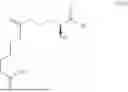
The present invention thus relates to an enzymatically catalyzed method for producing L-glufosinate or a phosphoester thereof, comprising a step (a) in which an activated L-homoserine HA is reacted with a substrate S of the following structure (I) to produce a compound of the following structure (III),
-
- wherein R1 is selected from hydrogen, alkyl, alkenyl, alkinyl, hydroxyalkyl, aryl,
- and wherein the activated L-homoserine HA has the following structure (II):
-
- wherein R2 is a hydrocarbon group with 1 to 15 carbon atoms which optionally comprises at least one functional group selected from OH, COOH, NH,
- and wherein the reaction in step (a) is enzymatically catalyzed by a sulfhydrylase E1, wherein the polypeptide sequence of the sulfhydrylase enzyme E1 is selected from the group consisting of SEQ ID NO: 5 and variants of SEQ ID NO: 5, SEQ ID NO: 6 and variants of SEQ ID NO: 6, SEQ ID NO: 7 and variants of SEQ ID NO: 7, SEQ ID NO: 8 and variants of SEQ ID NO: 8.
4. DETAILED DESCRIPTION OF THE INVENTION
It was surprisingly found that certain phosphor-containing compounds, namely methylphosphinic acid and esters of methylphosphinic acid, can react under enzymatic catalysis with activated L-homoserine, thus opening a new synthetic pathway to L-glufosinate and L-glufosinate phosphoesters. This was especially surprising because similar compounds such as DEMP did not react in the analogous reaction with activated L-homoserine.
The present invention thus relates to an enzymatically catalyzed method for producing L-glufosinate or a phosphoester thereof, comprising a step (a) in which an activated L-homoserine HA is reacted with a substrate S of the following structure (I) to produce a compound of the following structure (III),
wherein R1 is selected from hydrogen, alkyl, alkenyl, alkinyl, hydroxyalkyl, aryl.
The compounds denoted as “L-glufosinate or a phosphoester thereof” according to the invention are represented by structure (III). When R1=hydrogen in structure (III), the compound is L-GA.
When R1 is selected from alkyl, alkenyl, alkinyl, hydroxyalkyl, aryl in structure (III), the compound is a phosphoester of L-GA.
The activated L-homoserine HA has the following structure (II):
-
- wherein R2 is a hydrocarbon group with 1 to 15 carbon atoms which optionally comprises at least one functional group selected from OH, COOH, NH.
The reaction in step (a) is catalyzed by an enzyme which is a sulfhydrylase E1.
4.1 Substrate S
The substrate S according to the invention is selected from the group consisting of methylphosphinic acid and the esters of methylphosphinic acid.
The substrate S has the structure (I). In structure (I), R1 is selected from hydrogen, alkyl, alkenyl, alkinyl, hydroxyalkyl, aryl,
-
- preferably selected from hydrogen, alkyl,
- preferably selected from hydrogen, alkyl with 1 to 6, preferably 1 to 4 carbon atoms,
- more preferably selected from hydrogen, methyl, ethyl, iso-propyl, n-propyl, n-butyl, sec-butyl, iso-butyl, tert-butyl, even more preferably selected from hydrogen, methyl, ethyl, n-butyl, even more preferably selected from hydrogen, methyl, n-butyl, preferably selected methyl, n-butyl. Most preferably, R1 is n-butyl.
When R1=hydrogen in structure (I), the compound is methylphosphinic acid (also “P-methylphosphinic acid”, “PMEA”).
When R1 is selected from alkyl, alkenyl, alkinyl, hydroxyalkyl, aryl in structure (I), the compound is an ester of methylphosphinic acid.
R1 in structure (I) and structure (III) is the same.
4.2 Activated L-Homoserine HA
The other reaction partner in the reaction according to the present invention is activated L-homoserine HA.
The skilled person is aware of activated L-homoserine HA (sometimes also denoted as “L-methionine precursor”, e.g. in WO 2008/013432 A1), which in particular means O-acyl L-homoserine.
4.2.1 Activated L-Homoserine HA
The activated L-homoserine has a chemical structure (II) as follows:
-
- wherein R2 is a hydrocarbon group with 1 to 15 carbon atoms which optionally comprises at least one functional group selected from OH, COOH, NH.
More preferably, the activated L-homoserine is selected from the group consisting of O-acetyl-L-homoserine [structure (II-A)], O-succinyl-L-homoserine [structure (II-B)], O-propionyl-L-homoserine [structure (II-C)], O-acetoacetyl-L-homoserine [structure (II-D)], O-coumaroyl-L-homoserine [structure (II-E)], O-malonyl-L-homoserine [structure (II-F)], O-hydroxymethylglutaryl-L-homoserine [structure (II-G)], and O-pimelyl-L-homoserine [structure (II-H)].
Even more preferably, the activated L-homoserines is selected from the group consisting of O-acetyl-L-homoserine [structure (II-A)], O-succinyl-L-homoserine [structure (II-B)].
Most preferably, the activated L-homoserine is O-acetyl-L-homoserine [structure (II-A)].
4.2.2 Chemical Synthesis of Activated L-Homoserine HA
The activated L-homoserine HA used in the method of the present invention can be obtained by organochemical synthesis routes known to the skilled person. For example, the synthesis of O-succinyl homoserine is described in M. Flavin, C. Slaughter, Biochemistry 1965, 4, 1370-1375. The synthesis of O-acetyl-homoserine is described by S. Nagai, M. Flavin, Methods in Enzymology, Metabolism of Amino Acids and Amines Part B 1971, 17 (Part B), 423-424.
The chemical synthesis of the potential precursor is described for example by M. D. Armstrong, J. Am. Chem. Soc. 1948, 70, 1756-1759.
4.2.3 Biotechnological Synthesis of Activated L-Homoserine HA
Alternatively, and preferably, the activated L-homoserine HA used in the present invention is obtained by biotechnological means. For example, this is described in WO 2008/013432 A1 or by H. Kase, K. Nakayama, Agr. Biol. Chem. 1974, 38, 2021-2030.
The strain producing activated L-homoserine HA is preferably selected from the group consisting of Escherichia sp., Erwinia sp., Serratia sp., Providencia sp., Corynebacterium sp., Pseudomonas sp., Leptospira sp., Salmonella sp., Brevibacterium sp., Hypomononas sp., Chromobacterium sp., Norcardia sp., fungi, which are in particular yeasts.
Biotechnological processes for obtaining L-homoserine are also described in the art, e.g. in U.S. Pat. Nos. 3,598,701, 6,303,348 B1, EP 0 994 190 A2, EP 1 149 911 A2, WO 2004/067757 A1.
4.3 Enzyme
The method according to the present invention is enzymatically catalyzed.
The term “enzyme” means any substance composed wholly or largely of protein or polypeptides that catalyzes or promotes, more or less specifically, one or more chemical or biochemical reactions.
Any of the enzymes used according to any aspect of the present invention may be an isolated enzyme. In particular, the enzymes used according to any aspect of the present invention may be used in an active state and in the presence of all cofactors, substrates, auxiliary and/or activating polypeptides or factors essential for its activity.
In particular, this also means that the term “sulfhydrylase”, in particular “O-acetyl homoserine sulfhydrylase” or “O-succinyl homoserine sulfhydrylase”, comprise the respective enzymes in combination with all the cofactors necessary for their function. In particular, this cofactor is pyridoxal 5′-phosphate (“PLP”).
A “polypeptide” is a chain of chemical building blocks called amino acids that are linked together by chemical bonds called peptide bonds. A protein or polypeptide, including an enzyme, may be “native” or “wild-type”, meaning that it occurs in nature or has the amino acid sequence of a native protein, respectively. These terms are sometimes used interchangeably. A polypeptide may or may not be glycosylated.
The enzyme used according to any aspect of the present invention may be recombinant. The term “recombinant” as used herein, refers to a molecule or is encoded by such a molecule, particularly a polypeptide or nucleic acid that, as such, does not occur naturally but is the result of genetic engineering or refers to a cell that comprises a recombinant molecule. For example, a nucleic acid molecule is recombinant if it comprises a promoter functionally linked to a sequence encoding a catalytically active polypeptide and the promoter has been engineered such that the catalytically active polypeptide is overexpressed relative to the level of the polypeptide in the corresponding wild type cell that comprises the original unaltered nucleic acid molecule. As a further example, a polypeptide is recombinant if it is identical to a polypeptide sequence occurring in nature but has been engineered to contain one or more point mutations that distinguish it from any polypeptide sequence occurring in nature.
The term “overexpressed”, as used herein, means that the respective polypeptide encoded or expressed is expressed at a level higher or at higher activity than would normally be found in the cell under identical conditions in the absence of genetic modifications carried out to increase the expression, for example in the respective wild type cell.
The term “isolated”, as used herein, means that the enzyme of interest is enriched compared to the cell in which it occurs naturally. The enzyme may be enriched by SDS polyacrylamide electrophoresis and/or activity assays. For example, the enzyme of interest may constitute more than 5, 10, 20, 50, 75, 80, 85, 90, 95 or 99 percent of all the polypeptides present in the preparation as judged by visual inspection of a polyacrylamide gel following staining with Coomassie blue dye.
4.3.1 Enzyme E1
Step (a) of the method according to the invention is enzymatically catalysed by a sulfhydrylase E1.
A sulfhydrylase is known to the skilled person as an enzyme that catalyzes at least one of the following reactions <1A>, <1B>:
< 1 A > : O - acetyl - L - homoserine + methanethiol → L - methionine + acetate . < 1 B > : O - succinyl - L - homoserine + methanethiol → L - methionine + succinate .
A sulfhydrylase that has a higher catalytic activity for reaction <1A> than reaction <1B> may be denoted as an “O-acetyl-L-homoserine sulfhydrylase”.
A sulfhydrylase that has a higher catalytic activity for reaction <1B> than reaction <1A> may be denoted as an “O-succinyl-L-homoserine sulfhydrylase”.
Step (a) of the method according to the invention is catalysed by a sulfhydrylase E1, which is even more preferably an O-acetyl homoserine sulfhydrylase or an O-succinyl homoserine sulfhydrylase, most preferably an O-acetyl homoserine sulfhydrylase.
The sulfhydrylase that may be used in step (a) of the method according to the invention is derived from Elusimicrobia sp., in particular Elusimicrobia bacterium; Hyphomonas sp.; Myobacterium sp.; Pseudonocardia sp., in particular Pseudonocardia thermophila.
The sulfhydrylase enzyme that may be used in the method according to the present invention may be an O-acetyl-L-homoserine sulfhydrylase categorized in the EC class EC 2.5.1.49 or an O-succinyl-L-homoserine sulfhydrylase categorized in the EC class EC 2.5.1.-.
These enzymes are part of the direct sulfurylation pathway for methionine biosynthesis and PMP-dependent. They are described e.g. by M. P. Ferla and W. M. Patrick, Microbiology 2014, 160, 1571-1584.
WO 02/18613 A1, WO 2007/024933 A2, EP 2 657 345 A1, EP 2 657 250 A2, WO 2015/165746 A1 and WO 2008/013432 A1 disclose examples of enzymes having O-acetyl-L-homoserine sulfhydrylase and O-succinyl-L-homoserine sulfhydrylase activity according to the invention.
An O-acetyl-L-homoserine sulfhydrylase suitable for the method according to the present invention may originate from Elusimicrobia sp., in particular Elusimicrobia bacterium; Myobacterium sp.; Pseudonocardia sp., in particular Pseudonocardia thermophila.
An O-succinyl-L-homoserine sulfhydrylase suitable for the method according to the present invention may originate from Hyphomonas sp.
The respective sequences can be derived from databases such as the Braunschweig Enzyme Database (BRENDA, Germany, available under www.brenda-enzymes.org/index.php), the National Center for Biotechnological Information (NCBI, available under https://www.ncbi.nlm.nih.gov/) or the Kyoto Encyclopedia of Genes and Genomes (KEGG, Japan, available under www.https://www.genome.jp/kegg/).
The following table 1 gives preferred examples for sulfhydrylases that may be used in step (a) of the method according to the invention. The genes encoding sulfhydrylase are indicated as “MET43”, “MET46”, and “MET52” for O-acetyl-Lhomoserine sulfhydrylase (“AHS”) and “MET17” for O-succinyl-L-homoserine sulfhydrylase (“SHS”).
| TABLE 1 | |||
| Gene | SEQ ID NO: of | ||
| Strain | name | NCBI accession | the polypeptide |
| Hyphomonas | MET17 | WP_011647651.1 | SEQ ID NO: 5 |
| Mycobacterium sp. | MET43 | MCB0926676.1 | SEQ ID NO: 6 |
| Pseudonocardia | MET46 | WP_073459782.1 | SEQ ID NO: 7 |
| thermophila | |||
| Elusimicrobia bacterium | MET52 | MBI4397379.1 | SEQ ID NO: 8 |
Step (a) is catalyzed by at least a sulfhydrylase E1, wherein the polypeptide sequence of the sulfhydrylase enzyme E1 is selected from the group consisting of SEQ ID NO: 5 and variants of SEQ ID NO: 5, SEQ ID NO: 6 and variants of SEQ ID NO: 6, SEQ ID NO: 7 and variants of SEQ ID NO: 7, SEQ ID NO: 8 and variants of SEQ ID NO: 8.
In an even more preferred embodiment of the method of the present invention, the reaction in step (a) is catalyzed by a sulfhydrylase E1 selected from the group consisting of O-acetyl homoserine sulfhydrylases selected from the group consisting of SEQ ID NO: 6 and variants of SEQ ID NO: 6, SEQ ID NO: 7 and variants of SEQ ID NO: 7, SEQ ID NO: 8 and variants of SEQ ID NO: 8 and O-succinyl homoserine sulfhydrylases selected from the group consisting of SEQ ID NO: 5 and variants of SEQ ID NO: 5.
The term “variant” is further explained below (item 4.3.3.1). In the context of the present application, it is understood to mean a polypeptide sequences with at least 80% sequence identity to the respective polypeptide sequence.
4.3.2 Methods for Obtaining Enzymes
The enzymes that can be used in the method according to the present invention can be synthesized by methods that are known to the skilled person.
One approach is to express the enzyme(s) in microorganism(s) such as Escherichia coli (=“E. coli”), Saccharomyces cerevisiae, Pichia pastoris, and others, and to add the whole cells to the reactions as whole cell biocatalysts. Another approach is to express the enzyme(s), lyse the microorganisms, and add the cell lysate. Yet another approach is to purify, or partially purify, the enzyme(s) from a lysate and add pure or partially pure enzyme(s) to the reaction. If multiple enzymes are required for a reaction, the enzymes can be expressed in one or several microorganisms, including expressing all enzymes within a single microorganism.
For example, the skilled person can obtain the enzymes according to the invention by expression, in particular, overexpression, (hereinafter, “expression, in particular overexpression” is abbreviated as (over)expression”, and “express, in particular overexpress” is abbreviated as “(over)express”) of these enzymes in a cell and subsequent isolation thereof, e.g. as described in DE 100 31 999 A1. Episomal plasmids, for example, are employed for increasing the expression of the respective genes. In such plasmids, the nucleic acid molecule to be (over)expressed or encoding the polypeptide or enzyme to be (over)expressed may be placed under the control of a strong inducible promoter such as the lac promoter, located upstream of the gene. A promoter is a DNA sequence consisting of about 40 to 50 base pairs which constitutes the binding site for an RNA polymerase holoenzyme and the transcriptional start point (M. Pátek, J. Holátko, T. Busche, J. Kalinowski, J. Nešvera, Microbial Biotechnology 2013, 6, 103-117), whereby the strength of expression of the controlled polynucleotide or gene can be influenced. A “functional linkage” is obtained by the sequential arrangement of a promoter with a gene, which leads to a transcription of the gene.
Suitable strong promoters or methods of producing such promoters for increasing expression are known from the literature (e.g. S. Lisser & H. Margalit, Nucleic Acid Research 1993, 21, 1507-1516; M. Patek and J. Nesvera in H. Yukawa and M Inui (eds.), Corynebacterium glutamicum, Microbiology Monographs 23, Springer Verlag Berlin Heidelberg 2013, 51-88; B. J. Eikmanns, E. Kleinertz, W. Liebl, H. Sahm, Gene 1991, 102, 93-98). For instance, native promoters may be optimized by altering the promoter sequence in the direction of known consensus sequences with respect to increasing the expression of the genes functionally linked to these promoters (M. Pátek, B. J. Eikmanns, J. Patek, H. Sahm, Microbiology 1996, 142, 1297-1309; M. Pátek, J. Holátko, T. Busche, J. Kalinowski, J. Nešvera, Microbial Biotechnology 2013, 6, 103-117).
Constitutive promoters are also suitable for the (over)expression, in which the gene encoding the enzyme activity is expressed continuously under the control of the promoter such as, for example, the glucose dependent deo promoter. Chemically induced promoters are also suitable, such as tac, lac or trp. The most widespread system for the induction of promoters is the lac operon of E. coli. In this case, either lactose or isopropyl ß-D-thiogalactopyranoside (IPTG) is used as inducer. Also, systems using arabinose (e.g. the pBAD system) or rhamnose (e.g. E. coli KRX) are common as inducers. A system for physical induction is, for example, the temperature-induced cold shock promoter system based on the E. coli cspA promoter from Takara or Lambda PL and also osmotically inducible promoters, for example, osmB (e.g. WO 95/25785 A1).
Suitable plasmids or vectors are in principle all embodiments available for this purpose to the person skilled in the art. The state of the art describes standard plasmids that may be used for this purpose, for example the pET system of vectors exemplified by pET-3a or pET-28a(+) (commercially available from Novagen). Further plasmids and vectors can be taken, for example, from the brochures of the companies Novagen, Promega, New England Biolabs, Clontech or Gibco BRL. Further preferred plasmids and vectors can be found in: Glover, D. M. (1985) DNA cloning: a practical approach, Vol. I-III, IRL Press Ltd., Oxford; Rodriguez, R. L. and Denhardt, D. T (eds) (1988) Vectors: a survey of molecular cloning vectors and their uses, 179-204, Butterworth, Stoneham; Goeddel, D. V. (1990) Systems for heterologous gene expression, Methods Enzymol. 185, 3-7; Sambrook, J.; Fritsch, E. F. and Maniatis, T. (1989), Molecular cloning: a laboratory manual, 2nd ed., Cold Spring Harbor Laboratory Press, New York.
The plasmid vector, which contains the gene to be amplified, is then converted to the desired strain, e.g. by conjugation or transformation. The method of conjugation is described, for example, by A. Schäfer, J. Kalinowski, A. Puhler, Applied and Environmental Microbiology 1994, 60, 756-759. Methods for transformation are described, for example, in G. Thierbach, A. Schwarzer, A. Pühler, Applied Microbiology and Biotechnology 1988, 29, 356-362, L. K. Dunican & E. Shivnan, Bio/Technology 1989, 7, 1067-1070 and A. Tauch, O. Kirchner, L. Wehmeier, J. Kalinowski, A. Pühler, FEMS Microbiology Letters 1994, 123, 343-347. After homologous recombination by means of a “cross-over” event, the resulting strain contains at least two copies of the gene concerned.
The desired enzyme can be isolated by disrupting cells which contain the desired activity in a manner known to the person skilled in the art, for example with the aid of a ball mill, a French press or of an ultrasonic disintegrator and subsequently separating off cells, cell debris and disruption aids, such as, for example, glass beads, by centrifugation for 10 minutes at 13000 rpm and 4° C. Using the resulting cell-free crude extract, enzyme assays with subsequent LC-ESI-MS detection of the products can then be carried out. Alternatively, the enzyme can be enriched in the manner known to the person skilled in the art by chromatographic methods (such as nickel-nitrilotriacetic acid affinity chromatography, streptavidin affinity chromatography, gel filtration chromatography or ion-exchange chromatography) or else purified to homogeneity.
Whether or not a nucleic acid or polypeptide is (over)expressed, may be determined by way of quantitative PCR reaction in the case of a nucleic acid molecule, SDS polyacrylamide electrophoreses, Western blotting or comparative activity assays in the case of a polypeptide. Genetic modifications may be directed to transcriptional, translational, and/or post-translational modifications that result in a change of enzyme activity and/or selectivity under selected and/or identified culture conditions.
4.3.3 Definitions
4.3.3.1 “Variants”
In the context of the present invention, the term “variant” with respect to polypeptide sequences refers to a polypeptide sequence with a degree of identity to the reference sequence of at least 80%, more preferably at least 81%, more preferably at least 82%, more preferably at least 83%, more preferably at least 84%, more preferably at least 85%, more preferably at least 86%, more preferably at least 87%, more preferably at least 88%, more preferably at least 89%, more preferably at least 90%, more preferably at least 91%, more preferably at least 92%, more preferably at least 93%, more preferably at least 94%, more preferably at least 95%, more preferably at least 96%, more preferably at least 97%, more preferably at least 98%, more preferably at least 99%. In still further particular embodiments, the degree of identity is at least 98.0%, more preferably at least 98.2%, more preferably at least 98.4%, more preferably at least 98.6%, more preferably at least 98.8%, more preferably at least 99.0%, more preferably at least 99.1%, more preferably at least 99.2%, more preferably at least 99.3%, more preferably at least 99.4%, more preferably at least 99.5%, more preferably at least 99.6%, more preferably at least 99.7%, more preferably at least 99.8%, or at least more preferably at least 99.9%. It goes without saying that a “variant” of a certain polypeptide sequence is not identical to the polypeptide sequence.
Such variants may be prepared by introducing deletions, insertions, substitutions, or combinations thereof, in particular in amino acid sequences, as well as fusions comprising such macromolecules or variants thereof.
Modifications of amino acid residues of a given polypeptide sequence which lead to no significant modifications of the properties and function of the given polypeptide are known to those skilled in the art. Thus for example many amino acids can often be exchanged for one another without problems; examples of such suitable amino acid substitutions are: Ala by Ser; Arg by Lys; Asn by Gln or His; Asp by Glu; Cys by Ser; Gln by Asn; Glu by Asp; Gly by Pro; His by Asn or Gin; Ile by Leu or Val; Leu by Met or Val; Lys by Arg or Gin or Glu; Met by Leu or Ile; Phe by Met or Leu or Tyr; Ser by Thr; Thr by Ser; Trp by Tyr; Tyr by Trp or Phe; Val by Ile or Leu. It is also known that modifications, particularly at the N- or C-terminus of a polypeptide in the form of for example amino acid insertions or deletions, often exert no significant influence on the function of the polypeptide.
In line with this, variants according to the invention of any of SEQ ID NO: 5, SEQ ID NO: 6, SEQ ID NO: 7, and SEQ ID NO: 8, respectively, have a polypeptide sequence that comprises the amino acids of the respective sequence that are essential for the function, for example the catalytic activity of a protein, or the fold or structure of the protein. The other amino acids may be deleted, substituted or replaced by insertions or essential amino acids are replaced in a conservative manner to the effect that the activity of the enzyme, in particular the sulfhydrylase, is preserved.
4.3.3.2 “Sequence Identity”
The person skilled in the art is aware that various computer programs are available for the calculation of similarity or identity between two nucleotide or amino acid sequences.
Preferred methods for determining the identity initially generate the greatest alignment between the sequences to be compared. Computer programs for determining the identity include, but are not limited to, the GCG program package including
-
- GAP [J. Deveroy et al., Nucleic Acid Research 1984, 12, page 387, Genetics Computer Group University of Wisconsin, Medicine (WI)], and
- BLASTP, BLASTN and FASTA (S. Altschul et al., Journal of Molecular Biology 1990, 215, 403-410). The BLAST program can be obtained from the National Center for Biotechnology Information (NCBI) and from other sources (BLAST Handbook, S. Altschul et al., NCBI NLM NIH Bethesda ND 22894; S. Altschul et al., above).
For instance, the percentage identity between two amino acid sequences can be determined by the algorithm developed by S. B. Needleman and C. D. Wunsch, J. Mol. Biol. 1970, 48, 443-453, which has been integrated into the GAP program in the GCG software package, using either a BLOSUM62 matrix or a PAM250 matrix, a gap weight of 16, 14, 12, 10, 8, 6 or 4 and a length weight of 1, 2, 3, 4, 5 or 6. The person skilled in the art will recognize that the use of different parameters will lead to slightly different results, but that the percentage identity between two amino acid sequences overall will not be significantly different. The BLOSUM62 matrix is typically used applying the default settings (gap weight: 12, length weight: 1).
In the context of the present invention, a sequence identity of 80% according to the above algorithm means 80% homology. The same applies to higher identities.
Most preferably, the degree of identity between sequences is determined in the context of the present invention by the programme “Needle” using the substitution matrix BLOSUM62, the gap opening penalty of 10, and the gap extension penalty of 0.5. The Needle program implements the global alignment algorithm described in S. B. Needleman and C. D. Wunsch, J. Mol. Biol. 1970, 48, 443-453. The substitution matrix used according to the present invention is BLOSUM62, gap opening penalty is 10, and gap extension penalty is 0.5. The preferred version used in the context of this invention is the one presented by F. Madeira, Y. M. Park, J. Lee, N. Buso, T. Gur, N. Madhusoodanan, P. Basutkar, A. R. N. Tivey, S. C. Potter, R. D. Finn, Nucleic Acids Research 2019, 47, W636-W641, Web Server issue (preferred version accessible online on Mar. 31, 2021 via https://www.ebi.ac.uk/Tools/psa/emboss_needle/).
In a particular embodiment, the percentage of identity of an amino acid sequence of a polypeptide with, or to, a reference polypeptide sequence is determined by i) aligning the two amino acid sequences using the Needle program, with the BLOSUM62 substitution matrix, a gap opening penalty of 10, and a gap extension penalty of 0.5; ii) counting the number of exact matches in the alignment; iii) dividing the number of exact matches by the length of the longest of the two amino acid sequences, and iv) converting the result of the division of iii) into percentage.
4.3.3.3 “Preferred Assay to Identify Particularly Active Variants”
4.3.3.3.1 Assay A
Especially preferable polypeptide variants of any of SEQ ID NO: 5, SEQ ID NO: 6, SEQ ID NO: 7, and SEQ ID NO: 8, respectively, in the context of the present invention may be identified by the skilled person as those displaying activity in the following assay (“Assay A”).
Assay A is carried out by the following steps:
-
- A1) First, the activity of the variant to be tested is determined by the following steps A1.1), A1.2), and A1.3) as follows:
- A1.1) 990 μl of a reaction solution containing phosphate buffer (0.1 M, pH 7.5), 3 mM O-acetyl L-homoserine-HCl, 10 UM pyridoxal 5′-phosphate mono-hydrate and 1.0 nmol of the polypeptide to be tested are prepared and heated to 50° C.
- A1.2) The reaction is started by adding 10 μl of a 200 mM solution of butyl-P-methylphosphinate (MPBE, CAS #6172-80-1). The concentration of MPBE in the reaction solution is 2 mM.
- A1.3) After addition of the MPBE, the reaction is conducted for 120 minutes at 50° C. Then, the reaction is stopped by adding 10 μl 1% formate solution and cooling on ice.
- A2) Then, a blank test is carried out by the following steps A2.1), A2.2), and A2.3) as follows:
- A2.1) 990 μl of a reaction solution containing phosphate buffer (0.1 M, pH 7.5), 3 mM O-acetyl L-homoserine-HCl, 10 UM pyridoxal 5′-phosphate mono-hydrate are prepared and heated to 50° C.
- A2.2) The reaction is started by adding 10 μl of a 200 mM solution of butyl-P-methylphosphinate (MPBE, CAS #6172-80-1).
- A2.3) After addition of the MPBE, the reaction is conducted for 120 minutes at 50° C. Then, the reaction is stopped by adding 10 μl 1% formate solution and cooling on ice.
- A3) Finally, the amount (in mole) of the butyl-phosphoester of L-GA (i.e. the compound according to formula (III) with R1=n-butyl) obtained in the reaction solution in A1.3) and A2.3), respectively, is determined and compared, preferably by LC-MS analysis described under item 5.7.
- A4) If the amount of butyl-phosphoester of L-GA determined for A1.3) is more than the amount determined for A2.3), then the variant to be tested displays activity in Assay A.
If the amount of butyl-phosphoester of L-GA determined for A1.3) is the same or less than the amount determined for A2.3), then the variant to be tested does not display activity in Assay A.
Preferable formate solutions in steps A1.3) and A2.3) are ammonium formate or sodium formate solutions. Alternatively, the reaction in steps A 1.3) and A2.3) can also be stopped by adding methanol, preferably 1 ml of methanol.
4.3.3.3.2 Assay B
In a further assay (“Assay B”), the activity of a polypeptide variants of any of SEQ ID NO: 5, SEQ ID NO: 6, SEQ ID NO: 7, and SEQ ID NO: 8, respectively, with respect to the polypeptide may be determined.
Assay B is carried out by the following steps:
-
- B1) First, the activity of the “standard” polypeptide standard (i.e., one polypeptide sequence selected from SEQ ID NO: 5, SEQ ID NO: 6, SEQ ID NO: 7, and SEQ ID NO: 8) is determined by the following steps B1.1), B1.2), and B1.3) as follows:
- B1.1) 990 μl of a reaction solution containing phosphate buffer (0.1 M, pH 7.5), 3 mM O-acetyl L-homoserine-HCl, 10 UM pyridoxal 5′-phosphate mono-hydrate and 1.0 nmol of the “standard” polypeptide to be tested are prepared and heated to 50° C.
- B1.2) The reaction is started by adding 10 μl of a 200 mM solution of butyl-P-methylphosphinate (MPBE, CAS #6172-80-1). The concentration of MPBE in the reaction solution is 2 mM.
- B1.3) After addition of the MPBE, the reaction is conducted for 120 minutes at 50° C. Then, the reaction is stopped by adding 10 μl 1% formate solution and cooling on ice.
- B2) Then, steps B1.1), B1.2), and B1.3) are repeated with the variant:
- B2.1) 990 μl of a reaction solution containing phosphate buffer (0.1 M, pH 7.5), 3 mM O-acetyl L-homoserine-HCl, 10 UM pyridoxal 5′-phosphate mono-hydrate and 1.0 nmol of the “variant” polypeptide to be tested are prepared and heated to 50° C.
- B2.2) The reaction is started by adding 10 μl of a 200 mM solution of butyl-P-methylphosphinate (MPBE, CAS #6172-80-1). The concentration of MPBE in the reaction solution is 2 mM.
- B2.3) After addition of the MPBE, the reaction is conducted for 120 minutes at 50° C. Then, the reaction is stopped by adding 10 μl 1% formate solution and cooling on ice.
- B3) Finally, the amount of the butyl-phosphoester of L-GA (i.e. the compound according to formula (III) with R1=n-butyl) obtained in the reaction solution in B1.3) and B2.3) is determined and compared, preferably by LC-MS analysis described under item 5.7.
- B4) Then, the ratio of the amount (in mole) of butyl-phosphoester of L-GA obtained in B2.3) is divided by the amount (in mole) of butyl-phosphoester of L-GA obtained in B1.3). This ratio is then multiplied with a factor of 100, giving the relative activity of the variant polypeptide with respect to the “standard” polypeptide in percent.
Preferable formate solutions in steps B1.3) and B2.3) are ammonium formate or sodium formate solutions. Alternatively, the reaction in steps B1.3) and B2.3) can also be stopped by adding methanol, preferably 1 ml of methanol.
4.3.3.4 “Preferred Variants”
4.3.3.4.1 “Variants of SEQ ID NO: 5”
In particular, a variant of SEQ ID NO: 5 is a polypeptide with sequence identity of ≥80%, more preferably ≥85%, more preferably ≥90%, more preferably ≥91%, more preferably ≥92%, more preferably ≥93%, more preferably ≥94%, more preferably ≥95%, more preferably ≥96%, more preferably ≥97%, more preferably ≥98%, more preferably ≥99%, more preferably ≥99.9% sequence identity to polypeptide sequence SEQ ID NO: 5.
Preferred variants of SEQ ID NO: 5 display activity in Assay A under item 4.3.3.3.1.
Even more preferably, the activity of the respective variant of SEQ ID NO: 5 is at least 1%, preferably at least 10%, more preferably at least 20%, more preferably of at least 30%, more preferably of at least 40%, more preferably of at least 50%, more preferably of at least 60%, more preferably of at least 70%, more preferably of at least 80%, more preferably of at least 90%, more preferably of at least 99% relative to the activity of SEQ ID NO: 5 as determined in Assay B under item 4.3.3.3.2.
Even more preferably, the activity of the respective variant of SEQ ID NO: 5 is in the range of 1 to 1000%, preferably in the range of 5 to 500%, more preferably in the range of 10 to 400%, more preferably in the range of 40 to 200%, more preferably in the range of 50 to 150%, more preferably in the range of 60 to 140%, more preferably in the range of 70 to 130%, more preferably in the range of 80 to 120%, more preferably in the range of 90 to 110%, more preferably 100% relative to the activity of SEQ ID NO: 5 as determined in Assay B under item 4.3.3.3.2.
4.3.3.4.2 “Variants of SEQ ID NO: 6”
In particular, a variant of SEQ ID NO: 6 is a polypeptide with sequence identity of ≥80%, more preferably ≥85%, more preferably ≥90%, more preferably ≥91%, more preferably ≥92%, more preferably ≥93%, more preferably ≥94%, more preferably ≥95%, more preferably ≥96%, more preferably ≥97%, more preferably ≥98%, more preferably ≥99%, more preferably ≥99.9% sequence identity to polypeptide sequence SEQ ID NO: 6.
Preferred variants of SEQ ID NO: 6 display activity in Assay A under item 4.3.3.3.1.
Even more preferably, the activity of the respective variant of SEQ ID NO: 6 is at least 1%, preferably at least 10%, more preferably at least 20%, more preferably of at least 30%, more preferably of at least 40%, more preferably of at least 50%, more preferably of at least 60%, more preferably of at least 70%, more preferably of at least 80%, more preferably of at least 90%, more preferably of at least 99% relative to the activity of SEQ ID NO: 6 as determined in Assay B under item 4.3.3.3.2.
Even more preferably, the activity of the respective variant of SEQ ID NO: 6 is in the range of 1 to 1000%, preferably in the range of 5 to 500%, more preferably in the range of 10 to 400%, more preferably in the range of 40 to 200%, more preferably in the range of 50 to 150%, more preferably in the range of 60 to 140%, more preferably in the range of 70 to 130%, more preferably in the range of 80 to 120%, more preferably in the range of 90 to 110%, more preferably 100% relative to the activity of SEQ ID NO: 6 as determined in Assay B under item 4.3.3.3.2.
4.3.3.4.3 “Variants of SEQ ID NO: 7”
In particular, a variant of SEQ ID NO: 7 is a polypeptide with sequence identity of ≥80%, more preferably ≥85%, more preferably ≥90%, more preferably ≥91%, more preferably ≥92%, more preferably ≥93%, more preferably ≥94%, more preferably ≥95%, more preferably ≥96%, more preferably ≥97%, more preferably ≥98%, more preferably ≥99%, more preferably ≥99.9% sequence identity to polypeptide sequence SEQ ID NO: 7.
Preferred variants of SEQ ID NO: 7 show activity in Assay A under item 4.3.3.3.1.
Even more preferably, the activity of the respective variant of SEQ ID NO: 7 is at least 1%, preferably at least 10%, more preferably at least 20%, more preferably of at least 30%, more preferably of at least 40%, more preferably of at least 50%, more preferably of at least 60%, more preferably of at least 70%, more preferably of at least 80%, more preferably of at least 90%, more preferably of at least 99% relative to the activity of SEQ ID NO: 7 as determined in Assay B under item 4.3.3.3.2.
Even more preferably, the activity of the respective variant of SEQ ID NO: 7 is in the range of 1 to 1000%, preferably in the range of 5 to 500%, more preferably in the range of 10 to 400%, more preferably in the range of 40 to 200%, more preferably in the range of 50 to 150%, more preferably in the range of 60 to 140%, more preferably in the range of 70 to 130%, more preferably in the range of 80 to 120%, more preferably in the range of 90 to 110%, more preferably 100% relative to the activity of SEQ ID NO: 7 as determined in Assay B under item 4.3.3.3.2.
4.3.3.4.4 “Variants of SEQ ID NO: 8”
In particular, a variant of SEQ ID NO: 8 is a polypeptide with sequence identity of ≥80%, more preferably ≥85%, more preferably ≥90%, more preferably ≥91%, more preferably ≥92%, more preferably ≥93%, more preferably ≥94%, more preferably ≥95%, more preferably ≥96%, more preferably ≥97%, more preferably ≥98%, more preferably ≥99%, more preferably ≥99.9% sequence identity to polypeptide sequence SEQ ID NO: 8.
Preferred variants of SEQ ID NO: 8 display activity in Assay A under item 4.3.3.3.1.
Even more preferably, the activity of the respective variant of SEQ ID NO: 8 is at least 1%, preferably at least 10%, more preferably at least 20%, more preferably of at least 30%, more preferably of at least 40%, more preferably of at least 50%, more preferably of at least 60%, more preferably of at least 70%, more preferably of at least 80%, more preferably of at least 90%, more preferably of at least 99% relative to the activity of SEQ ID NO: 8 as determined in Assay B under item 4.3.3.3.2.
Even more preferably, the activity of the respective variant of SEQ ID NO: 8 is in the range of 1 to 1000%, preferably in the range of 5 to 500%, more preferably in the range of 10 to 400%, more preferably in the range of 40 to 200%, more preferably in the range of 50 to 150%, more preferably in the range of 60 to 140%, more preferably in the range of 70 to 130%, more preferably in the range of 80 to 120%, more preferably in the range of 90 to 110%, more preferably 100% relative to the activity of SEQ ID NO: 8 as determined in Assay B under item 4.3.3.3.2.
4.4 Method Conditions
The reaction in step a) of the method according to the present invention may be carried out under conditions known to the skilled person.
The reaction medium in which activated L-homoserine HA is reacted with the substrate S is preferably aqueous, more preferably an aqueous buffer.
Exemplary buffers commonly used in biotransformation reactions and advantageously used herein include Tris, phosphate, or any of Good's buffers, such as 2-(N-morpholino) ethanesulfonic acid (“MES”), N-(2-acetamido)iminodiacetic acid (“ADA”), piperazine-N,N′-bis(2-ethanesulfonic acid) (“PIPES”), N-(2-acetamido)-2-aminoethanesulfonic acid (“ACES”), P-hydroxy-4-morpholinepropanesulfonic acid (“MOPSO”), cholamine chloride, 3-(N-morpholino) propanesulfonic acid (“MOPS”), N,N-Bis(2-hydroxyethyl)-2-aminoethanesulfonic acid (“BES”), 2-[[1,3-dihydroxy-2-(hydroxymethyl) propan-2-yl]amino]ethanesulfonic acid (“TES”), 4-(2-hydroxyethyl)-1-piperazineethanesulfonic acid (“HEPES”), 3-(Bis(2-hydroxyethyl)amino)-2-hydroxypropane-1-sulfonic acid (“DIPSO”), acetamidoglycine, 3-(N-Tris(hydroxymethyl)methylamino (-2-hydroxypropane) sulfonic acid (“TAPSO”), piperazine-N, N-bis(2-hydroxypropanesulfonic acid) (“POPSO”), 4-(2-Hydroxyethyl) piperazine-1-(2-hydroxypropanesulfonic acid) (“HEPPSO”), 3-[4-(2-Hydroxyethyl)-1-piperazinyl]propanesulfonic acid (“HEPPS”), tricine, glycinamide, bicine, or 3-[[1,3-dihydroxy-2-(hydroxymethyl) propan-2-yl]amino]propane-1-sulfonic acid (“TAPS”).
In some embodiments, ammonium can act as a buffer. One or more organic solvents can also be added to the reaction.
Preferably, step a) of the method according to the invention is carried out in a phosphate buffer.
The pH of the reaction medium in step a) of the method is preferably in the range of from 2 to 10, more preferably in the range of from 5 to 8, most preferably 7.5.
The method according to the invention is preferably carried out at a temperature in the range of from 20° C. to 70° C., more preferably in the range of from 30° C. to 55° C., most preferably 50° C.
4.5 L-Glufosinate Phosphoester
The product of the method according to the invention, is a compound of the following structure (III):
The compound according to structure (III) is L-glufosinate (for R1=H) or L-glufosinate phosphoester (for R1=alkyl, alkenyl, alkinyl, hydroxyalkyl or aryl).
The compound according to structure (III), wherein R1=n-butyl, is abbreviated as “L-GA-Bu” or “LGA-Bu”.
The skilled person understands that the identity of residue R1 in the compound according to structure (III) depends on the identity of residue R1 in the substrate structure (I).
If R1 is hydrogen, L-glufosinate is directly obtained in the method according to the invention.
In the preferred embodiment, in which R1 is selected from alkyl, alkenyl, alkinyl, hydroxyalkyl, aryl, preferably alkyl, more preferably methyl, ethyl, n-butyl, the compound (III) is a L-glufosinate phosphoester.
In those embodiments, it is further preferable that the method according to the invention contains a further step b) wherein the compound of the structure (III) which is obtained in step (a), and in which R1 is selected from alkyl, alkenyl, alkinyl, hydroxyalkyl, aryl, preferably alkyl, more preferably methyl, ethyl, n-butyl, is saponified to give L-glufosinate.
This can be carried out by methods known to the skilled person.
Preferably, such saponification is carried out under acidic conditions, more preferably by mixing 1 Volume of the reaction medium containing the compound of the structure (III) which is obtained in step (a) and 4 Volumes of 6N HCl for 2 h and incubating the resulting mixture at a temperature of 50° C. to 150° C., preferably at 100° C.
Alternatively, an enzymatic saponification can be carried out.
5. EXAMPLES
Genes of different origin encoding sulfhydrylases (EC 2.5.1.- and EC 2.5.1.49) were tested for their ability to react with an activated homoserine derivate and different substrates according to structure (I) to form a glufosinate derivate.
5.1 Example 1 Identification of Suitable Enzymes and Construction of Plasmids
5.1.1 Examined Enzymes
Bibliographic details of the genes coding for O-succinylhomoserine sulfhydrylases (“SHS”) or O-acetylhomoserine sulfhydrylases (“AHS”) which were used in the examples are summarized in table 2 (“AA”=polypeptide).
| TABLE 2 | |||||
| Internal | |||||
| gene | DNA SEQ | AA SEQ | |||
| Strain | function | EC | name | ID NO: | ID NO: |
| Hyphomonas | SHS | 2.5.1.— | MET17 | 1 | 5 |
| Mycobacterium | AHS | 2.5.1.49 | MET43 | 2 | 6 |
| sp. | |||||
| Pseudonocardia | AHS | 2.5.1.49 | MET46 | 3 | 7 |
| thermophila | |||||
| Elusimicrobia | AHS | 2.5.1.49 | MET52 | 4 | 8 |
| bacterium | |||||
5.1.2 Preparation of Gene Expression Plasmids
5.1.2.1 O-Succinylhomoserine Sulfhydrylase MET17 Derived from Hyphomonas
The MET17 gene derived from Hyphomonas codes for an O-succinylhomoserine sulfhydrylase. The encoded polypeptide sequence can be found at the NCBI under NCBI Reference Sequence: WP_011647651.1.
To realize the expression of the enzyme, the expression vector pET-28a(+) (Novagen EMD Millipore) was used. Therefore, the MET17_Hy polynucleotide according to SEQ ID NO: 9 was synthesized by GeneArt (Thermo Fisher Scientific (Waltham, USA)).
To assemble the expression vector pET-28a(+)_MET17_Hy, the vector pET-28a(+) and the MET17_Hy polynucleotide were both treated with Ndel and Xhol, ligated, and the ligation mixture was used to transform E. coli.
DNA of the expression vector pET-28a(+)_MET17_Hy was isolated from a transformant.
5.1.2.2 O-Acetylhomoserine Sulfhydrylase MET43 Derived from Mycobacterium sp.
The MET43 gene derived from Mycobacterium sp. codes for an O-acetylhomoserine sulfhydrylase.
The encoded polypeptide sequence can be found at the NCBI under NCBI Reference Sequence: MCB0926676.1.
To realize the expression of the enzyme, the expression vector pET-28a(+) (Novagen EMD Millipore) was used. Therefore, the MET43_Ms polynucleotide according to SEQ ID NO: 10 was synthesized by GeneArt (Thermo Fisher Scientific (Waltham, USA)).
To assemble the expression vector pET-28a(+)_MET43_Ms, the vector pET-28a(+) and the MET43_Ms polynucleotide were both treated with Ndel and Xhol, ligated, and the ligation mixture was used to transform E. coli.
DNA of the expression vector pET-28a(+)_MET43_Ms was isolated from a transformant.
5.1.2.3 O-Acetylhomoserine Sulfhydrylase MET46 Derived from Pseudonocardia thermophila
The MET46 gene derived from Pseudonocardia thermophila codes for an O-acetylhomoserine sulfhydrylase. The encoded polypeptide sequence can be found at the NCBI under NCBI Reference Sequence: WP_073459782.1.
To realize the expression of the enzyme, the expression vector pET-28a(+) (Novagen EMD Millipore) was used. Therefore, the MET46_Pt polynucleotide according to SEQ ID NO: 11 was synthesized by GeneArt (ThermoFisher Scientific (Waltham, USA)).
To assemble the expression vector pET-28a(+)_MET46_Pt, the vector pET-28a(+) and the MET46_Pt polynucleotide were both treated with Ndel and Xhol, ligated, and the ligation mixture was used to transform E. coli.
DNA of the expression vector pET-28a(+)_MET46_Pt was isolated from a transformant.
5.1.2.4 O-Acetylhomoserine Sulfhydrylase MET52 Derived from Elusimicrobia Bacterium
The MET52 gene derived from Elusimicrobia bacterium codes for an O-acetylhomoserine sulfhydrylase. The encoded polypeptide sequence can be found at the NCBI under NCBI Reference Sequence: MBI4397379.1.
To realize the expression of the enzyme, the expression vector pET-28a(+) (Novagen EMD Millipore) was used. Therefore, the MET52_Eb polynucleotide according to SEQ ID NO: 12 was synthesized by GeneArt (Thermo Fisher Scientific (Waltham, USA)).
To assemble the expression vector pET-28a(+)_MET52_Eb, the vector pET-28a(+) and the MET52_Eb polynucleotide were both treated with Ndel and Xhol, ligated, and the ligation mixture was used to transform E. coli.
DNA of the expression vector pET-28a(+)_MET52_Eb was isolated from a transformant.
5.2 Transforming and Expression of O-Succinylhomoserine Sulfhydrylases or O-Acetylhomoserine Sulfhydrylases
These vectors carrying the O-succinylhomoserine sulfhydrylase or O-acetylhomoserine sulfhydrylase genes were each transformed in Escherichia coli BL21 (DE3) (New England Biolabs), which were subsequently cultured on LB medium agar plates with 50 mg/l kanamycin at 37° C. for 16 h. Strain BL21 carrying the vector pET-28a(+) without any insert was used as negative control. The resulting strain were named Ec BL21 pET-28a(+)_MET17-Hy, Ec BL21 pET-28a(+)_MET43-Ms, Ec BL21 pET-28a(+)_MET46-Pt and Ec BL21 pET-28a(+)_MET52-Eb, respectively. In each case a colony has been selected which was inoculated into 10 ml of LB medium with 50 mg/l kanamycin and cultured at 37° C., 250 rpm for 6 hours. 50 μl of LB medium were subsequently treated with 50 mg/l kanamycin and inoculated with 50 μl of the growth cell culture and incubated at 28° C., 250 rpm for 16 h. This cell culture was diluted with 200 ml of fresh LB medium containing 50 μg/l kanamycin in a 2 l flask to an OD of 0.15 and was further cultured under identical conditions until an OD of 0.5 was attained (circa 4 h). The start point of the induction of gene expression was then affected by adding 200 μl of a 300 mM IPTG stock solution (final concentration 300 μM isopropyl-β-D-thiogalactopyranoside (IPTG), Sigma-Aldrich, Germany). The induction was carried out at 28° C., 250 rpm for 4 h. The culture was then harvested (8 ml normalised to an OD=1), the supernatant removed by centrifugation (20 min, 4000 rpm, 4° C.) and the pelleted cells were washed twice with 800 μl of 0.1 M potassium phosphate buffer (pH 7.5) and taken up in 1 ml of buffer. The mechanical cell digestion was carried out in a FastPrep FP120 instrument (QBiogene, Heidelberg), wherein the cells were shaken four times for 30 s at 6.5 m/s in digestion vessels with 300 mg of glass beads (Ø 0.2-0.3 mm). The crude extract was then centrifuged at 12000 rpm, 4° C., 20 min, in order to remove undigested cells and cell debris.
The described proteins which contain HisTag sequences were purified using the HisPur Cobalt Resin (Thermo Fischer Scientific, Germany). The purification process was carried out using the standard procedure available from Thermo Fischer Scientific. Freshly purified protein lysates were used for the enzyme assay. The concentration of the polypeptide in the lysate was determined by SDS page and analysis of the respective bands via the software GelQuant® (BiochemLabSolutions).
5.3 Inventive Examples 11 to 14
The following assay was carried out to determine whether the respective polypeptide catalyzed the reaction of the respective phosphor-containing substrate and activated L-homoserine. O-acetyl L-homoserine was used as activated L-homoserine substrate.
To 880 μl phosphate buffer (0.1 M, pH 7.5) containing 1 nmol of the polypeptide to be tested were added 100 μl of a 30 mM aqueous solution of O-acetyl homoserine-HCl, 10 μl of a 1 mM aqueous solution of pyridoxal 5′-phosphate mono-hydrate (1 mM), and 10 μl of a 200 mM aqueous solution of Butyl P-methylphosphinate (CAS-No. 6172-80-1; “MPBE”). The reaction was conducted for 120 min at 50° C. Then, 100 μl batch solution was diluted in 100 μl methanol and applied on the LC-MS QQQ (item 5.7) to analyse the LGA-Bu.
5.4 Inventive Examples 15 and 16
The following assay was carried out to determine whether the polypeptides according to SEQ ID NO: 5 and SEQ ID NO: 8 catalyzed the reaction of P-methyl-phosphinic acid [“PMEA”; structure (I) with R1=H] and activated L-homoserine. O-acetyl L-homoserine was used as activated L-homoserine substrate.
To 880 μl phosphate buffer (0.1 M, pH 7.5) containing 1 nmol of this polypeptide were added 100 μl of a 30 mM aqueous solution of O-acetyl homoserine-HCl, 10 μl of a 1 mM aqueous solution of pyridoxal 5′-phosphate mono-hydrate (1 mM), and 10 μl of a 200 mM aqueous solution of PMEA. The reaction was conducted for 120 min at 50° C. Then, 100 μl batch solution was diluted in 100 μl methanol and applied on the LC-MS QQQ (item 5.7) to analyse the LGA-Bu.
The results are summarized in the following table 3. The abbreviations used are
-
- “MPBE”=butyl P-methylphosphinate (CAS-No. 6172-80-1);
- “PMEA”=P-methylphosphinic acid (CAS-No. 4206-94-4).
| TABLE 3 | ||||
| Example | Enzyme | Polypeptide | Substrate | Product |
| I1 | MET17 | SEQ ID NO: 5 | MPBE | yes |
| I2 | MET43 | SEQ ID NO: 6 | MPBE | yes |
| I3 | MET46 | SEQ ID NO: 7 | MPBE | yes |
| I4 | MET52 | SEQ ID NO: 8 | MPBE | yes |
| I5 | MET17 | SEQ ID NO: 5 | PMEA | yes |
| I6 | MET52 | SEQ ID NO: 8 | PMEA | yes |
5.6 Results
The results summarized in table 3 surprisingly show that the tested polypeptides accept methylphosphinic acid compounds such as MPBE and PMEA as substrates and catalyze their reaction with activated L-homoserine to the respective n-butyl P-ester of LGA or free LGA.
This finding was even more surprising, as the skilled person would not have expected that these enzymes would catalyze these reactions, as other phosphate compounds such as DEMP do not work as substrates.
This finding opens new enzymatic pathways to LGA and its derivatives.
5.7 Analytical Methods
All analytical measurements for the experiments have been carried out via a scan on a LC-MS QQQ system. Samples were diluted in in methanol (v:v=1:2).
The applicated HPLC belongs to the 1260 Infinity-series from Agilent connected to a mass spectrometer 6420 triple quadrupole with electrospray ionization. Peak identification was carried out via retention time and molecular mass in a positive detection mode.
Data evaluation was carried out via peak area and a quadratic calibration without zero.
Aquisition Method Details
| Ion Source | ESI (electrospray ionization) | |
Time Parameters
| Mass Range | m/z = 50-300 | |
| Scans per second | 400 | |
| Fragmentation | 40 V | |
| Polarity | Positive (Scan-Mode) | |
Source Parameters
| Gas temperature | 350° | C. | |
| Gas flow | 12 | l/min | |
| Nebulizer | 50 | psi | |
| Capillary | 4000 | V | |
Binary Pump
| Injection Volume | 2.00 μL |
| Flow | 0.60 mL/min |
| Solvent Composition | |
| Solvent A | 100 mM Ammonium acetate plus 0.1% (v/v) |
| formic acid in H2O | |
| Solvent B | 0.1% formic acid in acetonitrile |
Gradient See Table 4.
| TABLE 4 | ||
| Time (min) | Solvent A (%) | Solvent B (%) |
| 0.5 | 5 | 95 |
| 1.2 | 45 | 55 |
| 4.0 | 45 | 55 |
| 4.1 | 95 | 5 |
| 7.0 | 95 | 5 |
| 7.1 | 5 | 95 |
| 10.0 | 5 | 95 |
Column
| Type | Luna HILIC; 100 × 2 mm; 3 μm; Phenomenex | |
| 00D-4449-BO | ||
| Temperature | 30.0° C. | |
6. SEQUENCE OVERVIEW
The following table provides an overview of the DNA and protein sequences referred to in the context of the present application:
| SEQ ID NO: |
| 1 | DNA sequence of MET17 gene from Hyphomonas, encoding O-succinylhomoserine sulfhydrylase. |
| 2 | DNA sequence of MET43 gene from Mycobacterium sp., encoding O-acetylhomoserine sulfhydrylase. |
| 3 | DNA sequence of MET46 gene from Pseudonocardia thermophila, encoding O-acetylhomoserine sulfhydrylase. |
| 4 | DNA sequence of MET52 gene from Elusimicrobia bacterium, encoding O-acetylhomoserine sulfhydrylase. |
| 5 | Protein sequence translated from SEQ ID NO: 1. |
| 6 | Protein sequence translated from SEQ ID NO: 2. |
| 7 | Protein sequence translated from SEQ ID NO: 3. |
| 8 | Protein sequence translated from SEQ ID NO: 4. |
| 9 | DNA sequence: nucleotides 7 to 1206 are identical with SEQ ID NO: 1, further containing six additional nucleotides (catatg) at position 1 |
| to 6, thus forming a Ndel restriction site, and six additional nucleotides (ctcgag) at position 1207-1212, forming a Xhol restriction site. | |
| 10 | DNA sequence: nucleotides 7 to 1356 are identical with SEQ ID NO: 2, further containing six additional nucleotides (catatg) at position 1 |
| to 6, thus forming a Ndel restriction site, and six additional nucleotides (ctcgag) at position 1357-1362, forming a Xhol restriction site. | |
| 11 | DNA sequence: nucleotides 7 to 1314 are identical with SEQ ID NO: 3, further containing six additional nucleotides (catatg) at position 1 |
| to 6, thus forming a Ndel restriction site, and six additional nucleotides (ctcgag) at position 1315-1320, forming a Xhol restriction site. | |
| 12 | DNA sequence: nucleotides 7 to 1251 are identical with SEQ ID NO: 4, further containing six additional nucleotides (catatg) at position 1 |
| to 6, thus forming a Ndel restriction site, and six additional nucleotides (ctcgag) at position 1252-1257, forming a Xhol restriction site. | |
Claims
1. An enzymatically catalyzed method for producing L-glufosinate or a phosphoester thereof, comprising:
(a) reacting an activated L-homoserine HA with a substrate S of the following structure (I),
to produce a compound of the following structure (III)
wherein R1 is selected from hydrogen, alkyl, alkenyl, alkinyl, hydroxyalkyl, aryl; and
wherein the activated L-homoserine HA has the following structure (II):
wherein R2 is a hydrocarbon group with 1 to 15 carbon atoms which optionally comprises at least one functional group selected from OH, COOH, NH; and
wherein the reaction in (a) is enzymatically catalyzed by a sulfhydrylase E1;
wherein the sulfhydrylase enzyme E1 has a polypeptide sequence selected from the group consisting of; SEQ ID NO: 5 and variants of SEQ ID NO: 5, SEQ ID NO: 6 and variants of SEQ ID NO: 6, SEQ ID NO: 7 and variants of SEQ ID NO: 7, SEQ ID NO: 8 and variants of SEQ ID NO: 8.
2. The method according to claim 1, wherein the activated L-homoserine HA is selected from O-succinyl-L-homoserine or O-acetyl-L-homoserine.
3. The method according to claim 2, wherein the activated L-homoserine HA is O-acetyl-L-homoserine.
4. The method according to claim 1, wherein R1 is selected from hydrogen or alkyl.
5. The method according to claim 4, wherein the alkyl group is selected from the group consisting of: methyl, ethyl, and n-butyl.
6. The method according to claim 1, wherein R1 is selected from the group consisting of: alkyl, alkenyl, alkinyl, hydroxyalkyl, and aryl, further comprising: (b) wherein the compound of the structure (III) which is obtained in (a) is saponified to give L-glufosinate.
7. The method according to claim 1, wherein the activated L-homoserine HA is prepared by fermentation of a strain producing activated L-homoserine HA.
8. The method according to claim 7, wherein the strain producing activated L-homoserine HA is selected from the group consisting of: Escherichia sp., Erwinia sp., Serratia sp., Providencia sp., Corynebacterium sp., Pseudomonas sp., Leptospira sp., Salmonella sp., Brevibacterium sp., Hypomononas sp., Chromobacterium sp. Norcardia sp., and fungi.
Images & Drawings included:







Sources:
- United States Patent and Trademark Office - verify current appl. status at the USPTO↗
Similar patent applications:
Recent applications in this class:
- » 20250382644 2025-12-18
METHOD FOR PRODUCING AMINO ACIDS IN A BIOREACTOR - » 20250369026 2025-12-04
METHOD FOR PRODUCING AMINO ACIDS IN A BIOREACTOR WITH METHANOGENIC MICROORGANISMS - » 20250361535 2025-11-27
PRODUCTION OF GLYCINE BY FERMENTATION - » 20250263759 2025-08-21
PREPARATION METHODS FOR N-ACETYL-D-AMINO ACID, D-AMINO ACID, AND D-AMINO ACID DERIVATIVE - » 20250243520 2025-07-31
PRODUCTION METHOD FOR L-CYCLIC AMINO ACIDS - » 20250215467 2025-07-03
L-THREONINE TRANSALDOLASES AND USES THEREOF - » 20250215466 2025-07-03
METHOD FOR PRODUCING PHOSPHATIDYLETHANOLAMINE WITH USE OF CARBON SOURCE - » 20250163481 2025-05-22
IMPROVED BIOTECHNOLOGICAL METHOD FOR PRODUCING GUANIDINO ACETIC ACID (GAA) BY USING NADH-DEPENDENT DEHYDROGENASES - » 20250137019 2025-05-01
ENGINEERED IMINE REDUCTASES AND METHODS FOR THE REDUCTIVE AMINATION OF KETONE AND AMINE COMPOUNDS - » 20250137018 2025-05-01
BIO-BASED TAURINE PRODUCTION
Recent applications for this Assignee:
- » 20260001826 2026-01-01
METHOD FOR PRODUCING AN ALKALI METAL ALKOXIDE - » 20250388964 2025-12-25
MULTI-SPECIES CHIP TO DETECT DNA-METHYLATION - » 20250380706 2025-12-18
ENDOPHYTIC MICROBIAL BIOSTIMULANTS - » 20250375369 2025-12-11
COMPOSITIONS COMPRISING SELF TANNING AGENTS AND CERTAIN SPHINGOLIPIDS AND/OR CERTAIN SPHINGOID BASES - » 20250368681 2025-12-04
RECOVERY OF METHIONYLMETHIONINE FROM AQUEOUS ALKALI METAL IONS CONTAINING MEDIA - » 20250361373 2025-11-27
FOAM STABILIZERS FOR PHENOLIC FOAM - » 20250361364 2025-11-27
POLYETHER-SILOXANE BLOCK COPOLYMERS FOR PRODUCING POLYURETHANE FOAMS - » 20250361145 2025-11-27
SYNTHESIS OF NANOSTRUCTURED ZIRCONIUM PHOSPHATE - » 20250353964 2025-11-20
PREPARATION OF ACID-FREE HYDROSILOXANE EQUILIBRATES - » 20250353963 2025-11-20
PROCESS FOR PREPARING HYDROSILOXANES