METHOD FOR PREPARING AN AT LEAST PARTIALLY ACETAL-PROTECTED SUGAR
US20260008802A1
2026-01-08
19/129,880
2023-11-14
Smart Summary: A method has been developed to create a sugar that is partially protected by acetal groups. This process involves mixing a sugar or its derivative with an aldehyde or a source of aldehyde. An acidic catalyst is used to facilitate the reaction. The resulting sugar can have various chemical structures, allowing for different properties and uses. This technique could be useful in fields like food science or pharmaceuticals where modified sugars are needed. 🚀 TL;DR
Abstract:
The present invention relates to a method for preparing an at least partially acetal-protected sugar involving the step of reacting a sugar or a sugar derivative selected from the group consisting of an aldopentose, an aldohexose, an aldopentoside and an aldohexoside with an aldehyde or an aldehyde source in the presence of heterogeneous acidic catalyst to form the at least partially acetal-protected sugar selected from the group consisting of a compound of formula (I), (II), (III), (IV), (V), (VI), (VII), (VIII), (IX), (X,)(XI) and (XII) wherein R1, R1′, R2, R2′, R3, R3′, R4, R5, R6, R7, R8, R9, R10, R11, R12, and R12′ are Y or Z-E, and wherein R1 and R1′, R2 and R2′, R3 and R3′, and R12 and R12′ are the same or different from each other and Y is hydrogen or a linear, branched or cyclic hydrocarbon moiety having 1 to 20 carbon 69 atoms, Z is a linear, branched or cyclic hydrocarbon moiety with 0 to 12 carbon atoms, optionally substituted with 1 to 4 C1 to C4 alkyl groups, 1 to 4 halogen atoms, or benzyl groups and E is —COOH, —CH(COOH)2, —COOR19, —CH(COOR20)(COOR21), —CHO, —CH(CHO)2, —C2H3, CH(C2H3)2, —CHCHR22, —CHCR23R24, —C2H, —C2R25, —N3, —NH2, —CH(NH2)2, —NHR26, —CH(NHR27)(NHR28), —NR29R30, —CH(NR31R32)(NR33R34), —OH, —OR35, —CH(R36OH)(R37OH), and R19, R20, R21, R22, R23, R24, R25, R26, R27, R28, R29, R30, R31, R32, R33, R34, and R35, are independent from each other C1 to C20 alkyl, and R20 and R21, R23 and R24, R27 and R28, R29 and R30, R31 and R32, as well as R33 and R34 are the same or different from each other, and R36 and R37 are independent from each other absent or a linear or branched C1 to C12 hydrocarbon chain and R13, R14, R15, R16, R17 and R18 are independent from each other hydrogen or a linear, branched or cyclic hydrocarbon moiety having 1 to 20 carbon atoms.
Inventors:
- Jeremy LUTERBACHER 5 🇨🇭 Chavannes pres Renens, Switzerland
- Anastasiia KOMAROVA 2 🇨🇭 Chavannes-près-Renens, Switzerland
- Songlan SUN 2 🇨🇭 Ecublens, Switzerland
- Zezhong LI 1 🇨🇭 Prilly, Switzerland
- Tom NELIS 1 🇨🇭 Morges, Switzerland
- Lorenz MANKER 1 🇨🇭 Lausanne, Switzerland
Applicant:
Interested in similar patents?
Get notified when new applications in this technology area are published.
Classification:
C07H9/04 » CPC main
Compounds containing a hetero ring sharing at least two hetero atoms with a saccharide radical the hetero ring containing only oxygen as ring hetero atoms Cyclic acetals
C07H1/00 » CPC further
Processes for the preparation of sugar derivatives
Description
The present invention relates to a method for preparing an at least partially acetal-protected sugar.
In recent decades, the gradual depletion of fossil fuel resources, increase in global energy consumption, and environmental issues have driven the development of new materials and technologies that utilize renewable biological sources such as biomass or food waste. One of the cutting-edge topics in this area is the development of bio-based chemicals that are considered as greener alternatives to petroleum-derived chemicals. In principle, bio-based chemicals often do not result in a net increase of carbon dioxide in the atmosphere at the end of their lifetimes and thus ensure less environmental damages.
WO2022/223480 discloses acetal-protected xylose-diformylxylose (DFX) and its derivatives as green polar aprotic solvents. Example 1 demonstrates a synthesis route from commercial D-xylose and paraformaldehyde using a homogeneous acidic catalyst (H2SO4) which has to be added drop-wise in order to avoid the degradation of the sugar.
WO2021074211 discloses a method for preparing polymerizable monomers from renewable resources such as biomass. It was shown that glyoxylic acid protected xylose can be produced in the presence of a homogenous acidic catalyst. Said glyoxylic acid protected xylose can be used in polymer synthesis.
Y. M. Questell-Santiago, R. Zambrano-Varela, M. Talebi Amiri and J. S. Luterbacher, Nat. Chem. 2018, 10, 1222-1228 disclosed that DFX can be directly synthesized from D-Xylose in the presence of 37 wt % aqueous solution of formaldehyde and 37 wt % aqueous solution of HCl using 1,4 dioxane as solvent and n-hexane as extraction solvent.
All methods require the constant addition and neutralization of a homogenous acid, which is not favourable in large scale processing for the additional cost and waste management.
The object of the present invention was to provide a simpler method for preparing acetal-protected sugars in high yields using scalable methods.
The problem is solved by the method according to claim 1. Further preferred embodiments are subject of dependent claims 2 to 15.
It was found that an at least partially acetal-protected sugar can be prepared with a method involving the step of reacting a sugar or a sugar derivative selected from the group consisting of an aldopentose, an aldohexose, an aldopentoside and an aldohexoside with an aldehyde or an aldehyde source in the presence of a heterogeneous acidic catalyst to form the at least partially acetal-protected sugar selected from the group consisting of a compound of formula I, II, III, IV, V, VI, VII, VIII, IX, X, XI and XII
-
- wherein R1, R1′, R2, R2′, R3, R3′, R4, R5, R6, R7, R8, R9, R10, R11, R12, and R12′ are Y or Z-E, and wherein R1 and R1′, R2 and R2′, R3 and R3′, and R12 and R12′ are the same or different from each other and
- Y is hydrogen or a linear, branched or cyclic hydrocarbon moiety having 1 to 20 carbon atoms,
- Z is a linear, branched or cyclic hydrocarbon moiety with 0 to 12 carbon atoms, optionally substituted with 1 to 4 C1 to C4 alkyl groups, 1 to 4 halogen atoms, or benzyl groups and
- E is —COOH, —CH(COOH), —COOR19, —CH(COOR20)(COOR21), —CHO, —CH(CHO)2, —C2H3, —CH(C2H3) 2, —CHCHR22, —CHCR23R24, —C2H, —C2R25, —N3, —NH2, —CH(NH2)2, —NHR26, —CH(NHR27)(NHR28), —NR29R30, —CH(NR31R32)(NR33R34), —OH, —OR35, —CH(R36OH)(R37OH), and R19, R20, R21, R22, R23, R24, R25, R26, R27, R28, R29, R30, R31, R32, R33, R34, and R35, are independent from each other C1 to C20 alkyl, and
- R20 and R21, R23 and R24, R27 and R28, R29 and R30, R31 and R32, as well as R33 and R34 are the same or different from each other, and
- R36 and R37 are independent from each other absent or a linear or branched C1 to C12 hydrocarbon chain and
- R13, R14, R15, R16, R17 and R18 are independent from each other hydrogen or a linear, branched or cyclic hydrocarbon moiety having 1 to 20 carbon atoms.
By using a heterogenous acidic catalyst, the need of constant addition and neutralization of a homogeneous acid is alleviated. Said catalyst can be easily recycled for example by filtration, which is economically and ecologically advantageous. In addition, the catalyst can be used as the packing material in a continuous flow reactor for large-scale production. The yield and selectivity of acetal-protected sugars can also be improved as compared to the traditional homogeneous catalyst systems, such as with HCl or H2SO4.
Moreover, despite the high reactivity of aldehydes towards undesired aldol condensation, oxidation, self-polymerization and formation of geminal diols during reactions, it is possible to obtain compounds of formula I to XII in the presence of a heterogenous catalyst. Furthermore, the unique hydrate formation of aldehydes allows the rate and selectivity of sugar protection to be controlled by tuning the water content in the reaction system.
The selectivity of acetal protected sugars can be further enhanced by the heterogeneous catalysts of various pore dimensions and affinities to reactants and products. The selectivity towards small products will be enhanced with heterogeneous catalysts of small pores, e.g., the selective formation of compounds of formula IV to XI over compounds of formula I, II, III, and XII, or the selective formation of compounds of formula I to XII with smaller R groups (selected from R1, R1′, R2, R2′, R3, R3′, R4, R5, R6, R7, R8, R9, R10, R11, R12, and R12′) over bulkier R groups (selected from R1, R1′, R2, R2′, R3, R3′, R4, R5, R6, R7, R8, R9, R10, R11, R12, and R12). On the contrary, the selectivity towards large products will be enhanced with heterogeneous catalysts of large pores, e.g., the selective formation of compounds of formula I, II, III, and XII over compounds of formula IV to XI, or the selective formation of compounds of formula I to XII with bulkier R groups over smaller R groups. Similarly, the selectivity can be tuned with the affinity between the aldehyde and the heterogeneous catalyst. High affinity between the aldehyde and the heterogeneous catalyst leads to the high selectivity towards the formation of compounds of formula I, II, III, and XII over the compounds of formula IV to XI. Low affinity between the aldehyde and the heterogeneous catalyst leads to the high selectivity towards the formation of compounds of formula IV to XI over the compounds of formula I, II, III, and XII.
Some of the compounds produced by the method according to the present invention can be used as green polar aprotic solvents. Of those that can be used as these types of solvents, some of them have comparable or better performance compared to their conventional fossil-based analogues. Moreover, they have many other applications. For example, they can be used as platform molecules for the production of many other bio-based products therefore, their efficient production is important. For example, DFX can be a starting compound to produce the food additive xylitol. Partially acetal-protected sugars with long chain hydrocarbon aldehydes, such as alkyl or alkenyl aldehydes, may also be used as biobased surfactants. Fully protected sugars with ester, carboxylic or hydroxyl in their corresponding R groups can be used as building blocks for polymer production.
Within the context of the present invention the term “aldopentose” means a pentose with an aldehyde functional group as the endmost carbon atom and is preferably selected from the group consisting of D-ribose, L-ribose, D-arabinose, L-arabinose, D-xylose, L-xylose, D-lyxose and L-lysose. Due to sugar tautomerization, the said aldopentose can be used in linear, pyranose or furanose conformations or a mixture thereof.
Within the context of the present invention the term “aldohexose” means a hexose with an aldehyde functional group as the endmost carbon atom and is preferably selected from the group consisting of D-allose, L-allose, D-altrose, L-altrose, D-glucose, L-glucose, D-mannose, L-mannose, D-gulose, L-gulose, D-idose, L-idose, D-galactose, L-galactose, D-talose, and L-talose. Due to sugar tautomerization, the said aldohexose can be used in linear, pyranose or furanose conformations or a mixture thereof.
Within the context of the present invention the term “aldopentoside” means a pentose as defined above bound to a functional group selected from the group consisting of a linear, branched or cyclic hydrocarbon moiety having 1 to 20 carbon atoms, preferably a C1 to C4 alkyl group, at the oxygen atom in position 1 of the aldopentose by a glycosidic bond, thus for a 1-O-alkylaldopentose. It is preferably selected from the group consisting of 1-O-alkyl-D-ribose, 1-O-alkyl-L-ribose, 1-O-alkyl-D-arabinose, 1-O-alkyl-L-arabinose, 1-O-alkyl-D-xylose, 1-O-alkyl-L-xylose, 1-O-alkyl-D-lyxose and 1-O-alkyl-L-lysose, and the alkyl group is preferably selected from the group consisting of methyl, ethyl, propyl and butyl, most preferably methyl. Most preferably, the aldopentoside is 1-O-methyl-D-xylose. Due to sugar tautomerization, the said alkylaldopentose can be used in linear, pyranose or furanose conformations or a mixture thereof. Due to the additional protection of the hydroxyl group in position 1 of the sugar, said starting material could lead to more facile production of single-sided acetal monomers containing a free hydroxyl group. This could lead to bifunctional monomers (such as hydroxyacids, if glyoxylic acid were used).
Within the context of the present invention the term “aldohexoside” means a hexose as defined above bound to a functional group selected from the group consisting of a linear, branched or cyclic hydrocarbon moiety having 1 to 20 carbon atoms, preferably a C1 to C4 alkyl group, at the oxygen atom in position 1 of the aldohexose by a glycosidic bond, thus for a 1-O-alkylaldohexose. It is preferably selected from the group consisting of 1-O-alkyl-D-allose, 1-O-alkyl-L-allose, 1-O-alkyl-D-altrose, 1-O-alkyl-L-altrose, 1-O-alkyl-D-glucose, 1-O-alkyl-L-glucose, 1-O-alkyl-D-mannose, 1-O-alkyl-L-mannose, 1-O-alkyl-D-gulose, 1-O-alkyl-L-gulose, 1-O-alkyl-D-idose, 1-O-alkyl-L-idose, 1-O-alkyl-D-galactose, 1-O-alkyl-L-galactose, 1-O-alkyl-D-talose, and 1-O-alkyl-L-talose, and the alkyl group is preferably selected from the group consisting of methyl, ethyl, propyl, and butyl, most preferably methyl. Most preferably, the aldohexoside is 1-O-methyl-D-glucose. Due to sugar tautomerization, the said alkylaldohexose can be used in linear, pyranose or furanose conformations or a mixture thereof. Due to the additional protection of the hydroxyl group in position 1 of the sugar, said starting material leads to a more stable product without free —OH groups, which can be useful to produce linear polymers.
The term “at least partially acetal-protected sugar” stands for a sugar or a sugar derivative selected from the group consisting of an aldopentose, an aldohexose, an aldopentoside and an aldohexoside that is either partially protected with an aldehyde, meaning that only two hydroxyl groups form together with an aldehyde a cyclic acetal (thus forming a compound of formula IV, V, VI, VII, VIII, IX, X or XI) or the aldopentose, aldohexose or aldohexoside is fully protected, meaning that four hydroxyl groups form together with two aldehydes two corresponding cyclic acetals (thus forming compounds I, II, III or XII).
An aldehyde is an organic compound containing the group —CHO and an aldehyde source is a polymeric or oligomeric compound that can generate an aldehyde in the reaction conditions. The term aldehyde also encompasses the geminal diol of the corresponding aldehyde, i.e. aldehyde hydrates.
One embodiment of the present invention relates to the production of fully protected compounds selected from the group consisting of compounds I, II, III and VII:
In one embodiment of the present invention R13, R14, R15, R16, and R17 are hydrogen resulting in an at least partially protected compound selected from the group consisting of compound IVa, VIa, VIIIa, Xa and XIa:
In one embodiment of the present invention R13, R14, R15, R16, and R17 are a linear, branched or cyclic hydrocarbon moiety having 1 to 20 carbon atoms, preferably 1 to 6 carbon atoms, most preferably methyl, ethyl, propyl and butyl, and ideally methyl resulting in an at least partially protected compound selected from the group consisting of compound IVb, VIb, VIIIb, Xb, XIb and XII:
In one embodiment of the present invention R1, R1′, R2, R2′, R3, R3, R4, R5, R6, R7, R8, R9, R10, R11, R12, and R12′ in compounds I to XII is Y and Y is hydrogen.
In a further embodiment of the present invention R1, R1′, R2, R2′, R3, R3′, R4, R5, R6, R7, R8, R9, R10, R11, R12, and R12′ in compounds I to XII is Y, and is selected from the group consisting of a linear or branched C1 to C20 alkyl, a linear or branched C2 to C20 alkenyl, a cyclic aliphatic ring or aromatic system, preferably C6 to C20 alkyl, and a combination thereof.
The term a “linear or branched C1 to C20 alkyl” refers to a straight or branched hydrocarbon group containing 1 to 20 carbon atoms. Examples of “alkyl” as used herein include methyl, ethyl, n-propyl, isopropyl, n-butyl, isobutyl, sec-butyl and tert-butyl, pentyl, hexyl, heptyl, octyl, nonyl, decyl, undecyl, dodecyl, tridecyl, tetradecyl, pentadecyl, hexadecyl, heptadecyl, octadecyl, nonadecyl and eicosyl.
The term “a linear or branched C2 to C20 alkenyl” refers to a straight or branched hydrocarbon group containing 2 to 20 carbon atoms and having at least one carbon-carbon double bond. Examples of “alkenyl”, as used herein include, vinyl (ethenyl), propenyl, 2-methyl-1-propenyl, 1-butenyl, 2-butenyl, and isobutenyl.
The term “cyclic aliphatic ring or aromatic system” refers an aliphatic or aromatic ring system with 3 to 10, preferably 5 to 8, carbon atoms.
In one embodiment of the present invention R1, R1′, R2, R2′, R3, R3′, R4, R5, R6, R7, R8, R9, R10, R11, R12, and R12′ in compounds I, II, III, IV (IVa and IVb), V, VI (VIa and VIb), VII, VIII (VIIIa and VIIIb), IX, X (Xa and Xb), XI (XIa and XIb) and XII are Z-E, wherein
-
- Z is a linear, branched or cyclic hydrocarbon moiety with 0 to 12 carbon atoms, optionally substituted with 1 to 4 C1 to C4 alkyl groups, 1 to 4 halogen atoms, or benzyl groups and
- E is —COOH, —CH(COOH)2, —COOR19, —CH(COOR20)(COOR21), —CHO, —CH(CHO)2, —C2H3, CH(C2H3)2, —CHCHR22, —CHCR23R24, —C2H, —C2R25, —N3, —NH2, —CH(NH2)2, —NHR26, —CH(NHR27)(NHR28), —NR29R30, —CH(NR31R32)(NR33R34), —OH, —OR35, —CH(R36OH)(R37OH), and
- R19, R20, R21, R22, R23, R24, R25, R26, R27, R28, R29, R30, R31, R32, R33, R34, and R35, are independent from each other C1 to C20 alkyl, and
- R20 and R21, R23 and R24, R27 and R28, R29 and R30, R31 and R32, as well as R33 and R34 are the same or different from each other, and
- R36 and R37 are independent from each other absent or a linear or branched C1 to C12 hydrocarbon chain and
- R13, R14, R15, R16, R17 and R18 are independent from each other hydrogen or a linear, branched or cyclic hydrocarbon moiety having 1 to 20 carbon atoms.
According to an embodiment of the invention, in the I, II, III, IV (IVa and IVb), V, VI (VIa and VIb), VII, VIII (VIIIa and VIIIb), IX, X (Xa and Xb), XI (XIa and XIb) and XII, Z-E is preferably
-
- —(CH2)mCOOH; —C6H4COOH, wherein the aromatic ring is optionally substituted with 1 to 4 C1-C4-alkyl groups or 1 to 4 halogen atoms; —C6H10COOH, wherein the aliphatic ring is optionally substituted with 1 to 10 C1-C4-alkyl groups; —(CH2)mCH(COOH)2;
- —(CH2)mCOOR19; —C6H4COOR19, wherein the aromatic ring is optionally substituted with 1 to 4 C1-C4-alkyl groups or 1 to 4 halogen atoms; —C6H10COOR19, wherein the aliphatic ring is optionally substituted with 1 to 10 C1-C4-alkyl groups;
- —(CH2)mCH(COOR20)(COOR21); —C6H4CH(COOR20)(COOR21), wherein the aromatic ring is optionally substituted with 1 to 4 C1-C4-alkyl groups or 1 to 4 halogen atoms; —C6H10CH(COOR20)(COOR21), wherein the aliphatic ring is optionally substituted with 1 to 10 C1-C4-alkyl groups;
- —(CH2)mCHO; —C6H4CHO, wherein the aromatic ring is optionally substituted with 1 to 4 C1-C4-alkyl groups or 1 to 4 halogen atoms; —C6H10CHO, wherein the aliphatic ring is optionally substituted with 1 to 10 C1-C4-alkyl groups or 1 to 4 halogen atoms; —(CH2)mCH(CHO)2;
- —(CH2)mC2H3; —C6H4C2H3, wherein the aromatic ring is optionally substituted with 1 to 4 C1-C4-alkyl groups or 1 to 4 halogen atoms; —C6H10C2H3, wherein the aliphatic ring is optionally substituted with 1 to 10 C1-C4-alkyl groups; —(CH2)mCH(C2H3)2;
- —(CH2)mCHCHR22; —C6H4CHCHR22, wherein the aromatic ring is optionally substituted with 1 to 4 C1-C4-alkyl groups or 1 to 4 halogen atoms; —C6H10CHCHR22, wherein the aliphatic ring is optionally substituted with 1 to 10 C1-C4-alkyl groups;
- —(CH2)mCHCR23R24; —C6H4CHCR23R24, wherein the aromatic ring is optionally substituted with 1 to 4 C1-C4-alkyl groups or 1 to 4 halogen atoms; —C6H10CHCR23R24, wherein the aliphatic ring is optionally substituted with 1 to 10 C1-C4-alkyl groups;
- —(CH2)mC2H; —C6H4C2H, wherein the aromatic ring is optionally substituted with 1 to 4 C1-C4-alkyl groups or 1 to 4 halogen atoms; —C6H10C2H, wherein the aliphatic ring is optionally substituted with 1 to 10 C1-C4-alkyl groups;
- —(CH2)mC2R25; —C6H4C2R25, wherein the aromatic ring is optionally substituted with 1 to 4 C1-C4-alkyl groups or 1 to 4 halogen atoms; —C6H10C2R25, wherein the aliphatic ring is optionally substituted with 1 to 10 C1-C4-alkyl groups;
- —(CH2)mN3; —C6H4N3, wherein the aromatic ring is optionally substituted with 1 to 4 C1-C4-alkyl groups or 1 to 4 halogen atoms; —C6H10N3, wherein the aliphatic ring is optionally substituted with 1 to 10 C1-C4-alkyl groups;
- —(CH2)mNH2; —C6H4NH2, wherein the aromatic ring is optionally substituted with 1 to 4 C1-C4-alkyl groups or 1 to 4 halogen atoms; —C6H10NH2, wherein the aliphatic ring is optionally substituted with 1 to 10 C1-C4-alkyl groups; —(CH2)mCH(NH2)2;
- —(CH2)mNHR26; —C6H4NHR26, wherein the aromatic ring is optionally substituted with 1 to 4 C1-C4-alkyl groups or 1 to 4 halogen atoms; —C6H10NHR26, wherein the aliphatic ring is optionally substituted with 1 to 10 C1-C4-alkyl groups;
- —(CH2)mNR29R30; —C6H4NR29R30, wherein the aromatic ring is optionally substituted with 1 to 4 C1-C4-alkyl groups or 1 to 4 halogen atoms; —C6H10NR29R30, wherein the aliphatic ring is optionally substituted with 1 to 10 C1-C4-alkyl groups;
- —(CH2)mCH(NR31R32)(NR33R34); —C6H4CH(NR31R32)(NR33R34), wherein the aromatic ring is optionally substituted with 1 to 4 C1-C4-alkyl groups or 1 to 4 halogen atoms; —C6H10CH(NR31R32)(NR33R34), wherein the aliphatic ring is optionally substituted with 1 to 4 C1-C4-alkyl groups;
- —(CH2)mOH; —C6H4OH, wherein the aromatic ring is optionally substituted with 1 to 4 C1-C4-alkyl groups or 1 to 4 halogen atoms; —C6H10OH, wherein the aliphatic ring is optionally substituted with 1 to 10 C1-C4-alkyl groups;
- —(CH2)mOR35; —C6H40R35, wherein the aromatic ring is optionally substituted with 1 to 4 C1-C4-alkyl groups or 1 to 4 halogen atoms; —C6H10OR35, wherein the aliphatic ring is optionally substituted with 1 to 10 C1-C4-alkyl groups;
- —CH(R36OH)(R37OH); —C6H4CH(R36OH)(R37OH), wherein the aromatic ring is optionally substituted with 1 to 4 C1-C4-alkyl groups or 1 to 4 halogen atoms; —C6H10CH(R36OH)(R37OH), wherein the aliphatic ring is optionally substituted with 1 to 10 C1-C4-alkyl groups;
- R19, R20, R21, R22, R23, R24, R25, R26, R27, R28, R29, R30, R31, R32, R33, R34, and R35, are independent from each other C1 to C20 alkyl, and
- R20 and R21, R23 and R24, R27 and R28, R29 and R30, R31 and R32, as well as R33 and R34 are the same or different from each other, preferably methyl, ethyl, propyl and butyl and
- R36 and R37 are independent from each other or absent (for example —CH(OH)2 or CH(OH)CH2OH)) or a linear or branched C1 to C12 hydrocarbon chain, preferably methylene, ethylene, propylene or butylene.
m is an integer from 0 to 12, in particular from 0 to 4.
Within the context of the present invention the term “heterogeneous acidic catalyst” means an acidic catalyst which is in the solid phase, and the reactants are in the liquid phase. Preferably, the acidic catalyst is a Brønsted acidic catalyst, more preferably an anhydrous Bronsted acidic catalyst. More specifically this can be a heterogeneous acidic material and/or optionally a Brønsted acidic catalyst which can be incorporated into, onto, or covalently bound to a solid support such as resin bead, membranes, porous carbon particles, zeolite materials, and other solid carriers. A solid carrier can be for example a material which comprises carbon, silicon dioxide, titanium dioxide, zirconium oxide, aluminum oxide, or any combinations of these oxides.
A Brønsted acid is capable of donating a proton and is known to a skilled person. Brønsted acids can be for example the bridging hydroxyl groups of zeolites or Brønsted acid site-functionalized resins. Examples of such Brønsted acids which can be used to functionalize a resin are preferably selected from the group consisting of sulfuric acid, phosphoric acid and methanesulfonic acid or mixtures thereof.
Preferably, the Brønsted acidic catalyst is selected from the group consisting of
-
- a. acidic zeolites,
- b. acidic doped zeolites,
- c. acid site-functionalized resins,
- d. acid site-functionalized oxides,
- e. acidic oxides,
- f. heteropolyacids and their derivates.
The term “acid site-functionalized resin” as used herein refers to a resin or polymer that acts as a medium for ion exchange, synthesized from an organic polymer substrate. The organic polymer substrate is for example a sulfonated polystyrene divinylbenzene or a sulfonated tetrafluoroethylene-based fluoropolymer-copolymer, resulting in a strongly acidic cation exchange resin or polymer. Non-limiting examples include Amberlyst-15, Amberlyst-36, Amberlyst-XNIOIO, Amberlite (e.g., Amberlite IRC120), Dowex D 2030, Nafion NR50 and Nafion SAC13.
The term “acid site-functionalized oxide” means an oxide such as zirconia, alumina or silica that is functionalized to yield e.g. a sulphated or sulphonated material. Such solid acidic metal oxides may optionally be supported onto a carrier material.
The term “acidic oxide” means metal oxides that have a Brønsted acidity such as niobia, or alumina.
The term “zeolite” as used herein refers to both natural and synthetic microporous crystalline silicate materials (including aluminosilicates, borosilicates and aluminoborosilicates) having a definite crystalline structure as determined by X-ray diffraction. A zeolite comprises a system of channels which may be interconnected with other channel systems or cavities such as side-pockets or cages. The channel systems may be three-dimensional, two-dimensional or one-dimensional. A zeolite comprises SiO4 and XO4 tetrahedra, wherein X can be Al (aluminum) or B (boron). A zeolite may comprise a combination of AlO4 and BO4 tetrahedra. In one embodiment, X is Al, and the zeolite comprises no BO4 tetrahedra. The SiO4 and XO4 tetrahedra are linked at their corners via a common oxygen atom. The Atlas of Zeolite Framework Types (C Baerlocher, L B McCusker, D H Olson, 6th ed. Elsevier, Amsterdam, 2007) in conjunction with the web-based version (http://www.iza-structure.org/databases/”) is a compendium of topological and structural details about zeolite frameworks, including the types of ring structures present in the zeolite and the dimensions of the channels defined by each ring type. Proven recipes and good laboratory practice for the synthesis of zeolites can be found in the “Verified synthesis of zeolitic materials” 2nd Edition 2001. Various proven recipes for the synthesis comprising BO tetrahedra are available. For example, the synthesis and characterization of boron-based zeolites having a MFI topology has been described by Cichocki and Parasiewicz-Kaczmarska (Zeolites 1990, 10, 577-582).
Suitable zeolites for use in the process according to the present invention can comprise:
-
- at least two, preferably two or three, non-interconnected and parallel channel systems wherein, at least one of said channel systems comprises 8- or more-membered ring channels; and a framework Si/X2 ratio of at least 4 as measured by NMR; or
- at least two, preferably two or three, interconnected and non-parallel channel systems wherein, at least one of said channel systems comprises 10- or more-membered ring channels; and a framework Si/X2 ratio of at least 4 as measured by NMR; or
- three interconnected and non-parallel channel systems wherein at least two of the channel systems comprise 10- or more-membered ring channels, and a framework Si/X2 ratio of at least 4 as measured by NMR.
- wherein each X is Al or B.
As used herein, the term “channel system” refers to a system of parallel or non-parallel and crystallographically equivalent channels, wherein the channels are 8-membered ring channels or larger, for example wherein the channels are 10-membered ring channels or 12-membered ring channels. Accordingly, as used herein, the term “channel” refers to an 8- or more membered ring channel which is part of a system of parallel or non-parallel and crystallographically equivalent channels.
Suitable zeolites for use in the present process comprise 10- or more-membered ring channels, such as 12-membered ring channels (12MR), or larger. The ring size for each known zeolite framework type is provided in the Atlas of Zeolite Framework Types (C Baerlocher, LB McCusker, DH Olson, 6th ed. Elsevier, Amsterdam, 2007), which is incorporated herein by reference.
As used herein the terms “8-membered ring channels” or “8MR” refer to a channel comprising unobstructed 8-membered rings, wherein the 8-membered rings define the smallest diameter of the channel. An 8-membered ring comprises 8 T atoms, and 8 alternating oxygen atoms (forming the ring), wherein each T is Si, Al or B. As used herein the terms “10-membered ring channels” or “10MR” refers to a channel comprising unobstructed 10-membered rings, wherein the 10-membered rings define the smallest diameter of the channel. A 10-membered ring comprises 10 T atoms, and 10 alternating oxygen atoms (forming the ring), wherein each T is Si, Al or B. As used herein the terms “12-membered ring channels” or “12MR” refers to a channel comprising unobstructed 12-membered rings, wherein the 12-membered rings define the smallest diameter of the channel. A 12-membered ring comprises 12 T atoms, and 12 alternating oxygen atoms (forming the ring), wherein each T is Si, Al or B. As used herein, the term “10-or-more-membered ring channel” refers to a 10-membered ring channel or larger, and therefore comprises for example both 10-membered ring channels and 12-membered ring channels.
The framework Si/X2 ratio may be determined via Nuclear Magnetic Resonance (NMR) measurements, more particularly 29Si and 27Al NMR. In a preferred embodiment, there is no framework B, and the Si/X2 ratio is equal to the Si/Al2 ratio. The determination of the Si/Al2 ratio by NMR may be performed as described by Klinowski (Ann. Rev. Mater. Sci. 1988, 18, 189-218); or as described by G. Engelhardt and D. Michel (High-Resolution Solid-State NMR of Silicates and Zeolites. John Wiley & Sons, Chichester 1987. xiv, 485 pp). The determination of the Si/B2 ratio by NMR may be performed as discussed by D. Trong On et al. (Studies in Surface Science and Catalysis 1995, 97, 535-541; Journal of Catalysis, November 1995, Volume 157, Issue 1, Pages 235-243).
Zeolites are thermostable catalysts and can therefore be regenerated by calcination, in contrast with classic thermolabile ion-exchange resins such as Amberlyst-15.
The term “heteropolyacid” as used herein refers to a compound comprising
-
- a metal selected from the group consisting of tungsten, molybdenum and vanadium,
- an element from the p-block of the periodic table such as silicon, phosphorus or arsenic,
- oxygen and
- hydrogen.
Preferably, the heteropolyacid is selected from the group consisting of phosphotungstic acid, silicotungstic acid, aresentungstic acid, phosphomolybdic acid, silicomolybdic acid, arsenmolybdic acid, phosphovanadic acid, silicovanadic acid and arsenvanadic acid. In another preferred embodiment the heteropolyacid derivates are produced by common derivatization techniques in order to render them solidified/immobilized, and include in particular their salts and immobilized forms that are on a solid support or resin bead.
In one embodiment of the present invention the process comprises the step of contacting an aldopentose or an aldohexose and an aldehyde or an aldehyde source with an acidic zeolite, wherein said zeolite comprises:
-
- at least two, preferably two or three, non-interconnected and parallel channel systems wherein, at least one of said channel systems comprises 8- or more-membered ring channels; and a framework Si/X2 ratio of at least 4 as measured by NMR; or
- at least two, preferably two or three, interconnected and non-parallel channel systems wherein, at least one of said channel systems comprises 10- or more-membered ring channels; and a framework Si/X2 ratio of at least 4 as measured by NMR; or
- three interconnected and non-parallel channel systems wherein at least two of the channel systems comprise 10- or more-membered ring channels, and a framework Si/X2 ratio of at least 4 as measured by NMR,
- wherein each X is Al or B.
Zeolites comprising three interconnected and non-parallel channel systems wherein at least two of the channel systems comprise 10- or more-membered ring channels, and a framework Si/X2 ratio of at least 4 as measured by NMR lead to excellent results.
The term “channel system” preferably refers to a system of parallel and crystallographically equivalent channels, wherein the channels are 8-membered ring channels or larger.
Good results were obtained using zeolites comprising at least two interconnected and non-parallel channel systems (a 2D or 3D micropore geometry). Accordingly, the zeolites used in the process described herein comprise a 2D or 3D micropore geometry, more particularly an interconnected 2D or 3D micropore geometry.
Good results were also obtained with zeolites comprising at least one 10- or more-membered ring channel.
Accordingly, in particular embodiments, the zeolite(s) for use in the process described herein may comprise a framework Si/X2 ratio of at least 4, for example a framework Si/A12 ratio of at least 4, wherein the zeolite further comprises of at least two, preferably two or three, non-interconnected and parallel channel systems wherein, at least one of said channel systems comprises 8- or more-membered ring channels. An example of such zeolites, but not limited, are zeolites with mordenite (MOR) topology.
In certain embodiments, the zeolite for use in the process described herein may comprise a framework Si/X2 ratio of at least 4, for example a framework Si/Al2 ratio of at least 4; wherein the zeolite further comprises at least two interconnected and non-parallel channel systems wherein at least one of the interconnected and non-parallel channel systems comprise 10- or more-membered ring channels, i.e., at least one of the channel systems comprise 10- or more-membered ring channels, and at least one other channel system comprises 8- or more-membered ring channels.
In certain embodiments, the zeolite for use in the process described herein may comprise a framework Si/X2 ratio of at least 4, for example a framework Si/Al2 ratio of at least 4; wherein the zeolite further comprises three interconnected and non-parallel channel systems wherein at least two of the interconnected and non-parallel channel systems comprise 10- or more-membered ring channels, i.e., at least two of the channel systems comprise 10- or more-membered ring channels, and the other channel system comprises 8- or more-membered ring channels. Examples of such zeolites include, but are not limited to zeolites comprising a topology selected from the group comprising BEA, FAU, and MEL.
In particular embodiments, the zeolite comprises at least two non-interconnected and parallel channel systems wherein at least one of the non-interconnected and parallel channel systems comprise 8- or more-membered ring channels; wherein the zeolite further comprises a framework Si/X2 ratio of at least 4, more particularly at least 4, for example a ratio of at least 15, for example a ratio of at least 20, for example a ratio of at least 25, for example a ratio of at least 30, for example a ratio of at least 35, for example a ratio of at least 40, for example a ratio of at least 50, for example a ratio of at least 60, for example a ratio of at least 70, for example a ratio of at least 80, for example a ratio of at least 90, or for example a ratio of at least 100, or for example a ratio of at least 110, or for example a ratio of at least 120, or for example a ratio of at least 130, or for example a ratio of at least 140, or for example a ratio of at least 150, or for example a ratio of at least 160, or for example a ratio of at least 170, or for example a ratio of at least 180, or for example a ratio of at least 190, or for example a ratio of at least 200.
In particular embodiments, the zeolite comprises at least two, preferably two or three, interconnected and non-parallel channel systems wherein at least one of the interconnected and non-parallel channel systems comprise 10- or more-membered ring channels; wherein the zeolite further comprises a framework Si/X2 ratio of at least 4, more particularly at least 8, for example a ratio of at least 10, for example a ratio of at least 15, for example a ratio of at least 20, for example a ratio of at least 25, for example a ratio of at least 30, for example a ratio of at least 35, for example a ratio of at least 40, for example a ratio of at least 50, for example a ratio of at least 60, for example a ratio of at least 70, for example a ratio of at least 80, for example a ratio of at least 90, or for example a ratio of at least 100, or for example a ratio of at least 110, or for example a ratio of at least 120, or for example a ratio of at least 130, or for example a ratio of at least 140, or for example a ratio of at least 150, or for example a ratio of at least 160, or for example a ratio of at least 170, or for example a ratio of at least 180, or for example a ratio of at least 190, or for example a ratio of at least 200.
In particular embodiments, the zeolite comprises three interconnected and non-parallel channel systems wherein at least two of the interconnected and non-parallel channel systems comprise 10- or more-membered ring channels; wherein the zeolite further comprises a framework Si/X2 ratio of at least 4, more particularly at least 8, for example a ratio of at least 10, for example a ratio of at least 15, for example a ratio of at least 20, for example a ratio of at least 25, for example a ratio of at least 30, for example a ratio of at least 35, for example a ratio of at least 40, for example a ratio of at least 50, for example a ratio of at least 60, for example a ratio of at least 70, for example a ratio of at least 80, for example a ratio of at least 90, or for example a ratio of at least 100, or for example a ratio of at least 110, or for example a ratio of at least 120, or for example a ratio of at least 130, or for example a ratio of at least 140, or for example a ratio of at least 150, or for example a ratio of at least 160, or for example a ratio of at least 170, or for example a ratio of at least 180, or for example a ratio of at least 190, or for example a ratio of at least 200.
In most embodiments, the conversion of the sugar to be protected to the fully acetal-protected product increases as the Si/X2 ratio increases, preferably as the Si/X2 ratio increases. In some embodiments, it is observed that at high Si/X2 ratios, the yield of partially protected sugars may decrease as the Si/X2 ratio increases further. Without wishing to be bound by theory, this is believed to be related to the low amount of acid sites and yet higher Brønsted acidic strength in zeolites with high Si/X2 ratio. Therefore, in particular embodiments, the zeolite has a framework Si/X2 ratio below 280. In further embodiments, the zeolite has a framework Si/X2 ratio below 150. Preferably, the zeolite has a framework Si/X2 ratio below 280. In further embodiments, the zeolite has a framework Si/X2 ratio below 200.
The zeolites used in the process described herein may comprise AlO4 tetrahedra, BO4 tetrahedra, or both. Accordingly, in some embodiments, X2 is (Al2+B2). Thus, for a given zeolite, the Si/X2 framework ratio remains the same upon substitution of framework Al by B, or vice versa. However, it is envisaged that in particular embodiments, the zeolites may not comprise BO4 tetrahedra, or an insignificant amount thereof (e.g., an Al/B ratio of 100 or more). Thus, in particular embodiments, X2 may be Al2.
The Si/X2 ratios referred to herein are molar ratios as determined via NMR, unless specified otherwise. It will be understood by the skilled person that the Si/X2 ratio referred to herein is equal to the SiO2/X203 molar ratio, wherein X2O3 is (Al2O3 and/or B2O3). Moreover, the skilled person will understand that by dividing the Si/X2 ratio by two, the Si/X molar ratio is obtained, wherein X is (Al and/or B).
Preferably, the channels defined by the zeolite topology are large enough to be accessible for the sugars to be protected, but small enough to prevent significant formation and/or diffusion of side products. Accordingly, in particular embodiments, the zeolite only comprises channels with a ring size of at most 18, preferably of at most 14, for example of at most 12.
In a preferred embodiment, suitable zeolites for use in the process described herein comprise a topology selected from the group comprising BEA, FAU and MEL. These zeolites result in high amounts of the final product. In certain embodiments, the zeolite(s) comprise a topology selected from the group consisting of MOR. In specific embodiments, the zeolite(s) comprise a zeolite with a FAU or BEA topology which provide excellent results.
In certain embodiments, the zeolite comprises channels having an average (equivalent) diameter of at least 5 Å. More particularly, the zeolite may comprise five or more non-parallel channels having an average diameter of at least 5 Å. The channel diameter may be determined theoretically via knowledge of the zeolite framework type, or via X-ray diffraction (XRD) measurements, as will be known by the skilled person. Preferably, the zeolite comprises two or more non-parallel and interconnected channels having an average (equivalent) diameter between 5 and 13.0 Å, more preferably between 5 and 11 Å. Preferably, the diameter for the appropriate topology is obtained from international standard literature: the Atlas of Zeolite structures or the corresponding online database, found at http://www.iza-structure.org/databases/, as referenced above. The (equivalent) diameter of the channels may also be determined experimentally via N2 adsorption, for example as discussed by Groen et al. (Microporous and Mesoporous Materials 2003, 60, 1-17), Storck et al. {Applied Catalysis A: General 1998, 174, 137-146) and Rouquerol et al. (Rouquerol F, Rouquerol J and Sing K, Adsorption by powders and porous solids: principles, methodology and applications, Academic Press, London, 1999).
In some embodiments, the zeolite may further comprise mesopores. The presence of mesopores may increase the accessibility of both sugar to be protected to the micropores, and may therefore further increase the reaction speed. However, it is also envisaged that the zeolite may not comprise mesopores.
As used herein the term “mesopores” refers to pores in the zeolite crystal having average diameters of 2.0 nm to 50 nm. For pore shapes deviating from the cylinder, the above ranges of diameter of mesopores refer to equivalent cylindrical pores. The mesopore average diameter may be determined by gas sorption techniques such as N2 adsorption.
The zeolite(s) may be used as such, for example as a powder. In certain embodiments, the zeolite(s) may be formulated into a catalyst by combining with other materials that provide additional shape, hardness or catalytic activity to the finished catalyst product. Materials which can be blended with the zeolite may be various inert or catalytically active materials, or various binder materials. These materials include compositions such as kaolin and other clays, phosphates, alumina or alumina sol, titania, metal oxide such as zirconia, quartz, silica or silica sol, metal silicates, and mixtures thereof. These components are effective in densifying the catalyst and increasing the strength of the formulated catalyst.
The catalyst may be formulated into pellets, spheres, extruded into other shapes, or formed into spray-dried particles.
In some embodiments, the zeolite(s) for use in the processes described herein can be exposed to a (post-synthesis) treatment to increase the Si/X2 framework ratio. Methods to increase the Si/Al2 ratio of zeolites are known in the art, and include dealumination of the framework via (hydro)thermal treatment, extraction of framework aluminum with acid, and replacement of framework aluminum with silicon by reaction with silicon halides or hexafluorosilicates. An exemplary method of dealumination is described by Remy et al. {J. Phys. Chem. 1996, 100, 12440-12447). The zeolites for use in the process described herein preferably are Brønsted acidic zeolites, i.e., having proton donating sites in the micropores. When all Al T-sites are counterbalanced with an acidic proton (as opposed to a cation), the Brønsted acid density can be directly derived from the Si/Al2 ratio, which is known to the skilled person.
The zeolites for use in the processes described herein can be obtained in acidic form (acidic H-form zeolite) or (partly) exchanged with a cation other than H+. In some embodiments, the acidic H-form zeolites can be used as such. In some other embodiments, the zeolites for use in the processes described herein can be exposed to a (post-synthesis) treatment to increase the Brønsted acid density. Brønsted acid sites in zeolites can be readily generated by aqueous ion exchange with an ammonium salt, followed by thermal decomposition of the ammonium ions inside the zeolite. Alternatively, the acid sites may be generated by aqueous ion exchange with the salt of a multivalent metal cation (such as Mg2+, Ca2+, La3+, or mixed rare-earth cations), followed by thermal dehydration (J. Weitkamp, Solid State Ionics 2000, 131, 175-188).
The zeolite catalysts described herein may be regenerated and reused in the process. Accordingly, particular embodiments of the process described herein may comprise a step of regenerating the zeolite catalyst. Regeneration of the zeolite catalysts can be performed via washing or calcination. Preferably, regeneration of the zeolite catalysts is done via calcination, for example at a temperature of at least 150° C. In particular embodiments, the calcination temperature is at least 200° C., for example at least 300° C., for example at least 400° C., for example at least 450° C., for example about 550° C.
The above-described zeolites may comprise various dopants such as but not limited to gallium, tin, or rare earth metals. The dopant may result in better catalyst stability, or a higher conversion of the sugar to be desired fully or partially protected products.
Exemplary commercially available zeolites suitable for use in the processes described herein include, but are not limited to, Beta polymorph A (BEA topology), Y zeolite (FAU topology), and Mordenite.
| Catalyst | |||
| desig- | Zeolite | Zeolite | Number of interconnected non |
| nation | topology | ring size | parallel channel systems |
| H-MOR | MOR | 12-8 | channel systems not interconnected |
| (parallel channel system with | |||
| 12- and 8-membered rings) | |||
| H-BEA | BEA | 12-12-12 | Three systems with 12-membered ring |
| channels | |||
| H-Y | FAU | 12-12-12 | Three systems with 12-membered ring |
| channels | |||
Preferably, the acidic zeolite catalyst is selected from the group consisting of Zeolite Y (SiO2:Al2O3=5.2:1), Zeolite Y (SiO2:Al2O3=12:1), Zeolite Y (SiO2:Al2O3=30:1), Zeolite Y (SiO2:Al2O3=60:1), Zeolite Y (SiO2:Al2O3=80:1), Zeolite (SiO2:Al2O3=25:1), Zeolite (SiO2:AlO3=38:1), Zeolite R (SiO2:Al2O3=150:1), and Modernite (SiO2:AlO3=19:1).
Preferably, the aldehyde used in the process according to the present invention can be selected from the group consisting of formaldehyde, acetaldehyde, propionaldehyde, butyraldehyde, isobutyraldehyde, valeraldehyde, isovaleraldehyde, hexanal, heptanal, octanal, nonanal, decanal dodecanal, tetradecanal, hexadecanal, octadecanal, crotonaldehyde, glyoxal, malonic dialdehyde, succinic dialdehyde, glutaraldehyde, adipic dialdehyde, 2-hydroxyadipic dialdehyde, pimelic dialdehyde, suberic dialdehyde, azelaic dialdehyde, sebacic dialdehyde, maleic aldehyde, fumaric aldehyde, phthalaldehyde, isophthalaldehyde, terephthalaldehyde, and 1,4-diformylcyciohexane, glyoxylic acid, glyoxylic acid monohydrate, formyl acetic acid, terephthaldehyde, and succinaldehydic acid, preferably formaldehyde, acetaldehyde, dodecanal, glyoxylic acid, glyoxylic acid monohydrate and glutaraldehyde.
Alternatively, the aldehyde source is selected from the group consisting of paraformaldehyde, 1,3,5-trioxane, polyoxymethylene, and metaldehyde. Said polymeric or oligomeric compounds form under reaction conditions the corresponding aldehydes.
Thus, the aldehydes can be a gas, a liquid or a solid, and may be present as solution or as pure compounds. For example, in the case of formaldehyde, it can be provided for example as gas, as formaldehyde solutions (e.g., formalin), as paraformaldehyde, or as 1,3,5-trioxane, polyoxymethylene (POM).
In one embodiment of the present invention R1 and R1′, R2 and R2′, R3 and R3′, and R12 and R12′ are identical. Said compounds can be obtained with the same aldehyde results in a simple synthesis protocol.
In another embodiment of the present invention R1 and R1′, R2 and R2′, R3 and R3′, and R12 and R12′ are different from each other. For example, in a first step the sugar to be protected reacts with a first aldehyde (i.e. dodecanal) in the presence of a heterogenous acidic catalyst to protect one side of the sugar. Afterwards, in a second step this partially protected sugar reacts in the presence of heterogenous acidic catalyst with a different aldehyde (for example glyoxylic acid) to obtain a fully protected sugar.
In one embodiment according to the present invention sugar to be protected is an aldopenose resulting in a compound of formula I, IV, V, IX, X and XI
wherein R1, R1′, R4, R5, R9, R10 and R11 have the same definitions as above.
Exemplary reactions to obtain the compounds of formula I, IV, V, IX, X or XI in the presence of a heterogenous acidic catalyst are:
| Starting | Examplary | ||
| compound | Aldehyde | reaction | Exemplary product |
| Linear aldehyde | |||
| Branched aldehyde | |||
| Linear aldehyde with double bond | |||
| Alkoxy- alkyl- aldehyde | |||
| Aldoester | |||
| Aldoacid | |||
| Two different aldehydes | |||
| Dialdehyde | |||
| Linear aldehyde | |||
| Branched aldehyde | |||
| Linear aldehyde with double bond | |||
| Alkoxy- alkyl- aldehyde | |||
| Aldoester | |||
| Aldoacid | |||
| Dialdehyde | |||
| Linear aldehyde | |||
| Branched aldehyde | |||
| Linear aldehyde with double bond | |||
| Alkoxy-alkyl- aldehyde | |||
| Aldoester | |||
| Aldoacid | |||
| Dialdehyde | |||
| Linear aldehyde | |||
| Branched aldehyde | |||
| Linear aldehyde with double bond | |||
| Alkoxy- alkyl- aldehyde | |||
| Aldoester | |||
| Aldoacid | |||
| Dialdehyde | |||
| Linear aldehyde | |||
| Branched aldehyde | |||
| Linear aldehyde with double bond | |||
| Alkoxy- alkyl- aldehyde | |||
| Aldoester | |||
| Aldoacid | |||
| Dialdehyde | |||
| Linear aldehyde | |||
| Branched aldehyde | |||
| Linear aldehyde with double bond | |||
| Alkoxy- alkyl- aldehyde | |||
| Aldoester | |||
| Aldoacid | |||
| Dialdehyde | |||
The aldopentose can be selected from the group consisting of D-ribose, L-ribose, D-arabinose, L-arabinose, D-xylose, L-Xylose, D-Lyxose and L-Lysose, most preferably from D-arabinose and D-xylose and ideally D-xylose. The stereochemistry of aldopentoses is known to the skilled person.
In one embodiment according to the present invention sugar to be protected is an aldopentoside resulting in a partially protected sugar selected from a compound of IVb, Xb or XIb
-
- wherein R4, R10 and R11, have the same definitions as above and
- R13, R16 and R17 are independent from each other hydrogen or a linear, branched or cyclic hydrocarbon moiety having 1 to 20 carbon atoms, preferably methyl, ethyl, propyl, or butyl.
Exemplary reactions to obtain the compounds of formula IVb, Xb or XIb in the presence of a heterogenous acidic catalyst are:
| Starting | Examplary | ||
| compound | Aldehyde | reaction | Exemplary product |
| Linear aldehyde | |||
| Branched aldehyde | |||
| Linear aldehyde with double bond | |||
| Alkoxy- alkyl- aldehyde | |||
| Aldoester | |||
| Aldoacid | |||
| Dialdehyde | |||
| Linear aldehyde | |||
| Branched aldehyde | |||
| Linear aldehyde with double bond | |||
| Alkoxy- alkyl- aldehyde | |||
| Aldoester | |||
| Aldoacid | |||
| Dialdehyde | |||
| Linear aldehyde | |||
| Branched aldehyde | |||
| Linear aldehyde with double bond | |||
| Alkoxy- alkyl- aldehyde | |||
| Aldoester | |||
| Aldoacid | |||
| Dialdehyde | |||
In another embodiment according to the present invention sugar to be protected is an aldohexose resulting in a compound of formula II, III VIa, VII, VIIIa
wherein R2, R2′, R3, R3′, R6, R7, and R8 have the same definitions as above.
The aldohexose is preferably selected from the group consisting of D-allose, L-allose, D-altrose, L-altrose, D-glucose, L-glucose, D-mannose, L-mannose, D-gulose, L-gulose, D-idose, L-idose, D-galactose, L-galactose, D-talose, and L-talose, most preferably from D-glucose. The stereochemistry of aldohexose is known to the skilled person.
Exemplary reactions to obtain the compounds of formula II, III, VIa, VII and VIIIa in the presence of a heterogenous acidic catalyst are:
| Linear aldehyde | |||
| Branched aldehyde | |||
| Linear aldehyde with double bond | |||
| Alkoxy- alkyl- aldehyde | |||
| Aldoester | |||
| Aldoacid | |||
| Dialdehyde | |||
| Linear aldehyde | |||
| Branched aldehyde | |||
| Linear aldehyde with double bond | |||
| Alkoxy- alkyl- aldehyde | |||
| Aldoester | |||
| Aldoacid | |||
| Dialdehyde | |||
| Linear aldehyde | |||
| Branched aldehyde | |||
| Linear aldehyde with double bond | |||
| Alkoxy- alkyl- aldehyde | |||
| Aldoacid | |||
| Aldoacid | |||
| Dialdehyde | |||
| Linear aldehyde | |||
| Branched aldehyde | |||
| Linear aldehyde with double bond | |||
| Alkoxy- alkyl- aldehyde | |||
| Aldoester | |||
| Aldoacid | |||
| Dialdehyde | |||
| Linear aldehyde | |||
| Branched aldehyde | |||
| Linear aldehyde with double bond | |||
| Alkoxy- alkyl- aldehyde | |||
| Aldoester | |||
| Aldoacid | |||
| Dialdehyde | |||
In one embodiment according to the present invention sugar to be protected is an aldohexoside resulting in an at least partially protected sugar selected from a compound of VIb. VIIIb, and XII:
-
- wherein R6, R8, R12 and R12′ have the same definitions as above and
- R14, R15 and R18 are independent from each other hydrogen or a linear, branched or cyclic hydrocarbon moiety having 1 to 20 carbon atoms, preferably methyl, ethyl or propyl.
Exemplary reactions to obtain the compounds of formula VIb, VIIIb and VII in the presence of a heterogenous acidic catalyst are:
| Linear aldehyde | |||
| Branched aldehyde | |||
| Linear aldehyde with double bond | |||
| Alkoxy- alkyl- aldehyde | |||
| Aldoacid | |||
| Aldoacid | |||
| Dialdehyde | |||
| Linear aldehyde | |||
| Branched aldehyde | |||
| Linear aldehyde with double bond | |||
| Alkoxy- alkyl- aldehyde | |||
| Aldoester | |||
| Aldoacid | |||
| Dialdehyde | |||
| Linear aldehyde | |||
| Branched aldehyde | |||
| Linear aldehyde with double bond | |||
| Alkoxy- alkyl- aldehyde | |||
| Aldoester | |||
| Aldoacid | |||
| Aldoacid | |||
Preferably, the catalyst has a pore structure such as described for zeolites above in detail. The pore shape selectivity of heterogeneous catalysts allows the product selectivity to be tuned and avoid the common issue in homogeneous catalyst systems that sugar molecules with their many OH groups and the ring system tend to form many side products and therefore it is difficult to obtain a high selectivity towards one desired product.
For compounds of the formula I, II, III or XII there is no limitation with regard to the pore size, as along as the pore size permits reactants to access the Brønsted acid sites and the fully acetal-protected sugars to diffuse out. The pore size should also be large enough to allow products to leave the catalyst after reaction. If high selectivity towards partially protected sugars is preferred, a pore size should be greater than the size of the desired partially protected sugar yet smaller than the fully protected alternative. The exact pore size depends on the type of sugar and aldehyde used in the reaction. The skilled person can predict the range of pore sizes being used in these cases. Due to steric reasons only unprotected or partially protected aldopentoses, aldopentoside, aldohexoses, and aldohexoside can pass through the pores to the catalytically active center and leave the pores afterwards, and thus such catalysts allow to prepare compounds of the formula IV (IVa and IVb), V, VI (VIa and VIb), VII, VIII (VIIIa and VIIIb), IX, X (Xa and Xb) and XI (XIa and XIb).However, to obtain higher yields, pore sizes of 0.7 nm or more are preferred for aldohexose and aldohexoside protection and of 0.5 or more for aldopentose and aldopentoside protection, and catalysts comprising mesopores having average diameters of 2 nm to 50 nm.
In one embodiment according to the present invention the reaction is carried out in an organic solvent. Thus, the sugar selected from the group consisting of an aldopentose, an aldohexose, an aldopentoside and an aldohexoside and the aldehyde or the aldehyde source can react in either a batch reactor or a continuous reactor, preferably in a flow reactor, in the presence of the above-mentioned heterogenous Brønsted acidic catalysts and said organic solvent. The heterogenous Brønsted acidic catalyst used is preferably essentially insoluble in the organic solvent. After carrying out the reaction the catalyst can be removed for example by filtration and recycled and fed back to the reactor if the catalyst is not already restrained inside the reactor, such as in a basket or column packing. The remaining reaction mixture can be concentrated by evaporating the solvent. The final product can be obtained by crystallization from the concentrated liquor. Preferably the organic solvent is selected from the group consisting of consisting of dimethylisosorbide, cyclic ethers, in particular 1,4-dioxane, 2-methyltetrahydrofuran, sulfolane, sulfolene, aliphatic acids, in particular acetic acid, alkylpyrrolidones, cyclic carbonates, cyclic esters, in particular γ-valerolactone, γ-butyrolactone, acetonitrile, dialkylethers, in particular CPME and diethylether, cyclic ethers, and glycol monoethers and glycoldiethers.
Said solvents can be removed, while at the same time allowing a high conversion rate of the sugar to be protected. This solvent system is especially preferred in case of aldehydes with a long chain (for example decanal).
In another embodiment the reaction is carried out in an aqueous solution. Thus, the sugar selected from the group consisting of an aldopentose, an aldohexose, an aldopentoside and an aldohexoside and the aldehyde or the aldehyde source can react in either a batch reactor or a continuous reactor, preferably in a flow reactor, in the presence of the above-mentioned heterogenous Brønsted acidic catalysts and water. The heterogenous Brønsted acidic catalyst used is essentially insoluble in water. After the reaction, the catalyst can be separated and recycled by filtration and/or centrifugal separation if the catalyst is not already restrained inside the reactor, such as in a basket or column packing. The remaining liquid can be extracted with solvents (e.g. hexane, DCM, diethyl ether, ethyl acetate or CPME) to remove the product. The extractive solvent can be then removed by evaporation to separate the product. Alternatively, the product containing extractive layer can be concentrated to allow the product to gradually crystalize in the concentrated liquor. The extracted aqueous phase contains unreacted reactants, i.e. the sugar, the aldehyde and intermediates. Said extracted aqueous phase can be concentrated and recycled to the reactor to improve overall yield. For environmental reasons, an aqueous solution is particularly preferred as a solvent system.
In one embodiment of the present invention the reaction is carried out in a biphasic solvent system in order to achieve in situ separation of the product from the reaction mixture and improve the product yield by shifting the reaction equilibrium. In details, an extractant phase is added together with the reaction mixture and the heterogeneous acidic catalyst to a batch reactor. In continuous flow reactors, the extractant can be added in either a co-current, cross-current, or counter-current manner. Preferably said biphasic solvent system is selected from the group consisting of dialkyl ether/water (e.g., CPME/water, dialkylethers/water), anisole/water, dialkyl ketone/water (such as methylisobutylketone), and toluene/water, preferably CPME/water, toluene/water, and most preferably CPME/water. The reaction takes place in the aqueous phase and the product is extracted to the organic layer during the reaction. For stability reasons biphasic solvent systems selected from the group consisting of dialkyl ether/water and dialkyl ketone/water are more suitable for aldehydes with no or a short side chain such as formaldehyde and acetaldehyde. The product containing extractant phase is concentrated to crystalize the product. The remaining product in the aqueous phase can be further extracted with solvents (e.g., ethyl acetate or CPME) to remove product which can also be crystalized after evaporating the extractant. The extracted aqueous phase can be concentrated and recycled as described above.
Preferably, the reaction is carried out at a temperature of 50 to 160° C., most preferably 80 to 140° C. In an organic solvent, the reaction temperature is typically between 8° and 130° C., in a biphasic solvent system between 120° C. and 140° C. and in an aqueous solution preferably between 120° C. and 150° C. The reaction time is determined by the degree of conversion reached.
The amount of the heterogeneous acidic catalyst used is based on the amount of the sugar to be protected. For the alternative, and preferred, continuous operational mode, the relative amount of catalyst will be adjusted to the size of the reactor and the flow of the aldopentose or the aldohexose. In this case it will be appreciated that the determination of the appropriate relative amount based on the figures for the batchwise operational mode is within the normal skill of the production chemist or a chemical engineer.
The method according to the present invention is conveniently carried out in a normal environment, but it can also be carried out under an inert gas atmosphere, preferably under gaseous nitrogen, helium, or argon.
EXAMPLES
The following examples 1 to 5 are based on the use of formaldehyde to produce DFX. The same principle can be applied with other aldehyde to produce different types of fully or partially protected xylose in particular for dipropyl xylose, di-n-butyl xylose, diisobutyl xylose, didodecyl xylose, etc.
Example 1
D-xylose (2 g, 13.3 mmol, 1.0 equiv.), paraformaldehyde (2 g, 66.7 mmol formaldehyde, 5.0 equiv.) and H-form Y type zeolite (SiO2:Al2O3=80:1, 2 g) were added to 2-Me-THF (32 mL) in a 50 mL round bottom flask. The mixture was then heated to 120° C. for 6 h with stirring. The resulting solution was cooled to room temperature (˜23-25° C.), filtered with a nylon membrane filter, and concentrated in vacuo using a rotary evaporator with a bath temperature of 45° C. HPLC measurement showed 82.3% DFX yield from D-xylose. The concentrated residue crystallized at 4-5° C.
Other catalysts can also be used using this same method. Table 1 shows the different DFX yield using different catalysts. These reactions were conducted with 0.25 g of D-xylose and all other chemicals proportionally scaled down from the above example. The reactions were conducted in 10 mL glass reactors.
| TABLE 1 |
| DFX yield and xylose conversion using various |
| heterogenous catalysts and reaction time with |
| paraformaldehyde as the source of formaldehyde |
| DFX | Xylose | |||
| Temperature | Reaction | yield | conversion | |
| Catalyst | (° C.) | time (h) | (%) | (%) |
| H-form Zeolite Y | 110 | 6 | 55 | 99 |
| (SiO2:Al2O3 = 5.2:1) | ||||
| H-form Zeolite Y | 110 | 6 | 52 | 98 |
| (SiO2:Al2O3 = 12:1) | ||||
| H-form Zeolite Y | 110 | 6 | 65 | 98 |
| (SiO2:Al2O3 = 30:1) | ||||
| H-form Zeolite Y | 110 | 6 | 77 | 98 |
| (SiO2:Al2O3 = 60:1) | ||||
| H-form Zeolite Y | 120 | 6 | 85 | 99 |
| (SiO2:Al2O3 = 80:1) | ||||
| H-form Zeolite β | 120 | 24 | 33 | 97 |
| (SiO2:Al2O3 = 25:1) | ||||
| H-form Zeolite β | 120 | 24 | 50 | 98 |
| (SiO2:Al2O3 = 38:1) | ||||
| H-form Zeolite β | 120 | 24 | 60 | 97 |
| (SiO2:Al2O3 = 150:1) | ||||
| H-form Modernite | 120 | 24 | 19 | 80 |
| (SiO2:Al2O3 = 19:1) | ||||
Example 2
D-xylose (0.1 g, 0.67 mmol, 1.0 equiv), paraformaldehyde (0.1 g, 3.34 mmol, 5 equiv) and ZrO2/SO42− (self-synthesized, 50 mg) were added to 2-Me-THF (2 mL) in a 10 mL glass reactor. The mixture was then heated to 110° C. for 9 h with stirring. The resulting solution was cooled to room temperature (˜23-25° C.), filtered with a nylon membrane filter and diluted 10 times in distilled water. HPLC measurement showed 79% DFX yield from D-xylose.
Other acidic catalyst groups (e.g. Amberlite, Sulphated ZrO2, Heteropolyacids, Niobia oxides) can also be used using this same method (Table 2).
| TABLE 2 |
| DFX yield and xylose conversion using various |
| heterogenous catalysts and reaction time with |
| paraformaldehyde as the source of formaldehyde |
| DFX | Xylose | |||
| Temperature | Reaction | yield | conversion | |
| Catalyst | (° C.) | time (h) | (%) | (%) |
| Sulfated zirconia | 110 | 9 | 79 | 100 |
| Orthorhombic | 110 | 24 | 6 | 100 |
| niobium oxide | ||||
| Phosphotungstic acid | 110 | 1.5 | 81 | 100 |
| Amberlite IRC120 | 110 | 4 | 83 | 100 |
Example 3
D-xylose (0.1 g, 0.67 mmol, 1.0 equiv.), formalin 37% aq. (0.5 ml, 10.3 equiv.) and β-type zeolite (SiO2:Al2O3=25:1, 0.1 g) were added to GVL (5 mL) in a 10 mL glass reactor. The mixture was then heated to 140° C. for 2 h with stirring. The resulting solution was cooled to room temperature (˜23-25° C.), filtered with a nylon membrane filter, and distilled at 80° C. under reduced pressure (10 mbar) to remove GVL. HPLC measurement showed 76% DFX yield from D-xylose. The concentrated residue crystallized at 4-5° C.
Other catalysts and solvents can also be used using this same method. Table 3 shows the different DFX yield using other catalysts.
| TABLE 3 |
| DFX yield and xylose conversion using various heterogenous |
| catalysts and reaction time with formalin (formaldehyde |
| aqueous solution) as the source of formaldehyde |
| Xylose | |||||
| DFX | con- | ||||
| Temperature | Reaction | yield | version | ||
| Catalyst | Solvent | (° C.) | time (h) | (%) | (%) |
| Amberlyst-15 | GVL | 110 | 24 | 81 | 100 |
| Aluminum chloride | GVL | 110 | 24 | 60.4 | 100 |
| H-form Modernite | 1,4- | 110 | 24 | 41 | 73 |
| (SiO2:Al2O3 = 19:1) | dioxane | ||||
| H-form Zeolite β | Aceto- | 130 | 24 | 59 | 97 |
| (SiO2:Al2O3 = 25:1) | nitrile | ||||
| H-form Zeolite β | GVL | 140 | 2 | 76 | 100 |
| (SiO2:Al2O3 = 25:1) | |||||
| H-form Zeolite β | 1,4- | 130 | 24 | 63 | 99 |
| (SiO2:Al2O3 = 25:1) | dioxane | ||||
| H-form Zeolite β | 1,4- | 110 | 48 | 82 | 99 |
| (SiO2:Al2O3 = 25:1) | dioxane | ||||
| H-form Zeolite Y | 1,4- | 120 | 24 | 59 | 99 |
| (SiO2:Al2O3 = 30:1) | dioxane | ||||
Example 4
D-xylose (8 g, 53.3 mmol, 1.0 equiv.), formalin 37% aq. (40 ml, 10.3 equiv.) and Y type zeolite (SiO2:Al2O3=80:1, 1.6 g) were mixed in a 60 mL glass reactor. The mixture was then heated to 140° C. for 6 h with stirring. HPLC measurement shows 57.6% DFX yield from D-xylose. The resulting solution was cooled to room temperature (˜23-25° C.), filtered with a nylon membrane filter. The filtrate was extracted four times with 10 ml of ethyl acetate or cyclopentyl methyl ether in a separatory funnel. The resulting organic layer was concentrated at 45° C. under reduced pressure (0.02 mbar) to obtain a DFX-rich liquor. The DFX in the liquor was then crystallized at 4-5° C. or room temperature.
Other catalysts can also be used using this same method. Table 4 shows the different DFX yield using other catalysts.
| TABLE 4 |
| DFX yield and xylose conversion using various heterogenous |
| catalysts and reaction time using the example 4 |
| DFX | Xylose | |||
| Temperature | Reaction | yield | conversion | |
| Catalyst | (° C.) | time (h) | (%) | (%) |
| H-form Zeolite β | 110 | 2 | 43 | 97 |
| (SiO2:Al2O3 = 25:1) | ||||
| H-form Zeolite β | 110 | 2 | 50 | 97 |
| (SiO2:Al2O3 = 38:1) | ||||
| H-form Modernite | 140 | 2 | 29 | 79 |
| (SiO2:Al2O3 = 19:1) | ||||
| H-form Zeolite Y | 140 | 2 | 50 | 90 |
| (SiO2:Al2O3 = 80:1) | ||||
| H-form Zeolite Y | 120 | 24 | 59 | 95 |
| (SiO2:Al2O3 = 80:1) | ||||
| H-form Zeolite Y | 100 | 24 | 37 | 76 |
| (SiO2:Al2O3 = 80:1) | ||||
| Amberlyst 36 | 140 | 2 | 64 | 96 |
Example 5
D-xylose (0.3 g, 2 mmol, 1.0 equiv.), formalin 37 wt % aq. (1.5 ml, 10.3 equiv.) and Y type zeolite (SiO2:Al2O3=80:1, 0.2 g) were mixed in a 10 mL glass reactor. Cyclopentyl methyl ether (4.5 ml, 3 vol. equiv.) was added to the aqueous layer. The mixture was then heated to 140° C. for 4 h with stirring. HPLC measurement shows 50.4% DFX yield in the organic cyclopentyl methyl ether layer and 18.4% DFX yield in the aqueous layer. The solution was cooled to room temperature (˜23-25° C.). The aqueous and organic layers were separated and filtered with nylon membrane filters. The organic layer was distilled at 45° C., under reduced pressure (0.02 mbar) to obtain a concentrated liquor. The aqueous filtrate was extracted three times with 1.5 ml of ethyl acetate or cyclopentyl methyl ether in a separatory funnel. The extractant layer was distilled at 45° C., under reduced pressure (0.02 mbar) to obtain a concentrated liquor. The two concentrated liquors were combined and then crystallized at 4-5° C. yielding DFX as white crystal.
Other extractive solvents, such as anisole, methyl isobutyl ketone, dibutyl ether, and toluene, can be used in various loadings in the same method (Table 5).
| TABLE 5 |
| DFX yield and xylose conversion using various heterogenous |
| catalysts and reaction time using the example 5 |
| DFX | ||||||
| DFX | yield in | |||||
| Reaction | yield in | extractive | Xylose | |||
| Temp. | Extractive | time | water | layer | conversion | |
| Catalyst | (° C.) | solvent | (h) | (%) | (%) | (%) |
| H-form | 140 | Anisole | 4 | 2.2 | 3 | 61 |
| Zeolite Y | ||||||
| (SiO2:Al2O3 = | ||||||
| 80:1) | ||||||
| H-form | 140 | MIBK | 4 | 18 | 31 | 86 |
| Zeolite Y | ||||||
| (SiO2:Al2O3 = | ||||||
| 80:1) | ||||||
| H-form | 140 | Dibutyl | 4 | 49 | 7.7 | 89 |
| Zeolite Y | ether | |||||
| (SiO2:Al2O3 = | ||||||
| 80:1) | ||||||
| H-form | 140 | Toluene | 4 | 31 | 32 | 86 |
| Zeolite Y | ||||||
| (SiO2:Al2O3 = | ||||||
| 80:1) | ||||||
| H-form | 140 | CPME | 4 | 12 | 59 | 99 |
| Zeolite Y | ||||||
| (SiO2:Al2O3 = | ||||||
| 80:1) | ||||||
| Amberlyst | 140 | CPME | 2 | 17 | 45 | 99 |
| 36 | ||||||
| H-form | 150 | CPME | 2 | 19 | 47 | 97 |
| Zeolite Y | ||||||
| (SiO2:Al2O3 = | ||||||
| 80:1) | ||||||
| H-form | 100 | CPME | 24 | 12 | 23 | 74 |
| Zeolite Y | ||||||
| (SiO2:Al2O3 = | ||||||
| 80:1) | ||||||
Example 6
D-xylose (0.25 g, 1.67 mmol, 1.0 equiv.),dodecanal (0.75 ml, 2 equiv.) and Y-type zeolite (SiO2:Al2O0=30:1, 0.1 g) were added to dioxane (5 mL) in a 10 mL glass reactor. The mixture was then heated to 65° C. for 5 h with stirring. The resulting solution was cooled to room temperature (˜23-25° C.), filtered with a nylon membrane filter, and dioxane was removed by rotary evaporator at 45° C. water bath. GC-FID measurement showed 66.2% MDX (3,5-O-dodecylidene-xylose) yield, 7.20 MDX (1,2-O-dodecylidene-xylose) yield, and 3.9% DDX (didodecylidene-xylose) from D-xylose. Similar reactions with other heterogeneous catalysts are summarized in the following table (MDX and DDX yields and xylose conversion using various heterogenous catalysts in the example 6).
| MDX | MDX | ||||
| (3,5-O- | (1,2-O- | ||||
| Temper- | acetal) | acetal) | DDX | ||
| ature | Reaction | yield | yield | yield | |
| Catalyst | (° C.) | time (h) | (%) | (%) | (%) |
| H-form Zeolite β | 65 | 5 | 42.9 | 3.4 | 3.3 |
| (SiO2:Al2O3 = 25:1) | |||||
| H-form Zeolite β | 65 | 5 | 45.3 | 2.7 | 10.1 |
| (SiO2:Al2O3 = 30:1) | |||||
| H-form Zeolite β | 65 | 5 | 44.1 | 2.5 | 7.8 |
| (SiO2:Al2O3 = 38:1) | |||||
| H-form Zeolite β | 65 | 5 | 42.5 | 2.3 | 24.9 |
| (SiO2:Al2O3 = 150:1) | |||||
| H-form Zeolite Y | 65 | 5 | 42.0 | 10.7 | 1.6 |
| (SiO2:Al2O3 = 5.2:1) | |||||
| H-form Zeolite Y | 65 | 5 | 66.2 | 7.2 | 3.9 |
| (SiO2:Al2O3 = 30:1) | |||||
| H-form Zeolite Y | 65 | 5 | 45.4 | 3.9 | 7.5 |
| (SiO2:Al2O3 = 60:1) | |||||
| H-form Zeolite Y | 65 | 5 | 50.6 | 3.4 | 9.2 |
| (SiO2:Al2O3 = 80:1) | |||||
Example 7
Glyoxylic acid monohydrate (0.29 g, 2 equiv.) was added to 1,4-dioxane (5 mL). The mixture was pre-dried with 0.6 g 4A molecular sieve to remove water. MDX (0.5 g, 1.6 mmol, 1 equiv. separated from example 6) was added to the dried mixture with Amberlyst 15 (0.125 g) in a 10 mL glass reactor. The mixture was then heated to 80° C. for 4 h with stirring. The resulting solution was cooled to room temperature (˜23-25° C.), filtered with a nylon membrane filter, and dioxane was removed by rotary evaporator at 45° C. water bath. GC-FID measurement showed 59.4% GMAX (1,2-O-glyoxylic acid-3,5-O-dodecylidene-xylose) yield.
Example 8
D-xylose (5.0 g, 33 mmol, 1.0 equiv.), glyoxylic acid monohydrate (7.66 g, 2.5 equiv.) and a sulfonated resin (Dowex r 50wx8, hydrogen form, 200-400 mesh, 1.5 g) were added to Sulfolane (20 mL) in a 100 mL round bottom flask. The mixture was heated to 90° C. under reduced pressure (40 mbar) for 5 h with stirring by flask rotation. The resulted solution was cooled to room temperature (˜23-25° C.), filtered with a nylon membrane filter to remove the Dowex catalyst. The yield of diglyoxylic acid xylose (DGAX) was 77% based on the xylose loading as measured by HPLC.
Example 9
D-xylose (0.25 g, 1.67 mmol, 1.0 equiv.), various aldehydes (2 equiv.) and Y-type zeolite (SiO2:Al2O3=80:1, 0.25 g) were added to 1,4-dioxane (5 mL) in a 10 mL glass reactor. The mixture was then heated to 65° C. for 5 h with stirring. The resulting solution was cooled to room temperature (˜23-25° C.), filtered with a nylon membrane filter, and dioxane was removed by rotary evaporator at 45° C. water bath.
In comparison, D-xylose (0.25 g, 1.67 mmol, 1.0 equiv.), various aldehydes (2 equiv.) and H2SO4 (5.3 μL) were added to dioxane (5 mL) in a 10 mL glass reactor. The mixture was then heated to 65° C. for 5 h with stirring. The resulting solution was cooled to room temperature (˜23-25° C.), filtered with a nylon membrane filter, and dioxane was removed by rotary evaporator at 45° C. water bath.
The yields of various products measured by GC-FID from the heterogeneous and homogeneous reactions for each aldehyde type are compared in pairs in the following table (Yields of products IVa, Va, Xa, XIa and I and xylose conversion using various aldehydes in the example 9).
| Yield | Yield | Yield | Yield | Yield | |||
| Xylose | of | of | of | of | of | ||
| conversion | (IVa) | (Va) | (Xa) | (XIa) | (I) | ||
| Aldehyde type | Catalyst | [%] | [%] | [%] | [%] | [%] | [%] |
| Formaldehyde | Y-type | 92.5 | 17.7 | 4.1 | 14.7 | 20.8 | 34.4 |
| zeolite | |||||||
| H2SO4 | 94.8 | 7.9 | 2.3 | 55.7 | 25.1 | 2.6 | |
| Propionaldehyde | Y-type | 84.5 | 27.9 | 0.3 | — | — | 55.0 |
| zeolite | |||||||
| H2SO4 | 85.8 | 42.3 | 0.3 | — | — | 16.9 | |
| Valeraldehyde | Y-type | 87.9 | 12.1 | 1.4 | — | — | 57.4 |
| zeolite | |||||||
| H2SO4 | 87.3 | 18.3 | 0.4 | — | — | 21.4 | |
| Pivalaldehyde | Y-type | 82.9 | 18.0 | 18.1 | — | — | 45.7 |
| zeolite | |||||||
| H2SO4 | 81.1 | 9.9 | 10.6 | — | — | 10.5 | |
| Octanal | Y-type | 89.6 | 50.3 | 1.1 | — | — | 37.3 |
| zeolite | |||||||
| H2SO4 | 89.4 | 39.2 | 0.4 | — | — | 24.1 | |
| Decanal | Y-type | 88.4 | 58.8 | 2.0 | — | — | 25.8 |
| zeolite | |||||||
| H2SO4 | 91.2 | 24.49363 | 0.923798 | — | — | 47.8 | |
| Dodecanal | Y-type | 87.6 | 66.1 | 6.27 | — | — | 14.2 |
| zeolite | |||||||
| H2SO4 | 91.3 | 28.46 | 1.57 | — | — | 28.8 | |
| Octodecanal | Y-type | 57.4 | 38.29478 | 5.548882 | — | — | 2.0 |
| zeolite | |||||||
| H2SO4 | 87.0 | 26.30566 | 1.769518 | — | — | 18.7 | |
Example 10
L-arabinose (0.25 g, 1.67 mmol, 1.0 equiv.), dodecanal (0.75 ml, 2 equiv.) and Y-type zeolite (SiO2:Al2O3=30:1, 0.25 g) were added to 1,4-dioxane (5 mL) in a 10 mL glass reactor. The mixture was then heated to 65° C. for 5 h with stirring. The resulting solution was cooled to room temperature (˜23-25° C.), filtered with a nylon membrane filter, and 1,4-dioxane was removed by rotary evaporator at 45° C. water bath. GC-FID measurement showed 77.3% partially protected arabinose and 12.7% fully protected arabinose.
Example 11
D-glucose (0.3 g, 1.67 mmol, 1.0 equiv.), dodecanal (1.85 ml, 5 equiv.) and Y-type zeolite (SiO2:Al2O3=30:1, 0.25 g) were added to 1,4-dioxane (5 mL) in a 10 mL glass reactor. The mixture was then heated to 80° C. for 5 h with stirring. The resulting solution was cooled to room temperature (˜23-25° C.), filtered with a nylon membrane filter, and 1,4-dioxane was removed by rotary evaporator at 45° C. water bath. GC-FID measurement showed 58.0% partially protected glucose yield and 34.3% fully protected glucose.
Claims
1. Method for preparing an at least partially acetal-protected sugar involving the step of reacting a sugar or a sugar derivative selected from the group consisting of an aldopentose, an aldohexose, an aldopentoside and an aldohexoside with an aldehyde or an aldehyde source in the presence of heterogeneous acidic catalyst to form the at least partially acetal-protected sugar selected from the group consisting of a compound of formula I, II, III, IV, V, VI, VII, VIII, IX, X, XI and XII
wherein R1, R1′, R2, R2′, R3, R3′, R4, R5, R6, R7, R8, R9, R10, R11, R12, and R12′ are Y or Z-E, and wherein R1 and R1′, R2 and R2′, R3 and R3′, and R12 and R12′ are the same or different from each other and
Y is hydrogen or a linear, branched or cyclic hydrocarbon moiety having 1 to 20 carbon atoms,
Z is a linear, branched or cyclic hydrocarbon moiety with 0 to 12 carbon atoms, optionally substituted with 1 to 4 C1 to C4 alkyl groups, 1 to 4 halogen atoms, or benzyl groups and
E is —COOH, —CH(COOH)2, —COOR19, —CH(COOR20)(COOR21), —CHO, —CH(CHO)2, —C2H3, CH(C2H3)2, —CHCHR22, —CHCR23R24, —C2H, —C2R25, —N3, —NH2, —CH(NH2)2, —NHR26, —CH(NHR27)(NHR28), —NR29R30, —CH(NR31R32)(NR33R34), —OH, —OR35, —CH(R36OH)(R37OH), and
R19, R20, R21, R22, R23, R24, R25, R26, R27, R28, R29, R30, R31, R32, R33, R34, and R35, are independent from each other C1 to C20 alkyl, and
R20 and R21, R23 and R24, R27 and R28, R29 and R30, R31 and R32, as well as R33 and R34 are the same or different from each other, and
R36 and R37 are independent from each other absent or a linear or branched C1 to C12 hydrocarbon chain and
R13, R14, R15, R16, R17 and R18 are independent from each other hydrogen or a linear, branched or cyclic hydrocarbon moiety having 1 to 20 carbon atoms.
2. Method according to claim 1, wherein the heterogeneous acidic catalyst is a Brønsted acidic catalyst, preferably selected from the group consisting of
a. acidic zeolite,
b. acidic doped zeolite,
c. acid site-functionalized resin,
d. acid site-functionalized oxide,
e. acidic oxide,
f. heteropolyacids and their derivates.
3. Method according to claim 2, wherein the heterogeneous Brønsted acidic catalyst is an acidic zeolite, preferably comprising
at least two, preferably two or three, non-interconnected and parallel channel systems wherein, at least one of said channel systems comprises 8- or more-membered ring channels; and a framework Si/X2 ratio of at least 4 as measured by NMR; or
at least two, preferably two or three, interconnected and non-parallel channel systems wherein, at least one of said channel systems comprises 10- or more-membered ring channels; and a framework Si/X2 ratio of at least 4 as measured by NMR; or
three interconnected and non-parallel channel systems wherein at least two of the channel systems comprise 10- or more-membered ring channels, and a framework Si/X2 ratio of at least 4 as measured by NMR wherein each X is Al or B.
4. Method according to claim 1, wherein the aldehyde is selected from the group consisting of formaldehyde, acetaldehyde, propionaldehyde, butyraldehyde, isobutyraldehyde, valeraldehyde, isovaleraldehyde, hexanal, heptanal, octanal, nonanal, decanal, dodecanal, tetradecanal, hexadecanal, octadecanal, crotonaldehyde, glyoxal, malonic dialdehyde, succinic dialdehyde, glutaraldehyde, adipic dialdehyde, 2-hydroxyadipic dialdehyde, pimelic dialdehyde, suberic dialdehyde, azelaic dialdehyde, sebacic dialdehyde, maleic aldehyde, fumaric aldehyde, phthalaldehyde, isophthalaldehyde, terephthalaldehyde, and 1,4-diformylcyciohexane, glyoxylic acid, glyoxylic acid monohydrate, formyl acetic acid and succinaldehydic acid, preferably formaldehyde, acetaldehyde, dodecanal, glyoxylic acid, glyoxylic acid monohydrate and glutaraldehyde.
5. Method according to claim 1, wherein the aldehyde source is selected from the group consisting of paraformaldehyde, 1,3,5-trioxane, polyoxymethylene and metaldehyde.
6. Method according to claim 1, wherein R13, R14, R15, R16, R17 and R18 are hydrogen, methyl or ethyl, preferably hydrogen.
7. Method according to claim 1, wherein the sugar is an aldopentose.
8. Method according to claim 1, wherein the sugar is arabinose or xylose, preferably D-xylose.
9. Method according to claim 1, wherein the sugar is glucose, preferably D-glucose.
10. Method according to claim 1, wherein the catalyst has a pore structure.
11. Method according to claim 1, wherein the reaction is carried out in an organic solvent, preferably selected from the group consisting of dimethyl isosorbide, cyclic ethers, in particular 1,4-dioxane, 2-methyltetrahydrofuran, tetrahydrofuran, sulfolane, sulfolene, aliphatic acids, in particular acetic acid, alkylpyrrolidones, cyclic carbonates, cyclic esters, in particular 7-valerolactone, 7-butyrolactone, acetonitrile, dialkylethers, in particular diethylether, cyclic ethers, in particular CPME and diethylether, cyclic ethers, and glycol monoethers and glycoldiethers.
12. Method according to claim 1, wherein the reaction is carried out in an aqueous solution.
13. Method according to claim 1, wherein the reaction is carried out in a biphasic solvent system, preferably selected from the group consisting of CPME/water, anisole/water, dialkylethers/water, dialkyl ketone/water and toluene/water, preferably CPME/water and toluene/water, and most preferably CPME/water.
14. Method according to claim 1, wherein the reaction is carried out at a temperature of 50 to 160° C., preferably 80 to 140° C.
Images & Drawings included:


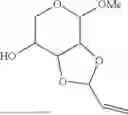


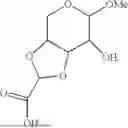


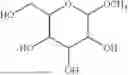


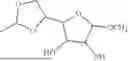


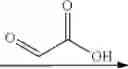


Sources:
- United States Patent and Trademark Office - verify current appl. status at the USPTO↗
Recent applications in this class:
- » 20250243233 2025-07-31
BIOBASED SURFACTANTS - » 20240417416 2024-12-19
CATALYTIC METHOD FOR THE PRODUCTION OF DIFRUCTOSE ANHYDRIDE - » 20240182506 2024-06-06
Sugar Derivatives and Uses Thereof to Prepare Novel Senolytic Agents - » 20230096764 2023-03-30
Sugar derivatives and uses thereof to prepare novel senolytic agents - » 20210054013 2021-02-25
Glucopyranosyl derivative and use thereof - » 20210024562 2021-01-28
Antibacterial compounds, compositions thereof, and methods using same - » 20180208618 2018-07-26
Sugar derivative gelators - » 20170342100 2017-11-30
PROCESSES FOR THE PREPARATION OF ERTUGLIFLOZIN - » 20140350231 2014-11-27
Method of preparing deoxyribofuranose compounds - » 20140256921 2014-09-11
Method for producing tetrahydropyran compound and intermediate thereof