CURRENT LIMITING DEVICES
US20260012006A1
2026-01-08
19/255,091
2025-06-30
Smart Summary: A current limiting device helps control the flow of electricity in power systems. It has two paths for current: a primary path with a special component called a primary current limiter and a secondary path with a device called a Transient Voltage Suppressor (TVS). As more current flows through the primary path, the voltage drop across the primary current limiter increases. When the current exceeds a certain level, this voltage drop reaches a point where the TVS activates. This setup protects the electrical system from damage caused by too much current. 🚀 TL;DR
Abstract:
A current limiting device and an electrical power system including a current limiting device are provided. The current limiting device includes: a primary current path extending between a first node N1 and a second node N2 and having a primary current limiter connected therein, the primary current limiter including at least one JFET 101, 1011-N; and a secondary current path extending between the first node N1 and the second node N2 in parallel with the primary current path, the secondary current path including a Transient Voltage Suppressor (TVS). The primary current limiter is configured so that a voltage drop across the primary current limiter increases as a current flowing through the primary current path increases. When the current flowing through the primary current path passes a threshold, the voltage drop across the primary current limiter passes a breakdown voltage of the TVS.
Inventors:
- Chandana J. GAJANAYAKE 29 🇸🇬 Singapore, Singapore
- David R. TRAINER 69 🇬🇧 Derby, United Kingdom
- Mohamed Sathik MOHAMED HALICK 18 🇸🇬 Singapore, Singapore
- Muneer VALAPPIL 3 🇸🇬 Singapore, Singapore
- Janardhana KOTTURU 2 🇸🇬 Singapore, Singapore
Assignee:
- ROLLS-ROYCE PLC 4,404 🇬🇧 London, United Kingdom
Applicant:
Interested in similar patents?
Get notified when new applications in this technology area are published.
Classification:
H02H9/025 » CPC main
Emergency protective circuit arrangements for limiting excess current or voltage without disconnection responsive to excess current Current limitation using field effect transistors
H02H9/005 » CPC further
Emergency protective circuit arrangements for limiting excess current or voltage without disconnection avoiding undesired transient conditions
H02H9/02 IPC
Emergency protective circuit arrangements for limiting excess current or voltage without disconnection responsive to excess current
H02H9/00 IPC
Emergency protective circuit arrangements for limiting excess current or voltage without disconnection
Description
BACKGROUND
This disclosure claims the benefit of UK Patent Application No. GB 2409858.4 filed on 8 Jul. 2024, which is hereby incorporated herein in its entirety.
TECHNICAL FIELD
The present disclosure relates to current limiting devices and to electrical power systems including current limiting devices.
BACKGROUND OF THE DISCLOSURE
In many electrical power systems, an electrical power source (e.g., an electrical generator or an energy storage system) supplies electrical power to an electrical network (e.g., a DC electrical network) comprising one or more electrical loads. In the event of a fault in the electrical network (e.g., a short circuit fault or another low-impedance fault in a load), the sudden drop in impedance and voltage seen by the power source may result in the power source supplying a large fault current to the network, and/or discharge of a DC link capacitor of a power converter that interfaces between the power source and the network. Loads and/or other components in the network may not be rated to handle such large currents, so may be damaged. It may therefore be desirable to protect an electrical network and its loads from fault current.
One approach is to completely prevent fault current from the reaching the electrical network, for example by opening a circuit breaker that is located between the electrical power source and the electrical network. A problem with this approach is that some fault discrimination and isolation techniques, which may be applied to the network after a fault so that the network can subsequently resume ‘normal’ operation, require a continuous supply of current to the network. For example, some mechanical contactors, which may be provided at various locations about the electrical network for fault discrimination and isolation purposes, may be inoperable without a continuous supply of current.
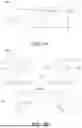
Another approach is to use a current limiting device that allows current to flow to the network but limits its magnitude to an acceptable level. One known type of current limiting device, illustrated in FIG. 2, is the current limiting diode 14, also known as a constant-current diode. A current limiting diode 14 typically comprises an n-channel JFET whose source terminal (S) and gate terminal (G) are connected via a biasing source resistor, RS. If the current flowing between the source terminal (S) and drain terminal (D) increases, the magnitude of the voltage across the source resistor also increases, which in turn increases the magnitude of the gate voltage of the JFET. The increase in gate voltage magnitude reduces the size of the conduction channel of the JFET, increasing its electrical resistance. Thus, the current limiting diode 14 responds to an increase in current by increasing its resistance and thus limiting any increase current flowing between the source and drain.
There may be various drawbacks associated with the current limiting diode 14 including, for example, steady-state losses associated with current flow through the source resistor, RS
SUMMARY
According to a first aspect, there is a current limiting device comprising:
-
- a primary current path extending between a first node and a second node and having a primary current limiter connected therein, the primary current limiter comprising at least one JFET;
- a secondary current path extending between the first node and the second node in parallel with the primary current path, the secondary current path comprising a Transient Voltage Suppressor, TVS,
- wherein:
- the primary current limiter is configured so that a voltage drop across the primary current limiter increases as a current flowing through the primary current path increases; and
- when the current flowing through the primary current path passes a threshold, the voltage drop across the primary current limiter passes a breakdown voltage of the TVS.
In an embodiment, the secondary current path further includes a damping resistor connected in series with the TVS.
In an embodiment, the TVS comprises a TVS diode or a Metal Oxide Varistor (MOV).
In an embodiment, the primary current limiter comprises a JFET, a source terminal and a gate terminal of the JFET being connected via a biasing resistor.
In an embodiment, both the JFET and the TVS are connected in series with the biasing resistor.
In an embodiment, the primary current limiter comprises an integer number, N, of JFETs, each JFET of the N JFETs having a source terminal, a drain terminal and a gate terminal, and: N≥2; each of the N JFETs has an index n=(1, . . . , N); for n=(1, . . . , N−1), the source terminal of the nth JFET is connected to the drain terminal of the (n+1)th JFET; and the source terminal of the Nth JFET is connected to the gate terminal of each of the N JFETs.
In an embodiment, each JFET has a voltage rating equal to V and the current limiting device has a voltage rating of N*V.
In an embodiment, the JFET for which n=1 has a higher voltage rating than all JFETs for which n>1.
In an embodiment, N=NH+NL, and: NH is an integer and NH≥2; NL is an integer and NL≥1; and a voltage rating of each the NH JFETs for which n≤NH is greater than a voltage rating of each of the NL JFETs for which n>NH.
In an embodiment, the current limiting device further comprises a biasing resistor connected between the source terminal of the Nth JFET and the gate terminal of each of the N JFETs.
In an embodiment the biasing resistor is also connected in series with the TVS.
In an embodiment, the source terminal of the Nth JFET is connected to the gate terminal of the nth JFET via an nth circuit branch; and for n=(1, . . . , N−1), an electrical resistance of the nth circuit branch is greater than an electrical resistance of the (n+1)th branch.
In an embodiment, for n=(1, . . . , N−1), the source terminal of the nth JFET is connected with the gate terminal of the nth JFET via a resistor or a TVS.
In an embodiment, the source terminal of the Nth JFET is connected to the gate terminal of each of the N JFETs via an RC network.
In an embodiment, N=2 or N=3.
In an embodiment, the secondary current path is connected between the drain terminal of the JFET for which n=1 and the source terminal of one of the N JFETs.
In an embodiment, the secondary current path is connected between the drain terminal of the JFET for which n=1 and the source terminal of the JFET for which n=1.
In an embodiment, the secondary current path comprises a first TVS and a second TVS connected in series, a node between the first and second TVSs being connected to the source terminal of the JFET for which n=1.
In an embodiment, N=3 and the secondary current path further comprises a third TVS connected in series with the first and second TVSs, a node between the second and third TVSs connected to the source terminal of the JFET for which n=2.
According to a second aspect, there is a current limiting device as shown in any of the circuit diagrams of FIGS. 3, 4A-4C, 5, 6A-6D, 7A-7B, 8A-8C, 9A-B and 10A-B.
According to a third aspect, there is an electrical power system comprising a current limiting device according to the first aspect or the second aspect.
In an embodiment, the electrical power system further comprises a circuit breaker connected in series with the current limiting device.
In an embodiment, the electrical power system further comprises a controller to control the circuit breaker.
In an embodiment, the electrical power system further comprises a sensor configured to measure a current flowing through the primary current path and to provide the current measured to the controller, and the controller is configured to control the circuit breaker based on the current measurement.
In an embodiment, the electrical power system further comprises: an electrical power source; and an electrical network, wherein the current limiting device is connected between the electrical power source and the electrical network.
In an embodiment, the electrical power system further comprises a power converter connected between the electrical power source and the current limiting device.
In an embodiment, the electrical power system further comprises a first electrical bus and a second electrical bus, and wherein the current limiting device and the circuit breaker are connected between the first electrical bus and the second electrical bus.
According to a fourth aspect, there is an aircraft comprising the electrical power system of the third aspect. The aircraft may be a purely electric aircraft, a hybrid-electric aircraft (e.g., a gas turbine hybrid electric aircraft or a fuel cell electric aircraft) or an aircraft comprising one or more propulsive gas turbine engines (e.g., a ‘more electric’ aircraft).
Controllers described herein may take any suitable and desired form. Examples include, but are not limited to: Analogue Controllers, Digital Signal Processors (DSPs), Field Programmable Gate Arrays (FPGAs), Application Specific Integrated Circuits (ASICs) and the like. A controller may be a standalone controller or form part of a wider control system, for example an Electronic Engine Controller (EEC) or a Full Authority Digital Engine Controller (FADEC).
The skilled person will appreciate that, except where mutually exclusive, a feature described in relation to any one of the above aspects May be applied mutatis mutandis to any other aspect. Furthermore, except where mutually exclusive, any feature described herein may be applied to any aspect and/or combined with any other feature described herein.
BRIEF DESCRIPTION OF THE DRAWINGS
Embodiments will now be described by way of example only with reference to the accompanying drawings, which are purely schematic and not to scale, and in which:
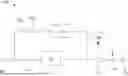
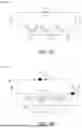
FIG. 1A is a schematic illustration of a portion of an electrical power system;
FIG. 1B is a schematic illustration of an aircraft electrical power system;
FIG. 2 shows a prior art current limiting diode;
FIG. 3 shows a current limiting device in accordance with the present disclosure;
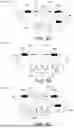
FIG. 4A shows an embodiment of the current limiting device in which the primary current limiter comprises a current limiting diode;
FIG. 4B shows another embodiment in which the primary current limiter comprises a current limiting diode, and in which the biasing resistor is also connected in series with the secondary current path;
FIG. 4C shows another embodiment in which the primary current limiter comprises a current limiting diode, and in which the secondary current path includes a damping resistor;
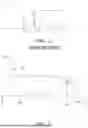
FIG. 5 shows an embodiment in which the primary current path comprises N≥2 JFETs, the source terminal of the Nth JFET being connected to the gate terminal of each of the N JFETs;
FIG. 6A shows an embodiment in which N=2 and which a biasing resistor and damping resistor are present;
FIG. 6B shows another embodiment in which N=2 and in which the biasing resistor is in series with both the primary and secondary current paths;
FIG. 6C shows an embodiment in which the secondary current path is connected across the JFET for which n=1;
FIG. 6D shows another embodiment in which N=2 and in which there is additional resistance in the circuit branches that connect the source terminal of the Nth JFET to the gate terminals of the N JFETs;
FIG. 7A shows an embodiment in which N=3 and in which there is no biasing resistor;
FIG. 7B shows another embodiment in which N=3 and in which there is a biasing resistor and additional resistance in the circuit branches that connect the source terminal of the Nth JFET to the gate terminals of the N JFETs;
FIG. 8A shows an embodiment in which N=2 and the secondary current path includes two TVSs;
FIG. 8B shows an embodiment in which N=3 and the secondary current path includes two TVSs;
FIG. 8C shows an embodiment in which a TVS connects the source and gate of the n=1 JFET;
FIG. 9A shows an embodiment in which N=3 and the secondary current path comprises three TVSs;
FIG. 9B shows another embodiment in which N=3 and the secondary current path comprises three TVSs;
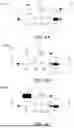
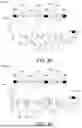
FIG. 10A shows an embodiment in which N=3 and in which voltages across the JFETs are balanced by avalanche diodes;
FIG. 10B shows the embodiment of FIG. 10A with three TVSs in the secondary current path; and
FIG. 11 is a plan view of an aircraft.
DETAILED DESCRIPTION
FIGS. 1A-1B
FIG. 1A illustrates an electrical power system 10a that comprises an electrical power source 11, a power converter 12 and an electrical network 13. In this example the electrical power source 11 is an AC power source in the form of a three-phase electrical generator, the electrical network 13 is a DC electrical network, and the power converter 12 is an AC:DC power converter connected, at an AC input side, to the generator 11 and, at DC output terminals DC+, DC−, to the DC electrical network 13. A DC link capacitor, CDC, is connected between the output terminals DC+, DC−. In other examples, the power source 11 may instead be a DC power source (e.g., a battery) and the power converter 12 may be omitted or be a DC: DC power converter.
In the event of a fault (e.g., a short-circuit fault) in the DC electrical network 13, the voltage across the output terminals DC+, DC− of the power converter 12 may collapse, as may the impedance seen by the converter across the output terminals DC+, DC−. The collapse of the voltage may allow the DC link capacitor, Coc, to discharge, causing a short but very high pulse of current that could damage components in the network 13. Furthermore, if the generator 11 and power converter 12 continue to supply power, the low impedance of the faulted network results in the generator 11 supplying the network 13 with a high and sustained current that could damage components.
To protect against these fault currents, the electrical power system 10a further includes a current limiting device 14, 100 and, optionally, a circuit breaker 15 connected in series between the power converter 12 and the electrical network 13. The current limiting device 14, 100 acts to limit the magnitude of the current supplied to the network 13 without completely blocking it, whilst the circuit breaker 15 provides the option of isolating the DC network 13 from the power source 11. The circuit breaker 15 may be a mechanical breaker (e.g., a DC contactor) or, alternatively, a semiconductor-based breaker, e.g., an SSCB. Mechanical breakers may be preferred in some applications as they provide galvanic isolation, whereas in other applications an SSCB may be preferred due to its superior speed.
FIG. 1B illustrates another electrical power system 10b, in this case forming part of a power and propulsion system of an aircraft (e.g., the aircraft 1 of FIG. 11). The electrical power system 10b includes a first DC power bus 13i that exchanges electrical power with two electrical machines 11i-1, 11i-2 via respective bi-directional AC:DC power converters 12i-1, 12i-2, and a second power bus 13ii that exchanges electrical power with two electrical machines 11ii-1, 11ii-2 via respective bi-directional AC:DC power converters 12ii-1, 12ii-2. In this non-limiting example, the electrical machines 11i-1, 11i-2 are mechanically coupled with LP and HP shafts of a first gas turbine engine, whilst the electrical machines 11ii-1, 11ii-2 are mechanically coupled with LP and HP shafts of a second gas turbine engine. Each power bus 13i, 13ii supplies power to a respective aircraft electrical network 18i, 18ii and to a respective engine electrical network 17i, 17ii. In the illustrated example, each engine electrical network 17i, 17ii can also exchange DC power with a respective energy storage system 19i, 19ii via a respective DC: DC power converter 12i-3, 12ii-3.
The first and second power busses 13i, 13ii may, normally, be electrically isolated from each other. In some instances, however, it may be desirable to connect the first and second power busses 13i, 13ii together so that power can be exchanged therebetween. For example, power exchange between the busses 13i, 13ii may facilitate a cross-engine electric start or restart procedure. To this end, a bus tie 16 can be closed to connect the power busses 13i, 13ii. If a fault occurs on one side of the electrical power system (e.g., the power bus 13ii or an electrical network 17ii, 18ii connected thereto) while the bus tie 16 is closed, a large fault current could be supplied to and damage components on the faulted side of the system 10b. To protect against this, a current limiting device 14, 100 may be connected with the bus tie 16 to limit current flow.
The current limiting diode 14 described above with reference to FIG. 2 may be used to implement the current limiting devices 14, 100 of the systems 10a, 10b of FIGS. 1A-1B. However, the systems may then suffer associated drawbacks. These may include, for example, undesirably high steady-state losses due to the resistance of the biasing resistor, and/or an undesirably large mass and/or footprint due to the number of parallel-connected JFETs required to achieve a desired rating.
FIG. 3
FIG. 3 illustrates a current limiting device 100 in accordance with the present disclosure. The current limiting device 100 may be used in electrical power systems including, but not limited to, the power systems 10a, 10b described above.
The current limiting device 100 comprises a primary current path 110 extending between a first node, N1, which may be an input terminal of the current limiting device 100 and a second node, N2, which may be an output terminal of the current limiting device 100. The primary current path 110 includes a primary current limiter 111. The current limiting device 100 further comprises a secondary current path 120 connected in parallel across the primary current limiter 111, providing current with a path around at least a portion of the primary current path 110. The secondary current path 120 includes at least one Transient Voltage Suppressor (TVS) 121 and, optionally, a damping resistor 122 for dissipating power in the secondary current path 110.
The primary current limiter 111 comprises one or more JFETs and is configured so that a magnitude of a voltage drop across the primary current limiter increases as the current flowing through the primary current path 110 increases. In one group of examples, described below with reference to FIGS. 4A-4C, the primary current limiter is a current limiting diode, for example the current limiting diode 14 of FIG. 2 or a bidirectional variant comprising two reverse-series connected JFETs with a common biasing source resistor. In another group of examples, for example those described below with reference to FIGS. 5-10, the primary current limiter may comprise a plurality of JFETs.
A TVS 121 is a class of components that blocks all current flow until the voltage across it exceeds a breakdown voltage, after which it conducts until the voltage across it drops below the breakdown voltage. Examples of a TVS include, for example, a TVS diode and a Metal Oxide Varistor (MOV). Recalling that the voltage drop across the primary current limiter 111 increases as the current flowing through the primary current path 110 increases, the TVS 121 will block all current flow through the secondary current path 120 until the current flowing through the primary current path 110 becomes high enough that the voltage drop across the primary current limiter 111 reaches the breakdown voltage of the TVS 121. Once the breakdown voltage of the TVS 121 is reached, the secondary current path 120 is activated and a further increase in current flow will be shunted through the secondary current path 120. If present, the damping resistor 122 dissipates some of the power flowing through the secondary current path 120.
This approach, utilizing a secondary current path 120 with a TVS 121, may reduce the required level of current limiting capability of the primary current limiter 111 without incurring further steady state losses. Thus, the one or more JFETs of the primary current limiter 111 may not need to be rated to handle the full fault current, as above a certain current level the excess current will be shunted through the secondary current path 120.
In some cases, due in part to the limitations of the underlying semiconductor technologies (e.g., Silicon Carbide, SiC), increasing the rating of a JFET may require that multiple (e.g., many) JFETs are connected in parallel. This would increase the size and mass of the current limiting device 100. Utilizing the secondary current path 120 may reduce or avoid the need to connect JFETs in parallel, without sacrificing the ability to provide a continuous current to a downstream fault (e.g., for fault discrimination and isolation purposes).
Through suitable selection of components and their parameters, for example the breakdown voltage of the TVS 121 and the rating of the primary current limiter 111 (through, e.g., the number of parallel-connected JFETs in the primary current limiter), the current limiting device 100 may have a relatively low footprint, relatively low steady state losses, provide a continuous amount of fault current up to a predefined limit, and yet be protected against a higher level of fault current.
Optionally, the current limiting device 100, or an electrical power system in which the current limiting device 100 is connected, comprises a circuit breaker 115. As noted previously, the circuit breaker 115 may be a mechanical breaker or a solid-state circuit breaker. The circuit breaker 115 may normally be closed but may be opened to isolate a connected system (e.g., DC network) from an electrical power source, if desired. In the illustrated example, the switch state of the circuit breaker 115 is controlled by a controller 130. The controller 130 controls the switch state based on the current flowing between the first and second nodes N1, N2, which is determined through a suitable sensor. In this example, a sensor measures the voltage drop across a measurement inductor 131 to determine the current, which is supplied to the controller 130.
Non-limiting example embodiments of the current limiting device 100 will now be described with reference to FIGS. 4 to 10. Although not illustrated in these example embodiments, a circuit breaker 115 may, optionally, be provided.
FIGS. 4A-4C
FIGS. 4A-4C illustrate a first group of embodiments 100a-i, 100a-ii, 100a-iii of the current limiting device 100 in which the primary current limiter 110 comprises a current limiting diode. In other words, the primary current limiter 111 comprises a JFET 101 (e.g., an n-channel JFET), a source terminal (S) of the JFET being connected to the gate terminal (G) of the JFET via a biasing resistor 102.
Referring to FIG. 4A, during normal operation, current flows through the primary current path 110, through the primary current limiter 111, which is configured to have a relatively low resistance at normal operating currents. If the current flowing through the primary current path 110 increases, for example due to a fault in a connected DC network, the voltage drop across the biasing resistor 102 will increase, increasing the magnitude of the gate voltage of the JFET 101. This decreases the size of the conduction channel of the JFET 101, increasing its resistance and thus increasing the voltage drop across the primary current limiter 111. If the current increases to the point that the voltage drop across the primary current limiter 111 passes the breakdown voltage of the TVS 121, the TVS begins to conduct. At least a portion of any further increase in the current will be shunted through the secondary current path 120, protecting the primary current limiter 111 from a higher current.
FIG. 4B shows a variant 100a-ii in which the secondary current path 120 is connected across only the JFET 101 and not the biasing resistor 102. Consequently, if the current continues to increase after activation of the TVS 121, the continued increase in current causes a continued increase in the voltage drop across the biasing resistor 102. Thus, the magnitude of the gate voltage and thus resistance of the JFET 101 continues to increase. This may provide additional protection of the JFET 111 against overcurrent, as a higher proportion of the current increase will be shunted through the secondary path 120.
The embodiment 100a-iii of FIG. 4C differs from that of FIG. 4B only in that the damping resistor 122 is present. The damping resistor 122, which may have a higher resistance than the biasing resistor 102, dissipates power after the TVS 121 is activated, limiting the current that is supplied to, e.g., the downstream DC network. The damping resistor 122 may also be provided in the embodiment 100a-i of FIG. 4A.
FIG. 5
FIG. 5 illustrates another embodiment 100b of the current limiting device 100 in accordance with the present disclosure. Here, the primary current limiter 111 comprises an integer number, N, of JFETs 1011, 1012, . . . , 101N-1, 101N (hereafter 1011-N), which may be n-channel JFETs. The number, N, of JFETs is at least two (i.e., N≥2), and each of the N JFETs may be identified by a unique index, n, where n=1, . . . , N. Each JFET has a source terminal (S), a drain terminal (D) and a gate terminal (G), as will be understood by those skilled in the art. The drain terminal of the first JFET 1011 (i.e., n=1) forms or is connected to the first node, N1. The source terminal of the Nth (i.e., n=N) JFET 101N forms or is connected to the second node, N2.
For the JFETs for which n<N (i.e., JFETs for which n=1, . . . , N−1), the source terminal of the nth JFET is connected with the drain terminal of the (n+1)th JFET. Thus, the source terminal of the first (n=1) JFET 1011 is connected with the drain terminal of the second (n=2) JFET 1012, the source terminal of the second (n=2) JFET 1012 is connected with the drain terminal of the third (n=3) JFET 1013 and so forth, until finally the source terminal of the (N−1)th JFET 101N-1 is connected to the drain terminal of the Nth JFET 101N.
For the Nth JFET 101N, as well as forming or being connected to the second (e.g., output) node N2, the source terminal is connected to the gate terminal of each of the N JFETs 1011-N. Optionally, a source resistor 102 may be provided, connected between the source terminal of the Nth JFET 101N and the gate terminals of the N JFETs 1011-N.
As noted above, the number of JFETs, N, is at least two (i.e., N≥2). Thus, referring to FIG. 5, in the minimal case where N=2, the dashed box 101X is empty and the source terminal of the first JFET 1011 is connected to the drain terminal of the Nth (n=N=2) JFET 101N. Where N=3, the dashed box 101X contains one JFET 1012, the drain terminal of which is connected to the source terminal of the first JFET 1011, and the source terminal of which is connected to the drain terminal of the Nth (n=N=3) JFET 101N. Generally speaking, the number of JFETs, N, may be increased with the voltage rating requirement of the current limiting device 100. For example, N≥3 JFETs may be used for higher voltage applications.
Without loss of generality, consider the Rth JFET, where R is an integer satisfying 1≤R≤N. The gate voltage of the Rth JFET will be provided by the sum of the voltage drops across the (N−R) JFETs for which N>R, plus the voltage drop across the source resistor 102, if present. Thus, if the magnitude of the current flowing from the first node N1 to the second node N2 increases, causing the voltage drop across each component to increase, the Nth JFET 101N experiences the smallest increase in gate voltage magnitude, whilst the first (n=1) JFET 1011 experiences the largest increase in gate voltage magnitude. The electrical resistance of a JFET is controlled by its gate voltage, so all of the JFETs 1011-N experience an increase in their electrical resistance, but the biggest increase in electrical resistance may be experienced by the first JFET 1011. Thus, when the current increases, the first JFET 1011 may play the largest role in limiting the current, while the other JFETs, particularly the Nth JFET 101N, increase the magnitude of the gate voltage of, and therefore electrical resistance of, the first JFET 1011.
In one example, each JFET has an identical voltage rating (e.g., equal to V) and the current limiting device has a voltage rating of N*V. In other examples, the first JFET 1011 may have a higher rating (e.g., may be composed of a higher number of parallel-connected JFETs) than at least some of the other JFETs (e.g., JFET 101N) as the first JFET 1011 may perform more current limiting action than the other JFETs. The Nth JFET, which plays a smaller role in limiting the current, may have a lower rating and thus a smaller footprint (e.g., may be composed of a lower number of parallel-connected JFETs). In one example, the JFET for which n=1 has a higher voltage rating than all JFETs for which n>1. In another example in which there are at least three series-connected JFETs, N=NH+NL. NH being an integer and NH≥2 and NL being an integer and NL≥1, and a voltage rating of each the NH JFETs for which n≤NH is greater than a voltage rating of each of the NL JFETs for which n>NH. This approach may provide a high voltage rating while retaining relatively low losses during normal operation. In a further example, for all n>1, a voltage rating of the nth JFET is greater than a voltage rating of the (n−1)th JFET.
It may be appreciated that since an increase in voltage drop across a given JFET increases the magnitude of the gate voltage of, and thus the resistance of, each JFET with a lower value of n, a small increase in current flow may cause a significant increase (e.g., a non-linear and/or exponential increase) in the resistance of the first JFET 1011. An advantage may be that the source resistor 102 may be selected to have a relatively small resistance value or may be omitted entirely. This may result in reduced steady-state losses compared to, e.g., the arrangement 14 of FIG. 2, as the only resistance presented by the current limiting device 100 during normal operation is the low device resistance of the JFETs 1011-N and, if present, the relatively small resistance of the source resistor 102.
Considering the secondary current path 120, as in the previous embodiments, this remains inactive during normal operation of the current limiting device 100b. However, if the current flowing through the primary current path 110 increases to the point that the voltage drop across the primary current limiter 111 (or the portion across which it is connected) passes the breakdown voltage of the TVS 121, the TVS 121 begins to conduct and current is shunted through the secondary path 120. As before, this protects the primary current limiter 111 against a current above which it is rated to handle.
Non-limiting examples of the current limiting device 100b are described below with reference to FIGS. 6-10.
FIGS. 6A-6D
FIG. 6A illustrates an embodiment 100b-i of the current limiting device 100, 100b in which the number of JFETs is two (i.e., N=2) and in which the optional source resistor 102 is present. The source resistor 102 may be selected to have a relatively small resistance value (e.g., compared to that in FIG. 2 for an equivalent electrical power system). Thus, during normal steady-state operation (e.g., where the magnitude of the current flow between N1 and N2 is as expected), the losses incurred due to the current limiting device 100b-i are relatively low.
If the current flowing between N1 and N2 increases (e.g., due to a fault), the voltage drop across the source resistor 102 will increase (ΔV=ΔI*Rs, where Rs is the resistance of the source resistor 102). The increase in voltage drop across the source resistor 102 increases the magnitudes of the gate voltages of both the JFETs 1011, 1012. The first JFET 1011 is, however, subject to a further increase in gate voltage magnitude, caused by the increase in resistance and thus voltage drop across the second JFET 1012 when its gate voltage increased. Thus, the first JFET 1011 may experience a larger increase in resistance and play a larger role in resisting the increase in current flow through the device 100b-i.
If the current flowing between N1 and N2 increases to the point that the voltage drop across the JFETs 1011, 1012 and the biasing resistor 102 passes the breakdown voltage of the TVS 121, the secondary current path 120 is activated. At least a portion of any further increase in current flow is shunted through the secondary current path 120, with some of the power being dissipated by the damping resistor 122, if present.
Turning to FIG. 6B, this embodiment 100b-ii differs from the embodiment 100b-i of FIG. 6A in that a second terminal of the secondary current path 120 is connected such that the source resistor 102 is in series with both the N JFETs 1011-N and the secondary current path 120. Similar to the arrangement of FIG. 4B, the voltage drop across the source resistor 102 continues to increase and provide a gate biasing voltage of increasing magnitude after the TVS 121 is activated, providing further protection to the JFETs 1011-2.
FIG. 6C illustrates an embodiment 100b-iii in which the secondary current path 120 is connected in parallel across only the first JFET 1011 of the primary current path 110. Thus, the activation of the TVS 121 is dependent on the voltage drop across the first JFET 1011. Further, the second JFET 1012 and the source resistor 102 continue to provide a biasing voltage after the TVS 121 and, therefore, the secondary current path 120 is activated.
FIG. 6D illustrates an embodiment 100b-iv in which the connection between the source terminal of the second JFET 1012 and the gate terminals of the two JFETs 1011, 1012 is shown to form two circuit branches: a first branch 1031 that connects the source terminal of the second JFET 1012 to the gate terminal of the first JFET 1011, and a second branch 1032 that connects the source terminal of the second JFET 1012 to the gate terminal of the second JFET 1012. The first circuit branch 1031 includes an additional resistor, R1, that is not present in the second branch 1032. Thus, the first circuit branch 1031 has a greater electrical resistance than the second branch 1032.
During normal operation, the additional resistor R1 does not make any significant difference and the device 100b-iv operates substantially as described above with reference to FIG. 6A-C. However, if the current flowing between N1 and N2 increases, the gate voltage of the first JFET 1011 is subject to a further increase caused by the increased voltage drop across the resistor R1 in the first circuit branch 1031. This may make the current limiting device 100b-iv more sensitive. Additionally or alternatively, it may allow the selection of a source resistor 102 with an even lower resistance value, or for the source resistor 102 be omitted entirely, resulting in lower steady state losses.
The current limiting device 100b-iv of FIG. 6D is further shown to include a connection between the source terminal of the first JFET 1011 and the gate terminal of the first JFET 1011 that includes a resistor RD1. The resistor RD1 may be selected to have a relatively high resistance compared to the resistor R1 (e.g., RD1 may have a resistance of ˜kΩ). Consequently, while an increase in current flow from N1 to N2 will still cause an increase in the gate voltage magnitude of the first JFET 1011, the gate of the first JFET 1011 may be protected against over-voltage due to the voltage dividing action of the resistor RD1. This may make the arrangement of FIG. 6D particularly suitable for, for example, high-voltage applications. Briefly referring to FIG. 8C, the resistor RD1 may be replaced by a Transient Voltage Suppressor (TVS) 104 to perform a similar function.
FIGS. 7A-7B
FIGS. 7A-7B illustrate embodiments of the current limiting device 100, 100b in which N=3.
FIG. 7A illustrates an embodiment 100b-v in which N=3 and the optional source resistor 102 is omitted. During normal use, the steady-state resistive losses associated with the current limiting device 100b-v are particularly low due to the omission of the source resistor 102 and are caused only by the device resistances of the JFETs 1011, 1012, 1013, which are designed to be low at normal operating currents.
If the current flowing between N1 and N2 increases due to, e.g., a fault in an electrical power system in which the device 100b-v is connected, the voltage drop across the third JFET 1013 increases, causing the gate voltage of the first and second JFETs 1011-2 to increase in magnitude. This first JFET 1011 is subject to a further increase in gate voltage magnitude, caused by the increased voltage drop across the second JFET 1012 that results from the increase in the electrical resistance of the second JFET 1012 following the increase in its gate voltage magnitude. Thus, the first JFET 1011 may experience a larger increase in resistance and plays the primary role in resisting the increase in current flow through the device 100b.
The secondary current path 120 is connected in parallel across the first, second and third JFETs 1011-3. If the current flowing through the primary current path 110 increases to the point that the voltage drop across the three JFETs 1011-3 exceeds the breakdown voltage of the TVS 121, excess current will be shunted through the secondary path 120.
In this example, the third JFET 1013 takes on a role similar to that of the resistor 102 of the device 100b-i of FIG. 6A but may be associated with lower steady state losses. As the third JFET 1013 plays a smaller role in limiting the current, it may have a lower voltage rating than the other JFETs 1011, 1012 and a smaller footprint. In an example, the voltage rating of the third JFET 1013 may be about 40 V, whilst the voltage rating of the first and second JFETs 1011, 1012 may be greater than 40 V.
FIG. 7B illustrates another embodiment 100b-vi in which N=3. Here, in addition to the provision of optional biasing and damping resistors 102, 122, the connection between the source terminal of the third JFET 1013 and the gate terminals of the three JFETs 1011, 1012, 1013 is shown to form three circuit branches: a first branch 1031 that connects the source terminal of the third JFET 1013 to the gate terminal of the first JFET 1011, a second branch 1032 that connects the source terminal of the third JFET 1013 to the gate terminal of the second JFET 1012, and a third branch 1033 that connects the source terminal of the third JFET 1013 to the gate terminal of the third JFET 1013. The first and second branches 1031, 1032 both include a resistor R2 that is not present in the third branch 1033, whilst the first circuit branch 1031 includes an additional resistor, R1, that is not present in the second or third branches 1032, 1033. Thus, the first circuit branch 1031 has a greater electrical resistance than the second branch 1032, which has a greater electrical resistance than the third circuit branch 1033.
During normal operation, the additional resistors R1, R2 do not make any significant difference and the device 100b-vi operates substantially as described above with reference to 7A, albeit with the additional increase in the gate voltages provided by the biasing resistor 102. However, if the current flowing between N1 and N2 increases, the gate voltage of the second JFET 1012 is subject to a further increase caused by the increased voltage drop across the resistor R2 in the second circuit branch 1032. The gate voltage of the first JFET 1011 is subject to two further increases caused by the increased voltage drop across the resistor R2 and the increased voltage drop across the resistor R1. This may make the current limiting device 100d more sensitive. Additionally or alternatively, it may allow the selection of a source resistor 102 with an even lower resistance value, or for the source resistor 102 be omitted entirely, resulting in lower steady state losses.
The current limiting device 100b-vi of FIG. 7B is further shown to include a connection between the source terminal of the first JFET 1011 and the gate terminal of the first JFET 1011 that includes a resistor RD1. Further, there is a connection between the source terminal of the second JFET 1012 and the gate terminal of the second JFET 1012 that includes a resistor RD2. Similar to the embodiment 100b-iv of FIG. 6D, these resistors RD1, RD2, which may have a higher resistance than R1 and R2, create potential divider circuits that protect the gate terminals of the JFETs 1011, 1012 from over-voltage, which may be particularly useful for high-voltage applications. Briefly referring to FIG. 9B, the resistors RD1, RD2 may be replaced by TVSs 1041, 1042 to perform a similar function.
FIGS. 8A-8C
In the examples of FIGS. 6A-6D and 7A-7B, the secondary current path 120 comprises a single TVS 121. FIGS. 8A-8C illustrate further examples in which the secondary current path 120 comprises two TVSs 121i, 121ii. In each case, each TVS 121i, 121ii is connected in series with a respective damping resistor 122i, 122ii. Optionally, either one or both of these resistors 122i, 122ii may be omitted. Utilizing more than one TVS may provide individual over voltage protection to the JFETs in the primary current path 110.
FIG. 8A illustrates an embodiment 100b-vii in which the primary current path 110 is as described with reference to FIGS. 6A-D, with the secondary current path 120 connected across the primary path 110 similar to FIG. 6B. The secondary current path 120 comprises a first TVS 121i and series damping resistor 122i connected in parallel across the first JFET 1011, and a second TVS 121ii and series damping resistor 122ii connected in parallel across the first and second JFETs 1011, 1012. The first and second TVSs 121i, 121ii are connected in series at an intermediate node 123.
During normal operation, the behaviour of the current limiting device 100b-vii is as described with reference to FIGS. 6A-D. If the current flowing between N1 and N2 increases (e.g., due to a fault in a downstream electrical network), the voltage drop across the source resistor 102 and JFETs 1011, 1012 will increase, as described above. Eventually, the combined voltage drop across the first and second JFETs 1011, 1012 will reach the breakdown voltage of the second TVS 121ii, causing excess current to be shunted from the primary path 110 to the branch of the secondary path comprising the second TVS 121ii, via the intermediate node 123. This may protect the second JFET 1012 from the increasing current, which may reduce the rating requirement of the second JFET 1012. If the current increases further, the voltage drop across the first JFET 1011 will reach the breakdown voltage of the first TVS 121i. This will cause at least some of the further excess current to be shunted from the primary path 110 to the branch of the secondary path 120 comprising the first TVS 121i, protecting the first JFET 1011. Current passing through the secondary path 120 is dissipated by the damping resistors 122i, 122ii, if present.
FIG. 8B illustrates an embodiment 100b-viii in which the primary current path 110 is as described with reference to FIG. 7A, with the secondary current path 120 connected across the first and second JFETs 1011, 1012 of the three JFETs 1011-3. The secondary current path 120 comprises a first TVS 121i and series damping resistor 122i connected in parallel across the first JFET 1011, and a second TVS 121ii and series damping resistor 122ii connected in parallel across the first and second JFETs 1011, 1012. The first and second TVSs 121i, 121ii are connected in series at an intermediate node 123.
During normal operation, the behaviour of the current limiting device 100b-viii is as described with reference to FIG. 7A. If the current flowing between N1 and N2 increases (e.g., due to a fault in a downstream electrical network), the voltage drop across each of the JFETs 1011-3 increases. Eventually, the combined voltage drop across the first and second JFETs 1011, 1012 will reach the breakdown voltage of the second TVS 121ii, causing excess current to be shunted from the primary path 110 to the branch of the secondary path comprising the second TVS 121ii, via the intermediate node 123. This may protect the second and third JFETs 1012, 1013 from the increasing current, which may reduce their rating requirements. If the current increases further, the voltage drop across the first JFET 1011 will reach the breakdown voltage of the first TVS 121i. This will cause at least some of the further excess current to be shunted from the primary path 110 to the branch of the secondary path comprising the first TVS 121i, protecting the first JFET 1011. Current passing through the secondary path 120 is dissipated by the damping resistors 122i, 122ii, if present.
FIG. 8C illustrates an embodiment 100b-ix in which the primary current limiter 111 is similar to that of FIG. 6D, albeit with the overvoltage protection resistor RD1 replaced by a TVS 104. The secondary current path 120 is connected across the primary path 110 as shown in FIG. 6B. The secondary current path 120 comprises a first TVS 121i and series damping resistor 122i connected in parallel across the first JFET 1011, and a second TVS 121ii and series damping resistor 122ii connected in parallel across the first and second JFETs 1011, 1012. The first and second TVSs 121i, 121ii are connected in series at an intermediate node 123.
During normal operation, the behaviour of the current limiting device 100b-ix is as described with reference to FIG. 6D. If the current flowing between N1 and N2 increases (e.g., due to a fault in a downstream electrical network), the voltage drop across the source resistor 102 and JFETs 1011, 1012 will increase, as described above. Eventually, the combined voltage drop across the first and second JFETs 1011, 1012 will reach the breakdown voltage of the second TVS 121ii, causing excess current to be shunted from the primary path 110 to the branch of the secondary path comprising the second TVS 121ii, via the intermediate node 123. This may protect the second JFET 1012 from the increasing current. If the current increases further, the voltage drop across the first JFET 1011 will reach the breakdown voltage of the first TVS 121i. This will cause at least some of the further excess current to be shunted from the primary path 110 to the branch of the secondary path comprising the first TVS 121i, protecting the first JFET 1011. Current passing through the secondary path 120 is dissipated by the damping resistors 122i, 122ii, if present. As explained above with reference to FIG. 6D, the TVS 104 may protect the gate of the first JFET 1011 against over-voltage, which may make the arrangement of FIG. 8C particularly suitable for high-voltage applications.
FIGS. 9A-9B
FIGS. 9A-9B illustrate embodiments of the current limiting device 100, 100b in which the primary current path 110 comprises N=3 JFETs 1011-3 and the secondary current path 120 comprises first, second and third TVSs 121i, 121ii, 121iii. In the examples, each TVS is connected in series with a respective damping resistor 122i, 122ii, 122iii but one or more of these may be omitted.
FIG. 9A illustrates an embodiment 100b-x in which the primary current limiter is as described with reference to FIG. 7B, with the secondary current path 120 connected across the primary path 110 as shown in FIG. 7B. The secondary current path 120 comprises a first TVS 121i and series damping resistor 122i connected in parallel across the first JFET 1011, a second TVS 121ii and series damping resistor 122ii connected in parallel across the first and second JFETs 1011, 1012, and a third TVS 121iii and series damping resistor 122iii connected in parallel across the first, second and third JFETs 1011, 1012, 1013. The first and second TVSs 121i, 121ii are connected in series at a first intermediate node, 123i. The second and third TVSs 121ii, 121iii are connected in series at a second intermediate node 123ii.
During normal operation, the behaviour of the current limiting device 100b-x is as described with reference to FIG. 7B. If the current flowing between N1 and N2 increases (e.g., due to a fault in a downstream electrical network), the voltage drop across the source resistor 102 and JFETs 1011, 1012, 1012 will increase, as described above. Eventually, the combined voltage drop across the first, second and third JFETs 1011, 1012, 1013 will reach the breakdown voltage of the third TVS 121iii, causing excess current to be shunted from the primary path 110 to the branch of the secondary path comprising the third TVS 121iii, via the second intermediate node 123ii. This may protect the third JFET 1013 from the increasing current. If the current increases further, the combined voltage drop across the first and second JFETs 1011, 1012 will reach the breakdown voltage of the second TVS 121ii. This will cause at least some of the further excess current to be shunted from the primary path 110 to the branch of the secondary path comprising the second TVS 121ii, via the first intermediate node 123i. If the current increases further still, the voltage drop across the first JFET 1011 will reach the breakdown voltage of the first TVS 121i. This will cause at least some of the further excess current to be shunted from the primary path 110 to the branch of the secondary path comprising the first TVS 121i. Current passing through the secondary path 120 is dissipated by the damping resistors 122i, 122ii, 122iii, if present.
FIG. 9B illustrates an embodiment 100b-xi that differs from the embodiment 100b-x of FIG. 9A only in that the overvoltage protecting resistors RD1, RD2 are replaced by TVSs 1041, 1042. The TVSs 1041, 1042 may normally present as open circuits, but breakdown in the event of a gate overvoltage event to protect the gate terminals of the JFETs from the overvoltage.
FIGS. 10A-10B
FIG. 10A illustrates a further embodiment 100b-xii of the current limiting device 100, 100b. It is similar to that of FIGS. 7A and 7B in that N=3 and the source terminal of the third JFET 1013 is connected to the gate terminal of each of the first, second and third JFET 1011-3. However, in this embodiment:
-
- The source terminal of the Nth JFET 1013 is connected to the gate terminals of the N JFETs 1011, 1012, 1013 via a Resistor-Capacitor (RC) network, in this example comprising resistors R1, R2, RS and capacitors C1, C2.
- There is a resistor RB, which may have a very high resistance (e.g., ˜100 kΩ), connecting the drain terminal of the n=1 JFET 1011 to the RC network.
- The gate terminals of the N JFETs are further connected via avalanche diodes 1061, 1062, which may be connected in series with associated resistors. Specifically, the gate terminal of the nth JFET is connected to the gate terminal of the (n+1)th JFET via an avalanche diode. As can be seen, the circuit paths comprising the avalanche diodes 1061, 1062 are further connected to the RC network, meeting at nodes 1071-3.
Here, through suitable selection of the component values, the RC network provides control of the response speed (e.g., turn-on and turn-off times) of the JFETs 1011-3 when a fault occurs. Meanwhile, the avalanche diodes 1061, 1062 help balance the voltages across the JFETs 1011-3, with the optional series resistors limiting the voltages, Vas, across the JFETs 1011-3 to desired values. The additional resistor RB that connects the drain terminal of the n=1 JFET 1011 to the RC network ensures that the first JFET 1011 forms part of the voltage balancing circuit.
In FIG. 10A, the secondary current path 120 comprises a single TVS 121. This is not intended to be limiting. To illustrate, FIG. 10B illustrates an embodiment 100b-xiii that differs from the embodiment 1000 of FIG. 10A in that the secondary current path 120 comprises three TVSs 121i, 121ii, 121ii. The secondary current path 120 could alternatively comprise two TVSs, for example.
Various modifications and alternatives to the current limiting device 100 will occur to those skilled in the art. For example:
-
- While embodiments of the general arrangement of FIG. 5 with N=2 and N=3 JFETs are described, any number of JFETs 101 greater than or equal to two may be used. For example, in some embodiments, N=4.
- The number and arrangement of TVSs 121 is not limited to the examples described herein. Generally, the number of TVSs 121 is at least one and, for the arrangement of FIG. 5, is less than or equal to N.
FIG. 11
FIG. 11 is a plan view of an aircraft 1. The aircraft 1 comprises two gas turbine engines 20i, 20ii and two electrical power systems 10i, 10i, which may be of the type described herein. The first electrical power system 10i may comprise a rotary electrical machine that is coupled to a shaft of a first of the gas turbine engines 20i. Likewise, the second electrical power system 10i may comprise a rotary electrical machine that is coupled to a shaft of a second of the gas turbine engines 20i. As illustrated by the dashed line, in this example, the two electrical power systems 10i, 10i may be electrically connected or connectable together, for example by a bus tie 16 as described with reference to FIG. 1B. Other aircraft feature a different number of gas turbine engines, including zero, one, and three or more. The current limiting devices 100 described herein may be used in any type of electrical power system and/or any type of aircraft.
It will be understood that the invention is not limited to the embodiments above-described and various modifications and improvements can be made without departing from the concepts herein. The invention has been described with reference to aerospace applications but could be used in other transport and non-transport applications. Except where mutually exclusive, any of the features may be employed separately or in combination with any other features and the disclosure extends to and includes all combinations and sub-combinations of one or more features described herein.
Various examples have been described, each of which feature various combinations of features. It will be appreciated by those skilled in the art that, except where clearly mutually exclusive, any of the features may be employed separately or in combination with any other features.
Claims
1. A current limiting device comprising:
a primary current path extending between a first node (N1) and a second node (N2) and having a primary current limiter connected therein, the primary current limiter comprising at least one JFET;
a secondary current path extending between the first node (N1) and the second node (N2) in parallel with the primary current path, the secondary current path comprising a Transient Voltage Suppressor, TVS,
wherein:
the primary current limiter is configured so that a voltage drop across the primary current limiter increases as a current flowing through the primary current path increases; and
when the current flowing through the primary current path passes a threshold, the voltage drop across the primary current limiter passes a breakdown voltage of the TVS.
2. The current limiting device of claim 1, wherein the secondary current path further includes a damping resistor connected in series with the TVS.
3. The current limiting device of claim 1, wherein the TVS comprises a TVS diode or a Metal Oxide Varistor (MOV).
4. The current limiting device of claim 1, wherein the primary current limiter comprises a JFET, a source terminal (S) and a gate terminal (G) of JFET being connected via a biasing resistor.
5. The current limiting device of claim 4, wherein both the JFET and the TVS are connected in series with the biasing resistor.
6. The current limiting device of claim 1, wherein the primary current limiter comprises an integer number, N, of JFETs (1011-N), each JFET of the N JFETs having a source terminal (S), a drain terminal (D) and a gate terminal (G), and:
N≥2;
each of the N JFETs has an index n=(1, . . . , N);
for n=(1, . . . , N−1), the source terminal of the nth JFET is connected to the drain terminal of the (n+1)th JFET; and
the source terminal of the Nth JFET (101N) is connected to the gate terminal of each of the N JFETs.
7. The current limiting device of claim 6, wherein each JFET has a voltage rating equal to V and the current limiting device has a voltage rating of N*V.
8. The current limiting device of claim 6, wherein the JFET for which n=1 has a higher voltage rating than all JFETs for which n>1.
9. The current limiting device of claim 6, wherein N=NH+NL, and:
NH is an integer and NH≥2;
NL is an integer and NL≥1; and
a voltage rating of each the NH JFETs for which n≤NH is greater than a voltage rating of each of the NL JFETs for which n>NH.
10. The current limiting device of claim 6, further comprising a biasing resistor connected between the source terminal of the Nth JFET and the gate terminal of each of the N JFETs.
11. The current limiting device of claim 10, wherein the biasing resistor is also connected in series with the TVS.
12. The current limiting device of claim 6, wherein:
the source terminal of the Nth JFET is connected to the gate terminal of the nth JFET via an nth circuit branch;
for n=(1, . . . , N−1), an electrical resistance of the nth circuit branch is greater than an electrical resistance of the (n+1)th branch.
13. The current limiting device of claim 6, wherein, for n=(1, . . . , N−1), the source terminal of the nth JFET is connected with the gate terminal of the nth JFET via a resistor or a TVS.
14. The current limiting device of claim 6, wherein the source terminal of the Nth JFET is connected to the gate terminal of each of the N JFETs via an RC network.
15. The current limiting device of claim 6, wherein N=2 or N=3.
16. The current limiting device of claim 6, wherein the secondary current path is connected between the drain terminal of the JFET for which n=1 and the source terminal of one of the N JFETs.
17. The current limiting device of claim 6, wherein the secondary current path is connected between the drain terminal of the JFET for which n=1 and the source terminal of the JFET for which n=1.
18. The current limiting device of claim 6, wherein the secondary current path comprises a first TVS and a second TVS connected in series, a node between the first and second TVSs being connected to the source terminal of the JFET for which n=1.
19. The current limiting device of claim 18, wherein N=3 and the secondary current path further comprises a third TVS connected in series with the first and second TVSs, a node between the second and third TVSs connected to the source terminal of the JFET for which n=2.
20. An electrical power system comprising a current limiting device according to claim 1.
Images & Drawings included:




Sources:
- United States Patent and Trademark Office - verify current appl. status at the USPTO↗
Similar patent applications:
- » 20150318688
Current limiting device, current limiter and current limiting system for power grid - » 20050132108
Current limiting device and a PDA utilizing the current limiting device - » 20080253154
Inrush current limiter device and power factor control (PFC) circuit having an improved inrush current limiter device - » 20230405814
CURRENT LIMITING DEVICE, ROBOT SYSTEM, AND CURRENT LIMITING METHOD - » 20230318514
CURRENT LIMITING DEVICE, ROBOT SYSTEM, AND CURRENT LIMITING METHOD - » 20160013635
Current-limiting device utilizing a superconductor for a current-limiting operation - » 20230169920
Current limiting circuit, display device, and current limiting method - » 20210090499
Current limiting circuit, display device, and current limiting method - » 20230237962
Current limiting circuit, display device, and current limiting method - » 20190051240
Current limiting circuit, display device, and current limiting method
Recent applications in this class:
- » 20260012007 2026-01-08
CURRENT LIMITING DEVICES - » 20260005513 2026-01-01
Solid State Circuit Breaker and Method - » 20250357752 2025-11-20
CURRENT LIMITING SYSTEMS AND ASSOCIATED METHODS - » 20250323496 2025-10-16
METHODS AND DEVICES FOR MANAGING POWER SUPPLY SYSTEMS - » 20250293511 2025-09-18
ELECTROSTATIC DISCHARGE CIRCUIT, DISPLAY SUBSTRATE, AND DISPLAY DEVICE - » 20250279646 2025-09-04
OVERCURRENT PROTECTION FOR A LOAD CONTROL DEVICE - » 20250253648 2025-08-07
FAULT CURRENT LIMITING SOLID-STATE SWITCHING DEVICE - » 20250246902 2025-07-31
CONVOLUTIONAL NEURAL NETWORK MODEL-BASED ARC FAULT CIRCUIT INTERRUPTER - » 20250246901 2025-07-31
PROTECTION CIRCUIT AND SEMICONDUCTOR DEVICE - » 20250246900 2025-07-31
LOW LEAKAGE ESD STRUCTURE SUITABLE FOR HIGH IMPEDANCE I/O PINS
Recent applications for this Assignee:
- » 20260012007 2026-01-08
CURRENT LIMITING DEVICES - » 20260008558 2026-01-08
HYDROGEN FUEL DELIVERY SYSTEM - » 20260002476 2026-01-01
AIRCRAFT ENGINE - » 20250393162 2025-12-25
COLD PLATE - » 20250391594 2025-12-25
SAMARIUM COBALT MAGNET RECYCLING - » 20250391157 2025-12-25
TRAINING - » 20250390741 2025-12-25
TRAINING - » 20250389227 2025-12-25
SEAL STRUCTURE FOR A GAS TURBINE ENGINE - » 20250389191 2025-12-25
EFFICIENT GAS TURBINE ENGINE INSTALLATION AND OPERATION - » 20250383089 2025-12-18
COOLING RING FOR COMBUSTOR SYSTEM