Stacking Restraint For Backpacks And Luggage
US20260013614A1
2026-01-15
18/772,212
2024-07-14
Smart Summary: A kit is designed to help secure bags like backpacks and duffel bags. It includes straps that can be attached to different parts of the bag using special fasteners. These straps can connect to each other horizontally, creating a way to hold the bag in place. When attached, the straps can wrap around the handle of a suitcase, keeping the bag stable. This setup can also hold another bag if needed. 🚀 TL;DR
Abstract:
A kit for attachment to a retrofit a bag, backpack, duffel bag and/or travel bag includes a plurality of first fasteners. A first restraint strap is configured to attach to a first area of the bag by one or more of the plurality of first fasteners. A second restraint strap is configured to attach to a second area of the bag by one or more of the plurality of first fasteners. Each of the first restraint strap and the second restraint strap include one or second fasteners configured to detachably fasten the first restraint strap and the second restraint strap together in a substantially-horizontal position. The first restraint strap and the second restraint strap when attached to each other define an adjustable perimeter to restrain the bag to a vertically extending handle of a suitcase, and may also restrain another second bag in addition or in lieu of the suitcase.
Applicant:
Interested in similar patents?
Get notified when new applications in this technology area are published.
Classification:
A45C13/30 » CPC main
Details; Accessories Straps; Bands
A45F3/04 » CPC further
Travelling or camp articles ; Sacks or packs carried on the body Sacks or packs carried on the body by means of two straps passing over the two shoulders
A45C2013/306 » CPC further
Details; Accessories; Straps; Bands for attaching auxiliary articles to luggage, e.g. piggyback
A45F2003/001 » CPC further
Travelling or camp articles ; Sacks or packs carried on the body Accessories
A45F3/00 IPC
Travelling or camp articles ; Sacks or packs carried on the body
Description
BACKGROUND
Technical Field
The present disclosure generally relates to luggage, and more particularly relates to an attachment device for carry bags.
Description of the Related Art
Anyone who has traveled through crowded airports knows that it can be a struggle to walk with a carry-on bag or backpack, and additional suitcases. As security and check-in lines are longer than ever, the possibility of back strain is heightened while standing with a backpack or shoulder bag for an extended period of time.
Moreover, the interior of airplanes is tighter than ever, as airlines have crammed in additional seats, and typically fly at full capacity. Walking down the narrow aisle of an airplane with a carry-on bag and a backpack is sometimes difficult, as it is very easy to inadvertently bump the backpack into one of the seated passengers in the aisle of the airplane. Thus, there is a long-felt need for a way to maneuver through crowds without the strain and clumsiness of walking and clutching onto multiple pieces of luggage, backpacks, etc.
SUMMARY
A kit for attachment to a bag (including a shoulder bag, a travel bag, a duffel bag, and/or a backpack) includes restraint strapping, which can be attached to a backpack by Chicago Screws, Pin Locks, stitching, etc. (e.g. a kit may contain options for varying lengths and attachment mechanisms). Once the restraint strapping is attached, the straps not only function like a static strap but the variably adjustable straps can be extended to wrap around other backpacks or travel bags and restrain multiple bags to each other and/or a handle of a suitcase to permit the stable movement off all the attached items when walking (e.g., such as in an airport or hotel parking lot) without lifting all the luggage separately.
Once the restraining straps are attached to a bag, the straps not only function as the static strap that can be found on some other backpacks or travel bags (which allow the bag to slip over a suitcase handle for easier carry), but at least a first restraining strap and a second restraining strap unfold and expand to envelop, or wrap around other backpacks or travel bags, allowing an additional backpack or bag to now be attached to the suitcase handle. But once the Pak Hak strips are attached to the pack/travel bag, a separate strap/accessory does not need to be carried by the user. Also, once the Pak Hak strips are attached, they do not impede or block the use of the backpack's compartments or zippered compartments,
In one embodiment, a kit for attachment to a bag including a shoulder bag, a travel bag, a duffel bag, and/or a backpack, the kit includes a plurality of first fasteners. A first restraint strap is configured to attach to a first area of the bag by one or more of the plurality of first fasteners. A second restraint strap is configured to attach to a second area of the bag by one or more of the plurality of first fasteners. Each of the first restraint strap and the second restraint strap include one or second fasteners configured to detachably fasten the first restraint strap and the second restraint strap together in a substantially horizontal position.
In another embodiment, the first restraint strap and the second restraint strap when attached to each other define an adjustable perimeter to restrain the bag to a vertically extending handle of a suitcase.
In another embodiment, the one or more second fasteners on the first restraint strap and the second restraint strap comprise a hook and a loop combination configured to detachably fasten the first restraint strap and the second restraint strap together.
In another embodiment, the first restraint strap and the second restraint strap when attached to each other define an adjustable perimeter to restrain the bag to another bag or suitcase.
In another embodiment, the first area and the second area of the bag on which the first restraint strap and the second restraint strap are attached by the plurality of first fasteners are respective sides or the back of the shoulder bag or backpack.
In another embodiment, the plurality of the first fasteners are Chicago screws.
In another embodiment, the plurality of first fasteners are selected from a group consisting essentially of rivets, snaps, buttons, adhesive, threads, hook and loop, Chicago screws, pin locks, staples, or stitching.
In another embodiment, at least one of the first restraint strap and/or the second restraint strap are formed of an elastomeric material, and wherein the one or more second fasteners comprise a hook and loop.
In another embodiment, the first restraint strap and the second restraint strap have unequal lengths.
In another embodiment, the first restraint strap and the second restraint strap have a length that is configured to wrap around and restrain another bag to the vertically extending handle of the suitcase.
In another embodiment, the second fasteners include at least one of rivets, snaps, buttons, adhesive, threads, or hook and loop.
In another embodiment, the first area and the second area of the bag at which the first restraint strap and the second restraint strap are configured for attachment by the plurality of first fasteners to opposite sides of the bag.
In another embodiment, the first area and the second area of the bag at which the first restraint strap and the second restraint strap are configured for attachment by the plurality of first fasteners to the front or rear of the bag.
In another embodiment, a bag includes a bag body, and at least one flap on a front of the body configured to open and close the bag body. A first restraint strap and a second restraint strap are attached to the rear or opposite sides of the bag body in a substantially horizontal position, the first restraint strap and the second restraint strap detachably fastened together. The first restraint strap and the second restraint strap when detachably fastened to each other define an adjustable perimeter to restrain the bag to a vertically extending handle of a first suitcase.
In another embodiment, a hook and a loop combination is configured to detachably fasten the first restraint strap and the second restraint strap together.
In another embodiment, the bag is a backpack, further comprising a zipper connected to the at least one flap and the front of the bag body.
In another embodiment, the first restraint strap is about twice a length of the second restraint strap.
In another embodiment, the first restraint strap and the restraint second strap have a length that is configured to wrap around and restrain another shoulder bag or backpack to the vertically extending handle of the suitcase.
In another embodiment, the first restraint strap and the second restraint strap are attached to the side or to the rear of the bag body with one of rivets, snaps, buttons, adhesive, or threads.
In another embodiment, the first restraint strap and the second restraint strap are configured to attach another bag or a second suitcase to the vertically extending handle of the first suitcase.
In an embodiment, a method of manufacturing a backpack includes providing a bag body having at least one flap on a front of the body configured to open and close the bag body, attaching one or more shoulder straps to a rear of the bag body; and attaching a first restraint strap and a second restraint strap to opposite sides or a rear of the bag body in a substantially horizontal position. The attachment of the first restraint strap and the second restraint are configured to define an adjustable perimeter of the opposite sides or the rear of the bag body to restrain the bag on a vertically extending handle of a suitcase.
These and other features will become apparent from the following detailed description of illustrative embodiments thereof, which is to be read in connection with the accompanying drawings.
BRIEF DESCRIPTION OF THE DRAWINGS
The drawings presented herein show illustrative embodiments of the disclosure. They do not illustrate all embodiments. Other embodiments may be used in addition to or instead of the illustrative embodiments. Details that may be apparent or unnecessary may be omitted to save space or for more effective illustration. Some embodiments may be practiced with additional components or steps and/or without all the components or steps that are illustrated. When the same numeral appears in different drawings, it refers to the same or like components or steps. The drawings are not intended to depict every feature of every implementation nor relative dimensions of the depicted elements and are not drawn to scale.
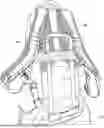
FIG. 1 illustrates stacking restraint straps attached to a backpack, consistent with an illustrative embodiment.
FIG. 2 illustrates a backpack with a first stacking restraint strap horizontally positioned, and a second restraint strap, consistent with an illustrative embodiment.
FIG. 3 illustrates the first restraint strap and the second restraint strap detachably fastened in a substantially horizontal arrangement, consistent with an illustrative embodiment.
FIG. 4 illustrates a backpack mounted onto the handle of a suitcase via the first restraint strap and the second restraint strap, consistent with an illustrative embodiment.
FIG. 5 illustrates the loop surface of the first restraint strap, consistent with an illustrative embodiment.
FIG. 6 shows a backpack having an attachment perimeter defined by the attachment of the first restraint strap to the second restraint strap, consistent with an illustrative embodiment.
FIG. 7 illustrates a backpack positioned on a suitcase and having its straps attached around another backpack or luggage that does not have a restraining attachment strap, consistent with an illustrative embodiment.
FIG. 8 illustrates a suit carrier having the first and second restraint straps attached together, consistent with an illustrative embodiment.
FIG. 9 illustrates a duffel bag having the first and second restraint straps attached, consistent with an illustrative embodiment.
FIG. 10 is a flowchart illustrating a method of manufacturing a backpack with a restraining strap, consistent with an illustrative embodiment.
DETAILED DESCRIPTION
In the following description, numerous specific details are set forth to clearly describe various specific embodiments disclosed herein. One skilled in the art, however, will understand that the subject matter of the present disclosure may be practiced without all of the specific details discussed below. In other instances, well-known features may not have been described so as not to obscure the aspects of the present disclosure with unnecessary detail regarding known features.
As used herein, the term “and/or” is to be interpreted broadly is to be understood to refer to all or some of the elements. For example, “at least one of (a) and/or (b) refers to the teaching pertains only to element (a), or only to element (b), or to both element (a) and element (b). In another example, “at least one of (a), (b), and/or (c), refers to the teaching pertains to only element (a), or only to element (b), or only element (c), or to elements (a) and (b), elements (a) and (c), elements (b) and (c), or to all of (a), (b) and (c).
As used herein, the term “backpack” is to be interpreted broadly, and may include a duffle bag, a bag that is suspended by a strap on one shoulder, or two shoulders, a suit carrier, etc., just to name a few non-limiting examples.
As used herein, the term “suitcase” includes wheel and non-wheeled luggage, carry-on bags, etc.
As used herein, the term “hook and loop” is a term in the art used to refer to Velcro®.
Overview
FIG. 1 illustrates a stacking restraint strap attached to a backpack, consistent with an illustrative embodiment. The first restraint strap 106 and the second restraint strap 107 are shown as being attached to the back of a backpack 110. The first restraint strap 106 and the second restraint strap 107 can be removably-attached to the backpack by snaps or buttons 112. Alternatively, there may be a more permanent attachment by rivets, an adhesive, threads, and/or a combination of fasteners. In an embodiment, the first restraint strap 106 and the second restraint strap 107 may be constructed of an elastomeric material, and the tension created by stretching the first restraint strap 106 and the second restraint strap 107 onto the handle of a suitcase helps to secure the backpack 110 to the handle of a suitcase.
FIG. 2 illustrates a backpack with a first restraint strap horizontally positioned, and a second restraint strap, consistent with an illustrative embodiment. The straps may attach by a hook and loop, a buckle, etc., just to name a few non-limiting possible examples.
FIG. 3 illustrates two adjustable straps having unequal lengths, consistent with an illustrative embodiment. The first restraint strap 106 may be longer or shorter than the second restraint strap 107. In a non-limiting example, the first restraint strap 106 may be about twice the length of the restraint strap 107. The second restraining strap 107 is placed over and against the first restraint strap 106. The hook side of the second restraint strap 107, holds firmly against the first restraint strap's 106 loops. Both the first restraint strap 106 and the second restraint strap 107 now act as one.
FIG. 4 illustrates a backpack mounted onto the handle of a suitcase via the first restraint strap and the second restraint strap, consistent with an illustrative embodiment. It is shown that the handle 150 of the suitcase 155 has the backpack 110 mounted thereon. It is to be understood that while a backpack 110 is shown, other types of bags (e.g., shoulder strap, duffel bag, luggage, etc.) may be mounted onto the suitcase handle 150.
FIG. 5 illustrates the loop surface of the first restraint strap, consistent with an illustrative embodiment. As the first restraint strap 106 includes a loop surface on at least a portion. The second restraint strap 107 has a hook surface on at least a portion that faces the back of the backpack. It is to be understood that the hook and loop may be switched (the hook surface is on the restraint strap 106. Alternatively, there can be a buckle, snaps, etc. in lieu of hook and loop.
FIG. 6 shows a backpack having an attachment perimeter defined by the attachment of the first restraint strap to the second restraint strap, consistent with an illustrative embodiment. The first restraint strap 106, and the second restraint strap 107 are connected together and form a redefined perimeter for the attachment of, for example, another bag. It should be understood that a single strap with an adjustable slide could be attached to the backpack (or provided in a kit to be attached to the backpack).
FIG. 7 illustrates a backpack positioned on a suitcase and having its straps attached around another backpack or luggage that does not have a restraining attachment strap, consistent with an illustrative embodiment. As shown in FIG. 7, both backpack 110 and backpack 125 are mounted onto the same suitcase handle. Thus, the two backpacks can easily rest on the lower suitcase and be moved with little effort. FIG. 7 shows that if you want to attach another backpack or bag to the same suitcase handle, and if it does NOT have its own Pak Hak, you can unfurl, or extend, the straps of the first backpack, and they can wrap around, or envelop, the second bag. The user pulls the right side strap (second restraint strap 107) away from the left strap (first restraint strap 106), and then unfurls the first restraint strap 106.
FIG. 8 illustrates a suit carrier having the first and second restraint straps attached together, consistent with an illustrative embodiment. The suit carrier is one of many types of bags that may be retrofitted by a kit (or manufactured with the restraining straps), consistent with an illustrated embodiment.
FIG. 9 illustrates a duffel bag having the first and second restraint strap attached, consistent with an illustrative embodiment. FIG. 9 shows the first restraint strap 106 and the second restraint strap 107 attached, and this bag may be mounted onto the vertically-extending handle of a suitcase, similar to what is shown in FIG. 7.
All of the suitcases and backpacks can be moved with one hand.
Method of Manufacture
With the foregoing overview of the example architecture, it may be helpful now to consider a high-level discussion of an example process. To that end, FIG. 10 is a flowchart illustrating a method of manufacturing a backpack with a restraining strap, consistent with an illustrative embodiment.
FIG. 10 is shown as a collection of blocks, in a logical order, which represents a sequence of operations. However, the method may be practiced in a different sequence than shown and described herein.
At operation 1005, a bag body is provided. The bag body has at least one flap on a front of the body configured to open and close the bag body. For example, the bag used to attach the restraint strap may be hollow or solid, may have a flap to open and close it, or a drawstring, zipper, and may (or may not) have shoulder straps or handles.
At operation 1015, at least one restraint strap is attached to the rear of the bag body in a substantially horizontal position, the restraint strap is attached to two positions of the rear of the bag body. The restraint strap may be removably attached via hook and loop, snaps, buttons, just to name a few possible non-limiting examples. The restraint strap may also be attached to the rear of the backpack in a more permanent fashion, by sewing, adhesive, rivets, etc. The restraint strap may be made of two straps that hook together and may be adjustable in size. The configuring the attachment of the restraint strap defines a partial loop having a perimeter with the rear of the bag body. The partial loop is sized to fit over a vertically extending handle of a suitcase, yet should be sufficiently taut so the backpack does not slip off the suitcase, as the backpack is restrained on the suitcase handle. At operation 1015, the user may optionally self-modify a kit with the larger restraint strap, for example, as a fixed solo restraint strap.
At operation 1020, the attachment of the restraint strap is configured to define an adjustable perimeter of the restraint strap with the rear of the bag body to restrain the bag on a vertically extending handle of a suitcase. The space defined in the perimeter has to be sufficiently large to permit the handle of a suitcase to fit within and be restrained by the first strap 106 and the second restraint strap 107.
It is to be understood that the method of FIG. 10 is not limited to the operations discussed herein above and may include other operations. The aforementioned operations can be applied to a built-in restraint strap, or to a retrofit kit used to modify the structure of luggage after purchase. For except, the kit claims attached hereto can be practiced according to the flowchart of FIG. 10, however, the claims are not limited by FIG. 10.
CONCLUSION
While in some of the embodiments shown, the restraint straps may be attached to bags having a hollow inner body, the claimed invention is not limited to such structures. For example, the restraint straps may be removably attached using fasteners (including but not limited in any way to a pin/pin lock combination and Chicago screws) to virtually any soft-sided items. However, the pin locks or Chicago screw posts would be visible on the back of such items.
While several illustrative embodiments of the present disclosure have been shown and described, numerous variations and alternative embodiments will occur to those skilled in the art. Such variations and alternative embodiments are contemplated and can be made without departing from the scope of the disclosure as defined in the appended claims.
As used in this specification and the appended claims, the singular forms “a,’ ‘an,” and “the” include plural referents unless the content clearly dictates otherwise. The term “plurality” includes two or more referents unless the content clearly dictates otherwise. Unless defined otherwise, all technical and scientific terms used herein have the same meaning as commonly understood by one of ordinary skill in the art to which the disclosure pertains.
The foregoing detailed description of exemplary and preferred embodiments is presented for purposes of illustration and disclosure in accordance with the requirements of the law. It is not intended to be exhaustive nor to limit the disclosure to the precise form(s) described, but only to enable others skilled in the art to understand how the disclosure may be suited for a particular use or implementation. The possibility of modifications and variations will be apparent to practitioners skilled in the art. No limitation is intended by the description of exemplary embodiments which may have included tolerances, feature dimensions, specific operating conditions, engineering specifications, or the like, and which may vary between implementations or with changes to the state of the art, and no limitation should be implied therefrom. Applicant has made this disclosure with respect to the current state of the art, but also contemplates advancements and that adaptations in the future may take into consideration of those advancements, namely in accordance with the then current state of the art. It is intended that the scope of the disclosure be defined by the claims as written and equivalents as applicable. Reference to a claim element in the singular is not intended to mean “one and only one’, unless explicitly so stated. Moreover, no element, component, nor method or process step in this disclosure is intended to be dedicated to the public regardless of whether the element, component, or step is explicitly recited in the claims. No claim element herein is to be construed under the provisions of 35 U.S.C. Sec. 112, paragraph (f), unless the element is expressly recited using the phrase “means for. and no method or process step herein is to be construed under those provisions unless the step, or steps, are expressly recited using the phrase “step(s) for . . . ”
Claims
What is claimed is:1. A kit for attachment to a bag including a shoulder bag, a travel bag, a duffel bag, and/or a backpack, the kit comprising:
a plurality of first fasteners; and
a first restraint strap configured to attach to a first area of the bag by one or more of the plurality of first fasteners;
a second restraint strap configured to attach to a second area of the bag by one or more of the plurality of first fasteners; and
each of the first restraint strap and the second restraint strap include one or second fasteners configured to detachably fasten the first restraint strap and the second restraint strap together in a substantially-horizontal position.
2. The kit according to claim 1, wherein the first restraint strap and the second restraint strap when attached to each other define an adjustable perimeter to restrain the bag to a vertically extending handle of a suitcase.
3. The kit according to claim 1, wherein, the one or more second fasteners on the first restraint strap and the second restraint strap comprise a hook and a loop combination configured to detachably fasten the first restraint strap and the second restraint strap together.
4. The kit according to claim 1, wherein the first restraint strap and the second restraint strap when attached to each other define an adjustable perimeter to restrain the bag to another bag or suitcase.
5. The kit according to claim 1, wherein the first area and the second area of the bag on which the first restraint strap and the second restraint strap are attached by the plurality of first fasteners are respective sides or the back of the shoulder bag or backpack.
6. The kit according to claim 5, wherein the plurality of first fasteners comprise Chicago screws.
7. The kit according to claim 5, wherein the plurality of first fasteners are selected from a group consisting essentially of rivets, snaps, buttons, adhesive, threads, hook and loop, Chicago screws, pin locks, staples, or stitching.
8. The kit according to claim 5, wherein at least one of the first restraint strap and/or the second restraint strap are formed of an elastomeric material, and wherein the one or more second fasteners comprise a hook and loop.
9. The kit according to claim 1, wherein the first restraint strap and the second restraint strap have unequal lengths.
10. The kit according to claim 2, wherein the first restraint strap and the second restraint strap have a length that is configured to wrap around and restrain another bag to the vertically extending handle of the suitcase.
11. The kit according to claim 1, wherein the second fasteners comprise at least one of rivets, snaps, buttons, adhesive, threads, or hook and loop.
12. The kit according to claim 1, wherein the first area and the second area of the bag at which the first restraint strap and the second restraint strap are configured for attachment by the plurality of first fasteners comprises opposite sides of the bag.
13. The kit according to claim 1, wherein the first area and the second area of the bag at which the first restraint strap and the second restraint strap are configured for attachment by the plurality of first fasteners comprises a front or rear of the bag.
14. A bag comprising:
a hollow bag body;
at least one flap on a front of the body configured to open and close the bag body;
one or more shoulder straps attached to a rear of the bag body; and
a first restraint strap and a second restraint strap attached to the rear or opposite sides of the bag body in a substantially horizontal position, the first restraint strap and the second restraint strap detachably fastened together; and
wherein the first restraint strap and the second restraint strap when detachably fastened to each other define an adjustable perimeter to restrain the bag to a vertically extending handle of a first suitcase.
15. The bag according to claim 14, further comprising a hook and a loop combination configured to detachably fasten the first restraint strap and the second restraint strap together.
16. The bag according to claim 15, wherein the bag comprises a backpack, further comprising a zipper connected to the at least one flap and the front of the bag body.
17. The bag according to claim 14, wherein the first restraint strap is about twice a length of the second restraint strap.
18. The bag according to claim 14, wherein the first restraint strap and the second restraint strap have a length that is configured to wrap around and restrain another shoulder bag or backpack to the vertically extending handle of the suitcase.
19. The bag according to claim 9, wherein the first restraint strap and the second restraint strap are attached to the side or to the rear of the bag body with one of rivets, snaps, buttons, adhesive, or threads.
20. A method of manufacturing a backpack, the method comprising:
providing a bag body;
attaching a first restraint strap and a second restraint strap to opposite sides or a rear of the bag body in a substantially horizontal position; and
configuring the attachment of the first restraint strap and the second restraint to define an adjustable perimeter of the opposite sides or the rear of the bag body to restrain the bag on a vertically extending handle of a suitcase.
Images & Drawings included:


Sources:
- United States Patent and Trademark Office - verify current appl. status at the USPTO↗
Recent applications in this class:
- » 20250375015 2025-12-11
BAGS AND BAG ASSEMBLIES - » 20250375014 2025-12-11
BAGS AND BAG ASSEMBLIES - » 20250375013 2025-12-11
BAGS AND BAG ASSEMBLIES - » 20250120485 2025-04-17
GOLF BAG - » 20250089870 2025-03-20
Modular Police Vehicle Trunk Organizer System - » 20250009099 2025-01-09
PORTABLE STORAGE DEVICES AND METHODS OF USING THE SAME - » 20250000224 2025-01-02
DEVICE FOR LOCKING AND/OR FIXING A HANDBAG OR BACKPACK STRAP - » 20240358131 2024-10-31
Sack For Transporting Pillow - » 20240341434 2024-10-17
BELT RETRACTOR, BAG USING BELT RETRACTOR, AND HELMET - » 20240315415 2024-09-26
MAGNETIC QUICK CONNECT STRAP FOR ATTACHING TRAVEL BAGS TO TROLLEY HANDLES