Asymmetric Pickleball Paddle
US20260014435A1
2026-01-15
19/268,985
2025-07-14
Smart Summary: The asymmetric pickleball paddle has a handle and a striking blade attached to it. The striking blade is made up of different layers, including a core layer and two face sheets. Between the core and the face sheets, there are additional layers that help improve the paddle's performance. One side of the paddle has more layers than the other, making it asymmetric. This design aims to enhance the paddle's strength and playability. 🚀 TL;DR
Abstract:
An example pickleball paddle comprises a handle, and a striking blade connected to the handle. The striking blade comprises a core component layer, a first face sheet layer, a second face sheet layer, a first number of third layers arranged between the first face sheet layer and the core component layer, and a second number of fourth layers arranged between the second face sheet layer and the core component layer. The first number is an integer that is one or greater and the second number is an integer that is zero or greater. A thickness of the core component layer is greater than each of a thickness of the first number of the third layers and, if one or more of the fourth layers are arranged between the second face sheet layer and the core component layer, a thickness of the second number of the fourth layers.
Applicant:
Interested in similar patents?
Get notified when new applications in this technology area are published.
Classification:
A63B59/42 » CPC main
Bats, rackets, or the like, not covered by groups -; Rackets or the like with flat striking surfaces for hitting a ball in the air, e.g. for table tennis with solid surfaces
A63B2102/08 » CPC further
Application of clubs, bats, rackets or the like to the sporting activity ; particular sports involving the use of balls and clubs, bats, rackets, or the like Paddle tennis, padel tennis or platform tennis
A63B2209/02 » CPC further
Characteristics of used materials with reinforcing fibres, e.g. carbon, polyamide fibres
Description
CROSS REFERENCE TO RELATED APPLICATIONS
This application claims priority to U.S. Provisional Application No. 63/671,757 filed Jul. 15, 2024, the entire content of which is herein incorporated by reference.
FIELD
This applications relates to the pickleball paddles.
BACKGROUND
Pickleball appeals to players of a wide range of skill levels. Many players capable of utilizing characteristics of pickleball paddles and balls to improve their play.
Paddle construction plays a significant role in overall performance of a pickleball paddle and/or a player's experience on the court. Various materials are used to craft pickleball paddles. There are at least three main components to a pickleball paddle construction: the face, the core, and the handle. Each of these components of a pickleball paddle can be configured to provide an improved playing experience.
Therefore, paddles with improved core components are desired.
SUMMARY OF EXAMPLE EMBODIMENTS
According to an embodiment, a pickleball paddle comprises a handle, and a striking blade connected to the handle. The striking blade comprises a core component layer, a first face sheet layer, a second face sheet layer, a first number of third layers arranged between the first face sheet layer and the core component layer, and a second number of fourth layers arranged between the second face sheet layer and the core component layer. The first number is an integer that is one or greater and the second number is an integer that is zero or greater. A thickness of the core component layer is greater than each of a thickness of the first number of the third layers and, if one or more of the fourth layers are arranged between the second face sheet layer and the core component layer, a thickness of the second number of the fourth layers.
If one or more of the fourth layers are arranged between the second face sheet layer and the core component layer, at least one third layer of the first number of third layers may be configured for a different performance metric than any fourth layer of the second number of fourth layers. In some implementations, no layers are arranged between the second face sheet layer and the core component layer. In some implementations, the second number of one or more fourth layers are arranged between the second face sheet layer and the core component layer. The second number of one or more fourth layers may be a smaller number of layers than the first number of the third layers.
The first face sheet layer and the second face sheet layer comprise a same material, or may comprise different materials.
A first side of the pickleball paddle may have first performance metrics that are different from second performance metrics of the second side of the pickleball paddle. Construction materials used in the one or more third layers may be configured for a first performance metric and construction materials used on the one or more fourth layers may be configured for a second performance metric that is different from the first performance metric. A construction technology used on the first side of the core component layer may be configured for a first performance metric and the construction technology used on the second side of the core component layer may be configured for a second performance metric that is different from the first performance metric. The first performance metric and the second performance metric each may be a performance metric indicative of the striking blade being hit by a pickleball ball.
The construction material of one or more of the third layers may be different from construction materials of any of the fourth layers.
The performance metrics may include one or more of a ball control, a power, a pop, dwell time, deflection, a coefficient of restitution (COR), and a stiffness.
The at least one of the third layers may comprise a first area constructed with a first construction material and a second area constructed with a second construction material, the first and second areas being configured for different performance metrics. The first area may overlap a sweet spot on the core layer. In some implementations, the first area and the second area overlap a sweet spot on the core layer.
In another embodiment, a pickleball paddle comprises a handle, and a striking blade connected to the handle. The striking blade comprises a core component layer, a first face sheet layer on a first side of the core component layer, and a second face sheet layer on a second side of the core component layer. A number of one or more layers between the first face sheet layer and the core component layer is different than the number of zero or more layers between the second face sheet layer and the core component layer. The core component layer may be the thickest layer of said layers of the pickleball paddle
BRIEF DESCRIPTION OF THE DRAWINGS
Some features are shown by way of example, and not by limitation, in the accompanying drawings. In the drawings, like numerals may reference similar elements.
FIG. 1A shows an example pickleball court, in which embodiments of the present disclosure may be applied.
FIG. 1B shows another view of a pickleball court.
FIGS. 2A and 2B show examples of conventional pickleball paddles.
FIG. 3 shows example pickleball paddle specifications according to the United States Pickleball Association.
FIG. 4 illustrates a pickleball paddle with an additional layer added between the core and the face sheet for performance on one side of the core, according to some embodiments of the present disclosure.
FIG. 5 illustrates a pickleball paddle with additional layers between the core and the face sheets added for performance on both sides of the core with each side providing for different performance characteristics, according to some embodiments of the present disclosure, according to some embodiments.
FIG. 6 illustrates some example additional layers that can be inserted between the core layer and the face sheet of a pickleball paddle according to some embodiments. The example additional layers are configured for two different performance characteristics.
DETAILED DESCRIPTION OF EXAMPLE EMBODIMENTS
In the following description, numerous specific details are set forth in order to provide a thorough understanding of the disclosure. However, it will be apparent to those skilled in the art that the disclosure may be practiced without these specific details. The description and representation herein are the common means used by those experienced or skilled in the art to most effectively convey the substance of their work to others skilled in the art. In other instances, well-known methods, procedures, and components have not been described in detail to avoid unnecessarily obscuring aspects of the disclosure.
References in the specification to “one embodiment,” “an embodiment,” “an example embodiment,” etc., indicate that the embodiment described may include a particular feature, structure, or characteristic, but every embodiment may not necessarily include the particular feature, structure, or characteristic. Moreover, such phrases are not necessarily referring to the same embodiment. Further, when a particular feature, structure, or characteristic is described in connection with an embodiment, it is submitted that it is within the knowledge of one skilled in the art to affect such feature, structure, or characteristic in connection with other embodiments whether or not explicitly described.
This disclosure relates to “Pickleball,” a game that has in recent years seen a massive increase in popularity among all age groups of players, including among senior citizens. Pickleball is a game that can be described as combining aspects of tennis, badminton, and ping-pong. It is played on a badminton-sized court, with paddles and a ball similar to a wiffle ball, but slightly smaller in size. The net used in pickleball is similar to a tennis net in some ways, but is lowered at the center.
Pickleball has recently become very popular and is played both indoors and outdoors, as either doubles or singles. The rules are relatively simple and the game is easy for beginners to learn. However, among skilled players, pickleball can develop into a quick, fast-paced, and competitive game.
FIG. 1A shows an example pickleball court 100 that includes a pickleball playing surface 130 and a pickleball net 132. The playing surface 130 comprises two left serve areas 102 and 108, two right serve areas 104 and 106, and two non-volley areas 110 and 112, with one of the left serve areas, one of the right serve areas, and one of the non-volley areas being on each side of the pickleball net 132. The net is 36 inches tall at the edges, and lowered to 34 inches in the middle. The areas 102-112 are defined by baselines 118 and 120 each 20 feet, sidelines 114 and 116 each 44 feet, center lines 122 and 124 each 15 feet, and non-volley lines 126 and 128 each the same size as a baseline. Each of the lines may be 2 inches wide. The term “court line” is used in this disclosure to refer to any sideline, baseline, centerline or non-volley line on the pickleball court. Non-volley areas 110 and 112, each extending 7 feet from the net, are also referred to as the “kitchen”.
The game of pickleball is played with a pickleball paddle 134 and pickleball ball 136. The ball 136 is typically made of plastic and has a 3-inch diameter. Similar to a wiffleball, the ball 136 has through holes throughout the surface. Different types (e.g., with different levels of hardness and different sizes of the through holes) may be used for playing the game on the various types of pickleball courts (e.g., indoor, outdoor, hard surface, soft surface etc.).
Pickleball can be played as singles or doubles, and is most commonly played as doubles. Each point begins with an underarm serve. The serve is performed diagonally beginning at the right-hand service square. A valid serve sends the ball from one left serve area to the other left serve area or from one right serve area to the other right serve area. The serve must clear the non-volley-zone. The serve must bounce before being hit by the receiver. The return of serve must also bounce before being hit (this is known as the 2 bounce rule). After the serve and the return of the serve, the ball can land anywhere on the opposite side of the playing surface 130. Volleys can only be performed outside of the non-volley zone. Volleys, that is, hitting the ball in the air without first letting it bounce, can only be made after the 2 bounce rule has been followed. However, if the ball is hit from within the kitchen, then it cannot land in the kitchen on the other side of the net.
A fault is any action that stops play due to a rule violation. A fault by the receiving team results in the servers earning a point. A fault by the serving team results in the server's loss of service and/or side out. A fault is committed when the serve touches any part of the non-volley zone (including the line) or the ball is hit out of bounds.
Pickleball games are typically played without a referee and are self-judged. Each player makes the line calls as to whether the ball is in or out when the ball contacts the playing surface on that player's side. The game continues to at least 11 points and requires a 2-point difference for a win. FIG. 1B shows another view of a pickleball court.
A conventional pickleball paddle is shown in FIG. 2A. In some example embodiments, as shown for example in FIG. 2A, a pickleball paddle 200 may comprise a striking blade 202 and a handle 204 connected to the striking blade. A grip 206 may wrap around a portion of the handle 204 and may comprise of a material that is more comfortable and/or provides better control of the paddle. The grip 206 is the portion of the handle that is intended to be held by the player during play (e.g., to strike and return a ball during play). The striking blade 202 comprises two striking surfaces 203, a core sandwiched between the striking surfaces, and, optionally, a frame (also referred to as an edge) 208 surrounding the striking surfaces 203. A striking surface 203 may also be referred to as a face of the striking blade 202 and is intended to be the portion of the striking blade 202 with which to strike the pickleball ball. During a pickleball game, based on the ball position and/or player position on the pickleball court, the player may use either the front face or the back face of the striking blade (e.g., corresponding to the front and back of the pickleball paddle, respectively) for any shot. The core of the striking blade may be constructed from materials such as, for example, hardened rubber, plastic, rubber/plastic compound, polymer, aluminum, honeycomb composite, etc., The striking surface 203 may comprise one or more layers of materials such as, for example, hardened rubber, plastic, rubber/plastic compound, fiberglass, carbon fiber, graphite, etc., that are conducive to striking/returning the pickleball ball and/or controlling the behavior of the ball. The striking surface 203 may be configured with a particular hardness (e.g., using the same or different material or material combination as in the rest of the striking surface) in an area referred to as “sweet spot” intended to provide the primary area of contact with the pickleball. The frame 208 may be constructed with a wood, plastic and/or hard rubber or compound thereof to encompass and provide support to the striking surface. The frame 208 may be integrated with or connected to the handle 204 at a connection area (also referred to as a connection part or connection point). The handle 204 may be the lower portion of a part/member (e.g., constructed of the same or different material(s) as the handle 204) that extends to the top of the striking blade (e.g., to the frame 208 at the top of the striking blade) or part way through the middle/core of the striking blade, and may be integrated/connected with the frame 208 in the connecting area (connecting part).
In a conventional pickleball paddle such as that shown in FIG. 2A, the entire paddle has the same center axis. That is, a center axis of the striking blade 202 and the center axis 212 of the handle 204 are parallel and are aligned with each other. Some pickleball paddles may include a butt cap 205 affixed to the bottom of the handle 204.
FIG. 2B shows two examples of commonly available pickleball paddles. The example pickleball paddle on the left side has a more elongated striking blade than the example paddle on the right side, providing a larger striking surface. Each example pickleball paddle in FIG. 2B, similar to that in FIG. 2A, has an edge that is of a concave shape on either side (left and right) of the handle and then curves upward before extending up in a straight line. In each example paddle shown in FIG. 2B the center axes (not shown in FIG. 2B) of the striking blade and the handle are the same.
FIG. 3 shows example pickleball paddle specifications and standards according to USA Pickleball—the United States Pickleball Association. The current USA Pickleball specifications require that the combined length and width of a pickleball paddle cannot exceed 24 inches. The illustrated example paddle specification shows a paddle shape that can provide for a total length (handle and striking blade) of 15.5″-17″ inches and a width of 7″-8.25″. The paddle length may not exceed 17 inches (43.18 cm). Not mandated by USA Pickleball, but illustrated in FIG. 3 for an example pickleball paddle, are a thickness of 0.5″-0.625″ of the striking blade, a thickness of 1.25″ at the bottom of the handle, and a length of 4″-5.5″ of the handle. The side profile view at the bottom of the figure illustrates the profile view from the long side of the example paddle, and the side profile view shown on the right illustrates the profile view from the top-side of the paddle.
In the specification, the handle is an extension of the paddle face and may not exceed 5 inches (12.7 cm) in length, and the handle must be an integral part of the paddle face. It should not have any separate components or extensions beyond the permitted length. The handle should have a smooth surface without any protrusions, attachments, or features that could cause injury to players or interfere with gameplay. The handle, like the rest of the paddle, must be constructed of approved materials. Common materials include wood, composite materials, or graphite.
Paddle construction plays a significant role in overall performance of a pickleball paddle and/or a player's experience on the court. As noted above, various materials are used to craft pickleball paddles. There are at least three main components to a pickleball paddle construction: the face, the core, and the handle. The face (also referred to as striking surface or face sheet) of a pickleball paddle is the hitting surface that comes into direct contact with the ball. Paddle faces may be made from a variety of materials, each offering different properties. The core (core layer) is the inner structure of the pickleball paddle that lies sandwiched between the two faces of the paddle. It provides the paddle with its structural integrity. In many examples, the core is the primary determinant of the paddle's structural integrity as other parts of the paddle such as face sheets, edge guard, and the handle are connected to the core. The core can be made from any of several construction materials, and each construction material may affect the paddle's weight, control, and/or power, etc., differently. The structure (structural design) of the core can also, in addition to the paddle's structural integrity, affect the paddle's characteristic such as, for example, weight, balance, control and/or power. An example core structure is the honeycomb pattern. The handle is the grip portion of the paddle, and it is where players hold the paddle during play. Handle construction may influence a player's grip comfort, maneuverability, and/or overall control. Paddles may be constructed with a grip size and handle length. A paddle may include an edge guard. An edge guard is a strip that may surround the perimeter of the paddle face. An edge guard may help protect the paddle from damage during rallies and/or scrapes on the court. A paddle may be edgeless. An edgeless paddle may provide a player with a bigger paddle face, and/or a larger sweet spot.
A honeycomb structure in the core may create a lightweight, sturdy base for the paddle. Paddle cores may vary by material and thickness. Thinner paddles (e.g., around 13 mm) may be designed for power and thicker paddles (e.g. around 16 mm) may be designed for control. U.S. Patent Publication No. 2021/0252356A1 illustrates several example paddle core designs and construction materials. For example, various materials could be used to create a honeycomb structure for a paddle core, which may affect the paddle's performance. Some example paddle core materials include wood, foam, Nomex®, aluminum, carbon fiber, polymer, polypropylene, and/or the like. In an example, wood core paddles may offer a solid, lively feel. Wood may be a relatively heavy material compared with other alternatives. Wooden designs may be limited to shorter and thinner paddles which may produce relatively high speed and power. There are many different types of foam cores, for example, ethyl vinyl acetate (EVA), expanded polystyrene (EPS), or expanded polypropylene (EPP). Different types of foam may have different characteristics. Paddles with foam cores may offer a quieter playing experience. The foam may dampen impact by absorbing vibrations. In some examples, the energy return, or speed at which the ball comes off a foam paddle when striking the ball, may be high for sanctioned tournament play. Some example foam paddles may be approved for sanctioned tournament play. Nomex® cores may be more durable and/or may provide a more solid feel. They may offer good power. Some players may lose some degree of control due to the pop off the paddle with Nomex and/or foam. Aluminum cores may be relatively lightweight and/or may offer good control. Carbon fiber may be used as a paddle core material. A carbon fiber core may offer good strength and stiffness. Polymer and/or polypropylene cores may offer a broad range of playing characteristics, from soft touch and control to power and spin. Other core structures (core construction technologies) including a combination of one or more of honeycomb plastic, carbon fiber, and/or foam, and other materials may be designed. In some examples, a paddle core may comprise of multiple layers.
Example cores use at least one of the following structures: wood, various type multi-level cellular material, honeycomb (e.g. Polypropylene), foam, Solid Span Technology™ (SST) (e.g. in Gearbox™ paddles), Precision core technology (e.g. Gearbox™ pro series paddles), and a combination of various materials. Existing paddle core technologies have the same performance characteristics when the paddle is hit by a ball on either side of the paddle.
In a pickleball paddle, the core may be sandwiched between two paddle face sheets. The face sheets may be constructed with composite materials that are built to withstand the repetitive striking of the ball on the paddle. There are varying materials used to create the face sheets. Carbon fiber faces may be lightweight and have a relatively high strength-to-weight ratio. Carbon fiber is a relatively durable material. Paddle faces (face sheets) may be built of fiberglass. Paddle faces may be built of graphite. Paddle faces may be built of Kevlar®. Kevlar is a relatively high-strength, lightweight material that is durable and resistant to abrasion. Alternatively, other materials may be used to build a paddle face sheet.
Carbon fiber is a relatively stiff, durable material that may offer a refined touch and feel due to the material absorbing a pickleball's energy at impact and more evenly distributing it across the face of the paddle. The result may be less deformation on contact, meaning greater control and/or shot precision. Carbon fiber face may be made of multiple layers to improve texture, strength, durability, vibration dampening, and/or other performance metrics. Fiberglass is a composite material that typically has less stiffness than carbon fiber, which may imply that it may be more flexible on contact. Fiberglass may offer more rebound as the ball hits the paddle surface. The result may be a greater energy return to the ball resulting in a more powerful response. Fiberglass and/or carbon fiber face may be made of multiple layers to improve texture, strength, durability, vibration dampening, and/or other performance metrics.
Example carbon fiber surfaces include Carbon Friction Surface (CFS), Carbon Grip Surface (CGS), Carbon Touch Surface (CTS), and Carbon Abrasion Surface (CAS). Carbon Friction Surface (CFS) may be a textured surface that uses a longer-lasting, durable Carbon Flex 5 material. It may provide a performance with access to high levels of spin, optimal feel, and raw power. Carbon Grip Surface (CGS) may be a surface constructed from a durable, long-lasting Carbon Flex3 material for a textured surface that offers ball grip, feel and spin production. Carbon Touch Surface (CTS) may be a relatively smooth surface that reduces the amount of friction coming off the paddle allowing for enhanced feel and maximum control and touch.
Example fiber glass surface include Fiberglass Abrasion Surface and Carbon Abrasion Surface (CAS). An example Fiberglass Abrasion Surface may use a sand-blasted process that may create a fiberglass textured surface for enhanced spin. In an example, Carbon Abrasion Surface (CAS) may use a multi-step, abrasion sand-blasted process that creates a unique, textured surface offering increased spin. CAS paddles may feature a bottom layer (back layer) of fiberglass with a layer of carbon as or on the top layer (front layer).
Example pickleball paddle performance metrics (performance characteristics) include, dwell time, deflection, coefficient of restitution (COR), stiffness, and/or the like. These performance metrics may affect how balls deflect from the paddle, and may impact ball control, power, and pop. Other performance metrics may be considered. Some performance metrics may impact how fast the ball spins in response to paddle movement.
In an example, power refers to the court penetration a shot has, e.g. a steady speed that the ball travels over time. In an example, pop refers to a speed at which a ball comes off the paddle face. For example, pop is how much the ball naturally rebounds off the paddle face. For example, a paddle with low pop may have high power or court penetration if it were weighted enough and used with proper technique. The extra mass in the paddle may make hitting the ball harder and farther easier, as a player is moving a heavier object through the air when striking the ball.
In an example, dwell time refers to how long the ball stays on the paddle face after making contact. The longer a ball stays on the surface of a paddle, the greater the potential for generating spin. A trampoline type face may result in a longer dwell time and so might a textured surface. In an example, deflection may be how quickly the ball leaves the paddle face. Deflection refers to how far the face of a paddle moves (or deflects) when downward pressure is applied to the face surface.
In an example, the coefficient of restitution (COR) is a measurement of the ratio of the ball's final velocity to its initial velocity after being struck by the paddle. It is a measure of how bouncy the paddle is, or how efficiently energy is transferred between the ball and paddle during a collision. In an example, a stiffness may be a measure of the paddle resistance to deformation, and/or may be determined by a flow of impact energy. The average non-EVA paddle face may have a bending stiffness of about 900 lbs/in. A paddle may have a face and throat stiffness of 900-1100 lbs/in for high power.
The majority of pickleball paddles in the industry provide the same playing performance metrics on both sides of the paddle. This implies that a player can hold the paddle without considering which side of the paddle is best used for forehand or which side is best used for backhand. This is similar to tennis, racquetball, badminton rackets, etc., in which both sides of the racket have the same performance.
Recently, some manufacturers have introduced pickleball paddles that offer two different performance characteristics on the two sides of the paddle.
For example, the OneShot Pickleball Flipshot™ Series is a paddle that offers textured faces on both sides. Product description can be found at “https://oneshotpickleball.com/products/oneshot-pickleball-paddle-flipshot-usapa-approved”. The product description indicates “one side of the paddle is made of fiberglass face (for power) and the opposite side is made of Carbon Fiber face (for Control). Oneshot designed this paddle inspired by some Table Tennis paddles that offer dual sides as well. So whether you want power or control on either hand, this is a paddle that will adjust to your needs. The Flipshot Paddle is constructed with the highest quality material and tests the limits of USAPA-approved texture to give players the option of imparting top/back spin with less effort. The inner polymer core is 14.3 mm which translates the right amount of Power from the Fiberglass side and great Control feel from the Carbon Fiber side. The Flipshot weighs in at 7.5-7.8 oz, and the grip arrives with a 4¼″ circumference. The paddle's design features a Red side for Power (Fiberglass) and a Blue side for Control (Carbon Fiber). The OneShot Pickleball Dual Fiberglass & Carbon Fiber Flipshot Series Pickleball Paddle is a one of a kind paddle that will redefine your game.”
Another example, is a pickleball paddle called “The Story” which is a dual-face paddle. The product description can be found at https://proxrpickleball.com/products/the-story. The product description indicates “The Story is the first and only paddle to overcome compromise. ProXR Pickleball has combined two of its most popular models—the Advantage (fiberglass) and the Signature (carbon fiber weave)—to create a paddle that fits all elements of your game. The forehand features premium fiberglass to rip drives and maximize spin. The backhand features carbon fiber to allow for optimal touch and control. With an XR-23 handle for an additional layer of leverage, “The Story” is pickleball's first ever triple-threat paddle. The first of its kind, “The Story” brings you the best of both worlds. This paddle is equipped with a premium fiberglass forehand for maximum power and a carbon fiber backhand for enhanced control.”
Pickleball paddle cores have evolved to improve performance. In existing paddle technologies for paddles with two differently configured faces, pickleball paddle core structures provide the same paddle core performance on the two sides of the paddle for optimum experience. Basically, the paddle core is symmetrical, and one side of the paddle is covered by a fiberglass sheet, and the other side is covered by a carbon fiber sheet. An issue in existing paddle technologies for paddles with two different faces is that these paddles do not provide sufficient control on one side and sufficient power on the other side. For example, none of the existing pickleball paddles provide efficient mechanisms to control performance characteristics differently on different sides of the paddle.
Some example asymmetric paddles are introduced in U.S. Patent Application Publication No. 2024/0017141. In this publication, by creating a groove or slit in the center of the handle in the planar direction of the paddle face and disconnecting one face, while leaving the other side connected, one side is made to have more power while the side with the open slit, when a ball strikes the face, will have more flex and, thus, create a softer volley.
Some further example asymmetric paddles are introduced also in U.S. Patent Application Publication No. 2021/0252356A1. In this patent, by providing a core with two different sub layers, one for each side, the paddle comprises two different striking performance capabilities a first striking performance for balls struck by one faceplate and a second striking performance for ball struck by the other faceplate. As a result, a player may, depending upon the game circumstances, select which face to use to strike the ball depending upon the desired result. In another implementation, the inner layer (e.g., core) may have a first region adjacent to one of faces with a greater density, wherein the density of cells decreases as the inner layer approaches the other of faceplates. In such an implementation, the two different faces of the striking blade may offer distinct feel, coefficient of restitution, and other hitting performance qualities.
The inventor identified an issue with the currently available asymmetric pickleball paddles that affect the game play: none of the existing pickleball paddles provide efficient mechanisms for adequately adjusting for more than one performance characteristic (e.g., two different performance characteristics) on each of the two sides of the paddle. The existing asymmetric paddles do not provide sufficient control on one side and do not provide sufficient power on the other side. For example, implementations of different surfaces/face sheets may not provide adequate means to control and power on different sides of the paddle. Implementations of asymmetric paddles in U.S. Patent Application Publication No. 2024/0017141A1 may not provide adequate means to control both ball control and power on different sides of the paddle. Implementations of asymmetric paddles introduced in U.S. Patent Application Publication No. 2021/0252356A1 may be complicated and difficult to implement in practice. New paddle designs are needed to achieve the objective of adequately adjusting for more than one performance characteristic (e.g., two different performance characteristics) on each of the two sides of the paddle. There is a need for enhanced paddle design and implementation to achieve better and more distinguishable performance characteristics on each side of the paddle.
Some embodiments of the present disclosure configure one side of the pickleball paddle to provide different performance characteristics than the other side of the pickleball paddle, while simultaneously also configuring at least one of the sides to control a second performance characteristic by providing one or more added layers between the core and the face sheet on that side. Thus, issues described above in relation to some existing pickleball paddle technologies, such as, for example, one side being configured for power but not providing adequate control and the other side providing control but not adequate power, are avoided or alleviated.
In example embodiments, the different performance characteristics on different sides of the paddle are based on the paddle core component, and different sets of additional layers (additional sheets) between the core component and the face sheet on each of the two sides of the paddle core component. In some example embodiments, alternatively or additionally to additional sheets, the paddle core component may include foams, glue/gel materials, carbon fiber core, honeycomb core or other types of paddle core technologies. The paddle core component may be the thickest layer in the pickleball paddle and serves as the primary structural support for the striking blade and paddle.
The paddle core component provides some of the performance characteristics of the paddle. The performance characteristics are then optimized by adding extra layers on one or both sides of the paddle. The number of layers on each side of the core may be different. Different performance characteristics on different sides of the paddle can further be at least based on using different paddle surface/face sheets. In example embodiments, two sides of the paddle may or may not use different paddle surface/face sheets.
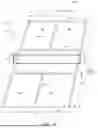
FIG. 4 illustrates a pickleball paddle 400 with an additional layer added between the core and the face sheet for controlling a performance characteristic on one side of the core, according to some embodiments of the present disclosure.
Pickleball paddle 400 comprises the core layer (e.g., core component) 402, a front (top) face sheet 404, a back (bottom) face sheet 406, and an additional layer 408 arranged in between the back face sheet 406 and the core layer 402. In the illustrated embodiment, no additional layer is inserted between the top face sheet 404 and the core for controlling a performance characteristics. In some embodiments, no additional layer is arranged between the top face-sheet and the core, and the core layer 402 directly abuts the top face sheet 404.
The core layer 402 may be the thickest layer in the paddle 400 and provides structural support for the striking blade of the paddle. As noted above, the core layer may have any one of several core structures (e.g., honeycomb structure, solid) and may be constructed from any one of several core construction materials. As noted above, in some examples, a honeycomb structure provides a light yet sturdy structure for the paddle. In some examples, a solid wood core layer provides, while usually heavier than honeycomb, a harder structure that may enhance performance characteristics such as power and pop of the paddle. In some examples, other core construction materials, such as, for example, any of foam, Nomex, aluminum, carbon fiber, polymer, polypropylene, plastic, may be used individually or in combination to construct the core layer 402 in accordance with desired structural integrity, weight, balance, size, cost, performance, and other characteristics. In order to provide the best structural integrity and balance for the paddle, the core layer may be uniform. A uniform core layer provides the same performance characteristics to the front side and the back side of the paddle. In some embodiments the core layer may be non-uniform to thereby contribute respectively different performance characteristics to the front side and the back side of the paddle. For example, the core layer may be made harder to one side and softer to the other, and/or the cell structure of the honeycomb core may be denser to one side and less dense to the other side, enabling a shot with more power from the side with the denser cell structure.
In some embodiments, the top (front) face sheet 404 and bottom (back) face-sheet 406 are formed from the same construction material to enhance a selected performance characteristic. In some examples, both are made from carbon fiber and in some other examples both are made from fiberglass. In an example, carbon fiber face-sheets may provide enhanced control, but may not enhance power. In an example, fiberglass face sheets may provide enhanced power, but may not improve control.
In some other embodiments, the top face sheet 404 and bottom face-sheet 406 are formed with different construction materials and are configured to control different selected performance characteristics. In some examples, the front face sheet is formed from fiberglass to provide more power to hits from the front face and the back face sheet is formed from carbon fiber to provide more control to hits from the back face.
As also described above, the enhancement of a selected performance characteristic (or characteristics) that is caused by the construction material of a face sheet often provides an increase/improvement of the selected performance characteristic which some players find to be as excessive and/or as undesirably affecting their game play. For example, fiberglass face sheets may be considered by some players as introducing high level of power without an accompanying improvement in control. In an example embodiment, on one side or on each side of a paddle, an additional layer may be included in order to adjust the overall performance characteristics in view of the selected performance characteristics introduced by face sheets and/or the core layer.
In an example embodiment, the additional sheet 408 is arranged between the core layer 402 and the back face sheet 406. In examples, the additional sheet (“additional layer”) 408 may be glued (e.g., permanent or semi-permanent glue) on to the front and back to the core layer and to the back face sheet, or permanently or semi-permanently connected to the front and back to the core layer and to the back face sheet by another attachment technique. In some examples, the additional sheet 408 may be sandwiched between the core layer and the back face sheet, and supported by an edge guard or frame that surrounds the striking blade.
In some embodiments, the additional sheet 408 is configured to control a performance characteristic that is different from the performance characteristic controlled by the corresponding face sheet (the back face sheet 406) and/or the core component layer. For example, when the back face sheet 406 is constructed from fiberglass to control power, the additional sheet 408 may be constructed with material such as, for example, carbon fiber or foam, that is configured to control another performance characteristic that impact ball control, dwell time, etc. In an example, when the back face sheet 406 is constructed from carbon fiber to improve control, the additional sheet 408 may be constructed with material such as, for example, fiberglass, wood, plastic etc., that is configured to control another performance characteristic such as power, etc. In this manner, the resulting performance characteristic imposed upon the back face sheet striking a ball is a combination of the core layer performance characteristics, the additional layer's performance characteristics, and the back face sheet performance characteristics. In some aspects, the resulting performance characteristic imposed upon the back face sheet striking a ball is a combination of the core layer's primary performance characteristic, the additional layer's primary performance characteristic, and the back face sheet's primary performance characteristics.
In the illustrated pickleball paddle 400, an additional sheet is inserted only on one side of the core. For example, as illustrated, additional sheet 408 is inserted between the core layer 402 and the back face sheet 406 but there is no additional sheet that is between the core layer 402 and the front face sheet 404. Thus in the illustrated example, if both sheets are constructed with fiberglass to improve power and ignoring contributions to the performance characteristics by the core, the overall performance characteristics imposed on a ball striking the back face sheet 406 is the power enhancement provided by the fiberglass face sheet 406 as adjusted by the enhanced control provided by the additional layer 408, whereas the overall performance characteristics imposed on a ball striking the front face sheet 404 is the power enhancement provided by the fiberglass face sheet 404 without such accompanying adjustment.
In the illustrated embodiment of paddle 400, only a single additional sheet is inserted between the core layer and the face sheet. However, embodiments are not limited to a single additional sheet and may include more than one additional sheet on one side of the core layer or both sides of the core layer, with the two sides having an unequal number of additional layers.
FIG. 5 illustrates a pickleball paddle 500 with additional layers between the core layer and each of the face sheets added for performance on both sides of the core with each side providing for different performance characteristics, according to some embodiments of the present disclosure.
Pickleball paddle 500 comprises a core layer 502, a top face sheet 504, a back face sheet 506, an additional layer 508 between the back face sheet 506 and the core layer 502, and an additional layer 510 between the top face sheet 504 and the core layer 502.
The core layer 502 may be identical or similar to the core layer 402 described in relation to FIG. 4. In some embodiments, the face sheets 504 and 506 are identical to the face sheets 404 and 406 described in relation to FIG. 4. As described in relation to FIG. 4, the face sheets may be configured for the same selected performance characteristic(s) on both, or a different performance characteristic on each.
Different from the paddle 400 of FIG. 4, paddle 500 includes the same number of additional layers between the core layer and the front face layer and between the core layer and the back face layer. The one or more additional layers between the front face sheet and the core layer are configured to improve a first performance characteristic, whereas the one or more additional layers between the back face sheet and the core layer are configured to improve a second performance characteristic.
In the illustrated embodiment, additional layer 508 is arranged between the core layer 502 and back face sheet 506, and additional sheet 510 is arranged between the core layer 502 and the front face sheet 504. Additional sheet 508 is configured to improve a first performance characteristic and the additional sheet 510 is configured to improve a second performance characteristic, and the first and second performance characteristics are different.
Example embodiments are not limited to one additional sheet on each side of the core layer. Some example embodiments may include one or more additional sheets on a first side of the core layer, and, on the second side of the core, may include no additional layers or a number of additional layers that is different from the number of additional layers on the first side.
FIG. 6 illustrates an example additional layer 602, according to some embodiments of the present disclosure. An additional layer 602 may be arranged between the core layer of a pickleball paddle and on one or both sides of the core layer in between the core layer and the corresponding face sheet of the pickleball paddle. For example, an embodiment may include replacing the additional layer 408 in the pickleball paddle 400 with any one of the example additional layers 600, 610 or 620. Another example embodiment may include replacing at least one of additional layers 508 and 510 in pickleball paddle 500, with any one of the example additional layers 600, 610 or 620.
The illustrated example additional layer 600 is formed with two distinct surface areas that are each constructed with a different construction material. In the illustrated embodiment the first area 602 may be designed so that the sweet spot of the core layer is completely overlapped by the first area 602, and the second area 604 surrounds the first area.
Usually, layers made of a single construction material are preferred due to reasons such as the possible reduction in structural integrity in layers with more than one unitary area constructed with the same material (e.g., same single material or same combination of materials). However, since the additional layer 600 is sandwiched between a directly abutting core layer and a directly abutting face sheet layer (e.g., such as between core layer 502 and back face sheet 506), the additional layer 600 formed of two distinct areas constructed from different construction materials is sufficiently supported and does not reduce the structural integrity of the paddle.
Having an additional layer with two well defined areas each made with a different construction material configured to improve a different performance characteristic enables a player to use different areas of the striking blade in order to impose a performance characteristic that results as a combination of either the performance characteristic of the face sheet and the first area of the additional layer or the performance characteristic of the face sheet and the second area of the additional layer.
Shapes of the two areas other than that shown in additional layer 600 can be used in various embodiments. For example, additional layer 610 has the first area (e.g., area that fully overlaps the sweet spot) 612 extending to the throat of the paddle, and the second area 614 correspondingly surrounding the first area in all areas other than where the first area extends to the throat. In another example, additional area 620 has the sweet spot of the core layer overlapped in part by each of the first area 622 and the second area 624. In the illustrated example additional layer 620, the first area 622 and the second area 624 overlap the upper half of the striking blade and a lower half of the striking blade. Many other designs of distributing the two different materials throughput the additional layer are possible.
Embodiments of the present disclosure configures at least one of the two sides of the pickleball paddle striking surface with at least one additional layer to control a performance characteristic. The at least one additional layer helps modify the performance characteristics imposed on the two sides by the core layer and the face sheets. For example, when a face sheet is configured to increase power with the use of a material such as fiberglass, the additional layer constructed from carbon fiber may be inserted between that face sheet and the core layer to modify the effect of the enhanced power provided by the fiberglass face sheet with the enhanced control provided by the carbon fiber additional layer.
Embodiments may provide clear distinguishable performance difference among the two sides of the paddle, and may provide the ability to manufacture paddles with paddle performance metrics on each side being separately controlled using more variables (e.g., additional layers of different construction materials) while maintaining the paddle's structural integrity.
It should be noted that embodiments of the present disclosure are not limited to particular shapes of pickleball paddles or particular construction materials of the frame, core and/or face sheets. Although various embodiments have been shown and described in detail, the claims are not limited to any particular embodiment or example.
Claims
1. A pickleball paddle, comprising:
a handle; and
a striking blade connected to the handle and comprising:
a core component layer;
a first face sheet layer;
a second face sheet layer;
a first number of third layers arranged between the first face sheet layer and the core component layer; and
a second number of fourth layers arranged between the second face sheet layer and the core component layer, wherein the first number is an integer that is one or greater and the second number is an integer that is zero or greater,
wherein a thickness of the core component layer is greater than each of a thickness of the first number of the third layers and, if one or more of the fourth layers are arranged between the second face sheet layer and the core component layer, a thickness of the second number of the fourth layers.
2. The pickleball paddle according to claim 1, wherein, if one or more of the fourth layers are arranged between the second face sheet layer and the core component layer, at least one third layer of the first number of third layers is configured for a different performance metric than any fourth layer of the second number of fourth layers.
3. The pickleball paddle according to claim 1, wherein no layers are arranged between the second face sheet layer and the core component layer.
4. The pickleball paddle according to claim 1, wherein the second number of one or more fourth layers are arranged between the second face sheet layer and the core component layer.
5. The pickleball paddle according to claim 4, wherein the second number of one or more fourth layers is a smaller number of layers than the first number of the third layers.
6. The pickleball paddle according to claim 1, wherein the first face sheet layer and the second face sheet layer comprise a same material.
7. The pickleball paddle according to claim 1, wherein the first face sheet layer and the second face sheet layer comprise different materials.
8. The pickleball paddle according to claim 1, wherein a first side of the pickleball paddle has first performance metrics that are different from second performance metrics of the second side of the pickleball paddle.
9. The pickleball paddle according to claim 8, wherein construction materials used in the one or more third layers are configured for a first performance metric and construction materials used on the one or more fourth layers are configured for a second performance metric that is different from the first performance metric.
10. The pickleball paddle according to claim 9, wherein a construction technology used on the first side of the core component layer is configured for a first performance metric and the construction technology used on the second side of the core component layer is configured for a second performance metric that is different from the first performance metric.
11. The pickleball paddle according to claim 10, wherein the first performance metric and the second performance metric each is a performance metric indicative of the striking blade being hit by a pickleball ball.
12. The pickleball paddle according to claim 1, wherein a construction material of one or more of the third layers is different from construction materials of any of the fourth layers.
13. The pickleball paddle according to claim 1, wherein the performance metrics include one or more of a ball control, a power, a pop, dwell time, deflection, a coefficient of restitution (COR), and a stiffness.
14. The pickleball paddle according to claim 1, wherein at least one of the third layers comprises a first area constructed with a first construction material and a second area constructed with a second construction material, the first and second areas being configured for different performance metric.
15. The pickleball paddle according to claim 14, wherein the first area overlaps a sweet spot on the core layer.
16. The pickleball paddle according to claim 14, wherein the first area and the second area overlap a sweet spot on the core layer.
17. A pickleball paddle comprising
a handle; and
a striking blade connected to the handle and comprising:
a core component layer;
a first face sheet layer on a first side of the core component layer; and
a second face sheet layer on a second side of the core component layer,
wherein a number of one or more layers between the first face sheet layer and the core component layer is different than the number of zero or more layers between the second face sheet layer and the core component layer.
18. The pickleball paddle according to claim 17, wherein the core component layer is a thickest layer of said layers of the pickleball paddle.
Images & Drawings included:



Sources:
- United States Patent and Trademark Office - verify current appl. status at the USPTO↗
Recent applications in this class:
- » 20260014436 2026-01-15
GAME PADDLE - » 20260014434 2026-01-15
DURABLE PICKLEBALL RACKET - » 20260000950 2026-01-01
GAME PADDLE - » 20260000949 2026-01-01
MONOCOQUE PADDLES - » 20250375680 2025-12-11
ROUGH PANEL WITH LOGO LAYER AND RACKET - » 20250375679 2025-12-11
PICKLEBALL TRAINING PADDLE, TRAINING BALL AND METHOD OF USE - » 20250345677 2025-11-13
Pickleball Paddle Striking Surfaces Of Non-Uniform Thickness - » 20250345676 2025-11-13
PICKLEBALL RACKET PROVIDED WITH SHOCK-ABSORPTION RINGS - » 20250332494 2025-10-30
Non-Grip Pickleball Paddles - » 20250332493 2025-10-30
Removable Hitting Surface for a Paddle