BLISTER BOARD FOLDING POCKET PACKAGING
US20260035151A1
2026-02-05
19/284,842
2025-07-30
Smart Summary: A blister pack is created using a special foldable board that has a line down the middle. This board has two halves: one for the front and one for the back. A coating surrounds the edges of the board, and small glue dots are placed on the inside sections. These features work together to create a pocket where a product can be placed. Finally, heat is used to seal the pocket and keep the product secure inside. 🚀 TL;DR
Abstract:
A blister pack formed by a blister board folio having a fold line dividing the folio into a first half with a first interior and a first exterior and a second half with a second interior and a second exterior. A blister coating extends around the perimeter of the folio and a series of glue dots are positioned on the interior sections. The blister coating defines a central region within the perimeter of the folio and the one glue dots are positioned adjacently to the blister coating. The fold line and the glue dots form a pocket for the insertion of a product. The folio may then be heat sealed to secure the product in the pocket.
Assignee:
- Diamond Packaging 6 🇺🇸 Rochester, NY, United States
Applicant:
Interested in similar patents?
Get notified when new applications in this technology area are published.
Classification:
B65D75/20 » CPC main
Packages comprising articles or materials partially or wholly enclosed in strips, sheets, blanks, tubes, or webs of flexible sheet material, e.g. in folded wrappers; Articles or materials wholly enclosed in single sheets or wrapper blanks in sheets or blanks doubled around contents and having their opposed free margins united, e.g. by pressure-sensitive adhesive, crimping, heat-sealing, or welding
B65D75/5827 » CPC further
Packages comprising articles or materials partially or wholly enclosed in strips, sheets, blanks, tubes, or webs of flexible sheet material, e.g. in folded wrappers; Details; Opening or contents-removing devices added or incorporated during package manufacture Tear-lines provided in a wall portion
B65D2575/565 » CPC further
Packages comprising articles or materials partially or wholly enclosed in strips, sheets, blanks, tubes or webs of flexible sheet material, e.g. in folded wrappers; Details; Cards, coupons, or other inserts or accessories; Handles or other suspension means means explicitly used for suspending
B65D75/58 IPC
Packages comprising articles or materials partially or wholly enclosed in strips, sheets, blanks, tubes, or webs of flexible sheet material, e.g. in folded wrappers; Details Opening or contents-removing devices added or incorporated during package manufacture
Description
FIELD OF THE DISCLOSURE
The present invention relates generally to retail packaging made from blister board, and more particularly to an environmentally friendly, plastic-free blister pack that remains secure in a retail environment.
BACKGROUND
Conventional blister packaging, also referred to as a blister pack, includes face seal blisters, trapped blisters, and slide blisters. These conventional types of blister packs combine a clear thermoformed plastic component with one or more pieces of blister board printed with product information and graphics. The clear plastic component is heat sealed to the blister board to constrain and fully display the product to consumers in a retail environment. However, plastic waste is a growing global concern, and most blister packs are discarded as waste because recyclers do not have the specialized recycling equipment needed to properly separate the plastic from blister board.
SUMMARY
The inventors recognize there is a need for improved blister board packaging that provides for reducing plastic usage while remaining robustly sealed to deter theft or tampering. Unlike conventional blister packs, some embodiments herein provide blister board packaging that eliminate the environmentally harmful plastic waste typically found in blister pack packaging. In one embodiment, packaging is made for a product from a single sheet of blister board through the method including: applying blister coating to the perimeter of a first side of a sheet of blister board; scoring a line in the blister board to define a first section and a second section of the first side of the sheet of blister board; applying at least one glue dot to the first section of the blister board; folding the blister board on the scored line so that the second section is adhered to the at least one glue dot on the first section; inserting a product between the first section and second section of the blister board adjacent to the at least one glue dot; and sealing the product inside the blister board by applying heat and pressure to activate the blister coating at the perimeter of the first side of the sheet of blister board.
In one embodiment, a blister pack is fashioned from a folio formed from a sheet of blister board and having a fold line dividing the sheet into a first half having a first interior section and a first exterior section and a second half having a second interior section and a second exterior section. A blister coating extends around a perimeter of the folio on the first interior section and the second interior section. At least one glue dot positioned on one of the first interior section and the second interior section. The blister coating defines a central region within the perimeter of the folio. The at least one glue dot is positioned in the central region and adjacently to the blister coating. The at least one glue dot and the fold line form a pocket within the folio when the folio is folded along the fold line so that the first half and the second half are closed together with the first interior section facing the second interior section. The blister pack may further comprise a hanging feature formed in the folio and an opening feature formed in the folio. The blister coating may be at least two layers of a heat responsive blister film.
In another embodiment, a blister pack is formed by forming a fold line in a sheet of blister board to define a folio including a first half having a first interior section and a first exterior section and a second half having a second interior section and a second exterior section. A blister coating is then applied to extend around a perimeter of the folio along the first interior section and the second interior section. At least one glue dot is applied on one of the first interior section and the second interior section. The method may further include folding the folio along the fold line so that the first half and the second half are closed together with the first interior section facing the second interior section, thereby forming a pocket defined by the fold line and the at least one glue dot. The method may additionally include the step of forming a hanging feature in the folio or forming an opening feature in the folio. The method may also include the step of inserting a product into the pocket and then heat sealing the folio to close the product in the pocket. The folio may be formed as one of many folios formed together and then separated from each other after applying the blister coating to all of the folios and positioning the least one glue dot on all of the folios.
BRIEF DESCRIPTION OF THE DRAWINGS
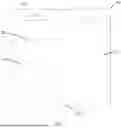
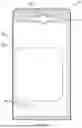
FIG. 1 depicts a front side of a sheet of die-cut blister board according to an aspect of the present disclosure.
FIG. 2 depicts a back side of the sheet of die-cut blister board according to an aspect of the present disclosure.
FIG. 3 depicts glue dots on the back side of the sheet of die-cut blister board according to an aspect of the present disclosure.
FIG. 4 depicts a perspective view of the folded blister board pocket according to an aspect of the present disclosure.
FIG. 5 depicts a perspective view of the folded blister board pocket with product being inserted according to an aspect of the present disclosure.
FIG. 6 depicts a view through a finished blister board package according to an aspect of the present disclosure.
DETAILED DESCRIPTION
Referring to drawing, wherein like numerals refer to like parts throughout, there is seen in FIG. 1, a blister board folio 10 formed from a die cut and creased card that, through a combination of blister coating applied via printing press and machine folding and gluing, forms a pocket to hold inside. Once the product is placed within said pocket, the card is then sealed shut using heat and pressure using blister sealing equipment. The result is an environmentally friendly container for the product that takes up minimal shelf space in the retail environment and is also more secure than an alternative using tape or wafer seal. As an example, the design for blister board folio 10 may be printed and coated on a 0.020″ thick blister board, a paperboard that is specifically manufactured to receive blister coating. Blister coating is applied to an inner side of the board. Ink and non-blister coatings, such as protective coatings, and the like may also be applied to the inner side of the board. The outer side of the board can be coated with ink and non-blister coatings, such as protective coatings, and the like. Both sides of the blister board (see FIGS. 1 and 2 below), are printed and coated, respectively, as noted above, using the agreed upon inks and coatings between Diamond and a customer.
Referring now to FIG. 1, a blister board folio 10 has two opposing halves with a first exterior section 12 and a second exterior section 14 divided by a scored line 16. Die cutting can also form hanging features 18 and opening features 20 in blister board folio 10.
Referring now to FIG. 2, blister board folio 10 has a first interior section 22 and a second interior section 24 divided by scored line 16. Portions of first interior section 22 and second interior section 24 receive a minimum of two passes of a blister coating 26. Blister coating 26 is applied in a specific pattern matching the hashed area shown in FIG. 2. Blister coating 26 should not encroach on the glue dot area 28 above the bottom of the area of blister coating 26 as indicated in FIG. 2.
Once it is determined that an adequate amount of blister coating 26 has been applied, blister board folio 10 (which may be provided in one or more sheets including multiple individual blister board folios 10) may then be set aside to cure for a 24-hour period before any seal testing is done. Samples may then be tested to ensure ideal sealing. If approved, sheets of blister board folios 10 are then ready to be die cut to provide individual blister board folios 10.
Sheets of blister board folios 10 may be die cut to the size and shape of the design of the blister board folio 10 and scored (creased) to create a scored line 16. As noted a above, die cutting can also provide hanging features 18 and opening features 20 for blister board folio 10. Samples of blister board folio 10 are reviewed to make sure the result matches the intended structure, i.e., blister board folio 10 will fold properly on scored line 16, and the tear perforations of hanging features 18 and opening features 20 will break properly.
Referring now to FIG. 3, blister board folio 10 may then be sent through folding and gluing equipment. A minimum of four glue dots 30 are placed on first interior section 22 of blister board folio 10 within glue dot area 28.
Referring now to FIG. 4, blister board folio 10 may then be folded along scored line 16 so that first interior section 22 and second interior section 24 are both in contact with the glue dots 30 to form a pocket within blister board folio 10 for a product 32 to be placed in blister board folio 10. Pressure is then applied to keep the blister board folio 10 shut along that section. Glue dots 30 act as a stopper for product 32 placed in blister board folio 10 so that product 32 does not travel into the area of blister coating 26 near the bottom of blister board folio 10 when blister board folio 10 is blister sealed in a later step, as seen in FIGS. 5 and 6. In this manner, an internal pocket is formed for product 32.
Referring now to FIG. 5, glued blister board folio 10 may then be sent a customer who can load whatever product 32 is desired to be placed into blister board folio 10, such as by using automated equipment. Product 32 is partially constrained within blister board folio 10 by the fold at scored line 16 and glue dots 30. A heat and pressure bases sealing system (not shown) may then be used to activate blister coating 26, which acts as an adhesive that seals blister board folio 10 shut with product 32 inside the pocket of blister board folio 10.
FIG. 6 shows a view of the finished packaging of blister board folio 10 with product 32 inside according to an embodiment. Blister board folio 10 has been successfully folded along the scored line 16 to form packaging for product 32 with product 32 contained within a pocket of blister board folio. As noted above, glue dots 30 applied to the glue dot area 28 of first interior section 22 along with the seam at scored line 16 created the pocket within the blister board folio 10 to position the product 32 during the sealing process. After the product 32 is placed within the blister board folio 10, heat and pressure are applied to the blister board folio 10 to activate the blister coating 26 to seal the product 32 within the blister board folio 10.
One advantage of blister board folio 10 is the internal product pocket formed by the glue dots 30 and blister-sealed edges of the board. Glue dots 30 act as both a pocket stop which prevents a product from interfering with the blister sealing during processing as well as holding together the folded board prior to sealing. The finished blister board folio 10 provides an environmentally friendly option for sale of a product as well as theft resistant packaging for the product.
Claims
What is claimed is:1. A blister pack, comprising:
a folio formed from a sheet of blister board and having a fold line dividing the sheet into a first half having a first interior section and a first exterior section and a second half having a second interior section and a second exterior section;
a blister coating extending around a perimeter of the folio on the first interior section and the second interior section; and
at least one glue dot positioned on one of the first interior section and the second interior section.
2. The blister pack of claim 1, wherein the blister coating defines a central region within the perimeter of the folio.
3. The blister pack of claim 2, wherein the at least one glue dot is positioned in the central region and adjacently to the blister coating.
4. The blister pack of claim 3, wherein the at least one glue dot and the fold line form a pocket within the folio when the folio is folded along the fold line so that the first half and the second half are closed together with the first interior section facing the second interior section.
5. The blister pack of claim 1, further comprising a hanging feature formed in the folio.
6. The blister pack of claim 1, further comprising an opening feature formed in the folio.
7. The blister pack of claim 1, wherein the blister coating comprises at least two layers of a heat responsive blister film.
8. A method of forming a blister pack, comprising the steps of:
forming a fold line in a sheet of blister board to define a folio including a first half having a first interior section and a first exterior section and a second half having a second interior section and a second exterior section;
applying a blister coating extending around a perimeter of the folio along the first interior section and the second interior section; and
positioning at least one glue dot on one of the first interior section and the second interior section.
9. The method of claim 8, further comprising the step of folding the folio along the fold line so that the first half and the second half are closed together with the first interior section facing the second interior section, thereby forming a pocket defined by the fold line and the at least one glue dot.
10. The method of claim 9, further comprising the step of forming a hanging feature in the folio.
11. The method of claim 9, further comprising the step of forming an opening feature in the folio.
12. The method of claim 9, further comprising the step of inserting a product into the pocket.
13. The method of claim 12, further comprising the step of heat sealing the folio to close the product in the pocket.
14. The method of claim 8, wherein the step of positioning the at least one glue dot on one of the first interior section and the second interior section comprises positioning the at least one glue dot adjacently to the blister coating.
15. The method of claim 8, wherein the blister coating comprises at least two layers of a heat responsive blister film.
16. The method of claim 8, wherein the step of forming the fold line in the sheet of blister board to define the folio further comprises forming a plurality of fold lines, each of which is associated with one of a plurality of folios having first halves with first interior sections and first exterior sections and second halves with second interior sections and second exterior sections, respectively.
17. The method of claim 16, wherein the step of applying a blister coating extending around the perimeter of the folio is performed on each of the plurality of folios.
18. The method of claim 17, wherein the step of positioning the at least one glue dot is performed on each of the plurality of folios.
19. The method of claim 17, further comprising the step of separating the plurality of folios from each other after the step of applying the blister coating to each of the plurality of folios and the step of positioning the at least one glue dot on each of the plurality of folios.
Images & Drawings included:



Sources:
- United States Patent and Trademark Office - verify current appl. status at the USPTO↗
Recent applications in this class:
- » 20250326552 2025-10-23
PACKAGING MATERIAL WEB, PACKAGING POUCH, PACKAGING MATERIAL BLANK AND MANUFACTURING METHOD - » 20240383660 2024-11-21
Recyclable absorbent article package material - » 20240351766 2024-10-24
THREE-SIDE RESEALABLE FOOD STORAGE POUCH - » 20240190633 2024-06-13
Tool Accessory Packaging and Tool Accessory Product - » 20240182221 2024-06-06
PACKAGING MATERIAL - » 20240025613 2024-01-25
Recyclable absorbent article package material - » 20230348164 2023-11-02
Food product package formed by a sheet sealed on itself, method for manufacturing and filling such a packaging and blank - » 20230089317 2023-03-23
Pasteurization pouch with barrier - » 20220363463 2022-11-17
Integrated card and gift packaging with carrier - » 20220033159 2022-02-03
Recyclable absorbent article package material
Recent applications for this Assignee:
- » 20200180808 2020-06-11
Locking packaging - » 20190375537 2019-12-12
Locking carton - » 20190359399 2019-11-28
Locking Package Container - » 20190359376 2019-11-28
Locking folding carton - » 20070295794 2007-12-27
CURVILINEAR PRODUCT PACKAGE