IMMERSION CASE FOR DATACENTER SERVER RACK
US20260040486A1
2026-02-05
19/284,266
2025-07-29
Smart Summary: An immersion case is designed to help cool down servers in a datacenter. It has a special housing that holds electric components that produce heat while they work. Inside this housing, these heat-generating components are partially submerged in a cooling liquid. To improve the cooling process, the case includes a device that creates vibrations in the liquid. These vibrations help to transfer heat away from the components more effectively. 🚀 TL;DR
Abstract:
The invention relates to an immersion case for a liquid cooling arrangement of a datacenter server rack, comprising a plurality of electric components, some of them generating heat when is use, called heat-generating components, the immersion case comprising a housing provided with a bottom and a longitudinal wall, delimiting an internal volume (V), and at least one heat-generating component arranged in the internal volume of the housing, the immersion case further comprising heat-transfer liquid wherein said heat-generating component is at least partially submerged, wherein the immersion case comprises at least one acoustic wave generator (200), called vibrations element, configured to generate a field of vibrations of the heat-transfer liquid in the internal volume of the housing, called vibrations area.
Inventors:
- Miroslaw Piotr KLABA 12 🇫🇷 Roubaix, France
- Ali CHEHADE 75 🇫🇷 Moncheaux, France
- Mohamad HNAYNO 9 🇫🇷 La Madeleine, France
Applicant:
Interested in similar patents?
Get notified when new applications in this technology area are published.
Classification:
H05K7/20263 » CPC main
Constructional details common to different types of electric apparatus; Modifications to facilitate cooling, ventilating, or heating using a liquid coolant without phase change in electronic enclosures Heat dissipaters releasing heat from coolant
H05K7/20263 » CPC main
Constructional details common to different types of electric apparatus; Modifications to facilitate cooling, ventilating, or heating using a liquid coolant without phase change in electronic enclosures Heat dissipaters releasing heat from coolant
H05K7/20236 » CPC further
Constructional details common to different types of electric apparatus; Modifications to facilitate cooling, ventilating, or heating using a liquid coolant without phase change in electronic enclosures by immersion
H05K7/20236 » CPC further
Constructional details common to different types of electric apparatus; Modifications to facilitate cooling, ventilating, or heating using a liquid coolant without phase change in electronic enclosures by immersion
H05K7/20272 » CPC further
Constructional details common to different types of electric apparatus; Modifications to facilitate cooling, ventilating, or heating using a liquid coolant without phase change in electronic enclosures Accessories for moving fluid, for expanding fluid, for connecting fluid conduits, for distributing fluid, for removing gas or for preventing leakage, e.g. pumps, tanks or manifolds
H05K7/20272 » CPC further
Constructional details common to different types of electric apparatus; Modifications to facilitate cooling, ventilating, or heating using a liquid coolant without phase change in electronic enclosures Accessories for moving fluid, for expanding fluid, for connecting fluid conduits, for distributing fluid, for removing gas or for preventing leakage, e.g. pumps, tanks or manifolds
H05K7/20727 » CPC further
Constructional details common to different types of electric apparatus; Modifications to facilitate cooling, ventilating, or heating for server racks or cabinets; for data centers, e.g. 19-inch computer racks; Forced ventilation of a gaseous coolant within server blades for removing heat from heat source
H05K7/20727 » CPC further
Constructional details common to different types of electric apparatus; Modifications to facilitate cooling, ventilating, or heating for server racks or cabinets; for data centers, e.g. 19-inch computer racks; Forced ventilation of a gaseous coolant within server blades for removing heat from heat source
H05K7/20 IPC
Constructional details common to different types of electric apparatus Modifications to facilitate cooling, ventilating, or heating
H05K7/20 IPC
Constructional details common to different types of electric apparatus Modifications to facilitate cooling, ventilating, or heating
Description
CROSS-REFERENCE
The present application claims priority to European Patent Appl. No. 24306319 filed Aug. 2, 2024, entitled “IMMERSION CASE FOR DATACENTER SERVER RACK”, the entirety of which is incorporated herein by reference.
FIELD OF TECHNOLOGY
The present technology relates to datacenter server rack cooling.
BACKGROUND
Datacenters are configured to house multitudes of server racks containing electronic equipment, such as computer systems (e.g., server assemblies), memory banks, etc. in efforts to process vast amounts of data in near real time. During operations, the electronic equipment of the server racks generates a significant amount of heat that must be dissipated in order to ensure continued efficient operation of the electronic equipment. Many cooling solutions have been implemented to address this heating issue, including the liquid cooling of heat-generating components by way of liquid cooling blocks directly mounted onto certain heat-generating components (often referred to as liquid or water block units).
Although water block units are capable of efficiently cooling the heat-generating components, their implementation in server racks typically requires a liquid distribution infrastructure to service the multitude of server racks and the vast number of electronic equipment supported therein. Such liquid distribution infrastructures conventionally require the use of relatively large and/or heavy piping conduit configurations and large capacity pumps to maintain the necessary liquid flow rates that supply the water blocks to service the cooling needs of the vast number of corresponding heat-generating components. It will be appreciated that the use of such piping conduit configurations and large pumps can be prohibitively costly for datacenters, in terms of initial investments and operating costs. Such piping conduit configurations and large pumps inherently occupy large footprints which may reduce a productivity (e.g. server per unit area of datacenter floor surface).
As a result, it appears to be desirable to provide a liquid cooling arrangement for datacenter server racks that can alleviate at least some of the cost prohibitive issues regarding conventional piping conduit configurations and/or increase the efficiency of the cooling solution.
It is to be noted that the subject matter discussed in the background section should not be assumed to be prior art merely as a result of its mention in the background section. Similarly, the issues mentioned in the background section should not be interpreted as having been recognized in the prior art.
SUMMARY
According to one aspect of the present technology, there is provided an immersion case for a liquid cooling arrangement of a datacenter server rack, comprising a plurality of electric components, some of them generating heat when is use, called heat-generating components, the immersion case comprising a housing provided with a bottom and a longitudinal wall, delimiting an internal volume, and at least one heat-generating component arranged in the internal volume of the housing, the immersion case further comprising heat-transfer liquid wherein said heat-generating component is at least partially submerged, and the immersion case comprises at least one acoustic wave generator, called vibrations element, configured to generate a field of vibrations of the heat-transfer liquid in the internal volume of the housing, called vibrations area.
Thanks to the vibrations element(s), the flow of the heat-transfer liquid is locally changed, which helps a reduction of the boundary layer and/or increases local turbulences in the liquid flow, and, consequently, enhances the thermal exchanges between the heat-transfer liquid and the heat-generating component, thus optimizing the efficiency of the immersion case.
In some embodiments, a frequency of the vibrations element is comprised between 30 Hz and 500 Hz, advantageously 150 Hz to 300 Hz, and/or 20 kHz and 50 kHz, advantageously 25 kHz, and/or between 0.8 MHz and 1.2 MHz, advantageously 1 MHz, and/or between 1.3 MHz and 1.7 MHz, advantageously 1.5 MHz, and/or between 1.8 MHz and 2.2 MHz, advantageously 2 MHz.
In some embodiments, the vibrations element is arranged at the bottom of the housing or at the longitudinal wall of the housing.
In some embodiments, the vibrations element is configured such that the field generated presents a principal direction forming an angle between 0° to 90° with a longitudinal axis of the housing.
In some embodiments, the immersion case comprises at least a first vibrations element and a second vibrations element.
In some embodiments, the first and second vibrations elements are configured such that a frequency of the first vibrations element is different from a frequency of the second vibrations element.
In some embodiments, the first and second vibrations elements are configured such that that the field generated by the first vibrations element presents a principal direction forming a non-zero angle with a principal direction of the field generated by the second vibrations element.
In some embodiments, the principal direction of the field generated by the first vibrations element is perpendicular to the principal direction of the field generated by the second vibrations element.
In some embodiments, an acoustic power of the acoustic waves generator is comprised between 50 W and 200 W, advantageously 100 W.
In some embodiments, the vibrations area comprises at least a portion of said at least one heat-generating component, and/or a cooling coil of the immersion case and/or a water block of the immersion case.
The present disclosure also relates to a liquid cooling arrangement for of a datacenter server rack, comprising:
-
- liquid cooling loop configured to convey a cooling liquid;
- a plurality of server clusters, each server cluster including a plurality of server assemblies that incorporate at least one respective liquid cooling unit configured to collect at least a portion of a thermal energy generated by a heat-generating component;
- at least one heat exchanger fluidly connected to the liquid cooling units of the plurality of server clusters via the liquid cooling loop; and
- a pump fluidly coupled to the heat exchanger via the liquid cooling loop, the pump configured to convey the cooling liquid in the liquid cooling loop,
- wherein the liquid cooling arrangement comprises at least one immersion case as already described.
In some embodiments, said at least one exchanger is disposed on a rear door of a rack hosting the server clusters.
In some embodiments, said at least one exchanger is configured to cool the air flow with the cooling liquid circulating in the thermal exchanges zone.
Implementations of the present technology each have at least one of the above-mentioned objects and/or aspects, but may not necessarily have all of them. It should be understood that some aspects of the present technology that have resulted from attempting to attain the above-mentioned object may not satisfy this object and/or may satisfy other objects not specifically recited herein.
Additional and/or alternative features, aspects and advantages of implementations of the present technology will become apparent from the following description, the accompanying drawings and the appended claims.
BRIEF DESCRIPTION OF THE DRA WINGS
For a better understanding of the present technology, as well as other aspects and further features thereof, reference is made to the following description which is to be used in conjunction with the accompanying drawings, where:
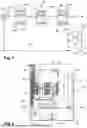
FIG. 1 depicts a functional block diagram of a serialized liquid cooling arrangement for a datacenter server rack, in accordance with some non-limiting embodiments of the present disclosure;
FIG. 2 depicts an immersion case for the arrangement of FIG. 1 equipped with several vibrations elements, in accordance with some non-limiting embodiments of the present disclosure.
DETAILED DESCRIPTION
The instant disclosure presents various embodiments of vibrations elements that optimize the cooling of heat generating electronic components.
The examples and conditional language recited herein are principally intended to aid the reader in understanding the principles of the present technology and not to limit its scope to such specifically recited examples and conditions. It will be appreciated that those skilled in the art may devise various arrangements that, although not explicitly described or shown herein, nonetheless embody the principles of the present technology.
Furthermore, as an aid to understanding, the following description may describe relatively simplified implementations of the present technology. As persons skilled in the art would understand, various implementations of the present technology may be of a greater complexity.
In some cases, what are believed to be helpful examples of modifications to the present technology may also be set forth. This is done merely as an aid to understanding, and, again, not to define the scope or set forth the bounds of the present technology. These modifications are not an exhaustive list, and a person skilled in the art may make other modifications while nonetheless remaining within the scope of the present technology. Further, where no examples of modifications have been set forth, it should not be interpreted that no modifications are possible and/or that what is described is the sole manner of implementing that element of the present technology.
Moreover, all statements herein reciting principles, aspects, and implementations of the present technology, as well as specific examples thereof, are intended to encompass both structural and functional equivalents thereof, whether they are currently known or developed in the future. Thus, for example, it will be appreciated by those skilled in the art that any block diagrams herein represent conceptual views of illustrative systems embodying the principles of the present technology.
With these fundamentals in place, we will now consider some non-limiting examples to illustrate the implementations of the various inventive aspects of the present disclosure.
In particular, FIG. 1 depicts a functional block diagram of a server rack serialized liquid cooling arrangement 100, in accordance with the embodiments of the present disclosure. As shown, liquid cooling arrangement 100 includes a plurality of server clusters 110, 112 . . . 11M that are fluidly connected in series to each other via a server rack liquid cooling loop 150. The server rack liquid cooling loop 150 is configured to convey and facilitate the flow of a cooling liquid throughout the electronic equipment of the server rack and may be constructed from flexible materials (e.g., rubber, plastic, etc.), rigid materials (e.g., metal, PVC piping, etc.), or any combination of thereof. It will be appreciated that the conveyed liquid may include water, alcohol, or any suitable liquid capable of sustaining adequate cooling temperatures.
Each of the server clusters 110, 112 . . . 11M includes a plurality of server assemblies 110A-110N, 112A-112N . . . 11MA-11MN that are arranged in a parallel and/or serialized manner. As noted above, the server assemblies 110A-110N, 112A-112N . . . 11MA-11MN contain heat generating electronic components.
Accordingly, each of the parallel server assemblies 110A-110N, 112A-112N . . . 11MA-11MN incorporates at least one respective liquid cooling unit 110A1-110N1, 112A1-112N1 . . . 11MA1-11MN1, correspondingly arranged in parallel or in series, for the direct thermal contact liquid cooling of the heat generating electronic components. That is, each of the liquid cooling units 110A1-110N1, 112A1-112N1 . . . 11MA1-11MN1 is configured as liquid-cooled heat sink conduit block that is thermally coupled, either directly or indirectly, to the heat-generating electronic components, such that cooling liquid is circulated through internal liquid conduits of the liquid cooling units 110A1-110N1, 112A1-112N1 . . . 11MA1-11MN1 to absorb the heat from the heat-generating electronic components and discharge the heated liquid therefrom.
Heat-generating components are for instance graphics processing units (GPU) and/or central processing units (CPU). Other components are for instance random-access memory (RAM), hard drives . . . .
For example, each one of the server clusters 110, 112 . . . 11M may include a first manifold that, in use, receives the cooling liquid and feeds the cooling liquid to the plurality of liquid cooling units of the server cluster in parallel. A second manifold may be provided downstream said plurality of liquid cooling units to receive the cooling liquid from the plurality of liquid cooling units.
The liquid cooling arrangement 100 further includes at least one air-to-liquid heat exchangers (ALHEXs), three on FIG. 1, 120, 122 . . . 12M.
On FIG. 1, each of the air-to-liquid heat exchangers (ALHEXs) 120, 122 . . . 12M defines an exchanger internal fluid conduit that forms a part of the cooling loop 150. Therefore, each of the air-to-liquid heat exchangers (ALHEXs) 120, 122 . . . 12M has an inlet through which, in use, the cooling liquid flows into the exchanger internal fluid conduit, and an outlet through which, in use, the cooling liquid is discharged from the exchanger internal fluid.
On FIG. 1, the ALHEXs 120, 122 . . . 12M of the liquid cooling arrangement 100 are fluidly connected in parallel with one another. Namely, the internal fluid conduits of the air-to-liquid heat exchangers (ALHEXs) 120, 122 . . . 12M of the liquid cooling arrangement 100 are fluidly connected in parallel. The ALHEXs 120, 122 . . . 12M of the liquid cooling arrangement 100 are also fluidly coupled to server clusters 110, 112 . . . 11M via the liquid cooling loop 150. The ALHEXs 120, 122 . . . 12M function to sufficiently air cool the heated liquid received by the liquid cooling units 110A1-110N1, 112A1-112N1 . . . 11MA1-11MN1 for redirection back to the server clusters 110, 112 . . . 11M. The ALHEXs 120, 122 . . . 12M may embody any suitable configuration that reduces liquid temperatures through supplied air flow, such as, internal cooling coils, heat extracting air flow fins, etc. The ALHEXs 120, 122 . . . 12M may be, for example and without limitations, disposed on rear doors of a rack hosting the server clusters 110, 112 . . . 11M.
The liquid cooling arrangement 100 additionally includes at least one pump 130 that is fluidly connected to the server rack liquid cooling loop 150. The pump 130 is configured to receive the cooling liquid from the ALHEXs 120, 122 . . . 12M, via the server rack liquid cooling loop 150, and functions to forcibly provide the necessary circulatory flow rate of the cooling liquid through the server rack liquid cooling loop 150, in order to service the liquid cooling units 110A1-110N1, 112A1-112N1 . . . 11MA1-11MN1 of server clusters 110, 112 . . . 11M.
The present disclosure is not limited to the configuration of FIG. 1. For instance, the heat exchangers ALHEX 120, 122 . . . 12M can be dedicated each to a respective server cluster rather than being in parallel one with another, and/or some of the server clusters can be serialized while others can be connected in parallel one with another.
Also, it should be noted that the ALHEX 120, 122 . . . 12M can have other roles in the loop 150. Preferably, the cooling liquid flowing inside the ALHEX 120, 122 . . . 12M are used to cool an air flow of the rack. On FIG. 1, the liquid is cooled in the ALHEX 120, 122 . . . 12M by an air flow.
The liquid cooling arrangement 100 is preferably equipped with immersion cases that increase the evacuation of the heat generated by the heat-generating components. On FIG. 2, there is detailed one immersion case, referenced 160.
As can be seen from FIG. 2, the immersion case 160 provided with a housing 162. The housing 162 comprises a bottom 164 and a longitudinal wall 166 extending from the bottom 162 to an opening 168. The housing 162 can be of a cylindrical shape or of a parallelepiped shape, for instance. A longitudinal axis, A, of the housing 162 is perpendicular to the bottom 164. The bottom 164 and the longitudinal wall 166 delimit an internal volume V of the immersion case 160.
The immersion case 160 comprises at least one heat-generating component. On FIG. 2, the immersion case 160 comprises a board 170 and hard drives 172. The immersion case 160 also comprises a cooling coil 174, preferably made of cupper, which serpentine shape increases transfer of the heat.
As also visible on FIG. 2, cooling units are located inside the immersion case 160, that are referred to as water blocks WB.
As can be seen from FIG. 2, the immersion case 160 comprises heat-transfer liquid, L, that submerges at least partially the heat-generating components 170, 172 or any heat-generating component not mentioned in FIG. 2, and the coil 174. The heat-transfer liquid is a non-conducting (electrically speaking) cooling liquid, for example an oil-based dielectric cooling liquid.
The immersion case 160 comprises at least one element 200, called vibrations element, for generating a field of mechanical vibrations of the heat-transfer liquid in the immersion case 160, as will now be detailed.
According to an embodiment of the present disclosure, the vibrations element 200 is an acoustic waves generator, preferably an ultrasonic waves generator, like an ultrasonic transducer.
The present disclosure encompasses embodiments wherein the immersion case 160 is equipped with only one vibrations element 200, or several vibrations elements 200. The vibrations elements 200 can be identical or on the contrary of different types, depending on the level of impact to induce to the flowing of the heat-transfer liquid.
On FIG. 2, the immersion case 160 is equipped with four vibrations elements 200-1 to 200-4. Each vibrations element 200 is configured to generate a vibrational field VF at a given frequency f that induces local modifications of the flowing of the heat-transfer liquid, as will be detailed later. Each vibrational field VF presents a principal direction, corresponding to the main direction of the propagation of the vibrations that are generated by the vibrations element 200. The principal direction is illustrated by an arrow on the figures. The area where the vibrations are created in the heat-transfer liquid flow is called vibrations area.
The vibrations elements 200 can be located either inside the immersion case or outside of it, but in each case, each vibrations element 200 is located such that the vibrational field VF has an impact on the heat-transfer liquid.
On FIG. 2, the first vibrations element 200-1 is located such that its vibrational field VF is generated in the bottom 164 of the housing. The other vibrations elements 200-2, 200-3, 200-4 are located such that their VF are generated near the longitudinal wall 166.
The positioning of the vibrations elements can be chosen near one or some of the heat-generating components 170, 172 and/or the coil 174. On FIG. 2, the vibrations elements 200-1, 200-2 and 200-4 are close to the hard-drives 172 while the vibrations element 200-3 is close to the water blocks WB.
The present disclosure is not limited to the configuration of FIG. 2. The immersion case 160 can be equipped with less than four vibrations elements 200, or on the contrary with more vibrations elements 200. Also, the immersion case 160 can be equipped with more than one vibrations elements on the bottom 164 and/or the more or less vibrations elements on the longitudinal wall 166. Furthermore, on FIG. 2, all the principal directions are in the same plane, but the present disclosure also encompasses configurations wherein the principal directions do not all belong to a same plane.
It should be noted that the frequencies of the vibrations element 200 can be comprised between 10 Hz to 5 Mz, like between 30 Hz and 500 Hz, advantageously 100 Hz to 300 Hz, advantageously 150 Hz to 300 Hz, advantageously 50 Hz to 200 Hz, and/or 20 kHz and 50 kHz, advantageously 25 kHz, and/or between 0.8 MHz and 1.2 MHz, advantageously 1 MHz, and/or between 1.3 MHz and 1.7 MHz, advantageously 1.5 MHz, and/or between 1.8 MHz and 2.2 MHz, advantageously 2 MHz, between 1.7 MHz to 2.5 MHz.
Preferably, the vibrations elements 200 are ultrasonic transducers.
As is known, ultrasound is sound with frequencies from 20 kHz up to several gigahertz. When the frequency of the ultrasonic transducer 200 is comprised between 20 kHz and 50 kHz, advantageously 25 kHz, cavitation is generated, which can reduce the thickness of the boundary layer, hence enhancing thermal exchanges in the immersion case 160 between the heat-generating components 170, 172, and/or coil 174 and the heat-transfer liquid. When the frequency of the ultrasonic transducer 200 is comprised between 1.8 MHz and 2.2 MHz, advantageously 2 MHz, an acoustic flow is generated, which increases local turbulences of the heat-transfer liquid flow, hence enhancing thermal exchanges in the immersion case 160. When the frequency of the ultrasonic transducer 200 is comprised between 800 kHz and 1.8 MHz, advantageously 800 kHz to 1.2 MHz, advantageously 1 MHz, there is a combination of cavitation and acoustic flow that enhances thermal exchanges in the heat exchanger.
It should be noted that the Reynolds number of the heat-transfer liquid can be comprised between 500 to 10 000, advantageously between 500 and 800, advantageously between 900 and 5000. The ultrasound transducer 200 has less impact on the liquid flow when the Reynolds number is higher, such that the liquid cooling arrangement is preferred with a Reynolds number between 500 and 800.
The ultrasonic power of the ultrasonic transducer 200 is comprised between 50 W and 200 W, advantageously 100 W.
As can be seen from FIG. 2, two ultrasonic transducers can be positioned such that the principal direction of the field of the first transducer 200-1 forms an angle with the principal direction of the field of the second transducer 200-2 that is comprised between 0° and 180°. The two ultrasonic transducers can be either colinear (200-3, 200-4) or perpendicular (200-1 with 200-3 or 200-4) or form an acute angle (200-1 and 200-2), depending on the level of impact on the heat-transfer liquid.
Two ultrasonic transducers can be of the same frequencies and ultrasonic power, or, on the contrary of different frequencies and/or ultrasonic power. For instance, the immersion case 160 can comprise a first and second ultrasonic transducers of a frequency lower than 1 MHz, lower than 500 kHz, lower than 100 Kz and a third and fourth ultrasonic transducer of a frequency comprised between to 1 MHz and 1.5 MHz, or between 1.8 MHz and 2.5 MHz.
As already explained, depending on the number of vibrations elements 200, on their positioning, their frequencies and acoustic power, and their relative directions of their principal directions, the boundary layer is reduced, turbulences are increased, which results in a better heat transfer in the immersion case 160.
In other words, when equipped with the vibrations elements 200, the immersion case 160 improves its efficiency because of the optimization of the thermal exchanges between the heat-transfer liquid and the components (because of a reduction of the boundary layer and/or current flow, for instance). Having several vibrations elements improves the thermal exchanges even better thanks to a synergy that can appear when the vibrations elements have different frequencies and/or positionings relative one to another. Another advantage is that the immersion case 160 can be chosen more compact given the optimized thermal exchanges.
Preferably, the heat exchangers are disposed at the rear door of the on rear doors of a rack hosting the server clusters 110, 112 . . . 11M, as already explained.
The present disclosure is of particular interest wherein the cooling liquid flowing inside the ALHEX 120, 122 . . . 12M can be used to cool an air flow of the rack.
The invention is not limited to the illustrated embodiments. In particular, the number of acoustic wave generators, their positions in an internal face or external face of the immersion case, being simply immersed in the dielectric fluid or affixed to any element within the tank, the Reynolds number of the fluid, all these configurations depend on the cooling impact that is needed.
Modifications and improvements to the above-described implementations of the present technology may become apparent to those skilled in the art. The foregoing description is intended to be exemplary rather than limiting. The scope of the present technology is therefore intended to be limited solely by the scope of the appended claims.
Claims
What is claimed is:1. An immersion case for a liquid cooling arrangement of a datacenter server rack, comprising a plurality of electric components, some of them generating heat when is use, called heat-generating components, the immersion case comprising a housing provided with a bottom and a longitudinal wall, delimiting an internal volume (V), and at least one heat-generating component arranged in the internal volume of the housing, the immersion case further comprising heat-transfer liquid wherein said heat-generating component is at least partially submerged,
wherein the immersion case comprises at least one acoustic wave generator, called vibrations element, configured to generate a field of vibrations of the heat-transfer liquid in the internal volume of the housing, called vibrations area.
2. The immersion case of claim 1, wherein a frequency of the vibrations element is comprised between 30 Hz and 500 Hz, advantageously 150 Hz to 300 Hz, and/or 20 kHz and 50 kHz, advantageously 25 kHz, and/or between 0.8 MHz and 1.2 MHz, advantageously 1 MHz, and/or between 1.3 MHz and 1.7 MHz, advantageously 1.5 MHz, and/or between 1.8 MHz and 2.2 MHz, advantageously 2 MHz.
3. The immersion case of claim 1, wherein the vibrations element is arranged at the bottom of the housing or at the longitudinal wall of the housing.
4. The immersion case of claim 1, wherein the vibrations element is configured such that the field generated presents a principal direction forming an angle between 0° to 90° with a longitudinal axis of the housing.
5. The immersion case of claim 1, comprising at least a first vibrations element and a second vibrations element.
6. The immersion case of claim 1, wherein the first and second vibrations elements are configured such that a frequency of the first vibrations element is different from a frequency of the second vibrations element.
7. The immersion case of claim 5, wherein the first and second vibrations elements are configured such that that the field generated by the first vibrations element presents a principal direction forming a non-zero angle with a principal direction of the field generated by the second vibrations element.
8. The immersion case of claim 1, wherein the principal direction of the field generated by the first vibrations element is perpendicular to the principal direction of the field generated by the second vibrations element.
9. The immersion case of claim 1, wherein an acoustic power of the acoustic waves generator is comprised between 50 W and 200 W, advantageously 100 W.
10. The immersion case of claim 1, wherein the vibrations area comprises at least a portion of said at least one heat-generating component, and/or a cooling coil of the immersion case and/or a water block of the immersion case.
11. A liquid cooling arrangement for of a datacenter server rack, comprising
liquid cooling loop configured to convey a cooling liquid;
a plurality of server clusters, each server cluster including a plurality of server assemblies that incorporate at least one respective liquid cooling unit configured to collect at least a portion of a thermal energy generated by a heat-generating component;
at least one heat exchanger fluidly connected to the liquid cooling units of the plurality of server clusters via the liquid cooling loop; and
a pump fluidly coupled to the heat exchanger via the liquid cooling loop, the pump configured to convey the cooling liquid in the liquid cooling loop,
wherein the liquid cooling arrangement comprises at least one immersion case as claimed in claim 1.
12. The liquid cooling arrangement of claim 11, wherein said at least one exchanger is disposed on a rear door of a rack hosting the server clusters.
13. The liquid cooling arrangement of claim 11, wherein said at least one exchanger is configured to cool the air flow with the cooling liquid circulating in the thermal exchanges zone.
Images & Drawings included:

Sources:
- United States Patent and Trademark Office - verify current appl. status at the USPTO↗
Recent applications in this class:
- » 20260032857 2026-01-29
LATTICE HEATSINK FOR IMPINGEMENT COOLING - » 20260025948 2026-01-22
COOLING SYSTEM AND METHOD OF COOLING COOLING SYSTEM - » 20260020186 2026-01-15
COOLING SYSTEM FOR UNDERWATER DATA CENTER - » 20260020185 2026-01-15
LIQUID-COOLING COOLER FOR POWER MODULE OF ELECTRIC VEHICLE - » 20260013073 2026-01-08
Direct to Component Thermal Expansion Compensation for Heat Exchangers - » 20250393164 2025-12-25
LIQUID COOLING SYSTEM - » 20250374479 2025-12-04
SYSTEM AND METHOD FOR COOLING VEHICLE AUTONOMY COMPUTING SYSTEM - » 20250358954 2025-11-20
HEAT DISSIPATION ASSEMBLY AND MOTHERBOARD MODULE - » 20250351296 2025-11-13
RADIATOR UNIT, RADIATOR MODULE AND SERVER - » 20250351295 2025-11-13
SPEAKER MODULE