METHOD FOR INCREASING DRIVING AWARENESS
US20260042452A1
2026-02-12
19/269,307
2025-07-15
Smart Summary: A method helps drivers stay aware while using assisted driving features in their vehicles. It starts by checking how alert the driver is during the drive. If the driver doesn't respond to a prompt to increase their awareness within a set time, the system automatically adjusts the vehicle's driving settings to ensure safety. After making these adjustments, the system asks the driver again to respond and boost their awareness. This process aims to keep the driver engaged and attentive while using assisted driving technology. 🚀 TL;DR
Abstract:
A method for increasing driving awareness of a driver during assisted drive of a vehicle. The method includes obtaining driving awareness data indicative of a degree of driving awareness of the driver during the assisted drive of the vehicle; providing first driver request data for requesting a first driver response after obtaining the driving awareness data, the first driver response being configured to increase the degree of driving awareness of the driver; providing drive response data if the first driver response is not received within a first response time, the drive response data being configured to autonomously alter at least one drive parameter of the assisted drive; and providing second driver request data for requesting a second driver response after providing a drive response, the second driver response being configured to increase the degree of driving awareness of the driver.
Inventors:
- Thomas STREUBEL 2 🇸🇪 Göteborg, Sweden
- Emma Tivesten 1 🇸🇪 Göteborg, Sweden
- Mikael Ljung Aust 1 🇸🇪 Göteborg, Sweden
Applicant:
Interested in similar patents?
Get notified when new applications in this technology area are published.
Classification:
B60W50/085 » CPC main
Details of control systems for road vehicle drive control not related to the control of a particular sub-unit, e.g. process diagnostic or vehicle driver interfaces; Interaction between the driver and the control system Changing the parameters of the control units, e.g. changing limit values, working points by control input
B60W10/20 » CPC further
Conjoint control of vehicle sub-units of different type or different function including control of steering systems
B60W30/12 » CPC further
Purposes of road vehicle drive control systems not related to the control of a particular sub-unit, e.g. of systems using conjoint control of vehicle sub-units, or advanced driver assistance systems for ensuring comfort, stability and safety or drive control systems for propelling or retarding the vehicle; Path keeping Lane keeping
B60W40/08 » CPC further
Estimation or calculation of driving parameters for road vehicle drive control systems not related to the control of a particular sub unit, related to drivers or passengers
B60W50/16 » CPC further
Details of control systems for road vehicle drive control not related to the control of a particular sub-unit, e.g. process diagnostic or vehicle driver interfaces; Interaction between the driver and the control system; Means for informing the driver, warning the driver or prompting a driver intervention Tactile feedback to the driver, e.g. vibration or force feedback to the driver on the steering wheel or the accelerator pedal
B62D5/006 » CPC further
Power-assisted or power-driven steering; Mechanical aspects of steer-by-wire systems, not otherwise provided in means for generating torque on steering wheel, e.g. feedback power actuated
B62D6/008 » CPC further
Arrangements for automatically controlling steering depending on driving conditions sensed and responded to, e.g. control circuits Control of feed-back to the steering input member, e.g. simulating road feel in steer-by-wire applications
B62D15/025 » CPC further
Steering not otherwise provided for; Steering position indicators ; Steering position determination; Steering aids Active steering aids, e.g. helping the driver by actively influencing the steering system after environment evaluation
B60W2040/0863 » CPC further
Estimation or calculation of driving parameters for road vehicle drive control systems not related to the control of a particular sub unit, related to drivers or passengers; Inactivity or incapacity of driver due to erroneous selection or response of the driver
B60W2050/146 » CPC further
Details of control systems for road vehicle drive control not related to the control of a particular sub-unit, e.g. process diagnostic or vehicle driver interfaces; Interaction between the driver and the control system; Means for informing the driver, warning the driver or prompting a driver intervention Display means
B60W2540/18 » CPC further
Input parameters relating to occupants Steering angle
B60W2540/223 » CPC further
Input parameters relating to occupants Posture, e.g. hand, foot, or seat position, turned or inclined
B60W2540/229 » CPC further
Input parameters relating to occupants Attention level, e.g. attentive to driving, reading or sleeping
B60W2710/20 » CPC further
Output or target parameters relating to a particular sub-units Steering systems
B60W50/08 IPC
Details of control systems for road vehicle drive control not related to the control of a particular sub-unit, e.g. process diagnostic or vehicle driver interfaces Interaction between the driver and the control system
B60W50/14 IPC
Details of control systems for road vehicle drive control not related to the control of a particular sub-unit, e.g. process diagnostic or vehicle driver interfaces; Interaction between the driver and the control system Means for informing the driver, warning the driver or prompting a driver intervention
B62D5/00 IPC
Power-assisted or power-driven steering
B62D6/00 IPC
Arrangements for automatically controlling steering depending on driving conditions sensed and responded to, e.g. control circuits
B62D15/02 IPC
Steering not otherwise provided for Steering position indicators ; Steering position determination; Steering aids
Description
CROSS-REFERENCE TO RELATED APPLICATION
The present disclosure claims the benefit of priority of co-pending European Patent Application No. 24 193 250.8, field on Aug. 7, 2024, and entitled “METHOD FOR INCREASING DRIVING AWARENESS,” the contents of which are incorporated in full by reference.
TECHNICAL FIELD
The present disclosure relates to a method for increasing driving awareness of a driver during an assisted drive of a vehicle, a computer program product, a data processing system, and a vehicle including the data processing system.
BACKGROUND
Modern vehicles may be provided with assisted drive functionalities for providing driver assistance during driving. Extended durations of assisted drive may lead to a reduced driving awareness of the driver or driver of the vehicle, specifically, assisted drive for long durations may increased a risk of driver disengagement from the drive.
Reduction in driving awareness can come in different forms including mind wandering, reduced vigilance, increased drowsiness, or increased occupation with non-driving related tasks. Reduced driving awareness may lead to problems during an event that needs driver interaction. Some vehicles are provided with systems for detecting an elevated risk of driver disengagement. Commonly, such systems fail to take measures for increasing driving awareness of a driver in a timely manner. Consequently, no or late reaction of the driver to an event may lead to a reduction in driving safety.
SUMMARY
The problem is at least partially solved or alleviated by the subject matter of the present disclosure.
According to a first aspect, there is provided a method for increasing driving awareness of a driver during an assisted drive of a vehicle. The method includes: obtaining driving awareness data indicative of a degree of driving awareness of the driver during the assisted drive of the vehicle; providing first driver request data for requesting a first driver response from the driver after obtaining the driving awareness data, the first driver response being configured to increase the degree of driving awareness of the driver; and providing drive response data if the first driver response is not received within a first response time, the drive response data being configured to autonomously alter at least one drive parameter of the assisted drive of the vehicle.
The method may further include: providing second driver request data for requesting a second driver response from the driver after providing a drive response, the second driver response being configured to increase the degree of driving awareness of the driver.
The method for increasing driving awareness of a driver may be provided during an assisted drive or, in other words, at least partially automated drive of a vehicle. Assisted drive may include “Level 2 automation” according to SAE (Society of Automotive Engineers). The driver may need to supervise the assisted drive of the vehicle and be ready to take over the driving operation partially, e.g., certain driving operations such as steering or braking, or fully at any moment. In general, any assisted drive system that may require driver intervention may be suitable for the method.
The driving awareness may define a level of awareness of the driver with respect to the driving conditions, such as environment, weather, traffic, other traffic participants and/or a state of the vehicle. Accordingly, reduced driving awareness may mean that the driver may not be in a state to react to a safety or operationally relevant event in a timely manner. The event may be a general term for a situation that requires an action of the driver of the vehicle. A traffic conjunction ahead of the vehicle, a traffic light, an accident, a sudden brake of a vehicle ahead or any other change of state may be an event. This may be, for instance, a requirement for a sudden brake or a rapid acceleration of the vehicle. The method may be for increasing driving awareness of a driver during an assisted drive of a vehicle or for reducing driver disengagement of a driver during the assisted drive of the vehicle. Driver disengagement may be also driver disengagement, especially when a driver is the driver of the vehicle (such as in non-fully autonomous drive). The term “driver disengagement” may define reduction or complete loss of active involvement of the driver or the driver in a driving task. For instance, the driver disengagement may refer to loss of attention as well as not being operationally involved in driving (e.g., hands off from steering wheel, and not providing steering input). On the other hand, the term “driving awareness” may define inactive involvement of the driver or the driver in a driving task, such as attention toward a drive direction without necessarily providing an operational input.
Increasing the driving awareness of a driver may mean that a level of awareness of the driver is increased so that the driver is made aware of the event and/or the driving condition. Accordingly, the driver may be kept in a condition where they are able to react to the event and/or the driving condition in a timely manner, especially when the assisted drive system may not be sufficient on its own.
The method includes obtaining driving awareness data indicative of a degree of driving awareness of the driver during the assisted drive of the vehicle. The method provides first driver request data for requesting a first driver response from the driver after obtaining the driving awareness data. Especially, if the driving awareness data indicates a degree of driving awareness below a certain threshold, the method may provide first driver request data for requesting a first driver response from the driver. Accordingly, providing first driver request unnecessarily may be avoided. The first driver response is configured to increase the degree of driving awareness of the driver. For example, if the obtained driving awareness data is indicative of a first degree (normal) of driving awareness of the driver, providing the first driver request data may be configured to increase the degree of driving awareness of the driver to a second degree of driving awareness that is higher than the first degree of driving awareness.
The method provides further drive response data if the first driver response is not received within a first response time. By not obtaining the first driver response within the first response time, the obtained first degree of driving awareness may be kept at the same level without increasing the awareness level to the second degree. Accordingly, a driver disengagement may be determined.
The method provides drive response data, which is configured to autonomously alter at least one drive parameter of the assisted drive of the vehicle. Altering the at least one drive parameter may mean to deviate the drive parameter from an initial drive parameter during the first response time. For instance, the initial drive parameter may be a velocity at a speed limit on a driven road. Whereas, the altered drive parameter may be, for instance, 20% less than the speed limit on the driven road (20% less of the initial drive parameter). Alternatively, the initial drive parameter may be a steering torque feedback, and the altered drive parameter may deviate from the initial steering torque feedback, in that the altered drive parameter may be 10% lower steering torque feedback than the initial steering torque feedback.
The method may further provide second driver request data for requesting a second driver response from the driver after providing the drive response. The second driver response may be indicative of a re-establishment of the driving awareness of the driver. The second driver response may be configured to increase the degree of driving awareness of the driver. By increasing the degree of driving awareness, the method may provide a possibility to bring the altered drive parameter to an initial drive parameter during the first response time. Accordingly, a duration of the assisted drive with the altered drive parameter may be kept as short as possible. Thus, a safety of the driver may be ensured by bringing increasing the driving awareness of the driver in shorter time.
The above-mentioned method steps may be performed in a sequence as explained above.
The method may in particular be a computer implemented method. This means that at least one, multiple or all of the steps of the method may be carried out by a data processing system of the vehicle, which may include one or more computers or data processing apparatuses. Different steps may be carried out by the same or by different computers. A computer is herein understood as a data processing apparatus, which can carry out the steps as defined by the method.
According to an example, the at least one drive parameter may be an altered steering torque feedback on a steering device of the vehicle. The steering torque feedback may be provided by a steering torque feedback motor of a steer-by-wire system of the vehicle. In other words, the vehicle may include an electronic power steering system. The steering device may be a steering wheel of the vehicle. Steering torque feedback may mean a response of the steering device of the vehicle to a torque input of the driver. Accordingly, the steering torque feedback may be adjusted to give an unexpected steering feel of the steering device. Thus, altered steering torque feedback on the steering device may mean a lower or a higher torque response than a torque response of the steering device, to which the driver is accustomed or which they expect.
The method may thus include providing drive response data that is configured to autonomously alter the steering torque feedback on the steering device of the vehicle if the first driver response is not received within the first response time, and the method may further include providing the second driver request data as stated above. Alternatively, it may be provided that the method may, instead of providing the second driver request data for requesting a second driver response from the driver after providing the drive response, in particular directly, alter steering torque feedback on the steering device of the vehicle after providing drive response data when the first driver response is not received within the first response time.
According to an example, the altered steering torque feedback may be a reduced steering torque feedback compared to an initial steering torque feedback during the first response time. Accordingly, the steering device may provide a looser feeling in that a control of the steering device may feel lighter than during the first response time. Being used to the steering torque feedback during the first response time, the driver may realize the reduction in the steering torque. The driver may thereby be triggered to react, e.g., by having to steer more, which may increase the driving awareness. Thereby, the altered steering torque feedback of the assisted drive of the vehicle may increase the degree of driving awareness of the driver.
According to an example, the at least one drive parameter may be an altered lane positioning of the vehicle within a lane. The lane positioning of the vehicle within the lane may be pre-defined. The lane positioning may be a lateral positioning of the vehicle within the lane of the driven road. For instance, the lane positioning may be set to be at a center of the lane or at a defined distance from a boundary of a lane. The method may include partitioning the driven road into at least two corridors, and increasing a width of an inner corridor of the at least two corridors. By altering the lane positioning of the vehicle, the vehicle may shift sideways within the lane. This change of lane positioning within the lane may cause increasing the degree of driving awareness of the driver.
According to an example, if the second driver response is not received within a second response time, the method may further include: providing second drive response data, the second drive response data being configured to autonomously alter at least one further drive parameter of the assisted drive of the vehicle and/or to autonomously increase a degree of altering of the altered at least one drive parameter; or providing deactivation data for initiating a deactivation of the assisted drive.
The further drive parameter, with the altered drive parameter, may cause an increased change feeling in the assisted drive. The altered further drive parameter may cause a change feeling that is more than altering the drive parameter and the further drive parameter individually. For instance, the altered drive parameter may be a steering torque feedback of the steering device while the further drive parameter may be throttle pedal feedback. Alternatively, or additionally, the degree of altering of the altered at least one drive parameter may be increased by altering the degree of the altered drive parameter, such as deviating the altered lane positioning further. The alteration may be increased in pre-determined time periods. Accordingly, the driving awareness, which may not have been increased during the second response time, may be increased. Alternative to the above, the assisted drive may be deactivated by providing the deactivation data. Of course, deactivation may be performed also after providing the second drive response data.
According to an example, if the second driver response is received within the second response time, the method may include continuing the assisted drive of the vehicle without altering of the at least one drive parameter. Accordingly, after receiving the second driver response within the second response time, the at least one drive parameter may be set back to the initial drive parameter. The method may also include keeping the altered drive parameter for a further period of time after receiving the second driver response within the second response time (optionally, before setting the drive parameter back to the initial drive parameter).
According to an example, the second response time may be shorter than the first response time. For instance, the second response time may be half of the first response time. The drive parameter may be altered for a duration between an end of the first response time and a start of the second response time. By keeping the second response time shorter than the first response time, the assisted drive with the altered drive parameter may be kept at a minimum. Accordingly, a faster increase in driving awareness may be achieved.
According to an example, the first driver request data and/or the second driver request data may be configured for requesting a driver response in a form of a steering input on a steering device of the vehicle. This may be performed especially when hands of the driver are detected to be on the steering device of the vehicle (hands-on condition is fulfilled). Steering input may be a torque input from the driver to the steering device.
According to an example, the first driver request data and/or the second driver request data may be configured for requesting a driver response in a form of a visual response of the driver detected by a driver monitoring system of the vehicle. A visual response may be specified head or eye movements, hand gestures or facial expressions. The driver monitoring system may accordingly, include cameras (often infrared for low-light conditions), tracking sensors, facial recognition or gesture recognition sensors.
In a further example, the first driver request data and/or the second driver request data may be configured for requesting a driver response in a form of an operational response of the driver. For instance, the operational response may be pressing a brake or pressing the throttle pedal of the vehicle.
According to an example, the first driver request data and/or the second driver request data may be at least configured to display an information indicative of the requested driver response on a display of the vehicle. The information may be displayed at an infotainment system display, a digital instrument cluster or a head-up display of the vehicle.
According to an example, the driving awareness data may be obtained based on one or more of: a monitoring of the driver by the driver monitoring system of the vehicle, a steering input of the driver on the steering device of the vehicle, and/or a detection of driver hands on or off a steering device of the vehicle. For instance, an eyes-on-the-driven-road detected by the monitoring of the driver, an active steering input (a positive torque input to the steering device by the driver), and driver hands on or off the steering device may indicate a high level of driver driving awareness.
According to an example, each one of the first driver request data and the second driver request data may be configured for repeatedly requesting a driver response from the driver, wherein a requesting frequency and/or a requesting sensitivity depending on the driving awareness may be higher for the second driver request data than of for the first driver request data. The repeated request of the driver response may mean that the first driver request data or the second driver request may be provided in pre-determined time intervals, such as information indicative of the requested driver response may be displayed on a display of the vehicle every 2 seconds in case of the first driver request data, whereas the frequency in case of the second driver request data may be every second.
Obtaining driving awareness data indicative of the degree of driving awareness of the driver during the assisted drive of the vehicle may further include estimating driver awareness data indicative of a degree of driving awareness of the driver during the assisted drive of the vehicle. The method may proceed with the step of obtaining the driving awareness data if the estimated driver awareness data falls below a threshold value, indicating reduction of driving awareness in comparison to a pre-defined target awareness value. Accordingly, the method may only begin obtaining the driving awareness data upon detection of a reduced driver awareness.
According to a second aspect, there is provided a computer program product including instructions which, when executed by a data processing system, cause the data processing system to carry out the method of the first aspect of this disclosure.
The computer program product may be a computer program as such or a product such as a computer readable medium having stored the computer program thereon.
According to a third aspect, there is provided a data processing system including means for carrying out the method of the second aspect of this disclosure. The means may for example include the computer program product.
According to a fourth aspect, there is provided a vehicle including the data processing system of the third aspect.
The method may be implemented in software or in hardware, or in software and hardware. Further, the method may be carried out by computer program instructions running on means that provide data processing functions. The data processing means may be a suitable computing means, such as an electronic control module etc., which may also be a distributed computer system. The data processing means or the computer, respectively, may include one or more of a processor, a memory, a data interface, or the like.
It should be noted that the above examples may be combined with each other irrespective of the aspect involved. Accordingly, the method may be combined with structural features and, likewise, the computer program product, the data processing system and the vehicle may be combined with features described above with regard to the method.
These and other aspects of the present disclosure will become apparent from and elucidated with reference to the examples described hereinafter.
BRIEF DESCRIPTION OF THE DRAWINGS
Examples of the disclosure will be described in the following with reference to the following drawings.
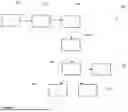
FIG. 1 shows a schematic illustration of a method for increasing driving awareness of a driver during an assisted drive of a vehicle.
FIG. 2 shows a schematic illustration of sequence of further method steps to the method of FIG. 1.
FIG. 3 shows a schematic illustration of a vehicle with vehicle components for carrying out the method of FIG. 1 and FIG. 2.
DETAILED DESCRIPTION
The figures are merely schematic representations and serve only to illustrate examples of the disclosure. Identical or equivalent elements are in principle provided with the same reference signs.
FIG. 1 shows a schematic illustration of a method 100 for increasing driving awareness of a driver during an assisted drive of a vehicle 300. The method 100 includes obtaining driving awareness data indicative of a degree of driving awareness of the driver during the assisted drive of the vehicle 101. The method may optionally include a step of estimating driving awareness data 101′ for providing it to the next step 101 (obtaining driving awareness data). After obtaining the driving awareness data, the method includes providing first driver request data for requesting a first driver response from the driver 102. The first driver response is configured to increase the degree of driving awareness of the driver. The method further includes providing drive response data if the first driver response is not received within a first response time 103. The drive response data is configured to autonomously alter at least one drive parameter of the assisted drive of the vehicle 300.
FIG. 1 shows that the method further includes providing second driver request data for requesting a second driver response from the driver after providing the drive response 104. The second driver response is configured to increase the degree of driving awareness of the driver. The method, as shown in FIG. 1, provides drive response data if the first driver response is not received within a first response time 105 or the method provides drive response data, which is configured to autonomously alter at least one drive parameter of the assisted drive of the vehicle 105. Alternative or in addition to the step 105, the method further includes providing deactivation data for initiating a deactivation of the assisted drive 106.
After the step of providing the second driver request data 104, the method includes keeping the obtained first degree of driving awareness at the same level without increasing the awareness level to the second degree, if the first driver response is not obtained within the first response time. If the first driver response is received within the first response time, the method includes continuing the assisted drive of the vehicle 300 without altering of the at least one drive parameter 107. In other words, the drive parameter is not increased to a higher awareness level (for instance from the first degree of driving awareness to the higher second degree of driving awareness).
FIG. 2 shows a schematic illustration of a sequence of further method steps 200 to the method 100 of FIG. 1. The further method steps 200 can be executed before the method 100 of FIG. 1. The further method steps 200 are configured for estimating driver awareness data indicative of a degree of driving awareness of the driver during the assisted drive of the vehicle 300. The further method steps 200 include setting an initial drive parameter 201. The initial drive parameter may be set with an expectation of a normal driving awareness of the driver (normal may indicate the first degree of driving awareness). The method further includes obtaining sensor data for at least one driving parameter 202 from at least one measurement device 303 of the vehicle 300 (FIG. 3). Sensor data may include eye tracking data, steering torque data, lane positioning data, hands on or off position data. The sensor data may be used for estimating driving awareness data 101′, 203. When the estimated driver awareness data exceeds a threshold value, the method may include keeping the set initial drive parameter unchanged 207. If the estimated driver awareness data falls below the threshold value, the method may proceed with the step of obtaining the driving awareness data 101 of the method 100, 205.
FIG. 3 shows a schematic illustration of a vehicle 300 with vehicle components for carrying out the method of FIG. 1. The vehicle 300 includes a data processing system 301 including means for carrying out the method 100 for increasing driving awareness of a driver during an assisted drive of the vehicle 300. The vehicle 300 further includes a computer program product 302 including instructions which, when executed by the data processing system 301, cause the data processing system 301 to carry out the method 100 of any one of the previous claims.
As used herein, the phrase “at least one,” in reference to a list of one or more entities should be understood to mean at least one entity selected from any one or more of the entities in the list of entities, but not necessarily including at least one of each and every entity specifically listed within the list of entities and not excluding any combinations of entities in the list of entities. This definition also allows that entities may optionally be present other than the entities specifically identified within the list of entities to which the phrase “at least one” refers, whether related or unrelated to those entities specifically identified. Thus, as a non-limiting example, “at least one of A and B” (or, equivalently, “at least one of A or B,” or, equivalently “at least one of A and/or B”) may refer, in one example, to at least one, optionally including more than one, A, with no B present (and optionally including entities other than B); in another example, to at least one, optionally including more than one, B, with no A present (and optionally including entities other than A); in yet another example, to at least one, optionally including more than one, A, and at least one, optionally including more than one, B (and optionally including other entities). In other words, the phrases “at least one,” “one or more,” and “and/or” are open-ended expressions that are both conjunctive and disjunctive in operation. For example, each of the expressions “at least one of A, B, and C,” “at least one of A, B, or C,” “one or more of A, B, and C,” “one or more of A, B, or C,” and “A, B, and/or C” may mean A alone, B alone, C alone, A and B together, A and C together, B and C together, A, B, and C together, and optionally any of the above in combination with at least one other entity.
Other variations to the disclosed examples can be understood and effected by those skilled in the art in practicing the claimed disclosure, from the study of the drawings, the disclosure, and the appended claims. In the claims the word “comprising” does not exclude other elements or steps and the indefinite article “a” or “an” does not exclude a plurality. A single processor or other unit may fulfill the functions of several items or steps recited in the claims. The mere fact that certain measures are recited in mutually different dependent claims does not indicate that a combination of these measures cannot be used to advantage. A computer program may be stored/distributed on a suitable medium such as an optical storage medium or a solid-state medium supplied together with or as part of other hardware, but may also be distributed in other forms, such as via the Internet or other wired or wireless telecommunication systems. Any reference signs in the claims should not be construed as limiting the scope of the claims.
Claims
1. A method for increasing driving awareness of a driver during an assisted drive of a vehicle, the method comprising:
obtaining driving awareness data indicative of a degree of driving awareness of the driver during the assisted drive of the vehicle;
providing first driver request data for requesting a first driver response from the driver after obtaining the driving awareness data, the first driver response being configured to increase the degree of driving awareness of the driver;
providing drive response data if the first driver response is not received within a first response time, the drive response data being configured to autonomously alter at least one drive parameter of the assisted drive of the vehicle; and
providing second driver request data for requesting a second driver response from the driver after providing a drive response, the second driver response being configured to increase the degree of driving awareness of the driver.
2. The method according to claim 1, wherein the at least one drive parameter is an altered steering torque feedback on a steering device of the vehicle, the steering torque feedback being provided by a steering torque feedback motor of a steer-by-wire system of the vehicle.
3. The method according to claim 2, wherein the altered steering torque feedback is a reduced steering torque feedback compared to an initial steering torque feedback during the first response time.
4. The method according to claim 1, wherein the at least one drive parameter is an altered lane positioning of the vehicle within a lane.
5. The method according to claim 1, wherein, if the second driver response is not received within a second response time, the method further comprises:
providing second drive response data, the second drive response data being configured to autonomously alter at least one further drive parameter of the assisted drive of the vehicle and/or to autonomously increase a degree of altering of the altered at least one drive parameter; or
providing deactivation data for initiating a deactivation of the assisted drive.
6. The method according to claim 5, wherein, if the second driver response is received within the second response time, the method comprises continuing the assisted drive of the vehicle without altering of the at least one drive parameter.
7. The method according to claim 5, wherein the second response time is shorter than the first response time.
8. The method according to claim 1, wherein the first driver request data and/or the second driver request data is configured for requesting a driver response in a form of a steering input on a steering device of the vehicle.
9. The method according to claim 1, wherein the first driver request data and/or the second driver request data is configured for requesting a driver response in a form of a visual response of the driver detected by a driver monitoring system of the vehicle.
10. The method according to claim 1, wherein the first driver request data and/or the second driver request data is at least configured to display an information indicative of the requested driver response on a display of the vehicle.
11. The method according to claim 1, wherein the driving awareness data is obtained based on one or more of: a monitoring of the driver by the driver monitoring system of the vehicle, a steering input of the driver on the steering device of the vehicle, and/or a detection of driver hands on or off a steering device of the vehicle.
12. The method according to claim 1, wherein each one of the first driver request data and the second driver request data are configured for repeatedly requesting a driver response from the driver, wherein a requesting frequency and/or a requesting sensitivity depending on the driver awareness is higher for the second driver request data than for the first driver request data.
13. A data processing system comprising a processor for carrying out the method of claim 1.
14. A vehicle comprising the data processing system of claim 13.
15. A non-transitory computer readable medium comprising instructions stored in a memory and executed by a processor to carry out steps of a method for increasing driving awareness of a driver during an assisted drive of a vehicle, the steps comprising:
obtaining driving awareness data indicative of a degree of driving awareness of the driver during the assisted drive of the vehicle;
providing first driver request data for requesting a first driver response from the driver after obtaining the driving awareness data, the first driver response being configured to increase the degree of driving awareness of the driver;
providing drive response data if the first driver response is not received within a first response time, the drive response data being configured to autonomously alter at least one drive parameter of the assisted drive of the vehicle; and
providing second driver request data for requesting a second driver response from the driver after providing a drive response, the second driver response being configured to increase the degree of driving awareness of the driver.
16. The non-transitory computer readable medium according to claim 15, wherein the at least one drive parameter is an altered steering torque feedback on a steering device of the vehicle, the steering torque feedback being provided by a steering torque feedback motor of a steer-by-wire system of the vehicle.
17. The non-transitory computer readable medium according to claim 15, wherein the at least one drive parameter is an altered lane positioning of the vehicle within a lane.
18. The non-transitory computer readable medium according to claim 15, wherein, if the second driver response is not received within a second response time, the steps further comprise:
providing second drive response data, the second drive response data being configured to autonomously alter at least one further drive parameter of the assisted drive of the vehicle and/or to autonomously increase a degree of altering of the altered at least one drive parameter; or
providing deactivation data for initiating a deactivation of the assisted drive.
19. The non-transitory computer readable medium according to claim 15, wherein the first driver request data and/or the second driver request data is configured for requesting a driver response in a form of a steering input on a steering device of the vehicle or a visual response of the driver detected by a driver monitoring system of the vehicle.
20. The method according to claim 1, wherein the first driver request data and/or the second driver request data is at least configured to display an information indicative of the requested driver response on a display of the vehicle.
Images & Drawings included:


Sources:
- United States Patent and Trademark Office - verify current appl. status at the USPTO↗
Similar patent applications:
Recent applications in this class:
- » 20260035001 2026-02-05
DRIVER ASSISTANCE CONTROL DEVICE, DRIVER ASSISTANCE METHOD, AND NONTRANSITORY COMPUTER STORAGE MEDIUM - » 20260015001 2026-01-15
SYSTEMS AND METHODS FOR EVALUATING AND SHARING AUTONOMOUS VEHICLE DRIVING STYLE INFORMATION WITH PROXIMATE VEHICLES - » 20250346241 2025-11-13
METHOD FOR OPERATING A VEHICLE CENTRAL COMPUTER - » 20250319892 2025-10-16
LAUNCH CONTROL INTERFACE AND METHOD - » 20250304085 2025-10-02
CONTROL DEVICE, CONTROL METHOD, AND STORAGE MEDIUM - » 20250289446 2025-09-18
DRIVER ASSIST APPARATUS, DRIVER ASSIST METHOD, AND NON-TRANSITORY STORAGE MEDIUM - » 20250282369 2025-09-11
VEHICLE - » 20250282368 2025-09-11
CONTROL DEVICE FOR VEHICLE - » 20250263086 2025-08-21
HARDWARE-IN-THE-LOOP TEST BED WITH DUAL COCKPIT FOR AUTONOMOUS VEHICLES - » 20250242820 2025-07-31
METHOD AND DEVICE FOR DYNAMICALLY ADJUSTING A DRIVING PEDAL CHARACTERISTIC