DECISION MAKING SYSTEM AND METHOD
US20260048321A1
2026-02-19
19/301,290
2025-08-15
Smart Summary: A decision-making system uses a special die with six sides that have different symbols or letters on them. These symbols can represent directions like East, West, South, North, Left, and Right. By rolling the die, people can make fun and spontaneous decisions about where to go during activities like road trips or hiking. This adds an element of excitement to planning trips or adventures. It's a simple way to let chance guide your journey. 🚀 TL;DR
Abstract:
A decision making system includes at least one die, which in some embodiments includes six faces, and decision making indicia disposed thereon. Particularly, the decision making indicia can be directional indicia (e.g., letters) for representing a direction of travel, such as East, West, South, North, Left and Right. The die can therefore be used to make decisions, providing spontaneity and fun to activities such as road trips, hiking, biking, and motorcycle rides.
Applicant:
Interested in similar patents?
Get notified when new applications in this technology area are published.
Classification:
A63F9/0415 » CPC main
Games not otherwise provided for; Dice ; Dice-boxes; Mechanical dice-throwing devices Details of dice, e.g. non-cuboid dice
A63F2009/0426 » CPC further
Games not otherwise provided for; Dice ; Dice-boxes; Mechanical dice-throwing devices; Details of dice, e.g. non-cuboid dice six-sided non-cuboid
A63F2009/0488 » CPC further
Games not otherwise provided for; Dice ; Dice-boxes; Mechanical dice-throwing devices; Dice with symbols, e.g. indicating a direction for moving a playing piece with letters or words
A63F9/04 IPC
Games not otherwise provided for Dice ; Dice-boxes; Mechanical dice-throwing devices
Description
CROSS-REFERENCE TO RELATED APPLICATION
The present application is related to and claims priority to U.S. Provisional Patent Application Number 63/683,753 filed Aug. 16, 2024, which is incorporated by reference herein in its entirety.
BACKGROUND OF THE INVENTION
The following includes information that may be useful in understanding the present disclosure. It is not an admission that any of the information provided herein is prior art nor material to the presently described or claimed inventions, nor that any publication or document that is specifically or implicitly referenced is prior art.
Technical Field
The present invention relates generally to the field of dice of existing art and more specifically relates to dice for assistance in making decisions.
Related Art
Adventures like road trips, hiking, biking, and motorcycle rides offer a thrilling way to explore the world, each providing a unique sense of freedom and connection to nature. Whether it's the open road stretching ahead on a cross-country drive, the challenge of a mountain trail, or the rush of wind on a winding motorcycle route, these activities embody the spirit of exploration.
During these activities, decisions constantly arise that shape the course of the journey. Directional choices are a significant part of this, as they determine the paths to be taken and the destinations reached. Examples of directional decisions include a fork in the road, a split in the trail, or simply facing the choice of which path to take next. These decisions can be both exciting and daunting, as they can lead to unexpected discoveries or take adventures off course.
The current process of making these choices is often approached in a mundane or practical manner, relying on maps, GPS, or simply the most familiar route, which can sometimes strip the adventure of its spontaneity. Currently, there isn't a particularly fun or engaging way to make these directional decisions, leaving a gap in the experience that could otherwise enhance the journey. Instead of seeing these moments as mere choices, they could become opportunities to embrace the unknown.
Accordingly, a suitable solution is desired.
SUMMARY OF THE INVENTION
In view of the foregoing disadvantages inherent in the known dice art, the present disclosure provides a novel decision making system. The general purpose of the present disclosure, which will be described subsequently in greater detail, is to provide a system that employs the use of die, or dice, to make decisions, particularly directional decisions, providing spontaneity and fun to the activities such as (but not limited to) road trips, hiking, biking, and motorcycle rides.
A decision making system is disclosed herein. According to one or more embodiments, the decision making system includes at least one die having a plurality of faces, each face including indicia corresponding to a different direction of travel. As such, when the at least one die is rolled by a user, the indicia on an upward facing face of the at least one die indicates a suggested direction of travel for the user.
According to one or more additional embodiments, a decision making system may include a six-sided die having six faces, each face including a different letter selected from the group consisting of “N”, “S”, “E”, “W”, “R” and “L”. The letter “N” may correspond to a North direction of travel, the letter “S” may correspond to a South direction of travel, the letter “E” may correspond to an East direction of travel, the letter “W” may correspond to a West direction of travel, the letter “R” may correspond to a right direction of travel relative to a user, and the letter “L” may correspond to a left direction of travel relative to the user. As such, when the at least one die is rolled by the user, the letter on an upward facing face of the six-sided die indicates a suggested direction of travel for the user (e.g., north, south, left, etc.).
According to another embodiment, a method for decision making is also disclosed herein. The method includes providing the at least one die as above; rolling the at least one die such that one of the faces of the at least one die is facing upward; reading the indicia on the upward facing face of the at least one die; and traveling in the direction of travel indicated by the indicia on the upward facing face of the at least one die.
For purposes of summarizing the invention, certain aspects, advantages, and novel features of the invention have been described herein. It is to be understood that not necessarily all such advantages may be achieved in accordance with any one particular embodiment of the invention. Thus, the invention may be embodied or carried out in a manner that achieves or optimizes one advantage or group of advantages as taught herein without necessarily achieving other advantages as may be taught or suggested herein. The features of the invention which are believed to be novel are particularly pointed out and distinctly claimed in the concluding portion of the specification. These and other features, aspects, and advantages of the present invention will become better understood with reference to the following drawings and detailed description.
BRIEF DESCRIPTION OF THE DRAWINGS
The figures which accompany the written portion of this specification illustrate embodiments and methods of use for the present disclosure, a decision making system, constructed and operative according to the teachings of the present disclosure.
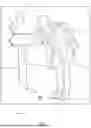
FIG. 1 is a front perspective view of a die of the decision making system during an ‘in-use’ condition, according to an embodiment of the disclosure.
FIG. 2 is a top front perspective view of the die illustrating the letters “N”, “E” and “R”, according to an embodiment of the present disclosure.
FIG. 3 is a top front perspective view of the die illustrating the letters “S”, “W” and “L”, according to an embodiment of the present disclosure.
FIG. 4 is a pattern view of the die, according to an embodiment of the present disclosure.
FIG. 5 is a flow diagram illustrating a method for decision making, according to an embodiment of the present disclosure.
The various embodiments of the present invention will hereinafter be described in conjunction with the appended drawings, wherein like designations denote like elements.
DETAILED DESCRIPTION
As discussed above, embodiments of the present disclosure relate to a decision making system and more particularly to a die, or dice, used to make decisions. Particularly, the decision making system is used for making directional decisions during activities, such as (but not limited to) road trips, hiking, biking, and motorcycle rides. The decision making system includes one or more die that includes decision making indicia thereon. As such, when a directional question presents itself, such as which direction to travel in, the user can roll the die to determine which way to go, providing spontaneity and fun to the activities.
Referring now more specifically to the drawings by numerals of reference, there is shown in FIGS. 1-4, various views of a decision making system 100.
FIG. 1 shows a decision making system 100 during an ‘in-use’ condition, according to an embodiment of the present disclosure. As above and as shown here, the decision making system 100 may be beneficial for use by a user 5 to make decisions, particularly directional decisions. For example, as shown here, the user 5 may find themselves on a hiking trail with a choice of trails, and the user 5 can utilize the decision making system 100 to make the decision of which trail to choose by rolling one or more die 110 of the decision making system 100.
Referring now to FIGS. 2-4 showing various views of the die 110 of the decision making system 100 of FIG. 1, according to an embodiment of the present disclosure. As shown here, the decision making system 100 may include at least one die 110 having a plurality of faces. For example, as is demonstrated here, the at least one die 110 may be a six-sided die having six faces. As such, the die 110 may include a first face 111, a second face 112, a third face 113, a fourth face 114, a fifth face 115, and a sixth face 116. A six sided die is illustrated in these figures and will be discussed throughout, however it should be appreciated that the die 110 is not limited to six faces. It should also be appreciated that the decision making system 100 is not limited to one die 110.
In some embodiments, the die 110 may be made from a rigid material. For example, the die 110 may be made from (but is not limited to) a block of wood. In other examples, the die 110 may be made from (but is not limited to) stone, metal, or other suitable materials. In some embodiments, the die 110 may be a 1 inch cube, with all faces 111, 112, 113, 114, 115, 116 of the die 110 being 1 inch in length, height and width. It should however be appreciated that the die 110 is not limited to being made from any materials listed here and is also not limited to the configuration or size shown throughout the figures and discussed herein.
As above, the die 110 is used for making decisions. As such, as shown in FIGS. 2-4, each face of the die 110 may include indicia 130 corresponding to a different direction of travel. As such, when the die 110 is rolled by a user 5, the indicia 130 on an upward facing face of the die 110 indicates a suggested direction of travel for the user 5. In some embodiments, the decision making indicia 130 may be permanently affixed to each of the faces 111, 112, 113, 114, 115, 116 of the die 110. For example, the decision making indicia 130 may be (but is not limited to being) imprinted, burned, engraved, or the like, onto the die 110.
As shown in these figures, in some embodiments, the indicia 130 may include letters. Preferably, each face 111, 112, 113, 114, 115, 116 of the die 110 includes a different letter, to indicate a different direction of travel. For example, the first face 111 of the die 110 may include the letter “N” 131 corresponding to a North direction of travel, the second face 112 of the die 110 may include letter “S” 132 corresponding to a South direction of travel, the third face 113 of the die 110 may include letter “E” 133 corresponding to an East direction of travel, the fourth face 114 of the die 110 may include letter “W” 134 corresponding to a West direction of travel, the fifth face 115 of the die 110 may include letter “R” 135 corresponding to a right direction of travel, and the sixth face 116 of the die 110 may include letter “L” 136 corresponding to a left direction of travel. As such, the decision making system 100 can offer suggestions of direction based on letters, unlike a compass or a regular die that includes dots or numbers.
It should be appreciated that no particular face is limited to the letter discussed here. For example, the first face 111 of the die 110 may instead include the letter “W” 134, the second face 112 of the die 110 may instead include the letter “R” 135, and so on. It should also be appreciated that the directional indicia 130 is not limited to the particular letters discussed above, nor is the directional indicia 130 limited to single letters. Further, whilst the application of the decision making system 100 has been shown and discussed throughout as for use in directional decisions, it should be appreciated that the decision making system 100 can be utilized for making other decisions. As such, any suitable letters, symbols, or any other type of indicia may be used for any decision making purpose.
Referring now to FIG. 5 showing a flow diagram illustrating a method of use 200 for decision making system, according to an embodiment of the present disclosure. In particular, the method of use 200 may include one or more components or features of the decision making system 100 as described above. As illustrated, the method of use 200 may include the steps of: step one 201, providing at least one die, the at least one die including a plurality of faces, each face including indicia corresponding to a different direction of travel; step two 202, rolling the at least one die such that one of the faces of the at least one die is facing upward; step three 203, reading the indicia on the upward facing face of the at least one die; and step four 204, traveling in the direction of travel indicated by the indicia on the upward facing face of the at least one die.
In particular, in use, during activities such as (but not limited to) road trips, hiking, biking, or motorcycle rides, a user may carry the die with them. When a decision presents itself, particularly a directional decision, the user may roll the die. Whichever face of the die is facing up when the die is rolled, the user takes that indicia to make their directional decision. For example, if the die lands with “L” facing up, the user turns left; if the die lands with “N” facing up, the user heads North.
The use of “step of” should not be interpreted as “step for”, in the claims herein and is not intended to invoke the provisions of 35 U.S. C. § 112(f). It should also be noted that, under appropriate circumstances, considering such issues as design preference, user preferences, marketing preferences, cost, structural requirements, available materials, technological advances, etc., other methods for making decisions are taught herein.
The embodiments of the invention described herein are exemplary and numerous modifications, variations and rearrangements can be readily envisioned to achieve substantially equivalent results, all of which are intended to be embraced within the spirit and scope of the invention. Further, the purpose of the foregoing abstract is to enable the U.S. Patent and Trademark Office and the public generally, and especially the scientist, engineers and practitioners in the art who are not familiar with patent or legal terms or phraseology, to determine quickly from a cursory inspection the nature and essence of the technical disclosure of the application.
Claims
1. A decision making system comprising:
at least one die having a plurality of faces, each face including indicia corresponding to a different direction of travel; and
wherein when the at least one die is rolled by a user, the indicia on an upward facing face of the at least one die indicates a suggested direction of travel for the user.
2. The decision making system of claim 1, wherein the at least one die includes six faces.
3. The decision making system of claim 1, wherein the indicia includes letters.
4. The decision making system of claim 3, wherein a first face of the at least one die includes a letter “N” corresponding to a North direction of travel.
5. The decision making system of claim 3, wherein a second face of the at least one die includes a letter “S” corresponding to a South direction of travel.
6. The decision making system of claim 3, wherein a third face of the at least one die includes a letter “E” corresponding to an East direction of travel.
7. The decision making system of claim 3, wherein a fourth face of the at least one die includes a letter “W” corresponding to a West direction of travel.
8. The decision making system of claim 3, wherein a fifth face of the at least one die includes a letter “R” corresponding to a right direction of travel relative to the user.
9. The decision making system of claim 3, wherein a sixth face of the at least one die includes a letter “L” corresponding to a left direction of travel relative to the user.
10. The decision making system of claim 1, wherein the indicia is imprinted onto each face of the at least one die.
11. The decision making system of claim 1, wherein the indicia is burned onto each face of the at least one die.
12. The decision making system of claim 1, wherein the indicia is engraved onto each face of the at least one die.
13. The decision making system of claim 1, wherein the at least one die is made of wood.
14. The decision making system of claim 1, wherein the at least one die is made of metal.
15. The decision making system of claim 1, wherein the at least one die is made of stone.
16. A decision making system comprising:
a six-sided die having six faces, each face including a different letter selected from the group consisting of “N”, “S”, “E”, “W”, “R” and “L”;
wherein the letter “N” corresponds to a North direction of travel, the letter “S” corresponds to a South direction of travel, the letter “E” corresponds to an East direction of travel, the letter “W” corresponds to a West direction of travel, the letter “R” corresponds to a right direction of travel relative to a user, and the letter “L” corresponds to a left direction of travel relative to the user; and
wherein when the at least one die is rolled by the user, the letter on an upward facing face of the six-sided die indicates a suggested direction of travel for the user.
17. The decision making system of claim 16, wherein the indicia is at least one of imprinted, burned and engraved onto each face of the at least one die.
18. The decision making system of claim 16, wherein the six-sided die is made of at least one of wood, metal and stone.
19. A method for decision making, the method comprising the steps of:
providing at least one die, the at least one die including a plurality of faces, each face including indicia corresponding to a different direction of travel;
rolling the at least one die such that one of the faces of the at least one die is facing upward;
reading the indicia on the upward facing face of the at least one die; and
traveling in the direction of travel indicated by the indicia on the upward facing face of the at least one die.
20. The method of claim 19, wherein the at least one die is a six-sided die having six faces, each face including a different letter selected from the group consisting of “N”, “S”, “E”, “W”, “R” and “L”; and
wherein the letter “N” corresponds to a North direction of travel, the letter “S” corresponds to a South direction of travel, the letter “E” corresponds to an East direction of travel, the letter “W” corresponds to a West direction of travel, the letter “R” corresponds to a right direction of travel relative to the user, and the letter “L” corresponds to a left direction of travel relative to the user.
Images & Drawings included:



Sources:
- United States Patent and Trademark Office - verify current appl. status at the USPTO↗
Similar patent applications:
- » 20230365163
Automatic Driving Decision Making Method, System And Device And Computer Storage Medium - » 11768815
Decision-making system, method and computer program product - » 11828115
Decision-making system, method and computer program product - » 11768861
Decision-making system, method and computer program product - » 11768836
Decision-making system, method and computer program product - » 20100191691
Method for computer-aided decision-making system and method that utilizes product, services and/or venue values and personality value matching, incorporating groups and outside values - » 20180114176
Work planning system, work planning method, decision-making support system, computer program, and storage medium - » 20180107934
Condition determination system, condition determination method, decision-making support system, computer program, and storage medium - » 11553126
Multi-criterial decision making system and method - » 9717332
Multi-criterial decision making system and method
Recent applications in this class:
- » 20260027450 2026-01-29
Random Value Generating Device - » 20250387698 2025-12-25
Low Probability Dice - » 20250262523 2025-08-21
Basketball Dice Game - » 20250041709 2025-02-06
Rollable Two-Sided Die - » 20240165499 2024-05-23
DICE - » 20240100413 2024-03-28
GAME DIE DEVICE - » 20230191239 2023-06-22
ROUNDED DICE - » 20220395745 2022-12-15
Tactile Braille Dice - » 20210228976 2021-07-29
PLAYING DEVICE - » 20210154569 2021-05-27
DICE AND METHOD OF MAKING SAME