MPO ADAPTER FOR APC CONNECTOR INSPECTION
US20260050128A1
2026-02-19
19/369,912
2025-10-27
Smart Summary: A fiber optic adapter helps inspect APC connectors. It has two faces, each with a central axis. The first face is angled differently than the second face. This angle is designed to match the angle of the front of an APC connector. This makes it easier to check the connectors for any issues. 🚀 TL;DR
Abstract:
A fiber optic adapter has a first face defining a first central axis and a second face opposite the first face defining a second central axis, wherein the first central axis is at an angle relative to the second central axis. In one embodiment, the angle matches the angle of the front face of an APC connector.
Inventors:
- Jose M. Castro 74 🇺🇸 Naperville, IL, United States
- Bulent Kose 66 🇺🇸 Burr Ridge, IL, United States
- Yu Huang 60 🇺🇸 Orland Park, IL, United States
- Andrew R. Matcha 14 🇺🇸 Chicago, IL, United States
Assignee:
- PANDUIT CORP. 1,124 🇺🇸 Tinley Park, IL, United States
Applicant:
Interested in similar patents?
Get notified when new applications in this technology area are published.
Classification:
G02B6/3825 » CPC main
Light guides; Coupling light guides; Mechanical coupling means having fibre to fibre mating means; Dismountable connectors, i.e. comprising plugs of the ferrule type, e.g. fibre ends embedded in ferrules, connecting a pair of fibres with an intermediate part, e.g. adapter, receptacle, linking two plugs
G02B6/38 IPC
Light guides; Coupling light guides; Mechanical coupling means having fibre to fibre mating means
Description
CROSS REFERENCE TO RELATED APPLICATION(S)
This application is a continuation of U.S. patent application Ser. No. 18/668,419, filed May 20, 2024, which is a continuation of U.S. patent application Ser. No. 17/693,656, filed Mar. 14, 2022, the entirety of which is hereby incorporated by reference herein.
FIELD OF INVENTION
The present invention relates generally to the field of optical network interconnection and optical assemblies and, more specifically, to apparatus and methods to inspect optical fiber connector endface while optimizing network installation.
BACKGROUND AND PRIOR ART EVALUATION
Fiber optic links are extremely sensitive to dust, oil, and other contaminants on the mating connector face. In the case of single-mode fiber (SMF) links, contaminated connectors can reduce return loss (increase reflection), increase relative intensity noise, multipath interference, and insertion loss. Moreover, a single particle placed in the fiber core can completely block the optical signal from passing between two connectors.
Due to its larger core size, multimode fiber (MMF) links are less affected by contaminated connectors. Therefore, it is less likely that optical contamination can completely block light from a connector. However, the connector contamination can still significantly impact the channel performance due to increased attenuation, modal power distribution, and modal noise.
As the demand for higher data rates continues to grow, the optical channels, SMF and MMF, are exposed to higher transmission penalties and therefore becoming more sensitive to contamination in the connector end faces. An essential issue with contaminated connectors is that they can permanently damage their connector endface and contaminate or damage the mated connector.
It is crucial to verify that the connector endface is cleaned before connection during the network installation. The degree of cleanliness can be determined using a fiber inspection tool, which typically consists of an illuminator, a lens, an image sensor, a focus system, and a display to image the connector's endface.
There are several apparatuses for visual inspection. For example, US Patent Application Pub. No. 2011/0085159 discloses a portable inspection system with a lens and a camera with autofocus functionalities. In addition, US Patent Application Pub. No. 2004/0125366 discloses a method for automated inspection of the fiber, including center, focus, capture images, and analysis of the contamination of the connector end face. The connectors to be inspected include several types of single, duplex, such as LC, SC, FC, ST, CS, SN connectors, or parallel optical connectors such as MTP/MPO connectors. Among them, MTP/MPO connectors have the most fiber count and the largest endface. Hence it is more challenging and time-consuming to inspect them.
Based on the connector endface, there are two types of connectors, UPC and APC connectors. UPC stands for Ultra-Physical Contact, and PC stands for Physical Contact. APC stands for Angle Polished Connector. The tip of the APC connector has an angle on it. This angle prevents back reflections which will seriously degrade the performance of any fiber optic system. Hence APC connectors have better performance.
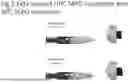
FIG. 1 shows the side view of a UPC MPO connector 101 (top) and the side view of a UPC MPO connector 102 (bottom).
An MPO adapter connects two MPO connectors and provides the connection between cable to cable or cable to equipment in the MPO style.
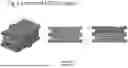
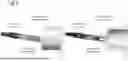
FIG. 2 shows the 3D view (left), side view (middle), and intersecting surface (right) of a standard MPO adapter 103. The openings for both faces of the UPC MPO adapter define a single central axis 120 for the entire adapter. Since the physical and mechanical properties of the APC connector are pretty different from UPC or PC, this means APC should not be mated with UPC or PC. MPO adaptor is also used to inspect the endface of an MPO connector as it can fix the MPO connector endface to the tip of the microscope adapter.
FIG. 3 shows that a UPC MPO connector is connected to a microscope adapter for UPC inspection 104 by a standard MPO adapter. However, since the physical and mechanical properties of the APC connector are pretty different from UPC or PC, we cannot use a microscope adapter for UPC inspection and a standard MPO adapter to inspect the APC MPO adapter.
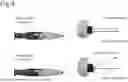
FIG. 4 (top) shows that an incident light 1 107 from the microscope illumination system goes to a UPC MPO connector 101, is reflected by the endface of the connector, and generates a reflected light 1 108, which goes back to the microscope. This allows it to form a good image with high contrast on the camera sensor. On the other hand, FIG. 4 (bottom) shows that an incident light 2 109 from the microscope illumination system goes to an APC MPO connector 102, is reflected by the endface of the APC connector, and generates a reflected light 2 110, which is deviated by the APC connector's and does not go back to the microscope. Since the deviated light will become noise and the image is also very weak, the signal-noise ratio of the image is poor. Hence it will form a poor image with low contrast on the camera sensor.
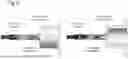
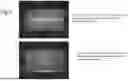
FIG. 5 (top) shows the image of a UPC connector endface inspected by a microscope using an adapter for UPC inspection and a standard MPO adapter. FIG. 5 (bottom) shows the image of an APC connector endface inspected by a microscope using an adapter for UPC inspection and a standard MPO adapter. From the two images, we can tell the image quality of the APC MPO connector is not acceptable. We have to use different parts to inspect the APC MPO connector.
FIG. 6 shows that an APC MPO connector is connected to a microscope adapter for APC inspection 105 by a standard MPO adapter 103. The adapter for APC inspection 105 has an angle to compensate the angle of APC MPO connector 102 so that the APC MPO connector 102 endface is inspected by the microscope at precisely the same position and same angle as the UPC MPO connector 101 endface under adapter for UPC inspection 104. In this way, the APC image quality will be as good as the UPC image quality.
FIG. 7 shows the image of an APC MPO connector 102 endface inspected by a microscope using an adapter for APC inspection 105 and a standard MPO adapter 103. The image quality of the APC MPO connector 102 is acceptable.
Although the inspection of APC MPO connector is achieved by changing to a microscope adapter for APC inspection 105, the cost of a new microscope adapter that can view 12 fiber at one time is relatively high, about one thousand USD to a few thousand USD as the metal adapter has a lot of precise future. Moreover, changing the microscope adapter takes some time too.
FIG. 8 shows a front view of the microscope adapter for UPC inspection. To attach it to the microscope body, one has to fix it with four screws. Therefore, changing the adapter between UPC and APC back and forth will take a lot of time. Moreover, it may reduce the precision of the adapter's mechanical geometry in the long term.
SUMMARY
A fiber optic adapter has a first face defining a first central axis and a second face opposite the first face defining a second central axis, wherein the first central axis is at an angle relative to the second central axis. IN one embodiment, the angle matches the angle of the front face of an APC connector.
BRIEF DESCRIPTION OF THE FIGURES
FIG. 1 shows the side view of a UPC MPO connector 101 (top) and the side view of a UPC MPO connector 102 (bottom).
FIG. 2 shows the 3D view (left), side view (middle), and intersecting surface (right) of a standard MPO adapter 103.
FIG. 3 shows that a UPC MPO connector is connected to a microscope adapter for UPC inspection 104 by a standard MPO adapter.
FIG. 4 (top) shows that an incident light 1 107 from the microscope illumination system goes to a UPC MPO connector 101, is reflected by the endface of the connector, and generates a reflected light 1 108, which goes back to the microscope.
FIG. 5 (top) shows the image of a UPC connector endface inspected by a microscope using an adapter for UPC inspection and a standard MPO adapter.
FIG. 6 shows that an APC MPO connector is connected to a microscope adapter for APC inspection 105 by a standard MPO adapter 103.
FIG. 7 shows the image of an APC MPO connector 102 endface inspected by a microscope using an adapter for APC inspection 105 and a standard MPO adapter 103.
FIG. 8 shows a front view of the microscope adapter for UPC inspection. To attach it to the microscope body, one has to fix it with four screws.
FIG. 9 shows the 3D view (left), side view (middle), and intersecting surface (right) of a novel MPO adapter 106.
FIG. 10 shows that an APC MPO connector 102 is connected to a microscope adapter for UPC inspection 104 by the novel MPO adapter 106.
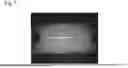
FIG. 11 shows the image of an APC MPO connector 102 endface inspected by a microscope using an adapter for UPC inspection 104 and the prototype of a novel MPO adapter 106.
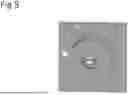
FIG. 12 shows the image of an APC MPO connector 102 endface inspected by a commercial microscope using an adapter for UPC inspection 104 and the prototype of a novel MPO adapter 106.
DESCRIPTION OF INVENTION
This invention discloses an apparatus and method for fast switching between inspection of UPC and APC connectors.
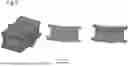
FIG. 9 shows the 3D view (left), side view (middle), and intersecting surface (right) of a novel MPO adapter 106. This adapter has a first face on a first end defining a first central axis 121 and a second face on a second end defining a second central axis 122. The first central axis is at an angle relative to the second central axis. In one embodiment, the angle matches the angle of the APC MPO connector. Such adapters can be made by 3D printing, injection molding, or machining metal or plastic material.
FIG. 10 shows that an APC MPO connector 102 is connected to a microscope adapter for UPC inspection 104 by the novel MPO adapter 106. Since the novel MPO adapter 106 has an angle to compensate the angle of the APC MPO connector 102, the APC MPO connector 102 endface is inspected by the microscope at exactly the same position and same angle as the UPC MPO connector 101 under adapter for UPC inspection 104. In this way, the APC image quality will be as good as the UPC image quality.
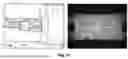
FIG. 11 shows the image of an APC MPO connector 102 endface inspected by a microscope using an adapter for UPC inspection 104 and the prototype of a novel MPO adapter 106. The image quality of the APC MPO connector 102 is acceptable.
FIG. 12 shows the image of an APC MPO connector 102 endface inspected by a commercial microscope using an adapter for UPC inspection 104 and the prototype of a novel MPO adapter 106. The image quality of the APC MPO connector 102 is acceptable. Furthermore, we can see that the novel MPO adapter 106 can achieve APC MPO connector inspection using inspection microscopes made by any manufacturers.
Although we only have shown the prototype of a novel MPO adapter which allows to inspect APC MPO connector using an adapter for UPC inspection, the same concept and design can be applied to other types of connectors such as LC, CS, SN connectors with 1.25 mm diameter ferrule, and SC, FC, ST connectors with 2.5 mm diameter ferrule.
Claims
What is claimed is:1. A system for inspecting an angle polish connector (APC) comprising:
a microscope with an integrated Ultra-Physical Contact (UPC) type connector adapter; and
an adapter with a first face defining a first central axis and having an opening configured to accept a connector and a second face opposite the first face defining a second central axis and having an opening configured to accept a connector, wherein the first central axis is at an angle relative to the second central axis.
2. The system of claim 1, wherein the angle matches the angle of the front face of an APC connector.
Images & Drawings included:



Sources:
- United States Patent and Trademark Office - verify current appl. status at the USPTO↗
Similar patent applications:
- » 20230288642
MPO Adapter for APC Connector Inspection - » 20240302600
MPO ADAPTER FOR APC CONNECTOR INSPECTION
Recent applications in this class:
- » 20260036758 2026-02-05
FIBER OPTIC ADAPTER BLOCK - » 20260036757 2026-02-05
OPTICAL-FIBER ADAPTER - » 20260036756 2026-02-05
OPTICAL-FIBER ADAPTER - » 20260036755 2026-02-05
OPTOELECTRONIC ADAPTER - » 20260003131 2026-01-01
OPTICAL CONNECTION ASSEMBLY - » 20250389900 2025-12-25
FIBER OPTIC CONNECTOR - » 20250389899 2025-12-25
ADAPTER FOR OPTICAL FIBER CONNECTORS - » 20250383509 2025-12-18
FIBER OPTIC CONNECTORS AND FIBER OPTIC CONNECTION SYSTEMS - » 20250377507 2025-12-11
OPTICAL FIBER ADAPTER WITH MOVABLE DOOR - » 20250377506 2025-12-11
FIBER OPTIC BACKPLANE CONNECTION SYSTEM, BACKPLANE CONNECTOR ASSEMBLY, AND BACKPLANE ADAPTER ASSEMBLY
Recent applications for this Assignee:
- » 20260052327 2026-02-19
UNIVERSAL MESH - » 20260036776 2026-02-05
Fiber Cassette Base Housing Including Multiple Connectivity Options - » 20260024967 2026-01-22
CABLE RESTRAINT FOR FLEXIBLE POWER CABLES - » 20260016511 2026-01-15
ABSENCE OF VOLTAGE DETECTOR - » 20260016368 2026-01-15
Apparatus and System for Visual Inspection of Fiber Ends and Image Analysis Tool for Detecting Contamination - » 20260011990 2026-01-08
MULTI-STAGE LOCKING TIE FOR PROTECTIVE SLEEVE APPLICATIONS - » 20260009492 2026-01-08
PROTECTIVE SLEEVE SYSTEMS AND METHODS OF ASSEMBLING - » 20260009491 2026-01-08
PROTECTIVE SLEEVE SYSTEMS AND METHODS OF ASSEMBLING - » 20250370209 2025-12-04
Wall Mount Enclosure with Sliding Splice Tray Holder Assembly - » 20250361050 2025-11-27
MEDIA FEED CONTROL FOR A LABEL APPLICATOR