FACEMASK WITH ADHESIVE MATERIAL
US20260053213A1
2026-02-26
18/815,725
2024-08-26
Smart Summary: A strapless facemask is designed to stick directly to a person's face using special adhesive strips. These strips are attached to different parts of the mask and then pressed onto the user's skin. The mask covers the face securely by adhering to the cheeks, chin, and nose. This method ensures that the mask stays in place without needing straps. Overall, it provides a tight seal for better protection and comfort. 🚀 TL;DR
Abstract:
In a method of securing a strapless facemask to a user's face, a first portion of a first strip of adhesive material is attached to a first side of the strapless facemask and a first portion of a second strip of the adhesive material is attached to a second side of the strapless facemask. The strapless facemask is placed over the user's face. A second portion of the first strip of the adhesive material and a second portion of the second strip of the adhesive material are adhered to the user's cheeks. A first portion of a third strip of adhesive material is adhered to the bottom of the strapless facemask and a second portion of the third strip of the adhesive material is adhered to the user's chin. A first portion of a fourth strip of adhesive material is adhered to the top of the strapless facemask and a second portion of the fourth strip of the adhesive material is adhered to the user's nose and the user's cheeks, achieving a full seal to the user's face.
Applicant:
Interested in similar patents?
Get notified when new applications in this technology area are published.
Classification:
A41D13/1176 » CPC main
Professional, industrial or sporting protective garments, e.g. surgeons' gowns or garments protecting against blows or punches protecting only a particular body part; Protective face masks, e.g. for surgical use, or for use in foul atmospheres; Means for fastening to the user's head using adhesive forming a complete seal at the edges of the mask
A41D13/11 IPC
Professional, industrial or sporting protective garments, e.g. surgeons' gowns or garments protecting against blows or punches protecting only a particular body part Protective face masks, e.g. for surgical use, or for use in foul atmospheres
Description
FIELD OF THE INVENTION
The present invention relates to facemasks. More particularly, the invention relates to securing strapless facemasks to a user's face using adhesive material, and a strapless facemask kit.
BACKGROUND
Most fabric facemasks have no mechanism to actively seal the mask to a user's face around the edges of the facemask. This often results in points at which air bypasses the facemask and is breathed in by the user without being filtered. Accordingly, fabric facemasks often do not provide 100% protection for users.
BRIEF DESCRIPTION OF THE DRAWINGS
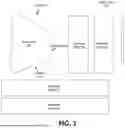
FIG. 1 illustrates a kit for a strapless facemask, in accordance with embodiments of the present disclosure.
FIG. 2 is a flow chart of a method for applying a strapless facemask to a user's face, in accordance with embodiments of the present disclosure.
FIGS. 3A-E illustrate application of a strapless facemask to a user's face, in accordance with embodiments of the present disclosure.
DETAILED DESCRIPTION OF THE INVENTION
Embodiments described herein are directed to a strapless facemask kit usable to secure a strapless facemask to a user's face in a manner that ensures 100% sealing of the strapless facemask to the user's face (e.g., sealing with respect to air or breath). Embodiments are also directed to methods of securing a strapless facemask to a user's face in a manner that provides 100% sealing of the facemask to the user's face. Traditional cloth or paper/fabric facemasks rely on straps to pull the facemask securely against a user's face. However, often facemasks do not properly fit the user's face, and air gaps are formed around edges of the facemask between the facemask and the user's face. These air gaps prevent proper sealing of the facemask to the user's face, and permit, for example, up to 40% of the air that the user breathes to bypass the facemask and enter the user's lungs without being filtered by the facemask.
While some strapless facemasks have been envisioned, such strapless facemasks use an integrated adhesive that is attached to or part of the facemask. As a result, the adhesive is part of the facemask and has been attached to the facemask before the facemask has been shaped or contoured for fitting a particular user's face. In contouring the facemask to then fit a particular user's face while adhering the facemask to the user's face, wrinkles, gaps, etc. may form in the facemask (e.g., at edges of the facemask). These wrinkles, air gaps, etc. provide avenues for air to bypass the filtration of the facemask, posing the same problem that is posed by traditional strap-based facemasks. Accordingly, such facemasks with integrated adhesives do not account for the varied face shapes of different users, and do not provide a perfect seal for all users. Additionally, strapless facemasks formed from kinesiology tape are inadequate for proper filtration of, for example, viruses, because kinesiology tape is too porous provide adequate protection.
Embodiments address problems of traditional strap-based face masks and existing strapless facemasks that use integrated adhesives by providing a strapless facemask kit that uses a strapless facemask and multiple strips of medical-grade adhesive. A user may secure the strapless facemask to their face using the strapless facemask kit in embodiments. The user may follow instructions provided with the strapless facemask kit to properly secure the strapless facemask to their face. This may include attaching a first portion of a first strip of adhesive material to a first side of the strapless facemask, attaching a first portion of a second strip of the adhesive material to a second side of the strapless facemask, placing the strapless facemask over the user's face such that the strapless facemask is positioned over the user's mouth and the user's nose, wherein a bottom of the strapless facemask is positioned at least partially above the user's chin, wherein a top of the strapless facemask is positioned below the user's eyes, and wherein the first side and the second side of the strapless facemask are positioned over the user's cheeks, adhering a second portion of the first strip of the adhesive material and a second portion of the second strip of the adhesive material to the user's cheeks, adhering a first portion of a third strip of adhesive material to the bottom of the strapless facemask and a second portion of the third strip of the adhesive material to the user's chin, and adhering a first portion of a fourth strip of adhesive material to the top of the strapless facemask and a second portion of the fourth strip of the adhesive material to the user's nose and the user's cheeks. The adhering of the first strip, the second strip, the third strip, and the fourth strip to the user's face fully seals or approximately fully seals the strapless facemask to the user's face with respect to air and/or breath regardless of the contours of the user's face. In embodiments, the full seal is referring to blocking any air around the mask seal, so that the air can be filtered through the mask material.
Different users have different face contours and shapes. By using a strapless facemask kit with multiple adhesive strips, the facemask can be fully sealed around a user's face.
In embodiments, the facemask is secured to a user's face in a manner that removes any gaps between the sides/edges of the facemask and the user's face so that all of the air that is breathed in is filtered through the facemask, and does not enter through the sides and/or gaps between the facemask and the user's face.
In embodiments, the strapless facemask is reusable. Once the strapless facemask has been fully secured to a user's face, it adopts the contours of that user's face. The adhesive may be a reusable adhesive that can be peeled from the user's face (e.g., from the user's skin), and that still has most or all of its adhesive strength after such removal. The strapless facemask may then be reattached to the user's face for one or more additional uses by applying pressure to press the adhesive to the users face all around the perimeter of the facemask.
In some embodiments, the adhesive strips can be removed from the facemask, and new adhesive strips may be used to reapply the strapless facemask to the user's face.
Referring now to the figures, FIG. 1 illustrates a kit for a strapless facemask, in accordance with embodiments of the present disclosure. The facemask kit includes a facemask 101, and multiple adhesive strips 103, 105, 107, 109. The facemask kit may optionally also include a metal strip 111 in embodiments. Facemask 101 may include a top edge 101a (e.g., an edge that will interface with a user's nose and/or cheeks), a bottom edge 101b (e.g., an edge that will interface with the user's chin), and two side edges 101c, 101d (e.g., edges that will interface with a user's cheeks).
The facemask 101 may be composed of one or more layers of the same or different materials that may provide filtration for a user's breathing. In one embodiment, the facemask is a NIOSH certified facemask. The facemask 101 may be designed to form a tight seal around a user's face without risk of air leakage around edges of the facemask. The facemask 101 may be made from non-toxic, hypoallergenic materials that do not cause skin irritation in embodiments. In some embodiments (not shown), the facemask includes an optional exhalation valve. The exhalation valve may reduce buildup of heat and moisture inside the mask without affecting filtration efficiency of inhaled air. However, exhalation valves do reduce filtration of exhaled air, and so may be omitted in medical masks in some embodiments.
The facemask 101 may include, for example, one or more outer layers of non-woven polypropylene fabric, which may be responsible for filtering out particles. The facemask 101 may further include, for example, one or more inner layers of melt-blown polypropylene, which have dense fibers that can trap very small particles, including viruses and bacteria. The facemask 101 may optionally include one or more additional layers of polyester and/or polyethylene (e.g., to provide structure). In some embodiments, the facemask 101 includes one or more activated carbon layers to filter out odors, gases, and/or vapors. In some embodiments, the facemask 101 includes one or more electrostatic cotton or other electrostatic media layers that enhance particle capture efficiency through electrostatic attraction.
In embodiments, the facemask 101 is an N95 grade facemask (e.g., a facemask that meets National Institute for Occupational Safety and Health (NIOSH) N95 efficiency standards), an N99 grade facemask (e.g., a facemask that meets NIOSH N99 efficiency standards), an N100 grade facemask (e.g., a facemask that meets NIOSH N100 efficiency standards), a KN95 grade facemask (e.g., a facemask that meets Chinese national standard GB2626-2019), an FFP2 grade facemask (e.g., a facemask that meets filtering facepiece particles 2 (FFP2) European Union standards under EN 149:2001+A1:2009 for respiratory devices), an FFP3 grade facemask (e.g., a facemask that meets filtering facepiece particles 3 (FFP3) European Union standards under EN 149:2001+A1:2009 for respiratory devices) and/or a HEPA grade facemask.
Each of the adhesive strips 103, 105, 107, 109 may be formed of a medical-grade material that either acts as a filter itself or that does not permit air flow therethrough. In some embodiments, the adhesive strips are all formed from the same material. In some embodiments, different adhesive strips are formed from different materials. In some embodiments, adhesive strips 103, 105, 107, 109 are formed from medical grade athletic sports tape (also referred to as strapping tape). Athletic tape (or strapping tape) may be a non-elastic, rigid tape or an elastic tape. Rigid athletic tape may be formed from a non-elastic cotton or cotton-blend fabric with a strong adhesive. Elastic adhesive tape may be made from a stretch cotton fabric with an elastic core and a strong adhesive. The adhesive strips 103-109 may be made from a non-breathable material to restrict airflow, or may be made from a breathable material that may have one or more filtration properties. The adhesive strips 103-109 may be made from a hypoallergenic material in embodiments.
In embodiments, the adhesive used for the adhesive strips 103-109 is a hypoallergenic adhesive to minimize risk of skin irritation. The adhesive may be a strong adhesive, which may be water resistant in embodiments. The adhesive may include an acrylic adhesive, a latex-based adhesive, a zinc-oxide adhesive, or a special-blend hypoallergenic adhesive. The adhesive may hold up to vigorous activities, be compatible with use on a person's skin, be durable, and be easy to remove without causing pain or leaving residue on a user's skin.
In some embodiments, the adhesive stripes 103-109 include a zinc oxide coating, which helps prevent skin irritation and has antimicrobial properties. Zinc oxide may also help the tape adhere to the skin better and maintain adhesion to the skin during sweating.
The adhesive strips 103, 105, 107, 109 may have the same or different dimensions in embodiments. In some embodiments, each of the first strip of the adhesive material (first adhesive strip 103) and the second strip of the adhesive material (second adhesive strip 105) comprises a length in a range of 1.5 inches to 2.5 inches and a width in a range of 1 inch to 2 inches. In some embodiments, the third strip of the adhesive material (third adhesive strip 107) and the fourth strip of the adhesive material each (fourth adhesive strip 109) have a greater length than the first strip of the adhesive material (first adhesive strip 103) and the second strip of the adhesive material (second adhesive strip 105). In some embodiments, each of the third strip of the adhesive material (third adhesive strip 107) and the fourth strip of the adhesive material (fourth adhesive strip 109) comprises a length in a range of 5 inches to 12 inches and a width in a range of 1 inch to 2 inches. In some embodiments, each of the adhesive strips 103-109 has a same width.
In some embodiments, rather than the strapless facemask kit providing a facemask 101 and four pre-cut strips of adhesive material 103-109, the strapless facemask kit may include the facemask 101 and a roll of adhesive tape (not shown). The facemask kit may further include one or more guides and/or instructions that show how many adhesive strips to cut and the lengths of the adhesive strips to be cut.
In some embodiments, the facemask kit includes a metal strip 111. The metal strip 111 may function as a nose wire or nose clip in embodiments, and may enhance the fit and effectiveness of the facemask 101 in embodiments. The metal strip 111 may be configured for placement over a bridge of a user's nose. Unlike the nose wires used in traditional facemasks, in embodiments the metal strip 111 is not integrated into the facemask 101. Instead, the metal strip 111 may be a separate component that may be attached to adhesive strip 109 before or after securing adhesive strip 109 to facemask 101 and/or a user's face. This may enable the metal strip to be placed at different locations relative to a user's face, which enables the metal strip to accommodate many different face and nose shapes in embodiments. The metal strip 111 may help to mold the facemask 101 to a user's face and nose, helping to create a snug fit. This may help to minimize gaps between the mask and a user's skin. The metal strip may be made of a flexible, lightweight metal such as aluminum or steel. The metal strip 111 may be lightweight, corrosion resistant, and easy to mold.
In some embodiments, the metal strip 111 is integrated into adhesive strip 109. For example, metal strip 111 may be adhered to the adhesive of adhesive strip 109 or may be woven into or otherwise attached to adhesive strip 109. In some embodiments, metal strip 111 is pre-attached to adhesive strip 109 in such a manner that metal strip 111 will not come into contact with a user's skin. In some embodiments, metal strip 111 is integrated into facemask 101.
In some embodiments, the metal strip 111 has an adhesive on it, and is placed over adhesive strip 109. The metal strip 111 may have a length of 3-5 inches, a width of 0.2-0.3 inches, and a thickness of 0.01-0.03 inches in embodiments. In some embodiments, the adhesive of the metal strip corresponds to any of the aforementioned adhesives. In some embodiments, metal strip 111 is placed over adhesive strip 109 (e.g., adhered to adhesive strip 109) after adhesive strip 109 is adhered to a user's face. In some embodiments, metal strip 111 is placed over adhesive strip 109 before adhesive strip 109 is adhered to facemask 101 and/or a user's face.
FIG. 2 is a flow chart of a method 200 for applying a strapless facemask to a user's face, in accordance with embodiments of the present disclosure. Method 200 may be performed to attach facemask 101 to a user's face using a strapless facemask kit as shown in FIG. 1 in embodiments. In embodiments, a strapless facemask kit includes detailed step-by-step instructions for applying the facemask to the user's face using the strapless facemask kit. The instructions may include text and infographics showing how to secure the facemask to the user's face. The instructions may include instructions for performing each of the steps of method 200 in embodiments, optionally with accompanying illustrations.
FIGS. 3A-E illustrate application of a strapless facemask to a user's face, in accordance with embodiments of the present disclosure, and follow steps of method 200 in embodiments.
At block 201 of method 200, a user attaches a first portion of a first strip of adhesive material to a first side of the strapless facemask, wherein the adhesive material comprises a medical grade material. At block 201, the user additionally attaches a first portion of a second strip of the adhesive material to a second side of the strapless facemask. The first portion of the first strip of the adhesive material and the first portion of the second strip of the adhesive material comprise a width in a range of 0.2 inches to 0.8 inches in embodiments. The first portion of the first and second strips may be about 25%-50% of the width of the first and second strips in embodiments.
FIG. 3A illustrates a strapless facemask 101 having a top edge 101a (top), a bottom edge 101b (bottom), a left side edge 101c (first side) and a right side edge 101d (second side).
FIG. 3B illustrates the facemask 101 of FIG. 3A after a first adhesive strip 103 and a second adhesive strip 105 have been attached to the facemask 101 (e.g., after completion of step 201 of method 200).
Referring back to FIG. 2, at block 203, the strapless facemask with the attached first and second adhesive strips is placed over the user's face. The facemask may be placed over the user's face such that the strapless facemask is positioned over the user's mouth and the user's nose, wherein a bottom edge of the strapless facemask is positioned at least partially above the user's chin, wherein a top edge of the strapless facemask is positioned below the user's eyes, and wherein the first side edge and the second side edge of the strapless facemask are positioned over the user's cheeks. At block 205, a second portion of the first strip of the adhesive material is adhered to the user's face (e.g., to the user's cheeks) and a second portion of the second strip of the adhesive material to the user's face (e.g., to the user's cheeks).
FIG. 3C illustrates the facemask 101 of FIG. 3B after the first adhesive strip 103 and a second adhesive strip 105 have been adhered to the user's face 115 (e.g., after completion of step 205 of method 200).
Referring back to FIG. 2, at block 207 a first portion of a third strip of adhesive material is attached (e.g., adhered) to the bottom of the strapless facemask and a second portion of the third strip of the adhesive material is attached (e.g., adhered) to the user's chin. Note that attach and adhere are used interchangeably herein. The first portion of the third strip of the adhesive material and may have a width in a range of 0.2 inches to 0.8 inches in embodiments. The first portion of the third adhesive strip may be about 25%-50% of the width of the third adhesive strip in embodiments.
FIG. 3D illustrates the facemask 101 of FIG. 3C after the third adhesive strip 107 has been adhered to the user's face 115 (e.g., after completion of step 207 of method 200).
Referring back to FIG. 2, at block 208, a metal strip may be attached to a fourth adhesive strip where the fourth adhesive will be positioned over the bridge of the user's nose. Alternatively, the metal strip may already be attached to or integrated into the fourth adhesive strip. Alternatively, the metal strip may be applied to the fourth adhesive strip after the fourth adhesive strip has been adhered to a user's face.
At block 209, a first portion of the fourth strip of adhesive material may be adhered to the top of the strapless facemask and a second portion of the fourth strip of the adhesive material may be adhered to the user's nose and the user's cheeks. The fourth adhesive strip may be adhered to the user's face such that the metal strip (which may optionally be attached to the fourth adhesive strip) is placed at the bridge of the user's nose. In placing the fourth adhesive strip on the user's face and the facemask, the metal strip may be bent to confirm to the shape of the bridge of the user's nose and/or the user's cheeks (depending on the size of the metal strip). The first portion of the fourth strip of the adhesive material and may have a width in a range of 0.2 inches to 0.8 inches in embodiments. The first portion of the fourth adhesive strip may be about 25%-50% of the width of the third adhesive strip in embodiments.
FIG. 3E illustrates the facemask 101 of FIG. 3D after the fourth adhesive strip 109 has been adhered to the user's face 115 (e.g., after completion of step 209 of method 200).
After completion of method 200 (e.g., after adhering the first adhesive strip, the second adhesive strip, the third adhesive strip, and the fourth adhesive strip to the user's face), the strapless facemask is fully sealed to the user's face, with no voids or air gaps at the edges of the facemask 101.
The preceding description sets forth numerous specific details such as examples of specific systems, components, methods, kits, and so forth in order to provide a good understanding of several embodiments of the present disclosure. It will be apparent to one skilled in the art, however, that at least some embodiments of the present disclosure may be practiced without these specific details. In other instances, well-known components or methods are not described in detail or are presented in simple block diagram format in order to avoid unnecessarily obscuring the present disclosure. Thus, the specific details set forth are merely exemplary. Particular implementations may vary from these exemplary details and still be contemplated to be within the scope of the present disclosure.
Reference throughout this specification to “one embodiment” or “an embodiment” means that a particular feature, structure, or characteristic described in connection with the embodiment is included in at least one embodiment. Thus, the appearances of the phrase “in one embodiment” or “in an embodiment” in various places throughout this specification are not necessarily all referring to the same embodiment. In addition, the term “or” is intended to mean an inclusive “or” rather than an exclusive “or.” When the term “about” or “approximately” is used herein, this is intended to mean that the nominal value presented is precise within ±10%.
Although the operations of the methods herein are shown and described in a particular order, the order of operations of each method may be altered so that certain operations may be performed in an inverse order so that certain operations may be performed, at least in part, concurrently with other operations. In another embodiment, instructions or sub-operations of distinct operations may be in an intermittent and/or alternating manner.
It is understood that the above description is intended to be illustrative, and not restrictive. Many other embodiments will be apparent to those of skill in the art upon reading and understanding the above description. The scope of the disclosure should, therefore, be determined with reference to the appended claims, along with the full scope of equivalents to which such claims are entitled.
Claims
What is claimed is:1. A method for securing a strapless facemask to a user's face comprising:
attaching a first portion of a first strip of adhesive material to a first side of the strapless facemask, wherein the adhesive material comprises a medical grade material;
attaching a first portion of a second strip of the adhesive material to a second side of the strapless facemask;
placing the strapless facemask over the user's face such that the strapless facemask is positioned over the user's mouth and the user's nose, wherein a bottom of the strapless facemask is positioned at least partially above the user's chin, wherein a top of the strapless facemask is positioned below the user's eyes, and wherein the first side and the second side of the strapless facemask are positioned over the user's cheeks;
adhering a second portion of the first strip of the adhesive material and a second portion of the second strip of the adhesive material to the user's cheeks;
adhering a first portion of a third strip of adhesive material to the bottom of the strapless facemask and a second portion of the third strip of the adhesive material to the user's chin;
adhering a first portion of a fourth strip of adhesive material to the top of the strapless facemask and a second portion of the fourth strip of the adhesive material to the user's nose and the user's cheeks;
wherein adhering the first strip, the second strip, the third strip, and the fourth strip to the user's face seals the strapless facemask to the user's face.
2. The method of claim 1, wherein the medical grade material is an athletic sports tape comprising a cotton substrate.
3. The method of claim 1, further comprising:
Attaching a metal strip to the fourth strip of adhesive material prior to adhering the fourth strip of adhesive material to the top of the strapless facemask.
4. The method of claim 1, wherein each of the first strip of the adhesive material and the second strip of the adhesive material comprises a length in a range of 1.5 inches to 2.5 inches and a width in a range of 1 inch to 2 inches.
5. The method of claim 1, wherein the third strip of the adhesive material and the fourth strip of the adhesive material each have a greater length than the first strip of the adhesive material and the second strip of the adhesive material.
6. The method of claim 1, wherein each of the third strip of the adhesive material and the fourth strip of the adhesive material comprises a length in a range of 5 inches to 12 inches and a width in a range of 1 inch to 2 inches.
7. The method of claim 1, further comprising:
attaching a metal strip to a portion of the fourth strip of the adhesive material such that the metal strip is positioned over the user's nose bridge.
8. The method of claim 1, wherein the first portion of the first strip of the adhesive material and the first portion of the second strip of the adhesive material comprise a width in a range of 0.2 inches to 0.8 inches.
9. The method of claim 1, wherein the first portion of the third strip of the adhesive material and the first portion of the fourth strip of the adhesive material comprise a width in a range of 0.2 inches to 0.8 inches.
10. A facemask kit for securing a strapless facemask to a user's face, comprising:
the strapless facemask, wherein the strapless facemask comprises a first side, a second side, a side, and a bottom;
a first strip of adhesive material, wherein the adhesive material comprises a medical grade material;
a second strip of the adhesive material;
a third strip of the adhesive material;
a fourth strip of the adhesive material; and
a metal strip.
11. The facemask kit of claim 10, wherein the medical grade material is an athletic sports tape comprising a cotton substrate.
12. The facemask kit of claim 10, further comprising:
a set of instructions for using the first strip of adhesive material, the second strip of adhesive material, the third strip of adhesive material, the fourth strip of adhesive material, and the metal strip for adhering the strapless facemask to the user's face in a manner that fully seals the strapless facemask to the user's face.
13. The facemask kit of claim 10, wherein each of the first strip of the adhesive material and the second strip of the adhesive material comprises a length in a range of 1.5 inches to 2.5 inches and a width in a range of 1 inch to 2 inches.
14. The facemask kit of claim 10, wherein the third strip of the adhesive material and the fourth strip of the adhesive material each have a greater length than the first strip of the adhesive material and the second strip of the adhesive material.
15. The facemask kit of claim 10, wherein each of the third strip of the adhesive material and the fourth strip of the adhesive material comprises a length in a range of 5 inches to 12 inches and a width in a range of 1 inch to 2 inches.
16. The facemask kit of claim 10, wherein the metal strip is to be attached to a portion of the fourth strip of the adhesive material such that the metal strip is positioned over the user's nose bridge.
17. The facemask kit of claim 10, wherein a first portion of the first strip of the adhesive material is to be attached to a first side of the strapless facemask, and wherein a first portion of the second strip of the adhesive material is to be attached to the second side of the strapless facemask.
18. The facemask kit of claim 10, wherein the strapless facemask is to be placed over the user's face such that the strapless facemask is positioned over the user's mouth and the user's nose, wherein the bottom of the strapless facemask is to be positioned at least partially above the user's chin, wherein the side of the strapless facemask is to be positioned below the user's eyes, and wherein the first side and the second side of the strapless facemask are to be positioned over the user's cheeks.
19. The facemask kit of claim 18, wherein a second portion of the first strip of the adhesive material and a second portion of the second strip of the adhesive material are to be adhered to the user's cheeks.
20. The facemask kit of claim 18, wherein a first portion of the third strip of the adhesive material is to be adhered to the bottom of the strapless facemask, and wherein a second portion of the third strip of the adhesive material is to be adhered to the user's chin.
Images & Drawings included:



Sources:
- United States Patent and Trademark Office - verify current appl. status at the USPTO↗
Recent applications in this class:
- » 20250107582 2025-04-03
PERSONAL PROTECTIVE EQUIPMENT AND METHODS FOR PREVENTING SPREAD OF INFECTIOUS DISEASE - » 20240081440 2024-03-14
PERSONAL PROTECTIVE EQUIPMENT AND METHODS - » 20240032627 2024-02-01
IMPROVEMENTS RELATING TO FACE MASKS - » 20230363478 2023-11-16
Patterned Engagement Structure for Compact Adhesive Face Masks - » 20230240391 2023-08-03
HYGIENE MASK WITH SEAL FORMING STRUCTURE - » 20230232918 2023-07-27
ADHESIVE FACIAL MASK - » 20230225432 2023-07-20
FACE MASK - » 20220400789 2022-12-22
STRAPLESS FACE MASK - » 20220304405 2022-09-29
Facial Mask with Adhesive-Backed Filters in Separate Nasal Portion and Oral Portion - » 20220295922 2022-09-22
Mask with anti-fogging construction