BRUSH HEAD AND SURFACE CLEANING DEVICE
US20260053320A1
2026-02-26
19/376,361
2025-10-31
Smart Summary: A cleaning device features a special brush head designed to make cleaning easier. Inside the brush head, there is a roller brush that helps scrub surfaces. A waterway plate spreads cleaning liquid onto the roller brush to enhance its cleaning power. A scraper is attached to the waterway plate and presses against the roller brush to help remove dirt. The waterway plate can move slightly, allowing the scraper to maintain contact with the roller brush while cleaning. 🚀 TL;DR
Abstract:
The present disclosure provides a bush head and a surface cleaning device. The brush head includes a brush head housing having an accommodating space; a roller brush arranged in the accommodating space; a waterway plate assembly arranged between the brush head housing and the roller brush and configured to distribute a cleaning liquid to the roller brush; and a scraper fixedly connected with the waterway plate assembly and configured to abut against the roller brush, where the waterway plate assembly is pivotally connected with the brush head housing and configured to have a rotational tendency relative to the brush head housing, such that the scraper abuts against the roller brush.
Inventors:
- Xing LI 25 🇨🇳 Shenzhen, China
- Yongfei ZHOU 3 🇨🇳 Shenzhen, China
- Baohuan QIN 2 🇨🇳 Shenzhen, China
- Dalin OUYANG 1 🇨🇳 Shenzhen, China
Applicant:
Interested in similar patents?
Get notified when new applications in this technology area are published.
Classification:
A47L11/302 » CPC main
Machines for cleaning floors, carpets, furniture, walls, or wall coverings; Floor-scrubbing machines characterised by means for taking-up dirty liquid by suction having rotary tools
A47L11/4041 » CPC further
Machines for cleaning floors, carpets, furniture, walls, or wall coverings; Parts or details of machines not groups - , , e.g. handles, arrangements of switches, skirts, buffers, levers; Parts or details of the surface treating tools Roll shaped surface treating tools
A47L11/4088 » CPC further
Machines for cleaning floors, carpets, furniture, walls, or wall coverings; Parts or details of machines not groups - , , e.g. handles, arrangements of switches, skirts, buffers, levers; Means for supplying cleaning or surface treating agents Supply pumps; Spraying devices; Supply conduits
A47L11/30 IPC
Machines for cleaning floors, carpets, furniture, walls, or wall coverings; Floor-scrubbing machines characterised by means for taking-up dirty liquid by suction
A47L11/40 IPC
Machines for cleaning floors, carpets, furniture, walls, or wall coverings Parts or details of machines not groups - , , e.g. handles, arrangements of switches, skirts, buffers, levers
Description
CROSS-REFERENCE TO RELATED APPLICATION
The present disclosure is a continued application of copending PCT application No. PCT/CN2023/131059, filed on Nov. 10, 2023, which claims priority to Chinese Patent Application No. 202321082679.4 filed on May 6, 2023, the entire content of which is incorporated herein by reference.
TECHNICAL FIELD
The present disclosure relates to the field of cleaning technologies, and in particular to a brush head and a surface cleaning device.
BACKGROUND
With the continuous development of science and technology, surface cleaning devices, such as floor scrubbers and sweeping and mopping all-in-one machines, have been widely adopted by families. The surface cleaning device can save more time and labor than traditional manual sweeping.
SUMMARY
The present disclosure provide a brush head for being assembled to a surface cleaning device. The brush head includes:
-
- a brush head housing having an accommodating space;
- a roller brush arranged in the accommodating space;
- a waterway plate assembly arranged between the brush head housing and the roller brush and configured to distribute a cleaning liquid to the roller brush; and
- a scraper fixedly connected with the waterway plate assembly and configured to abut against the roller brush, wherein
- the waterway plate assembly is pivotally connected with the brush head housing and configured to have a rotational tendency relative to the brush head housing, such that the scraper abuts against the roller brush.
The present disclosure provide a surface cleaning device including the brush head according to the preceding embodiments.
BRIEF DESCRIPTION OF THE DRAWINGS
The accompanying drawings herein, which are incorporated into the Description and constitute a part of the Description, illustrate embodiments that conform to the present disclosure and are used together with the Description to explain principles of the present disclosure. Apparently, the accompanying drawings in the following description show merely some embodiments of the present disclosure, and those of ordinary skill in the art may still derive other accompanying drawings from these accompanying drawings without creative efforts. In the drawings:
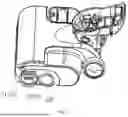
FIG. 1 is a schematic structural diagram of a brush head according to some embodiments of the present disclosure;
FIG. 2 is a partial schematic structural diagram of the brush head in FIG. 1, and only shows a brush head housing, a waterway plate assembly and a roller brush;
FIG. 3 is a partial schematic structural diagram of the brush head of FIG. 2 in FIG. 1, which only shows a brush head housing and a waterway plate assembly;
FIG. 4 is a schematic structural diagram of a waterway plate assembly and a scraper according to some embodiments of the present disclosure;
FIG. 5 is a partial structure of a top view of FIG. 2;
FIG. 6 is a partially sectional schematic structural diagram of FIG. 2; and
FIG. 7 is a schematic structural diagram of a surface cleaning device according to some embodiments of the present disclosure.
DETAILED DESCRIPTION
To make the objectives, technical solutions, and advantages of the present disclosure clearer, the following will describe the present disclosure in further detail with reference to the accompanying drawings. Apparently, the described embodiments are some but not all of the embodiments of the present disclosure. All other embodiments obtained by those of ordinary skill in the art based on the embodiments of the present disclosure without creative efforts should fall within the protection scope of the present disclosure.
It should also be noted that, the terms “comprise”, “include”, or any other variants thereof are intended to cover the nonexclusive inclusion, such that a commodity or apparatus including a series of elements includes not only those elements, but also other elements not listed explicitly or elements inherent to such a commodity or apparatus. Without more limitations, the element defined by the phrase “including a” does not exclude the existence of other same elements in the commodity or apparatus including the element.
In the art, a surface cleaning device, such as a floor scrubber or a sweeping and mopping all-in-one machine, usually includes a surface cleaning device body and a cleaning seat body. The surface cleaning device usually has liquid containers, such as a wastewater tank and a clean water tank, and a suction fan. The cleaning seat body includes a cleaning component for mopping, such as a roller brush, and the number of the roller brushes is one, two or more. A cleaning liquid in the clean water tank, such as clean water, is sprayed onto the roller brush with bristles and/or a surface to be cleaned through a built-in water pipe, and the roller brush rotates at a high speed to mop the floor. At the same time, the fan forms a negative pressure in a device air duct of the cleaning device to draw wastewater (which may contain solid debris) of the cleaned surface from a wastewater suction port of the cleaning device into the wastewater tank.
The present disclosure provides a brush head for being assembled to a surface cleaning device. The brush head includes a brush head housing having an accommodating space; a roller brush arranged in the accommodating space; a waterway plate assembly arranged between the brush head housing and the roller brush and configured to distribute a cleaning liquid to the roller brush; and a scraper fixedly connected with the waterway plate assembly and configured to abut against the roller brush. The waterway plate assembly is pivotally connected with the brush head housing and configured to have a rotational tendency relative to the brush head housing, such that the scraper abuts against the roller brush.
According to the present disclosure, the waterway plate assembly is fixedly connected, for example, rigidly connected with the scraper to enhance rigidity of the scraper. The waterway plate assembly is pivotally connected with the brush head housing and configured to have the rotational tendency relative to the brush head housing, such that the scraper abuts against the roller brush and there is better contact between the scraper and the roller brus. This is convenient for the scraper to clean dirt on the surface of the roller brush. The scraper can still abut against the roller brush to clean the dirt on the surface of the roller brush even if an outer diameter of the roller brush is reduced due to wear after use for a certain period of time.
Optional embodiments of the present disclosure will be described in detail in combination with the accompanying drawings.
FIG. 1 is a schematic structural diagram of a brush head according to some embodiments of the present disclosure; and FIG. 2 is a partial schematic structural diagram of the brush head in FIG. 1, which only shows a brush head housing, a waterway plate assembly and a roller brush. FIG. 3 is a partial schematic structural diagram of the brush head of FIG. 2 in FIG. 1, which only shows a brush head housing and a waterway plate assembly. FIG. 4 is a schematic structural diagram of a waterway plate assembly and a Scraper according to some embodiments of the present disclosure.
As shown in FIG. 1 to FIG. 4, some embodiments of the present disclosure provide a brush head 100 configured to be assembled to a surface cleaning device, and the brush head includes a brush head housing 10, a roller brush 20, a waterway plate assembly 30, and a scraper 40.
The brush head housing 10 has an accommodating space 11, the roller brush 20 is arranged in the accommodating space 11, and the roller brush 20 rotates at a high speed to enable the brush head to clean a working surface. The waterway plate assembly 30 is arranged between the brush head housing 10 and the roller brush 20, and the waterway plate assembly 30 has been arranged in the accommodating space 11, is assembled to the brush head housing 10 and configured to distribute a cleaning liquid, such as clean water, to the roller brush 20. The surface of the waterway plate assembly 30 facing the roller brush 20 is provided with a waterway communicated with a clean water tank and a water spray hole, and the cleaning liquid from the clean water tank flows through the waterway in the waterway plate assembly 30 and is sprayed to the roller brush 20 through the water spray hole to wet the roller brush 20, such that the brush head 100 performs a wet cleaning operation to achieve more effective cleaning of the working surface.
During cleaning of the working surface by the brush head, the roller brush 20 rotates at the high speed to rub the working surface for cleaning, and the roller brush 20 is possibly contaminated with dirt. The scraper 40 is fixedly connected with the waterway plate assembly 30 and configured to abut against the roller brush 20 to clean the dirt on the surface of the roller brush 20. The scraper 40 abuts against the outer surface of the roller brush 20, such as bristles or brush cloth. While the roller brush 20 rotates at the high speed, the scraper 40 may scrape off the dirt adhered to the surface of the roller brush 20, thereby ensuring a real-time cleaning effect of the scraper 40 on the roller brush 20.
The scraper 40 and the waterway plate assembly 30 are fixedly connected, and with their relative positions fixed, the two may be regarded as an integral structure.
The waterway plate assembly 30 is pivotally connected with the brush head housing 10, and configured to have a rotational tendency relative to the brush head housing 10, such that the scraper 40 abuts against the roller brush 20. The waterway plate assembly 30 and the scraper 40, as a whole, pivot relative to the brush head housing 10, and have the rotational tendency relative to the brush head housing 10, such that the scraper 40 always abuts against the roller brush 20, for example, with a predetermined force, thereby ensuring the cleaning effect on the surface of the roller brush 20.
In some embodiments of the present disclosure, the waterway plate assembly is fixedly connected with the scraper, and is pivotally connected with the brush head housing, such that the waterway plate assembly is configured to have the rotational tendency relative to the brush head housing, and the scraper abuts against the roller brush. This is convenient for the scraper to clean the dirt on the surface of the roller brush. The scraper can still abut against the roller brush to clean the dirt on the surface of the roller brush even if the outer diameter of the roller brush is reduced due to wear after use for a certain period of time.
FIG. 5 is a partial structure of a top view of FIG. 2. The brush head housing 10 has an opening 12, at least a portion of the waterway plate assembly 30 protrudes from the opening 12, and a pivoting structure of the brush head housing 10 and the waterway plate assembly 30 is arranged at the opening 12. In some embodiments, the brush head 100 further includes an elastic component 50 cooperating with the brush head housing 10 and the waterway plate assembly 30, such that the waterway plate assembly 30 has the rotational tendency relative to the brush head housing 10, and further the scraper 40 always abuts against the roller brush 20 to clean the surface of the roller brush 20.
FIG. 6 is a partial sectional schematic structural diagram of FIG. 2. As shown in FIG. 1 to FIG. 6, the brush head housing 10 includes a rotating shaft 13, the waterway plate assembly 30 is pivotally connected with the brush head housing 10 through the rotating shaft 13, the elastic component 50 includes a torsion spring fitting over the rotating shaft 13, one end of the torsion spring abuts against a torsion spring limiting structure of the brush head housing 10 and the other end of the torsion spring abuts against a torsion spring limiting structure of the waterway plate assembly 30. The torsion spring is in an energy storage state, such that the waterway plate assembly 30 has the rotational tendency relative to the brush head housing 10, and further the scraper 40 always abuts against the roller brush 20 to clean the surface of the roller brush 20.
In some embodiments, the scraper 40 is fixedly connected, for example, rigidly connected with the waterway plate assembly 30 through a fixing component. Due to the fixing component, such as a bolt and a screw, the scraper 40 is fixedly connected with the waterway plate assembly 30. In this way, the rigidity of the scraper can be increased, such that the rotating contact between the scraper 40 and the roller brush 20 is more stable. In other embodiments, the scraper 40 and the waterway plate assembly 30 may be integrally molded and thus are of a rigid integral structure, such that the rigidity of the scraper is enhanced, and further there is good contact between the scraper and the roller brush.
In some embodiments, when the surface cleaning device is performing a conventional floor cleaning operation, a direction in which the waterway plate assembly 30 has a rotational tendency relative to the brush head housing 10 is opposite to a rotating direction of the roller brush 20. Due to such an arrangement, the scraper 40 can better clean the roller brush while the roller brush cleans the floor, which is conducive to scraping off the dirt on the roller brush 20 with the scraper 40 when the roller brush 20 rotates at the high speed.
In some embodiments, a contact angle between the scraper 40 and the roller brush 20 is 0-90 degrees, such as 15 degrees, 30 degrees, 45 degrees, 60 degrees or 75 degrees. The contact angle in the present disclosure refers to an included angle between an extending direction of a free end, that is, the end part abutting against the roller brush, 20 of the scraper 40 and the diameter of the roller brush passing through an abutting point between the free end of the scraper 40 and the roller brush. By adopting this angle range, the scraper 40 can better clean the roller brush, which is conducive to scraping off the dirt on the roller brush 20 with the scraper 40 when the roller brush 20 rotates at the high speed.
In some embodiments, as shown in FIG. 1 to FIG. 6, the brush head 100 has a double-brush structure, and the accommodating space 11 of the brush head housing 10 includes a first accommodating space 111 and a second accommodating space 112 which are arranged side by side.
The roller brush 20 includes a first roller brush 21 and a second roller brush 22. The first roller brush 21 is, for example, a front roller brush, also called the front roller brush 21, and the second roller brush 22 is, for example, a rear roller brush, also called the rear roller brush 22. The first roller brush 21 and the second roller brush 22 are arranged side by side, and the first roller brush 21 and the second roller brush 22 are arranged in the first accommodating space 111 and the second accommodating space 112 respectively. The brush head 100 adopts the double-roller-brush structure, and the double roller brushes may rotate in opposite directions to clean the working surface and thus achieve a better cleaning effect.
The waterway plate assembly 30 includes a first waterway plate assembly 31 and a second waterway plate assembly 32 which correspond to the first roller brush 21 and the second roller brush 22 respectively and are configured to provide the cleaning liquid to the first roller brush 21 and the second roller brush 22 respectively, and waterways on the first waterway plate assembly 31 and the second waterway plate assembly 32 are communicated with the clean water tank.
The scraper 40 includes a first scraper 41 and a second scraper 42 which are fixedly connected with the first waterway plate assembly 31 and the second waterway plate assembly 32 respectively and are configured to abut against the first roller brush 21 and the second roller brush 22 respectively. The first scraper 41 and the second scraper 42 are fixedly connected with the first waterway plate assembly 31 and the second waterway plate assembly 32 through the fixing components, such as bolts and screws, respectively. Due to such an arrangement, the first scraper 41 and the first waterway plate assembly 31 form an integral structure to enhance the rigidity of the first scraper 41, such that the contact between the first scraper 41 and the first roller brush 21 is more stable. Similarly, the second scraper 42 and the second waterway plate assembly 32 form an integral structure to enhance the rigidity of the second scraper 42, such that the contact between the second scraper 42 and the second roller brush 22 is more stable.
In some embodiments, as shown in FIG. 1 to FIG. 6, a free end of the first scraper 41 is oriented toward the second roller brush 22, and a free end of the second scraper 42 is oriented toward the first roller brush 21.
In some embodiments, the first roller brush 21 and the second roller brush 22 are configured to rotate in opposite directions. As shown in FIG. 1 to FIG. 6, the first roller brush and the second roller brush 22 are arranged in parallel and bristles of the two interfere with each other. When the brush head 100 performs a cleaning operation on the cleaning surface, the first roller brush 21 and the second roller brush 22 rotate in opposite directions. For example, according to a viewing angle shown in FIG. 2, the first roller brush 21 rotates counterclockwise and the second roller brush 22 rotates clockwise. In this way, the dirt on the cleaning surface can be collected to a space between the first roller brush 21 and the second roller brush 22 and recovered into the wastewater tank through a dirt suction channel.
The free end of the first scraper 41 corresponding to the first roller brush 21 is oriented toward the second roller brush 22, and the first waterway plate assembly 31 fixed with the first scraper 41 to form an integral structure has a clockwise rotational tendency relative to the brush head housing 10. Due to such an arrangement, the first scraper 41 firmly abuts against the first roller brush 21. With the rotation of the first roller brush 21 in the counterclockwise direction, the first scraper 41 can scrape off the dirt adhered to the surface of the first roller brush 21, which ensures a real-time cleaning effect of the first scraper 41 on the first roller brush 21.
The free end of the second scraper 42 corresponding to the second roller brush 22 is oriented toward the second roller brush 22, and the second waterway plate assembly 32 which is fixed with the second scraper 42 to form an integral structure has a counterclockwise rotational tendency relative to the brush head housing 10. Due to such an arrangement, the second scraper 42 firmly abuts against the second roller brush 22. With the rotation of the second roller brush 22 in the clockwise direction, the second scraper 42 can scrape off the dirt adhered to the surface of the second roller brush 22, which ensures a real-time cleaning effect of the second scraper 42 on the second roller brush 22.
In the present disclosure, only a pivoting structure of the first waterway plate assembly 31 and the brush head housing 10 is shown in FIG. 5 and FIG. 6. The brush head housing 10 has the opening 12, at least a portion of the first waterway plate assembly 31 protrudes from the opening 12, and the pivoting structure of the brush head housing 10 and the first waterway plate assembly 31 is arranged at the opening. The elastic component 50 cooperates with the brush head housing 10 and the first waterway plate assembly 31, such that the first waterway plate assembly 30 has the rotational tendency relative to the brush head housing 10, and further the first scraper 40 always abuts against the first roller brush 21 to clean the surface of the first roller brush 20. The brush head housing 10 includes the rotating shaft 13, and the first waterway plate assembly 30 is pivotally connected with the brush head housing 10 through the rotating shaft. The elastic component 50 includes the torsion spring fitting over the rotating shaft 13. One end of the torsion spring abuts against the torsion spring limiting structure of the brush head housing 10, and the other end of the torsion spring abuts against the torsion spring limiting structure of the first waterway plate assembly 31. The torsion spring is in an energy storage state, such that the first waterway plate assembly 30 has the rotational tendency relative to the brush head housing 10, and further the first scrape 41 always abuts against the first roller brush 20 to clean the surface of the second roller brush 21.
A pivoting structure of the second waterway plate assembly 32 and the brush head housing 10 is similar to the aforementioned pivoting structure of the first waterway plate assembly 31 and the brush head housing 10, and will not be repeated.
In some embodiments, the number of the pivoting structures of the first waterway plate assembly 31 and the brush head housing 10 is one or more, for example, two, and two or more pivoting structures are arranged at intervals along an extending direction of the first waterway plate assembly 31.
In some embodiments, the number of the pivoting structures of the second waterway plate assembly 32 and the brush head housing 10 is one or more, for example, two, and two or more pivoting structures are arranged at intervals along an extending direction of the second waterway plate assembly 32.
FIG. 7 is a schematic structural diagram of a surface cleaning device according to some embodiments of the present disclosure. As shown in FIG. 7, an embodiment of the present disclosure also provides a surface cleaning device 1000, including a surface cleaning device body 200 and a brush head 100, wherein the brush head is configured to be detachably assembled to the surface cleaning device body 200.
The present disclosure provide a brush head for being assembled to a surface cleaning device. The brush head includes:
-
- a brush head housing having an accommodating space;
- a roller brush arranged in the accommodating space;
- a waterway plate assembly arranged between the brush head housing and the roller brush and configured to distribute a cleaning liquid to the roller brush; and
- a scraper fixedly connected with the waterway plate assembly and configured to abut against the roller brush, wherein
- the waterway plate assembly is pivotally connected with the brush head housing and configured to have a rotational tendency relative to the brush head housing, such that the scraper abuts against the roller brush.
In some embodiments, the brush head further includes:
-
- an elastic component cooperating with the brush head housing and the waterway plate assembly, such that the waterway plate assembly has the rotational tendency relative to the brush head housing.
In some embodiments, the elastic component includes a torsion spring, and the torsion spring is in an energy storage state, such that the waterway plate assembly has the rotational tendency relative to the brush head housing.
In some embodiments, the scraper is fixedly connected with the waterway plate assembly through a fixing component.
In some embodiments, a direction in which the waterway plate assembly has the rotational tendency relative to the brush head housing is opposite to a rotating direction of the roller brush.
In some embodiments, a contact angle between the scraper and the roller brush is 0-90 degrees.
In some embodiments, the accommodating space includes a first accommodating space and a second accommodating space,
-
- the roller brush includes a first roller brush and a second roller brush which are arranged in the first accommodating space and the second accommodating space respectively,
- the waterway plate assembly includes a first waterway plate assembly and a second waterway plate assembly, which correspond to the first roller brush and the second roller brush respectively and are configured to provide the cleaning liquid to the first roller brush and the second roller brush respectively, and
- the scraper includes a first scraper and a second scraper, which are fixedly connected with the first waterway plate assembly and the second waterway plate assembly respectively and are configured to abut against the first roller brush and the second roller brush respectively.
In some embodiments, a free end of the first scraper is oriented toward the second roller brush, and a free end of the second scraper is oriented toward the first roller brush.
In some embodiments, the first roller brush and the second roller brush are configured to rotate in opposite directions.
Some embodiments of the present disclosure provide a surface cleaning device including the brush head according to the preceding embodiments.
According to the embodiments of the present disclosure, a filter assembly and a foolproof member which match each other are arranged on a liquid container, such that the liquid container can be assembled to the surface cleaning device only after the filter assembly is correctly installed in an installation groove of the liquid container, thereby avoiding the situation that the dirt in the liquid container enters the surface cleaning device body due to user omission of the filter assembly installation and then avoiding abnormal operation of the surface cleaning device caused by such incidents.
Finally, it should be noted that various embodiments in the Description are described in a progressive manner, each embodiment focuses on the differences from other embodiments, and the same or similar parts among the various embodiments may refer to one another. For the system or the apparatus disclosed in the embodiments, since the system or the apparatus corresponds to the method disclosed in the embodiment, the description is relatively simple, and the relevant parts may refer to the description of the method section.
The above embodiments are only used to illustrate the technical solutions of the present disclosure and are not intended to limit the present disclosure. Although the present disclosure has been described in detail with reference to the foregoing embodiments, those of ordinary skills in the art should understand that, they can still make modifications to the technical solutions described in the foregoing embodiments or make equivalent substitutions to part of the technical features; and these modifications or substitutions do not make the essence of the corresponding technical solutions deviate from the spirit and scope of the technical solutions of the various embodiments of the present disclosure.
Claims
What is claimed is:1. A brush head for a surface cleaning device, the brush head comprising:
a brush head housing having an accommodating space;
a roller brush arranged in the accommodating space;
a waterway plate assembly arranged between the brush head housing and the roller brush and configured to distribute a cleaning liquid to the roller brush; and
a scraper fixedly connected with the waterway plate assembly and configured to abut against the roller brush, wherein
the waterway plate assembly is pivotally connected with the brush head housing and configured to have a rotational tendency relative to the brush head housing, such that the scraper abuts against the roller brush.
2. The brush head according to claim 1, further comprising:
an elastic component cooperating with the brush head housing and the waterway plate assembly, such that the waterway plate assembly has the rotational tendency relative to the brush head housing.
3. The brush head according to claim 2, wherein the elastic component comprises a torsion spring, and the torsion spring is in an energy storage state, such that the waterway plate assembly has the rotational tendency relative to the brush head housing.
4. The brush head according to claim 1, wherein the scraper is fixedly connected with the waterway plate assembly through a fixing component.
5. The brush head according to claim 1, wherein a direction in which the waterway plate assembly has the rotational tendency relative to the brush head housing is opposite to a rotating direction of the roller brush.
6. The brush head according to claim 1, wherein a contact angle between the scraper and the roller brush is 0-90 degrees.
7. The brush head according to claim 1, wherein the accommodating space comprises a first accommodating space and a second accommodating space,
the roller brush comprises a first roller brush and a second roller brush, and the first roller brush and the second roller brush are arranged in the first accommodating space and the second accommodating space respectively,
the waterway plate assembly comprises a first waterway plate assembly and a second waterway plate assembly, the first waterway plate assembly and the second waterway plate assembly correspond to the first roller brush and the second roller brush respectively and are configured to provide a cleaning liquid to the first roller brush and the second roller brush respectively, and
the scraper comprises a first scraper and a second scraper, the first scraper and the second scraper are fixedly connected with the first waterway plate assembly and the second waterway plate assembly respectively and are configured to abut against the first roller brush and the second roller brush respectively.
8. The brush head according to claim 7, wherein a free end of the first scraper is arranged toward the second roller brush, and a free end of the second scraper is arranged toward the first roller brush.
9. The brush head according to claim 7, wherein the first roller brush and the second roller brush are configured to rotate in opposite directions.
10. The brush head according to claim 1, wherein the brush head housing is defined with an opening, at least a portion of the waterway plate assembly protrudes from the opening, and a pivoting structure of the brush head housing and the waterway plate assembly is arranged at the opening.
11. The brush head according to claim 3, wherein the brush head housing comprises a rotating shaft and a first torsion spring limiting structure, the waterway plate assembly comprises a second torsion spring limiting structure;
wherein the torsion spring is fitted over the rotating shaft, and a first end of the torsion spring abuts against the first torsion spring limiting structure and a second end of the torsion spring abuts against the second torsion spring limiting structure.
12. The brush head according to claim 7, wherein there are two first pivoting structures between the first waterway plate assembly and the brush head housing, and the two first pivoting structures are arranged at intervals along an extending direction of the first waterway plate assembly.
13. The brush head according to claim 7, wherein there are two second pivoting structures between the second waterway plate assembly and the brush head housing, and the two second pivoting structures are arranged at intervals along an extending direction of the second waterway plate assembly.
14. The brush head according to claim 1, wherein the scraper and the waterway plate assembly are integrally molded.
15. A surface cleaning device, comprising a brush head, wherein the brush head comprises:
a brush head housing having an accommodating space;
a roller brush arranged in the accommodating space;
a waterway plate assembly arranged between the brush head housing and the roller brush and configured to distribute a cleaning liquid to the roller brush; and
a scraper fixedly connected with the waterway plate assembly and configured to abut against the roller brush, wherein
the waterway plate assembly is pivotally connected with the brush head housing and configured to have a rotational tendency relative to the brush head housing, such that the scraper abuts against the roller brush.
16. The surface cleaning device according to claim 15, wherein the brush head comprises:
an elastic component cooperating with the brush head housing and the waterway plate assembly, such that the waterway plate assembly has the rotational tendency relative to the brush head housing.
17. The surface cleaning device according to claim 16, wherein the elastic component comprises a torsion spring, and the torsion spring is in an energy storage state, such that the waterway plate assembly has the rotational tendency relative to the brush head housing.
18. The surface cleaning device according to claim 15, wherein the scraper is fixedly connected with the waterway plate assembly through a fixing component.
19. The surface cleaning device according to claim 15, wherein a direction in which the waterway plate assembly has the rotational tendency relative to the brush head housing is opposite to a rotating direction of the roller brush.
20. The surface cleaning device according to claim 15, wherein a contact angle between the scraper and the roller brush is 0-90 degrees.
Images & Drawings included:



Sources:
- United States Patent and Trademark Office - verify current appl. status at the USPTO↗
Recent applications in this class:
- » 20250268441 2025-08-28
SURFACE CLEANING APPARATUS - » 20250248576 2025-08-07
CLEANING ROBOT - » 20250194882 2025-06-19
ASSISTING METHOD FOR CLEANING DEVICE AND CLEANING DEVICE - » 20250064286 2025-02-27
SURFACE CLEANING APPARTAUS - » 20250025009 2025-01-23
EXTRACTION CLEANER - » 20240398192 2024-12-05
CLEANING APPARATUS - » 20240374103 2024-11-14
CLEANING APPARATUS AND WATER TANK - » 20240349969 2024-10-24
CARPET EXTRACTOR - » 20240335078 2024-10-10
SURFACE CLEANING APPARATUS - » 20240268619 2024-08-15
CLEANING APPARATUS