METHOD FOR OPERATING A REFRIGERATION SYSTEM WITH HEAT PUMP FUNCTION FOR A MOTOR VEHICLE BASED ON THE REFRIGERANT MASS FLOW AND PARTIAL MASS FLOWS, AND REFRIGERATION SYSTEM WITH CONTROL UNIT FOR CARRYING OUT THE METHOD
US20260054546A1
2026-02-26
19/300,986
2025-08-15
Smart Summary: A refrigeration system with a heat pump function is designed for motor vehicles that may use electric power. It includes a refrigerant compressor and multiple heat exchangers to manage temperature. Sensors measure refrigerant pressure and temperature both before and after the compressor. The system checks the speed of the compressor to assess how efficiently it is working. By analyzing this information, the system can calculate the flow of refrigerant to optimize performance. 🚀 TL;DR
Abstract:
A method for operating a refrigeration system with a heat pump function for a motor vehicle with an at least partially electric drive. The refrigeration system has a refrigerant compressor; a first heat exchanger; at least one further heat exchanger; a sensor device arranged upstream of the refrigerant compressor on the low-pressure side for detecting a first refrigerant pressure and/or a first refrigerant temperature; a sensor device arranged downstream of the refrigerant compressor on the high-pressure side for detecting a second refrigerant pressure and/or a second refrigerant temperature, the method includes detecting the first refrigerant pressure and/or the first refrigerant temperature; detecting the second refrigerant pressure and/or the second refrigerant temperature; detecting a speed of the refrigerant compressor; determining a refrigerant volumetric efficiency; and determining a refrigerant mass flow based on the refrigerant volumetric efficiency.
Assignee:
- AUDI AG 49 🇩🇪 lngolstadt, Germany
Applicant:
Interested in similar patents?
Get notified when new applications in this technology area are published.
Classification:
B60H1/3211 » CPC main
Heating, cooling or ventilating [HVAC] devices; Cooling devices using compression; Control means therefor for increasing the efficiency of a vehicle refrigeration cycle
B60H1/00385 » CPC further
Heating, cooling or ventilating [HVAC] devices; Air-conditioning arrangements specially adapted for particular vehicles for vehicles having an electrical drive, e.g. hybrid or fuel cell
B60H1/00807 » CPC further
Heating, cooling or ventilating [HVAC] devices; Control systems or circuits; Control members or indication devices for heating, cooling or ventilating devices; Control systems or circuits characterised by their input, i.e. by the detection, measurement or calculation of particular conditions, e.g. signal treatment, dynamic models the input being a specific way of measuring or calculating an air or coolant temperature
B60H1/00899 » CPC further
Heating, cooling or ventilating [HVAC] devices; Control systems or circuits; Control members or indication devices for heating, cooling or ventilating devices; Control systems or circuits characterised by their output, for controlling particular components of the heating, cooling or ventilating installation the components being temperature regulating devices Controlling the flow of liquid in a heat pump system
B60H1/32 IPC
Heating, cooling or ventilating [HVAC] devices Cooling devices
B60H1/00 IPC
Heating, cooling or ventilating [HVAC] devices
Description
FIELD
The invention relates to a method for operating a refrigeration system with heat pump function for a motor vehicle with at least partially electric drive, wherein the refrigeration system has: a refrigerant compressor; a first heat exchanger, in particular a gas cooler or condenser; at least one further heat exchanger, in particular an evaporator and/or a chiller and/or a heating register; a sensor device arranged on the low-pressure side upstream of the refrigerant compressor for detecting a first refrigerant pressure and/or a first refrigerant temperature; a sensor device arranged on the high-pressure side downstream of the refrigerant compressor for detecting a second refrigerant pressure and/or a second refrigerant temperature.
BACKGROUND
Various methods for operating refrigeration systems of motor vehicles are known in the prior art. Reference is made, for example, to the following publications: DE 10 2019 212 503 A1 and DE 10 2008 038 429 A1.
Complex refrigerant circuits, in particular in electrically powered vehicles, have a high number of connection variants. These connections, which can also be referred to as operating modes, result in different load situations and therefore different requirements for refrigerant mass flows. An increase in the refrigerant mass flow, in particular by increasing the speed of the refrigerant compressor, can under certain circumstances lead to a reduction in efficiency without, at the same time, increasing the cooling capacity. This is caused in particular by excessive pressure losses in the components on the low-pressure side or suction side of the refrigeration system. Furthermore, (more complex) refrigeration systems with heat pump function usually have a separate temperature sensor after the evaporator, which leads to increased costs and installation space requirements.
SUMMARY
The object of the invention is to provide a method for operating a refrigeration system in which the above disadvantages can be avoided.
A method is thus proposed for operating a refrigeration system with heat pump function for a motor vehicle with at least partially electric drive, wherein the refrigeration system has: a refrigerant compressor; a first heat exchanger, in particular a gas cooler or condenser; at least one further heat exchanger, in particular an evaporator and/or a chiller and/or a heating register; a sensor device arranged on the low-pressure side upstream of the refrigerant compressor for detecting a first refrigerant pressure and/or a first refrigerant temperature; a sensor device arranged on the high-pressure side downstream of the refrigerant compressor for detecting a second refrigerant pressure and/or a second refrigerant temperature, wherein the method comprises the following steps:
-
- detecting the first refrigerant pressure and/or the first refrigerant temperature;
- detecting the second refrigerant pressure and/or the second refrigerant temperature;
- detecting a speed of the refrigerant compressor;
- determining a refrigerant volumetric efficiency based on the pressure ratio of the first refrigerant pressure and the second refrigerant pressure and the speed of the refrigerant compressor;
- determining a refrigerant mass flow based on the refrigerant volumetric efficiency.
The method may further comprise the step of: determining partial refrigerant mass flows in refrigerant sections, each having a heat-absorbing heat exchanger, in particular having an evaporator and a chiller, as a function of detected opening cross sections of expansion elements connected upstream of the heat exchangers.
In a dual cooling mode, as a possible operating state of the refrigeration system in which the evaporator and the chiller are flowed through by refrigerant, a superheating can be set after the evaporator, wherein
-
- the expansion element upstream of the chiller sets a high pressure after the gas cooler or a subcooling after the condenser,
- an actual refrigerant mass flow is set at the evaporator by the expansion element upstream of the evaporator, and
- the refrigerant compressor sets an air temperature after the evaporator and/or a coolant temperature after the chiller.
Furthermore, in the method, a target refrigerant mass flow can be determined as a function of an approximate superheating at the chiller and a power applied to the evaporator, so that the actual refrigerant mass flow at the evaporator can be adjusted to the target refrigerant mass flow by the expansion element connected upstream of the evaporator.
In the method, an assigned maximum refrigerant mass flow can be used for each operating state of the refrigeration system, in particular cooling operation, heating operation, reheat operation, and the speed of the refrigerant compressor in the respective operating state can be limited depending on the assigned maximum refrigerant mass flow.
Thus, the proposed method can be used to achieve a connection-dependent or operating mode-dependent total mass flow limitation, wherein in particular the sensors usually present in the refrigeration system are used.
The refrigerant mass flow can be calculated, for example, as follows:
-
- mKM=ρKM·λKV·Vhub·nKV with
- mKM Refrigerant mass flow
- ρKM Density of the refrigerant
- λKV Volumetric efficiency of the refrigerant compressor
- Vhub Displacement volume of the refrigerant compressor
- nKV Speed of the refrigerant compressor
Also proposed is a refrigeration system with heat pump function for a motor vehicle with at least partially electric drive, wherein the refrigeration system comprises: a refrigerant compressor; a first heat exchanger, in particular a gas cooler or condenser; at least one further heat exchanger, in particular an evaporator and/or a chiller and/or a heating register; a sensor device arranged on the low-pressure side upstream of the refrigerant compressor for detecting a first refrigerant pressure and/or a first refrigerant temperature;
-
- a sensor device arranged on the high-pressure side downstream of the refrigerant compressor for detecting a second refrigerant pressure and/or a second refrigerant temperature; and a control unit configured to carry out the method described above.
A motor vehicle with at least partially electric drive, in particular also a purely electric vehicle, can be designed with a refrigeration system as described above, which can be operated in particular according to the method described above.
BRIEF DESCRIPTION OF THE FIGURES
Further advantages and details of the invention will become apparent from the following description of embodiments with reference to the figures. In particular:
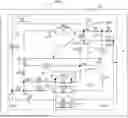
FIG. 1 is a simplified and schematic representation of a refrigeration system of a motor vehicle;
FIG. 2 is a simplified representation of a method for operating a refrigeration system.
DETAILED DESCRIPTION
FIG. 1 shows an embodiment of a refrigeration system 10 for a motor vehicle in a schematic and simplified manner. The refrigeration system 10 comprises a refrigerant circuit 11, which can be operated both in a refrigeration system operation (also called AC operation for short) and in a heat pump mode. In the embodiment shown, the refrigeration system 10 comprises a refrigerant compressor 12, an external heat exchanger 18, an internal heat exchanger 20, an evaporator 22 and an accumulator or refrigerant collector 24. The external heat exchanger 18 can be designed as a condenser or gas cooler. In particular, the outer heat exchanger 18 in the illustrated embodiment can be flowed through bidirectionally.
The evaporator 22 is shown here by way of example as a front evaporator for a vehicle. The evaporator 22 is also representative of other evaporators possible in a vehicle, for example rear evaporators, which can be arranged fluidically in parallel to one another. In other words, the refrigeration system 10 comprises at least one evaporator 22.
A shut-off valve A4 is arranged downstream of the compressor 12. An expansion valve AE2 is provided upstream of the evaporator 22.
In the scope of this description, in the entire refrigerant circuit 11 of the refrigeration system 10, the section from the compressor 12 to the external heat exchanger 18, to the internal heat exchanger 20 and to the evaporator 22 is referred to as the primary line 14.
The refrigeration system 10 furthermore comprises a heating register 26 (also referred to as a heating condenser or heating gas cooler). A shut-off valve A3 is arranged upstream of the heating register 26. A shut-off valve A1 is arranged downstream of the heating register 26. Furthermore, an expansion valve AE4 is arranged downstream of the heating register 26.
In the scope of this description, the section from the compressor 12 to the heating register 26, to the expansion valve AE4 and to a branch Ab2 is referred to as the secondary line 16 in the entire refrigerant circuit of the refrigeration system 10. The secondary line 16 comprises a heating branch 16.1, which extends from the shut-off valve A3 via the heating register 26 to the shut-off valve A1. The secondary line 16 also includes a reheating branch or reheat branch 16.2, which is fluidically connectable to the heating register 26 upstream and to the external heat exchanger 18 downstream. The secondary line 16 or the reheat branch 16.2 opens into the primary line 14 at a branching point Ab2.
The refrigeration system 10 comprises a further evaporator or chiller 28. The chiller 28 is provided fluidically in parallel to the evaporator 22. The chiller 28 can be used, for example, to cool an electrical component of the vehicle, but also to implement a water heat pump function using the waste heat from at least one electrical component. An expansion valve AE1 is installed upstream of the chiller 28.
The refrigeration system 10 can also have an electrical heating element 30, which is designed, for example, as a high-voltage PTC heating element. The electric heating element 30 serves as an additional heater for a supply air flow L fed into the vehicle interior. The electric heating element 30 can be accommodated together with the heating register 26 and the evaporator 22 in an air conditioning unit 32. In this case, the electrical heating element 30 can be arranged downstream of the heating register 26.
The refrigeration system 10 has a sensor device pT2 arranged on the low-pressure side upstream of the refrigerant compressor 12 for detecting a first refrigerant pressure and/or a first refrigerant temperature. Furthermore, the refrigeration system 10 has a sensor device pT1 arranged on the high-pressure side downstream of the refrigerant compressor 12 for detecting a second refrigerant pressure and/or a second refrigerant temperature.
The refrigeration system 10 with heat pump function shown here as an example is intended in particular for a motor vehicle 200, which is shown here in a simplified manner as a dashed rectangle, with at least partially electric drive.
Optional check valves Rn (n=integer) are also shown in FIG. 1. Furthermore, the refrigeration system may also have other sensor devices not shown here.
The refrigeration system 10 can be operated in different modes, which are briefly described below.
In AC operation of the refrigerant circuit 11, the refrigerant compressed to high pressure flows from the refrigerant compressor 12 into the external heat exchanger 18 with the shut-off valve A4 open. From there, it flows to the high-pressure section of the internal heat exchanger 20 and the fully open expansion valve AE3. The refrigerant can flow to the expansion valve AE2 and into the interior evaporator 22 via a branching point Ab1 (evaporator section 22.1). In parallel or alternatively, the refrigerant can flow into the chiller 28 (chiller section 28.1) via a branching point Ab4 and the expansion valve AE1. From the evaporator 22 and/or the chiller 28, the refrigerant flows on the low-pressure side into the collector 24 and through the low-pressure section of the internal heat exchanger 20 back to the compressor 12.
In AC operation, the heating branch 16.1 or the secondary line 16 is shut off by means of the shut-off valve A3, so that hot refrigerant cannot flow through the heating register 26. To retrieve refrigerant from the inactive heating branch 16.1, the shut-off element A5, which is designed as a shut-off valve, can be opened so that the refrigerant can flow in the direction of the collector 24 via the shut-off element A5 and the check valve R2, with the shut-off element A2 being closed at the same time.
In heating operation of the refrigerant circuit 11, the shut-off valve A4 is closed and the shut-off valve A3 is open, so that hot refrigerant can flow into the heating branch 16.1.
To carry out the heating function by means of the chiller 28 to implement water heat pump operation, the refrigerant compressed by means of the refrigerant compressor 12 flows into the heating register 26 via the open shut-off valve A3. Heat is released to a supply air flow guided into the vehicle interior at the heating register 26. The refrigerant then flows via the open shut-off valve A1 and the branching point Ab1. It is expanded by means of the expansion valve AE1 in the chiller 28 to absorb waste heat from electrical and/or electronic components arranged in a coolant circuit 28.2. With this heating function, the expansion valves AE3 and AE4 are closed, the shut-off valve A5 is closed, and the shut-off valve A2 is open. In this case, refrigerant displaced in water heat pump operation can be extracted via the shut-off valve A2 out of a bidirectional line 14.1 or the primary line 14 and supplied to the collector 24 via the check valve R2.
To perform the heating function by means of the external heat exchanger 18 as a heat pump evaporator, the refrigerant compressed by the refrigerant compressor 12 flows into the heating register 26 via the open shut-off valve A3 to release heat to a supply air flow L. It is then expanded via the open shut-off valve A1 by means of the expansion valve AE3 into the external heat exchanger 18 to absorb heat from the ambient air. The refrigerant then flows via a heat pump return branch 15 to the collector 24 and back to the refrigerant compressor 12. The expansion valves AE1, AE2, and AE4 remain closed, as does the shut-off valve A5.
An indirect delta connection can be implemented in that when the shut-off valve A1 is open, the refrigerant compressed by the refrigerant compressor 12 is expanded by means of the expansion valve AE1 in the chiller 28, wherein no mass flow is generated at the same time on the coolant side, i.e., in the coolant circuit 28.2, thus, for example, the fluid used as the coolant, such as water or water-glycol mixture, remains on the coolant side of the chiller 28 or coolant does not actively flow through the chiller 28. The expansion valves AE2, AE3, and AE4 remain closed in this switching variant.
In a reheating or reheat operation, the supply air flow L supplied into the vehicle interior is first cooled by means of the evaporator 22 and thus dehumidified. Using the heat transferred to the refrigerant by evaporation and dehumidification and the heat supplied to the refrigerant via the compressor 12, the supply air flow L can be completely or at least partially reheated by means of the heating register 26.
FIG. 2 shows in a simplified manner a method 500 for operating a refrigeration system 10 described above, wherein the method 500 in particular comprises the following steps.
According to a step S501, the first refrigerant pressure and/or the first refrigerant temperature are detected by means of the sensor device pT2.
According to a step S502, the second refrigerant pressure and/or the second refrigerant temperature are detected by means of the sensor device pT1.
In a step S503, a speed of the refrigerant compressor 12 is detected.
According to a step S504 a refrigerant volumetric efficiency is determined based on the pressure ratio of the first refrigerant pressure and the second refrigerant pressure and the speed of the refrigerant compressor.
According to a step S505, a refrigerant mass flow is determined based on the refrigerant volumetric efficiency determined in S504.
In method 500, in an optional step S509 partial refrigerant mass flows are determined in refrigerant sections, each having a heat-absorbing heat exchanger, in particular having the evaporator 22 and chiller 28, as a function of detected opening cross sections of the expansion elements AE2, AE1 connected upstream of the heat exchangers.
In the method 500, according to an optional step S510, in particular in a dual cooling operation in which the evaporator 22 and the chiller 28 are (parallel) flowed through by refrigerant, a superheating after the evaporator can be set, wherein
-
- the expansion element AE1 upstream of the chiller 28 sets a high pressure after the gas cooler 18 or a subcooling after the condenser,
- an actual refrigerant mass flow is set at the evaporator 22 by the expansion element AE2 upstream of the evaporator 22, and
- the refrigerant compressor 12 sets an air temperature after the evaporator 22 and/or a coolant temperature after the chiller 28.
In the method 500, according to an optional step S511, a target refrigerant mass flow can be determined as a function of an approximate superheating at the chiller 28 and a power applied to the evaporator 22, so that the actual refrigerant mass flow at the evaporator 22 can be adjusted to the target refrigerant mass flow by the expansion element AE2 connected upstream of the evaporator 22.
In the method 500, an assigned maximum refrigerant mass flow can be used for each operating state of the refrigeration system 10 described above, in particular cooling operation, heating operation, reheat operation, so that according to a step S508 the speed of the refrigerant compressor in the respective operating state can be limited depending on the assigned maximum refrigerant mass flow.
It is pointed out that in FIG. 2 the described steps of the method 500 are shown in a simplified sequence, even though these steps can also be carried out (in time) in parallel to one another or even simultaneously.
To carry out the method 500 described above, the refrigeration system 10 may have a control unit 50.
Claims
1. A method for operating a refrigeration system with heat pump function for a motor vehicle with at least partially electric drive, wherein the refrigeration system comprises:
a refrigerant compressor,
a first heat exchanger, in particular a gas cooler or condenser;
at least one further heat exchanger, in particular an evaporator and/or a chiller and/or a heating register;
a sensor device arranged on the low-pressure side upstream of the refrigerant compressor for detecting a first refrigerant pressure and/or a first refrigerant temperature;
a sensor device arranged on the high-pressure side downstream of the refrigerant compressor for detecting a second refrigerant pressure and/or a second refrigerant temperature, the method comprising the following steps:
detecting the first refrigerant pressure and/or the first refrigerant temperature;
detecting the second refrigerant pressure and/or the second refrigerant temperature;
detecting a speed of the refrigerant compressor;
determining a refrigerant volumetric efficiency based on the pressure ratio of the first refrigerant pressure and the second refrigerant pressure and the speed of the refrigerant compressor;
determining a refrigerant mass flow based on the refrigerant volumetric efficiency.
2. The method according to claim 1, further comprising the step:
determining partial refrigerant mass flows in refrigerant sections, each having a heat-absorbing heat exchanger, in particular having an evaporator and a chiller, as a function of detected opening cross sections of expansion elements connected upstream of the heat exchangers.
3. The method according to claim 2, wherein in a dual cooling operation in which refrigerant flows through the evaporator and the chiller, a superheating is set after the evaporator.
4. The method according to claim 3, wherein
the expansion element upstream of the chiller sets a high pressure after the gas cooler or a subcooling after the condenser,
an actual refrigerant mass flow is set at the evaporator by the expansion element upstream of the evaporator, and
the refrigerant compressor sets an air temperature after the evaporator and/or a coolant temperature after the chiller.
5. The method according to claim 4, wherein a target refrigerant mass flow is determined as a function of an approximate superheating at the chiller and a power applied to the evaporator, so that the actual refrigerant mass flow at the evaporator can be adjusted to the target refrigerant mass flow by the expansion element connected upstream of the evaporator.
6. A refrigeration system having heat pump function for a motor vehicle with at least partially electric drive, wherein the refrigeration system comprises:
a refrigerant compressor,
a first heat exchanger, in particular a gas cooler or condenser;
at least one further heat exchanger, in particular an evaporator or/and a chiller or/and a heating register;
a sensor device arranged on the low-pressure side upstream of the refrigerant compressor for detecting a first refrigerant pressure and/or a first refrigerant temperature;
a sensor device arranged on the high-pressure side downstream of the refrigerant compressor for detecting a second refrigerant pressure and/or a second refrigerant temperature; and
a control unit configured to carry out the method according to claim 1.
Images & Drawings included:

Sources:
- United States Patent and Trademark Office - verify current appl. status at the USPTO↗
Recent applications in this class:
- » 20260008322 2026-01-08
SYSTEM AND METHOD FOR POWER SUPPLY MANAGEMENT IN A VEHICLE WITH A TRANSPORT REFRIGERATION UNIT - » 20250289291 2025-09-18
SYSTEM AND METHOD FOR POWER SUPPLY MANAGEMENT IN A TRANSPORT REFRIGERATION UNIT - » 20250144976 2025-05-08
VEHICLE HAVING AUXILIARY FAN TO IMPROVE HVAC PERFORMANCE - » 20250026179 2025-01-23
METHODS AND SYSTEMS FOR OPTIMIZING CLIMATE CONTROL WITHIN A CLIMATE CONTROLLED SPACE - » 20240416726 2024-12-19
SYSTEM AND METHOD FOR CONTROLLING OPERATION OF A TRANSPORT REFRIGERATION UNIT IN A VEHICLE - » 20230271481 2023-08-31
SIMULTANEOUS VAPOR AND LIQUID INJECTION - » 20220194176 2022-06-23
System and method of energy efficient operation of a transport climate control system - » 20210370748 2021-12-02
Vehicle thermal management - » 20210339607 2021-11-04
System and method of energy efficient operation of a transport climate control system - » 20210101451 2021-04-08
REFRIGERATION CYCLE DEVICE
Recent applications for this Assignee:
- » 20260054547 2026-02-26
METHOD FOR OPERATING A REFRIGERATION SYSTEM WITH HEAT PUMP FUNCTION FOR A MOTOR VEHICLE BASED ON THE REFRIGERANT MASS FLOW AND REFRIGERATION SYSTEM WITH CONTROL UNIT FOR CARRYING OUT THE METHOD - » 20260044171 2026-02-12
DOOR ACTUATING DEVICE - » 20260042485 2026-02-12
INTEGRALLY REINFORCED SILL STRUCTURE FOR A VEHICLE, AND VEHICLE - » 20260038896 2026-02-05
VARIABLE BATTERY ARRANGEMENT, MOTOR VEHICLE AND METHOD FOR OPERATING A BATTERY ARRANGEMENT - » 20260031466 2026-01-29
BATTERY MODULE AND CELL SEPARATING ELEMENT WITH COOLING FUNCTION - » 20260021743 2026-01-22
METHOD FOR OPERATING A DRIVE DEVICE FOR A MOTOR VEHICLE, CORRESPONDING DRIVE DEVICE FOR A MOTOR VEHICLE AND COMPUTER PROGRAM PRODUCT - » 20260018708 2026-01-15
CELL SEPARATING ELEMENT WITH FIRE PROTECTION LAYER AND BATTERY MODULE - » 20260013076 2026-01-08
COOLING DEVICE, AND MOTOR VEHICLE WITH A COOLING DEVICE - » 20260011844 2026-01-08
CELL SEPARATING ELEMENT HAVING REGIONS OF DIFFERENT HARDNESS, BATTERY MODULE AND METHOD FOR PRODUCING A BATTERY MODULE - » 20240116352 2024-04-11
CONNECTION APPARATUS, AND ARRANGEMENT FOR A VEHICLE FOR DOUBLE-SHEARING CONNECTION OF A DRIVE TRAIN COMPONENT TO A BODY AND TO A SUPPORT STRUCTURE, AND AN ASSOCIATED MOTOR VEHICLE AND METHOD