VAPOR-DEPOSITED SUBSTRATE, PACKAGING MATERIAL LAMINATE, PACKAGING CONTAINER, AND PACKAGED ARTICLE
US20260054903A1
2026-02-26
19/374,955
2025-10-30
Smart Summary: A special layer is created on a film made from recycled plastic. This film is called a vapor-deposited substrate. The recycled plastic used in the film has been processed in a way that makes it usable again. There is also a packaging material that combines this special layer with a sealing layer to keep items safe. This technology helps in creating eco-friendly packaging solutions. 🚀 TL;DR
Abstract:
A vapor-deposited substrate is formed by forming a vapor-deposited layer on a substrate. The substrate is a polyolefin resin film containing recycled resin, and the recycled resin is a chemically recycled resin. A packaging material laminate includes the vapor-deposited substrate and a sealing layer.
Inventors:
- Masayoshi Suzuta 31 🇯🇵 Tokyo, Japan
- Nobuhiko IMAI 6 🇯🇵 Tokyo, Japan
- Katsuhiro SUZUKI 6 🇯🇵 Tokyo, Japan
- Chiaki Kato 4 🇯🇵 Tokyo, Japan
- Ryuichi Nakamura 3 🇯🇵 Tokyo, Japan
- Soichi HATA 2 🇯🇵 Tokyo, Japan
Assignee:
- TOPPAN Holdings Inc. 228 🇯🇵 Tokyo, Japan
Applicant:
Interested in similar patents?
Get notified when new applications in this technology area are published.
Classification:
B65D75/26 » CPC main
Packages comprising articles or materials partially or wholly enclosed in strips, sheets, blanks, tubes, or webs of flexible sheet material, e.g. in folded wrappers Articles or materials wholly enclosed in laminated sheets or wrapper blanks
B32B7/12 » CPC further
Layered products characterised by the relation between layers; Layered products characterised by the relative orientation of features between layers, or by the relative values of a measurable parameter between layers, i.e. products comprising layers having different physical, chemical or physicochemical properties; Layered products characterised by the interconnection of layers; Interconnection of layers using interposed adhesives or interposed materials with bonding properties
B32B27/08 » CPC further
Layered products comprising synthetic resin as the main or only constituent of a layer, next to another layer of a of synthetic resin
B32B27/32 » CPC further
Layered products comprising synthetic resin comprising polyolefins
B32B2255/10 » CPC further
Coating on the layer surface on synthetic resin layer or on natural or synthetic rubber layer
B32B2255/20 » CPC further
Coating on the layer surface Inorganic coating
B32B2305/70 » CPC further
Condition, form or state of the layers or laminate Scrap or recycled material
B32B2439/06 » CPC further
Containers; Receptacles; Open containers Bags, sacks, sachets
Description
CROSS-REFERENCE TO RELATED PATENT APPLICATIONS
The present application is a Bypass Continuation of International Patent Application No. PCT/JP2023/042976, filed Nov. 30, 2023, which claims priority to and the benefit of Japanese Patent Application No. 2023-075730, filed on May 1, 2023. The contents of these applications are hereby incorporated by reference herein in their entireties.
TECHNICAL FIELD
The present disclosure relates to a vapor-deposited substrate, a packaging material laminate, a packaging container, and a packaged article.
BACKGROUND
Packaging materials used for packaging containers such as packaging bags are required to have various properties depending on the application. In order to satisfy such various performance requirements at the same time, packaging materials are generally made of a laminate including a substrate and a sealant layer.
A known conventional example of such a packaging material laminate includes a first layer including an inner liner and a second layer including an outer sheath, in which the outer sheath is made of a post-consumer resin (hereinafter also referred to as “PCR”) that may contain contaminants such as paper, ink, and food residues (see PTL 1 below). As another known example of a packaging material laminate, a laminated film includes at least a recycled polyethylene layer and a linear low-density polyethylene layer, in which the recycled polyethylene layer contains 20% by mass or more of mechanically recycled polyethylene relative to the total mass of the recycled polyethylene layer (see PTL 2).
CITATION LIST
Patent Literature
- [PTL 1] JP 2022-552096 T [PTL 2] JP 2023-040660 A
However, when the PCR is a recycled resin containing contaminants, that is, a so-called mechanically recycled resin, and the PCR content is high, the laminate described in PTL 1 specified above raises the following problems.
That is, in the laminate described in PTL 1, foreign matter such as impurities, gels, and aggregates may appear on the surface of the outer sheath. When a vapor-deposited layer is formed on the surface of the outer sheath, it causes variation in the thickness of the formed vapor-deposited layer, increasing the risk of reduced barrier performance or crack formation.
Furthermore, in the laminate film described in PTL 2, foreign matter may be present on the surface of the recycled polyethylene layer containing mechanically recycled polyethylene. When a vapor-deposited layer is formed on the surface of the recycled polyethylene layer as a barrier layer against oxygen, water vapor, or the like, it may cause variation in the thickness of the formed vapor-deposited layer, increasing the risk of reduced barrier performance and crack formation.
An object of the present disclosure is to provide a vapor-deposited substrate, a packaging material laminate, a packaging container, and a packaged article that can suppress the decrease in gas barrier performance even when a substrate containing recycled resin is used.
SUMMARY OF THE INVENTION
An aspect of the present disclosure provides a vapor-deposited substrate formed by forming a vapor-deposited layer on a substrate, in which the substrate is a polyolefin resin film containing recycled resin, and the recycled resin is a chemically recycled resin.
According to the vapor-deposited substrate, the recycled resin used for the substrate in the vapor-deposited substrate is a chemically recycled resin, and the chemically recycled resin is produced by first breaking down discarded resin into low molecular weight compounds through a process depending on the material characteristics, such as a process of converting discarded resin into monomers by gasification or liquefaction and subsequent refining into naphtha, or a process of converting discarded resin into monomers by depolymerization, and then polymerizing the monomers. Therefore, chemically recycled resin is less likely to be contaminated with foreign matter such as impurities, gels, and aggregates than mechanically recycled resin, which is produced by cleaning and crushing resin products such as collected used packaging materials, then heating and melting them to regenerate raw materials. In addition, unlike mechanically recycled resin, chemically recycled resin is not subjected to heat treatments such as heating and melting after the recycling process, which allows it to be less susceptible to thermal degradation and reduces the amount of foreign matter such as gels and aggregates on the surface. Therefore, even if the vapor-deposited layer is formed on such a substrate, the thickness of the vapor-deposited layer is more likely to be uniform, and a high-quality vapor-deposited layer is formed. Accordingly, the above vapor-deposited substrate can suppress a decrease in gas barrier performance even when using a substrate containing recycled resin.
An aspect of the present disclosure provides a packaging material laminate including a vapor-deposited substrate formed by forming a vapor-deposited layer on a substrate, and a sealing layer, in which the substrate is a polyolefin resin film containing recycled resin, and the recycled resin is a chemically recycled resin.
According to the above packaging material laminate, it is possible to suppress decrease in gas barrier performance even when using a vapor-deposited substrate formed by forming a vapor-deposited layer on a substrate containing recycled resin.
The content of the recycled resin in the packaging material laminate may be 10% or more by volume or by mass.
The higher the content (usage ratio) of recycled resin in the packaging material laminate, the more the environmental impact can be reduced. The content of recycled resin in the packaging material laminate is generally 10% or more by volume or by mass, preferably 20% or more by volume or by mass, more preferably 25% or more by volume or by mass, even more preferably 30% or more by volume or by mass, and particularly preferably 40% or more by volume or by mass. In cases where it is not easy to calculate the mass ratio (% by mass) after the packaging material laminate has been processed into a packaging material, the recycled resin content may be expressed in “% by volume” so that it can be calculated based on the film thickness ratio. In other words, it is possible to use the ratio of the film thickness of the layer containing recycled resin to the thickness of the entire laminate can be used as the content (% by volume) of the recycled resin. The densities of polyethylene and polypropylene, which make up the majority of packaging materials are approximately 0.86 to 0.97 g/cm3, and the numerical ranges for recycled resin content specified in % by volume are generally also satisfied by values specified in % by mass.
The packaging material laminate may further include a second substrate on one or both sides of the substrate.
In this case, the second substrate reinforces the vapor-deposited substrate, thereby further improving the strength of the laminate.
In the packaging material laminate, the recycled resin may be a post-consumer recycled resin (PCR).
Since a large amount of PCR is available on the market, the cost of the laminate can be reduced.
The recycled resin may be a combination of PCR and post-industrial recycled resin (PIR).
In the packaging material laminate, the sealing layer may be a sealant film or a heat-sealing varnish layer.
In the packaging material laminate, the vapor-deposited substrate and the second substrate may be bonded together with a solvent-free adhesive.
The packaging material laminate may further include an overcoat layer on the vapor-deposited layer.
In this case, the gas barrier performance of the laminate can be further improved. Therefore, when a packaging container is produced using the laminate and contents are placed in the packaging container, deterioration of the contents due to gases such as oxygen can be effectively suppressed.
Another aspect of the present disclosure provides a packaging container obtained using the above packaging material laminate.
According to the packaging container, as described earlier, the chemically recycled resin contained in the substrate of the laminate is less likely to be contaminated with foreign matter such as impurities, gels, and aggregates than mechanically recycled resin. In addition, unlike mechanically recycled resin, chemically recycled resin is not subjected to heat treatments such as heating and melting after the recycling process, which allows it to be less susceptible to thermal degradation and reduces the amount of foreign matter such as gels and aggregates on the surface. Therefore, even if the vapor-deposited layer is formed on such a substrate, the thickness of the vapor-deposited layer is more likely to be uniform, and a high-quality vapor-deposited layer is formed. Therefore, a packaging container obtained by using the above packaging material laminate can suppress a decrease in gas barrier performance.
Yet another aspect of the present disclosure provides a packaged article including the above packaging container and contents contained in the packaging container.
According to the packaged article, as described earlier, the chemically recycled resin contained in the substrate of the laminate is less likely to be contaminated with foreign matter such as impurities, gels, and aggregates than mechanically recycled resin. In addition, unlike mechanically recycled resin, chemically recycled resin is not subjected to heat treatments such as heating and melting after the recycling process, which allows it to be less susceptible to thermal degradation and reduces the amount of foreign matter such as gels and aggregates on the surface. Therefore, even if the vapor-deposited layer is formed on such a substrate, the thickness of the vapor-deposited layer is more likely to be uniform, and a high-quality vapor-deposited layer is formed. Therefore, a packaged article having a packaging container obtained by using the above packaging material laminate can suppress a decrease in gas barrier performance.
According to the present disclosure, a vapor-deposited substrate, a packaging material laminate, a packaging container, and a packaged article are provided that can suppress decrease in gas barrier performance even when a substrate containing recycled resin is used.
BRIEF DESCRIPTION OF THE DRAWINGS
FIG. 1 is a schematic cross-sectional view illustrating an embodiment of a packaging material laminate according to the present disclosure.
FIG. 2 is a schematic cross-sectional view illustrating another embodiment of a packaging material laminate according to the present disclosure.
FIG. 3 is a schematic cross-sectional view illustrating another embodiment of a packaging material laminate according to the present disclosure.
FIG. 4 is a schematic cross-sectional view illustrating yet another embodiment of a packaging material laminate according to the present disclosure.
FIG. 5 is a schematic cross-sectional view illustrating an embodiment of a packaged article according to the present disclosure.
DETAILED DESCRIPTION
Preferred embodiments of the present disclosure are described in detail below. Throughout the drawings, the same or corresponding components are denoted by the same reference signs, and duplicated description is omitted.
<<Packaging Material Laminate>>
First, embodiments of packaging material laminates according to the present disclosure will be described with reference to FIGS. 1 to 4. FIGS. 1 to 4 are schematic cross-sectional views showing various embodiments of packaging material laminates according to the present disclosure.
As shown in FIG. 1, a packaging material laminate (hereinafter also referred to as “laminate”) 100 includes a vapor-deposited substrate 10 and a sealing layer 30.
As shown in FIG. 2, the vapor-deposited substrate 10 is formed by forming a vapor-deposited layer 61 on a substrate 11. Here, the substrate 11 is a polyolefin resin film containing recycled resin, and the recycled resin is a chemically recycled resin.
As shown in FIGS. 2 to 4, the laminate 100 may further include an overcoat layer 62 on the vapor-deposited layer 61 of the vapor-deposited substrate 10. At least one of the vapor-deposited layer 61 and the overcoat layer 62 functions as a “gas barrier layer”.
The laminate 100 may further include a second substrate 20 between the vapor-deposited substrate 10 and the sealing layer 30.
As shown in FIG. 2, the laminate 100 may further include a printed layer 50.
When the laminate 100 is used for a tube container, as shown in FIG. 3, the laminate 100 may further include an outer sealant layer (also referred to as “second sealant layer”) 40 on the opposite side of the vapor-deposited substrate 10 to the sealing layer 30.
According to the above laminate 100, it is possible to suppress a decrease in gas barrier performance even when using a vapor-deposited substrate formed by forming a vapor-deposited layer on a substrate 11 containing recycled resin.
The content of recycled resin in the packaging material laminate 100 is preferably 10% or more by volume or by mass.
<Vapor-Deposited Substrate>
The vapor-deposited substrate 10 is a member formed by forming the vapor-deposited layer 61 on the substrate 11.
(Substrate)
The substrate 11 is made of a polyolefin resin film containing recycled resin, and the recycled resin is a chemically recycled resin.
The polyolefin resin film includes a polyolefin resin. Examples of polyolefin resins include polyethylene and polypropylene.
Polyethylene is a resin that includes ethylene as a structural unit. Polyethylene includes ethylene homopolymers and copolymers of ethylene with other monomers. The proportion of ethylene in the polyethylene is, for example, 80 mol % or more.
Examples of the other monomers include α-olefins, vinyl acetate, and acrylic esters.
The α-olefins may be those having 3 to 20 carbon atoms. Examples of the α-olefins include propylene, 1-butene, 1-pentene, 1-hexene, 1-octene, 1-decene, 1-dodecene, 1-tetradecene, 1-hexadecene, 1-octadecene, 1-eicosene, 3-methyl-1-butene, 4-methyl-1-pentene, and 6-methyl-1-heptene.
Examples of polyethylene include high-density polyethylene (HDPE), medium-density polyethylene (MDPE), low-density polyethylene (LDPE), linear low-density polyethylene (LLDPE), very low-density polyethylene (VLDPE), ethylene-vinyl acetate copolymers, ionomer resins, ethylene-acrylic acid copolymers, ethylene-methyl acrylate copolymers, ethylene-methacrylic acid copolymers, and ethylene-propylene copolymers. These can be used alone or in combinations of two or more.
Polypropylene is a resin containing propylene as a structural unit. It does not necessarily contain ethylene as a structural unit, and includes both propylene homopolymers and copolymers with ethylene or various α-olefins. Examples of polypropylene include homopolypropylene, block polypropylene, and random polypropylene.
The polyolefin resin may be a non-recycled polyolefin resin, a chemically recycled polyolefin resin, or a mixture thereof.
The non-recycled polyolefin resin may be a petroleum-derived polyolefin resin obtained using a petroleum-derived monomer as a raw material, a biomass-derived polyolefin resin obtained using a biomass-derived monomer as a raw material, or a mixture thereof. From the perspective of reducing the environmental impact, a biomass-derived polyolefin resin is preferable.
The chemically recycled polyolefin resin may contain a single chemically recycled polyolefin resin or a mixture of a plurality of types of chemically recycled polyolefin resins.
The substrate 11 may have a single-layer structure or a multilayer structure. In the case of a multilayer structure, the substrate 11 has a layer structure including two or more layers, and at least one of the layers contains a chemically recycled resin.
If necessary, the substrate 11 may be a layer obtained by forming a multilayer film by co-extrusion of a layer made of an ethylene-vinyl alcohol copolymer and a layer made of a polyamide with an adhesive resin or the like, and stretching the formed film. For example, a three-material, five-layer substrate consisting of chemically recycled resin/adhesive resin/ethylene-vinyl alcohol copolymer/adhesive resin/chemically recycled resin; a three-material, three-layer substrate consisting of chemically recycled resin/adhesive resin/ethylene-vinyl alcohol copolymer; or a multilayer substrate consisting of petroleum-derived (natural) resin/chemically recycled resin/petroleum-derived (natural) resin or petroleum-derived (natural) resin/another polyolefin/chemically recycled resin/another resin/petroleum-derived (natural) resin may be used. In the multilayer substrate 11, materials of the same type may have different specific gravities depending on their functions.
The substrate 11 may further contain additives such as fillers, antistatic agents, plasticizers, lubricants, light-shielding pigments, and antioxidants, as necessary.
When the substrate 11 contains a light-shielding pigment, the substrate 11 can function as a light-shielding layer.
The substrate 11 may be either a non-stretched film or a stretched film. The stretched film may be either uniaxially or biaxially stretched. The vapor-deposited substrate 10 may be made of either a stretched film or an unstretched film. When the substrate 11 is uniaxially stretched, it is possible to improve properties such as ease of tearing and heat resistance of the laminate 100. When the substrate 11 is a biaxially stretched film, it is possible to improve properties such as mechanical strength and dimensional stability of the laminate 100.
When an adhesive layer is provided on the surface of the substrate 11, in order to enhance adhesion to the adhesive layer, the surface of the substrate 11 on the adhesive layer side may be subjected to various pretreatments such as corona treatment, plasma treatment, ozone treatment, and frame treatment, or an adhesion-enhancing layer or another coating layer may be provided thereon.
Although the thickness of the substrate 11 is not particularly limited, for example, it is 10 μm or more and 100 μm or less. In order to reduce the amount of material to lower environmental impact and obtain good heat resistance, impact resistance, and gas barrier performance, the thickness of the substrate 11 may be 15 μm or more, 20 μm or more, 25 μm or more, 30 μm or more, or 40 μm or more. In addition, the thickness of the substrate 11 may be 60 μm or less, or 50 μm or less.
(Vapor-Deposited Layer)
The vapor-deposited layer 61 may be formed on the sealing layer 30 side of the substrate 11 as shown in FIG. 2, but may also be formed on the opposite side of the substrate 11 to the sealing layer 30. The vapor-deposited layer 61 may be provided on both sides of the substrate 11.
The vapor-deposited layer 61 improves the gas barrier performance of the laminate 100 and function as a gas barrier layer.
The vapor-deposited layer 61 provides a barrier against a gas such as water vapor or oxygen.
The vapor-deposited layer 61 may be, for example, a metal vapor-deposited layer a vapor-deposited layer of an inorganic compound.
Examples of the metal include aluminum and silicon.
Examples of inorganic oxides include aluminum oxide and silicon oxide (silica).
When the vapor-deposited layer 61 is a vapor-deposited layer of a metal such as aluminum, the vapor-deposited layer 61 can function as a light-shielding layer.
(Overcoat Layer)
The laminate 100 may further have an overcoat layer 62 on the vapor-deposited layer 61. In this case, the gas barrier performance of the laminate 100 can be further improved. Therefore, when a packaging container is produced using the laminate 100 and contents are placed in the packaging container, deterioration of the contents due to gases such as oxygen can be effectively suppressed.
The overcoat layer 62 may be a coating layer obtained using a composition containing a water-soluble polymer and silicon alkoxide, or a coating layer made of a resin such as polyurethane.
<Sealing Layer>
The sealing layer 30 is bonded to itself or another sealing layer 30 by applying heat and pressure when the laminate 100 is used to manufacture a packaging container such as a packaging bag, and it can be a sealant film (also referred to as “sealant layer”) or a heat-sealing varnish layer can be used.
The sealing layer 30 preferably has a melting point lower than that of the substrate 11 provided on the outer side. This makes it possible to heat-seal the sealant film during heat-sealing of the laminate 100 while suppressing melting of the substrate 11. Furthermore, the substrate 11 and the seal layer 30 can be easily separated by heating the laminate 100, facilitating mechanical recycling of the substrate 11 and the sealing layer 30.
The sealing layer 30 may further contain additives such as flame retardants, slip agents, antiblocking agents, antioxidants, photostabilizers, tackifiers, antistatic agents, and light-shielding pigments, as necessary.
When the sealing layer 30 contains a light-shielding pigment, the sealing layer 30 can function as a light-shielding layer.
The sealing layer 30 may be composed of a single layer or a plurality of layers.
When the sealing layer 30 is composed of a single layer, the sealing layer 30 may be a recycled polyolefin resin film containing recycled resin, or a non-recycled polyolefin resin film. The recycled polyolefin resin film is preferably a chemically recycled polyolefin resin because it has better hygiene and quality characteristics.
When the sealing layer 30 is composed of three layers, the layers may be a first outer layer, an intermediate layer, and a second outer layer.
The first and second outer layers may be each made of a non-recycled polyolefin resin film, and the intermediate layer may be made of a recycled polyolefin resin film.
The sealing layer 30 may be colored, for example, white. For example, a white sealant containing a titanium oxide-based white pigment can be used. The sealing layer 30 is not limited to a white sealant, and a sealing layer of another color may be formed by adding a pigment other than a white pigment.
(Sealant Film)
The sealant film may be a polyolefin resin film or a polyester resin film. Polyolefin resin film is suitable due to its properties such as suitability for sealing, and contains a polyolefin resin. The polyolefin resin may be similar to that used in the substrate 11. The polyester resin film may contain a copolymer polyester obtained by copolymerizing two or more types of copolymers. Such a polyester resin film is preferable due to its low adsorption of ingredients from the contents and good flavor barrier performance.
The thickness of the sealant film is not particularly limited and is appropriately adjusted depending on, for example, the application of the laminate 100. For example, the thickness of the sealant film may be 10 μm or more, 25 μm or more, 30 μm or more, 40 μm or more, or 50 μm or more. The thickness of the sealant film may be 100 μm or less, 80 μm or less, 60 μm or less, or 50 μm or less.
(Heat-Sealing Varnish Layer)
The heat-sealing varnish layer can be used for light packaging applications, mainly containing light snacks. The heat-sealing varnish layer is obtained by applying an acrylic-, elastomer- or olefin-based heat-sealing varnish and drying it. The heat-sealing varnish may be a dispersion of a heat-sealing varnish component in an aqueous solvent (for example, water). Examples of heat-sealing varnishes that can be used include acrylic resin emulsions obtained by dispersing acrylic resin in an aqueous solvent as a heat-sealing varnish component, styrene-acrylic emulsions obtained by dispersing styrene-acrylic copolymer resin in an aqueous solvent as a heat-sealing varnish component, ionomer-based emulsions obtained by dispersing ionomer in an aqueous solvent as a heat-sealing varnish component, and polyolefin-based emulsions obtained by dispersing polyolefin resin in an aqueous solvent as a heat-sealing varnish component. In particular, among polyolefin-based emulsions, it is preferable to use an aqueous heat-sealing varnish obtained by dispersing an aqueous polyolefin resin having at least one selected from a carboxyl group, a salt of a carboxyl group, a carboxylic anhydride group, and a carboxylic acid ester as a heat-sealing varnish component in an aqueous solvent.
Specific examples of heat-sealing varnishes that can be used include A450NS (acrylic-based) manufactured by DIC Corporation and CHEMIPEARL S (polyolefin-based) manufactured by Mitsui Chemicals, Inc.
The thickness of the heat-sealing varnish layer may be, for example, 0.05 μm or more, 0.5 μm or more, or 1 μm or more, and 20 μm or less, 10 μm or less, or 5 μm or less. The heat-sealing varnish layer preferably has a thickness of 1 to 5 μm. This makes it possible to achieve both sufficient heat seal strength and resistance to bending.
<Outer Sealant Layer>
The outer sealant layer 40 may be similar to the sealing layer 30 described above.
The thickness of the outer sealant layer 40 may be the same as or different from that of the sealing layer 30. Similarly, the material of the outer sealant layer 40 may be the same as or different from that of the sealing layer 30.
<Second Substrate>
The second substrate 20 is a substrate that reinforces the vapor-deposited substrate 10 and can further improve the strength of the laminate 100.
The second substrate 20 may be provided on the inner side (the sealing layer 30 side) of the vapor-deposited substrate 10 as shown in FIG. 2, or may be provided on the outer side of the vapor-deposited substrate 10 (the side of the vapor-deposited substrate 10 opposite the sealing layer 30) as shown in FIG. 4. The second substrate 20 may be provided on both the inner and outer sides of the vapor-deposited substrate 10.
The second substrate 20 may be a film substrate made of a resin material. Examples of the resin material include polyester films such as polyethylene terephthalate (PET) and polyethylene naphthalate (PEN) films; polyolefin resins such as polyethylene, polypropylene, and cyclic olefin copolymers (COCs) and COPs; and engineering plastics such as polystyrene, polyamides such as nylon 66, polycarbonate, polyacrylonitrile, and polyimide. The resin material is preferably one having mechanical strength and dimensional stability. The resin material is processed into a film and used as a film substrate. The film substrate may be either a non-stretched film or a stretched film.
The second substrate 20 may be a single layer or a laminate of a plurality of layers.
When the second substrate 20 is composed of a single layer, the second substrate 20 may be a recycled resin film, or may be a non-recycled resin film made of petroleum-derived resin, biomass-derived resin, or the like.
When the second substrate 20 is composed of a plurality of layers, all of the layers may be recycled resin films or non-recycled resin films, or some of the layers may be non-recycled resin films and the remaining layers may be recycled resin films.
When it is composed of three layers, the layers may be a first outer layer, an intermediate layer, and a second outer layer.
The first and second outer layers may be each made of a non-recycled resin film, and the intermediate layer may be made of a recycled resin film. This further reduces the risk of impurities, gels, agglomerates, and other foreign matter migrating from the second substrate 20 to the contents through the sealing layer 30 as a result of heating during retort or boiling treatment of a packaging bag. Therefore, the laminate 100 can be used safely for packaging contents such as food.
The thickness of the second substrate 20 is not particularly limited and is appropriately adjusted depending on, for example, the application of the laminate 100. For example, the thickness of the second substrate 20 may be 10 μm or more, 25 μm or more, 30 μm or more, 40 μm or more, or 50 μm or more. The thickness of the second substrate 20 may be 100 μm or less, 80 μm or less, 60 μm or less, or 50 μm or less.
<Adhesive Layer>
The adhesive layer may be an adhesive layer formed using an adhesive or an adhesive layer containing adhesive resin (hereinafter, also referred to as an “adhesive resin layer”).
Examples of the adhesive include known adhesives such as urethane-based adhesives, polyester-based adhesives, polyamide-based adhesives, epoxy-based adhesives, and isocyanate-based adhesives.
The adhesive may or may not contain a biomass-derived component, but from the perspective of reducing the environmental impact, the adhesive preferably contains a biomass-derived component. Specific examples of the biomass-derived component include the “DICDRY BM series” manufactured by DIC Corporation and the “ECOAD series” manufactured by TOYO INK CO., LTD.
The adhesive may or may not contain an organic solvent, but from the perspective of reducing the environmental impact, it is preferably an adhesive that does not contain an organic solvent (solvent-free adhesive).
The adhesive resin layer may be an extruded or non-extruded resin layer.
The adhesive resin suffices if it is a heat-sealable adhesive thermoplastic resin that can be melted and fused by heat, and examples thereof include, among other resins, acid-modified polyolefin-based resins obtained by modifying a polyolefin-based resin with an unsaturated carboxylic acid. Examples of the polyolefin-based resin include low-density polyethylene, medium-density polyethylene, high-density polyethylene, straight-chain (linear) low-density polyethylene, polypropylene, ethylene-propylene copolymer, methylpentene polymer, polyethylene, and polypropylene. Examples of the unsaturated carboxylic acid include acrylic acid, methacrylic acid, maleic acid, maleic anhydride, fumaric acid, and itaconic acid.
The thickness of the adhesive layer is not particularly limited and may be, for example, 1 μm or more. When the thickness of the adhesive layer is 1 μm or more, sufficient adhesive strength can be achieved. The thickness of the adhesive layer may be 2 μm or more.
The thickness of the adhesive layer may be 50 μm or less, 5 μm or less, or 3 μm or less.
<Printed Layer>
The printed layer 50 can be provided on one or both surfaces of the vapor-deposited substrate 10, the second substrate 20, or the outer sealant layer 40. When the printed layer 50 is provided between layers in the laminate 100, deterioration of the printed layer 50 can be prevented because it is protected by the vapor-deposited substrate 10, the second substrate 20, or the outer sealant layer 40. When the printed layer 50 is provided on the outermost layer of the laminate 100, which is on the side opposite the sealing layer 30, the printed layer 50 can be easily removed when recycling a discarded packaging body containing the laminate 100.
The printed layer 50 displays characters, patterns, or the like, and can be formed using ink.
Examples of inks include those obtained by adding various pigments, plasticizers, drying agents, stabilizers, and the like to binder resins such as urethane-, acrylic-, nitrocellulose-, or rubber-based resins.
The ink may be either an aqueous ink or an oil-based ink, but is preferably an aqueous ink. The use of an aqueous ink further reduces the environmental impact because it uses water or alcohol as the solvent. In particular, when the adhesive is a solvent-free adhesive, the environmental impact can be significantly reduced by using an aqueous ink. Furthermore, the ink may or may not be a biomass ink, but is preferably a biomass ink from the perspective of reducing the environmental impact. Here, biomass ink refers to ink containing ingredients derived from biological resources (biomass) such as cotton, pulp, rice bran, vegetable oil, and angiosperm seeds.
The ink may be recycled ink obtained by collecting and recycling used ink, or may be non-recycled ink. Recycled ink is preferable in terms of environmental impact.
It is also possible to use an easily recyclable ink. The use of an easily recyclable ink facilitates recycling of a discarded packaging body. A specific example is “SunSpectro Solvawash” manufactured by DIC Corporation.
<Gas Barrier Layer>
The laminate 100 may further include a gas barrier layer on the substrate 11 in the vapor-deposited substrate 10, or on the second substrate 20.
The gas barrier layer improves the gas barrier performance of the laminate 100.
The gas barrier layer includes at least one of the vapor-deposited layer 61 and the overcoat layer 62 described above.
<Other Layers>
The laminate 100 may further include a layer containing a non-polyolefin resin.
Examples of the non-polyolefin resin include polyamide resins such as nylon, and polyester resins such as polyethylene terephthalate (PET).
<Laminate>
(A) Recycled Resin Content
In the laminate 100, the recycled resin content in the laminate 100 is preferably 10% or more by volume or by mass.
Note that, when the recycled resin content in a polyolefin resin film containing recycled resin is 100% by volume (100% by mass), the recycled resin content in the laminate 100 can be calculated as the ratio of the total thickness of the film to the total thickness of the laminate 100. However, when the recycled resin content in a polyolefin resin film containing recycled resin is X % by mass (less than 100% by mass) and the thickness of the film is Y1 (μm), the thickness Y2 (μm) of the film is calculated as X/100×Y1 (μm) for the recycled resin content.
The recycled resin content in the laminate 100 is preferably 20% or more by volume or by mass, more preferably 25% or more by volume or by mass, even more preferably 30% or more by volume or by mass, and particularly preferably 40% or more by volume or by mass.
In the present disclosure, the recycled resin is a chemically recycled resin and does not include mechanically recycled resin.
The chemically recycled resin may be a post-consumer recycled resin (PCR), a post-industrial recycled resin (PIR), or a mixture thereof, but is preferably a PCR. Since a large amount of PCR is available on the market, if the chemically recycled resin is PCR, the cost of the laminate 100 can be reduced.
(B) Odor Components
In a total ion chromatogram obtained by subjecting the laminate 100 to mass analysis using purge-and-trap gas chromatography-mass spectrometry, when the odor component indicators, that is, the ratio of the peak area of nonanal to the sum of the peak area values of all aliphatic hydrocarbon components is denoted as R1 (%) and the ratio of the peak area of decanal to the sum of the peak area values of all aliphatic hydrocarbon components is denoted as R2 (%), R1 is preferably less than 1.5%, more preferably 1.0% or less, and particularly preferably 0.5% or less.
Furthermore, R2 is preferably less than 3.5%, more preferably 2.5% or less, and particularly preferably 1.5% or less.
It is preferred that R1 is less than 1.5% and R2 is less than 3.5%. In that case, overall thermal degradation is suppressed in the laminate 100, and the quality of the laminate 100 can be further improved.
Specifically, the above mass analysis is carried out by cutting out a 1.0 g sample from the laminate 100, placing this sample in a 20 mL vial together with a collector for odor components, heating it at 60° C. for 1 hour to adsorb volatile components from the sample onto the collector, and then analyzing the volatile components adsorbed onto the collector using a purge-and-trap gas chromatograph mass analyzer.
(C) Fisheyes
Fisheyes refer to pieces of foreign matter such as spots (gelled matter) or carbonized matter that resemble fish eyes and are found on film. Films having fisheyes with a diameter of 1 mm or more are deemed defective, and the number of fisheyes with a diameter of 0.5 mm or more and less than 1 mm should be 100 per m2 or less, more preferably 50 per m2 or less, and particularly preferably 10 per m2 or less.
(D) Variation in Dynamic Friction Force
Variation (in-plane variation) σ in the dynamic friction force across the surface of the vapor-deposited substrate 10 of the laminate 100 refers to the standard deviation of the dynamic friction force.
The value of σ is preferably less than 0.45, more preferably less than 0.35, and particularly preferably less than 0.2. When σ is less than 0.45, the transportability of the laminate 100 can be improved when it is transported with the layer having σ of less than 0.45 facing the transport rollers. Furthermore, the difference in stress between areas on the surface of the layer where the dynamic friction force from the transport rollers is large and areas where it is small decreases, thereby reducing residual distortion within the layer and suppressing a decrease in the strength of the laminate 100 due to the residual distortion.
From the perspective of the strength of the laminate, σ is preferably 0.1 or more, more preferably 0.2 or more, and particularly preferably 0.3 or more.
The dynamic friction coefficient of the laminate 100 is measured using the multi-function static and dynamic friction measuring instrument TL201Tt (manufactured by Trinity Lab) and a tactile probe. The standard deviation σ of dynamic friction force is a value obtained based on JIS K 7125-ISO 8295, and specifically, it is obtained by placing the laminate 100 on a test table with the vapor-deposited substrate 10 facing down, and bringing the tactile probe into contact with the laminate 100 and sliding it at a speed of 10 mm/sec under a load of 50 g.
(F) Impurities
When the laminate 100 is analyzed by Fourier transform infrared spectroscopy (FT-IR) using attenuated total reflection (ATR) to obtain an ATR spectrum, a ratio R3 of the absorption coefficient of the C═O stretching near 1720 cm−1, corresponding to polyester and polyurethane, to the absorption coefficient of the methylene group C—H asymmetric stretching near 2915 cm−1, corresponding to polyethylene, in the ATR spectrum is preferably less than 0.1, more preferably less than 0.05, and particularly preferably 0.01 or less. The ratio R3 serves as an indicator showing that the amount of resin components other than polyolefin is small.
In the above analysis, a diamond prism is used as the prism to be brought into close contact with the laminate 100, and the angle of incidence with respect to the surface of the laminate 100 is 45°.
When the laminate 100 includes the vapor-deposited substrate 10 and the sealing layer 30, both the vapor-deposited substrate 10 and the sealing layer 30 may be recycled resin films.
<<Packaged Article>>
Next, an embodiment of a packaged article according to another aspect of the present disclosure will be described with reference to FIG. 5. FIG. 5 is a cross-sectional view illustrating an embodiment of a packaged article according to another aspect of the present disclosure.
As shown in FIG. 5, a packaged article 500 includes a packaging bag 400 as a packaging container and contents C contained in the packaging bag 400. The packaging bag 400 is obtained by using a pair of laminates 100. The packaging bag 400 is obtained, for example, by making the sealing layers 30 of the pair of laminates 100 face each other and bonding their peripheral edges. The packaging bag 400 includes a storage portion for containing the contents C and a bonded portion provided around the storage portion. The bonded portion is a portion where the sealing layers 30 of the opposing laminates 100 are bonded together, and the storage portion is a portion where the sealing layers 30 of the opposing laminates 100 are not bonded together.
According to the packaged article 500, the chemically recycled resin contained in the substrate 11 of the laminate 100 as recycled resin is produced by first breaking down discarded resin into low molecular weight compounds through a process depending on the material characteristics, such as a process of converting discarded resin into monomers by gasification or liquefaction and subsequent refining into naphtha, or a process of converting discarded resin into monomers by depolymerization, and then polymerizing the monomers. Therefore, chemically recycled resin is less likely to be contaminated with foreign matter such as impurities, gels, and aggregates than mechanically recycled resin, which is produced by cleaning and crushing resin products such as collected used packaging materials, then heating and melting them to regenerate raw materials. In addition, unlike mechanically recycled resin, chemically recycled resin is not subjected to heat treatments such as heating and melting after the recycling process, which allows it to be less susceptible to thermal degradation and reduces the amount of foreign matter such as gels and aggregates on the surface. Therefore, even if the vapor-deposited layer 61 is formed on such a substrate 11, the thickness of the vapor-deposited layer 61 is more likely to be uniform, and a high-quality vapor-deposited layer 61 is formed. Accordingly, even when a vapor-deposited substrate 10 formed by forming a vapor-deposited layer 61 on a substrate 11 containing recycled resin is used, it is possible to suppress a decrease in the gas barrier performance of the packaging bag 400 obtained using the packaging material laminate 100. Therefore, the packaged article 500 having the packaging container 400 can suppress deterioration of the gas barrier performance. In addition, since the packaged article 500 can suppress deterioration of the gas barrier performance, the packaged article 500 can suppress deterioration of the quality of the contents C such as food caused by gas, and allows the contents C to be safely contained. In addition, since the laminate 100 can have improved quality, the packaged article 500 including the packaging bag 400 obtained using the packaging material laminate 100 can have improved properties, such as increased strength.
(Contents)
The contents C are not particularly limited and may be appropriately selected depending on the application of the packaging bag 400. The contents C are not particularly limited, and examples of the contents C include food, shampoo, rinse, body soap, and detergent.
(Packaging Bag)
The pair of laminates 100 constituting the packaging bag 400 may have the same or different configurations.
The packaging bag 400 may have a half-cut line, and may further have a portion processed to facilitate opening at both ends or one end of the half-cut line. Examples of the portion processed to facilitate opening include score lines and V-, U-, and I-shaped notches.
At the bonded portion of the packaging bag 400, the sealing layers 30 of the pair of laminates 100 may be directly bonded by heat sealing (see FIG. 5), or may be bonded using an adhesive.
(Method of Manufacturing Packaged Article)
Next, an example of a method of manufacturing the packaged article 500 using the laminate 100 will be described.
First, a pair of laminates 100 is prepared. Then, after making the sealing layers 30 of the pair of laminates 100 face each other, the sealing layers 30 are bonded to each other. At this time, the peripheral edges of the laminates are partially bonded to form a U-shaped bonded portion and a portion that is not bonded (unbonded portion). Thus, a packaging bag having an opening formed by the unbonded portion is obtained.
Next, the contents C are filled into the packaging bag through the opening. After that, the sealing layers 30 of the laminates 100 are also bonded along the remaining unbonded portion, thereby turning the unbonded portion into a bonded portion. Thus, the packaged article 500 including the packaging bag 400 and the contents C contained therein can be manufactured.
Preferred embodiments of the present disclosure have been described so far, but the present disclosure should not be limited to the embodiments described above. For example, in the packaged article 500 shown in FIG. 5, the packaging bag 400 is formed using a pair of laminates 100, but the packaging bag may also be manufactured by folding a single laminate 100 with the sealing layer 30 on the inside and bonding overlapping peripheral portions together.
In the packaged article 500 shown in FIG. 5, the packaging bag 400 may be a standing pouch-shaped packaging bag, a two-sided bag, a three-sided bag, a four-sided bag, a fin seal bag, or a gusset bag. The packaging bag 400 may have a synthetic resin fastener that enables resealing by a spout or a strip-shaped protrusion and a strip-shaped groove that can engage with each other.
In addition, in the above embodiments, the packaging container is configured as a packaging bag, but it may also be a tube container. When the packaging container is a tube container, the laminate 100 includes the outer sealant layer 40 bonded to the vapor-deposited substrate 10.
When the packaging bag is used for packaging snacks the like (light packaging), a bag made using a heat-sealing varnish layer as the sealing layer in the laminate 100 can be used as the packaging bag. Specifically, it is possible to use a packaging bag produced using a laminate in which a vapor-deposited layer made of a metal or inorganic oxide is provided on a substrate, and a heat-sealing varnish layer is provided directly on the vapor-deposited layer.
Embodiments of the present disclosure have been described above, and the outline of the present disclosure is as follows.
-
- [1] A vapor-deposited substrate is formed by forming a vapor-deposited layer on a substrate, in which the substrate is a polyolefin resin film containing recycled resin, and the recycled resin is a chemically recycled resin.
- [2] A packaging material laminate including the vapor-deposited substrate according to [1] and a sealing layer.
- [3] The packaging material laminate according to [2], in which the content of the recycled resin in the packaging material laminate is 10% or more by volume or by mass.
- [4] The packaging material laminate according to [2] or [3], further including a second substrate on one or both sides of the substrate.
- [5] The packaging material laminate according to any one of [2] to [4], in which the recycled resin is a post-consumer recycled resin.
- [6] The packaging material laminate according to any one of [2] to [5], in which the sealing layer includes a sealant film or a heat-sealing varnish layer.
- [7] The laminate according to [4], in which the vapor-deposited substrate and the second substrate are bonded together with a solvent-free adhesive.
- [8] The packaging material laminate according to any one of [1] to [7], further including an overcoat layer on the vapor-deposited layer.
- [9] A packaging container obtained using the packaging material laminate according to any one of [1] to [8].
- [10] A packaged article including the packaging container according to [9], and contents contained in the packaging container.
EXAMPLES
The present disclosure will be described more specifically with reference to the following Examples; however, the present disclosure is not limited to these Examples.
Example 1
A chemically recycled low-density polyethylene (100% PCR ChemR-LDPE) film (thickness 35 μm) was prepared as the substrate, and a petroleum-derived LDPE film (thickness 60 μm) was prepared as the sealing layer. Note that “100% PCR ChemR-LDPE” means that the content of the chemically recycled post-consumer resin (PCR ChemR) in the substrate is 100% by volume (100% by mass).
Then, a vapor-deposited SiOx layer (thickness 10 nm) was formed on the substrate to obtain a vapor-deposited substrate, and further an overcoat layer (thickness 0.3 μm) was formed on the vapor-deposited layer. To prepare the overcoat layer, 10.4 g of tetraethoxysilane [Si(OC2H5)4: hereinafter referred to as “TEOS”] was mixed with 89.6 g of hydrochloric acid (0.1 N) and stirred for 30 minutes to obtain a hydrolyzed solution (solution A) with a solid content of 3 wt % (calculated as SiO2). The solution A was mixed with a 3.0 wt % water/isopropyl alcohol solution (with a weight ratio of water to isopropyl alcohol of 90:10) (solution B) of polyvinyl alcohol at a mixing ratio (weight ratio) of 60/40 (solution A/solution B) to obtain a coating agent, which was then applied with a bar coater and dried in a dryer at 120° C. for 1 minute, thereby obtaining the overcoat layer.
Subsequently, a printed layer was formed on the overcoat layer of the vapor-deposited substrate using an aqueous flexographic ink. An adhesive for dry lamination (urethane-based adhesive) was applied to the surface of the printed layer to form an adhesive layer having a thickness of 3 μm (dry film thickness), and a sealing layer was bonded to the adhesive layer to produce a packaging material laminate (vapor-deposited substrate (substrate/vapor-deposited layer)/overcoat layer/printed layer/adhesive layer/sealing layer).
Example 2
A packaging material laminate (vapor-deposited substrate (substrate/vapor-deposited layer)/overcoat layer/printed layer/adhesive layer/sealing layer) was produced in the same manner as in Example 1, except that the substrate was changed from the 100% PCR ChemR-LDPE film (thickness 35 μm) to another 100% PCR ChemR-LDPE film (thickness 25 μm), the sealing layer was changed from the petroleum-derived LDPE film (thickness 60 μm) to a biomass-derived LDPE film (thickness 60 μm), the adhesive for dry lamination (urethane-based adhesive) was changed to a 1.5 μm-thick solvent-free adhesive (polyester-based), and the vapor-deposited SiOx layer (thickness 10 nm) was changed to an vapor-deposited aluminum oxide layer (thickness 10 nm).
Example 3
A chemically recycled low-density polyethylene (100% PCR ChemR-LDPE) film (thickness 35 μm) was prepared as the substrate. Note that “100% PCR ChemR-LDPE” means that the content of the chemically recycled post-consumer resin (PCR ChemR) in the substrate is 100% by volume (100% by mass).
Then, a vapor-deposited SiOx layer (thickness 10 nm) was formed on the substrate to form a vapor-deposited substrate, and further an overcoat layer (thickness 0.3 μm) was formed on the vapor-deposited layer as in Example 1.
After forming a printed layer formed on the overcoat layer using an aqueous flexographic ink, a polyolefin-based heat-sealing varnish was applied to the surface of the printed layer and dried to form a sealing layer (thickness 1 μm), thereby producing a packaging material laminate (substrate/printed layer/sealing layer). In this example, an aqueous polyolefin dispersion (CHEMIPEARL S manufactured by Mitsui Chemicals, Inc.) was used as the polyolefin-based heat-sealing varnish.
Example 4
A chemically recycled high-density polyethylene (100% PCR ChemR-HDPE) film (thickness 25 μm) was prepared as the substrate, a petroleum-derived LDPE film (thickness 50 μm) was prepared as the sealing layer, and a petroleum-derived stretched high-density polyethylene (HDPE) film (thickness 15 μm) was prepared as the second substrate. Note that “100% PCR ChemR-HDPE” means that the content of the chemically recycled post-consumer resin (PCR ChemR) in the substrate is 100% by volume (100% by mass).
Then, a vapor-deposited SiOx layer (thickness 10 nm) was formed on the substrate to form a vapor-deposited substrate, and further an overcoat layer (thickness 0.3 μm) was formed on the vapor-deposited layer as in Example 1.
After forming a printed layer on the overcoat layer using an aqueous flexographic ink, an adhesive for dry lamination (urethane-based adhesive) was applied to the surface of the printed layer to form a first adhesive layer having a thickness of 3 μm (dry film thickness), and the sealing layer was bonded to the first adhesive layer.
Finally, an adhesive for dry lamination (urethane-based adhesive) was applied to the surface of the substrate in the vapor-deposited substrate to form a second adhesive layer having a thickness of 3 μm (dry film thickness), and the second substrate was bonded to the second adhesive layer to produce a packaging material laminate (second substrate/first adhesive layer/vapor-deposited substrate (substrate/vapor-deposited layer)/overcoat layer/printed layer/second adhesive layer/sealing layer).
Example 5
A chemically recycled low-density polyethylene (100% PCR ChemR-LDPE) film (thickness 50 μm) was prepared as the substrate, a petroleum-derived LDPE film (thickness 80 μm) was prepared as the sealing layer, and a petroleum-derived LDPE film (thickness 80 μm) was prepared as the outer sealant layer. Note that “100% PCR ChemR-LDPE” means that the content of the chemically recycled post-consumer resin (PCR ChemR) in the substrate is 100% by volume (100% by mass).
Then, a vapor-deposited SiOx layer (thickness 10 nm) was formed on the substrate to form a vapor-deposited substrate, and further an overcoat layer (thickness 0.3 μm) was formed on the vapor-deposited layer as in Example 1.
After forming a printed layer on the overcoat layer using an aqueous flexographic ink, an adhesive for dry lamination (urethane-based adhesive) was applied to the surface of the printed layer to form a first adhesive layer having a thickness of 3 μm (dry film thickness), and the sealing layer was bonded to the first adhesive layer.
Finally, an adhesive for dry lamination (urethane-based adhesive) was applied to the surface of the substrate in the vapor-deposited substrate to form a second adhesive layer having a thickness of 3 μm (dry film thickness), and the outer sealant layer was bonded to the second adhesive layer to produce a packaging material laminate (outer sealant layer/first adhesive layer/vapor-deposited substrate (substrate/vapor-deposited layer)/overcoat layer/printed layer/second adhesive layer/sealing layer).
Example 6
A 100% PCR ChemR-OPP film (thickness 50 μm) was prepared as the substrate, a petroleum-derived LDPE film (thickness 80 μm) was prepared as the sealing layer, and a petroleum-derived LDPE film (thickness 80 μm) was prepared as the outer sealant layer. Note that “100% PCR ChemR-OPP” means that the content of the chemically recycled post-consumer resin (PCR ChemR) in the substrate is 100% by volume (100% by mass).
Then, a vapor-deposited SiOx layer (thickness 10 nm) was formed on the substrate to form a vapor-deposited substrate, and further an overcoat layer (thickness 0.3 μm) was formed on the vapor-deposited layer as in Example 1.
After forming a printed layer on the overcoat layer using an aqueous flexographic ink, an adhesive for dry lamination (urethane-based adhesive) was applied to the surface of the printed layer to form a first adhesive layer having a thickness of 3 μm (dry film thickness), and the sealing layer was bonded to the first adhesive layer.
Finally, an adhesive for dry lamination (urethane-based adhesive) was applied to the surface of the substrate in the vapor-deposited substrate to form a second adhesive layer having a thickness of 3 μm (dry film thickness), and the outer sealant layer was bonded to the second adhesive layer to produce a packaging material laminate (outer sealant layer/first adhesive layer/vapor-deposited substrate (substrate/vapor-deposited layer)/overcoat layer/printed layer/second adhesive layer/sealing layer).
Example 7
A 100% PCR ChemR-OPP film (thickness 25 μm) was prepared as the substrate, a petroleum-derived unstretched polypropylene film (CPP) (thickness 50 μm) was prepared as the sealing layer, and a 100% PCR ChemR-OPP film (thickness 25 μm) was prepared as the second substrate. Note that “100% PCR ChemR-OPP” means that the content of the chemically recycled post-consumer resin (PCR ChemR) in the substrate is 100% by volume (100% by mass).
Then, a vapor-deposited SiOx layer (thickness 10 nm) was formed on the substrate to form a vapor-deposited substrate, and further an overcoat layer (thickness 0.3 μm) was formed on the vapor-deposited layer as in Example 1.
After forming a printed layer on the overcoat layer using an aqueous flexographic ink, an adhesive for dry lamination (urethane-based adhesive) was applied to the surface of the printed layer to form a first adhesive layer having a thickness of 3 μm (dry film thickness), and the sealing layer was bonded to the first adhesive layer.
Finally, an adhesive for dry lamination (urethane-based adhesive) was applied to the surface of the substrate in the vapor-deposited substrate to form a second adhesive layer having a thickness of 3 μm (dry film thickness), and the second substrate was bonded to the second adhesive layer to produce a packaging material laminate (second substrate/first adhesive layer/vapor-deposited substrate (substrate/vapor-deposited layer)/overcoat layer/printed layer/second adhesive layer/sealing layer).
Example 8
A 100% PCR ChemR-OPP film (thickness 25 μm) was prepared as the substrate, a petroleum-derived LDPE (thickness 60 μm) was prepared as the sealing layer, and a 100% PCR ChemR-OPP film (thickness 25 μm) was prepared as the second substrate. Note that “100% PCR ChemR-OPP” means that the content of the chemically recycled post-consumer resin (PCR ChemR) in the substrate is 100% by volume (100% by mass).
Then, a vapor-deposited SiOx layer (thickness 10 nm) was formed on the substrate to form a vapor-deposited substrate, and further an overcoat layer (thickness 0.3 μm) was formed on the vapor-deposited layer as in Example 1.
After forming a printed layer on the overcoat layer using an aqueous flexographic ink, an adhesive for dry lamination (urethane-based adhesive) was applied to the surface of the printed layer to form a first adhesive layer having a thickness of 3 μm (dry film thickness), and the sealing layer was bonded to the first adhesive layer.
Finally, an adhesive for dry lamination (urethane-based adhesive) was applied to the surface of the substrate in the vapor-deposited substrate to form a second adhesive layer having a thickness of 3 μm (dry film thickness), and the second substrate was bonded to the second adhesive layer to produce a packaging material laminate (second substrate/first adhesive layer/vapor-deposited substrate (substrate/vapor-deposited layer)/overcoat layer/printed layer/second adhesive layer/sealing layer).
Comparative Example 1
A mechanically recycled low-density polyethylene (100% PCRMR-LDPE) film (thickness 25 μm) was prepared as the substrate, using used polyethylene bags, and a petroleum-derived LDPE film (thickness 60 μm) was prepared as the sealing layer (sealant layer). Note that “100% PCR ChemR-LDPE” means that the content of the mechanically recycled post-consumer resin (PCRMR) in the vapor-deposited substrate is 100% by volume (100% by mass).
Then, a vapor-deposited aluminum oxide layer (thickness 10 nm) was formed on one surface of the substrate to obtain a vapor-deposited substrate, and further an overcoat layer (thickness 0.3 μm) was formed on the vapor-deposited layer. To prepare the overcoat layer, 10.4 g of tetraethoxysilane [Si(OC2H5)4: hereinafter referred to as “TEOS”] was mixed with 89.6 g of hydrochloric acid (0.1 N) and stirred for 30 minutes to obtain a hydrolyzed solution (solution A) with a solid content of 3 wt % (calculated as SiO2). The solution A was mixed with a 3.0 wt % water/isopropyl alcohol solution (with a weight ratio of water to isopropyl alcohol of 90:10) (solution B) of polyvinyl alcohol at a mixing ratio (weight ratio) of 60/40 (solution A/solution B) to obtain a coating agent, which was then applied with a bar coater and dried in a dryer at 120° C. for 1 minute, thereby obtaining the overcoat layer.
After forming a printed layer on the overcoat layer of the vapor-deposited substrate using an aqueous flexographic ink, an adhesive for dry lamination (urethane-based adhesive) was applied to the surface of the printed layer to form an adhesive layer having a thickness of 3 μm (dry film thickness). A sealing layer was then bonded to the adhesive layer to produce a packaging material laminate (vapor-deposited substrate (substrate/vapor-deposited layer)/overcoat layer/printed layer/adhesive layer/sealing layer).
Comparative Example 2
A packaging material laminate (vapor-deposited substrate (substrate/vapor-deposited layer)/overcoat layer/printed layer/adhesive layer/sealing layer) was produced in the same manner as in Comparative Example 1, except that the substrate was changed from the PCRMR 100%-LDPE film (thickness 25 μm) to a low-density polyethylene (40% PCRMR-LDPE) film (thickness 60 μm) obtained by washing used polyethylene bags and mixing mechanically recycled low-density polyethylene (PCRMR-LDPE) pellets from them with petroleum-derived LDPE pellets at a ratio of 40:60 (mass ratio), the sealing layer (sealant layer) was changed from the petroleum-derived LDPE film (thickness 60 μm) to a petroleum-derived LDPE film (thickness 50 μm), and the vapor-deposited aluminum oxide layer (thickness 10 nm) was changed to a vapor-deposited SiOx layer (thickness 10 nm).
Note that “40% PCRMR-LDPE” means that the content of the mechanically recycled post-consumer resin (PCRMR) in the substrate is 40% by mass. In addition, in this case, the volume of a layer formed using a recycled material can be calculated taking into account the densities of the mixed resins, and the film thickness ratio can be calculated using this. Note that the mixed resins have the same density, and % by mass was equivalent to % by volume.
The 40% PCRMR-LDPE film used as the substrate had a low density (0.920 g/cm3).
Comparative Example 3
A 100% PCRMR-LDPE film (thickness 25 μm) was prepared as the substrate, a 100% PCRMR-LDPE film (thickness 25 μm) was prepared as the second substrate, and a petroleum-derived LDPE film (thickness 60 μm) was prepared as the sealing layer (sealant layer).
Then, a vapor-deposited aluminum oxide layer (thickness 10 nm) was formed on one surface of the substrate to obtain a vapor-deposited substrate, and further an overcoat layer (thickness 0.3 μm) was formed on the vapor-deposited layer. To prepare the overcoat layer, 10.4 g of tetraethoxysilane [Si(OC2H5)4: hereinafter referred to as “TEOS”] was mixed with 89.6 g of hydrochloric acid (0.1 N) and stirred for 30 minutes to obtain a hydrolyzed solution (solution A) with a solid content of 3 wt % (calculated as SiO2). The solution A was mixed with a 3.0 wt % water/isopropyl alcohol solution (with a weight ratio of water to isopropyl alcohol of 90:10) (solution B) of polyvinyl alcohol at a mixing ratio (weight ratio) of 60/40 (solution A/solution B) to obtain a coating agent, which was then applied with a bar coater and dried in a dryer at 120° C. for 1 minute, thereby obtaining the overcoat layer.
After forming a printed layer on one surface of the second substrate using an aqueous flexographic ink, an adhesive for dry lamination (urethane-based adhesive) was applied to the surface of the printed layer to form a first adhesive layer having a thickness of 3 μm (dry film thickness).
Then, and the overcoat layer on the vapor-deposited substrate was bonded to the first adhesive layer. Subsequently, an adhesive for dry lamination (urethane-based adhesive) was applied to the substrate in the vapor-deposited substrate to form a second adhesive layer having a thickness of 3 μm (dry film thickness), and the sealing layer was bonded to the second adhesive layer to produce a packaging material laminate (second substrate/printed layer/first adhesive layer/overcoat layer/vapor-deposited substrate (vapor-deposited layer/substrate)/second adhesive layer/sealing layer).
Comparative Example 4
A mechanically recycled low-density polyethylene (100% PCRMR-LLDPE) film (thickness 35 μm) was prepared as the substrate, using used packaging materials (nylon/printed layer/PET layer/vapor-deposited aluminum layer/linear low-density polyethylene (LLDPE) sealant layer), and a petroleum-derived LDPE film (thickness 60 μm) was prepared as the sealing layer (sealant layer).
Then, a vapor-deposited aluminum oxide layer (thickness 10 nm) was formed on one surface of the substrate to obtain a vapor-deposited substrate, and further an overcoat layer (thickness 0.3 μm) was formed on the vapor-deposited layer. To prepare the overcoat layer, 10.4 g of tetraethoxysilane [Si(OC2H5)4: hereinafter referred to as “TEOS”] was mixed with 89.6 g of hydrochloric acid (0.1 N) and stirred for 30 minutes to obtain a hydrolyzed solution (solution A) with a solid content of 3 wt % (calculated as SiO2). The solution A was mixed with a 3.0 wt % water/isopropyl alcohol solution (with a weight ratio of water to isopropyl alcohol of 90:10) (solution B) of polyvinyl alcohol at a mixing ratio (weight ratio) of 60/40 (solution A/solution B) to obtain a coating agent, which was then applied with a bar coater and dried in a dryer at 120° C. for 1 minute, thereby obtaining the overcoat layer.
After forming a printed layer on the overcoat layer of the vapor-deposited substrate using an aqueous flexographic ink, an adhesive for dry lamination (urethane-based adhesive) was applied to the printed surface to form an adhesive layer having a thickness of 3 μm (dry film thickness). A sealing layer was then bonded to the adhesive layer to produce a packaging material laminate (vapor-deposited substrate (substrate/vapor-deposited layer)/overcoat layer/printed layer/adhesive layer/sealing layer).
Comparative Example 5
A mechanically recycled low-density polyethylene (100% PCRMR-HDPE-LLDPE) film (thickness 25 μm) was prepared as the substrate, using used packaging materials (high-density polyethylene (HDPE) layer/printed layer/HDPE layer/LLDPE sealant layer), and a petroleum-derived LDPE film (thickness 60 μm) was prepared as the sealing layer (sealant layer). Note that “100% PCRMR-HDPE-LLDPE” means that the total content of mechanically recycled high-density polyethylene (HDPE) and linear low-density polyethylene (LLDPE) in the vapor-deposited substrate is 100% by volume (100% by mass).
Then, a vapor-deposited aluminum oxide layer (thickness 10 nm) was formed on one surface of the substrate to obtain a vapor-deposited substrate, and further an overcoat layer (thickness 0.3 μm) was formed on the vapor-deposited layer. To prepare the overcoat layer, 10.4 g of tetraethoxysilane [Si(OC2H5)4: hereinafter referred to as “TEOS”] was mixed with 89.6 g of hydrochloric acid (0.1 N) and stirred for 30 minutes to obtain a hydrolyzed solution (solution A) with a solid content of 3 wt % (calculated as SiO2). The solution A was mixed with a 3.0 wt % water/isopropyl alcohol solution (with a weight ratio of water to isopropyl alcohol of 90:10) (solution B) of polyvinyl alcohol at a mixing ratio (weight ratio) of 60/40 (solution A/solution B) to obtain a coating agent, which was then applied with a bar coater and dried in a dryer at 120° C. for 1 minute, thereby obtaining the overcoat layer.
After forming a printed layer on the overcoat layer of the vapor-deposited substrate using an aqueous flexographic ink, an adhesive for dry lamination (urethane-based adhesive) was applied to the printed surface to form an adhesive layer having a thickness of 3 μm (dry film thickness). A sealing layer was then bonded to the adhesive layer to produce a packaging material laminate (vapor-deposited substrate (substrate/vapor-deposited layer)/overcoat layer/printed layer/adhesive layer/sealing layer).
Comparative Example 6
A packaging material laminate (vapor-deposited substrate (substrate/vapor-deposited layer)/overcoat layer/printed layer/adhesive layer/sealing layer) was prepared in the same manner as in Comparative Example 1, except that the sealing layer (sealant layer) was changed from the petroleum-derived LDPE film (thickness 50 μm) to a petroleum-derived LDPE film (thickness 60 μm).
Reference Example 1
A petroleum-derived LDPE film (thickness 25 μm) was prepared as the substrate, and a petroleum-derived LLDPE film (thickness 60 μm) was prepared as the sealing layer (sealant layer).
Then, a vapor-deposited aluminum oxide layer (thickness 10 nm) was formed on one surface of the substrate to obtain a vapor-deposited substrate, and further an overcoat layer (thickness 0.3 μm) was formed on the vapor-deposited layer. To prepare the overcoat layer, 10.4 g of tetraethoxysilane [Si(OC2H5)4: hereinafter referred to as “TEOS”] was mixed with 89.6 g of hydrochloric acid (0.1 N) and stirred for 30 minutes to obtain a hydrolyzed solution (solution A) with a solid content of 3 wt % (calculated as SiO2). The solution A was mixed with a 3.0 wt % water/isopropyl alcohol solution (with a weight ratio of water to isopropyl alcohol of 90:10) (solution B) of polyvinyl alcohol at a mixing ratio (weight ratio) of 60/40 (solution A/solution B) to obtain a coating agent, which was then applied with a bar coater and dried in a dryer at 120° C. for 1 minute, thereby obtaining the overcoat layer.
After forming a printed layer on the overcoat layer of the vapor-deposited substrate using an aqueous flexographic ink, an adhesive for dry lamination (urethane-based adhesive) was applied to the printed surface to form an adhesive layer having a thickness of 3 μm (dry film thickness). A sealing layer was then bonded to the adhesive layer to produce a packaging material laminate (vapor-deposited substrate (substrate/vapor-deposited layer)/overcoat layer/printed layer/adhesive layer/sealing layer).
<Recycled Resin Content>
For each of the packaging material laminates of the Examples, Comparative Examples and Reference Examples prepared as described above, the recycled resin content in the packaging material laminate was calculated based on the following formula.
Recycled resin content=100×total thickness of layers containing recycled resins/total thickness of packaging material laminate
Note that, when a layer containing recycled resin also contained a petroleum-derived resin, the value obtained by multiplying the thickness of this layer by the content (% by mass) of the recycled resin in the layer was used as the thickness of the layer containing the recycled resin.
In addition, since the thicknesses of the printed layer, the vapor-deposited layer, and the overcoat layer are quite small, they were not taken into consideration in the determination of the recycled resin content in the laminate.
<Evaluation>
The packaging material laminate of the Examples, Comparative Examples, and Reference Examples prepared as described above were subjected to Evaluation 1 (occurrence of odor components), Evaluation 2 (fisheyes), Evaluation 3 (impurities), Evaluation 4 (variation in dynamic friction force), and Evaluation 5 (gas barrier performance) as described below. Here, Evaluation 1 is an evaluation regarding quality, and Evaluations 2 and 3 are evaluations regarding hygiene.
(1) Evaluation 1 (Occurrence of Odor Components)
First, each packaging material laminate was analyzed by purge-and-trap gas chromatography-mass spectrometry. Specifically, a total ion chromatogram was obtained by cutting out a 1.0 g sample from the packaging material laminate, placing this sample in a 20 mL vial together with a collector for odor components, heating it at 60° C. for 1 hour to adsorb volatile components from the sample onto the collector, and then analyzing the volatile components adsorbed onto the collector using a purge-and-trap gas chromatograph mass analyzer.
Next, in the total ion chromatogram obtained as described above, the ratio R1 of the peak area of nonanal to the sum of the peak area values of all aliphatic hydrocarbon components, and the ratio R2 of the peak area of decanal to the sum of the peak area values of all aliphatic hydrocarbon components were calculated as odor component indicators.
The evaluation was carried out based on the following evaluation criteria. Tables 1 to 3 show the results.
(Evaluation Criteria)
Excellent: R1 is less than 1.5% and R2 is less than 0.35%.
Good: R1 is less than 1.5% and R2 is 0.35% or more, or
R1 is 1.5% or more and R2 is less than 0.35%.
Poor: R1 is 1.5% or more and R2 is 0.35% or more.
(2) Evaluation 2 (Fisheyes)
A sample measuring 1 m×1 m was cut out from the packaging material laminate, and the sample was placed on a black table with the sealing layer side down. The sample was visually observed to count a number N1 of protrusions (protruding pieces of foreign matter) with a diameter of 0.5 mm or more and less than 1 mm as fisheyes 1, and a number N2 of protrusions (protruding pieces of foreign matter) with a diameter of 1 mm or more as fisheyes 2, and then evaluated based on the following evaluation criteria. Tables 1 to 3 show the results.
(Evaluation Criteria)
-
- Excellent: N1 is 10 or less and N2 is 0.
- Good: N1 is 11 to 99 and N2 is 0.
- Poor: N1 is 100 or more and N2 is 1 or more.
(3) Evaluation 3 (Impurities)
Each packaging material laminate was analyzed by Fourier transform infrared spectroscopy (FT-IR) using attenuated total reflection (ATR), thereby obtaining an ATR spectrum. A diamond prism was used as the prism to be brought into close contact with the packaging material laminate, and the angle of incidence with respect to the surface of the packaging material laminate was 45°.
The ratio R3 of the absorption coefficient of the C═O stretching near 1720 cm−1, corresponding to polyester and polyurethane, to the absorption coefficient of the methylene group C—H asymmetric stretching near 2915 cm−1, corresponding to polyethylene, in the ATR spectrum was calculated and evaluated based on the following evaluation criteria. Tables 1 to 3 show the results.
(Evaluation Criteria)
-
- Excellent: R3 is less than 0.05.
- Good: R3 is 0.05 or more and less than 0.1.
- Poor: R3 is 0.1 or more.
(4) Evaluation 4 (Variation in Dynamic Friction Force)
For each packaging material laminate, the dynamic friction force was measured using the multi-function static and dynamic friction measuring instrument TL201Tt (manufactured by Trinity Lab) and a tactile probe.
Specifically, the packaging material laminate was placed on a test table with the sealant layer facing down, and the tactile probe was brought into contact with the packaging material laminate (vapor-deposited substrate side) and slid at a speed of 10 mm/sec under a load of 50 g to determine the standard deviation of dynamic friction force. This standard deviation σ of dynamic friction force was used as the variation in dynamic friction force. The evaluation was carried out based on the following evaluation criteria. Tables 1 to 3 show the results.
(Evaluation Criteria)
-
- A: σ is less than 0.35.
- B: σ is 0.35 or more and less than 0.45.
- C: σ is 0.45 or more.
(5) Evaluation 5 (Gas Barrier Performance)
The gas barrier performance of each packaging material laminate was evaluated as follows. Specifically, the oxygen permeability (unit: cc/m2·day·atm) of each packaging material laminate was measured by JIS K 7126, Method B (equal pressure method), and the oxygen permeability was used as an indicator of gas barrier performance. Measurement was performed using an OXTRAN 2/20 (manufactured by MOCON, Inc.) at 30° C. temperature and 70% relative humidity.
(Evaluation Criteria)
-
- A: The oxygen permeability was less than 1 cc/(m2·day·atm).
- B: The oxygen permeability was 1 cc/(m2·day·atm) or more and less than 10 cc/(m2·day·atm).
- C: The oxygen permeability was 10 cc/(m2·day·atm) or more.
| TABLE 1 | |
| Evaluation |
| Laminate configuration | Evaluation |
| Recycled | 1 | Evaluation | ||||||||
| resin | Odor | 4 | ||||||||
| Outer | content | component | Evaluation | Evaluation | Variation | Evaluation 5 | ||||
| sealant | Second | Sealing | (% by | occurrence | 2 | 3 | in dynamic | Gas barrier | ||
| layer | substrate | Substrate | layer | volume) | force | Fisheyes | Impurities | friction | performance | |
| Ex. 1 | — | — | 100% | Petroleum- | 35.7 | Excellent | Excellent | Excellent | A | A |
| PCR | derived | |||||||||
| ChemR- | LDPE 60 | |||||||||
| LDPE 35 | μm | |||||||||
| μm | ||||||||||
| Ex. 2 | — | — | 100% | Biomass- | 28.9 | Excellent | Excellent | Excellent | A | A |
| PCR | derived | |||||||||
| ChemR- | LDPE 60 | |||||||||
| LDPE 25 | μm | |||||||||
| μm | ||||||||||
| Ex. 3 | — | — | 100% | Polyolefin- | 97.2 | Excellent | Excellent | Excellent | A | A |
| PCR | based heat- | |||||||||
| ChemR- | sealing | |||||||||
| LDPE 35 | varnish 1 | |||||||||
| μm | μm | |||||||||
| Ex. 4 | — | Petroleum- | 100% | Petroleum- | 26 | Excellent | Excellent | Excellent | A | A |
| derived | PCR | derived | ||||||||
| stretched | ChemR- | LDPE 50 | ||||||||
| HDPE 15 | HDPE 25 | μm | ||||||||
| μm | μm | |||||||||
| Ex. 5 | Petroleum- | — | 100% | Petroleum- | 23.1 | Excellent | Excellent | Excellent | A | A |
| derived | PCR | derived | ||||||||
| LDPE | ChemR- | LDPE 80 | ||||||||
| 80 μm | LDPE 50 | μm | ||||||||
| μm | ||||||||||
| TABLE 2 | |
| Evaluation |
| Evaluation |
| Laminate configuration | 4 |
| resin | Evaluation | Variation | ||||||||
| Recycled | 1 | in | Evaluation | |||||||
| content | Odor | Evaluation | Evaluation | dynamic | 5 | |||||
| Outer | Second | Sealing | (% by | component | 2 | 3 | friction | Gas barrier | ||
| sealant layer | substrate | Substrate | layer | volume) | occurrence | Fisheyes | Impurities | force | performance | |
| Ex. 6 | Petroleum- | — | 100% | Petroleum- | 23.1 | Excellent | Excellent | Excellent | A | A |
| derived | PCR | derived | ||||||||
| LDPE 80 | ChemR- | LDPE 80 | ||||||||
| μm | OPP 50 | μm | ||||||||
| μm | ||||||||||
| Ex. 7 | — | 100% | 100% | Petroleum- | 43.1 | Excellent | Excellent | Excellent | A | A |
| PCR | PCR | derived | ||||||||
| ChemR- | ChemR- | CPP 60 μm | ||||||||
| OPP 25 | OPP 25 | |||||||||
| μm | μm | |||||||||
| Ex. 8 | — | 100% | 100% | Petroleum- | 43.1 | Excellent | Excellent | Excellent | A | A |
| PCR | PCR | derived | ||||||||
| ChemR- | ChemR- | LDPE 60 | ||||||||
| OPP 25 | OPP 25 | μm | ||||||||
| μm | μm | |||||||||
| Comp. | — | — | 100% | Petroleum- | 28.4 | Poor | Poor | Poor | C | C |
| Ex. 1 | PCRMR- | derived | ||||||||
| LDPE 25 | LDPE 60 | |||||||||
| μm | μm | |||||||||
| Comp. | — | — | 40% PCRMR- | Petroleum- | 21.2 | Good | Good | Poor | B | B |
| Ex. 2 | LDPE 60 | derived | ||||||||
| LDPE 50 | ||||||||||
| μm | μm | |||||||||
| TABLE 3 | |
| Evaluation |
| Evaluation |
| Laminate configuration | 4 |
| Recycled | Evaluation | Variation | ||||||||
| resin | 1 | in | Evaluation | |||||||
| Outer | content | Odor | Evaluation | Evaluation | dynamic | 5 | ||||
| sealant | Second | Sealing | (% by | component | 2 | 3 | friction | Gas barrier | ||
| layer | substrate | Substrate | layer | volume) | occurrence | Fisheyes | Impurities | force | performance | |
| Comp. | — | 100% PCRMR- | 100% PCRMR- | Petroleum- | 43.1 | Poor | Poor | Good | C | C |
| Ex. 3 | LDPE 25 | LDPE 25 | derived | |||||||
| μm | μm | LDPE | ||||||||
| 60 μm | ||||||||||
| Comp. | — | — | 100% | Petroleum- | 35.7 | Poor | Poor | Poor | C | C |
| Ex. 4 | PCRMR- | derived | ||||||||
| LLDPE 35 | LDPE | |||||||||
| μm | 60 μm | |||||||||
| Comp. | — | — | 100% | Petroleum- | 28.4 | Poor | Poor | Poor | B | C |
| Ex. 5 | PCRMR- | derived | ||||||||
| HDPE- | LDPE | |||||||||
| LLDPE 25 | 60 μm | |||||||||
| μm | ||||||||||
| Comp. | — | — | 40% | Petroleum- | 14.9 | Good | Good | Poor | B | B |
| Ex. 6 | PCRMR- | derived | ||||||||
| LDPE 60 | LDPE | |||||||||
| μm | 60 μm | |||||||||
| Reference | — | — | Petroleum- | Petroleum- | 0.0 | Excellent | Excellent | Excellent | A | A |
| Ex. 1 | derived | derived | ||||||||
| LDPE 25 | LDPE | |||||||||
| μm | 60 μm | |||||||||
It can be seen from the results shown in Tables 1 to 3 that, even though the packaging material laminates of Examples 1 to 8 used a vapor-deposited substrate having a substrate containing recycled resin, all of them occurred almost no odor components, contained few pieces of foreign matter and impurities such as gels and aggregates, and had a good gas barrier performance, and their properties were close to those of the packaging material laminate of Reference Example 1.
In contrast, as for the packaging material laminates of Comparative Examples 1 to 5 using mechanically recycled resin, when the recycled resin content was 10% by volume or more, at least one of the following occurred: an increased amount of odor components was occurred, an increased number of fisheyes were generated, and an increased amount of impurities was generated. In addition, they did not exhibit gas barrier performance, and overall their properties were not similar to those of the packaging material laminate of Reference Example 1.
The above results show that, according to the packaging material laminate of the present disclosure, even when a vapor-deposited substrate formed by forming a vapor-deposited layer on a substrate containing recycled resin is used, it is possible to suppress a decrease in the gas barrier performance.
REFERENCE SIGNS LIST
-
- 10 . . . . Vapor-deposited substrate 11 . . . . Substrate
- 20 . . . . Second substrate 30 . . . . Sealing layer 61 . . . . Vapor-deposited layer 62 . . . . Overcoat layer
- 100 . . . . Laminate 400 . . . . Packaging bag (packaging container) 500 . . . . Packaged article C . . . Contents
Claims
What is claimed is:1. A vapor-deposited substrate formed by forming a vapor-deposited layer on a substrate, wherein the substrate is a polyolefin resin film containing recycled resin, and the recycled resin is a chemically recycled resin.
2. A packaging material laminate comprising the vapor-deposited substrate of claim 1 and a sealing layer.
3. The packaging material laminate of claim 2, wherein the content of the recycled resin in the packaging material laminate is 10% or more by volume or by mass.
4. The packaging material laminate of claim 2, further comprising a second substrate on one or both sides of the substrate.
5. The packaging material laminate of claim 2, wherein the recycled resin is a post-consumer recycled resin.
6. The packaging material laminate of claim 2, wherein the sealing layer includes a sealant film or a heat-sealing varnish layer.
7. The laminate of claim 4, wherein the vapor-deposited substrate and the second substrate are bonded together with a solvent-free adhesive.
8. The packaging material laminate of claim 2, further comprising an overcoat layer on the vapor-deposited layer.
9. A packaging container obtained using the packaging material laminate of claim 1.
10. A packaged article comprising the packaging container of claim 9 and contents contained in the packaging container.
Images & Drawings included:
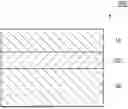
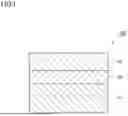
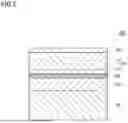
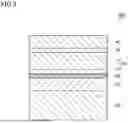
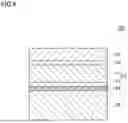
Sources:
- United States Patent and Trademark Office - verify current appl. status at the USPTO↗
Recent applications in this class:
- » 20260054904 2026-02-26
PRINT SUBSTRATE, PACKAGING MATERIAL LAMINATE, PACKAGING CONTAINER, AND PACKAGED ARTICLE - » 20260035152 2026-02-05
POUCH - » 20260001695 2026-01-01
PACKAGING FILM - » 20250361073 2025-11-27
TUBE CONTAINER, TUBE CONTAINER WITH CONTENT, AND MANUFACTURING METHOD OF TUBE CONTAINER - » 20250229964 2025-07-17
PACKAGED LAUNDRY PRODUCT - » 20240417150 2024-12-19
LAMINATED FILM FOR POUCH, POUCH, AND METHOD FOR MANUFACTURING LAMINATED FILM - » 20240228144 2024-07-11
SHEET MEMBER CONTAINER - » 20240140673 2024-05-02
PACKAGING BAG, METHOD FOR MANUFACTURING PACKAGING BAG, AND SHEET PACKAGE - » 20240101327 2024-03-28
Elastomer containing multilayer film and method of manufacture - » 20240043193 2024-02-08
PACKAGING BAG AND SHEET PACKAGE
Recent applications for this Assignee:
- » 20260060116 2026-02-26
WIRING BOARD FOR MOUNTING SEMICONDUCTOR DEVICE, METHOD FOR PRODUCING WIRING BOARD, AND SEMICONDUCTOR DEVICE - » 20260054904 2026-02-26
PRINT SUBSTRATE, PACKAGING MATERIAL LAMINATE, PACKAGING CONTAINER, AND PACKAGED ARTICLE - » 20260054517 2026-02-26
DECORATIVE PAPER, DECORATIVE BOARD, AND METHODS FOR PRODUCING DECORATIVE PAPER AND DECORATIVE BOARD - » 20260045516 2026-02-12
ELECTRODE CATALYST LAYER, MEMBRANE ELECTRODE ASSEMBLY, AND POLYMER ELECTROLYTE FUEL CELL - » 20260043944 2026-02-12
OPTICAL FILM, DISPLAY DEVICE, AND ULTRAVIOLET ABSORBING LAYER FORMING COMPOSITION - » 20260042174 2026-02-12
JOINING MATERIAL AND METHOD OF PRODUCING JOINED BODY - » 20260042173 2026-02-12
JOINING MATERIAL AND METHOD OF PRODUCING JOINED BODY - » 20260041944 2026-02-12
FIRE-EXTINGUISHING SHEET AND DEVICE HAVING AUTOMATIC FIRE-EXTINGUISHING FUNCTION AND INCLUDING FIRE-EXTINGUISHING SHEET - » 20260040452 2026-02-05
FLEXIBLE WIRING BOARD UNIT AND LIGHT CONTROL UNIT - » 20260038846 2026-02-05
CATALYST PARTICLE, MEMBRANE ELECTRODE ASSEMBLY, AND FUEL CELL