IMPROVED CATHODE MATERIAL FOR SECONDARY LITHIUM BATTERIES
US20260054986A1
2026-02-26
19/104,401
2023-08-17
Smart Summary: An improved cathode material is designed for lithium batteries. It includes a compound called LiMPO4, where M can be elements like iron, vanadium, manganese, cobalt, or nickel. This material is made up of secondary particles that are formed by grouping together smaller primary particles. The primary particles have a flat shape and are very small, measuring between 20 to 150 nanometers. The secondary particles are round and larger, with sizes ranging from 1 to 10 micrometers, and there are tiny spaces or pores between them. 🚀 TL;DR
Abstract:
The invention relates to an improved cathode material comprising a compound having the formula LiMPO4, M being at least one of Fe, V, Mn, Co and Ni, said compound comprising (i) secondary particles formed by agglomeration of (ii) primary particles and (iii) pores between secondary and primary particles, wherein the primary particles have a plate-like morphology and a mean particle size d50 in the range of from 20 to 150 nm and the secondary particles have a spherical morphology and a mean particle size d50 in the range of from 1 to 10 μm.
Inventors:
- Hossein GHAFARIAN ZAHMATKESH 1 🇬🇧 Milton Keynes, United Kingdom
- Behnam HORMOZI SHEIKHTABAGHI 1 🇬🇧 Milton Keynes, United Kingdom
- Vahid JAN AHMADI 1 🇬🇧 Milton Keynes, United Kingdom
Assignee:
- Integrals Power 1 🇬🇧 Milton Keynes, United Kingdom
Applicant:
Interested in similar patents?
Get notified when new applications in this technology area are published.
Classification:
C01B25/45 » CPC main
Phosphorus; Compounds thereof; Oxyacids of phosphorus; Salts thereof; Phosphates containing plural metal, or metal and ammonium
C01P2002/72 » CPC further
Crystal-structural characteristics defined by measured X-ray, neutron or electron diffraction data by d-values or two theta-values, e.g. as X-ray diagram
C01P2004/03 » CPC further
Particle morphology depicted by an image obtained by SEM
C01P2004/04 » CPC further
Particle morphology depicted by an image obtained by TEM, STEM, STM or AFM
C01P2004/24 » CPC further
Particle morphology extending in two dimensions, e.g. plate-like Nanoplates, i.e. plate-like particles with a thickness from 1-100 nanometer
C01P2004/32 » CPC further
Particle morphology extending in three dimensions Spheres
C01P2004/50 » CPC further
Particle morphology Agglomerated particles
C01P2004/51 » CPC further
Particle morphology Particles with a specific particle size distribution
C01P2004/61 » CPC further
Particle morphology; Particles characterised by their size Micrometer sized, i.e. from 1-100 micrometer
C01P2004/62 » CPC further
Particle morphology; Particles characterised by their size Submicrometer sized, i.e. from 0.1-1 micrometer
C01P2004/64 » CPC further
Particle morphology; Particles characterised by their size Nanometer sized, i.e. from 1-100 nanometer
C01P2006/40 » CPC further
Physical properties of inorganic compounds Electric properties
Description
TECHNICAL FIELD
The present invention relates to a cathode material for secondary (or rechargeable) alkali batteries and, in particular, lithium batteries which show a special specific capacity and, above all, an outstanding capacity retention even at higher discharge rates (for example, 30 C or even above), in ambient and extreme temperatures.
BACKGROUND OF THE INVENTION
Increased demand for mobile equipment has led since several years to a significantly increased demand for secondary batteries as energy sources. Among these secondary batteries, alkali secondary batteries, and in particular lithium secondary batteries, are widely used thanks to their high energy density and voltage, long life span and low self-discharge.
The lithium batteries generally use a carbon material as an anode and a lithium material as a cathode.
One of the most known cathode material for lithium secondary batteries is compound of formula LiFePO4, which is a mineral of the olivine family. It was firstly identified in U.S. Pat. No. 5,910,382 filed in 1997 as a performing cathode material for lithium ion batteries. Reversible extraction of lithium from LiFePO4 and insertion of lithium into FePO4 was demonstrated at that time (delithium-lithium intercalation). Because of low cost, non-toxicity, natural abundance of iron, its excellent thermal stability, its safety characteristics, its electrochemical performance and its specific capacity (170 mA.h/g, or 610 C/g), it has gained considerable market interest since the beginning of the twentieth century.
Nevertheless, to seriously enter into the market, some improvements to LiFePO4 material (also commonly called “LFP”) was made to further increase performances or to reduce some of the drawbacks.
However, LiFePO4 has limited practical application due to the following disadvantages.
One of the main drawbacks of LiFePO4 as a cathode material is its intrinsically low electrical conductivity, thus disadvantageously causing an increase in inner resistance of batteries. This increase also leads to an increase in polarization potential, when electric circuits close, and thus a decrease in battery capacity.
This issue was overcome gradually by reducing the particle size and/or by coating the LiFePO4 particles with conductive materials such as carbon.
In terms of reducing the particle size, it has been disclosed that the particle size of the LFP material can be made nano-scaled. This has been proven to make it close to its theoretical capacity, but its significantly increased surface area will cause the electrochemical reaction product of the battery to increase, thereby exacerbating undesirable side reactions in batteries. At the same time, a large surface area requires also a high amount of binder which deteriorates process efficiency, causes poor electrode coating performance or affect conductive performance.
The research on lithium iron phosphate materials has also shown that the material morphology has a non-negligible influence on its electrochemical properties/performances.
For example, patent application EP2285740A1 discloses a specific process for preparing lithium iron phosphate having spherical primary particles (of about 30 μm size) made from an agglomeration of primary particles (of about 300-500 nm size), with cavities between the primary particles.
CN101752564A discloses a one-dimensional nanostructured lithium iron phosphate, synthesized by a hydrothermal process by adjusting the pH of the reaction.
EP2360117A discloses, in its examples, lithium iron phosphate composed of secondary particles (or “agglomerates”) having a mean particle diameter d50 of 5 to 100 μm, formed by aggregation of primary particles having a mean particle diameter d50 between 4.8 and 17.5 μm, wherein the secondary particles have a porosity between 22 and 28%. The secondary particles show a spherical shape while the primary particles have no specific shape or morphology.
EP2562856A discloses a lithium iron phosphate with a specific crystal structure, i.e. with the length in the direction [001] greater than the length in the direction [010] when the Li+ diffusion direction is the direction [010] in the lattice structure of the crystal, meaning that the length in the direction perpendicular to the Li+ diffusion direction is greater than the length in the Li+ diffusion direction. In particular, the macro-morphology of lithium iron phosphate primary particles in this document is a rod shape. Secondary particles show a size of ˜300 microns (as illustrated in FIG. 1 from EP2562856A).
Nevertheless, despite all the developments/improvements brought to LFP cathode material, due to increased demand from the market for secondary batteries as energy sources. There is definitively still a need to further improve the performances of LFP cathode material compared to what is disclosed and, especially, to what is commercially available.
OBJECTIVES OF THE INVENTION
It is an objective of the present invention to provide an LFP-based cathode material that is improved compared to that is available on the market or described in the state-of-the-art.
It is a further objective of the present invention to provide an LFP-based cathode material that shows a special specific capacity and an excellent capacity retention even at higher discharge rates (for example, 30 C or even above), in ambient and extreme temperatures.
It is a further objective of the present invention to provide an LFP-based cathode material that can be manufactured easily, even at high tonnage, and can be used as a drop-in material.
DESCRIPTION OF THE INVENTION
The present invention relates to a cathode material comprising a compound having the formula LiMPO4, M being at least one metal cation selected from the list consisting of Fe, V, Mn, Co and Ni, said compound comprising (i) secondary particles formed by agglomeration of (ii) primary particles and (iii) pores between said secondary and primary particles, wherein the primary particles have a plate-like morphology and a mean particle size d50 in the range from 20 to 150 nm and wherein the secondary particles have a spherical morphology and a mean particle size d50 in the range from 1 to 10 μm.
Hence, the invention is based on a novel and inventive approach. In particular, the inventors have found that a porous LFP material composed secondary particles with a specific morphology and size and formed by aggregation of primary particles with a specific morphology and size, it is possible to reach a very satisfactorily specific capacity and an excellent capacity retention at high discharge rates.
Moreover, the present invention also relates to a process for preparing the cathode material of the invention, M being Fe and said process comprising a hydrothermal reaction starting from lithium hydroxide and iron(II) sulphate as metal starting materials.
The present invention also relates to a secondary battery comprising an anode, a cathode, a separator and an electrolyte, said cathode comprising a cathode material according to the invention.
In present specification and claims, it is well understood by the person skilled in the art that, as used herein the terms “a”, “an” or “the” means “at least one” and should not be limited to “only one” unless explicitly indicated to the contrary. Also, when a range is indicated, the extremities are included. In addition, all the integral and subdomain values in the numerical range are expressly included as if explicitly written.
Other features and advantages of the invention will be made clearer from reading the following description of preferred embodiments and figures, given by way of simple illustrative and non-restrictive examples.
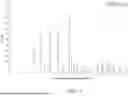
FIG. 1 is XRD pattern of a cathode material from Example 1 according to the present invention.
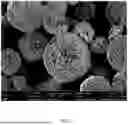
FIG. 2 is a FE-SEM image showing the cathode material from Example 1 according to the present invention.
FIG. 3 is a TEM image showing the cathode material (primary particles) from Example 1 according to the present invention.
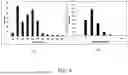
FIG. 4 is a PSD graph of the cathode material from Example 1 according to the present invention.
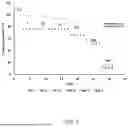
FIG. 5 is a graph showing the computed capacity retention (in %) at room temperature with an increase in cycles number for a secondary battery prepared with the cathode material from Example 1 according to the present invention and a LFP cathode material from the market.
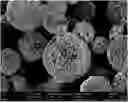
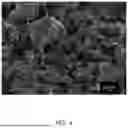
FIG. 6 is a FE-SEM image showing the LFP cathode material from the market.
FIG. 7 is a graph showing the computed capacity retention (in %) at different temperatures (other than room temperature) with an increase in cycles number for a secondary battery prepared with the cathode material from Example 1 according to the present invention and a cathode material from the market.
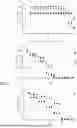
FIG. 8 presents two graphs showing the impedance of the secondary battery according to the invention (FIG. 8(a)) as well as for a secondary battery made the same manner with the “Benchmark LFP” (FIG. 8(b)).
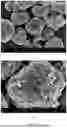
FIG. 9 is a FE-SEM image showing the cathode material from Example 2 according to the present invention.
FIG. 10 is a PSD graph of the cathode material from Example 2 according to the present invention.
According to the invention, the cathode material comprises a compound having the formula LiMPO4, M being at least one metal cation selected from the list consisting of Fe, V, Mn, Co and Ni.
In particular, the compound having the formula LiMPO4 has the ordered-olivine crystal structure, typically having tetrahedral polyanions (PO4)3− and a plurality of planes defined by zigzag chains and linear chains, where the M atoms occupy the zigzag chains of octahedra and the Li atoms occupy the linear chains of alternate planes of octahedral sites. In such a compound, alkali ions Li+ may be inserted/extracted reversibly from/to the electrolyte of the battery to/from the interstitial space of the host MPO4 framework as the metal M cation (or combination of cations) is reduced/oxidized by charge-compensating electrons supplied/removed by the external circuit of the battery in a discharge/charge cycle.
According to the invention, M is at least one metal cation selected from the list consisting of Fe, V, Mn, Co and Ni. Example of formulas for the compound of the invention are, but not limited to, LiFePO4, LiVPO4, LiMnPO4, LiCoPO4 and LiNiPO4. Preferably, the compound of the invention has the formula LiFePO4 (M being Fe).
According to an embodiment of the invention, in the compound of formula LiMPO4, M is a combination of at least two metal cations selected from the list consisting of Fe, V, Mn, Co and Ni. In particular, in the compound of formula LiMPO4, M is a combination of two metal cations selected from the list consisting of Fe, V, Mn, Co and Ni. Examples of combinations according to this embodiment are, but not limited to, Fe1-xMnxPO4, Fe1-xVxPO4Fe1-xNixPO4, Fe1-xCoxPO4, where 0<x<1.
According to the invention, the compound comprises secondary particles formed by agglomeration of primary particles of smaller diameter.
Still according to the invention, the compound comprises further pores between said secondary and primary particles.
According to the invention, the primary particles have a plate-like morphology. By “plate-like morphology”, it is meant in the invention, and as commonly accepted in the art of crystal morphology, a tri-dimensional shape with one if its dimension (then called “thickness”) significantly lower than its other two dimensions (the larger being the width, the smaller being the length). In particular, in the invention, the primary particles may have a square-plate-like morphology, in which the length of plates is at least 2 times of its width and thickness. By “square-plate-like morphology”, it is meant in the invention, and as commonly accepted in the art of crystal morphology, a tri-dimensional shape with one if its dimension (“thickness”) significantly lower than its other two dimensions being close.
According to an embodiment of the invention, the primary particles with a plate-like morphology have an average width in the range of from 5 to 100 nm, preferably, in the range of from 10 to 100 nm, more preferably, in the range of from 10 to 80 nm.
According to the invention, the primary particles have a mean particle size d50 in the range of from 20 to 150 nm. Preferably, the primary particles have a mean particle size d50 in the range of from 20 to 100 nm.
By “mean particle size d50”, in the whole specification and in the claims, it is meant, as commonly accepted in the art, the particle size when the cumulative percentage reaches 50% (also called median particle diameter or median particle size). The d50 may be measured by any method known in the art.
According to the invention, the secondary particles have a spherical morphology. For the sake of clarity, by “spherical morphology”, it is meant in the invention, and as commonly accepted in the art of crystal morphology, that the shape of the secondary particles is essentially a sphere.
According to the invention, the secondary particles have a mean particle size d50 in the range of from 1 to 10 μm. Preferably, the secondary particles have a mean particle size d50 in the range of from 1.5 to 10 μm. Preferably also, the secondary particles have a mean particle size d50 in the range of from 1 to 8 μm. More preferably, the secondary particles have a mean particle size d50 in the range of from 1.5 to 8 μm, or even of from 2 to 8 μm.
The pores in the secondary particles may be of a closed or open-type, preferably of small size. The size of pores according to the invention is preferably in the range of from 200 to 800 nm, more preferably from 300 to 600 nm.
According to an embodiment of the invention, the compound has a porosity in the range of from 5 to 30%. Preferably, it has a porosity in the range of from 10 to 30%. Preferably also, it has a porosity in the range of from 5 to 25%. More preferably, it has a porosity in the range of from 10 to 25%.
Advantageously, the cathode material of the invention may further optionally comprise a conductive material (in order to increase its conductivity), a binder (which helps binding the active cathode material to a conductive material and current collector) and/or a filler.
The conductive material is generally added in an amount of 1 to 30% by weight, based on the total weight of the cathode material. Examples of conductive materials that may be used in the present invention are carbon, graphite (natural or artificial), carbon fibers, precious metals, metals, conductive polymers and combinations thereof. Advantageously, the cathode material comprising carbon can efficiently improve conductivity, without greatly increasing preparation costs and weight.
The binder is generally added in an amount of 1 to 30% by weight, based on the total weight of the anode material. Examples of binder are polyvinylidene, polyvinyl alcohol, carboxymethylcellulose (CMC), starch, hydroxypropylcellulose, regenerated cellulose, polyvinyl pyrollidone, tetrafluoroethylene, polyethylene, polypropylene, ethylene propylene diene terpolymer (EPDM), sulfonated EPDM, styrene butadiene rubber and fluoro rubber.
The filler is used to inhibit electrode expansion. Examples of filler are olefin polymers such as polyethylene and polypropylene and fibrous materials such as glass fibers and carbon fibers.
Advantageously also, the cathode material of the invention has a sulphate content of not more than 100 ppm, preferably not more than 80 ppm; or even not more than 50 ppm.
Advantageously also, the cathode material of the invention has a hydrogen content of not more than 1000 ppm, preferably not more than 800 ppm; or even not more than 500 ppm.
The cathode material according to the present invention may be prepared by any method so long as the method enables formation of the claimed features of said cathode material.
Advantageously, the cathode material of the invention may be prepared by a hydrothermal/solvothermal synthesis.
For example, the process for preparing the cathode material of the invention may comprise the following steps, in order:
-
- (a) primarily mixing solutions of starting materials in solvent(s), in stoichiometric amounts related to the targeted material,
- (b) hydrothermal/solvothermal synthesis in a hydrothermal/solvothermal reactor/vessel,
- (c) isolating the precipitate/solid, e.g. by centrifugation.
Next to steps (a) to (c), the process for preparing the cathode material of the invention may comprise further, after step (c), and optionally:
-
- (d) washing the precipitate,
- (d) wet ball milling (with optionally addition of a conductive material, e.g. carbon);
- (e) drying (e.g. under vacuum or Ar or N2); and
- (f) calcining (e.g. at 600° C. to 1200° C. under Ar or N2).
A starting material for lithium may be Li2CO3, Li(OH), Li(OH)·H2O, LiNO3 and the like. Preferably, a starting material for lithium in the invention is lithium hydroxide, e.g. LiOH·H2O or Li(OH).
A starting material for iron may be FeSO4 or its hydrates, FeC2O4·2H2O, or FeCl2. Preferably, a starting material for iron in the invention is iron(II) sulphate, e.g. FeSO4 or its hydrates (e.g. FeSO4·7H2O)
A starting material for phosphorus (P) may be H3PO4, NH4H2PO4, (NH4)2HPO4 or P2O5. Preferably, a starting material for phosphorus in the invention is H3PO4.
In step (a), an example of solvent is ethylene glycol or a mixture of ethyleneglycol and water (for example in a 1:1 ratio).
In step (b), the temperature may be in the range of from 200 to 700° C. and the a pressure in the range of from 180 to 550 bar.
The invention also relates to a process for preparing a cathode material according to the invention, M being Fe and said process comprising a hydrothermal reaction starting from lithium hydroxide and iron(II) sulphate as metal starting materials. This process allows to obtain a cathode material comprising a LiFePO4 compound.
Finally, the invention also relates to a secondary battery comprising an anode, a cathode, a separator and an electrolyte, said cathode comprising a cathode material according to the invention.
The cathode according to invention may comprise the cathode material and a current collector.
The anode of the invention may comprise an anode material (comprising optionally a conductive material, a binder and/or a filler) and a current collector.
Examples of current collector for the cathode and/or the anode are stainless steel, aluminum, nickel, titanium, sintered carbon, nickel, titanium or silver. Said current collector may have various forms like films, sheets, foils, nets, porous structures, foams and non-woven fabrics, and it has generally a thickness of 3 to 500 μm.
The separator is interposed between the cathode and the anode. An insulating thin film having high ion permeability and mechanical strength may be used as the separator. The separator generally has a pore diameter of 0.01 to 10 μm and a thickness of 5 to 300 μm. Examples of separator are sheets or non-woven fabrics made of an olefin polymer such as polypropylene and/or glass fibers or polyethylene.
The electrolyte is ideally a lithium salt-containing non-aqueous electrolyte, composed of a non-aqueous electrolyte and a lithium salt. A non-aqueous electrolytic solution, a solid electrolyte or an inorganic solid electrolyte may be used as the non-aqueous electrolyte.
The secondary battery according to the invention show advantageously a specific capacity in the range from 120 to 200 mAh.g−1.
Moreover, it also show advantageously a capacity retention in the range of from 80 to 90% at a 10 C discharge rate.
It should be understood that the present invention is not limited to the described embodiments and that variations can be applied without going outside of the scope of the claims. Modifications and variations are possible within the scope of the appended claims. It is further noted that the invention relates to all possible combinations of features, and preferred features, described herein and recited in the claims.
The following examples are provided for illustrative purposes, and are not intended to limit the scope of this invention.
EXAMPLES
Example 1
A cathode material according to the invention was prepared by the following steps in order:
-
- preparing solutions of LiOH·H2O, FeSO4·7H2O, and H3PO4 (purchased from Merck co, Ltd Germany, in analytical grade, without any purification) in ethyleneglycol and water as solvents (1:1);
- mixing the 3 solutions, in stoichiometric amounts (related to the targeted compound LiFePO4), under stirring;
- transferring the mixture obtained at previous step to a hydrothermal vessel and sealing of said vessel under inert gas;
- hydrothermal treatment under constant stirring during 6 h. at 180° C. with no imposed external pressure;
- centrifuging to isolate the precipitate;
- washing the precipitate with distilled water;
- drying under vacuum et 60° C. for 12 h.; and
- calcining under argon at 600° C. for 6 h, reaching the final material.
FIG. 1 shows the XRD powder diffraction spectrum of the obtained final material, together with peaks indexation of the olivine-type LiFePO4.
A FE-SEM image (Field Emission Scanning Electron Microscopy) of the obtained final material is illustrated in FIG. 2 (conditions for measurements are mentioned at the bottom). As can be seen from FIG. 2, the secondary particles are formed of an agglomeration of primary particles and have a spherical morphology. Moreover, there are pores between secondary and primary particles.
A TEM image of primary particles of the obtained final material (pre-isolated from secondary particles prior to analysis) is illustrated in FIG. 3 (conditions for measurements and scale are mentioned at the bottom). As can be seen from FIG. 3, the observed primary particles show a plate-like morphology.
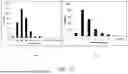
The size of secondary and primary particles were determined in Images, of at least 300 particles per sample (SEM for secondary particles and TEM for primary ones). FIG. 4 shows the PSD graph for the obtained final material ((a): primary particles, (b) secondary particles).
The following values were determined:
-
- d50 of the primary particles: 141 nm
- d50 of the secondary particles: 2.5 microns.
Its porosity was also evaluated at a 12.8% value.
Secondary batteries, in the form of ten identical multilayer pouch cells, were fabricated (0.8 Ah capacity) with a cathode prepared with the final cathode material, an anode, a separator interposed between the cathode and anode and an electrolyte. The cathode was prepared as follows: 95 percent of the obtained cathode material was milled with 3 wt % of a polyvinylidene fluoride binder and 2 wt % of conductive carbon powder dispersed in NMP (N-methyl 2 pyrrolidone). The obtained slurry was cast on the current collector (an aluminium foil) and the so-obtained cathode was dried out and used as cathode in a secondary battery.
FIG. 5 is a graph showing the computed capacity retention (in %) at room temperature with an increase in cycles number for said secondary battery according to the invention (IPL3, IPL8 and IPL10 refer to the cell number amongst the 10 identical pouch cells fabricated) as well as for secondary batteries made the same manner with a LFP cathode material available on the market (“Benchmark LFP” manufactured by Aleees, REF_D, E, F refer to the cell number amongst the 10 identical pouch cells fabricated with the “Benchmark LFP”). FIG. 5 shows that the secondary battery according to the invention has excellent performances compared to what exists on the market.
The “benchmark LFP” has nanosphere (ununiform spheres with wide particle size distribution in the range 100-500 nm) primary particles with a mean particle size d50 around 100 nm, assembled together to form secondary particles with unclear/random morphology and with an average particle size of about 1 micron. Moreover, it has a porosity value at about 30%. FIG. 6 shows a FE-SEM image of said “benchmark LFP” that was extracted from the article “Aging of a Lithium-Metal/LFP Cell: Predictive Model and Experimental Validation” (Dessantis, D.; Di Prima, P.; Versaci, D.; Amici, J.; Francia, C.; Bodoardo, S. ; Santarelli, M. in Batteries 2023, 9, 146).
FIG. 7 is a graph showing the computed capacity retention (in %) at different temperatures (other than room temperature) with an increase in cycles number for same secondary batteries as from FIG. 5. This shows notably that the secondary battery according to the invention has excellent (nearly 3 times more) capacity retention at −10° C. at 10 C discharge rate compared to the benchmark LFP product.
FIG. 8 presents two graphs with the impedance of the secondary battery according to the invention (FIG. 8(b)) as well as for a secondary battery made the same manner with the “Benchmark LFP” (FIG. 8(a)), and showing again that the secondary battery of the invention is better.
Example 2
A cathode material according to the invention was prepared by the following steps in order:
-
- preparing solutions of LiOH·H2O, FeSO4·7H2O, MnSO4 and H3PO4 (purchased from Merck co, Ltd Germany, in analytical grade, without any purification) in ethyleneglycol and water as solvents (1:1);
- mixing the 3 solutions, in stoichiometric amounts (related to the targeted compound LiFe0.5Mn0.5PO4), under stirring;
- transferring the mixture obtained at previous step to a hydrothermal vessel and sealing of said vessel under inert gas;
- hydrothermal treatment under constant stirring during 6 h. at 180° C. with no imposed external pressure;
- centrifuging to isolate the precipitate;
- washing the precipitate with distilled water;
- drying under vacuum et 60° C. for 12 h.; and
- calcining under argon at 600° C. for 6 h, reaching the final material.
A FE-SEM image of the obtained final material is illustrated in FIG. 9 (conditions for measurements are mentioned at the bottom, (a)-(b): two different scales). As can be seen, the secondary particles are formed of an agglomeration of primary particles and have a spherical morphology. Moreover, there are pores between secondary and primary particles.
The size of secondary and primary particles were determined in Images, of at least 300 particles per sample (SEM for secondary particles and TEM for primary ones). FIG. 10 shows the PSD graph for the obtained final material ((a): primary particles, (b) secondary particles).
The following values were determined:
-
- d50 of the primary particles: 110 nm
- d50 of the secondary particles: 1.96 microns.
Claims
1. Cathode material comprising a compound having the formula LiMPO4, M being at least one metal cation selected from the list consisting of Fe, V, Mn, Co and Ni, said compound comprising (i) secondary particles formed by agglomeration of (ii) primary particles and (iii) pores between said secondary and primary particles,
wherein the primary particles have a plate-like morphology and a mean particle size d50 in the range of from 20 to 150 nm and wherein the secondary particles have a spherical morphology and a mean particle size d50 in the range of from 1 to 10 μm.
2. Cathode material according to claim 1, wherein said compound has the formula LiFePO4.
3. Cathode material according to claim 1, wherein M is a combination of at least two metal cations selected from the list consisting of Fe, V, Mn, Co and Ni.
4. Cathode material according to claim 1, wherein said compound has a porosity in the range of from 5 to 30%.
5. Cathode material according to claim 1, wherein it is prepared by a hydrothermal or a solvothermal synthesis.
6. Cathode material according to claim 1, wherein the primary particles have a square-plate-like morphology in which the length of plates is at least 2 times of its wide and thickness.
7. Cathode material according to claim 1, wherein the primary particles have an average width in the range of from 5 to 100 nm.
8. Cathode material according to claim 1, wherein the secondary particles have a mean particle size d50 in the range of from 1.5 to 10 μm.
9. Cathode material according to claim 1, wherein has a sulphate content of not more than 100 ppm.
10. Cathode material according to claim 1, wherein it has a hydrogen content of not more than 1000 ppm.
11. Process for preparing the cathode material of claim 2, M being Fe and said process comprising a hydrothermal reaction starting from lithium hydroxide and iron(Il) sulphate as metal starting materials.
12. Secondary battery comprising an anode, a cathode, a separator and an electrolyte, said cathode comprising a cathode material according to claim 1.
13. Battery according to claim 12, wherein it shows a capacity retention in the range of from 80 to 90% at a 10 C discharge rate.
Images & Drawings included:


Sources:
- United States Patent and Trademark Office - verify current appl. status at the USPTO↗
Similar patent applications:
- » 20120217452
Mixed cathode active material having improved power characteristics and lithium secondary battery including the same - » 20120244432
Mixed cathode active material having improved power characteristics and lithium secondary battery including the same - » 20140322605
MIXED CATHODE ACTIVE MATERIAL HAVING IMPROVED POWER CHARACTERISTICS AND LITHIUM SECONDARY BATTERY INCLUDING THE SAME - » 20140291588
Mixed cathode active material having improved power characteristics and safety, and lithium secondary battery including the same - » 20070015055
Cathode active material comprising additive for improving overdischarge-performance and lithium secondary battery using the same
Recent applications in this class:
- » 20260042670 2026-02-12
PHOSPHATE MATERIALS HAVING NANO POROUS STRUCTURE, PREPARATION METHOD THEREFOR AND USE THEREOF - » 20260022015 2026-01-22
CATHODE ACTIVE MATERIAL AND PREPARATION METHOD THEREOF, AND BATTERY - » 20260008678 2026-01-08
POSITIVE ELECTRODE MATERIAL, POSITIVE ELECTRODE PLATE, SECONDARY BATTERY, AND ELECTRIC APPARATUS - » 20260008677 2026-01-08
Direct Recycling Method, Power Battery for Vehicle, and Vehicle - » 20260001765 2026-01-01
MODIFIED POROUS LITHIUM IRON PHOSPHATE AND PREPARATION METHOD AND USE THEREOF - » 20250388469 2025-12-25
PHOSPHATE PRECURSOR AND PREPARATION METHOD THEREFOR, CATHODE MATERIAL AND PREPARATION THEREFOR, CATHODE SHEET AND SECONDARY BATTERY - » 20250361146 2025-11-27
METHOD FOR SEPARATION, PURIFICATION AND REGENERATION OF SPENT LITHIUM IRON PHOSPHATE ELECTRODE MATERIALS - » 20250326643 2025-10-23
POSITIVE ELECTRODE ACTIVE MATERIAL FOR RECHARGEABLE LITHIUM BATTERY, PREPARATION METHOD OF THE SAME, AND RECHARGEABLE LITHIUM BATTERY INCLUDING THE SAME - » 20250326642 2025-10-23
FUNCTIONAL BASE MATERIAL MANUFACTURING METHOD, FUNCTIONAL BASE MATERIAL, SECONDARY BATTERY, CATHODE MATERIAL, AND FUNCTIONAL BASE MATERIAL MANUFACTURING APPARATUS - » 20250304446 2025-10-02
LITHIUM IRON PHOSPHATE COMPOSITE MATERIAL, PREPARATION METHOD AND USE