ENVELOPE BASED SAMPLE CORRECTION FOR DIGITAL FLOW METROLOGY
US20260056041A1
2026-02-26
19/372,510
2025-10-29
Smart Summary: A system measures how materials flow through a pipe. It uses two devices called transducers, which send and receive signals at specific times. The first transducer sends a signal, while the second one receives it and then sends back a modified signal. A special circuit processes these signals to find their "envelopes," which are patterns in the signals. By analyzing these patterns, the system can calculate the flow rate of the material in the pipe. 🚀 TL;DR
Abstract:
In an embodiment, a system for measuring material flow in a pipe is disclosed. A first transducer is operable to transmit a first signal having a first frequency at a first time and receive a second signal at a second time, and a second transducer spaced apart from the first transducer and is operable to receive the first signal and transmit the second signal having the first frequency. A signal processing circuit communicatively coupled to the first transducer and the second transducer, the signal processing circuit is operable to determine a first envelope of the first signal and a second envelope of the second signal and calculate a flow rate based on the first envelope of the first signal and the second envelope of the second signal.
Inventors:
- Anand G. Dabak 228 🇺🇸 Plano, TX, United States
- David Patrick Magee 99 🇺🇸 Allen, TX, United States
- Amardeep Sathyanarayana 14 🇺🇸 Austin, TX, United States
Applicant:
Interested in similar patents?
Get notified when new applications in this technology area are published.
Classification:
G01F1/662 » CPC main
Measuring the volume flow or mass flow of fluid or fluent solid material wherein the fluid passes through a meter in a continuous flow by measuring frequency, phase shift or propagation time of electromagnetic or other waves, e.g. using ultrasonic flowmeters Constructional details
G01F1/66 IPC
Measuring the volume flow or mass flow of fluid or fluent solid material wherein the fluid passes through a meter in a continuous flow by measuring frequency, phase shift or propagation time of electromagnetic or other waves, e.g. using ultrasonic flowmeters
Description
CROSS-REFERENCES TO RELATED APPLICATIONS
This application which is a continuation of U.S. patent application Ser. No. 17/064,671, filed Oct. 7, 2020, which is a continuation of U.S. patent application Ser. No. 14/866,779, filed Sep. 25, 2015, now U.S. Pat. No. 10,830,619, issued Nov. 10, 2020, which claims the benefit of U.S. Provisional Application No. 62/160,324, filed May 12, 2015, all of which are hereby incorporated by reference herein in their entirety.
BACKGROUND OF THE INVENTION
Embodiments of the present invention relate to analog-to-digital (ADC) sampling of ultrasonic signals to determine fluid velocity.
Ultrasound technology has been developed for measuring fluid velocity in a pipe of known dimensions. Typically, these measurement solutions use only analog processing and limit the accuracy and flexibility of the solution. Ultrasound velocity meters may be attached externally to pipes, or ultrasound transducers may be placed within the pipes. Fluid flow may be measured by multiplying fluid velocity by the interior area of the pipe. Cumulative fluid volume may be measured by integrating fluid flow over time.
Flow meter accuracy, however, may be compromised by turbulence, partially filled pipes, temperature variation, and numerous other factors. The present inventors have realized a need to improve measurement techniques in terms of cost and accuracy. Accordingly, the preferred embodiments described below are directed toward improving upon the prior art.
BRIEF SUMMARY OF THE INVENTION
In a preferred embodiment of the present invention, a method of calculating a time difference is disclosed. The method includes receiving a first signal, determining a first envelope of the first signal, and determining a first time the first envelope crosses a threshold. The method further includes receiving a second signal, determining a second envelope of the second signal, and determining a second time the second envelope crosses the threshold. The time difference is calculated between the first and second times.
BRIEF DESCRIPTION OF THE SEVERAL VIEWS OF THE DRAWING
FIG. 1 is a simplified diagram of a pipe with ultrasonic transducers for fluid flow measurement according to the present invention;
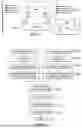
FIG. 2A is a circuit diagram of an ultrasonic measurement circuit of the present invention for measuring fluid flow;
FIG. 2B is a circuit diagram showing detail of signal processing circuit 208 of FIG. 2A;
FIG. 3 is a diagram illustrating upstream (UPS) and downstream (DNS) time of flight (TOF) measurement of ultrasonic signals within a fluid such as a liquid or gas medium;
FIG. 4 is a diagram showing cross correlation of received upstream and downstream ultrasonic waveforms;
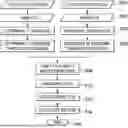
FIG. 5 is a flow chart showing a method of fluid flow measurement according to the present invention;
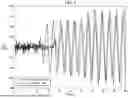
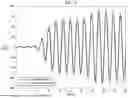
FIG. 6 is diagram of a received downstream (DNS) ultrasonic waveform superimposed on a received upstream (UPS) ultrasonic waveform;
FIG. 7 is a diagram showing envelopes of the received DNS and UPS ultrasonic waveforms of FIG. 6; and
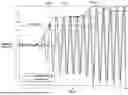
FIG. 8 is a diagram showing alignment of the received DNS and UPS ultrasonic waveforms after shifting in response to waveform envelope thresholds.
DETAILED DESCRIPTION OF THE INVENTION
The preferred embodiments of the present invention provide significant advantages of ultrasonic differential time of flight (ATOF) measurement techniques in a fluid or gas medium over methods of the prior art as will become evident from the following detailed description.
The present inventors have disclosed several improvements in digital time of flight measurement in previous patent applications. application Ser. No. 14/051,623 (TI-72924), filed Oct. 11, 2013, discloses a method of band pass analog-to-digital sampling for fluid velocity measurement. application Ser. No. 14/156,388 (TI-73699), filed Jan. 15, 2014, discloses an extended range analog-to-digital flow meter. application Ser. No. 14/300,303 (TI-71551), filed Jun. 10, 2014, discloses further improvements to an extended range analog-to-digital flow meter. Each of these applications and the measurement methods they disclose are incorporated by reference herein in their entirety.
Referring to FIG. 1, there is a simplified diagram of a pipe with ultrasonic transducers for fluid flow measurement according to the present invention. The diagram illustrates fluid such as a liquid or gas flowing from right to left through a pipe of known cross sectional area. Ultrasonic transducers 102 and 104 are attached to the pipe and separated by a distance L. Each ultrasonic transducer is coupled to a processor 100 such as the MSP430™ mixed-signal micro-controller manufactured by Texas Instruments Incorporated. The MSP430™ is built around a 16-bit CPU specifically for low cost and low power consumption embedded applications. Ultrasonic transducer 102 emits a sequence of preferably 10-40 pulses that are captured by ultrasonic transducer 104 to measure upstream time of flight (TUPS). Ultrasonic transducer 104 subsequently emits a similar sequence of pulses that are captured by ultrasonic transducer 102 to measure downstream time of flight (TDNS). Fluid velocity in the pipe is then calculated according to equations [1] through [3].
v = L 2 ( 1 T DNS - 1 T UPS ) [ 1 ] v = L 2 ( T UPS - T DNS T UPS T DNS ) [ 2 ] v = L 2 ( Δ TOF T UPS T DNS ) [ 3 ]
Referring now to FIG. 2A, there is a circuit diagram of an ultrasonic measurement circuit of the present invention for measuring fluid flow. The circuit includes a processor 100 such as the MSP430™. The circuit further includes multiplex circuits 202 (MUX2) and 220 (MUX1) which are controlled by signals on control bus 226. MUX1 is coupled to receive an excitation signal from drive circuit 222 in response to micro control unit (MCU) 210. MCU 210 is coupled to memory circuit 216 and to display circuit 218. MCU 210 is also coupled to crystal oscillator circuit 212, which controls measurement times, and to crystal oscillator circuit 214, which controls excitation and sampling frequencies.
When a logical 0 from control bus 226 is applied to MUX1, the excitation signal from drive circuit 222 is applied to transducer T1. T1 responsively transmits an ultrasonic signal to transducer T2. T2 produces received upstream signal UPS, which is applied to MUX2. The logical 0 applied to MUX1 is also applied to MUX2 so that UPS is applied to programmable gain amplifier (PGA) 204. PGA 204 amplifies UPS and applies it to filter 206. The filtered signal is then applied to signal processing unit 208 to calculate UPS alignment points. Alternatively, when a logical 1 from control bus 226 is applied to MUX1, the excitation signal from drive circuit 222 is applied to T2. T2 responsively transmits an ultrasonic signal to T1. T1 produces received downstream signal DNS, which is applied to MUX2. The logical 1 applied to MUX1 is also applied to MUX2 so that DNS is applied to programmable gain amplifier (PGA) 204. PGA 204 amplifies DNS and applies it to filter 206. The filtered signal is then applied to signal processing unit 208 to determine respective DNS alignment points as will be described in detail. The MCU calculates the differential time of flight (ΔTOF) and fluid flow from the alignment points. The result is applied to communication module 224 and transmitted to a base station. The MCU also applies the result to display 218.
FIG. 2B is a circuit diagram showing detail of signal processing circuit 208 of FIG. 2A. The signal processing circuit alternately receives amplified and filtered ultrasonic signals from ultrasonic transducers T1 and T2. Analog-to-Digital Converter (ADC) 230 samples the received signals at a sampling frequency determined by MCU 210. The sampled signals are stored in buffer memory circuit 232. When sampled signals from both T1 and T2 are stored in buffer memory 232, circuit 234 calculates respective alignment points for each signal. Circuit 234 may be a digital signal processor, or any general purpose processor capable of real number calculations. Circuit 234 may also be a part of MCU 210 and may include both software and hardware. These alignment points are compared by MCU 210 to determine ΔTOF and fluid flow as will be explained in detail.
FIG. 3 is a diagram illustrating upstream (UPS) and downstream (DNS) time of flight (TOF) measurement of ultrasonic signals within a fluid medium. The diagram illustrates a sequence of pulse pairs from transducers T1 and T2 (FIG. 2). The left pulse pair is expanded to show the measurement process. The first UPS pulse 300 from transducer T1 arrives at MUX2 after an upstream time of flight has elapsed. The UPS pulse is received 302 and sampled alignment points are calculated. After alignment points are generated, MUX1 switches to apply a DNS pulse sequence 304 to transducer T2. MUX2 switches to receive the DNS pulse sequence from transducer T2. After a short delay to allow attenuation of noise and reflected signals, transducer T2 emits DNS pulse sequence 304. The DNS pulse is received 306 and sampled alignment points are calculated. After alignment points are generated, MUX1 and MUX2 switch to their previous states in preparation for the next pulse pair. In a preferred embodiment of the present invention, sampled alignment points of received waveforms 302 and 306 are generated first as described. Subsequent processing steps, such as filtering, envelope generation, threshold detection, and shifting are performed between pulse pairs to take advantage of the relatively greater processing time available. The delay between pulse pairs is determined by desired accuracy and power conservation. Moreover, the time between pulse pairs may be dynamically adapted to conserve power. For example, when fluid flow is reduced, the time between pulse pairs may be advantageously increased to conserve power. When a pulse pair measurement indicates an increase in fluid flow, the duration between pulse pairs may be appropriately reduced.
Turning now to FIG. 4, there is a diagram showing cross correlation of received upstream 302 and downstream 306 ultrasonic waveforms. Cross correlation is advantageously used to compute ΔTOF as shown at equations [4] through [6].
corr ( k ) = ∑ i = 1 N - k r 1 ( i + k ) r 2 ( i ) [ 4 ] Z n = corr ( j - n ) [ 5 ] n = ( - 1 , 0 , 1 ) [ 6 ]
Here r1 and r2 are alignment points of respective UPS 302 and DNS 306 signals. The term j-n of equation [5] is equivalent to k in equation [4] and Zn indicates the cross correlation product of alignment points. The cross correlation product produces a set of sinusoidal points 400 with a maximum value near the center. The maximum value at the center is expanded in box 402 and includes Z−1, Z0, and Z+1. The cross correlation technique accounts for sample slips within a cycle by ensuring Z0 is greater than Z−1 and Z+1. If Z0 is not greater than either of Z−1 or Z+1, index n may be incremented or decremented until the condition is satisfied. Cross correlation point Z0 is then near the correct maximum alignment of UPS 302 and DNS 306 with an error δ. This error is preferably resolved by cosine interpolation as shown by equations [7] through [9].
ω = cos - 1 ( ( Z - 1 + Z 1 ) / ( 2 Z 0 ) ) [ 7 ] ∅ = tan - 1 ( ( Z - 1 - Z 1 ) / ( 2 Z 0 sin ( ω ) ) ) [ 8 ] δ = - ∅ / ω [ 9 ]
The foregoing cross correlation technique with d adjustment corrects for alignment point or sample slip errors within a cycle. This accurately predicts ΔTOF between UPS and DNS for most flow rates. However, at high flow rates the ΔTOF error may be greater than a cycle. Such an error of one or more cycles is a cycle slip and may not be corrected by cross correlation. The flow chart of FIG. 5 chart shows a method of fluid flow measurement according to the present invention to correct for both cycle slip and sample slip errors. The method is explained below with reference to FIGS. 6-8.
The flow chart of FIG. 5 includes left and right branches for respective UPS and DNS extraction. Both branches operate in the same manner except that the left branch is responsive to UPS excitation pulses from transducer T1, and the right branch is responsive to DNS excitation pulses from transducer T2. Operation of only the right branch, therefore, is explained in detail with reference to actual captured UPS and DNS waveforms of FIGS. 6-8.
DNS excitation pulses from transducer T2 are received at step 500. In the following example of the present invention, transducer T2 is excited at 160 KHz. The period of each cycle, therefore, is 6.25 μs. The waveforms of FIG. 6 show that the downstream (DNS) waveform leads the upstream (UPS) waveform by approximately two cycles. At step 502, the captured DNS signal is sampled at 4 MSPS. Each cycle, therefore, has 25 samples. To obtain a close estimate of the number of offset cycles and samples between the DNS and UPS waveforms, the sample data is band pass filtered near the excitation frequency. In this example, an appropriate pass band is approximately 140 KHz to 180 KHz.
At step 504 the DNS envelope is determined. There are various methods to determine an envelope of the sampled signal. One method uses a Hilbert FIR filter to obtain an analytic signal which can be used to calculate the envelope as disclosed by Romero et al., Digital FIR Hilbert Transformers: Fundamentals and Efficient Design Methods, http://cdn.intechopen.com/pdfs-wm/39362.pdf, (2012), the method of which is incorporated by reference herein in its entirety. The envelope may also be determined by taking the square of the band pass filter output, low pass filtering the square, and taking the square root. At http://www.mathworks.com/help/dsp/examples/envelope-detection.html, both methods are disclosed and incorporated herein by reference in their entirety. Either method yields a close approximation to DNS and UPS envelopes. Both DNS and UPS envelopes are normalized to a range of +/1 as shown at FIG. 7. Normalization advantageously permits accurate determination of threshold crossing at step 506. In this example, a fixed threshold of 0.5 is used to approximate ΔTOF between DNS and UPS. Alternatively, an adaptive threshold may be employed that changes with flow rate and temperature. For other embodiments it may be desirable to utilize multiple thresholds to improve accuracy. Of course, the DNS and UPS threshold comparison may be on the rising or falling envelope edges or on the negative envelope edges.
FIG. 7 shows that the DNS envelope crosses the 0.5 threshold at 27.822 μs. The UPS envelope crosses the 0.5 threshold at 41.112 μs and lags the DNS waveform by 13.29 μs. This is equivalent to 53.16 samples at 4 MSPS. Since the UPS waveform can only be shifted by an integral number of samples, it is shifted left by 53 samples at step 508 as shown at FIG. 8. This provides a close alignment of DNS and UPS that is within one cycle. Once DNS and UPS are within one cycle, three point cross correlation and cosine interpolation as previously described with reference to FIG. 4 are used at step 510 to compute d. In this example, δ is 40.625 ns or 0.1625 of a sample time. Thus, the corrected ΔTOF is 53 plus 0.1625 samples or 13.25 μs plus 40.625 ns and is equal to 13.290625 μs.
In some borderline cases, there may be a one-cycle error when shifting the UPS waveform by an integral number of samples. Step 512 compensates for this possibility by comparing an absolute difference between the computed ΔTOF and the DNS/UPS envelope difference as shown at equation [10].
❘ "\[LeftBracketingBar]" Δ T ENVELOPE - Δ TOF ❘ "\[RightBracketingBar]" > T CYCLE [ 10 ]
If the envelope difference between DNS and UPS (ΔTENVELOPE) differs from the computed ΔTOF of step 510 by more than one cycle time (TCYCLE), then ΔTOF is adjusted by +/−one cycle time. Finally, at step 514 fluid flow rate is computed as previously described at equation [3].
The present invention greatly improves previous methods of fluid metrology. Signal envelope variations are smaller than individual signal variations. Thus, comparing signal envelopes to known thresholds yields more stable and accurate measurements. Using the signal envelopes to determine signal offset compensates for both cycle and sample slip errors. Subsequent filtering of data near the transducer excitation frequency reduces noise and improves the signal-to-noise ratio for further processing. DNS and UPS threshold crossing times together with a o error correction may be used directly for a ΔTOF calculation, thereby reducing additional computation and conserving power.
Still further, while numerous examples have thus been provided, one skilled in the art should recognize that various modifications, substitutions, or alterations may be made to the described embodiments while still falling within the inventive scope as defined by the following claims. For example, threshold crossing may be determined from an average of multiple thresholds. Alternatively, zero crossing or negative thresholds may be used. Although cosine interpolation has been described in a preferred embodiment of the present invention, other interpolation methods may also be used. Other combinations will be readily apparent to one of ordinary skill in the art having access to the instant specification.
Claims
What is claimed is:1. A system, comprising:
a circuit configurable to:
obtain a first set of samples of a first signal;
obtain a second set of samples of a second signal;
determine a first envelope based on the first set of samples and a second envelope based on the second set of samples;
shift the first set of samples to reduce a misalignment of the first set of samples relative to the second set of samples based on a first crossing point between the first envelope and a threshold and a second crossing point between the second envelope and the threshold; and
determine a flow rate based on the shifted first set of samples and the second set of samples.
2. The system of claim 1, further comprising:
a first transducer configurable to receive the first signal; and
a second transducer configurable to receive the second signal,
wherein the first transducer receives the first signal in response to an ultrasonic signal transmitted from the second transducer to the first transducer; and
wherein the second transducer receives the second signal in response to an ultrasonic signal transmitted from the first transducer to the second transducer.
3. The system of claim 1, wherein the circuit is further configurable to:
filter the first signal and the second signal to respectively generate a filtered first signal and a filtered second signal; and
determine the first set of samples based on the filtered first signal and the second set of samples based on the filtered second signal.
4. The system of claim 1, wherein the circuit is further configurable to:
determine a third envelope of the first set of samples and a fourth envelope of the second set of samples; and
normalize the third envelope and the fourth envelope to a same range to respectively determine the first envelope and the second envelope.
5. The system of claim 1, wherein to determine the flow rate, the circuit is configurable to:
determine a differential time of flight (ΔTOF) based on the first crossing point and the second crossing point;
determine an error based on the shifted first set of samples and the second set of samples;
determine a corrected ΔTOF based on the ΔTOF and the error; and
determine the flow rate based on the corrected ΔTOF.
6. The system of claim 5, wherein to determine the error, the circuit is configurable to:
determine a cross correlation product of the shifted first set of samples and the second set of samples;
determine a set of values of the cross correlation product that are proximate a maximum value of the cross correlation product; and
determine the error based on the set of values.
7. The system of claim 5, wherein to determine the corrected ΔTOF, the circuit is configurable to:
determine a difference between the ΔTOF and the corrected ΔTOF; and
further adjust the corrected ΔTOF based on a comparison of the difference and a predetermined value.
8. A method, comprising:
obtaining, by a device, a first set of samples of a first signal;
obtaining, by the device, a second set of samples of a second signal;
determining, by the device, a first envelope based on the first set of samples and a second envelope based on the second set of samples;
shifting, by the device, the first set of samples to reduce a misalignment of the first set of samples relative to the second set of samples based on a first crossing point between the first envelope and a threshold and a second crossing point between the second envelope and the threshold; and
determining, by the device, a flow rate based on the shifted first set of samples and the second set of samples.
9. The method of claim 8, further comprising:
receiving, by a first transducer, the first signal; and
receiving, by a second transducer, the second signal,
wherein the first transducer receives the first signal in response to an ultrasonic signal transmitted from the second transducer to the first transducer; and
wherein the second transducer receives the second signal in response to an ultrasonic signal transmitted from the first transducer to the second transducer.
10. The method of claim 8, further comprising:
filtering the first signal and the second signal to respectively generate a filtered first signal and a filtered second signal; and
determining the first set of samples based on the filtered first signal and the second set of samples based on the filtered second signal.
11. The method of claim 8, further comprising:
determining a third envelope of the first set of samples and a fourth envelope of the second set of samples; and
normalizing the third envelope and the fourth envelope to a same range to respectively determine the first envelope and the second envelope.
12. The method of claim 8, wherein determining the flow rate comprises:
determining a differential time of flight (ΔTOF) based on the first crossing point and the second crossing point;
determining an error based on the shifted first set of samples and the second set of samples;
determining a corrected ΔTOF based on the ΔTOF and the error; and
determining the flow rate based on the corrected ΔTOF.
13. The method of claim 12, wherein determining the error comprises:
determining a cross correlation product of the shifted first set of samples and the second set of samples;
determining a set of values of the cross correlation product that are proximate a maximum value of the cross correlation product; and
determining the error based on the set of values.
14. The method of claim 12, wherein determining the corrected ΔTOF comprises:
determining a difference between the ΔTOF and the corrected ΔTOF; and
further adjusting the corrected ΔTOF based on a comparison of the difference and a predetermined value.
15. A non-transitory computer readable medium storing instructions that when executed by a processor cause the processor to:
obtain a first set of samples of a first signal;
obtain a second set of samples of a second signal;
determine a first envelope based on the first set of samples and a second envelope based on the second set of samples;
shift the first set of samples to reduce a misalignment of the first set of samples relative to the second set of samples based on a first crossing point between the first envelope and a threshold and a second crossing point between the second envelope and the threshold; and
determine a flow rate based on the shifted first set of samples and the second set of samples.
16. The non-transitory computer readable medium of claim 15, wherein the first signal represents a signal received by a first transducer corresponding to an ultrasonic signal transmitted from a second transducer to the first transducer, and wherein the second signal represents a signal received by the second transducer corresponding to an ultrasonic signal transmitted from the first transducer to the second transducer.
17. The non-transitory computer readable medium of claim 15, wherein the first signal and the second signal are filtered to respectively generate a filtered first signal and a filtered second signal, and wherein the instructions cause the processor to determine the first set of samples based on the filtered first signal and the second set of samples based on the filtered second signal.
18. The non-transitory computer readable medium of claim 15, wherein the instructions further cause the processor to:
determine a third envelope of the first set of samples and a fourth envelope of the second set of samples; and
normalize the third envelope and the fourth envelope to a same range to respectively determine the first envelope and the second envelope.
19. The non-transitory computer readable medium of claim 15, wherein to determine the flow rate, the instructions cause the processor to:
determine a differential time of flight (ΔTOF) based on the first crossing point and the second crossing point;
determine an error based on the shifted first set of samples and the second set of samples;
determine a corrected ΔTOF based on the ΔTOF and the error; and
determine the flow rate based on the corrected ΔTOF.
20. The non-transitory computer readable medium of claim 19, wherein to determine the error, the instructions cause the processor to:
determine a cross correlation product of the shifted first set of samples and the second set of samples;
determine a set of values of the cross correlation product that are proximate a maximum value of the cross correlation product; and
determine the error based on the set of values.
Images & Drawings included:


Sources:
- United States Patent and Trademark Office - verify current appl. status at the USPTO↗
Similar patent applications:
Recent applications in this class:
- » 20260022957 2026-01-22
Multi-part assembly for retrofitting into a passage of a mechanical flow meter - » 20260009664 2026-01-08
ULTRASONIC TRANSDUCER CARTRIDGE - » 20260002805 2026-01-01
ULTRASONIC FLOWMETER - » 20250383221 2025-12-18
Systems and Methods for Performing External Ultrasonic Flow Metering - » 20250377229 2025-12-11
System, Method, and Computer Program Product for Inhibiting Spurious Flow Measurement by Ultrasonic Flow Sensors - » 20250369785 2025-12-04
VIBRATION PROPAGATION MEMBER, VIBRATION TRANSCEIVER USING THE SAME, FLOWMETER, VELOCITY METER, CONCENTRATION METER, AND MANUFACTURING METHOD - » 20250334435 2025-10-30
FLOW METER - » 20250314511 2025-10-09
INTEGRATED ENCLOSURE FOR ULTRASONIC FLOWMETER - » 20250314510 2025-10-09
FLUID MEASUREMENT CHANNEL APPARATUS AND ULTRASONIC FLOW METER INCLUDING SAME - » 20250290780 2025-09-18
DEVICE FOR ARRANGING ON A FLUID-CONDUCTING LINE AND FOR ATTACHING A FLOWMETER, AND METHOD FOR DETECTING A MEASUREMENT VARIABLE OF THE FLUID BEING CONDUCTED BY A LINE