EQUIPMENT AND METHOD FOR CHARACTERIZING BIDIRECTIONAL CROSSTALK
US20260056085A1
2026-02-26
18/998,920
2022-08-15
Smart Summary: A device has been created to find points where optical fibers lose signal. It uses light that bounces back from two different cores of the fiber to identify these loss points. The device then calculates a matrix that helps understand how light behaves at each loss point. It also measures the length of the fiber sections around these points. Finally, it calculates the bidirectional crosstalk, which is the unwanted interference between the two cores, using previously measured data. 🚀 TL;DR
Abstract:
The present disclosure is a device that detects each loss occurrence point of an optical fiber under test by using at least one of a loss distribution of first backscattered light from a first core or a loss distribution of second backscattered light from a second core, calculates a mode coupling matrix Ti at an i-th loss occurrence point of the optical fiber under test, calculates a fiber length Li of an i-th fiber section having a separation at the i-th loss occurrence point of the optical fiber under test, and calculates bidirectional crosstalk in the first core or the second core by using the calculated mode coupling matrix Ti and fiber length Li and using a fiber loss factor α and power coupling coefficient h of the optical fiber under test measured in advance.
Inventors:
- Yusuke KOSHIKIYA 34 🇯🇵 Musashino-shi, Tokyo, Japan
- Atsushi NAKAMURA 32 🇯🇵 Musashino-shi, Tokyo, Japan
Assignee:
- NTT, Inc. 258 🇯🇵 Tokyo, Japan
Applicant:
Interested in similar patents?
Get notified when new applications in this technology area are published.
Classification:
G01M11/0285 » CPC main
Testing of optical apparatus; Testing structures by optical methods not otherwise provided for; Testing optical properties by measuring material or chromatic transmission properties
G01M11/02 IPC
Testing of optical apparatus; Testing structures by optical methods not otherwise provided for Testing optical properties
Description
TECHNICAL FIELD
The present disclosure relates to a device and method for evaluating bidirectional crosstalk in a multi-core fiber.
BACKGROUND ART
An uncoupled multi-core fiber is one of promising optical fibers as a medium for achieving future large-capacity optical communication. Inter-core crosstalk is an important parameter that limits a transmission capacity (see, for example, Non Patent Literatures 1 to 3).
In order to reduce an influence of the inter-core crosstalk, there has been proposed a method of alternating signal propagation directions of adjacent cores (bidirectional transmission). A magnitude of the crosstalk is determined on the basis of a loss of each core in an uncoupled multi-core fiber transmission line and inter-core mode coupling. The loss and mode coupling occurring in the optical fiber itself, an input/output device, or the like can be measured in manufacturing the same.
Meanwhile, an influence of a bend, connection, or the like, arising in constructing a transmission line, on the crosstalk needs to be evaluated each time. There are operational difficulties in a test from both ends of the optical fiber in constructing the transmission line, which involves a device for testing the crosstalk from one end of the optical fiber such as an optical pulse tester (OTDR).
Non Patent Literature 1 discloses a method for measuring, by using an OTDR, inter-core crosstalk (bidirectional crosstalk) in bidirectional transmission in an uncoupled multi-core fiber. The method of Non Patent Literature 1 includes injecting an optical pulse into one core of the multi-core fiber, measuring intensities of backscattered light output from the core (input core) and its adjacent core, and calculating bidirectional crosstalk from values thereof.
However, in the method of Cited Document 1, the intensity of the backscattered light output from the adjacent core is extremely smaller than the intensity of the backscattered light from the input core, and thus a dynamic range of the OTDR is insufficient to cause measurement with difficulty unless the crosstalk is large to some extent.
Meanwhile, Non Patent Literatures 2 and 3 disclose a method for estimating unidirectional crosstalk from loss characteristics that can be easily measured. However, Non Patent Literatures 2 and 3 do not disclose a method for calculating bidirectional crosstalk.
That is, small inter-core crosstalk in the multi-core fiber causes impossibility of evaluation of the influence of the bend, connection, and the like, arising in constructing the transmission line, on the bidirectional crosstalk.
CITATION LIST
Non Patent Literature
Non Patent Literature 1: A. Nakamura et al., “Optical Time Domain Reflectometry for Simultaneously Characterizing Forward and Backward Crosstalk along Multi-Core Fibers”, Journal of Lightwave Technology. https://ieeexplore.ieee.org/document/9826747DOI: 10.1109/JLT.2022.3190019 Non Patent Literature 2: A. Nakamura et al., “Method of Estimating Inter-Core Crosstalk for Constructing Uncoupled Multi-Core Fiber Transmission Line”, OFC 2022, M1E.3. Non Patent Literature 3: Tomokazu Oda et al., “Crosstalk test method for constructing uncoupled multi-core fiber transmission line”, IEICE technical report OFT2021-78.
SUMMARY OF INVENTION
Technical Problem
An object of the present disclosure is to enable evaluation of bidirectional crosstalk in an uncoupled multi-core fiber transmission line even with small inter-core crosstalk.
Solution to Problem
The present disclosure enables calculation of an influence of a bend, connection, or the like, arising in constructing a transmission line, on bidirectional crosstalk, from loss characteristics that can be easily measured. Therefore, it can provide a device and method capable of evaluating an influence of a bend or connection, in an uncoupled multi-core fiber transmission line, on bidirectional crosstalk by means of a test from one end of the transmission line even with small inter-core crosstalk in the multi-core fiber.
A device of the present disclosure includes:
-
- a test light generation unit for generating an optical pulse;
- a reception unit for receiving first backscattered light from a first core included in an optical fiber under test when the optical pulse is injected into one end of the first core and second backscattered light from a second core adjacent to the first core when the optical pulse is injected into one end of the second core; and
- an arithmetic processing unit for calculating bidirectional crosstalk in the first core or the second core by using the first backscattered light and the second backscattered light received by the reception unit.
In a method of the present disclosure,
-
- a test light generation unit and a reception unit measure first backscattered light from a first core included in an optical fiber under test when an optical pulse is injected into one end of the first core,
- the test light generation unit and the reception unit measure second backscattered light from a second core adjacent to the first core when an optical pulse is injected into one end of the second core, and
- an arithmetic processing unit calculates bidirectional crosstalk in the first core or the second core by using the first backscattered light and the second backscattered light received by the reception unit.
The arithmetic processing unit
-
- detects a loss occurrence point of the optical fiber under test by using at least one of a loss distribution of the first backscattered light or a loss distribution of the second backscattered light,
- calculates a mode coupling matrix Ti at an i-th loss occurrence point of the optical fiber under test,
- calculates a fiber length Li of an i-th fiber section having a separation at the i-th loss occurrence point of the optical fiber under test, and
- calculates bidirectional crosstalk in the first core or the second core by using the calculated mode coupling matrix Ti and fiber length Li and using a fiber loss factor a and power coupling coefficient h of the optical fiber under test measured in advance.
The arithmetic processing unit may
-
- calculate backscattered light Pn(bs) accumulated along an entire fiber length L of the second core, occasioned by injecting signal light into the one end of the first core, by using the mode coupling matrix Ti at the i-th loss occurrence point, a mode coupling matrix Mi indicating mode coupling in the i-th fiber section, and a matrix B indicating backscattering approximated by constants,
- calculate signal light Pn(out) output from the one end of the second core, occasioned by injecting signal light into the other end of the second core, and
- calculate the bidirectional crosstalk in the second core by calculating a ratio between the backscattered light Pn(bs) and the signal light Pn(out).
The arithmetic processing unit may
-
- calculate the mode coupling matrix Mi indicating the mode coupling in the i-th fiber section of the optical fiber under test by using the calculated fiber length Li and the fiber loss factor α and power coupling coefficient h of the optical fiber under test,
- calculate a fiber length from a position of an inlet to a position z of a fiber section k and calculate a mode coupling matrix Mk(z) indicating mode coupling from the inlet to the position z of the fiber section k of the optical fiber under test by using the calculated fiber length and the fiber loss factor α and power coupling coefficient h of the optical fiber under test, and
- apply the calculated mode coupling matrices Ti, Mi, and Mk(z), the matrix B indicating backscattering approximated by constants, and signal light Pin(1) injected into the one end of the first core to Equations (3) to (6) to calculate backscattered light Pn(bs) in the second core.
The arithmetic processing unit may
-
- calculate the mode coupling matrix Mi indicating the mode coupling in the i-th fiber section of the optical fiber under test by using the calculated fiber length Li and the fiber loss factor α and power coupling coefficient h of the optical fiber under test, and
- apply the calculated mode coupling matrices Ti and Mi and signal light Pin(2) injected into the other end of the second core to Equation (14) to calculate the signal light Pn(out) in the second core.
The arithmetic processing unit may
-
- calculate first coupling efficiency nu at the i-th loss occurrence point of the optical fiber under test by using the loss distribution of the first backscattered light,
- calculate second coupling efficiency n22 at the i-th loss occurrence point of the optical fiber under test by using the loss distribution of the second backscattered light, and
- calculate the mode coupling matrix Ti at the i-th loss occurrence point of the optical fiber under test by using the calculated first coupling efficiency nu and second coupling efficiency n22.
Note that the above disclosures can be combined in any possible manner.
Advantageous Effects of Invention
The present disclosure can enable evaluation of bidirectional crosstalk in an uncoupled multi-core fiber transmission line even with small inter-core crosstalk.
BRIEF DESCRIPTION OF DRAWINGS
FIG. 1 is a diagram illustrating a configuration of an optical transmission line test device 301 of the present embodiment.
FIG. 2 is a diagram illustrating a test method performed by the optical transmission line test device 301.
FIG. 3 illustrates an example of a loss distribution of backscattered light.
FIG. 4 illustrates a configuration example of an optical transmission line of the present embodiment.
FIG. 5 is a diagram illustrating definition of crosstalk.
FIG. 6 illustrates an example of a calculation model of backscattered light Pbs.
FIG. 7 illustrates an example of a calculation model of signal light Pout.
DESCRIPTION OF EMBODIMENTS
Hereinafter, embodiments of the present disclosure will be described in detail with reference to the drawings. Note that the present disclosure is not limited to the embodiments described below. Those embodiments are merely examples, and the present disclosure can be carried out in forms with various modifications and improvements based on the knowledge of those skilled in the art. Note that components having the same reference signs in the present specification and the drawings indicate the same components.
FIG. 1 is a diagram illustrating an exemplary embodiment of a device of the present disclosure. An optical transmission line test device 301 is a device that is capable of measuring a transmission loss of any core included in an optical fiber 50 under test. The optical fiber 50 under test is an uncoupled multi-core fiber including two or more cores. FIG. 1 illustrates an example where the optical fiber 50 under test includes four cores.
In the present disclosure, bidirectional crosstalk is calculated by using two cores included in the optical fiber 50 under test. Because the two cores are selected at discretion, in the present embodiment, a first core will be referred to as a core #m, and a second core will be referred to as a core #n.
The optical transmission line test device 301 includes
-
- a test light generation unit 11 that generates an optical pulse,
- an input/output unit 12 that injects the optical pulse into the optical fiber 50 under test and further outputs backscattered light in the optical fiber 50 under test,
- a reception unit 13 that measures an intensity of the backscattered light, and
- an arithmetic processing unit 14 that analyzes measurement data from the reception unit 13.
The test light generation unit 11 includes a pulsed light source that outputs pulsed light having a wavelength selected at discretion.
The input/output unit 12 includes, for example, an optical circulator 21 that outputs the backscattered light in the optical fiber 50 under test to the reception unit 13 and an optical switch 22 that switches to a core connected to the optical circulator 21, among the cores included in the optical fiber 50 under test. The optical switch 22 and the optical fiber 50 under test are connected by an input/output device 92 or the like.
The reception unit 13 includes a photoelectric converter 31 that converts the backscattered light into an electric signal corresponding to a light intensity thereof and an AD converter 32 that converts an analog signal, from the photoelectric converter 31, into a digital signal.
The arithmetic processing unit 14 includes a waveform analysis unit 41 that generates a backscattered waveform by using the digital signal from the AD converter 32, and a crosstalk calculation unit 42 that calculates crosstalk by using the backscattered waveform obtained by the waveform analysis unit 41.
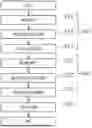
FIG. 2 is a diagram illustrating a test method performed by the optical transmission line test device 301.
-
- Step S01: in a first input procedure S11, a first light receiving procedure S12, and a first measurement procedure S13, an optical pulse is injected into one end 50a of the core #m of the optical fiber 50 under test, and backscattered light R1 (first backscattered light) in the core #m is measured.
- Step S02: in a second input procedure S21, a second light receiving procedure S22, and a second measurement procedure S23, an optical pulse is injected into one end 50a of the core #n of the optical fiber 50 under test, and backscattered light R2 (second backscattered light) in the core #n is measured.
Here, the optical pulses used in the first input procedure S11 and the second input procedure S21 may have the same or different optical powers.
In a calculation procedure S03, the arithmetic processing unit 14 executes the following processing.
-
- The waveform analysis unit 41 calculates a loss distribution generated in the core #m by using the backscattered light R1.
- The waveform analysis unit 41 calculates a loss distribution generated in the core #n by using the backscattered light R2.
- The crosstalk calculation unit 42 calculates an influence of a bend or connection on bidirectional crosstalk by using the loss distributions in the cores #m and #n. Details will be described below.
FIG. 3 illustrates an example of the loss distribution obtained by the waveform analysis unit 41. When the optical fiber 50 under test has a bend point, a connection point, or the like, a loss occurs at that point. Therefore, the crosstalk calculation unit 42 detects each loss occurrence point of the optical fiber 50 under test. As illustrated in FIG. 4, the optical fiber 50 under test having N-1 loss occurrence points can be considered as a transmission line in which N uncoupled multi-core fibers are connected in series. Hereinafter, the present invention will be described in detail where the loss occurrence point is referred to as a connection point and each transmission line connected in series is referred to as the i-th fiber section having a separation at the i-th loss occurrence point.
(Definition of Crosstalk)
Generally, the crosstalk is a ratio of optical power Pnoise of a signal signifying interruption to optical power Psignal of a signal signifying transmission. Crosstalk XT in unidirectional transmission, where signal light is injected into one end A of the core #n, is a power ratio (XT=Pnoise/Psignal) of leakage light Pnoise output from the core #m adjacent thereto to signal light Psignal originating from the injected signal light and output from the other end B of the core #n (FIG. 5(A)). Meanwhile, provided that leakage light from a non-adjacent core is sufficiently small, crosstalk XTb in bidirectional transmission, where one ray of signal light is injected into the other end B of the core #n and another ray of signal light is injected into one end A of the core #m adjacent thereto, is a power ratio (XTb=Pbs/Pout) of backscattered light Pbs originating from the latter injected signal light and output from the one end A of the core #n to signal light Pout originating from the former and output from the one end A of the core #n (FIG. 5(B)).
There is still room for consideration when the optical fiber 50 under test is a transmission line in which N uncoupled multi-core fibers 50-1 to 50-N are connected in series as illustrated in FIG. 6. Given that signal light is injected only into the core #m of the transmission line, the backscattered light Pbs received by the reception unit 13 connected to the one end 50a of the optical fiber 50 under test, which is expressed by the following equations.
[ Math . 1 ] P in ( 1 ) = [ 1 0 ] T ( 1 ) [ Math . 2 ] P bs = [ P m ( bs ) P n ( bs ) ] T ( 2 )
Here, Pin(1) denotes signal light injected into the one end 50a of the optical fiber 50 under test, Pm(bs) denotes the backscattered light R1 output from the core #m, and Pn(bs) denotes backscattered light output from the core #n. Because the backscattered light P(bs) is small in the present disclosure, the backscattered light Pn(bs) is obtained by calculation instead of measuring optical power in the reception unit 13.
The backscattered light Pn(bs) accumulated along an entire fiber length L of the core #n can be expressed by the following equation.
[ Math . 3 ] P n ( bs ) = ∫ 0 1 P n ( z ) dz ( 3 )
Bidirectional crosstalk (logarithmic expression) in the core #n in which an influence of the connection point included in the entire transmission line is considered can be calculated, with the following equation, by taking the power ratio of Pn(bs) to Pn(out) in the core #n.
[ Math . 4 ] XT b = 10 log 10 [ P n ( bs ) / P n ( out ) ] ( dB ) ( 4 )
(Derivation of Pn(bs))
When signal light is injected into the one end 50a of the optical fiber 50 under test, signal light P(z) at a distance z, located in the k-th fiber section, from the one end 50a can be expressed by the following equation.
[ Math . 5 ] P ( z ) = M k ( z ) T k - 1 M k - 1 T k - 2 … T 2 M 2 T 1 M 1 P in ( 1 ) ( 5 )
Meanwhile, backscattered light Pbs(1)(z) that originates from the signal light injected into on the one end 50a of the optical fiber 50 under test and returns from the distance z to the one end 50a can be expressed by the following equation.
[ Math . 6 ] P bs ( 1 ) ( z ) = [ P m ( z ) P n ( z ) ] T = M 1 T 1 M 2 T 2 … T k - 2 M k - 1 T k - 1 M k ( z ) BP ( z ) ( 6 )
Provided that matrices B, Ti, Mi, and Mk(z) are found, signal light Pin(1) injected into the one end 50a of any core #m can be used for calculation through Equation (6) to bring about the backscattered light Pn(bs) returning to the core #n adjacent thereto.
(Matrix B)
In Equation (6), B is a matrix denoting backscattering and can be approximated by constants with cores homogeneous.
(Matrix Ti)
In Equations (5) and (6), Ti is a matrix denoting mode coupling at the i-th bend or connection point counted from the one end 50a, and is expressed by the following equation.
[ Math . 7 ] T i = [ η 11 ( i ) η 12 ( i ) η 21 ( i ) η 22 ( i ) ] ( 7 )
Provided that mode coupling, between cores, occurring at the connection point is negligibly small in comparison with the mode coupling, between the cores, occurring in each fiber section of the uncoupled multi-core fiber, the mode coupling matrix Ti at the connection point can be approximated by the following equation.
[ Math . 8 ] T i ≅ [ η 11 ( i ) 0 0 η 22 ( i ) ] ( 8 )
-
- η11(i): coupling efficiency by connection of the core #m between a section i and a section i+1
- η22 (i): coupling efficiency by connection of the core #n between a section i and a section i+1
A connection loss between the fiber section i and the fiber section i+1 can be measured by using the backscattered light R1 and R2. Therefore, the crosstalk calculation unit 42 measures the connection loss between the fiber section i and the fiber section i+1 by using the loss distribution of the backscattered light R1, and obtains the coupling efficiency η11(i) by the connection of the core #m between the fiber section i and the fiber section i+1 by using the connection loss. The crosstalk calculation unit 42 obtains the coupling efficiency η22(i) by the connection of the core #n, as well as the coupling efficiency η11(i), by using the backscattered light R2.
(Matrix Mi)
In Equations (5) and (6), Mi is a mode coupling matrix denoting mode coupling in the i-th fiber section counted from the one end 50a, and is expressed by the following equation.
[ Math . 9 ] M i = [ m 1 1 ( i ) m 12 ( i ) m 21 ( i ) m 22 ( i ) ] ( 9 )
The mode coupling matrix Mi is expressed, as follows, by using a fiber loss factor α, a power coupling coefficient h, and a fiber length Li of the section i.
[ Math . 10 ] M i = [ exp ( - α L i ) exp ( - hL i ) cosh ( hL i ) exp ( - α L i ) exp ( - hL i ) sinh ( hL i ) exp ( - α L i ) exp ( - hL i ) sinh ( hL i ) exp ( - α L i ) exp ( - hL i ) cosh ( hL i ) ] ( 10 )
The numerical values a and h can be measured in manufacturing the optical fiber 50 under test. Therefore, given that the fiber length Li of the fiber section i is determined, the mode coupling matrix Mi can be calculated. Because the connection loss occurs between the fiber section i and the fiber section i+1, the fiber length Li of the fiber section i can be measured by using the loss distributions of the backscattered light R1 and R2. Therefore, the crosstalk calculation unit 42 calculates the fiber length Li of the fiber section i by using the loss distribution of the backscattered light R1 or R2.
(Matrix Mk)
Mk(z) is a mode coupling matrix denoting mode coupling from an inlet to a position z of a fiber section k, and is expressed by the following equation.
[ Math . 11 ] M k ( z ) = [ m 1 1 ( k ) ( z ) m 12 ( k ) ( z ) m 21 ( k ) ( z ) m 22 ( k ) ( z ) ] ( 11 )
k: the assigned number of the fiber section covering a distance z
Because the connection loss occurs between the fiber section i and the fiber section i+1, a position of the inlet of the fiber section k can be specified. The crosstalk calculation unit 42 calculates the position of the inlet of the fiber section k, calculates a fiber length ranging from the position of the inlet to the position z, and calculates the mode coupling matrix Mk by using the calculated fiber length as the fiber length Li of Equation (10).
The backscattered light Pn(bs) accumulated along an entire fiber length L of the core #n can be expressed by the following equation.
[ Math . 12 ] P n ( bs } = ∫ 0 L P n ( z ) dz ( 12 )
The crosstalk calculation unit 42 can:
-
- (i) calculate the mode coupling matrix Ti by using the backscattered light R1 and R2;
- (ii) calculate the mode coupling matrices Mi and Mk by using the backscattered light R1 or R2;
- (iii) use the matrix B of constants; and thus
- (iv) calculate the backscattered light Pn(bs) that originates from signal light injected into the core #m at the one end 50a and returns to the adjacent core #n.
(Derivation of Pout)
As illustrated in FIG. 7, the optical fiber 50 under test is a transmission line in which N uncoupled multi-core fibers 50-1 to 50-N are connected in series, and signal light output from the one end 50a of the transmission line, occasioned by injecting signal light only into the core #n at the other end 50b, will be described. In this regard, the signal light Pout output from each core of the one end 50a can be expressed by the following equations.
[ Math . 13 ] P in ( 2 ) = [ 0 1 ] T ( 13 ) [ Math . 14 ] P out = [ P m ( out ) P n ( out ) ] T = M 1 T 1 M 2 T 2 … T N - 2 M N - 1 T N - 1 M N P in ( 2 ) ( 14 )
Here, Pin(2) denotes signal light injected into the other end 50b of the optical fiber 50 under test.
As described above, the mode coupling matrices Ti and Mi can be calculated by using the backscattered light R1 and R2. Therefore, by using Pin(2), the crosstalk calculation unit 42 can calculate the signal light Pn(out) injected into the core #n at the other end 50b of the optical fiber 50 under test and output from the one end 50a of the core #n.
Here, optical power of the signal light injected into the core #n used in Pin(2) has the same value as optical power of the signal light injected into the core #m used in Pin(1). However, the optical powers may be different. In this regard, the difference between the optical powers of the signal light injected into each core only need to be corrected by multiplying a reciprocal of a ratio between the optical powers by the power ratio of Pn(bs) to Pn(out) in Equation (4).
The present embodiment enables the calculation of the backscattered light Pn(bs) that originates from the signal light injected into the one end 50a of the core #m and is output from the one end 50a of the core #n and the signal light Pn(out) that originates from the signal light injected into the other end 50b of the core #n and is output from the one end 50a of the core #n. Therefore, by using Equation (4), the crosstalk calculation unit 42 can calculate the bidirectional crosstalk XTb in the core #n where the influence of the connection point included in the entire transmission line is taken into account.
As described above, in the present disclosure, the mode coupling matrix Ti at a bend point or connection point corresponds to a loss of each core and can be acquired from a change in intensity of backscattered light at the bend point or connection point. Further, the bidirectional crosstalk XTb can be calculated by using the known fiber loss factor α and power coupling coefficient h measured before the construction of the transmission line, the mode coupling matrix Ti at the connection point obtained from the backscattered light, and the above equations of Pbs and Pout.
Further, in the present disclosure, an influence of a bend or connection, in an uncoupled multi-core fiber transmission line, on bidirectional crosstalk can be calculated by comparing a known bidirectional crosstalk value measured before the construction of the transmission line with a value obtained by the above method.
The arithmetic processing unit 14 of the present disclosure can also be implemented on a computer and a program, and the program can be recorded in a recording medium or provided through a network. A program of the present disclosure is a program for being implemented on a computer as each functional unit included in the arithmetic processing unit 14 according to the present disclosure and is a program for instructing a computer to execute each step in a method executed by the arithmetic processing unit 14 according to the present disclosure.
REFERENCE SIGNS LIST
-
- 11 Test light generation unit
- 12 Input/output unit
- 21 Optical circulator
- 22 Optical switch
- 50 Optical fiber under test
- 13 Reception unit
- 31 Photoelectric converter
- 32 AD converter
- 14 Arithmetic processing unit
- 41 Waveform analysis unit
- 42 Crosstalk calculation unit
- 92 Input/output device
- 301 Optical transmission line test device
Claims
1. A device, wherein
the device
detects a loss occurrence point of an optical fiber under test by using at least one of a loss distribution of first backscattered light from a first core included in the optical fiber under test when an optical pulse is injected into one end of the first core or a loss distribution of second backscattered light from a second core adjacent to the first core when an optical pulse is injected into one end of the second core,
calculates a mode coupling matrix Ti at an i-th loss occurrence point of the optical fiber under test,
calculates a fiber length Li of an i-th fiber section having a separation at the i-th loss occurrence point of the optical fiber under test, and
calculates bidirectional crosstalk in the first core or the second core by using the calculated mode coupling matrix Ti and fiber length Li and using a fiber loss factor α and power coupling coefficient h of the optical fiber under test measured in advance.
2. The device according to claim 1, wherein
the device
calculates backscattered light Pn(bs) accumulated along an entire fiber length L of the second core, occasioned by injecting signal light into the one end of the first core, by using the mode coupling matrix Ti at the i-th loss occurrence point, a mode coupling matrix Mi indicating mode coupling in the i-th fiber section, and a matrix B indicating backscattering approximated by constants,
calculates signal light Pn(out) output from the one end of the second core, occasioned by injecting signal light into the other end of the second core, and
calculates the bidirectional crosstalk in the second core by calculating a ratio between the backscattered light Pn(bs) and the signal light Pn(out).
3. The device according to claim 2, wherein
the device
calculates the mode coupling matrix Mi indicating the mode coupling in the i-th fiber section of the optical fiber under test by using the calculated fiber length Li and the fiber loss factor α and power coupling coefficient h of the optical fiber under test,
calculates a fiber length from a position of an inlet to a position z of a fiber section k and calculates a mode coupling matrix Mk(z) indicating mode coupling from the inlet to the position z of the fiber section k of the optical fiber under test by using the calculated fiber length and the fiber loss factor α and power coupling coefficient h of the optical fiber under test, and
applies the calculated mode coupling matrices Ti, Mi, and Mk(z), the matrix B indicating backscattering approximated by constants, and signal light Pin(1) injected into the one end of the first core to the following equations to calculate backscattered light Pn(bs) in the second core.
[ Math . C1 ] P n ( bs ) = ∫ 0 L P n ( z ) dz ( C1 ) [ Math . C2 ] P bs ( 1 ) ( z ) = [ P m ( z ) P n ( z ) ] T = M 1 T 1 M 2 T 2 … T k - 2 M k - 1 T k - 1 M k ( z ) BP ( z ) ( C2 ) [ Math . C3 ] P ( z ) = M k ( z ) T k - 1 M k - 1 T k - 2 … T 2 M 2 T 1 M 1 P in ( 1 ) . ( C3 )
4. The device according to claim 2, wherein
the device
calculates the mode coupling matrix Mi indicating the mode coupling in the i-th fiber section of the optical fiber under test by using the calculated fiber length Li and the fiber loss factor α and power coupling coefficient h of the optical fiber under test, and
applies the calculated mode coupling matrices Ti and Mi and signal light Pin(2) injected into the other end of the second core to the following equation to calculate the signal light Pn(out) in the second core.
[ Math . C4 ] P out = [ P m ( out ) P n ( out ) ] T = M 1 T 1 M 2 T 2 … T N - 2 M N - 1 T N - 1 M N P in ( 2 ) . ( C4 )
5. The device according to claim 1, wherein
the device
calculates first coupling efficiency η11 at the i-th loss occurrence point of the optical fiber under test by using the loss distribution of the first backscattered light,
calculates second coupling efficiency η22 at the i-th loss occurrence point of the optical fiber under test by using the loss distribution of the second backscattered light, and
calculates the mode coupling matrix Ti at the i-th loss occurrence point of the optical fiber under test by using the calculated first coupling efficiency η11 and second coupling efficiency η22.
6. The device according to claim 1, further comprising:
a test light generation unit for generating the optical pulse; and
a reception unit for receiving the first backscattered light and the second backscattered light.
7. A method comprising:
measuring first backscattered light from a first core included in an optical fiber under test when an optical pulse is injected into one end of the first core;
measuring second backscattered light from a second core adjacent to the first core when an optical pulse is injected into one end of the second core;
detecting a loss occurrence point of the optical fiber under test by using at least one of a loss distribution of the first backscattered light or a loss distribution of the second backscattered light;
calculating a mode coupling matrix Ti at an i-th loss occurrence point of the optical fiber under test;
calculating a fiber length Li of an i-th fiber section having a separation at the i-th loss occurrence point of the optical fiber under test; and
calculating bidirectional crosstalk in the first core or the second core by using the calculated mode coupling matrix Ti and fiber length Li and using a fiber loss factor α and power coupling coefficient h of the optical fiber under test measured in advance.
8. A non-transitory computer-readable storage medium storing a program for being implemented on a computer as the device according to claim 1.
Images & Drawings included:









Sources:
- United States Patent and Trademark Office - verify current appl. status at the USPTO↗
Recent applications in this class:
- » 20250383258 2025-12-18
METHOD SUITABLE FOR GRADIENT SPECTACLE LENS EVALUATION AND CORRESPONDING DEVICE - » 20240410783 2024-12-12
MEASUREMENT SYSTEM AND MEASUREMENT METHOD FOR MEASURING CHIP-SCALE POLARIZING PLATES - » 20240393207 2024-11-28
IDENTIFYING LENS CHARACTERISTICS USING REFLECTIONS - » 20240210275 2024-06-27
DISPERSION MEASUREMENT DEVICE AND DISPERSION MEASUREMENT METHOD - » 20240125670 2024-04-18
Method to measure light loss of optical films and optical substrates - » 20240019340 2024-01-18
SYSTEMS, DEVICES AND METHODS FOR A REPEATABLE AND QUANTIFIABLE MEASUREMENT OF THE HAZE PRESENT IN AN OPTICAL LENS - » 20230126470 2023-04-27
Inundation detection system and inundation detection method - » 20220291083 2022-09-15
Method to measure light loss of optical films and optical substrates - » 20220260455 2022-08-18
Method and system for measuring optical characteristics of a contact lens - » 20220260454 2022-08-18
Light intensity distribution measurement method and light intensity distribution measurement device
Recent applications for this Assignee:
- » 20260058726 2026-02-26
OPTICAL POWER DISTRIBUTION ESTIMATION APPARATUS, OPTICAL POWER DISTRIBUTION ESTIMATION METHOD, AND COMPUTER PROGRAM - » 20260058725 2026-02-26
OPTICAL POWER DISTRIBUTION ESTIMATION APPARATUS, OPTICAL POWER DISTRIBUTION ESTIMATION METHOD, AND COMPUTER PROGRAM - » 20260052401 2026-02-19
COMMUNICATION CONTROL APPARATUS, WIRELESS COMMUNICATION SYSTEM, COMMUNICATION CONTROL METHOD AND PROGRAM - » 20260046537 2026-02-12
OPTICAL COMMUNICATION APPARATUS AND OPTICAL COMMUNICATION METHOD - » 20260046332 2026-02-12
ACCELERATOR STATE CONTROL DEVICE, ACCELERATOR STATE CONTROL SYSTEM, ACCELERATOR STATE CONTROL METHOD AND PROGRAM - » 20260046107 2026-02-12
CONVERSION DEVICE, CONVERSION PROGRAM, AND CONVERSION METHOD - » 20260046053 2026-02-12
COMMUNICATION SYSTEM, FIRST OPTICAL COMMUNICATION APPARATUS AND TRANSMISSION LINE CHARACTERISTIC IDENTIFICATION METHOD - » 20260045754 2026-02-12
OPTICAL FIBER FOR AMPLIFICATION AND CLADDING-PUMPED OPTICAL FIBER AMPLIFIER - » 20260043685 2026-02-12
OPTICAL PATH TESTING DEVICE AND OPTICAL PATH TESTING METHOD - » 20260040142 2026-02-05
RADIO COMMUNICATION SYSTEM, CONTROL APPARATUS, CONTROL METHOD, AND PROGRAM