DEPENDENCY AND PREDICTIVE WORK ORDER SCHEDULING
US20260056539A1
2026-02-26
18/815,341
2024-08-26
Smart Summary: A work order management system helps schedule maintenance tasks automatically by analyzing data from industrial machines. It monitors the performance and status of these machines to identify when maintenance is needed. If the system detects a potential problem, it creates a work order for investigation or repair. Advanced AI technology is used to decide the best time and method for scheduling maintenance to reduce risks. Additionally, the system considers various factors like costs, downtime, and environmental conditions when making scheduling decisions. 🚀 TL;DR
Abstract:
A work order management system automates the process of scheduling maintenance tasks and generating corresponding work orders via analysis of monitored data generated by the industrial assets. The work order management system can monitor control, status, or operational data from industrial devices on the plant floor, and initiate creation of work orders based on a determination that the monitored industrial data indicates a current or predicted performance risk requiring investigation or maintenance. The system can leverage generative artificial intelligence (AI) or other types of AI in connection with determining when and how to schedule a maintenance task intended to mitigate asset risk. The system can also factor contextual information when determining whether to create and schedule a work order, such as the cost of operator or maintenance time, scheduled plant downtimes, environmental factors (e.g., humidity), time of year, supplier issues, and other considerations.
Inventors:
- Mohammad ESMALIFALAK 11 🇨🇦 Toronto, Canada
- Min Hua Yu 9 🇨🇦 Toronto, Canada
- Liudmila Domakhina 9 🇨🇦 Toronto, Canada
- Jiten Bhardwaj 4 🇨🇦 Milton, Canada
- Jason Yiu Kei Kong 3 🇨🇦 Toronto, Canada
Applicant:
Interested in similar patents?
Get notified when new applications in this technology area are published.
Classification:
G05B23/0283 » CPC main
Testing or monitoring of control systems or parts thereof; Electric testing or monitoring by means of a monitoring system capable of detecting and responding to faults characterized by the response to fault detection Predictive maintenance, e.g. involving the monitoring of a system and, based on the monitoring results, taking decisions on the maintenance schedule of the monitored system; Estimating remaining useful life [RUL]
G05B19/4184 » CPC further
Programme-control systems electric; Total factory control, i.e. centrally controlling a plurality of machines, e.g. direct or distributed numerical control [DNC], flexible manufacturing systems [FMS], integrated manufacturing systems [IMS], computer integrated manufacturing [CIM] characterised by fault tolerance, reliability of production system
G05B23/02 IPC
Testing or monitoring of control systems or parts thereof Electric testing or monitoring
G05B19/418 IPC
Programme-control systems electric Total factory control, i.e. centrally controlling a plurality of machines, e.g. direct or distributed numerical control [DNC], flexible manufacturing systems [FMS], integrated manufacturing systems [IMS], computer integrated manufacturing [CIM]
Description
BACKGROUND
The subject matter disclosed herein relates generally to industrial maintenance, and, more specifically, to industrial work order management.
BRIEF DESCRIPTION
The following presents a simplified summary in order to provide a basic understanding of some aspects described herein. This summary is not an extensive overview nor is it intended to identify key/critical elements or to delineate the scope of the various aspects described herein. Its sole purpose is to present some concepts in a simplified form as a prelude to the more detailed description that is presented later.
In one or more embodiments, a system is provided, comprising a monitoring component configured to monitor industrial asset data generated by industrial assets in service within an industrial facility, wherein the industrial asset data comprises operational and status information for the industrial assets; an analysis component configured to, in response to a determination, based on analysis of the industrial asset data, that a subset of the industrial asset data satisfies a condition indicative of a current or predicted risk to a first industrial asset of the industrial assets, formulate one or more maintenance tasks predicted to mitigate the current or predicted risk, predict an effect, on a second industrial asset having a functional dependency relationship with the first industrial asset, of performing the one or more maintenance tasks on the first industrial asset, and determine a schedule for performing the one or more maintenance tasks that satisfies a defined maintenance optimization criterion based on the effect on the second industrial asset; and a work order generation component configured to, in response to the determination by the analysis component that the subset of the industrial data satisfies the condition, generate a work order prescribing the one or more maintenance tasks and update a work schedule to schedule the work order in accordance with the schedule for performing the one or more maintenance tasks.
Also, one or more embodiments provide a method, comprising monitoring, by a system comprising a processor, industrial asset data generated by industrial assets that are in service within an industrial facility, wherein the industrial asset data comprises operational and status information for the industrial assets; and in response to determining, based on analysis of the industrial asset data, that a subset of the industrial asset data satisfies a condition indicative of a current or predicted risk to a first industrial asset of the industrial assets: formulating, by the system, one or more maintenance tasks predicted to mitigate the current or predicted risk; predicting, by the system, an effect, on a second industrial asset having a functional dependency relationship with the first industrial asset, of performing the one or more maintenance tasks on the first industrial asset; determining, by the system, a schedule for performing the one or more maintenance tasks that satisfies a defined maintenance optimization criterion based on the effect on the second industrial asset; generating, by the system, a work order prescribing the one or more maintenance tasks and the one or more second maintenance tasks; and updating, by the system, a work schedule to schedule the work order in accordance with the schedule for performing the one or more maintenance tasks
Also, according to one or more embodiments, a non-transitory computer-readable medium is provided having stored thereon instructions that, in response to execution, cause a work order management system to perform operations, the operations comprising monitoring industrial asset data generated by industrial assets that are in service within an industrial facility, wherein the industrial asset data comprises operational and status information for the industrial assets; in response to determining, based on analysis of the industrial asset data, that a subset of the industrial asset data satisfies a condition indicative of a current or predicted risk to a first industrial asset of the industrial assets: formulating one or more maintenance tasks predicted to mitigate the current or predicted risk; predicting an effect, on a second industrial asset having a functional dependency relationship with the first industrial asset, of performing the one or more maintenance tasks on the first industrial asset; determining a schedule for performing the one or more maintenance tasks that satisfies a defined maintenance optimization criterion based on the effect on the second industrial asset; generating a work order prescribing the one or more maintenance tasks and the one or more second maintenance tasks; and updating a work schedule to schedule the work order in accordance with the schedule for performing the one or more maintenance tasks.
To the accomplishment of the foregoing and related ends, certain illustrative aspects are described herein in connection with the following description and the annexed drawings. These aspects are indicative of various ways which can be practiced, all of which are intended to be covered herein. Other advantages and novel features may become apparent from the following detailed description when considered in conjunction with the drawings.
BRIEF DESCRIPTION OF THE DRAWINGS
FIG. 1 is a block diagram of an example industrial control environment.
FIG. 2 is a block diagram of a work order management system.
FIG. 3 is a diagram illustrating an example architecture for automatically generating work orders based on analysis of real-time or historical industrial asset performance.
FIG. 4 is an example work order display that can be rendered on a client device by the user interface component.
FIG. 5 is another example view of the work order display in which the user has selected the Labor Tasks category from the navigation bar.
FIG. 6 is a diagram illustrating training of models used by some embodiments of work order management system.
FIG. 7 is a diagram illustrating generation and assignment of a work order to one or more selected technicians by the work order management system.
FIG. 8 is a diagram illustrating delivery of maintenance notifications fo a technician's client device.
FIG. 9 is a diagram illustrating exchange of generative AI dialog messages between a user and the work order management system.
FIG. 10a is a flowchart of a first part of an example methodology for generating work orders in response to a detected risk to an industrial asset.
FIG. 10b is a flowchart of a second part of the example methodology for generating work orders in response to a detected risk to an industrial asset.
FIG. 11 is an example computing environment.
FIG. 12 is an example networking environment.
DETAILED DESCRIPTION
The subject disclosure is now described with reference to the drawings, wherein like reference numerals are used to refer to like elements throughout. In the following description, for purposes of explanation, numerous specific details are set forth in order to provide a thorough understanding thereof. It may be evident, however, that the subject disclosure can be practiced without these specific details. In other instances, well-known structures and devices are shown in block diagram form in order to facilitate a description thereof.
As used in this application, the terms “component,” “system,” “platform,” “layer,” “controller,” “terminal,” “station,” “node,” “interface” are intended to refer to a computer-related entity or an entity related to, or that is part of, an operational apparatus with one or more specific functionalities, wherein such entities can be either hardware, a combination of hardware and software, software, or software in execution. For example, a component can be, but is not limited to being, a process running on a processor, a processor, a hard disk drive, multiple storage drives (of optical or magnetic storage medium) including affixed (e.g., screwed or bolted) or removable affixed solid-state storage drives; an object; an executable; a thread of execution; a computer-executable program, and/or a computer. By way of illustration, both an application running on a server and the server can be a component. One or more components can reside within a process and/or thread of execution, and a component can be localized on one computer and/or distributed between two or more computers. Also, components as described herein can execute from various computer readable storage media having various data structures stored thereon. The components may communicate via local and/or remote processes such as in accordance with a signal having one or more data packets (e.g., data from one component interacting with another component in a local system, distributed system, and/or across a network such as the Internet with other systems via the signal). As another example, a component can be an apparatus with specific functionality provided by mechanical parts operated by electric or electronic circuitry which is operated by a software or a firmware application executed by a processor, wherein the processor can be internal or external to the apparatus and executes at least a part of the software or firmware application. As yet another example, a component can be an apparatus that provides specific functionality through electronic components without mechanical parts, the electronic components can include a processor therein to execute software or firmware that provides at least in part the functionality of the electronic components. As further yet another example, interface(s) can include input/output (I/O) components as well as associated processor, application, or Application Programming Interface (API) components. While the foregoing examples are directed to aspects of a component, the exemplified aspects or features also apply to a system, platform, interface, layer, controller, terminal, and the like.
As used herein, the terms “to infer” and “inference” refer generally to the process of reasoning about or inferring states of the system, environment, and/or user from a set of observations as captured via events and/or data. Inference can be employed to identify a specific context or action, or can generate a probability distribution over states, for example. The inference can be probabilistic—that is, the computation of a probability distribution over states of interest based on a consideration of data and events. Inference can also refer to techniques employed for composing higher-level events from a set of events and/or data. Such inference results in the construction of new events or actions from a set of observed events and/or stored event data, whether or not the events are correlated in close temporal proximity, and whether the events and data come from one or several event and data sources.
In addition, the term “or” is intended to mean an inclusive “or” rather than an exclusive “or.” That is, unless specified otherwise, or clear from the context, the phrase “X employs A or B” is intended to mean any of the natural inclusive permutations. That is, the phrase “X employs A or B” is satisfied by any of the following instances: X employs A; X employs B; or X employs both A and B. In addition, the articles “a” and “an” as used in this application and the appended claims should generally be construed to mean “one or more” unless specified otherwise or clear from the context to be directed to a singular form.
Furthermore, the term “set” as employed herein excludes the empty set; e.g., the set with no elements therein. Thus, a “set” in the subject disclosure includes one or more elements or entities. As an illustration, a set of controllers includes one or more controllers; a set of data resources includes one or more data resources; etc. Likewise, the term “group” as utilized herein refers to a collection of one or more entities; e.g., a group of nodes refers to one or more nodes.
Various aspects or features will be presented in terms of systems that may include a number of devices, components, modules, and the like. It is to be understood and appreciated that the various systems may include additional devices, components, modules, etc. and/or may not include all of the devices, components, modules etc. discussed in connection with the figures. A combination of these approaches also can be used.
Industrial controllers, their associated I/O devices, motor drives, and other such industrial devices are central to the operation of modern automation systems. Industrial controllers interact with field devices on the plant floor to control automated processes relating to such objectives as product manufacture, material handling, batch processing, supervisory control, and other such applications. Industrial controllers store and execute user-defined control programs to effect decision-making in connection with the controlled process. Such programs can include, but are not limited to, ladder logic, sequential function charts, function block diagrams, structured text, or other such platforms.
FIG. 1 is a block diagram of an example industrial control environment 100. In this example, a number of industrial controllers 118 are deployed throughout an industrial plant environment to monitor and control respective industrial systems or processes relating to product manufacture, machining, motion control, batch processing, material handling, or other such industrial functions. Industrial controllers 118 typically execute respective control programs to facilitate monitoring and control of industrial devices 120 making up the controlled industrial assets or systems (e.g., industrial machines). One or more industrial controllers 118 may also comprise a soft controller executed on a personal computer or other hardware platform, or on a cloud platform. Some hybrid devices may also combine controller functionality with other functions (e.g., visualization). The control programs executed by industrial controllers 118 can comprise any conceivable type of code used to process input signals read from the industrial devices 120 and to control output signals generated by the industrial controllers, including but not limited to ladder logic, sequential function charts, function block diagrams, or structured text.
Industrial devices 120 may include both input devices that provide data relating to the controlled industrial systems to the industrial controllers 118, and output devices that respond to control signals generated by the industrial controllers 118 to control aspects of the industrial systems. Example input devices can include telemetry devices (e.g., temperature sensors, flow meters, level sensors, pressure sensors, etc.), manual operator control devices (e.g., push buttons, selector switches, etc.), safety monitoring devices (e.g., safety mats, safety pull cords, light curtains, etc.), and other such devices. Output devices may include motor drives, pneumatic actuators, signaling devices, robot control inputs, valves, and the like. Some industrial devices, such as industrial device 120M, may operate autonomously on the plant network 116 without being controlled by an industrial controller 118.
Industrial controllers 118 may communicatively interface with industrial devices 120 over hardwired or networked connections. For example, industrial controllers 118 can be equipped with native hardwired inputs and outputs that communicate with the industrial devices 120 to effect control of the devices. The native controller I/O can include digital I/O that transmits and receives discrete voltage signals to and from the field devices, or analog I/O that transmits and receives analog voltage or current signals to and from the devices. The controller I/O can communicate with a controller's processor over a backplane such that the digital and analog signals can be read into and controlled by the control programs. Industrial controllers 118 can also communicate with industrial devices 120 over the plant network 116 using, for example, a communication module or an integrated networking port. Exemplary networks can include the Internet, intranets, Ethernet, DeviceNet, ControlNet, Data Highway and Data Highway Plus (DH/DH+), Remote I/O, Fieldbus, Modbus, Profibus, wireless networks, serial protocols, and the like. The industrial controllers 118 can also store persisted data values that can be referenced by the control program and used for control decisions, including but not limited to measured or calculated values representing operational states of a controlled machine or process (e.g., tank levels, positions, alarms, etc.) or captured time series data that is collected during operation of the automation system (e.g., status information for multiple points in time, diagnostic occurrences, etc.). Similarly, some intelligent devices-including but not limited to motor drives, instruments, or condition monitoring modules—may store data values that are used for control and/or to visualize states of operation. Such devices may also capture time-series data or events on a log for later retrieval and viewing.
Industrial automation systems often include one or more human-machine interfaces (HMIs) 114 that allow plant personnel to view telemetry and status data associated with the automation systems, and to control some aspects of system operation. HMIs 114 may communicate with one or more of the industrial controllers 118 over a plant network 116, and exchange data with the industrial controllers to facilitate visualization of information relating to the controlled industrial processes on one or more pre-developed operator interface screens. HMIs 114 can also be configured to allow operators to submit data to specified data tags or memory addresses of the industrial controllers 118, thereby providing a means for operators to issue commands to the controlled systems (e.g., cycle start commands, device actuation commands, etc.), to modify setpoint values, etc. HMIs 114 can generate one or more display screens through which the operator interacts with the industrial controllers 118, and thereby with the controlled processes and/or systems. Example display screens can visualize present states of industrial systems or their associated devices using graphical representations of the processes that display metered or calculated values, employ color or position animations based on state, render alarm notifications, or employ other such techniques for presenting relevant data to the operator. Data presented in this manner is read from industrial controllers 118 by HMIs 114 and presented on one or more of the display screens according to display formats chosen by the HMI developer. HMIs may comprise fixed location or mobile devices with either user-installed or pre-installed operating systems, and either user-installed or pre-installed graphical application software.
Some industrial environments may also include other systems or devices relating to specific aspects of the controlled industrial systems. These may include, for example, a data historian 110 that aggregates and stores production information collected from the industrial controllers 118 or other data sources, device documentation stores containing electronic documentation for the various industrial devices making up the controlled industrial systems, inventory tracking systems, work order management systems, repositories for machine or process drawings and documentation, vendor product documentation storage, vendor knowledgebases, internal knowledgebases, work scheduling applications, or other such systems, some or all of which may reside on an office network 108 of the industrial environment.
Higher-level systems 126 may carry out functions that are less directly related to control of the industrial automation systems on the plant floor, and instead are directed to long term planning, high-level supervisory control, analytics, reporting, or other such high-level functions. These systems 126 may reside on the office network 108 at an external location relative to the plant facility, or on a cloud platform with access to the office and/or plant networks. Higher-level systems 126 may include, but are not limited to, cloud storage and analysis systems, big data analysis systems, manufacturing execution systems (MES), data lakes, reporting systems, etc. In some scenarios, applications running at these higher levels of the enterprise may be configured to analyze control system operational data, and the results of this analysis may be fed back to an operator at the control system or directly to a controller 118 or device 120 in the control system.
Industrial facilities typically house and operate many industrial assets, machines, or equipment. Many of these assets require regular proactive maintenance to ensure continued optimal operation, in addition to unplanned repair operations to address unexpected downtime events, such as machine malfunctions. To manage the large number of maintenance operations carried out at a given industrial enterprise, work order management systems can be used to initiate work orders for new maintenance operations to be performed, to track the statuses of these work orders, and to keep a record of maintenance operations performed within the plant. In a typical scenario for addressing a reactive maintenance concern, when metered or observed asset performance indicators—e.g., vibration values, temperature values, product counts, a machine downtime occurrence, etc.—indicate a possible performance concern requiring investigation or maintenance, a maintenance technician or manager creates and submits a work order for the maintenance operation to the work order management system. Maintenance personnel are then assigned the task of performing the maintenance task or investigation. As the work is carried out, maintenance actions performed in connection with the schedule maintenance task are submitted and recorded with the work order, which remains open as its corresponding maintenance task is performed. The work order is then closed once the task is completed. A similar workflow can be used to schedule regular proactive or preventative maintenance on industrial assets.
This approach to maintenance management requires operators, maintenance staff, or supervisors to visually observe when machine performance indicators, or predetermined asset maintenance schedules, necessitate scheduling of a maintenance action and creation of a corresponding work order for the maintenance task. If a performance concern is observed or a preventative maintenance task to be scheduled, the work order must be created by a maintenance supervisor or technician so that the maintenance work is properly logged and tracked. The process of manually creating and submitting work orders is susceptible to errors due to improperly entered work order information. Errors in the work order submission process are common, and these errors may have associated risks that directly affect the underlying industrial assets on which maintenance is performed, or that adversely affect future decisions made by the industrial enterprise.
To address these and other issues, one or more embodiments described herein provide a work order management system that automates the process of scheduling maintenance tasks and generating corresponding work orders via analysis of monitored data generated by the industrial assets. In one or more embodiments, the work order management system can monitor control, status, and/or operational data from industrial devices on the plant floor, and initiate creation of work orders based on a determination that the monitored industrial data indicates a current or predicted performance risk requiring investigation or maintenance. In some embodiments, the work order management system can leverage generative artificial intelligence (AI) or other types of AI in connection with determining when and how to schedule a maintenance task intended to mitigate asset risk. The system can also factor various types of contextual information when determining whether to create and schedule a work order, such as the cost of operator or maintenance time, scheduled plant downtimes, environmental factors (e.g., humidity), time of year, supplier issues, and other considerations.
FIG. 2 is a block diagram of a work order management system 202 according to one or more embodiments of this disclosure. Aspects of the systems, apparatuses, or processes explained in this disclosure can constitute machine-executable components embodied within machine(s), e.g., embodied in one or more computer-readable mediums (or media) associated with one or more machines. Such components, when executed by one or more machines, e.g., computer(s), computing device(s), automation device(s), virtual machine(s), etc., can cause the machine(s) to perform the operations described.
Work order management system 202 can include a user interface component 204, a device interface component 206, a monitoring component 208, a work order generation component 210, an analysis component 212, an MES interface component 214, one or more processors 220, and memory 222. In various embodiments, one or more of the user interface component 204, device interface component 206, monitoring component 208, work order generation component 210, analysis component 212, MES interface component 214, the one or more processors 220, and memory 222 can be electrically and/or communicatively coupled to one another to perform one or more of the functions of the work order management system 202. In some embodiments, components 204, 206, 208, 210, 212, and 214 can comprise software instructions stored on memory 222 and executed by processor(s) 220. Work order management system 202 may also interact with other hardware and/or software components not depicted in FIG. 2. For example, processor(s) 220 may interact with one or more external user interface devices, such as a keyboard, a mouse, a display monitor, a touchscreen, or other such interface devices.
User interface component 204 can be configured to generate user interface displays that receive user input and render output to the user in any suitable format (e.g., visual, audio, tactile, etc.). In some embodiments, user interface component 204 can render these interface displays on a client device (e.g., a laptop computer, tablet computer, smart phone, etc.) that is communicatively connected to the work order management system 202 (e.g., via a hardwired or wireless connection). Input data that can be received via user interface component 204 can include, but is not limited to, work order data (e.g., work order data field entries), user interface navigation input, natural language chat inputs (e.g., work order generation commands, queries regarding existing work orders or asset risks, etc.), or other such input data. Output data rendered by user interface component 204 can include, but is not limited to, information regarding closed and open work orders, risk levels associated with respective work orders, estimated costs associated with high-risk work orders, or other such output data.
Device interface component 206 can be configured to interface with industrial devices or assets on the plant floor, either directly or via a gateway or edge device, and receive real-time operational and status data from these assets for the purposes of asset health monitoring and analysis. Monitoring component 208 can be configured to monitor specified sets of the collected industrial data for conditions indicative of a performance issue requiring investigation or maintenance. In some embodiments, the sets of industrial data to be monitored, as well as the conditions of this data that indicate a performance concern that requires a maintenance task to be scheduled, can be defined by machine-specific asset models for the industrial equipment being monitored, or can be determined or defined by the system 202 using AI or generative AI analysis of the assets' performance over time.
Work order generation component 210 can be configured to generate work orders based on detected or predicted asset risks. To this end, the work order generation component 210 can leverage real-time or historical asset data collected by the device interface component 206, contextual data (e.g., environmental data, the current time of year, known supplier issues, etc.), data from the industrial enterprise's MES system (e.g., technician work schedules and skill sets, scheduled machine or plant shutdowns, etc.), and other such information. The work order generation component 210 can also generate work orders and schedule corresponding maintenance tasks based on analysis performed by the analysis component 212, which can be assisted using generative AI.
Analysis component 212 can be configured to perform analysis on real-time or historical asset performance data, data obtained from an MES system or a similar high-level enterprise tracking system, contextual information, or other such data to determine when maintenance tasks are to be scheduled, what those maintenance tasks include, and which technicians are to be assigned the tasks. In some embodiments, the analysis component 212 can apply AI or generative AI-assisted analysis to this data in connection with determining when and how maintenance tasks should be scheduled and corresponding work orders generated.
MES interface component 214 can be configured to retrieve information from the MES system that can be used by the analysis component 212 to determine when maintenance tasks should be scheduled, which technicians should be assigned the tasks, the nature of the maintenance tasks that should be performed to mitigate a detected risk, or other such determinations. In some embodiments, the MES interface component 214 can also initiate transmission of notifications to appropriate personnel via the MES in conjunction with generation of work orders.
The one or more processors 220 can perform one or more of the functions described herein with reference to the systems and/or methods disclosed. Memory 222 can be a computer-readable storage medium that stores computer-executable instructions and/or information for performing the functions described herein with reference to the systems and/or methods disclosed. Memory 222 can also store the work order data generated by the work order generation component 210.
FIG. 3 is a diagram illustrating an example architecture for automatically generating work orders 310 based on analysis of real-time or historical industrial asset performance. Work order management system 202 can be implemented on any suitable platform that allows the system 202 to be accessed via client devices (e.g., desktop computers, laptop computers, smart phones, tablet computers, wearable computing devices, etc.) and that permits the system 202 to access operational and status data generated by industrial assets within a plant facility. For example, system 202 can be installed and executed on an on-premise server device on a plant or office network of an industrial facility. Alternatively, system 202 can be executed on a cloud platform as a set of cloud-based services, allowing users at different industrial facilities to access the system 202, view work orders, receive notifications generated by the system 202, or retrieve work order analysis results. System 202 can also be executed on a public network such as the internet and made accessible to users having suitable authorization credentials. In such embodiments, the system 202 can maintain work orders for different industrial enterprises in a segregated manner, such that employees of a given industrial enterprise can only access work orders and associated analysis results associated with that enterprise. In the example depicted in FIG. 3, work order management system resides and executes on a cloud platform.
In the example architecture of FIG. 3, a gateway device 304 resides on the same plant network 116 as the industrial devices 302 associated with automation systems on the plant floor. These industrial devices 302 can include, for example, industrial controllers 118, motor drives, HMI terminals, telemetry devices (e.g., flow meters, pressure meters, temperature meters, etc.), sensors of various types (e.g., photo-sensors, proximity sensors, etc.), or other such devices. The automation systems and their associated industrial devices 302, machines, and machine components constitute industrial assets for which reactive or proactive maintenance may be scheduled as needed. During operation of the plant's automation systems, gateway device 304 collects asset data 306 from industrial devices 302. This data can include data values read from data tags, data registers, or automation objects defined on one or more industrial controllers 118; data from analog or digital sensors; data from telemetry devices or meters, or other such data. In general, asset data 306 represents status, operational, or performance data for the industrial assets.
In some embodiments, gateway device 304 can contextualize the collected data 306 prior to delivering the data to the work order management system 202 and deliver the processed data to the system 202 as contextualized data. This contextualization can include time-stamping the data, as well as normalizing or otherwise formatting the collected data for analysis by the work order management system 202. In general, gateway device 304 serves as an edge device that interfaces data from the set of industrial devices 302 to either the work order management system 202 or a separate data storage platform accessible to the work order management system 202.
The work order management system's device interface component 206 can remotely interface with the gateway device 304 to receive the collected asset data 306, and a monitoring component 208 of the system 202 can monitor the asset data 306 for conditions indicative of a possible performance issue that necessitates a maintenance action and creation of a corresponding work order. In some embodiments, rather than obtaining asset data 306 from the industrial assets (e.g., industrial devices 302 and their associated machines or automation systems) via an integrated device interface component 206, the system's monitoring component 208 may access other sources of real-time or historical asset data 306 generated by the industrial assets within the plant facility, such as a data historian system, a data lake, or other such systems. Robots can also be used to provide at least some of the asset data 306, which can be used by the system 202 in connection with identifying asset performance issues and generating work orders. For example, inspection robots can traverse inspection routes and collect machine states (e.g., via infrared panel scans, meter readings, etc.) and feed this information to the work order management system 202 as asset data 306.
When the monitoring component 208, assisted by the analysis component 212, determines that the monitored asset data 306 satisfies a condition indicative of a current or predicted asset performance issue requiring investigation or correction by maintenance personnel, system's work order generation component 210 can schedule one or more maintenance tasks predicted to correct the performance issue and generate a corresponding work order 310 for the tasks. The condition detected by the monitoring component 208 that triggers creation of a work order 310 can be, for example, a deviation of one or more data tag values that move outside a defined range of normal or expected values. In an example scenario, a baking process may require an oven temperature to stay within a defined temperature range. Accordingly, values of a data tag or automation object corresponding to this oven temperature can be collected from the industrial controller 118 that monitors and controls the baking process, and this collected data can be provided to the work order management system 202 as part of the asset data 306. The monitoring component 208 monitors this value to determine when the oven temperature deviates from this range and, in response to detecting such a deviation, instructs work order generation component 210 to generate a new open work order 310 for investigation of the temperature control issue. In some embodiments, machine-specific or device-specific asset profiles 314 maintained on the work order management system 202 can define which data items or performance parameters of the industrial assets are to be monitored, as well as the conditions of this data that are to trigger creation of work orders 310. In other embodiments, as will be described in more detail below, the system 202 can learn to recognize conditions of the asset data 306 indicative of an elevated risk to an asset using machine learning, AI, generative AI, or other analytic techniques.
In some scenarios in which a given machine performance metric is a function of the current states of other performance metrics, the condition that triggers creation of a work order can be based on a holistic set of data value conditions rather than being based on deviation of a single data value. For example, an expected value of a given performance metric for a machine or automation system—e.g., a conveyor speed, an oven temperature, a fill level, etc.—may depend on the current operating mode of the machine, a speed or temperature of another machine component, or other such factors. The value of the performance metric may also be seasonal or time-specific, such that the expected value of the metric depends on a current time of day, a current day of the week, a current month of the year, or another time function. If the health of a machine or automation system is a function of whether concurrent values of multiple data tags are within an expected holistic value space, the monitoring component 208 can be configured to instruct the work order generation component 210 to generate a work order 310 upon determining that these values are in a collective, concurrent state indicating a potential performance problem.
A work order 310 generated by the work order generation component 210 can contain information about the maintenance task to be performed, including but not limited to an identity of the industrial asset or machine for which maintenance is required, an aspect of the industrial asset that requires attention, a type of the maintenance to be performed, an estimated number of hours to be spent on the maintenance task, an estimated number of personnel to be assigned to the task, a description of the task, or other such information. The work order 310 is initially scheduled in the system 202 as an open work order 310 (that is, the system 202 stores the work order 310 as work order data in memory 222 and assigns an “Open” status to the work order 310) and remains open until completion of its associated maintenance tasks, at which time the system 202 assigns a “Closed” status to the work order 310.
Authorized users can browse and view both open and closed work orders 310 via user interface component 204. FIG. 4 is an example work order display 402 that can be rendered on a client device by the user interface component 204. When a user selects a work order 310 via interaction with the work order system's primary user interface, the user interface component 204 can render a work order display 402 and populate the display 402 with information about the work order. In the example depicted in FIG. 4, the work order display 402 comprises a work order identifier 414 that uniquely identifies the selected work order 310, a section 408 that displays general information about the work order 310 (e.g. the open or closed status, a type of maintenance to be performed, a priority, an identity of the asset on which the maintenance task is to be performed, a suggested completion date for the maintenance, a name of a project with which the maintenance task is associated, etc.), and a navigation bar 406 comprising selectable controls corresponding to respective different categories of additional information that can be viewed.
In the illustrated example, the user has selected the General category from the navigation bar 406, which causes the work order display 402 to render a Summary box 404 containing summary information about the maintenance task, including a description of the asset performance issue or risk to be mitigated by the maintenance task, relevant key observations about the asset, risk information for the asset (e.g., a daily average risk score or a risk level), or other such information. The display 402 also renders an Instructions box 410 that displays instructions for performing the maintenance task, and a section 412 that displays miscellaneous additional information (e.g., identities of the technicians assigned to perform the maintenance task, an estimated number of hours for performing the task, the actual number of hours that were required to perform the tasks, or other such information.
FIG. 5 is another example view of the work order display 402 in which the user has selected the Labor Tasks category from the navigation bar 406, which causes the display 402 to render the individual maintenance tasks defined by the work order 310 as a formatted list 502. Each entry of the list 502 represents a task to be performed, and includes a description of the task, an identity of a maintenance technician to whom the task is assigned, fields for the estimated and actual number of hours spent on the task, a result of the task, and an interactive checkbox control for indicating that the task has been completed.
Returning to FIG. 3, to facilitate intelligent automated generation of work orders 310, the monitoring component 208 is assisted by an analysis component 212 that can apply one or more types of analysis (e.g., AI, generative AI analysis or generative AI-assisted analysis, machine learning, etc.) to real-time or historical asset data 306, MES data 316 from the plant facility's MES system or another high-level plant managements system, and other contextual data in connection with determining when to schedule maintenance tasks, what these maintenance tasks entail, and which technicians are to be assigned the tasks. For example, in some embodiments, the analysis component 212 can leverage generative AI to auto-generate work orders 310 or otherwise schedule maintenance tasks based on predicted or detected asset risks. In such embodiments, the analysis component 212 can implement prompt engineering functionality using associated trained models 312 trained with various types of training data, and can use these prompt engineering features to interface with a generative AI model 308 (e.g., an LLM or another type of model) and associated neural networks.
FIG. 6 is a diagram illustrating training of the models 312 used by some embodiments of the analysis component 212. Models 312 can be trained using training data 602 relevant to identification or prediction of risks to the plant facility's industrial assets, scheduling of suitable maintenance tasks for mitigating the risks, and assignment of those maintenance tasks to suitable technicians. Such training data 602 can include, but is not limited to, knowledge or technical specifications of industrial assets, machines, and devices that are in service within the industrial facility; information from past or closed work orders 310; monitored trends in asset operation (e.g., histories and frequencies of asset failure); information about technicians employed by the plant facility (e.g., employee identities, skill sets, work histories relative to specific assets or types of maintenance tasks, work schedules etc.); financial data for the plant facility; or other such data 602.
The monitoring component 208 and analysis component 212 can detect a current asset risk condition (or predict a future asset risk condition) that requires scheduling of a maintenance task and generation of a corresponding work order 310 based on analysis of real-time or historical asset data 306 as well as content of the trained models 312. In some scenarios, this analysis can be performed without accessing the generative AI model 308. However, the analysis component 212 can also, as needed, interact with the generative AI model 308 as part of the risk detection analysis, or as part of the work order generation process. For example, as the work order management system 202 is monitoring asset data 306 for risk conditions, the analysis component 212 can determine whether a given subset of the asset data 306 generated by an industrial asset or related groups of assets is indicative of a risk condition based on knowledge of the relevant industrial assets (e.g., values of performance indicators known or inferred to correlate with a risk condition for those specific assets, the nature of the risk condition indicated by anomalous values of those performance indicators, lifecycle information for the assets, etc.), and this asset knowledge can be obtained from technical asset information encoded in the trained models 312 as part of training data 602 or can be prompted from the generative AI model 308 using suitable prompts 604 generated by the analysis component 212. Similarly, when an asset risk is detected, the analysis component 212 can determine a suitable set of maintenance tasks for mitigating the detected or predicted risk based on the training data 602 encoded in the models 312, as well as responses 606 prompted from the generative AI model 308. Responses 606 prompted from the generative AI model 308 can also be used by the work order generation component 210 to generate natural language content to be included in the corresponding work order 310 (e.g., natural language descriptions of the asset risk rendered in the Summary box 404 of the work order display 402, natural language descriptions of the maintenance tasks rendered in the Instructions box 410 or list 502, etc.).
In the scenarios described above, the analysis component 212 may prompt the generative AI model 308 for supplemental information in response to determining that additional information from the generative AI model 308 would yield an analytic result having a higher probable level of accuracy relative to relying solely on the asset data 306 and trained models 312 alone. To support generative AI-assisted generation and scheduling of work orders 310, the analysis component 212 can be configured with custom prompt engineering capabilities designed to prompt the generative AI model 308 for supplemental information that can be used by the work order management system 202 to recognize industrial asset risk conditions, infer suitable corrective maintenance tasks for mitigating asset-specific risks, and generate content of a work order 310 for the maintenance tasks.
Returning to FIG. 6, during the asset monitoring process, the analysis component 212 can formulate and submits prompts 604 to the generative AI model 308 designed to obtain responses 606 that can assist with monitoring the performance of industrial assets for risk conditions, formulating maintenance strategies for mitigating the risk conditions, or generating content of a work order 310. The analysis component 212 can generate these prompts 604 based on a current operating context of one or more industrial assets being monitored (as determined from real-time or historical asset data 306) as well as the training data 602 encoded in the trained models 312. The analysis component 212 can reference the trained models 312 or associated training data 602 as needed in connection with creating prompts 604 designed to obtain responses 606 from the generative AI model 308 that assist the analysis component 212 in recognizing a current or predicted risk to an industrial asset, formulating a maintenance intervention for mitigating the risk, or generating content of a work order 310 for scheduling the maintenance intervention (e.g., natural language summaries of the identified asset risk, as well as descriptions of the maintenance tasks for mitigating the risk). The analysis component 212 can generate the prompt 604 to include any relevant information that can assist the generative AI model 308 in converging on a useful responses 606 that can be used to better understand a current context of the industrial assets, including but not limited to a selected subset of the asset data itself 306, an identity of the type of industrial asset of interest (e.g., a type of machine or industrial device), an indication of the type of industrial process or application being carried out by the industrial asset of interest (e.g., a specific type of batch processing, a specific automotive manufacturing function, a sheet metal stamping application, etc.), any selected subsets of the training data 602 or MES data 316, or other such data.
Returning to FIG. 3, when assessing when and how to schedule a maintenance task intended to mitigate asset risk, the analysis component 212 can factor the cost of operator or maintenance time, scheduled plant downtimes, environmental sensing (e.g., humidity or other environmental conditions), time of year, supplier issues, and other considerations. Some of this supplemental or contextual information can be retrieved by the work order management system 202 from an external system that stores the relevant information, such as an MES system that monitors and manages operations on the control level of the customer's industrial enterprise in view of higher-level business considerations. For example, information regarding technicians' work schedules and hourly rates, operating schedules for respective automation systems within the plant facility (including planned machine or plant shutdowns), and other such information can be retrieved by the system's MES interface component 214 as MES data 316 from the plant's MES system.
Also, the work order management system 202 can reference information about the industrial assets in use within the plant facility, and the functional or geographic relationships between these assets, in connection with determining when to schedule maintenance activities and what those activities should be. In some embodiments, this information can be maintained as an organized collection of asset profiles 314 representing industrial assets, machines, or devices within the plant facility as well as the functional and/or geographical relationships between those assets. For example, the collection of asset profiles 314 may define the relative locations of respective machines or automation systems within the plant, functional relationships between the machines (e.g., interdependencies between the machines or systems, such as indications of which automation systems are responsible for providing material or parts to other downstream systems), or other such asset information. Collectively, the asset profiles 314 can be considered a plant model that represents the industrial assets in service within the customer's facility and the functional relationships between these assets. In some embodiments, an asset profile 314 corresponding to a given type of asset can comprise basic information about the asset type, such as identification information for the asset type (e.g., vendor identifiers, model numbers, a description of the type of asset, etc.), a function of the asset, communication ports or I/O associated with the asset, software associated with the asset, or maintenance information that specifies recommended maintenance tasks or strategies for maintaining the asset.
The work order management system 202 can consider any of the information from the trained models 312 or their associated training data 602 (e.g., technical information about industrial assets, technician skill sets, previous work orders, plant financial data, plant schedules, etc.), MES data 316 (which may include some of the training data 602 described above), prompted responses 606 from the generative AI model 308, or the asset profiles 314 in connection with determining whether a maintenance task should be scheduled for an industrial asset, when the task should be scheduled, and to which technicians the task should be assigned. For example, when the monitoring component 208 or analysis component 212 detect or predict, based on analysis of asset data 306, a risk condition requiring a maintenance action, the analysis component 212 can determine whether deferring the maintenance action until an upcoming planned machine shutdown would minimize a cost of the maintenance without incurring a cost associated with the risk, and if so, generate the work order 310 for the maintenance action such that corresponding maintenance tasks are scheduled to be performed during the shutdown period. To make this decision, the analysis component 212 can consider the machine's operating or shutdown schedule (as determined from the MES data 316), the cost of technicians' time during the shut down versus the cost of the technicians' time during the machine's scheduled operation, a cost associated with prolonging the asset risk until the shutdown relative to the cost of mitigating the risk sooner, or other such factors.
The interdependencies between industrial assets defined in the asset profiles 314 and their defined relationships can be used by the analysis component 212 to identify opportunities for opportunistic maintenance scheduling, which can improve maintenance efficiency. For example, when the work order generation component 210 schedules a maintenance activity (and generates a corresponding work order 310) for a given industrial asset to mitigate a discovered risk, the analysis component 212 can also determine whether the discovered risk is likely to also affect other similar machines or components (as determined in part based on the asset profiles 314 and their defined functional relationships) and schedule work orders 310 to perform similar maintenance tasks on those similar assets. The analysis component 212 can also determine whether other assets that are upstream or downstream from the affected asset are likely to be impacted by the discovered risk, or by the maintenance action performed on the affected upstream asset. If so, the analysis component 212 can instruct the work order generation component 210 to include, as part of the maintenance instructions defined in the work order 310 for the affected asset, recommendations for addressing any related issues on the upstream or downstream assets. In another example, when a machine shutdown is scheduled to address a discovered high-risk issue, the analysis component 212 can identify other lower-risk issues that could also be addressed during the machine shutdown, and generate work orders 310 to address these lower-risk issues as part of the same maintenance session. In any of these examples, the analysis component 212 can reference the interdependencies between industrial machines or assets defined by the asset profiles 314 (or another type of model defining the relationships between the customer's assets) in order to identify other assets that may be affected by a machine risk (e.g., assets that are downstream from, or otherwise have a functional dependency relationship with, the affected asset), similar assets that may be subject to a common risk, etc.
In some embodiments, in response to detecting a risk condition on a first asset that requires a maintenance action, the analysis component 212 can predict effects, on one or more second assets that are upstream or downstream from the first asset, of performing the maintenance action on the first asset, and determine an optimal strategy for scheduling and performing the maintenance action on the first asset that considers these effects on the functionally related upstream or downstream assets. The analysis component 212 can formulate this maintenance strategy to satisfy a defined optimization criteria or to optimize one or more maintenance metrics, taking into consideration the aggregate machine downtime, labor cost, financial cost, and other factors incurred for both the affected (first) asset and any upstream or downstream (second) assets that will be impacted by performing the maintenance.
In general, the analysis component 212 can determine work order execution strategies that at least one of maximize overall maintenance efficiency, minimize the total time to execute the open work orders 310, minimize labor or material costs associated with execution of the work orders 310, minimize the number of technicians or autonomous vehicles required to complete the work orders 310, minimize the number of steps taken by the technicians to complete the work orders 310, or optimize other such factors selected or defined by the customer. The analysis component 212 can formulate these strategies based on aggregate analysis of the work orders 310 themselves (including the identities of the assets to which the respective work orders 310 are directed, the type of maintenance to be performed, etc.) as well as other plant-specific information such as the locations of the industrial assets within the plant facility and the functional relationships between these assets (which can be obtained from the organized asset profiles 314 or from another source of asset location information), predicted impact on upstream or downstream assets, technician schedule and skill set information (which can be obtained by the MES interface component 214 as part of MES data 416, or from another source of technician information), the numbers and capabilities of autonomous vehicles available to assist with execution of the work orders 310, plant operating schedules or operating schedules for individual lines or assets, availability of parts or materials required for the respective maintenance tasks, or other such data. In some embodiments, the analysis component 212 can also reference information contained in trained models 312 (or the training data 602 itself) in connection with formulating optimized strategies for executing open work orders 310. The work order generation component 210 can translate these strategies into suitable work orders 310, setting the priorities, orders of execution, execution schedules, labor tasks, parts and materials, or other properties of the work orders 310 in a manner that aligns with the overall maintenance strategy formulated by the analysis component 212.
In the case of assets or machines that have a functional relationship with one another, as in the case of a first machine that produces parts or material consumed by second machine that is downstream from the first machine within a production line, the analysis component 212 can predict an effect that performing a scheduled or reactive maintenance task on the first machine will have on the second machine—or on a performance metric for the production line as a whole—in connection with determining an optimal time at which to schedule the maintenance task or a nature of the maintenance task itself. For example, the analysis component 212 may determine, based in part on the relationships between industrial machines and defined by the hierarchical organization of asset profiles 314, that performing maintenance on a first machine in accordance with an open work order will necessitate downtime on a second downstream machine that cannot operate unless the first machine is operating. The analysis component 212 may further determine an optimal schedule for performing the maintenance on the first machine that minimizes or eliminates unnecessary downtime on the second machine; e.g., by referencing a line operating schedule to determine a time at which the second machine is scheduled to be inactive and scheduling the open work order for the first machine to correspond with this time. In this way, the system 202 minimizes overall machine downtime caused by performing the scheduled maintenance on the first machine. In addition to or as an alternative to overall machine downtime, the analysis component 212 can determine suitable schedules for work order that optimize other overall line metrics, including but not limited to maintenance cost, required labor in terms of technician-hours, or other such metrics.
In some embodiments, the analysis component 212 can schedule and assign a work order 310 for a discovered asset risk based in part on a risk-reward assessment that considers the benefit of performing the work order against the risk to the affected asset. For example, machines that are especially crucial to plant operations may require the result of the analysis component's risk-reward assessment to exceed a higher benefit threshold, relative to less crucial machines, to justify any risks associated with performing the maintenance action on the machine (e.g., lost productivity or risk of damage due to improper execution of the work order).
In some embodiments, the analysis component 212 can be configured to initiate generation of proactive or reactive work orders 310 based on analysis of signatures or trends in the measured data received from specific sensors on the plant floor. For example, the analysis component 212 can monitor selected subsets of the asset data 306 for specific sensor signatures (e.g., machine or component vibration trends measured by vibration sensors), indicative of a possible future asset failure, and in response to detection of such sensor signatures, instruct the work order generation component 210 to generate a work order 310 for a preventative maintenance task that is predicted to mitigate the risk of the asset failure. The analysis component 212 can determine the maintenance actions to be performed based on previously performed tasks that successfully addressed the failure in other instances, as determined based on analysis of closed or past work orders 310 (e.g., by determining actions in previous work orders 310 that were performed to bring the asset back to normal state when the risk of this failure had occurred in the past). This approach can also be used to generate work orders 310 for maintenance tasks predicted to extend machine life, rather than just preventing or addressing asset failure.
The work order management system 202 can also schedule work orders 310 for prescriptive maintenance based on learned trends in monitored asset data 306 over time, or based on trends discovered in data from closed or past work orders 310. For example, the senor signatures for a given industrial asset indicative of possible future failure of that asset, as discussed above, may be learned by the analysis component 212 over time by monitoring of the asset's sensor data over time (e.g., vibration data, temperature data, pressure data, flow data, position data, speed or acceleration data, etc.) and learning correlations between the behavior of the asset's sensor data and failures of the asset. This analysis may also learn ranges of normal or expected values of sensor values or performance metrics of the asset during normal operation of the asset (e.g., expected value ranges for an oven temperature, a tank pressure, a flow rate, etc.). In some cases, the analysis may determine that the health of a given asset is a function of whether concurrent values of multiple sensor measurements are within a learned holistic value space.
Once these sensor signatures or learned ranges of normal performance parameter values are established, the analysis component 212 can monitor the relevant sets of sensor data (or controller data tags) for the learned data signatures that were determined to correlate with asset failure, and initiate generation of appropriate work orders 310 in response to detecting these signatures in the asset data 306. In another example, the analysis component 212 can determine, based on analysis of data contained in closed work orders 310, that a certain machine component or device has been failing at regular or semi-regular intervals for an excessive amount of time (e.g., in excess of a threshold duration). Based on this determination, the analysis component 212 can initiate generation of a work order 310 to schedule replacement of the component or device.
As in previous examples, the analysis component 212 can leverage generative AI as needed to assist in determining whether values or trends in the monitored asset data 306 indicate, or are correlated with, an elevated risk of failure of an asset. For example, during monitoring of the asset data 306, the analysis component 212 may generate prompts 604 directed to the generative AI model 308 that are designed to obtain responses 606 (see FIG. 6) providing technical information about an asset whose performance or behavior is deviating from normal parameters, and can reference the information in these responses 606 in connection with determining whether a maintenance action should be performed on the asset, determining what this maintenance action should entail, and populating the content of a new work order 310 for performing this maintenance action.
Some embodiments of the work order management system 202 can also mine maintenance history of an asset or performance issue in connection with generating work orders 310. For example, if the analysis component 212 detects a performance problem on an industrial asset and determines that this performance problem is similar to a subset of previous problems in the asset's history, the analysis component 212 can instruct the work order generation component 210 to generate a work order 310 based on inferred root cause of the issue and past solutions that were recorded as being successful in addressing the issue (as determined from analysis of closed or past work orders 310). This information can also be used to identify the most common problems associated with machines (including OEM machines).
In addition to generating work orders 310 to perform reactive maintenance in response to detection of a current or predicted asset risk condition, the work order management system 202 can also generate work orders 310 for scheduled proactive maintenance actions designed to prolong an industrial asset's lifecycle or to proactively prevent asset failures or performance inefficiencies. These proactive maintenance actions can include, for example, oil changes, inspection routines, proactive replacement of parts at regular intervals, or other such scheduled maintenance tasks. The system 202 can generate and schedule these proactive work orders 310 at regular or semi-regular intervals according to a defined frequency at which the maintenance is to be conducted. To improve or optimize the efficiency of these schedule maintenance activities, some embodiments of the analysis component 212 can perform risk-versus-reward analyses on the results of this maintenance together with the amount of time and labor spent performing the maintenance (e.g., a statistical analysis of the benefit of this scheduled maintenance). Based on a result of this analysis, the analysis component 212 can determine whether a given scheduled maintenance task is being over-prescribed or under-prescribed, and can dynamically adjust the frequency this schedule maintenance task based on assessments of the results of these maintenance activities.
For example, if the analysis component 212 determines that a daily scheduled inspection of a machine rarely finds actionable problems on the machine (e.g., problems are only discovered for a percentage of inspections below a threshold percentage), the analysis component 212 can instruct the work order generation component 210 to reduce the frequency of these scheduled inspections in order to reduce wasted time and labor. Alternatively, the analysis component 212 may instruct the work order generation component 210 to increase the frequency of the scheduled inspections if an outlier problem is detected during a most recent inspection.
In some embodiments, the analysis component 212 can also consider the cumulative runtime of the asset or the asset's lifecycle when determining a suitable frequency at which to scheduling preventative maintenance. For example, it may be known that certain failure risks, such as discovery of manufacturing defects, are higher early in the asset's lifecycle, while others are more common nearer to the end of the asset's lifecycle. The analysis component 2121 can adjust the frequency of preventative maintenance on such assets based on these considerations.
As in previous examples, the analysis component 212 can leverage generative AI as needed in connection with performing these types of risk-versus reward analyses on the results of scheduled maintenance activities. For example, the analysis component 212 can generate prompts 604 designed to obtain responses 606 from the generative AI model 308 that can assist in optimizing a frequency of a specific type of scheduled maintenance performed on a given industrial asset (e.g., technical specifications for the asset, recommendations for types of preventative maintenance to perform on the asset and a frequency for performing these maintenance tasks, etc.).
When generating a work order 310 for a maintenance task (e.g., based on the performance monitoring techniques described above), the analysis component 212 can also select one or more technicians or maintenance personnel to whom the work order 310 will be assigned, and the work order generation component 210 can generate the work order 310 to include information specifying the selected technicians and update corresponding employee work schedules within the system 202. FIG. 7 is a diagram illustrating generation and assignment of a work order 310 to one or more selected technicians by the work order management system 202. When assigning a work order 310 to one or more technicians, the analysis component 212 can consider the relative competencies and schedules of the technicians employed by the plant facility. In an example scenario, the analysis component 212 can initially estimate a number of technicians required to perform the maintenance tasks defined by the work order 310, or a number of technicians that satisfies an overall maintenance efficiency criterion. The analysis component 212 can then select specific technicians from among the technicians registered as employees (or contractors) of the plant facility to fill the selected number of personnel, and assign the work order 310 to those technicians. The analysis component 212 can assign maintenance tasks defined in the work order 310 to one or more selected technicians based on a determination that the technicians' skill sets or past experiences are suitable for carrying out the defined maintenance tasks.
To assist with this work order assignment analysis, the analysis component 212 can reference relevant subsets of the plant facility's MES data 316 that identify the technicians associated with the plant facility as well as the respective technicians' work schedules and skill sets. For example, if the MES system maintains information regarding the roles and availability schedules of plant personnel, the MES interface component 214 can retrieve this information as MES data 316, and the analysis component 212 can analyze this data 316 to determine identities of technicians who are qualified to attend to the maintenance task and whose schedules indicate that the technicians are available to work on the task within the time frame defined by the work order 310. In general, the analysis component 212 can match the work order's maintenance tasks to a selected subset of technicians based on best fit criteria that considers the technicians' relative levels of experience or skill in performing the maintenance tasks, relevant skill sets, work schedules, availability bandwidths, or other factors (some or all of which can be obtained from the plant's MES system as MES data 316).
In some embodiments, the work order management system 202 can deliver notifications to relevant plant personnel when a new work order 310 is generated and scheduled, alerting those employees that the new work order 310 has been created. FIG. 8 is a diagram illustrating delivery of maintenance notifications 802 to a technician's client device 804. In response to creation of a work order 310 using any of the techniques described above, the user interface component 204 can deliver a notification 802 to the client devices 804 of technicians whom the analysis component 212 or the work order generation component 210 have designated to carry out the work order 310. The notification 802 can include any of the information described above as being rendered on the work order displays 402 illustrated in FIGS. 4 and 5, including a description of the work to be performed (e.g., a list of maintenance tasks as rendered in the Instructions box 410), the industrial asset or machine on which the maintenance is to be performed, a time at which the maintenance is scheduled, the identities of other technicians who have been assigned the work order 310, or other such information. Once created, the work order 310 can be managed through its lifecycle within the domain of the work order management system 202. This can include updating the status of the work order 310 within the system 202 as the work order's maintenance tasks are performed and ultimately closing the work order 310 upon completion of the maintenance tasks. At any time, authorized users can invoke the work order display 402 on their client devices 804 via the user interface component 204 to view detailed information about the work order 310, as well as status information for the respective maintenance tasks defined in the work order 310.
In some embodiments, the analysis component 212 can also identify an opportunity for a technician who has already been assigned to a work order 310 to perform another scheduled maintenance task during his or her walk back from the job site after completing the work order 310, and send maintenance recommendation 806 to the technician's client device 804 identifying the additional task to be performed. Also, in some embodiments, information collected by a technician during walk-back can also be analyzed by the analysis component 212 to detect other previously unknown issues, and the work order generation component 210 can generate work orders 310 to address these issues and assign these new work orders to technicians using the assignment techniques described above.
In addition to automated, AI-assisted generation and management of work orders 310, some embodiments of the analysis component 212 can also apply statistical and machine learning analytics to both open and closed work orders 310 to identify problems and abnormalities that could impact manufacturing and maintenance operations. In an example embodiment, the analysis component 212 can apply algorithms to learn normal maintenance behaviors or characteristics for different types of maintenance tasks and to flag abnormal maintenance behaviors that deviate significantly from normal maintenance procedures. Based on this analysis, embodiments of the work order management system 202 can identify unnecessarily costly maintenance procedures or practices, as well as predict asset failures and offer enterprise-specific recommendations 806 intended to reduce machine downtime and optimize the maintenance process.
Some embodiments of the work order management system 202 can also incorporate a generative AI chat interface that allows a user to interact with the system 202 via natural language chat exchanges. In such embodiments, the system 202 can support industry-specific prompt engineering features that can formulate suitable prompts 604 for submission to the generative AI model 308 based on a user's natural language requests or queries. FIG. 9 is a diagram illustrating exchange of generative AI dialog messages between a user and the work order management system 202. Embodiments of the system 202 that support a generative AI-based chat interactions can render (via user interface component 204) a chat interface through which a user can exchange natural language prompts or chat conversations with the system 202. This chat interface can include a data entry field for entering a user's natural language request or query 906 as a text string, or can support other input formats for a user's request or query 906 (e.g., spoken-word audio input).
In general, the work order management system 202 can receive and process a user's natural language requests or queries 906, which can comprise questions about existing open or closed work orders 310, questions about asset risks, requests to create new work orders 310 for performing maintenance tasks, or other such prompts. The system 202 can use prompt engineering services to process natural language requests or queries 906 submitted by the user via the chat interface (or via a spoken word interface). These prompt engineering services can leverage knowledge encoded in the trained models 312 (as learned from training data 602), together with responses 606 prompted from the generative AI model 308, to accurately ascertain the user's needs and respond to the user's request or query 906.
When a user submits a natural language request or query 906 to the system 202, the analysis component 212 can analyze the query 1106 based on any of the training data 602 encoded in the trained models 312 (e.g., technical specifics of the industrial assets in service within the plant facility, current or predicted statuses of those assets, knowledge of technicians' skill sets and work schedules, past work order data, plant operating schedules, etc.) as well as information defined in the asset profiles 314 about the layout or organization of industrial assets within the plant. Based on this analysis, and depending on the nature of the request or query 906, the analysis component 212 generates and returns a natural language response 902 to the query 906 (e.g., an answer to a question about a work order 310 being viewed, an answer to a question about a reported asset risk, a recommendation regarding prioritization of maintenance tasks or work orders 310 in response to a request for such a recommendation, etc.). Example queries 906 for which the analysis component 212 can generate responses 902 can include, but are not limited to, questions regarding statuses of open work orders 310, questions regarding the plant's most urgent asset risks, requests to identify the plant's most common asset risks, or other such queries 906. The analysis component 212 can also instruct the work order generation component 210 to generate and schedule work orders 310 in accordance with a user's natural language request specifying the requirements of the work order 310, or to modify details of an existing work order 310 in accordance with the user's natural language requests or queries 906 (e.g., requesting a reassignment of a work order 310 to a different technician, changing a scheduled time or due date assigned to a work order 310, appending additional maintenance tasks to an existing work order 310, etc.).
In addition to referencing the information contained in the trained models 312 or asset profiles 314, the analysis component 212 can also, as needed, prompt the generative AI model 308 for responses 606 that assist in generating suitable responses 902 or work orders 310 in response to the user's natural language request or query 906. For example, in response to receipt of a natural language request or query 906, the analysis component 212 can determine whether a sufficiently accurate response 902 to the query 906 (or a work order 310 satisfying the user's maintenance scheduling request) can be generated based on relevant information contained in the trained models 312 alone, or, alternatively, whether supplemental information from the generative AI model 308 is necessary to formulate a response 902 having a sufficiently high probability of satisfying the user's request or query 906 (or to generate a work order 310 having a sufficiently high probability of satisfying the request conveyed in the query 906). If supplemental information from the generative AI model 308 is deemed necessary, the analysis component 212 can formulate prompts 604 based on analysis of the request or query 906 and the knowledge encoded in any of the trained models 312 or asset profiles 314. These prompts 604 are designed to obtain responses 606 from the generative AI model 308 that can be used to formulate accurate and cohesive responses 902 to the user's query 906, or to generate work orders 310 that satisfy the user's natural language request.
For example, in the case of formulating responses 902 to a user's question about an asset risk, the analysis component 212 can aggregate information from the trained models 312 (or selected subsets of training data 602) determined to be relevant to the query (e.g., technical specifications for assets, information from open or closed work orders 310, results of the risk analysis, etc.) with language-specific compositional or syntax information obtained as responses 606 from the generative AI model 308 to formulate a natural language response 902 to the user's query 906.
In another example scenario, a user wishing to generate a work order 310 for carrying out a specific maintenance task, or who has a question about an existing work order 310, can submit an initial natural language request or query 906 that broadly defines the maintenance task to be scheduled or the information being requested. In the case of generating a work order 310 using generative AI, the initial request can specify the asset of interest, a type of maintenance to be performed, a technician to be assigned to the maintenance, or other such information. For queries regarding a work order 310, the initial query 906 may specify information that can assist the system 202 in identifying the work order 310 and the nature of the information requested. The analysis component 212 can parse this initial request or query 906 to determine the type of information or service being requested, and refine and contextualize the initial query 906 in a manner expected to assist the trained models 312 and the generative AI model 308 to accurately generate a suitable work order 310 or a response 902 to the user's question. If the analysis component 212 determines that additional information from the user would yield a response having a higher probability of satisfying the user's initial request, the analysis component 212 can formulate and render one or more query responses 902 that prompt the user for more refined information that will allow the analysis component 212 to more accurately respond to the user's request. Through iterations of such chat exchanges, the analysis component 212 can collaborate with the user in exploring potential response variations likely to satisfy the user's needs.
The analysis component 212 can use a range of approaches for processing a natural language request or query 906 submitted by the user, and for formulating prompts 604 to the generative AI model 308 designed to yield responses 606 that assist in responding to the user's request or query 906. According to an example approach, the analysis component 212 can access an archive of chat exchanges between the analysis component 212 and other users and identify chat sessions that were initiated by user queries having similarities to the initial query 906 submitted by the present user. Upon identifying these archived chat sessions, the analysis component 212 can analyze these past chat sessions to determine types of information that were ultimately generated as a result of these sessions (e.g., work orders 310 having features or elements that are a function of specific keywords of the user's query, a specific type of information about a work order 310 or set of work orders 310 that was ultimately determined to be sought by the user, etc.), and either generate an output (e.g., a work order 310 or a natural language response 902 to the user's query 906) based on the outcomes of these past chat sessions and adapted to the user's initial request or query 906, or, if necessary, generate a prompt 604 for submission to the generative AI model 308 designed to obtain a response 606 comprising the necessary type of information.
Analysis of these archived chat sessions, as well as any other relevant customer-specific knowledge or expertise encoded in the trained models 312, can also assist the analysis component 212 in inferring the user's needs from an initially vaguely worded request or query 906, and to generate a response 902 addressing these needs. If supplemental information from the generative AI model 308 is deemed necessary to formulate a response 902 having a sufficiently high probability of satisfying the user's request or query 906 (or to generate work orders 310 having a sufficiently high probability of satisfying the user's design request), the analysis component 212 can also formulate a prompt 604 designed to prompt the generative AI model 308 for at least a portion of the information inferred to be of interest to the user. This may include, for example, formulating the prompt 604 to request, from the generative AI model 308, information that may not have been specified in the user's request or query 906 but which the analysis component 212 ascertained to be necessary to accurately respond to the request or query 906 (e.g., information required to formulate a work order 310 requested by the user, or information to be included in the response 902 to the user's query 906). In this way, the analysis component 212 and its associated trained models 312 can actively frame a user's natural language request or query 906 in a manner that quickly and accurately leads the generative AI model 308 to the user's desired results.
In another example approach, the analysis component 212 can enhance the user's query 1106 with additional information from the trained models 312 (or the training data 602 used to train the models 312) that contextualizes the user's request, and integrate this additional information with the user's query 906 to yield the prompt 604 submitted to the generative AI model 308. The types of additional contextual information added to the query 906 can depend on the nature of the query 906 and can include, but are not limited to, technical information about an industrial asset known to be relevant to the user's query 906, information about past maintenance tasks as obtained from closed work orders 310, information regarding monitored operational trends in the asset of interest, or other such information.
These generative AI-assisted techniques can allow technicians to easily generate work orders 310 using natural language text or verbal input to the system 202 (e.g., via interfaces rendered on the technicians' client devices and delivered by the user interface component 204) as the technicians are performing other tasks (e.g., upon discovering a new maintenance concern during investigation of a known issue). These approaches can also be used to easily and intuitively annotate or edit work orders using natural language voice or text input.
FIGS. 10a-10b illustrate an example methodology in accordance with one or more embodiments of the subject application. While, for purposes of simplicity of explanation, the methodology shown herein is shown and described as a series of acts, it is to be understood and appreciated that the subject innovation is not limited by the order of acts, as some acts may, in accordance therewith, occur in a different order and/or concurrently with other acts from that shown and described herein. For example, those skilled in the art will understand and appreciate that a methodology could alternatively be represented as a series of interrelated states or events, such as in a state diagram. Moreover, not all illustrated acts may be required to implement a methodology in accordance with the innovation. Furthermore, interaction diagram(s) may represent methodologies, or methods, in accordance with the subject disclosure when disparate entities enact disparate portions of the methodologies. Further yet, two or more of the disclosed example methods can be implemented in combination with each other, to accomplish one or more features or advantages described herein.
FIG. 10a illustrates a first part of an example methodology 1000a for generating work orders in response to a detected risk to an industrial asset. Initially, at 1002, asset data comprising operational, status, or performance data generated by industrial assets in service within a plant facility is monitored. The asset data can be collected from data tags or automation objects defined on an industrial controller, sensors, telemetry devices, or other industrial devices that monitor or control automation systems in which the industrial assets are used. The data represents operational, status, or health information measured for the automation system, and may comprise telemetry values obtained from meters or sensors, status information read from sensors or smart devices (e.g., variable frequency drives), or other such data. The data may be collected by a gateway device that reads the data from the industrial devices and sends the data to a work order management system for monitoring and processing.
At 1004, a determination is made as to whether a subset of the asset data monitored at step 1002 is indicative of a risk to an industrial asset requiring a maintenance action. In this regard, the work order management system that performs the asset data monitoring can be configured to recognize when one or more of the monitored data values fall outside an expected range suggestive of normal operation of the automation system, or when trends in the monitored data are indicative of a predicted asset failure or performance problem that requires investigation or correction by maintenance personnel. In some embodiments, the system can make this determination based on an analysis of the asset data together with models trained with asset- and plant-specific training data. This training data can include, but is not limited to, knowledge or technical specifications of industrial assets, machines, and devices that are in service within the industrial facility; information from past or closed work orders for maintenance performed on the assets; monitored trends in asset operation (e.g., histories and frequencies of asset failure); information about technicians employed by the plant facility (e.g., employee identities, skill sets, work histories relative to specific assets or types of maintenance tasks, work schedules etc.); financial data for the plant facility; or other such training data.
Also, in some embodiments the system can leverage generative AI in connection with determining whether values or trends in the asset data are indicative of a current or future asset failure or performance issue. For example, as the asset data is being monitored, the system can generate and submit prompts to a generative AI model that are designed to obtain responses from the generative AI model that can assist in determining whether an industrial asset's performance data is indicative of a current or predicted failure or performance degradation. The system can use the content of the generative AI model's responses in connection with determining whether the asset's data is indicative of a risk. When formulating such prompts, the system can include any relevant information in the prompt that can assist the generative AI model in generating relevant and useful responses that can be used to improve the accuracy of the risk detection, including but not limited to a selected subset of the monitored asset data itself, an identity of the type of industrial asset of interest or the type of industrial process or application being carried out by the industrial asset, or other such data.
At 1006, a determination is made as to the a risk is detected based on the monitoring and determination steps 1002 and 1002. If no risk is detected (NO at step 1006, the methodology returns to step 1002 and the monitoring continues. If an asset risk is detected (YES at step 1006), the methodology proceeds to step 1008, where the system determines or formulates one or more maintenance tasks that are predicted to mitigate the detected risk. This determination can be based on an analysis of at least one of the asset data itself, information from past work orders (such as past work orders for maintenance that was performed on the asset experiencing the risk conditions), or information contained in asset profiles corresponding to respective industrial assets in service within the customer's facility. As in the previous step, the system can generate prompts for submission to the generative AI model that are designed to obtain responses that can be used to infer suitable maintenance tasks having a high probability of addressing the asset risk detected at step 1006.
At 1010, an effect that performing the one or more maintenance tasks on the first industrial asset will have on a second industrial asset that has a functional relationship with the first asset is predicted. This prediction can be made, for example, based on knowledge of the functional relationships between the first and second asset, as determined from a model that identifies the assets in service within the facility and the functional relationships between these assets. This model can comprise digital asset profiles representing the respective assets and hierarchical definitions defining the relationships or dependencies between the assets. In an example scenario, it may be determined, based on this model, that the second asset requires parts or materials produced by the first asset, and as such maintenance performed on the first asset that requires the first asset to be taken out of operation will cause the second asset to experience downtime. The system can also consider other information in connection with predicting an impact on other assets that will result from performing the maintenance on the first asset.
The methodology then proceeds to the second part 1000b illustrated in FIG. 10b. At 1012, a time for performing the one or more maintenance tasks is determined that satisfies a defined maintenance optimization criterion based in part on the predicted effect on the second industrial asset. The maintenance optimization criterion can be, for example, a requirement to execute the maintenance tasks in a manner that maximizes overall production efficiency, minimizes labor or material costs associated with execution of the tasks, minimizes the number of technicians or autonomous vehicles required to complete the tasks, minimizes the overall machine downtime for the production line on which the first and second assets operate, or other such criteria.
At 1014, a work order for performing the one or more maintenance tasks determined at step 1008 is generated by the system. In some embodiments, the system can generate content of the work order (e.g., descriptions of the discovered asset risk detected at step 1006 as well as the maintenance tasks determined at step 1008 for mitigating the risks) based on information obtained or analyzed in previous steps, and can also generate a portion of the content with the assistance of the generative AI model. At 1016, the work order management system updates a work schedule to schedule the work order at the time determined at step 1012.
Embodiments, systems, and components described herein, as well as control systems and automation environments in which various aspects set forth in the subject specification can be carried out, can include computer or network components such as servers, clients, programmable logic controllers (PLCs), automation controllers, communications modules, mobile computers, on-board computers for mobile vehicles, wireless components, control components and so forth which are capable of interacting across a network. Computers and servers include one or more processors-electronic integrated circuits that perform logic operations employing electric signals-configured to execute instructions stored in media such as random access memory (RAM), read only memory (ROM), a hard drives, as well as removable memory devices, which can include memory sticks, memory cards, flash drives, external hard drives, and so on.
Similarly, the term PLC or automation controller as used herein can include functionality that can be shared across multiple components, systems, and/or networks. As an example, one or more PLCs or automation controllers can communicate and cooperate with various network devices across the network. This can include substantially any type of control, communications module, computer, Input/Output (I/O) device, sensor, actuator, and human machine interface (HMI) that communicate via the network, which includes control, automation, and/or public networks. The PLC or automation controller can also communicate to and control various other devices such as standard or safety-rated I/O modules including analog, digital, programmed/intelligent I/O modules, other programmable controllers, communications modules, sensors, actuators, output devices, and the like.
The network can include public networks such as the internet, intranets, and automation networks such as control and information protocol (CIP) networks including DeviceNet, ControlNet, safety networks, and Ethernet/IP. Other networks include Ethernet, DH/DH+, Remote I/O, Fieldbus, Modbus, Profibus, CAN, wireless networks, serial protocols, and so forth. In addition, the network devices can include various possibilities (hardware and/or software components). These include components such as switches with virtual local area network (VLAN) capability, LANs, WANs, proxies, gateways, routers, firewalls, virtual private network (VPN) devices, servers, clients, computers, configuration tools, monitoring tools, and/or other devices.
In order to provide a context for the various aspects of the disclosed subject matter, FIGS. 11 and 12 as well as the following discussion are intended to provide a brief, general description of a suitable environment in which the various aspects of the disclosed subject matter may be implemented. While the embodiments have been described above in the general context of computer-executable instructions that can run on one or more computers, those skilled in the art will recognize that the embodiments can be also implemented in combination with other program modules and/or as a combination of hardware and software.
Generally, program modules include routines, programs, components, data structures, etc., that perform particular tasks or implement particular abstract data types. Moreover, those skilled in the art will appreciate that the inventive methods can be practiced with other computer system configurations, including single-processor or multiprocessor computer systems, minicomputers, mainframe computers, Internet of Things (IoT) devices, distributed computing systems, as well as personal computers, hand-held computing devices, microprocessor-based or programmable consumer electronics, and the like, each of which can be operatively coupled to one or more associated devices.
The illustrated embodiments herein can be also practiced in distributed computing environments where certain tasks are performed by remote processing devices that are linked through a communications network. In a distributed computing environment, program modules can be located in both local and remote memory storage devices.
Computing devices typically include a variety of media, which can include computer-readable storage media, machine-readable storage media, and/or communications media, which two terms are used herein differently from one another as follows. Computer-readable storage media or machine-readable storage media can be any available storage media that can be accessed by the computer and includes both volatile and nonvolatile media, removable and non-removable media. By way of example, and not limitation, computer-readable storage media or machine-readable storage media can be implemented in connection with any method or technology for storage of information such as computer-readable or machine-readable instructions, program modules, structured data or unstructured data.
Computer-readable storage media can include, but are not limited to, random access memory (RAM), read only memory (ROM), electrically erasable programmable read only memory (EEPROM), flash memory or other memory technology, compact disk read only memory (CD-ROM), digital versatile disk (DVD), Blu-ray disc (BD) or other optical disk storage, magnetic cassettes, magnetic tape, magnetic disk storage or other magnetic storage devices, solid state drives or other solid state storage devices, or other tangible and/or non-transitory media which can be used to store desired information. In this regard, the terms “tangible” or “non-transitory” herein as applied to storage, memory or computer-readable media, are to be understood to exclude only propagating transitory signals per se as modifiers and do not relinquish rights to all standard storage, memory or computer-readable media that are not only propagating transitory signals per se.
Computer-readable storage media can be accessed by one or more local or remote computing devices, e.g., via access requests, queries or other data retrieval protocols, for a variety of operations with respect to the information stored by the medium.
Communications media typically embody computer-readable instructions, data structures, program modules or other structured or unstructured data in a data signal such as a modulated data signal, e.g., a carrier wave or other transport mechanism, and includes any information delivery or transport media. The term “modulated data signal” or signals refers to a signal that has one or more of its characteristics set or changed in such a manner as to encode information in one or more signals. By way of example, and not limitation, communication media include wired media, such as a wired network or direct-wired connection, and wireless media such as acoustic, RF, infrared and other wireless media.
With reference again to FIG. 11 the example environment 1100 for implementing various embodiments of the aspects described herein includes a computer 1102, the computer 1102 including a processing unit 1104, a system memory 1106 and a system bus 1108. The system bus 1108 couples system components including, but not limited to, the system memory 1106 to the processing unit 1104. The processing unit 1104 can be any of various commercially available processors. Dual microprocessors and other multi-processor architectures can also be employed as the processing unit 1104.
The system bus 1108 can be any of several types of bus structure that can further interconnect to a memory bus (with or without a memory controller), a peripheral bus, and a local bus using any of a variety of commercially available bus architectures. The system memory 1106 includes ROM 1110 and RAM 1112. A basic input/output system (BIOS) can be stored in a non-volatile memory such as ROM, erasable programmable read only memory (EPROM), EEPROM, which BIOS contains the basic routines that help to transfer information between elements within the computer 1102, such as during startup. The RAM 1112 can also include a high-speed RAM such as static RAM for caching data.
The computer 1102 further includes an internal hard disk drive (HDD) 1114 (e.g., EIDE, SATA), one or more external storage devices 1116 (e.g., a magnetic floppy disk drive (FDD) 1116, a memory stick or flash drive reader, a memory card reader, etc.) and an optical disk drive 1120 (e.g., which can read or write from a CD-ROM disc, a DVD, a BD, etc.). While the internal HDD 1114 is illustrated as located within the computer 1102, the internal HDD 1114 can also be configured for external use in a suitable chassis (not shown). Additionally, while not shown in environment 1100, a solid state drive (SSD) could be used in addition to, or in place of, an HDD 1114. The HDD 1114, external storage device(s) 1116 and optical disk drive 1120 can be connected to the system bus 1108 by an HDD interface 1124, an external storage interface 1126 and an optical drive interface 1128, respectively. The interface 1124 for external drive implementations can include at least one or both of Universal Serial Bus (USB) and Institute of Electrical and Electronics Engineers (IEEE) 1394 interface technologies. Other external drive connection technologies are within contemplation of the embodiments described herein.
The drives and their associated computer-readable storage media provide nonvolatile storage of data, data structures, computer-executable instructions, and so forth. For the computer 1102, the drives and storage media accommodate the storage of any data in a suitable digital format. Although the description of computer-readable storage media above refers to respective types of storage devices, it should be appreciated by those skilled in the art that other types of storage media which are readable by a computer, whether presently existing or developed in the future, could also be used in the example operating environment, and further, that any such storage media can contain computer-executable instructions for performing the methods described herein.
A number of program modules can be stored in the drives and RAM 1112, including an operating system 1130, one or more application programs 1132, other program modules 1134 and program data 1136. All or portions of the operating system, applications, modules, and/or data can also be cached in the RAM 1112. The systems and methods described herein can be implemented utilizing various commercially available operating systems or combinations of operating systems.
Computer 1102 can optionally comprise emulation technologies. For example, a hypervisor (not shown) or other intermediary can emulate a hardware environment for operating system 1130, and the emulated hardware can optionally be different from the hardware illustrated in FIG. 11. In such an embodiment, operating system 1130 can comprise one virtual machine (VM) of multiple VMs hosted at computer 1102. Furthermore, operating system 1130 can provide runtime environments, such as the Java runtime environment or the .NET framework, for application programs 1132. Runtime environments are consistent execution environments that allow application programs 1132 to run on any operating system that includes the runtime environment. Similarly, operating system 1130 can support containers, and application programs 1132 can be in the form of containers, which are lightweight, standalone, executable packages of software that include, e.g., code, runtime, system tools, system libraries and settings for an application.
Further, computer 1102 can be enable with a security module, such as a trusted processing module (TPM). For instance with a TPM, boot components hash next in time boot components, and wait for a match of results to secured values, before loading a next boot component. This process can take place at any layer in the code execution stack of computer 1102, e.g., applied at the application execution level or at the operating system (OS) kernel level, thereby enabling security at any level of code execution.
A user can enter commands and information into the computer 1102 through one or more wired/wireless input devices, e.g., a keyboard 1138, a touch screen 1140, and a pointing device, such as a mouse 1142. Other input devices (not shown) can include a microphone, an infrared (IR) remote control, a radio frequency (RF) remote control, or other remote control, a joystick, a virtual reality controller and/or virtual reality headset, a game pad, a stylus pen, an image input device, e.g., camera(s), a gesture sensor input device, a vision movement sensor input device, an emotion or facial detection device, a biometric input device, e.g., fingerprint or iris scanner, or the like. These and other input devices are often connected to the processing unit 1104 through an input device interface 1144 that can be coupled to the system bus 1108, but can be connected by other interfaces, such as a parallel port, an IEEE 1394 serial port, a game port, a USB port, an IR interface, a BLUETOOTH® interface, etc.
A monitor 1144 or other type of display device can be also connected to the system bus 1108 via an interface, such as a video adapter 1146. In addition to the monitor 1144, a computer typically includes other peripheral output devices (not shown), such as speakers, printers, etc.
The computer 1102 can operate in a networked environment using logical connections via wired and/or wireless communications to one or more remote computers, such as a remote computer(s) 1148. The remote computer(s) 1148 can be a workstation, a server computer, a router, a personal computer, portable computer, microprocessor-based entertainment appliance, a peer device or other common network node, and typically includes many or all of the elements described relative to the computer 1102, although, for purposes of brevity, only a memory/storage device 1150 is illustrated. The logical connections depicted include wired/wireless connectivity to a local area network (LAN) 1152 and/or larger networks, e.g., a wide area network (WAN) 1154. Such LAN and WAN networking environments are commonplace in offices and companies, and facilitate enterprise-wide computer networks, such as intranets, all of which can connect to a global communications network, e.g., the Internet.
When used in a LAN networking environment, the computer 1102 can be connected to the local network 1152 through a wired and/or wireless communication network interface or adapter 1156. The adapter 1156 can facilitate wired or wireless communication to the LAN 1152, which can also include a wireless access point (AP) disposed thereon for communicating with the adapter 1156 in a wireless mode.
When used in a WAN networking environment, the computer 1102 can include a modem 1158 or can be connected to a communications server on the WAN 1154 via other means for establishing communications over the WAN 1154, such as by way of the Internet. The modem 1158, which can be internal or external and a wired or wireless device, can be connected to the system bus 1108 via the input device interface 1142. In a networked environment, program modules depicted relative to the computer 1102 or portions thereof, can be stored in the remote memory/storage device 1150. It will be appreciated that the network connections shown are example and other means of establishing a communications link between the computers can be used.
When used in either a LAN or WAN networking environment, the computer 1102 can access cloud storage systems or other network-based storage systems in addition to, or in place of, external storage devices 1116 as described above. Generally, a connection between the computer 1102 and a cloud storage system can be established over a LAN 1152 or WAN 1154 e.g., by the adapter 1156 or modem 1158, respectively. Upon connecting the computer 1102 to an associated cloud storage system, the external storage interface 1126 can, with the aid of the adapter 1156 and/or modem 1158, manage storage provided by the cloud storage system as it would other types of external storage. For instance, the external storage interface 1126 can be configured to provide access to cloud storage sources as if those sources were physically connected to the computer 1102.
The computer 1102 can be operable to communicate with any wireless devices or entities operatively disposed in wireless communication, e.g., a printer, scanner, desktop and/or portable computer, portable data assistant, communications satellite, any piece of equipment or location associated with a wirelessly detectable tag (e.g., a kiosk, news stand, store shelf, etc.), and telephone. This can include Wireless Fidelity (Wi-Fi) and BLUETOOTH® wireless technologies. Thus, the communication can be a predefined structure as with a conventional network or simply an ad hoc communication between at least two devices.
FIG. 12 is a schematic block diagram of a sample computing environment 1200 with which the disclosed subject matter can interact. The sample computing environment 1200 includes one or more client(s) 1202. The client(s) 1202 can be hardware and/or software (e.g., threads, processes, computing devices). The sample computing environment 1200 also includes one or more server(s) 1204. The server(s) 1204 can also be hardware and/or software (e.g., threads, processes, computing devices). The servers 1204 can house threads to perform transformations by employing one or more embodiments as described herein, for example. One possible communication between a client 1202 and servers 1204 can be in the form of a data packet adapted to be transmitted between two or more computer processes. The sample computing environment 1200 includes a communication framework 1206 that can be employed to facilitate communications between the client(s) 1202 and the server(s) 1204. The client(s) 1202 are operably connected to one or more client data store(s) 1208 that can be employed to store information local to the client(s) 1202. Similarly, the server(s) 1204 are operably connected to one or more server data store(s) 1210 that can be employed to store information local to the servers 1504.
What has been described above includes examples of the subject innovation. It is, of course, not possible to describe every conceivable combination of components or methodologies for purposes of describing the disclosed subject matter, but one of ordinary skill in the art may recognize that many further combinations and permutations of the subject innovation are possible. Accordingly, the disclosed subject matter is intended to embrace all such alterations, modifications, and variations that fall within the spirit and scope of the appended claims.
In particular and in regard to the various functions performed by the above described components, devices, circuits, systems and the like, the terms (including a reference to a “means”) used to describe such components are intended to correspond, unless otherwise indicated, to any component which performs the specified function of the described component (e.g., a functional equivalent), even though not structurally equivalent to the disclosed structure, which performs the function in the herein illustrated exemplary aspects of the disclosed subject matter. In this regard, it will also be recognized that the disclosed subject matter includes a system as well as a computer-readable medium having computer-executable instructions for performing the acts and/or events of the various methods of the disclosed subject matter.
In addition, while a particular feature of the disclosed subject matter may have been disclosed with respect to only one of several implementations, such feature may be combined with one or more other features of the other implementations as may be desired and advantageous for any given or particular application. Furthermore, to the extent that the terms “includes,” and “including” and variants thereof are used in either the detailed description or the claims, these terms are intended to be inclusive in a manner similar to the term “comprising.”
In this application, the word “exemplary” is used to mean serving as an example, instance, or illustration. Any aspect or design described herein as “exemplary” is not necessarily to be construed as preferred or advantageous over other aspects or designs. Rather, use of the word exemplary is intended to present concepts in a concrete fashion.
Various aspects or features described herein may be implemented as a method, apparatus, or article of manufacture using standard programming and/or engineering techniques. The term “article of manufacture” as used herein is intended to encompass a computer program accessible from any computer-readable device, carrier, or media. For example, computer readable media can include but are not limited to magnetic storage devices (e.g., hard disk, floppy disk, magnetic strips . . . ), optical disks [e.g., compact disk (CD), digital versatile disk (DVD) . . . ], smart cards, and flash memory devices (e.g., card, stick, key drive . . . ).
Claims
What is claimed is:1. A system, comprising:
a memory that stores executable components; and
a processor, operatively coupled to the memory, that executes the executable components, the executable components comprising:
a monitoring component configured to monitor industrial asset data generated by industrial assets in service within an industrial facility, wherein the industrial asset data comprises operational and status information for the industrial assets;
an analysis component configured to, in response to a determination, based on analysis of the industrial asset data, that a subset of the industrial asset data satisfies a condition indicative of a current or predicted risk to a first industrial asset of the industrial assets,
formulate one or more maintenance tasks predicted to mitigate the current or predicted risk,
predict an effect, on a second industrial asset having a functional dependency relationship with the first industrial asset, of performing the one or more maintenance tasks on the first industrial asset, and
determine a schedule for performing the one or more maintenance tasks that satisfies a defined maintenance optimization criterion based on the effect on the second industrial asset; and
a work order generation component configured to, in response to the determination by the analysis component that the subset of the industrial data satisfies the condition, generate a work order prescribing the one or more maintenance tasks and update a work schedule to schedule the work order in accordance with the schedule for performing the one or more maintenance tasks.
2. The system of claim 1, wherein the defined maintenance optimization criterion is at least one of maximization of overall maintenance efficiency, minimization of a total asset downtime associated with execution of the one or more maintenance tasks, minimization of labor or material costs associated with performing the one or more maintenance tasks, minimization of a number of technicians or autonomous vehicles required to execute the one or more maintenance tasks, or minimization of a number of steps taken by the technicians to complete the one or more maintenance tasks.
3. The system of claim 1, wherein the analysis component is configured to predict the effect on the second industrial asset based in part on defined interdependencies between the first industrial asset and the second industrial asset defined by a plant model comprising asset profiles representing the first industrial asset and the second industrial asset.
4. The system of claim 1, wherein the first industrial asset is a first machine operating on a production line and the second industrial asset is a second machine that is upstream or downstream from the first machine.
5. The system of claim 1, wherein the analysis component is configured to determine the schedule for performing the one or more maintenance tasks further based on at least one of a plant operating schedule, an operating schedule for the second industrial asset, or a cost of labor performed by technicians on the first industrial asset or the second industrial asset.
6. The system of claim 1, wherein the analysis component is configured to, as part of the analysis, generate a prompt, directed to a generative artificial intelligence (AI) model, designed to obtain a response from the generative AI model that is used by the analysis component to determine whether the subset of the industrial asset data satisfies the condition.
7. The system of claim 6, wherein
the response from the generative AI model is a first response, and
the analysis component is further configured to formulate the one or more first maintenance tasks or the one or more second maintenance tasks based on second responses prompted from the generative AI model.
8. The system of claim 1, wherein the analysis component is further configured to determine whether the subset of the industrial asset data satisfies the condition based on a model trained with training data comprising at least one of technical specification data for the industrial assets, information from past work orders that were generated for the industrial assets, historical operational or status data for the industrial assets, information about technicians employed by the industrial facility, or financial data for the industrial facility.
9. The system of claim 1, wherein
the analysis component is further configured to select one or more technicians, from a set of technicians registered as being employed by the plant facility, to perform the one or more maintenance tasks, and
the work order generation component is configured to generate the work order to define a designation of the one or more maintenance tasks to the one or more technicians.
10. The system of claim 1, wherein the analysis component is configured to learn the condition indicative of the current or predicted risk based on analysis of trends in the first industrial asset data over time.
11. A method, comprising:
monitoring, by a system comprising a processor, industrial asset data generated by industrial assets that are in service within an industrial facility, wherein the industrial asset data comprises operational and status information for the industrial assets; and
in response to determining, based on analysis of the industrial asset data, that a subset of the industrial asset data satisfies a condition indicative of a current or predicted risk to a first industrial asset of the industrial assets:
formulating, by the system, one or more maintenance tasks predicted to mitigate the current or predicted risk;
predicting, by the system, an effect, on a second industrial asset having a functional dependency relationship with the first industrial asset, of performing the one or more maintenance tasks on the first industrial asset;
determining, by the system, a schedule for performing the one or more maintenance tasks that satisfies a defined maintenance optimization criterion based on the effect on the second industrial asset;
generating, by the system, a work order prescribing the one or more maintenance tasks and the one or more second maintenance tasks; and
updating, by the system, a work schedule to schedule the work order in accordance with the schedule for performing the one or more maintenance tasks.
12. The method of claim 11, wherein the defined maintenance optimization criterion is at least one of maximization of overall maintenance efficiency, minimization of a total asset downtime associated with execution of the one or more maintenance tasks, minimization of labor or material costs associated with performing the one or more maintenance tasks, minimization of a number of technicians or autonomous vehicles required to execute the one or more maintenance tasks, or minimization of a number of steps taken by the technicians to complete the one or more maintenance tasks.
13. The method of claim 11, wherein the predicting comprises predicting the effect on the second industrial asset based in part on defined interdependencies between the first industrial asset and the second industrial asset defined by a plant model comprising asset profiles representing the first industrial asset and the second industrial asset.
14. The method of claim 11, wherein the first industrial asset is a first machine operating on a production line and the second industrial asset is a second machine that is upstream or downstream from the first machine.
15. The method of claim 11, wherein the determining of the schedule comprises determining the schedule further based on at least one of a plant operating schedule, an operating schedule for the second industrial asset, or a cost of labor performed by technicians on the first industrial asset or the second industrial asset.
16. The method of claim 11, further comprising generating, by the system as part of the analysis, a prompt, directed to a generative artificial intelligence (AI) model, designed to cause the generative AI model to generate a response that is processed to determine whether the subset of the industrial asset data satisfies the condition.
17. The method of claim 16, wherein
the response from the generative AI model is a first response, and
the formulating comprises formulating the one or more maintenance based on second responses prompted from the generative AI model.
18. The method of claim 11, further comprising determining that the subset of the industrial asset data satisfies the condition comprises based on a model trained with training data comprising at least one of technical specification data for the industrial assets, information from past work orders that were generated for the industrial assets, historical operational or status data for the industrial assets, information about technicians employed by the industrial facility, or financial data for the industrial facility.
19. A non-transitory computer-readable medium having stored thereon instructions that, in response to execution, cause a work order management system comprising a processor to perform operations, the operations comprising:
monitoring industrial asset data generated by industrial assets that are in service within an industrial facility, wherein the industrial asset data comprises operational and status information for the industrial assets; and
in response to determining, based on analysis of the industrial asset data, that a subset of the industrial asset data satisfies a condition indicative of a current or predicted risk to a first industrial asset of the industrial assets:
formulating one or more maintenance tasks predicted to mitigate the current or predicted risk;
predicting an effect, on a second industrial asset having a functional dependency relationship with the first industrial asset, of performing the one or more maintenance tasks on the first industrial asset;
determining a schedule for performing the one or more maintenance tasks that satisfies a defined maintenance optimization criterion based on the effect on the second industrial asset;
generating a work order prescribing the one or more maintenance tasks and the one or more second maintenance tasks; and
updating a work schedule to schedule the work order in accordance with the schedule for performing the one or more maintenance tasks.
20. The non-transitory computer-readable medium of claim 19, wherein the defined maintenance optimization criterion is at least one of maximization of overall maintenance efficiency, minimization of a total asset downtime associated with execution of the one or more maintenance tasks, minimization of labor or material costs associated with performing the one or more maintenance tasks, minimization of a number of technicians or autonomous vehicles required to execute the one or more maintenance tasks, or minimization of a number of steps taken by the technicians to complete the one or more maintenance tasks.
Images & Drawings included:




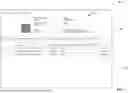


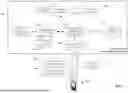


Sources:
- United States Patent and Trademark Office - verify current appl. status at the USPTO↗
Recent applications in this class:
- » 20260056540 2026-02-26
AQUATIC EQUIPMENT MONITORING SYSTEM AND METHOD - » 20260056538 2026-02-26
BUILDING MANAGEMENT SYSTEM WITH MACHINE LEARNING FOR DETECTING ANOMALIES IN VIBRATION DATA SETS - » 20260050258 2026-02-19
INDUSTRIAL MAINTENANCE PLANNING AND TRACKING WITH ROBOTS - » 20260036978 2026-02-05
INFORMATION PROCESSING METHOD, SUBSTRATE PROCESSING SYSTEM, AND COMPUTER-READABLE RECORDING MEDIUM - » 20250390093 2025-12-25
INTERNET OF THINGS (IOT) SYSTEMS FOR SMART GAS VALVE MAINTENANCE - » 20250390092 2025-12-25
HOUSEHOLD APPLIANCE AND QUALITY MANAGEMENT METHOD, DEVICE, CONTROL DEVICE AND SYSTEM FOR HOUSEHOLD APPLIANCES - » 20250390091 2025-12-25
DATA QUALITY MANAGEMENT METHOD FOR EQUIPMENT FAILURE RISK ESTIMATION - » 20250383657 2025-12-18
DOMAIN GENERALIZATION MODELLING METHOD, APPARATUS, DEVICE AND MEDIUM FOR INDUSTRIAL EQUIPMENT HEALTH PREDICTION - » 20250377656 2025-12-11
UNAUTHORIZED MODIFICATION IDENTIFICATION IN ASSETS - » 20250370449 2025-12-04
PREVENTIVE MAINTENANCE SUPPORT SYSTEM AND PREVENTIVE MAINTENANCE SUPPORT METHOD