Method and System for In-NAND Checksum Calculating for Scrambled NAND Data
US20260056673A1
2026-02-26
18/810,382
2024-08-20
Smart Summary: A new method helps check the accuracy of scrambled data stored in memory. It works by first unscrambling the data within the memory itself. After the data is unscrambled, the system calculates a checksum, which is a way to verify that the data is correct. This process happens entirely inside the memory system, making it efficient. Overall, it ensures that the stored data remains reliable and error-free. 🚀 TL;DR
Abstract:
A method and memory system for calculating checksums on scrambled data read from a storage of a memory system. Scrambled data from the storage of the memory system is descrambled inside the storage of the memory system, and checksum calculations are performed inside the storage of the memory system on the descrambled data.
Inventors:
- Fan Zhang 71 🇺🇸 San Jose, CA, United States
- Meysam Asadi 35 🇺🇸 San Jose, CA, United States
- Hongwei Duan 8 🇺🇸 San Jose, CA, United States
- Ming ZHANG 2 🇺🇸 Rancho Cordova, CA, United States
Applicant:
Interested in similar patents?
Get notified when new applications in this technology area are published.
Classification:
G06F3/0623 » CPC main
Input arrangements for transferring data to be processed into a form capable of being handled by the computer; Output arrangements for transferring data from processing unit to output unit, e.g. interface arrangements; Digital input from, or digital output to, record carriers, e.g. RAID, emulated record carriers or networked record carriers; Interfaces specially adapted for storage systems specifically adapted to achieve a particular effect; Securing storage systems in relation to content
G06F3/0655 » CPC further
Input arrangements for transferring data to be processed into a form capable of being handled by the computer; Output arrangements for transferring data from processing unit to output unit, e.g. interface arrangements; Digital input from, or digital output to, record carriers, e.g. RAID, emulated record carriers or networked record carriers; Interfaces specially adapted for storage systems making use of a particular technique Vertical data movement, i.e. input-output transfer; data movement between one or more hosts and one or more storage devices
G06F3/0679 » CPC further
Input arrangements for transferring data to be processed into a form capable of being handled by the computer; Output arrangements for transferring data from processing unit to output unit, e.g. interface arrangements; Digital input from, or digital output to, record carriers, e.g. RAID, emulated record carriers or networked record carriers; Interfaces specially adapted for storage systems adopting a particular infrastructure; In-line storage system; Single storage device Non-volatile semiconductor memory device, e.g. flash memory, one time programmable memory [OTP]
G06F3/06 IPC
Input arrangements for transferring data to be processed into a form capable of being handled by the computer; Output arrangements for transferring data from processing unit to output unit, e.g. interface arrangements Digital input from, or digital output to, record carriers, e.g. RAID, emulated record carriers or networked record carriers
Description
BACKGROUND
1. Field
The present invention relates to the processing of scrambled data in solid state drives.
2. Description of the Related Art
The computer environment paradigm has shifted to ubiquitous computing systems that can be used anytime and anywhere. As a result, the use of portable electronic devices such as mobile phones, digital cameras, and notebook computers has rapidly increased. These portable electronic devices generally use a memory system having memory device(s), that is, data storage device(s). The data storage device is used as a main memory device or an auxiliary memory device of the portable electronic devices. Data storage devices using memory devices provide excellent stability, durability, high information access speed, and low power consumption, since they have no moving parts. Examples of data storage devices having such advantages include universal serial bus (USB) memory devices, memory cards having various interfaces, and solid state drives (SSD).
The SSD may include flash memory components and a controller, which includes the electronics that bridge the flash memory components to the SSD input/output (I/O) interfaces. The SSD controller can include an embedded processor that can execute functional components such as firmware. The SSD functional components are device specific, and in most cases, can be updated. One type of flash memory components is named NAND after the NAND logic gates in this SSD. The NAND-type flash memory may be written and read in blocks (or pages) which are generally much smaller than the entire memory space. The NAND-type operates primarily in memory cards, USB flash drives, solid-state drives, and similar products, for general storage and transfer of data.
Memory systems such as NAND flash based memory systems may include a scrambler for scrambling data, which is to be written to the memory devices, and a descrambler for descrambling data, which is read from the memory device.
In this context, embodiments of the present invention for processing scrambled NAND data arise.
SUMMARY
In accordance with one embodiment of the present invention, there is provided a method for calculating checksums on scrambled data read from a storage of a memory system. The method reads the scrambled data from the storage of the memory system. Inside the storage of the memory system, the method descrambles the read data and performs checksum calculations on the descrambled data.
In accordance with another embodiment of the present invention, there is provided a memory system comprising a storage having therein both a checksum calculator and a descrambler. The descrambler inside the storage is configured to descramble scrambled data read from the storage of the memory, and the checksum calculator inside the storage is configured to perform checksum calculations on the descrambled data.
BRIEF DESCRIPTION OF THE DRAWINGS
FIG. 1 is a high level block diagram illustrating an error correcting system in accordance with embodiments of the present invention.
FIG. 2 is a block diagram schematically illustrating a memory system in accordance with embodiments of the present invention.
FIG. 3 is a block diagram illustrating a memory system in accordance with embodiments of the present invention.
FIG. 4 is a circuit diagram illustrating a memory block of a memory device in accordance with embodiments of the present invention.
FIG. 5 is a diagram illustrating a storage system in accordance with embodiments of the present invention which includes an in-NAND descrambler.
FIG. 6 is a diagram illustrating a format of a codeword to be stored in a storage system in accordance with embodiments of the present invention.
FIG. 7 is a depiction of a system on chip (SOC) and NAND where data to be descrambled is transferred to a descrambler of the SOC.
FIG. 8A is a diagram a single layer parity check submatrix in accordance with embodiments of the present invention.
FIG. 8B is diagram of a multiple layer parity check submatrix which has a stair case property in accordance with embodiments of the present invention.
FIG. 9A is a block diagram of an in-NAND CS module in accordance with embodiments of the present invention.
FIG. 9B is a depiction of a relationship between checksum and number of error bits for a LDPC code.
FIG. 10 is a flow chart illustrating a method for calculating checksums on scrambled data read from a storage of a memory system according to another embodiment of the present invention.
DETAILED DESCRIPTION
Various embodiments will be described below in more detail with reference to the accompanying drawings. The present invention may, however, be embodied in different forms and should not be construed as limited to the embodiments set forth herein. Rather, these embodiments are provided so that this disclosure will be thorough and complete, and will convey the scope of the present invention to those skilled in the art. Throughout the disclosure, like reference numerals refer to like parts throughout the various figures and embodiments of the present invention.
The invention can be implemented in numerous ways, including as a process; an apparatus; a system; a composition of matter; a computer program product embodied on a computer readable storage medium; and/or a processor, such as a processor suitable for executing instructions stored on and/or provided by a memory coupled to the processor. In this specification, these implementations, or any other form that the invention may take, may be referred to as techniques. In general, the order of the steps of disclosed processes may be altered within the scope of the invention. Unless stated otherwise, a component such as a processor or a memory described as being suitable for performing a task may be implemented as a general component that is temporarily suitable for performing the task at a given time or a specific component that is manufactured to perform the task. As used herein, the term ‘processor’ refers to one or more devices, circuits, and/or processing cores suitable for processing data, such as computer program instructions.
A detailed description of one or more embodiments of the invention is provided below along with accompanying figures that illustrate the principles of the invention. The invention is described in connection with such embodiments, but the invention is not limited to any embodiment. The scope of the invention encompasses numerous alternatives, modifications and equivalents. Numerous specific details are set forth in the following description in order to provide a thorough understanding of the invention. These details are provided for the purpose of example, and the invention may be practiced according to the claims without some or all of these specific details. For the purpose of clarity, technical material that is known in the technical fields related to the invention has not been described in detail so that the invention is not unnecessarily obscured.
FIG. 1 is a high-level block diagram illustrating an error correcting system 2, in accordance with embodiments of the present invention. More specifically, the high-level block diagram in FIG. 1 shows error correcting system 2 including an encoder 5 and a decoder 15 using for example LDPC coding and decoding algorithms. That is, error correcting system 2 may include a LDPC encoder 5 and a LDPC decoder 15, although other coding and decoding algorithms can be used.
The LDPC encoder 5 may receive information bits including data which is desired to be stored in a storage system 10 (such as in memory system 20 of FIG. 2). The LDPC encoder 5 may encode the information bits to output LDPC encoded data. The LDPC encoded data from the LDPC encoder 5 may be written to a storage device or memory device of the storage system 10. In various embodiments, the storage device may include a variety of storage types or media. In some embodiments, during being written to or read from the storage device, data is transmitted and received over a wired and/or wireless channel. In this case, the errors in the received codeword may be introduced during transmission of the codeword.
When the stored data in the storage system 10 is requested or otherwise desired (e.g., by an application or user which stored the data), the LDPC decoder 15 may perform LDPC decoding of data received from the storage system 10, which may include some noise or errors. In various embodiments, the LDPC decoder 15 may perform LDPC decoding using the decision and/or reliability information for the received data. The decoded bits generated by the LDPC decoder 15 are transmitted to the appropriate entity (e.g., the user or application which requested it). With proper encoding and decoding, the information bits match the decoded bits.
When the stored data in storage system 10 is requested or otherwise desired (e.g., by an application or user which stored the data), the LDPC decoder 15 may receive data from the storage system 10. The received data may include some noise or errors. The LDPC decoder 15 may perform detection on the received data and output decision and/or reliability information. The LDPC decoder 15 may include one of a soft detector and a hard detector. Either the soft detector or the hard detector can provide channel information for decoders, such as the LDPC decoder. For example, the soft detector may output reliability information and a decision for each detected bit. On the other hand, the hard detector may output a hard decision on each bit without providing corresponding reliability information. As an example, the hard detector may output as the hard decision that a particular bit is a “1” or a “0” without indicating how certain or sure the detector is in that decision. In contrast, the soft detector may output a decision and reliability information associated with the decision. In general, reliability information indicates how certain the detector is in a given decision. In one example, a soft detector may output a log-likelihood ratio (LLR) where the sign indicates the decision (e.g., a positive value corresponds to a “1” decision and a negative value corresponds to a “0” decision) and the magnitude indicates how sure or certain the detector is in that decision (e.g., a large magnitude indicates a high reliability or certainty).
LDPC decoder 15 may perform LDPC decoding using the decision and/or reliability information. The decoded bits generated by the LDPC decoder 15 can be transmitted to the appropriate entity (e.g., the user or application which requested it). With proper encoding and decoding, the information bits match the decoded bits.
In LDPC decoding, a syndrome update may check to see if all of the errors have been removed from a codeword containing user data or bit data. For example, if for the parity check matrix H, the LDPC checksum ĉH=0, then the syndrome update can determine that decoding is successful and all errors have been removed from the codeword. If so, the LDPC decoding stops decoding and outputs ĉ=[ĉ1, ĉ2, . . . ĉN] as the decoded output.
If the LDPC checksum is not equal to zero, the decoded codeword (i.e., ĉ) is not output and another decoding iteration is performed until a maximum number of iterations, which may be predefined, is reached. In other words, a variable node update calculates new variable to check node (V2C) messages and new log likelihood ratios (LLR) values, the check node update calculates new check to variable node (C2V) messages, and the codeword update calculates a new codeword and checks if the product of the new codeword and the parity check matrix is 0, that is ĉH=0.
If a correct codeword is not found, the iterations continue with another update from the variable nodes using the messages that they received from the check nodes to decide if the bit at their position should be a zero or a one by a majority rule. The variable nodes then send this hard decision message to the check nodes that are connected to them. The iterations continue until a correct codeword is found.
In some embodiments, an LDPC decoding operation may be performed according to bit flipping decoding. In bit-flipping decoders, the decoder may process a fixed number W of variable nodes (VN) in one clock-cycle. That is for each of the VNs to be processed in a cycle, the decoder counts the number of neighboring check nodes (CN) that are unsatisfied and compares this number with a threshold T. If the count is larger than the threshold T, the decoder flips the current bit-value of the VN. The variable nodes are typically each processed one-by-one from the first variable node to the last variable node.
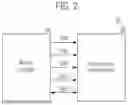
FIG. 2 is a block diagram schematically illustrating a memory system 20 in accordance with one embodiment of the present invention.
Referring FIG. 2, the memory system 20 may include a memory controller 100 and a semiconductor memory device 200.
The memory controller 100 may control overall operations of the semiconductor memory device 200.
The semiconductor memory device 200 may perform one or more erase, program, and read operations under the control of the memory controller 100. The semiconductor memory device 200 may receive a command CMD, an address ADDR and data DATA through input/output lines. The semiconductor memory device 200 may receive power PWR through a power line and a control signal CTRL through a control line. The control signal may include a command latch enable (CLE) signal, an address latch enable (ALE) signal, a chip enable (CE) signal, a write enable (WE) signal, a read enable (RE) signal, and so on.
The memory controller 100 and the semiconductor memory device 200 may be integrated in a single semiconductor device. For example, the memory controller 100 and the semiconductor memory device 200 may be integrated in a single semiconductor device such as a solid state drive (SSD). The solid state drive may include a storage device such as a NAND memory for storing data therein.
The memory controller 100 and the semiconductor memory device 200 may be integrated in a single semiconductor device such as a memory card. For example, the memory controller 100 and the semiconductor memory device 200 may be integrated in a single semiconductor device configured to have a memory card such as a PC card of personal computer memory card international association (PCMCIA), a compact flash (CF) card, a smart media (SM) card, a memory stick, a multimedia card (MMC), a reduced-size multimedia card (RS-MMC), a micro-size version of MMC (MMCmicro), a secure digital (SD) card, a mini secure digital (miniSD) card, a micro secure digital (microSD) card, a secure digital high capacity (SDHC), or a universal flash storage (UFS).
In another example, the memory system 20 may be provided as one of various elements including an electronic device such as a computer, an ultra-mobile PC (UMPC), a workstation, a net-book computer, a personal digital assistant (PDA), a portable computer, a web tablet PC, a wireless phone, a mobile phone, a smart phone, an e-book reader, a portable multimedia player (PMP), a portable game device, a navigation device, a black box, a digital camera, a digital multimedia broadcasting (DMB) player, a 3-dimensional television, a smart television, a digital audio recorder, a digital audio player, a digital picture recorder, a digital picture player, a digital video recorder, a digital video player, a storage device of a data center, a device capable of receiving and transmitting information in a wireless environment, one of electronic devices of a home network, one of electronic devices of a computer network, one of electronic devices of a telematics network, a radio-frequency identification (RFID) device, or elements devices of a computing system.
FIG. 3 is a detailed block diagram illustrating various embodiments of memory system 30. For example, memory system 30 of FIG. 3 may depict the storage system 10 shown in FIG. 1 or the memory system 20 shown in FIG. 2.
Referring to FIG. 3, the memory system 30 may include the memory controller 100 and the semiconductor memory device 200. The memory system 30 may operate in response to a request from a host device, and in particular, store data to be accessed by the host device.
The host device may be implemented with any one of various kinds of electronic devices. In some embodiments, the host device may include an electronic device such as a desktop computer, a workstation, a three-dimensional (3D) television, a smart television, a digital audio recorder, a digital audio player, a digital picture recorder, a digital picture player, a digital video recorder or a digital video player. In some embodiments, the host device may include a portable electronic device such as a mobile phone, a smart phone, an e-book, an MP3 player, a portable multimedia player (PMP), or a portable game player.
The memory device 200 may store data to be accessed by the host device.
The memory device 200 may be implemented with various memory devices such a NAND flash memory, which is particularly advantageous for reasons noted below, but the present invention is not so limited and other volatile and non-volatile memory devices may be used such as for example a dynamic random access memory (DRAM) and a static random access memory (SRAM), a read only memory (ROM), a mask ROM (MROM), a programmable ROM (PROM), an erasable programmable ROM (EPROM), an electrically erasable programmable ROM (EEPROM), a ferroelectric random access memory (FRAM), a phase change RAM (PRAM), a magnetoresistive RAM (MRAM) and a resistive RAM (RRAM).
The controller 100 may control storage of data in the memory device 200. For example, the controller 100 may control the memory device 200 in response to a request from the host. The controller 100 may provide the data read from the memory device 200, to the host, and store the data provided from the host into the memory device 200. In one embodiment, especially for NAND flash based memory systems, controller 100 may include a scrambler for scrambling data, which is to be written to the memory device 200, and a descrambler for descrambling data, which is read from the memory device 200.
The controller 100 may include a storage unit 110, a control unit 120, the error correction code (ECC) unit 130, a host interface 140 and a memory interface 150, which are coupled through a bus 160.
The storage unit 110 may serve as a working memory of the memory system 10 and the controller 100, and store data for driving the memory system 10 and the controller 100. When the controller 100 controls operations of the memory device 200, the storage unit 110 may store data used by the controller 100 and the memory device 200 for such operations as read, write, program and erase operations.
The storage unit 110 may be implemented with a volatile memory. The storage unit 110 may be implemented with a static random access memory (SRAM) or a dynamic random access memory (DRAM). As described above, the storage unit 110 may store data used by the host device in the memory device 200 for the read and write operations. To store the data, the storage unit 110 may include a program memory, a data memory, a write buffer, a read buffer, a map buffer, and so forth.
Referring to FIG. 3, the control unit 120 may control general operations of the memory system 30, and a write operation or a read operation for the memory device 200, in response to a write request or a read request from the host device. The control unit 120 may drive firmware, which is referred to as a flash translation layer (FTL), to control the general operations of the memory system 10. For example, the FTL may perform operations such as logical to physical (L2P) mapping, wear leveling, garbage collection, and bad block handling. The L2P mapping is known as logical block addressing (LBA).
The ECC unit 130 may detect and correct errors in the data read from the memory device 200 during the read operation. The ECC unit 130 may not correct error bits when the number of the error bits is greater than or equal to a threshold number of correctable error bits, and may output an error correction fail signal indicating failure in correcting the error bits.
In some embodiments, the ECC unit 130 may perform an error correction operation based on a coded modulation such as an LDPC code, a Bose-Chaudhuri-Hocquenghem (BCH) code, a turbo code, a turbo product code (TPC), a Reed-Solomon (RS) code, a convolution code, a recursive systematic code (RSC), a trellis-coded modulation (TCM), a Block coded modulation (BCM), and so on. The ECC unit 130 may include all circuits, systems or devices for the error correction operation.
As shown in FIG. 3, host interface 140 may communicate with the host device through one or more of various interface protocols such as a universal serial bus (USB), a multi-media card (MMC), a peripheral component interconnect express (PCI-e or PCIe), a small computer system interface (SCSI), a serial-attached SCSI (SAS), a serial advanced technology attachment (SATA), a parallel advanced technology attachment (PATA), an enhanced small disk interface (ESDI), or an integrated drive electronics (IDE).
The memory interface 150 may provide an interface between the controller 100 and the memory device 200 to allow the controller 100 to control the memory device 200 in response to a request from the host device. The memory interface 150 may generate control signals for the memory device 200 and process data under the control of the control unit (e.g., CPU) 120. When the memory device 200 is a flash memory such as a NAND flash memory, the memory interface 150 may generate control signals for the memory and process data under the control of the control unit 120.
The memory device 200 may include a memory cell array 210, a control circuit 220, a voltage generation circuit 230, a row decoder 240, a page buffer 250, a column decoder 260, and an input/output circuit 270. The memory cell array 210 may include a plurality of memory blocks 211 and may store data therein. The control circuit 220 includes in one embodiment of the present invention checksum calculator module 220a (described in more detail below). The voltage generation circuit 230, the row decoder 240, the page buffer 250, the column decoder 260 and the input/output circuit 270 form a peripheral circuit for the memory cell array 210. The peripheral circuit may perform a program, read, or erase operation of the memory cell array 210. The control circuit 220 may control the peripheral circuit.
The voltage generation circuit 230 may generate operation voltages having various levels. For example, in an erase operation, the voltage generation circuit 230 may generate operation voltages having various levels such as an erase voltage and a pass voltage.
The row decoder 240 may be connected to the voltage generation circuit 230, and the plurality of memory blocks 211. The row decoder 240 may select at least one memory block among the plurality of memory blocks 211 in response to a row address RADD generated by the control circuit 220, and transmit operation voltages supplied from the voltage generation circuit 230 to the selected memory blocks among the plurality of memory blocks 211.
The page buffer 250 may be connected to the memory cell array 210 through bit lines BL (not shown). The page buffer 250 may precharge the bit lines BL with a positive voltage, transmit/receive data to/from a selected memory block in program and read operations, or temporarily store transmitted data, in response to a page buffer control signal generated by the control circuit 220.
The column decoder 260 may transmit/receive data to/from the page buffer 250 or transmit/receive data to/from the input/output circuit 270.
The input/output circuit 270 may transmit, to the control circuit 220, a command and an address, transmitted from an external device (e.g., the memory controller 100), transmit data from the external device to the column decoder 260, or output data from the column decoder 260 to the external device, through the input/output circuit 270. The control circuit 220 may control the peripheral circuit in response to the command and the address.
FIG. 4 is a circuit diagram illustrating a memory block of a semiconductor memory device in accordance with an embodiment of the present invention. For example, a memory block of FIG. 4 may be the memory blocks 211 of the memory cell array 210 shown in FIG. 3.
Referring to FIG. 4, the memory blocks 211 may include a plurality of cell strings 221 coupled to bit lines BL0 to BLm-1, respectively. The cell string of each column may include one or more drain selection transistors DST and one or more source selection transistors SST. A plurality of memory cells or memory cell transistors may be serially coupled between the selection transistors DST and SST. Each of the memory cells MC0 to MCn-1 may be formed of a multi-level cell (MLC) storing data information of multiple bits in each cell. The cell strings 221 may be electrically coupled to the corresponding bit lines BL0 to BLm-1, respectively.
The page buffer 250 may include a plurality of separate page buffers PB 251 that are coupled to the bit lines BL0 to BLm-1. The page buffers PB 251 may operate in response to page buffer control signals. For example, the page buffers PB 251 my temporarily store data received through the bit lines BL0 to BLm-1 or sense voltages or currents of the bit lines during a read or verify operation.
Inventive Checksum Calculator
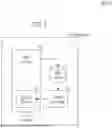
FIG. 5 is a diagram illustrating a storage system in accordance with embodiments of the present invention where the NAND module 500 shown in FIG. 5 uses NAND memory 550 which may correspond to memory device 200 in FIG. 3.
Referring to FIG. 5, the NAND module 500 may include NAND memory 550 as storage and includes therein NAND processor 505. The NAND processor 505 may perform a read operation on data in NAND memory 550. During the read operation, the data needs to be descrambled to be in the correct format for computing checksum. Then, the checksum calculator is able to compute a checksum in order to estimate RBER. For instance, the relationship in FIG. 9B provides an example of determining RBER from a checksum. As noted above, when the number of the error bits is greater than or equal to a threshold number of correctable error bits, an error correction fail signal may be output, which indicates failure in correcting the error bits. Such failure may require that the information bits from a host will need to be sent again to NAND memory 550. Accordingly, checksum calculator 510 can be used to provide an estimate of the RBER in data to be stored in NAND memory 550. In one embodiment of the present invention, an In-NAND descrambler 515 is provide such that scrambled data read from NAND memory 550 may be descrambled prior to the read data being supplied to checksum calculator 510.
In various embodiments, the NAND Module 500 shown in FIG. 5 may be implemented using a variety of techniques including an application-specific integrated circuit (ASIC), a field-programmable gate array (FPGA), and/or a general purpose processor (e.g., an Advanced RISC Machine (ARM) core).
As background, FIG. 6 is a diagram illustrating a format of a codeword 600 to be stored in a storage system. Referring to FIG. 6, the codeword 600 may include information data 610 (information bits or user data) and LDPC parity data 620. In some embodiments, the codeword 600 may be generated by the LDPC codes noted above.
The information data 610 may include user data with data path protection (DPP) 612, meta-data 614 and cyclic redundancy check (CRC) parity bits 616. A CRC code which is an error-detecting code commonly used in digital networks and storage devices may detect accidental changes to raw data.
In a typical LDPC decoder, if the LDPC checksum is zero, the decoding may be terminated. The CRC parity bits 616 will be computed based on the decoded user data 612 and meta-data 614 after the LDPC decoding. If the computed CRC parity bits match the decoded CRC parity bits, decoding may be successful. Otherwise, a mis-correction may be declared.
As more background, in SSD applications, non-host read requests from SOC (e.g., from control unit 12 in memory controller 100 of FIG. 3) can reduce the quality of service (QoS) and power. Referring back to FIG. 3, when the tasks of transferring non-host data to the SOC are performed, a substantial amount of data needs to be transferred between memory cell array 210 of the semiconductor memory device 200 and control unit 120 which causes a power drop. To reduce this power and performance (e.g., QoS) drop, one embodiment of the present invention avoids transferring, to the SOC, non-host data associated with non-host read request from a memory device (e.g., NAND module 500 of FIG. 5). This can be done by estimating RBER in NAND module, and only transferring the non-host reads when the RBER is large.
In order to run these tasks more efficiently, in one embodiment of the present invention, the semiconductor memory device 200 (in FIG. 3) or NAND module 500 (in FIG. 5) may measure the checksum to estimate the number of errors in the stored data. Such an in-NAND module calculating the RBER can improve the performance/power of SSD by eliminating the need to transfer the stored data to the SOC when the RBER is acceptable.
As shown in FIG. 5, in one embodiment of the present invention there is provided checksum calculator 510 inside NAND module 500. The in-NAND module 500 can be a processor with a minimum silicon area (gate count) and can calculate a checksum using the methods described herein.
As described in U.S. Pat. No. 11,502,703 (the entire contents of which are incorporated by reference), since programming data “as is” tends to decrease endurance (e.g., lifespan) or reliability of a memory system, a scrambler (or randomizer) randomizes data such that data is uniformly and more reliably programmed to a memory device. With reference to FIG. 3, data from a host may be scrambled by memory controller 100 to scramble the information bits in a codeword. The scrambled data having the scrambled information bits is passed to memory blocks 211. Subsequently, data read from memory blocks 211 cannot be directly used for calculating checksum (CS), and will need to be descrambled before a checksum calculation can be performed to determine if the unscrambled data has an acceptable RBER reflected by the checksum calculated.
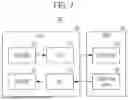
FIG. 7 depicts a block diagram of a memory system 700 having a SOC 702 and a NAND memory device 704 having write buffer 706 and read buffer 708. FIG. 7 depicts write/read channels operated with an ESN (Encoder-Scrambler-NAND) order. In the top channel depicted in FIG. 7, host write data first is encoded (e.g., in ECC unit 130 in memory controller 100), then the LDPC code (encoded data) generated by encoder 710 is scrambled by scrambler (SCR) 712 before being stored in memory device 704 or write buffer 706. During a read process, in the lower channel, data from NAND read buffer 708 is descrambled by descrambler (DSC) 714, and then the host data is recovered in decoder 716. In this system, as noted above, the data stored in NAND read buffer 708 is scrambled data and cannot be directly used for calculating CS.
In one embodiment of the present invention, an in-NAND checksum calculator using quasi-cyclic (QC) LDPC codes can handle scrambled read data using in-NAND descrambler 515 (noted above) along with the methods described below.
In-NAND CS Calculations for QC LDPC Codes
Details of the in-NAND CS module (for use with the ESN order detailed above) are provided below. In one embodiment of the present invention, the CS module can calculate CS for a fixed-size m (e.g., m=256 bits) QC-LDPC code. In one embodiment of the present invention, if the parity size of an original LDPC matrix H is larger than m (m=256 bits), the checksum can be calculated for one or more submatrices Hcs where m should be a multiple of QC size of one submatrix Hcs, and the submatrices Hcs should exhibit a quasi-cyclic property. In a quasi-cyclic parity check matrix, a parity check matrix H is composed of circular submatrices (or circulant layers) Hcs. A circulant submatrix is a square [q×q] binary matrix in which all rows are composed of the same elements and each row is a shifted version of a previous row, and formed by performing several-bit right-cyclic-shifts (or several-bit left-cyclic-shifts) on a base check matrix.
A. Universal QC-LDPC Codes
In one embodiment of the present invention, check sum (CS) calculator 220a or checksum calculator 510 can use the QC LDPC codes described above. In one embodiment, the CS calculator can work for any QC-LDPC code with a QC size=q. It can also work with any QC size=q1 as long as q is a multiple of q1 (e.g., q=256, q1=32, 64 or 128), that is q1 can range from q/2 to q/8. This attribute means that the CS calculator is universal and can work with an arbitrary set of QC circulants rather than only with a specifically sized circulant.
B. Gate-Count Efficient Descrambler
To reduce gate-count and latency of in-NAND descrambler, the in-NAND descrambler 515 (shown in FIG. 5) is designed to operate at a relatively slower speed (compared to the clock speed for reading data) and therefore can use fewer gates operating in parallel to pre-generate a sequence for descrambling the data. This descrambling sequence can be stored in a 4K buffer for use when scrambled data is supplied for descrambling. In one embodiment, the descrambling generates the descrambling sequence during the time-to-read (tR) from NAND memory 550 all the scrambled data necessary for the processing of one cycle of checksum calculations. In one embodiment, in-NAND descrambler 515 can perform a 4K bit exclusive OR (XOR) (comparing values of the descrambling sequence to the values of the scrambled data) to descramble the data in one-shot, thereby needing only one cycle latency to descramble the data.
C. Acceptable H Matrix Formats
FIG. 8A is a diagram a single layer parity check submatrix Hcs where all the non-zero circulants are located (or reshuffled to be) on the left side (or at the beginning) of Hcs. In FIG. 8A, the submatrix Hcs is single layer with QC size=q. In FIG. 8A, the product of the row weight nrw (the number of non-zero entries on a row) and q defines the extent of the non-zero entries across Hcs. The diagonal lines in each circulant 801, 802, . . . represent entries with all ones (1s).
FIG. 8B is a diagram of a multiple layer parity check submatrix Hcs which has a stair case property in which all the non-zero circulants are positioned (reshuffled to be) on the left side of the matrix Hcs. In FIG. 8B, the submatrix has multiple layers, and the QC size q1 is divisible by q. (e.g., q=256, q1=64). As with FIG. 8A, the diagonal lines in each circulant 801, 802, . . . shown in FIG. 8B represent entries with all 1s.
Using the parity check submatrices Hcs shown in FIGS. 8A and 8B does not place any restriction on the LDPC code generation process. Furthermore, using the submatrices Hcs shown in FIGS. 8A and 8B minimizes the data needed for storing data for the low density parity check matrix calculations because the data from the regions having all zeros need not be stored. Instead, the checksum calculator would be programmed to know that all those values were zero without having to read values for those regions read from a storage.
The following method can be used to process any QC-LDPC code to find such submatrices Hcs. Given an H matrix size of in-NAND CS module of m (such as for example the m=256 bits noted above), the method may determine the number of layers (or circulants) as mq=m/q. The method may Identify mq disjoint layers in the H matrix. In a normal checksum design, there exists a module called a “barrel shifter” which aligns or permutes the columns for each row or each circulant column before computing syndrome(s) through the XOR operation. This module permutes the non-zero circulant columns with non-zero shift into identity matrix (shift=0). This module is known to consume gate-counts. Since the inventive in-Nand checksum calculator is gate-count efficient, the barrel shifter module was eliminated by making all the non-zero circulants to be an identity matrix. To do so, on each non-zero column of Hcs, there should be only one non-zero circulant. That means, the circulant rows of Hcs should be disjoint. If this property holds, then all the non-zero non-identity circulant submatrices can be made into identity matrices simply by permuting the circulant columns of the original H matrix. Accordingly, in one embodiment, the method may permute (or reshuffle) the H matrix so that the shift value for each nonzero column becomes 0, and move all the nonzero circulants to the left side (or the beginning) of matrix H so that a staircase format is obtained as shown in FIG. 8B. The non-zero circulants appear as an identity matrix where the values on the diagonal are 1 and the rest of the values are all 0.
D. In-NAND CS Module Design
FIG. 9A is a block diagram of an in-NAND CS module according to one embodiment of the present invention. FIG. 9A shows an in-NAND CS module 900 which computes CS using the following components. A descramble module 902 of size q (e.g., q=256 bits) receives scrambled bits from NAND read buffer 904 and outputs q-bits of descrambled data at each cycle of reading the scrambled bits from NAND read buffer 904. Logic 906 (e.g., comprising one or more AND gates) compares bits of the descrambled data to column entry values of the Hsc matrix stored in HMAT information register 910 and outputs a “1” value when both inputs are high. HMAT information register 910 contains information about the entry values in party check matrix H or submatrices Hcs (such as the submatrices Hcs shown in FIGS. 8A and 8B) used in the checksum calculations. This information may describe characteristics of the parity-check matrix such as for example codeword length, number of information bits, circulant size, number of layers, and the like.
Output from Logic 906 is provided to an exclusive OR (XOR) gate 908 which outputs a “1” value when both inputs are different. XOR gate 908 XORs the current bits with all the previous corresponding bits which have been XORed in the cycle reading the scrambled bits from NAND read buffer 904. HMAT information register 910 provides proper circulant columns for each of the circulants of the Hsc matrix being processed. A delay flip-flop DFF 912 stores the XORed results for each syndrome bit and outputs the XORed results in sequence with a clock signal. Counter 914 counts the number of 1's in the output bits of DFF 912 for the checksum value. The checksum value (or syndrome weight) is number of 1's in the syndrome sequence. Controller 916 (in response to clock signal) times when the scrambled bits from NAND read buffer 904 are output to descramble module 902 and times when the HMAT information is provided to logic 906. Components 906, 908, 910, 912, and 914 shown in FIG. 9A constitute a checksum calculator 220a of FIG. 3 or 510 of FIG. 5.
The NAND module design illustrated in FIG. 9A can compute the CS in nrw+1 cycles, which only needs one additional cycle to compute CS from the scrambled data. This NAND module design hides most of latency needed to compute the CS in the time that is needed to descramble the data such that the time to descramble data does not prolong the total time for checksum calculations. For example, when a new process is done in parallel (at the same time) with another existing operation, then the latency of the new process is not added to total latency, and the latency of new process is regarded as hidden. The total silicon area needed for computing CS in the NAND module design illustrated in FIG. 9A is less than 50% of the area needed to compute CS in a SOC design as shown in FIG. 7.
Accordingly, the in-NAND module design described above can improve the performance/power of SSD by eliminating the need to transfer the stored data to SOC for descrambling. In another embodiment, by using QC LDPC codes, the in-NAND module can calculate checksums usually with only a few clock cycles to provide an estimate of RBER for the stored data. FIG. 9B is a depiction of a relationship between checksum and number of error bits for a LDPC code.
Computerized Method
In one embodiment of the present invention, there is provided a method (as depicted in FIG. 10) for calculating checksums on scrambled data read from a storage device. This method may be implemented in control circuit 220 of FIG. 3 or may be implemented in checksum calculator 510 of FIG. 5. This method includes, at 1001, reading scrambled data from a storage of a memory system. At 1003, inside the storage of a memory system, the method includes descrambling the read data. At 1105, inside the storage of a memory system, the method includes performing checksum calculations on the descrambled data.
In this method, the checksum calculations can provide an estimate for a raw bit error in the descrambled data.
In this method, the checksum calculations can use submatrices Hcs of a LDPC matrix H to calculate the checksums. The submatrices Hcs can be formed by reshuffling columns of the LDPC matrix H to move all the nonzero columns toward a beginning of the LDPC matrix H to form the submatrices Hcs having a reduced matrix size compared to the LDPC matrix H. The reshuffling columns of the LDPC matrix H can result in the submatrices Hcs being a set of identity matrices where values on diagonals are 1 and remaining values are all 0. Here, the LDPC matrix H may comprise q check nodes and the submatrices Hcs may comprise a reduced number of check nodes q1 ranging from q/2 to q/8.
In this method, the submatrices Hcs may comprise a single layer of matrices disposed all on one side of the reshuffled LDPC matrix H. Alternatively, the submatrices Hcs may comprise stair-cased layers of matrices disposed all on one side of the reshuffled LDPC matrix H.
In this method, the descrambling the scrambled data may generate a descrambling sequence during a time period when the scrambled data is read from the storage of the memory system, and descramble the scrambled data using the descrambling sequence.
In this method, the checksum calculations may a) compare with an AND gate bits of descrambled data to column entry values a low density parity check LDPC matrix H, b) exclusive XOR a compared bit with previous bits having been XORed in a cycle of reading the scrambled data from the storage of the memory system, c) store the XORed results for each syndrome bit, and d) count for a checksum value the number of 1's stored in the XORed results.
Memory System
In another embodiment of the present invention, there is provided a memory system (such as in FIG. 3) having a storage (such as for example storage 550 in FIG. 5) having there a checksum calculator (such as for example checksum calculator 510 in NAND Module 500) and a descrambler (such as descrambler 515 in FIG. 5 or descrambler 902 in FIG. 9). The descrambler inside the storage is configured to descramble scrambled data read from the storage of the memory, and the checksum calculator inside the storage is configured to perform checksum calculations on the descrambled data.
In this memory system, the checksum calculations provide an estimate for a raw bit error in the descrambled data.
In this memory system, the checksum calculator is configured to use submatrices Hcs of a LDPC matrix H to calculate the checksums. The submatrices Hcs can be formed by reshuffling columns of the LDPC matrix H to move all the nonzero columns toward a beginning of the LDPC matrix H to form the submatrices Hcs having a reduced matrix size compared to the LDPC matrix H. The reshuffling columns of the LDPC matrix H can result in the submatrices Hcs being a set of identity matrices where values on diagonals are 1 and remaining values are all 0. Here, the LDPC matrix H may comprise q check nodes and the submatrices Hcs may comprise a reduced number of check nodes q1 ranging from q/2 to q/8.
In this memory system, the submatrices Hcs may comprise a single layer of matrices disposed all on one side of the reshuffled LDPC matrix H. Alternatively, the submatrices Hcs may comprise stair-cased layers of matrices disposed all on one side of the reshuffled LDPC matrix H.
In this memory system, the descrambler is configured to generate a descrambling sequence during a time period when the scrambled data is read from the storage of the memory system, and descramble the scrambled data using the descrambling sequence.
In this memory system, the checksum calculator is configured to a) compare with an AND gate bits of descrambled data to column entry values a low density parity check LDPC matrix H, b) exclusive XOR a compared bit with previous bits having been XORed in a cycle of reading the scrambled data from the storage of the memory system, c) store the XORed results for each syndrome bit, and d) count for a checksum value the number of 1's stored in the XORed results.
Although the foregoing embodiments have been described in some detail for purposes of clarity of understanding, the invention is not limited to the details provided. There are many alternative ways of implementing the invention. The disclosed embodiments are illustrative and not restrictive. The present invention is intended to embrace all modifications and alternatives of the disclosed embodiment. Furthermore, the disclosed embodiments may be combined to form additional embodiments.
Indeed, implementations of the subject matter and the functional operations described in this patent document can be implemented in various systems, digital electronic circuitry, or in computer software, firmware, or hardware, including the structures disclosed in this specification and their structural equivalents, or in combinations of one or more of them. Implementations of the subject matter described in this specification can be implemented as one or more computer program products, i.e., one or more modules of computer program instructions encoded on a tangible and non-transitory computer readable medium for execution by, or to control the operation of, data processing apparatus. The computer readable medium can be a machine-readable storage device, a machine-readable storage substrate, a memory device, a composition of matter effecting a machine-readable propagated signal, or a combination of one or more of them. The term “data processing unit” or “data processing apparatus” encompasses all apparatus, devices, and machines for processing data, including by way of example a programmable processor, a computer, or multiple processors or computers. The apparatus can include, in addition to hardware, code that creates an execution environment for the computer program in question, e.g., code that constitutes processor firmware, a protocol stack, a database management system, an operating system, or a combination of one or more of them.
A computer program (also known as a program, software, software application, script, or code) can be written in any form of programming language, including compiled or interpreted languages, and it can be deployed in any form, including as a stand-alone program or as a module, component, subroutine, or other unit suitable for use in a computing environment. A computer program does not necessarily correspond to a file in a file system. A program can be stored in a portion of a file that holds other programs or data (e.g., one or more scripts stored in a markup language document), in a single file dedicated to the program in question, or in multiple coordinated files (e.g., files that store one or more modules, sub programs, or portions of code). A computer program can be deployed to be executed on one computer or on multiple computers that are located at one site or distributed across multiple sites and interconnected by a communication network.
The processes and logic flows described in this specification can be performed by one or more programmable processors executing one or more computer programs to perform functions by operating on input data and generating output. The processes and logic flows can also be performed by, and apparatus can also be implemented as, special purpose logic circuitry, e.g., an FPGA (field programmable gate array) or an ASIC (application specific integrated circuit).
Processors suitable for the execution of a computer program include, by way of example, both general and special purpose microprocessors, and any one or more processors of any kind of digital computer. Generally, a processor will receive instructions and data from a read only memory or a random access memory or both. The essential elements of a computer are a processor for performing instructions and one or more memory devices for storing instructions and data. Generally, a computer will also include, or be operatively coupled to receive data from or transfer data to, or both, one or more mass storage devices for storing data, e.g., magnetic, magneto optical disks, or optical disks. However, a computer need not have such devices. Computer readable media suitable for storing computer program instructions and data include all forms of non-volatile memory, media and memory devices, including by way of example semiconductor memory devices, e.g., EPROM, EEPROM, and flash memory devices. The processor and the memory can be supplemented by, or incorporated in, special purpose logic circuitry.
While this patent document contains many specifics, these should not be construed as limitations on the scope of any invention or of what may be claimed, but rather as descriptions of features that may be specific to particular embodiments of particular inventions. Certain features that are described in this patent document in the context of separate embodiments can also be implemented in combination in a single embodiment. Conversely, various features that are described in the context of a single embodiment can also be implemented in multiple embodiments separately or in any suitable subcombination. Moreover, although features may be described above as acting in certain combinations, one or more features from a combination can in some cases be excised from the combination, and the combination may be directed to a sub-combination or variation of a sub-combination.
Similarly, while operations are depicted in the drawings in a particular order, this should not be understood as requiring that such operations be performed in the particular order shown or in sequential order, or that all illustrated operations be performed, to achieve desirable results. Moreover, the separation of various system components in the embodiments described in this patent document should not be understood as requiring such separation in all embodiments.
Only a few implementations and examples are described and other implementations, enhancements and variations can be made based on what is described and illustrated in this patent document.
Claims
What is claimed is:1. A method for calculating checksums on scrambled data read from a storage of a memory system, comprising:
reading the scrambled data from the storage of the memory system;
inside the storage of the memory system, descrambling the read data; and
inside the storage of the memory system, performing checksum calculations on the descrambled data.
2. The method of claim 1, wherein the checksum calculations provide an estimate for a raw bit error in the descrambled data.
3. The method of claim 2, wherein the performing checksum calculations comprise using submatrices of a LDPC matrix to calculate the checksums.
4. The method of claim 3, wherein the submatrices are formed by reshuffling columns of the LDPC matrix to move all the nonzero columns toward a beginning of the LDPC matrix to form the submatrices having a reduced matrix size compared to the LDPC matrix.
5. The method of claim 4, wherein the reshuffling columns of the LDPC matrix results in the submatrices being a set of identity matrices where values on diagonals are 1 and remaining values are all 0.
6. The method of claim 4, wherein the LDPC matrix comprises q check nodes and the submatrices comprise a reduced number of check nodes ranging from q/2 to q/8.
7. The method of claim 4, wherein the submatrices Hcs comprise a single layer of matrices disposed all on one side of the reshuffled LDPC matrix.
8. The method of claim 4, wherein the submatrices comprise stair-cased layers of matrices disposed all on one side of the reshuffled LDPC matrix.
9. The method of claim 1, wherein the descrambling the read data comprises:
generating a descrambling sequence during a time period when the scrambled data is read from the storage of the memory system; and
descrambling the scrambled data using the descrambling sequence.
10. The method of claim 1, wherein the performing checksum calculations on the descrambled data comprises:
comparing with an AND gate bits of descrambled data to column entry values a low density parity check LDPC matrix;
exclusive XORing a compared bit with previous bits having been XORed in a cycle of reading the scrambled data from the storage of the memory system;
storing the XORed results for each syndrome bit; and
counting for a checksum value the number of 1's stored in the XORed results.
11. A memory system, comprising:
a storage having therein both a checksum calculator and a descrambler,
wherein
the descrambler inside the storage is configured to descramble scrambled data read from the storage of the memory, and
the checksum calculator inside the storage is configured to perform checksum calculations on the descrambled data.
12. The memory system of claim 11, wherein the checksum calculations provide an estimate for a raw bit error in the descrambled data.
13. The memory system of claim 12, wherein the checksum calculator is configured to use submatrices of a LDPC matrix to calculate the checksums.
14. The memory system of claim 13, wherein the submatrices are formed by reshuffling columns of the LDPC matrix to move all the nonzero columns toward a beginning of the LDPC matrix to form the submatrices having a reduced matrix size compared to the LDPC matrix.
15. The memory system of claim 14, wherein the reshuffling columns of the LDPC matrix results in the submatrices being a set of identity matrices where values on diagonals are 1 and remaining values are all 0.
16. The memory system of claim 15, wherein the LDPC matrix comprises q check nodes and the submatrices comprise a reduced number of check nodes ranging from q/2 to q/8.
17. The memory system of claim 15, wherein the submatrices comprise a single layer of matrices disposed all on one side of the reshuffled LDPC matrix.
18. The memory system of claim 14, wherein the submatrices comprise stair-cased layers of matrices disposed all on one side of the reshuffled LDPC matrix.
19. The memory system of claim 11, wherein the descrambler is configured to:
generate a descrambling sequence during a time period when the scrambled data is read from the storage of the memory system; and
descramble the scrambled data using the descrambling sequence.
20. The memory system of claim 11, wherein the checksum calculator is configured to:
compare with an AND gate bits of descrambled data to column entry values a low density parity check LDPC matrix;
exclusive XOR a compared bit with previous bits having been XORed in a cycle of reading the scrambled data from the storage of the memory system;
store the XORed results for each syndrome bit; and
count for a checksum value the number of 1's stored in the XORed results.
Images & Drawings included:








Sources:
- United States Patent and Trademark Office - verify current appl. status at the USPTO↗
Recent applications in this class:
- » 20260037159 2026-02-05
MEMORY SYSTEM AND METHOD OF MANAGING ENCRYPTION KEY - » 20260037158 2026-02-05
STORAGE DEVICE, HOST DEVICE, ELECTRONIC DEVICE INCLUDING STORAGE DEVICE AND HOST DEVICE, AND METHOD OF OPERATING THE SAME - » 20260023487 2026-01-22
SECURE FLUID MEMORY SUBSETS FOR SELECT DATA-SETS IN MEMORY CENTRIC SYSTEM ARCHITECTURES/FABRIC ATTACHED MEMORY - » 20250370636 2025-12-04
DIRECTORY DELETION WITHOUT CONCERN FOR ORDER - » 20250355578 2025-11-20
SELECTIVE DATA CORRUPTION BEFORE ACTUAL ERASE OPERATION FOR DATA SECURITY - » 20250284413 2025-09-11
STARTING OF A MEMORY - » 20250284412 2025-09-11
ENCRYPTION TECHNIQUE ROTATION USING INPUT/OUTPUT OPERATIONS - » 20250272009 2025-08-28
PROVIDING MULTITENANT ENCRYPTION IN A MANAGED FLASH STORAGE DEVICE STORAGE SYSTEM - » 20250258616 2025-08-14
Data Storage Device and Method for Hiding Tweak Generation Latency - » 20250244886 2025-07-31
STORAGE DEVICE INCLUDING REPLAY PROTECTED MEMORY BLOCK (RPMB) HOST DEVICE ACCESSING THE RPMB, ELECTRONIC DEVICE INCLUDING STORAGE DEVICE AND HOST DEVICE, AND METHOD OF OPERATING THE SAME