AUTOMATED PROFILE PATCHING FOR WORKLOAD PROFILING ON PARALLEL PROCESSING UNITS
US20260056866A1
2026-02-26
18/814,872
2024-08-26
Smart Summary: Automated profile patching allows for changes to be made to parts of an application while it is running. This is useful for adding new features to code that comes from external libraries. The system identifies specific code sections that need updates and applies these changes on the fly. This means that the original code written by developers remains unchanged. As a result, the application can run with enhanced capabilities without needing to alter the original source code. 🚀 TL;DR
Abstract:
Approaches presented herein provide systems and methods for runtime patching of one or more code portions for an application undergoing a profiling operation. The application may include code portions that are imported, such as from libraries, that include a set of original functionality. Different code portions may be identified and then patched to include additional functionality, in addition to the original functionality, within the code portions that are to be imported at runtime. When the code portions are executed, the additional functionality may then be executed without modifying or changing the underlying developer-produced code.
Inventors:
- Pawel Morkisz 4 🇺🇸 San Jose, CA, United States
- Alexandre Milesi 1 🇺🇸 Santa Clara, CA, United States
Applicant:
Interested in similar patents?
Get notified when new applications in this technology area are published.
Classification:
G06F11/3466 » CPC main
Error detection; Error correction; Monitoring; Monitoring; Recording or statistical evaluation of computer activity, e.g. of down time, of input/output operation ; Recording or statistical evaluation of user activity, e.g. usability assessment Performance evaluation by tracing or monitoring
G06F11/3604 » CPC further
Error detection; Error correction; Monitoring; Preventing errors by testing or debugging software Software analysis for verifying properties of programs
G06F2201/865 » CPC further
Indexing scheme relating to error detection, to error correction, and to monitoring Monitoring of software
G06F11/34 IPC
Error detection; Error correction; Monitoring; Monitoring Recording or statistical evaluation of computer activity, e.g. of down time, of input/output operation ; Recording or statistical evaluation of user activity, e.g. usability assessment
G06F11/36 IPC
Error detection; Error correction; Monitoring Preventing errors by testing or debugging software
Description
BACKGROUND
Developers often profile different workloads for given applications in order to identify bottlenecks or inefficiencies with processing units, such as graphics processing units (GPUs). A profiling operation may monitor one or more parameters of the GPU to identify time or memory usage, among other parameters, associated with different operations for a given application. In order to obtain data from a profiling operation, developers manually modify portions of code for their application to add the proper markers and start/stop signals. This is a labor-intensive process and also may be difficult for developers with less skill or experience. Furthermore, after profiling is complete, developers often need to revert the changes made prior to profiling. By adding this manual process to the workflow, development may be slowed down and/or bottlenecked by the developer themselves, reducing overall efficiencies.
BRIEF DESCRIPTION OF THE DRAWINGS
Various embodiments in accordance with the present disclosure will be described with reference to the drawings, in which:
FIG. 1 illustrates an example environment for a processing unit profiling operation, in accordance with various embodiments;
FIG. 2A illustrates an example schematic representation of a patching process for a profiling operation, in accordance with various embodiments;
FIG. 2B illustrates an example schematic representation of a patching process for a profiling operation, in accordance with various embodiments;
FIG. 3 illustrates an example schematic representation of a patching process for a profiling operation, in accordance with various embodiments;
FIG. 4A illustrates an example process for executing a profiling operation after patching a code portion, in accordance with various embodiments;
FIG. 4B illustrates an example process for executing a profiling operation after patching a code portion, in accordance with various embodiments;
FIG. 5 illustrates an example process for patching a set of imported modules for a profiling operation, in accordance with various embodiments;
FIG. 6 illustrates components of a distributed system that can be utilized to update or perform inferencing using a machine learning model, according to at least one embodiment;
FIG. 7A illustrates inference and/or training logic, according to at least one embodiment;
FIG. 7B illustrates inference and/or training logic, according to at least one embodiment;
FIG. 8 illustrates an example data center system, according to at least one embodiment;
FIG. 9 illustrates a computer system, according to at least one embodiment;
FIG. 10 illustrates a computer system, according to at least one embodiment;
FIG. 11 illustrates at least portions of a graphics processor, according to one or more embodiments;
FIG. 12 illustrates at least portions of a graphics processor, according to one or more embodiments;
FIG. 13 is an example data flow diagram for an advanced computing pipeline, in accordance with at least one embodiment;
FIG. 14 is a system diagram for an example system for training, adapting, instantiating and deploying machine learning models in an advanced computing pipeline, in accordance with at least one embodiment; and
FIGS. 15A and 15B illustrate a data flow diagram for a process to train a machine learning model, as well as client-server architecture to enhance annotation tools with pre-trained annotation models, in accordance with at least one embodiment.
DETAILED DESCRIPTION
In the following description, various embodiments will be described. For purposes of explanation, specific configurations and details are set forth in order to provide a thorough understanding of the embodiments. However, it will also be apparent to one skilled in the art that the embodiments may be practiced without the specific details. Furthermore, well-known features may be omitted or simplified in order not to obscure the embodiment being described.
The systems and methods described herein may be used by, without limitation, non-autonomous vehicles or machines, semi-autonomous vehicles or machines (e.g., in an in-cabin infotainment or digital or driver virtual assistant application)), autonomous vehicles or machines, piloted and un-piloted robots or robotic platforms, warehouse vehicles, off-road vehicles, vehicles coupled to one or more trailers, flying vessels, boats, shuttles, emergency response vehicles, motorcycles, electric or motorized bicycles, aircraft, construction vehicles, trains, underwater craft, remotely operated vehicles such as drones, and/or other vehicle types. Further, the systems and methods described herein may be used for a variety of purposes, by way of example and without limitation, for machine control, machine locomotion, machine driving, synthetic data generation, model training or updating, perception, augmented reality, virtual reality, mixed reality, robotics, security and surveillance, simulation and digital twinning, autonomous or semi-autonomous machine applications, deep learning, environment simulation, object or actor simulation and/or digital twinning, data center processing, conversational artificial intelligence (AI), generative AI with large language models (LLMs) and/or vision language models (VLMs), light transport simulation (e.g., ray-tracing, path tracing, etc.), collaborative content creation for 3D assets, cloud computing and/or any other suitable applications.
Disclosed embodiments may be comprised in a variety of different systems such as automotive systems (e.g., a control system for an autonomous or semi-autonomous machine, a perception system for an autonomous or semi-autonomous machine), systems implemented using a robot, aerial systems, medical systems, boating systems, smart area monitoring systems, systems for performing deep learning operations, systems for performing simulation operations, systems for performing digital twin operations, systems implemented using an edge device, systems incorporating one or more virtual machines (VMs), systems for performing synthetic data generation operations, systems implemented at least partially in a data center, systems for performing conversational AI operations, systems for performing generative AI operations using LLMs, systems for performing light transport simulation, systems for performing collaborative content creation for 3D assets, systems implemented at least partially using cloud computing resources, and/or other types of systems.
Approaches in accordance with various embodiments are directed toward systems and methods for runtime patching of code portions to automatically insert profiling instrumentation and/or commands. In at least one embodiment, one or more patching methods, such as runtime patching or monkey-patching, may be used to replace or otherwise modify one or more code portions of an application prior to running a profiling operation. Certain functions, modules, code portions, and/or various imported library segments may be identified within the one or more code portions and then replaced with patched instances of those identified segments that include extra functionality associated with the profiling operation. For example, identified functions may be patched or otherwise modified to include both their initial functionality and additional functionality, such as functionality for profiling instrumentation. Patching methods of the present disclosure may be added to a library executing on a user device, for example a library associated with a version of a programming language on the user device, and then selectively incorporated and/or used when the profiling operations are desired. Accordingly, systems and methods may automatically modify different code portions to facilitate profiling operations without manual modification from developers.
Embodiments of the present disclosure are directed toward patching libraries (e.g., code libraries) to include callbacks for profiling different workloads. Various embodiments generate a patch library that includes different known functions for a particular programming language (e.g., PyTorch) and then adds various operations within existing functions that may be used with different profiling tools. When a profiling operation starts, an existing library may be updated using the patch library so that when a function or other portion of an imported segment (e.g., a module, a class, etc.) is called within the workload, the patched function is used to initiate the callbacks. As a result, profiling operations can be added to code without manually updating and/or modifying the code. Certain embodiments may also include one or more of an add list and/or an ignore list, where a workload is scanned to identify different functions that are associated with the patch library and then only apply patches to specifically identified segments. Additionally, different functions may be updated for different profiling operations, and as a result, there may be a variety of tiers of ignore and/or allow lists. Accordingly, systems and methods may be deployed by developers to automatically execute different profiling operations without going through individual code sections to apply the necessary operators for profiling.
One or more embodiments of the present disclosure may be directed toward runtime patching where one or more patching libraries are used to automatically insert profiling instrumentation (e.g., markers, start/stop signals, etc.) into different code portions. When instances are called as part of a workflow of a workload, profiling events and instrumentation may be triggered automatically at one or more configurable points in the workload lifetime. Accordingly, embodiments of the present disclosure may be used for automatic patching operations that automatically restrict a process without incorporating binary wrappers that would otherwise modify the original code. To this end, systems and methods address problems associated with generating profiling reports for compute workloads without modification of the source code or original command line. For example, existing profiling solutions may generate visual profiles of workloads, but do so at the cost of manual insertion of pieces of instrumentation code in the existing source and/or launching a process wrapped in specific binaries. These existing processes are costly and complex, and moreover, prevent the formation of automated workflows for profiling operations.
Various other such functions can be used as well within the scope of the various embodiments as would be apparent to one of ordinary skill in the art in light of the teachings and suggestions contained herein.
FIG. 1 illustrates an example environment 100 that may be used with embodiments of the present disclosure. In this example, a client device 102 (e.g., a client, a user, a developer, etc.) may be used to access one or more stored applications 104 from an application datastore 106 for profiling and/or analysis. The client device can include any appropriate electronic device operable to send and receive requests, messages, or other such information over an appropriate network and convey information back to a user of the device and/or convey information that can be confirmed or otherwise analyzed by software executing on the device. Examples of such client devices include personal computers, tablet computers, smart phones, notebook computers, various edge devices, and the like. In at least one embodiment, the client device 102 may correspond to one or more computing devices used to develop or otherwise evaluate different application workloads, such as those associated with machine learning applications, among other various applications. Furthermore, the client device 102 may serve as a proxy for one or more clients or users that are using or otherwise providing commands through the client device 102. In other words, the client device 102 may transmit instructions received from a user and/or human operator or may transmit instructions as part of an automated workflow that has no or limited human interaction, among other options or combinations.
It should be appreciated that various other components may also be included, or hosted separately in a different environment, and are not shown for clarity with the following discussion. Furthermore, these components are shown by way of example and are not intended to limit the scope of the present disclosure. Various resources can include physical and virtual resources that may be located at one or more locations controlled by the provider or a third-party, or may be located at a location controlled by the client, or an entity with which the client is associated. Moreover, various resources may be illustrated as separate blocks or components, but different embodiments may group or otherwise share functionality between different blocks or components.
The applications 104 may be developed using one or more different programming languages, which may include importation or use of different libraries associated with that language, as noted herein, and then a profiling operation may be used to test for bottlenecks and/or inefficiencies when the application 104 is executed. In at least one embodiment, the application 104 may be executed, at least in part, on a graphics processing unit (GPU) 108, which may be a portion of the client device 102 and/or may be accessible using the client device 102, for example, via one or more networks. That is, the GPU 108 may be positioned at a remote location, such as at a datacenter, and the client device 102 may access compute resources that use the one or more GPUs 108. In at least one embodiment, a profiling operation may be conducted locally (e.g., using a local GPU), but the information gathered from the profiling operation may be used to make adjustments to the application 104 in preparation for execution on a remote GPU 108. Additionally, in at least one embodiment, the profiling operation may be conducted on a remote GPU 108 using information stored locally on the client device 102, such as libraries for different programming languages.
Embodiments of the present disclosure may also be directed toward a profiler 110 (e.g., profiling engine, profiling system, etc.) that may be used to measure and analyze the performance of the GPU 108 to identify bottlenecks and/or improve system efficiency. For example, the profiler 110 may be used to identify different operations within a workload where larger than average time or resources are used and that may be optimized. In various embodiments, the profiler 110 may execute as an application programming interface (API) to measure GPU performance, for example, to identify time spent on various tasks associated with the GPU 108, such as rendering, shading, memory access, and/or the like. Additionally, the profiler 110 may be a third-party tool that evaluates GPU performance, which may include data such as memory usage, utilization, memory bandwidth, and/or the like. Furthermore, the profiler 110 may also refer to built-in hardware counters associated with the GPU 108 to identify various bottlenecks and inefficiencies, such as inefficient algorithms, poor optimization, or inefficient memory usage. In at least one embodiment, the profiler 110 may also include visualization tools so a developer can quickly determine different portions or time frames of various workloads where inefficiencies or bottlenecks are present. By identifying various inefficiencies, developers may then optimize applications, such as by changing portions of the workload or modifying how tasks are executed.
In operation, the client device 102 may execute or otherwise cause the profiler 110 to load to evaluate how the application 104 runs on the GPU 108. For example, the client device 102 may access the application 104, such as from the application datastore 106, and then provide the application 104 to one or both of the profiler 110 and/or the GPU 108. In at least one embodiment, the application 104 may need to be modified prior to undergoing the profiling operation. For example, one or more markers and/or signals may need to be installed into the source code of the application 104 itself to signal to the GPU 108 and/or a profiling engine to initialize or otherwise use different tools associated with the profiler 110. Traditional methods require the developer to manually modify the source code associated with the application 104 to add the additional information, which is a time-consuming and potentially error-prone process. Systems and methods of the present disclosure address and overcome these problems by using the profiler 110 to automatically patch one or more code portions of the application 104 to execute different profiling operations.
In this example, the client device 102 may pass the application 104 to the profiler 110 along with one or more instructions to execute a profiling operation. The instructions may include profiling configuration parameters (e.g., profiling parameters, profiling information, etc.) that may provide information associated with the type of profiling operation to be performed, the desired output information from the profiling operation, and/or the like. The profiler 110 may be used to analyze the application 104 (e.g., the source code of the application 104) to identify one or more different functions associated with the programming language used to write the application 104. Based at least on the type of profiling operation to be executed, the profiler 110 may then be used to pull one or more patches 112 from a patch library 114 to update and/or modify different portions of the application 104. For example, the application 104 may be written in or otherwise developed using a particular programming language having a configuration 116 that may be stored in a library datastore 118. Upon identifying the particular portions of the application 104 that need to be modified in order to execute the profiling operation, the profiler 110 may pull the patch 112 and then use that patch 112 to update or otherwise modify one or more portions of the configuration 116, such as modifying a particular function to include additional capabilities. In at least one embodiment, the configuration 116 may be locally hosted on the client device 102 and, as a result, modifications or changes are not pushed to a public library, but instead, are local changes that may be executed on the client 102 for a particular purpose, such as the profiling operations discussed herein.
The patch 112 may be used to add and/or remove one or more lines of code from the source code associated with the application 104. In at least one embodiment, the patching is performed, for example by the profiler 110, during runtime to inject additional functionality into the application 104 without permanent code modifications. The patching may be performed at the start of the program before any user code is executed. That is, the patching may be associated with modules, classes, or functions of interest related to the programing language such that these modules, and not the user code of the application 104, are modified for the profiling operations. For example, the profiler 110 may be used to identify particular functions of interest, obtain the original reference function, patch the function with additional features and/or functionality, get a new reference to the patched function, and then save the new reference in place of the original reference function. In other words, systems and methods may be directed toward modifying one or more imported code segments associated with a library configuration, rather than modifying user-created portions of the application 104. These imported code segments may be specifically identified as being associated with certain types of applications (e.g., deep learning compute applications, graphics rendering applications, etc.) and therefore, may be known or anticipated to be included within the application 104. As a result, the patch library 114 may be generated to modify these imported code segments prior to execution of the remainder of the application 104.
In this example, the profiler 110 is used to create a patched application 120 that is passed to the GPU 108 for execution. While the patched application 120 is processed by the GPU 108, profiling data 122 may be provided back to the profiler 110 and/or to the client device 102 (or other modules and/or components of the client device 102) for analysis and processing. For example, the profiling data 122 may be visualized by one or more applications so that the developer may see different bottlenecks or inefficiencies, which may lead the developer to modify or otherwise change the application 104. In this manner, systems and methods of the present disclosure provide an automated patching system in which one or more portions of the application 104 are modified based on library information for a given language such that profiling operations may be executed without manual code modifications.
Systems and methods of the present disclosure are directed toward one or more patching operations (e.g., runtime patching) to inject additional functionality into a program without an underlying code modification. For example, patching may be performed prior to the start of the program (e.g., before any user code is executed). At runtime, a patching service may identify one or more code segments associated with a programming language library (e.g., modules, classes, functions, etc.) that may be of interest for a given profiling operation. For each function identified as being relevant to a given profiling operation, original reference information may be retrieved, modified to include additional functionality, and then used in place of the original relevant segment during the profiling operation. In this manner, the original relevant segment maintains both its original functionality and also obtained additional functionality relevant to the profiling operation.
Various embodiments of the present disclosure may be used to address problems associated with profiling operations, such as those associated with machine learning workloads on GPUs. Profiling operations typically use additional calls within code portions themselves to initialize different data collection operations that may then be visualized or otherwise formatted into useable reports for developers to address inefficiencies or to improve optimization of different tasks within the workloads. Generally, the profiling operations require manual intervention where source code is modified to insert the profiling functionality, the profiling operation is executed, and then the code is reverted back to its former position prior to the installation of the manual intervention. This process is time consuming and prone to error, and moreover, adds human involvement into a process that could otherwise be automated. Various embodiments overcome these problems by modifying one or more code portions at runtime, but instead of modifying the developer-generated code portions, embodiments apply the modifications to imported code segments, such as those associated with libraries of a given programming language. In this manner, one or more segments may be identified within application source code, modified to add additional functionality, and then imported into the application during runtime to obtain the benefits of the additional functionality without modifying the underlying developer-generated code portions. In at least one embodiment, systems and methods may generate a patch library for a given list of code segments and/or for different imported code segments that are expected to be used for different types of applications. Prior to a profiling operation, an application source code may be evaluated to identify different segments associated with an allow list (or to identify segments associated with an ignore list), and then a patching operation may be used to update the identified segments for importation into the application at runtime. In this manner, systems and methods provide a transparent patching process without changing underlying code portions of the application, but rather, by updating and using modified imported code segments responsive to a request to execute a profiling operation.
FIG. 2A illustrates an example schematic flow diagram illustrating a patching operation 200 that may be used with embodiments of the present disclosure. In this example, the application 104 includes, as part of its executable source code, a function/method 202. The function/method may be a reference function, such as a reference function associated with the programming language used to write the application 104. The function/method 202 may be stored or otherwise associated with a build library for the programming language, which may be a locally stored feature on a client device. For example, a developer may have a particular version of a programing language installed on their device, and the associated functions and modules of that version of the programing language may be stored for use with one or more development environments. The application 104 may be prepared for one or more profiling operations, which may include using the profiler 110 to modify and/or adjust one or more features of the application 104 in preparation for the profiling operation. For example, the profiling operation may have its own calls or markers that may be inserted into the source code of the application 104 by way of patching the imported code segments associated with the build library in at least one embodiment. As noted herein, traditional techniques would typically require the developer modify the source code of the application 104 itself to add different lines of code associated with the profiling operation. Systems and methods of the present disclosure address and overcome this deficiency, among others, by automatically patching one or more portions of the application 104 via patches applied to imported code segments.
In this example, the patch 112 is identified and used by the profiler 110 to modify the application 104. For example, the function/method 202 may be associated with a keyword used within a programing language that makes code in one module available in another, such as “import” or the like. The imported module or function may then be called during execution of the profiling operation. Systems and methods are used to provide added functionality from the patch 112 before and/or after the execution of the imported module. That is, the patch 112 may be applied to the function/method 202 using the profiler 110 to generate a patched function/module 204 that may be included in the patched application 120. This patched function/module 204 may now include additional functionality, such as additional functionality 206A before the original function/method 202 and/or additional functionality 206B after the original function/method 202.
As noted herein, in at least one embodiment, modules or other functionality may be imported into different applications, for example using one or more keywords, as shown in the following pseudocode: The pseudocode for the patching process may be represented as follows:
| import module #original imported module | |
| module.function( ) #original functionality | |
| execute function( ) from module #original functionality | |
At runtime, the package “module” will be incorporated and then will execute the function( ) associated with the imported module. Systems and methods of the present disclosure may be used to identify various functions or modules and to apply patching, such as runtime patching, in order to add additional functionality. For example, in the example for the pseudocode below, the patching may add additional lines of code, such as:
| import module #original imported module | |
| #module is patched | |
| module.function( ) #patched functionality | |
| profileRange( ) #new functionality | |
| profileAttribute( ) #new functionality | |
| execute function( ) from module #original functionality | |
| profileRangeEnd( ) #new functionality | |
As noted herein, this additional functionality is added to the imported information and not directly into the source code generated by the developer. Accordingly, the inclusion of functionality may be transparent to the developer and, in various embodiments, is only added during a profiling operation, and therefore, is not otherwise present in the imported library portion or within the source code. That is, systems and methods may integrate the profiler 110 into a workflow that only activates the profiler 110 when requested by a portion of the workflow. As a result, the patch may only be implemented for a particular run of the application 104 (e.g., the run to do the profiling) and not be fully integrated into the application 104 and/or the library associated with the given programing language.
FIG. 2B illustrates an example schematic flow diagram illustrating a patching operation 210 that may be used with embodiments of the present disclosure. In this example, a module/class 212 is illustrated as including a number of different functions/methods 202A-202N. Systems and methods may permit different individual patches to be applied to specific functions/methods 202A-202N within the module/class 212. For example, a different patch may be applied to different functions/methods, as shown herein, such as a Patch A 112A applied to a Function A 202A, a Patch B 112B applied to a Function B 202B, and so forth. Each of these individual patches, applied to individual functions/methods, may then form the patched functions 204A-204N, which may then be incorporated into a patched module/class 214. As noted herein, the patched module/class 214 may overwrite an existing module/class for a given library for execution of the profiling operation and then during normal execution of the application (e.g., without the profiling operation), the original module/class may be used.
FIG. 3 illustrates an example environment 300 for patching applications that can be used with embodiments of the present disclosure. In this example, the application 104 is provided to the profiler 110, which may also include instructions to execute a profiling operation. The application 104 includes source code 302, which includes lines of code, such as different library or module inclusions, functions from those modules, and/or the like. In this example, three different modules are imported into the source code 302 and include function calls to each of the modules.
In at least one embodiment, a patch manager 304 may receive the application 104 and then execute one or more workflows to analyze different code portions of the source 302 to identify different functions and/or modules associated with different programming language libraries. For example, systems and methods may be directed toward a pre-determined set of patches for well-known or highly-used modules or classes, which may be based on certain classes for particular applications. By way of example, particular modules or classes may be used for certain machine learning applications while others may be used, or may be more likely to be used, for rendering applications. Accordingly, various embodiments may develop the set of patches to be particularly included for these certain workflows in order to fine-tune the information most likely used for a particular profiling operation. That is, profiling a machine learning compute workload may not have much use to look at rendering or shaders, unlike a graphics rendering application.
In at least one embodiment, an allow (e.g., approved) list datastore 306 is used to determine whether a given module/class/function/etc. is accessible for patching. An allow list 308 may include a list of modules/classes/functions/etc. that have a corresponding patch in the patch library. As the patch manager 304 analyzes the source code 302, individual lines may be checked, compared against one or more allow lists 308, which may be selected based on the type of profiling operation selected, and then different portions of the source code 302 may be marked to indicate which patches to apply. It should be appreciated that “marking” the source code 302 may not include a physical or digital mark or modification, but rather, may be a running list or other method to track which lines of code are to be modified using the patches. In this example, the application 104 is compared to the allow list 308 and only moduleA and moduleC are included on the allow list 308, and therefore, moduleB will not be patched. Various embodiments may incorporate one or more ignore (e.g., disapproved) lists, which may be used in addition to, or in place of, allow lists. For example, the ignore list may reduce overhead by assuming all modules/classes/functions/etc. will be patched unless they are present on the ignore list.
Analysis of the source code 302 in view of the lists (e.g., allow list, ignore list, combinations, etc.) may be performed sequentially through the source code 302. For example, the moduleA may be checked first, along with its associated functions, and then the moduleB may be checked, and so forth. Sequential checking may be used to maintain variable consistency within the modules and/or with different functions or classes.
When different modules/classes/functions/etc. are identified for patching, the patch manager 304 may provide instructions for the patch engine 310 to query the patch library 114 for the appropriate patches and then to modify the application 104 to include the patched portions of code. For example, in operation, one or more libraries for the given programming language may be imported, the patches may be selected from the patch library 114, the patch engine 310 may apply the patches, the library may be updated for the given profiling operation, and then the application may be restarted to include the patched functions. In this manner, the existing modules/classes/functions/etc. already incorporated within the source code 302 may be modified at their source (e.g., the library) without manually changing the other portions of the source code 302.
As one non-limiting example, systems and methods may be used to patch deep learning optimizers for a variety of different workloads. In this example, the application 104 may correspond to a deep learning workload and may be provided to the profiler 110 for analysis. In at least one embodiment, a step( ) method may be included within the deep learning workload as an optimizer. The patch library 114 may include one or more patches to modify the step( ) method, as to add pre-callbacks, which may include one or more new code portions. For example, code portions may be added to schedule step to track the current workload progress, add conditional code (e.g., start events, stop events, etc.) based on workload progress, calls to start annotations, and the like. Additionally, the patches may also add post call-backs, such as commands to stop annotations and/or the like.
FIG. 3 further illustrates an example of the patched application 120, in which different patches have been applied according to one or more embodiments. In this example, the patch manager 304 may use the allow datastore 306 to identify different portions of the source code 302 that correspond to the allow list 308. As shown in the patched application 120, only moduleA and moduleC have corresponding patches. As a result, the patch engine 310 may be used to modify the library that is used to execute the application 104, for example, to generate the patched application 120 in which different lines of code are added, such as those identified with “profile” to add additionally profiling functionality to the patched application 120. For example, initially, when calling moduleA.functionA( ) only task1 was executed, but after the application of the patch, now calls to moduleA.functionA( ) include profile task1, profile task2, and profile task3. The patched application 120 may then be provided to a profiling engine 312 that may cause the application 120 to execute on one or more processing units, such as a GPU, and may acquire information in accordance with the added functionality and provide the information to a report generator 314 to provide information, which may be visualized, to the developer.
FIG. 4A illustrates an example flow chart for an example process 400 to execute a profiling operating using a patched application that may be used with embodiments of the present disclosure. It should be understood that for this and other processes presented herein that there can be additional, fewer, or alternative operations performed in similar or alternative order, or at least partially in parallel, within the scope of various embodiments unless otherwise specifically stated. In this example, a profile operation is executed for a code portion of an application according to a profiling parameter 402. The profile parameter may include one or more commands or variables associated with the profiling operation, such as desired output information, among other options. Both the code portion and the profiling parameter may be provided to one or more applications executing on a client device that may include the processing unit that is being profiled. For example, in at least one embodiment, the profiling operation is performed on an on-board processing unit with a locally stored library associated with the code portions of the application.
In at least one embodiment, the code portions are analyzed to identify one or more first functions associated with the profiling operation 404. While functions may be described in various embodiments, systems and methods may also be used to identify other portions or segments in the one or more code portions, such as modules, classes, and/or the like. The functions may be related to library operations for a given programming language that may be stored or otherwise built-into a version library for the programming language. In at least one embodiment, different keywords may be used to import or otherwise incorporate the functions into the application. The identified one or more first functions may then be patched (updated, modified, etc.) to replace the one or more first functions with one or more second functions that include profiling operators 406. Replacing the first functions may include adding additional functionality to the first functions, such as adding new lines of code that may use one or more additional modes, classes, functions, and/or the like that were not previously present in the library version associated with the programming language. The application and its associated profiling operation may then be restarted so that the profiling operation is executed using the one or more second functions 408. In this manner, the code portions of the application added by the developer and/or directly associated with the development may not be modified, and instead, local libraries for the programming language may be temporarily modified to add additional functionality to permit the execution of the profiling operation without manually adding or modifying the code portions of the application.
FIG. 4B illustrates an example flow chart for an example process 420 to execute a profiling operating using a patched (e.g., updated) application that may be used with embodiments of the present disclosure. In this example, a function from a public library within a code portion is determined to be associated with a profiling activity 422. For example, the code portion may be scanned and one or more functions within the code portion may be imported or otherwise associated with a public library for the language of the code portion. A patch may then be applied to the function to add one or more profiling operations 424. The patch may increase the functionality of the function by including additional operations in addition to the original purpose of the function. Thereafter, when the function is executed after the patch, both the original tasks and the additional tasks may be executed 426.
FIG. 5 illustrates an example flow chart for an example process 500 to patch (e.g., update) one or more modules associated with code portions in an application that may be used with embodiments of the present disclosure. In this example, a code portion is received that includes one or more imported modules from a public library 502. For example, the code portion may form a part of a source code for an application that is to undergo a profiling operation. In at least one embodiment, the imported modules may include one or more functions or operations that are defined, at least in part, within the modules. A request may be received to execute a profiling operation that includes the application and one or more profiling parameters 504. The profiling parameters may specify the different information to be captured during the profiling operation and may be tuned or adjusted responsive to the request. For example, acquiring more information may provide useful data for optimization, but may also increase overhead.
A set of modules from the imported modules may be determined as being associated with the one or more profiling parameters 506. For example, a library may include a list of potential patches to be applied to different modules. Furthermore, in at least one embodiment, profiling parameters may be associated with particular profiling operations with a set of list of modules. A selected module from the set of modules may then be compared to an allow (approved) list 508. The allow list 508 may identify the particular modules that are to be patched for a particular profiling operation. A determine may be made whether or not a module is on the allow list 510. If not, then the other modules in the set may be compared to the allowance list. If so, then a patch may be applied 512 to the selected module to add functionality to the selected module. For example, one or more additional code portions may be added to the module such that when one or more functions of the module are called then the additional functionality also executes.
After applying the patch, it may be determined whether additional modules in the set of modules are available 514. If so, then the additional modules may be evaluated. If not, then a patched set of modules may be generated 516 and the patched set may be incorporated into the application for execution of the profiling operation 518. In this manner, applications may be automatically patched for profiling operations without changing the underlying source code, and instead, adding the modifications to the library for the associated modules.
As discussed, aspects of various approaches presented herein can be lightweight enough to execute on a device such as a client device, such as a personal computer or gaming console, in real time. Such processing can be performed on, or for, content that is generated on, or received by, that client device or received from an external source, such as streaming data or other content received over at least one network. In some instances, the processing and/or determination of this content may be performed by one of these other devices, systems, or entities, then provided to the client device (or another such recipient) for presentation or another such use.
As an example, FIG. 6 illustrates an example network configuration 600 that can be used to provide, generate, modify, encode, process, and/or transmit image data or other such content. In at least one embodiment, a client device 602 can generate or receive data for a session using components of a control application 604 on client device 602 and data stored locally on that client device. In at least one embodiment, a content application 624 executing on a server 620 (e.g., a cloud server or edge server) may initiate a session associated with at least one client device 602, as may utilize a session manager and user data stored in a user database 636, and can cause content such as one or more digital assets (e.g., object representations) from an asset repository 634 to be determined by a content manager 626. A content manager 626 may work with an image synthesis module 628 to generate or synthesize new objects, digital assets, or other such content to be provided for presentation via the client device 602. In at least one embodiment, this image synthesis module 628 can use one or more neural networks, or machine learning models, which can be trained or updated using a training module 632 or system that is on, or in communication with, the server 620. This can include training and/or using a diffusion model 630 to generate content tiles that can be used by an image synthesis module 628, for example, to apply a non-repeating texture to a region of an environment for which image or video data is to be presented via a client device 602. At least a portion of the generated content may be transmitted to the client device 602 using an appropriate transmission manager 622 to send by download, streaming, or another such transmission channel. An encoder may be used to encode and/or compress at least some of this data before transmitting to the client device 602. In at least one embodiment, the client device 602 receiving such content can provide this content to a corresponding control application 604, which may also or alternatively include a graphical user interface 610, content manager 612, and image synthesis or diffusion module 614 for use in providing, synthesizing, modifying, or using content for presentation (or other purposes) on or by the client device 602. A decoder may also be used to decode data received over the network(s) 640 for presentation via client device 602, such as image or video content through a display 606 and audio, such as sounds and music, through at least one audio playback device 608, such as speakers or headphones. In at least one embodiment, at least some of this content may already be stored on, rendered on, or accessible to client device 602 such that transmission over network 640 is not required for at least that portion of content, such as where that content may have been previously downloaded or stored locally on a hard drive or optical disk. In at least one embodiment, a transmission mechanism such as data streaming can be used to transfer this content from server 620, or user database 636, to client device 602. In at least one embodiment, at least a portion of this content can be obtained, enhanced, and/or streamed from another source, such as a third party service 660 or other client device 650, that may also include a content application 662 for generating, enhancing, or providing content. In at least one embodiment, portions of this functionality can be performed using multiple computing devices, or multiple processors within one or more computing devices, such as may include a combination of CPUs and GPUs.
In this example, these client devices can include any appropriate computing devices, as may include a desktop computer, notebook computer, set-top box, streaming device, gaming console, smartphone, tablet computer, VR headset, AR goggles, wearable computer, or a smart television. Each client device can submit a request across at least one wired or wireless network, as may include the Internet, an Ethernet, a local area network (LAN), or a cellular network, among other such options. In this example, these requests can be submitted to an address associated with a cloud provider, who may operate or control one or more electronic resources in a cloud provider environment, such as may include a data center or server farm. In at least one embodiment, the request may be received or processed by at least one edge server, that sits on a network edge and is outside at least one security layer associated with the cloud provider environment. In this way, latency can be reduced by enabling the client devices to interact with servers that are in closer proximity, while also improving security of resources in the cloud provider environment.
In at least one embodiment, such a system can be used for performing graphical rendering operations. In other embodiments, such a system can be used for other purposes, such as for providing image or video content to test or validate autonomous machine applications, or for performing deep learning operations. In at least one embodiment, such a system can be implemented using an edge device, or may incorporate one or more Virtual Machines (VMs). In at least one embodiment, such a system can be implemented at least partially in a data center or at least partially using cloud computing resources.
Inference and Training Logic
FIG. 7A illustrates inference and/or training logic 715 used to perform inferencing and/or training operations associated with one or more embodiments. Details regarding inference and/or training logic 715 are provided below in conjunction with FIGS. 7A and/or 7B.
In at least one embodiment, inference and/or training logic 715 may include, without limitation, code and/or data storage 701 to store forward and/or output weight and/or input/output data, and/or other parameters to configure neurons or layers of a neural network trained and/or used for inferencing in aspects of one or more embodiments. In at least one embodiment, training logic 715 may include, or be coupled to code and/or data storage 701 to store graph code or other software to control timing and/or order, in which weight and/or other parameter information is to be loaded to configure, logic, including integer and/or floating point units (collectively, arithmetic logic units (ALUs). In at least one embodiment, code, such as graph code, loads weight or other parameter information into processor ALUs based on an architecture of a neural network to which the code corresponds. In at least one embodiment, code and/or data storage 701 stores weight parameters and/or input/output data of each layer of a neural network trained or used in conjunction with one or more embodiments during forward propagation of input/output data and/or weight parameters during training and/or inferencing using aspects of one or more embodiments. In at least one embodiment, any portion of code and/or data storage 701 may be included with other on-chip or off-chip data storage, including a processor's L1, L2, or L3 cache or system memory.
In at least one embodiment, any portion of code and/or data storage 701 may be internal or external to one or more processors or other hardware logic devices or circuits. In at least one embodiment, code and/or data storage 701 may be cache memory, dynamic randomly addressable memory (“DRAM”), static randomly addressable memory (“SRAM”), non-volatile memory (e.g., Flash memory), or other storage. In at least one embodiment, choice of whether code and/or data storage 701 is internal or external to a processor, for example, or comprised of DRAM, SRAM, Flash or some other storage type may depend on available storage on-chip versus off-chip, latency requirements of training and/or inferencing functions being performed, batch size of data used in inferencing and/or training of a neural network, or some combination of these factors.
In at least one embodiment, inference and/or training logic 715 may include, without limitation, a code and/or data storage 705 to store backward and/or output weight and/or input/output data corresponding to neurons or layers of a neural network trained and/or used for inferencing in aspects of one or more embodiments. In at least one embodiment, code and/or data storage 705 stores weight parameters and/or input/output data of each layer of a neural network trained or used in conjunction with one or more embodiments during backward propagation of input/output data and/or weight parameters during training and/or inferencing using aspects of one or more embodiments. In at least one embodiment, training logic 715 may include, or be coupled to code and/or data storage 705 to store graph code or other software to control timing and/or order, in which weight and/or other parameter information is to be loaded to configure, logic, including integer and/or floating point units (collectively, arithmetic logic units (ALUs). In at least one embodiment, code, such as graph code, loads weight or other parameter information into processor ALUs based on an architecture of a neural network to which the code corresponds. In at least one embodiment, any portion of code and/or data storage 705 may be included with other on-chip or off-chip data storage, including a processor's L1, L2, or L3 cache or system memory. In at least one embodiment, any portion of code and/or data storage 705 may be internal or external to on one or more processors or other hardware logic devices or circuits. In at least one embodiment, code and/or data storage 705 may be cache memory, DRAM, SRAM, non-volatile memory (e.g., Flash memory), or other storage. In at least one embodiment, choice of whether code and/or data storage 705 is internal or external to a processor, for example, or comprised of DRAM, SRAM, Flash or some other storage type may depend on available storage on-chip versus off-chip, latency requirements of training and/or inferencing functions being performed, batch size of data used in inferencing and/or training of a neural network, or some combination of these factors.
In at least one embodiment, code and/or data storage 701 and code and/or data storage 705 may be separate storage structures. In at least one embodiment, code and/or data storage 701 and code and/or data storage 705 may be same storage structure. In at least one embodiment, code and/or data storage 701 and code and/or data storage 705 may be partially same storage structure and partially separate storage structures. In at least one embodiment, any portion of code and/or data storage 701 and code and/or data storage 705 may be included with other on-chip or off-chip data storage, including a processor's L1, L2, or L3 cache or system memory.
In at least one embodiment, inference and/or training logic 715 may include, without limitation, one or more arithmetic logic unit(s) (“ALU(s)”) 710, including integer and/or floating point units, to perform logical and/or mathematical operations based, at least in part on, or indicated by, training and/or inference code (e.g., graph code), a result of which may produce activations (e.g., output values from layers or neurons within a neural network) stored in an activation storage 720 that are functions of input/output and/or weight parameter data stored in code and/or data storage 701 and/or code and/or data storage 705. In at least one embodiment, activations stored in activation storage 720 are generated according to linear algebraic and or matrix-based mathematics performed by ALU(s) 710 in response to performing instructions or other code, wherein weight values stored in code and/or data storage 705 and/or code and/or data storage 701 are used as operands along with other values, such as bias values, gradient information, momentum values, or other parameters or hyperparameters, any or all of which may be stored in code and/or data storage 705 or code and/or data storage 701 or another storage on or off-chip.
In at least one embodiment, ALU(s) 710 are included within one or more processors or other hardware logic devices or circuits, whereas in another embodiment, ALU(s) 710 may be external to a processor or other hardware logic device or circuit that uses them (e.g., a co-processor). In at least one embodiment, ALU(s) 710 may be included within a processor's execution units or otherwise within a bank of ALUs accessible by a processor's execution units either within same processor or distributed between different processors of different types (e.g., central processing units, graphics processing units, fixed function units, etc.). In at least one embodiment, code and/or data storage 701, code and/or data storage 705, and activation storage 720 may be on same processor or other hardware logic device or circuit, whereas in another embodiment, they may be in different processors or other hardware logic devices or circuits, or some combination of same and different processors or other hardware logic devices or circuits. In at least one embodiment, any portion of activation storage 720 may be included with other on-chip or off-chip data storage, including a processor's L1, L2, or L3 cache or system memory. Furthermore, inferencing and/or training code may be stored with other code accessible to a processor or other hardware logic or circuit and fetched and/or processed using a processor's fetch, decode, scheduling, execution, retirement and/or other logical circuits.
In at least one embodiment, activation storage 720 may be cache memory, DRAM, SRAM, non-volatile memory (e.g., Flash memory), or other storage. In at least one embodiment, activation storage 720 may be completely or partially within or external to one or more processors or other logical circuits. In at least one embodiment, choice of whether activation storage 720 is internal or external to a processor, for example, or comprised of DRAM, SRAM, Flash or some other storage type may depend on available storage on-chip versus off-chip, latency requirements of training and/or inferencing functions being performed, batch size of data used in inferencing and/or training of a neural network, or some combination of these factors. In at least one embodiment, inference and/or training logic 715 illustrated in FIG. 7A may be used in conjunction with an application-specific integrated circuit (“ASIC”), such as Tensorflow® Processing Unit from Google, an inference processing unit (IPU) from Graphcore™, or a Nervana® (e.g., “Lake Crest”) processor from Intel Corp. In at least one embodiment, inference and/or training logic 715 illustrated in FIG. 7A may be used in conjunction with central processing unit (“CPU”) hardware, graphics processing unit (“GPU”) hardware or other hardware, such as field programmable gate arrays (“FPGAs”).
FIG. 7B illustrates inference and/or training logic 715, according to at least one or more embodiments. In at least one embodiment, inference and/or training logic 715 may include, without limitation, hardware logic in which computational resources are dedicated or otherwise exclusively used in conjunction with weight values or other information corresponding to one or more layers of neurons within a neural network. In at least one embodiment, inference and/or training logic 715 illustrated in FIG. 7B may be used in conjunction with an application-specific integrated circuit (ASIC), such as Tensorflow® Processing Unit from Google, an inference processing unit (IPU) from Graphcore™, or a Nervana® (e.g., “Lake Crest”) processor from Intel Corp. In at least one embodiment, inference and/or training logic 715 illustrated in FIG. 7B may be used in conjunction with central processing unit (CPU) hardware, graphics processing unit (GPU) hardware or other hardware, such as field programmable gate arrays (FPGAs). In at least one embodiment, inference and/or training logic 715 includes, without limitation, code and/or data storage 701 and code and/or data storage 705, which may be used to store code (e.g., graph code), weight values and/or other information, including bias values, gradient information, momentum values, and/or other parameter or hyperparameter information. In at least one embodiment illustrated in FIG. 7B, each of code and/or data storage 701 and code and/or data storage 705 is associated with a dedicated computational resource, such as computational hardware 702 and computational hardware 706, respectively. In at least one embodiment, each of computational hardware 702 and computational hardware 706 comprises one or more ALUs that perform mathematical functions, such as linear algebraic functions, only on information stored in code and/or data storage 701 and code and/or data storage 705, respectively, result of which is stored in activation storage 720.
In at least one embodiment, each of code and/or data storage 701 and 705 and corresponding computational hardware 702 and 706, respectively, correspond to different layers of a neural network, such that resulting activation from one “storage/computational pair 701/702” of code and/or data storage 701 and computational hardware 702 is provided as an input to “storage/computational pair 705/706” of code and/or data storage 705 and computational hardware 706, in order to mirror conceptual organization of a neural network. In at least one embodiment, each of storage/computational pairs 701/702 and 705/706 may correspond to more than one neural network layer. In at least one embodiment, additional storage/computation pairs (not shown) subsequent to or in parallel with storage computation pairs 701/702 and 705/706 may be included in inference and/or training logic 715.
Data Center
FIG. 8 illustrates an example data center 800, in which at least one embodiment may be used. In at least one embodiment, data center 800 includes a data center infrastructure layer 810, a framework layer 820, a software layer 830, and an application layer 840.
In at least one embodiment, as shown in FIG. 8, data center infrastructure layer 810 may include a resource orchestrator 812, grouped computing resources 814, and node computing resources (“node C.R.s”) 816(1)-816(N), where “N” represents any whole, positive integer. In at least one embodiment, node C.R.s 816(1)-816(N) may include, but are not limited to, any number of central processing units (“CPUs”) or other processors (including accelerators, field programmable gate arrays (FPGAs), graphics processors, etc.), memory devices (e.g., dynamic read-only memory), storage devices (e.g., solid state or disk drives), network input/output (“NW I/O”) devices, network switches, virtual machines (“VMs”), power modules, and cooling modules, etc. In at least one embodiment, one or more node C.R.s from among node C.R.s 816(1)-816(N) may be a server having one or more of above-mentioned computing resources.
In at least one embodiment, grouped computing resources 814 may include separate groupings of node C.R.s housed within one or more racks (not shown), or many racks housed in data centers at various geographical locations (also not shown). Separate groupings of node C.R.s within grouped computing resources 814 may include grouped compute, network, memory or storage resources that may be configured or allocated to support one or more workloads. In at least one embodiment, several node C.R.s including CPUs or processors may be grouped within one or more racks to provide compute resources to support one or more workloads. In at least one embodiment, one or more racks may also include any number of power modules, cooling modules, and network switches, in any combination.
In at least one embodiment, resource orchestrator 812 may configure or otherwise control one or more node C.R.s 816(1)-816(N) and/or grouped computing resources 814. In at least one embodiment, resource orchestrator 812 may include a software design infrastructure (“SDI”) management entity for data center 800. In at least one embodiment, resource orchestrator 812 may include hardware, software or some combination thereof.
In at least one embodiment, as shown in FIG. 8, framework layer 820 includes a job scheduler 822, a configuration manager 824, a resource manager 826 and a distributed file system 828. In at least one embodiment, framework layer 820 may include a framework to support software 832 of software layer 830 and/or one or more application(s) 842 of application layer 840. In at least one embodiment, software 832 or application(s) 842 may respectively include web-based service software or applications, such as those provided by Amazon Web Services, Google Cloud and Microsoft Azure. In at least one embodiment, framework layer 820 may be, but is not limited to, a type of free and open-source software web application framework such as Apache Spark™ (hereinafter “Spark”) that may use distributed file system 828 for large-scale data processing (e.g., “big data”). In at least one embodiment, job scheduler 822 may include a Spark driver to facilitate scheduling of workloads supported by various layers of data center 800. In at least one embodiment, configuration manager 824 may be capable of configuring different layers such as software layer 830 and framework layer 820 including Spark and distributed file system 828 for supporting large-scale data processing. In at least one embodiment, resource manager 826 may be capable of managing clustered or grouped computing resources mapped to or allocated for support of distributed file system 828 and job scheduler 822. In at least one embodiment, clustered or grouped computing resources may include grouped computing resource 814 at data center infrastructure layer 810. In at least one embodiment, resource manager 826 may coordinate with resource orchestrator 812 to manage these mapped or allocated computing resources.
In at least one embodiment, software 832 included in software layer 830 may include software used by at least portions of node C.R.s 816(1)-816(N), grouped computing resources 814, and/or distributed file system 828 of framework layer 820. The one or more types of software may include, but are not limited to, Internet web page search software, e-mail virus scan software, database software, and streaming video content software.
In at least one embodiment, application(s) 842 included in application layer 840 may include one or more types of applications used by at least portions of node C.R.s 816(1)-816(N), grouped computing resources 814, and/or distributed file system 828 of framework layer 820. One or more types of applications may include, but are not limited to, any number of a genomics application, a cognitive compute, and a machine learning application, including training or inferencing software, machine learning framework software (e.g., PyTorch, TensorFlow, Caffe, etc.) or other machine learning applications used in conjunction with one or more embodiments.
In at least one embodiment, any of configuration manager 824, resource manager 826, and resource orchestrator 812 may implement any number and type of self-modifying actions based on any amount and type of data acquired in any technically feasible fashion. In at least one embodiment, self-modifying actions may relieve a data center operator of data center 800 from making possibly bad configuration decisions and possibly avoiding underused and/or poor performing portions of a data center.
In at least one embodiment, data center 800 may include tools, services, software or other resources to train one or more machine learning models or predict or infer information using one or more machine learning models according to one or more embodiments described herein. For example, in at least one embodiment, a machine learning model may be trained by calculating weight parameters according to a neural network architecture using software and computing resources described above with respect to data center 800. In at least one embodiment, trained machine learning models corresponding to one or more neural networks may be used to infer or predict information using resources described above with respect to data center 800 by using weight parameters calculated through one or more training techniques described herein.
In at least one embodiment, data center may use CPUs, application-specific integrated circuits (ASICs), GPUs, FPGAs, or other hardware to perform training and/or inferencing using above-described resources. Moreover, one or more software and/or hardware resources described above may be configured as a service to allow users to train or performing inferencing of information, such as image recognition, speech recognition, or other artificial intelligence services.
Inference and/or training logic 715 are used to perform inferencing and/or training operations associated with one or more embodiments. Details regarding inference and/or training logic 715 are provided below in conjunction with FIGS. 7A and/or 7B. In at least one embodiment, inference and/or training logic 715 may be used in system FIG. 8 for inferencing or predicting operations based, at least in part, on weight parameters calculated using neural network training operations, neural network functions and/or architectures, or neural network use cases described herein.
Such components can be used for runtime patching and profiling.
Computer Systems
FIG. 9 is a block diagram illustrating an exemplary computer system, which may be a system with interconnected devices and components, a system-on-a-chip (SOC) or some combination thereof 900 formed with a processor that may include execution units to execute an instruction, according to at least one embodiment. In at least one embodiment, computer system 900 may include, without limitation, a component, such as a processor 902 to employ execution units including logic to perform algorithms for process data, in accordance with present disclosure, such as in embodiment described herein. In at least one embodiment, computer system 900 may include processors, such as PENTIUM® Processor family, Xeon™, Itanium®, XScale™ and/or StrongARM™, Intel® Core™, or Intel® Nervana™ microprocessors available from Intel Corporation of Santa Clara, California, although other systems (including PCs having other microprocessors, engineering workstations, set-top boxes and like) may also be used. In at least one embodiment, computer system 900 may execute a version of WINDOWS' operating system available from Microsoft Corporation of Redmond, Wash., although other operating systems (UNIX and Linux for example), embedded software, and/or graphical user interfaces, may also be used.
Embodiments may be used in other devices such as handheld devices and embedded applications. Some examples of handheld devices include cellular phones, Internet Protocol devices, digital cameras, personal digital assistants (“PDAs”), and handheld PCs. In at least one embodiment, embedded applications may include a microcontroller, a digital signal processor (“DSP”), system on a chip, network computers (“NetPCs”), set-top boxes, network hubs, wide area network (“WAN”) switches, or any other system that may perform one or more instructions in accordance with at least one embodiment.
In at least one embodiment, computer system 900 may include, without limitation, processor 902 that may include, without limitation, one or more execution units 908 to perform machine learning model training and/or inferencing according to techniques described herein. In at least one embodiment, computer system 900 is a single processor desktop or server system, but in another embodiment computer system 900 may be a multiprocessor system. In at least one embodiment, processor 902 may include, without limitation, a complex instruction set computing (“CISC”) microprocessor, a reduced instruction set computing (“RISC”) microprocessor, a very long instruction word (“VLIW”) computing microprocessor, a processor implementing a combination of instruction sets, or any other processor device, such as a digital signal processor, for example. In at least one embodiment, processor 902 may be coupled to a processor bus 910 that may transmit data signals between processor 902 and other components in computer system 900.
In at least one embodiment, processor 902 may include, without limitation, a Level 1 (“L1”) internal cache memory (“cache”) 904. In at least one embodiment, processor 902 may have a single internal cache or multiple levels of internal cache. In at least one embodiment, cache memory may reside external to processor 902. Other embodiments may also include a combination of both internal and external caches depending on particular implementation and needs. In at least one embodiment, register file 906 may store different types of data in various registers including, without limitation, integer registers, floating point registers, status registers, and instruction pointer register.
In at least one embodiment, execution unit 908, including, without limitation, logic to perform integer and floating point operations, also resides in processor 902. In at least one embodiment, processor 902 may also include a microcode (“ucode”) read only memory (“ROM”) that stores microcode for certain macro instructions. In at least one embodiment, execution unit 908 may include logic to handle a packed instruction set 909. In at least one embodiment, by including packed instruction set 909 in an instruction set of a general-purpose processor 902, along with associated circuitry to execute instructions, operations used by many multimedia applications may be performed using packed data in a general-purpose processor 902. In one or more embodiments, many multimedia applications may be accelerated and executed more efficiently by using full width of a processor's data bus for performing operations on packed data, which may eliminate need to transfer smaller units of data across processor's data bus to perform one or more operations one data element at a time.
In at least one embodiment, execution unit 908 may also be used in microcontrollers, embedded processors, graphics devices, DSPs, and other types of logic circuits. In at least one embodiment, computer system 900 may include, without limitation, a memory 920. In at least one embodiment, memory 920 may be implemented as a Dynamic Random Access Memory (“DRAM”) device, a Static Random Access Memory (“SRAM”) device, flash memory device, or other memory device. In at least one embodiment, memory 920 may store instruction(s) 919 and/or data 921 represented by data signals that may be executed by processor 902.
In at least one embodiment, system logic chip may be coupled to processor bus 910 and memory 920. In at least one embodiment, system logic chip may include, without limitation, a memory controller hub (“MCH”) 916, and processor 902 may communicate with MCH 916 via processor bus 910. In at least one embodiment, MCH 916 may provide a high bandwidth memory path 918 to memory 920 for instruction and data storage and for storage of graphics commands, data and textures. In at least one embodiment, MCH 916 may direct data signals between processor 902, memory 920, and other components in computer system 900 and to bridge data signals between processor bus 910, memory 920, and a system I/O 922. In at least one embodiment, system logic chip may provide a graphics port for coupling to a graphics controller. In at least one embodiment, MCH 916 may be coupled to memory 920 through a high bandwidth memory path 918 and graphics/video card 912 may be coupled to MCH 916 through an Accelerated Graphics Port (“AGP”) interconnect 914.
In at least one embodiment, computer system 900 may use system I/O 922 that is a proprietary hub interface bus to couple MCH 916 to I/O controller hub (“ICH”) 930. In at least one embodiment, ICH 930 may provide direct connections to some I/O devices via a local I/O bus. In at least one embodiment, local I/O bus may include, without limitation, a high-speed I/O bus for connecting peripherals to memory 920, chipset, and processor 902. Examples may include, without limitation, an audio controller 929, a firmware hub (“flash BIOS”) 928, a wireless transceiver 926, a data storage 924, a legacy I/O controller 923 containing user input and keyboard interfaces 925, a serial expansion port 927, such as Universal Serial Bus (“USB”), and a network controller 934. Data storage 924 may comprise a hard disk drive, a floppy disk drive, a CD-ROM device, a flash memory device, or other mass storage device.
In at least one embodiment, FIG. 9 illustrates a system, which includes interconnected hardware devices or “chips”, whereas in other embodiments, FIG. 9 may illustrate an exemplary System on a Chip (“SoC”). In at least one embodiment, devices may be interconnected with proprietary interconnects, standardized interconnects (e.g., PCIe) or some combination thereof. In at least one embodiment, one or more components of computer system 900 are interconnected using compute express link (CXL) interconnects.
Inference and/or training logic 715 are used to perform inferencing and/or training operations associated with one or more embodiments. Details regarding inference and/or training logic 715 are provided below in conjunction with FIGS. 7A and/or 7B. In at least one embodiment, inference and/or training logic 715 may be used in system FIG. 9 for inferencing or predicting operations based, at least in part, on weight parameters calculated using neural network training operations, neural network functions and/or architectures, or neural network use cases described herein.
Such components can be used for runtime patching and profiling.
FIG. 10 is a block diagram illustrating an electronic device 1000 for utilizing a processor 1010, according to at least one embodiment. In at least one embodiment, electronic device 1000 may be, for example and without limitation, a notebook, a tower server, a rack server, a blade server, a laptop, a desktop, a tablet, a mobile device, a phone, an embedded computer, or any other suitable electronic device.
In at least one embodiment, electronic device 1000 may include, without limitation, processor 1010 communicatively coupled to any suitable number or kind of components, peripherals, modules, or devices. In at least one embodiment, processor 1010 coupled using a bus or interface, such as a 1° C. bus, a System Management Bus (“SMBus”), a Low Pin Count (LPC) bus, a Serial Peripheral Interface (“SPI”), a High Definition Audio (“HDA”) bus, a Serial Advance Technology Attachment (“SATA”) bus, a Universal Serial Bus (“USB”) (versions 1, 2, 3), or a Universal Asynchronous Receiver/Transmitter (“UART”) bus. In at least one embodiment, FIG. 10 illustrates a system, which includes interconnected hardware devices or “chips”, whereas in other embodiments, FIG. 10 may illustrate an exemplary System on a Chip (“SoC”). In at least one embodiment, devices illustrated in FIG. 10 may be interconnected with proprietary interconnects, standardized interconnects (e.g., PCIe) or some combination thereof. In at least one embodiment, one or more components of FIG. 10 are interconnected using compute express link (CXL) interconnects.
In at least one embodiment, FIG. 10 may include a display 1024, a touch screen 1025, a touch pad 1030, a Near Field Communications unit (“NFC”) 1045, a sensor hub 1040, a thermal sensor 1046, an Express Chipset (“EC”) 1035, a Trusted Platform Module (“TPM”) 1038, BIOS/firmware/flash memory (“BIOS, FW Flash”) 1022, a DSP 1060, a drive 1020 such as a Solid State Disk (“SSD”) or a Hard Disk Drive (“HDD”), a wireless local area network unit (“WLAN”) 1050, a Bluetooth unit 1052, a Wireless Wide Area Network unit (“WWAN”) 1056, a Global Positioning System (GPS) 1055, a camera (“USB 3.0 camera”) 1054 such as a USB 3.0 camera, and/or a Low Power Double Data Rate (“LPDDR”) memory unit (“LPDDR3”) 1015 implemented in, for example, LPDDR3 standard. These components may each be implemented in any suitable manner.
In at least one embodiment, other components may be communicatively coupled to processor 1010 through components discussed above. In at least one embodiment, an accelerometer 1041, Ambient Light Sensor (“ALS”) 1042, compass 1043, and a gyroscope 1044 may be communicatively coupled to sensor hub 1040. In at least one embodiment, thermal sensor 1039, a fan 1037, a keyboard 1036, and a touch pad 1030 may be communicatively coupled to EC 1035. In at least one embodiment, speakers 1063, headphones 1064, and microphone (“mic”) 1065 may be communicatively coupled to an audio unit (“audio codec and class d amp”) 1062, which may in turn be communicatively coupled to DSP 1060. In at least one embodiment, audio unit 1062 may include, for example and without limitation, an audio coder/decoder (“codec”) and a class D amplifier. In at least one embodiment, SIM card (“SIM”) 1057 may be communicatively coupled to WWAN unit 1056. In at least one embodiment, components such as WLAN unit 1050 and Bluetooth unit 1052, as well as WWAN unit 1056 may be implemented in a Next Generation Form Factor (“NGFF”).
Inference and/or training logic 715 are used to perform inferencing and/or training operations associated with one or more embodiments. Details regarding inference and/or training logic 715 are provided below in conjunction with FIGS. 7A and/or 7B. In at least one embodiment, inference and/or training logic 715 may be used in system FIG. 10 for inferencing or predicting operations based, at least in part, on weight parameters calculated using neural network training operations, neural network functions and/or architectures, or neural network use cases described herein.
Such components can be used for runtime patching and profiling.
FIG. 11 is a block diagram of a processing system, according to at least one embodiment. In at least one embodiment, system 1100 includes one or more processor(s) 1102 and one or more graphics processor(s) 1108, and may be a single processor desktop system, a multiprocessor workstation system, or a server system having a large number of processor(s) 1102 or processor core(s) 1107. In at least one embodiment, system 1100 is a processing platform incorporated within a system-on-a-chip (SoC) integrated circuit for use in mobile, handheld, or embedded devices.
In at least one embodiment, system 1100 can include, or be incorporated within a server-based gaming platform, a game console, including a game and media console, a mobile gaming console, a handheld game console, or an online game console. In at least one embodiment, system 1100 is a mobile phone, smart phone, tablet computing device or mobile Internet device. In at least one embodiment, processing system 1100 can also include, coupled with, or be integrated within a wearable device, such as a smart watch wearable device, smart eyewear device, augmented reality device, or virtual reality device. In at least one embodiment, processing system 1100 is a television or set top box device having one or more processor(s) 1102 and a graphical interface generated by one or more graphics processor(s) 1108.
In at least one embodiment, one or more processor(s) 1102 each include one or more processor core(s) 1107 to process instructions which, when executed, perform operations for system and user software. In at least one embodiment, each of one or more processor core(s) 1107 is configured to process a specific instruction set 1109. In at least one embodiment, instruction set 1109 may facilitate Complex Instruction Set Computing (CISC), Reduced Instruction Set Computing (RISC), or computing via a Very Long Instruction Word (VLIW). In at least one embodiment, processor core(s) 1107 may each process a different instruction set 1109, which may include instructions to facilitate emulation of other instruction sets. In at least one embodiment, processor core(s) 1107 may also include other processing devices, such a Digital Signal Processor (DSP).
In at least one embodiment, processor(s) 1102 includes cache memory 1104. In at least one embodiment, processor(s) 1102 can have a single internal cache or multiple levels of internal cache. In at least one embodiment, cache memory is shared among various components of processor(s) 1102. In at least one embodiment, processor(s) 1102 also uses an external cache (e.g., a Level-3 (L3) cache or Last Level Cache (LLC)) (not shown), which may be shared among processor core(s) 1107 using known cache coherency techniques. In at least one embodiment, register file 1106 is additionally included in processor(s) 1102 which may include different types of registers for storing different types of data (e.g., integer registers, floating point registers, status registers, and an instruction pointer register). In at least one embodiment, register file 1106 may include general-purpose registers or other registers.
In at least one embodiment, one or more processor(s) 1102 are coupled with one or more interface bus(es) 1110 to transmit communication signals such as address, data, or control signals between processor(s) 1102 and other components in system 1100. In at least one embodiment, interface bus(es) 1110, in one embodiment, can be a processor bus, such as a version of a Direct Media Interface (DMI) bus. In at least one embodiment, interface bus(es) 1110 is not limited to a DMI bus, and may include one or more Peripheral Component Interconnect buses (e.g., PCI, PCI Express), memory busses, or other types of interface busses. In at least one embodiment processor(s) 1102 include an integrated memory controller 1116 and a platform controller hub 1130. In at least one embodiment, memory controller 1116 facilitates communication between a memory device and other components of system 1100, while platform controller hub (PCH) 1130 provides connections to I/O devices via a local I/O bus.
In at least one embodiment, memory device 1120 can be a dynamic random access memory (DRAM) device, a static random access memory (SRAM) device, flash memory device, phase-change memory device, or some other memory device having suitable performance to serve as process memory. In at least one embodiment memory device 1120 can operate as system memory for system 1100, to store data 1122 and instruction 1121 for use when one or more processor(s) 1102 executes an application or process. In at least one embodiment, memory controller 1116 also couples with an optional external graphics processor 1112, which may communicate with one or more graphics processor(s) 1108 in processor(s) 1102 to perform graphics and media operations. In at least one embodiment, a display device 1111 can connect to processor(s) 1102. In at least one embodiment display device 1111 can include one or more of an internal display device, as in a mobile electronic device or a laptop device or an external display device attached via a display interface (e.g., DisplayPort, etc.). In at least one embodiment, display device 1111 can include a head mounted display (HMD) such as a stereoscopic display device for use in virtual reality (VR) applications or augmented reality (AR) applications.
In at least one embodiment, platform controller hub 1130 enables peripherals to connect to memory device 1120 and processor(s) 1102 via a high-speed I/O bus. In at least one embodiment, I/O peripherals include, but are not limited to, an audio controller 1146, a network controller 1134, a firmware interface 1128, a wireless transceiver 1126, touch sensors 1125, a data storage device 1124 (e.g., hard disk drive, flash memory, etc.). In at least one embodiment, data storage device 1124 can connect via a storage interface (e.g., SATA) or via a peripheral bus, such as a Peripheral Component Interconnect bus (e.g., PCI, PCI Express). In at least one embodiment, touch sensors 1125 can include touch screen sensors, pressure sensors, or fingerprint sensors. In at least one embodiment, wireless transceiver 1126 can be a Wi-Fi transceiver, a Bluetooth transceiver, or a mobile network transceiver such as a 3G, 4G, or Long Term Evolution (LTE) transceiver. In at least one embodiment, firmware interface 1128 enables communication with system firmware, and can be, for example, a unified extensible firmware interface (UEFI). In at least one embodiment, network controller 1134 can enable a network connection to a wired network. In at least one embodiment, a high-performance network controller (not shown) couples with interface bus(es) 1110. In at least one embodiment, audio controller 1146 is a multi-channel high definition audio controller. In at least one embodiment, system 1100 includes an optional legacy I/O controller 1140 for coupling legacy (e.g., Personal System 2 (PS/2)) devices to system. In at least one embodiment, platform controller hub 1130 can also connect to one or more Universal Serial Bus (USB) controller(s) 1142 connect input devices, such as keyboard and mouse 1143 combinations, a camera 1144, or other USB input devices.
In at least one embodiment, an instance of memory controller 1116 and platform controller hub 1130 may be integrated into a discreet external graphics processor, such as external graphics processor 1112. In at least one embodiment, platform controller hub 1130 and/or memory controller 1116 may be external to one or more processor(s) 1102. For example, in at least one embodiment, system 1100 can include an external memory controller 1116 and platform controller hub 1130, which may be configured as a memory controller hub and peripheral controller hub within a system chipset that is in communication with processor(s) 1102.
Inference and/or training logic 715 are used to perform inferencing and/or training operations associated with one or more embodiments. Details regarding inference and/or training logic 715 are provided below in conjunction with FIGS. 7A and/or 7B. In at least one embodiment portions or all of inference and/or training logic 715 may be incorporated into graphics processor 1500. For example, in at least one embodiment, training and/or inferencing techniques described herein may use one or more of ALUs embodied in a graphics processor. Moreover, in at least one embodiment, inferencing and/or training operations described herein may be done using logic other than logic illustrated in FIGS. 7A and/or 7B. In at least one embodiment, weight parameters may be stored in on-chip or off-chip memory and/or registers (shown or not shown) that configure ALUs of a graphics processor to perform one or more machine learning algorithms, neural network architectures, use cases, or training techniques described herein.
Such components can be used for runtime patching and profiling.
FIG. 12 is a block diagram of a processor 1200 having one or more processor core(s) 1202A-1202N, an integrated memory controller 1214, and an integrated graphics processor 1208, according to at least one embodiment. In at least one embodiment, processor 1200 can include additional cores up to and including additional core 1202N represented by dashed lined boxes. In at least one embodiment, each of processor core(s) 1202A-1202N includes one or more internal cache unit(s) 1204A-1204N. In at least one embodiment, each processor core also has access to one or more shared cached unit(s) 1206.
In at least one embodiment, internal cache unit(s) 1204A-1204N and shared cache unit(s) 1206 represent a cache memory hierarchy within processor 1200. In at least one embodiment, cache unit(s) 1204A-1204N may include at least one level of instruction and data cache within each processor core and one or more levels of shared mid-level cache, such as a Level 2 (L2), Level 3 (L3), Level 4 (L4), or other levels of cache, where a highest level of cache before external memory is classified as an LLC. In at least one embodiment, cache coherency logic maintains coherency between various cache unit(s) 1206 and 1204A-1204N.
In at least one embodiment, processor 1200 may also include a set of one or more bus controller unit(s) 1216 and a system agent core 1210. In at least one embodiment, one or more bus controller unit(s) 1216 manage a set of peripheral buses, such as one or more PCI or PCI express busses. In at least one embodiment, system agent core 1210 provides management functionality for various processor components. In at least one embodiment, system agent core 1210 includes one or more integrated memory controllers 1214 to manage access to various external memory devices (not shown).
In at least one embodiment, one or more of processor core(s) 1202A-1202N include support for simultaneous multi-threading. In at least one embodiment, system agent core 1210 includes components for coordinating and processor core(s) 1202A-1202N during multi-threaded processing. In at least one embodiment, system agent core 1210 may additionally include a power control unit (PCU), which includes logic and components to regulate one or more power states of processor core(s) 1202A-1202N and graphics processor 1208.
In at least one embodiment, processor 1200 additionally includes graphics processor 1208 to execute graphics processing operations. In at least one embodiment, graphics processor 1208 couples with shared cache unit(s) 1206, and system agent core 1210, including one or more integrated memory controllers 1214. In at least one embodiment, system agent core 1210 also includes a display controller 1211 to drive graphics processor output to one or more coupled displays. In at least one embodiment, display controller 1211 may also be a separate module coupled with graphics processor 1208 via at least one interconnect, or may be integrated within graphics processor 1208.
In at least one embodiment, a ring based interconnect unit 1212 is used to couple internal components of processor 1200. In at least one embodiment, an alternative interconnect unit may be used, such as a point-to-point interconnect, a switched interconnect, or other techniques. In at least one embodiment, graphics processor 1208 couples with a ring based interconnect unit 1212 via an I/O link 1213.
In at least one embodiment, I/O link 1213 represents at least one of multiple varieties of I/O interconnects, including an on package I/O interconnect which facilitates communication between various processor components and a high-performance embedded memory module 1218, such as an eDRAM module. In at least one embodiment, each of processor core(s) 1202A-1202N and graphics processor 1208 use embedded memory modules 1218 as a shared Last Level Cache.
In at least one embodiment, processor core(s) 1202A-1202N are homogenous cores executing a common instruction set architecture. In at least one embodiment, processor core(s) 1202A-1202N are heterogeneous in terms of instruction set architecture (ISA), where one or more of processor core(s) 1202A-1202N execute a common instruction set, while one or more other cores of processor core(s) 1202A-1202N executes a subset of a common instruction set or a different instruction set. In at least one embodiment, processor core(s) 1202A-1202N are heterogeneous in terms of microarchitecture, where one or more cores having a relatively higher power consumption couple with one or more power cores having a lower power consumption. In at least one embodiment, processor 1200 can be implemented on one or more chips or as an SoC integrated circuit.
Inference and/or training logic 715 are used to perform inferencing and/or training operations associated with one or more embodiments. Details regarding inference and/or training logic 715 are provided below in conjunction with FIGS. 7A and/or 7B. In at least one embodiment portions or all of inference and/or training logic 715 may be incorporated into processor 1200. For example, in at least one embodiment, training and/or inferencing techniques described herein may use one or more of ALUs embodied in graphics processor 1208, graphics core(s) 1202A-1202N, or other components in FIG. 12. Moreover, in at least one embodiment, inferencing and/or training operations described herein may be done using logic other than logic illustrated in FIGS. 7A and/or 7B. In at least one embodiment, weight parameters may be stored in on-chip or off-chip memory and/or registers (shown or not shown) that configure ALUs of graphics processor 1200 to perform one or more machine learning algorithms, neural network architectures, use cases, or training techniques described herein.
Such components can be used for runtime patching and profiling.
Virtualized Computing Platform
FIG. 13 is an example data flow diagram for a process 1300 of generating and deploying an image processing and inferencing pipeline, in accordance with at least one embodiment. In at least one embodiment, process 1300 may be deployed for use with imaging devices, processing devices, and/or other device types at one or more facilities 1302. Process 1300 may be executed within a training system 1304 and/or a deployment system 1306. In at least one embodiment, training system 1304 may be used to perform training, deployment, and implementation of machine learning models (e.g., neural networks, object detection algorithms, computer vision algorithms, etc.) for use in deployment system 1306. In at least one embodiment, deployment system 1306 may be configured to offload processing and compute resources among a distributed computing environment to reduce infrastructure requirements at facility 1302. In at least one embodiment, one or more applications in a pipeline may use or call upon services (e.g., inference, visualization, compute, AI, etc.) of deployment system 1306 during execution of applications.
In at least one embodiment, some of applications used in advanced processing and inferencing pipelines may use machine learning models or other AI to perform one or more processing steps. In at least one embodiment, machine learning models may be trained at facility 1302 using data 1308 (such as imaging data) generated at facility 1302 (and stored on one or more picture archiving and communication system (PACS) servers at facility 1302), may be trained using imaging or sequencing data 1308 from another facility(ies), or a combination thereof. In at least one embodiment, training system 1304 may be used to provide applications, services, and/or other resources for generating working, deployable machine learning models for deployment system 1306.
In at least one embodiment, model registry 1324 may be backed by object storage that may support versioning and object metadata. In at least one embodiment, object storage may be accessible through, for example, a cloud storage compatible application programming interface (API) from within a cloud platform. In at least one embodiment, machine learning models within model registry 1324 may uploaded, listed, modified, or deleted by developers or partners of a system interacting with an API. In at least one embodiment, an API may provide access to methods that allow users with appropriate credentials to associate models with applications, such that models may be executed as part of execution of containerized instantiations of applications.
In at least one embodiment, training system 1304 (FIG. 13) may include a scenario where facility 1302 is training their own machine learning model, or has an existing machine learning model that needs to be optimized or updated. In at least one embodiment, imaging data 1308 generated by imaging device(s), sequencing devices, and/or other device types may be received. In at least one embodiment, once imaging data 1308 is received, AI-assisted annotation 1310 may be used to aid in generating annotations corresponding to imaging data 1308 to be used as ground truth data for a machine learning model. In at least one embodiment, AI-assisted annotation 1310 may include one or more machine learning models (e.g., convolutional neural networks (CNNs)) that may be trained to generate annotations corresponding to certain types of imaging data 1308 (e.g., from certain devices). In at least one embodiment, AI-assisted annotation 1310 may then be used directly, or may be adjusted or fine-tuned using an annotation tool to generate ground truth data. In at least one embodiment, AI-assisted annotation 1310, labeled data 1312, or a combination thereof may be used as ground truth data for training a machine learning model. In at least one embodiment, a trained machine learning model may be referred to as output model(s) 1316, and may be used by deployment system 1306, as described herein.
In at least one embodiment, a training pipeline may include a scenario where facility 1302 needs a machine learning model for use in performing one or more processing tasks for one or more applications in deployment system 1306, but facility 1302 may not currently have such a machine learning model (or may not have a model that is optimized, efficient, or effective for such purposes). In at least one embodiment, an existing machine learning model may be selected from a model registry 1324. In at least one embodiment, model registry 1324 may include machine learning models trained to perform a variety of different inference tasks on imaging data. In at least one embodiment, machine learning models in model registry 1324 may have been trained on imaging data from different facilities than facility 1302 (e.g., facilities remotely located). In at least one embodiment, machine learning models may have been trained on imaging data from one location, two locations, or any number of locations. In at least one embodiment, when being trained on imaging data from a specific location, training may take place at that location, or at least in a manner that protects confidentiality of imaging data or restricts imaging data from being transferred off-premises. In at least one embodiment, once a model is trained—or partially trained—at one location, a machine learning model may be added to model registry 1324. In at least one embodiment, a machine learning model may then be retrained, or updated, at any number of other facilities, and a retrained or updated model may be made available in model registry 1324. In at least one embodiment, a machine learning model may then be selected from model registry 1324—and referred to as output model(s) 1316—and may be used in deployment system 1306 to perform one or more processing tasks for one or more applications of a deployment system.
In at least one embodiment, a scenario may include facility 1302 requiring a machine learning model for use in performing one or more processing tasks for one or more applications in deployment system 1306, but facility 1302 may not currently have such a machine learning model (or may not have a model that is optimized, efficient, or effective for such purposes). In at least one embodiment, a machine learning model selected from model registry 1324 may not be fine-tuned or optimized for imaging data 1308 generated at facility 1302 because of differences in populations, robustness of training data used to train a machine learning model, diversity in anomalies of training data, and/or other issues with training data. In at least one embodiment, AI-assisted annotation 1310 may be used to aid in generating annotations corresponding to imaging data 1308 to be used as ground truth data for retraining or updating a machine learning model. In at least one embodiment, labeled data 1312 may be used as ground truth data for training a machine learning model. In at least one embodiment, retraining or updating a machine learning model may be referred to as model training 1314. In at least one embodiment, model training 1314—e.g., AI-assisted annotation 1310, labeled data 1312, or a combination thereof—may be used as ground truth data for retraining or updating a machine learning model. In at least one embodiment, a trained machine learning model may be referred to as output model(s) 1316, and may be used by deployment system 1306, as described herein.
In at least one embodiment, deployment system 1306 may include software 1318, services 1320, hardware 1322, and/or other components, features, and functionality. In at least one embodiment, deployment system 1306 may include a software “stack,” such that software 1318 may be built on top of services 1320 and may use services 1320 to perform some or all of processing tasks, and services 1320 and software 1318 may be built on top of hardware 1322 and use hardware 1322 to execute processing, storage, and/or other compute tasks of deployment system 1306. In at least one embodiment, software 1318 may include any number of different containers, where each container may execute an instantiation of an application. In at least one embodiment, each application may perform one or more processing tasks in an advanced processing and inferencing pipeline (e.g., inferencing, object detection, feature detection, segmentation, image enhancement, calibration, etc.). In at least one embodiment, an advanced processing and inferencing pipeline may be defined based on selections of different containers that are desired or required for processing imaging data 1308, in addition to containers that receive and configure imaging data for use by each container and/or for use by facility 1302 after processing through a pipeline (e.g., to convert outputs back to a usable data type). In at least one embodiment, a combination of containers within software 1318 (e.g., that make up a pipeline) may be referred to as a virtual instrument (as described in more detail herein), and a virtual instrument may leverage services 1320 and hardware 1322 to execute some or all processing tasks of applications instantiated in containers.
In at least one embodiment, a data processing pipeline may receive input data (e.g., imaging data 1308) in a specific format in response to an inference request (e.g., a request from a user of deployment system 1306). In at least one embodiment, input data may be representative of one or more images, video, and/or other data representations generated by one or more imaging devices. In at least one embodiment, data may undergo pre-processing as part of data processing pipeline to prepare data for processing by one or more applications. In at least one embodiment, post-processing may be performed on an output of one or more inferencing tasks or other processing tasks of a pipeline to prepare an output data for a next application and/or to prepare output data for transmission and/or use by a user (e.g., as a response to an inference request). In at least one embodiment, inferencing tasks may be performed by one or more machine learning models, such as trained or deployed neural networks, which may include output model(s) 1316 of training system 1304.
In at least one embodiment, tasks of data processing pipeline may be encapsulated in a container(s) that each represents a discrete, fully functional instantiation of an application and virtualized computing environment that is able to reference machine learning models. In at least one embodiment, containers or applications may be published into a private (e.g., limited access) area of a container registry (described in more detail herein), and trained or deployed models may be stored in model registry 1324 and associated with one or more applications. In at least one embodiment, images of applications (e.g., container images) may be available in a container registry, and once selected by a user from a container registry for deployment in a pipeline, an image may be used to generate a container for an instantiation of an application for use by a user's system.
In at least one embodiment, developers (e.g., software developers, clinicians, doctors, etc.) may develop, publish, and store applications (e.g., as containers) for performing image processing and/or inferencing on supplied data. In at least one embodiment, development, publishing, and/or storing may be performed using a software development kit (SDK) associated with a system (e.g., to ensure that an application and/or container developed is compliant with or compatible with a system). In at least one embodiment, an application that is developed may be tested locally (e.g., at a first facility, on data from a first facility) with an SDK which may support at least some of services 1320 as a system (e.g., system 1200 of FIG. 12). In at least one embodiment, because DICOM objects may contain anywhere from one to hundreds of images or other data types, and due to a variation in data, a developer may be responsible for managing (e.g., setting constructs for, building pre-processing into an application, etc.) extraction and preparation of incoming data. In at least one embodiment, once validated by process 1300 (e.g., for accuracy), an application may be available in a container registry for selection and/or implementation by a user to perform one or more processing tasks with respect to data at a facility (e.g., a second facility) of a user.
In at least one embodiment, developers may then share applications or containers through a network for access and use by users of a system (e.g., system 1300 of FIG. 13). In at least one embodiment, completed and validated applications or containers may be stored in a container registry and associated machine learning models may be stored in model registry 1324. In at least one embodiment, a requesting entity—who provides an inference or image processing request—may browse a container registry and/or model registry 1324 for an application, container, dataset, machine learning model, etc., select a desired combination of elements for inclusion in data processing pipeline, and submit an imaging processing request. In at least one embodiment, a request may include input data (and associated patient data, in some examples) that is necessary to perform a request, and/or may include a selection of application(s) and/or machine learning models to be executed in processing a request. In at least one embodiment, a request may then be passed to one or more components of deployment system 1306 (e.g., a cloud) to perform processing of data processing pipeline. In at least one embodiment, processing by deployment system 1306 may include referencing selected elements (e.g., applications, containers, models, etc.) from a container registry and/or model registry 1324. In at least one embodiment, once results are generated by a pipeline, results may be returned to a user for reference (e.g., for viewing in a viewing application suite executing on a local, on-premises workstation or terminal).
In at least one embodiment, to aid in processing or execution of applications or containers in pipelines, services 1320 may be leveraged. In at least one embodiment, services 1320 may include compute services, artificial intelligence (AI) services, visualization services, and/or other service types. In at least one embodiment, services 1320 may provide functionality that is common to one or more applications in software 1318, so functionality may be abstracted to a service that may be called upon or leveraged by applications. In at least one embodiment, functionality provided by services 1320 may run dynamically and more efficiently, while also scaling well by allowing applications to process data in parallel (e.g., using a parallel computing platform 1230 (FIG. 12)). In at least one embodiment, rather than each application that shares a same functionality offered by services 1320 being required to have a respective instance of services 1320, services 1320 may be shared between and among various applications. In at least one embodiment, services may include an inference server or engine that may be used for executing detection or segmentation tasks, as non-limiting examples. In at least one embodiment, a model training service may be included that may provide machine learning model training and/or retraining capabilities. In at least one embodiment, a data augmentation service may further be included that may provide GPU accelerated data (e.g., DICOM, RIS, CIS, REST compliant, RPC, raw, etc.) extraction, resizing, scaling, and/or other augmentation. In at least one embodiment, a visualization service may be used that may add image rendering effects—such as ray-tracing, rasterization, denoising, sharpening, etc.—to add realism to two-dimensional (2D) and/or three-dimensional (3D) models. In at least one embodiment, virtual instrument services may be included that provide for beam-forming, segmentation, inferencing, imaging, and/or support for other applications within pipelines of virtual instruments.
In at least one embodiment, where services 1320 includes an AI service (e.g., an inference service), one or more machine learning models may be executed by calling upon (e.g., as an API call) an inference service (e.g., an inference server) to execute machine learning model(s), or processing thereof, as part of application execution. In at least one embodiment, where another application includes one or more machine learning models for segmentation tasks, an application may call upon an inference service to execute machine learning models for performing one or more of processing operations associated with segmentation tasks. In at least one embodiment, software 1318 implementing advanced processing and inferencing pipeline that includes segmentation application and anomaly detection application may be streamlined because each application may call upon a same inference service to perform one or more inferencing tasks.
In at least one embodiment, hardware 1322 may include GPUs, CPUs, graphics cards, an AI/deep learning system (e.g., an AI supercomputer, such as NVIDIA's DGX), a cloud platform, or a combination thereof. In at least one embodiment, different types of hardware 1322 may be used to provide efficient, purpose-built support for software 1318 and services 1320 in deployment system 1306. In at least one embodiment, use of GPU processing may be implemented for processing locally (e.g., at facility 1302), within an AI/deep learning system, in a cloud system, and/or in other processing components of deployment system 1306 to improve efficiency, accuracy, and efficacy of image processing and generation. In at least one embodiment, software 1318 and/or services 1320 may be optimized for GPU processing with respect to deep learning, machine learning, and/or high-performance computing, as non-limiting examples. In at least one embodiment, at least some of computing environment of deployment system 1306 and/or training system 1304 may be executed in a datacenter one or more supercomputers or high performance computing systems, with GPU optimized software (e.g., hardware and software combination of NVIDIA's DGX System). In at least one embodiment, hardware 1322 may include any number of GPUs that may be called upon to perform processing of data in parallel, as described herein. In at least one embodiment, cloud platform may further include GPU processing for GPU-optimized execution of deep learning tasks, machine learning tasks, or other computing tasks. In at least one embodiment, cloud platform (e.g., NVIDIA's NGC) may be executed using an AI/deep learning supercomputer(s) and/or GPU-optimized software (e.g., as provided on NVIDIA's DGX Systems) as a hardware abstraction and scaling platform. In at least one embodiment, cloud platform may integrate an application container clustering system or orchestration system (e.g., KUBERNETES) on multiple GPUs to enable seamless scaling and load balancing.
FIG. 14 is a system diagram for an example system 1400 for generating and deploying an imaging deployment pipeline, in accordance with at least one embodiment. In at least one embodiment, system 1400 may be used to implement process 1300 of FIG. 13 and/or other processes including advanced processing and inferencing pipelines. In at least one embodiment, system 1400 may include training system 1304 and deployment system 1306. In at least one embodiment, training system 1304 and deployment system 1306 may be implemented using software 1318, services 1320, and/or hardware 1322, as described herein.
In at least one embodiment, system 1400 (e.g., training system 1304 and/or deployment system 1306) may implemented in a cloud computing environment (e.g., using cloud 1426). In at least one embodiment, system 1400 may be implemented locally with respect to a healthcare services facility, or as a combination of both cloud and local computing resources. In at least one embodiment, access to APIs in cloud 1426 may be restricted to authorized users through enacted security measures or protocols. In at least one embodiment, a security protocol may include web tokens that may be signed by an authentication (e.g., AuthN, AuthZ, Gluecon, etc.) service and may carry appropriate authorization. In at least one embodiment, APIs of virtual instruments (described herein), or other instantiations of system 1400, may be restricted to a set of public IPs that have been vetted or authorized for interaction.
In at least one embodiment, various components of system 1400 may communicate between and among one another using any of a variety of different network types, including but not limited to local area networks (LANs) and/or wide area networks (WANs) via wired and/or wireless communication protocols. In at least one embodiment, communication between facilities and components of system 1400 (e.g., for transmitting inference requests, for receiving results of inference requests, etc.) may be communicated over data bus(ses), wireless data protocols (Wi-Fi), wired data protocols (e.g., Ethernet), etc.
In at least one embodiment, training system 1304 may execute training pipelines 1404, similar to those described herein with respect to FIG. 13. In at least one embodiment, where one or more machine learning models are to be used in deployment pipeline(s) 1410 by deployment system 1306, training pipelines 1404 may be used to train or retrain one or more (e.g. pre-trained) models, and/or implement one or more of pre-trained models 1406 (e.g., without a need for retraining or updating). In at least one embodiment, as a result of training pipelines 1404, output model(s) 1316 may be generated. In at least one embodiment, training pipelines 1404 may include any number of processing steps, such as but not limited to imaging data (or other input data) conversion or adaption In at least one embodiment, for different machine learning models used by deployment system 1306, different training pipelines 1404 may be used. In at least one embodiment, training pipeline 1404 similar to a first example described with respect to FIG. 13 may be used for a first machine learning model, training pipeline 1404 similar to a second example described with respect to FIG. 13 may be used for a second machine learning model, and training pipeline 1404 similar to a third example described with respect to FIG. 13 may be used for a third machine learning model. In at least one embodiment, any combination of tasks within training system 1304 may be used depending on what is required for each respective machine learning model. In at least one embodiment, one or more of machine learning models may already be trained and ready for deployment so machine learning models may not undergo any processing by training system 1304, and may be implemented by deployment system 1306.
In at least one embodiment, output model(s) 1316 and/or pre-trained models 1406 may include any types of machine learning models depending on implementation or embodiment. In at least one embodiment, and without limitation, machine learning models used by system 1400 may include machine learning model(s) using linear regression, logistic regression, decision trees, support vector machines (SVM), Naïve Bayes, k-nearest neighbor (Knn), K means clustering, random forest, dimensionality reduction algorithms, gradient boosting algorithms, neural networks (e.g., auto-encoders, convolutional, recurrent, perceptrons, Long/Short Term Memory (LSTM), Hopfield, Boltzmann, deep belief, deconvolutional, generative adversarial, liquid state machine, etc.), and/or other types of machine learning models.
In at least one embodiment, training pipelines 1404 may include AI-assisted annotation, as described in more detail herein with respect to at least FIG. 14. In at least one embodiment, labeled data 1312 (e.g., traditional annotation) may be generated by any number of techniques. In at least one embodiment, labels or other annotations may be generated within a drawing program (e.g., an annotation program), a computer aided design (CAD) program, a labeling program, another type of program suitable for generating annotations or labels for ground truth, and/or may be hand drawn, in some examples. In at least one embodiment, ground truth data may be synthetically produced (e.g., generated from computer models or renderings), real produced (e.g., designed and produced from real-world data), machine-automated (e.g., using feature analysis and learning to extract features from data and then generate labels), human annotated (e.g., labeler, or annotation expert, defines location of labels), and/or a combination thereof. In at least one embodiment, for each instance of imaging data 1308 (or other data type used by machine learning models), there may be corresponding ground truth data generated by training system 1304. In at least one embodiment, AI-assisted annotation may be performed as part of deployment pipeline(s) 1410; either in addition to, or in lieu of AI-assisted annotation included in training pipelines 1404. In at least one embodiment, system 1400 may include a multi-layer platform that may include a software layer (e.g., software 1318) of diagnostic applications (or other application types) that may perform one or more medical imaging and diagnostic functions. In at least one embodiment, system 1400 may be communicatively coupled to (e.g., via encrypted links) PACS server networks of one or more facilities. In at least one embodiment, system 1400 may be configured to access and referenced data from PACS servers to perform operations, such as training machine learning models, deploying machine learning models, image processing, inferencing, and/or other operations.
In at least one embodiment, a software layer may be implemented as a secure, encrypted, and/or authenticated API through which applications or containers may be invoked (e.g., called) from an external environment(s) (e.g., facility 1302). In at least one embodiment, applications may then call or execute one or more services 1320 for performing compute, AI, or visualization tasks associated with respective applications, and software 1318 and/or services 1320 may leverage hardware 1322 to perform processing tasks in an effective and efficient manner. In at least one embodiment, communications sent to, or received by, a training system 1304 and a deployment system 1306 may occur using a pair of DICOM adapters 1402A, 1402B.
In at least one embodiment, deployment system 1306 may execute deployment pipeline(s) 1410. In at least one embodiment, deployment pipeline(s) 1410 may include any number of applications that may be sequentially, non-sequentially, or otherwise applied to imaging data (and/or other data types) generated by imaging devices, sequencing devices, genomics devices, etc.—including AI-assisted annotation, as described above. In at least one embodiment, as described herein, a deployment pipeline(s) 1410 for an individual device may be referred to as a virtual instrument for a device (e.g., a virtual ultrasound instrument, a virtual CT scan instrument, a virtual sequencing instrument, etc.). In at least one embodiment, for a single device, there may be more than one deployment pipeline(s) 1410 depending on information desired from data generated by a device. In at least one embodiment, where detections of anomalies are desired from an MRI machine, there may be a first deployment pipeline(s) 1410, and where image enhancement is desired from output of an MRI machine, there may be a second deployment pipeline(s) 1410.
In at least one embodiment, an image generation application may include a processing task that includes use of a machine learning model. In at least one embodiment, a user may desire to use their own machine learning model, or to select a machine learning model from model registry 1324. In at least one embodiment, a user may implement their own machine learning model or select a machine learning model for inclusion in an application for performing a processing task. In at least one embodiment, applications may be selectable and customizable, and by defining constructs of applications, deployment and implementation of applications for a particular user are presented as a more seamless user experience. In at least one embodiment, by leveraging other features of system 1400—such as services 1320 and hardware 1322—deployment pipeline(s) 1410 may be even more user friendly, provide for easier integration, and produce more accurate, efficient, and timely results.
In at least one embodiment, deployment system 1306 may include a user interface (“UI”) 1414 (e.g., a graphical user interface, a web interface, etc.) that may be used to select applications for inclusion in deployment pipeline(s) 1410, arrange applications, modify or change applications or parameters or constructs thereof, use and interact with deployment pipeline(s) 1410 during set-up and/or deployment, and/or to otherwise interact with deployment system 1306. In at least one embodiment, although not illustrated with respect to training system 1304, UI 1414 (or a different user interface) may be used for selecting models for use in deployment system 1306, for selecting models for training, or retraining, in training system 1304, and/or for otherwise interacting with training system 1304.
In at least one embodiment, pipeline manager 1412 may be used, in addition to an application orchestration system 1428, to manage interaction between applications or containers of deployment pipeline(s) 1410 and services 1320 and/or hardware 1322. In at least one embodiment, pipeline manager 1412 may be configured to facilitate interactions from application to application, from application to services 1320, and/or from application or service to hardware 1322. In at least one embodiment, although illustrated as included in software 1318, this is not intended to be limiting, and in some examples pipeline manager 1412 may be included in services 1320. In at least one embodiment, application orchestration system 1428 (e.g., Kubernetes, DOCKER, etc.) may include a container orchestration system that may group applications into containers as logical units for coordination, management, scaling, and deployment. In at least one embodiment, by associating applications from deployment pipeline(s) 1410 (e.g., a reconstruction application, a segmentation application, etc.) with individual containers, each application may execute in a self-contained environment (e.g., at a kernel level) to increase speed and efficiency.
In at least one embodiment, each application and/or container (or image thereof) may be individually developed, modified, and deployed (e.g., a first user or developer may develop, modify, and deploy a first application and a second user or developer may develop, modify, and deploy a second application separate from a first user or developer), which may allow for focus on, and attention to, a task of a single application and/or container(s) without being hindered by tasks of another application(s) or container(s). In at least one embodiment, communication, and cooperation between different containers or applications may be aided by pipeline manager 1412 and application orchestration system 1428. In at least one embodiment, so long as an expected input and/or output of each container or application is known by a system (e.g., based on constructs of applications or containers), application orchestration system 1428 and/or pipeline manager 1412 may facilitate communication among and between, and sharing of resources among and between, each of applications or containers. In at least one embodiment, because one or more of applications or containers in deployment pipeline(s) 1410 may share same services and resources, application orchestration system 1428 may orchestrate, load balance, and determine sharing of services or resources between and among various applications or containers. In at least one embodiment, a scheduler may be used to track resource requirements of applications or containers, current usage or planned usage of these resources, and resource availability. In at least one embodiment, a scheduler may thus allocate resources to different applications and distribute resources between and among applications in view of requirements and availability of a system. In some examples, a scheduler (and/or other component of application orchestration system 1428) may determine resource availability and distribution based on constraints imposed on a system (e.g., user constraints), such as quality of service (QoS), urgency of need for data outputs (e.g., to determine whether to execute real-time processing or delayed processing), etc.
In at least one embodiment, services 1320 leveraged by and shared by applications or containers in deployment system 1306 may include compute service(s) 1416, AI service(s) 1418, visualization service(s) 1420, and/or other service types. In at least one embodiment, applications may call (e.g., execute) one or more of services 1320 to perform processing operations for an application. In at least one embodiment, compute service(s) 1416 may be leveraged by applications to perform super-computing or other high-performance computing (HPC) tasks. In at least one embodiment, compute service(s) 1416 may be leveraged to perform parallel processing (e.g., using a parallel computing platform 1430) for processing data through one or more of applications and/or one or more tasks of a single application, substantially simultaneously. In at least one embodiment, parallel computing platform 1430 (e.g., NVIDIA's CUDA) may enable general purpose computing on GPUs (GPGPU) (e.g., GPUs/Graphics 1422). In at least one embodiment, a software layer of parallel computing platform 1430 may provide access to virtual instruction sets and parallel computational elements of GPUs, for execution of compute kernels. In at least one embodiment, parallel computing platform 1430 may include memory and, in some embodiments, a memory may be shared between and among multiple containers, and/or between and among different processing tasks within a single container. In at least one embodiment, inter-process communication (IPC) calls may be generated for multiple containers and/or for multiple processes within a container to use same data from a shared segment of memory of parallel computing platform 1430 (e.g., where multiple different stages of an application or multiple applications are processing same information). In at least one embodiment, rather than making a copy of data and moving data to different locations in memory (e.g., a read/write operation), same data in same location of a memory may be used for any number of processing tasks (e.g., at a same time, at different times, etc.). In at least one embodiment, as data is used to generate new data as a result of processing, this information of a new location of data may be stored and shared between various applications. In at least one embodiment, location of data and a location of updated or modified data may be part of a definition of how a payload is understood within containers.
In at least one embodiment, AI service(s) 1418 may be leveraged to perform inferencing services for executing machine learning model(s) associated with applications (e.g., tasked with performing one or more processing tasks of an application). In at least one embodiment, AI service(s) 1418 may leverage AI system 1424 to execute machine learning model(s) (e.g., neural networks, such as CNNs) for segmentation, reconstruction, object detection, feature detection, classification, and/or other inferencing tasks. In at least one embodiment, applications of deployment pipeline(s) 1410 may use one or more of output model(s) 1316 from training system 1304 and/or other models of applications to perform inference on imaging data. In at least one embodiment, two or more examples of inferencing using application orchestration system 1428 (e.g., a scheduler) may be available. In at least one embodiment, a first category may include a high priority/low latency path that may achieve higher service level agreements, such as for performing inference on urgent requests during an emergency, or for a radiologist during diagnosis. In at least one embodiment, a second category may include a standard priority path that may be used for requests that may be non-urgent or where analysis may be performed at a later time. In at least one embodiment, application orchestration system 1428 may distribute resources (e.g., services 1320 and/or hardware 1322) based on priority paths for different inferencing tasks of AI service(s) 1418.
In at least one embodiment, shared storage may be mounted to AI service(s) 1418 within system 1400. In at least one embodiment, shared storage may operate as a cache (or other storage device type) and may be used to process inference requests from applications. In at least one embodiment, when an inference request is submitted, a request may be received by a set of API instances of deployment system 1306, and one or more instances may be selected (e.g., for best fit, for load balancing, etc.) to process a request. In at least one embodiment, to process a request, a request may be entered into a database, a machine learning model may be located from model registry 1324 if not already in a cache, a validation step may ensure appropriate machine learning model is loaded into a cache (e.g., shared storage), and/or a copy of a model may be saved to a cache. In at least one embodiment, a scheduler (e.g., of pipeline manager 1412) may be used to launch an application that is referenced in a request if an application is not already running or if there are not enough instances of an application. In at least one embodiment, if an inference server is not already launched to execute a model, an inference server may be launched. Any number of inference servers may be launched per model. In at least one embodiment, in a pull model, in which inference servers are clustered, models may be cached whenever load balancing is advantageous. In at least one embodiment, inference servers may be statically loaded in corresponding, distributed servers.
In at least one embodiment, inferencing may be performed using an inference server that runs in a container. In at least one embodiment, an instance of an inference server may be associated with a model (and optionally a plurality of versions of a model). In at least one embodiment, if an instance of an inference server does not exist when a request to perform inference on a model is received, a new instance may be loaded. In at least one embodiment, when starting an inference server, a model may be passed to an inference server such that a same container may be used to serve different models so long as inference server is running as a different instance.
In at least one embodiment, during application execution, an inference request for a given application may be received, and a container (e.g., hosting an instance of an inference server) may be loaded (if not already), and a start procedure may be called. In at least one embodiment, pre-processing logic in a container may load, decode, and/or perform any additional pre-processing on incoming data (e.g., using a CPU(s) and/or GPU(s)). In at least one embodiment, once data is prepared for inference, a container may perform inference as necessary on data. In at least one embodiment, this may include a single inference call on one image (e.g., a hand X-ray), or may require inference on hundreds of images (e.g., a chest CT). In at least one embodiment, an application may summarize results before completing, which may include, without limitation, a single confidence score, pixel level-segmentation, voxel-level segmentation, generating a visualization, or generating text to summarize findings. In at least one embodiment, different models or applications may be assigned different priorities. For example, some models may have a real-time (TAT<1 min) priority while others may have lower priority (e.g., TAT<10 min). In at least one embodiment, model execution times may be measured from requesting institution or entity and may include partner network traversal time, as well as execution on an inference service.
In at least one embodiment, transfer of requests between services 1320 and inference applications may be hidden behind a software development kit (SDK), and robust transport may be provide through a queue. In at least one embodiment, a request will be placed in a queue via an API for an individual application/tenant ID combination and an SDK will pull a request from a queue and give a request to an application. In at least one embodiment, a name of a queue may be provided in an environment from where an SDK will pick it up. In at least one embodiment, asynchronous communication through a queue may be useful as it may allow any instance of an application to pick up work as it becomes available. Results may be transferred back through a queue, to ensure no data is lost. In at least one embodiment, queues may also provide an ability to segment work, as highest priority work may go to a queue with most instances of an application connected to it, while lowest priority work may go to a queue with a single instance connected to it that processes tasks in an order received. In at least one embodiment, an application may run on a GPU-accelerated instance generated in cloud 1426, and an inference service may perform inferencing on a GPU.
In at least one embodiment, visualization service(s) 1420 may be leveraged to generate visualizations for viewing outputs of applications and/or deployment pipeline(s) 1410. In at least one embodiment, GPUs/Graphics 1422 may be leveraged by visualization service(s) 1420 to generate visualizations. In at least one embodiment, rendering effects, such as ray-tracing, may be implemented by visualization service(s) 1420 to generate higher quality visualizations. In at least one embodiment, visualizations may include, without limitation, 2D image renderings, 3D volume renderings, 3D volume reconstruction, 2D tomographic slices, virtual reality displays, augmented reality displays, etc. In at least one embodiment, virtualized environments may be used to generate a virtual interactive display or environment (e.g., a virtual environment) for interaction by users of a system (e.g., doctors, nurses, radiologists, etc.). In at least one embodiment, visualization service(s) 1420 may include an internal visualizer, cinematics, and/or other rendering or image processing capabilities or functionality (e.g., ray tracing, rasterization, internal optics, etc.).
In at least one embodiment, hardware 1322 may include GPUs/Graphics 1422, AI system 1424, cloud 1426, and/or any other hardware used for executing training system 1304 and/or deployment system 1306. In at least one embodiment, GPUs/Graphics 1422 (e.g., NVIDIA's TESLA and/or QUADRO GPUs) may include any number of GPUs that may be used for executing processing tasks of compute service(s) 1416, AI service(s) 1418, visualization service(s) 1420, other services, and/or any of features or functionality of software 1318. For example, with respect to AI service(s) 1418, GPUs/Graphics 1422 may be used to perform pre-processing on imaging data (or other data types used by machine learning models), post-processing on outputs of machine learning models, and/or to perform inferencing (e.g., to execute machine learning models). In at least one embodiment, cloud 1426, AI system 1424, and/or other components of system 1400 may use GPUs/Graphics 1422. In at least one embodiment, cloud 1426 may include a GPU-optimized platform for deep learning tasks. In at least one embodiment, AI system 1424 may use GPUs, and cloud 1426—or at least a portion tasked with deep learning or inferencing—may be executed using one or more AI systems 1424. As such, although hardware 1322 is illustrated as discrete components, this is not intended to be limiting, and any components of hardware 1322 may be combined with, or leveraged by, any other components of hardware 1322.
In at least one embodiment, AI system 1424 may include a purpose-built computing system (e.g., a super-computer or an HPC) configured for inferencing, deep learning, machine learning, and/or other artificial intelligence tasks. In at least one embodiment, AI system 1424 (e.g., NVIDIA's DGX) may include GPU-optimized software (e.g., a software stack) that may be executed using a plurality of GPUs/Graphics 1422, in addition to CPUs, RAM, storage, and/or other components, features, or functionality. In at least one embodiment, one or more AI systems 1424 may be implemented in cloud 1426 (e.g., in a data center) for performing some or all of AI-based processing tasks of system 1400.
In at least one embodiment, cloud 1426 may include a GPU-accelerated infrastructure (e.g., NVIDIA's NGC) that may provide a GPU-optimized platform for executing processing tasks of system 1400. In at least one embodiment, cloud 1426 may include an AI system 1424 for performing one or more of AI-based tasks of system 1400 (e.g., as a hardware abstraction and scaling platform). In at least one embodiment, cloud 1426 may integrate with application orchestration system 1428 leveraging multiple GPUs to enable seamless scaling and load balancing between and among applications and services 1320. In at least one embodiment, cloud 1426 may tasked with executing at least some of services 1320 of system 1400, including compute service(s) 1416, AI service(s) 1418, and/or visualization service(s) 1420, as described herein. In at least one embodiment, cloud 1426 may perform small and large batch inference (e.g., executing NVIDIA's TENSOR RT), provide an accelerated parallel computing API and platform 1430 (e.g., NVIDIA's CUDA), execute application orchestration system 1428 (e.g., KUBERNETES), provide a graphics rendering API and platform (e.g., for ray-tracing, 2D graphics, 3D graphics, and/or other rendering techniques to produce higher quality cinematics), and/or may provide other functionality for system 1400.
FIG. 15A illustrates a data flow diagram for a process 1500 to train, retrain, or update a machine learning model, in accordance with at least one embodiment. In at least one embodiment, process 1500 may be executed using, as a non-limiting example, system 1400 of FIG. 14. In at least one embodiment, process 1500 may leverage services and/or hardware as described herein. In at least one embodiment, refined models 1512 generated by process 1500 may be executed by a deployment system for one or more containerized applications in deployment pipelines.
In at least one embodiment, model training 1514 may include retraining or updating an initial model 1504 (e.g., a pre-trained model) using new training data (e.g., new input data, such as customer dataset 1506, and/or new ground truth data associated with input data). In at least one embodiment, to retrain, or update, initial model 1504, output or loss layer(s) of initial model 1504 may be reset, deleted, and/or replaced with an updated or new output or loss layer(s). In at least one embodiment, initial model 1504 may have previously fine-tuned parameters (e.g., weights and/or biases) that remain from prior training, so training or retraining 1514 may not take as long or require as much processing as training a model from scratch. In at least one embodiment, during model training 1514, by having reset or replaced output or loss layer(s) of initial model 1504, parameters may be updated and re-tuned for a new data set based on loss calculations associated with accuracy of output or loss layer(s) at generating predictions on new, customer dataset 1506.
In at least one embodiment, pre-trained models 1506 may be stored in a data store, or registry. In at least one embodiment, pre-trained models 1506 may have been trained, at least in part, at one or more facilities other than a facility executing process 1500. In at least one embodiment, to protect privacy and rights of patients, subjects, or clients of different facilities, pre-trained models 1506 may have been trained, on-premise, using customer or patient data generated on-premise. In at least one embodiment, pre-trained models 1306 may be trained using a cloud and/or other hardware, but confidential, privacy protected patient data may not be transferred to, used by, or accessible to any components of a cloud (or other off premise hardware). In at least one embodiment, where pre-trained models 1506 is trained at using patient data from more than one facility, pre-trained models 1506 may have been individually trained for each facility prior to being trained on patient or customer data from another facility. In at least one embodiment, such as where a customer or patient data has been released of privacy concerns (e.g., by waiver, for experimental use, etc.), or where a customer or patient data is included in a public data set, a customer or patient data from any number of facilities may be used to train pre-trained models 1506 on-premise and/or off premise, such as in a datacenter or other cloud computing infrastructure.
In at least one embodiment, when selecting applications for use in deployment pipelines, a user may also select machine learning models to be used for specific applications. In at least one embodiment, a user may not have a model for use, so a user may select a pre-trained model to use with an application. In at least one embodiment, pre-trained model may not be optimized for generating accurate results on customer dataset 1506 of a facility of a user (e.g., based on patient diversity, demographics, types of medical imaging devices used, etc.). In at least one embodiment, prior to deploying a pre-trained model into a deployment pipeline for use with an application(s), pre-trained model may be updated, retrained, and/or fine-tuned for use at a respective facility.
In at least one embodiment, a user may select pre-trained model that is to be updated, retrained, and/or fine-tuned, and this pre-trained model may be referred to as initial model 1504 for a training system within process 1500. In at least one embodiment, a customer dataset 1506 (e.g., imaging data, genomics data, sequencing data, or other data types generated by devices at a facility) may be used to perform model training (which may include, without limitation, transfer learning) on initial model 1504 to generate refined model 1512. In at least one embodiment, ground truth data corresponding to customer dataset 1506 may be generated by training system 1304. In at least one embodiment, ground truth data may be generated, at least in part, by clinicians, scientists, doctors, practitioners, at a facility.
In at least one embodiment, AI-assisted annotation may be used in some examples to generate ground truth data. In at least one embodiment, AI-assisted annotation (e.g., implemented using an AI-assisted annotation SDK) may leverage machine learning models (e.g., neural networks) to generate suggested or predicted ground truth data for a customer dataset. In at least one embodiment, a user may use annotation tools within a user interface (a graphical user interface (GUI)) on a computing device.
In at least one embodiment, user 1510 may interact with a GUI via computing device 1508 to edit or fine-tune (auto)annotations. In at least one embodiment, a polygon editing feature may be used to move vertices of a polygon to more accurate or fine-tuned locations.
In at least one embodiment, once customer dataset 1506 has associated ground truth data, ground truth data (e.g., from AI-assisted annotation, manual labeling, etc.) may be used by during model training to generate refined model 1512. In at least one embodiment, customer dataset 1506 may be applied to initial model 1504 any number of times, and ground truth data may be used to update parameters of initial model 1504 until an acceptable level of accuracy is attained for refined model 1512. In at least one embodiment, once refined model 1512 is generated, refined model 1512 may be deployed within one or more deployment pipelines at a facility for performing one or more processing tasks with respect to medical imaging data.
In at least one embodiment, refined model 1512 may be uploaded to pre-trained models in a model registry to be selected by another facility. In at least one embodiment, this process may be completed at any number of facilities such that refined model 1512 may be further refined on new datasets any number of times to generate a more universal model.
FIG. 15B is an example illustration of a client-server architecture 1532 to enhance annotation tools with pre-trained annotation models, in accordance with at least one embodiment. In at least one embodiment, AI-assisted annotation tool 1536 may be instantiated based on a client-server architecture 1532. In at least one embodiment, AI-assisted annotation tool 1536 in imaging applications may aid radiologists, for example, identify organs and abnormalities. In at least one embodiment, imaging applications may include software tools that help user 1510 to identify, as a non-limiting example, a few extreme points on a particular organ of interest in raw images 1534 (e.g., in a 3D MRI or CT scan) and receive auto-annotated results for all 2D slices of a particular organ. In at least one embodiment, results may be stored in a data store as training data 1538 and used as (for example and without limitation) ground truth data for training. In at least one embodiment, when computing device 1508 sends extreme points for AI-assisted annotation, a deep learning model, for example, may receive this data as input and return inference results of a segmented organ or abnormality. In at least one embodiment, pre-instantiated annotation tools, such as AI-assisted annotation tool 1536 in FIG. 15B, may be enhanced by making API calls (e.g., API Call 1544) to a server, such as an Annotation Assistant Server 1540 that may include a set of pre-trained models 1542 stored in an annotation model registry, for example. In at least one embodiment, an annotation model registry may store pre-trained models 1542 (e.g., machine learning models, such as deep learning models) that are pre-trained to perform AI-assisted annotation on a particular organ or abnormality. These models may be further updated by using training pipelines. In at least one embodiment, pre-installed annotation tools may be improved over time as new labeled data is added.
Various embodiments can be described by the following clauses:
1. A computer-implemented method, comprising:
-
- causing a profiling operation for a code portion to initiate according to a profiling parameter;
- identifying, within the code portion, one or more first functions associated with the profiling operation;
- replacing the one or more first functions with one or more second functions including profiling operators and associated with the profiling operation;
- executing the profiling operation using the one or more second functions.
2. The computer-implemented method of clause 1, further comprising:
-
- identifying, within a first code module, a first target function;
- determining the first target function is absent from an ignore list; and
- updating the first target function with a patched first target function.
3. The computer-implemented method of clause 1, wherein the code portion is associated with a machine learning workload.
4. The computer-implemented method of clause 1, further comprising:
-
- identifying, within a first code module, a first target function;
- determining the first target function is on an ignore list; and
- identifying, within the first code module, a second target function, without modifying the first target function.
5. The computer-implemented method of clause 1, further comprising:
-
- receiving the profiling parameter; and
- determining, based on the profiling parameter, a set of second functions.
6. The computer-implemented method of clause 1, wherein the one or more first functions are associated with a public library for a coding language and the one or more second functions are associated with a private library for the coding language.
7. The computer-implemented method of clause 1, wherein the replacing of the one or more first functions is executed at runtime.
8. The computer-implemented method of clause 1, further comprising:
-
- determining the profile operation is complete; and
- replacing the one or more second functions with the one or more first functions.
9. A processor, comprising:
-
- one or more circuits to:
- determine a function from a public library, within a code portion, is associated with a profiling activity, based at least on an indicator included within the code portion;
- apply a patch to the function to add one or more profiling operations to the function; and
- execute, during operation of the code portion, one or more original tasks of the function and the one or more profiling operations.
- one or more circuits to:
10. The processor of clause 9, wherein the one or more circuits are further to:
-
- retrieve an allow list for the profiling activity; and
- determine the function is on the allow list.
11. The processor of clause 9, wherein the public library is associated with a programming language corresponding to the code portion.
12. The processor of clause 9, wherein the patch is selected from a set of patches based on features of the one or more profiling operations.
13. The processor of clause 9, wherein the code portion is imported from the public library at runtime.
14. The processor of clause 9, wherein the processor is comprised in at least one of:
-
- a system for performing simulation operations;
- a system for performing simulation operations to test or validate autonomous machine applications;
- a system for performing digital twin operations;
- a system for performing light transport simulation;
- a system for rendering graphical output;
- a system for performing deep learning operations;
- a system implemented using an edge device;
- a system for generating or presenting virtual reality (VR) content;
- a system for generating or presenting augmented reality (AR) content;
- a system for generating or presenting mixed reality (MR) content;
- a system incorporating one or more Virtual Machines (VMs);
- a system for performing operations for a conversational AI application;
- a system for performing operations for a generative AI application;
- a system for performing operations using a language model;
- a system for performing one or more operations using a large language model (LLM);
- a system for performing one or more operations using a vision language model (VLM);
- a system implemented at least partially in a data center;
- a system for performing hardware testing using simulation;
- a system for performing one or more generative content operations using a language model;
- a system for synthetic data generation;
- a collaborative content creation platform for 3D assets; or
- a system implemented at least partially using cloud computing resources.
15. A system, comprising:
-
- one or more processing units to identify and update one or more functions associated with a machine learning workload by adding additional profiling operations to the one or more functions and maintaining original tasks of the one or more functions after the update, the additional profiling operations being selected based on one or more parameters of a profiling task.
16. The system of clause 15, wherein the one or more functions are imported into the machine learning workload at runtime.
17. The system of clause 16, wherein the one or more functions are stored in a public library associated with a coding language for the machine learning workload.
18. The system of clause 15, wherein the one or more functions comprise one or more approved functions.
19. The system of clause 15, wherein the one or more processing units are further to cause a profiling task to be executed and to remove the additional profiling operations after the profiling task is completed.
20. The system of clause 15, wherein the system is one of:
-
- a system for performing simulation operations;
- a system for performing simulation operations to test or validate autonomous machine applications;
- a system for performing digital twin operations;
- a system for performing light transport simulation;
- a system for rendering graphical output;
- a system for performing deep learning operations;
- a system implemented using an edge device;
- a system for generating or presenting virtual reality (VR) content;
- a system for generating or presenting augmented reality (AR) content;
- a system for generating or presenting mixed reality (MR) content;
- a system incorporating one or more Virtual Machines (VMs);
- a system for performing operations for a conversational AI application;
- a system for performing operations for a generative AI application;
- a system for performing operations using a language model;
- a system for performing one or more operations using a large language model (LLM);
- a system for performing one or more operations using a vision language model (VLM);
- a system implemented at least partially in a data center;
- a system for performing hardware testing using simulation;
- a system for performing one or more generative content operations using a language model;
- a system for synthetic data generation;
- a collaborative content creation platform for 3D assets; or
- a system implemented at least partially using cloud computing resources.
Other variations are within spirit of present disclosure. Thus, while disclosed techniques are susceptible to various modifications and alternative constructions, certain illustrated embodiments thereof are shown in drawings and have been described above in detail. It should be understood, however, that there is no intention to limit disclosure to specific form or forms disclosed, but on contrary, intention is to cover all modifications, alternative constructions, and equivalents falling within spirit and scope of disclosure, as defined in appended claims.
Use of terms “a” and “an” and “the” and similar referents in context of describing disclosed embodiments (especially in context of following claims) are to be construed to cover both singular and plural, unless otherwise indicated herein or clearly contradicted by context, and not as a definition of a term. Terms “comprising,” “having,” “including,” and “containing” are to be construed as open-ended terms (meaning “including, but not limited to,”) unless otherwise noted. Term “connected,” when unmodified and referring to physical connections, is to be construed as partly or wholly contained within, attached to, or joined together, even if there is something intervening. Recitation of ranges of values herein are merely intended to serve as a shorthand method of referring individually to each separate value falling within range, unless otherwise indicated herein and each separate value is incorporated into specification as if it were individually recited herein. Use of term “set” (e.g., “a set of items”) or “subset,” unless otherwise noted or contradicted by context, is to be construed as a nonempty collection comprising one or more members. Further, unless otherwise noted or contradicted by context, term “subset” of a corresponding set does not necessarily denote a proper subset of corresponding set, but subset and corresponding set may be equal.
Conjunctive language, such as phrases of form “at least one of A, B, and C,” or “at least one of A, B and C,” unless specifically stated otherwise or otherwise clearly contradicted by context, is otherwise understood with context as used in general to present that an item, term, etc., may be either A or B or C, or any nonempty subset of set of A and B and C. For instance, in illustrative example of a set having three members, conjunctive phrases “at least one of A, B, and C” and “at least one of A, B and C” refer to any of following sets: {A}, {B}, {C}, {A, B}, {A, C}, {B, C}, {A, B, C}. Thus, such conjunctive language is not generally intended to imply that certain embodiments require at least one of A, at least one of B, and at least one of C each to be present. In addition, unless otherwise noted or contradicted by context, term “plurality” indicates a state of being plural (e.g., “a plurality of items” indicates multiple items). A plurality is at least two items, but can be more when so indicated either explicitly or by context. Further, unless stated otherwise or otherwise clear from context, phrase “based on” means “based at least in part on” and not “based solely on.”
Operations of processes described herein can be performed in any suitable order unless otherwise indicated herein or otherwise clearly contradicted by context. In at least one embodiment, a process such as those processes described herein (or variations and/or combinations thereof) is performed under control of one or more computer systems configured with executable instructions and is implemented as code (e.g., executable instructions, one or more computer programs or one or more applications) executing collectively on one or more processors, by hardware or combinations thereof. In at least one embodiment, code is stored on a computer-readable storage medium, for example, in form of a computer program comprising a plurality of instructions executable by one or more processors. In at least one embodiment, a computer-readable storage medium is a non-transitory computer-readable storage medium that excludes transitory signals (e.g., a propagating transient electric or electromagnetic transmission) but includes non-transitory data storage circuitry (e.g., buffers, cache, and queues) within transceivers of transitory signals. In at least one embodiment, code (e.g., executable code or source code) is stored on a set of one or more non-transitory computer-readable storage media having stored thereon executable instructions (or other memory to store executable instructions) that, when executed (i.e., as a result of being executed) by one or more processors of a computer system, cause computer system to perform operations described herein. A set of non-transitory computer-readable storage media, in at least one embodiment, comprises multiple non-transitory computer-readable storage media and one or more of individual non-transitory storage media of multiple non-transitory computer-readable storage media lack all of code while multiple non-transitory computer-readable storage media collectively store all of code. In at least one embodiment, executable instructions are executed such that different instructions are executed by different processors—for example, a non-transitory computer-readable storage medium store instructions and a main central processing unit (“CPU”) executes some of instructions while a graphics processing unit (“GPU”) executes other instructions. In at least one embodiment, different components of a computer system have separate processors and different processors execute different subsets of instructions.
Accordingly, in at least one embodiment, computer systems are configured to implement one or more services that singly or collectively perform operations of processes described herein and such computer systems are configured with applicable hardware and/or software that enable performance of operations. Further, a computer system that implements at least one embodiment of present disclosure is a single device and, in another embodiment, is a distributed computer system comprising multiple devices that operate differently such that distributed computer system performs operations described herein and such that a single device does not perform all operations.
Use of any and all examples, or exemplary language (e.g., “such as”) provided herein, is intended merely to better illuminate embodiments of disclosure and does not pose a limitation on scope of disclosure unless otherwise claimed. No language in specification should be construed as indicating any non-claimed element as essential to practice of disclosure.
All references, including publications, patent applications, and patents, cited herein are hereby incorporated by reference to same extent as if each reference were individually and specifically indicated to be incorporated by reference and were set forth in its entirety herein.
In description and claims, terms “coupled” and “connected,” along with their derivatives, may be used. It should be understood that these terms may be not intended as synonyms for each other. Rather, in particular examples, “connected” or “coupled” may be used to indicate that two or more elements are in direct or indirect physical or electrical contact with each other. “Coupled” may also mean that two or more elements are not in direct contact with each other, but yet still co-operate or interact with each other.
Unless specifically stated otherwise, it may be appreciated that throughout specification terms such as “processing,” “computing,” “calculating,” “determining,” or like, refer to action and/or processes of a computer or computing system, or similar electronic computing device, that manipulate and/or transform data represented as physical, such as electronic, quantities within computing system's registers and/or memories into other data similarly represented as physical quantities within computing system's memories, registers or other such information storage, transmission or display devices.
In a similar manner, term “processor” may refer to any device or portion of a device that processes electronic data from registers and/or memory and transform that electronic data into other electronic data that may be stored in registers and/or memory. As non-limiting examples, “processor” may be a CPU or a GPU. A “computing platform” may comprise one or more processors. As used herein, “software” processes may include, for example, software and/or hardware entities that perform work over time, such as tasks, threads, and intelligent agents. Also, each process may refer to multiple processes, for carrying out instructions in sequence or in parallel, continuously or intermittently. Terms “system” and “method” are used herein interchangeably insofar as system may embody one or more methods and methods may be considered a system.
In present document, references may be made to obtaining, acquiring, receiving, or inputting analog or digital data into a subsystem, computer system, or computer-implemented machine. Obtaining, acquiring, receiving, or inputting analog and digital data can be accomplished in a variety of ways such as by receiving data as a parameter of a function call or a call to an application programming interface. In some implementations, process of obtaining, acquiring, receiving, or inputting analog or digital data can be accomplished by transferring data via a serial or parallel interface. In another implementation, process of obtaining, acquiring, receiving, or inputting analog or digital data can be accomplished by transferring data via a computer network from providing entity to acquiring entity. References may also be made to providing, outputting, transmitting, sending, or presenting analog or digital data. In various examples, process of providing, outputting, transmitting, sending, or presenting analog or digital data can be accomplished by transferring data as an input or output parameter of a function call, a parameter of an application programming interface or interprocess communication mechanism.
Although discussion above sets forth example implementations of described techniques, other architectures may be used to implement described functionality, and are intended to be within scope of this disclosure. Furthermore, although specific distributions of responsibilities are defined above for purposes of discussion, various functions and responsibilities might be distributed and divided in different ways, depending on circumstances.
Furthermore, although subject matter has been described in language specific to structural features and/or methodological acts, it is to be understood that subject matter claimed in appended claims is not necessarily limited to specific features or acts described. Rather, specific features and acts are disclosed as exemplary forms of implementing the claims.
Claims
What is claimed is:1. A computer-implemented method, comprising:
causing a profiling operation for a code portion to initiate according to a profiling parameter;
identifying, within the code portion, one or more first functions associated with the profiling operation;
replacing the one or more first functions with one or more second functions including profiling operators and associated with the profiling operation;
executing the profiling operation using the one or more second functions.
2. The computer-implemented method of claim 1, further comprising:
identifying, within a first code module, a first target function;
determining the first target function is absent from an ignore list; and
updating the first target function with a patched first target function.
3. The computer-implemented method of claim 1, wherein the code portion is associated with a machine learning workload.
4. The computer-implemented method of claim 1, further comprising:
identifying, within a first code module, a first target function;
determining the first target function is on an ignore list; and
identifying, within the first code module, a second target function, without modifying the first target function.
5. The computer-implemented method of claim 1, further comprising:
receiving the profiling parameter; and
determining, based on the profiling parameter, a set of second functions.
6. The computer-implemented method of claim 1, wherein the one or more first functions are associated with a public library for a coding language and the one or more second functions are associated with a private library for the coding language.
7. The computer-implemented method of claim 1, wherein the replacing of the one or more first functions is executed at runtime.
8. The computer-implemented method of claim 1, further comprising:
determining the profile operation is complete; and
replacing the one or more second functions with the one or more first functions.
9. A processor, comprising:
one or more circuits to:
determine a function from a public library, within a code portion, is associated with a profiling activity, based at least on an indicator included within the code portion;
apply a patch to the function to add one or more profiling operations to the function; and
execute, during operation of the code portion, one or more original tasks of the function and the one or more profiling operations.
10. The processor of claim 9, wherein the one or more circuits are further to:
retrieve an allow list for the profiling activity; and
determine the function is on the allow list.
11. The processor of claim 9, wherein the public library is associated with a programming language corresponding to the code portion.
12. The processor of claim 9, wherein the patch is selected from a set of patches based on features of the one or more profiling operations.
13. The processor of claim 9, wherein the code portion is imported from the public library at runtime.
14. The processor of claim 9, wherein the processor is comprised in at least one of:
a system for performing simulation operations;
a system for performing simulation operations to test or validate autonomous machine applications;
a system for performing digital twin operations;
a system for performing light transport simulation;
a system for rendering graphical output;
a system for performing deep learning operations;
a system implemented using an edge device;
a system for generating or presenting virtual reality (VR) content;
a system for generating or presenting augmented reality (AR) content;
a system for generating or presenting mixed reality (MR) content;
a system incorporating one or more Virtual Machines (VMs);
a system for performing operations for a conversational AI application;
a system for performing operations for a generative AI application;
a system for performing operations using a language model;
a system for performing one or more operations using a large language model (LLM);
a system for performing one or more operations using a vision language model (VLM);
a system implemented at least partially in a data center;
a system for performing hardware testing using simulation;
a system for performing one or more generative content operations using a language model;
a system for synthetic data generation;
a collaborative content creation platform for 3D assets; or
a system implemented at least partially using cloud computing resources.
15. A system, comprising:
one or more processing units to identify and update one or more functions associated with a machine learning workload by adding additional profiling operations to the one or more functions and maintaining original tasks of the one or more functions after the update, the additional profiling operations being selected based on one or more parameters of a profiling task.
16. The system of claim 15, wherein the one or more functions are imported into the machine learning workload at runtime.
17. The system of claim 16, wherein the one or more functions are stored in a public library associated with a coding language for the machine learning workload.
18. The system of claim 15, wherein the one or more functions comprise one or more approved functions.
19. The system of claim 15, wherein the one or more processing units are further to cause a profiling task to be executed and to remove the additional profiling operations after the profiling task is completed.
20. The system of claim 15, wherein the system is one of:
a system for performing simulation operations;
a system for performing simulation operations to test or validate autonomous machine applications;
a system for performing digital twin operations;
a system for performing light transport simulation;
a system for rendering graphical output;
a system for performing deep learning operations;
a system implemented using an edge device;
a system for generating or presenting virtual reality (VR) content;
a system for generating or presenting augmented reality (AR) content;
a system for generating or presenting mixed reality (MR) content;
a system incorporating one or more Virtual Machines (VMs);
a system for performing operations for a conversational AI application;
a system for performing operations for a generative AI application;
a system for performing operations using a language model;
a system for performing one or more operations using a large language model (LLM);
a system for performing one or more operations using a vision language model (VLM);
a system implemented at least partially in a data center;
a system for performing hardware testing using simulation;
a system for performing one or more generative content operations using a language model;
a system for synthetic data generation;
a collaborative content creation platform for 3D assets; or
a system implemented at least partially using cloud computing resources.
Images & Drawings included:

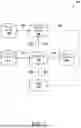


Sources:
- United States Patent and Trademark Office - verify current appl. status at the USPTO↗
Recent applications in this class:
- » 20260050532 2026-02-19
Intelligent Optimization of Software Performance Through Generative Artificial Intelligence - » 20260003763 2026-01-01
SYSTEMS AND METHODS FOR PERFORMING DYNAMIC SAMPLING - » 20250370901 2025-12-04
VOLUME-EFFICIENT TELEMERTY - » 20250363032 2025-11-27
SYSTEMS AND METHODS FOR ASSESSING DUPLICATE ARTIFICIAL INTELLIGENCE (AI) AGENTS BASED ON COMPLEXITY, PERSONALIZATION AND TRAINING - » 20250355781 2025-11-20
TELEMETRY DATA COLLECTION IN CHIPLET PROCESSOR ARCHITECTURE - » 20250335328 2025-10-30
TELEMETRY MANAGEMENT IN ROUTING ARCHITECTURES - » 20250335327 2025-10-30
METHODS, APPARATUSES, DEVICES AND MEDIUM FOR MODEL PERFORMANCE EVALUATION - » 20250315361 2025-10-09
MITIGATION OF DATA LOSS FROM TRACE SAMPLING - » 20250278347 2025-09-04
METHODS AND APPARATUS TO COLLECT MEDIA METRICS ON COMPUTING DEVICES - » 20250258751 2025-08-14
METHOD FOR PERFORMANCE SUPERVISION, APPARATUS, AND SYSTEM, DEVICE AND MEDIUM