METHOD AND SYSTEM FOR PROVIDING INTELLIGENT RESPONSE AGENT BASED ON SOPHISTICATED REASONING AND INFERENCE FUNCTION
US20260056983A1
2026-02-26
19/379,651
2025-11-04
Smart Summary: An intelligent response agent can answer questions about specialized documents. It uses a deep-learning neural network to understand and analyze the information. The system follows a step-by-step process to think and make inferences. This helps it provide accurate and relevant answers. Overall, it improves how we interact with complex information. 🚀 TL;DR
Abstract:
A method and system for providing an intelligent response agent based on a sophisticated reasoning and speculation function can generate and provide response data for queries related to specialized documents using a deep-learning neural network that implements a stepwise process for a sophisticated reasoning and speculation function.
Inventors:
- Kyung Jae Lee 20 🇰🇷 Seoul, South Korea
- Hwa Young LEE 17 🇰🇷 Seoul, South Korea
- Sung-Hyun Park 11 🇰🇷 Seoul, South Korea
- Yi Reun KIM 4 🇰🇷 Seoul, South Korea
- Eui Soon KIM 4 🇰🇷 Seoul, South Korea
- Yong Chul PARK 13 🇰🇷 Seoul, South Korea
- Hong Lak LEE 2 🇰🇷 Seoul, South Korea
- Kyung Hoon BAE 3 🇰🇷 Seoul, South Korea
- Joong Bo SHIN 2 🇰🇷 Seoul, South Korea
- Moon Tae LEE 1 🇰🇷 Gyeonggi-do, South Korea
- Da Sol HWANG 1 🇰🇷 Seoul, South Korea
- Gyeong Hun KIM 1 🇰🇷 Seoul, South Korea
- Hyeon Gu YUN 1 🇰🇷 Gyeonggi-do, South Korea
- Chang Wook JUN 1 🇰🇷 Gyeonggi-do, South Korea
- Jung Kyu CHOI 1 🇰🇷 Gyeonggi-do, South Korea
- Jin Sik LEE 1 🇰🇷 Gyeonggi-do, South Korea
Applicant:
Interested in similar patents?
Get notified when new applications in this technology area are published.
Classification:
G06F16/3326 » CPC main
Information retrieval; Database structures therefor; File system structures therefor of unstructured textual data; Querying; Query formulation; Reformulation based on results of preceding query using relevance feedback from the user, e.g. relevance feedback on documents, documents sets, document terms or passages
G06F16/338 » CPC further
Information retrieval; Database structures therefor; File system structures therefor of unstructured textual data; Querying Presentation of query results
G06F16/332 IPC
Information retrieval; Database structures therefor; File system structures therefor of unstructured textual data; Querying Query formulation
Description
CROSS-REFERENCE TO RELATED APPLICATIONS
This application is a continuation of International Patent Application No. PCT/KR2024/005992, filed on May 3, 2024, which claims the benefit of and priority to Korean Patent Application No. 10-2023-0058429, filed on May 4, 2023, and Korean Patent Application No. 10-2024-0011406, filed on Jan. 25, 2024, the entire disclosures of which are hereby incorporated herein by reference in their entireties.
BACKGROUND
Technical Field
The present disclosure generally relates to a method and system for providing an intelligent response agent based on a sophisticated reasoning and inference function. More specifically, some embodiments of the present disclosure may relate to a method and system for generating and providing response data for queries related to a specialized document using a deep-learning neural network that implements a stepwise process for a sophisticated reasoning and inference function.
Related Art
Research on deep learning related to question answering aims to provide accurate answers to users'questions through an artificial intelligence model.
In general, conventional question-answering deep learning systems are implemented as systems that construct semantic elements as patterns or rules by parsing a predetermined query and extract responses from a database structures with the same language as Structured Query Language (SQL).
However, in processing various natural languages, the number of syntactic patterns that need to be constructed increases exponentially, and therefore it may cause a problem in that the effectiveness of question-answering deep learning systems decreases.
Accordingly, in recent years, a Machine Reading Comprehension (MRC) model, which is a technology based on an artificial intelligence algorithm that analyzes queries by itself and finds optimized answers, is widely used.
Specifically, the MRC model is a system in which a computer reads and comprehends a presented text such as sentences and/or documents for understanding a query and identifies and presents an answer to the query.
However, in order to effectively utilize a question-answering deep learning system using the MRC model, a presented text must first exist, and if no text has been generated, it is difficult to provide a response through the MRC model
Meanwhile, MRC models have been trained for a long time through various previous models and benchmark datasets, but most training datasets are based on question-answering datasets that do not require deep document comprehension.
Accordingly, a deep learning-based question-answering process that generates responses to in-depth queries requiring sophisticated reasoning and inference remains largely undeveloped.
In other word, although previous studies enhanced MRC answer capabilities, they have the limitation that it is difficult to handle more in-depth question answering beyond fact-based (factoid) QA.
For example, most query consist mainly of fact-checking questions such as “what”, “when”, “where”, and “who”, and MRC models can extract short answers from specific paragraphs related to these questions. However, the MRC models may have difficulty in providing answers to in-depth questions such as “how” or “why”.
That is, for in-depth queries that require knowledge processing and reasoning innovations related to specialized documents containing deep technical information (e.g., scientific and technical papers), conventional deep learning models have low answer accuracy and quality.
SUMMARY
Some embodiments of the present disclosure may provide a method and system for generating and providing response data to queries related to a specialized document using a deep-learning neural network that implements a stepwise process for a sophisticated reasoning and inference function.
Certain embodiments of the present disclosure may implement a method and system for providing generated response data and rationale information supporting response data in a linked manner.
However, the objectives to be achieved by the present disclosure and embodiments of the present disclosure are not limited to the objectives described above and there may be other objectives.
According to some embodiments of the present disclosure, a method of providing an intelligent response agent based on a sophisticated reasoning and inference function is a method in which a response agent application that is executed by at least one processor of a terminal provides an intelligent response agent based on a sophisticated reasoning and inference function. The method may include: acquiring query data specifying a user's question; determining a specialized document for the acquired query data; detecting an evidential paragraph including at least one passage associated with the query data in the determined specialized document; generating response data specifying an answer to the question on the basis of the detected evidential paragraph; and providing the generated response data.
In another aspect, the method of providing an intelligent response agent based on a sophisticated reasoning and inference function according to an embodiment of the present disclosure further includes: acquiring rationale data that is base data for generating the response data on the basis of the detected evidential paragraph; and generating the response data on the basis of the acquired rationale data.
In another aspect, the rationale data includes at least one data of main answer data including a direct answer to the query data, explanation sentence data including a detailed explanation for the direct answer, and auxiliary information data including background knowledge information related to the question and the answer.
In another aspect, the detecting of an evidential paragraph includes detecting the evidential paragraph on the basis of a prompt engineering algorithm.
In another aspect, the method of providing an intelligent response agent based on a sophisticated reasoning and inference function according to an embodiment of the present disclosure further includes: inputting the determined specialized document and the query data into a response agent model that executes a multi-step inference process; and generating the response data on the basis of the response agent model, wherein the multi-step inference process includes an associative selection process that detects the evidential paragraphs, a rationale generation process that acquires the rationale data, and a systematic composition process that generates the response data.
In another aspect, the generating of the response data on the basis of the response agent model includes executing the associative selection process and the rationale generation process by reflecting at least one previously stored query data and response data.
In another aspect, the providing of the generated response data includes matching and providing rationale information for the response data with the response data, and the rationale information includes at least two or more of the rationale data, the evidential paragraph data, the evidential paragraph identification information, the specialized document data, the specialized document identification information, and the query data.
In another aspect, the providing of the generated response data further includes: separating the response data into at least one sentence unit; detecting the rationale information for each of the separated sentences; and matching and providing the detected rationale information for each sentence with a sentence corresponding to each item of rational information.
In another aspect, the determining of a specialized document for the query data includes at least one of: determining a specialized document for the query data on the basis of at least one specialized document input by the user; determining a specialized document for the query data on the basis of a specialized document corresponding to at least one item of specialized document identification information input by the user; and detecting at least one specialized document having relevance at a preset level or higher to the query data on the basis of a predetermined deep-learning neural network, and determining a specialized document for the query data on the basis of the detected at least one specialized document.
In another aspect, a system for providing an intelligent response agent based on a sophisticated reasoning and inference function according to an embodiment of the present disclosure includes: at least one memory configured to store a response agent application; and at least one processor configured to provide an intelligent response agent based on a sophisticated reasoning and inference function by reading out the response agent application stored in the memory, wherein instructions of the response agent application include instructions for performing: acquiring query data specifying a user's question; determining a specialized document for the acquired query data; detecting an evidential paragraph including at least one passage associated with the query data in the determined specialized document; generating response data specifying an answer to the question on the basis of the detected evidential paragraph; and providing the generated response data.
As described above, a method and system for providing an intelligent response agent based on a sophisticated reasoning and speculation function according to an embodiment of the present disclosure generates and provides response data for queries related to specialized documents using a deep-learning neural network that implements a stepwise process for a sophisticated reasoning and speculation function, thereby providing response data that is faithful for the questions, is grounded on facts or hallucination-controlled, and is clearly evidential for in-depth queries related to specialized documents, on the basis of a sophisticated reasoning or chain-of-thought reasoning and inference or speculation function that is implemented in a manner similar to human cognitive reasoning.
Further, a method and system for providing an intelligent response agent based on a sophisticated reasoning and speculation function according to an embodiment of the present disclosure can allow a user to intuitively and easily check objective evidence materials including rationale for generating response data by providing the generated response data and the rationale information supporting the response data in association, thereby enhancing the reliability and validity of the response data.
However, effects that can be obtained by the present disclosure are not limited to the effects stated above, and other effects not stated above can be clearly understood from the following description.
BRIEF DESCRIPTION OF DRAWINGS
FIG. 1 is a conceptual diagram of an intelligent response agent system according to an embodiment of the present disclosure.
FIG. 2 is a block diagram of a terminal according to an embodiment of the present disclosure.
FIGS. 3 and 4 are conceptual diagrams for explaining a multi-step inference process of a response deep learning model according to an embodiment of the present disclosure.
FIG. 5 is a flowchart for explaining a method of providing an intelligent response agent based on a sophisticated reasoning and inference function according to an embodiment of the present disclosure.
FIG. 6 is a conceptual diagram for explaining a method of providing an intelligent response agent based on a sophisticated reasoning and inference function according to an embodiment of the present disclosure.
FIG. 7 is an example for explaining a method of acquiring response data for predetermined query data on the basis of a response agent model according to an embodiment of the present disclosure.
FIGS. 8 to 10 are examples for explaining a method of providing predetermined response data on the basis of an answer output interface according to an embodiment of the present disclosure.
FIG. 11 is an example for explaining a method of determining a base document on the basis of rationale information according to an embodiment of the present disclosure.
DETAILED DESCRIPTION OF EMBODIMENTS
The present disclosure may be modified in various ways and may have various embodiments, so that specific embodiments are shown in the drawings and will be described in detail herein. The advantages and features of the present disclosure, and methods of achieving them will be clear by referring to the embodiments that will be describe hereafter in detail with reference to the drawings. However, the present disclosure is not limited to the disclosed embodiments and may be implemented in various ways. In the following embodiments, terms such as “first” and “second” are used to discriminate a component from another component without limiting the components. Further, singular forms are intended to include plural forms unless the context clearly indicates otherwise. Further, terms such as “include” or “have” mean that the features or components described herein exist without excluding the possibility that one or more other features or components are added. Further, components may be exaggerated or reduced in size for the convenience of description. For example, the sizes and thicknesses of the components shown the figures are selectively provided and the present disclosure is not necessarily limited thereto.
Hereinafter, embodiments of the present disclosure are described in detail with reference to the accompanying drawings, and in the following description of the accompanying drawings, like reference numerals are given to like components and repetitive description is omitted.
FIG. 1 is a conceptual diagram of an intelligent response agent system according to an embodiment of the present disclosure.
Referring to FIG. 1, an intelligent response agent system 1000 according to an embodiment of the present disclosure can provide or implement an intelligent response agent service configured to acquire and provide response data for queries related to a specialized document using a deep-learning neural network implementing a multi-step process for a sophisticated reasoning and inference function.
In an embodiment, the intelligent response agent system 1000 implementing the intelligent response agent service may include a terminal 100, a server 200 for providing a response agent, and a network 300.
In this configuration, the terminal 100 and/or the server 200 for providing the response agent may be connected via the network 300.
Here, the network 300 according to an embodiment may refers to a connection structure that enables information or data exchange between nodes such as the terminal 100 and/or the server 200.
The network 300 may include, for example, but not limited to, a 3rd Generation Partnership Project (3GPP) network, a Long Term Evolution (LTE) network, a World Interoperability for Microwave Access (WIMAX) network, the internet, a Local Area Network (LAN), a Wireless Local Area Network (Wireless LAN), a Wide Area Network (WAN), a Personal Area Network (PAN), a Bluetooth network, a satellite broadcasting network, an analog broadcasting network, and/or a Digital Multimedia Broadcasting (DMB) network.
Hereinafter, the terminal 100 and the server 200 that implement the intelligent response agent system 1000 are described in detail with reference to the accompanying drawings.
Terminal (100)
The terminal 100 according to an embodiment of the present disclosure may be a computing device or a computer in which a response agent application (hereinafter, an application) that provides the intelligent response agent service is installed.
For instance, from a hardware perspective, the terminal 100 may include a mobile-type computing device 100-1 and/or a desktop-type computing device 100-2 in which the application is installed.
Here, the mobile-type computing device 100-1 may be a mobile device in which the application is installed.
For example, the mobile type-computing device 100-1 may include a smart phone, a mobile phone, a digital broadcasting device, a personal digital assistant (PDA), a portable multimedia player (PMP), and/or a tablet personal computer (PC).
Further, the desktop-type computing device 100-2 may be a wired or wireless communication-based device in which the application is installed.
For example, the desktop-type computing device 100-2 may include personal computers such as a desktop PC, a laptop computer, and/or an ultrabook.
Depending on embodiments, the terminal 100 may further include a server computing device or a server that provides an intelligent response agent service environment.
FIG. 2 is a block diagram of the terminal 100 according to an embodiment of the present disclosure.
Referring to FIG. 2, the terminal 100 may include a memory 110, a processor assembly 120, a communication processor 130, an interface unit 140, an input system 150, a sensor system 160, and a display system 170. In an embodiment, the terminal 100 may contain the aforementioned components within a housing of the terminal 100.
The memory 110 can store one or more applications.
In this configuration, the application 111 can store one or more of various application programs, data, and instructions for providing an intelligent response agent service environment.
That is, the memory 110 can store commands, data, etc. that can be used to provide or generate an intelligent response agent service environment.
The memory 110 may include a program area and a data area.
Here, the program area according to an embodiment may be linked between an operating system (OS) that boots the terminal 100 and functional elements.
Further, the data area according to an embodiment can store data generated in association with the operation of the terminal 100.
Further, the memory 110 may include at least one or more non-transitory computer-readable storage media and/or transitory computer-readable media.
For example, the memory 110 may be various storage devices such as a Read-Only Memory (ROM), an Electrically Erasable Programmable Read-only Memory (EPROM), a flash drive, and a hard drive, and may include a web storage or a cloud-based storage that performs the storage function of the memory 110 online or on the internet.
The processor assembly 120 may include one or more processors, which can execute the commands or instructions of the application 111 stored in the memory 110, in order to perform various tasks for generating an intelligent response agent service environment.
In an embodiment, the processor assembly 120 can perform or control the overall operation of components through the application 111 of the memory 110 in order to provide an intelligent response agent service.
For example, the processor assembly 120 may be a system-on-chip (SoC) suitable for the terminal 100 that includes a central processing unit (CPU) and/or a graphics processing unit (GPU).
Further, the processor assembly 120 can execute an operating system (OS) and/or application programs stored in the memory 110.
Further, the processor assembly 120 can control each component mounted or included in the terminal 100.
Further, the processor assembly 120 can communicate with components internally via a system bus and may include one or more bus structures including a local bus.
The processor assembly 120 may include at least one of application specific integrated circuits (ASICs), digital signal processors (DSPs), digital signal processing devices (DSPDs), programmable logic devices (PLDs), field programmable gate arrays (FPGAs), controllers, microcontrollers, microprocessors, and/or other electric units for performing functions.
The communication processor 130 such as a communicator or a transceiver may include one or more devices for communication with external devices. The communication module 130 can perform communication via a wireless or wired network.
In detail, the communication processor 130 can communicate with the terminal 100 that stores content sources for implementing an intelligent response agent service environment.
Further, the communication processor 130 can communicate with various user input components such as a controller that receives user input.
In an embodiment, the communication processor 130 can transmit and receive various data related to an intelligent response agent service to and from another terminal and/or an external server.
The communication processor 130 can wirelessly transmit and receive data to and from at least one of a base station, an external terminal, and a certain server on a mobile communication network constructed by communication devices that can perform communication standards or methods for mobile communication (e.g., Long Term Evolution (LTE), Long Term Evolution-Advanced (LTE-A), 5G New Radio (NR), and Wi-Fi)), or a short-range communication method.
The sensor system 160 may include various sensors such as an image sensor 161, a position sensor (IMU) 163, an audio sensor 165, a distance sensor, a proximity sensor, and a contact sensor.
Here, the image sensor 161 can capture visual data (an image and/or a video, etc.) of the physical space around the terminal 100.
In detail, the image sensor 161 can capture visual data of a physical space through a camera disposed to face the outside of the terminal 100.
As an embodiment, the image sensor 161 can be disposed on the front and/or rear of the terminal 100 and capture visual data of the physical space.
In an embodiment, the image sensor 161 can capture and acquire various visual data (for example, a specialized document image, etc.) related to an intelligent response agent service.
The image sensor 161 may include an image sensor device (e.g., a complementary metal oxide semiconductor (CMOS) or a charge coupled device (CCD)) and a visual data processing module (e.g., a data processor).
In detail, the image sensor 161 can process still images or videos that are obtained by the image sensor device.
Further, the image sensor 161 can extract necessary information by processing still images or videos acquired through the image sensor device using the visual data processing module, and can transmit the extracted information to a processor.
For instance, the image sensor 161 may be a camera assembly including at least one or more cameras.
Here, the camera assembly may include a general camera that captures the visible light spectrum, and may further include a specialized camera such as an infrared camera and a stereo camera.
Further, the image sensor 161 described above, depending on embodiments, may be included and operated in the terminal 100 or may be included in an external device (e.g., an external server, etc.) and operated through linkage or a communication network based on the communication processor 130 and/or the interface unit 140 described above.
The position sensor (IMU) 163 can detect at least one or more of movement and acceleration of the terminal 100. For example, the position sensor 163 may be implemented by a combination of various position sensors such as an accelerometer, a gyroscope, and a magnetometer.
Further, the position sensor (IMU) 163 can recognize spatial information of the physical space around the terminal 100 by operating in linkage or a communication network with a location communication processor 130, such as a GPS of the communication processor 130.
The audio sensor 165 can recognize sounds around the terminal 100.
In detail, the audio sensor 165 may include a microphone configured to detect voice input from a user who uses the terminal 100 or is located around the terminal 100.
In an embodiment, the audio sensor 165 can receive voice data necessary for an intelligent response agent service from a user.
The interface unit 140 can connect the terminal 100 to one or more other devices for communication.
In detail, the interface unit 140 may include a wired and/or wireless communication device that is compatible with one or more different communication protocols.
Through the interface unit 140, the terminal 100 can be connected to various input and output devices.
For example, the interface unit 140 can be connected to an audio output device, such as a headset port or a speaker, and can output audio.
Although an example in which the audio output device is connected via the interface unit 140 has been described, the audio output device may be installed inside the terminal 100.
For example, the interface unit 140 may be connected to an input device such as a keyboard and/or a mouse and acquire user input.
The interface unit 140 may include at least one of a wired or wireless headset port, an external charger port, a wire or wireless data port, a memory card port, a port for connecting a device equipped with an identification module, an audio Input/Output (I/O) port, a video Input/Output (I/O) port, an earphone port, a power amplifier, an RF circuit, a transceiver, and other communication circuits.
The input system 150 can detect user input related to an intelligent response agent service (e.g., a gesture, a voice command, a button operation, or other types of input).
In detail, the input system 150 may include buttons, a touch sensor, the image sensor 161 for detecting user motion input, and/or the audio sensor 165 for detecting user voice input.
Further, the input system 150 can be connected to an external controller through the interface unit 140 and receive user input.
The display system 170 can output various items of information related to an intelligent response agent service in the form of graphical images.
As an embodiment, the display system 170 can display various user interfaces, images, and/or text for an intelligent response agent service.
The display system 170 may include at least one of a liquid crystal display (LCD), a thin film transistor-liquid crystal display (TFT LCD), an organic light-emitting diode (OLED), a flexible display, a 3D display, and/or an e-ink display, and is not limited thereto.
Further, the display system 170 may include a display 171 that outputs images and a touch sensor 173 that detects touch input by a user.
For example, the display 171 may be implemented as a touch screen by forming a layered structure with the touch sensor 173 or being integrally formed with the touch sensor 173.
The touch screen can function as a user input unit that provides an input interface between the terminal 100 and a user, and an output interface between the terminal 100 and the user.
Meanwhile, the terminal 100 according to an embodiment of the present disclosure can perform deep learning related to an intelligent response agent service on the basis of a predetermined deep-learning neural network.
Here, the deep-learning neural network according to an embodiment may include, for example, but not limited to, OpenAI GPT, Instruct GPT, Bidirectional LSTM (Bi-LSTM), Long Short-Term Memory models (LSTM), Multi-Layer Perceptron (MLP), EfficientNet, ResNet, Autoregressive Integrated Moving Average (ARIMA), Vector Auto Regression (VAR), Recurrent Neural Networks (RNN), Gated Recurrent Unit (GRU), Generative Adversarial Networks (GAN), DualStyleGAN, StyleGAN, Graph Convolution Network (GCN), Convolutional Neural Network (CNN), Deep Plane Sweep Network (DPSNet), Attention Guided Network (AGN), Regions with CNN features (R-CNN), Fast R-CNN, Faster R-CNN, Mask R-CNN, and/or U-Net network.
In detail, in an embodiment, the terminal 100 can perform deep learning necessary for an intelligent response agent service in linkage with at least one or more deep-learning neural networks capable of implementing a response agent model according to an embodiment of the present disclosure.
In this embodiment, the response agent model can perform deep learning that receives, as input, at least one specialized document data (e.g., a paper and/or a report) and query data, and outputs at least one response data based on the input specialized document data and query data.
On the other hand, the terminal 100 may further perform at least some of the functional operations that are performed by the response agent providing server 200 to be described below.
Server (200) for Providing a Response Agent
The server 200 for providing a response agent according to an embodiment of the present disclosure can perform a series of processes for providing an intelligent response agent service.
In detail, in an embodiment, the server 200 can provide an intelligent response agent service by exchanging data necessary for executing or driving a process for providing a response agent in an external device such as the terminal 100.
In more detail, in an embodiment, the server 200 for providing the response agent can provide an environment in which the application 111 can operate in an external device (in an embodiment, a mobile-type computing device 100-1 and/or a desktop-type computing device 100-2, etc.).
To this end, the server 200 for providing the response agent may include application programs, data, and/or instructions for operating the application 111, and can transmit and receive various data based on them to and from the external device.
Further, in an embodiment, the server 200 for providing the response agent may acquire query data.
Here, the query data according to an embodiment may be data specifying a user's question related to a predetermined specialized document (e.g., a paper and/or a report, etc.).
Further, in an embodiment, the server 200 can determine a specialized document for the acquired query data.
That is, in an embodiment, the server 200 can determine at least one specialized document that is used when response data for the acquired query data is generated.
Further, in an embodiment, the server 200 can input the determined specialized document and the query data into a response agent model.
Further, in an embodiment, the server 200 can acquire response data for the input query data in linkage with the response agent model that has received the specialized document and query data as input.
Here, the response data according to an embodiment may be data specifying an answer to a user's question related to a predetermined specialized document (e.g., a paper and/or a report, etc.).
Further, in an embodiment, the server 200 can provide the acquired response data in accordance with a predetermined method (e.g., display output, etc.).
Further, in an embodiment, the server 200 can perform deep learning necessary for an intelligent response agent service on the basis of a predetermined deep-learning neural network.
In detail, in an embodiment, the server 200 can perform deep learning necessary for an intelligent response agent service in linkage with at least one or more deep-learning neural networks capable of implementing the response agent model.
In more detail, in an embodiment, the response agent providing server 200 can read out a predetermined deep-learning neural network driving program, which is constructed to perform the deep learning, from the memory module 230.
Then, the server 200 can perform deep learning necessary for an intelligent response agent service in accordance with the read-out predetermined deep-learning neural network system.
Here, the deep-learning neural network according to an embodiment may include, for example, but not limited to, OpenAI GPT, Instruct GPT, Bidirectional LSTM (Bi-LSTM), Long Short-Term Memory models (LSTM), Multi-Layer Perceptron (MLP), EfficientNet, ResNet, Autoregressive Integrated Moving Average (ARIMA), Vector Auto Regression (VAR), Recurrent Neural Networks (RNN), Gated Recurrent Unit (GRU), Generative Adversarial Networks (GAN), DualStyleGAN, StyleGAN, Graph Convolution Network (GCN), Convolutional Neural Network (CNN), Deep Plane Sweep Network (DPSNet), Attention Guided Network (AGN), Regions with CNN features (R-CNN), Fast R-CNN, Faster R-CNN, Mask R-CNN, and/or U-Net network.
According to an embodiment, the deep-learning neural network may be included in the server 200 or may be implemented as a separate device and/or server from the server 200.
In the following description, the deep-learning neural network is described as being included in the response agent providing server 200 for illustration purposes only, but the present disclosure is not limited thereto.
In an embodiment, the server 200 can store and manage various application programs, instructions, and/or data for implementing an intelligent response agent service.
As an embodiment, the server 200 can store and manage at least one or more query data, specialized document data, response data, rationale information, data processing algorithms, deep learning algorithms, and/or user interfaces.
However, the functional operations that the server 200 can perform in an embodiment of the present disclosure are not limited to those described above, and the server 200 can perform additional functional operations.
Further referring to FIG. 1, in an embodiment, the server 200 may be implemented as a computing device or a computer including one or more processor modules 210 for data processing, one or more communication modules or communicators 220 for data exchange with an external device, and one or more memory modules 230 that stores various application programs, data, and/or instructions for providing an intelligent response agent service.
Here, the memory module 230 can store one or more of an operating system (OS), various application programs, data, and instructions for providing an intelligent response agent service.
Further, the memory module 230 may include a program area and a data area.
In this case, the program area according to an embodiment may be linked between an operating system (OS) that boots a server and functional elements.
Further, the data area according to an embodiment can store data generated in association with the operation of a server.
Further, the memory module 230 may be various storage devices such as a ROM, a RAM, an EPROM, a flash drive, and a hard drive, and may be a web storage or a cloud-based storage that performs the storage function of the memory module 230 online or on the internet.
Further, the memory module 230 may be a recording medium that can be detachably coupled to a server.
The processor module 210 can control the overall operation of one or more of components included in the server 200 to implement an intelligent response agent service.
In detail, the processor module 210 may be a system-on-chip (SoC) suitable for a server that includes a central processing unit (CPU) and/or a graphics processing unit (GPU).
Further, the processor module 210 can execute an operating system (OS) and/or application programs stored in the memory module 230.
Further, the processor module 210 can control the components mounted on or included in a server.
The processor module 210 can perform internal communication with one or more components included in the server 200 using a system bus and may include one or more predetermined bus structures including a local bus.
The processor module 210 may be implemented using at least one of application specific integrated circuits (ASICs), digital signal processors (DSPs), digital signal processing devices (DSPDs), programmable logic devices (PLDs), field programmable gate arrays (FPGAs), controllers, microcontrollers, microprocessors, and/or other electric units for performing functions.
In some embodiments described above, the server 200 for providing the response agent may perform the functional operations described above. However, in other embodiments, an external device (e.g., the terminal 100, etc.) may perform at least some of the functional operations that the server 200 performs, or the server 200 may further perform at least some of the functional operations that the external device performs.
Response Agent Model (Question and Answer Language Model (QALM))
A response agent model (RAM) according to an embodiment of the present disclosure may be a deep learning model configured to receive, as input, at least one specialized document data (e.g., a paper and/or a report) and query data, and output at least one response data based on the input specialized document data and query data.
In an embodiment, the response agent model (RAM) can interpret input query more clearly and, based on this, provide a more optimized and high-quality response data by performing deep learning that implements a stepwise process (in an embodiment, a multi-step reasoning process) for a sophisticated reasoning and inference function when a specific specialized document and a query are input.
In this case, the response agent model (RAM) in an embodiment may be a deep learning model (e.g., a large language model (LLM)) pre-trained on the basis of a training dataset including a plurality of specialized documents to perform the functional operations described above.
FIGS. 3 and 4 are conceptual diagrams for explaining a multi-step inference process of a response deep learning model according to an embodiment of the present disclosure.
In an embodiment, a response agent model (RAM) can generate response data for predetermined query data on the basis of a multi-step inference process according to an embodiment of the present disclosure.
In this embodiment, the multi-step inference process according to an embodiment may be a structured process that generates response data based on predetermined specialized document data and query data using deep learning.
The multi-step inference process may include an associative selection process, a rationale generation process, and a systematic composition process.
-
- 1) In an associative selection process, the response agent model (RAM) can determine a paragraph within a specialized document associated with query data (hereinafter, evidential paragraph).
In detail, the response agent model (RAM) can extract one or more evidential paragraphs that include an answer and/or a rationale for query data from K (K≥1) paragraphs included in a specialized document.
In an embodiment, the response agent model (RAM) may execute the associative selection process by reflecting one or more previously stored existing query data and response data (hereinafter, existing query-response data).
Accordingly, the response deep learning model can generate subsequent response data on the basis of more extensive rationale data compared to a conventional method that extracts short answers for query data.
In an embodiment, the response agent model (RAM) can perform the associative selection process on the basis of a prompt engineering algorithm.
The prompt engineering may be a process of creating and optimizing prompts to obtain desired results from a deep learning model.
For example, the prompt may be structured text that is inputted to a deep learning model to generate output.
The prompts can guide a deep learning model to search for specific content among data, which a deep learning model has learned, so that the deep learning model can output results that meet an objective.
By way of example, one or more components of the prompt may include an “instruction” that specifies a task or directive that a deep learning model is to perform, a “context” that specifies external information or additional context that enables adjustment of a deep learning model, “input data” that specifies an input or question for which an answer is sought, and/or “output data”that specifies the type or format of an output, etc.
That is, in an embodiment, the response agent model (RAM) can generate a structured prompt (hereinafter, a specialized document query prompt) according to a predetermined specialized document and query data on the basis of a prompt engineering algorithm, and can perform an associative selection process of extracting at least one evidential paragraph within the corresponding specialized document on the basis of the generated specialized document query prompt.
Therefore, the response deep learning model can extract at least one evidential paragraph on the basis of clearer interpretation of the query data, such as a question which can be more accurately understood within the query data and the premises contained therein.
In this manner, the response deep learning model can directly enhance the quality of subsequently generated response data as well by improving interpretation performance on query data.
-
- 2) In a rationale generation process, the response agent model (RAM) can acquire rationale data for the query data on the basis of the determined evidential paragraph.
Here, the rationale data according to an embodiment may refer to data serving as the basis for generation of response data for query data.
That is, in an embodiment, the rationale data may be a set of various data that is utilized when response data is generated.
In detail, in an embodiment, the response agent model (RAM), on the basis of at least evidential paragraph, can detect main answer data that includes a direct answer to query data, explanation sentence data that describes the direct answer in detail, and/or auxiliary information data that includes related background knowledge.
Further, the response agent model (RAM) can acquire rationale data on the basis of the detected data.
Depending on embodiments, the response agent model (RAM) may execute the rationale generation selection process by reflecting one or more previously stored existing query-response data.
-
- 3) in a systematic composition process, the response agent model (RAM) can generate response data on the basis of the acquired rationale data.
In detail, in an embodiment, the response agent model (RAM) can generate response data by performing data processing based on the acquired rationale data.
As an embodiment, the response agent model (RAM) can generate response data by performing predetermined data processing (e.g., a process of removing redundant text) that enhances the conciseness and readability of the answer based on the rationale data.
As described above, in an embodiment, the response deep learning model can extract a rationale passage, which enables answering to query data, from a specialized document, generate evidential rationale on the basis of the contents of the extracted rationale passage, and provide response data providing a more in-depth answer on the basis of the generated evidential rationale.
That is, in an embodiment, the response deep learning model can be implemented as a language model specialized for specialized documents that removes issues such as hallucination and vague answers that are limitations of existing general-purpose language models (e.g., OpenAI GPT) in performing an in-depth question-answering task based on specialized documents.
Accordingly, a system for providing a specialized document sharing platform according to an embodiment of the present disclosure can provide response data that is faithful for the questions, is grounded on facts (hallucination-controlled), and is clearly evidential for in-depth queries related to specialized documents, on the basis of a sophisticated reasoning (chain-of-thought reasoning) and inference (speculation) function that is implemented in a manner similar to human cognitive reasoning.
Method of Providing Response Agent
Hereinafter, a method in which the application 111 that is executed by one or more processors of the terminal 100 generates and provides response data for specialized document-related queries using a deep-learning neural network implementing a stepwise process for a sophisticated reasoning and inference function (i.e., a method of implementing an intelligent response agent service) according to an embodiment of the present disclosure is described in detail with reference to the accompanying drawings.
In an embodiment of the present disclosure, one or more processors of the terminal 100 can execute one or more applications 111 stored in one or more memories 110 or can operate one or more applications 111 in a background state.
For ease of explanation, the following embodiments are described in assuming that a method of providing an intelligent response agent based on a sophisticated reasoning and inference function by one or more processors of the terminal 100 by operating to execute the instructions of the application 111 is performed by one or more applications 111, but the present disclosure is not limited thereto.
FIG. 5 is a flowchart for explaining a method of providing an intelligent response agent based on a sophisticated reasoning and inference function according to an embodiment of the present disclosure, and FIG. 6 is a conceptual diagram for explaining a method of providing an intelligent response agent based on a sophisticated reasoning and inference function according to an embodiment of the present disclosure.
Referring to FIGS. 5 and 6, at step S101, the application 111 that is executed by one or more processors of the terminal 100 or operate in a background state can acquire query data.
Here, the query data according to an embodiment may refer to data specifying a user's question related to a predetermined specialized document (e.g., a paper and/or a report, etc.).
By way of example, the query data may be “Please analyze rationale materials that can support first content of a first paper” or “Please describe the expected result and anticipated effect when first configuration of a first paper is combined with second configuration not disclosed in the first paper”.
In an embodiment, the application 111 can provide a user interface (hereinafter, a “query input interface”) capable of inputting predetermined query data on the basis of an intelligent response agent service platform.
Further, the application 111 can acquire one or more query data on the basis of user input based on the provided query input interface.
At step S103, the application 111 can determine a specialized document for the acquired query data.
That is, in an embodiment, the application 111 can determine at least one specialized document that is used when response data for the acquired query data is generated.
In other words, the application 111 can determine at least one specialized document (hereinafter, a “base document”) to be input into the response agent model (RAM) according to an embodiment of the present disclosure in order to generate response data for the query data.
In detail, in a first embodiment, the application 111 can determine at least one specialized document directly uploaded by a user on the intelligent response agent service platform as a base document.
In a second embodiment, the application 111 can determine at least one specialized document detected on the basis of specialized document identification information (for example, a paper number and/or a paper title) input by a user, as a base document on the intelligent response agent service platform.
In detail, the application 111 can determine the base document by detecting, from the memory 110 and/or an external database, a specialized document corresponding to at least one item of specialized document identification information acquired in accordance with user input.
In a third embodiment, the application 111 can determine at least one specialized document, detected by performing deep learning based on the query data input on the intelligent response agent service platform, as the base document.
In detail, the application 111 can determine the base document in linkage with a deep learning model (hereinafter, a query-related document detection model) that takes predetermined query data as input and outputs at least one specialized document (hereinafter, a “related document”) having relevance to the input query data which is at or above a predetermined level.
That is, the application 111 can input the query data input on the intelligent response agent service platform into the query-related document detection model, and can acquire at least one related document corresponding to the query data from the query-related document detection model that has received the query data.
Further, the application 111 can determine a base document on the basis of at least one acquired related document.
In this case, according to an embodiment, the query-related document detection model may be included in the response agent model (RAM), and may be pre-trained on the basis of a training data set (e.g., a training data set including a plurality of specialized documents) used during the training of the response agent model (RAM).
In the above description, embodiments were separately described for effective description, but, depending on embodiments, at least some of the aforementioned embodiments may operate in an integrated manner, and various other embodiments are also possible.
In detail, in an embodiment, the application 111 (1) can determine a base document based on a user-input document in accordance with user settings or (2) can determine a base document on the basis of a user-input document and a related document (e.g., a specialized document automatically detected through the deep learning model).
In other words, the application 111, depending on user's choice, can determine a base document on the basis of at least one specialized document directly input by the user (i.e., a user-input document), or can determine a base document on the basis of all of at least one user-input document directly input by the user and at least one specialized document (i.e., related document) automatically detected through the deep learning model.
In this manner, the application 111 can selectively determine a specialized document to be used when generating a response to a user's query in accordance with the user's needs.
Accordingly, the application 111 can implement a process of providing customized response data that generates an answer to a corresponding query on the basis of the information in a data area desired by a user in accordance with the user's needs that depend on situations, such as when a user wants to obtain an answer on the basis of only the specialized documents that the user targets, or when a user wants to obtain an answer additionally using various other specialized documents related to a query in addition to specialized documents that the user they already knows.
At step S105, the application 111 can input the determined specialized document and query data into the response agent model (RAM).
That is, the application 111 can input the determined base document and the acquired query data into the response agent model (RAM) according to an embodiment of the present disclosure.
In other words, the response agent model (RAM) according to an embodiment of the present disclosure may be a deep learning model that receives, as input, predetermined specialized document data and query data, and outputs at least one response data based on the input specialized document data and query data.
In an embodiment, the response agent model (RAM) can interpret input query more clearly and, on the basis of this, provide a more optimized and high-quality response data by performing deep learning that implements a stepwise process (in an embodiment, a multi-step reasoning process) for a sophisticated reasoning and inference function when a specific specialized document and a query are input.
At step S107, the application 111 can acquire response data for the input query data.
Here, the response data according to an embodiment may refer to data specifying an answer to a user's question related to a predetermined specialized document (e.g., a paper and/or a report, etc.).
That is, the response data may be data that provides an answer to predetermined query data.
FIG. 7 is a conceptual diagram for explaining a method of acquiring response data for predetermined query data on the basis of a response agent model (RAM) according to an embodiment of the present disclosure.
Referring to FIG. 7, in an embodiment, the application 111 can acquire response data for the input query data in linkage with the response agent model (RAM) that has received the base document and query data.
In more detail, referring further to FIGS. 3 and 4, in an embodiment, the response agent model (RAM) that has received the base document and query data can generate response data for the input query data in accordance with a multi-step inference process according to an embodiment of the present disclosure.
In other words, the multi-step inference process according to an embodiment may be a structured process that generates response data based on predetermined specialized document data and query data using deep learning.
In an embodiment, the multi-step inference process may include an associative selection process that determines a paragraph within a specialized document associated with query data (i.e., an evidential paragraph), a rationale generation process that acquires rationale data for query data on the basis of the determined evidential paragraph, and a systematic composition process that generates response data on the basis of the acquired rationale data.
Further, in an embodiment, the response agent model (RAM) that has generated response data according to the multi-step inference process can provide the generated response data to the application 111.
Accordingly, in an embodiment, the application 111 can acquire response data for the input query data in linkage with the response agent model (RAM).
In this way, in an embodiment, the application 111 can acquire response data for corresponding query data on the basis of a response agent model (RAM) that performs a sophisticated reasoning and inference process that extracts a rationale passage, which enables answering to query data, from a specialized document, generates evidential rationale on the basis of the contents of the extracted rationale passage, and generates a more in-depth answer on the basis of the generated evidential rationale.
Accordingly, the application 111 can improve efficiency by resolving a process of search-rank-select-extract-edit, which is the existing question-answering paradigm, into a single process of generation, and at the same time can provide a more detailed and optimized high-quality answer according to the premise of clearly interpreting the intent of a question using objective data, rather than providing a vague answer.
At step S109, the application 111 can provide the acquired response data.
In detail, in an embodiment, the application 111 can provide at least one response data acquired on the basis of at least one query data.
FIGS. 8 to 10 are examples for explaining a method of providing predetermined response data on the basis of an answer output interface according to an embodiment of the present disclosure.
Referring to FIG. 8, in an embodiment, the application 111 can provide an answer output interface (API) on the basis of an intelligent response agent service platform.
Here, the answer output interface (API) according to an embodiment may be a user interface configured to visualize and display predetermined response data (AD) and various related data and information in accordance with a predetermined manner.
Further, in an embodiment, the application 111 can display and provide the generated response data (AD) on the basis of the provided answer output interface (API).
In this case, in an embodiment, the application 111 can match at least one item of rationale information corresponding to each provided response data (AD) to corresponding response data (AD) and display it in association.
Here, the rationale information according to an embodiment may be data and/or information used as rationale materials when generating predetermined response data (AD).
In an embodiment, the rationale information may include, corresponding to the predetermined response data (AD), specialized document data, specialized document identification information (e.g., a paper number and/or a paper title), evidential paragraph data, evidential paragraph identification information (e.g., an evidential paragraph identification number/identification code of a preset format), and/or rationale data.
Further, in an embodiment, the rationale information may further include query data corresponding to the predetermined response data (AD).
In detail, in an embodiment, the application 111 can detect at least one item of rationale information corresponding to each response data (AD).
For example, the application 111 can detect at least one specialized document data related to the generation of each response data (AD), specialized document identification information for the specialized document data, evidential paragraph data, evidential paragraph identification information for the evidential paragraph data, and/or rationale data.
Further, the application 111 can match the detected rationale information to each response data (AD) and display it in association through a response output interface (API) in accordance with a predetermined manner (e.g., a list, an image, and/or text).
In the following description, an embodiment in which rationale information corresponding to each response data (AD) is provided in a list form is described, but this is merely an example and the present disclosure is not limited thereto.
In an embodiment, the application 111 may further include a list interface (LI) comprising at least one item of rationale information for each response data (AD) in the response output interface (API).
Further, when displaying each response data (AD) through the response output interface (API), the application 111 can match and further display the list interface (LI) with each corresponding response data (AD).
In this way, in an embodiment, the application 111 can match various related information, such as what rationale materials were used to derive each response data (AD), their contents, and their locations, to corresponding response data (AD) and display them together.
Accordingly, the application 111 can clearly and intuitively present objective evidence materials demonstrating on what rationale each response data (AD) was generated, thereby robustly enhancing the reliability and validity of the provided response data (AD).
In this case, according to an embodiment, the application 111 can generate separate lists categorized by the attributes of each item of rationale information.
Further, the application 111 can match and provide each generated list with response data (AD) corresponding to each item of rationale information on the basis of the aforementioned list interface (L1).
As an embodiment, the application 111 can generate a query data list (L1), a document data list (L2), an evidential paragraph data list (L3), and/or a rationale data list (L4), categorized by the attributes of each item of rationale information.
Further, the application 111 can match each generated list to the response data (AD) corresponding to each item of rationale information and display them in association through the response output interface (API).
In this way, the application 111 can provide the materials used as the rationale for generating response data (AD) in a more refined manner by categorizing them in accordance with their attributes, thereby further enhancing readability and comprehensibility.
Referring to FIG. 9, according to an embodiment, the application 111 can display rationale information matched with each sentence (hereinafter, an “answer sentence”) within each response data (AD) in association.
In detail, in an embodiment, the application 111 can divide each response data (AD) into at least one answer sentence unit.
Further, the application 111 can detect at least one item of rationale information used in generating each separated answer sentence.
Further, in an embodiment, the application 111 can match the detected rationale information to each corresponding answer sentence and display it in association through the answer output interface (API).
For example, when first response data (AD) consists of first to fifth answer sentences, the application 111 can detect first rationale information that is at least one item of rationale information used in generating the first answer sentence, second rationale information that is at least one item of rationale information used in generating the second answer sentence, . . . , and fifth rationale information that is at least one item of rationale information used in generating the fifth answer sentence.
Further, the application 111 can match the detected first rationale information to the corresponding first answer sentence, the second rationale information to the corresponding second answer sentence, . . . , and the fifth rationale information to the corresponding fifth answer sentence, and display them through the answer output interface (API).
In this way, the application 111 can match and display the materials that serve as the rationale for each answer at the sentence level, which is more granular than the response data (AD) level, thereby more thoroughly checking and recognizing the evidential rationales for the response data (AD).
According to an embodiment, the application 111 can display in association the rationale information matched to each response data (AD) and/or each answer sentence when a preset display condition is satisfied.
For example, the preset display condition may include (1) a condition in which response data (AD) and/or an answer sentence are positioned at the top compared to other response data (AD) and/or other answer sentences, (2) a condition in which response data (AD) and/or an answer sentence are positioned in a predetermined central area within a display region, or (3) a condition in which response data (AD) and/or an answer sentence are positioned in a user selection region (e.g., a mouse-over region, etc.).
In detail, in an embodiment, the application 111 can select any one of the display conditions set in advance in accordance with user input.
Further, the application 111 can determine whether a display condition of response data (AD) and/or an answer sentence is satisfied on the basis of the selected display condition (hereinafter, an “applied display condition”).
Further, the application 111 can perform the rationale information association display process on the basis of the response data (AD) and/or answer sentences that satisfy the applied display condition.
That is, in an embodiment, the application 111 can determine the real-time attention status of response data (AD) and/or answer sentences changing in accordance with user input (e.g., mouse scroll, etc.), dynamically select and extract related rationale information, display it in association.
Accordingly, the application 111 can implement interactive visualization through interaction with the user who checks the response data (AD), and accordingly, the user can more easily and intuitively recognize the response data (AD) and related rationale information.
Referring to FIG. 10, in an embodiment, the application 111 can highlight, in a predetermined manner, the rationale information matched with each response data (AD) and/or each answer sentence when a preset highlighting condition is satisfied.
For example, the preset display condition may include (1) a condition in which response data (AD) and/or an answer sentence is positioned at the top compared to other response data (AD) and/or other answer sentences, (2) a condition in which response data (AD) and/or an answer sentence is positioned in a predetermined central area within a display region, or (3) a condition in which response data (AD) and/or an answer sentence is positioned in a user selection region (e.g., a mouse-over region, etc.).
In detail, in an embodiment, the application 111 can select any one of the display conditions set in advance in accordance with user input, as described above.
Further, the application 111 can determine whether a display condition of response data (AD) and/or an answer sentence are satisfied on the basis of the selected display condition (hereinafter, an “applied display condition”).
Further, the application 111 can highlight, in a predetermined manner, the response data (AD) and/or answer sentences that satisfy the applied display condition, along with corresponding rationale information.
For instance, the application 111 can perform highlighting that emphasizes the response data (AD) and/or answer sentences that satisfy the applied display condition, along with the corresponding rationale information, using bounding boxes.
Accordingly, the application 111 can further enhance readability for users in the interactive visualization process based on the response data (AD).
FIG. 11 is an example for explaining a method of determining a base document on the basis of rationale information according to an embodiment of the present disclosure.
Referring to FIG. 11, depending on embodiments, the application 111 can set at least a portion of the rationale information provided through the answer output interface (API) as a base document (BD) in accordance with user input.
In detail, in an embodiment, the application 111 can provide a user interface (hereinafter, a “base document (BD) designation interface”) that allows selecting at least a portion of the rationale information displayed through the answer output interface (API).
Further, in an embodiment, the application 111 can determine (or update) the base document (BD) on the basis of the rationale information {circle around (C)} (hereinafter, “base rationale information”) selected in accordance with user input based on the provided base document (BD) designation interface.
As an embodiment, the application 111 can determine a base document (BD) using specialized document data and/or evidential paragraph data selected in accordance with user input based on the base document (BD) designation interface as the base rationale information (C).
In this case, in an embodiment, the application 111 can add the base rationale information (C) to an existing base document (BD) in accordance with to user input.
As another embodiment, the application 111 can replace the existing base document (BD) using the base rationale information (C) in accordance with user input.
Further, in an embodiment, the application 111 can execute the processes described in or after step S105 on the basis of the base document (BD) updated as described above.
Therefore, the application 111 effectively supports newly emerging user needs by providing answers, such as a user need for obtaining a new answer by targeting at least a portion of a specialized document detected through artificial intelligence in addition to specialized documents that the user already knows, or a user need for obtaining a new answer by focusing more on paragraphs within a specific specialized document, thereby expanding the paradigm of an intelligent response agent service and improving the usability as well.
In this case, according to an embodiment, the application 111 can acquire new query data in accordance with user input when updating the base document (BD).
Further, the application 111 can update existing query data on the basis of the acquired new query data.
For example, the application 111 can add the new query data to the existing query data in accordance with user input.
As another embodiment, the application 111 can replace the existing query data using the new query data in accordance with user input.
Further, in an embodiment, the application 111 can execute the processes described in or after step S105 on the basis of the updated query data.
In this way, the application 111 can enhance convenience by supporting a user such that the user can easily formulate additional queries with a high degree of freedom even after receiving an answer.
As described above, according to some embodiments of the present disclosure, a method and system for providing an intelligent response agent based on a sophisticated reasoning and speculation function may generate and provide response data (AD) for queries related to specialized documents using a deep-learning neural network that implements a stepwise process for a sophisticated reasoning and speculation function, thereby providing response data (AD) that is faithful for the questions, is grounded on facts (hallucination-controlled), and is clearly evidential for in-depth queries related to specialized documents, on the basis of a sophisticated reasoning (chain-of-thought reasoning) and inference (speculation) function that is implemented in a manner similar to human cognitive reasoning.
Further, according to certain embodiments of the present disclosure, a method and system for providing an intelligent response agent based on a sophisticated reasoning and speculation function can allow a user to intuitively and easily check objective evidence materials including the rationale for generating response data (AD) by providing the generated response data (AD) and the rationale information supporting the response data in association, thereby enhancing the reliability and validity of the response data (AD).
Meanwhile, embodiments of the present disclosure described above may be implemented in the type of program instructions that can be executed through various computer components, and may be recorded on a computer-readable recording medium. The computer-readable recording medium may include program instructions, data files, and data structures individually or in combinations thereof. The program instructions that are recorded on a computer-readable recording medium may be those specifically designed and configured for the present disclosure or may be those available and known to those engaged in computer software in the art. The computer-readable recording medium includes magnetic media such as hard disks, floppy disks, and magnetic media such as a magnetic tape, optical media such as CD-ROMs and DVDs, magneto-optical media such as floptical disks, and hardware devices specifically configured to store and execute program instructions, such as ROM, RAM, and flash memory. The program instructions include not only machine language codes compiled by a compiler, but also high-level language codes that can be executed by a computer using an interpreter, etc. A hardware device may be changed into one or more software modules to perform the processes according to the present disclosure, and vice versa.
Specific execution described herein is an embodiment and does not limit the present disclosure in any way. For briefness of the specification, electronic components, control systems, and software of the related art, and other functions of the system may not be described. Furthermore, wire connection and connecting members of components shown in the figures are examples of functional connection and/or physical or circuit connections, and in actual devices, they may be replaceable or may be shown as various additional functional connection, physical connection, or circuit connection. Unless stated in detail such as “necessary” and “important”, they may not be necessary component for the present disclosure.
Although exemplary embodiments of the present disclosure were described above, it should be understood that the present disclosure may be changed and modified in various ways by those skilled in the art without departing from the spirit and scope of the present disclosure described in the following claims. Therefore, the technical scope of the present disclosure is not limited to the exemplary embodiments described herein, but should be determined by claims.
Some embodiments of the present disclosure relate to a method and system for providing an intelligent response agent based on a sophisticated reasoning and inference function, and may be applicable to artificial intelligence industry, thus having industrial applicability.
Claims
What is claimed is:1. A computerized method comprising:
receiving query data specifying a user's question and storing the query data in memory;
retrieving a specialized document for the stored query data;
detecting an evidential paragraph including at least one passage associated with the query data from a plurality of paragraphs included in the retrieved specialized document;
generating base data including the detected evidential paragraph and storing the base data in the memory;
generating response data specifying an answer to the user's question based on the stored base data; and
outputting the generated response data.
2. The computerized method of claim 1, further comprising generating rationale data for generating the response data based on the stored base data and storing the rationale data in the memory,
wherein the generating of the response data specifying the answer to the question includes generating the response data based on the rationale data.
3. The computerized method of claim 2, wherein the rationale data includes at least one of main answer data including a direct answer to the user's question, explanation sentence data including explanation for the direct answer, or auxiliary information data including background knowledge information related to the user's question and the answer.
4. The computerized method of claim 1, wherein the detecting of the evidential paragraph includes:
generating a structured prompt based on the retrieved specialized document and the query data through a prompt engineering algorithm; and
detecting the evidential paragraph by inputting the structured prompt and the specialized document to a response deep learning model.
5. The computerized method of claim 2, further comprising:
inputting the specialized document and the query data to a response agent model configured to execute a multi-step inference process; and
generating the response data based on the response agent model and storing the response data in the memory,
wherein the multi-step inference process includes an associative selection process that detects the evidential paragraph, a rationale generation process that acquires the rationale data, and a systematic composition process that generates the response data.
6. The computerized method of claim 5, wherein the generating of the response data based on the response agent model includes performing the associative selection process and the rationale generation process by reflecting at least one previously stored query data and response data.
7. The computerized method of claim 2, wherein the outputting of the generated response data includes matching and outputting rationale information for the response data with the response data, and
the rationale information includes two or more of the rationale data, the evidential paragraph, evidential paragraph identification information, the specialized document, specialized document identification information, or the query data.
8. The computerized method of claim 7, wherein the outputting of the generated response data further includes:
separating the response data into a plurality of sentences;
detecting the rationale information for each of the separated sentences; and
matching and outputting the detected rationale information for each of the separated sentences with a sentence corresponding to each item of the rational information.
9. The computerized method of claim 1, wherein the retrieving of the specialized document for the query data includes at least one of:
determining at least one first document for the query data based on at least one document file input by the user;
determining at least one second document for the query data based on a specialized document corresponding to at least one item of specialized document identification information input by the user; and
detecting at least one specialized document having relevance to the query data at a preset level or higher among the at least one first document and the at least one second document based on a deep-learning neural network, and determining the specialized document for the query data based on the detected at least one specialized document.
10. A system comprising:
memory configured to store instructions that are executable; and
at least one processor configured to execute one or more of the instructions to perform operations comprising:
acquiring query data specifying a user's question;
determining a specialized document for the acquired query data;
detecting an evidential paragraph including at least one passage associated with the query data in the determined specialized document;
generating response data specifying an answer to the user's question based on the detected evidential paragraph; and
providing the generated response data.
11. A computerized method comprising:
acquiring query data specifying a user's question;
determining at least one specialized document for the acquired query data; and
generating response data specifying an answer to the user's question by inputting the query data and the determined at least one specialized document into a response agent model configured to execute a multi-step inference process;
outputting the generated response data through a user interface,
wherein the multi-step inference process includes:
associative selection that detects one or more evidential paragraphs associated with the query data from the at least one specialized document;
rationale generation that generates rationale data for generating the response data from the detected one or more evidential paragraphs; and
systematic composition that generates the response data by composing a comprehensive answer based on the generated rationale data.
12. The computerized method of claim 11, wherein the rationale data includes at least one of main answer data including a direct answer to the user's question, explanation sentence data including explanation for the direct answer, or auxiliary information data including background knowledge information related to the user's question and the answer.
13. The computerized method of claim 11, wherein the associative selection comprises detecting the one or more evidential paragraphs based on a prompt engineering algorithm.
14. The computerized method of claim 11, wherein in the generating of the response data, histories of previously stored query data and response data are considered to generate the response data.
15. The computerized method of claim 11, wherein the outputting of the generated response data includes providing rationale information corresponding to the response data,
wherein the response data and the rationale information are controlled to be matched with each other and displayed simultaneously.
16. The computerized method of claim 15, wherein the rationale information includes two or more of the rationale data, the one or more evidential paragraphs, evidential paragraph identification information, the at least one specialized document, specialized document identification information, or the query data.
17. The computerized method of claim 15, further comprising:
separating the generated response data into a plurality of sentences;
detecting corresponding one of the rationale information used to generate a corresponding sentence among the plurality of sentences; and
matching and providing the detected corresponding one of the rationale information with the corresponding sentence.
18. The computerized method of claim 17, further comprising, when a specific sentence is positioned at a top of a display region or is selected by user input, displaying corresponding rationale information for the specific sentence.
19. The computerized method of claim 11, wherein the determining of at least one specialized document includes at least one of:
determining at least one first document based on at least one document file input by the user;
determining at least one second document based on document identification information input by the user; and
detecting a document having relevance to the query data at a preset level or higher among the at least one first document and the at least one second document based on a deep learning neural network, and determining the detected document as the at least one specialized document.
20. The computerized method of claim 15, further comprising:
receiving user input including additional query through the user's selection of a portion of the provided rationale information; and
updating the at least one specialized document based on the user's selection input for the additional query.
Images & Drawings included:
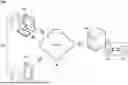
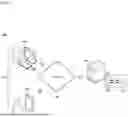
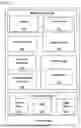
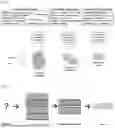
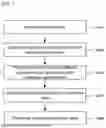

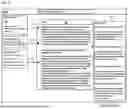
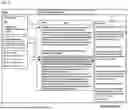
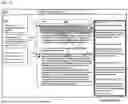

Sources:
- United States Patent and Trademark Office - verify current appl. status at the USPTO↗
Recent applications in this class:
- » 20260056982 2026-02-26
METHOD AND SYSTEM FOR DYNAMICALLY GENERATING ARTIFICIAL INTELLIGENCE-BASED ANSWER IN WHICH MESSAGE OF INFORMATION PROVIDER IS PROJECTED - » 20260050615 2026-02-19
IDENTIFYING RELEVANCE OF DOCUMENTS FOR AUTOMATED RETRIEVAL MODELS USING LARGE LANGUAGE MODELS - » 20250291820 2025-09-18
AUTOMATED PATENT CLAIM SCOPE CONCEPT MAPPING - » 20250284716 2025-09-11
SYSTEMS AND METHODS OF CHAINED CONVERSATIONAL PROMPT ENGINEERING FOR INFORMATION RETRIEVAL - » 20250284715 2025-09-11
MACHINE LEARNING FOR SIMILARITY SCORES BETWEEN DIFFERENT DOCUMENT SCHEMAS - » 20250258847 2025-08-14
CACHING LARGE LANGUAGE MODEL (LLM) RESPONSES USING HYBRID RETRIEVAL AND RECIPROCAL RANK FUSION - » 20250231971 2025-07-17
METHOD AND APPARATUS FOR AN AI-ASSISTED VIRTUAL CONSULTANT - » 20250209096 2025-06-26
WORK INTRODUCTION INFORMATION GENERATION SUPPORT DEVICE AND CONTROL METHOD THEREFOR - » 20250190455 2025-06-12
METHOD AND SYSTEM FOR INTERACTIVE SEARCHING BASED ON SEMANTIC SIMILARITY OF SEMANTIC REPRESENTATIONS OF TEXT OBJECTS - » 20250190454 2025-06-12
PROMPT-BASED DATA STRUCTURE AND DOCUMENT RETRIEVAL