ENSURING ACCURATE RUNWAY INCURSION DETERMINATION THROUGH PROBABILISTIC DECISION MAKING ON TRACKED OBJECT STATES
US20260057792A1
2026-02-26
18/815,421
2024-08-26
Smart Summary: A new system helps ensure that runways are clear of obstacles before an aircraft lands. It regularly checks the runway area to track both known and unknown objects. Sometimes, small objects may not be detected in every scan. To address this, the system predicts the paths of these objects to see if they will move away in time. By using smart decision-making, it increases confidence that the runway is safe for landing. 🚀 TL;DR
Abstract:
A system and method for achieving a high confidence threshold when asserting that the runway is clear of obstacles. A landing aircraft periodically scans runway regions to confirm, track, and propagate trajectories of self-reporting and non-cooperative objects. An incurring object, appearing as a very tiny artifact, is unlikely to be detected in every sensor frame. The system and method propagate the trajectories of the incurring objects to confirm that the objects will clear the runway before the aircraft lands by tracking the objects and using a probabilistic decision maker.
Inventors:
- Michael Brandon SCHWIESOW 4 🇺🇸 Toney, AL, United States
- Joonho LEE 2 🇺🇸 Mill Creek, WA, United States
- Jose Alberto MEDINA 1 🇺🇸 Bothell, WA, United States
Assignee:
- The Boeing Company 1,922 🇺🇸 Arlington, VA, United States
Applicant:
Interested in similar patents?
Get notified when new applications in this technology area are published.
Classification:
G01S5/0294 » CPC further
Position-fixing by co-ordinating two or more direction or position line determinations; Position-fixing by co-ordinating two or more distance determinations using radio waves Trajectory determination or predictive filtering, e.g. target tracking or Kalman filtering
G08G5/04 IPC
Traffic control systems for aircraft, e.g. air-traffic control [ATC] Anti-collision systems
G01S5/02 IPC
Position-fixing by co-ordinating two or more direction or position line determinations; Position-fixing by co-ordinating two or more distance determinations using radio waves
G08G5/02 IPC
Traffic control systems for aircraft, e.g. air-traffic control [ATC] Automatic approach or landing aids, i.e. systems in which flight data of incoming planes are processed to provide landing data
Description
FIELD OF THE DISCLOSURE
The present disclosure is directed to airport runway incursion detection.
BACKGROUND
Of the many phases of flight, the landing phase of flight is one that is not optional. It is a period of high workload for the pilots and high risk for the aircraft. Incursions onto the runway designated for landing are relatively rare. However, the potential consequences when an incursion occurs can be catastrophic. Airport runway incursions are currently primarily addressed by humans such as, for example, but not limited to, pilots and air traffic controllers. Such assessment is made based on, for example, visual cues, radio communications, and situational understanding, and through pilot and air traffic control training, an understanding of when an incursion is occurring. The class of expected objects includes vehicles (including aircraft, rotorcraft, and ground vehicles), humans, and wildlife. Challenges with detecting an incursion include that the assessment has to be done at high speeds, and the environment is dynamic, including a moving detection platform (the aircraft), moving intruders, and changing seasons and airports. In 2021, the Federal Aviation Administration (FAA) reports 1627 runway incursion incidents over 5217 airports in the United States. In the first quarter of 2023, there were seven runway incursions experienced by seven different airlines in the United States.
Existing solutions attempt to employ an end-to-end machine learning model for decision making. While it is possible to evaluate the output of such a model and compare the performance against probability requirements, it is not currently possible to build probability guarantees into such a model. There is also concern about whether such a model will continue to meet the probability requirements in a new environment.
What is needed is a system and method for integrating low probability detections over time to ensure the probability requirements for missing a runway incursion (probability of false negative) or reporting a non-existent incursion (probability of false positive) are met. Furthermore, it solves the problem of predicting future object trajectories, enabling distinguishing between objects currently on the runway (but not causing an incursion), ongoing incursions requiring a go-around to prevent a potential collision, and ongoing incursions that are likely to clear in time for a safe landing.
What is needed is, in an autonomous system, a method for tracking objects and a decision maker for a vision detection system. Aircraft and automotive companies that try to have autonomy functions based on a camera system can employ the proposed method. What is needed is a system that can be used with an aircraft autonomy system, or can provide a warning system for runway incursions for human pilots to enable safe landings. What is needed is a system that can be used on current and future aircraft.
SUMMARY
A system of one or more computers can be configured to perform particular operations or actions by virtue of having software, firmware, hardware, or a combination of them installed on the system that in operation causes or cause the system to perform the actions. One or more computer programs can be configured to perform particular operations or actions by virtue of including instructions that, when executed by data processing apparatus, cause the apparatus to perform the actions. One general aspect includes a method for determining a probability of runway incursion during aircraft landing. The method includes integrating object detections over time by detecting possible new and existing object tracks, assigning the object detections to the object tracks, and filtering the object detections. The method includes estimating an object state based on the integrated detections, predicting future object motion and trajectory previews based on the estimated object state, a dynamic model, and a track history, determining the probability of the runway incursion based on the predicted future object motion, and adapting the detection over time to new environments based on accuracy of the probability. Other embodiments of this aspect include corresponding computer systems, apparatus, and computer programs recorded on one or more computer storage devices, each configured to perform the actions of the methods.
Implementations may include one or more of the following features. Detecting possible new and existing object tracks may include accessing the track history, sensor measurements associated with the possible new and existing object tracks, and the trajectory previews. The method may include detecting and tracking non-cooperative objects in a pre-selected region during the aircraft landing, and determining the probability of the runway incursion based on vision detection probabilities, a number of scans of the pre-selected region associated with the aircraft landing, a number of updates to the detected existing and new tracks of objects, a pre-selected false negative threshold, and a pre-selected false positive threshold. The statistical gating includes a rectangular gate based on a state covariance to filter the detection considered for assignment, where the auction algorithm is configured to assign using a distance between the non-cooperative objects, and where the detection that is not used to maintain an existing track is assigned to a new probationary track. The pre-selected region is based on boundaries of an airport runway, boundaries of a taxiway system associated with the airport runway, and boundaries of a runway safety area associated with the airport runway. The pre-selected false negative threshold may include a pre-selected maximum allowed value of a false negative. The pre-selected false positive threshold may include a maximum cumulative probability of a false positive. The method may include declaring the runway incursion when a ratio of the number of scans to the number of updates reaches a threshold based on the pre-selected false negative threshold and the pre-selected false positive threshold. The method may include filtering tracks of non-cooperating objects based on track history, sensor measurements, and trajectory previews generated by the dynamic model. The filtering can include estimating the trajectory previews of the non-cooperating objects by providing the track history to a first Kalman filter, estimating acceleration of the non-cooperating objects by providing the trajectory previews and the sensor measurements to a second Kalman filter, and smoothing the tracks of the non-cooperating objects based on providing the track history, the sensor measurements, and the estimated acceleration to a Gaussian process. The method may include: receiving the sensor measurements; estimating acceleration of the possible new and existing objects; determining the trajectory previews based on the estimated acceleration; and generating a predicted state and a covariance estimate of object trajectories. Estimating acceleration of the possible new and existing objects may include: using a modified Kalman filter to determine the trajectory previews. The method may include smoothing the object trajectories, and obtaining an inference. Smoothing the object trajectories may include feeding the object trajectories, the sensor measurements, and the trajectory previews into a Gaussian process. Implementations of the described techniques may include hardware, a method or process, or computer software on a computer-accessible medium.
One general aspect includes a computer system for determining a probability of runway incursion during aircraft landing. The computer system includes a hardware processor and a non-volatile storage medium storing instructions that when executed by the hardware processor perform operations may include detecting and tracking non-cooperative objects in a pre-selected region during the aircraft landing, and determining the probability of the runway incursion based on vision detection probabilities, a number of scans of the pre-selected region associated with the aircraft landing, a number of updates to the detected existing and new tracks of objects, a pre-selected false negative threshold, and a pre-selected false positive threshold. Other embodiments of this aspect include corresponding computer systems, apparatus, and computer programs recorded on one or more computer storage devices, each configured to perform the actions of the methods.
Implementations may include one or more of the following features. The computer system may include filtering tracks of non-cooperating objects based on track history, sensor measurements, and trajectory previews generated by a dynamic model. The filtering may include estimating the trajectory previews of the non-cooperating objects by providing the track history to a first Kalman filter; estimating acceleration of the non-cooperating objects by providing the trajectory previews and the sensor measurements to a second Kalman filter, smoothing the tracks of the non-cooperating objects based on providing the track history, the sensor measurements, and the estimated acceleration to a Gaussian process, integrating the object detections over time by detecting possible new and existing object tracks, assigning the object detections to the object tracks, and filtering the object detections, estimating an object state based on the integrated detection, predicting future object motion and trajectory previews based on the estimated object state, the dynamic model, and the track history, determining the probability of the runway incursion based on the predicted future object motion, and adapting the detection over time to new environments based on accuracy of the probability. Implementations of the described techniques may include hardware, a method or process, or computer software on a computer-accessible medium.
One general aspect includes a computer program product for determining a probability of runway incursion during aircraft landing. The computer program product includes instructions for performing operations including detecting and tracking non-cooperative objects in a pre-selected region during the aircraft landing, determining the probability of the runway incursion based on vision detection probabilities, a number of scans of the pre-selected region associated with the aircraft landing, a number of updates to the detected existing and new tracks of objects, a pre-selected false negative threshold, and a pre-selected false positive threshold. The operations include filtering tracks of non-cooperating objects based on track history, sensor measurements, and trajectory previews generated by a dynamic model. The filtering may include estimating the trajectory previews of the non-cooperating objects by providing the track history to a first Kalman filter, estimating acceleration of the non-cooperating objects by providing the trajectory previews and the sensor measurements to a second Kalman filter, smoothing the tracks of the non-cooperating objects based on providing the track history, the sensor measurements, and the estimated acceleration to a Gaussian process. The operations may also include integrating the object detections over time by detecting possible new and existing object tracks, assigning the object detections to the object tracks, and filtering the object detections. The operations may also include estimating an object state based on the integrated detection, predicting future object motion and trajectory previews based on the estimated object state, the dynamic model, and the track history, determining the probability of the runway incursion based on the predicted future object motion. The operations may also include adapting the detection over time to new environments based on accuracy of the probability. Other embodiments of this aspect include corresponding computer systems, apparatus, and computer programs recorded on one or more computer storage devices, each configured to perform the actions of the methods.
It is to be understood that both the foregoing general description and the following detailed description are exemplary and explanatory only and are not restrictive of the present teachings, as claimed.
BRIEF DESCRIPTION OF THE DRAWINGS
The accompanying drawings, which are incorporated in and constitute a part of this specification, illustrate aspects of the present teachings and together with the description, serve to explain the principles of the present teachings.
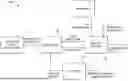
FIG. 1 is a schematic block diagram of an architecture of combined tracking and decision systems in accordance with embodiments of the present disclosure;
FIG. 2 is a schematic block diagram showing the components of the tracking system in accordance with embodiments of the present disclosure;
FIG. 3 is a schematic block diagram of the track filter module in accordance with embodiments of the present disclosure;
FIG. 4 is a pictorial comparison between a conventional Kalman Filter and the track filter in accordance with embodiments of the present disclosure;
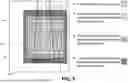
FIG. 5 is a pictorial example of four consecutive scans (the example requirement number) of the same airport segment;
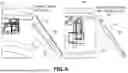
FIG. 6 is a pictorial output of a system and method in accordance with embodiments of the present disclosure, runway clear on the left, runway incursion on the right; and
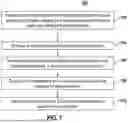
FIG. 7 is a flowchart of a method for determining runway incursion in accordance with embodiments of the present disclosure.
It should be noted that some details of the figures have been simplified and are drawn to facilitate understanding rather than to maintain strict structural accuracy, detail, and scale.
DESCRIPTION
Reference will now be made in detail to the present teachings, examples of which are illustrated in the accompanying drawings. In the drawings, like reference numerals have been used throughout to designate identical elements. In the following description, reference is made to the accompanying drawings that form a part thereof, and in which is shown by way of illustration specific examples of practicing the present teachings. The following description is, therefore, merely exemplary.
Referring now to FIG. 1, to have a safe landing on a runway, it is critical to check whether or not there are objects in runway areas. A system 100 in accordance with embodiments of the present disclosure includes a track system 101 and a decision system 103 that provide warnings for pilots or signals for an autonomous planning and control module. A detection system for landing on a runway frequently loses sight of the detected object because the perceived size of objects on runway areas from the aircraft collecting the visual data is quite small. The track system 101 and the decision system 103 (1) integrate detection over time, (2) improve object state estimation, and (3) predict future object motion.
The term “runway” is used herein to include a defined area for the landing and takeoff of aircraft, taxiways for ground movement of aircraft/taxiing, and areas such as blast pads and overrun areas. The surface of the runway can be of natural material (such as dirt, water, or ice) or another type of material (such as asphalt or concrete). A runway can include a water surface, a strip for aircraft landing training that is adjacent to a larger runway, a vertiport, or a heliport. Aircraft can include flying vehicles such as, for example, but not limited to including, commercial aircraft, private aircraft, military aircraft, watercraft, and helicopter and vertical take-off and landing aircraft, among other types of flying and hovering vehicles. Runways vary in dimensions, for example, a small runway can be 800 feet long and 26 feet wide, or a large runway can be 40,000 feet long and 900 feet wide.
Visual runways may or may not have visual markings. Non-precision instrument runways may include visual markings such as centerlines for horizontal position guidance, aiming points for vertical position guidance, and buoys. Precision instrument runways include blast pad and overrun areas, beginning and ending designated space markers, centerlines, aiming points, buoys, and other horizontal and vertical approach guidance fiducials. There are, for example, single runways, parallel runways, intersecting runways, and open-V runways.
Referring now to FIG. 2, in some configurations, the track system 101 includes, but is not limited to including a track manager 201, a track association 203, a track filter 205, and self-reported fusion 207. The track manager 201 maintains an internal track database of present and past object states and provides an interface layer to external system components. The track manager 201 also coordinates communication between internal subsystems, and provides a homography function that enables compensation for camera motion. The track association 203 assigns detection to existing and new tracks using, for example, but not limited to, statistical gating and an auction algorithm. In some configurations, when statistical gating is used, for existing tracks, a rectangular gate based on the state covariance is used. In some configurations, an auction algorithm, which handles the actual assignment using distance between objects, is used to filter the detection considered for assignment. Object detections that are not used to maintain an existing track are assigned to new probationary tracks for future consideration. An updated list of object detections is provided to the track filter 205 (described in FIG. 3), which returns smoothed state estimates. Self-reported detections are provided to a self-reported fusion system that provides a list of fused tracks to the track manager layer. Based on detecting and tracking non-cooperative objects on runway areas, the decision system 103 (FIG. 1) employs detection probabilities from a detector 105 (FIG. 1) to estimate runway incursion.
Referring now to FIG. 3, inputs to the track filter 205 include, but are not limited to including, track history data, sensor measurements 309, and trajectory previews. In some configurations, trajectory previews are generated by a Gaussian process 307 with dynamic model. In some configurations, the track filter 205 includes, but is not limited to including, two Kalman Filters 301/305 and a Gaussian process 307. The first Kalman filter 301 receives the sensor measurements 309 and provides acceleration estimates using the prediction model inside of the Kalman Filter. The second Kalman Filter 305 also receives the sensor measurements 309 and the acceleration estimates of the objects. The estimates are used for previews. The second Kalman Filter 305 also provides intimidate state estimates between history and current measurements. The trajectories from history, current sensor measurements, and previews are fed into the Gaussian process 307 to smooth out trajectories as well as to obtain an inference.
Continuing to refer to FIG. 3, the preview dynamic model in the discrete-time system is
x k + 1 = A k x k + B k u k , y k = C k x k ( 1 ) x k = [ x 1 , k , x 2 , k ] T
where is an input; yk is the output i.e., the measurement; and the system matrices are
A k = [ 1 Δ t 0 1 ] , B k = [ 0 1 ] , C k = [ 1 0 ] ( 2 )
A modified Kalman Filter in accordance with embodiments of the present disclosure is designed to estimate object acceleration and to generate the prediction state as follows. The predicted state and covariance estimates are
x ˆ k | k - 1 = F k x k - 1 | k - 1 , P ˆ k | k - 1 = F k P k - 1 | k - 1 F k T + Q k ( 3 )
where the estimate states are
x ˆ k | k - 1 = [ x ˆ 1 , k | k - 1 , x ˆ 2 , k | k - 1 , u ˆ k | k - 1 ] T ( 4 ) x k | k - 1 = [ x 1 , k | k - 1 , x 2 , k | k - 1 , u ˆ k - 1 | k - 1 ] T
The system matrices Fk and Hk and the noise covariance Qk are
F k = [ 1 Δ t Δ t 2 2 0 1 Δ t 0 0 1 ] , H k = [ 1 , 0 , 0 , ] , Q k = [ σ x 2 Δ t 4 4 σ x 2 Δ t 3 3 σ x 2 Δ t 2 2 σ x 2 Δ t 3 3 σ x 2 Δ t 2 2 σ x 2 Δ t σ x 2 Δ t 2 2 σ x 2 Δ t σ x 2 ] ( 5 )
The update processes for the updated state and covariance are as follows. The innovation and innovation covariance are
y ~ k = 𝓏 k - H k x ^ k ❘ k - 1 , S k = H k P ^ k ❘ k - 1 H k T + R k ( 6 )
where the measurement covariance
R k is R k = σ m 2 .
The optimal Kalman gain is
K k = P ^ k ❘ k - 1 H k T S k - 1 ( 7 )
The updated state and covariance estimations are
x k | k = x ^ k ❘ k - 1 + K k y ~ k , P ^ k ❘ k = ( I - K k H k ) P ^ k ❘ k - 1 ( 8 )
The measurement post-fit residual is
y ~ k | k = 𝓏 k - H k x k | k ( 9 )
To generate the extra state between the current measurement and previews, the Kalman Filter prediction is used as
x ^ k + 1 ❘ k = F k x k | k + B k u ^ k ( 10 )
To obtain the previews, the accelerate estimate, is fed into the dynamic model in Equation (1). In some configurations, a method in accordance with embodiments of the present disclosure is designed in the discrete time system. The previews are generated based on the estimates and the dynamic model 303 in Equation (1) by iterating the following method:
x k + 1 = A k x k + B k u ^ k , y k = C k x k ( 11 )
The iteration number can be chosen based on the application. In some configurations, four previews, xk+2, . . . ,xk+6 are generated with four iterations of Equation (11).
A second Kalman Filter 305 is used to obtain the history based on the filter delays. The predicted state and covariance for the Kalman Filter are
x _ k ❘ k - 1 = F _ k x _ k - 1 | k - 1 , P _ k ❘ k - 1 = F _ k P _ k - 1 ❘ k - 1 F _ k T + Q _ k ( 12 )
where the system Fk and measurement noise covariance Qk are
F _ k = [ 1 Δ t 0 1 ] , Q _ k = [ σ d 2 Δ t 4 4 σ d 2 Δ t 3 2 σ d 2 Δ t 3 2 σ d 2 Δ t 2 ] ( 13 )
Referring now to FIG. 4, a comparison is shown between a result 401 from using a conventional Kalman Filter, and a result 403 from using the track filter in accordance with embodiments of the present disclosure. The lines 405, representing velocities from two objects, are not well-aligned with taxiways and indicate noise outputs, whereas lines 407 from another two objects are well-aligned with taxiways and indicate smoothed outputs.
Referring again to FIG. 3, the predicted state Xk|k−1, the current measurement Zk, the extra state {circumflex over (X)}k+1|k, and the previews, xk+2, . . . ,xk+4 are fed into the Gaussian Process 307. By using the history, sensor measurements 309, and previews, the Gaussian Process 307 considers the history pattern as a machine learning algorithm, and the preview trajectories generated by online estimate and the dynamic model 303 provide information about and adaptations to new environments, and uncertainties of the predefined dynamic model for the Gaussian Process 307, that enable an estimate of the accuracy of the probability computations.
A method in accordance with embodiments of the present disclosure utilizes Gaussian Process 307 with information from the dynamic model 303 information as in Equation (1) along with the acceleration estimate in Equation (8). For the Gaussian Process 307, the linear time varying stochastic differential equation is given
x . ( t ) = A ( t ) x ( t ) + B ( t ) u g ( t ) + N ( t ) w ( t ) ( 14 )
where the state x(t) and the input ug(t)
x = [ x 1 , y 1 , x 2 , y 2 ] T , u g ( t ) = [ u x , u y ] T ( 15 )
x1 and y1 are the positions; x2 and y2 are velocities. The system matrices A(t), B(t) and N(t) are
A ( t ) = [ 0 0 1 0 0 0 0 1 0 0 0 0 0 0 0 0 ] , B ( t ) = N ( t ) = [ 0 0 0 0 1 0 0 1 ] ( 16 )
The process noise w(t) is given by
w ( t ) ~ 𝒩 ( 0 , Q c δ ( t - t ′ ) ) ( 17 )
a (stationary) zero-mean Gaussian Process with (symmetric, positive-definite) power-spectral density matrix, Qc and δ is the Dirac delta function. The solution to Equation (14) is
x ( t ) = Φ ( t , t 0 ) x ( t 0 ) + ∫ t 0 t Φ ( t , s ) [ B ( s ) u g ( s ) + N ( s ) w ( s ) ] ds ( 18 )
where Φ(t, s) is the transition matrix
Φ ( t , s ) = [ 1 0 ( t - s ) 0 0 1 0 ( t - s ) 0 0 1 0 0 0 0 1 ] ( 19 )
To obtain prior information, the mean for Equation (14) is
u ( t ) = E [ ( x ) ] = Φ ( t , t 0 ) μ 0 + ∫ t 0 t Φ ( t , s ) B ( s ) u g ( s ) ds ( 20 )
The last term with respect to w(t) in Equation (14) is averaged out due to the zero mean. With respect to non-cooperative objects, the acceleration input (t) is not available. The modified Kalman Filter in Equation (8) is used to obtain the estimate, (t), which is used in the Gaussian Process. With the estimate, the vector mean {circumflex over (μ)} is written as
μ _ = 𝒜 v ( 21 ) where μ _ = [ μ ( t 0 ) μ ( t 1 ) ⋮ μ ( t M ) ] , v = [ μ 0 v ( t 1 ) ⋮ v ( t M ) ] , v i = ∫ t i - 1 t i Φ ( t i , s ) B ( s ) u ^ g ( s ) ds i ( 22 ) 𝒜 = [ 1 0 ⋯ 0 0 Φ ( t 1 , t 0 ) 1 ⋯ 0 0 Φ ( t 2 , t 0 ) Φ ( t 2 , t 1 ) ⋱ ⋮ ⋮ ⋯ ⋯ ⋱ 0 0 Φ ( t M - 1 , t 0 ) Φ ( t M - 1 , t 1 ) ⋯ 1 0 Φ ( t M , t 0 ) Φ ( t M , t 1 ) ⋯ Φ ( t M , t M - 1 ) 1 ] ( 23 )
The covariance function can be computed based on the definition
𝒦 ( t , t ′ ) = E [ ( x ( t ) - μ _ ( t ) ) ( x ( t ′ ) - μ _ ( t ′ ) ) T ] ( 24 )
The covariance component between two different times is
𝒦 ( t i , t j ) = { Φ ( t i , t j ) [ ∑ n = 0 j Φ ( t j , t n ) Q n Φ T ( t j , t n ) ] t j < t i ∑ n = 0 i Φ ( t i , t n ) Q n Φ T ( t i , t n ) t i = t j [ ∑ n = 0 i Φ ( t i , t n ) Q n Φ T ( t i , t n ) ] Φ T ( t j , t i ) t i < t j ( 25 ) where Q i = ∫ t i - 1 t i Φ ( t i , s ) N ( s ) Q c N T ( s ) Φ T ( t i , s ) ds ( 26 )
for i=1, . . . , M and Q0=. Based on the Bayes' Theorem, the Maximum A Posterior (MAP) trajectory is
x *= arg max x { P ( x ) ∏ i P ( D ( x i ) ❘ x ) } = arg max x { - log ( P ( x ) ∏ i P ( D ( x i ) ❘ x ) ) ) } ( 27 ) = arg max { x - μ _ 𝒦 2 2 + g ( x ) ∑ obs 2 2 }
where the Gaussian Process prior P(x) is
P ( x ) ∝ { - x - μ _ 𝒦 2 2 } ( 28 )
The likelihood P(D(xi)|x) is
P ( D ( x i ) ❘ x ) ∝ { - g ( x ) ∑ obs 2 2 } ( 29 )
To convert the nonlinear optimization into the linear optimization, the state x and the measurement function g(x) are approximated as
x = x _ + δ x , g ( x ) = g ( x _ ) + C δ x ( 30 )
Using Equation (30), the nonlinear optimization problem in Equation (27) is converted into
δ x * = arg min δ x { 1 2 x _ + δ x - μ 𝒦 2 + g ( x _ ) + 𝒞 δ x ∑ obs 2 } ( 31 )
After the linear system in Equation (31) is solved, {tilde over (x)}={tilde over (x)}+δx* is iterated until the convergence criteria are met. The linear optimization in Equation (31) is rewritten as
δ x * = ( 𝒜 - T 𝒬 - 1 A - 1 + 𝒞 T R - 1 𝒞 ) - 1 ( 𝒜 - T 𝒬 - 1 ( v - 𝒜 x _ ) + 𝒞 T ℛ - 1 ( z - g ) ) ( 32 )
where Q=diag [, Q1 . . . , QM] with Qi in Equation (26) and C=∂g/∂{tilde over (x)}. Based on the estimated dynamics in Equation (21), the sparse matrix structure, i.e., (+CTR−1C) is block-tridiagonal.
The decision system 103 (FIG. 1) employs a probabilistic strategy in conjunction with online adjustment of various track parameters to ensure that probability requirements are met. The decision system 103 (FIG. 1) incorporates a priori information about the boundaries of the airport runway and taxiway system, as well as a runway safety area (RSA) encompassing the assigned landing runway. The system determines a maximum allowed cumulative probability of a false negative. The maximum allowed cumulative probability is a system requirement value. It is used to derive the other system parameters so that the system performance will meet the requirement. False negatives occur when an object is not tracked when it is present inside the RSA, which can result in a collision. The determination of maximum allowed cumulative probability includes tracking track birth, track death, association gate size for probationary tracks, the number of required empty space observations, and detection slice allocation. One measured statistic is the maximum allowed cumulative probability of a false positive. False positives occur when a track is initialized on an object that is not actually there. From a safety standpoint, it is important to minimize their frequency since unnecessary go-arounds reduce the operational safety margins of the airport. Potential consequences also include reduced efficiency, flight delays, and loss of pilot trust. The ratio of scans to track updates is used to determine when a track is declared an incursion.
Referring now to FIG. 5, in addition to providing online updates to the track system 101 (FIG. 1), the decision system 103 (FIG. 1) maintains a map of the current number of looks at each airport segment. This is maintained as multiple polynomial contours that are updated on each scan. Slices that overlap existing contours can result in an increase in the total number of looks for that segment. The edges of each contour are shrunk in-between sensor scans because a previously undetected dynamic object may have entered the contour region. This functionality works in conjunction with the track system 101 (FIG. 1) to obtain a maximum cumulative probability of a false negative. In some configurations, the decision system 103 (FIG. 1) reports three different outcomes to the pilot. The first outcome is insufficient evidence. This indicates that the system has not integrated enough scans to meet probability criteria as shown in areas 503, 505, and 507. It may be that the “empty looks” polynomial does not encompass the entire RSA (false negative requirement). It could also indicate that a track inside the RSA does not have a high enough scan-to-track updates ratio (false positive criterion). Additional scans enable the decision to transition to a firm outcome. The outcomes are either runway clear 501, meaning there are no tracks inside the runway safety area and the segment has been scanned a pre-selected number of times to meet false negative criteria, or incursion is ongoing, which indicates a track is predicted to be within the RSA when the aircraft touches down.
Referring now to FIG. 6, shown are two side-by-side views for situational awareness evaluation during flight testing. The images represent live camera views with slices and object detections overlaid. The banner provides the identification of the object when there is a probably incursion, the percentage of the runway safety area (RSA) that has currently been covered by a pre-selected number of scans, and the lag behind the current time. The rectangles illustrate the object in the context of the scan area. Boxes 601 and 651 are regions (referred to herein as pre-selected regions) where a pre-selected number of scans have taken place. Boxes 603 and 653 are projections into a two dimensional top-down view of slices. Boxes 609 and 659 are projections of the view of the runway from the aircraft. Points 607 and 657 are objects causing possible incursion. For objects that are being tracked but are not expected to cause incursion, a different graphic can be used to distinguish them from incurring objects. The object represented by point 607 is not expected to cause incursion, whereas the object represented by point 657 is expected to cause incursion.
Referring now to FIG. 7, method 700 for determining a probability of runway incursion during aircraft landing can include, but is not limited to including, integrating 702 object detections over time by detecting possible new and existing object tracks, assigning the object detections to the object tracks, and filtering the object detections, estimating 704 an object state based on the integrated detections, predicting 706 future object motion and trajectory previews based on the estimated object state, a dynamic model, and a track history; determining 708 the probability of the runway incursion based on the predicted future object motion, and adapting 710 the detection over time to new environments based on accuracy of the probability.
Notwithstanding that the numerical ranges and parameters setting forth the broad scope of the disclosure are approximations, the numerical values set forth in the specific examples are reported as precisely as possible. Any numerical value, however, inherently contains certain errors necessarily resulting from the standard deviation found in their respective testing measurements. Moreover, all ranges disclosed herein are to be understood to encompass any and all sub-ranges subsumed therein.
While the present teachings have been illustrated with respect to one or more implementations, alterations and/or modifications can be made to the illustrated examples without departing from the spirit and scope of the appended claims. In addition, while a particular feature of the present teachings may have been disclosed with respect to only one of several implementations, such feature may be combined with one or more other features of the other implementations as may be desired and advantageous for any given or particular function. As used herein, the terms “a”, “an”, and “the” may refer to one or more elements or parts of elements. As used herein, the terms “first” and “second” may refer to two different elements or parts of elements. As used herein, the term “at least one of A and B” with respect to a listing of items such as, for example, A and B, means A alone, B alone, or A and B. Those skilled in the art will recognize that these and other variations are possible. Furthermore, to the extent that the terms “including,” “includes,” “having,” “has,” “with,” or variants thereof are used in either the detailed description and the claims, such terms are intended to be inclusive in a manner similar to the term “comprising.” Further, in the discussion and claims herein, the term “about” indicates that the value listed may be somewhat altered, as long as the alteration does not result in nonconformance of the process or structure to the intended purpose described herein. Finally, “exemplary” indicates the description is used as an example, rather than implying that it is an ideal.
It will be appreciated that variants of the above-disclosed and other features and functions, or alternatives thereof, may be combined into many other different systems or applications. Various presently unforeseen or unanticipated alternatives, modifications, variations, or improvements therein may be subsequently made by those skilled in the art which are also intended to be encompasses by the following claims.
Claims
1. A method for determining a probability of runway incursion during aircraft landing, the method comprising:
integrating object detections over time by detecting possible new and existing object tracks, assigning the object detections to the object tracks, and filtering the object detections;
estimating an object state based on the integrated detections;
predicting future object motion and trajectory previews based on the estimated object state, a dynamic model, and a track history;
determining the probability of the runway incursion based on the predicted future object motion; and
adapting the detection over time to new environments based on accuracy of the probability.
2. The method of claim 1, wherein detecting possible new and existing object tracks comprises:
accessing the track history, sensor measurements associated with the possible new and existing object tracks, and the trajectory previews.
3. The method of claim 2, further comprising:
detecting and tracking non-cooperative objects in a pre-selected region during the aircraft landing; and
determining the probability of the runway incursion based on vision detection probabilities, a number of scans of the pre-selected region associated with the aircraft landing, a number of updates to the detected existing and new tracks of objects, a pre-selected false negative threshold, and a pre-selected false positive threshold.
4. The method of claim 3, further comprising:
assigning the detection to the non-cooperative objects using statistical gating and an auction algorithm,
wherein the statistical gating includes a rectangular gate based on a state covariance to filter the detection considered for assignment,
wherein the auction algorithm is configured to assign using a distance between the non-cooperative objects, and
wherein the detection that is not used to maintain an existing track is assigned to a new probationary track.
5. The method of claim 3, wherein the pre-selected region is based on boundaries of an airport runway, boundaries of a taxiway system associated with the airport runway, and boundaries of a runway safety area associated with the airport runway.
6. The method of claim 5, wherein the airport runway comprises:
one of a defined area for the landing and takeoff of the aircraft, taxiways for ground movement of the aircraft, blast pads, and overrun areas, a water surface, a strip for aircraft landing training that is adjacent to the defined area, a vertiport, or a heliport.
7. The method of claim 3, wherein the pre-selected false negative threshold includes a pre-selected maximum allowed value of a false negative, and wherein the pre-selected false positive threshold includes a maximum cumulative probability of a false positive.
8. The method of claim 3, further comprising:
declaring the runway incursion when a ratio of the number of scans to the number of updates reaches a threshold based on the pre-selected false negative threshold and the pre-selected false positive threshold.
9. The method of claim 3, further comprising:
filtering tracks of non-cooperating objects based on track history, sensor measurements, and trajectory previews generated by the dynamic model, the filtering including:
estimating the trajectory previews of the non-cooperating objects by providing the track history to a first Kalman filter;
estimating acceleration of the non-cooperating objects by providing the trajectory previews and the sensor measurements to a second Kalman filter; and
smoothing the tracks of the non-cooperating objects based on providing the track history, the sensor measurements, and the estimated acceleration to a Gaussian process.
10. The method of claim 9, further comprising:
receiving the sensor measurements;
estimating acceleration of the possible new and existing objects;
determining the trajectory previews based on the estimated acceleration; and
generating a predicted state and a covariance estimate of object trajectories.
11. The method of claim 10, wherein estimating acceleration of the possible new and existing objects comprises:
using a modified Kalman filter to determine the trajectory previews.
12. The method of claim 11, further comprising:
smoothing the object trajectories; and
obtaining an inference.
13. The method of claim 12, wherein smoothing the object trajectories comprises:
feeding the object trajectories, the sensor measurements, and the trajectory previews into a Gaussian Process.
14. The method of claim 13, wherein for the Gaussian Process:
a linear time varying stochastic differential equation is
x ˙ ( t ) = A ( t ) x ( t ) + B ( t ) u g ( t ) + N ( t ) w ( t ) , ( 14 )
wherein state x(t) and input ug(t) are
x = [ x 1 , y 1 , x 2 , y 2 ] T , u g ( t ) = [ u x , u y ] T , ( 15 )
wherein x1 and y1 are object positions, and x2 and y2 are object velocities,
wherein system matrices A(t), B(t) and N(t) are
A ( t ) = [ 0 0 1 0 0 0 0 1 0 0 0 0 0 0 0 0 ] } , B ( t ) = N ( t ) = [ 0 0 0 0 1 0 0 1 ] , ( 16 )
wherein process noise w(t) is
w ( t ) ∼ 𝒩 ( 0 , 𝒬 c δ ( t - t ′ ) ) , ( 17 )
a stationary zero-mean Gaussian Process including a symmetric, positive-definite power-spectral density matrix, Qc, and a Dirac delta function δ, wherein a solution to Equation (14) is
x ( t ) = Φ ( t , t 0 ) x ( t 0 ) + ∫ t 0 t Φ ( t , s ) [ B ( s ) u g ( s ) + N ( s ) w ( s ) ] ds , ( 18 )
wherein Φ(t, s) is a transition matrix
Φ ( t , s ) = [ 1 0 ( t - s ) 0 0 1 0 ( t - s ) 0 0 1 0 0 0 0 1 ] , ( 19 )
wherein a mean for Equation (14) is
μ ( t ) = E [ ( x ) ] = Φ ( t , t 0 ) μ 0 + ∫ t 0 t Φ ( t , s ) B ( s ) u g ( s ) ds , ( 20 )
averaging a last term in Equation (20) with respect to w(t) in Equation (14) due to a zero mean;
using the second Kalman filter in Equation (8) is used to obtain an estimate of acceleration input, (t),
wherein vector mean μ is μ=(21),
wherein
μ = [ μ ( t 0 ) μ ( t 1 ) ⋮ μ ( t M ) ] , v = [ μ 0 μ ( t 1 ) ⋮ μ ( t M ) ] , v i = ∫ t i - 1 t i Φ ( t i , s ) B ( s ) u ^ g ( s ) ds i ( 22 ) 𝒜 = [ 1 0 … 0 0 Φ ( t 1 , t 0 ) 1 … 0 0 Φ ( t 2 , t 0 ) Φ ( t 2 , t 1 ) ⋱ ⋮ ⋮ ⋮ ⋮ ⋱ 0 0 Φ ( t M - 1 , t 0 ) Φ ( t M - 1 , t 1 ) … 1 0 Φ ( t M , t 0 ) Φ ( t M , t 1 ) … Φ ( t M - 1 , t 0 ) 1 ] , ( 23 )
wherein a covariance function is based on
𝒦 ( t , t ′ ) = E [ ( x ( t ) - μ _ ( t ) ) ( x ( t ′ ) - μ _ ( t ′ ) ) T ] ( 24 )
wherein a covariance component between two different times is
𝒦 ( t i , t j ) = { Φ ( t i , t j ) [ ∑ n = 0 j Φ ( t j , t n ) 𝒬 n Φ T ( t j , t n ) ] t j < t i ∑ n = 0 i Φ ( t i , t n ) 𝒬 n Φ T ( t i , t n ) t i = t j [ ∑ n = 0 i Φ ( t i , t n ) 𝒬 n Φ T ( t i , t n ) ] Φ T ( t j , t i ) t i < t j , ( 26 )
for i=1, . . . ,M and Q0=,
wherein a Maximum A Posterior (MAP) trajectory is
( 27 ) x * = arg max x { P ( x ) ∏ i P ( D ( x i ) | x ) } = arg max x { - log ( P ( x ) ∏ i P ( D ( x i ) | x ) ) ) } = arg min { x - μ _ 𝒦 2 2 + g ( x ) ∑ obs 2 2 } ,
wherein Gaussian Process prior P(x) is
P ( x ) ∝ { - x - μ _ 𝒦 2 2 } , ( 28 )
wherein likelihood P(D(xi)|x) is
P ( D ( x i ) | x ) ∝ { g ( x ) ∑ obs 2 2 } , ( 29 )
computing the state x and measurement function g(x) to convert nonlinear optimization into linear optimization
x = x _ + δ x , g ( x ) = g ( x _ ) + C δ x ; ( 30 )
converting a nonlinear optimization problem in Equation (27) using Equation (30)
δ x *= arg min δ x { 1 2 x ¯ + δ x - μ 𝒦 2 1 2 g ( x _ ) + C δ x ∑ obs 2 } ; ( 31 )
iterating x=x+δx* until convergence criteria are met after a linear system in Equation (31) is solved; and
rewriting a linear optimization in Equation (31) as
δ x *= ( 𝒜 - T Q - 1 A - 1 + C T R - 1 C ) - 1 ( 𝒜 - T Q - 1 ( v - 𝒜 x _ ) + C T R - 1 ( 𝓏 - g ) ) , ( 32 )
wherein Q=diag [, Q1, . . . , QM] with Qi in Equation (26) and
C = ∂ g / ∂ x ¯ .
15. The method of claim 14, wherein the trajectory previews are generated by the dynamic model comprising:
x k + 1 = A k x k + B k u k , y k = C k x k ; and ( 1 ) x k = [ x 1 , k , x 2 , k ] T ,
wherein is an input; is an output, and
wherein the system matrices are
A h = [ 1 Δ t 0 1 ] , B k = [ 0 1 ] , C k = [ 1 0 ] . ( 2 )
16. The method of claim 15, wherein the predicted state and the covariance estimate of each of the object trajectories comprise:
x ˆ k | k - 1 = F k x k - 1 ❘ k - 1 , P ˆ k | k - 1 = F k P k - 1 ❘ k - 1 F k T + Q k , ( 3 )
wherein the predicted state is
x ˆ k | k - 1 = [ x ^ 1 , k | k - 1 , x ^ 2 , k | k - 1 , u ^ k | k - 1 ] T ( 4 ) x ˆ k | k - 1 = [ x ^ 1 , k | k - 1 , x ^ 2 , k | k - 1 , u ^ k - 1 | k - 1 ] T ,
wherein system matrices Fk and Hk and noise covariance Qk are
F k = [ 1 Δ t Δ t 2 2 0 1 Δ t 0 0 1 ] , H k = [ 1 , 0 , 0 , ] , Q k = [ σ x 2 Δ t 4 4 σ x 2 Δ t 3 3 σ x 2 Δ t 2 2 σ x 2 Δ t 3 3 σ x 2 Δ t 2 2 σ x 2 Δ t σ x 2 Δ t 4 4 σ x 2 Δ t σ x 2 ] , ( 5 )
wherein update processes for updated predicted state and updated covariance include an innovation and innovation covariance are
y ˜ k = 𝓏 k - H k x ˆ k | k - 1 , S k = H k P ˆ k | k - 1 H k T + R k , ( 6 )
wherein measurement covariance
R k is R k = σ m 2 ,
wherein an optimal Kalman gain is
K k = P ˆ k | k - 1 H k T S k - 1 , ( 7 )
wherein an updated predicted state and an updated covariance estimations are
x k | k = x ˆ k | k - 1 + K k y ~ k , P k | k = ( I - K k H k ) P ^ k | k - 1 , ( 8 )
wherein a measurement post-fit residual is
y ~ k | k = 𝓏 k - H k x k | k , ( 9 )
and
wherein a prediction of the first Kalman filter is
x ˆ k + 1 | k = F k x k | k + B k u ˆ k . ( 10 )
17. The method of claim 16, further comprising:
feeding an accelerate estimate, into the dynamic model to obtain the previews.
18. A computer system for determining a probability of runway incursion during aircraft landing, the computer system comprising:
a hardware processor; and
a non-volatile storage medium storing instructions that when executed by the hardware processor perform operations comprising:
detecting and tracking non-cooperative objects in a pre-selected region during the aircraft landing; and
determining the probability of the runway incursion based on vision detection probabilities, a number of scans of the pre-selected region associated with the aircraft landing, a number of updates to the detected existing and new tracks of objects, a pre-selected false negative threshold, and a pre-selected false positive threshold.
19. The computer system of claim 18, further comprising:
filtering tracks of non-cooperating objects based on track history, sensor measurements, and trajectory previews generated by a dynamic model, the filtering including:
estimating the trajectory previews of the non-cooperating objects by providing the track history to a first Kalman filter;
estimating acceleration of the non-cooperating objects by providing the trajectory previews and the sensor measurements to a second Kalman filter;
smoothing the tracks of the non-cooperating objects based on providing the track history, the sensor measurements, and the estimated acceleration to a Gaussian process;
integrating the object detections over time by detecting possible new and existing object tracks, assigning the object detections to the object tracks, and filtering the object detections;
estimating an object state based on the integrated detection;
predicting future object motion and trajectory previews based on the estimated object state, the dynamic model, and the track history;
determining the probability of the runway incursion based on the predicted future object motion; and
adapting the detection over time to new environments based on accuracy of the probability.
20. A computer program product for determining a probability of runway incursion during aircraft landing, the computer program product comprising a computer readable storage medium having program instructions embodied therewith, the program instructions executable by a computing device to cause the computing device to perform operations comprising:
detecting and tracking non-cooperative objects in a pre-selected region during the aircraft landing;
determining the probability of the runway incursion based on vision detection probabilities, a number of scans of the pre-selected region associated with the aircraft landing, a number of updates to the detected existing and new tracks of objects, a pre-selected false negative threshold, and a pre-selected false positive threshold,
filtering tracks of non-cooperating objects based on track history, sensor measurements, and trajectory previews generated by a dynamic model, the filtering including:
estimating the trajectory previews of the non-cooperating objects by providing the track history to a first Kalman filter;
estimating acceleration of the non-cooperating objects by providing the trajectory previews and the sensor measurements to a second Kalman filter;
smoothing the tracks of the non-cooperating objects based on providing the track history, the sensor measurements, and the estimated acceleration to a Gaussian process;
integrating the object detections over time by detecting possible new and existing object tracks, assigning the object detections to the object tracks, and filtering the object detections;
estimating an object state based on the integrated detection;
predicting future object motion and trajectory previews based on the estimated object state, the dynamic model, and the track history;
determining the probability of the runway incursion based on the predicted future object motion; and
adapting the detection over time to new environments based on accuracy of the probability.
Images & Drawings included:
























Sources:
- United States Patent and Trademark Office - verify current appl. status at the USPTO↗
Recent applications in this class:
- » 20260065792 2026-03-05
SYSTEM AND METHOD FOR STRATEGIC AIRSPACE DECONFLICTION USING COOPERATIVE MULTI-AGENT REINFORCEMENT LEARNING - » 20260065791 2026-03-05
SYSTEMS AND METHODS FOR VISUALIZING A PREDICTED PATH OF AN AIRCRAFT - » 20260057793 2026-02-26
METHOD AND SYSTEM FOR AVOIDING MID-AIR COLLISIONS AND TRAFFIC CONTROL - » 20260051258 2026-02-19
SYSTEMS AND METHODS FOR AIRPORT NETWORK-BASED SURFACE COLLISION AVOIDANCE - » 20260038379 2026-02-05
Nonuniform Laser Beam Scan Based Flight Path Clearing System - » 20260038378 2026-02-05
AIRCRAFT GROUND ANTI-COLLISION SYSTEM AND METHOD - » 20260038377 2026-02-05
Sensor Assembly for Use in Association with Aircraft Collision Avoidance System and Method of Using the Same - » 20260024444 2026-01-22
SYSTEM AND METHOD FOR DETECTING AND AVOIDING CONFLICTS ALONG A CURRENT ROUTE OF A VEHICLE - » 20260004668 2026-01-01
AIRCRAFT TAIL STRIKE DETECTION AND PREVENTION SYSTEM AND METHOD - » 20250391281 2025-12-25
AIRCRAFT COLLISION AVOIDANCE SYSTEM
Recent applications for this Assignee:
- » 20260063424 2026-03-05
VISUAL LOCATION OF AERIAL VEHICLES USING DYNAMIC ALEATORIC UNCERTAINTY - » 20260063423 2026-03-05
AERIAL VEHICLE TRACKING USING DYNAMIC ALEATORIC UNCERTAINTY - » 20260062115 2026-03-05
AIRCRAFT WINGS AND SYSTEMS AND METHODS FOR DRIVING A SLAT OF AN AIRCRAFT WING - » 20260060857 2026-03-05
WHEELCHAIR FOR AN INTERNAL CABIN OF AN AIRCRAFT - » 20260058447 2026-02-26
LINE MANAGEMENT DEVICES, CABLE MANAGEMENT DEVICES AND METHODS FOR GUIDING LOCAL DISTRIBUTION OF UTILITY LINES - » 20260054837 2026-02-26
ACTIVE DISPLAY INTERIOR VEHICLE SURFACES - » 20260054836 2026-02-26
SYSTEM AND METHOD FOR RESTRAINING A GALLEY CART WITHIN AN INTERNAL CABIN OF AN AIRCRAFT - » 20260054829 2026-02-26
SYSTEM FOR PROVIDING BUOYANCY FOR A VEHICLE ON A BODY OF WATER - » 20260051658 2026-02-19
HIGH ISOLATION RING SLOT PATCH RADIATOR FOR PHASED ARRAY ANTENNAS - » 20260049604 2026-02-19
Accumulator for Prevention of Hydraulic Pump Cavitation