RARE EARTH SINTERED MAGNET, METHOD FOR PRODUCING RARE EARTH SINTERED MAGNET, ROTOR, AND ROTARY MACHINE
US20260058041A1
2026-02-26
19/104,793
2022-08-24
Smart Summary: A rare earth sintered magnet is made using a special formula that includes elements like Neodymium (Nd) and Praseodymium (Pr) along with other rare earth elements. This magnet has two parts: a core and a shell that surrounds the core. The core contains different amounts of Nd and Pr, with one part having more Nd and the other having more Pr. These two parts are mixed together to create the final magnet. This design helps improve the magnet's performance and efficiency in various applications. 🚀 TL;DR
Abstract:
A rare earth sintered magnet includes a main phase that satisfies a general formula (Nd, Pr, R)—Fe—B, where R is one or more rare earth elements selected excluding Nd and Pr, the main phase containing crystal grains based on an Nd2Fe14B crystal structure. The main phase includes a core portion and a shell portion covering the core portion. The main phase includes a first main phase that satisfies CNd>CPr and a second main phase that satisfies CNd<CPr, where CNd is concentration of Nd in the core portion and CPr is concentration of Pr in the core portion. The first main phase and the second main phase are provided mixedly.
Inventors:
- Yasutaka NAKAMURA 7 🇯🇵 Tokyo, Japan
- Tatsuya KITANO 4 🇯🇵 Tokyo, Japan
- Akito IWASAKI 6 🇯🇵 Tokyo, Japan
Assignee:
- MITSUBISHI ELECTRIC CORPORATION 16,911 🇯🇵 TOKYO, Japan
Applicant:
Interested in similar patents?
Get notified when new applications in this technology area are published.
Classification:
C22C33/04 » CPC further
Making ferrous alloys by melting
C22C38/002 » CPC further
Ferrous alloys, e.g. steel alloys containing In, Mg, or other elements not provided for in one single group -
C22C38/005 » CPC further
Ferrous alloys, e.g. steel alloys containing rare earths, i.e. Sc, Y, Lanthanides
H01F41/0293 » CPC further
Apparatus or processes specially adapted for manufacturing or assembling magnets, inductances or transformers; Apparatus or processes specially adapted for manufacturing materials characterised by their magnetic properties for manufacturing cores, coils, or magnets for manufacturing permanent magnets diffusion of rare earth elements, e.g. Tb, Dy or Ho, into permanent magnets
C22C38/00 IPC
Ferrous alloys, e.g. steel alloys
H01F41/02 IPC
Apparatus or processes specially adapted for manufacturing or assembling magnets, inductances or transformers; Apparatus or processes specially adapted for manufacturing materials characterised by their magnetic properties for manufacturing cores, coils, or magnets
Description
FIELD
The present disclosure relates to a rare earth sintered magnet which is a permanent magnet obtained by sintering a material containing a rare earth element, a method for producing a rare earth sintered magnet, a rotor, and a rotary machine.
BACKGROUND
R-T-B-based permanent magnets having a tetragonal R2T14B intermetallic compound as a main phase are known. Here, R is a rare earth element, T is a transition metal element such as Fe (iron) or Fe that is partially replaced by cobalt (Co), and B is boron. R-T-B-based permanent magnets are used for various components having a high added value, including for example industrial motors. In particular, Nd—Fe—B-based sintered magnets in which R is neodymium (Nd) are used for various components due to excellent magnetic properties. In addition, because industrial motors are often used in a high temperature environment exceeding 100° C., attempts have been made to improve coercive force by adding heavy rare earth elements such as dysprosium (Dy) to Nd-T-B-based sintered magnets.
In recent years, the production of Nd—Fe—B-based sintered magnets has been expanded, and the consumption of Nd and heavy rare earth elements such as Dy and terbium (Tb) has been increased. However, Nd and heavy rare earth elements are expensive and also have a procurement risk due to high distribution unevenness. In view of this, a possible measure for reducing the consumption of Nd and heavy rare earth elements is to use a magnet that forms a main phase including a low heavy rare earth phase, to use other rare earth elements as R, such as praseodymium (Pr), cerium (Ce), lanthanum (La), samarium (Sm), scandium (Sc), gadolinium (Gd), yttrium (Y), and lutetium (Lu), or to use a special production method such as subjecting a sintered body to hot plastic working. Hereinafter, hot plastic working applied to a sintered body is referred to as hot working. However, adding a heavy rare earth element to the main phase to no small extent contributes to improvement of the coercive force, but significantly degrades the residual magnetic flux density. In addition, replacing all or a part of Nd with elements such as Pr, Ce, La, Sm, Sc, Gd, Y, and Lu significantly degrades the magnetic properties of the residual magnetic flux density and the coercive force. Furthermore, subjecting the sintered body to hot working significantly degrades the magnetization of the magnet due to the refinement of the crystal grains. From the above, it has been difficult to achieve both saving of heavy rare earth elements and excellent magnetic properties and magnetization. Therefore, attempts have been conventionally made to develop technology that allows for improvement of magnetic properties at room temperature and prevention of degradation of magnetic properties associated with temperature rise in the case of using these elements for producing Nd—Fe—B-based sintered magnets. In particular, at present, a rare earth magnet that allows for both further reduction of heavy rare earth elements and excellent magnetic properties and magnetization is required.
Patent Literature 1 discloses an R-T-B-based sintered magnet containing main phase grains consisting of an R2T14B crystal, where R is one or more kinds of rare earth elements including a heavy rare earth element RH as an essential element, T is one or more kinds of transition metal elements including Fe or including Fe and Co as an essential element, B is boron. A part of the main phase grains of the R-T-B-based sintered magnet includes a plurality of low heavy rare earth element crystal phases therein, and the low heavy rare earth element crystal phase is a phase consisting of an R2T14B crystal and having a relatively low concentration of the heavy rare earth element with respect to the concentration of the heavy rare earth element in the entire main phase grains. According to the technique described in Patent Literature 1, it is possible to obtain an R-T-B-based sintered magnet having improved magnetic properties at low cost.
Patent Literature 2 discloses a method for producing a rare earth magnet consisting of: a first step of producing a sintered body represented by a composition formula of (R11-xR2x)aTMbBcMd and having a structure consisting of a main phase and a grain boundary phase; a second step of producing a rare earth magnet precursor by subjecting the sintered body to hot working; and a third step of producing a rare earth magnet from the rare earth magnet precursor by causing a melt of an R3-M modified alloy to be diffused and permeating through the grain boundary phase of the rare earth magnet precursor. Here, R1 is one or more rare earth elements including Y, R2 is a rare earth element different from R1, TM is a transition metal including one or more of Fe, nickel (Ni), and Co, B is boron, and M is one or more of titanium (Ti), gallium (Ga), zinc (Zn), silicon (Si), aluminum (Al), niobium (Nb), zirconium (Zr), Ni, Co, manganese (Mn), vanadium (V), tungsten (W), tantalum (Ta), germanium (Ge), copper (Cu), chromium (Cr), hafnium (Hf), molybdenum (Mo), phosphorus (P), carbon (C), magnesium (Mg), mercury (Hg), silver (Ag), and gold (Au). Further, x, a, b, c, and d satisfy 0.01≤x≤1, 12≤a≤20, b=100−a−c−d, 5≤c≤20, and 0≤d≤3, all by at %. R3 is a rare earth element including R1 and R2. According to the technique described in Patent Literature 2, it is possible to produce a rare earth magnet excellent in not only magnetization but also coercive force performance even when the main phase ratio is high.
CITATION LIST
Patent Literature
-
- Patent Literature 1: Japanese Patent Application Laid-open No. 2018-174313
- Patent Literature 2: Japanese Patent Application Laid-open No. 2015-153813
SUMMARY OF INVENTION
Problem to be Solved by the Invention
However, in the R-T-B-based sintered magnet described in Patent Literature 1, a phase including a heavy rare earth element is present in the main phase, which improves coercive force but cannot yield the residual magnetic flux density required for industrial motors or the like, which may lead to degradation of magnetic properties. Furthermore, since heavy rare earth elements are used, there is a problem that the procurement risk and cost cannot be reduced. Even if the rare earth magnet produced with the production method described in Patent Literature 2 can reduce heavy rare earth elements and improve the coercive force, the production method includes hot working. For this reason, there is a possibility of lowering the residual magnetic flux density and magnetization of the rare earth magnet to be produced.
The present disclosure has been made in view of the above, and an object thereof is to obtain a rare earth sintered magnet capable of improving magnetic properties and magnetization as compared with the related art, while reducing use of Nd and heavy rare earth elements as compared with the related art.
Means to Solve the Problem
In order to solve the above-described problems and achieve the object, a rare earth sintered magnet according to the present disclosure includes a main phase that satisfies a general formula (Nd, Pr, R)—Fe—B, where R is one or more rare earth elements selected excluding Nd and Pr, the main phase containing crystal grains based on an Nd2Fe14B crystal structure. The main phase includes a core portion and a shell portion covering the core portion. The main phase includes a first main phase that satisfies CNd>CPr and a second main phase that satisfies CNd<CPr, where CNd is concentration of Nd in the core portion and CPr is concentration of Pr in the core portion. The first main phase and the second main phase are provided mixedly.
Effects of the Invention
The rare earth sintered magnet according to the present disclosure can achieve the effect of improving magnetic properties and magnetization as compared with the related art, while reducing use of Nd and heavy rare earth elements as compared with the related art.
BRIEF DESCRIPTION OF DRAWINGS
FIG. 1 is a diagram schematically illustrating an exemplary sintered structure of a rare earth sintered magnet according to a first embodiment.
FIG. 2 is a diagram schematically illustrating an exemplary sintered structure of a rare earth sintered magnet according to the second embodiment.
FIG. 3 is a diagram illustrating atomic sites in a tetragonal Nd2Fe14B crystal structure.
FIG. 4 is a flowchart illustrating an exemplary procedure of a method for producing a rare earth sintered magnet alloy according to the second embodiment.
FIG. 5 is a flowchart illustrating an exemplary procedure of a method for producing a rare earth sintered magnet according to the third embodiment.
FIG. 6 is a cross-sectional view schematically illustrating an exemplary configuration of a rotor equipped with a rare earth sintered magnet according to the fourth embodiment.
FIG. 7 is a cross-sectional view schematically illustrating an exemplary configuration of a rotary machine according to the fifth embodiment.
FIG. 8 is a trace of a composition image obtained by analyzing a cross section of a rare earth sintered magnet according to Examples 1 to 8 with FE-EPMA.
FIG. 9 is an element map of Nd obtained by analyzing a cross section of a rare earth sintered magnet according to Examples 1 to 8 with FE-EPMA.
FIG. 10 is an element map of Pr obtained by analyzing a cross section of a rare earth sintered magnet according to Examples 1 to 8 with FE-EPMA.
FIG. 11 is an element map of O obtained by analyzing a cross section of a rare earth sintered magnet according to Examples 1 to 8 with FE-EPMA.
FIG. 12 is an element map of La obtained by analyzing a cross section of a rare earth sintered magnet according to Examples 1 to 8 with FE-EPMA.
FIG. 13 is an element map of Sm obtained by analyzing a cross section of a rare earth sintered magnet according to Examples 1 to 8 with FE-EPMA.
DESCRIPTION OF EMBODIMENTS
Hereinafter, a rare earth sintered magnet, a method for producing a rare earth sintered magnet, a rotor, and a rotary machine according to embodiments of the present disclosure will be described in detail with reference to the drawings.
First Embodiment
FIG. 1 is a diagram schematically illustrating an exemplary sintered structure of a rare earth sintered magnet according to the first embodiment. The rare earth sintered magnet 1 according to the first embodiment includes a main phase 10 that satisfies a general formula (Nd, Pr, R)—Fe—B and contains crystal grains based on an Nd2Fe14B crystal structure, and the main phase 10 includes a core portion and a shell portion covering the core portion. Here, R is one or more rare earth elements selected excluding Nd and Pr. The shell portion has a composition different from that of the core portion and is provided so as to cover the core portion. The rare earth sintered magnet 1 further includes a subphase 20 existing between the main phase 10 and the main phase 10. The subphase 20 will be described in the second embodiment.
In the rare earth sintered magnet 1 according to the first embodiment, the main phase 10 includes a first main phase 11 that satisfies CNd>CPr and a second main phase 12 that satisfies CNd<CPr, where CNd is the concentration of Nd in the core portion and CPr is the concentration of Pr in the core portion, and the first main phase 11 and the second main phase 12 are provided mixedly. The first main phase 11 includes a core portion 11c and a shell portion 11s having a composition different from that of the core portion 11c and covering the core portion 11c. The second main phase 12 includes a core portion 12c and a shell portion 12s having a composition different from that of the core portion 12c and covering the core portion 12c. CNd>CPr is satisfied in the core portion 11c of the first main phase 11, and CNd<CPr is satisfied in the core portion 12c of the second main phase 12.
This means that the rare earth sintered magnet 1 has two types of main phases 10, i.e., the first main phase 11 and the second main phase 12, and focusing on the core portions 11c and 12c of the two types of main phases 10, the Nd concentration is higher than the Pr concentration in the first main phase 11, and conversely, the Pr concentration is higher than the Nd concentration in the second main phase 12. As described above, by mixing two types of main phases 10 having core-shell structures that differ in anisotropic magnetic field, that is, magnetic anisotropy, it is possible to reduce Nd and heavy rare earth elements and also improve the residual magnetic flux density and the coercive force while maintaining good magnetization. Furthermore, it also contributes to prevention of degradation in magnetic properties associated with temperature change. Here, the concentration difference indicated by “the first main phase 11 that satisfies CNd>CPr and the second main phase 12 that satisfies CNd<CPr” means that there is a clear difference in the detection intensity of Nd and Pr by mapping analysis using an electron probe microanalyzer (EPMA). Specifically, taking the case of the first main phase 11 as an example, the EPMA detection intensity of the concentration of Nd in the core portion 11c is higher than the average of the detection intensity of Nd, and the EPMA detection intensity of the concentration of Pr indicates around the lower limit of the detection intensity of Pr. The case in the second main phase 12 is the reverse of the case in the first main phase 11.
The rare earth sintered magnet 1 according to the first embodiment satisfies relational expressions of C1Nd>C2Nd and C1Pr<C2Pr, where C1Nd is the Nd concentration of the core portion 11c of the first main phase 11, C2Nd is the Nd concentration of the core portion 12c of the second main phase 12, C1Pr is the Pr concentration of the core portion 11c of the first main phase 11, and C2Pr is the Pr concentration of the core portion 12c of the second main phase 12. That is, the Nd concentration is higher in the core portion 11c of the first main phase 11 than in the core portion 12c of the second main phase 12, and conversely, the Pr concentration is higher in the core portion 12c of the second main phase 12 than in the core portion 11c of the first main phase 11. The concentration difference here also means that there is a difference in the detection intensity of Nd and Pr by the mapping analysis using the EPMA. Specifically, in the case of the concentration of Nd, it means that the EPMA detection intensity of Nd in the core portion 11c of the first main phase 11 is higher than the average of the detection intensity of Nd, and the EPMA detection intensity of Nd in the core portion 12c of the second main phase 12 is lower than the average of the detection intensity of Nd. In the case of the concentration of Pr, it means that the EPMA detection intensity of Pr in the core portion 12c of the second main phase 12 is higher than the average of the detection intensity of Pr, and the EPMA detection intensity of Pr in the core portion 11c of the first main phase 11 is lower than the average of the detection intensity of Pr. That is, a large amount of Pr exists in the core portion 12c of the second main phase 12 having a low Nd concentration, and conversely, a large amount of Nd exists in the core portion 11c of the first main phase 11 having a low Pr concentration. Control to achieve such a structure form results in obtaining the rare earth sintered magnet 1 having excellent magnetic properties.
In the rare earth sintered magnet 1 according to the first embodiment, the first main phases 11 each of which satisfies CNd>CPr is present more than the second main phase 12 each of which satisfies CNd<CPr. In other words, it means that the number of first main phases 11 having the composition formula of Nd2Fe14B is larger than the number of the second main phases 12 having the composition formula of Pr2Fe14B. This is because increasing the first main phase 11 having the composition formula of Nd2Fe14B results in more excellent magnetic properties and temperature properties than increasing the second main phase 12 having the composition formula of Pr2Fe14B. Furthermore, control to achieve such a structure form also prevents refinement of the crystal grains as a whole, so that it is possible to obtain excellent magnetic properties as compared with the related art while securing magnetization.
In the rare earth sintered magnet 1 according to the first embodiment, focusing on the shell portions 11s and 12s of the core-shell structures, the first main phase 11 satisfies the relational expressions of CNd>SNd and CPr<SPr, and the second main phase 12 satisfies the relational expressions of CNd<SNd and CPr>SPr, where SNd is the concentration of Nd in the shell portions 11s and 12s and SPr is the concentration of Pr in the shell portions 11s and 12s. Specifically, the shell portion 11s of the first main phase 11 has a higher concentration of Pr than the core portion 11c instead of having a lower concentration of Nd, and the shell portion 12s of the second main phase 12 has a higher concentration of Nd than the core portion 12c instead of having a lower concentration of Pr. By forming the first main phase 11 including the shell portion 11s having a high concentration of Pr in the main phase 10, the coercive force can be improved. Furthermore, by forming the second main phase 12 including the shell portion 12s having a high concentration of Nd in the main phase 10, it is possible to prevent degradation of the residual magnetic flux density while maintaining the coercive force. Through selective control to achieve such a structure form, the rare earth sintered magnet 1 can exhibit excellent magnetic properties as compared with the related art.
Further, the average grain size of the crystal grains of the main phase 10 is preferably 100 μm or less, and more preferably 0.5 μm to 50 μm for improving magnetic properties. Furthermore, setting the average grain size to about 1 μm to 10 μm results in a grain size different from the microstructure produced by hot working, leading to the rare earth sintered magnet 1 that maintains good magnetizing ability and has excellent magnetic properties as compared with the related art.
The rare earth sintered magnet 1 according to the first embodiment may contain an additive element M that further improves magnetic properties. The additive element M is one or more elements selected from the group consisting of Ga, Cu, Al, Co, Zr, Ti, Nb, Dy, Tb, Mn, Gd, and Ho (holmium). Therefore, the rare earth sintered magnet 1 according to the first embodiment is expressed by the general formula (NdaPrbRc)FedBeMf, where the additive element M is one or more elements selected from the group consisting of Ga, Cu, Al, Co, Zr, Ti, Nb, Dy, Tb, Mn, Gd, and Ho. It is desirable that a, b, c, d, e, and f satisfy the following relational expressions.
5 ≤ a + b ≤ 20 0 < c < ( a + b ) 70 ≤ d ≤ 90 0.5 ≤ e ≤ 10 0 ≤ f ≤ 5 a + b + c + d + e + f = 100 atom %
The rare earth sintered magnet 1 according to the first embodiment includes the main phase 10 that satisfies a general formula (Nd, Pr, R)—Fe—B, where R is one or more rare earth elements selected excluding Nd and Pr, the main phase 10 containing crystal grains based on an Nd2Fe14B crystal structure, wherein the main phase 10 includes a core portion and a shell portion covering the core portion, the main phase 10 includes the first main phase 11 that satisfies CNd>CPr and the second main phase 12 that satisfies CNd<CPr, and the first main phase 11 and the second main phase 12 are provided mixedly. With such a configuration, it is possible to obtain the rare earth sintered magnet 1 in which magnetic properties and magnetization are improved as compared with the related art, while reducing use of Nd and heavy rare earth elements.
The first main phase 11 and the second main phase 12 satisfy the relational expressions of C1Nd>C2Nd and C1Pr<C2Pr. Alternatively, the number of first main phases 11 is larger than the number of second main phases 12. Alternatively, the first main phase 11 satisfies the relational expressions of CNd>SNd and CPr<SPr, and the second main phase 12 satisfies the relational expressions of CNd<SNd and CPr>SPr. This also makes it possible to obtain the rare earth sintered magnet 1 in which magnetic properties and magnetization are improved, while reducing use of Nd and heavy rare earth elements.
Second Embodiment
FIG. 2 is a diagram schematically illustrating an exemplary sintered structure of a rare earth sintered magnet according to the second embodiment. The rare earth sintered magnet 1 according to the second embodiment includes the main phase 10 and the subphase 20. The main phase 10 includes the first main phase 11 and the second main phase 12 as described in the first embodiment, but in FIG. 2, the first main phase 11 and the second main phase 12 are collectively denoted by the main phase 10. The subphase 20 is present between the main phases 10.
In the rare earth sintered magnet 1 according to the second embodiment, a case where La and Sm are selected as the element R will be described. In a case where La and Sm are selected as the element R, the effect of improving the magnetic properties and having excellent magnetization as compared with the related art, while reducing use of Nd and heavy rare earth elements, is further enhanced. In this example, the main phase 10 has the composition formula (Nd, Pr, La, Sm)2Fe14B. The reason why the element R of the rare earth sintered magnet 1 having a tetragonal. R2Fe14B crystal structure is rare earth elements including La and Sm is that the calculation of magnetic interaction energy with the use of a molecular orbital method shows that a composition in which La and Sm are added can produce the rare earth sintered magnet 1 which is suitable for practical use in that degradation of magnetic properties associated with temperature rise can be significantly prevented. In addition, by intentionally segregating La and Sm also in the grain boundary, which is an example of the subphase 20, it is possible to cause Nd and Pr to be relatively diffused throughout the main phase 10, resulting in enhanced magnetocrystalline anisotropy of the main phase 10. As a result, a core-shell structure in which a portion having high magnetic anisotropy and a portion having low magnetic anisotropy exist in the main phase 10 is formed, and a state in which the rare earth sintered magnet 1 in which the first main phase 11 that satisfies CNd>CPr and the second main phase 12 that satisfies CNd<CPr are provided mixedly is easily formed.
Note that adding too much La and Sm causes a decrease in the amount of Nd and Pr, which are elements having a high magnetic anisotropy constant and a high saturation magnetic polarization, resulting in degradation of magnetic properties. Therefore, (A+B)> (C+D) is preferably satisfied, where A, B, C, and D are the composition ratios of Nd, Pr, La, and Sm, respectively.
In the rare earth sintered magnet 1 according to the second embodiment, given R=La and/or Sm, the rare earth sintered magnet 1 includes the subphase 20 in addition to the first main phase 11 and the second main phase 12 in the first embodiment. The subphase 20 includes a crystalline first subphase 21 based on an oxide phase having a main component represented by (Nd, Pr, La, Sm)—O, and a crystalline second subphase 22 having a main component represented by (Nd, Pr, La)—O. The concentration of Sm in the subphase 20 is higher in the first subphase 21 than in the second subphase 22. This achieves the effect of preventing not only degradation of the magnetic properties at room temperature but also degradation of the magnetic properties associated with temperature rise.
Here, “the concentration of Sm is higher in the first subphase 21 than in the second subphase 22” means that the detection intensity of Sm is higher on average in the first subphase 21 than in the second subphase 22 by mapping analysis using EPMA.
The crystalline subphase 20 is a generic name for the crystalline first subphase 21 and the crystalline second subphase 22, and is present between the main phases 10. The crystalline first subphase 21 is represented by (Nd, Pr, La, Sm)—O, and the crystalline second subphase 22 is represented by (Nd, Pr, La)—O. Here, (Nd, Pr, La, Sm) means that a part of Nd and Pr is replaced by La and Sm. Note that the elements of the main components are described in parentheses; therefore, the first subphase 21 and the second subphase 22 may contain a small amount of another component, in addition to the elements indicated in parentheses. In one example, the second subphase 22 represented by (Nd, Pr, La)—O contains an extremely small amount of Sm.
In the rare earth sintered magnet 1 according to the second embodiment, there is a concentration difference of La and Sm between the main phase 10 and the subphase 20, and La and Sm are segregated in the subphase 20 more than in the main phase 10. That is, the sum of the concentrations of La in the first subphase 21 and the second subphase 22 is equal to or greater than the concentration of La in the main phase 10, and the sum of the concentrations of Sm in the first subphase 21 and the second subphase 22 is equal to or greater than the concentration of Sm in the main phase 10. Specifically, the concentrations of La and Sm in the subphase 20 are equal to or higher than the concentrations of La and Sm in the main phase 10. Here, the concentration of La of the main phase 10 is the sum of the concentration of La of the first main phase 11 and the concentration of La of the second main phase 12. That is, the sum of the concentrations of La in the first subphase 21 and the second subphase 22 is higher than the sum of the concentrations of La in the first main phase 11 and the second main phase 12. Here, the concentration of Sm of the main phase 10 is the sum of the concentration of Sm of the first main phase 11 and the concentration of Sm of the second main phase 12. That is, the sum of the concentrations of Sm in the first subphase 21 and the second subphase 22 is higher than the sum of the concentrations of Sm in the first main phase 11 and the second main phase 12.
Here, given that X represents the concentration of La contained in the main phase 10, X1 represents the concentration of La contained in the first subphase 21, X2 represents the concentration of La contained in the second subphase 22, Y represents the concentration of Sm contained in the main phase 10, Y1 represents the concentration of Sm contained in the first subphase 21, and Y2 represents the concentration of Sm contained in the second subphase 22, the relationship of Formula (1) below is satisfied.
1 < ( Y 1 + Y 2 ) / Y < ( X 1 + X 2 ) / X ( 1 )
Furthermore, from the viewpoint of improving the magnetic properties, the relationships of Formulas (2) and (3) below are satisfied with respect to the concentrations of Nd and Pr contained in the main phase 10.
( CNd + SNd ) > ( X + Y ) ( 2 ) ( CPr + SPr ) > ( X + Y ) ( 3 )
In the above description, the concentration of La in the main phase 10 is the sum of the concentrations of La in the first main phase 11 and the second main phase 12, and the concentration of Sm in the main phase 10 is the sum of the concentrations of Sm in the first main phase 11 and the second main phase 12. This indicates that both La and Sm are segregated in the subphase 20 more than in the main phase 10. However, when viewed locally, each of the sum of the concentrations of La and Sm in the first main phase 11 and the second main phase 12 and each of the sum of the concentrations of La and Sm in the first subphase 21 and the second subphase 22 may not satisfy the above relationship. Therefore, more specifically, the concentration of La in the main phase 10 indicates the average of the concentrations of La in the first main phase 11 and the second main phase 12, and the concentration of Sm in the main phase 10 indicates the average of the concentrations of Sm in the first main phase 11 and the second main phase 12. In this case, the concentration of La of the subphase 20, that is, the sum of the concentrations of La in the first subphase 21 and the second subphase 22 means the average of the concentrations of La in the first subphase 21 and the second subphase 22, and the concentration of Sm of the subphase 20, that is, the sum of the concentrations of Sm in the first subphase 21 and the second subphase 22 means the average of the concentrations of Sm in the first subphase 21 and the second subphase 22.
La is present at a high concentration in the grain boundary in the process of production, particularly in the heat treatment, whereby Nd and Pr are relatively diffused throughout the main phase 10. As a result, in the rare earth sintered magnet 1 according to the second embodiment, Nd and Pr in the main phase 10 are not consumed at the grain boundary, leading to improved magnetocrystalline anisotropy. Sm is also present at a higher concentration in the subphase 20, particularly in the first subphase 21, than in the main phase 10, whereby Nd is relatively diffused throughout the main phase 10 as in the case of La, resulting in improved magnetocrystalline anisotropy.
Next, at which atomic sites of the tetragonal R2Fe14B crystal structure La and Sm are substituted will be described. FIG. 3 is a diagram illustrating atomic sites in a tetragonal Nd2Fe14B crystal structure. Note that the crystal structure illustrated in FIG. 3 is described, in one example, in FIG. 1 of Reference Literature 1 shown below. The sites of substitution are determined from the numerical value of the stabilization energy associated with substitution computed using band calculation and molecular field approximation based on the Heisenberg model. (Reference Literature 1): J. F. Herbst et al., “Relationships between crystal structure and magnetic properties in Nd2Fe14B”, PHYSICAL REVIEW B. 1984, Vol. 29, No. 7, p. 4176-4178.
First, a method for calculating stabilization energy in La will be described. The stabilization energy in La can be computed as the energy difference between (Nd7La1)Fe56B4+Nd and Nd8(Fe55La1)B4+Fe using Nd8Fe56B4 crystal cells. The smaller the energy value, the more stable it is when the atom is substituted at that site. That is, La is likely to be substituted at an atomic site having the smallest energy among the atomic sites. This calculation assumes that substituting La for the original atom does not change the lattice constant in the tetragonal R2Fe14B crystal structure due to the difference in atomic radius. Table 1 shows the stabilization energy of La at each substitution site at various environmental temperatures.
| TABLE 1 | |
| Substitution | Temperature |
| sites for La | 293 K | 500 K | 1000 K | 1300 K | 1400 K | 1500 K |
| Nd(f) | −136.372 | −84.943 | −48.524 | −40.132 | −38.132 | −35.451 |
| Nd(g) | −132.613 | 82.740 | −47.442 | −38.211 | −36.358 | −34.753 |
| Fe(k1) | −135.939 | −80.596 | −41.428 | −32.390 | −30.237 | −17.095 |
| Fe(k2) | −127.480 | −75.638 | −38.948 | −30.482 | −28.466 | −26.719 |
| Fe(1) | −124.248 | −73.076 | −38.003 | −29.754 | −27.791 | −26.089 |
| Fe(2) | −117.148 | −71.400 | −35.923 | −28.816 | −26.917 | −25.271 |
| Fe(e) | −130.814 | −77.593 | −39.926 | −31.235 | −29.164 | −27.371 |
| Fe(c) | −148.317 | −87.850 | −45.055 | −35.179 | −32.828 | −30.789 |
| Unit: eV |
Table 1 indicates that stable substitution sites for La are Nd (f) sites at temperatures of 1000K and higher, and Fe (c) sites at temperatures of 293K and 500K. As will be described later, the raw material of the rare earth sintered magnet 1 according to the second embodiment is heated and melted at a temperature of 1000K or higher and then rapidly cooled. Therefore, it is considered that the raw material of the rare earth sintered magnet 1 is maintained in a state of 1000K or higher, that is, 727° C. or higher, and more preferably about 1300K, that is, 1027° C. In this case, La is considered to be substituted at Nd (f) sites or Nd (g) sites. Here, La is considered to be preferentially substituted at energetically stable Nd (f) sites, but may be substituted at Nd (g) sites having a small energy difference among the substitution sites for La. This is why Nd (g) sites are also mentioned as a candidate for the substitution sites for La.
Furthermore, when the rare earth sintered magnet 1 is produced with the production method described later, the temperature is 1000K or higher at the time of sintering, but the Fe (c) sites described in Table 1 are held in an energetically stable temperature zone repeatedly through the primary aging step, the secondary aging step, the tertiary aging step, the quaternary aging step, and the cooling step. In other words, the substitution of La at Nd sites of the main phase 10 is maintained in an unstable energy state. That is, La is mainly substituted at Nd sites of the main phase 10 in the raw material stage of the rare earth sintered magnet 1; however, in the rare earth sintered magnet 1 produced with the production method described later, by intentionally holding the Nd sites of the main phase 10 repeatedly in a temperature range in an unstable energy state, a certain amount of La is selectively released from the Nd sites of the main phase 10, and as a result, La is segregated in the subphase 20. As a result, the main phase 10 promotes the formation of the characteristic structure, namely the core-shell structure.
Next, a method for calculating stabilization energy in Sm will be described. The stabilization energy of Sm can be computed as the energy difference between (Nd7Sm1)Fe56B4+Nd and Nd8(Fe55Sm1)B4+Fe. Similarly to the case of La, atomic substitution does not change the lattice constant in the tetragonal R2Fe14B crystal structure. Table 2 shows the stabilization energy of Sm at each substitution site at various environmental temperatures.
| TABLE 2 | ||
| Temperature |
| Substitution sites for Sm | 293 K | 500 K | 1000 K | 1300 K | 1400 K | 1500 K | |
| Nd(f) | −164.960 | −101.695 | −56.921 | −46.589 | −44.128 | −41.976 | |
| Nd(g) | −168.180 | −103.583 | −57.865 | −47.315 | −44.803 | −42.626 | |
| Fe(k1) | −136.797 | −81.098 | −41.679 | −32.583 | −17.350 | −16.343 | |
| Fe(k2) | −127.769 | −75.808 | −38.482 | −29.603 | −28.528 | −25.696 | |
| Fe(1) | −122.726 | −73.304 | −37.783 | −28.392 | −26.525 | −24.681 | |
| Fe(2) | −124.483 | −73.883 | −38.072 | −28.483 | −26.610 | −24.985 | |
| Fe(e) | 125.937 | 72.525 | 35.301 | 26.633 | 24.450 | 22.782 | |
| Fe(c) | −155.804 | −94.457 | −48.359 | −37.720 | −35.187 | −32.992 | |
| Unit: eV |
Table 2 indicates that stable substitution sites for Sm are Nd (g) sites at any temperature, unlike in the case of La. Sm is also considered to be preferentially substituted at energetically stable Nd (g) sites, but may be substituted at Nd (f) sites having a small energy difference among the substitution sites for Sm.
When the rare earth sintered magnet 1 is produced with the production method described later, substitution at Nd (g) sites of the main phase 10 is most stable in terms of energy. However, as described above, holding in a temperature range where the substitution of La at Nd sites of the main phase 10 is unstable causes a part of Sm to be released from the Nd sites of the main phase 10 together with La and segregated in the subphase 20. As a result, the concentrations of La and Sm differ between the main phase 10 and the subphase 20: the sum of the concentrations of La in the first subphase 21 and the second subphase 22 is equal to or greater than the concentration of La in the main phase 10, and the sum of the concentrations of Sm in the first subphase 21 and the second subphase 22 is equal to or greater than the concentration of Sm in the main phase 10. More specifically, the average of the concentrations of La in the first subphase 21 and the second subphase 22 is equal to or greater than the average of the concentrations of La in the first main phase 11 and the second main phase 12, and the average of the concentrations of Sm in the first subphase 21 and the second subphase 22 is equal to or greater than the average of the concentrations of Sm in the first main phase 11 and the second main phase 12. That is, La and Sm can be said to be segregated in the subphase 20.
Comparing La and Sm, La held in a temperature range in an unstable energy state is overwhelmingly more likely to be segregated in the subphase 20 from the viewpoint of energy. As a result, in the case of the rare earth sintered magnet 1 prepared with almost the same concentrations of La and Sm, comparing La and Sm present in the rare earth sintered magnet 1, La has a larger segregation ratio to the subphase 20. By being held repeatedly in this temperature region, the subphase 20 produces a concentration difference in Sm that has a small segregation ratio, and the first subphase 21 and the second subphase 22 are formed. This promotes the formation of the core-shell structure in the main phase 10.
Here, Nd is representatively described as illustrated in FIG. 3, but Nd and Pr are produced as a mixture as represented by didymium (Di), and thus it is considered that the energy levels of Nd and Pr are close to each other. Therefore, the same applies to a case where Nd is replaced with Pr. As the two types of Nd and Pr are present, the main phase 10 having two types of core-shell structures can be formed.
As described above, the rare earth sintered magnet 1 according to the second embodiment includes the main phase 10 that satisfies a general formula (Nd, Pr, R)—Fe—B, where R is one or more rare earth elements selected excluding Nd and Pr, the main phase 10 containing crystal grains based on an Nd2Fe14B crystal structure, wherein the main phase 10 includes a core portion and a shell portion covering the core portion, and given R=La and/or Sm, the rare earth sintered magnet 1 includes the subphase 20 in addition to the first main phase 11 and the second main phase 12 described in the first embodiment. The subphase 20 includes the crystalline first subphase 21 having a main component based on an oxide phase represented by (Nd, Pr, La, Sm)—O and the crystalline second subphase 22 having a main component represented by (Nd, Pr, La)—O, and the concentration of Sm is higher in the first subphase 21 than in the second subphase 22. That is, the two types of main phases 10 and the two types of subphases 20 exist. As a result, it is possible to provide the rare earth sintered magnet 1 having excellent magnetic properties, such as temperature properties of magnetic properties, as compared with the related art. In addition, by setting R to La and Sm, the main phase 10 is in a state in which the first main phase 11 that satisfies CNd>CPr and the second main phase 12 that satisfies CNd<CPr are provided mixedly. In other words, in the rare earth sintered magnet 1, the main phase 10 having the two types of the first main phase 11 and the second main phase 12 exists, and focusing on the core portions of the two types of main phases 10, the main phase 10 having the two types of core-shell structures is easily generated in which the Nd concentration is higher than the Pr concentration in the first main phase 11 and conversely, the Pr concentration is higher than the Nd concentration in the second main phase 12. As a result, the effect of improving the magnetic properties and having excellent magnetization as compared the related art, while reducing use of Nd and heavy rare earth elements, can be further enhanced.
Third Embodiment
In the third embodiment, a method for producing the rare earth sintered magnet 1 described in the first or second embodiment will be described separately as a method for producing a rare earth sintered magnet alloy that is the raw material of the rare earth sintered magnet 1 and a method for producing the rare earth sintered magnet 1 using the rare earth sintered magnet alloy.
FIG. 4 is a flowchart illustrating an exemplary procedure of a method for producing a rare earth sintered magnet alloy according to the third embodiment. First, as illustrated in FIG. 4, the method for producing a rare earth sintered magnet alloy that is the raw material of the rare earth sintered magnet 1 includes a melting step (step S1) of heating and melting the raw material of the rare earth sintered magnet alloy containing an element constituting the rare earth sintered magnet 1 at a temperature of 1000K or higher, a primary cooling step (step S2) of cooling the molten raw material on a rotating body which is rotatable to obtain a solidified alloy, and a secondary cooling step (step S3) of further cooling the solidified alloy in a container. A rare earth sintered magnet alloy can thus be produced. Each step will be described below.
In the melting step S1, the raw material of the rare earth sintered magnet alloy is heated and melted at a temperature of 1000K or higher in a crucible in an atmosphere containing an inert gas such as argon (Ar) or in a vacuum. Consequently, the rare earth sintered magnet alloy melts into a molten alloy. As the raw material, Nd, Pr, La, Sm, Fe, and B can be used. As the raw material, FeB may be used instead of B. At this time, as the additive element M, one or more elements selected from the group consisting of Al, Co, Zr, Ti, Nb, Dy, Tb, Mn, Gd, and Ho may be contained in the raw material.
Next, in the primary cooling step S2, the molten alloy prepared in the melting step is fed to a tundish, and subsequently fed onto a single roll which is a rotating body. Consequently, the molten alloy is rapidly cooled on the single roll rotating in a predetermined direction, and a solidified alloy that is thinner than the ingot alloy is prepared on the single roll from the molten alloy. In this example, the single roll is used as the rotating body, but the present disclosure is not limited thereto, and twin rolls, a rotating disk, a rotating cylindrical mold, or the like may be used for rapid contact cooling. From the viewpoint of efficiently obtaining the thin solidified alloy, the cooling rate in the primary cooling step is preferably in the range of 10° C./s to 107° C./s, and more preferably in the range of 103° C./s to 104° C./s. The thickness of the solidified alloy is in the range of 0.03 mm to 10 mm. The molten alloy starts to be solidified at the portion in contact with the single roll, and crystals grow in a columnar or needle shape in the thickness direction from the surface of contact with the single roll.
Thereafter, in the secondary cooling step S3, the thin solidified alloy prepared in the primary cooling step is placed in a tray container and cooled. When entering the tray container, the thin solidified alloy is crushed into scale-shaped (or flake-shaped) pieces of rare earth sintered magnet alloy and cooled. Depending on the cooling rate, ribbon-shaped pieces of rare earth sintered magnet alloy may be obtained, instead of scale-shaped pieces. From the viewpoint of obtaining the rare earth sintered magnet alloy having a structure with favorable temperature properties of magnetic properties, the cooling rate in the secondary cooling step is preferably in the range of 10−2° C./s to 105° C./s, and more preferably in the range of 10−1° C./s to 102° C./s.
The rare earth sintered magnet alloy obtained through these steps has a size in the minor axis direction of 3 μm to 10 μm, and a size in the major axis direction of 10 μm to 300 μm. In the case of the second embodiment, the rare earth sintered magnet alloy has a fine crystal structure containing a (Nd, Pr, La, Sm)—Fe—B crystal phase and the crystalline subphase 20 of an oxide represented by (Nd, Pr, La, Sm)—O. Hereinafter, the crystalline oxide subphase 20 represented by (Nd, Pr, La, Sm)—O is referred to as the (Nd, Pr, La, Sm)—O phase. The (Nd, Pr, La, Sm)—O phase is a nonmagnetic phase consisting of an oxide having a relatively high concentration of rare earth elements. The thickness of the (Nd, Pr, La, Sm)—O phase is 10 μm or less, corresponding to the width of the grain boundary. Having undergone the step of rapid cooling, the rare earth sintered magnet alloy produced with the above production method has a refined structure, compared with the rare earth sintered magnet alloy obtained with mold casting.
Next, a method for producing the rare earth sintered magnet 1 using the rare earth sintered magnet alloy will be described. FIG. 5 is a flowchart illustrating an exemplary procedure of a method for producing a rare earth sintered magnet according to the third embodiment. As illustrated in FIG. 5, the method for producing the rare earth sintered magnet 1 includes a pulverizing step (step S21) of pulverizing the rare earth magnet alloy having the (Nd, Pr, La, Sm)—Fe—B crystal phase and the (Nd, Pr, La, Sm)—O phase, a molding step (step S22) of preparing a molded body by molding the pulverized rare earth sintered magnet alloy, a sintering step (step S23) of obtaining a sintered body by sintering the molded body at a sintering temperature that is a predetermined temperature, an aging step (step S24) of aging the sintered body in order to enhance the magnetic properties such as the coercive force of the rare earth sintered magnet 1, and a cooling step (step S25) of cooling the sintered body subjected to the aging process. Each step will be described below.
In the pulverizing step in step S21, the rare earth sintered magnet alloy satisfying (Nd, Pr, R)—Fe—B produced according to the method for producing a rare earth sintered magnet alloy in FIG. 4 is pulverized into rare earth sintered magnet alloy powder having a grain size of 200 μm or less, preferably 0.5 μm to 100 μm, and more preferably about 1 μm to 10 μm in consideration of magnetizing ability. The pulverization of the rare earth sintered magnet alloy is performed using, in one example, an agate mortar, a stamp mill, a jaw crusher, or a jet mill. In particular, for reducing the grain size of the powder, it is preferable to pulverize the rare earth sintered magnet alloy in an atmosphere containing an inert gas. By pulverizing the rare earth sintered magnet alloy in an atmosphere containing an inert gas, it is possible to prevent oxygen from being mixed into the powder. However, unless the pulverization atmosphere affects the magnetic properties of the magnet, the rare earth sintered magnet alloy may be pulverized in the air.
In the molding step S22, the powder of the rare earth sintered magnet alloy is compression-molded in a mold under a magnetic field to prepare a molded body. Here, the applied magnetic field can be 2T in one example. Note that the molding may be performed not in a magnetic field but without applying a magnetic field.
In the sintering step S23, the molded body generated by compression molding is held at a sintering temperature in the range of 950° C. to 1300° C., preferably 1000° C. or higher but lower than 1150° C., for a period of time in the range of 0.1 hours to 10 hours, preferably 1.0 hour to 6.0 hours, whereby a sintered body is obtained. The sintering is preferably performed in an atmosphere containing an inert gas or in a vacuum in order to prevent oxidation. The sintering may be performed while applying a magnetic field.
In the case of FIG. 5, the aging step S24 includes a primary aging step S24-1, a secondary aging step S24-2, a tertiary aging step S24-3, and a quaternary aging step S24-4. The aging is preferably performed in an atmosphere containing an inert gas or in a vacuum in order to prevent oxidation.
The condition of the primary aging step in step S24-1 is that the obtained sintered body is held at a primary aging temperature that is a temperature lower than the sintering temperature, specifically, at a temperature of 700° C. or higher but lower than 950° C., for 0.1 hours to 10 hours, preferably 0.1 hours to 10 hours.
The condition of the secondary aging step in step S24-2 is that after the primary aging step, the sintered body held in the primary aging step is held at a secondary aging temperature that is a temperature lower than the primary aging temperature, specifically, at a temperature of 450° C. or higher but lower than 700° C., for 0.1 hours to 10 hours, preferably 1.0 hours to 7 hours.
The condition of the tertiary aging step in step S24-3 is that after the secondary aging step, the sintered body held in the secondary aging step is heated again to the primary aging temperature, specifically a temperature of 700° C. or higher but lower than 950° C., and held at the primary aging temperature for 0.1 hours to 10 hours, preferably 0.5 hours to 5 hours.
The condition of the quaternary aging step in step S24-4 is that after the tertiary aging step, the sintered body held in the tertiary aging step is held again at the secondary aging temperature, specifically a temperature of 450° C. or higher but lower than 700° C., for 0.1 hours to 10 hours, preferably 1.0 hour to 7 hours.
Finally, in the cooling step in step S25, the sintered body held in the quaternary aging step is held at a temperature lower than the secondary aging temperature, specifically, at a temperature of 200° C. or higher but lower than 450° C., for 0.1 hours to 5 hours. Thereafter, the rare earth sintered magnet 1 is completed by being cooled to room temperature. The cooling is also preferably performed in an atmosphere containing an inert gas or in a vacuum in order to prevent oxidation.
As described above, by controlling the temperature and time in the sintering step, the aging step, and the cooling step, the sintered body is repeatedly held in a temperature range in an unstable energy state. As a result, the first main phase 11 consisting of CNd>CPr and the second main phase 12 consisting of CNd<CPr can be mixed. In other words, the rare earth sintered magnet 1 has two types of main phases 10, namely the first main phase 11 and the second main phase 12, and focusing on the core portions of the two types of main phases 10, it is possible to produce the rare earth sintered magnet 1 characterized in that the Nd concentration is higher than the Pr concentration in the first main phase 11, and conversely, the Pr concentration is higher than the Nd concentration in the second main phase 12.
Furthermore, it is possible to produce the rare earth sintered magnet 1 including, in addition to the first main phase 11 and the second main phase 12 described in the first embodiment, the crystalline first subphase 21 having a main component based on an oxide phase represented by (Nd, Pr, La, Sm)—O and the crystalline second subphase 22 having a main component represented by (Nd, Pr, La)—O, where the concentration of Sm is higher in the first subphase 21 than in the second subphase 22.
Therefore, it is possible to provide the rare earth sintered magnet 1 having excellent magnetizing ability and magnetic properties as compared with the related art, while reducing use of Nd and heavy rare earth elements.
In the third embodiment, the rare earth sintered magnet alloy having the (Nd, Pr, La, Sm)—Fe—B crystal phase and the (Nd, Pr, La, Sm)—O phase is pulverized into rare earth sintered magnet alloy powder, which is then molded. Thereafter, the molded body is sintered to form a sintered body, and the sintered body is aged to become the rare earth sintered magnet 1. The rare earth sintered magnet 1 according to the second embodiment can thus be produced. In the primary aging step, the obtained sintered
body is held at the primary aging temperature that is a temperature lower than the sintering temperature, specifically, at a temperature of 700° C. or higher but lower than 950° C., for 0.1 hours to 10 hours, preferably 0.5 hours to 5 hours. In the secondary aging step, the sintered body is held at the secondary aging temperature that is a temperature lower than the primary aging temperature, specifically, at a temperature of 450° C. or higher but lower than 700° C., for 0.1 hours to 10 hours, preferably 1.0 hour to 7 hours. In the tertiary aging step, the sintered body is heated again to the primary aging temperature, specifically a temperature of 700° C. or higher but lower than 950° C., and held at the primary aging temperature for 0.1 hours to 10 hours, preferably 0.5 hours to 5 hours. In the quaternary aging step, the sintered body is held again at the secondary aging temperature, specifically a temperature of 450° C. or higher but lower than 700° C., for 0.1 hours to 10 hours, preferably 1.0 hour to 7 hours. In this manner, by controlling the temperature and the time so as to perform two sets of the primary aging step and the secondary aging step, a state in which the sintered body is repeatedly held in a temperature range in an unstable energy state is created. As a result, it is possible to obtain the rare earth sintered magnet 1 in which the first main phase 11 consisting of CNd>CPr and the second main phase 12 consisting of CNd<CPr are provided mixedly. In other words, the rare earth sintered magnet 1 has two types of main phases 10, namely, the first main phase 11 and the second main phase 12, and focusing on the core portions of the two types of main phases 10, it is possible to selectively produce the rare earth sintered magnet 1 in which the Nd concentration is higher than the Pr concentration in the first main phase 11, and conversely, the Pr concentration is higher than the Nd concentration in the second main phase 12.
Furthermore, through the above process of production, it is possible to selectively produce the rare earth sintered magnet 1 including the crystalline first subphase 21 having a main component based on an oxide phase represented by (Nd, Pr, La, Sm)—O and the crystalline second subphase 22 having a main component represented by (Nd, Pr, La)—O, where the concentration of Sm is higher in the first subphase 21 than in the second subphase 22. Fourth Embodiment.
In the fourth embodiment, a rotor using the rare earth sintered magnet 1 according to the first embodiment or the second embodiment produced with the production method according to the third embodiment will be described. FIG. 6 is a cross-sectional view schematically illustrating an exemplary configuration of a rotor equipped with a rare earth sintered magnet according to the fourth embodiment. FIG. 6 depicts a cross section in a direction perpendicular to a rotation axis RA of a rotor 100.
The rotor 100 is rotatable about the rotation axis RA. The rotor 100 includes a rotor core 101 and the rare earth sintered magnet 1 inserted into a magnet insertion hole 102 provided in the rotor core 101 along the circumferential direction of the rotor 100. FIG. 6 illustrates an example in which the four magnet insertion holes 102 are provided in the rotor core 101 and the four rare earth sintered magnets 1 are inserted into the magnet insertion holes 102, but the number of magnet insertion holes 102 and number of the rare earth sintered magnets 1 may be changed according to the design of the rotor 100. The rotor core 101 is formed by a plurality of disk-shaped electromagnetic steel sheets stacked in the axial direction of the rotation axis RA.
The rare earth sintered magnets 1 are produced with the production method described in the third embodiment. Each of the four rare earth sintered magnets 1 is inserted into the corresponding magnet insertion hole 102. The four rare earth sintered magnets 1 are magnetized such that the magnetic poles of the rare earth sintered magnets 1 on the radially outer side of the rotor 100 differ between adjacent rare earth sintered magnets 1.
As described above, the rotor 100 according to the fourth embodiment includes the rare earth sintered magnet 1 according to the first embodiment or the second embodiment capable of improving magnetic properties at room temperature and preventing degradation of magnetic properties associated with temperature rise. Thus, because of the rare earth sintered magnet 1 capable of preventing degradation of magnetic properties associated with temperature rise while maintaining high residual magnetic flux density and coercive force, degradation of magnetic properties is prevented even in a high temperature environment exceeding 100° C. As a result, it is possible to improve magnetic properties and magnetization while substituting inexpensive rare earth elements for Nd and heavy rare earth elements that are expensive and have a procurement risk due to high distribution unevenness, and to stabilize the operation of the rotor 100 even in a high temperature environment exceeding 100° C. Furthermore, since the rare earth sintered magnet 1 according to the first embodiment or the second embodiment has excellent magnetizing ability as compared with the related art, magnetization is possible in an assembled state in which the rare earth sintered magnet 1 is set on the rotor 100, so that handling in the process of production is facilitated. Furthermore, the magnetization process with reduced voltage can be implemented, which contributes to energy saving.
Fifth Embodiment
In the fifth embodiment, a rotary machine equipped with the rotor 100 according to the fourth embodiment will be described. FIG. 7 is a cross-sectional view schematically illustrating an exemplary configuration of a rotary machine according to the fifth embodiment. FIG. 7 depicts a cross section in a direction perpendicular to the rotation axis RA of the rotor 100.
The rotary machine 120 includes the rotor 100 described in the fourth embodiment, which is rotatable about the rotation axis RA, and an annular stator 130 provided coaxially with the rotor 100 and facing the rotor 100. The stator 130 is formed by stacking a plurality of electromagnetic steel sheets in the axial direction of the rotation axis RA. Another existing configuration can be adopted as the configuration of the stator 130, instead of the described one. In the stator 130, teeth 131 protruding toward the rotor 100 are provided along the inner surface of the stator 130. Windings 132 are provided on the teeth 131. The winding type of the windings 132 may be concentrated winding or distributed winding in one example. That is, the stator 130 has an annular structure facing the rotor 100 and including, on an inner surface on a side where the rotor 100 is placed, the teeth 131 protruding toward the rotor 100 and the windings 132 provided on the teeth 131. The number of magnetic poles of the rotor 100 in the rotary machine 120 should be not less than two, that is, the number of rare earth sintered magnets 1 should be not less than two. Although an example of the rotor 100 of the interior magnet type is illustrated in FIG. 7, the rotor 100 may be of the surface magnet type in which the rare earth sintered magnets 1 are fixed to the outer circumference with an adhesive.
As described above, the rotary machine 120 according to the fourth embodiment includes the rare earth sintered magnet 1 according to the first embodiment or the second embodiment, which is capable of improving magnetic properties at room temperature and preventing degradation of magnetic properties associated with temperature rise. Thus, because of the rare earth sintered magnet 1 capable of preventing degradation of magnetic properties associated with temperature rise while maintaining high residual magnetic flux density and coercive force, degradation of magnetic properties is prevented even in a high temperature environment exceeding 100° C. As a result, it is possible to improve magnetic properties and magnetization while substituting inexpensive rare earth elements for Nd and heavy rare earth elements that are expensive and have a procurement risk due to high distribution unevenness, and to stably drive the rotor 100 and stabilize the operation of the rotary machine 120 even in a high temperature environment exceeding 100° C.
EXAMPLES
Hereinafter, the rare earth sintered magnet 1 according to the present disclosure will be described in detail with reference to Examples and Comparative Examples.
In Examples 1 to 8, the rare earth sintered magnet 1 is produced with the method described in the third embodiment using (Nd, Pr, La, Sm)—Fe—B-based samples of a plurality of rare earth sintered magnet alloys that differ in composition. In Examples 1 to 8, the rare earth sintered magnet 1 is produced using the rare earth sintered magnet alloys that differ in the content of Nd, Pr, La, and Sm. That is, in Examples 1 to 8, the rare earth sintered magnet 1 is produced using the rare earth sintered magnet alloy represented by (Nd, Pr, La, Sm)—Fe—B with the production method described in the third embodiment.
In Comparative Examples 1 to 12, the rare earth sintered magnet 1 is experimentally produced using R—Fe—B-based samples of a plurality of rare earth sintered magnet alloys that differ in composition with a general rare earth magnet production method as disclosed in Patent Literature 1 or Patent Literature 2. The samples of the rare earth sintered magnets 1 according to Comparative Examples 1 to 12 differ in R.
In Comparative Examples 1 to 6, the rare earth sintered magnet 1 is produced using a rare earth sintered magnet alloy in which R includes Nd and a heavy rare earth element Dy or R includes Nd and any one of rare earth elements Pr, La, and Sm with the production method disclosed in Patent Literature 1.
In Comparative Examples 7 to 12, the rare earth sintered magnet 1 is produced using a rare earth sintered magnet alloy in which R includes Nd and a heavy rare earth element Dy or R includes Nd and any one of rare earth elements Pr, La, and Sm with the production method disclosed in Patent Literature 2.
Table 3 shows the general formulas of the rare earth sintered magnets according to Examples and Comparative Examples, the content of elements constituting R, the results of analysis of structure forms, and the results of determination of magnetic properties and magnetizing ability. Table 3 shows the general formula of the main phase 10 of each sample which is the rare earth sintered magnet 1 according to Examples 1 to 8 and Comparative Examples 1 to 12.
| TABLE 3 | |||
| Structure form | |||
| Main phase |
| First | Second | |||
| General | Content (at %) | main phase | main phase |
| formula | Nd | Pr | La | Sm | Dy | (CNd > CPr) | (CNd < CPA) | |
| Comparative | Nd-Fe-B | 11.23 | — | — | — | — | X | X |
| example 1 | ||||||||
| Comparative | (Nd, Dy)- | 10.01 | — | — | — | 1.12 | X | X |
| example 2 | Fe-B | |||||||
| Comparative | (Nd, Pr)- | 8.83 | 2.94 | — | — | — | X | X |
| example 3 | Fe-B | |||||||
| Comparative | (Nd, La, | 9.68 | — | 1.03 | 1.07 | — | X | X |
| example 4 | Sm)-Fe-B | |||||||
| Comparative | (Nd, La, | 11.64 | — | 0.51 | 0.45 | — | X | X |
| example 5 | Sm)-Fe-B | |||||||
| Comparative | (Nd, Pr, La, | 7.65 | 2.35 | 0.59 | 0.55 | — | X | X |
| example 6 | Sm)-Fe-B | |||||||
| Comparative | Nd-Fe-B | 11.23 | — | — | — | — | X | X |
| example 7 | ||||||||
| Comparative | (Nd, Dy)- | 10.01 | — | — | — | 1.12 | X | X |
| example 8 | Fe-B | |||||||
| Comparative | (Nd, Pr)- | 8.83 | 2.94 | — | — | — | X | ◯ |
| example 9 | Fe-B | |||||||
| Comparative | (Nd, La, | 9.68 | — | 1.03 | 1.07 | — | X | X |
| example 10 | Sm)-Fe-B | |||||||
| Comparative | (Nd, La, | 11.64 | — | 0.51 | 0.45 | — | X | X |
| example 11 | Sm)-Fe-B | |||||||
| Comparative | (Nd, Pr, La, | 8.25 | 2.35 | 0.59 | 0.55 | — | X | ◯ |
| example 12 | Sm)-Fe-B | |||||||
| Example 1 | (Nd, Pr, La, | 8.23 | 1.18 | 1.03 | 1.07 | — | ◯ | ◯ |
| Sm)-Fe-B | ||||||||
| Example 2 | (Nd, Pr, La, | 8.99 | 1.76 | 0.54 | 0.45 | — | ◯ | ◯ |
| Sm)-Fe-B | ||||||||
| Example 3 | (Nd, Pr, La, | 9.65 | 1.56 | 0.23 | 0.21 | — | ◯ | ◯ |
| Sm)-Fe-B | ||||||||
| Example 4 | (Nd, Pr, La, | 8.24 | 3.41 | 0.05 | 0.05 | — | ◯ | ◯ |
| Sm)-Fe-B | ||||||||
| Example 5 | (Nd, Pr, La, | 8.83 | 2.05 | 0.53 | 0.24 | — | ◯ | ◯ |
| Sm)-Fe-B | ||||||||
| Example 6 | (Nd, Pr, La, | 8.85 | 2.07 | 0.23 | 0.52 | — | ◯ | ◯ |
| Sm)-Fe-B | ||||||||
| Example 7 | (Nd, Pr, La, | 11.35 | 1.85 | 0.05 | 0.05 | — | ◯ | ◯ |
| Sm)-Fe-B | ||||||||
| Example 8 | (Nd, Pr, La, | 10.25 | 1.53 | 0.11 | 0.12 | — | ◯ | ◯ |
| Sm)-Fe-B | ||||||||
| Subphase form | Determination |
| Subphase | Temperature |
| First | Second | coefficient | Temperature | |||||
| subphase | subphase | Residual | of residual | coefficient | ||||
| (High Sm | (Low Sm | magnetic | Coercive | magnetic | of coercive | Magnetizing | ||
| concentration) | concentration) | flux density | force | fluix density | force | ability | ||
| Comparative | X | X | — | — | — | — | — | |
| example 1 | ||||||||
| Comparative | X | X | Poor | Good | Equivalent | Equivalent | Equivalent | |
| example 2 | of better | |||||||
| Comparative | X | X | Equivalent | Good | Equivalent | Poor | Equivalent | |
| example 3 | or better | |||||||
| Comparative | ◯ | X | Equivalent | Equivalent | Good | Good | Equivalent | |
| example 4 | or better | |||||||
| Comparative | ◯ | X | Equivalent | Equivalent | Good | Good | Equivalent | |
| example 5 | or better | |||||||
| Comparative | ◯ | X | Equivalent | Good | Good | Equivalent | Equivalent | |
| example 6 | or better | |||||||
| Comparative | X | X | Poor | Good | Equivalent | Equivalent | Poor | |
| example 7 | ||||||||
| Comparative | X | X | Poor | Good | Equivalent | Equivalent | Poor | |
| example 8 | ||||||||
| Comparative | X | X | Poor | Good | Equivalent | Equivalent | Poor | |
| example 9 | ||||||||
| Comparative | ◯ | X | Poor | Good | Good | Good | Poor | |
| example 10 | ||||||||
| Comparative | ◯ | X | Poor | Good | Good | Good | Poor | |
| example 11 | ||||||||
| Comparative | ◯ | X | Poor | Good | Good | Good | Poor | |
| example 12 | ||||||||
| Example 1 | ◯ | ◯ | Good | Good | Good | Good | Equivalent | |
| or better | ||||||||
| Example 2 | ◯ | ◯ | Good | Good | Good | Good | Equivalent | |
| or better | ||||||||
| Example 3 | ◯ | ◯ | Good | Good | Good | Good | Equivalent | |
| of better | ||||||||
| Example 4 | ◯ | ◯ | Good | Good | Good | Good | Equivalent | |
| or better | ||||||||
| Example 5 | ◯ | ◯ | Good | Good | Good | Good | Equivalent | |
| or better | ||||||||
| Example 6 | ◯ | ◯ | Good | Good | Good | Good | Equivalent | |
| or better | ||||||||
| Example 7 | ◯ | ◯ | Good | Good | Good | Good | Equivalent | |
| or better | ||||||||
| Example 8 | ◯ | ◯ | Good | Good | Good | Good | Equivalent | |
| or better | ||||||||
Next, a method for analyzing the structure of the rare earth sintered magnet 1 according to Examples 1 to 8 and Comparative Examples 1 to 12 will be described. The structure form of the rare earth sintered magnet 1 is determined by elemental analysis using a scanning electron microscope (SEM) and an electron probe micro analyzer (EPMA). Here, as the SEM and EPMA, a field emission electron probe micro analyzer (FE-EPMA) (JEOL Ltd., product name: JXA-8530F) is used. Conditions for the elemental analysis are as follows: acceleration voltage: 15.0 kV, irradiation current: 2.271e−008 A, irradiation time: 130 ms, number of pixels: 512 pixels×512 pixels, magnification: 5000 times, number of integrations: one.
Next, a method for evaluating the magnetic properties of the rare earth sintered magnet 1 according to Examples 1 to 8 and Comparative Examples 1 to 12 will be described. The evaluation of the magnetic properties is performed by measuring the coercive force of a plurality of samples using a pulse excitation BH tracer. The maximum applied magnetic field obtained by the BH tracer is equal to or greater than 6 T, at which the rare earth sintered magnet 1 is completely magnetized. The pulse excitation BH tracer may be replaced with a direct current self-registering magnetometer also called a direct current BH tracer, a vibrating sample magnetometer (VSM), a magnetic property measurement system (MPMS), a physical property measurement system (PPMS), or the like, as long as a maximum applied magnetic field of 6T or more can be generated. The measurement is performed in an atmosphere containing an inert gas such as nitrogen. The magnetic properties of each sample are measured by detecting magnetization picked up by a search coil or a magnetic sensor on the rare earth sintered magnet 1 magnetized by an applied magnetic field. Magnetic properties are measured from a J-H curve or a B-H curve which is the measured magnetic hysteresis. The magnetic properties of each sample are measured at a first measurement temperature T1 and a second measurement temperature T2 different from each other. The temperature coefficient α [%/° C.] of residual magnetic flux density is a value obtained by computing the ratio of the difference between the residual magnetic flux density at the first measurement temperature T1 and the residual magnetic flux density at the second measurement temperature T2 to the residual magnetic flux density at the first measurement temperature T1, and dividing the ratio by the difference in temperature (T2−T1). The temperature coefficient β [%/° C.] of coercive force is a value obtained by computing the ratio of the difference between the coercive force at the first measurement temperature T1 and the coercive force at the second measurement temperature T2 to the coercive force at the first measurement temperature T1, and dividing the ratio by the difference in temperature (T2−T1). Therefore, the smaller the absolute values |α| and |β| of the temperature coefficients of the magnetic properties, the more effectively degradation of the magnetic properties of the magnet with respect to temperature rise is prevented.
Furthermore, the measurement of magnetizing ability is obtained by calculating the magnetization rate based on the ratio between the magnetic flux density measured by the magnetic hysteresis drawn by applying an arbitrary magnetic field and the magnetic flux density measured by the magnetic hysteresis drawn by applying a saturated magnetic field, at a constant permeance coefficient. When higher magnetization rate is obtained with lower magnetic field, it can be said that the magnetizing ability is high.
First, the results of analysis of the samples according to Examples 1 to 8 and Comparative Examples 1 to 12 will be described. FIG. 8 is a trace of a composition image obtained by analyzing a cross section of a rare earth sintered magnet according to Examples 1 to 8 with FE-EPMA. FIGS. 9 to 13 are element maps obtained by analyzing a cross section of a rare earth sintered magnet according to Examples 1 to 8 with FE-EPMA. FIG. 9 is an element map of Nd, FIG. 10 is an element map of Pr, FIG. 11 is an element map of O, FIG. 12 is an element map of La, and FIG. 13 is an element map of Sm. Note that FIGS. 9 to 13 are the element maps corresponding to the region illustrated in FIG. 8. Since the rare earth sintered magnets 1 according to Examples 1 to 8 all yield similar results, FIGS. 8 to 13 depict representative ones of Examples 1 to 8. Furthermore, components that are the same as those in FIGS. 1 and 2 are denoted by the same reference signs.
As illustrated in FIGS. 9 and 10, each of the samples of Examples 1 to 8 includes the main phase 10 that satisfies a general formula (Nd, Pr, R)—Fe—B, where R is one or more rare earth elements selected excluding Nd and Pr, the main phase 10 containing crystal grains based on an Nd2Fe14B crystal structure, wherein the main phase 10 includes a core portion and a shell portion covering the core portion. In addition, it is confirmed that in the main phase 10, the first main phase 11 that satisfies CNd>CPr and the second main phase 12 that satisfies CNd<CPr are provided mixedly.
Here, the concentration difference indicated by “the first main phase 11 that satisfies CNd>CPr and the second main phase 12 that satisfies CNd<CPr” means that there is a clear difference in the detection intensities of Nd and Pr by mapping analysis using EPMA. Specifically, taking the case of the first main phase 11 as an example, the EPMA detection intensity of the concentration of Nd in the core portion 11c is higher than the average, and the EPMA detection intensity of the concentration of Pr indicates around the lower limit. The second main phase 12 is the reverse of the first main phase 11.
More specifically, taking the mapping diagram of Nd in FIG. 9 and the mapping diagram of Pr in FIG. 10 as examples, the average of the detection levels of Nd with EPMA is 32.0, and the average of the detection levels of Pr is 45. In the case of the first main phase 11, CNd is higher than 32.0, CPr is around the lower limit value, and there is a clear concentration difference. In addition, since the second main phase 12 is the reverse of the first main phase 11, CPr is higher than 45.0, CNd is around the lower limit value, and there is a clear concentration difference.
As illustrated in FIGS. 11 to 13, given R=La and/or Sm, the rare earth sintered magnet 1 includes the first subphase 21 that is crystalline and has a main component based on an oxide phase represented by (Nd, Pr, La, Sm)—O, and the second subphase 22 that is crystalline and has a main component represented by (Nd, Pr, La)—O, in addition to the first main phase 11 and the second main phase 12 in the first embodiment. It is confirmed that the concentration of Sm is higher in the first subphase 21 than in the second subphase 22.
In Table 3, “o” is input in the columns of the first main phase 11 and the second main phase 12 for the samples in which the states of the first main phase 11 that satisfies CNd>CPr and the second main phase 12 that satisfies CNd<CPr are confirmed, and “x” is input in the columns of the first main phase 11 and the second main phase 12 for the samples in which such states are not confirmed. The concentration difference of inequality signs means that there is a clear difference in the detection intensities of Nd and Pr. Specifically, in one example, in the case of the first main phase 11, the EPMA detection intensity of the concentration of Nd is higher than the average, and the EPMA detection intensity of the concentration of Pr is around the lower limit. The case in the second main phase 12 is the reverse of the case in the first main phase 11. When only CNd<CPr as in the second main phase 12 is confirmed, “o” is input only in the column of the second main phase 12, and “x” is input in the column of the first main phase 11.
Further, in Table 3, for samples confirmed to have the crystalline first subphase 21 based on an oxide phase having a main component represented by (Nd, Pr, La, Sm)—O and the crystalline second subphase 22 having a main component represented by (Nd, Pr, La)—O, and confirmed that the concentration of Sm is higher in the first subphase 21 than in the second subphase 22, “∘” is input in each of the columns of the first subphase 21 and the second subphase 22, and for samples which are not confirmed so, “x” is input in each of the columns of the first subphase 21 and the second subphase 22. In addition, in a case where there is only one subphase 20 or there is no Sm concentration difference between the subphases 20, “∘” is input only in the column of the first subphase 21, and “x” is input in the column of the second subphase 22, assuming that there is only the first subphase 21. Note that the concentration difference between the first subphase 21 and the second subphase 22 means that the detection intensity of Sm is higher on average in the first subphase 21 than in the second subphase 22 by mapping analysis using EPMA. Specifically, taking the mapping diagram of Sm in FIG. 13 as an example, the average value of the detection levels of Sm with EPMA is 5.4, and the first subphase 21 is higher than 5.4 whereas the second subphase 22 is lower than 5.4, indicating that a detection in a state of aggregation cannot be performed.
In addition, from the intensity ratio of the element map obtained by analysis with FE-EPMA, it is also confirmed that the number of first main phases 11 that are CNd>CPr is larger than the number of second main phases 12 that are CNd<CPr. Focusing on the shell portion of the core-shell structure, it is also confirmed that the first main phase 11 satisfies the relational expressions of CNd>SNd and CPr<SPr, and the second main phase 12 satisfies the relational expressions of CNd<SNd and CPr>SPr.
Next, the results of measurement of the magnetic properties in each sample according to Examples 1 to 8 and Comparative Examples 1 to 12 will be described. The shape of each sample that is the subject of magnetic measurement is a block shape having a length, a width, and a height of 7 mm. The first measurement temperature T1 is 23° C., and the second measurement temperature T2 is 200° C. 23° C. is room temperature. 200° C. of the second measurement temperature T2 is a temperature that can occur as an environment in which automobile motors and industrial motors operate.
First, the residual magnetic flux density and the coercive force in each sample according to Examples 1 to 8 and Comparative Examples 2 to 12 are determined in comparison with Comparative Example 1. When the values of the residual magnetic flux density and the coercive force of each sample at 23° C. are within an allowable measurement error of 1% compared with the values of Comparative Example 1, the values are rated as “equivalent”. Values of 18 or more higher are rated as “good”, and values of 18 or more lower are rated as “poor”.
Next, the temperature coefficient x of residual magnetic flux density is calculated using the residual magnetic flux density at the first measurement temperature T1 of 23° C. and the residual magnetic flux density at the second measurement temperature T2 of 200° C. The temperature coefficient β of coercive force is calculated using the coercive force at the first measurement temperature T1 of 23° C. and the coercive force at the second measurement temperature T2 of 200° C. The temperature coefficient of residual magnetic flux density and the temperature coefficient of coercive force in each sample according to Examples 1 to 8 and Comparative Examples 2 to 12 are determined in comparison with Comparative Example 1. When the values of each sample are within an allowable measurement error of ±1% compared with the absolute value |α| of the temperature coefficient of residual magnetic flux density and the absolute value |β| of the temperature coefficient of coercive force in the sample of Comparative Example 1, the values are rated as “equivalent”. Values of −1% or more lower are rated as “good”, and values of +1% or more higher are rated as “poor”. Because the samples determined to be “good” have a smaller temperature coefficient, it is possible to provide the rare earth sintered magnet 1 having stable magnetic properties even in a high temperature environment while preventing degradation of magnetic properties associated with temperature rise.
Next, regarding the magnetizing ability, the magnetization rate is calculated from the ratio of the magnetic flux density, which is one intersection of the magnetic hysteresis of the applied magnetic field of 20 kOe and the permeance coefficient Pc, and the magnetic flux density, which is one intersection of the magnetic hysteresis of the applied magnetic field of 80 kOe in the saturation magnetization state and the permeance coefficient Pc. The magnetizing ability in each sample according to Examples 1 to 8 and Comparative Examples 2 to 12 is determined in comparison with Comparative Example 1. That is, for each sample, compared with the magnetization rate in the sample according to Comparative Example 1, values of −1% or more higher, being considered as a measurement error, are rated as “equivalent or better”, and values of −18 or more lower are rated as “poor”. It is possible to provide the rare earth sintered magnet 1 having high magnetizing ability for samples rated as “equivalent or better”.
The results of determination of the residual magnetic flux density, the coercive force, the temperature coefficient of residual magnetic flux density, the temperature coefficient of coercive force, and the magnetizing ability are shown in Table 3.
Comparative Example 1 is a sample of the rare earth sintered magnet 1 prepared in the form of Nd—Fe—B with the production method described in Patent Literature 1 using Nd, Fe, and FeB as raw materials. From the observation of the structure form of this sample with the method described above, due to the absence of Pr, La, and Sm, no core-shell structure is confirmed in the main phase 10, and it is not confirmed that the concentration of Sm in the subphase 20 is higher in the first subphase 21 than in the second subphase 22. The evaluation of the magnetic properties of this sample with the method described above shows that the residual magnetic flux density is 1.3 T and the coercive force is 1000 kA/m. The temperature coefficients of residual magnetic flux density and coercive force are |α|=0.191%/° C. and |β|=0.460%/° C., respectively. The magnetization rate is 98.68. These values of Comparative Example 1 are used as a reference.
Comparative Example 2 is a sample of the rare earth sintered magnet 1 prepared in the form of (Nd, Dy)—Fe—B with the production method described in Patent Literature 1 using Nd, Dy, Fe, and FeB as raw materials. From the observation of the structure form of this sample with the method described above, due to the absence of Pr, La, and Sm, no core-shell structure is confirmed in the main phase 10, and it is not confirmed that the concentration of Sm in the subphase 20 is higher in the first subphase 21 than in the second subphase 22. The evaluation of the magnetic properties of this sample with the method described above shows that the residual magnetic flux density is “poor”, the coercive force is “good”, the temperature coefficient of residual magnetic flux density is “equivalent”, the temperature coefficient of coercive force is “equivalent”, and the magnetizing ability is “equivalent or better”. This result reflects the fact that the coercive force is improved by substituting Dy having high magnetocrystalline anisotropy for a part of Nd.
Comparative Example 3 is a sample of the rare earth sintered magnet 1 prepared in the form of (Nd, Pr)—Fe—B with the production method described in Patent Literature 1 using Nd, Pr, Fe, and FeB as raw materials. From the observation of the structure form of this sample with the method described above, the main phase 10 in which Nd and Pr are provided mixedly is confirmed due to the addition of Pr, but a core-shell structure is not formed. In addition, due to the absence of La and Sm, it is also not confirmed that the concentration of Sm in the subphase 20 is higher in the first subphase 21 than in the second subphase 22. The evaluation of the magnetic properties of this sample with the method described above shows that the residual magnetic flux density is “equivalent”, the coercive force is “good”, the temperature coefficient of residual magnetic flux density is “equivalent”, the temperature coefficient of coercive force is “poor”, and the magnetizing ability is “equivalent or better”. This result reflects the fact that the magnetic anisotropy of the main phase 10 is increased and the coercive force is improved by the addition of Pr, but the structure form is not optimal in the main phase 10 and the subphase 20.
Comparative Example 4 is a sample of the rare earth sintered magnet 1 prepared in the form of (Nd, La, Sm)—Fe—B with the production method described in Patent Literature 1 using Nd, La, Sm, Fe, and FeB as raw materials. From the observation of the structure form of this sample with the method described above, no core-shell structure is confirmed in the main phase 10 due to the absence of Pr. In addition, due to the addition of La and Sm, the concentration of Sm is segregated in one subphase 20 along with the segregation of La, but the second subphase 22 does not exist. Furthermore, it is also not confirmed that the concentration of Sm is higher in the first subphase 21 than in the second subphase 22. The evaluation of the magnetic properties of this sample with the method described above shows that the residual magnetic flux density is “equivalent”, the coercive force is “equivalent”, the temperature coefficient of residual magnetic flux density is “good”, the temperature coefficient of coercive force is “good”, and the magnetizing ability is “equivalent or better”. This result reflects the fact that the presence of La and Sm in the main phase 10 or the subphase 20 gives a good result in the temperature coefficient of the magnetic properties, but the magnetic properties at room temperature are not improved, and the structure form is not optimal in the main phase 10 and the subphase 20.
Comparative Example 5 is a sample of the rare earth sintered magnet 1 prepared in the form of (Nd, La, Sm)—Fe—B with the production method described in Patent Literature 1 using Nd, La, Sm, Fe, and FeB as raw materials. The composition ratio of Nd, La, and Sm is different from that of Comparative Example 4. From the observation of the structure form of this sample with the method described above, no core-shell structure is confirmed in the main phase 10 due to the absence of Pr. In addition, due to the addition of La and Sm, the concentration of Sm is segregated in one subphase 20 along with the segregation of La, but the second subphase 22 does not exist. Furthermore, it is also not confirmed that the concentration of Sm is higher in the first subphase 21 than in the second subphase 22. The evaluation of the magnetic properties of this sample with the method described above shows that the residual magnetic flux density is “equivalent”, the coercive force is “equivalent”, the temperature coefficient of residual magnetic flux density is “good”, the temperature coefficient of coercive force is “good”, and the magnetizing ability is “equivalent or better”. This result reflects the fact that the presence of La and Sm in the main phase 10 or the subphase 20 gives a good result in the temperature coefficient of the magnetic properties, but the magnetic properties at room temperature are not improved, and the structure form is not optimal in the main phase 10 and the subphase 20: the change in the composition ratio of Nd, La, Sm results in almost the same result as in Comparative Example 4.
Comparative Example 6 is a sample of the rare earth sintered magnet 1 prepared in the form of (Nd, Pr, La, Sm)—Fe—B with the production method described in Patent Literature 1 using Nd, Pr, La, Sm, Fe, and FeB as raw materials. From the observation of the structure form of this sample with the method described above, the main phase 10 in which Nd and Pr are provided mixedly is confirmed due to the addition of Pr, but a core-shell structure is not formed. In addition, due to the addition of La and Sm, the concentration of Sm is segregated in one subphase 20 along with the segregation of La, but the second subphase 22 does not exist. Furthermore, it is also not confirmed that the concentration of Sm is higher in the first subphase 21 than in the second subphase 22. The evaluation of the magnetic properties of this sample with the method described above shows that the residual magnetic flux density is “equivalent”, the coercive force is “good”, the temperature coefficient of residual magnetic flux density is “good”, the temperature coefficient of coercive force is “equivalent”, and the magnetizing ability is “equivalent or better”. This result reflects the fact that that the addition of Pr increases the magnetic anisotropy of the main phase 10 to improve the coercive force, and the presence of La and Sm in the main phase 10 or the subphase 20 improves the temperature coefficient of the magnetic properties, particularly the temperature coefficient of the coercive force, but the structure form is not optimal in the main phase 10 and the subphase 20.
Comparative Example 7 is a sample of the rare earth sintered magnet 1 prepared in the form of Nd—Fe—B with the production method including the hot working method described in Patent Literature 2 using Nd, Fe, and FeB as raw materials. From the observation of the structure form of this sample with the method described above, due to the absence of Pr, La, and Sm, no core-shell structure is confirmed in the main phase 10, and it is not confirmed that the concentration of Sm in the subphase 20 is higher in the first subphase 21 than in the second subphase 22. However, the refinement of the structure, which is a characteristic of a magnet produced with the hot working method, is confirmed. The evaluation of the magnetic properties of this sample with the method described above shows that the residual magnetic flux density is “poor”, the coercive force is “good”, the temperature coefficient of residual magnetic flux density is “equivalent”, the temperature coefficient of coercive force is “equivalent”, and the magnetizing ability is “poor”. This result reflects the decrease in residual magnetic flux density and deterioration in magnetizing ability despite the improvement of the coercive force associated with the refinement of the structure through the hot working method.
Comparative Example 8 is a sample of the rare earth sintered magnet 1 prepared in the form of (Nd, Dy)—Fe—B with the production method including the hot working method described in Patent Literature 2 using Nd, Dy, Fe, and FeB as raw materials. From the observation of the structure form of this sample with the method described above, due to the absence of Pr, La, and Sm, no core-shell structure is confirmed in the main phase 10, and it is not confirmed that the concentration of Sm in the subphase 20 is higher in the first subphase 21 than in the second subphase 22. The evaluation of the magnetic properties of this sample with the method described above shows that the residual magnetic flux density is “poor”, the coercive force is “good”, the temperature coefficient of residual magnetic flux density is “equivalent”, the temperature coefficient of coercive force is “equivalent”, and the magnetizing ability is “poor”. This indicates that the coercive force is significantly improved by the substitution of Dy having high magnetocrystalline anisotropy for a part of Nd in addition to the manufacture with hot working, but the other properties reflect the structure refinement.
Comparative Example 9 is a sample of the rare earth sintered magnet 1 prepared in the form of (Nd, Pr)—Fe—B with the production method including the hot working method described in Patent Literature 2 using Nd, Pr, Fe, and FeB as raw materials. From the observation of the structure form of this sample with the method described above, the core-shell structure is confirmed through hot working in addition to the addition of Pr, but there is only one type of main phase 10 having a high Pr concentration in the core portion. In addition, due to the absence of La and Sm, it is also not confirmed that the concentration of Sm in the subphase 20 is higher in the first subphase 21 than in the second subphase 22. The evaluation of the magnetic properties of this sample with the method described above shows that the residual magnetic flux density is “poor”, the coercive force is “good”, the temperature coefficient of residual magnetic flux density is “equivalent”, the temperature coefficient of coercive force is “equivalent”, and the magnetizing ability is “poor”. This indicates that the coercive force is significantly improved to the level of the rare earth sintered magnet 1 containing Dy due to the formation of the core-shell structure having a high Pr concentration in the core portion, but the other properties reflect the structure refinement.
Comparative Example 10 is a sample of the rare earth sintered magnet 1 prepared in the form of (Nd, La, Sm)—Fe—B with the production method including the hot working method described in Patent Literature 2 using Nd, La, Sm, Fe, and FeB as raw materials. From the observation of the structure form of this sample with the method described above, no core-shell structure is confirmed in the main phase 10 due to the absence of Pr. In addition, due to the addition of La and Sm, the concentration of Sm is segregated in one subphase 20 along with the segregation of La, but the second subphase 22 does not exist. Furthermore, it is also not confirmed that the concentration of Sm is higher in the first subphase 21 than in the second subphase 22. The evaluation of the magnetic properties of this sample with the method described above shows that the residual magnetic flux density is “poor”, the coercive force is “good”, the temperature coefficient of residual magnetic flux density is “good”, the temperature coefficient of coercive force is “good”, and the magnetizing ability is “poor”. This result reflects the fact that the presence of La and Sm in the main phase 10 or the subphase 20 gives a good result in the temperature coefficient of the magnetic properties, but the residual magnetic flux density and the magnetizing ability at room temperature are not improved, and the structure form is not optimal in the main phase 10 and the subphase 20.
Comparative Example 11 is a sample of the rare earth sintered magnet 1 prepared in the form of (Nd, La, Sm)—Fe—B with the production method including the hot working method described in Patent Literature 2 using Nd, La, Sm, Fe, and FeB as raw materials. The composition ratio of Nd, La, and Sm is different from that of Comparative Example 10. From the observation of the structure form of this sample with the method described above, no core-shell structure is confirmed in the main phase 10 due to the absence of Pr. In addition, due to the addition of La and Sm, the concentration of Sm is segregated in one subphase 20 along with the segregation of La, but the second subphase 22 does not exist. Furthermore, it is also not confirmed that the concentration of Sm is higher in the first subphase 21 than in the second subphase 22. The evaluation of the magnetic properties of this sample with the method described above shows that the residual magnetic flux density is “poor”, the coercive force is “good”, the temperature coefficient of residual magnetic flux density is “good”, the temperature coefficient of coercive force is “good”, and the magnetizing ability is “poor”. This result reflects the fact that the presence of La and Sm in the main phase 10 or the subphase 20 gives a good result in the temperature coefficient of the magnetic properties, but the residual magnetic flux density and the magnetizing ability at room temperature are not improved, and the structure form is not optimal in the main phase 10 and the subphase 20. The change in the composition ratio of Nd, La, Sm results in almost the same result as in Comparative Example 10. Comparative Example 12 is a sample of the rare earth sintered magnet 1 prepared in the form of (Nd, Pr, La, Sm)—Fe—B with the production method including the hot working method described in Patent Literature 2 using Nd, Pr, La, Sm, Fe, and FeB as raw materials. From the observation of the structure form of this sample with the method described above, the core-shell structure is confirmed through hot working in addition to the addition of Pr, but there is only one type of main phase 10 having a high Pr concentration in the core portion. In addition, due to the addition of La and Sm, the concentration of Sm is segregated in one subphase 20 along with the segregation of La, but the second subphase 22 does not exist. Furthermore, it is also not confirmed that the concentration of Sm is higher in the first subphase 21 than in the second subphase 22. The evaluation of the magnetic properties of this sample with the method described above shows that the residual magnetic flux density is “poor”, the coercive force is “good”, the temperature coefficient of residual magnetic flux density is “good”, the temperature coefficient of coercive force is “good”, and the magnetizing ability is “poor”. This indicates that the coercive force is significantly improved to the level of the rare earth sintered magnet 1 containing Dy due to the formation of the core-shell structure having a high Pr concentration in the core portion, and the presence of La and Sm in the main phase 10 or the subphase 20 improves the temperature coefficient of the magnetic properties, particularly the temperature coefficient of the coercive force. However, the result also reflects the fact that the residual magnetic flux density and the magnetizing ability at room temperature are not improved, and the structure form is not optimal in the main phase 10 and the subphase 20.
The samples of Examples 1 to 8 are the rare earth sintered magnet 1 including the main phase 10 that satisfies a general formula (Nd, Pr, R)—Fe—B, where R is one or more rare earth elements selected excluding Nd and Pr, the main phase 10 containing crystal grains based on an Nd2Fe14B crystal structure, wherein the main phase 10 includes a core portion and a shell portion covering the core portion, the main phase 10 includes the first main phase 11 that satisfies CNd>CPr and the second main phase 12 that satisfies CNd<CPr, and the first main phase 11 and the second main phase 12 are provided mixedly. Given R=La and/or Sm, the first subphase 21 that is crystalline and has a main component based on an oxide phase represented by (Nd, Pr, La, Sm)—O, and the second subphase 22 that is crystalline and has a main component represented by (Nd, Pr, La)—O are included, in addition to the first main phase 11 and the second main phase 12, and concentration of Sm is higher in the first subphase 21 than in the second subphase 22. The evaluation of the magnetic properties of the samples according to Examples 1 to 8 with the method described above shows that the residual magnetic flux density is “good”, the coercive force is “good”, the temperature coefficient of residual magnetic flux density is “good”, the temperature coefficient of coercive force is “good”, and the magnetizing ability is “equivalent or better”. As a result, these rare earth sintered magnets 1 achieve the effect of having excellent magnetic properties and magnetization as compared with the related art, while reducing use of Nd and heavy rare earth elements that are expensive and have a procurement risk due to high distribution unevenness.
The configurations described in the above-mentioned embodiments indicate examples. The embodiments can be combined with another well-known technique and with each other, and some of the configurations can be omitted or changed in a range not departing from the gist.
REFERENCE SIGNS LIST
1 rare earth sintered magnet; 10 main phase; 11 first main phase; 11c, 12c core portion; 11s, 12s shell portion; 12 second main phase; 20 subphase; 21 first subphase: 23 second subphase; 100 rotor; 101 rotor core; 102 magnet insertion hole; 120 rotary machine; 130 stator; 131 teeth; 132 windings.
Claims
1. A rare earth sintered magnet comprising a main phase that satisfies a general formula (Nd, Pr, R)—Fe—B, where R is one or more rare earth elements selected excluding Nd and Pr, the main phase containing crystal grains based on an Nd2Fe14B crystal structure, wherein
the main phase includes a core portion and a shell portion covering the core portion,
the main phase includes a first main phase that satisfies CNd>CPr and a second main phase that satisfies CNd<CPr, where CNd is concentration of Nd in the core portion and CPr is concentration of Pr in the core portion, and
the first main phase and the second main phase are provided mixedly.
2. The rare earth sintered magnet according to claim 1, wherein relational expressions of C1Nd>C2Nd and C1Pr<C2Pr are satisfied, where C1Nd is an Nd concentration of the core portion of the first main phase, C2Nd is an Nd concentration of the core portion of the second main phase, C1Pr is a Pr concentration of the core portion of the first main phase, and C2Pr is a Pr concentration of the core portion of the second main phase.
3. The rare earth sintered magnet according to claim 1, wherein number of the first main phases is larger than number of the second main phases.
4. The rare earth sintered magnet according to claim 1, wherein the first main phase satisfies relational expressions of CNd>SNd and CPr<SPr, and the second main phase satisfies relational expressions of CNd<SNd and CPr>SPr, where SNd is concentration of Nd in the shell portion and SPr is concentration of Pr in the shell portion.
5. The rare earth sintered magnet according to claim 1, further comprising, given R=La and/or Sm, a first subphase that is crystalline and has a main component based on an oxide phase represented by (Nd, Pr, La, Sm)—O, and a second subphase that is crystalline and has a main component represented by (Nd, Pr, La)—O, wherein
concentration of Sm is higher in the first subphase than in the second subphase.
6. The rare earth sintered magnet according to claim 5, wherein 1<(Y1+Y2)/Y<(X1+X2)/X is satisfied, where X represents concentration of La contained in the main phase, X1 represents concentration of La contained in the first subphase, X2 represents concentration of La contained in the second subphase, Y represents concentration of Sm contained in the main phase, Y1 represents concentration of Sm contained in the first subphase, and Y2 represents concentration of Sm contained in the second subphase.
7. The rare earth sintered magnet according to claim 4, wherein
concentrations of Nd and Pr contained in the first main phase satisfy a relational expression of (CNd+SNd)>(X+Y), and
concentrations of Nd and Pr contained in the second main phase satisfy a relational expression of (CPr+SPr)>(X+Y).
8. A method for producing the rare earth sintered magnet according to claim 1, the method comprising:
melting a raw material of a rare earth sintered magnet alloy containing an element constituting the rare earth sintered magnet;
cooling the raw material molten to obtain a solidified alloy;
further cooling the solidified alloy to obtain a rare earth sintered magnet alloy;
pulverizing the rare earth sintered magnet alloy satisfying (Nd, Pr, R)—Fe—B;
preparing a molded body by molding powder of the rare earth sintered magnet alloy pulverized;
obtaining a sintered body by sintering the molded body at a sintering temperature that is a predetermined temperature;
holding the sintered body at a primary aging temperature that is a temperature lower than the sintering temperature;
holding the sintered body, which has been held at the primary aging temperature, at a secondary aging temperature that is a temperature lower than the primary aging temperature;
holding the sintered body, which has been held at the secondary aging temperature, again at the primary aging temperature;
holding the sintered body, which has been held again at the primary aging temperature, again at the secondary aging temperature; and
cooling the sintered body, which has been held again at the secondary aging temperature.
9. A rotor comprising:
a rotor core; and
the rare earth sintered magnet according to claim 1 provided in the rotor core.
10. A rotary machine comprising:
the rotor according to claim 9; and
an annular stator facing the rotor and including, on an inner surface on a side where the rotor is placed, windings provided on teeth protruding toward the rotor.
Images & Drawings included:
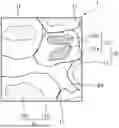
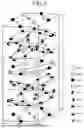
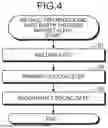
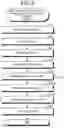
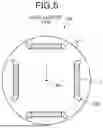
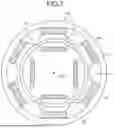
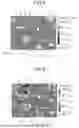
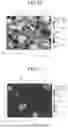
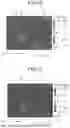
Sources:
- United States Patent and Trademark Office - verify current appl. status at the USPTO↗
Similar patent applications:
Recent applications in this class:
- » 20260053378 2026-02-26
BLOOD PRESSURE MEASUREMENT APPARATUS AND METHODS OF USE THEREOF - » 20260031258 2026-01-29
BLOOD PRESSURE MEASUREMENT APPARATUS AND METHODS OF USE THEREOF - » 20260024687 2026-01-22
SINTERED RE-FE-B PERMANENT MAGNET AND PREPARATION METHOD AND APPLICATION THEREOF - » 20250385029 2025-12-18
MG-CONTAINING HIGH-PERFORMANCE NEODYMIUM-IRON-BORON MAGNET AND PREPARATION METHOD THEREFOR - » 20250385028 2025-12-18
RARE EARTH MAGNET - » 20250372287 2025-12-04
Grain Boundary Engineering of Sintered Magnetic Alloys And The Compositions Derived Therefrom - » 20250336578 2025-10-30
R-T-B MAGNET AND PREPARATION METHOD - » 20250299854 2025-09-25
GRAIN BOUNDARY DIFFUSION MATERIAL, NEODYMIUM-IRON-BORON MAGNET, PREPARATION METHOD THEREFOR, AND USE THEREOF - » 20250279230 2025-09-04
Ti-CONTAINING NdFeB MAGNET AND PREPARATION METHOD AND APPLICATION THEREOF - » 20250259771 2025-08-14
ANISOTROPIC NANOCRYSTALLINE RARE EARTH PERMANENT MAGNET
Recent applications for this Assignee:
- » 20260060075 2026-02-26
SEMICONDUCTOR DEVICE - » 20260059281 2026-02-26
MOBILE STATION, TIME SYNCHRONIZATION CONTROL DEVICE, COOPERATIVE OPERATION CONTROL DEVICE, AND COMMUNICATION SYSTEM - » 20260058653 2026-02-26
SEMICONDUCTOR DRIVE DEVICE - » 20260058606 2026-02-26
AMPLIFYING APPARATUS - » 20260058560 2026-02-26
COMPLEMENTARY POWER SUPPLY MODULATOR - » 20260058434 2026-02-26
SEMICONDUCTOR LASER LIGHT SOURCE DEVICE - » 20260056926 2026-02-26
DATA MODEL OPTIMIZATION SYSTEM, DATA MODEL OPTIMIZATION METHOD, AND COMPUTER READABLE MEDIUM - » 20260056287 2026-02-26
RADAR SYSTEM - » 20260055917 2026-02-26
AIR-CONDITIONING CONTROLLER AND AIR-CONDITIONING SYSTEM - » 20260053049 2026-02-19
METHOD FOR MANUFACTURING SEMICONDUCTOR APPARATUS