REINFORCED THERMOPLASTIC BASED WELDED JOINTING SYSTEM AND METHOD FOR THERMOSET COMPOSITE PIPE JOINTS
US20260063232A1
2026-03-05
18/825,251
2024-09-05
Smart Summary: A new system allows two pipes to be connected securely. One pipe has a tapered end that fits into the other pipe's tapered opening. Both pipes are made from a strong resin material. When heat is applied, the special plastic materials on the ends of the pipes melt and bond together. Once the heat is removed, the melted material hardens, creating a tight seal between the two pipes. 🚀 TL;DR
Abstract:
A system and method for coupling pipes including a first pipe having a tapered, spigot end bonded to a first glass fiber reinforced thermoplastic material and a second pipe having a tapered, socket end bonded to a second glass fiber reinforced thermoplastic material. The first and second pipe are made from a reinforced thermosetting resin (RTR) material. The first pipe is internally received by the second pipe, thereby forming a sealing area. Upon application of a thermal joining process to the first and second glass fiber reinforced thermoplastic material, an amount of heat of the thermal joining process is sufficient to melt the first glass fiber reinforced thermoplastic material and the second glass fiber reinforced thermoplastic material such that, when the heat is removed, a hardened thermoplastic material seals the first pipe to the second pipe.
Inventors:
- Abderrazak Traidia 14 🇫🇷 Lussan, France
- Thibault Villette 9 🇫🇷 Belfort, France
- Abdulaziz Asiri 2 🇸🇦 Dhahran, Saudi Arabia
- Nicholas Iain Verge 2 🇬🇧 Cambridgeshire, United Kingdom
- Anwar PARVEZ 2 🇸🇦 Jebel Heights, Saudi Arabia
- Chris Worrall 1 🇬🇧 Cambridgeshire, United Kingdom
Assignee:
- Saudi Arabian Oil Company 8,037 🇸🇦 Dhahran, Saudi Arabia
- TWI Ltd. 7 🇬🇧 Cambridge, United Kingdom
Applicant:
Interested in similar patents?
Get notified when new applications in this technology area are published.
Classification:
F16L47/03 » CPC main
Connecting arrangements or other fittings specially adapted to be made of plastics or to be used with pipes made of plastics; Welded joints; Adhesive joints Welded joints with an electrical resistance incorporated in the joint
Description
BACKGROUND
RTR (Reinforced Thermosetting Resin) pipe is an acronym given to a broad family of fiber reinforced thermosetting pipes manufactured via a filament winding process. The reinforcement is generally glass fiber and the resin (matrix) is a thermoset polymer, traditionally polyester, vinyl-ester, or epoxy depending on the nature of the transported fluids in the pipe and the service temperature. This has led to the development of 3 main product lines for RTR pipes: GRP (Glass Reinforced Polyester), GRV (Glass Reinforced Vinylester) and GRE (Glass Reinforced Epoxy) pipes.
RTR pipes are generally produced in rigid segments of about 10-12 meters in length and transported onsite before being eventually assembled (jointed) to each other to the required length. The historical development of RTR began with the need to replace heavy concrete and steel pipes used in utilities and potable/sewage water systems. However, the use of RTR pipes in higher value applications such as oil and gas (O&G) service (particularly GRE), has gained a great deal of attention and acceptance. Currently, thousands of kilometers of RTR pipes are installed globally (particularly in the Middle East region) on a yearly basis to meet the need of critical applications such as high pressure water injection and sour crude oil flowlines. The experience of O&G operators over the last decades has shown that RTR is a mature technology and can be an economical alternative to traditional carbon steel pipes, particularly in view of the fact that RTR pipe is not subject to the same corrosion seen in carbon steel piping. Depending on the manufacturer's product portfolio, RTR line pipes are generally available in diameters ranging from 1½″ (inches) to 44″ and can be designed to handle pressures ranging from 150 psi to 4000 psi and temperatures up to 210° F.
Within the RTR pipe manufacturing industry it is well known that the joint/connection in an RTR pipeline system is often the limiting component towards a higher temperature and pressure operating envelope. The envelope is often defined in terms of the product pressure in view of the diameter (i.e., larger diameter RTR pipe generally cannot handle the same pressure as smaller diameter piping). Indeed, the experience of O&G operators has shown that most failures/leaks in RTR pipe systems are associated with joint failures. This could potentially reduce the confidence in the material and technology. Additionally, traditional jointing systems exhibit lower fracture toughness and have few applications in gaseous systems due to the foreseeable leak path that may be encountered during operation.
A number of proprietary joint designs have been developed over the years by the manufacturers, which can generally be grouped into two main types/categories; adhesive/bonded joints and interference joints. The former, adhesive/bonded joints, relies on an adhesive (or a laminate in case of wrapped/laminated joints) to transfer the load from one pipe to another and the performance/limitation of such joints is often associated with proper surface preparation, particularly in field conditions. The latter, interference joints, relies on a solid contact and direct load transfer between the two RTR pipes to be jointed, such as threaded and key-lock joints. A combination of both techniques (i.e, adhesive and interference) is also possible (e.g., the Injected Mechanical Joint—IMJ).
SUMMARY
This summary is provided to introduce a selection of concepts that are further described below in the detailed description. This summary is not intended to identify key or essential features of the claimed subject matter, nor is it intended to be used as an aid in limiting the scope of the claimed subject matter.
In one aspect, embodiments disclosed herein relate to a system for coupling pipes comprising: a first pipe having a tapered, spigot end, wherein a portion of an external surface of the tapered, spigot end of the first pipe is bonded to a first glass fiber reinforced thermoplastic material; and a second pipe having a tapered, socket end adapted to internally receive the tapered, spigot end of the first pipe, wherein a portion of an internal surface of the tapered, socket end of the second pipe is bonded to a second glass fiber reinforced thermoplastic material; wherein the first pipe and the second pipe are made from a reinforced thermosetting resin (RTR) material, wherein, when the first pipe is internally received by the second pipe, the portion of the external surface of the tapered, spigot end of the first pipe is positioned to align with the portion of the internal surface of the tapered, socket end of the second pipe, thereby forming a sealing area, wherein, upon application of a thermal joining process to the first glass fiber reinforced thermoplastic material and the second glass fiber reinforced thermoplastic material, an amount of heat of the thermal joining process is sufficient to melt the first glass fiber reinforced thermoplastic material and the second glass fiber reinforced thermoplastic material such that, when the heat is removed, a hardened thermoplastic material seals the first pipe to the second pipe.
In another aspect, embodiments disclosed herein relate to a method of coupling a first pipe having a tapered, spigot end and a second pipe having a tapered, socket end adapted to internally receive the tapered, spigot end of the first pipe, wherein the first pipe and the second pipe are made from a reinforced thermosetting resin (RTR) material and wherein a portion of an external surface of the tapered, spigot end of the first pipe is bonded to a first glass fiber reinforced thermoplastic material and a portion of an internal surface of the tapered, socket end of the second pipe is bonded to a second glass fiber reinforced thermoplastic material, the method comprising: inserting the first pipe into the second pipe; coupling the first pipe to the second pipe via a mechanical joint such that the portion of the external surface of the first pipe aligns with the portion of the internal surface of the second pipe to form a sealing area; and employing a thermal joining process to bond the first glass fiber reinforced thermoplastic material to the second glass fiber reinforced thermoplastic material by heating the first and second glass fiber reinforced thermoplastic materials to melt the first and second glass fiber reinforced thermoplastic materials such that, when the heat is removed, a hardened glass fiber reinforced thermoplastic material seals the first pipe to the second pipe at the sealing area.
Other aspects and advantages of the claimed subject matter will be apparent from the following description and the appended claims.
BRIEF DESCRIPTION OF DRAWINGS
FIGS. 1A and 1B show an integral and a coupled joint, respectively.
FIGS. 2A-2C show a key-lock joint, a threaded joint, and an injection mechanical joint, respectively.
FIGS. 3A-3C are schematic representations of overloading failure of a key-lock RTR joint, a threaded RTR joint, and an injection mechanical joint, respectively.
FIG. 4 is a schematic of a glass fiber reinforced thermoplastic interlayer located internally to a threaded joint in accordance with one or more embodiments of the present disclosure.
FIG. 5A is a schematic of a threaded joint in accordance with one or more embodiments of the present disclosure.
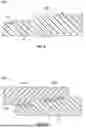
FIG. 5B is a schematic of a glass fiber reinforced thermoplastic welded seal of a threaded joint in accordance with one or more embodiments of the present disclosure.
FIG. 6 is a schematic of a glass fiber reinforced thermoplastic welded seal of a key-lock joint in accordance with one or more embodiments of the present disclosure.
FIG. 7 shows an integral joint design in accordance with one or more embodiments of the present disclosure.
DETAILED DESCRIPTION
Threaded joints are traditionally used for high pressure RTR pipes. These can be either “integral” (i.e., a connection that does not use a joining member/coupler to transfer the load from one pipe to the other) or using a “coupler.” Although threaded joints can achieve outstanding performance, in terms of pressure rating and sealing capacity, the experience of O&G operators has shown that failures can happen. The general opinion is that the failures are associated with improper installation by the jointers (pipe misalignment, over-torquing, improper/insufficient taping of the thread compound—TEFLON® (registered trademark of the Chemours Company FC, LLC), etc.).
In general, high-pressure RTR pipes make use of interference or mechanical joints (threaded or key-lock joints), while lower pressure ratings can be achieved with adhesive and laminate joints. Interference joints can be coupled joints, shown in FIG. 1A, or integral joints, shown in FIG. 1B. In FIG. 1A, the joint 100 is formed between a first RTR pipe 102 having a spigot end and a second RTR pipe 104 also having a spigot end by employing a coupler pipe 106 having two socket ends. In FIG. 1B, joint 110 is formed between a first RTR pipe 112 having a spigot end and a second RTR pipe 114 having a socket end.
Three common types of integral and coupled joints include key-lock joints, threaded joints, and injected mechanical joint, shown in FIGS. 2A-2C, respectively. Referring to FIG. 2A, joint 200 is formed between an RTR pipe 202 having a spigot end and an RTR pipe 204 having a socket end using locking strips 206 and a rubber sealing (O-ring) 208. Referring to FIG. 2B, joint 210 is formed between a first RTR pipe 212 having a threaded spigot end and a second RTR pipe 214 having a threaded socket end. Finally, referring to FIG. 2C, joint 220 is formed between a first RTR pipe having a threaded spigot end 222 and a threaded socket end 224 using O-rings 226 and 228 and thermoset resin 230 injected through inlet 232.
A typical failure mechanism of threaded joints is illustrated in FIG. 3A. A poor installation can result in imperfections/cavities along the contact surface between the spigot and the socket. In operation, fluid (e.g., water) at high pressure and high temperature could ingress into these cavities (step #1) and create a high pressure fluid film (step #2) which would slowly propagate along the spigot-socket interface. In some cases, the creep of the resin at the interface can aggravate the water propagation at the interface. As the ingress progresses, the contact pressure on the initial threads is eliminated and the excess load is transferred to the nearby threads, which eventually leads to overloading failure (step #3).
FIGS. 3B and 3C illustrate similar failure mechanisms in key-lock joints and injection mechanical joints, which are also sometimes employed in O&G applications. In a typical failure mechanism of a key-lock joint, fluid and/or gas may ingress across the elastomeric O-ring. Not only does this mechanism allow release of oil and/or gas, but it can also lead to quicker disintegration of the O-ring and more frequent replacement. In a typical failure mechanism of an injection mechanical joint, fluids and/or gas may ingress across the injected thermoset resin and leak through the injection inlet and towards the O-ring, resulting in a similar situation as described for key-lock joints.
One or more embodiments of the present disclosure introduce a jointing technique that provides a better seal for common mechanical joints in RTR pipe technology using glass fiber reinforced thermoplastic material. A goal of such embodiments is to reinforce current jointing technologies for RTR pipes (low and high pressure) with a thermoplastic welded seal (TPWS) using glass fiber reinforced thermoplastic material, such that fluid and/or gas ingress and leakage through the mechanical joints is significantly reduced, if not eliminated.
Current jointing technologies for RTR pipes involving unreinforced thermoplastic material have encountered premature failure due to thermal expansion and melting point parameters. To minimize thermal deformation, a TPWS with glass fiber reinforced polyetheretherketone (PEEK) and/or polyphenylene sulfide (PPS) is used as an alternative thermoplastic matrix. Especially, thermal deformation encountered during rotary friction welding, cooldown, and induction welding of pipe ends. Glass fiber reinforced thermoplastic possessed lower thermal expansion and higher material strength than unreinforced thermoplastic materials.
Therefore, one or more embodiments of the present disclosure relate to a system and method for jointing of high pressure reinforced thermosetting resin (RTR) pipes. In particular, the system and method include using a combination of conventional mechanical jointing techniques with a glass fiber reinforced thermoplastic welded seal to achieve an RTR joint having an enhanced seal. In one or more embodiments, the system and method may involve jointing (1) a “weldable” RTR pipe with a tapered spigot end bonded to a tie layer (interlayer) comprising at least a glass fiber reinforced thermoplastic material and (2) a “weldable” RTR pipe with a tapered socket end bonded to a tie layer comprising at least a glass fiber reinforced thermoplastic material, or alternatively a reinforced thermoplastic coupler comprising at least a glass fiber reinforced thermoplastic material.
In accordance with one or more embodiments, a method of coupling two RTR pipes includes jointing the RTR pipes using a mechanical joint and then forming a glass fiber reinforced thermoplastic welded seal. The glass fiber reinforced material may be used to simultaneously seal and mechanically lock RTR pipes together. It should be noted that the glass fiber reinforced thermoplastic welded seal described herein may be used in combination with any conventional mechanical joint such as, for example, a key-lock joint, a threaded joint, and an injection mechanical joint, among others. Accordingly, while certain mechanical jointing systems, such as a threaded joint, may be used to describe the inventive system including a glass fiber reinforced thermoplastic welded seal, such embodiments are not meant to be limiting.
The system and method disclosed herein may be used in multiple scenarios combining sealing and mechanically locking. For example, the system and method may be utilized in a full joint case. The full joint case may involve 100% sealing capacity and 100% mechanical locking. The full joint case may be typically used for low to intermediate pressure systems but may be improved for use in higher pressure systems. The system and method may be used in situations where service pressure requirements exceed TPWS strength capacity. In such cases, a classic mechanical system may be used while the TPWS provides additional strength. In cases where permeability is never absolutely null, such as in hydrogen transportation, TPWS may be used as a sealing capacity to complement other sealing systems, such as O-rings.
At the outset, each of an RTR pipe having a tapered-spigot end and an RTR pipe having a tapered, socket end is loaded with an interlayer. The interlayer includes at least a glass fiber reinforced thermoplastic material. In some embodiments the interlayer of the RTR pipe having a tapered, spigot end is the same as the interlayer of the RTR pipe having a tapered, socket end. In other embodiments, the interlayer of the RTR pipe having a tapered, spigot end is different from the interlayer of the RTR pipe having a tapered, socket end.
The interlayer includes at least a glass fiber reinforced thermoplastic material. Additional suitable thermoplastic materials include any weldable thermoplastic material, such as a thermoplastic polymer, traditionally used in the O&G industry known by those skilled in the art. For example, the interlayer may at least include one or more of polyolefins such as high-density polyethylene (HDPE), polyethylene of raised temperature (PE-RT), polyvinylidene fluoride (PVDF), polyether ether ketone (PEEK), polyetherketoneketone (PEKK), polyetherketone (PEK), polyphenylene sulfide (PPS), polyaryletherketone (PAEK), polyamide (PA), polytetrafluoroethylene (PTFE), polyketone (POK), and polyetherimide (PEI), among others. A blend of thermoplastic materials and/or fillers may be used in the glass fiber reinforced thermoplastic material. A glass fiber reinforced thermoplastic interlayer may provide higher sealing performance and greater joint strength translated into higher burst pressure.
In one or more embodiments, the interlayer includes a susceptor. Susceptors may be included in the glass fiber reinforced thermoplastic interlayer to aid in the formation of the glass fiber reinforced thermoplastic welded seal, such as by heating and melting the glass fiber reinforced thermoplastic interlayer. Therefore, in one or more embodiments, the susceptor is a conducting electromagnetic susceptor, and is used in thermoplastic interlayers that are to be inductively welded. In some embodiments, the susceptor is layered onto the RTR pipe prior to deposition of the glass fiber reinforced thermoplastic material on top of the susceptor layer. Such layering may be achieved by spraying the susceptor on the RTR pipe, by wrapping the RTR pipe with susceptor-containing mesh, among others. In other embodiments, the glass fiber reinforced thermoplastic material is layered onto the RTR pipe and the susceptor is deposited on top of the glass fiber reinforced thermoplastic material layer. External layering of the susceptor on the glass fiber reinforced thermoplastic material may be carried out by spraying or wrapping, as above. In yet other embodiments, the susceptor is dispersed as particles within a thermoplastic matrix.
The tapered ends of the RTR pipes, on the respective surface to-be-joined, i.e., inner surface of the socket end and outer surface of the spigot end, may be prepared prior to loading with the interlayer. Such preparation of the surface aims to bring the surface the adequate rugosity to promote satisfactory adhesion between the RTR pipe and the glass fiber reinforced thermoplastic material. The respective surfaces of the RTR pipes may be prepared by grit blasting, micro-machining, among others. By grit blasting the surface of an RTR pipe, the required microscopic rugosity to attain sufficient bond strength may be achieved, while protecting structural integrity of the pipe. Micro-machining, on the other hand, aims to create millimetric or sub-millimetric grooves on the tapered ends of the RTR pipes. The grooves may be machined circumferentially (normal to the pipe axis) to provide 1) a significantly larger contact and welding surface, 2) accrued resistance against shear loads exerted on the interface during pipe operation, and 3) increased free permeation path to fight the fluid and gas ingress through the sealing.
Once the respective surfaces of the RTR pipe having a tapered, spigot end and the RTR pipe having a tapered, socket end are prepared, the interlayer may be loaded on the RTR pipes and subsequently bonded to the RTR. Bonding of the interlayer and the RTR pipes is carried out according to methods and systems described in U.S. patent application Ser. No. 17/644,194, which is incorporated herein by reference. Briefly, the interlayer may be bonded to the RTR using a thermal joining process, such as friction welding, such that a sufficient bond strength between the glass fiber reinforced thermoplastic material of the interlayer and the RTR of the RTR pipe is achieved. Glass fiber reinforced epoxy (GRE) is used in the glass fiber reinforced thermoplastic material of the interlayer. During rotary friction welding, a thermoplastic ring is subjected to rotary friction against the spigot and socket end surfaces of the RTR pipe. Since the GRE has a low thermal expansion coefficient, the thermoplastic layer having thermoset GRE parts aids in decreasing dissimilar deformations.
In one or more embodiments, the glass fiber reinforced thermoplastic interlayer is located in an area of the RTR pipe that is adjacent to the area of the RTR pipe that may participate in the conventional mechanical joint of the RTR pipe. In particular, the glass fiber reinforced thermoplastic interlayer may be located internally to the mechanical jointing area, as shown in FIG. 4. Herein, a location that is “internal” on an RTR pipe having a tapered spigot or socket end refers to a location that, once two pipes are mechanically coupled to each other, would be on the side of the pipe that is inside the mechanical joint. As shown in FIG. 4, an RTR pipe 400 having tapered spigot end 401 has a glass fiber reinforced thermoplastic interlayer 402 located internal to a threaded coupling area 404. Such placement of the glass fiber reinforced thermoplastic interlayer may be similar on an RTR pipe having a tapered, socket end, e.g., the glass fiber reinforced thermoplastic interlayer may be placed internal to the threaded coupling area of the tapered, socket end.
The glass fiber reinforced thermoplastic interlayer 402 may be glass fiber reinforced PEEK or PPS. The glass fiber reinforced thermoplastic interlayer 402 may include any weight percentage of glass fiber reinforced PEEK capable of increasing sealing performance and joint strength, such as 30% weight glass fiber reinforced PEEK. An alternative fiber reinforced thermoplastic material that presents lower thermal expansion coefficients may be used as the glass fiber reinforced thermoplastic interlayer 402 to further minimize thermal deformation, such as glass and carbon fiber reinforced polyetherimide (PEI). The melting point of PPS is 50° C. to 80° C. lower than that of PEEK. As the melting point is significantly lower than that of PEEK, there is reduced risk of thermal degradation and integrity impact of the GRE. It may be beneficial to use the glass fiber reinforced PPS for the system and method described herein due to the lower melting point and cheaper product.
In some embodiments, alternative materials for the glass fiber thermoplastic layer may be used. For example, particle reinforced thermoplastic polymers, short glass fiber reinforced thermoplastic polymers of 50 micrometer (μm) to 500 μm, long glass fiber reinforced thermoplastic polymers of 500 μm to 5 mm, discontinuous glass fiber reinforced thermoplastic polymers of 5 mm to 5 cm, and any combinations or blends thereof. Fibers or fillers may be composed of glass, carbon, metal, and/or polymers. The content of fibers may vary in volume, such as by a range of 5% to 50% volume. Particles in the fibers or fillers may be metallic, organic nanoscopic, or organic microscopic inclusions. The glass fiber reinforced thermoplastic material may include a thermoplastic matrix opportunistically reinforced with a mix of inclusions, such as glass fibers and glass beads to decrease thermal dependence and deformation while promoting isotropic deformation.
An RTR pipe having a tapered, spigot end and a mechanical coupling area that is loaded with a glass fiber reinforced thermoplastic interlayer may be inserted into an RTR pipe having a tapered, socket end and a mechanical coupling area that is loaded with a glass fiber reinforced thermoplastic interlayer. In accordance with the present disclosure, formation of a thermoplastic welded seal between the two RTR pipes may occur directly after mechanical coupling of the pipes or concurrent to mechanical coupling of the pipes. Accordingly, although sequence of mechanical coupling followed by thermal coupling may be described herein, such sequence is not meant to be limiting.
Notably, the surfaces of the glass fiber reinforced thermoplastic interlayers to be joined, such as by induction welding, may be relatively smooth to promote intimate contact and avoid the inclusion of voids. The surfaces to be joined may be prepared such that they are free of any chemical agents including oils used to facilitate extrusion or demolding. Thus, in one or more embodiments, prior to inserting the spigot end into the socket end, the glass fiber reinforced thermoplastic interlayers may be cleaned with compressed air to remove dust, followed by solvent degreasing using Industrial Methylated Spirit (IMS) or Isopropyl alcohol (IPA) solvent to remove dust and all surface contaminants.
In one or more embodiments, the two RTR pipes are mechanically coupled, such as by threading. After mechanical coupling, the RTR pipe having a tapered, spigot end with a glass fiber reinforced thermoplastic interlayer bonded to an area of the external surface may be aligned with the RTR pipe having a tapered, socket end with a glass fiber reinforced thermoplastic interlayer bonded to an area of the internal surface such that the two glass fiber reinforced thermoplastic interlayers are aligned. FIG. 5A shows a threaded joint 500 of two RTR pipes. As shown in FIG. 5A, an RTR pipe having a spigot end 502 is coupled to an RTR pipe having a socket end 504 via a threaded joint 506. Once the joint is properly threaded, a glass fiber reinforced thermoplastic interlayer of the spigot end 508 is aligned with a glass fiber reinforced thermoplastic interlayer of the socket end 510. A slight gap may exist between the two glass fiber reinforced thermoplastic interlayers. Herein, the area of a mechanically coupled joint that includes two aligned glass fiber reinforced thermoplastic interlayers, such as 508 and 510 in FIG. 5A may be referred to as a “sealing area.”
In one or more embodiments, the glass fiber reinforced thermoplastic interlayers in the sealing area of the jointed RTR pipes are welded together. Any welding process known in the art may be employed to weld the two thermoplastic interlayers together. In particular embodiments, the glass fiber reinforced thermoplastic interlayers are induction welded. Accordingly, in such embodiments, the glass fiber reinforced thermoplastic interlayers include a susceptor. The susceptor may be capable of converting electromagnetic energy into heat. Suitable susceptors include, but are not limited to, carbon black, graphene, graphite, metallic powder, and metallic beads, such as aluminum powder and beads.
Generally, an external heat source may be applied to the mechanical joint in order to weld the glass fiber reinforced thermoplastic interlayers together. In the case of induction welding, externally positioned magnetic coils may be placed near the sealing area of the mechanical joint and may generate electromagnetic energy. As noted above, the electromagnetic energy is converted into heat by the susceptor, thus heating the glass fiber reinforced thermoplastic interlayers. The thermoplastic interlayers may be heated to a temperature required to form a joint between the two interlayers. The resulting joint including a thermoplastic welded seal 520 is shown in FIG. 5B. As shown in FIG. 5B, an RTR pipe having a spigot end 502 is mechanically coupled to an RTR pipe having a socket end 504 via a threaded joint 506 and subsequently exposed to electromagnetic energy generated form externally positioned magnetic coils 512, thus heating and melting the glass fiber reinforced thermoplastic interlayer, to provide a hardened glass fiber reinforced thermoplastic welded seal 514.
As noted above, the glass fiber reinforced thermoplastic welded seal described herein is designed to be used in combination with conventional mechanical joints. Although FIG. 5B shows a system in accordance with the present disclosure including a glass fiber reinforced thermoplastic welded seal in combination with a threaded joint, such systems may be employed with different mechanical joints as well. For example, a system including a glass fiber reinforced thermoplastic welded seal in combination with a key-lock joint 600 is shown in FIG. 6. In FIG. 6, an RTR pipe having a tapered, spigot end 602 is inserted into an RTR pipe having a tapered, socket end 604 and mechanically coupled by a key-lock joint 606. Magnetic coils 610 are used to heat and melt thermoplastic interlayers, effectively providing a glass fiber reinforced thermoplastic welded seal 608.
FIG. 7 shows an integral joint design in accordance with one or more embodiments. The joint 700 is formed between a first RTR pipe 712 having a spigot end 713 and a second RTR pipe 714 having a socket end 715. The socket end 715 is adapted to internally receive a tapered spigot end 713. As described in previous embodiments, the spigot end 713 and the socket end 715 are bonded to a glass fiber reinforced thermoplastic material (e.g., glass fiber reinforced thermoplastic interlayer 402). The glass fiber reinforced thermoplastic material may have a thickness of 2.5 millimeters. The spigot end 713 may be tapered at a taper angle 720, such as 5 degrees. As shown in FIG. 7, the two RTR pipes 712,714 are aligned to form a sealing area, such as bond lines 725. The bond lines 725 may be of any length 730 capable of joining the two RTR pipes 712,714. For example, the bond lines 725 may have a length 730 of 30 millimeters.
An experiment on an 8-inch thermoplastic welded joint produced using 30% glass fiber reinforced PEEK thermoplastic interlayer was conducted. During the experiment, a leak test and a burst pressure test were performed using water at ambient temperature of 20 degrees Celsius. No leakage was present after an internal pressure test of 290 pounds per square inch (psi) for one hour. During the burst pressure test, the joint was subjected to an increased internal pressure in steps of 72 psi starting from 218 psi and maintaining the pressure constant for 5-minute intervals. The burst pressure test resulted in a burst pressure of 435 psi. Unreinforced PEEK material was subjected to the same testing and resulted in a failed leak test and a burst pressure of 290 psi. Unreinforced thermoplastic material with PPS was shown to pass leak tests and exhibit a significant burst pressure when compared to glass fiber reinforced PEEK material.
Embodiments of the present disclosure may provide at least one of the following advantages. The disclosed systems and methods aim to expand the operating envelop and fluid tightness of RTR pipe joints by providing a reliable sealing system with excellent barrier to the ingress of fluids (liquids and gases) as compared to conventional sealing methods (typically based on elastomer O-rings). Additionally, such systems and methods address lengthy curing times or surface finishing tasks required by the current jointing methods, providing quicker installation. Further, the innovative jointing system alleviates concerns related to corrosion barrier layer being compromised as the groove dimensions for sealing O-rings must accommodate the barrier layer.
The disclosed sealing system can be used as a complementary feature to traditional RTR mechanical joints and can be implemented on both integral and coupled joint technologies. The extent of the resulting seal, which does not depend on a contact pressure to ensure sealing but rather on a permanent bonding, could provide a more reliable option compared to traditional sealing systems (e.g., O-rings), for which the RTR piloting in gaseous application is currently precluded. Furthermore, the method of implementation allows use of a variety of thermoplastic materials, typically with higher mechanical/thermal/barrier properties as compared to elastomeric seals which could offer obvious benefits in terms of reliability and maintenance.
A person of ordinary skill in the art may appreciate that the disclosed sealing system may be used to upgrade any unreinforced thermoplastic pipe systems by utilizing reinforced thermoplastic material integrated with glass fiber reinforced polymer material.
Although only a few example embodiments have been described in detail above, those skilled in the art will readily appreciate that many modifications are possible in the example embodiments without materially departing from this invention. Accordingly, all such modifications are intended to be included within the scope of this disclosure as defined in the following claims.
Claims
1. A system for coupling pipes comprising:
a first pipe having a tapered, spigot end, wherein a portion of an external surface of the tapered, spigot end of the first pipe is bonded to a first glass fiber reinforced thermoplastic material; and
a second pipe having a tapered, socket end adapted to internally receive the tapered, spigot end of the first pipe, wherein a portion of an internal surface of the tapered, socket end of the second pipe is bonded to a second glass fiber reinforced thermoplastic material;
wherein the first pipe and the second pipe are made from a reinforced thermosetting resin (RTR) material,
wherein, when the first pipe is internally received by the second pipe, the portion of the external surface of the tapered, spigot end of the first pipe is positioned to align with the portion of the internal surface of the tapered, socket end of the second pipe, thereby forming a sealing area, and
wherein, upon application of a thermal joining process to the first glass fiber reinforced thermoplastic material and the second glass fiber reinforced thermoplastic material, an amount of heat of the thermal joining process is sufficient to melt the first glass fiber reinforced thermoplastic material and the second glass fiber reinforced thermoplastic material such that, when the heat is removed, a hardened thermoplastic material seals the first pipe to the second pipe.
2. The system of claim 1, wherein the first glass fiber reinforced thermoplastic material and the second glass fiber reinforced thermoplastic material each comprise a thermoplastic polymer and a susceptor.
3. The system of claim 1, wherein the first glass fiber reinforced thermoplastic material and the second glass fiber reinforced thermoplastic material each comprise a thermoplastic polymer comprising 30% weight glass fiber reinforced polyetheretherketone (PEEK).
4. The system of claim 2, wherein the thermoplastic polymer comprises of polyolefins, high-density polyethylene (HDPE), polyethylene of raised temperature (PE-RT), polyvinylidene fluoride (PVDF), polytetrafluoroethylene (PTFE), polyphenylene sulfide (PPS), polyetheretherketone (PEEK), polyaryletherketone (PAEK), polyetherketoneketone (PEKK), polyetherketone (PEK), polyketone (POK), polyetherimide (PEI), and combinations thereof.
5. The system of claim 2, wherein the first glass fiber reinforced thermoplastic material and the second glass fiber reinforced thermoplastic material comprise a same thermoplastic polymer.
6. The system of claim 2, wherein the susceptor is deposited by thermal spraying on a to-be-joined RTR surface.
7. The system of claim 2, wherein the thermoplastic polymer is deposited by thermal spraying or friction welding.
8. The system of claim 1, wherein the first glass fiber reinforced thermoplastic material and the second glass fiber reinforced thermoplastic material each comprise glass, carbon, metal, or polymer material comprising a volume range of 5% to 50%.
9. The system of claim 2, wherein the thermoplastic polymer comprises a fiber reinforced polymer comprising a plurality of fibers with a length ranging from 50 μm to 500 μm, 500 μm to 5 mm, 5 mm to 5 cm, and any combinations thereof.
10. The system of claim 1, wherein the sealing area is adjacent to a mechanical coupling area of the first pipe and the second pipe.
11. The system of claim 10, wherein the mechanical coupling area comprises a mechanical joint selected from the group consisting of key-lock joints, threaded joints, injected mechanical joints, and combinations thereof.
12. The system of claim 1, wherein the thermal joining process is an induction welding process.
13. A method of coupling a first pipe having a tapered, spigot end and a second pipe having a tapered, socket end adapted to internally receive the tapered, spigot end of the first pipe, wherein the first pipe and the second pipe are made from a reinforced thermosetting resin (RTR) material and wherein a portion of an external surface of the tapered, spigot end of the first pipe is bonded to a first glass fiber reinforced thermoplastic material and a portion of an internal surface of the tapered, socket end of the second pipe is bonded to a second glass fiber reinforced thermoplastic material, the method comprising:
inserting the first pipe into the second pipe;
coupling the first pipe to the second pipe via a mechanical joint such that the portion of the external surface of the first pipe aligns with the portion of the internal surface of the second pipe to form a sealing area; and
employing a thermal joining process to bond the first glass fiber reinforced thermoplastic material to the second glass fiber reinforced thermoplastic material by heating the first and second glass fiber reinforced thermoplastic materials to melt the first and second glass fiber reinforced thermoplastic materials such that, when the heat is removed, a hardened glass fiber reinforced thermoplastic material seals the first pipe to the second pipe at the sealing area.
14. The method of claim 13, wherein the thermal joining process is an induction welding process.
15. The method of claim 13, wherein the first glass fiber reinforced thermoplastic material and the second glass fiber reinforced thermoplastic material each comprise a thermoplastic polymer and a susceptor, wherein the thermoplastic polymer comprises polyphenylene sulfide (PPS).
16. The method of claim 13, wherein the first glass fiber reinforced thermoplastic material and the second glass fiber reinforced thermoplastic material each comprise a thermoplastic polymer comprising 30% weight glass fiber reinforced polyetheretherketone (PEEK).
17. The method of claim 13, wherein the mechanical joint is selected from the group consisting of threaded joints, key-lock joints, and injection mechanical joints.
18. The method of claim 13, wherein the sealing area is adjacent to the mechanical joint.
19. The method of claim 13, wherein the first glass fiber reinforced thermoplastic material and the second glass fiber reinforced thermoplastic material each comprise glass, carbon, metal, or polymer material comprising a volume range of 5% to 50%.
20. The method of claim 15, wherein the thermoplastic polymer comprises a fiber reinforced polymer comprising a plurality of fibers ranging from 50 μm to 500 μm, 500 μm to 5 mm, 5 mm to 5 cm, and any combinations thereof.
Images & Drawings included:






Sources:
- United States Patent and Trademark Office - verify current appl. status at the USPTO↗
Recent applications in this class:
- » 20250320943 2025-10-16
PIPE FITTING WITH FUSIBLE SLEEVE - » 20240019066 2024-01-18
Methods of Joining or Repairing Lined Pipes and Associated Apparatus - » 20230417355 2023-12-28
Weldable half-shell - » 20220341528 2022-10-27
Electrofusion joint - » 20220018479 2022-01-20
Apparatus and method for electrofusion welding of reinforced thermosetting resin pipe joints - » 20190316721 2019-10-17
Methods of joining or repairing lined pipes and associated apparatus - » 20190128459 2019-05-02
Connection device for pipe elements - » 20190128458 2019-05-02
Continuous fiber reinforced composite and metal electrofusion coupler - » 20180363822 2018-12-20
Electrofusion fitting methods - » 20180216772 2018-08-02
Pipe coupler and coupling methods
Recent applications for this Assignee:
- » 20260067331 2026-03-05
METHOD OF DETECTING POTENTIAL ARABIC PHISHING EMAILS - » 20260066639 2026-03-05
TRIP CIRCUIT FOR ADJUSTING TRIPPING CHARACTERISTICS OF PROTECTIVE RELAYS - » 20260064837 2026-03-05
COUNTERMEASURE REACTIONARY RESPONSE RELATED TO CHANGES IN THE IT ENVIRONMENT - » 20260063787 2026-03-05
SMART-SENSING SYSTEMS FOR INTEGRITY ASSESSMENT OF INACCESSIBLE ASSETS - » 20260063029 2026-03-05
SYSTEM AND METHOD FOR PRODUCTION FORECASTING AND USES THEREOF - » 20260062814 2026-03-05
NOVEL AND DIRECT SYNTHESIS METHOD FOR PYRIDINIUM SALTS BASED ON ALKYL EPOXIDES AND THEIR USE - » 20260062624 2026-03-05
METHODS FOR PROCESSING HYDROCARBONS - » 20260060249 2026-03-05
NEW PYRIDINIUM SALT-BASED CHEMICALS AS BIOCIDE AND THEIR USE - » 20260055738 2026-02-26
ADAPTIVE ARTIFICIAL INTELLIGENCE LED CALIBRATION STRATEGY FOR INTERNAL COMBUSTION ENGINE AND EXHAUST AFTERTREATMENT SYSTEM OPTIMIZATION - » 20260055000 2026-02-26
HIERARCHICALLY ORDERED CRYSTALLINE MICROPOROUS MATERIALS WITH LONG-RANGE MESOPOROUS ORDER HAVING LAMELLAR SYMMETRY