MAGAZINE LOADER
US20260063383A1
2026-03-05
19/372,243
2025-10-28
Smart Summary: A magazine loader is a tool that helps load several bullets into a magazine quickly and easily. It works by pushing down on a part called the follower inside the magazine. This action allows multiple bullets to be inserted at once. The design makes it simple to use, as it directly contacts the magazine. Overall, it speeds up the process of loading bullets into a magazine. 🚀 TL;DR
Abstract:
The present disclosures discloses a magazine loader specifically provided to load multiple bullets into an inserted magazine and designed to work with a direct-pushing-down-of-magazine-follower-through-physical-contact configuration configured to directly push down the follower of a magazine inserted inside its load body to enable multiple bullet rounds to be loaded into the inserted magazine.
Applicant:
Interested in similar patents?
Get notified when new applications in this technology area are published.
Classification:
F41A9/83 » CPC main
Feeding or loading of ammunition ; Magazines; Guiding means for the extracting of cartridges; Reloading or unloading of magazines Apparatus or tools for reloading magazines with unbelted ammunition, e.g. cartridge clips
Description
CROSS-REFERENCE TO RELATED APPLICATION
This application a non-provisional application claiming the benefit under 35 U.S.C. § 119(e) of Provisional Patent Application Nos. 63/688,257 and 63/712,533, filed respectively on Aug. 28, 2024 and Oct. 28, 2024. The entire disclosures of both aforesaid prior applications are hereby incorporated by reference.
RELATED ART
Magazine loaders for loading multiple bullet rounds into a mass-produced high-capacity double-stacked magazine with a single motion or a single series of motions have been available on the market for some time. One advantage of those conventional magazine loaders is that they are efficient and fast in loading multiple bullet rounds into a high-capacity double-stacked magazine (as compared to magazine loaders that can only load a single bullet with a single motion or a single series of motions. However, one main issue of those conventional magazine loaders, which has been well known and documented, is that it requires a lot of force to load multiple bullet rounds with a single motion or a single series of motions.
One root cause of that main issue actually lies in the structural design of a mass-produced high-capacity double-stacked magazine, a cause which a magazine loader is forced to work with. Referring to FIGS. 1A-C, a mass-produced high-capacity double-stacked magazine 600 comprises a follower 601 and a spring assembly deployed beneath the follower 601. Magazine 600 also comprises a pair of feed lips 609, which are provided to implement a safety feature (which is to prevent the topmost bullet round 500 from easily being popped or otherwise escaped out of the magazine).
With the presence of feed lips 609, the loading of a bullet round 500 into a magazine 600 is conventionally done as follows. First, after a bullet round 500 is placed on follower 601 with the correct orientation, a downward force is applied onto bullet round 500, which pushes down both bullet round 500 and follower 601.
Second, after the pushing down of the bullet round 500 and follower t01 has reached the extent that rear end 511 of bullet round 500 has in its entirety dropped below feed lips 609, then bullet round 500 can travel laterally (with a slope) towards the rear end of follower 611 and get loaded when its rear end 511 reaches the rear end of the follower. This lateral traveling of bullet round 500, however, makes the loading of bullet round 500 a little bit tricky. The lateral traveling usually does not happen automatically despite that the top surface of follower 601 is downward sloped to some degree, due to that the downward slope is not steep enough for a bullet round resting thereon to automatically move downwards to reach the rear end of follower 601. Thus, this lateral traveling usually requires a force having a lateral component force (in the direction towards the rear end of the follower 601) be applied on bullet round 500 before the lateral traveling can succeed.
Returning to the above-alluded root cause (of the main known issue in connection with those aforementioned conventional magazine loaders), the root cause is the lateral travel requirement discussed above.
Before briefly discussing a representative of those aforementioned conventional magazine loaders, one part of follower 601 worth mentioning is its lower-stepped slide-stop step 602. Slide-stop step 602 of follower 601 is provided, not for loading or housing a bullet-round, but for the well-known purpose of stopping a slide of a firearm when there is no more bullet round left in a host magazine 600. Largely to serve that well-known purpose, slide-stop step 602 is one step lower than the remaining top surface of follower 601. In addition, slide-stop step 602, inter alia, extends transversely away from the remaining surface of follower 601 to the extent that there is even a section of slide-stop step 602 that “overshoots” (i.e., goes beyond) the boundary set by the remaining top surface of follower 601 in the outward transverse direction. Hereinafter, this section of slide-stop step 602 will be referred to as the “overshoot section”of slide-stop step 602.
Turning to a representative of those aforementioned conventional magazine loaders, U.S. Pat. No. 10,900,730 (whose entire disclosure is hereby incorporated by reference) discloses such a magazine loader. Referring to FIG. 1D, the magazine loader of the '730 patent fulfills the above-discussed lateral travel requirement through, inter alia, providing a round position chamber 700 (in the main loader body of the magazine loader) whose design is complex and delicate. The provision of its round position chamber 700 also leads to its projection being angled from the longitudinal axis of its main loader body. However, with the design of this magazine loader, the user still has to give a lot of force before multiple bullet rounds can be loaded into an inserted magazine. This is largely due to the fac that the lateral component force, which makes the lateral travel requirement met, still comes from the initial force provided by a user. And its angled projection also makes the applying of a force by a user not as efficient and straightforward as a user may prefer, as a user is even advised to push the main loader body (with a magazine inserted therein) against his/her own chest to perform and complete the loading of multiple bullets into the inserted magazine.
Accordingly, there is a need for a magazine loader (that can load multiple bullet rounds with one single motion or a single series of motion) with significantly less force than the force otherwise required for a conventional magazine loader like the magazine loader of the '730 patent.
BRIEF SUMMARY
The present disclosure discloses a magazine loader specifically provided to load multiple bullets into an inserted magazine through a use of a DPDMFTPC means of the present disclosure.
The present disclosure also discloses a magazine loader incorporating an innovative rachet-pawl configuration used to lock progress during a bullets-loading endeavor.
The present disclosure further discloses a magazine loader incorporating an innovative cam handler used to immobilize or otherwise secure or lock an inserted magazine.
BRIEF DESCRIPTION OF THE DRAWINGS
The description of the illustrative embodiments can be read in conjunction with the accompanying figures. It will be appreciated that for simplicity and clarity of illustration, elements illustrated in the figures, unless expressly specified, have not necessarily been drawn to scale and any view provided herein, whether it be a perspective view, elevation view, top or bottom view, section view, or any combination thereof, is a simplified view provided for the sole purpose of illustration and not for limitation. Also, any text and/or any numerical data (numbers) appeared on any drawing figures is provided to illustrate an exemplary embodiment or implementation and thus is provided for the purpose of illustration and not for the purpose of limitation. For example, the dimensions of some of the elements may be exaggerated relative to other elements. Embodiments incorporating teachings of the present disclosure are shown and described with respect to the figures presented herein, in which:
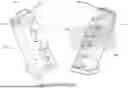
FIGS. 1A-D are pictorials or views showing the related art.
FIGS. 2A-D are perspective views and elevation views illustrating an exemplary magazine loader (“ML”) 1000 of the present disclosure, in accordance with one or more embodiments of the present disclosure.
FIGS. 3A-H are perspective views and elevation views illustrating exemplary configurations of loader body 100 and holder 900 as pertaining to loading bullet rounds 500 into an inserted magazine 600, in accordance with one or more embodiments of the present disclosure.
FIGS. 4A-D are different views collectively illustrating an innovative cam handle 200 configured to securely retain, lock or otherwise immobilize an inserted magazine 600, in accordance with one or more embodiments of the present disclosure.
FIGS. 5A-H are perspective views, elevation views and sectional views collectively illustrating exemplary configurations of cap 300, in accord with one or more embodiments of the present disclosure.
FIGS. 6A-N are section views illustrating how multiple bullet rounds are sequentially loaded into an inserted magazine 600 with an exemplary loader 1000 (which, inter alia, incorporates a DPDMFTPC means of the present disclosure),, in accord with one or more embodiments of the present disclosure.
DETAILED DESCRIPTION
In the following detailed description of exemplary embodiments of the disclosure in this section, specific exemplary embodiments in which the disclosure may be practiced are described in sufficient detail to enable those skilled in the art to practice the disclosed embodiments. However, it is to be understood that the specific details presented need not be utilized to practice embodiments of the present disclosure. The following detailed description is, therefore, not to be taken in a limiting sense, and the scope of the present disclosure is defined by the appended claims and equivalents thereof.
In the description, relative terms such as “left,” “right,” “vertical,” “horizontal,” “upper,” “lower,” “front,” “back,” “side,” “upright,” “distal,” “proximal,” “top” and “bottom” as well as any derivatives thereof should be construed to refer to the logical orientation as then described or as shown in the drawing figure under discussion. Accordingly, these relative terms are for convenience of description and are not intended to convey any limitation with regard to a particular orientation.
Within the descriptions of the different views of the figures, the use of the same reference numerals and/or symbols in different drawing figures indicate similar or identical items, and similar and/or related elements may be referenced with similar names and reference numerals throughout the figures. If a reference numeral is once used to refer to a plurality of like elements, unless required otherwise by context, the reference numeral may refer to any, a subset of, or all of, the like elements in the figures bearing that reference numeral. A reference alpha-numeral (such as “101A”) may refer to one implementation, one subset, or one of several types, of one element or a plurality of like elements bearing the same base reference numeral (such as “101”). The specific identifiers/names and reference numerals assigned to elements (depicted in these figures) are provided solely to aid in the description and are not meant to imply any limitations (structural or functional or otherwise) on the described embodiments. Also, the depictions in these figures are for illustrative purposes only and are not drawn to scale.
FIGS. 2A-D are perspective views and elevation views illustrating an exemplary magazine loader (“ML”) 1000 of the present disclosure in accordance with one or more embodiments of the present disclosure. As illustrated in these views, in one embodiment, ML1000 may comprise a loader body 100, a holder 900 and a cam handle 200, which are configured to be inter-coupled to one another to make ML 1000 as intended, as will be further illustrated.
ML 1000 may further comprise a direct-pushing-down-of-magazine-follower—through-physical-contact (“DPDMFTPC”) means configured to directly push down follower 601 of a magazine 600 inserted inside load body 100 (for receiving bullet rounds 500 through holder 900) to enable the bullet rounds 500 to be loaded into magazine 600 in accordance with one or more embodiments of the present disclosure. In one or more embodiments as illustrated in FIGS. 2A-D, an exemplary DPDMFTPC means is implemented by an ordered combination that includes, inter alia, a cap 300 (which will be further illustrated) and a push-rod 400 coupled to cap 300 in a manner (as illustrated) which directly places push-rod 400 on top of, and in direct physical contact with, slid-stop step 602 of follower 601 from above. With this exemplary DPDMFTPC means working in concert with configurations of other components of ML 1000, a user may push down follower 601 of magazine 600 so that bullet rounds 500 automatically exit holder 900 (through its feed channel 924 and feed exit 925, as will be further illustrated) one by one and find their ways to get loaded into magazine 600 in a manner intended by magazine 600.
Cap 300 may comprise a spring-loaded pawl 700, which is configured, as will be further illustrated, to work in concert with linearly and longitudinally deployed rachets 904 of holder 900 so that push-rod 400 can be pushed unidirectionally downward incrementally and successively, which facilitates of the pushing-down of push-rod 400 using cap 300.
Hereinafter, the term “inserted magazine 600” refers to a double-stack magazine 600 properly inserted into magazine well 120 of loader body 100 in a manner intended by loader body 100, such that the inserted magazine 600 is properly positioned, aligned, and secured inside magazine well 120 to enable bullet rounds (fed from holder 900) to be loaded into magazine 600 with a use of a DPDMFTPC means of the present disclosure.
FIGS. 3A-H are perspective views and elevation views illustrating exemplary configurations of loader body 100 and holder 900 as pertaining to loading bullet rounds 500 into an inserted magazine 600.
Referring to FIGS. 3A-B, holder 900 is configured to be disposed upright and mostly above loader body 100 disposed upright. That is, both holder 900 and loader body 100 have respective longitudinal axes that are either in parallel with each other or coincides with each other. Holder 900 comprises a vertically disposed bullet-rounds-scooping rail 112, with rail scooping entrance 104. Rail 112 is configured, with its rail scooping entrance 104, to scoop up bullet rounds 500 from a box of ammunition. Rail 112 is configured to form a feed channel 924 longitudinally extended along the entire longitudinal length of rail 112. Feed channel 924 is configured to engage extractor groove 501 or rim 501 of the casing of a bullet round 500 along its longitudinal length so as to hold scooped-up bullets along its longitudinal length.
In one embodiment, holder 900 further comprises a vertically disposed rachet teeth array 102, which comprises a set of ratchet teeth 928 deployed along the longitudinally extended disposed rachet teeth array 102. As will be further illustrated, rachet teeth array 102 is provided and configured to work in concert with pawl 700 of cap 300, so as to control the movement of cap 300 along the vertical longitudinal axis of holder 900 such that cap 300 may only move longitudinally downward along holder 900.
As illustrated, loader body 100 is, in a first aspect, configured to securely retain inserted magazine 600 in a manner adapted to loading bullet rounds 500 fed downwardly from holder 900 into magazine 600 with a use of a DPDMFTPC means, such as the exemplary combination of cap 300 and push-rod 400, as will be further illustrated. On one hand, loader 100 is configured to be disposed upright and have a magazine well 120 sized, dimensioned, and configured to receive, house, position, align and guide an inserted magazine 600 so that magazine 660 is disposed snuggly within magazine well 120 in an upright orientation and adapted to receive bullet rounds 500 and get them loaded there-inside. On the other hand, loader body 100 is configured to be pivotally coupled to an innovative cam handle 200 and work in concert with cam handle 200 to advantageously secure an inserted magazine 600 so as to securely retain, lock, or otherwise immobilize, the inserted magazine within magazine well 120, which facilitates loading of bullet rounds 500 (fed from holder 900 through its feed channel 924) into the inserted magazine 600.
As will be further illustrated, cam handler 200 is innovatively designed to adapt to and accommodate slight variations in body widths of mass-produced magazine loaders of even a same brand and model (among magazine loaders of various brands and models) in working with loader bodies of various magazine loaders to secure, lock, or otherwise immobilize an uprightly received and disposed magazine within a magazine well of a host magazine loader to facilitate bullets-loading (i.e. loading bullet rounds into a magazine inserted into the host magazine loader with the use of the host magazine loader).
Hereinafter, unless specifically provided, the term “bullets-loading” generally refers to loading multiple bullet rounds into a magazine inserted into a host magazine loader with a use of the host magazine loader.
As illustrated in FIG. 3C, an inward-biasing side lock 106 is also provided to help with securing and locking an inserted magazine 600 from becoming undesirably loose or movable within magazine well 120. As illustrated, the front side of loader body 100 is also configured to provide finger grip resting position grooves 107 and finger grip textured design 108, both of which facilitate a hand-gripping of loader body 100 by a user and thus facilitate bullets-loading.
Turning to the second aspect of loader body 100, loader body 100 is configured to be coupled to holder 900 in such a manner which enables loader body 100 to receive a bottommost bullet round 500 from feed channel 924 of holder 900 (through feed exit 925) in a manner adapted to a loading of the bottommost bullet round 500 into an inserted magazine 600 with a use of a DPDMFTPC means (such as the ordered combination of cap 300 and push-rod 400).
FIG. 3D is a sectioned perspective view illustrating interior geometries of load body 100 relevant to the second aspect when there is no magazine 600 inserted inside magazine well 120. FIGS. 3E-3H are perspective views (including sectioned perspective views) provided to collectively illustrated interior geometries of load body 100 as pertaining to the second aspect when a magazine 600 is inserted into magazine well 120 of load body 100. As illustrated, load body 100 comprises, inter alia, curved body part 140, extension-ramp 103, and a pair of support members 150 and 151.
Curved body part 140 and support members 150 and 151 are coupled to opposing sides of holder 900. Curved body part 140 is configured and shaped to accommodate and guide feed lips 609 (of an inserted magazine 600) such that feed lips 609 is disposed and aligned (for bullets-loading) below curved body part 140.
Extension ramp 103 is configured to provide a ramp serving as a sloped extension of follower 601 of an inserted magazine 600. In one example, extension ramp 103 is implemented as a stepped ramp as illustrated, which includes two or more sloped steps 133 serving as sloped landing areas.
Support members 150 and 151 are respectively coupled to extension ramp 103, with extension ramp 103 being sandwiched there-between. Support members 150 and 151 are additionally coupled to rail 112 of holder 900 at or near the bottom of holder 900 in such a manner that the bottom edge 925 (which defines feed exit 925) of rail 112, interior edges 152 and 153 of support members 150 and 151, and upper edge 132 of extension ramp 103 collectively define a feed opening 190 through which a bottommost bullet round 500, upon exiting feed channel 924, may snuggly rest (lie) sloped on a ramp 158 formed collectively by both follower 601 and extension ramp 103. As illustrated, the formed ramp 158 may not be continuous as there may be a gap between follower 601 and extension ramp 103.
In one embodiment, feed opening 190 is sized and dimensioned to be just wide enough to receive and hold a bullet round 500, with the width of feed opening 190 being slightly or otherwise minimally, bigger than the width of a bullet round 500. This configuration serves to limit the space (within the received bullet round 500 is held) to the extent the space is just big enough to hold bullet round 500, thus effectively guiding bullet-round 500 to follow a pre-defined path (which in this case is ramp 158), through which bullet round 500 is loaded into inserted magazine 600 with a use of a DPDMFTPC means of the present disclosure.
Extension ramp 103 is configured such that its bottom edge 131 physical meets and blocks, and therefore serves to guide the placement of, the front top edge 611 of inserted magazine 600 (from further moving upward inside magazine well 120) so that front top edge 611 of magazine 600 is disposed immediately below bottom edge 131 of extension ramp 103. This results in sloped follower 601 being disposed immediately below feed opening 190 and laterally adjacent to extension ramp 103, rendering extension ramp 103 to serve as a sloped extension of follower 601 of inserted magazine 600 so that the bottommost bullet 500 may lie sloped on ramp 158 collectively formed by a part of follower 601 and a part of extension ramp 103 laterally adjacent to follower 601. In one embodiment, as illustrated, follower 601 may be disposed slightly above bottom edge 131 of extension ramp 103. In other embodiments, follower 601 may be disposed in flush with, or slightly below, bottom edge 131 of extension ramp 103, so long as extension ramp 103 is configured such that it can serve as a sloped extension of follower 601 to provide a sloped landing ramp 158 for the bottommost bullet round 500 (when the bottommost bullet round 500 is either partially or fully exiting feed channel 924 of holder 900).
The coupling between loader body 100 and holder 900 is such that the bottommost bullet round 500, which lies sloped on both follower 601 and extension ramp 103, lies laterally clear of feed lips 609 of an inserted magazine 600. That is, rear end 511 of bottommost bullet round 500 is disposed clear of feed lips 609 of magazine 600 in that there is a concrete lateral displacement between rear end 511 of the bottommost bullet round 500 and forward ends 614 of feed lips 609, with the lateral displacement being so concrete that a subsequent vertical drop (i.e., downward movement) of rear end 511 of the bottommost bullet round 500 continues to be disposed (sloped) clear of the front end 614 of feed lips 609 before rear end 511 of bottommost bullet round 500, in its entirety, drops below bottom edge 925 of feed channel 924.
As illustrated, loader body 100 is configured such that a part of follower 601 (of the inserted magazine 600), which in one embodiment is its lower-stepped slide-stop step 602, is used as a force-applying part of follower 601 upon which a DPDMFTPC means of the present disclosure is used to apply downward force onto follower 601 (so that the follower 601 is being pushed down by the applied force). As illustrated, the overshoot section of the lower-stepped slide-stop step 602 of follower 601, in extending transversely away from the rest of follower 601, also extends transversely away from feed opening 190 (where bottommost bullet round 500 is received and held for magazine-bullet-loading) into an area which is transversely outside feed opening 190 and the area of follower 601 where bottommost bullet round 500 is rested) and below support member 151.
Besides, as illustrated, support member 151 is configured to have sleeve insert 165 configured to be disposed directly and vertically above the overshoot section of the lower-stepped slide-stop step 602. In addition, sleeve insert 165, which may be implemented as a through-hole, is configured to receive a push-rod 400 disposed upright and form a vertical channel through which push-rod 400 is pushed all the way down to make direct physical contact with the lower-stepped slide-stop step 602 through its overshoot section. Thus, a primitive DPDMFTPC means of the present disclosure can be as simple as a standalone push-rod 400, which a user can use to push down follower 61 through directly applying a downward force on a standalone push-rod 400 (deployed within and through sleeve insert 165) making direct physical contact with the overshoot section of the lower-stepped slide-stop step 602 of follower 601.
FIGS. 4A-D are different views collectively illustrating an innovative cam handle 200 configured to securely retain, lock or otherwise immobilize an inserted magazine 600. As illustrated, when pivotally coupled to loader body 100 (through a pivotal fastening pin inserted into both pin holes 203 of cam handle and cam lock pin holes 103 of loader body 100), cam handle 200 is configured to securely retain, lock or otherwise immobilize an inserted magazine 600 through a pivotal movement of its grip handle 201. As illustrated, grip surface 202 of cam handle 200, which is curved, is configured to have a large number of micro ridges of varying profile heights deployed thereon.
Grip handle 201 of cam handle 200 is configured to be pivotally movable between an uppermost pivotal position and a lowermost pivotal position, with each pivotal position (which may be measured in its respective degree of angle from a directional longitudinal axis 212 of load body 100) deciding, and therefore corresponding to, a respective sub surface 213 (of grip surface 202) disposed with a respective deepest lateral inward displacement into magazine well 120 of load body 100. Thus, the higher the profile of the micro ridges deployed on the respective sub surface is, the smaller the minimum width 215 of the space (within magazine well 120 available to an inserted magazine 600) is, resulting in a tighter gripping engagement between the respective sub surface of grip surface 202 and the rear side 632 of magazine 600)
In one embodiment, grip surface 202 is configured such that, as grip handle 202 pivotally moves from its uppermost pivotal position to its lowest pivotal position, for each pivotal position of grip handle 202, the respective micro ridges of the respective sub surface (disposed with the respective deepest lateral inward displacement) are configured to have an increasingly higher profile. This set of configurations result in the respective micro ridges of the respective sub surface for the uppermost pivotal position having the shortest profile and the respective corrugated mini ridges of the respective sub surface for the lowermost pivotal position having the highest profile.
In one embodiment, cam handle 200 (pivotally coupled to loader body 100) is configured, through its grip surface 202, to engage magazine 600 (through rear side 632 thereof) when its grip handle 202 is pivoted to its uppermost position based on a typical width of magazine 600 (between its rear side 625 and front side 626) known to the public. Thus, as grip handle 202 pivots downward towards its lowermost position, the engagement between cam handle 200 (through grip surface 202) and magazine 600 (through its rear side 632) becomes tighter and tighter, with grip handle 202 finally pivoting downward to either a position that makes further pivotal downward movement extremely difficult and next to impossible (thus achieving a tightest possible engagement) or the lowermost position, resulting in magazine 600 being immobilized or otherwise maximally secured in magazine well 120 of load body 100.
With the above-described configurations of cam handle 200 (when it is being pivotally coupled to loader body 100), particularly with respect to its grip surface 202, cam handle 200 is capable of maximally locking inserted magazine 600 (through its engagement of magazine 600 via the engagement between grip surface 200 of cam handle 200 and rear side 632 of magazine 600) even when the side width of magazine 600 (between its rear side 632 and its front side 631) slightly differing from (i.e., slightly bigger or smaller than) a typical width of a mass-produce magazine (of the same brand and them same model) known to the public, enabling loader body 100 to accommodate mass-produced magazines 600 varying slightly in side width.
FIGS. 5A-H are perspective views, elevation views and sectional views collectively illustrating exemplary configurations of cap 300, in accord with one or more embodiments of the present disclosure.
Referring to FIG. 5A, in one embodiment, cap 30 is configured to have a through-opening 310 extending through cap 300 from its top to its bottom to form a through-channel 311. Through-opening 310 and through-channel 311 is configured (e.g., shaped and sized) to enable cap 300 to receive holder 900 and engages with holder 900 in the form of moving up and down on holder 900.
As illustrated in FIGS. 5A-H as well as other figures of the present disclosure, cap 300 is coupled to an uprightly disposed push-rod 400 (through a fastening means) and configured to push the push-rod 400 downward as cap 300 moves downward on, and along the longitudinal length, of holder 900. In one embodiment, the coupling between cap 300 and push-rod 400 is configured such that after cap 300 engages with holder 900 (through through-channel 311 of cap 300), a sustained pushing-down of push-rod 400 results in push-rod 400 being pushed into, and through, sleeve insert 165 (of loader body 100) to make a sustained direct physical contact with slide-stop step 602 of follower 601 (of an inserted magazine 600) from above. This in effect transfers a sustained downward force (exerted on push-rod 400 through cap 300) from push-rod 400 onto follower 601, resulting in follower 601 becoming subject to a resulting sustained downward force and being pushed down as a result thereof.
Referring to FIGS. 5B-H, in one embodiment, cap 300 incorporates a novel pawl 700 configured, when in its default biasing configuration and working in concert with the longitudinally deployed array 102 of rachet teeth (when cap 300 engages with holder 900 in terms of moving longitudinally on holder 900), to cause cap 300 to be able to move only in the downward direction on holder 900 and to prevent cap 300 from moving in the upward on holder 900. This unidirectional movement control of cap 300 lets a user lock (i.e., secure) the current position of cap 300 (which corresponds to the progress of the user's endeavor (to push down follower 601 as much as possible) and therefore lock the progress which the user has already achieved in the endeavor, thereby letting the user make progress on such a “pushing-down-of-follower” endeavor incrementally and successively (i.e., one milestone after another), without experiencing any setback in efforts during the endeavor. This is because this unidirectional movement control of cap 300 removes the possibility of the undesirable situation where the reaction force (coming from follower 601) exerted on cap 300 (through push-rod 400) - such a reaction force results from the downforce applied onto follower 601 and can be quite large - pushes back and up cap 300 longitudinally on holder 900 and thus squanders and sets back earlier efforts of the same endeavor.
As illustrated, pawl 700 is implemented in the form of a spring-loaded tab 700 pivotally fastened to cap 300 (through a transversely extended fastening pin 343) of cap 300. As illustrated in FIGS. 5E-F and 5G-H, tab 700 is configured to pivot about pin 343 through a biasing force applied on its longitudinal end 346 or a biasing-countering force applied on its other longitudinal end 347 (opposite to its end 346). In implementing this pivotal aspect of the fastening of tab 700 to cap 300, a spring assembly 350 is employed, which comprises a coil part 351 and two extension parts 354 and 355.
As illustrated in FIGS. 5E-F, in a first aspect of a pivotal and biasing configuration using spring assembly 350, coil part 351 of spring assembly 350 is fastened to, or otherwise provided on, pivot pin 343 in providing a source of the pivoting of tab 700 about pivot pin 343. In a second aspect, extension part 354 is used to fasten pivot pin 343 (and therefore tab 700) to cap 700 along a lateral axis (orthogonal to pivot pin 343) to side 362 of cap 300 (which is laterally further away from through-channel 311 than pivot pin 343), thereby creating a tension force exerted on coil part 351 (and therefore pivot pin 343 as well as tab 700). Still in a third aspect, as illustrated in FIGS. 5E-F, extension part 355 is extended to tab end 346 from coil part 355 in a manner which creates a biasing force (exerted onto tab 346) that pivots tab end 346 towards through-channel 311 but away from fastening side 362 of cap 300 (to which extension part 354 is laterally fastened). These two competing forces, namely, the biasing force exerted on tab 346 and the tension forcing exerted on coil part 351 (and therefore tab 346 through extension part 355), works simultaneously to create a pivoting equilibrium in terms of the extent of the pivoting of tab 346 (about pivot pin 343), results in establishing of the default state of pivotally fastened tab 700.
As illustrated in FIGS. 5B-D and 5G, under the default state of pivotally fastened tab 700, tab end 346, which is disposed within cap 300, pivots inward (about pivot pin 343) into through-channel 311, thus blocking through-channel 311 from being used by cap 300 to engage with holder 900.
Under the default state of tab 700, tab end 347, as illustrated in FIGS. 5C-D and 5H, pivots away from through-channel 311. Besides, opposing tab end 347 is disposed below and outside cap 300 and is configured for easy access for a user for, e.g., applying a biasing-countering force thereon. Besides, when a biasing-countering force is applied on opposing tab end 347 to pivot tab end 347 towards through-channel 311 all the way to a “release” position 363, tab end 346 is configured to pivot away from through-channel 311 to the extent that tab end 346 is moved all the way to an unblocking position that unblocks through-channel 311 (so that through-channel 311 can be used by cap 300 to engage with holder 900), results in a “release” state of tab 700 (where tab end 346 no longer blocks through-channel 311 from being used by cap 300 to engage with holder 900). Relatedly, for cap 300, receiving holder 900 to engage with holder 900 requires that tab end 347 first forcibly pivots to its “release” position (by an external force) so as to let tab 700 to enter its “release”state where through-channel 311 is no longer blocked by tab end 346.
That is, cap 300 is able to engage with holder 900 when tab 700 is forced to enter its “release” state (where through-channel 311 is no longer blocked by tab end 346) through tab end 347 being forced to pivot to its “release”position 363.
Referring to FIGS. 5A, 5I and 5G-H, under the above-described implementation framework of pawl 700 (through the pivotally fastened tab 700), tab end 346 may be configured to engage a rachet tooth 928 of longitudinally deployed array 102 of holder 900 when pivotally fastened tab 700 is in its default state (after cap 300 has managed to engage with the uprightly disposed holder 900 to move longitudinally along holder 900). This engagement between tab end 346 and tooth 928 prevents cap 300 from moving up but allows cap 300 to move down, thus effectuating the unidirectional movement control function of cap 300 discussed above.
After cap 300 has already engaged with holder 900 (to move longitudinally on holder 900), cap 300 is by default subject to the default state of tab 700, where tab 346 engages a tooth 928 of array 102, which allows cap 300 move down on holder 900 but prevents cap 300 from moving up on holder 900. Relatedly, tab 700 is, as described above, configured, with a sustained external force being applied onto tab 347 to pivot tab 37 to it “release” potion, to move from its default state to its release state, and stay in its release state, thus releasing the engagement between tab end 346 and a tooth 928 and “unlocking” cap 300 so that cap 300 may freely move up and down freely along holder 900 (including moving all the way up beyond the top of holder 900 to disengage itself from holder 900).
To summarize, in one embodiment, a DPDMFTPC means of the present disclosure is implemented in the form of an ordered combination that includes a cap 300 (with or without a pawl/tab 700) and a push-rod 400 fastened to cap 300, in accordance with what has been illustrated in FIGS. 5A-H and described above with reference to FIGS. 5A-H.
A DPDMFTPC means of the present disclosure may be implemented with other implementations without departing the scope and spirit of the present disclosure. For example, it may be implemented with an implementation that involves using a motorized push-rod.
It may be implemented with an implementation that involves using a specific way of pushing-down follower 601 which works with a magazine modified to work with such a specific way. One example of that is that slide-stop step 602 of a magazine 600 may be modified to have a custom-designed recess which is specifically provided to receive and immobilize a push-rod 400 custom-made to work effectively with the custom-designed recess.
Also, a DPDMFTPC means of the present disclosure does not have to involve using a push-rod 400 or anything same or similar in nature. A DPDMFTPC means of the present disclosure may involve using any device used for pushing down follower 601 of an inserted magazine 600 through making a direct physical contact with follower 601 by that device, including using a device custom-made to work with a magazine 600 modified to work with, or otherwise use that device.
FIGS. 6A-N are section views illustrating how multiple bullet rounds are sequentially loaded into an inserted magazine 600 with an exemplary loader 1000 (which, inter alia, incorporates a DPDMFTPC means of the present disclosure).
Referring to FIG. 6A and FIGS. 3D-H, before slide-stop step 602 is being pushed downward (through using a DPDMFTPC means of the present disclosure to push down follower 601 of inserted magazine 600 in a sustained manner), bottommost bullet round 500 rests sloped on ramp 158 (formed collectively by follower 601 and extension ramp 103).
Referring to FIG. 6B and FIGS. 3D-H, as follower 601 is being pushed down to the extent that bottommost bullet round 500 has not completely exited feed channel 924 (in the sense that rear end 511 of bottommost bullet round 500 has not completely dropped below bottom edge 925 of feed channel 924) as bottommost bullet round 500 has become further downward sloped. As illustrated, rear end 511 of bottommost bullet round 500 remains disposed (sloped) clear of feed lips 609 of inserted magazine 600, indicating that the interior geometry of loader body 100 is configured not to let feed lips 609 of inserted magazine 600 block, or otherwise prevent, a further dropping-down of bottommost bullet round 500 before its rear end 511 completely exits feed channel 924.
Referring to FIGS. 6C-D and FIGS. 3D-H, as follower 601 being further pushed down to the extent that rear end 511 of bottommost bullet round 500 has just exited feed channel 924 (in the sense that rear end 511 of bottommost bullet round 500 has, in its entirety, just dropped below bottom edge 925 of feed channel 924) but haven't completely dropped below feed lips 609, bottommost bullet round 500, which is further sloped downward, may move downward along the downward sloped follower 601. Such a downward movement of bottommost bullet round 500 may be stopped (i.e., blocked) by feed lips 609. But even if such a stoppage happens, it will not, as a skilled artisan readily appreciates, prevent or even impede, rear end 511 of bottommost bullet round 500 from eventually dropping below feed lips 609 (for the purpose of getting loaded into magazine 600 and resting there-inside sloped in a manner and position intended by magazine 600) as long as follower is being further pushed down in a sustained manner). In fact, at this juncture, as a skilled artisan appreciates, no geometry inside loader body 100 may effectively impede real end 511 of bottommost bullet round 500 from further dropping-down and eventually dropping below feed lips 609.
Referring to FIGS. 6E-G and FIGS. 3D-H, as follower 601 being further pushed down in a sustained manner, real end 511 of bottommost bullet round 500, in its entirety, drops below feed lips 609 while the lying (on ramp 158) of bottommost bullet round 500 is even further sloped, resulting in bottommost bullet round 500 being able to move downward towards, and eventually arrives at, the rear end of follower 601 on its own (with its own weight and gravity overcoming friction generated from its downward movement on the top surface of follower 601). Once bottommost bullet round 500 reaches the rear end of follower 601, it is loaded into magazine 600 in a manner and position intended by magazine 600, resulting in the completion of the loading of bottommost bullet round 500 into magazine 600.
Referring to FIGS. 6H-N and FIGS. 3D-H, As Follower 601 Being Further Pressed down in a sustained manner, the second bottommost bullet round 500 is loaded into magazine 600 in accordance with the same, or otherwise a similar, sequence of events and manners illustrated in FIGS. 6A-G except that, inter alia, (a) the second bottommost bullet round 500 lies and moves downwardly on a ramp 158 now collectively formed by loaded bottommost bullet round 500 and extension ramp 103 and (b) the reaching of the rear end of follower 601 (immediately above the already loaded bottommost bullet round 500) on its own is due to its own weight and gravity overcoming friction generated from its downward movement on the top surface of the already loaded bottommost bullet round 500.
Additional bullet rounds may be further loaded one by one into magazine 600 on top of the bullet rounds 500 that have just been loaded into magazine 600 in accordance with the same, or otherwise a similar, sequence of events and manners illustrated in FIGS. 6H-N.
Comparing ML 1000 of the present disclosure to the conventional magazine loader of the '730 patent, the force required to load the same number of bullet rounds turns out to be significantly smaller than the force required for the conventional magazine loader. This is due to the fact that, for ML 1000 of the present disclosure, the force used to meet the afore-discussed lateral travel requirement comes from the gravity of each loaded bullet round, rather than the force exerted, and otherwise provided, by a user (in attempting to load multiple bullets using the conventional magazine loader). This major distinction is also reflected by: (a) the fact that the interior geometry of loader body 100 of ML1000 is much simpler than the interior geometry of loader of the main loader body of the conventional magazine loader of the '730 patent which includes a complexly designed round positioning chamber 700, and (b) the fact that holder 900 of ML 1000 is disposed upright, whereas the projection of the conventional magazine loader of the '730 patent is disposed angled (which makes force-applying by a user less efficient and straightforward).
While the present disclosure has been described with reference to exemplary embodiments, it will be understood by those skilled in the art that various changes may be made and equivalents may be substituted for elements thereof without departing from the scope of the disclosure. In addition, many modifications may be made to adapt a particular system, device or component thereof to the teachings of the disclosure without departing from the essential scope thereof. Therefore, it is intended that the disclosure not be limited to the particular embodiments disclosed for carrying out this disclosure.
A person understanding the present disclosure may now conceive of alternative structures and embodiments or variations of the above, all of which are intended to fall within the scope of the present disclosure as defined in the claims that follow.
Claims
What is claimed is:1. A magazine loader, comprising:
a loader body;
a holder;
a cap; and
a DPDMFTPC mean.
Images & Drawings included:



Sources:
- United States Patent and Trademark Office - verify current appl. status at the USPTO↗
Similar patent applications:
- » 20190154376
Firearm magazine loader having adjustable magazine well - » 20170051992
Firearm magazine loader having adjustable magazine well - » 20190226781
Firearm magazine loader and method operable with magazine adapters - » 20230356968
AUTOMATIC MAGAZINE LOADER FOR SUPPLYING CARTON BLANKS TO CARTON MAGAZINE - » 14617360
Magazine loader - » 14869064
Magazine loader - » 13999174
Cartridge magazine loader - » 15598707
Magazine loader - » 14281302
Self-raising magazine loader - » 15598164
Magazine loader
Recent applications in this class:
- » 20260009610 2026-01-08
Firearm Loader - » 20250334365 2025-10-30
PAINTBALL CARRYING PLATE AND APPARATUS FOR FILLING PAINTBALL PODS - » 20250290717 2025-09-18
FIREARM LOADER - » 20250164202 2025-05-22
UNIT FOR LOADING AMMUNITION INTO BOX MAGAZINES OF SMALL ARMS - » 20250102253 2025-03-27
HIGH-CAPACITY AUTOMATIC MAGAZINE RELOADER - » 20240344794 2024-10-17
MAGAZINE LOADER - » 20240271895 2024-08-15
UNIVERSAL MAGAZINE LOADING AND UNLOADING ACCESSORY - » 20240142187 2024-05-02
AMMUNITION LOADING APPARATUS - » 20240077267 2024-03-07
Ammunition Loading Device Design - » 20240044596 2024-02-08
AMMUNITIONS CONTAINER