BACK SLEEPER PILLOW
US20260069062A1
2026-03-12
19/321,112
2025-09-05
Smart Summary: A back sleeper pillow is designed to support your head while you sleep on your back. It has a front side and a back side, with a special area on the front for your head. There are bumpers on the edges of this area that help keep your head in a comfortable position. Additionally, shoulder horns extend down from the bumpers to fit over your shoulders. This design helps ensure you sleep in a neutral and relaxed position. 🚀 TL;DR
Abstract:
A back sleeper pillow for supporting a head of a sleeper in a back sleeping position includes a pillow body having a frontside and a backside opposite the frontside. Each of the frontside and the backside is divided by a center plane. A primary head support surface is included on the frontside of the pillow body. At least one bumper adjacent to an edge of the primary head support surface and rising forward from the primary head support surface is included and configured to support the head of the sleeper in a neutral position during sleep. At least one shoulder horn extending down from the at least one bumper is included and configured to extend over a shoulder of the sleeper when the head of the sleeper is positioned on the primary head support surface.
Applicant:
Interested in similar patents?
Get notified when new applications in this technology area are published.
Classification:
A47G9/1081 » CPC main
Bed-covers; Counterpanes; Travelling rugs; Sleeping rugs; Sleeping bags; Pillows; Pillows comprising a neck support, e.g. a neck roll
A47G2009/1018 » CPC further
Bed-covers; Counterpanes; Travelling rugs; Sleeping rugs; Sleeping bags; Pillows; Pillows Foam pillows
A47G9/10 IPC
Bed-covers; Counterpanes; Travelling rugs; Sleeping rugs; Sleeping bags; Pillows Pillows
Description
RELATED APPLICATIONS
This application claims the benefit of U.S. provisional patent application 63/691,994, filed Sep. 6, 2024, to ROSENBERG, titled “BACK SLEEPER PILLOW,” the entirety of the disclosure of which is hereby incorporated by this reference.
TECHNICAL FIELD
This document relates to orthopedic pillows, and more specifically to orthopedic pillows with features for comfortably supporting the head of a sleeper when laying on his or her back.
BACKGROUND
Orthopedic pillows play a crucial role in promoting proper spinal alignment and reducing discomfort during sleep. Designed with specific sleeping positions in mind, these pillows aim to provide optimal support to different parts of the body, thereby enhancing overall sleep quality and addressing common musculoskeletal issues.
Back sleeping is a preferred position for many individuals due to its potential benefits in minimizing pressure points and aligning the spine. However, without adequate support, back sleepers may experience strain on the lumbar region and neck, which can lead to discomfort and disrupted sleep patterns. Traditional pillows often fail to provide the necessary support and alignment required for back sleepers, contributing to potential issues such as neck pain, snoring, and poor sleep posture.
SUMMARY
In one aspect, a back sleeper pillow for supporting a head of a sleeper in a back sleeping position includes a pillow body having a frontside and a backside opposite the frontside. Each of the frontside and the backside is bisected by a center plane and the backside is configured to rest on a sleeping surface. A primary head support surface is included on the frontside of the pillow body having a first edge and a second edge across the center plane from the first edge. A first bumper adjacent to the first edge of the primary head support surface rises forward from the primary head support surface and is configured to support the head of the sleeper in a neutral position during sleep. A first shoulder horn extends down from the first bumper and is configured to extend over a first shoulder of the sleeper when the head of the sleeper is positioned on the primary head support surface. The first shoulder horn is curved towards the center plane of the pillow body and the first shoulder horn has a rear surface angled with respect to the backside of the pillow body. A second bumper adjacent to the second edge of the primary head support surface rises forward from the primary head support surface and is configured to support the head of the sleeper in the neutral position during sleep. A second shoulder horn extends down from the second bumper and is configured to extend over a second shoulder of the sleeper when the head of the sleeper is positioned on the primary head support surface. The second shoulder horn is curved towards the center plane of the pillow body and the second shoulder horn has a rear surface angled with respect to the backside of the pillow body.
Implementations may include any, a combination, or all of the following.
Each of the first shoulder horn and the second shoulder horn include a sternomastoid-tracing surface positioned to support the head of the sleeper in a slightly tilted position when the head of the sleeper is positioned on the primary head support surface.
When the back sleeper pillow is placed on a sleeping surface, the first shoulder horn and the second shoulder horn is raised off the sleeping surface.
Further including a gap between the first shoulder horn and the second shoulder horn. The gap has a dovetail shape when viewed from the frontside of the pillow body.
Each of the first shoulder horn and the second shoulder horn is configured to be positioned between the head of the sleeper and the shoulder of the sleeper when the sleeper's head is positioned on the head support surface.
At a top of the pillow body opposite the first shoulder horn and the second shoulder horn, the first bumper and the second bumper curve away from the center plane and toward the backside of the pillow body.
In another aspect, a back sleeper pillow for supporting a head of a sleeper in a back sleeping position includes a pillow body having a frontside and a backside opposite the frontside. Each of the frontside and the backside is bisected by a center plane. A primary head support surface on the frontside of the pillow body has a first edge and a second edge across the center plane from the first edge. A first bumper adjacent to the first edge of the primary head support surface rises forward from the primary head support surface and is configured to support the head of the sleeper in a neutral position during sleep. A first shoulder horn extends down from the first bumper and is configured to extend over a first shoulder of the sleeper when the head of the sleeper is positioned on the primary head support surface. A second bumper adjacent to the second edge of the primary head support surface rises forward from the primary head support surface and is configured to support the head of the sleeper in the neutral position during sleep. A second shoulder horn extends down from the second bumper and is configured to extend over a second shoulder of the sleeper when the head of the sleeper is positioned on the primary head support surface.
Implementations may include any, a combination, or all of the following.
The at least one shoulder horn is curved towards the center plane of the pillow body.
The backside is configured to rest on a sleeping surface and the at least one shoulder horn has a rear surface angled with respect to the backside of the pillow body.
Each of the first shoulder horn and the second shoulder horn include a sternomastoid-tracing surface positioned to support the head of the sleeper in a slightly tilted position when the head of the sleeper is positioned on the primary head support surface.
When the back sleeper pillow is placed on a sleeping surface, the at least one shoulder horn is raised off the sleeping surface.
Further including a gap between the first shoulder horn and the second shoulder horn. The gap has a dovetail shape when viewed from the frontside of the pillow body.
At a top of the pillow body opposite the at least one shoulder horn, the at least one bumper curves away from the center plane and toward the backside of the pillow body.
In still another aspect, a back sleeper pillow for supporting a head of a sleeper in a back sleeping position includes a pillow body having a frontside and a backside opposite the frontside. Each of the frontside and the backside is divided by a center plane. A primary head support surface is included on the frontside of the pillow body. At least one bumper adjacent to an edge of the primary head support surface and rising forward from the primary head support surface is included and configured to support the head of the sleeper in a neutral position during sleep. At least one shoulder horn extending down from the at least one bumper is included and configured to extend over a shoulder of the sleeper when the head of the sleeper is positioned on the primary head support surface.
Implementations may include any, a combination, or all of the following.
The at least one shoulder horn is curved towards the center plane of the pillow body.
The backside is configured to rest on a sleeping surface and the at least one shoulder horn has a rear surface angled with respect to the backside of the pillow body.
Each of the first shoulder horn and the second shoulder horn include a sternomastoid-tracing surface positioned to support the head of the sleeper in a slightly tilted position when the head of the sleeper is positioned on the primary head support surface.
When the back sleeper pillow is placed on a sleeping surface, the at least one shoulder horn is raised off the sleeping surface.
Further including a gap between the first shoulder horn and the second shoulder horn. The gap has a dovetail shape when viewed from the frontside of the pillow body.
At a top of the pillow body opposite the at least one shoulder horn, the at least one bumper curves away from the center plane and toward the backside of the pillow body.
The foregoing and other aspects, features, and advantages will be apparent from the DESCRIPTION, DRAWINGS, and/or CLAIMS.
BRIEF DESCRIPTION OF THE DRAWINGS
Implementations will hereinafter be described in conjunction with the DRAWINGS, where like designations denote like elements, and:
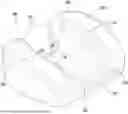
FIG. 1 is a perspective view of a back sleeper pillow according to some implementations;
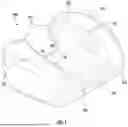
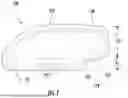
FIG. 2 is a front view of a back sleeper pillow according to some implementations;
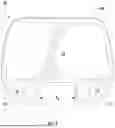
FIG. 3 is a rear view of a back sleeper pillow according to some implementations;
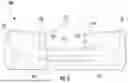
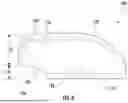
FIG. 4 is a bottom view of a back sleeper pillow according to some implementations;
FIG. 5 is a top view of a back sleeper pillow according to some implementations;
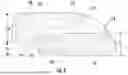
FIG. 6 is a side view of a back sleeper pillow according to some implementations;
FIG. 7 is a side view of a back sleeper pillow according to some implementations;
FIG. 8 is a section view of a back sleeper pillow taken along line 8-8 in FIG. 2 according to some implementations; and
FIG. 9 is a perspective view of an in-use back sleeper pillow according to some implementations.
DESCRIPTION
Detailed aspects and applications the present disclosure may be understood more readily by reference to the following detailed DESCRIPTION and examples taken in connection with the accompanying DRAWINGS, which forms a part of this disclosure.
For the purposes of explanation, numerous specific structural and functional details disclosed herein in order to provide a thorough understanding of the various aspects and applications of the disclosure. It will be understood, however, by those skilled in the relevant art, that implementations of the technology disclosed herein may be practiced without these specific details and that they are not to be interpreted as limits, but merely as a basis for teaching one skilled in the art to employ the present disclosure. The full scope of the disclosure herein is not limited to the examples that are described below. Specific examples enable the disclosure to be better understood. However, they are given merely by way of guidance and do not imply any limitation.
It will also be understood that the terminology used herein is for the purpose of describing particular implementations by way of example only and is not intended to be limiting of CLAIMS. Unless specifically noted, it is intended that the words and phrases in this description and the CLAIMS be given their plain, ordinary, and accustomed meaning to those of ordinary skill in the art.
The singular forms “a,” “an,” and “the” include plural referents unless the context clearly dictates otherwise. Thus, for example, reference to “an element” or “a step” includes reference to one or more of such elements or steps.
The word “exemplary,” “example,” or various forms thereof are used herein to mean serving as an example, instance, or illustration. Any aspect or design described herein as “exemplary” or as an “example” is not necessarily to be construed as preferred or advantageous over other aspects or designs. Furthermore, examples are provided solely for purposes of clarity and understanding and are not meant to limit or restrict the disclosed subject matter or relevant portions of this disclosure in any manner.
The words “comprise” and “contain” and variations of the words, for example “comprising” and “comprises,” mean “including but not limited to,” and are not intended to (and do not) exclude other components.
The term “plurality,”as used herein, means more than one.
All ranges are inclusive and combinable. When a range of values is expressed, another implementation includes from the one particular value and/or to the other particular value. Similarly, when values are expressed as approximations, by use of the antecedent “about,” it will be understood that the particular value forms another implementation.
As previously discussed, back sleeping is a preferred position for many individuals due to its potential benefits in minimizing pressure points and aligning the spine. However, these potential benefits cannot be achieved without adequate support. Back sleeping may also be required, such as for some patients recovering from surgery. Despite the potential benefits, back sleepers may experience strain on the lumbar region and neck, which can lead to discomfort and disrupted sleep patterns. Orthopedic pillows are designed to support proper spinal alignment during sleep, addressing discomfort and promoting better sleep quality.
The present disclosure provides an orthopedic back pillow specifically tailored for back sleepers (a back sleeper pillow) that addresses back sleeping challenges. By integrating ergonomic principles and innovative design features, implementations of the present disclosure maintain the natural curvature of the spine during back sleeping while supporting the neck in a neutral position and supporting the head. This targeted support not only enhances comfort but also helps alleviate pressure points and promotes relaxation of the muscles surrounding the spine.
As illustrated in the implementations shown in FIGS. 1-8, a back sleeper pillow 100 comprises a pillow body 102. The pillow body 102 has a frontside 104 and a backside 106 opposite the frontside 104.
The frontside 104 of the pillow body 102 is typically the surface where a sleeper places his or her head to rest, and the backside 106 of the pillow body 102 is typically the surface of the pillow body 102 that rests on the sleeping or resting surface.
The backside 106 is configured to rest on a sleeping surface, such as a bed or a mattress for example. Thus, the backside 106 may comprise a flat rear surface 110 on the backside 106 of the pillow body 102, as illustrated in FIG. 3. The flat rear surface 110 is configured to rest on the sleeping surface and may stabilize the back sleeper pillow 100 when the back sleeper pillow 100 is placed on the sleeping surface.
In some implementations, each of the frontside 104 and the backside 106 is bisected or divided by a center plane 108. The back sleeper pillow 100 may be symmetrical across the center plane 108 (see FIG. 2).
The back sleeper pillow 100 also comprises a primary head support surface 112 on the frontside 104 of the pillow body 102. The primary head support surface 112 serves as the principal source of support for a sleeper's head when using the back sleeper pillow 100. Thus, generally, when in use, the sleeper positions his or her head on the primary head support surface 112.
In some implementations, including the implementation shown in FIG. 8, the primary head support surface 112 has a substantially planar or flat topology. In some implementations, the primary head support surface 112 has various other surface geometries or contours, such as a gently concave surface contour, as well as a grid of cooling perforations or similar features.
The primary head support surface 112 is configured to position the head of the sleeper with respect to the sleeping surface in a way that maintains the spine of the sleeper in a neutral position. The primary head support surface 112 is offset from the flat rear surface 110, giving the pillow body 102 a maximum thickness TP (see FIGS. 4 and 8). In some implementations, the maximum thickness TP is between 1 and 4 inches and, in certain cases, between about 1.5 and about 3 inches. In other implementations, TP may be greater than or less than the aforementioned range.
The primary head support surface 112 has a first edge 114 and a second edge 116 across the primary head support surface 112 from the first edge 114, as shown in FIG. 2. Thus, the second edge 116 of the primary head support surface 112 may be positioned across the center plane 108 from the first edge 114 of the primary head support surface 112. The first edge 114 and the second edge 116 of the primary head support surface 112 bound the primary head support surface 112 together with a top edge 118 and a bottom edge 120.
In some implementations, the back sleeper pillow 100 comprises one or more bumpers 122. Each bumper 122 is positioned adjacent to the primary head support surface 112 and rises forward from the primary head support surface 112. Each bumper 122 is configured to support the head of the sleeper in a neutral position while in use. In particular, each bumper 122 helps to inhibit the sleeper from turning his or her head to the side while the sleeper's head is on the primary head support surface 112. In some implementations, each bumper 122 is configured to match or follow the anatomy of the head of the sleeper.
The bumpers 122 may be contoured to have sloped or rounded edges. As labeled in FIG. 4, the bumpers 122 may each have a maximum bumper height HB above the primary head support surface 112. In some implementations, the maximum bumper height HB is substantially equal to the maximum thickness TP of the pillow body 102. In some implementations, the maximum bumper height HB is greater than the maximum thickness TP of the pillow body 102, while in other implementations, the maximum bumper height HB is less than the maximum thickness TP of the pillow body 102. In particular implementations, the maximum bumper height HB is between 85% and 95% of the maximum thickness TP of the pillow body 102. Such a proportion provides bumpers 122 that are tall enough to provide support to the sleeper without creating a claustrophobic space where the sleeper's head is completely below the bumpers 122.
The bumpers 122 also have a maximum bumper width WB, as measured in a direction perpendicular to the center plane 108. The maximum bumper width WB may be selected to provide the desired level of support to the head of the sleeper. For example, implementations with a larger maximum bumper width WB will have bumpers 122 that are firmer and more resistant to deformation, while implementations with a smaller maximum bumper width WB will have bumpers 122 that are more easily bent over. In some embodiments, the maximum bumper width WB ranges from about 4 to about 8 inches. In some embodiments, the maximum bumper width WB is between 5.5 inches and 7.5 inches. In some embodiments, the maximum bumper width WB is between 6 inches and 7 inches. In particular embodiments, the maximum bumper width WB is 4 inches, 4.5 inches, 5 inches, 5.5 inches, 6 inches, 6.5 inches, 7 inches, 7.5 inches, or 8 inches. The maximum bumper width WB may be greater than or less than the aforementioned ranges.
In some implementations, each bumper 122 has a terminal end region or protuberance 124, which projects from the pillow body 102 toward the body of the sleeper and which is referred to herein as a “shoulder horn. ” In the illustrated example, the shoulder horn 124 extends down from the main body of the bumper 122 adjacent a bottom edge 120 of the primary head support surface 112 and is configured to extend over a shoulder of the sleeper when the head of the sleeper is positioned on the primary head support surface 112. The direction “down,” as appearing in this context, denotes the extension of each shoulder horn 124 away from the pillow body 102 and toward the trunk of a sleeper's body when using the back sleeper pillow 100. In some implementations, the shoulder horn 124 is a continuation of the main body of the bumper 122, that is, the portion of the bumper 122 overlying the pillow body 102.
In some implementations, the shoulder horn 124 has a rear surface 126 that is angled with respect to the backside 106 of the pillow body 102, and thus is non-planar and nonparallel with the backside 106 of the pillow body 102, as shown in FIGS. 6-8. In other words, the rear surface 126 of the shoulder horn 124 may slope down toward the backside 106 of the pillow body 102. Thus, when the back sleeper pillow 100 is placed on a sleeping surface, the shoulder horn 124 may be raised off the sleeping surface. This creates a cavity 128 beneath the shoulder horn 124 where a shoulder of the sleeper can be positioned, as best shown in FIGS. 6, 7 and 9. The slope or taper of the rear surface 126 of the shoulder horn 124 toward the backside 106 of the pillow body 102 may be configured to allow the shoulder of the sleeper to push up to the pillow body 102 and thus support the neck of the sleeper more effectively.
The cavity 128 has a maximum height HC and the shoulder horn 124 has a thickness TSH, as shown in FIGS. 6 and 7. In some implementations, the maximum height HC of the cavity 128 is between 25% and 75% of the thickness TSH of the shoulder horn 124. In some implementations, the maximum height HC of the cavity 128 is between 40% and 65% of the thickness TSH of the shoulder horn 124. In such implementations, this ratio provides the necessary support to the sleeper. If the height HC of the cavity 128 were large and the thickness TSH were small, the shoulder horns 124 would not support the head of the sleeper as effectively. The ratio of the maximum height HC of the cavity 128 to the thickness TSH of the shoulder horn 124 may be greater than or less than the aforementioned ranges. Due to the manner in which the underside or rear surface of each shoulder horn 124 is angled relative to backside 110 of the pillow body 102, the height of the cavity 128 decreases with increasing proximity to the pillow body 102 in the illustrated example. This imparts the rear surface 126 of the shoulder horn 124 with a slanted orientation, with the side profile of the rear surface 126 following a substantially straight line or linear path at a downward trajectory (that is, toward a plane coplanar with the backside surface 110) until sloping downwardly in a more pronounced manner and joining with the bottom wall of the pillow body 102 (that is, the wall of the pillow body 102 facing the sleeper when using the back sleeper pillow 100). In other embodiments, the rear surface 126 may follow a different contour and the height of the cavity 128 may or may not decrease with increasing proximity to the pillow body 102.
The thickness TSH of the shoulder horn 124 may be measured at an end 138 of the shoulder horn 124. The maximum height HC of the cavity 128 and the thickness TSH of the shoulder horn 124 may be selected to provide the desired level of support to the head of the sleeper. For example, implementations with a greater thickness TSH of the shoulder horn 124 will have shoulder horns 124 that are firmer and more resistant to deformation, while implementations with a lesser thickness TSH of the shoulder horn 124 will have shoulder horns 124 that are more easily bent over. Implementations with a larger maximum height HC of the cavity 128 will have more space for the sleeper's shoulders but leave less space available for the shoulder horns 124.
The shoulder horn 124 may be curved towards the center plane 108 of the pillow body 102, and therefore may curve toward the head of the sleeper when positioned on the primary head support surface 112. This allows the shoulder horn 124 to provide additional support to the head of the sleeper. The shoulder horn 124 may comprise a sternomastoid-tracing region or surface 130. The surfaces 130 of each shoulder horn 124 face each other and may be located adjacent the bottom edge 120 of the primary head support surface 112. The surfaces 130 are angled relative to the center plane 108 such that, moving away from the pillow body 102, the surfaces 130 converge towards each other.
In some implementations, including those shown in FIGS. 1-9, the back sleeper pillow 100 comprises a first bumper 132 of the one or more bumpers 122 and a second bumper 134 of the one or more bumpers 122. Each of the first bumper 132 and the second bumper 134 may have any of the features described above with respect to the bumpers 122. The first bumper 132 is positioned adjacent to the first edge 114 of the primary head support surface 112, and the second bumper 134 is positioned adjacent to the second edge 116 of the primary head support surface 112. Thus, the first bumper 132 and the second bumper 134 are positioned on either side of the head of the sleeper when the head of the sleeper is positioned on the primary head support surface 112, as shown in FIG. 9. This helps to inhibit the sleeper from turning his or her head to either side while the sleeper's head is on the primary head support surface 112. In this way, the first bumper 132 and the second bumper 134 support the head of the sleeper in a neutral position.
The first bumper 132 and the second bumper 134 may be separated by a gap 136 that is configured to receive the neck of the sleeper when the sleeper rests on the back sleeper pillow 100. The gap 136 may have a dovetail shape when viewing the frontside 104 or the backside 106 of the pillow body 102, as shown in FIGS. 2 and 3. The gap 136 may have a gap width WG, as measured across the sternomastoid-tracing surfaces 130 of the shoulder horns 124, that is selected to allow room for the neck of the sleeper while still providing sufficient support for the head of the sleeper. When measured in a direction perpendicular to the center plane 108 from the closest point to the center plane 108 on the shoulder horn 124 of the first bumper 132 to the closest point to the center plane 108 on the shoulder horn 124 of the second bumper 134, the gap width WG may have a value between about 4.75 and about 8 inches, a value between about 5 and 7 inches, or, perhaps, a value between about 5 and 6.5 inches. In particular embodiments, the gap width WG may be 4.75 inches, 5 inches, 5.5 inches, 6 inches, 6.5 inches, 7 inches, 7.5 inches, or 8 inches. The gap width WG may be greater than or less than the aforementioned ranges. As mentioned above, the gap width WG may be selected to allow room for the neck of the sleeper. In addition, though the gap width WG may be designed to more closely follow the anatomy of the neck, in some embodiments, the gap width WG provides additional space to allow for small movements during sleep and to avoid constant contact between the pillow and the sleeper. This helps to avoid discomfort and protects the skin of the sleeper from the effects of prolonged contact with the pillow.
In some embodiments, the gap width WG varies as the shoulder horns 124 curve inwardly toward the center plane 108. Thus, the gap width WG may be smallest further away from the pillow body 102 and largest adjacent to the pillow body 102. As noted above, this imparts the space peripherally bordered by the shoulder horns 124 with a dovetail shape when viewing the frontside 104 or the backside 106 of the pillow body 102. This contour of the shoulder horns 124 traces or mirrors the muscles of the neck. Other geometries and contours of the shoulder horns 124 may also be implemented.
In some embodiments of the back sleeper pillow 100, a ratio of the gap width WG to the bumper width WB may be specifically selected. The ratio of the gap width WG to the bumper width WB is significant because it relates the space provided for the user's neck to the support provided by the bumpers 122. As the ratio of the gap width WG to the bumper width WB increases, this means that either the gap width WG is increased or the bumper width WB is decreased. Similarly, as the ratio of the gap width WG to the bumper width WB decreases, this means that either the gap width WG is decreased or the bumper width WB is increased. To maintain a proper level of support for the size of the gap 136, the ratio of the gap width WG to the bumper width WB may be between 85% and 95%. However, other ranges may be implemented. For example, the ratio of the gap width WG to the bumper width WB may be between 50% and 100%, between 75% and 100%, between 60% and 110%, between 50% and 150%, or between 50% and 200%.
In addition, the bumper width WB may vary along the bumper 122 to provide additional support in important sections of the bumper 122. For example, the bumper width WB may be greatest at a location proximate or adjacent a plane orthogonal to the center plane 108 which intersects the bottom edge 120 of the primary head support surface 112. This provides reinforcement at a location of the bumper 122 that generally experiences the greatest load when the sleeper leans against the bumper 122. The bumpers 122 may curve in a manner that gives the bumpers 122 a crescent planform shape, with the crescents opening toward one another, mirrored about the center plane 108.
In some implementations, at a top edge 118 of the primary head support surface 112 opposite the bottom edge 120, the bumpers 122 may curve away from the center plane 108 of the pillow body 102 and toward the backside 106 of the pillow body 102, as shown in FIGS. 1, 2, and 5. This shape causes the bumpers 122 to merge with the pillow body 102 at the top edge 118 of the primary head support surface 112 and opens up the space around the primary head support surface 112 adjacent to the top edge 118 of the primary head support surface 112. This may allow more air flow around the sleeper's head when the sleeper rests on the back sleeper pillow 100.
As shown in FIG. 9 and as mentioned above, the shoulder horns 124 are configured to extend over the shoulders of the sleeper. In addition, the bumpers 122 and the shoulder horns 124 are sized and shaped to extend into the space between the sleeper's head and shoulders when the head of the sleeper is positioned on the primary head support surface 112. This allows the back sleeper pillow 100 to support the sleeper's head in a neutral position, perhaps with a slight tilt, without contacting the sleeper's chin or a majority of the sleeper's cheek. In some embodiments, the bumpers 122 and the shoulder horns 124 extend into and fill the space between the sleeper's head and shoulders when the head of the sleeper is positioned on the primary head support surface 112. The inwardly curved region of the shoulder horns 124, described above as the sternomastoid-tracing surface 130, fills the space around the sleeper's neck, lower jaw, and upper shoulder. In addition, the back sleeper pillow 100 partially encircles the neck, while leaving the front or anterior portion of the neck open to prevent any feeling of tightness or entrapment, allow airflow and cooling, allow the sleeper to easily engage and disengage from the back sleeper pillow 100, and allow a limited range of motion for the sleeper to gently turn his or her head from one bumper 122 to the other.
As explained above, the primary purpose of the back sleeper pillow 100 is to allow the sleeper to comfortably sleep on their back. A secondary purpose, also alluded to above, is to avoid any primary facial contact when sleeping. Primary facial contact occurs when a majority of the sleeper's cheek or jaw contacts the pillow, but does not occur when the area around the sleeper's ear or a small area of the sleeper's cheek contacts the pillow. Avoiding primary facial contact with the pillow encourages healthy facial skin. For this reason, the back sleeper pillow 100 includes bumpers 122 which help to restrict the sleeper's head from rolling over to the side and provide support when the sleeper's head leans towards one side. The back sleeper pillow 100 further supports the neck of the user through the inclusion of the shoulder horns 124, which curve into the sleeper's sternomastoid region. The shoulder horns 124 allow the sleeper to slightly tilt their head to the side and still obtain support in the sternomastoid region. The cavity 128 beneath the shoulder horns 124 also help to provide this support by allowing the shoulder horns 124 to extend over the shoulders of the sleeper. In addition, by including the slanted, angled, or inverse wedge shape of the shoulder horns 124 disclosed above, the shoulder horns 124 are more able to properly support the sleeper's head. Thus, the features of the back sleeper pillow 100 disclosed herein provide support to a back sleeper in ways that traditional pillows do not.
The back sleeper pillow 100 can be manufactured in various different manners and from varying materials. It is contemplated that the components included in back sleeper pillow implementations may be formed of any of many different types of materials or combinations that can readily be formed into shaped objects and that are consistent with the intended operation of the back sleeper pillow. Components of back sleeper pillows may be manufactured separately and then assembled together, or any or all of the components may be manufactured simultaneously and integrally joined with one another. Manufacture of these components separately or simultaneously, as understood by those of ordinary skill in the art, may involve 3-D printing, extrusion, pultrusion, vacuum forming, injection molding, blow molding, resin transfer molding, casting, stamping, cutting, punching, and/or the like. If any of the components are manufactured separately, they may then be coupled with one another in any manner, such as with adhesive, a fastener, any combination thereof, and/or the like for example, depending on, among other considerations, the particular material(s) forming the components.
For the exemplary purposes of this disclosure, in many implementations, the back sleeper pillow 100 will be partially or wholly composed of one or more pieces of molded memory foam. For example, in some implementations, the back sleeper pillow 100 may be produced as a single or monolithic piece composed of a memory foam formed utilizing a suitable molding process, such as pour molding. In other implementations, only a portion of the back sleeper pillow 100 may be composed of a memory foam, such as the portions of the back sleeper pillow 100 principally contacted by a sleeper's head during proper usage of the back sleeper pillow 100, while other portions of the back sleeper pillow 100 are produced from a disparate material, such as a polymer-based material (e.g., latex), a silicone gel, or the like. As a still further possibility, the back sleeper pillow 100 may be assembled from multiple pieces (e.g., molded foam pieces) of varying densities. Finally, if so desired, one or more form-fitting covers can be disposed over the back sleeper pillow 100 after manufacture thereof. When provided, such cover or covers may or may not be removable by the sleeper.
Furthermore, implementations of the back sleeper pillow 100 may be designed with materials that offer both comfort and durability. The selection of hypoallergenic and breathable fabrics ensures a hygienic sleep environment while allowing for adequate airflow to regulate temperature. These attributes are crucial in providing a restful and uninterrupted night's sleep, essential for overall health and well-being.
The back sleeper pillow 100 represents an innovative advancement in sleep technology, catering specifically to the needs of individuals who prefer sleeping on their backs. By addressing the challenges associated with traditional pillows and focusing on optimal spinal alignment and comfort, the back sleeper pillow 100 aims to enhance the sleep experience and contribute to improved musculoskeletal health.
Many additional implementations are possible.
While detailed back sleeper pillow implementations of the present disclosure are included herein, it is to be understood that the disclosed implementations are merely exemplary of the disclosed technology that may be embodied in various forms. In places where the description refers to particular back sleeper pillow implementations, it should be readily apparent that a number of modifications may be made without departing from the spirit thereof and that these modifications may be applied to other implementations disclosed or undisclosed. Thus, the presently disclosed back sleeper pillows are to be considered in all respects as illustrative and not restrictive.
It will also be understood that implementations of the back sleeper pillow include but are not limited to the specific components disclosed herein, as virtually any components consistent with the intended operation of various back sleeper pillows may be utilized. Accordingly, for example, it should be understood that, while the DRAWINGS and DESCRIPTION show and describe particular back sleeper pillow implementations, any such implementation may comprise components of any shape, size, style, type, model, version, class, grade, measurement, concentration, material, weight, quantity, and/or the like consistent with the intended operation of a back sleeper pillow.
Further implementations are within the CLAIMS.
Claims
1. A back sleeper pillow for supporting a head of a sleeper in a back sleeping position, the back sleeper pillow comprising:
a pillow body having a frontside and a backside opposite the frontside, wherein each of the frontside and the backside is bisected by a center plane and wherein the backside is configured to rest on a sleeping surface;
a primary head support surface on the frontside of the pillow body, the primary head support surface having a first edge and a second edge across the center plane from the first edge;
a first bumper adjacent to the first edge of the primary head support surface and rising forward from the primary head support surface, the first bumper configured to support the head of the sleeper in a neutral position during sleep;
a first shoulder horn extending down from the first bumper and configured to extend over a first shoulder of the sleeper when the head of the sleeper is positioned on the primary head support surface, wherein the first shoulder horn is curved towards the center plane of the pillow body and wherein the first shoulder horn has a rear surface angled with respect to the backside of the pillow body;
a second bumper adjacent to the second edge of the primary head support surface and rising forward from the primary head support surface, the second bumper configured to support the head of the sleeper in the neutral position during sleep; and
a second shoulder horn extending down from the second bumper and configured to extend over a second shoulder of the sleeper when the head of the sleeper is positioned on the primary head support surface, wherein the second shoulder horn is curved towards the center plane of the pillow body and wherein the second shoulder horn has a rear surface angled with respect to the backside of the pillow body.
2. The back sleeper pillow of claim 1, each of the first shoulder horn and the second shoulder horn comprising a sternomastoid-tracing surface positioned to support the head of the sleeper in a slightly tilted position when the head of the sleeper is positioned on the primary head support surface.
3. The back sleeper pillow of claim 1, further comprising a gap between the first shoulder horn and the second shoulder horn, wherein the gap has a dovetail shape when viewed from the frontside of the pillow body.
4. The back sleeper pillow of claim 1, wherein, when the back sleeper pillow is placed on a sleeping surface, the first shoulder horn and the second shoulder horn are raised off the sleeping surface.
5. The back sleeper pillow of claim 1, wherein each of the first shoulder horn and the second shoulder horn is configured to be positioned between the head of the sleeper and the shoulder of the sleeper when the sleeper's head is positioned on the head support surface.
6. The back sleeper pillow of claim 1, wherein, at a top of the pillow body opposite the first shoulder horn and the second shoulder horn, the first bumper and the second bumper curve away from the center plane and toward the backside of the pillow body.
7. A back sleeper pillow for supporting a head of a sleeper in a back sleeping position, the back sleeper pillow comprising:
a pillow body having a frontside and a backside opposite the frontside, wherein each of the frontside and the backside is bisected by a center plane;
a primary head support surface on the frontside of the pillow body, the primary head support surface having a first edge and a second edge across the center plane from the first edge;
a first bumper adjacent to the first edge of the primary head support surface and rising forward from the primary head support surface, the first bumper configured to support the head of the sleeper in a neutral position during sleep;
a first shoulder horn extending down from the first bumper and configured to extend over a first shoulder of the sleeper when the head of the sleeper is positioned on the primary head support surface;
a second bumper adjacent to the second edge of the primary head support surface and rising forward from the primary head support surface, the second bumper configured to support the head of the sleeper in the neutral position during sleep; and
a second shoulder horn extending down from the second bumper and configured to extend over a second shoulder of the sleeper when the head of the sleeper is positioned on the primary head support surface.
8. The back sleeper pillow of claim 7, wherein each of the first shoulder horn and the second shoulder horn is curved towards the center plane of the pillow body.
9. The back sleeper pillow of claim 7, wherein the backside is configured to rest on a sleeping surface and wherein each of the first shoulder horn and the second shoulder horn has a rear surface angled with respect to the backside of the pillow body.
10. The back sleeper pillow of claim 7, each of the first shoulder horn and the second shoulder horn comprising a sternomastoid-tracing surface positioned to support the head of the sleeper in a slightly tilted position when the head of the sleeper is positioned on the primary head support surface.
11. The back sleeper pillow of claim 7, wherein each of the first shoulder horn and the second shoulder horn is configured to be positioned between the head of the sleeper and the shoulder of the sleeper when the sleeper's head is positioned on the head support surface.
12. The back sleeper pillow of claim 7, wherein, when the back sleeper pillow is placed on a sleeping surface, the first shoulder horn and the second shoulder horn are raised off the sleeping surface.
13. The back sleeper pillow of claim 7, wherein, at a top of the pillow body opposite the first shoulder horn and the second shoulder horn, the first bumper and the second bumper curve away from the center plane and toward the backside of the pillow body.
14. A back sleeper pillow for supporting a head of a sleeper in a back sleeping position, the back sleeper pillow comprising:
a pillow body having a frontside and a backside opposite the frontside, wherein each of the frontside and the backside is divided by a center plane;
a primary head support surface on the frontside of the pillow body;
at least one bumper adjacent to an edge of the primary head support surface and rising forward from the primary head support surface, the at least one bumper configured to support the head of the sleeper in a neutral position during sleep; and
at least one shoulder horn extending down from the at least one bumper and configured to extend over a shoulder of the sleeper when the head of the sleeper is positioned on the primary head support surface.
15. The back sleeper pillow of claim 14, wherein the at least one shoulder horn is curved towards the center plane of the pillow body.
16. The back sleeper pillow of claim 14, wherein the backside is configured to rest on a sleeping surface and wherein the at least one shoulder horn has a rear surface angled with respect to the backside of the pillow body.
17. The back sleeper pillow of claim 14, the at least one shoulder horn comprising a sternomastoid-tracing surface positioned to support the head of the sleeper in a slightly tilted position when the head of the sleeper is positioned on the primary head support surface.
18. The back sleeper pillow of claim 14, wherein, when the back sleeper pillow is placed on a sleeping surface, the at least one shoulder horn is raised off the sleeping surface.
19. The back sleeper pillow of claim 14, wherein the at least one shoulder horn comprises a first shoulder horn and a second shoulder horn, and further comprising a gap between the first shoulder horn and the second shoulder horn, wherein the gap has a dovetail shape when viewed from the frontside of the pillow body.
20. The back sleeper pillow of claim 14, wherein, at a top of the pillow body opposite the at least one shoulder horn, the at least one bumper curves away from the center plane and toward the backside of the pillow body.
Images & Drawings included:



Sources:
- United States Patent and Trademark Office - verify current appl. status at the USPTO↗
Similar patent applications:
Recent applications in this class:
- » 20260033650 2026-02-05
Vertigo Pillow for Side Sleeper - » 20250338985 2025-11-06
SYSTEM AND METHOD FOR MANUFACTURING A CUSTOMIZED ORTHOPEDIC SUPPORT PILLOW - » 20250331663 2025-10-30
Head Support Pillow - » 20250325124 2025-10-23
LYING NECK PILLOW THAT IS EASY TO ADJUST AND USE - » 20250280975 2025-09-11
PILLOW - » 20250194829 2025-06-19
PILLOW - » 20250194828 2025-06-19
FACE PRESERVATION SLEEPING PILLOW - » 20250169631 2025-05-29
Memory Foam Pillow for Side Sleepers and Manufacturing Process and Device - » 20250120524 2025-04-17
PILLOW - » 20250064236 2025-02-27
ADJUSTABLE PILLOW