Artificial Flat Interlocking Stackable Section Holiday Tree
US20260069073A1
2026-03-12
18/828,694
2024-09-09
Smart Summary: An artificial holiday tree is designed using flat pieces made from a pegboard material that can be shaped like trapezoids or triangles. These pieces are connected with vertical square tubes that have holes in them. Inner tube inserts are added to extend the height and connect the square tubes together. Garland strands, made of plastic or metal-core, are threaded through the holes in the pegboard and secured on the other side. This design allows the tree to be easily assembled and stacked for storage. 🚀 TL;DR
Abstract:
A flat, interlocking artificial tree comprising of one or more pegboard-type material pieces cut into a trapezoid or triangular, shape, one or more perforated square tubes vertically fastened to the pegboard sections, one or more inner tube union inserts vertically fastened inside the perforated square tubes affixed to the pegboard sections on one end or both ends of the square tubes that extend the height of the perforated square tubes and vertically connect one square tube to another secured by way of pin to create the overall shape and/or height of the tree, one or more plastic, metal-core, artificial pine or plastic polymer garland strands secured through the holes of the pegboard. The tip of a garland is passed through a hole of the pegboard, then twisted and/or glued or fastened to the opposite side of the pegboard to secure the garland.
Applicant:
Interested in similar patents?
Get notified when new applications in this technology area are published.
Classification:
A47G33/06 » CPC main
Religious or ritual equipment in dwelling or for general use; Christmas trees Artificial Christmas trees
Description
CROSS-REFERENCE TO RELATED APPLICATIONS
The present application claims priority to U.S. provisional patent application Ser. No. 63/537,149, filed on Sep. 7, 2023. The entire disclosure is included herein in its entirety at least by reference.
BACKGROUND OF THE INVENTION
1. Field of Invention
The present invention relates to a flat, artificial tree constructed of wood, metal, or plastic pegboard-type material, fastened together with interlocking perforated square steel tubes, or other materials such as aluminum, wood, etc., inner steel tube union inserts, or other materials such as aluminum, wood, etc., and affixed with metal-core vinyl artificial pine-needle garland strand(s), or similar type pine needles, or any plastic polymer and/or metal-core garland, or similar type pine needles, that is secured through the holes of the pegboard, or other binding methods to create a flat, full size artificial Christmas-type holiday tree.
2. Description of Related Art
In the seasonal home decorating industry, the typical artificial tree consists of either an artificial or live pine tree, in various tree-types, used to celebrate the Christmas holiday, as well as other traditional holidays. These trees usually take up a large footprint, can be cumbersome to display, can pose a safety hazard, and are challenging to set up, decorate, and take down. Therefore, a need for an artificial tree that is safe, easy to decorate, slim enough to put in any space, easy to store, pet-friendly, child-friendly, user-friendly, space-saving, with the ability to be hung and secured on a wall, door, window, etc., and easy to assemble exists. This need is driven from the injuries, deaths, house fires, health risks, labor, space consuming, and maintenance posed by conventional live/real and artificial Christmas-type trees. Conventional live/real trees account for an estimated 2,000 (two thousand) injuries per season nationwide, six fatalities (according to the U.S. Consumer Product Safety Commission), and 200 (two hundred) fires each year, which are deadlier than other types of house fires, as one out of every 32 (thirty-two) reported home Christmas-type tree fires resulted in a death compared to an average of one death per 143 (one hundred forty three) reported home fires (according to the National Fire Protection Association).
In addition, conventional live/real Christmas trees require daily maintenance to prevent drying, which could lead to fire, as well as the labor to clean the mess, mainly pine needles, when installing and removing the real/live tree. Conventional live/real Christmas-type trees also pose an added health risk to pets, in particular, from the water in the stand/base of the tree, which can be a breeding ground for very harmful bacteria. In regard to conventional artificial Christmas-type trees, they are heavy and bulky items, which can be difficult to transport and/or install, which could lead to injuries, and require large boxes, as well as large spaces, to store them in due to their size. Most consumers do not have the space to store them in their homes or commercial environments. In addition, most conventional artificial and live/real Christmas-type trees require a large area in order to display them in. This could require the need to move furniture and fixtures if space is limited. They also require much work to trim and decorate with ornaments and/or lights that have to be placed on the tree and removed from the tree each year, whether for a conventional live/real tree or artificial tree. In the case of pets and/or children, it is difficult to secure conventional live/real and artificial trees to prevent a tree from tipping or falling and causing injury and possibly death. The conventional live/real and artificial trees are also hazardous to pets and/or children due to their overall bulky size and dimensions.
U.S. Pat. Nos. 2,708,324, 4,093,758, and 4,140,823, describe a collapsable artificial Christmas tree by use of hinges and metal branches. However, these patents describe a complex device by which the artificial tree can be stored when not in use and do not address the bulky, circular size of these artificial Christmas-type trees, the risk of injury or fire related to these types of artificial trees, the ability to hang and/or secure the artificial tree safely out of harm's way from small children and pets on a wall, door, or similar installations, nor do they address the space-saving ability of the current invention. U.S. Pat. Nos. 839,128, 796,377, and 3,970,834 describe a similar pine-base artificial Christmas tree, however, do not also address the bulky, circular size of these artificial Christmas-type trees, the risk of injury or fire related to these types of artificial trees, the ability to hang the artificial tree safely out of harm's way from small children and pets on a wall, door, or similar installations, nor do they address the space-saving ability of the current invention. All of these benefits would be solved by the current invention. These types of conventional circular artificial trees listed in these patents are also produced with a large amount of metal, which causes unnecessary emissions to the environment, is maintenance-intensive, and occupies space needed for other purposes. Hence, there remains a need for a more simplified, convenient, safer, less costly, and environmentally friendlier means by which a user can display an artificial Christmas-type holiday tree.
BRIEF SUMMARY OF THE INVENTION
These needs are met by the present invention. More particularly, the invention is a vast improvement to the present design of the existing artificial-type trees, as well as past and present patents relating to improvements of the existing artificial-type tree of this type. In accordance with the present invention there is provided a flat artificial tree including:
-
- one or more wood, metal, or plastic pegboard-type material pieces cut into a trapezoid or triangular, shape, creating the sections of the tree whereby the sections can be made wider when utilizing multiple sections for one tree to create a tree greater in height;
- one or more perforated square steel tubes, or other materials such as aluminum, wood, etc. vertically affixed to the pegboard-type material sections by way of screws, bolts, or other fasteners;
- one or more inner steel tube union inserts, or other materials such as aluminum, wood, etc. vertically fastened inside the perforated square tubes affixed to the pegboard-type sections on one end or both ends of the square tubes that extend the height of the perforated square tubes and connect one square tube to another in a vertical manner to create the overall shape of the tree;
- one or more pins, bolts, or other similar types of fasteners that are inserted through one hole of the perforated square tube, through the inner steel tube union insert, and through the opposite side of the perforated square tube to secure the pegboard-type sections into place.
- one or more metal-core artificial vinyl pine-needle garland strand(s), or similar type pine needles, or any plastic polymer and/or metal-core garland that is secured through the holes of the pegboard, or other binding methods. The tip of the garland is passed through the hole of the pegboard, then twisted, and/or glued or fastened to the opposite side of the pegboard to secure the garland.
The present invention includes artificial-type trees consisting of trapezoid or triangular cut pegboard sections of various sizes. The metal-core vinyl pine-needle garland is passed through various holes of the pegboard. The metal of the metal-core vinyl pine-needle garland is threaded through the holes of the pegboard and bent on the backside of the pegboard to secure the metal-core vinyl pine-needle garland to the pegboard.
A square steel tube is attached from the top to bottom and center of the back of each pegboard section. One or more of the sections has a fixed inner tube union insert within the square steel tube secured by way of a pin, screw, or bolt. This inner tube union insert extends beyond the square steel tube, in order to affix an additional pegboard section.
The tube union insert allows for the connection and disconnection of the tubes connected to the pegboard sections affixed with metal-core vinyl pine-needle garland, creating the interlocking system of the present invention.
This interlocking pegboard section system allows the present invention to be broken down to a more space-saving unit when being stored.
The pine-needle material can consist of any color or material.
It can also be adorned with ornaments and/or string lights of any type or length. In addition, the present invention system as described above, is detailed for use with a Christmas-type stackable unit. However, it can also be used in other artificial indoor trees and/or plants installations.
Although the present invention features a flat, slim design to save space, the actual design creates a fully dimensional effect. The slim design allows for the present invention to be displayed in any space, large or small. It can be placed standing up against a wall or on its own, on a tabletop or mantle, hanging on a wall or from any interior or exterior door, or in a window, and more.
The present invention saves on space when displayed, space when being stored, decorating time if purchased pre-decorated, and the cost to ship the item due to its relatively small packaging. It is more versatile, easier to use, safer, and easier to maintain than any other artificial and/or live/real tree on the market. Furthermore, since the present invention features a flat design, it requires less than half of the materials needed to produce past and/or similar artificial Christmas-type trees.
Because of its design, and ability to be installed on a wall, the present invention is more pet and kid friendly than conventional live/real or artificial trees. It can be displayed in a residential or commercial environment.
In addition, the present invention stacks up from any height, starting as low as 2′ (two feet), with multiple stacking sections, of which the measurements can vary, to increase the height of the tree.
Because the present invention is constructed of interlocking sections, and features a unique flat design, it can be taken apart and stored in a minimal space when not in use.
The present invention can be produced and designed with or without light strands and/or decorations of various types.
In order to assemble the apparatus, the user would simply insert the pin(s), screw(s), or bolt(s) through the inner steel tube union insert protruding from the adjacent sections. In order to disassemble the invention, the user would simply remove the pin(s), screw(s), or bolt(s) from the inner steel tube union insert protruding from the adjacent sections.
BRIEF DESCRIPTION OF THE DRAWINGS
A more complete appreciation of the invention and many more other intended advantages can be readily attained by reference to the following detailed description when considered in connection with the following drawings, wherein:
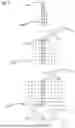
FIG. 1 is a rear view illustrating the use of the device of the present invention, wherein the square tube is affixed to the pegboard sections by way of bolts. Tube union inserts are fastened to the top end of two of the square tubes. The sections are separated and not connected.
FIG. 2 is a rear view illustrating the use of the device of the present invention, wherein the square tube is fastened to the pegboard sections by way of bolts and the artificial pine garland is affixed to the pegboard sections, as the end of the artificial pine garland strands are inserted through holes of the pegboard sections. Tube union inserts are fastened to the top end of two of the square tubes. The sections are separated and not connected.
FIG. 3 is a rear view illustrating the use of the device of the present invention, wherein the square tube is fastened to the pegboard sections by way of bolts and the artificial pine garland is affixed to the pegboard sections, as the end of the artificial pine garland strands are inserted through holes of the pegboard sections. The sections are connected, demonstrating the use and function of the interlocking pegboard sections by way of the square tube and tube union inserts, secured together by way of pin.
FIG. 4 is a right side view illustrating of the use of the device of the present invention, wherein the end of each artificial pine garland is inserted through a hole of a pegboard section on one end and fastened to the opposite end of the pegboard by way of bending, twisting garland, and/or gluing or similar application.
FIG. 5 is a front view illustrating the use of the device of the present invention, wherein the application of the garland through the pegboard is demonstrated, producing the look of the artificial tree.
FIG. 6 is a front view illustrating the use of the device of the present invention, wherein the application of the garland through the pegboard is demonstrated, producing the look of the artificial tree in three different height size trees.
FIG. 7 is a prospective view illustrating the use of the device of the present invention, wherein the square tube is affixed to the pegboard sections by way of bolts. Tube union inserts are fastened to the top end of one of the square tubes and on the base of the tree (the base of the trees is optional). The sections are separated and not connected.
FIG. 8 is a prospective view illustration of the use of the device of the present invention, wherein the application of the garland through the pegboard is demonstrated. Tube union inserts are fastened to the top end of one of the square tubes and on the base of the tree (the base of the trees is optional). The sections are separated and not connected.
DETAILED DESCRIPTION OF THE PREFERRED EMBODIMENT
The device of the present invention is shown in FIG. 1 as parts of the flat interlocking stackable tree in sections. Pegboard 10a, 10b, and 10c make up the sections of the tree. Square tube 11a is demonstrated as bolted to pegboard 10a, square tube 11b is demonstrated as bolted to pegboard 10b, and square tube 11c is demonstrated as bolted to pegboard 10c. Tube union 12a is demonstrated as bolted inside square tube 11b. Tube union 12b is demonstrated as bolted inside square tube 11c. Tube union 12c is demonstrated as bolted to base 14 (the base of the trees is optional and can consist of various types of materials and/or sizes). Each section is secured by way of pin 13a-c. The pegboard sections (10a, 10b, and 10c) are separated and not connected in this demonstration.
As shown in FIG. 2, pegboard 10a, 10b, and 10c make up the sections of the tree. Square tube 11a is demonstrated as bolted to pegboard 10a, square tube 11b is demonstrated as bolted to pegboard 10b, and square tube 11c is demonstrated as bolted to pegboard 10c. Tube union insert 12a is demonstrated as bolted inside square tube 11b. Tube union insert 12b is demonstrated as bolted inside square tube 11c. Tube union insert 12c is demonstrated as bolted to base 13. Each section will be secured by way of pin 13a-c. Pine garland 15 is demonstrated as applied through the front and secured to the backs of 10a, 10b, and 10c (garland can consist of various types of materials).
As shown in FIG. 3, square tube 11a is demonstrated as bolted to pegboard 10a, square tube 11b is demonstrated as bolted to pegboard 10b, and square tube 11c is demonstrated as bolted to pegboard 10c. Square tube 11b that is fastened to 10b is connected to 11a, that is fastened to 10a, by way of tube union insert 12a. Square tube 11a and 11b are secured by way of pin 13a through square tube 11a, 11b, and tube union insert 12a. Square tube 11c that is fastened to 10c is connected to 11b, that is fastened to 10b, by way of tube union insert. Square tube 11b and 11c are secured by way of pin 13a through square tube 11b, 11c, and tube union insert 12b. Base 14 is connected to square tube 11c, that is fastened to 10c, by way of tube union insert 12c (tube union inserts are not visible when connected to square tubes and sections are together). Square tube 11c is connected to tube union 12c and are secured by way of pin 13a through square tube 11c and tube union insert 12c, 11b, and tube union insert 12a. Pine garland 15 is demonstrated as applied through the front and secured to the backs of 10a, 10b, and 10c (garland can consist of various types of materials). The pegboard sections (10a, 10b, and 10c) are connected in this demonstration.
As shown in FIG. 4, pine garland 15 is applied to pegboard 10a. One side of each pine garland 15 is inserted into a hole of the pegboard 10a. Pine garland 15 is twisted at the back of pegboard 10a and can be further secured to the back of pegboard 10a by way of glue or other similar binding method. The flat interlocking stackable tree can consist of any number of pine garland and multiple pegboards.
The device of the present invention is shown in FIG. 5 as a complete flat interlocking stackable tree with pine garland 15 applied and base 14 attached (garland can be metal-core vinyl artificial pine-needle garland strand(s), or similar type pine needles, or any plastic polymer and/or metal-core garland and base can consist of various materials and sizes).
The device of the present invention is shown in FIG. 6 as several complete flat interlocking stackable trees of varying sizes with pine garland 15 applied and base 14 attached (garland can be metal-core vinyl artificial pine-needle garland strand(s), or similar type pine needles, or any plastic polymer and/or metal-core garland and base can consist of various materials and sizes).
As shown in FIG. 7, pegboard 10a and 10b, make up the sections of the tree. Square tube 11a is demonstrated as bolted to pegboard 10a and square tube 11b is demonstrated as bolted to pegboard 10b. Tube union insert 12a is demonstrated as bolted inside square tube 11b. Tube union insert 12b is demonstrated as bolted to base 14. Pin 13a that will secure one section of tree is demonstrated, by way of insertion through square tube 11a, 11b, and tube union insert 12a. Pin 13b that will secure one section of tree is demonstrated, by way of insertion through square tube 11b, tube union insert 12b, and base 14 is demonstrated. The pegboard sections (10a and 10b) are separated and not connected in this demonstration.
As shown in FIG. 8, pegboard 10a and 10b, make up the sections of the tree. Square tube 11a is demonstrated as bolted to pegboard 10a and square tube 11b is demonstrated as bolted to pegboard 10b. Tube union insert 12a is demonstrated as bolted inside square tube 11b. Tube union insert 12b is demonstrated as bolted to base 14. Pin 13a that will secure one section of tree is demonstrated, by way of insertion through square tube 11a, 11b, and tube union insert 12a. Pin 13b that will secure one section of tree is demonstrated, by way of insertion through square tube 11b, tube union insert 12b, and base 14 is demonstrated. Pine garland 15 is demonstrated as applied through the front of 10a and 10b. The flat interlocking stackable tree can consist of any number of pine garland and multiple pegboards. The pegboard sections (10a and 10b) are separated and not connected in this demonstration.
It will be apparent to one with skill in the art that the invention may be provided using some or all of the mentioned features and components without departing from the spirit and scope of the present invention. It will also be apparent to the skilled artisan that the embodiments described above are specific examples of a single broader invention which may have greater scope than any of the singular descriptions taught. There may be many alterations made in the descriptions without departing from the spirit and scope of the present invention.
Claims
What is claimed is:1. A flat, interlocking artificial tree comprising:
one or more wood, metal, or plastic pegboard-type material pieces cut into a trapezoid or triangular, shape, creating the sections of the tree whereby the sections can be made wider when utilizing multiple sections for one tree to create a tree greater in height.
one or more perforated square steel tubes, or other materials such as aluminum, wood, etc., vertically affixed to the pegboard-type material sections by way of screws, bolts, or other fasteners.
one or more inner steel tube union inserts, or other materials such as aluminum, wood, etc. vertically fastened inside the perforated square tubes affixed to the pegboard-type sections on one end or both ends of the square tubes that extend the height of the perforated square tubes and connect one square tube to another in a vertical manner to create the overall shape of the tree.
one or more pins, bolts, or other similar types of fasteners that are inserted through one hole of the perforated square tube, through the inner steel tube union, and through the opposite side of the perforated square tube to secure the pegboard-type sections into place.
one or more metal-core vinyl artificial pine-needle garland strand(s), or similar type pine needles, or any plastic polymer and/or metal-core garland that is secured through the holes of the pegboard, or other binding methods. The tip of the garland is passed through the hole of the pegboard, then twisted, and/or glued or fastened to the opposite side of the pegboard to secure the garland. This application of the garland to the pegboard produces the look of the artificial tree.
Images & Drawings included:



Sources:
- United States Patent and Trademark Office - verify current appl. status at the USPTO↗
Recent applications in this class:
- » 20260060465 2026-03-05
ARTIFICIAL PLANT AND METHOD FOR MANUFACTURING THE SAME - » 20260053290 2026-02-26
ARTIFICIAL TREE HAVING A NONLINEAR TREE POLE COMPONENT - » 20260013657 2026-01-15
SYSTEMS AND METHODS FOR TRANSLUCENT ARTIFICIAL FOLIAGE - » 20250375056 2025-12-11
ARTIFICIAL CHRISTMAS TREE INTEGRATED WITH A CAT TOWER - » 20250366648 2025-12-04
ARTIFICIAL CHRISTMAS TREE - » 20250325134 2025-10-23
Decorative trees and tree stand thereof - » 20250311872 2025-10-09
CHRISTMAS TREE WITH BUILT-IN INTELLIGENT LIGHT CONTROL CIRCUIT TECHNOLOGICAL RGB LIGHTS - » 20250288140 2025-09-18
ARTIFICIAL TREE AND RETRACTABLE BRACKET THEREOF - » 20250255426 2025-08-14
VARIABLE BRANCH ARTIFICIAL TREE AND METHODS OF ASSEMBLING - » 20250204712 2025-06-26
ROTARY ARTIFICIAL TREE