LINEAR PARAMETER-VARYING OBSERVER FOR ESTIMATING PHASE CURRENT OF AN ELECTRIC MOTOR CONTROLLER
US20260074635A1
2026-03-12
19/304,726
2025-08-20
Smart Summary: A linear parameter-varying (LPV) observer helps estimate the current in an electric motor controller. It uses a current sensor to monitor the actual current driving the motor. The observer takes in information like the motor's speed, position, and control voltages to calculate what the current should be. If there's a problem, a failure detector checks the actual current against the estimated current. When a failure is found, the system can use the estimated current instead of the actual one to keep functioning properly. 🚀 TL;DR
Abstract:
A linear parameter-varying (LPV) observer for an electric motor controller. The controller includes a control loop with a current sensor that senses phase current signals driving an electric motor and that provides sensed current values used in the control loop. The observer includes an input interface and a processor. The input interface provides a sensed angular speed value, a sensed angular position value, physical parameters of the electric motor, and a pair of control loop control voltages used in the control loop. The processor calculates estimated current values indicative of the sensed current values using the angular speed value, the angular position value, the pair of control voltages, and the electric motor physical parameters. A failure detector may compare the sensed current values with the estimated current values to detect a failure, and substitute the estimated current signals for the sensed current signals when a failure is detected.
Inventors:
- Jerome Dietsch 6 🇫🇷 Lavernose-Lacasse, France
- Erik Santiago 8 🇫🇷 La Tour du Crieu, France
- Bui-Tuan Viet-Long 1 🇫🇷 Toulouse, France
Applicant:
Interested in similar patents?
Get notified when new applications in this technology area are published.
Classification:
H02P21/13 » CPC main
Arrangements or methods for the control of electric machines by vector control, e.g. by control of field orientation Observer control, e.g. using Luenberger observers or Kalman filters
G01R31/343 » CPC further
Arrangements for testing electric properties; Arrangements for locating electric faults; Arrangements for electrical testing characterised by what is being tested not provided for elsewhere; Testing dynamo-electric machines in operation
G01R35/02 » CPC further
Testing or calibrating of apparatus covered by the other groups of this subclass of auxiliary devices, e.g. of instrument transformers according to prescribed transformation ratio, phase angle, or wattage rating
H02P21/141 » CPC further
Arrangements or methods for the control of electric machines by vector control, e.g. by control of field orientation; Estimation or adaptation of machine parameters, e.g. flux, current or voltage Flux estimation
H02P21/18 » CPC further
Arrangements or methods for the control of electric machines by vector control, e.g. by control of field orientation; Estimation or adaptation of machine parameters, e.g. flux, current or voltage Estimation of position or speed
H02P21/22 » CPC further
Arrangements or methods for the control of electric machines by vector control, e.g. by control of field orientation Current control, e.g. using a current control loop
G01R31/34 IPC
Arrangements for testing electric properties; Arrangements for locating electric faults; Arrangements for electrical testing characterised by what is being tested not provided for elsewhere Testing dynamo-electric machines
H02P21/14 IPC
Arrangements or methods for the control of electric machines by vector control, e.g. by control of field orientation Estimation or adaptation of machine parameters, e.g. flux, current or voltage
Description
BACKGROUND
Field
The present disclosure relates in general to electric motor control, and more particularly to a system and method of estimating the phase current signal(s) feeding a permanent magnet synchronous motor (PMSM) by a linear parameter-varying observer that estimates phase current values used to replace sensed current values in the event of current sensor failure.
Description of the Related Art
Permanent magnet synchronous motor (PMSM) drives are receiving significant attention for many industrial applications due to their fast control response, high power density, and high efficiency. PMSM drives typically include a current sensor that senses a three-phase current signal which provides essential information for the Field-oriented control (FOC), direct-torque control (DTC) used in PMSM motor control systems. A failure of the current sensor will affect the operation of the PMSM motor control system. It has proven difficult to identify a faulty current sensor and to estimate the three-phase current signal during operation. Conventional sensor failure detection algorithms are usually developed with a view to specific types of sensor faults that are not comprehensive in terms of failure detection. In addition, the sensor failure may not be automatically detectable in output feedback closed-loop current control systems. Conventional observers for estimating the current signal, such as a Luenberger observer or a linear observer or the like, have proved inadequate in terms of detection and performance.
BRIEF DESCRIPTION OF THE DRAWINGS
Embodiments of the present invention are illustrated by way of example and are not limited by the accompanying figures. Similar references in the figures may indicate similar elements. Elements in the figures are illustrated for simplicity and clarity and have not necessarily been drawn to scale.
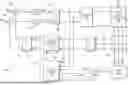
FIG. 1 is a simplified block diagram of a motor control system including a reconfiguration system with a linear parameter-varying (LPV) observer implemented according to one embodiment.
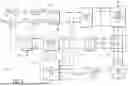
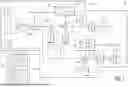
FIG. 2 is a structural block diagram of the LPV observer of FIG. 1 according to one embodiment for calculating the estimated current values from sensed angular position and speed values and loop control voltage values.
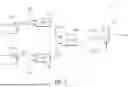
FIG. 3 is a simplified block diagram of the failure detector of FIG. 1 implemented according to one embodiment.
DETAILED DESCRIPTION
The present disclosure describes a linear parameter-varying (LPV) observer that estimates phase current values that correspond with phase current signals driving a permanent magnet synchronous motor (PMSM) using reference control loop voltages along with angular position and angular velocity signals from a resolver sensor interfaced with the motor. A three-phase converter generates the phase current signals that drive the motor, and a current sensor senses the phase currents and provides sensed phase current signals to a feedback loop used to control the converter. The sensed phase current signals are converted to “sensed” current values that are further converted to feedback current values used in the control loop. The estimated current values provided by the LPV observer are determined independently of the sensed phase current signals. If the current sensor is damaged, a failure detector detects the failure and replaces the sensed current values with the estimated current values to maintain operation. The failure detector may be configured to compare the sensed current values with the estimated current values to detect the failure of current sensor.
Adapting to angular position and speed parameters provided by an angular speed and position sensor and to reference control loop voltages, the LPV observer estimates the nonlinear observer gains to increase the performance and robustness of the estimated current values. The disclosed LPV observer ensures good estimation of the effects of frequency disturbances and uncertain inputs. The estimated current values determined by the LPV observer may be used by the failure detector to detect failure of the current sensor and to replace the damaged current values with the estimated current values. The disclosed LPV observer ensures stability and reliability in diagnosing sensor failures as well as feasibility in fault tolerance control.
FIG. 1 is a simplified block diagram of a motor control system 100 including a reconfiguration system 113 with a linear parameter-varying (LPV) observer 102 implemented according to one embodiment. The motor control system 100 may be used for any one of many different types of industrial applications, such as, for example motor drives, electric vehicle (EV) drives, flexible alternating-current (AC) transmission and distribution devices, etc. The motor control system 100 includes a three-phase converter 104 configured to convert a direct-current voltage (VDC) into 3 three-phase control current signals ia, ib, and ic for controlling a three-phase motor 106, such as, for example, a permanent magnet synchronous machine (PMSM) or the like. A current sensor 108 senses the three-phase current signals ia, ib, and ic provided to the motor 106 and provides sensed phase current signals ias, ibs, and ics, respectively. The phase current signals of the motor provide essential information for the field-oriented control (FOC), direct-torque control (DTC) often used in PMSM motor control systems. As further described herein, the LPV observer 102 is configured to reliably estimate current values based on the three-phase current signals using reference control loop voltages along with angular position and angular velocity signals from an angular speed and position sensor 124 interfaced with the motor 106. In addition, a failure detector 112 identifies and diagnoses a failure of the current sensor 108, and in the event of failure, replaces the sensed current values with corresponding estimated current values from the LPV observer 102.
The failure detector 112 and the LPV observer 102 are collectively referred to as the reconfiguration system 113. In this manner, the reconfiguration system 113 is configured to calculate estimated current values from control voltage information and information provided by the angular speed and position sensor 124, to compare the sensed current values with the estimated current values for detecting failure of the current sensor, and to replace the sensed current values with the estimated current values in the event of a failure as further described herein.
The sensed three-phase current signals ias, ibs, and ics are provided to respective inputs of a Clarke transformation converter 110, which performs a 3-phase to 2-phase transformation to convert the three-phase balanced current signals into αβ-axis stationary stator current values iα and iβ. Although the αβ-axis stationary stator current values iα and iβ are not directly sensed, they are nonetheless referred to herein as “sensed” current values since derived from the sensed three-phase current signals ias, ibs, and ics. The sensed current values iα and iβ are provided to respective inputs of the failure detector 112, which, during normal operation, forwards the sensed current values iα and iβ substantially unmodified as corresponding stator current values iαs and iβs, respectively. The stator current values iαs and iβs are provided to respective inputs of a Park transformation converter 114, which performs a stationary-to-rotating transformation from the αβ-axis to dq-axis rotational currents id and iq provided as feedback current control values. The Park transformation converter 114 may use an angular position value θe provided by the angular speed and position sensor 124 for performing the transformation.
The motor control system 100 further includes a pair of adders 115 and 116 that compare input reference current values with the feedback current control values for controlling motor operation. The adder 115 subtracts the feedback current control value id from a direct axis current reference value idref (which may be set to zero) to provide an error value err_id, and the adder 116 subtracts feedback current control value iq from a quadrature axis current reference value iqref to provide an error value err_iq. It is noted that iqref may be a quadrature reference value proportional to a desired output torque of the motor 106. The error values err_id and err_iq are provided to respective inputs of a pair of proportional-integral (PI) controllers 117 and 118, which convert the error values into stator reference direct and quadrature voltages Udref and Uqref values, respectively. The Udref and Uqref stator reference voltages are provided to respective inputs of an inverse Park transformation converter 120, which performs a rotating-to-stationary transformation from the dq-axis to αβ-axis (which may also the angular position value ωe provided by the angular speed and position sensor 124) to provide corresponding control voltages Uα and Uβ, respectively. The control voltages Uα and Uβ are provided to respective inputs of a space vector pulse-width modulation (SVPWM) modulator 122, which uses the control voltages Uα and Uβ to generate a set of “n” PWM switch drive signals u1, u2, . . . un to control corresponding power switches (not shown) within phase circuits of the three-phase converter 104 for generating the three-phase current signals ia, ib, and ic.
The angular speed and position sensor 124, which is either incorporated within or otherwise interfaced with the motor 106, senses an angular speed value ωe and the angular position value θe and determines a pair of position values sin θe and cos θe. The sine and cosine position values are trigonometric functions of the angular position value θe, which may also be referred to as the scheduling parameter, is the angle of the synchronously rotating frame of the motor 106. The control voltages Uα and Uβ and the sensed angular speed and position values ωe, sin θe, and cos θe are provided to respective inputs of the LPV observer 102, which calculates a pair of estimated current values îα and îβ provided to additional inputs of the failure detector 112. It is noted that a hat symbol “{circumflex over ( )}” positioned above a value or variable represents an estimation of that value or variable. In operation, the failure detector 112 compares any residual between the sensed current values iα and iβ and the estimated current values îα and îβ, respectively, to identify any fault condition of the sensed values. When a fault is detected, such as any significant deviation of the sensed current values iα and iβ relative to the estimated current values îα and îβ, the failure detector 112 replaces the sensed current values iα and iβ with the estimated current values îα and îβ, respectively, as the stator current signals iαs and iβs provided to the Park transformation converter 114 to maintain operation.
The operation of the LPV observer 102 may be represented as a mathematical model in the stationary reference frame of the motor control system 100 presented with both electrical and mechanical portions. The estimated current value îα may be described according to the following equation (1):
d d t i ^ α = - R s L s i ^ α + p L s ϕ m sin θ e ω ˆ e + 1 L s U α ( t ) + K ( θ e ) [ 1 ] Δ ω e , θ e ( 1 )
where dx/dt denotes a derivative function of a variable x (e.g., îα), RS is a stator winding resistance and LS is a stator winding inductance of the motor 106, p is a pole pairs number, φm is a flux leakage of the motor 106, {circumflex over (ω)}e is an estimation of the angular speed value ωe, K(θe) is a matrix value dependent upon sin θe and cos θe, or K(θe)=K1 sin θe+K2 cos θe+K3 where K1, K2, and K3 are gain values, K(θe)[i] is the i-th row of matrix K(θe), and Δωe,θe is a difference value matrix. The difference value matrix Δωe,θe may be described according to the following equation (2):
Δ ω e , θ e = ( [ ω e θ e ] - [ ω ^ e θ ˆ e ] ) = [ ω e - ω ^ e θ e - θ ˆ e ] ( 2 )
where {circumflex over (θ)}e is an estimation of the angular position value θe. The estimated current value îα may be determined by integrating the derivative function according to the following equation (3):
i ^ α = ∫ d d t i ^ α ( 3 )
In a similar manner, the estimated current value îβ may be described according to the following equation (4):
d d t i ^ β = - R s L s i ^ β - p L s ϕ m cos θ e ω ˆ e + 1 L s U β ( t ) + K ( θ e ) [ 2 ] Δ ω e , θ e ( 4 )
where the estimated current value îβ may be determined by integrating the derivative function according to the following equation (5):
i ^ β = ∫ d d t i ^ β . ( 5 )
The estimated current values îα and îβ may be presented in vector form according to the following equation (6):
d d t [ i ^ α i ^ β ] = - R s L s [ i ^ α i ^ β ] + p L s ϕ m [ sin θ e - cos θ e ] ω ˆ e + 1 L s [ u α t u β ( t ) ] + K ( θ e ) [ 1 : 2 ] ( [ ω e θ e ] - [ ω ^ e θ ˆ e ] ) ( 6 )
in which the estimated current values îα and îβ may be determined by integrating the derivative values according to the following equation (7):
[ i ^ α i ^ β ] = ∫ d d t [ i ^ α i ^ β ] ( 7 )
The estimated angular speed value {circumflex over (ω)}e may be described according to the following equation (8):
d d t ω ˆ e = - p J ϕ m sin θ e i ^ α + p J ϕ m cos θ e i ^ β F v J ω ˆ e + K ( θ e ) [ 3 ] Δ ω e , θ e ( 8 )
where J is an inertia of rotor and load and Fv is a coefficient of viscous friction of the motor 106. The estimated angular position value {circumflex over (θ)}e may be described according to the following equation (9):
d d t θ ˆ e ω ˆ e + K ( θ e ) [ 4 ] Δ ω e , θ e . ( 9 )
The estimated values {circumflex over (ω)}e and {circumflex over (θ)}e may be determined by integrating the derivative values according to the following set of equations (10):
ω ˆ e = ∫ d d t ω ˆ e , θ ˆ e ≅ ∫ d d t ω ˆ e ( 10 )
FIG. 2 is a structural block diagram of the LPV observer 102 according to one embodiment for calculating the estimated current values îα and îβ from the sensed values ωe, θe, sin θe, cos θe, and the control voltage values U(t)=Uα and Uβ according to the preceding equations (1) through (10). The LPV observer 102 includes an input interface 201 and an LPV processor 202 that is configured to receive input values provided from the input interface 201 and to calculate or otherwise determine the estimated current values îα and îβ. The LPV processor 202 includes various functional blocks as further described herein that may be configured using computational hardware or software or any suitable combination thereof.
The input interface 201 may be configured according to the types of input values received or stored. For example, the input interface 201 may include buffer or filter circuitry for receiving and forwarding the sensed values ωe, θe, sin θe, cos ωe, and the control voltage values U(t)=Uα and Uβ. The input interface 201 may include calculation circuitry for calculating the sin θe and cos De values based on θe for embodiments in which the angular speed and position sensor 124 only provides the de value. The input interface 201 may further include memory devices, such as registers or the like, for storing digital values indicative of the constant physical parameters of the motor 106. The illustrated physical parameters of the motor 106 include the stator winding resistance RS, the stator winding inductance LS, the inertia of rotor and load J, the flux leakage φm. and the coefficient of viscous friction Fv. The input interface 201 may receive or otherwise store a value indicative of the pole pairs number p.
The LPV processor 202 includes an input adder 203 along with additional adders 206, 212, and 208, gain blocks 204, 210, 214, 216, 220, and 222 in which gain blocks 216 and 220 are variable gain blocks, and integrators 218, 224, and 226. The input adder 203 subtracts calculated feedback parameters [{circumflex over (ω)}e, {circumflex over (θ)}e] from the sensed input parameters [{circumflex over (ω)}e, θe] and outputs the difference value matrix Δωe,θe according to equation (2). The difference value matrix Δωe,θe and the sin θe and cos de values are provided to the gain block 204 incorporating the gain-scheduling value of the angular position K(θe). The gain block 204 outputs corresponding values X provided to inputs of the adders 206 and 208. The control voltages Uα and Uβ are provided to the gain block 210, which effectively divides each by Ls to provide divided values to other inputs of the adder 206. The adder 206 adds the output of gain block 210 to the X values and outputs values Y to inputs of the adder 212. The estimated current values îα and îβ are both provided to inputs of the gain block 214 with gain Rs/Ls, which provides corresponding output values to other inputs of the adder 212. The parameter {circumflex over (ω)}e is provided to an input of the variable gain block 216 having gain value
p ϕ m L s [ sin θ e - cos θ e ] ,
in which the adder 212 adds Y to the output of the gain block 216 and subtracts the outputs of the gain block 214 and provides derivative values d[îα, îβ]/dt to the integrator 218, which outputs the estimated current values îα and îβ.
The estimated current values îg and Ig are also provided to the input of the variable gain block 220 with gain value
p ϕ m J [ sin θ e - cos θ e ] ,
which has corresponding outputs provided to other inputs of the adder 208. The parameter {circumflex over (ω)}e is provided to the input of the gain block 222 having a gain of Fv/J and having an output provided to another input of the adder 208. The adder 208 adds X to the outputs of the gain block 220 and subtracts the output of the gain block 222 and provides a derivative output value d({circumflex over (ω)}e)/dt to an input of the integrator 224, which provides the estimated value {circumflex over (ω)}e. The estimated value {circumflex over (ω)}e is provided to the input of the integrator 226 providing the estimated value {circumflex over (θ)}e. As previously described, one or both of the values {circumflex over (ω)}e and {circumflex over (θ)}e are fed back to various functional blocks including the input adder 203.
FIG. 3 is a simplified block diagram of the failure detector 112 implemented according to one embodiment. A first adder 302 subtracts the estimated current value îα from the sensed current value iα and outputs a difference or residual value iαres. The residual value iαres is provided to a first input of a comparator (COMP) 304, which receives a corresponding current threshold value luth at a second input and outputs a corresponding error value iαerr. Similarly, a second adder 306 subtracts the estimated current value îβ from the sensed current value is and outputs a difference or residual value iβres. The residual value iβres is provided to a first input of another comparator 308, which receives a corresponding current threshold value iβth at a second input and outputs a corresponding error value iβerr. The error values iαerr and iβerr are provided to respective inputs of a selector (SELECT) 310, which outputs a select value SEL to a select input of a multiplexer (MUX) 312. The MUX 312 has a first or logic “0” input receiving the sensed current values ia and iβ, a second or logic “1” input receiving the estimated current values îα and îβ, and an output providing the stator current signals iαs and iβs.
The estimated current values îα and îβ should be substantially equal to the sensed current values iα and iβ, or at least within predetermined thresholds. The threshold value iαth may be programmed to a value which represents an acceptable or expected deviation of îα with respect to iα, and the threshold value iβth may be programmed to a value which represents an acceptable or expected deviation of îβ with respect to iβ. When the magnitude of lures is less than or equal to iαth, then the comparator 304 asserts iαerr low indicating no error of the current sensor 108. When the magnitude of iαres exceeds iαth, however, then the comparator 304 asserts iαerr high indicating an error of the current sensor 108. Similarly, when the magnitude of iβres is less than or equal to iβth, then the comparator 304 asserts iβerr low indicating no error of the current sensor 108. When the magnitude of iβres exceeds iβth, however, then the comparator 304 asserts iβerr high indicating an error of the current sensor 108.
During normal operation when the current sensor 108 is operating correctly, then iαerr and iβerr are both asserted low and the selector 310 asserts SEL low so that the MUX 312 selects the sensed current values iα and iβ as the stator current signals iαs and iβs, respectively. When either one of the iαerr and iβerr values is asserted high (or when both are asserted high) indicating a failure of the current sensor 108, then the selector 310 asserts SEL high so that the MUX 312 selects the estimated current values îα and îβ as the stator current signals iαs and iβs, respectively. In this manner, the failure detector 112 is configured to detect an error of the current sensor 108 based on residual deviations of the sensed current values from the estimated current values. When an error is detected, the failure detector 112 is configured to replace the sensed current values iα and iβ with the estimated current values îα and iβ provided by the LPV observer 102.
Although not explicitly shown, the failure detector 112 may be configured to compensate for any timing differential (e.g., lead or lag) between the estimated and sensed current values. In one embodiment, the magnitudes of the threshold values iαth and iβth may be adjusted accordingly. In addition or in the alternative, a delay may be incorporated to delay the leading values to substantially match the timing of the lagging values in a given configuration. For example, if the estimated values are determined to lag behind the sensed values by a certain timing delay, then the sensed values may be delayed accordingly.
One or more embodiments of the present disclosure may include features recited in the following numbered clauses:
-
- 1. A reconfiguration system for an electric motor controller, the electric motor controller including a control loop with a current sensor configured to sense phase current signals driving an electric motor to provide sensed current values used for determining feedback current values that are used to determine control voltages in the control loop for generating the phase current signals, and an angular speed and position sensor that provides angular speed and position information of the electric motor, the reconfiguration system comprising:
- a linear parameter-varying (LPV) observer including circuitry, the LPV observer configured to calculate estimated current values using the control voltages and the angular speed and position information; and
- a failure detector including circuitry, the failure detector configured to compare the sensed current values with the estimated current values for detecting a failure, and to substitute the estimated current signals for the sensed current signals when a failure is detected.
- 2. The reconfiguration system of clause 1, wherein the LPV observer is configured to combine the control voltages and the angular speed and position information with physical constants of the electric motor and gain information to calculate the estimated current values.
- 3. The reconfiguration system of clause 2, wherein the physical constants of the electric motor include stator winding resistance, stator winding inductance, flux leakage, inertia of rotor and load, and a coefficient of viscous friction.
- 4. The reconfiguration system of clause 1, wherein the electric motor controller includes a Clarke transformation converter including circuitry, the converter configured to convert sensed three-phase currents into the sensed current values comprising αβ-axis stationary stator current values, and wherein the estimated current values comprise estimated αβ-axis stationary stator current values.
- 5. The reconfiguration system of clause 1, wherein the failure detector comprises:
- adder circuitry configured to determine a residual value between at least one sensed current value and at least one estimated current value;
- comparator circuitry configured to compare the residual value with a threshold value to determine an error value; and
- selection circuitry configured to select the sensed current values for determining the feedback current values when the error value does not indicate a failure, and to select the estimated current values for determining the feedback current values when the error value indicates a failure.
- 6. The reconfiguration system of clause 1, wherein the estimated and sensed current values each comprise αβ-axis stationary stator current values including an a current value and a β current value, and wherein the failure detector comprises:
- a first adder configured to subtract an estimated a current value from a sensed a current value to determine an a residual value;
- a second adder configured to subtract an estimated β current value from a sensed β current value to determine a β residual value;
- a first comparator configured to compare the a residual value with an a threshold value to determine an a error value;
- a second comparator configured to compare the β residual value with a β threshold value to determine a β error value; and
- selection circuitry configured to select the sensed current values for determining the feedback current values when the α and β error values do not indicate a failure, and to select the estimated current values for determining the feedback current values when either one or both of the α and β error values indicate a failure.
- 7. A method for estimating current values in an electric motor controller including a control loop including a current sensor configured to sense phase current signals driving an electric motor and to provide sensed current values used in the control loop for generating the phase current signals, the method comprising:
- receiving, by an input interface including circuitry, a sensed angular speed value, a sensed angular position value, and a plurality of physical parameters of the electric motor;
- developing, by the control loop including circuitry, a pair of control voltages; and
- calculating, by a linear parameter-varying (LPV) observer including circuitry, estimated current values indicative of the sensed current values using the sensed angular speed value, the sensed angular position value, the pair of control voltages, and the plurality of physical parameters of the electric motor.
- 8. The method of clause 7, wherein the calculating by an LPV observer comprises combining the pair of control voltages, the sensed angular speed value, the sensed angular position value, the plurality of physical parameters and gain information to calculate the estimated current values.
- 9. The method of clause 7, wherein the receiving comprises receiving a plurality of physical parameters of the electric motor including stator winding resistance, stator winding inductance, flux leakage, inertia of rotor and load, and a coefficient of viscous friction of the electric motor.
- 10. The method of clause 7, further comprising:
- performing a Clarke transformation to convert sensed three-phase currents into the sensed current values comprising αβ-axis stationary stator current values; and
- wherein the calculating estimated current values comprises calculating estimated αβ-axis stationary stator current values.
- 11. The method of clause 7, further comprising:
- comparing the sensed current values with the estimated current values for detecting a failure; and
- substituting the estimated current signals for the sensed current signals when a failure is detected.
- 12. A linear parameter-varying (LPV) observer for an electric motor controller, the electric motor controller including a control loop with a current sensor configured to sense phase current signals driving an electric motor and to provide sensed current values used in the control loop, the LPV observer comprising:
- an input interface for providing a sensed angular speed value, a sensed angular position value, and a plurality of physical parameters of the electric motor, and for providing a pair of control voltages in the control loop used for generating the phase current signals; and
- an LPV processor including circuitry, the LPV processor configured to calculate estimated current values indicative of the sensed current values using the sensed angular speed value, the sensed angular position value, the pair of control voltages, and the plurality of physical parameters of the electric motor.
- 13. The LPV observer of clause 12,
- wherein the input interface provides trigonometric angular position values comprising a sine function of the sensed angular position value and a cosine function of the sensed angular position value; and
- wherein the plurality of physical parameters of the electric motor includes a stator winding inductance, a stator winding resistance, flux leakage, and inertia of rotor and load.
- 14. The LPV observer of clause 13, wherein the LPV processor comprises:
- a first adder configured to subtract an estimated angular speed value from the sensed angular speed value and to subtract an estimated angular position value from the sensed angular position value to provide an angular speed and position difference value;
- a first gain block configured to combine the angular speed and position difference value with a gain-scheduling value of the angular position using the trigonometric angular position values to calculate a first add value;
- a second gain block configured to combine the pair of control voltages with the stator winding inductance to provide a second add value;
- a third gain block configured to combine estimated current values with the stator winding inductance and the stator winding resistance to provide a third add value;
- a fourth gain block configured to combine the estimated angular speed value with the flux leakage, the stator winding inductance, and the trigonometric angular position values to provide a fourth add value;
- at least one second adder configured to add the first add value, the second add value, the third add value, and the fourth add value to provide a derivative of the estimated current values;
- a first integrator that integrates the derivative of the estimated current values to provide the estimated current values;
- a fifth gain block configured to combine the estimated current values with the flux leakage, the inertia of rotor and load, and the trigonometric angular position values to provide a fifth add value;
- a sixth gain block configured to combine the estimated angular speed value with a coefficient of viscous friction and the inertia of rotor and load to provide a sixth add value;
- a third adder configured to add the first add value, the fifth add value, and the sixth add value to provide a derivative of the estimated angular speed value; and
- a second integrator configured to integrate the derivative of the estimated angular speed value to provide the estimated angular speed value, and a third integrator configured to integrate the estimated angular speed value to provide the estimated angular position value.
- 15. The LPV observer of clause 14, wherein the sensed angular speed value is a value ωe, wherein the sensed angular position value is a value θe, wherein the estimated angular speed value is a value {circumflex over (ω)}e, wherein the estimated angular position value is a value {circumflex over (θ)}e,
- 1. A reconfiguration system for an electric motor controller, the electric motor controller including a control loop with a current sensor configured to sense phase current signals driving an electric motor to provide sensed current values used for determining feedback current values that are used to determine control voltages in the control loop for generating the phase current signals, and an angular speed and position sensor that provides angular speed and position information of the electric motor, the reconfiguration system comprising:
[ ω e - ω ^ e θ e - θ e ˆ ] = Δ ω e , θ e ,
-
- wherein the angular speed and position difference value comprises a value wherein the gain-scheduling value is a value K(θe)=K1 sin θe+K2 cos θe+K3 wherein K1, K2, and K3 are gain values, and wherein the first add value comprises a value K(θe) Δωe,θe.
- 16. The LPV observer of clause 14, wherein the stator winding inductance is a value Ls, wherein the pair of control voltages comprise values Uα and Uβ in an αβ-axis that are determined by subtracting the feedback current values from reference current values to provide corresponding error values, by applying the error values to proportional-integral controllers to provide stator reference direct and quadrature values, and by performing an inverse Park transformation conversion on the stator reference direct and quadrature values, and wherein the second add value is
1 L s [ u α ( t ) u β ( t ) ] .
-
- 17. The LPV observer of clause 14, wherein the stator winding inductance is a value Ls, wherein the stator winding resistance is a value Rs, wherein the estimated current values comprise values îα and îβ, and wherein the third add value comprises a value
R s L s [ I ^ α I ^ β ] .
-
- 18. The LPV observer of clause 14, wherein the estimated angular speed value is a value {circumflex over (ω)}e, wherein flux leakage comprises a value φm, wherein the stator winding inductance is a value Ls, wherein the trigonometric angular position values comprise in θe and cos θe, and wherein the fourth add value comprises a value
p L s ϕ m [ sin θ e - cos θ e ] ω ˆ e
-
- in which p is a poles pair value.
- 19. The LPV observer of clause 14, wherein the estimated current values comprise values îα and îβ, wherein flux leakage comprises a value φm, wherein the inertia of rotor and load comprises a value J, wherein the trigonometric angular position values comprise sin θe and cos θe, and wherein the fifth add value comprises a value
- p J ϕ m sin θ e I ^ α + p J ϕ m cos θ e I ^ β .
-
- 20. The LPV observer of clause 14, wherein the estimated angular speed value is a value {circumflex over (ω)}e, wherein the coefficient of viscous friction comprises a value Fv, wherein the inertia of rotor and load comprises a value J, and wherein the sixth add value comprises a value
F v J ω ˆ e .
Although the present invention has been described in connection with several embodiments, the invention is not intended to be limited to the specific forms set forth herein. On the contrary, it is intended to cover such alternatives, modifications, and equivalents as can be reasonably included within the scope of the invention as defined by the appended claims. For example, variations of positive circuitry or negative circuitry may be used in various embodiments in which the present invention is not limited to specific circuitry polarities, device types or voltage or error levels or the like. For example, circuitry states, such as circuitry low and circuitry high may be reversed depending upon whether the pin or signal is implemented in positive or negative circuitry or the like. In some cases, the circuitry state may be programmable in which the circuitry state may be reversed for a given circuitry function.
The terms “a” or “an,” as used herein, are defined as one or more than one. Also, the use of introductory phrases such as “at least one” and “one or more” in the claims should not be construed to imply that the introduction of another claim element by the indefinite articles “a” or “an” limits any particular claim containing such introduced claim element to inventions containing only one such element, even when the same claim includes the introductory phrases “one or more” or “at least one” and indefinite articles such as “a” or “an.” The same holds true for the use of definite articles. Unless stated otherwise, terms such as “first” and “second” are used to arbitrarily distinguish between the elements such terms describe. Thus, these terms are not necessarily intended to indicate temporal or other prioritization of such elements.
Claims
1. A reconfiguration system for an electric motor controller, the electric motor controller including a control loop with a current sensor configured to sense phase current signals driving an electric motor to provide sensed current values used for determining feedback current values that are used to determine control voltages in the control loop for generating the phase current signals, and an angular speed and position sensor that provides angular speed and position information of the electric motor, the reconfiguration system comprising:
a linear parameter-varying (LPV) observer including circuitry, the LPV observer configured to calculate estimated current values using the control voltages and the angular speed and position information; and
a failure detector including circuitry, the failure detector configured to compare the sensed current values with the estimated current values for detecting a failure, and to substitute the estimated current signals for the sensed current signals when a failure is detected.
2. The reconfiguration system of claim 1, wherein the LPV observer is configured to combine the control voltages and the angular speed and position information with physical constants of the electric motor and gain information to calculate the estimated current values.
3. The reconfiguration system of claim 1, wherein the physical constants of the electric motor include stator winding resistance, stator winding inductance, flux leakage, inertia of rotor and load, and a coefficient of viscous friction.
4. The reconfiguration system of claim 1, wherein the electric motor controller includes a Clarke transformation converter including circuitry, the converter configured to convert sensed three-phase currents into the sensed current values comprising αβ-axis stationary stator current values, and wherein the estimated current values comprise estimated αβ-axis stationary stator current values.
5. The reconfiguration system of claim 1, wherein the failure detector comprises:
adder circuitry configured to determine a residual value between at least one sensed current value and at least one estimated current value;
comparator circuitry configured to compare the residual value with a threshold value to determine an error value; and
selection circuitry configured to select the sensed current values for determining the feedback current values when the error value does not indicate a failure, and to select the estimated current values for determining the feedback current values when the error value indicates a failure.
6. The reconfiguration system of claim 1, wherein the estimated and sensed current values each comprise αβ-axis stationary stator current values including an α current value and a β current value, and wherein the failure detector comprises:
a first adder configured to subtract an estimated a current value from a sensed α current value to determine an α residual value;
a second adder configured to subtract an estimated β current value from a sensed β current value to determine a β residual value;
a first comparator configured to compare the α residual value with an α threshold value to determine an α error value;
a second comparator configured to compare the β residual value with a β threshold value to determine a β error value; and
selection circuitry configured to select the sensed current values for determining the feedback current values when the α and β error values do not indicate a failure, and to select the estimated current values for determining the feedback current values when either one or both of the α and β error values indicate a failure.
7. A method for estimating current values in an electric motor controller including a control loop including a current sensor configured to sense phase current signals driving an electric motor and to provide sensed current values used in the control loop for generating the phase current signals, the method comprising:
receiving, by an input interface including circuitry, a sensed angular speed value, a sensed angular position value, and a plurality of physical parameters of the electric motor;
developing, by the control loop including circuitry, a pair of control voltages; and
calculating, by a linear parameter-varying (LPV) observer including circuitry, estimated current values indicative of the sensed current values using the sensed angular speed value, the sensed angular position value, the pair of control voltages, and the plurality of physical parameters of the electric motor.
8. The method of claim 7, wherein the calculating by an LPV observer comprises combining the pair of control voltages, the sensed angular speed value, the sensed angular position value, the plurality of physical parameters and gain information to calculate the estimated current values.
9. The method of claim 7, wherein the receiving comprises receiving a plurality of physical parameters of the electric motor including stator winding resistance, stator winding inductance, flux leakage, inertia of rotor and load, and a coefficient of viscous friction of the electric motor.
10. The method of claim 7, further comprising:
performing a Clarke transformation to convert sensed three-phase currents into the sensed current values comprising αβ-axis stationary stator current values; and
wherein the calculating estimated current values comprises calculating estimated αβ-axis stationary stator current values.
11. The method of claim 7, further comprising:
comparing the sensed current values with the estimated current values for detecting a failure; and
substituting the estimated current signals for the sensed current signals when a failure is detected.
12. A linear parameter-varying (LPV) observer for an electric motor controller, the electric motor controller including a control loop with a current sensor configured to sense phase current signals driving an electric motor and to provide sensed current values used in the control loop, the LPV observer comprising:
an input interface for providing a sensed angular speed value, a sensed angular position value, and a plurality of physical parameters of the electric motor, and for providing a pair of control voltages in the control loop used for generating the phase current signals; and
an LPV processor including circuitry, the LPV processor configured to calculate estimated current values indicative of the sensed current values using the sensed angular speed value, the sensed angular position value, the pair of control voltages, and the plurality of physical parameters of the electric motor.
13. The LPV observer of claim 12,
wherein the input interface provides trigonometric angular position values comprising a sine function of the sensed angular position value and a cosine function of the sensed angular position value; and
wherein the plurality of physical parameters of the electric motor includes a stator winding inductance, a stator winding resistance, flux leakage, and inertia of rotor and load.
14. The LPV observer of claim 12, wherein the LPV processor comprises:
a first adder configured to subtract an estimated angular speed value from the sensed angular speed value and to subtract an estimated angular position value from the sensed angular position value to provide an angular speed and position difference value;
a first gain block configured to combine the angular speed and position difference value with a gain-scheduling value of the angular position using the trigonometric angular position values to calculate a first add value;
a second gain block configured to combine the pair of control voltages with the stator winding inductance to provide a second add value;
a third gain block configured to combine estimated current values with the stator winding inductance and the stator winding resistance to provide a third add value;
a fourth gain block configured to combine the estimated angular speed value with the flux leakage, the stator winding inductance, and the trigonometric angular position values to provide a fourth add value;
at least one second adder configured to add the first add value, the second add value, the third add value, and the fourth add value to provide a derivative of the estimated current values;
a first integrator that integrates the derivative of the estimated current values to provide the estimated current values;
a fifth gain block configured to combine the estimated current values with the flux leakage, the inertia of rotor and load, and the trigonometric angular position values to provide a fifth add value;
a sixth gain block configured to combine the estimated angular speed value with a coefficient of viscous friction and the inertia of rotor and load to provide a sixth add value;
a third adder configured to add the first add value, the fifth add value, and the sixth add value to provide a derivative of the estimated angular speed value; and
a second integrator configured to integrate the derivative of the estimated angular speed value to provide the estimated angular speed value, and a third integrator configured to integrate the estimated angular speed value to provide the estimated angular position value.
15. The LPV observer of claim 14, wherein the sensed angular speed value is a value ωe, wherein the sensed angular position value is a value θe, wherein the estimated angular speed value is a value {circumflex over (ω)}e, wherein the estimated angular position value is a value {circumflex over (θ)}e, wherein the angular speed and position difference value comprises a value
[ ω e - ω ^ e θ e - θ e ˆ ] = Δ ω e , θ e ,
wherein the gain-scheduling value is a value K(θe)=K1 sin θe+K2 cos θe+K3 wherein K1, K2, and K3 are gain values, and wherein the first add value comprises a value K(θe) Δωe,θe.
16. The LPV observer of claim 14, wherein the stator winding inductance is a value Ls, wherein the pair of control voltages comprise values Uα and Uβ in an αβ-axis that are determined by subtracting the feedback current values from reference current values to provide corresponding error values, by applying the error values to proportional-integral controllers to provide stator reference direct and quadrature values, and by performing an inverse Park transformation conversion on the stator reference direct and quadrature values, and wherein the second add value is
1 L s [ u α ( t ) u β ( t ) ] .
17. The LPV observer of claim 14, wherein the stator winding inductance is a value Ls, wherein the stator winding resistance is a value Rs, wherein the estimated current values comprise values îα and îβ, and wherein the third add value comprises a value
R s L s [ I ^ α I ^ β ] .
18. The LPV observer of claim 14, wherein the estimated angular speed value is a value {circumflex over (ω)}e, wherein flux leakage comprises a value φm, wherein the stator winding inductance is a value Ls, wherein the trigonometric angular position values comprise in θe and cos θe, and wherein the fourth add value comprises a value
p L s ϕ m [ sin θ e - cos θ e ] ω ˆ e
in which p is a poles pair value.
19. The LPV observer of claim 14, wherein the estimated current values comprise values îα and îβ, wherein flux leakage comprises a value φm, wherein the inertia of rotor and load comprises a value J, wherein the trigonometric angular position values comprise sin θe and cos θe, and wherein the fifth add value comprises a value
- p J ϕ m sin θ e I ^ α + p J ϕ m cos θ e I ^ β .
20. The LPV observer of claim 14, wherein the estimated angular speed value is a value {circumflex over (ω)}e, wherein the coefficient of viscous friction comprises a value Fv, wherein the inertia of rotor and load comprises a value J, and wherein the sixth add value comprises a value
F v J ω ˆ e .
Images & Drawings included:




















Sources:
- United States Patent and Trademark Office - verify current appl. status at the USPTO↗
Recent applications in this class:
- » 20250364931 2025-11-27
MOTOR PHASE CURRENT RECONSTRUCTION - » 20250293622 2025-09-18
SYSTEM AND METHODS FOR HIGH PERFORMANCE FILTERING TECHNIQUES FOR SENSORLESS DIRECT POSITION AND SPEED ESTIMATION - » 20250253788 2025-08-07
SENSORLESS CONTROL METHOD OF PERMANENT MAGNET SYNCHRONOUS MOTOR - » 20250183828 2025-06-05
TUNING A SLIDING MODE OBSERVER FOR A PERMANENT MAGNET SYNCHRONOUS MOTOR - » 20250119081 2025-04-10
IDENTIFICATION OF CURRENT GAIN ERRORS AND RESISTANCE IMBALANCE IN FEEDBACK CURRENT-CONTROLLED SYNCHRONOUS MOTOR DRIVE SYSTEMS - » 20240372494 2024-11-07
Method for Controlling a Three-Phase Electric Machine and Control Unit and System Thereof - » 20240243678 2024-07-18
METHOD AND DEVICE FOR CONTROLLING THREE-PHASE MOTOR - » 20240128906 2024-04-18
Stable And Passive Observer-Based V/Hz Control For Synchronous Motors - » 20240128905 2024-04-18
Stable And Passive Observer-Based V/Hz Control For Induction Motors - » 20240030848 2024-01-25
POSITION OBSERVER SYNCHRONIZATION FOR THREE-PHASE GENERATORS