POWER AMPLIFICATION DEVICE
US20260074656A1
2026-03-12
19/355,216
2025-10-10
Smart Summary: A power amplification device helps boost signals for better performance. It has two main parts called integrated circuits that work together. One part splits the signal and amplifies it in two stages, while the other part amplifies it even more at the final stage. There are special circuits that provide the right amount of power to the amplifiers and monitor their performance. This setup ensures that the device operates efficiently and adjusts itself based on the signals it receives. 🚀 TL;DR
Abstract:
A power amplification device includes a substrate, a first integrated circuit, a second integrated circuit, a splitter, a carrier amplifier, a peak amplifier, a first bias circuit providing bias to the carrier amplifier, a second bias circuit providing bias to the peak amplifier, a drive-level detector circuit outputting a signal indicating a drive level of the carrier amplifier based on a high-frequency signal outputted by the carrier amplifier, a detector circuit that outputs a control signal to control the second bias circuit, based on an inputted high-frequency signal and the signal indicating the drive level of the carrier amplifier, and a coupler. The detector circuit varies a threshold for the control signal. The first integrated circuit includes the splitter, the first-stage carrier amplifier, the first-stage peak amplifier, and the detector circuit. The second integrated circuit includes the final-stage carrier amplifier and the final-stage peak amplifier.
Inventors:
- Tomoya ODA 9 🇯🇵 Nagaokakyo-shi, Japan
- Tetsurou ASHIDA 11 🇯🇵 Nagaokakyo-shi, Japan
- Kouhei JITOUSHO 7 🇯🇵 Nagaokakyo-shi, Japan
- Shohei IMAI 9 🇯🇵 Nagaokakyo-shi, Japan
Applicant:
Interested in similar patents?
Get notified when new applications in this technology area are published.
Classification:
H03F1/0288 » CPC main
Details of amplifiers with only discharge tubes, only semiconductor devices or only unspecified devices as amplifying elements; Modifications of amplifiers to raise the efficiency, e.g. gliding Class A stages, use of an auxiliary oscillation in transistor amplifiers using a main and one or several auxiliary peaking amplifiers whereby the load is connected to the main amplifier using an impedance inverter, e.g. Doherty amplifiers
H03F3/245 » CPC further
Amplifiers with only discharge tubes or only semiconductor devices as amplifying elements; Power amplifiers, e.g. Class B amplifiers, Class C amplifiers of transmitter output stages with semiconductor devices only
H03F3/45179 » CPC further
Amplifiers with only discharge tubes or only semiconductor devices as amplifying elements; Differential amplifiers with semiconductor devices only characterised by the way of implementation of the active amplifying circuit in the differential amplifier using MOSFET transistors as the active amplifying circuit
H03F2200/451 » CPC further
Indexing scheme relating to amplifiers the amplifier being a radio frequency amplifier
H03F1/02 IPC
Details of amplifiers with only discharge tubes, only semiconductor devices or only unspecified devices as amplifying elements Modifications of amplifiers to raise the efficiency, e.g. gliding Class A stages, use of an auxiliary oscillation
H03F3/24 IPC
Amplifiers with only discharge tubes or only semiconductor devices as amplifying elements; Power amplifiers, e.g. Class B amplifiers, Class C amplifiers of transmitter output stages
H03F3/45 IPC
Amplifiers with only discharge tubes or only semiconductor devices as amplifying elements Differential amplifiers
Description
CROSS REFERENCE TO RELATED APPLICATION
This is a continuation of International Application No. PCT/JP2024/014406 filed on Apr. 9, 2024 which claims priority from Japanese Patent Application No. 2023-065208 filed on Apr. 12, 2023. The contents of these applications are incorporated herein by reference in their entireties.
BACKGROUND OF THE DISCLOSURE
Field of the Disclosure
The present disclosure relates to a power amplification device.
Description of the Related Art
A Doherty amplifier is known as a highly efficient power amplifier circuit. Generally, a Doherty amplifier includes a carrier amplifier that operates regardless of the power level of the input signal and a peak amplifier that turns off when the power level of the input signal is low and turns on when the power level is high. The carrier amplifier and the peak amplifier are coupled in parallel. In this configuration, when the power level of a high frequency input signal is high, the carrier amplifier operates while maintaining saturation at its saturated output power level. As a result, the Doherty amplifier can achieve higher efficiency compared to typical power amplifier circuits.
U.S. Patent Application Publication No. 2016/0241209 Specification, U.S. Patent Application Publication No. 2020/0028472 Specification, and Japanese Unexamined Patent Application Publication No. 2019-41277 below describe techniques to control the bias of the peak amplifier.
The technique described in U.S. Patent Application Publication No. 2016/0241209 Specification detects saturation of the carrier amplifier using the bias circuit for the carrier amplifier and controls the bias circuit for the peak amplifier based on the detection signal.
The technique described in U.S. Patent Application Publication No. 2020/0028472 Specification detects saturation of the carrier amplifier using the output signal of the carrier amplifier and controls the bias circuit for the peak amplifier based on the detection signal.
The technique described in Japanese Unexamined Patent Application Publication No. 2019-41277 controls the bias circuit for the peak amplifier based on the level of the high frequency input signal inputted to the Doherty amplifier or the level of the high frequency input signal inputted to the carrier amplifier.
BRIEF SUMMARY OF THE DISCLOSURE
In the techniques described in U.S. Patent Application Publication No. 2016/0241209 Specification and U.S. Patent Application Publication No. 2020/0028472 Specification, it takes about several tens of nanoseconds for the circuit that detects saturation of the carrier amplifier to respond. Therefore, the following inconveniences can occur. For example, when a high frequency input signal with instantaneous power increases (much shorter than several tens of nanoseconds) is inputted to the Doherty amplifier, periods during which the carrier amplifier is saturated may occur within several tens of nanoseconds between the time the carrier amplifier starts saturating and the time the bias point of the peak amplifier changes. This can result in degradation in the quality of the high frequency output signal of the Doherty amplifier. When such a Doherty amplifier is used in a communication device, there is a risk that high communication quality cannot be maintained.
The technique described in Japanese Unexamined Patent Application Publication No. 2019-41277 operates based on the high frequency input signal level. However, this technique detects the high frequency input signal level using a bias circuit, and the response time is basically considered to be slow. This can lead to degradation in the quality of the high frequency output signal of the Doherty amplifier.
The present disclosure has been made in the light of the matters described above, and a possible benefit of the present disclosure is to suppress the degradation in the quality of high frequency output signals.
A power amplification device according to an aspect of the present disclosure includes a substrate, a first integrated circuit provided on a major surface of the substrate, a second integrated circuit that is provided at a position different from the first integrated circuit on the major surface of the substrate and is coupled to the first integrated circuit via a plurality of wires provided in or on the substrate, a splitter, a carrier amplifier including a first-stage carrier amplifier that amplifies an inputted high-frequency signal and a final-stage carrier amplifier that amplifies a high-frequency signal outputted from the first-stage carrier amplifier, a peak amplifier including a first-stage peak amplifier that amplifies an inputted high-frequency signal and a final-stage peak amplifier that amplifies a high-frequency signal outputted from the first-stage peak amplifier, a first bias circuit that provides bias to the carrier amplifier, a second bias circuit that provides bias to the peak amplifier, a drive-level detector circuit that outputs a signal indicating a drive level of the carrier amplifier, based on a high-frequency signal outputted by the carrier amplifier, a detector circuit that outputs a control signal to control the second bias circuit, based on an inputted high-frequency signal and the signal indicating the drive level of the carrier amplifier, and a coupler provided on the major surface of the substrate. The detector circuit varies a threshold for the control signal based on the inputted high-frequency signal and the signal indicating the drive level of the carrier amplifier. The first integrated circuit includes the splitter, the first-stage carrier amplifier, the first-stage peak amplifier, and the detector circuit. The second integrated circuit includes the final-stage carrier amplifier and the final-stage peak amplifier. One of the plurality of wires is a DLD coupling wire coupled to the drive-level detector circuit.
A power amplification device according to an aspect of the present disclosure includes a substrate, a first integrated circuit provided on a major surface of the substrate, a second integrated circuit that is provided at a position different from the first integrated circuit on the major surface of the substrate and is coupled to the first integrated circuit via a plurality of wires provided in or on the substrate, a splitter, a carrier amplifier including a first-stage carrier amplifier that amplifies an inputted high-frequency signal and a final-stage carrier amplifier that amplifies a high-frequency signal outputted from the first-stage carrier amplifier, a peak amplifier including a first-stage peak amplifier that amplifies an inputted high-frequency signal and a final-stage peak amplifier that amplifies a high-frequency signal outputted from the first-stage peak amplifier, a first bias circuit that provides bias to the carrier amplifier, a second bias circuit that provides bias to the peak amplifier, a drive-level detector circuit that outputs a signal indicating a drive level of the carrier amplifier, based on a high-frequency signal outputted from the carrier amplifier, a detector circuit that outputs a control signal to control the peak amplifier, based on an inputted high-frequency signal and the signal indicating the drive level of the carrier amplifier, and a coupler provided on the major surface of the substrate. The detector circuit varies a threshold for the control signal based on the inputted high-frequency signal and the signal indicating the drive level of the carrier amplifier. The first integrated circuit includes the splitter, the first-stage carrier amplifier, the first-stage peak amplifier, and the detector circuit. The second integrated circuit includes the final-stage carrier amplifier and the final-stage peak amplifier. One of the plurality of wires is a DLD coupling wire coupled to the drive-level detector circuit.
A power amplification device according to an aspect of the present disclosure includes a substrate, a first integrated circuit provided on a major surface of the substrate, a second integrated circuit that is provided at a position different from the first integrated circuit on the major surface of the substrate and is coupled to the first integrated circuit via a plurality of wires provided in or on the substrate, a splitter, a carrier amplifier including a first-stage carrier amplifier that amplifies an inputted high-frequency signal and a final-stage carrier amplifier that amplifies a high-frequency signal outputted from the first-stage carrier amplifier, a peak amplifier including a first-stage peak amplifier that amplifies an inputted high-frequency signal and a final-stage peak amplifier that amplifies a high-frequency signal outputted from the first-stage peak amplifier, a first bias circuit that provides bias to the carrier amplifier, a second bias circuit that provides bias to the peak amplifier, a drive-level detector circuit that outputs a signal indicating a drive level of the carrier amplifier, based on a high-frequency signal outputted by the first bias circuit, a control circuit, and a coupler provided on the major surface of the substrate. The first integrated circuit includes the splitter, the first-stage carrier amplifier, the first-stage peak amplifier, and the control circuit. The second integrated circuit includes the final-stage carrier amplifier and the final-stage peak amplifier. The control circuit includes a detector circuit that outputs a control signal to control the second bias circuit, and a variable attenuator that outputs to the detector circuit, based on the high-frequency signal inputted to the carrier amplifier and the signal indicating the drive level of the carrier amplifier, a high-frequency signal obtained by attenuating the inputted high-frequency signal. One of the plurality of wires is a DLD coupling wire that is coupled to the drive-level detector circuit.
A power amplification device according to an aspect of the present disclosure includes a substrate, a splitter, a first integrated circuit provided on a major surface of the substrate, a second integrated circuit that is provided at a position different from the first integrated circuit on the major surface of the substrate and is coupled to the first integrated circuit via a plurality of wires provided in or on the substrate, a carrier amplifier including a first-stage carrier amplifier that amplifies an inputted high-frequency signal and a final-stage carrier amplifier that amplifies a high-frequency signal outputted from the first-stage carrier amplifier, a peak amplifier including a first-stage peak amplifier that amplifies an inputted high-frequency signal and a final-stage peak amplifier that amplifies a high-frequency signal outputted from the first-stage peak amplifier, a first bias circuit that provides bias to the carrier amplifier, a second bias circuit that provides bias to the peak amplifier, a drive-level detector circuit that outputs a signal indicating a drive level of the carrier amplifier, based on a high-frequency signal outputted from the first bias circuit, a control circuit, and a coupler provided on the major surface of the substrate. The first integrated circuit includes the splitter, the first-stage carrier amplifier, the first-stage peak amplifier, and the control circuit. The second integrated circuit includes the final-stage carrier amplifier and the final-stage peak amplifier. The control circuit includes a detector circuit that outputs a control signal to control the peak amplifier, and a variable attenuator that outputs to the detector circuit, based on a high-frequency signal inputted to the carrier amplifier and the signal indicating the drive level of the carrier amplifier, a high-frequency signal obtained by attenuating the inputted high-frequency signal. One of the plurality of wires is a DLD coupling wire that is coupled to the drive-level detector circuit.
According to the present disclosure, it is possible to suppress the degradation in the quality of high frequency output signals.
BRIEF DESCRIPTION OF THE SEVERAL VIEWS OF THE DRAWINGS
FIG. 1 illustrates a circuit configuration of a power amplification device according to a first embodiment.
FIG. 2 is a schematic diagram illustrating an example of the relationship between high-frequency signal power of a power amplifier circuit of the first embodiment and signals outputted from a detector circuit.
FIG. 3 illustrates a specific example of the detector circuit and a drive-level detector circuit in the power amplifier circuit of the first embodiment.
FIG. 4 illustrates an equivalent circuit of the specific example of the detector circuit and the drive-level detector circuit in the power amplifier circuit of the first embodiment.
FIG. 5 illustrates an example of the relationship between high-frequency signal power of the power amplifier circuit of the first embodiment and bias voltage applied to the peak amplifier.
FIG. 6 is a plan view of the power amplification device according to the first embodiment.
FIG. 7 is a schematic diagram illustrating a cross-section along a line VII-VII in FIG. 6.
FIG. 8 illustrates a circuit configuration of a power amplification device according to a second embodiment.
FIG. 9 illustrates a specific example of a detector circuit and a variable attenuator in a power amplifier circuit according to the second embodiment.
FIG. 10 is a plan view of the power amplification device according to the second embodiment.
FIG. 11 is a plan view of a power amplification device according to a third embodiment.
FIG. 12 is a schematic diagram illustrating a cross-section along a line XII-XII in FIG. 11.
FIG. 13 is a schematic diagram illustrating a first modification of the power amplification device according to the third embodiment.
FIG. 14 is a schematic diagram illustrating a second modification of the power amplification device according to the third embodiment.
FIG. 15 is a plan view of a power amplification device according to a fourth embodiment.
FIG. 16 is a schematic diagram illustrating a cross-section along a line XVI-XVI in FIG. 15.
FIG. 17 illustrates a circuit configuration of a power amplification device according to a fifth embodiment.
FIG. 18 is a plan view of the power amplification device according to the fifth embodiment.
FIG. 19 is a schematic diagram illustrating a cross-section along a line XIX-XIX in FIG. 18.
FIG. 20 is a plan view of a power amplification device according to a sixth embodiment.
FIG. 21 is a schematic diagram illustrating a cross-section along a line XXI-XXI in FIG. 20.
FIG. 22 is a plan view of a power amplification device according to a seventh embodiment.
FIG. 23 is a schematic diagram illustrating a cross-section along a line XXIII-XXIII in FIG. 22.
FIG. 24 is a plan view of a power amplification device according to an eighth embodiment.
FIG. 25 is a schematic diagram illustrating a cross-section along a line XXV-XXV in FIG. 24.
FIG. 26 is a plan view of a power amplification device according to a ninth embodiment.
FIG. 27 is a schematic diagram illustrating a cross-section along a line XXVII-XXVII in FIG. 26.
FIG. 28 illustrates a circuit configuration of a power amplification device according to a 10th embodiment.
FIG. 29 illustrates a circuit configuration of a peak amplifier according to the 10th embodiment.
FIG. 30 illustrates a circuit configuration of a power amplification device according to an 11th embodiment.
DETAILED DESCRIPTION OF THE DISCLOSURE
Hereinafter, embodiments of a power amplification device of the present disclosure will be described with reference to the drawings. The embodiments are not intended to limit the present disclosure. Each embodiment is illustrative, and it is obvious that configurations illustrated in different embodiments can be partially replaced or combined with each other. In the second and subsequent embodiments, the description of the same matters as the first embodiment will be omitted, and only different points will be described. In particular, similar operational effects resulting from the same configuration will not be described repeatedly for each embodiment.
First Embodiment
FIG. 1 illustrates a circuit configuration of a power amplification device according to a first embodiment. As illustrated in FIG. 1, a power amplification device 1 includes a Doherty amplifier. The Doherty amplifier includes a splitter 11, a first-stage (driver-stage) carrier amplifier 12, a final-stage (power-stage) carrier amplifier 13, bias circuits 14 and 15, a first-stage peak amplifier 16, a final-stage peak amplifier 17, bias circuits 18 and 19, a coupler 20, a control circuit 21, and a drive-level detector circuit 26.
The bias circuits 14 and 15 are examples of a “first bias circuit” of the present disclosure. The bias circuits 18 and 19 are examples of a “second bias circuit” of the present disclosure.
In the example illustrated in FIG. 1, the Doherty amplifier includes two stages, but the present disclosure is not limited thereto. The number of stages of the Doherty amplifier may be three or more.
The splitter 11 splits a high-frequency signal RF1 into high-frequency signals RF2 and RF5, which differ in phase by substantially 90°. The splitter 11 outputs the high-frequency signal RF2 to the carrier amplifier 12 and outputs the high-frequency signal RF5 to the peak amplifier 16. The term “substantially 90°” includes not only a phase difference of 90° but also phase differences ranging from 45° to 135°. The high-frequency signal RF1 refers to a radio-frequency (RF) signal inputted to the power amplification device 1 (hereinafter, referred to as a “high-frequency signal RFin”). The frequency of the high-frequency signal RFin is exemplified as ranging from about several hundred megahertz (MHz) to several tens of gigahertz (GHz), but the present disclosure is not limited thereto. The high-frequency signal RF1 is the high-frequency signal RFin, which is inputted to the power amplification device 1, in the example in FIG. 1, but is not limited thereto. The high-frequency signal RF1 may be a high-frequency signal obtained by amplifying the high-frequency signal RFin using an amplifier biased by a bias circuit.
The phase of the high-frequency signal RF5 is exemplified as lagging behind that of the high-frequency signal RF2 by 90°. The power of the high-frequency signal RF5 is exemplified as being equal to that of the high-frequency signal RF2.
Each of the carrier amplifiers 12 and 13 and the peak amplifiers 16 and 17 is an amplifier including a plurality of transistors. The plurality of transistors included in the carrier amplifier 12 and the peak amplifier 16 are, for example, field-effect transistors (FETs). The plurality of transistors included in the carrier amplifier 13 and the peak amplifier 17 are, for example, heterojunction bipolar transistors (HBTs).
The bias circuit 14 provides bias to the carrier amplifier 12. The bias circuit 15 provides bias to the carrier amplifier 13. The carrier amplifier 12 amplifies the high-frequency signal RF2 and outputs the resulting signal as a high-frequency signal RF3 to the carrier amplifier 13. The carrier amplifier 13 amplifies the high-frequency signal RF3 and outputs the resulting signal as a high-frequency signal RF4 to the coupler 20.
The bias circuit 18 provides bias to the peak amplifier 16. The bias circuit 19 provides bias to the peak amplifier 17. The peak amplifier 16 amplifies the high-frequency signal RF5 and outputs the resulting signal as a high-frequency signal RF6 to the peak amplifier 17. The peak amplifier 17 amplifies the high-frequency signal RF6 and outputs as a high-frequency signal RF7 to the coupler 20.
The coupler 20 couples the high-frequency signals RF4 and RF7. The coupler 20 is composed of, for example, a transformer. In the first embodiment, the coupler 20 is composed of a phase shifter, but the present disclosure is not limited thereto. The coupler 20 outputs the high-frequency signal RF4 with its phase delayed by 90°. The sum of the high-frequency signal RF7 and the output signal of the coupler 20 is a high-frequency signal RFout, which is outputted by the power amplification device 1.
The drive-level detector circuit 26 outputs a signal S1, which indicates the drive level (the operation level) of the carrier amplifier 13, to a detector circuit 22, based on the high-frequency signal RF4, which is outputted by the carrier amplifier 13.
The control circuit 21 includes the detector circuit 22.
The detector circuit 22 receives the high-frequency signal RFin, which is inputted from the outside to the power amplification device 1, and the signal S1. The detector circuit 22 may receive the high-frequency signal RF1 or RF2 instead of the high-frequency signal RFin. FIG. 1 and the later-described plan view of the power amplification device 1 illustrates an example in which the high-frequency signal RF2 is inputted to the detector circuit 22 (see FIG. 6 etc.).
The detector circuit 22 outputs a signal S2, which controls the bias circuit 18, to the bias circuits 18 and 19 based on the high-frequency signal RFin and the signal S1. The bias circuit 18 provides bias to the peak amplifier 16 based on the signal S2. The bias circuit 19 provides bias to the peak amplifier 17. The signal S2 may be outputted to either the bias circuit 18 or 19. That is, the signal S2 may be outputted to at least one of the bias circuits that provide bias to the peak amplifiers.
The control circuit 21 may further include a variable attenuator. In this case, the control circuit 21 may further include another attenuator. The variable attenuator attenuates the high-frequency signal RFin or the signal outputted from the attenuator based on the signal S1. The attenuator attenuates the high-frequency signal RFin based on an external control signal and outputs the resulting signal to the variable attenuator. When the control circuit 21 includes the variable attenuator, the detector circuit 22 outputs the signal S2 based on the signal outputted from the variable attenuator.
FIG. 2 is a schematic diagram illustrating an example of the relationship between high-frequency signal power of the power amplifier circuit of the first embodiment and the signal outputted by the detector circuit. In FIG. 2, the horizontal axis indicates power of the high-frequency signal RFin, and the vertical axis indicates the signal S2, which is outputted by the detector circuit 22.
The detector circuit 22 varies the rising point of the signal S2 depending on the signal S1. A waveform 31 represents the relationship between the power of the high-frequency signal RFin and the signal S2 when the drive level of the carrier amplifier 13 is relatively low. A waveform 32 represents the relationship between the power of the high-frequency signal RFin and the signal S2 when the drive level of the carrier amplifier 13 is relatively intermediate. A waveform 33 represents the relationship between the power of the high-frequency signal RFin and the signal S2 when the drive level of the carrier amplifier 13 is relatively high.
In the case where the drive level of the carrier amplifier 13 is relatively low, as represented by the waveform 31, the detector circuit 22 raises the signal S2 when the power of the high-frequency signal RFin reaches a value A. In the range where the power of the high-frequency signal RFin is greater than or equal to the value A, the detector circuit 22 increases the signal S2 as the power of the high-frequency signal RFin increases.
In the case where the drive level of the carrier amplifier 13 is relatively intermediate, as represented by the waveform 32, the detector circuit 22 raises the signal S2 when the power of the high-frequency signal RFin reaches a value B (B<A). In the range where the power of the high-frequency signal RFin is greater than or equal to the value B, the detector circuit 22 increases the signal S2 as the power of the high-frequency signal RFin increases.
In the case where the drive level of the carrier amplifier 13 is relatively high, as represented by the waveform 33, the detector circuit 22 raises the signal S2 when the power of the high-frequency signal RFin reaches a value C (C<B). In the range where the power of the high-frequency signal RFin is greater than or equal to the value C, the detector circuit 22 increases the signal S2 as the power of the high-frequency signal RFin increases.
When the inputted high-frequency signal RFin has high power, which is a main cause of saturation of the carrier amplifiers 12 and 13, the detector circuit 22 outputs the signal S2 to the bias circuits 18 and 19 and allows the bias circuits 18 and 19 to activate the peak amplifiers 16 and 17. Thus, the carrier amplifiers 12 and 13 remain essentially unsaturated.
Here, the response speed of the detector circuit 22 is important. The detector circuit 22, which detects the high-frequency signal RFin, can respond much faster than in the case where saturation of the carrier amplifier is detected using the techniques described in U.S. Patent Application Publication No. 2016/0241209 Specification and U.S. Patent Application Publication No. 2020/0028472 Specification. As a result, even if the power of the high-frequency signal RFin increases rapidly, the detector circuit 22 immediately responds and allows the bias circuits 18 and 19 to activate the peak amplifiers 16 and 17, so that the carrier amplifiers 12 and 13 are not saturated even momentarily.
When the temperature or other peripheral environments have changed (for example, the gains of the carrier amplifiers 12 and 13 have increased due to an extremely low temperature), the carrier amplifiers 12 and 13 can be saturated even if the power of the high-frequency signal RFin is low. To accommodate such cases as well, the detector circuit 22 detects the signal S1, which indicates the drive level of the carrier amplifiers 12 and 13, and when the carrier amplifiers 12 and 13 are close to saturation, immediately activates the peak amplifiers 16 and 17 even if the power of the high-frequency signal RFin is low.
Since the detector circuit 22 detects the high-frequency signal RFin, the detector circuit 22 can allow the bias circuits 18 and 19 to activate the peak amplifiers 16 and 17 without causing saturation of the carrier amplifiers 12 and 13 even if the detector circuit 22 takes time to detect the drive levels of the carrier amplifiers 12 and 13. As a result, the Doherty amplifier can suppress the degradation in the quality of the high-frequency signal RFout.
The detector circuit 22 can be regarded as operating in a feedforward manner in response to the high-frequency signal RFin, and in a feedback manner in response to the signal S1.
(Specific Example of Detector Circuit and Drive-Level Detector Circuit)
FIG. 3 illustrates a specific example of the detector circuit and the drive-level detector circuit in the power amplifier circuit of the first embodiment. FIG. 3 also illustrates a circuit element to provide bias to the detector circuit 22. A low pass filter 42 and the bias circuits 18 and 19 illustrated in FIG. 3 may be omitted. The low pass filter 42 can be omitted, for example, when a good differential signal is obtained. The bias circuits 18 and 19 can be omitted, for example, when the transistors (amplifying transistors) to be biased are small.
The detector circuit 22 includes transistors QDE1 and QDE2 and resistors RDEE1 and RDEE2.
In the present disclosure, each transistor is a bipolar transistor. However, the present disclosure is not limited thereto. The bipolar transistors are exemplified as heterojunction bipolar transistors (HBTs), but the present disclosure is not limited thereto. The transistors may be, for example, field-effect transistors (FETs). The transistors may be multi-finger transistors, in which a plurality of unit transistors are electrically coupled in parallel. Each unit transistor refers to the minimum structure that constitutes a transistor.
The collector of the transistor QDE1 is electrically coupled to a power supply potential Vcc. The emitter of the transistor QDE1 is electrically coupled to one end of the resistor RDEE1. That is, the transistor QDE1 and the resistor RDEE1 are coupled as an emitter-follower. The transistor QDE1 and the resistor RDEE1 constitute a first emitter-follower circuit 22a.
The detector circuit 22 may include a source-follower circuit instead of the first emitter-follower circuit 22a.
The collector of the transistor QDE2 is electrically coupled to the power supply potential Vcc. The emitter of the transistor QDE2 is electrically coupled to one end of the resistor RDEE2. That is, the transistor QDE2 and the resistor RDEE2 are coupled as an emitter-follower. The transistor QDE2 and the resistor RDEE2 constitute a second emitter-follower circuit 22b.
The detector circuit 22 may include a source-follower circuit instead of the second emitter-follower circuit 22b.
The other end of the resistor RDEE1 and the other end of the resistor RDEE2 are electrically coupled. The sum of the output current of the first emitter-follower circuit 22a and the output current of the second emitter-follower circuit 22b is an output current I1 of the detector circuit 22.
Resistors RDEBB, RDEB1, and RDEB2 and transistors QDE5, QDE6, and QDE7 apply bias voltage to the bases of the transistors QDE1 and QDE2.
One end of the resistor RDEBB, one end of the resistor RDEB1, and one end of the resistor RDEB2 are electrically coupled.
The other end of the resistor RDEBB is electrically coupled to the collector and base of the transistor QDE7. That is, the transistor QDE7 is diode-coupled. The emitter of the transistor QDE7 is electrically coupled to the collector and base of the transistor QDE6. That is, the transistor QDE6 is diode-coupled. The emitter of the transistor QDE6 is electrically coupled to the collector and base of the transistor QDE5. That is, the transistor QDE5 is diode-coupled. The emitter of the transistor QDE5 is electrically coupled to a reference potential. The reference potential is exemplified as ground potential, but the present disclosure is not limited thereto.
The one end of the resistor RDEBB, the one end of the resistor RDEB1, and the one end of the resistor RDEB2 receive a bias current BIAS1. The resistor RDEBB and the transistors QDE7, QDE6, and QDE5 generate a constant voltage. This voltage is applied to the base of the transistor QDE1 via the resistor RDEB1 and to the base of the transistor QDE2 via the resistor RDEB2.
Each of transistors QDE3 and QDE4 is coupled to the transistor QDE5 as a current mirror. The collector of the transistor QDE3 is electrically coupled to the base of the transistor QDE1. The transistor QDE3 is thereby able to adjust the base current of the transistor QDE1. The collector of the transistor QDE4 is electrically coupled to the base of the transistor QDE2. The transistor QDE4 is thereby able to adjust the base current of the transistor QDE2.
The bases of the transistors QDE1 and QDE2, respectively, receive high-frequency signals IN1 and IN2, which are obtained by transforming the high-frequency signal RFin into a differential signal. The high-frequency signals IN1 and IN2 can be obtained by, for example, inputting the high-frequency signal RFin to a balun.
The other end of the resistor RDEE1 and the other end of the resistor RDEE2 are electrically coupled to a constant-current circuit 41. The constant-current circuit 41 includes a transistor QDE11. The constant-current circuit 41 serves as a current bias circuit for the detector circuit 22.
The drive-level detector circuit 26 includes resistors RMO1, RMO2, RMO3, RMO4, and RMO5, transistors QMO1, QMO2, QMO4, QMO5, QMO6, and QMO7, and a capacitor CMO1.
In this description, the carrier amplifier 13 (see FIG. 14) is assumed to be a differential amplifier and outputs high-frequency signals RF71 and RF72, which constitute a pair of differential signals.
The emitter of the transistor QMO1 receives the high-frequency signal RF71. The emitter of the transistor QMO1 is exemplified as being electrically coupled to an output terminal (the collector or drain of the output transistor) of one of the amplifiers in the carrier amplifier 13.
The emitter of the transistor QMO2 receives the high-frequency signal RF72. The emitter of the transistor QMO2 is exemplified as being electrically coupled to an output terminal (the collector or drain of the output transistor) of the other amplifier in the carrier amplifier 13.
The bases of the transistors QMO1 and QMO2 are electrically coupled to a node N3.
The collectors of the transistors QMO1 and QMO2 are electrically coupled to a node N4.
The resistors RMO1, RMO2, and RMO3 and the transistor QMO4 apply voltage to the node N3. That is, the resistors RMO1, RMO2, and RMO3 and the transistor QMO4 provide bias to the bases of the transistors QMO1 and QMO2.
One end of the resistor RMO3 is electrically coupled to the power supply potential Vcc. The other end of the resistor RMO3 is electrically coupled to the node N3, the collector of the transistor QMO4, and one end of the resistor RMO1. The other end of the resistor RMO1 is electrically coupled to the base of the transistor QMO4 and one end of the resistor RMO2. The emitter of the transistor QMO4 and the other end of the resistor RMO2 are electrically coupled to the reference potential. The resistors RMO1 and RMO2 and the transistor QMO4 generate a constant voltage. This voltage is the voltage at the node N3.
The resistors RMO4 and RMO5 and the transistors QMO6 and QMO7 apply voltage to the node N4. That is, the resistors RMO4 and RMO5 and the transistors QMO4 and QMO7 provide bias to the collectors of the transistors QMO1 and QMO2.
One end of the resistor RMO5 is electrically coupled to the power supply potential Vcc. The other end of the resistor RMO5 is electrically coupled to the collector and base of the transistor QMO6. That is, the transistor QMO6 is diode-coupled. The emitter of the transistor QMO6 is electrically coupled to the collector and base of the transistor QMO7. That is, the transistor QMO7 is diode-coupled. The emitter of the transistor QMO7 is electrically coupled to the reference potential. One end of the resistor RMO4 is electrically coupled to the other end of the resistor RMO5 and the collector and base of the transistor QMO6. The other end of the resistor RMO4 is electrically coupled to the node N4. The transistors QMO6 and QMO7 generate a constant voltage. This voltage is the voltage at the node N4 via the resistor RMO4.
The collector and base of the transistor QMO5 are electrically coupled to the node N4. That is, the transistor QMO5 is diode-coupled. The emitter of the transistor QMO5 is electrically coupled to one end of the capacitor CMO1. The other end of the capacitor CMO1 is electrically coupled to the reference potential.
The transistor QMO5 outputs the signal S1 from the emitter. That is, the emitter voltage of the transistor QMO5 corresponds to the signal S1 in the first embodiment. The capacitor CMO1 shunts the high-frequency components of the signal S1, thereby smoothing the signal S1.
The resistors RMO1, RMO2, and RMO3 and the transistor QMO4 only need to output an approximately constant voltage and can be regarded as a constant voltage source. The resistor RMO5 and the transistors QMO6 and QMO7 only need to output an approximately constant voltage and can be regarded as a constant voltage source. The transistor QMO5 only needs to produce an approximately constant voltage drop and can be regarded as a constant voltage source.
A low pass filter 43 includes a resistor RLPF and a capacitor CLPF.
One end of the resistor RLPF is electrically coupled to the emitter of the transistor QMO5. The other end of the resistor RLPF is electrically coupled to one end of the capacitor CLPF. The other end of the capacitor CLPF is electrically coupled to the reference potential.
The other end of the resistor RLPF and the one end of the capacitor CLPF are electrically coupled to the base of the transistor QDE11. The low pass filter 43 allows the low-frequency components of the signal S1 to pass through and outputs the resulting signal to the base of the transistor QDE11.
The low pass filter 42 includes a capacitor Cenv. One end of the capacitor Cenv is electrically coupled to the other end of the resistor RDEE1, the other end of the resistor RDEE2, and the collector of the transistor QDE11. The other end of the capacitor Cenv is electrically coupled to the reference potential.
The capacitor Cenv is charged or discharged due to the difference between the output current I1 of the detector circuit 22 and a collector current I2 of the transistor QDE11. The voltage across the capacitor Cenv is the signal S2. The capacitor Cenv terminates the high-frequency components (for example, carrier frequency signal components) of the signal S2 to the reference potential, thereby removing them and allowing only the low-frequency components to pass. As a result, the capacitor Cenv can properly bias the subsequent bias circuits 18 and 19 and transistors (amplifying transistors) to be biased.
The bias circuit 18 includes transistors QDE8, QDE9, and QDE10. The bias circuit 19 (see FIG. 1) has the same circuit configuration as that of the bias circuit 18, and the description thereof is omitted.
The transistor QDE9 is diode-coupled. The collector and base of the transistor QDE9 are electrically coupled to the one end of the capacitor Cenv. The emitter of the transistor QDE9 is electrically coupled to the collector and base of the transistor QDE8. The transistor QDE8 is diode-coupled. The emitter of the transistor QDE8 is electrically coupled to the reference potential. A current corresponding to the voltage across the capacitor Cenv flows through the transistors QDE9 and QDE8.
The collector of the transistor QDE10 is electrically coupled to the power supply potential Vcc. The base of the transistor QDE10 is electrically coupled to the collector and base of the transistor QDE9. The emitter voltage of the transistor QDE10 is outputted to the peak amplifier 16 (17) as a bias voltage BIAS16 (BIAS17).
FIG. 4 illustrates an equivalent circuit of the specific example of the detector circuit and the drive-level detector circuit in the power amplifier circuit of the first embodiment.
A constant voltage source VMO1 in FIG. 4 corresponds to the resistors RMO1, RMO2, and RMO3 and the transistor QMO4 in FIG. 3. A constant voltage source VMO2 in FIG. 4 corresponds to the resistor RMO5 and the transistors QMO6 and QMO7 in FIG. 3. A constant voltage source VMO3 in FIG. 4 corresponds to the transistor QMO5 in FIG. 3.
(Operation of Drive-Level Detector Circuit)
The operation of the drive-level detector circuit 26 will be described with reference to the equivalent circuit in FIG. 4.
Generally, the output terminal voltage of the final-stage carrier amplifier oscillates around the bias voltage with the voltage amplitude of the high-frequency signal. When the final-stage carrier amplifier saturates, a situation occurs in which the voltage amplitude of the high-frequency signal increases and becomes nearly equal to the bias voltage. In such a situation, there is a moment during the oscillation period of the high-frequency signal when the output terminal voltage approaches 0 V. During this moment, no amplification is achieved, which leads to the phenomenon of amplifier saturation.
The circuit of the first embodiment uses this saturation principle and detects the drive level of the carrier amplifier 13.
Specifically, during the period of the high-frequency signals RF71 and RF72, the transistors QMO1 and QMO2 turn on only during the period when the voltages of the high-frequency signals RF71 and RF72 fall below the voltage of the constant voltage source VMO1 minus a voltage drop corresponding to the threshold voltages of the transistors QMO1 and QMO2.
When the carrier amplifier 13 is operating well below saturation, there is no period during which the transistors QMO1 and QMO2 are on, and no collector current flows through the transistors QMO1 and QMO2. Therefore, no current flows through the resistor RMO4, and the resistor RMO4 does not cause a voltage drop. As a result, the voltage of the signal S1 is equal to the voltage of the constant voltage source VMO2 minus the voltage of the constant voltage source VMO3.
When the amplitudes of the high-frequency signals RF71 and RF72 are large, there is a period during which the transistors QMO1 and QMO2 are on, and collector current flows. As a result, current flows through the resistor RMO4, and the resistor RMO4 causes a voltage drop.
As the amplitudes of the high-frequency signals RF71 and RF72 become larger, the transistors QMO1 and QMO2 remain on for a longer period, thereby increasing the collector current. As a result, more current flows through the resistor RMO4, and the resistor RMO4 causes a larger voltage drop.
Therefore, as the drive level of the carrier amplifier 13 increases, the voltage of the signal S1 becomes equal to the voltage observed when the high-frequency signals RF71 and RF72 are small signals, minus the voltage drop across the resistor RMO4.
Next, the operation of the detector circuit 22 will be described.
When the high-frequency signal IN is greater than or equal to the threshold voltage of the transistor QDE1, the transistor QDE1 turns on and outputs emitter current. When the high-frequency signal IN2 is greater than or equal to the threshold voltage of the transistor QDE2, the transistor QDE2 turns on and outputs emitter current.
That is, as the amplitudes of the high-frequency signals IN1 and IN2 increase, (as the power of the high-frequency signal RFin increases), the output current of the detector circuit 22 increases. As the amplitudes of the high-frequency signals IN1 and IN2 decrease, (as the power of the high-frequency signal RFin decreases), the output current of the detector circuit 22 decreases.
On the other hand, as described above, the voltage of the signal S1 is relatively low when the drive level of the carrier amplifier 13 is relatively high (when close to saturation) and is relatively high when the drive level of the carrier amplifier 13 is relatively low (when the amplification ratio is reduced).
That is, the relatively higher (the closer to the saturation) the drive level of the carrier amplifier 13, the smaller the collector current I2 of the transistor QDE11. The relatively lower the drive level of the carrier amplifier 13 (the lower the amplification ratio), the larger the collector current I2 of the transistor QDE11.
In summary, the voltage across the capacitor Cenv tends to increase as the drive level of the carrier amplifier 13 becomes relatively higher (closer to saturation). Conversely, the voltage across the capacitor Cenv is less likely to increase as the drive level of the carrier amplifier 13 becomes relatively lower (the amplification ratio becomes lower). Furthermore, the voltage across the capacitor Cenv tends to increase as the power of the high-frequency signal RFin becomes higher. The voltage across the capacitor Cenv is less likely to increase as the power of the high-frequency signal RFin becomes lower.
FIG. 5 illustrates an example of the relationship between high-frequency signal power of the power amplifier circuit in the first embodiment and bias voltage applied to the peak amplifier. In FIG. 5, the horizontal axis represents the power of the high-frequency signal RFin, and the vertical axis represents the bias voltage BIAS16 (BIAS17) applied to the peak amplifier 16 (17) by the bias circuit 18 (19).
A waveform 51 represents variation in the bias voltage BIAS16 (BIAS17) when the drive level of the carrier amplifier 13 is relatively low. A waveform 52 represents variation in the bias voltage BIAS16 (BIAS17) when the drive level of the carrier amplifier 13 is relatively intermediate. A waveform 53 represents the variation in the bias voltage BIAS16 (BIAS17) when the drive level of the carrier amplifier 13 is relatively high.
In the case where the drive level of the carrier amplifier 13 is relatively high, as represented by the waveform 53, the detector circuit 22 can activate the peak amplifiers 16 and 17 even if the power of the high-frequency signal RFin is low. In the case where the drive level of the carrier amplifier 13 is relatively low, as represented by the waveform 51, the detector circuit 22 can delay the activation of the peak amplifiers 16 and 17 until the power of the high-frequency signal RFin becomes high.
Therefore, in the case where the drive level of the carrier amplifier 13 is relatively high (close to saturation), the current of the constant-current circuit 41 needs to be reduced so that the peak amplifiers 16 and 17 can be activated even if the power of the high-frequency signal RFin is low. Conversely, in the case where the drive level of the carrier amplifier 13 is relatively low, the current of the constant-current circuit 41 needs to be increased because the peak amplifiers 16 and 17 do not need to be activated until the power of the high-frequency signal RFin becomes high. That is, the configuration in which a voltage BIAS2 applied to the constant-current circuit 41 changes complementarily to the drive level of the carrier amplifier 13 enables the intended operation of the overall circuit.
The response of the detector circuit 22 becomes faster for the following reason.
First, the first emitter-follower circuit 22a and the second emitter-follower circuit 22b operate differentially. Therefore, the capacitance of the capacitor Cenv can be made smaller than in the configuration where an emitter-follower circuit operates in single-ended mode. The delay in the capacitor Cenv can thereby be reduced, and the change in the signal S2 can be accelerated. That is, the response of the detector circuit 22 becomes faster.
Second, an emitter-follower circuit is able to output large current. Therefore, each of the first emitter-follower circuit 22a and the second emitter-follower circuit 22b can output large current. That is, the output current I1 of the detector circuit 22 can be large. The detector circuit 22 can thereby quickly charge the capacitor Cenv. This means that the rising response of the detector circuit 22 becomes faster.
Third, the transistor QDE11 can discharge the capacitor Cenv by means of a constant current (the collector current I2). Therefore, the transistor QDE11 can quickly discharge the capacitor Cenv. That is, the falling response of the detector circuit 22 becomes faster.
FIG. 6 is a plan view of the power amplification device according to the first embodiment. As illustrated in FIG. 6, the power amplification device 1 is a module including a first integrated circuit 4, a second integrated circuit 5, and the coupler 20, which are provided on the major surface of the substrate 3. The substrate 3 is a substrate made of an insulator and is, for example, a printed wiring board (PWB). The coupler 20 is provided on the major surface of the substrate 3, but is not limited to the example in FIG. 6, and does not need to be provided on the major surface of the substrate 3. In the following description, the thickness direction of the substrate 3 is referred to as a Z direction; the direction vertical to the Z direction is referred to as an X direction; and the direction vertical to the Z direction and the X direction is referred to as a Y direction. In the example described below, the signal S2 outputted from the control circuit 21 is supplied to only the bias circuit 18.
The substrate of the first integrated circuit 4 is a semiconductor substrate containing doped silicon. The first integrated circuit 4 is provided on the major surface of the substrate 3. The first integrated circuit 4 includes the splitter 11, the carrier amplifier 12, the peak amplifier 16, the bias circuits 14 and 18, the drive-level detector circuit 26, and the control circuit 21. In the example in FIG. 6, the carrier amplifier 12 is adjacent to the peak amplifier 16 in the Y direction in the first integrated circuit 4. This can shorten the wire connecting the drive-level detector circuit 26 and the control circuit 21. In the first integrated circuit 4, the locations where the splitter 11, the bias circuits 14 and 18, the drive-level detector circuit 26, and the control circuit 21 are arranged are merely examples and are not limited to those of the example in FIG. 6, as long as these elements are included in the first integrated circuit 4.
The substrate of the second integrated circuit 5 is a semiconductor substrate including a compound semiconductor. Examples of the compound semiconductor include gallium arsenide (GaAs), gallium phosphide (GaP), gallium nitride (GaN), and indium phosphide (InP). The second integrated circuit 5 is provided at a different position from the first integrated circuit 4 on the major surface of the substrate 3. In the first embodiment, the second integrated circuit 5 is provided at a position adjacent to the first integrated circuit 4 in the X direction on the major surface of the substrate 3. The second integrated circuit 5 includes the carrier amplifier 13, the peak amplifier 17, and the bias circuits 15 and 19. In the example in FIG. 6, the carrier amplifier 13 is adjacent to the peak amplifier 17 in the Y direction in the second integrated circuit 5. This can minimize the area of the second integrated circuit 5, which contains a compound semiconductor, which is more expensive than doped silicon, thereby reducing the manufacturing cost of the power amplification device 1. In the second integrated circuit 5, the locations where the bias circuits 15 and 19 are arranged are merely examples and are not limited to those of the example in FIG. 6, as long as the bias circuits 15 and 19 are included in the second integrated circuit 5.
The first integrated circuit 4 and the second integrated circuit 5 are coupled via a plurality of wires (wires W1, W11, and W13) provided in or on the substrate 3, as illustrated in FIG. 6. The plurality of wires is provided in or on the substrate 3. Here, one of the plurality of wires is the drive-level detector (DLD) coupling wire W1. The DLD coupling wire W1 refers to a wire coupled to the drive-level detector circuit 26. In the first embodiment, the DLD coupling wire W1 transmits a high-frequency signal to be inputted to the drive-level detector circuit 26 and connects the output terminal of the carrier amplifier 13 and the drive-level detector circuit 26. In the example in FIG. 6, the DLD coupling wire W1 extends from a position where it overlaps the second integrated circuit 5 to a position where it overlaps the first integrated circuit 4 in plan view in the Z direction.
FIG. 7 is a schematic diagram illustrating a cross-section along a line VII-VII in FIG. 6. In the first embodiment, the DLD coupling wire W1 is located in a region of the substrate 3 that overlaps the carrier amplifier 13 in plan view in the Z direction. The region that overlaps the carrier amplifier 13 refers to a region that overlaps a region 13a in plan view in the Z direction, which extends between transistors located at both ends of a plurality of transistors constituting the carrier amplifier 13 in the arrangement direction thereof. As a result, the DLD coupling wire W1 can be shortened. In the example illustrated in FIGS. 6 and 7, the DLD coupling wire W1 is provided on the major surface of the substrate 3, but is not limited thereto, and may be provided, for example, within the substrate 3.
In the first embodiment, the carrier amplifiers 12 and 13 are coupled by the wire W11 and are arranged in the X direction. The peak amplifiers 16 and 17 are coupled by the wire W13 and are arranged in the X direction. The wires W11 and W13 extend from positions where they overlap the first integrated circuit 4 to positions where they overlap the second integrated circuit 5 in plan view in the Z direction. The carrier amplifier 13 and the peak amplifier 17 are respectively coupled to the coupler 20 by wires W12 and W14, which are located in or on the substrate 3. The wires W12 and W14 extend from positions where they overlap the second integrated circuit 5 to the coupler 20 in plan view in the Z direction.
As described above, the power amplification device 1 according to the first embodiment includes: the substrate 3; the first integrated circuit 4, which is provided on the major surface of the substrate 3; the second integrated circuit 5, which is provided at a position different from the first integrated circuit 4 on the major surface of the substrate 3 and is coupled to the first integrated circuit 4 via the plurality of wires provided in or on the substrate 3; the splitter 11; the carrier amplifiers 12 and 13 including: the first-stage carrier amplifier 12, which amplifies the inputted high-frequency signal RF2; and the final-stage carrier amplifier 13, which amplifies the high-frequency signal RF3 outputted from the first-stage carrier amplifier 12; the peak amplifiers 16 and 17 including: the first-stage peak amplifier 16, which amplifies the inputted high-frequency signal RF5; and the final-stage peak amplifier 17, which amplifies the high-frequency signal RF6 outputted from the first-stage peak amplifier 16; the first bias circuit (the bias circuits 14 and 15) that provides bias to the carrier amplifiers 12 and 13; the second bias circuit (the bias circuits 18 and 19) that provides bias to the peak amplifiers 16 and 17; the drive-level detector circuit 26, which outputs the signal S1 indicating the drive level of the carrier amplifier 13, based on the high-frequency signal RF4, which is outputted by the carrier amplifier 13; the detector circuit 22, which outputs a control signal (the signal S2) to control the second bias circuit, based on the inputted high-frequency signal and the signal S1 indicating the drive level of the carrier amplifier 13; and the coupler 20, which is provided on the major surface of the substrate 3. The detector circuit 22 varies the threshold for the control signal (signal S2) based on the inputted high-frequency signal and the signal S1 indicating the drive level of the carrier amplifier. The first integrated circuit 4 includes the splitter 11, the first-stage carrier amplifier 12, the first-stage peak amplifier 16, and the detector circuit 22, and the second integrated circuit 5 includes the final-stage carrier amplifier 13 and the final-stage peak amplifier 17. One of the plurality of wires is the DLD coupling wire W1, which is coupled to the drive-level detector circuit.
Thus, the first-stage carrier amplifier 12 and the first-stage peak amplifier 16 are included in the first integrated circuit 4 while the final-stage carrier amplifier 13 and the final-stage peak amplifier 17 are included in the second integrated circuit 5. This can minimize the area of the second integrated circuit 5. It is therefore possible to suppress the degradation in the quality of high-frequency output signals while reducing the manufacturing cost.
The detector circuit 22 receives a high-frequency signal (the high-frequency signal RFin, RF1, or RF2) inputted to the power amplification device 1 or the carrier amplifier 12. In this case as well, the degradation in the quality of high-frequency output signals can be suppressed.
In a desired aspect, the drive-level detector circuit 26 is included in the first integrated circuit 4, and the DLD coupling wire W1 transmits the high-frequency signal RF4 to be inputted to the drive-level detector circuit 26. This can further reduce the area of the second integrated circuit 4 and further reduce the manufacturing cost.
In another desired aspect, the DLD coupling wire W1 is located in a region of the substrate that overlaps the final-stage carrier amplifier 13 in plan view. This can shorten the wire that transmits the high-frequency signal RF4 to be inputted to the drive-level detector circuit 26, thereby minimizing the response delay of the control circuit 21 and suppressing the degradation in the quality of high-frequency output signals.
In still another desired aspect, the first integrated circuit 4 contains doped silicon while the second integrated circuit 5 contains a compound semiconductor. Therefore, out of the carrier and peak amplifiers, the final-stage carrier amplifier 13 and the final-stage peak amplifier 17 are included in the second integrated circuit 5. It is therefore possible to suppress the degradation in the quality of high-frequency output signals while further reducing the manufacturing cost.
Second Embodiment
FIG. 8 illustrates a circuit configuration of a power amplification device according to a second embodiment. As illustrated in FIG. 8, the second embodiment differs from the first embodiment in that the drive-level detector circuit 26 outputs the signal S1 based on a high-frequency signal outputted by the bias circuit 15.
In a power amplification device 1A according to the second embodiment, the control circuit 21 further includes a variable attenuator 23 compared to the power amplification device 1 (see FIG. 1) according to the first embodiment.
The variable attenuator 23 receives the high-frequency signal RFin and the signal S1, which indicates the drive level of the carrier amplifier 13. The variable attenuator 23 may receive the high-frequency signal RF1 or RF2 instead of the high-frequency signal RFin. FIG. 8 and the later-described plan view of the power amplification device 1A illustrate an example in which the high-frequency signal RF2 is inputted to the detector circuit 22 (see FIG. 9).
The variable attenuator 23 attenuates the high-frequency signal RFin based on the signal S1 and outputs the resulting signal as a high-frequency signal RF31 to the detector circuit 22. The detector circuit 22 outputs the signal S2 to the bias circuits 18 and 19 based on the high-frequency signal RF31.
In the second embodiment, the bias point of the detector circuit 22 is fixed. The amount of attenuation of the variable attenuator 23, which is provided upstream of the detector circuit 22, is changed based on the signal S1. The control circuit 21A can thereby output the signal S2 based on the drive level of the carrier amplifier 13.
FIG. 9 illustrates a specific example of the detector circuit and the variable attenuator in the power amplifier circuit according to the second embodiment. The base of the transistor QDE11 is electrically coupled to the collector and base of the transistor QDE5. In the second embodiment, therefore, the collector current I2 is fixed.
The variable attenuator 23 includes resistors RAT1, RAT2, RAT3, and RAT4 and transistors QAT1, QAT2, QAT3, and capacitors CAT1 and CAT2.
One end of the resistor RAT2 is electrically coupled to the power supply potential Vcc. The other end of the resistor RAT2 is electrically coupled to the collector and base of the transistor QAT3. That is, the transistor QAT3 is diode-coupled. The emitter of the transistor QAT3 is electrically coupled to a node N2.
The collector and base of the transistor QAT2 are electrically coupled to the node N2. That is, the transistor QAT2 is diode-coupled. The emitter of the transistor QAT2 is electrically coupled to a node N1.
One end of the resistor RAT1 is electrically coupled to the node N1. The other end of the resistor RAT1 is electrically coupled to the collector of the transistor QAT1. The emitter of the transistor QAT1 is electrically coupled to the reference potential. The base of the transistor QAT1 receives the signal S1 that has been low-pass filtered by the low pass filter 43.
One end of the resistor RAT3 receives the high-frequency signal IN1. The other end of the resistor RAT3 is electrically coupled to the node N1. One end of the capacitor CAT1 is electrically coupled to the node N1. The other end of the capacitor CAT1 is electrically coupled to the base of the transistor QDE1.
One end of the resistor RATA receives the high-frequency signal IN2. The other end of the resistor RATA is electrically coupled to the node N2. One end of the capacitor CAT2 is electrically coupled to the node N2. The other end of the capacitor CAT2 is electrically coupled to the base of the transistor QDE2.
The variable attenuator 23 is an attenuator operating based on the principle that the equivalent resistance of the transistor QAT1 decreases as the current flowing through the transistor QAT1 increases.
When the drive level of the carrier amplifier 13 is relatively low, a relatively high voltage is applied to the base of the transistor QAT1, which serves as a control terminal of the variable attenuator 23. In this process, a large collector current flows through the transistor QAT1, and a large current also flows through the transistors QAT2 and QAT3. Therefore, the equivalent resistances of the transistors QAT1, QAT2, and QAT3 are reduced, and the nodes N1 and N2, to which the high-frequency signals IN1 and IN2 are transmitted, are nearly short-circuited. As a result, the variable attenuator 23 does not allow the high-frequency signals IN1 and IN2 to pass.
On the other hand, when the drive level of the carrier amplifier 13 is relatively high, no current flows through the transistors QAT1, QAT2, and QAT3. As a result, the variable attenuator 23 allows the high-frequency signals IN1 and IN2 to pass.
Since the detector circuit 22 is provided downstream of the variable attenuator 23, the detector circuit 22 can output the signal S2 based on the drive level of the carrier amplifier 13.
The variable attenuator 23 substantially only needs to have controllable bandpass characteristics (attenuation characteristics) and ensure minimal delay in the input/output characteristics of the high-frequency signals IN1 and IN2. Therefore, the variable attenuator 23 can be implemented using various configurations, such as a variable gain amplifier.
FIG. 10 is a plan view of the power amplification device according to the second embodiment. As illustrated in FIG. 10, in the second embodiment, a DLD coupling wire W2 transmits a high-frequency signal to be inputted to the drive-level detector circuit and connects the output terminal of the bias circuit 15 and the drive-level detector circuit 26. In the example in FIG. 10, the signal S2 outputted from the control circuit 21 is supplied to only the bias circuit 18. In the example in FIG. 10, the DLD coupling wires W1 and W2 are provided on the major surface of the substrate 3, but are not limited thereto, and may be provided, for example, within the substrate 3.
As described above, the power amplification device 1A according to the second embodiment includes: the substrate 3; the first integrated circuit 4, which is provided on the major surface of the substrate 3; the second integrated circuit 5, which is provided at a position different from the first integrated circuit 4 on the major surface of the substrate 3 and is coupled to the first integrated circuit 4 via a plurality of wires provided in or on the substrate 3; the splitter 11; the carrier amplifiers 12 and 13 including: the first-stage carrier amplifier 12, which amplifies the inputted high-frequency signal RF2; and the final-stage carrier amplifier 13, which amplifies the high-frequency signal RF3 outputted from the first-stage carrier amplifier 12; the peak amplifiers 16 and 17 including: the first-stage peak amplifier 16, which amplifies the inputted high-frequency signal RF6; and the final-stage peak amplifier 17, which amplifies the high-frequency signal RF6 outputted from the first-stage peak amplifier 16; the first bias circuit (the bias circuits 14 and 15) that provides bias to the carrier amplifiers 12 and 13; the second bias circuit (the bias circuits 18 and 19) that provides bias to the peak amplifiers 16 and 17; the drive-level detector circuit 26, which outputs the signal S1 indicating the drive level of the carrier amplifier 13, based on a high-frequency signal outputted by the first bias circuit; the control circuit 21; and the coupler 20, which is provided on the major surface of the substrate 3. The first integrated circuit 4 includes the splitter 11, the first-stage carrier amplifier 12, the first-stage peak amplifier 16, and the control circuit 21, and the second integrated circuit 5 includes the final-stage carrier amplifier 13 and the final-stage peak amplifier 17. The control circuit 21 includes: the detector circuit 22, which outputs the control signal (signal S2) to control the second bias circuit; and the variable attenuator 23, which outputs to the detector circuit 22 based on the high-frequency signal RF2 inputted to the carrier amplifier 12 and the signal S1 indicating the drive level of the carrier amplifier 13, the high-frequency signal RF31, obtained by attenuating the inputted high-frequency signal. One of the plurality of wires is the DLD coupling wire W2, which is coupled to the drive-level detector circuit.
In this case as well, the first-stage carrier amplifier 12 and the first-stage peak amplifier 16 are included in the first integrated circuit 4 while the final-stage carrier amplifier 13 and the final-stage peak amplifier 17 are included in the second integrated circuit 5. This can minimize the area of the second integrated circuit 5. As a result, it is possible to suppress the degradation in the quality of high-frequency output signals while reducing the manufacturing cost.
In a desired aspect, the drive-level detector circuit 26 is included in the first integrated circuit 4, and the DLD coupling wire W2 transmits a high-frequency signal to be inputted to the drive-level detector circuit 26. This can further reduce the area of the second integrated circuit 5 and further reduce the manufacturing cost.
Third Embodiment
FIG. 11 is a plan view of a power amplification device according to a third embodiment. As illustrated in FIG. 11, the third embodiment differs from the first embodiment in that the substrate 3 includes a first through via 301 and a second through via 302.
FIG. 12 is a schematic diagram illustrating a cross-section along a line XII-XII in FIG. 11. As illustrated in FIG. 12, the first through via 301 and the second through via 302 pass through the substrate 3 in the Z direction. The first through via 301 passes through a region of the substrate 3 that overlaps at least a part of the carrier amplifier 13 in plan view in the Z direction. The second through via 302 passes through a region of the substrate 3 that overlaps at least a part of the peak amplifier 17 in plan view in the Z direction. The first through via 301 and the second through via 302 are made of metal. In the example in FIG. 12, the second integrated circuit 5 includes a bump 501 between the carrier amplifier 13 and the first through via 301 and a bump 502 between the peak amplifier 17 and the second through via 302. This can improve the heat dissipation of the carrier amplifier 13 and the peak amplifier 17.
In the third embodiment, the DLD coupling wire W1 is located between the region that overlaps the first through via 301 and the region that overlaps the second through via 302 in plan view in the Z direction. That is, the DLD coupling wire W1 is not in contact with the first through via 301 and the second through via 302. This can shorten the DLD coupling wire W1.
(First Modification)
FIG. 13 is a schematic diagram illustrating a first modification of the power amplification device according to the third embodiment. More specifically, FIG. 13 corresponds to the cross-section along the line XII-XII in FIG. 11. The power amplification device according to the third embodiment may be that illustrated in FIG. 13. That is, as illustrated in FIG. 13, the DLD coupling wire W1 may be provided within the substrate 3.
(Second Modification)
FIG. 14 is a schematic diagram illustrating a second modification of the power amplification device according to the third embodiment. More specifically, FIG. 14 corresponds to the cross-section along the line XII-XII in FIG. 11. The power amplification device according to the third embodiment may be that illustrated in FIG. 14. That is, a through via 303 may be provided instead of the first through via 301 and the second through via 302. The through via 303 includes: a portion 303a, which passes through a region of the substrate 3 that overlaps at least a part of the carrier amplifier 13; a portion 303b, which passes through a region of the substrate 3 that overlaps at least a part of the peak amplifier 17; and a portion 303c, which is provided between the portions 303a and 303b only on the opposite side of the substrate 3 from the second integrated circuit 5. In this case, in the through via 303, the portion 303a corresponds to the “first through via”, and the portion 303b corresponds to the “second through via”. That is, the DLD coupling wire W1 is located between the region that overlaps the portion 303a and the region that overlaps the portion 303b. In the second modification, the DLD coupling wire W1 is provided at a position where it is not in contact with the through via 303. The DLD coupling wire W1 is provided within the substrate 3 in the example in FIG. 9, but is not limited thereto, and may be provided, for example, on the major surface of the substrate 3 on the second integrated circuit 5 side.
As described above, in the power amplification device 1B according to the third embodiment, the substrate 3 includes the first through via 301, which passes through the region of the substrate 3 that overlaps at least a part of the final-stage carrier amplifier 13 in plan view, and the second through via 302, which passes through the region of the substrate 3 that overlaps at least a part of the final-stage peak amplifier 17 in plan view. In plan view, the DLD coupling wire W1 is located between the region that overlaps the first through via 301 and the region that overlaps the second through via 302. This can improve the heat dissipation of the final-stage carrier amplifier 13 and the final-stage peak amplifier 17. Furthermore, the wire W1, which transmits a high-frequency signal to be inputted to the drive-level detector circuit 26, can be shortened, thereby minimizing the response delay of the control circuit 21 and suppressing the degradation in the quality of high-frequency output signals.
Fourth Embodiment
FIG. 15 is a plan view of a power amplification device according to a fourth embodiment. As illustrated in FIG. 15, the fourth embodiment differs from the first embodiment in that the substrate 3 includes a through via 304.
FIG. 16 is a schematic diagram illustrating a cross-section along a line XVI-XVI in FIG. 15. As illustrated in FIG. 16, the through via 304 passes through a region of the substrate 3 that overlaps at least a part of the carrier amplifier 13 and at least a part of the peak amplifier 17. In the example in FIG. 16, the second integrated circuit 5 is provided with bumps 501 and 502 between the carrier amplifier 13 and the through via 304 and between the peak amplifier 17 and the through via 304, respectively. This can further improve the heat dissipation of the carrier amplifier 13 and the peak amplifier 17.
In the fourth embodiment, the DLD coupling wire W1 is located in a region that does not overlap the through via 304 in plan view in the Z direction. Here, as illustrated in FIG. 16, the DLD coupling wire W1 does not overlap the first integrated circuit 4 and the second integrated circuit 5 in plan view in the Z direction.
As described above, in a power amplification device 1C according to the fourth embodiment, the substrate 3 includes the through via 304, which passes through the region of the substrate 3 that overlaps at least a part of the final-stage carrier amplifier 13 and at least a part of the final-stage peak amplifier 17 in plan view. The DLD coupling wire W1 does not overlap the through via in plan view. This can further improve the heat dissipation of the final-stage carrier amplifier 13 and the final-stage peak amplifier 17.
Fifth Embodiment
FIG. 17 illustrates a circuit configuration of a power amplification device according to a fifth embodiment. As illustrated in FIG. 17, the fifth embodiment differs from the first embodiment in that a carrier amplifier 13A and a peak amplifier 17A each are a differential amplifier including a plurality of amplifiers. The Doherty amplifier of a power amplification device 1D according to the fifth embodiment includes the splitter 11, the first-stage carrier amplifier 12, the final-stage carrier amplifier 13A, the first-stage peak amplifier 16, the final-stage peak amplifier 17A, dividers 61 and 62, the bias circuits 14 and 18, bias circuits 73, 74, 77, and 78, the coupler 20, the control circuit 21, and the drive-level detector circuit 26.
The bias circuits 14, 73, and 74 are examples of the “first bias circuit” of the present disclosure. The bias circuits 18, 77, and 78 are examples of the “second bias circuit” of the present disclosure.
The divider 61 outputs high-frequency signals RF11 and RF12, which constitute a differential signal, based on the inputted high-frequency signal RF3. For example, the high-frequency signal RF11 is a positive high-frequency signal while the high-frequency signal RF12 is a negative high-frequency signal. The divider 62 outputs high-frequency signals RF15 and RF16, which constitute a differential signal, based on the inputted high-frequency signal RF6. For example, the high-frequency signal RF15 is a positive high-frequency signal while the high-frequency signal RF16 is a negative high-frequency signal. The divider 61 is composed of, for example, a balun or a transformer.
The carrier amplifier 13A and the peak amplifier 17A are differential amplifiers. The carrier amplifier 13A includes a first amplifier 71 and a second amplifier 72. The peak amplifier 17A includes a first amplifier 75 and a second amplifier 76. The first amplifiers 71 and 75 and the second amplifiers 72 and 76 are amplifiers each including a plurality of transistors. The plurality of transistors included in the first amplifiers 71 and 75 and the second amplifiers 72 and 76 are, for example, heterojunction bipolar transistors (HBTs). In the present disclosure, the differences in voltage amplitude between the output signals of the first amplifiers 71 and 75 and the output signals of the second amplifiers 72 and 76 may be less than or equal to 3 dB, and the phase difference ranges from 90° to 270°.
The bias circuit 73 provides bias to the first amplifier 71. The bias circuit 74 provides bias to the second amplifier 72. The first amplifier 71 within the carrier amplifier 13A amplifies the high-frequency signal RF11 and outputs the resulting signal as a high-frequency signal RF13 to the coupler 20. The second amplifier 72 within the carrier amplifier 13A amplifies the high-frequency signal RF12 and outputs the resulting signal as a high-frequency signal RF14 to the coupler 20.
The bias circuit 77 provides bias to the first amplifier 75. The bias circuit 78 provides bias to the second amplifier 76. The first amplifier 75 within the peak amplifier 17A amplifies the high-frequency signal RF15 and outputs the resulting signal as a high-frequency signal RF17 to the coupler 20. The second amplifier 76 within the peak amplifier 17A amplifies the high-frequency signal RF16 and outputs the resulting signal as a high-frequency signal RF18 to the coupler 20.
The coupler 20 couples the high-frequency signals RF13, RF14, RF16, and RF18 to output the high-frequency signal RFout.
The drive-level detector circuit 26 outputs the signal S1 to the detector circuit 22 based on the high-frequency signals RF13 and RF14 outputted by the first amplifier 71 and the second amplifier 72 within the carrier amplifier 13.
FIG. 18 is a plan view of the power amplification device according to the fifth embodiment. In the fifth embodiment, the second integrated circuit 5 includes the dividers 61 and 62, the first amplifiers 71 and 75, the second amplifiers 72 and 76, and the bias circuits 73, 74, 77, and 78. In the example in FIG. 18, the second amplifiers 72 and 76 are located in the Y direction with respect to the first amplifiers 71 and 75 in the second integrated circuit 5, respectively. That is, the first amplifier 71, the second amplifier 72, the first amplifier 75, and the second amplifier 76 are arranged in the Y direction in this order. The area of the second integrated circuit 5 can be minimized in this case as well, thereby reducing the manufacturing cost of the power amplification device 1D. In the second integrated circuit 5, the locations where the bias circuits 73, 74, 77, and 78 are arranged are just examples and are not limited to those in the example in FIG. 18, as long as the bias circuits 73, 74, 77, and 78 are included in the second integrated circuit 5.
The first integrated circuit 4 and the second integrated circuit 5 are coupled via a plurality of wires (DLD coupling wires W3 and W4 and the wires W11 and W13) provided in or on the substrate 3 as illustrated in FIG. 18. In the fifth embodiment, the DLD coupling wire W3 transmits a high-frequency signal to be inputted to the drive-level detector circuit 26 and connects the output terminal of the first amplifier 71 and the drive-level detector circuit 26. The DLD coupling wire W4 transmits a high-frequency signal to be inputted to the drive-level detector circuit 26 and connects the output terminal of the second amplifier 72 and the drive-level detector circuit 26. In the example in FIG. 18, the DLD coupling wires W3 and W4 extend from positions where they overlap the second integrated circuit 5 to positions where they overlap the first integrated circuit 4 in plan view in the Z direction.
FIG. 19 is a schematic diagram illustrating a cross-section along a line XIX-XIX in FIG. 18. In the fifth embodiment, the DLD coupling wires W3 and W4 are located in a region of the substrate 3 that overlaps the carrier amplifier 13A in plan view in the Z direction. The region that overlaps the carrier amplifier 13A refers to a region 13Aa, which extends between transistors located at both ends of a plurality of transistors constituting the carrier amplifier 13A in the arrangement direction thereof. That is, the region that overlaps the carrier amplifier 13A refers to the region 13Aa, which extends from a transistor located at one end of a plurality of transistors constituting the first amplifier 71 in the arrangement direction thereof to a transistor located at the other end of a plurality of transistors constituting the second amplifier 72 in the arrangement direction thereof.
In the fifth embodiment, the DLD coupling wire W3 is located in a region of the substrate 3 that overlaps the first amplifier 71 in plan view in the Z direction. The region that overlaps the first amplifier 71 refers to a region overlapping in plan view in the Z direction, a region 71a, which extends between transistors located at both ends of the plurality of transistors constituting the first amplifier 71 in the arrangement direction. As a result, the DLD coupling wire W3 can be shortened. In the example in FIG. 19, the DLD coupling wire W3 is provided on the major surface of the substrate 3, but is not limited thereto, and may be provided within the substrate 3.
In the fifth embodiment, the DLD coupling wire W4 is located in a region of the substrate 3 that overlaps the second amplifier 72 in plan view in the Z direction. The region that overlaps the second amplifier 72 refers to a region that overlaps in plan view in the Z direction, a region 72a, which extends between transistors located at both ends of the plurality of transistors constituting the second amplifier 72 in the arrangement direction thereof. The length of the DLD coupling wire W4 may be equal to that of the DLD coupling wire W3. As a result, the DLD coupling wire W4 can be shortened. In the example in FIG. 19, the DLD coupling wire W4 is provided on the major surface of the substrate 3, but is not limited thereto, and may be provided within the substrate 3.
In the fifth embodiment, the first amplifiers 71 and 75 and the second amplifiers 72 and 76 are, respectively, coupled to the coupler 20 via wires W15, W17, W16, and W18, which are located in or on the substrate 3. The wires W15 to W18 extend from positions where they overlap the second integrated circuit 5 to the coupler 20 in plan view in the Z direction.
The power amplification device according to the fifth embodiment is not limited to that illustrated in FIG. 19. For example, the DLD coupling wires W3 and W4 may be provided in or on the substrate 3, between the region that overlaps the first amplifier 71 and the region that overlaps the second amplifier 72 in plan view in the Z direction.
As described above, in the power amplification device 1D according to the fifth embodiment, the final-stage carrier amplifier is composed of a differential amplifier including a plurality of amplifiers (the first amplifier 71 and the second amplifier 72). In this case as well, the degradation in the quality of high-frequency output signals can be suppressed, and the manufacturing cost can be reduced.
Sixth Embodiment
FIG. 20 is a plan view of a power amplification device according to a sixth embodiment. FIG. 21 is a schematic diagram illustrating a cross-section along a line XXI-XXI in FIG. 20. As illustrated in FIGS. 20 and 21, the sixth embodiment differs from the fifth embodiment in that the substrate 3 includes the first through via 301 and the second through via 302. As in the third embodiment, in plan view in the Z direction, the first through via 301 and the second through via 302 are provided at positions where they overlap at least a part of the carrier amplifier 13A and at least a part of the peak amplifier 17A, respectively. This can improve the heat dissipation of the carrier amplifier 13A and the peak amplifier 17A.
In the sixth embodiment, the DLD coupling wire W3 is located in a region that does not overlap the first through via 301 and the second through via 302 in plan view in the Z direction. Here, as illustrated in FIG. 21, the DLD coupling wire W3 does not overlap the first integrated circuit 4 and the second integrated circuit 5 in plan view in the Z direction. As a result, the DLD coupling wire W3 can be shortened.
In the sixth embodiment, the DLD coupling wire W4 is located between the region that overlaps the first through via 301 and the region that overlaps the second through via 302 in plan view in the Z direction. That is, the DLD coupling wire W4 is not in contact with the first through via 301 and the second through via 302. As a result, the DLD coupling wire W4 can be shortened.
In the sixth embodiment as well, the DLD coupling wires W3 and W4 may be arranged according to the first modification, and the first through via 301 and the second through via 302 may be replaced with the through via 303 according to the second modification.
Seventh Embodiment
FIG. 22 is a plan view of a power amplification device according to a seventh embodiment. FIG. 23 is a schematic diagram illustrating a cross-section along a line XXIII-XXIII in FIG. 22. As illustrated in FIG. 22, the seventh embodiment differs from the fifth embodiment in that a drive-level detector circuit 26A is included in the first integrated circuit 4.
As illustrated in FIGS. 22 and 23, in the seventh embodiment, the DLD coupling wire W5 transmits the signal S1 outputted from the drive-level detector circuit 26A and connects the drive-level detector circuit 26A and the control circuit 21.
In the seventh embodiment, as in the fifth embodiment, the DLD coupling wire W1 is located in a region of the substrate 3 that overlaps the carrier amplifier 13A in plan view in the Z direction. That is, the DLD coupling wire W1 is located in a region of the substrate 3 that overlaps the region 13Aa, which extends from the transistor located at one end of the plurality of transistors constituting the first amplifier 71 in the arrangement direction thereof and the transistor located at the other end of the plurality of transistors constituting the second amplifier 72 in the arrangement direction thereof. In the seventh embodiment, the DLD coupling wire W5 is located between the region that overlaps the first amplifier 71 and the region that overlaps the second amplifier 72 in plan view in the Z direction. That is, the DLD coupling wire W5 does not overlap the first amplifier 71 and the second amplifier 72 in plan view in the Z direction. As a result, the DLD coupling wire W5 can be shortened. In the example in FIG. 23, the DLD coupling wire W5 is provided on the major surface of the substrate 3, but is not limited thereto, and may be provided within the substrate 3.
The power amplification device according to the seventh embodiment is not limited to that illustrated in FIG. 22. For example, the DLD coupling wire may be provided in a region of the substrate 3 that overlaps the first amplifier 71 or that overlaps the second amplifier 72 in plan view in the Z direction.
As described above, in a power amplification device 1F according to the seventh embodiment, the drive-level detector circuit 26 is included in the second integrated circuit 5. The DLD coupling wire W5 transmits the signal S1 outputted from the drive-level detector circuit 26. This can shorten the wire transmitting a high-frequency signal to be inputted to the drive-level detector circuit 26, thereby minimizing the response delay of the control circuit and suppressing the degradation in the quality of high-frequency output signals.
Eighth Embodiment
FIG. 24 is a plan view of a power amplification device according to an eighth embodiment. FIG. 25 is a schematic diagram illustrating a cross-section along a line XXV-XXV in FIG. 24. As illustrated in FIGS. 24 and 25, the eighth embodiment differs from the seventh embodiment in that the substrate 3 includes the first through via 301 and the second through via 302. As in the third embodiment, in plan view in the Z direction, the first through via 301 and the second through via 302 are provided at positions where they overlap at least a part of the carrier amplifier 13A and the peak amplifier 17A, respectively. This can improve the heat dissipation of the carrier amplifier 13A and the peak amplifier 17A.
In the eighth embodiment, the DLD coupling wire W5 is located between the region that overlaps the first through via 301 and the region that overlaps the second through via 302 in plan view in the Z direction. That is, the DLD coupling wire W5 is not in contact with the first through via 301 and the second through via 302. As a result, the DLD coupling wire W5 can be shortened.
In the eighth embodiment as well, the DLD coupling wire W5 may be arranged according to the first modification, and the first through via 301 and the second through via 302 may be substituted with the through via 303 according to the second modification.
Ninth Embodiment
FIG. 26 is a plan view of a power amplification device according to a ninth embodiment. FIG. 27 is a schematic diagram illustrating a cross-section along a line XXVII-XXVII in FIG. 26. As illustrated in FIGS. 26 and 27, the ninth embodiment differs from the seventh embodiment in that the substrate 3 includes the through via 304. As in the fourth embodiment, the through via 304 is provided at the position where it overlaps at least a part of the carrier amplifier 13A and at least a part of the peak amplifier 17A in plan view in the Z direction. This can improve the heat dissipation of the carrier amplifier 13A and the peak amplifier 17A.
In the ninth embodiment, the DLD coupling wire W5 is located in a region that does not overlap the through via 304 in plan view in the Z direction. As illustrated in FIG. 26, the DLD coupling wire W5 does not overlap the first integrated circuit 4 and the second integrated circuit 5 in plan view in the Z direction. In the example in FIG. 27, the DLD coupling wire W5 is provided on the major surface of the substrate 3, but is not limited thereto, and may be provided within the substrate 3.
10th Embodiment
In a power amplification device according to a 10th embodiment, the control circuit is coupled to the peak amplifier.
FIG. 28 illustrates a circuit configuration of a power amplification device according to the 10th embodiment. A Doherty amplifier 1001 included in the power amplification device according to the 10th embodiment amplifies the high-frequency signal RFin inputted to an input terminal 1001a and outputs the high-frequency signal RFout from the output terminal 1001b.
The Doherty amplifier 1001 includes a splitter 1011, a first-stage (driver-stage) carrier amplifier 1012, a middle-stage carrier amplifier 1013, a balun 1014, a final-stage (power-stage) carrier amplifier 1015, a first-stage peak amplifier 1016, a middle-stage peak amplifier 1017, a balun 1018, a final-stage peak amplifier 1019, a coupler 1020, a control circuit 1021, a drive-level detector circuit 1034, and bias circuits 1022 to 1029. The control circuit 1021 includes a detector circuit 1033. The Doherty amplifier 1001 includes three stages, but the present disclosure is not limited thereto. The number of stages of the Doherty amplifier 1001 may be one, two, or four or more. The bias circuits 1022 to 1025 are examples of the “first bias circuit” of the present disclosure. The bias circuits 1026 to 1029 are examples of the “second bias circuit” of the present disclosure.
The splitter 1011 is a 90-degree hybrid circuit. The 90-degree hybrid circuit splits the high-frequency signal RFin inputted to the input terminal 1001a into high-frequency signals RF1011 and RF1021, which differ in phase by substantially 90°. The 90-degree hybrid circuit then outputs the high-frequency signal RF1011 to the carrier amplifiers 1012 and a detector circuit 1033 and outputs the high-frequency signal RF1021 to the peak amplifier 1016. The term “substantially 90°” includes not only a phase difference of 90° but also phase differences ranging from 45° to 135°.
The phase of the high-frequency signal RF1021 is exemplified as lagging behind that of the high-frequency signal RF1011 by 90°. The power of the high-frequency signal RF1021 is exemplified as being equal to that of the high-frequency signal RF1011.
The bias circuit 1022 provides bias to the carrier amplifier 1012. The carrier amplifier 1012 amplifies the high-frequency signal RF1011 and outputs the resulting signal as a high-frequency signal RF1012 to the carrier amplifier 1013. The bias circuit 1023 provides bias to the carrier amplifier 1013. The carrier amplifier 1013 amplifies the high-frequency signal RF1012 and outputs the resulting signal as a high-frequency signal RF1013 to one end of a first winding 1014a of the balun 1014.
The other end of the first winding 1014a of the balun 1014 is electrically coupled to the power supply potential Vcc. The balun 1014 transforms the high-frequency signal RF1013 into high-frequency signals RF1014 and RF1015, which constitute a differential signal, and outputs the high-frequency signals RF1014 and RF1015 from the respective ends of a second winding 1014b.
The bias circuit 1024 provides bias to a carrier amplifier 1015-1. The carrier amplifier 1015-1 amplifies the high-frequency signal RF1014 and outputs the resulting signal as a high-frequency signal RF1016 to the coupler 1020. The bias circuit 1025 provides bias to a carrier amplifier 1015-2. The carrier amplifier 1015-2 amplifies the high-frequency signal RF1015 and outputs the resulting signal as a high-frequency signal RF1017 to the coupler 1020.
The bias circuit 1026 provides bias to the peak amplifier 1016. The peak amplifier 1016 includes an enable terminal 1016a, which is used to control an operating state (a high-frequency signal amplified state) and a non-operating state (a high-frequency signal non-amplified state). The enable terminal 1016a receives a control signal S1001 from the detector circuit 1033. The peak amplifier 1016 is switched to the operating state or the non-operating state depending on the control signal S1001. The control signal S1001 may be a voltage signal or a current signal. In the operating state, the peak amplifier 1016 amplifies the high-frequency signal RF1021 and outputs the resulting signal as a high-frequency signal RF1022 to the peak amplifier 1017. In the non-operating state, the peak amplifier 1016 does not amplify the high-frequency signal RF1021.
One end of a first winding 1018a of the balun 1018 is electrically coupled to the power supply potential Vcc. The balun 1018 transforms the high-frequency signal RF1023 into high-frequency signals RF1024 and RF1025, which constitute a differential signal, and outputs the high-frequency signals RF1024 and RF1025 from the respective ends of a second winding 1018b.
The bias circuit 1027 provides bias to the peak amplifier 1017. The peak amplifier 1017 includes an enable terminal 1017a, which is used to control the operating state and the non-operating state. The enable terminal 1017a receives a control signal S1002 from the detector circuit 1033. The peak amplifier 1017 is switched to the operating state or the non-operating state depending on the control signal S1002. The control signal S1002 may be a voltage signal or a current signal. In the operating state, the peak amplifier 1017 amplifies the high-frequency signal RF1022 and outputs the resulting signal as a high-frequency signal RF1023 to the other end of the first winding 1018a of the balun 1018. In the non-operating state, the peak amplifier 1017 does not amplify the high-frequency signal RF1022.
The bias circuit 1028 provides bias to a peak amplifier 1019-1. The peak amplifier 1019-1 includes an enable terminal 1019-1a, which is used to control the operating state and the non-operating state. The enable terminal 1019-1a receives a control signal S1003 from the detector circuit 1033. The peak amplifier 1019-1 is switched to the operating state or the non-operating state depending on the control signal S1003. The control signal S1003 may be a voltage signal or a current signal. In the operating state, the peak amplifier 1019-1 amplifies the high-frequency signal RF1024 and outputs the resulting signal as a high-frequency signal RF1026 to the coupler 1020. In the non-operating state, the peak amplifier 1019-1 does not amplify the high-frequency signal RF1024.
The bias circuit 1029 provides bias to a peak amplifier 1019-2. The peak amplifier 1019-2 includes an enable terminal 1019-2a, which is used to control the operating state and the non-operating state. The enable terminal 1019-2a receives a control signal S1004 from the detector circuit 1033. The peak amplifier 1019-2 is switched to the operating state or the non-operating state depending on the control signal S1004. The control signal S1004 may be a voltage signal or a current signal. In the operating state, the peak amplifier 1019-2 amplifies the high-frequency signal RF1025 and outputs the resulting signal as a high-frequency signal RF1027 to the coupler 1020. In the non-operating state, the peak amplifier 1019-2 does not amplify the high-frequency signal RF1025.
In the 10th embodiment, the carrier amplifier 1015 is a differential amplifier including the carrier amplifier 1015-1 for the first phase and the carrier amplifier 1015-2 for the second phase. In the 10th embodiment, the peak amplifier 1019 is a differential amplifier including the peak amplifier 1019-1 for the first phase and the peak amplifier 1019-2 for the second phase. In the 10th embodiment, the difference in voltage amplitude between output signals of one amplifier and the other amplifier within the differential amplifier may be less than or equal to 3 dB, and the phase difference ranges from 90° to 270°.
In the 10th embodiment, each of the carrier amplifiers 1012 and 1013 is a single-ended amplifier, but the present disclosure is not limited thereto. The carrier amplifiers 1012 and 1013 may each be a differential amplifier. In the 10th embodiment, each of the peak amplifiers 1016 and 1017 is a single-ended amplifier, but the present disclosure is not limited thereto. The peak amplifiers 1016 and 1017 may each be a differential amplifier.
In the 10th embodiment, the carrier amplifier 1015 is a differential amplifier, but the present disclosure is not limited thereto. The carrier amplifier 1015 may be a single-ended amplifier. In the 10th embodiment, the peak amplifier 1019 is a differential amplifier, but the present disclosure is not limited thereto. The peak amplifier 1019 may be a single-ended amplifier.
When the peak amplifiers 1016, 1017, 1019-1, and 1019-2 are in the non-operating state, the coupler 1020 couples the high-frequency signals RF1016 and RF1017 to output the high-frequency signal RFout. When the peak amplifiers 1016, 1017, 1019-1, and 1019-2 are in the operating state, the coupler 1020 couples the high-frequency signals RF1016, RF1017, RF1026, and RF1027 to output the high-frequency signal RFout.
The drive-level detector circuit 1034 detects the drive level (operating level) of the carrier amplifier 1015 based on the high-frequency signals RF1016 and RF1017 and outputs a detection signal S1011, which indicates the drive level of the carrier amplifier 1015, to the detector circuit 1033. The detection signal S1011 may be a signal (an inverted signal) that changes complementarily to the drive level of the carrier amplifier 1015.
The detector circuit 1033 outputs the control signals S1001, S1002, S1003, and S1004 respectively to the peak amplifiers 1016, 1017, 1019-1, and 1019-2 based on the high-frequency signal RF1011. For example, the detector circuit 1033 is exemplified as outputting the control signals S1001, S1002, S1003, and S1004 to switch the peak amplifiers 1016, 1017, 1019-1, and 1019-2 to the operating state when the amplitude of the high-frequency signal RF1011 is large. For example, the detector circuit 1033 is exemplified as outputting the control signals S1001, S1002, S1003, and S1004 to switch the peak amplifiers 1016, 1017, 1019-1, and 1019-2 to the non-operating state when the amplitude of the high-frequency signal RF1011 is small.
In the 10th embodiment, the detector circuit 1033 receives the high-frequency signal RF1011, but the present disclosure is not limited thereto. The detector circuit 1033 may receive the high-frequency signal RFin instead of the high-frequency signal RF1011.
When the control signals are current signals, as illustrated in FIG. 28, the detector circuit 1033 may output the separate control signals S1001 to S1004 to the peak amplifiers 1016, 1017, 1019-1, and 1019-2, respectively. When the control signals are voltage signals, the detector circuit 1033 may output a single common control signal to the peak amplifiers 1016, 1017, 1019-1, and 1019-2.
In the following, the peak amplifiers including the enable terminal will be described.
FIG. 29 illustrates a circuit configuration of the peak amplifiers according to the 10th embodiment. FIG. 29 illustrates the final-stage peak amplifier 1019-1 for the first phase as an example of the peak amplifiers included in the Doherty amplifier 1001. However, the other peak amplifiers can be configured in a similar manner.
A terminal 1028a of the bias circuit 1028 receives a constant current from a constant-current source 1041. A terminal 1028b of the bias circuit 1028 is electrically coupled to the power supply potential Vcc.
The bias circuit 1028 includes transistors QB1, QB2, QB3, QB4, and QB5 and a resistor RB1.
In the 10th embodiment, each transistor is a bipolar transistor. However, the present disclosure is not limited thereto. The bipolar transistors are exemplified as heterojunction bipolar transistors (HBTs), but the present disclosure is not limited thereto. The transistors may be, for example, field-effect transistors (FETs). The transistors may be multi-finger transistors, in which a plurality of unit transistors are electrically coupled in parallel. Each unit transistor refers to the minimum structure that constitutes a transistor.
When each transistor is an FET, the source corresponds to the emitter of the bipolar transistor, the gate corresponds to the base of the bipolar transistor, and the drain corresponds to the collector of the bipolar transistor.
The collector and base of the transistor QB4 are electrically coupled to the terminal 1028a. That is, the transistor QB4 is diode-coupled.
The collector of the transistor QB5 is electrically coupled to the emitter of the transistor QB4. The emitter of the transistor QB5 is electrically coupled to the reference potential. The reference potential is exemplified as ground potential, but the present disclosure is not limited thereto.
The collector of the transistor QB1 is electrically coupled to the terminal 1028b. The base of the transistor QB1 is electrically coupled to the terminal 1028a and the collector and base of the transistor QB4. The emitter of the transistor QB1 is electrically coupled to a terminal 1028c of the bias circuit 1028. The transistor QB1 is a transistor that outputs bias voltage or bias current.
The collector of the transistor QB2 is electrically coupled to the emitter of the transistor QB1 and the terminal 28c. The emitter of the transistor QB2 is electrically coupled to the reference potential.
One end of the resistor RB1 is electrically coupled to the emitter of the transistor QB1, the terminal 28c, and the collector of the transistor QB2. The other end of the resistor RB1 is electrically coupled to the base of the transistor QB2.
The base and collector of the transistor QB3 are electrically coupled to the base of the transistor QB2, the other end of the resistor RB1, and the base of the transistor QB5.
The enable terminal 1019-1a of the peak amplifier 1019-1 receives the control signal S3 from the detector circuit 1033 (see FIG. 28). A terminal 1019-1b of the peak amplifier 1019-1 receives bias current or bias voltage from the bias circuit 1028. A terminal 1019-1c of the peak amplifier 1019-1 receives the high-frequency signal RF1024 from the balun 1018 (see FIG. 28). A terminal 1019-1d of the peak amplifier 1019-1 outputs the high-frequency signal RF1026 to the coupler 1020 (see FIG. 28).
The peak amplifier 1019-1 includes cells CL1, CL2, . . . , and CLN. That is, the peak amplifier 1019-1 is composed of a multi-finger (multi-cell) transistor including a plurality of cells. However, the present disclosure is not limited thereto. The peak amplifier 1019-1 may be composed of a single-finger (single-cell) transistor including a single cell.
The peak amplifier 1019-1 further includes a state control circuit CC, which switches the cells CL1, CL2, . . . , and CLN between the operating state (the high-frequency signal amplified state) and the non-operating state (the high-frequency signal non-amplified state). The state control circuit CC includes a transistor Qc.
The cell CL1 includes a transistor QRF1, a capacitor CBB1, and resistors RBB1 and RBS1. The transistor QRF1 is exemplified as the unit transistor, but the present disclosure is not limited thereto.
One end of the resistor RBB1 is electrically coupled to the terminal 1019-1b. That is, the resistor RBB1 is coupled to the transistor QB1 within the bias circuit 1028 as an emitter-follower. The other end of the resistor RBB1 is electrically coupled to the node NB1. One end of the capacitor CBB1 is electrically coupled to the terminal 1019-1c. The other end of the capacitor CBB1 is electrically coupled to the node NB1. The base of the transistor QRF1 is electrically coupled to the node NB1. The emitter of the transistor QRF1 is electrically coupled to the reference potential. The collector of the transistor QRF1 is electrically coupled to the terminal 1019-1d.
The base of the transistor QRF1 receives the bias current or bias voltage via the resistor RBB1. The base of the transistor QRF1 also receives the high-frequency signal RF1024 via the capacitor CBB1. The transistor QRF1 amplifies the high-frequency signal RF1024 and outputs the high-frequency signal RF1026 from the collector to the terminal 1019-1d.
One end of the resistor RBS1 is electrically coupled to the node NB1. The other end of the resistor RBS1 is electrically coupled to the collector of the transistor Qc.
The cell CL2 includes a transistor QRF2, a capacitor CBB2, and resistors RBB2 and RBS2. The transistor QRF2 is exemplified as the unit transistor, but the present disclosure is not limited thereto. The connection relationship between the transistor QRF2, the capacitor CBB2, the node NB2, and the resistors RBB2 and RBS2 is the same as that between the transistor QRF1, the capacitor CBB1, the node NB1, and the resistors RBB1 and RBS1, and the description thereof is omitted.
The cell CLN includes a transistor QRFN, a capacitor CBBN, and resistors RBBN and RBSN. The transistor QRFN is exemplified as the unit transistor, but the present disclosure is not limited thereto. The connection relationship between the transistor QRFN, the capacitor CBBN, the node NBN, and the resistors RBBN and RBSN is the same as that between the transistor QRF1, the capacitor CBB1, the node NB1, and the resistors RBB1 and RBS1, and the description thereof is omitted.
The collector of the transistor Qc is electrically coupled to the other end of the resistor RBS1, the other end of the resistor RBS2, . . . , and the other end of the resistor RBSN. The base of the transistor Qc is electrically coupled to the enable terminal 19-1a. The base of the transistor Qc receives the control signal S1003. The emitter of the transistor Qc is electrically coupled to the reference potential.
The operation of the state control circuit CC will be described.
When the control signal S1003 is high, the transistor QC is on, and current I flows from the nodes NB1, NB2, . . . , and NBN to the collector of the transistor QC via the resistors RBS1, RBS2, . . . , RBSN, respectively. That is, the transistor QC draws the current I from the nodes NB1, NB2, . . . , and NBN.
When current is drawn from the node NB1, a voltage drop occurs across the resistor RBB1, through which the drawn current flows, and the voltage at the node NB1 decreases. As a result, the base voltage of the transistor QRF1 decreases, and the transistor QRF1 is unable to amplify the high-frequency signal RF1024.
In a similar manner, when current is drawn from the node NB2, a voltage drop occurs across the resistor RBB2, through which the drawn current flows, and the voltage at the node NB2 decreases. As a result, the base voltage of the transistor QRF2 decreases, and the transistor QRF2 is unable to amplify the high-frequency signal RF1024.
In a similar manner, when current is drawn from the node NBN, a voltage drop occurs across the resistor RBBN through which the drawn current flows, and the voltage at the node NBN decreases. As a result, the base voltage of the transistor QRFN decreases, and the transistor QRFN is unable to amplify the high-frequency signal RF1024.
That is, when the control signal S1003 goes high, the peak amplifier 1019-1 switches to the non-operating state (the high-frequency signal non-amplified state).
When the control signal S1003 is low, the transistor QC is off, and the current I does not flow from the nodes NB1, NB2, . . . , and NBN to the collector of the transistor QC. That is, the transistor QC does not draw the current I from the nodes NB1, NB2, . . . , and NBN.
As a result, the base voltage of the transistor QRF1 does not decrease, and the transistor QRF1 is able to amplify the high-frequency signal RF1024. In a similar manner, the base voltage of the transistor QRF2 does not decrease, and the transistor QRF2 is able to amplify the high-frequency signal RF1024. In a similar manner, the base voltage of the transistor QRFN does not decrease, and the transistor QRFN is able to amplify the high-frequency signal RF1024.
That is, when the control signal S1003 goes low, the peak amplifier 1019-1 switches to the operating state (the high-frequency signal amplified state).
The state control circuit CC may be arranged away from the cells CL1, CL2, . . . , and CLN. This is because the current I is less affected by temperature differences. Typically, the detector circuit 1033, which is configured to generate the control signal S1003, is arranged away from the peak amplifiers 1019-1 and 1019-2 as the final-stage amplifier. Therefore, a temperature difference often occurs between the detector circuit 1033 and the peak amplifiers 1019-1 and 1019-2, which are required to output high power and tend to become hot. As a result, the threshold voltage of transistors arranged near the peak amplifiers 1019-1 and 1019-2 tend to be lower than that of transistors arranged near the detector circuit 1033. Here, if the state control circuit CC is arranged near the peak amplifiers 1019-1 and 1019-2, the increased temperature around the peak amplifiers 1019-1 and 1019-2 causes a decrease in threshold voltage of the transistor QC, which is included in the state control circuit CC. That is, in the configuration where the state control circuit CC is arranged near the cells CL1, CL2, . . . , and CLN, even when the control signal S1003 generated by the detector circuit 1033 is low, the state control circuit CC can mistakenly recognize that “the control signal S1003 is high”. By contrast, in the configuration where the state control circuit CC is arranged away from the cells CL1, CL2, . . . , and CLN, the decrease in threshold voltage of the transistor QC, which is included in the state control circuit CC, can be reduced. This facilitates preventing the misrecognition of the control signal S1003 by the state control circuit CC. For example, the state control circuit CC may be arranged within the control circuit 1021 (see FIG. 28). In this case, the current I can be considered to correspond to the control signal S1003.
The resistor RBB1 may be arranged near the transistor QRF1. This is because voltage tends to be affected by parasitic capacitance. If the resistor RBB1 is arranged away from the transistor QRF1, the influence of the parasitic capacitance delays the transmission of the voltage drop across the resistor RBB1 to the base of the transistor QRF1. This causes a delay in switching between the operating state and the non-operating state of the transistor QRF1. In order to accelerate the switching of the transistor QRF1, the resistor RBB1 may be arranged near the transistor QRF1. The same applies to the other cells.
For example, if the bias circuit 1028 controls the operating state (the high-frequency signal amplified state) and the non-operating state (the high-frequency signal non-amplified state) of the peak amplifier 1019-1 by changing the bias current or bias voltage, like the technique described in U.S. Patent Application Publication No. 2016/0241209 Specification, the switching is delayed. This is because it takes time to change DC current (the bias current) or DC voltage (the bias voltage).
On the other hand, the operating state and non-operating state of the peak amplifier 1019-1 according to the 10th embodiment can be controlled by inputting the control signal S1003, which can be a high or low level, to the enable terminal 1019-1a. Therefore, the bias circuit 1028 does not need to change the bias current or bias voltage. As a result, the peak amplifier 1019-1 according to the 10th embodiment can quickly switch between the operating state and the non-operating state.
In the peak amplifier 1019-1 according to the 10th embodiment, the operating state and the non-operating state of the peak amplifier 1019-1 can be controlled by the state control circuit CC drawing the current I from the nodes NB1, NB2, . . . , and NBN. Since the operating state and the non-operating state of the peak amplifier 1019-1 according to the 10th embodiment can be controlled by drawing the current I in this manner, the peak amplifier 1019-1 can switch more quickly than when the operating state and the non-operating state are controlled based on voltage.
In the power amplification device according to the 10th embodiment, as in FIG. 6, the first integrated circuit 4 includes the splitter 1011, the first-stage carrier amplifier 1012, the first-stage peak amplifier 1016, and the detector circuit 1033. The second integrated circuit 5 includes the final-stage carrier amplifier 1015 and the final-stage peak amplifier 1019. Here, the splitter 1011 corresponds to the splitter 11 in FIG. 6; the first-stage carrier amplifier 1012 corresponds to the first-stage carrier amplifier 12 in FIG. 6; the first-stage peak amplifier 1016 corresponds to the first-stage peak amplifier 16 in FIG. 6; the detector circuit 1033 corresponds to the detector circuit 22 in FIG. 6; the final-stage carrier amplifier 1015 corresponds to the final-stage carrier amplifier 13 in FIG. 6; and the final-stage peak amplifier 1019 corresponds to the final-stage peak amplifier 17 in FIG. 6. In the 10th embodiment, as in FIG. 6, one of the plurality of wires that are provided in or on the substrate 3 and couples the first integrated circuit 4 and the second integrated circuit 5 is the DLD coupling wire coupled to the drive-level detector circuit 1034. Here, the drive-level detector circuit 1034 corresponds to the drive-level detector circuit 26 in FIG. 6. Therefore, the first-stage carrier amplifier 1012 and the first-stage peak amplifier 1016 are included in the first integrated circuit 4 while the final-stage carrier amplifier 1015 and the final-stage peak amplifier 1019 are included in the second integrated circuit 5. This can minimize the area of the second integrated circuit 5. As a result, it is possible to suppress the degradation in the quality of high-frequency output signals while reducing the manufacturing cost.
As described above, the power amplification device according to the 10th embodiment includes: the substrate 3; the first integrated circuit 4, which is provided on the major surface of the substrate 3; the second integrated circuit 5, which is provided at a position different from the first integrated circuit 4 on the major surface of the substrate 3 and is coupled to the first integrated circuit 4 via the plurality of wires provided in or on the substrate 3; the splitter 1011; the carrier amplifiers 1012, 1013, and 1015 including: the first-stage carrier amplifier 1012, which amplifies the inputted high-frequency signal RF1011; and the final-stage carrier amplifier 1015, which amplifies a high-frequency signal RF1012 outputted from the first-stage carrier amplifier 1012; the peak amplifiers 1016, 1017, and 1019 including: the first-stage peak amplifier 1016, which amplifies the inputted high-frequency signal RF1021; and the final-stage peak amplifier 1019, which amplifies the high-frequency signal RF1022 outputted from the first-stage peak amplifier 1016; the first bias circuit (the bias circuits 1022 to 1025) that provides bias to the carrier amplifiers 1012, 1013, and 1015; the second bias circuit (the bias circuits 1026 to 1029) that provides bias to the peak amplifiers 1016, 1017, and 1019; the drive-level detector circuit 1034, which outputs the signal (the detection signal S1011) indicating the drive level of the carrier amplifier 1015, based on the high-frequency signals RF1016 and RF1017 outputted by the carrier amplifier 1015; the detector circuit 1033, which outputs the control signals S1001 to S1004 to control the peak amplifiers 1016, 1017, and 1019, based on the inputted high-frequency signal RF1011 and the signal (the detection signal S1011) indicating the drive level of the carrier amplifier 1015; and the coupler 1020, which is provided on the major surface of the substrate 3. The detector circuit 1033 varies the threshold for the control signal based on the inputted high-frequency signal RF1011 and the signal (the detection signal S1011) indicating the drive level of the carrier amplifier 1015. The first integrated circuit 4 includes the splitter 1011, the first-stage carrier amplifier 1012, the first-stage peak amplifier 1016, and the detector circuit 1033, and the second integrated circuit 5 includes the final-stage carrier amplifier 1015 and the final-stage peak amplifier 1019. One of the plurality of wires is the DLD coupling wire that is coupled to the drive-level detector circuit 1034.
In this case as well, the first-stage carrier amplifier 1012 and the first-stage peak amplifier 1016 are included in the first integrated circuit 4 while the final-stage carrier amplifier 1015 and the final-stage peak amplifier 1019 are included in the second integrated circuit 5. This can minimize the area of the second integrated circuit 5. As a result, it is possible to suppress the degradation in the quality of high-frequency output signals while reducing the manufacturing cost.
11th Embodiment
FIG. 30 illustrates a circuit configuration of a power amplification device according to an 11th embodiment. The 11th embodiment differs from the 10th embodiment in that the drive-level detector circuit 1034 outputs the detection signal S1011 based on high-frequency signals outputted by the bias circuits 1024 and 1025. In the 11th embodiment, the control circuit 1021 includes a variable attenuator 1031, an attenuator 1032, and the detector circuit 1033.
In the 11th embodiment, the splitter 1011 outputs the high-frequency signal RF1011 to the carrier amplifier 1012 and the variable attenuator 1031 and outputs the high-frequency signal RF1021 to the peak amplifier 1016.
The drive-level detector circuit 1034 detects the drive level (the operating level) of the carrier amplifier 1015 based on the high-frequency signals outputted by the bias circuits 1024 and 1025. The drive-level detector circuit 1034 outputs the detection signal S1011 indicating the drive level of the carrier amplifier 1015 to the variable attenuator 1031.
The variable attenuator 1031 receives the high-frequency signal RF1011 and the detection signal S1011. The variable attenuator 1031 may receive the high-frequency signal RFin instead of the high-frequency signal RF1011.
The variable attenuator 1031 attenuates and transforms the high-frequency signal RF1011 into a differential signal based on the detection signal S1011 and outputs the resulting signal as a differential high-frequency signal RF1031 to the attenuator 1032. For example, when the detection signal S1011 indicates that the carrier amplifier 1015 is close to saturation, the variable attenuator 1031 is exemplified as outputting the high-frequency signal RF1031 without significantly attenuating the high-frequency signal RF1011. Furthermore, for example, when the detection signal S1011 indicates that the carrier amplifier 1015 is not close to saturation, the variable attenuator 1031 is exemplified as significantly attenuating the high-frequency signal RF1011 to output the high-frequency signal RF1031.
In the 11th embodiment, the variable attenuator 1031 outputs the differential high-frequency signal RF1031. However, the present disclosure is not limited thereto. The variable attenuator 1031 may output a single-ended high-frequency signal. The variable attenuator 1031 may be a variable gain amplifier. In this case, the variable gain amplifier may be controlled based on the amount of amplification (gain), instead of the amount of attenuation.
The attenuator 1032 attenuates the differential high-frequency signal RF1031 and outputs a differential high-frequency signal RF1032 to the detector circuit 1033.
In the 11th embodiment, the attenuator 1032 outputs the differential high-frequency signal RF1032. However, the present disclosure is not limited thereto. The attenuator 1032 may output a single-ended high-frequency signal. The attenuator 1032 may be eliminated if the variable attenuator 1031 provides sufficient attenuation.
The detector circuit 1033 outputs the control signals S1001, S1002, S1003, and S1004 respectively to the peak amplifiers 1016, 1017, 1019-1, and 1019-2 based on the high-frequency signal RF1032. For example, when the amplitude of the high-frequency signal RF1032 is large, the detector circuit 1033 is exemplified as outputting the control signals S1001, S1002, S1003, and S1004 to switch the peak amplifiers 1016, 1017, 1019-1, and 1019-2 to the operating state. Furthermore, for example, when the amplitude of the high-frequency signal RF1032 is small, the detector circuit 1033 is exemplified as outputting the control signals S1001, S1002, S1003, and S1004 to switch the peak amplifiers 1016, 1017, 1019-1, and 1019-2 to the non-operating state.
In the power amplification device according to the 11th embodiment, as in FIG. 10, the first integrated circuit 4 includes the splitter 1011, the first-stage carrier amplifier 1012, the first-stage peak amplifier 1016, and the detector circuit 1033. The second integrated circuit 5 includes the final-stage carrier amplifier 1015 and the final-stage peak amplifier 1019. Here, the splitter 1011 corresponds to the splitter 11 in FIG. 10; the first-stage carrier amplifier 1012 corresponds to the first-stage carrier amplifier 12 in FIG. 10; the first-stage peak amplifier 1016 corresponds to the first-stage peak amplifier 16 in FIG. 10; the detector circuit 1033 corresponds to the detector circuit 22 in FIG. 10; the final-stage carrier amplifier 1015 corresponds to the final-stage carrier amplifier 13 in FIG. 10; and the final-stage peak amplifier 1019 corresponds to the final-stage peak amplifier 17 in FIG. 10. In the 11th embodiment, as in FIG. 10, one of the plurality of wires that are provided in or on the substrate 3 and couple the first integrated circuit 4 and the second integrated circuit 5 is the DLD coupling wire coupled to the drive-level detector circuit 1034. Here, the drive-level detector circuit 1034 corresponds to the drive-level detector circuit 26 in FIG. 10. Therefore, the first-stage carrier amplifier 1012 and the first-stage peak amplifier 1016 are included in the first integrated circuit 4 while the final-stage carrier amplifier 1015 and the final-stage peak amplifier 1019 are included in the second integrated circuit 5. This can minimize the area of the second integrated circuit 4. As a result, it is possible to suppress the degradation in the quality of high-frequency output signals while reducing the manufacturing cost.
As described above, the power amplification device according to the 11th embodiment includes: the substrate 3; the first integrated circuit 4, which is provided on the major surface of the substrate 3; the second integrated circuit 5, which is provided at a position different from the first integrated circuit 4 on the major surface of the substrate 3 and is coupled to the first integrated circuit 4 via a plurality of wires provided in or on the substrate 3; the splitter 1011; the carrier amplifiers 1012, 1013, and 1015 including: the first-stage carrier amplifier 1012, which amplifies the inputted high-frequency signal RF1011; and the final-stage carrier amplifier 1015, which amplifies the high-frequency signal RF1012 outputted from the first-stage carrier amplifier 1012; the peak amplifiers 1016, 1017, and 1019 including: the first-stage peak amplifier 1016, which amplifies the inputted high-frequency signal RF1021; and the final-stage peak amplifier 1019, which amplifies the high-frequency signal RF1022 outputted from the first-stage peak amplifier 1016; the first bias circuit (the bias circuits 1022 to 1025) that provides bias to the carrier amplifiers 1012, 1013, and 1015; the second bias circuit (the bias circuits 1026 to 1029) that provides bias to the peak amplifiers 1016, 1017, and 1019; the drive-level detector circuit 1034, which outputs the signal (the detection signal S1011) indicating the drive level of the carrier amplifier 1015 based on the high-frequency signal outputted from the first bias circuit; the control circuit 1021; and the coupler 1020, which is provided on the major surface of the substrate 3. The first integrated circuit 4 includes the splitter 1011, the first-stage carrier amplifier 1012, the first-stage peak amplifier 1016, and the control circuit 1021, and the second integrated circuit 5 includes the final-stage carrier amplifier 1015 and the final-stage peak amplifier 1019. The control circuit 1021 includes: the detector circuit 1033, which outputs the control signals S1001 to S1004 to control the peak amplifiers 1016, 1017, and 1019; and the variable attenuator 1031, which outputs to the detector circuit 1033, based on the high-frequency signal RF1011 inputted to the carrier amplifier 1012 and the signal (the detection signal S1011) indicating the drive level of the carrier amplifier 1015, the high-frequency signal RF1031, obtained by attenuating the inputted high-frequency signal RF1011. One of the plurality of wires is the DLD coupling wire that is coupled to the drive-level detector circuit 1034.
In this case as well, the first-stage carrier amplifier 1012 and the first-stage peak amplifier 1016 are included in the first integrated circuit 4 while the final-stage carrier amplifier 1015 and the final-stage peak amplifier 1019 are included in the second integrated circuit 5. This can minimize the area of the second integrated circuit 4. As a result, it is possible to suppress the degradation in the quality of high-frequency output signals while reducing the manufacturing cost.
The embodiments described above are intended to facilitate the understanding of the present disclosure and are not intended to be construed as limiting the present disclosure. The present disclosure may be changed/improved without departing from the spirit thereof and includes the equivalents thereof.
For example, in the examples described in the third to ninth embodiments, the drive-level detector circuit 26 receives the high-frequency signal outputted from the carrier amplifier, but is not limited thereto. The drive-level detector circuit 26 may receive the high-frequency signal outputted from the first bias circuit as described in the second embodiment.
For example, in the examples described in the seventh to 11th embodiments, each of the final-stage carrier amplifier and the final-stage peak amplifier is a differential amplifier including a plurality of amplifiers, but is not limited thereto. The final-stage carrier amplifier and the final-stage peak amplifier may be the carrier amplifier 13 and the peak amplifier 17 according to the first embodiment, respectively.
The present disclosure can also take the following aspects.
(1) A power amplification device, including: a substrate; a first integrated circuit provided on a major surface of the substrate; a second integrated circuit that is provided at a position different from the first integrated circuit on the major surface of the substrate and is coupled to the first integrated circuit via a plurality of wires provided in or on the substrate; a splitter; a carrier amplifier including a first-stage carrier amplifier that amplifies an inputted high-frequency signal and a final-stage carrier amplifier that amplifies a high-frequency signal outputted from the first-stage carrier amplifier; a peak amplifier including a first-stage peak amplifier that amplifies an inputted high-frequency signal and a final-stage peak amplifier that amplifies a high-frequency signal outputted from the first-stage peak amplifier; a first bias circuit that provides bias to the carrier amplifier; a second bias circuit that provides bias to the peak amplifier; a drive-level detector circuit that outputs a signal indicating a drive level of the carrier amplifier, based on a high-frequency signal outputted by the carrier amplifier; a detector circuit that outputs a control signal to control the second bias circuit, based on an inputted high-frequency signal and the signal indicating the drive level of the carrier amplifier; and a coupler provided on the major surface of the substrate, in which the detector circuit varies a threshold for the control signal based on the inputted high-frequency signal and the signal indicating the drive level of the carrier amplifier, the first integrated circuit includes the splitter, the first-stage carrier amplifier, the first-stage peak amplifier, and the detector circuit, the second integrated circuit includes the final-stage carrier amplifier and the final-stage peak amplifier, and one of the plurality of wires is a DLD coupling wire coupled to the drive-level detector circuit.
(2) A power amplification device, including: a substrate; a first integrated circuit provided on a major surface of the substrate; a second integrated circuit that is provided at a position different from the first integrated circuit on the major surface of the substrate and is coupled to the first integrated circuit via a plurality of wires provided in or on the substrate; a splitter; a carrier amplifier including a first-stage carrier amplifier that amplifies an inputted high-frequency signal and a final-stage carrier amplifier that amplifies a high-frequency signal outputted from the first-stage carrier amplifier; a peak amplifier including a first-stage peak amplifier that amplifies an inputted high-frequency signal and a final-stage peak amplifier that amplifies a high-frequency signal outputted from the first-stage peak amplifier; a first bias circuit that provides bias to the carrier amplifier; a second bias circuit that provides bias to the peak amplifier; a drive-level detector circuit that outputs a signal indicating a drive level of the carrier amplifier, based on a high-frequency signal outputted from the carrier amplifier; a detector circuit that outputs a control signal to control the peak amplifier, based on an inputted high-frequency signal and the signal indicating the drive level of the carrier amplifier; and a coupler provided on the major surface of the substrate, in which the detector circuit varies a threshold for the control signal based on the inputted high-frequency signal and the signal indicating the drive level of the carrier amplifier, the first integrated circuit includes the splitter, the first-stage carrier amplifier, the first-stage peak amplifier, and the detector circuit, the second integrated circuit includes the final-stage carrier amplifier and the final-stage peak amplifier, and one of the plurality of wires is a DLD coupling wire coupled to the drive-level detector circuit.
(3) The power amplification device according to (1) or (2), in which a high-frequency signal inputted from outside or the high-frequency signal inputted to the carrier amplifier is inputted to the detector circuit.
(4) The power amplification device according to any one of (1) to (3), in which the drive-level detector circuit is included in the second integrated circuit, and the DLD coupling wire transmits a signal outputted by the drive-level detector circuit.
(5) The power amplification device according to any one of (1) to (3), in which the drive-level detector circuit is included in the first integrated circuit, and the DLD coupling wire transmits a high-frequency signal to be inputted to the drive-level detector circuit.
(6) A power amplification device, including: a substrate; a first integrated circuit provided on a major surface of the substrate; a second integrated circuit that is provided at a position different from the first integrated circuit on the major surface of the substrate and is coupled to the first integrated circuit via a plurality of wires provided in or on the substrate; a splitter; a carrier amplifier including a first-stage carrier amplifier that amplifies an inputted high-frequency signal and a final-stage carrier amplifier that amplifies a high-frequency signal outputted from the first-stage carrier amplifier; a peak amplifier including a first-stage peak amplifier that amplifies an inputted high-frequency signal and a final-stage peak amplifier that amplifies a high-frequency signal outputted from the first-stage peak amplifier; a first bias circuit that provides bias to the carrier amplifier; a second bias circuit that provides bias to the peak amplifier; a drive-level detector circuit that outputs a signal indicating a drive level of the carrier amplifier, based on a high-frequency signal outputted by the first bias circuit; a control circuit; and a coupler provided on the major surface of the substrate, in which the first integrated circuit includes the splitter, the first-stage carrier amplifier, the first-stage peak amplifier, and the control circuit, the second integrated circuit includes the final-stage carrier amplifier and the final-stage peak amplifier, the control circuit includes: a detector circuit that outputs a control signal to control the second bias circuit; and a variable attenuator that outputs to the detector circuit based on the high-frequency signal inputted to the carrier amplifier and the signal indicating the drive level of the carrier amplifier, a high-frequency signal obtained by attenuating the inputted high-frequency signal, and one of the plurality of wires is a DLD coupling wire that is coupled to the drive-level detector circuit.
(7) A power amplification device, including: a substrate; a splitter; a first integrated circuit provided on a major surface of the substrate; a second integrated circuit that is provided at a position different from the first integrated circuit on the major surface of the substrate and is coupled to the first integrated circuit via a plurality of wires provided in or on the substrate; a carrier amplifier including a first-stage carrier amplifier that amplifies an inputted high-frequency signal and a final-stage carrier amplifier that amplifies a high-frequency signal outputted from the first-stage carrier amplifier; a peak amplifier including a first-stage peak amplifier that amplifies an inputted high-frequency signal and a final-stage peak amplifier that amplifies a high-frequency signal outputted from the first-stage peak amplifier; a first bias circuit that provides bias to the carrier amplifier; a second bias circuit that provides bias to the peak amplifier; a drive-level detector circuit that outputs a signal indicating a drive level of the carrier amplifier, based on a high-frequency signal outputted from the first bias circuit; a control circuit; and a coupler provided on the major surface of the substrate, in which the first integrated circuit includes the splitter, the first-stage carrier amplifier, the first-stage peak amplifier, and the control circuit, the second integrated circuit includes the final-stage carrier amplifier and the final-stage peak amplifier, the control circuit includes: a detector circuit that outputs a control signal to control the peak amplifier; and a variable attenuator that outputs to the detector circuit, based on a high-frequency signal inputted to the carrier amplifier and the signal indicating the drive level of the carrier amplifier, a high-frequency signal obtained by attenuating the inputted high-frequency signal, and one of the plurality of wires is a DLD coupling wire that is coupled to the drive-level detector circuit.
(8) The power amplification device according to (6) or (7), in which the drive-level detector circuit is included in the second integrated circuit, and the DLD coupling wire transmits a signal outputted by the drive-level detector circuit.
(9) The power amplification device according to (6) or (7), in which the drive-level detector circuit is included in the first integrated circuit, and the DLD coupling wire transmits a high-frequency signal to be inputted to the drive-level detector circuit.
(10) The power amplification device according to any one of (1) to (9), in which in plan view, the DLD coupling wire is located in a region of the substrate that overlaps the final-stage carrier amplifier.
(11) The power amplification device according to any one of (1) to (9), in which the substrate includes: a first through via passing through a region of the substrate that overlaps at least a part of the final-stage carrier amplifier in plan view; and a second through via passing through a region of the substrate that overlaps at least a part of the final-stage peak amplifier in plan view, and the DLD coupling wire is located between the region that overlaps the first through via and the region that overlaps the second through via in plan view.
(12) The power amplification device according to any one of (1) to (9), in which the substrate includes a through via that passes through a region of the substrate that overlaps at least a part of the final-stage carrier amplifier and at least a part of the final-stage peak amplifier in plan view, and the DLD coupling wire does not overlap the through via in plan view.
(13) The power amplification device according to any one of (1) to (12), in which the final-stage carrier amplifier is a differential amplifier including a plurality of amplifiers.
(14) The power amplification device according to any one of (1) to (13), in which the first integrated circuit contains doped silicon, and the second integrated circuit contains a compound semiconductor.
-
- 1, 1A to 1H power amplification device
- 3 substrate
- 4 first integrated circuit
- 5 second integrated circuit
- 14, 15, 18, 19, 73, 74, 77, 78, 1022 to 1029 bias circuit
- 11, 1011 splitter
- 12, 13, 13A, 1012, 1013, 1015 carrier amplifier
- 16, 17, 17A, 1016, 1017, 1019 peak amplifier
- 1014, 1018 balun
- 20, 1020 coupler
- 21, 1021 control circuit
- 22, 1033 detector circuit
- 23, 1031 variable attenuator
- 1032 attenuator
- 26, 26A, 1034 drive-level detector circuit
- 61, 62 divider
- 71, 75 first amplifier
- 72, 76 second amplifier
- 301 TO 304 through via
- 501, 502 bump
- W1 to W5 DLD coupling wire
- W11 to W18 wire
Claims
1. A power amplification device, comprising:
a substrate;
a first integrated circuit on a major surface of the substrate;
a second integrated circuit that is at a position different from the first integrated circuit on the major surface of the substrate and is coupled to the first integrated circuit via a plurality of wires in or on the substrate;
a splitter;
a carrier amplifier comprising a first-stage carrier amplifier configured to amplify an inputted high-frequency signal and a final-stage carrier amplifier configured to amplify a high-frequency signal outputted from the first-stage carrier amplifier;
a peak amplifier comprising a first-stage peak amplifier configured to amplify the inputted high-frequency signal and a final-stage peak amplifier configured to amplify a high-frequency signal outputted from the first-stage peak amplifier;
a first bias circuit configured to provide bias to the carrier amplifier;
a second bias circuit configured to provide bias to the peak amplifier;
a drive-level detector (DLD) circuit configured to output a signal indicating a drive level of the carrier amplifier, based on a high-frequency signal outputted by the carrier amplifier;
a detector circuit configured to output a control signal configured to control the second bias circuit or the peak amplifier, based on the inputted high-frequency signal and the signal indicating the drive level of the carrier amplifier; and
a coupler on the major surface of the substrate,
wherein the detector circuit is configured to vary a threshold for the control signal based on the inputted high-frequency signal and the signal indicating the drive level of the carrier amplifier,
wherein the first integrated circuit comprises the splitter, the first-stage carrier amplifier, the first-stage peak amplifier, and the detector circuit,
wherein the second integrated circuit comprises the final-stage carrier amplifier and the final-stage peak amplifier, and
wherein one of the plurality of wires is a DLD coupling wire coupled to the drive-level detector circuit.
2. The power amplification device according to claim 1, wherein an externally inputted high-frequency signal or the high-frequency signal inputted to the carrier amplifier is inputted to the detector circuit.
3. The power amplification device according to claim 1,
wherein the drive-level detector circuit is included in the second integrated circuit, and
wherein the DLD coupling wire is configured to transmit a signal outputted by the drive-level detector circuit.
4. The power amplification device according to claim 1,
wherein the drive-level detector circuit is included in the first integrated circuit, and
wherein the DLD coupling wire is configured to transmit a high-frequency signal to be inputted to the drive-level detector circuit.
5. A power amplification device, comprising:
a substrate;
a first integrated circuit on a major surface of the substrate;
a second integrated circuit that is at a position different from the first integrated circuit on the major surface of the substrate and is coupled to the first integrated circuit via a plurality of wires provided in or on the substrate;
a splitter;
a carrier amplifier comprising a first-stage carrier amplifier configured to amplify an inputted high-frequency signal and a final-stage carrier amplifier configured to amplify a high-frequency signal outputted from the first-stage carrier amplifier;
a peak amplifier comprising a first-stage peak amplifier configured to amplify the inputted high-frequency signal and a final-stage peak amplifier configured to amplify a high-frequency signal outputted from the first-stage peak amplifier;
a first bias circuit configured to provide bias to the carrier amplifier;
a second bias circuit configured to provide bias to the peak amplifier;
a drive-level detector (DLD) circuit configured to output a signal indicating a drive level of the carrier amplifier, based on a high-frequency signal outputted by the first bias circuit;
a control circuit; and
a coupler on the major surface of the substrate,
wherein the first integrated circuit comprises the splitter, the first-stage carrier amplifier, the first-stage peak amplifier, and the control circuit,
wherein the second integrated circuit comprises the final-stage carrier amplifier and the final-stage peak amplifier,
wherein the control circuit comprises:
a detector circuit configured to output a control signal configured to control the second bias circuit or the peak amplifier, and
a variable attenuator configured to output to the detector circuit, based on the high-frequency signal inputted to the carrier amplifier and the signal indicating the drive level of the carrier amplifier, a high-frequency signal obtained by attenuating the inputted high-frequency signal, and
wherein one of the plurality of wires is a DLD coupling wire that is coupled to the drive-level detector circuit.
6. The power amplification device according to claim 5,
wherein the drive-level detector circuit is included in the second integrated circuit, and
wherein the DLD coupling wire is configured to transmit a signal outputted by the drive-level detector circuit.
7. The power amplification device according to claim 5,
wherein the drive-level detector circuit is included in the first integrated circuit, and
wherein the DLD coupling wire is configured to transmits a high-frequency signal to be inputted to the drive-level detector circuit.
8. The power amplification device according to claim 1, wherein in plan view, the DLD coupling wire overlaps the final-stage carrier amplifier.
9. The power amplification device according to claim 5, wherein in plan view, the DLD coupling wire overlaps the final-stage carrier amplifier.
10. The power amplification device according to claim 1,
wherein the substrate comprises:
a first through via passing through a region of the substrate that overlaps at least a part of the final-stage carrier amplifier in plan view; and
a second through via passing through a region of the substrate that overlaps at least a part of the final-stage peak amplifier in plan view, and
wherein the DLD coupling wire is located between the region that overlaps the first through via and the region that overlaps the second through via in plan view.
11. The power amplification device according to claim 5,
wherein the substrate comprises:
a first through via passing through a region of the substrate that overlaps at least a part of the final-stage carrier amplifier in plan view; and
a second through via passing through a region of the substrate that overlaps at least a part of the final-stage peak amplifier in plan view, and
wherein the DLD coupling wire is located between the region that overlaps the first through via and the region that overlaps the second through via in plan view.
12. The power amplification device according to claim 1,
wherein the substrate comprises a through via that passes through a region of the substrate that overlaps at least a part of the final-stage carrier amplifier and at least a part of the final-stage peak amplifier in plan view, and
wherein the DLD coupling wire does not overlap the through via in plan view.
13. The power amplification device according to claim 5,
wherein the substrate comprises a through via that passes through a region of the substrate that overlaps at least a part of the final-stage carrier amplifier and at least a part of the final-stage peak amplifier in plan view, and
wherein the DLD coupling wire does not overlap the through via in plan view.
14. The power amplification device according to claim 1, wherein the final-stage carrier amplifier is a differential amplifier comprising a plurality of amplifiers.
15. The power amplification device according to claim 5, wherein the final-stage carrier amplifier is a differential amplifier comprising a plurality of amplifiers.
16. The power amplification device according to claim 1,
wherein the first integrated circuit contains doped silicon, and
wherein the second integrated circuit contains a compound semiconductor.
17. The power amplification device according to claim 5,
wherein the first integrated circuit contains doped silicon, and
wherein the second integrated circuit contains a compound semiconductor.
Images & Drawings included:
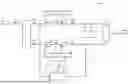
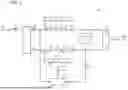


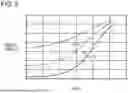
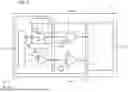
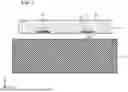
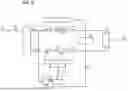


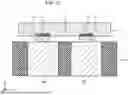


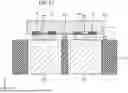


Sources:
- United States Patent and Trademark Office - verify current appl. status at the USPTO↗
Similar patent applications:
- » 20230283248
POWER AMPLIFICATION DEVICE, POWER AMPLIFICATION SYSTEM, AND OPERATION METHOD THEREOF - » 20160211805
Power amplification device and control method of power amplification device - » 20150280495
Electromagnetic transmission device, power amplification device, and electromagnetic transmission system - » 20120229209
Power amplification device, transmitter, and power amplification control method - » 20080284539
High frequency circuit, semiconductor device, and high frequency power amplification device - » 20150002232
Power supply device for high frequency power amplification circuit and high frequency power amplification device - » 20120081178
Power amplification device and method for acquiring power adjusting coefficient - » 20050174176
Power amplification device - » 20090213554
Power amplification device and transmitter using it - » 20100079210
Power amplification device
Recent applications in this class:
- » 20260066851 2026-03-05
SEMICONDUCTOR DEVICE AND DOHERTY AMPLIFIER - » 20260058609 2026-02-26
DOHERTY AMPLIFIER - » 20260058608 2026-02-26
CLASS C AMPLIFIER BIAS CIRCUIT - » 20260045916 2026-02-12
HIGH FREQUENCY AMPLIFIER - » 20260045915 2026-02-12
AMPLIFIER CIRCUIT - » 20260039255 2026-02-05
POWER AMPLIFICATION DEVICE - » 20260039254 2026-02-05
POWER AMPLIFICATION DEVICE - » 20260039253 2026-02-05
AUTONOMOUS ANALOG ORTHOGONAL LOAD MODULATION POWER AMPLIFIER - » 20260039252 2026-02-05
POWER AMPLIFICATION DEVICE - » 20260031764 2026-01-29
ARCHITECTURE FOR DOHERTY POWER AMPLIFIER OUTPUT POWER COMBINING