HEADREST
US20260077862A1
2026-03-19
19/320,200
2025-09-05
Smart Summary: A headrest assembly includes a headrest and a way to attach it to a seat back. Two rods extend from the bottom of the headrest, allowing it to move. The first rod fits into a part that can be attached to the seat back and allows for rotation. The second rod fits into another part that can also rotate and has a cut-out for easy movement. This design helps the headrest adjust comfortably while being securely mounted to the seat. 🚀 TL;DR
Abstract:
A headrest assembly comprising: a headrest (10); and a mounting assembly (20) for mounting the headrest, in use, to a seat back (30), the mounting assembly comprising: a first rod (21) extending from a bottom of the headrest at a first location; a second rod (22) extending from the bottom of the headrest at a second location; a first mounting part (24) having a housing (241) with a channel (242) extending therethrough defining an axis (A) and arranged to receive the first rod (21) for rotation about the axis relative to the housing, the first mounting part configured to be attached, in use, to the seat back; a second mounting part (25) having a housing with a channel (252) extending therethrough arranged to receive the second rod (22), the housing (251) of the second mounting part (25) being rotatable relative to the second rod (22) and having a cut-out (253) therethrough via which the second rod (22) can exit the second mounting part channel (252) and housing (252) when the cut-out (253) is rotated to a position aligning with the path the second rod (22) moves on rotation of the headrest relative to the seat about the axis (A).
Inventors:
- Marcin Szymon Kolodziejczak 16 🇵🇱 Wroclaw, Poland
- Piotr Krzysztof Kaliszczyk 12 🇵🇱 Wroclaw, Poland
- Marcin Adam Chodyniecki 5 🇵🇱 Wroclaw, Poland
Applicant:
Interested in similar patents?
Get notified when new applications in this technology area are published.
Classification:
B64D11/0642 » CPC main
Passenger or crew accommodation; Flight-deck installations not otherwise provided for; Arrangements of seats, or adaptations or details specially adapted for aircraft seats with features for adjustment or converting of seats Adjustable headrests
B64D11/06 IPC
Passenger or crew accommodation; Flight-deck installations not otherwise provided for Arrangements of seats, or adaptations or details specially adapted for aircraft seats
Description
CROSS-REFERENCE TO RELATED APPLICATIONS
The present application claims the benefit of European Patent Application No. 24461620.7, filed Sep. 13, 2024, which is herein incorporated by reference in the entirety.
TECHNICAL FIELD
The present disclosure relates to a seat headrest.
BACKGROUND
Seats, particularly in vehicles or in other environments where a user is seated while performing tasks, such as a pilot seat in an aircraft or a helicopter pilot seat, are often provided with a headrest portion extending from the seat back to support the user's head while seated for increased safety and comfort. Some headrests are formed integrally with the seat back. Others may be mounted permanently or removably to the seat and may be adjustable in height or angle to accommodate users of different sizes.
Whilst such headrests are desirable in terms of comfort and safety, there may be situations where the headrest obstructs the user's access to an area behind the seat. In a helicopter, for example, there is often a shelf or storage area behind a seat, or, in aircraft or other environments, the user may need to access controls, lights, accessories, or other things from the area behind the seat without actually moving to the area behind the seat. Because of the task that the user is performing, or because of space constraints or for other reasons, the user may need to access the area behind the seat by just reaching back behind the seat from a seated position or from a position at the front of the seat. The headrest may, however, obstruct the access to the area behind the seat.
If the headrest is of the removable type, where it is fitted into slots at the top of the seat back, it can be removed by lifting the headrest out of the slots. This, however, requires both hands of the user. Furthermore, the space above a seat may be restricted, making it difficult to remove the headrest in this way.
There is a need for a headrest design that can be more easily moved to facilitate access to an area behind the headrest.
SUMMARY
There is provided a seat headrest assembly which enables the headrest to be rotated or twisted to an open position relative to the seat back to allow access to an area that is behind the headrest when it is in its normal position relative to the seat back.
According to one aspect, there is provided a headrest assembly including: a headrest and a mounting assembly for mounting the headrest, in use, to a seat back. The mounting assembly includes: a first rod extending from a bottom of the headrest at a first location; a second rod extending from the bottom of the headrest at a second location; a first mounting part having a housing with a channel extending therethrough defining an axis and arranged to receive the first rod for rotation about the axis relative to the housing, the first mounting part configured to be attached, in use, to the seat back; a second mounting part having a housing with a channel extending therethrough arranged to receive the second rod, the housing of the second mounting part being rotatable relative to the second rod and having a cut-out therethrough via which the second rod can exit the second mounting part channel and housing when the cut-out is rotated to a position aligning with the path the second rod moves on rotation of the headrest relative to the seat about the axis.
In some embodiments, the second mounting part may include the housing and a fixed housing relative to which the housing is rotated to move the position of the cut-out.
The housing and the fixed housing may be rotatably engaged by a threaded engagement. The second rod may be provided with an outer thread and the channel may have an inner thread with which the outer thread rotating engages.
The first mounting part may have a bearing in the channel between the first rod and the housing.
The first rod and the second rod may be opposite ends of a bow.
The headrest may include a front part and a back part attached together. These may define a cavity therebetween to receive the rods/the bow.
The assembly may further include a mounting plate to which the first and second mounting parts are mounted, where the plate may be configured to be mounted to the seat back, in use.
According to another aspect, there is provided a seat including a seat back and a headrest assembly as defined above, mounted thereto.
BRIEF DESCRIPTION OF THE DRAWINGS
Examples of the headrest assembly according to the disclosure will now be described with reference to the drawings. It should be noted that these are examples only and that variations are possible within the scope of the claims.
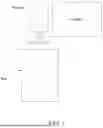
FIG. 1 shows a typical seat with headrest in a helicopter environment.
FIG. 2 shows a headrest assembly according to this disclosure with the headrest in the normal position relative to the seat back.
FIG. 3 shows a headrest assembly such as shown in FIG. 2 but with the headrest in an open position relative to the seat back.
FIG. 4 illustrates in more detail, a headrest assembly according to this disclosure with the headrest locked in the normal position relative to the seat back.
FIG. 5 illustrates in more detail, a headrest assembly such as shown in FIG. 2 but with the headrest unlocked to be moved to an open position relative to the seat back.
FIG. 6 illustrates in more detail the locking/unlocking mechanism of a headrest assembly according to the disclosure.
FIG. 7 illustrates in more detail, in a sectional view a headrest assembly according to this disclosure.
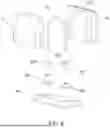
FIG. 8 is an exploded view of a headrest assembly according to this disclosure.
DETAILED DESCRIPTION
Referring first to FIG. 1 to explain the background to this disclosure, as mentioned above, it may be necessary, e.g., in aircraft/helicopter environments or other environments where space is constrained or restricted, to access an area behind a seat. This can be difficult if the seat has a headrest that obstructs access to the area behind it. In some cases, access may be required to access an area behind the seat, e.g., a cabinet behind the headrest. Additionally, access may be required, in some cases, quickly or while the seat passenger is performing some other task (e.g., driving). There is, therefore, a need to move the headrest quickly and easily, sometimes in a constrained space, to permit the required access.
The solution provided by the headrest assembly of this disclosure is to provide a mounting assembly for mounting the headrest to the seat back such that the headrest can be rotated between a normal position relative to the seat back and an open position relative to the seat back which allows access to the area which is behind the headrest when it is in its normal position. The headrest can be rotated between the normal and the open position without having to completely remove the headrest from the seat back. In some examples, the headrest assembly also allows the headrest to be locked in the normal position by a releasable locking mechanism which can be released easily, e.g., with one hand, to allow the headrest to be rotated to the open position.
Details of the Assembly Will Be Further Described With Reference to the Examples shown in FIGS. 2 to 8.
The headrest assembly includes a headrest 10 and a mounting assembly 20 configured to mount the headrest 10 to a seat back 30, in use.
The headrest 10 may have any suitable shape, size, and/or structure. The headrest 10 should provide a surface against which a person in the seat can rest their head. The surface may be cushioned and/or provided with some form of cover for reasons of comfort, aesthetics, hygiene, etc. as is known. In the example shown, the headrest 10 has a front part 11 which may be cushioned and may be shaped to add additional support to the neck area or may just be a simple surface, and a back part 12 which may also be cushioned and/or provided with a cover. The front and back parts 11, 12 are assembled together to define the headrest 10. A cavity 100 may be provided between the front and back parts 11, 12 to accommodate the rods of the mounting assembly 20, as described further below. In other examples, the headrest 10 may be a simple one-piece assembly or may be formed of several parts assembled together. The rods of the mounting assembly 20, described further below can, as mentioned above, extend from the cavity 100 within the headrest 10 or can just extend directly from the bottom of the headrest 10.
The mounting assembly 20 includes a first mounting rod 21 extending from a bottom 1b of the headrest 10 at a first location and a second mounting rod 22 extending from the bottom 1b of the headrest 10 at a second location spaced along the bottom 1b of the headrest 10 from the first location. The first and second mounting rods 21, 22 may be separate rods or may be opposite ends of a single rod 23 curved into a bow inside the headrest 10 such that the ends 21, 22 extend out from the bottom 1b of the headrest 10 at the respective first and second locations.
The mounting assembly 20 further includes a first mounting part 24 and a second mounting part 25 arranged to be attached, in use, to the top of the seat back 30, and to receive, respectively, the first and second rods 21, 22 to mount the headrest 10 to the seat back 30.
The first mounting part 24 includes a housing 241 through which a channel 242 extends, the channel 242 being open at the top and bottom ends, and through which the first rod 21 extends. The first rod 21 extends through this channel 242 to be rotatable relative to the channel about the axis A defined from the top to the bottom ends, this axis being the axis of rotation of the headrest 10 relative to the seat back 30. Bearings 243 may be provided between the housing 241 and the first rod 21, in the channel 242, to facilitate rotation of the first rod 21 relative to the housing 241.
The first mounting part 24 is, in use, attached to the seat back 30. This may be fastened to the seat back 30 directly, secured by fasteners, adhesive, or in some other way. The first mounting part 24 may be arranged such that the first rod 21 extends through the mounting part 24 and into an opening in the seat back 30 or the first rod 21 may be secured in the housing 241 without extending into the seat back 30. The first mounting part 24 may be mounted to a mounting plate 28 which is, in turn, secured or attached to the seat back 30, as shown in FIGS. 2-3.
The second mounting part 25 includes a rotatable housing 251 and a channel 252 extending therethrough to receive the second rod 22, as shown in FIG. 6. The rotatable housing 251 has a cut-out 253 in the housing wall reaching to the channel 252. The cut-out 253 is sized to allow the second rod 22 to pass from the channel 252 out of the housing 251 via the cut-out 253 when the cut-out 253 is rotated about the axis of the channel through the rotatable housing 251 to a position aligned with the movement of the second rod 22 when the headrest 10 is rotated relative to the seat back 30 about the axis of rotation A. The second mounting part 25 may also include a fixed housing part 254 with respect to which the rotatable housing 251 can be rotated to the open position where the second rod 22 can exit the channel via the cut-out 253. The rotatable housing 251 may be provided with a thread that engages with a thread on the fixed housing part 254 to allow relative rotation of the rotatable housing part 251. The rotatable housing part 251 may also have an inner thread within the channel that mates with a thread on the second rod 22 so that the rotatable housing part 251 can be twisted/rotated by a user relative to the second rod 22 to the open position. The screw threads can prevent unintended opening of the second mounting part 25, e.g., due to vibrations.
In the example in which the first mounting part 24 is mounted to the plate 28 for attachment to the seat back 30, the second mounting part 25 may also mounted to the plate 28.
Operation of the headrest 10 according to this disclosure can be seen in FIGS. 2 and 3. In the normal position, the headrest 10 is mounted to the top of the seat back 30 in that both the first and the second rod 21, 22 are secured in their respective mounting parts 24, 25. The rotatable housing 251 of the second mounting part 25 is rotated to a position in which the cut-out 253 is not aligned with the direction of movement of the second rod 25—i.e., the second rod cannot be rotated out of the second mounting part 25 and the headrest 10 is locked in the normal position (as shown in FIG. 2).
To move the headrest 10 out of the way, the user unlocks the mounting assembly 20 by rotating the rotatable housing 251 of the second mounting part 25 relative to the second rod 22 until the cut-out 253 is at a position where the second rod 22 can pass therethrough and exit the housing 251 by rotation of the headrest 10 relative to the seat back (direction R seen in FIG. 3) about axis A. Access to the space behind the seat is then possible.
The headrest 10 can then be moved back to its normal position by rotating the headrest 10 in the opposite direction to direction R, relative to the seat back 30. The second rod 22 enters into the channel of the second mounting part 25 via the cut-out 253. The rotatable housing 251 is then twisted to move the cut-out 253 so that the path for movement of the second rod 22 out of the second mounting part 25 is closed and the headrest 10 is locked in the normal position again.
The second mounting part 25 is shown in more detail in FIG. 6 and an exploded view of the described example is shown in FIG. 8.
The assembly 20 of this is disclosure provides a simple way of moving a headrest 10 out of the way to provide access to the space behind. The headrest 10 can be moved using a single-handed operation but can avoid unintended movement due, e.g., to vibrations.
Claims
1. A headrest assembly comprising:
a headrest; and
a mounting assembly for mounting the headrest, in use, to a seat back, the mounting assembly comprising:
a first rod extending from a bottom of the headrest at a first location;
a second rod extending from the bottom of the headrest at a second location;
a first mounting part having a housing with a channel extending therethrough defining an axis, wherein channel of the first mounting part is arranged to receive the first rod for rotation about the axis relative to the housing, the first mounting part configured to be attached, in use, to the seat back; and
a second mounting part having a second mounting part housing with a second mounting part channel extending therethrough, wherein the second mounting part channel of the second mounting part is arranged to receive the second rod, the second mounting part housing of the second mounting part being rotatable relative to the second rod and having a cut-out therethrough, wherein the second rod can exit the second mounting part channel and the second mounting part housing when the cut-out is rotated to a position aligning with a rotation path of the second rod when the second rod moves on rotation of the headrest relative to the seat back about the axis.
2. The headrest assembly of claim 1, wherein the second mounting part further comprises a fixed housing positioned relative to the second mounting part housing, wherein the second mounting part housing is rotated to move the position of the cut-out.
3. The headrest assembly of claim 2, wherein the second mounting part housing and the fixed housing are rotatably engaged by a threaded engagement.
4. The headrest assembly of claim 1, wherein the second rod is provided with an outer thread and the second mounting part channel has an inner thread with which the outer thread rotatingly engages.
5. The headrest assembly of claim 1, wherein the first mounting part has a bearing in the channel between the first rod and the housing.
6. The headrest assembly of claim 1, wherein the first rod has a first end of a bent bow and the second rod is opposite an end of the bent bow.
7. The headrest assembly of claim 1, wherein the first rod and the second rod extend from inside the headrest.
8. The headrest assembly of claim 1, wherein the headrest comprises a front part and a back part attached together.
9. The headrest assembly of claim 8, wherein a cavity is defined between the front part and the back part from which the first rod and the second rod extend.
10. The headrest assembly of claim 1, further comprising:
a mounting plate to which the first mounting part and the second mounting part are mounted, the mounting plate configured to be mounted to the seat back, in use.
11. (canceled)
12. A seat comprising:
a seat back; and
a headrest assembly, wherein the headrest assembly comprises:
a headrest; and
a mounting assembly for mounting the headrest, in use, to the seat back, the mounting assembly comprising:
a first rod extending from a bottom of the headrest at a first location;
a second rod extending from the bottom of the headrest at a second location;
a first mounting part having a housing with a channel extending therethrough defining an axis, wherein the channel of the first mounting part is arranged to receive the first rod for rotation about the axis relative to the housing, the first mounting part configured to be attached, in use, to the seat back; and
a second mounting part having a second mounting part housing with a second mounting part channel extending therethrough, wherein the second mounting part channel of the second mounting part is arranged to receive the second rod, the second mounting part housing of the second mounting part being rotatable relative to the second rod and having a cut-out therethrough, wherein the second rod can exit the second mounting part channel and the second mounting part housing when the cut-out is rotated to a position aligning with a rotation path of the second rod when the second rod moves on rotation of the headrest relative to the seat about the axis.
Images & Drawings included:



Sources:
- United States Patent and Trademark Office - verify current appl. status at the USPTO↗
Similar patent applications:
- » 20120025850
Device for measuring distance between headrest and head, method for measuring distance between headrest and head, headrest position adjusting device, and headrest position adjusting method - » 20120032691
Device for measuring distance between headrest and head, method for measuring distance between headrest and head, headrest position adjusting device, and headrest position adjusting method - » 20130116893
Device for measuring the distance between a head and a headrest, headrest-position adjusting device using said device, method for measuring the distance between a head and a headrest, and headrest-position adjusting method using said method - » 20050082893
Headrest lock structure with lock slots, method for forming lock slots in headrest pole and method for producing headrest pole - » 20180093594
Headrest, a seat comprising a headrest and a method of actuating a headrest - » 20180154813
Headrest, method of installing a headrest, headrest system - » 20060087167
Vehicle seat with a headrest and headrest adjustment assembly - » 20060071528
Headrest and foaming tool for foaming a headrest - » 20060163931
Headrest support and locking member which is assembled to headrest support - » 20050062330
Method for moving a headrest in the event of a rear-end collision and arrangement of a headrest on a vehicle seat
Recent applications in this class:
- » 20260062127 2026-03-05
INCLINED HEAD AND NECK SUPPORT FOR PASSENGERS - » 20250388325 2025-12-25
LATERAL FLEXION HEADREST FOR PASSENGER SEATS - » 20250229902 2025-07-17
SEAT HEADREST - » 20250223043 2025-07-10
SEAT HEADREST - » 20250206445 2025-06-26
ERGONOMIC HEADREST FOR A SEAT - » 20250128819 2025-04-24
HEADREST WITH INDEPENDENTLY ADJUSTABLE ARMS AND FLEXIBLE CUSHION - » 20250128818 2025-04-24
HEADREST WITH DEPLOYABLE OBLIQUE SUPPORTS - » 20240425182 2024-12-26
INTEGRATED SEAT ASSEMBLY WITH HEADREST AND NECK SUPPORT - » 20240270389 2024-08-15
AIRCRAFT SEAT WITH MOVEABLE HEADREST - » 20240228044 2024-07-11
SWIVEL BACKREST WITH ADJUSTABLE HEADREST