ADJUSTABLE HELMET FOR USE WITH OPTICALLY-PUMPED MAGNETOMETER
US20260083201A1
2026-03-26
19/341,264
2025-09-26
Smart Summary: An adjustable helmet is designed to work with neuroimaging machines, like optically pumped magnetometers (OPMs). It holds sensors that need to be placed close to a person's head to gather brain information accurately. The helmet can change size and shape to fit different head sizes, which is especially useful for children. It has movable sections that allow for adjustments without compromising the effectiveness of the sensors. This ensures that everyone can use the helmet comfortably while still getting precise readings. 🚀 TL;DR
Abstract:
Helmets are used with neuroimaging machines, such as optically pumped magnetometers (OPMs). The helmets house sensors that are used with the OPMs that are positioned adjacent a participant's head in a way that the machine is able to acquire neural information. The placement and orientation of the sensors is important so that accurate information can be obtained. However, to account for heads of various sizes, especially with children, mechanisms can be provided that allow for movement of portions of the helmet. For example, the helmet can include sections that are movable in multiple directions relative to one another to change the overall size of the helmet to account for varying head sizes, without affecting the efficacy of the helmet and sensors.
Inventors:
- Cooper Lee Livermore 3 🇺🇸 Omaha, NE, United States
- Alexa Wildy 2 🇺🇸 Boystown, NE, United States
Applicant:
Interested in similar patents?
Get notified when new applications in this technology area are published.
Classification:
A42B3/0406 » CPC main
Helmets; Helmet covers ; Other protective head coverings; Parts, details or accessories of helmets Accessories for helmets
A42B3/04 IPC
Helmets; Helmet covers ; Other protective head coverings Parts, details or accessories of helmets
Description
CROSS REFERENCE TO RELATED APPLICATIONS
This application claims priority under 35 U.S.C. § 119(e) to provisional patent application U.S. Ser. No. 63/699,297, filed Sep. 26, 2024. The provisional patent application is hereby incorporated by reference in its entirety herein, including without limitation: the specification, claims, and abstract, as well as any figures, tables, appendices, or drawings thereof.
TECHNICAL FIELD
The present disclosure relates generally to the field of neuroscience. More particularly, but not exclusively, the disclosure includes systems, methods, and/or apparatus including adjustable helmets for use with neuroimaging and neurostimulation devices, such as optically pumped magnetometers.
BACKGROUND
The background description provided herein gives context for the present disclosure. Work of the presently named inventors, as well as aspects of the description that may not otherwise qualify as prior art at the time of filing, are neither expressly nor impliedly admitted as prior art.
OPM-MEG (Optically Pumped Magnetometers Magnetoencephalography (MEG) is a new non-invasive technology for imaging brain function in real-time with several advantages over traditional MEG. The OPM includes a number of sensors, which may be over 100 sensors, which are used with a participant. These OPM sensors serve the same role as the magnetometers in the traditional cryogenic magnetoencephalography (MEG) scanner, although with different mechanisms of action. Both the MEG and OPM are used to sense the small magnetic field generated by brain activity. The MEG scanning system has become a widely used tool in neuroscience research, but due to it being a large unmovable machine, participants are required to be as still as possible making certain populations, especially children, difficult to obtain data from.
The OPM solves this issue by having the sensors placed inside a helmet worn by participants, allowing the participant with the helmet to move while maintaining the helmet's position with respect to the participants' head.
To ensure the best data, helmet size and shape is extremely important. It is ideal to have a helmet size and shape that corresponds to the individual participant's head size and shape because you want the sensors as close to the head as possible because of the inverse square law. This has been addressed by having a helmet library (i.e., a large number of helmets of varying size and shape), allowing each participant to have a well-fitting helmet.
Still further, being able to record the brain activity in babies has had many challenges. Traditional cryogenic magnetoencephalography machines (MEGs) where there is only one helmet size for every person generally means that the sensors of the machine are farther away from the head when the person has a smaller head. The sensors are not able to pick up the best quality data because of how far the sensors are from the head (because of the inverse square law). There are cryogenic magnetoencephalography machines specifically for kids but because they can only be used for a limited population there are not that many in the world, mostly because the cost exceeds the versatility.
Optically Pumped Magnetometers (OPMs) do provide a solution to get sensors that can be moved to different helmets which means you can put the sensors in a helmet size that fits the person.
Because baby heads come in a variety of sizes and shapes, there exists a need in the art to be able to adjust a helmet to have a lot of sizes and shapes or have a large library of helmets.
To know where in the brain the signal is coming from, the exact location of the sensors on the head must be known. If the hat is flexible such as a fabric that has sensors attached to it, one would have to identify the exact position of the sensors relative to each other sensor and relative to the head. To accomplish that, a view of the entire helmet would be needed. Although it is possible to do this, since babies cannot hold their own head up, it becomes especially difficult to stabilize the helmet and the baby's head, while also allowing a 3D scanner and/or motion capture camera to have a full view of every sensor without the baby moving long enough for the information to be obtained.
Thus, there also exists a need in the art for an adjustable helmet that is rigid enough to know the position of sensors in relation to every other sensor so a 3D scanner or motion capture camera would only need to scan part of the helmet to understand the position of the helmet on the head.
SUMMARY
The following objects, features, advantages, aspects, and/or embodiments are not exhaustive and do not limit the overall disclosure. No single embodiment need provide each and every object, feature, or advantage. Any of the objects, features, advantages, aspects, and/or embodiments disclosed herein can be integrated with one another, either in full or in part.
It is a primary object, feature, and/or advantage of the present disclosure to improve on or overcome the deficiencies in the art.
It is a further object, feature, and/or advantage of any of the embodiments of the present disclosure to provide an adjustable helmet for use with a neuroimaging machine, such as an OPM, wherein the helmet is adjustable in size and shape. For example, the helmet may include a plurality of sections that are movable relative to one another to increase the degrees and/or directions of movement of the sections.
It is still yet a further object, feature, and/or advantage of any of the embodiments of the present disclosure to decrease the number of times the sensors are swapped from one helmet to the next. According to at least some aspects of some embodiments, this is accomplished by having fewer helmets that are adjustable in size so that the same helmet can be used with people having varying head sizes.
It is yet another object, feature, and/or advantage of any of the embodiments of the present disclosure for an adjustable helmet to be rigid enough to know the position of sensors positioned thereon in relation to every other sensor so a 3D scanner or motion capture camera would only need to scan part of the helmet to understand the position of the helmet on the head.
The adjustable helmet disclosed herein can be used in a wide variety of applications. For example, while the disclosure includes use with an OPM machine, it should be appreciated that any head covering that includes a number of sensors and/or a sensor array could benefit from the present disclosure.
It is preferred that the apparatus be safe, cost effective, and durable. For example, the helmet should provide at least some safety aspects for the user, including protection from contact with a machine.
At least one embodiment disclosed herein comprises a distinct aesthetic appearance. Ornamental aspects included in such an embodiment can help capture a consumer's attention and/or identify a source of origin of a product being sold. Said ornamental aspects will not impede functionality of the adjustable helmet.
Methods can be practiced which facilitate use, manufacture, assembly, maintenance, and repair of an adjustable helmet which accomplish some or all of the previously stated objectives.
The adjustable helmet can be incorporated into systems or kits which accomplish some or all of the previously stated objectives.
According to some aspects of the present disclosure, a helmet for use with a neural imaging machine comprises a helmet base comprising more than one section, each section movable in relation to another section; at least one locking system connecting two of the sections of the helmet base, the at least one locking system comprising an adjustable mechanism to adjust spacing between the two sections and including an engageable locking member to hold spacing of the two sections; and at least one sensor holder on the helmet base, the at least one sensor holder configured to hold a sensor of the neural imaging machine.
According to at least some embodiments of the disclosure, the locking system comprises a first part and a second part that interact with one another.
According to at least some embodiments of the disclosure, one of the first and/or second parts includes preset locking positions to indicate preset spacing between two sections of the helmet.
According to at least some embodiments of the disclosure, the locking member prevents distance and orientation of the connected sections.
According to at least some embodiments of the disclosure, the locking system comprises a single member extending from one section to another and including an adjustable portion to change the distance between the sections.
According to at least some embodiments of the disclosure, the engageable locking member of the at least one locking system comprises a mechanical fastener.
According to at least some embodiments of the disclosure, the engageable locking member of the at least one locking system comprises a non-mechanical fastener.
According to at least some embodiments of the disclosure, the at least one sensor holder comprises at least one sensor holder on each of the sections of the helmet base.
According to at least some embodiments of the disclosure, the adjustable mechanism of the at least one locking system comprises at least two known positions for the engageable locking member.
According to at least some embodiments of the disclosure, the helmet further comprises a cable management system associated with the at least one sensor holder.
According to additional aspects of the disclosure, a helmet system comprises a helmet comprising a helmet base comprising more than one section, each section movable in relation to another section; at least one locking system connecting two of the sections of the helmet base, the at least one locking system comprising an adjustable mechanism to adjust spacing between the two sections; at least one sensor holder on the helmet base; and a sensor positioned in each of the at least one sensor holders.
According to at least some embodiments of the disclosure, the at least one locking system comprises an engageable locking member to hold the spacing of the two sections.
According to at least some embodiments of the disclosure, the engageable locking member of the at least one locking system comprises a mechanical fastener.
According to at least some embodiments of the disclosure, the engageable locking member of the at least one locking system comprises a non-mechanical fastener.
According to at least some embodiments of the disclosure, the locking system comprises a first part and a second part that interact with one another.
According to at least some embodiments of the disclosure, one of the first and/or second parts includes preset locking positions to indicate preset spacing between two sections of the helmet.
According to at least some embodiments of the disclosure, each of the at least one sensor holders comprises a cable management system.
According to additional aspects of the disclosure, a helmet for use with a neural imaging machine comprises a helmet base comprising more than one section, each section movable in relation to another section; at least one locking system connecting two of the sections of the helmet base, the at least one locking system comprising an adjustable mechanism to adjust spacing between the two sections; and at least one sensor holder on the helmet base, the at least one sensor holder configured to hold a sensor of the neural imaging machine; wherein the at least one locking system comprises more than one preset and defined location in which to space the two sections.
According to at least some embodiments of the disclosure, the at least one locking system comprises a ratchet.
According to at least some embodiments of the disclosure, the at least one locking system comprises a male member and a female member, wherein the male and female members comprise one or more apertures that can be aligned at the present and defined location and locked in place with a pin.
These and/or other objects, features, advantages, aspects, and/or embodiments will become apparent to those skilled in the art after reviewing the following brief and detailed descriptions of the drawings. The present disclosure encompasses (a) combinations of disclosed aspects and/or embodiments and/or (b) reasonable modifications not shown or described.
BRIEF DESCRIPTION OF THE DRAWINGS
Several embodiments in which the present disclosure can be practiced are illustrated and described in detail, wherein like reference characters represent like components throughout the several views. The drawings are presented for exemplary purposes and may not be to scale unless otherwise indicated.
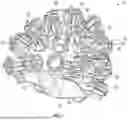
FIG. 1 is a perspective view of a helmet for use with a neuroimaging machine according to at least some aspects and/or embodiments of the present disclosure.
FIG. 2 is a front elevation view of the helmet of FIG. 1.
FIG. 3 is a right side elevation view of the helmet of FIG. 1.
FIG. 4 is a rear elevation view of the helmet of FIG. 1.
FIG. 5 is a partial exploded view of the helmet of FIG. 1.
FIG. 6 is another perspective view of the helmet of FIG. 1.
FIG. 7 is an exploded view of the helmet of FIG. 1.
FIG. 8 is an enlarged view showing a portion of the helmet of FIG. 1 from a rear position.
FIG. 9 is a perspective view of another helmet for use with a neuroimaging machine according to at least some aspects and/or embodiments of the present disclosure.
FIG. 10 is front elevation view of the helmet of FIG. 9.
FIG. 11 is a right side elevation view of the helmet of FIG. 9.
FIG. 12 is a rear elevation view of the helmet of FIG. 9.
FIG. 13 is a partial exploded view of the helmet of FIG. 9.
FIG. 14 is another perspective view of the helmet of FIG. 9.
FIG. 15 is an exploded view of the helmet of FIG. 9.
An artisan of ordinary skill in the art need not view, within isolated figure(s), the near infinite distinct combinations of features described in the following detailed description to facilitate an understanding of the present disclosure.
DETAILED DESCRIPTION
Unless defined otherwise, all technical and scientific terms used above have the same meaning as commonly understood by one of ordinary skill in the art to which embodiments of the present disclosure pertain.
The terms “a,” “an,” and “the” include both singular and plural referents.
The term “or” is synonymous with “and/or” and means any one member or combination of members of a particular list.
As used herein, the term “exemplary” refers to an example, an instance, or an illustration, and does not indicate a most preferred embodiment unless otherwise stated.
The term “about” as used herein refers to slight variations in numerical quantities with respect to any quantifiable variable. Inadvertent error can occur, for example, through use of typical measuring techniques or equipment or from differences in the manufacture, source, or purity of components.
The term “substantially” refers to a great or significant extent. “Substantially” can thus refer to a plurality, majority, and/or a supermajority of said quantifiable variables, given proper context.
The term “generally” encompasses both “about” and “substantially.” The term “configured” describes structure capable of performing a task or adopting a particular configuration. The term “configured” can be used interchangeably with other similar phrases, such as constructed, arranged, adapted, manufactured, and the like.
Terms characterizing sequential order, a position, and/or an orientation are not limiting and are only referenced according to the views presented.
The “scope” of the present disclosure is defined by the appended claims, along with the full scope of equivalents to which such claims are entitled. The scope of the disclosure is further qualified as including any possible modification to any of the aspects and/or embodiments disclosed herein which would result in other embodiments, combinations, subcombinations, or the like that would be obvious to those skilled in the art.
The present disclosure is not to be limited to that described herein. Mechanical, electrical, chemical, procedural, and/or other changes can be made without departing from the spirit and scope of the present disclosure. No features shown or described are essential to permit basic operation of the present disclosure unless otherwise indicated.
As will be understood, aspects and/or embodiments of the present disclosure relate to neuroimaging machines, such as an optically-pumped magnetometry -magnetoencephalogram (OPM-MEG) systems and the like. The term “neuroimaging system” or “machine” will be used to cover any type of neuroimaging system that is known and used to measure brain activity, including OPMs and magnetoencephalography (MEG) machines, which is another neuroimaging machine. In neuroimaging machines, a participant is engaged with the machine to allow the machine to acquire neural data, such as through a helmet or head covering. The neuroimaging machines utilize sensors to collect information from the participant.
As noted, OPMs utilize helmets or head coverings to place sensors close to the participant's head. Having helmets that are close in size and shape for the participant utilizing the helmet is also important so that the helmet does not move in position in relation to the head. If the helmet is too big, the position of the helmet on the head may change with any movement. The helmet's position on the head must be known to source localize, which is identifying which part of the brain the signal came from. If the helmet moves positions on the head during the scan the data would incorrectly identify where the signal was coming from in the brain.
OPM's have greatly increased the ability to record data for users, which was previously difficult. For example, babies and younger children are difficult to monitor on traditional tubes of machines. The helmets of OPMS allows the children to be held or even move while being monitored by the machine, which has provided more data to be obtained. However, children are always growing and thus, it is difficult to have enough helmet sizes to account for the varying sizes of heads.
To address this, aspects of the present disclosure are directed towards an adjustable helmet 10, 40 such as the one shown in the figures. Adjustable helmets allow for the helmet size to vary, while still maintaining the positions and orientations of the sensors used with the helmets. Thus, as will be understood, the adjustable helmets will vastly increase the ability of data to be obtained using the neuroimaging machines, such as OPMs, in a timely and efficient manner.
Therefore, as shown in FIGS. 1-8, an adjustable helmet 10 for use with neuroimaging machines, such as OPMs, is provided. The helmet 10 is similar to helmets that are currently being utilized, but there are numerous features and/or aspects that are novel and provide advantageous results. The helmet 10 comprises a helmet base 12 that is split into a plurality of sections 14. While the exact number of sections should not be limiting on the disclosure, for example, as shown best in FIG. 7, there may be six sections 14a, 14b, 14c, 14d, 14e, and 14f. The sections 14 are shaped such that they will generally align with one another to form the shape of a helmet, such as shown in FIG. 1.
In addition, as best shown in FIG. 2, the front portion of the helmet may include a higher ridge to account for a person's eyes. Having the higher portion at the front allows the eyes to be uncovered for the participant wearing the helmet. As shown in FIG. 3, the helmet 10 is sized and shaped to cover the majority of a person's head while leaving the face substantially uncovered. This will position the sensors in the correct locations to obtain the information from the machine.
Additional components, as will be understood, include, but are not limited to, sensor holders 32, a locking system 20 comprising interlocking parts (e.g., first member 22 and second member 26) that allows the helmet 10 to expand and contract (i.e., change sizes), as well as an optional cable management system 34.
As is known, the helmet 10 is to be used alongside magnetic field sensors (not shown) to identify which parts of the brain are most active at specific times. To aid in this, it is preferred that the inside of the helmet base 12 to roughly match the shape of the head of the participant. This allows the sensors to be placed closer to the scalp, which increases the amount of signal that the sensors are able to pick up. As will be understood, the helmet base 12 is still relatively the same shape as the head when it is expanded as well.
To be able to vary in size (expand and contract), the helmet base 12 is split into a plurality of sections 14. It should be appreciated that the sections 14 can be fully separable in some embodiments, but it is also envisioned that the sections are connected in a way in which they will have some sort of connection remained.
To aid in controlling the variation in size of the helmet sections 14, while also maintaining some control over the overall shape and size of the helmet 20, a locking system 20 is provided between adjacent sections. As can be seen in the figures, there are a number of locking systems 20 that are positioned around the helmet 10 and between adjacent sections 14 of the helmet base. There may be multiple portions of locking systems 20 on each section (see, e.g., FIG. 7), or there may be a single locking system 20 in a direction between sections.
As shown in FIGS. 1-8, one locking system 20 is provided. The locking system 20 shown in the figures may not be considered exclusionary nor limiting, and as will be understood, different manners of locking and size variation are to be considered a part of the present disclosure. In any manner, the part(s) that make up a locking system 20 should connect at least two different sections 14 of the helmet base 12 and should also be able to hold the sections 14 together when they are in their locked setting so that the sections do not change position in relation to each other and other sections 14.
The locking parts can be one or more parts that are attached to at least two different sections. If there is just one part that makes up the locking system, it should be connected to at least two sections. If there are two or more parts of the locking system 20, then one part may be connected to one section and another part may be connected to another section.
As shown in FIGS. 1-8, the locking system 20 comprises two components, a first member 22 and a second member 26. The first member 22 includes a base 23 that is connected or otherwise positioned relative to the helmet base 12. The base 23 extends the first member 22 away from the helmet base 12. The base 23 terminates in a protrusion 24 that extends transversely from the base 23. As shown in the figures, the protrusion 24 can include a number of apertures 25 spaced apart from one another and extending through the protrusion.
The second member 26 of the locking system 20 includes a base 27 that is positioned on or otherwise extends away from the helmet base 12. The base 27 terminates in a receiver 28, which is shown to be a generally hollow member. For example, the protrusion 24 of the first member 22 may be considered the “male” portion and the receiver the “female” portion to receive the protrusion therein. In other words, the protrusion 24 and receiver 28 are configured such that the protrusion 24 is insertable and movable within the receiver 28. Additionally, the receiver 28 includes an aperture 29 therethrough.
As will be appreciated, the apertures 25 of the protrusion 24 are alignable with the aperture 29 of the receiver 28. In addition, the apertures 25 of the protrusion 24 are at preset or known positions, which relate to preset sizes for setting the size of adjacent sections 14. The members allows adjacent sections to be sizable via the present apertures to change the size of the helmet 10 via movement of the sections 14.
To ensure that the sections 14 do not move relative to one another at the locking systems 20, a locking pin (not shown) can be inserted through the apertures of both the receiver and one of the apertures of the protrusion. This will essentially lock the components in place relative to one another at a selected size to account for the head size of the wearer/participant.
The locking pin can be any member that is insertable or positionable in the apertures to hold the size of the helmet by ensuring that the sections connected by the locking system do not move once a selected size has been selected and set.
In practice, the sections 14 of the helmet base 12 can be adjustable in position relative to one another to be able to adjust the overall size of the helmet. As shown in FIG. 8, according to some embodiments, there are six sections (e.g., 14a, 14b, 14c, 14d, 14e, and 14f). As further shown in the figure, each section has one or more locking systems, or portions thereof, that extend in different directions. This allows the movement or change in size of the helmet in any one or more of the directions of movement, which provides for a truly movable and sizable helmet 10.
Referring now to FIG. 5, one of the sections 14a is shown to be moved away from the remaining sections of the helmet base 12. This is shown by the arrow 31 in the figure. There are two locking systems 20 shown between the first section 14a and the section 14d. The locking systems 20 can be set between the sections by selecting alignment of the apertures of the locking system components and locking in place with a pin or other member, which will adjust the width of the helmet 10. The same changes can be made between each of adjacent sections 14, which will allow for variable sizing of the helmet in a quick and easy manner. The locking systems will ensure that the sections stay in place one connected to ensure that the data will be acquired, as desired.
The locking systems 20 may further include labels 30 or other identifiable markers that indicate preset sizes for the helmet. This can provide assurance that the sections are positioned as desired to achieve the desired size change for different users. The markers 30 can be numbers, letters, or other indicators to provide feedback to an operator that they have positioned sections relative to one another in desired positions.
Additional components of the helmet 10 include sensor holders 32. Sensor holders 32 are used to hold a sensor in place relative to the helmet 10. The holders 23 are used at known places such that the sensors of the machine are accurately placed at the proper location and orientation so that the machine operate as desired to acquire information. The sensor holders must be able to hold the magnetic field sensors that are being used so when the helmet is rotated 360 in any direction the sensors do not move position nor orientation in relation to the sensor holder the sensor is being held by. It should be appreciated that the locking mechanisms should be able to lock in a known location that is labeled or can be measured.
The sensor holders 32 should be able to hold the magnetic field sensors that are being used so when the helmet is rotated 360° in any direction the sensors do not move position nor orientation in relation to the sensor holder the sensor is being held by.
The placement of the sensor holders 32 on the helmet base sections 14 should not interfere with the locking mechanism 20 in any of the locking positions. According to some embodiments, the helmet 10 includes a cable management system 34 that controls the position of cables that are used to connect the sensors 32 to the neuroimaging machine.
When all the locking parts are connected and set in their locked position, the sensor holders should not be able to change distance or orientation in comparison to the other sensor holders on other sections and the same section.
Each of the components of the helmet 10 may be 3D printed (or otherwise created using additive manufacturing), sculpted, carved, cut, molded, or formed out of any solid body(s) or body(s) that will harden into a solid body, as long as the material is not magnetic.
Therefore, because the helmet base 12 comprises multiple sections 14, the sections are able to be movable relative to one another to adjust the size of the overall helmet once the sections are connected at the locking systems 20. As shown in FIG. 7, broken lines 33 indicate related portions of locking systems 20 that can be connected to adjust the distance between the sections, which provide for the size adjustment of the helmet 10. The number of locking systems is not to be limiting on the overall disclosure, but it will be understood that having more locking system will allow for more adjustability in the different directions between sections of the helmet to provide additional variation.
While FIGS. 1-8 show locking systems 20 with pin connections, it should be appreciated that any type of adjustable connection between portions of a locking system are to be considered part of the disclosure. This can include mechanical or non-mechanical fasteners. In general, a mechanical fastener is a device that is used to mechanically join or fasten two or more objects together. In general, fasteners are used to create non-permanent joints or connections; that is, joints that can be removed or dismantled without damaging the joining components. General types of mechanical fasteners can include threaded (bolts, screws, nuts, studs, etc.) or non-threaded (keys, pins, retaining rings, etc.). Additional fasteners can include, but are not limited to nails, rivets, and the like. Non-mechanical fasteners may include adhesives, fittings, clearance fittings, friction fittings, compression fittings, transition fittings, snaps, snap fits, hook and loops, joints, and the like. For simplistic purposes, screws, nuts, bolts, pins, rivets, staples, washers, grommets, latches (including pawls), ratchets, clamps, clasps, flanges, ties, adhesives, welds, any other known fastening mechanisms, or any combination thereof may be used to facilitate fastening, may be used for any of the connections described herein and all are to be considered swappable with one another for any of the attachment, connection, and/or fastening of components, either temporarily or permanently. It is further considered that any combination of any of the listed mechanical and/or non-mechanical fasteners or methods of fastening are to be considered a part of the disclosure.
Still further, the locking mechanism 20 may include but are not limited to a system with a set pin, set screw, threaded components, ratcheting mechanism, friction, compression fit, collet, clip, bayonet connector, clasps, clamps, coupler, springs, wedges, levers, pullies.
For example, as shown in FIGS. 9-15, another helmet 40 for use with a neuroimaging machine is provided. As with the helmet 10 shown in FIGS. 1-8, the helmet 40 is also size-adjustable to be able to be used with people having variable head shapes and sizes.
The helmet 40 comprises a helmet base 42 that includes four sections (see, e.g., FIG. 15, showing 44a, 44b, 44c, and 44d). While the helmet 10 of FIGS. 1-8 included six sections and the helmet 40 of FIGS. 9-15 includes four sections, it should be noted that a helmet could comprise sections equaling any number greater than one to allow for movement of the sections to adjust the size thereof.
As noted, the sections 44 of the helmet base 42 can be 3D printed or otherwise construed of any non-magnetic material. This can be rigid or semirigid. The shape of the helmet 40 when the sections 44 are connected is to be about the shape of a person's head. In addition, as best shown in FIG. 10, the front portion of the helmet may include a higher ridge to account for a person's eyes. Having the higher portion at the front allows the eyes to be uncovered for the participant wearing the helmet. As shown in FIG. 11, the helmet 40 is sized and shaped to cover the majority of a person's head while leaving the face substantially uncovered. This will position the sensors in the correct locations to obtain the information from the machine.
The helmet 40 will also include a plurality of sensor holders 62 that are positioned on the helmet base 42 to position the sensors (not shown) used for the neuroimaging machine. The sensor holders 62 may include a cable management system 64 as well, which will manage the positioning of the cables attached to the sensors.
In addition, to allow for size adjustment of the helmet 40, a plurality of locking systems 50 are positioned at adjacent helmet sections 44 and which are movable to allow the adjacent sections to move relative to one another.
Referring to FIG. 13, a section 44a has been moved in the direction of the arrow 60. This is exaggerated to show how the system can work. There is a broken line showing the portions of one of the locking systems 50 and how they will align and be reconnected in a manner to allow selected adjustment therebetween.
The locking system 50 is different than that of FIGS. 1-8. In FIGS. 9-15, the locking system 50 includes a first member 52 that includes a base 53 portion that extends from a section 44. Extending generally transverse to the base 53 is a protrusion in the form of a ratchet gear 54. The ratchet gear 54 includes a number teeth that are slanted on one side and generally vertical on the other. Each tooth includes a label 55, which identifies a size for adjustment of the helmet sections 44.
The locking system 50 also includes a second member 56 that includes a base portion 57 extending from a section 44. The base 57 terminates in a receiver 58, which may include a pawl and release mechanism 58. Essentially, the locking system 50 operates similar to a ratchet. The protrusion 54 is insertable into the receiver 58 in a first direction where continued movement is allowed. However, due to the shape of the teeth of the protrusion, the reverse movement is not allowed. A portion of the vertical side of the teeth will contact a pawl of the receiver to hold the components in place relative to one another. This is essentially a locked position. The sections can be moved closer to one another to make the helmet smaller, but to increase the distance between adjacent sections, the release mechanism will need to be activated to allow for movement of the protrusion in either direction, which can make the helmet “larger”.
The labels 55 on the protrusion will also provide visual feedback on the size of the helmet, which can be tracked and maintained for future use, such as if an individual will need to be tested at a later time.
As shown best in FIGS. 14 and 15, each section 44 of the helmet base 42 includes one or more locking system portions. This will provide adjustment in multiple directions for adjusting the size of the helmet, which will allow for better fits, regardless of the size of the participant's head.
Therefore, as can be appreciated, the adjustable helmet presented herein includes advantages and/or improvements over the art. This includes the ability to change the size of the helmet to a fixed known location without removing the sensors from the helmet and without swapping parts of the helmet out.
The ability to lock into a known location will give a more accurate knowledge of where each sensor is in comparison to other sensors and the head of the participant. This will allow identification as to which part of the brain the signal is coming from with significantly more accuracy. The ability to increase or decrease the size of the helmet will allow less helmet changes, which can cause strain and stress on the cables connecting the sensors and the neuroimaging machine. It also allows the sensors to be closer to the head because the helmet can adjust to the size that best fits their head. With the sensors closer to the brain (where the signal is coming from) the better the sensors can see the signal.
As noted, the present disclosure, including any of the embodiments and any combination of any components of the embodiments, can be used with helmets for OPM machines. However, this could also be used with other body part scanning via an OPM. The helmet could be varied to cover any body part of a participant that could be scanned with an OPM or other imaging machine.
Additional alternatives, variations, and/or changes could be included. This could include, for example, the addition of channels in the helmet base for cables to lay in. This would keep the cables out of the way. Options to decrease the weight are to make the helmet base thinner, while still allowing structural stability, or add holes to any of the components while still allowing them to function as described in the disclosure. The aesthetics of this helmet design can be improved. Adding more pieces to the helmet may be able to hide the underlying components but it would also increase weight. Theoretically there is an optimal orientation that the sensors should be to get the widest coverage of brain activity. Sensors can also be put in different orientations to focus on one portion of the brain. To change the orientation, one would just need to change the orientation of the pockets on the helmet base.
Therefore, a helmet and associated systems for use with sensors of a neuroimaging machine have been shown and/or described. It should be appreciated that variations and/or changes to any of the components or embodiments that are obvious to those skilled in the art are to be considered a part of the present disclosure. In addition, any of the aspects of any of the embodiments disclosed could be combined in ways not explicitly shown and/or described to provide yet additional embodiments that are part of the disclosure. The disclosure is not to be limited to the embodiments disclosed herein.
Claims
1. A helmet for use with a neural imaging machine, comprising:
a helmet base comprising more than one section, each section movable in relation to another section;
at least one locking system connecting two of the sections of the helmet base, the at least one locking system comprising an adjustable mechanism to adjust spacing between the two sections and including an engageable locking member to hold spacing of the two sections; and
at least one sensor holder on the helmet base, the at least one sensor holder configured to hold a sensor of the neural imaging machine.
2. The helmet of claim 1, wherein the locking system comprises a first part and a second part that interact with one another.
3. The helmet of claim 2, wherein one of the first and/or second parts includes preset locking positions to indicate preset spacing between two sections of the helmet.
4. The helmet of claim 1, wherein the locking member prevents distance and orientation movement of the connected sections.
5. The helmet of claim 1, wherein the locking system comprises a single member extending from one section to another and including an adjustable portion to change the distance between the sections.
6. The helmet of claim 1, wherein the engageable locking member of the at least one locking system comprises a mechanical fastener.
7. The helmet of claim 1, wherein the engageable locking member of the at least one locking system comprises a non-mechanical fastener.
8. The helmet of claim 1, wherein the at least one sensor holder comprises at least one sensor holder on each of the sections of the helmet base.
9. The helmet of claim 1, wherein the adjustable mechanism of the at least one locking system comprises at least two known positions for the engageable locking member.
10. The helmet of claim 1, further comprising a cable management system associated with the at least one sensor holder.
11. A helmet system, comprising:
a helmet comprising a helmet base comprising more than one section, each section movable in relation to another section;
at least one locking system connecting two of the sections of the helmet base, the at least one locking system comprising an adjustable mechanism to adjust spacing between the two sections;
at least one sensor holder on the helmet base; and
a sensor positioned in each of the at least one sensor holders.
12. The helmet system of claim 11, wherein the at least one locking system comprises an engageable locking member to hold the spacing of the two sections.
13. The helmet system of claim 12, wherein the engageable locking member of the at least one locking system comprises a mechanical fastener.
14. The helmet system of claim 12, wherein the engageable locking member of the at least one locking system comprises a non-mechanical fastener.
15. The helmet system of claim 11, wherein the locking system comprises a first part and a second part that interact with one another.
16. The helmet system of claim 15, wherein one of the first and/or second parts includes preset locking positions to indicate preset spacing between two sections of the helmet.
17. The helmet system of claim 11, wherein each of the at least one sensor holders comprises a cable management system.
18. A helmet for use with a neural imaging machine, comprising:
a helmet base comprising more than one section, each section movable in relation to another section;
at least one locking system connecting two of the sections of the helmet base, the at least one locking system comprising an adjustable mechanism to adjust spacing between the two sections; and
at least one sensor holder on the helmet base, the at least one sensor holder configured to hold a sensor of the neural imaging machine;
wherein the at least one locking system comprises more than one preset and defined location in which to space the two sections.
19. The helmet of claim 18, wherein the at least one locking system comprises a ratchet.
20. The helmet of claim 18, wherein the at least one locking system comprises a male member and a female member, wherein the male and female members comprise one or more apertures that can be aligned at the present and defined location and locked in place with a pin.
Images & Drawings included:



Sources:
- United States Patent and Trademark Office - verify current appl. status at the USPTO↗
Recent applications in this class:
- » 20260033581 2026-02-05
HELMET-ATTACHABLE PLUG RETENTION PLATE - » 20260013591 2026-01-15
ATTACHMENT DEVICE FOR ATTACHING AN ACCESSORY TO THE SHELL OF A PROTECTIVE HELMET - » 20260007200 2026-01-08
HELMET SHROUD ASSEMBLY - » 20260007199 2026-01-08
ARTICLE OF HEADGEAR, MOUNTING CLIPS, AND ACCESSORIES - » 20250380760 2025-12-18
HELMET AND FABRICATION METHOD - » 20250374984 2025-12-11
CONNECTOR - » 20250268328 2025-08-28
Rail For Mounting Accessories to a Helmet - » 20250241396 2025-07-31
ACCESSORY ATTACHMENT SYSTEM FOR A HELMET - » 20250228323 2025-07-17
Hard Hat Attachment System and Safety Equipment - » 20250176651 2025-06-05
HELMET SUPPORT ASSEMBLY, AND HELMET