GENERATING HISTOTRIPSY THERAPY PULSES USING FULL CYCLE TRANSMIT
US20260083989A1
2026-03-26
19/408,707
2025-12-04
Smart Summary: Histotripsy therapy uses sound waves to treat medical conditions. A special system generates these sound waves using a group of small devices called transducers. These transducers are connected to a computer and imaging device, which helps control the treatment. The setup ensures that the connections between the computer and transducers are very short, making the system efficient. This design can be integrated into a handheld device for easier use in medical settings. 🚀 TL;DR
Abstract:
Systems and techniques are provided for generating histotripsy therapy pulses using full cycle transmit. A system may include a transducer array may include transducer elements, a computing and imaging device, and drive electronics positioned so that traces from the drive electronics to the transducer elements of the transducer array are no more than 5 cm in length. The drive electronics may be placed within or at the end of a cable that connects the computing and imaging device to a handset that comprises the transducer array or within a handset that comprises the transducer array.
Assignee:
- ACOUSTIIC INC. 7 🇺🇸 Bellevue, WA, United States
Applicant:
Interested in similar patents?
Get notified when new applications in this technology area are published.
Classification:
A61N7/00 » CPC main
Ultrasound therapy
A61N2007/0039 » CPC further
Ultrasound therapy using microbubbles
Description
BACKGROUND
Histotripsy is the use of short, high intensity ultrasound waves to induce cavitation in a target media, such as tissue. This may result in mechanical damage to targeted tissue. Histotripsy has been performed using half cycle, negative transmit pulses. These types of pulses require very high drive power and careful electrical ground design due to their unbalanced nature. Ultrasound devices used for histotripsy with half cycle pulses may also be very low efficiency, in part due to their use of avalanche driver circuits.
BRIEF DESCRIPTION OF THE DRAWINGS
The accompanying drawings, which are included to provide a further understanding of the disclosed subject matter, are incorporated in and constitute a part of this specification. The drawings also illustrate implementations of the disclosed subject matter and together with the detailed description serve to explain the principles of implementations of the disclosed subject matter. No attempt is made to show structural details in more detail than may be necessary for a fundamental understanding of the disclosed subject matter and various ways in which it may be practiced.
FIG. 1A shows an example system for generating histotripsy therapy pulses using full cycle transmit according to an implementation of the disclosed subject matter.
FIG. 1B shows an example system for generating histotripsy therapy pulses using full cycle transmit according to an implementation of the disclosed subject matter.
FIG. 2A shows an example system for generating histotripsy therapy pulses using full cycle transmit according to an implementation of the disclosed subject matter.
FIG. 2B shows an example system for generating histotripsy therapy pulses using full cycle transmit according to an implementation of the disclosed subject matter.
FIG. 3A shows an example system for generating histotripsy therapy pulses using full cycle transmit according to an implementation of the disclosed subject matter.
FIG. 3B shows an example system for generating histotripsy therapy pulses using full cycle transmit according to an implementation of the disclosed subject matter.
FIG. 3C shows an example system for generating histotripsy therapy pulses using full cycle transmit according to an implementation of the disclosed subject matter.
FIG. 4A shows an example system for generating histotripsy therapy pulses using full cycle transmit according to an implementation of the disclosed subject matter.
FIG. 4B shows an example system for generating histotripsy therapy pulses using full cycle transmit according to an implementation of the disclosed subject matter.
FIG. 5 shows a computer according to an implementation of the disclosed subject matter.
FIG. 6 shows a network configuration according to an implementation of the disclosed subject matter.
DETAILED DESCRIPTION
Generating histotripsy pulses using full cycle transmit may allow for mitigation of issues caused by half-cycle pulses that require very high drive powers and careful electrical ground design and are lossy with minimal impact on the generated output wave. Drive electronics for a transducer system for generating histotripsy pulses using full cycle transmit may include electronic circuits integrated into a handset of the transducer system or at the end of a cable of the transducer system. The drive electronics may enable generation of the required single cycle, or exactly controlled number of cycles, pulses at appropriate levels for histotripsy. The drive electronics may include one or multiple application specific integrated circuits (ASICs), field programmable gate arrays (FPGAs), System-on-a-chips (SoCs), discrete electronic components, or any suitable combination thereof. The drive electronics may be controlled using either integrated logic, state machines, software or a combination thereof to generate the desired pulse patterns in the generated histotripsy pulses. Energy devices may be collocated with the drive electronics. The energy devices may include energy storage devices such as capacitors or batteries and energy supply devices such as power supplies connected to power sources such as mains power through a wall outlet. The histotripsy pulses may be used for shock scattering histotripsy, intrinsic histotripsy, boiling histotripsy, or any combination thereof. Histotripsy may include boiling histotripsy, intrinsic histotripsy, shock scattering histotripsy, and hybrid histotripsy.
The drive electronics may include, for example, ASICs with the transmit circuitry built on a high-voltage CMOS process with a gate-drive tolerance of 100V+. The control circuitry for these ASICs may be, for example, either integrated within the ASICs that the control circuity controls, or may be digital ASICs or FPGAs closely located to, for example, less than 50 cm, or less than 20 cm, from, the transducers of the transducer system. The clock rate at which the transmit circuitry of the ASICs of the drive electronics is triggered may be frequency matched to within the −3 dB passband of the acoustic resonating materials of the transducers. By keeping total length of circuit board traces from the ASICs of the drive electronics to the transducers minimized, for example, less than 5 cm, electrical losses due to electrical and acoustic mismatch may be minimized. This may allow for the generation of pulses at a negative pressure sufficient to cause localized cavitation in tissue to a degree that may disrupt tissue structure depending on the Young's modulus of the tissue. The negative pressure level may be, for example, 28 to 30 MPa to cause cavitation in cancerous liver tissue. The pulses may be generated using between approximately 50V and approximately 100V, positive and negative, of drive voltage, lower than the 600-900V of drive voltage that may be needed when using half-cycle, negative transmit pulses.
The drive electronics may additionally allow frequency tuning which may be used to better match the characteristics of the transducer being used for histotripsy to reduce losses and improve power delivery. The drive electronics may also include amplitude control that may allow the use of envelope shaping of the drive pulse either in discrete steps, for example, 3 or 5 level drive, or as a continuous amplitude change. A pulse cycle that is slightly longer than one cycle may also be used to tune the output pressure wave from the transducer to maximize power delivery and control cavitation onset in the target. The overall system may also be tuned across the entirety of the power circuit of the transducer system from the power source, for example, mains power, to the piezoelectric material of the transducers.
The energy devices may include, for example, energy storage devices such as any suitable capacitors or batteries, and energy supply devices such as power supplies connected to power sources such as mains power through a wall outlet. The energy devices may be used to provide power to any suitable components of the transducer system, including the drive electronics which may in turn provide power to the transducer array. The energy devices may be collocated with the drive electronics. For example, if the drive electronics are integrated within the handset of the transducer system, the energy devices may also be located within the handset of the transducer system. The energy devices may, for example, be located within 20 cm, within 5 cm of the drive electronics. In some implementations, the energy devices may be located in the cable of the transducer system, for example, within 3 m of the drive electronics.
In some implementations, multiple energy devices may be located at various distances from the drive electronics. For example, smaller energy devices, such as capacitors, may be located within 5 cm of the drive electronics, for example within the handset or cable of the transducer system. Midsize energy devices, including larger capacitors and smaller batteries, may be located within 20 cm of the drive electronics, for example, within the handset or cable of the transducer system. Large energy devices, such as larger batteries or power supplies that are connected to mains power, may be located within 3 m of the drive electronics, for example, in the cable of the transducer system. The energy s devices at various locations may be connected, for example, with the largest energy devices providing power to midsize energy devices which provide power to the smaller energy devices which then power the drive electronics and control circuitry. This may allow, for example, the transducer system to operate off of power supplied by the large energy storage devices when the transducer system is not connected to mains power through a power outlet or connected to another external power supply.
The transducer system may also use balanced transmit pulses, which may spend equal amounts of pulse time at positive voltages and negative voltages. The balanced transmit pulses may improve power delivery to the transducer and reduce heating that results from power losses. The full-cycle waves generated using the transducer system may end on a positive half-cycle. This would be done to reinforce the manufacturing poling of the transducer system, extending its lifetime. In some implementations, the transmit pulses may be deliberately unbalanced in a controlled manner to generate additional negative pressure in the final pressure wave, which may reduce heating. The transducer system may use frequency variation with a pulse train, for example, spectral encoding, varying the frequency of the drive signals to the transducer array during a multi-cycle phase.
The transducer system may work in conjunction with a separate imaging device, for example, an ultrasound system, a computed tomography (CT) system, a C-arm system, or a magnetic resonance (MR) system. The separate imaging system may be used for positioning, dosimetry, and monitoring of the transducer system. The transducer system may be used in conjunction with an electroencephalography (EEG) device for monitoring. The transducer system may be used in conjunction with neuronavigation for positioning, targeting, and guidance. The transducer system may be used in conjunction with a lidar device for positioning. Any device used in conjunction with the transducer system may operate with timing control through triggers or through other suitable two-way control systems. Any device used in conjunction with the transducer system may include software integration for closed-loop control, including real-time change in transmit parameters of the transducer systems within a treatment sequence.
The timing and beamforming of transmit pulses from the transducer system may be modified to add constructively at the focus of the transmitted beam, accounting for material aberration based on target maps from other imaging devices, such as MR. CT, and ultrasound (US) devices used to image the target.
The transducer system may be used in conjunction with separate cavitation detectors. The cavitation detectors may be passive or active and may be single or in arrays.
The transducer system may use transmit elements of the transducer array to also receive ultrasound, allowing for passive or active cavitation detection or imaging.
FIG. 1A shows an example system for generating histotripsy therapy pulses using full cycle transmit according to an implementation of the disclosed subject matter. An ultrasound system 100 may include a handset 104 and a computing and imaging device 102 connected by a cable 106. The handset 104 may include a transducer array 108 that may include ultrasonic transducer elements arranged in an array. The cable 106 may allow for data to be transmitted in both directions between the handset 104 and the computing and imaging device 102. The cable 106 may also carry power to the handset 104. The computing and imaging device 102 may include any suitable computing hardware, running any suitable software, and any other suitable electronics to operate the ultrasound system 100, including supplying power and control signals to ultrasonic transducer elements of the transducer array 108, for example, through the cable 106, receiving signals from the transducer elements of the transducer array 108, performing any suitable computation to generate images from the signals received from the transducer elements of the transducer array 108, and displaying generated images, for example, on a display directly connection to the computing and imaging device 102, or otherwise sending the generated images to a device, for example, a tablet or phone, that can display the generated images. The computing and imaging device 102 may have any suitable interface to allow a user to control the ultrasound system 100. The computing and imaging device 102 may be, or may include, a computer 20 as shown in FIG. 5. The computing and imaging device 102 may also include any suitable electric and electronic components for delivering power to the handset 104 from any suitable power source, such as a battery or mains power.
The cable 106 may include drive electronics 110. The drive electronics 110 may include electronics and accompanying circuitry that may drive the transducer elements of the transducer array 108 using power from the cable 106. The drive electronics 110 may be located at the end of the cable 106 closest to the handset 104 and may be positioned as close to the transducer array 108 as possible. The drive electronics 110 may include, for example, ASICs with the transmit circuitry built on a high-voltage CMOS process with a gate-drive tolerance of 100V+. Control circuitry 112 for the ASICs in the drive electronics 110 may be, for example, integrated within the ASICs the control circuity controls. The clock rate at which the transmit circuitry of the ASICs of the drive electronics 110 is triggered may be frequency matched to within the −3 dB passband of the acoustic resonating materials of the transducers. The total length of circuit board traces from the ASICs of the drive electronics 110 to the transducer elements of the transducer array 108 may be minimized, for example, less than 5 cm, which may minimize electrical losses due to electrical and acoustic mismatch. This may allow the transducer array 108 to generate pulses with histotripsy-level pressure waves using approximately 100V of drive voltage, lower than the 600-900V of drive voltage that may be needed when using half-cycle, negative transmit pulses. Energy devices 114 may be collocated with the drive electronics 110 and control circuitry 12 in the cable 106. The energy devices 114 may include energy storage devices including any suitable number of batteries and capacitors of any suitable types, and may store energy that may be used to power the drive electronics 110 and the control circuitry 112, and may also include energy supply devices such as power supplies that connect to mains power.
The drive electronics 110 may additionally allow frequency tuning which may be used to better match the characteristics of the transducer array 108 being used for histotripsy to reduce losses and improve power delivery. The drive electronics 110 may also include amplitude control that may allow the use of envelope shaping of the drive pulse either in discrete steps, for example, 3 or 5 level drive, or as a continuous amplitude change. A pulse cycle that is slightly longer than one cycle may also be used to tune the output pressure wave from the transducer to maximize power delivery and control cavitation onset in the target. The overall ultrasound system 100 may also be tuned across the entirety of the power circuit of the ultrasound system 100 from the power source, for example, mains power, to the piezoelectric material of the transducer elements of the transducer array 108.
The ultrasound system 100 may also use balanced transmit pulses, which may spend equal amounts of pulse time at positive voltages and negative voltages. The balanced transmit pulses may improve power delivery to the transducer array 108 and reduce heating that results from power losses. The full-cycle waves generated using the transducer array 108 may end on a positive half-cycle. This may reinforce the manufacturing poling of the ultrasound system 100 extending its lifetime.
FIG. 1B shows an example system for generating histotripsy therapy pulses using full cycle transmit according to an implementation of the disclosed subject matter. The control circuitry 112 for the ASICs in the drive electronics 110 may, instead of being integrated into the drive electronics 110, be digital ASICs or FPGAs closely located to, for example, less than 50 cm, or less than 20 cm, from, the transducer elements of the transducer array 108 and from the drive electronics 110. The energy devices 114 may be collocated with the drive electronics 110 and control circuitry 112 within or at the end of the cable 106, for example, within 20 cm, or within 5 cm, or may be located farther away but within 3 m.
FIG. 2A shows an example system for generating histotripsy therapy pulses using full cycle transmit according to an implementation of the disclosed subject matter. Traces 202 may electrically connect the drive electronics 110 to the transducer elements of the transducer array 108. The traces 202 may be less than 5 cm in length, from the drive electronics 110 to the transducer elements of the transducer array 108. This may minimize electrical losses due to electrical and acoustic mismatch. The control circuitry 112 for the drive electronics 110 may be positioned at the end of the cable 106 so that the drive electronics 110 are located less than 50 c cm, or less than 20 cm, from the transducer array 108 if the control circuitry 112 is not integrated into the drive electronics 110. The energy devices 114 may be collocated with the drive electronics 110 and control circuitry 112 within or at the end of the cable 106, for example, within 20 cm, or within 5 cm, or may be located farther away but within 3 m.
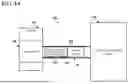
FIG. 2B shows an example system for generating histotripsy therapy pulses using full cycle transmit according to an implementation of the disclosed subject matter. The energy devices 114, energy devices 116, and energy devices 118 may be located at various distances from the drive electronics 110 in the cable 106. For example, the energy devices 114 may be, for example, smaller energy storage devices, such as smaller capacitors, and may be located within 5 cm of the drive electronics 110 within or at the end of the cable 106. The energy devices 116 may be, for example, midsize energy storage devices, including larger capacitors and smaller batteries, and may be located within 20 cm of the drive electronics 110 within or at the end of the cable 106. The energy devices 118 may be large energy storage devices, such as larger batteries, or may be energy supply devices such as power supplies connected to mains power, and may be located within 3 m of the drive electronics 110 within or at the end of the cable 106. The energy devices at various locations may be connected, for example, with the energy devices 118 providing power to the energy devices 116 which provide power to the energy devices 114 which then power the drive electronics 110 and the control circuitry 112.
FIG. 3A shows an example system for generating histotripsy therapy pulses using full cycle transmit according to an implementation of the disclosed subject matter. The handset 104 may include the drive electronics 110. The drive electronics 110 may include electronics and accompanying circuitry that may drive the transducer elements of the transducer array 108 using power from the cable 106. The drive electronics 110 may be located within the handset 104 and may be positioned as close to the transducer array 108 as possible. The drive electronics 110 may include, for example, ASICs with the transmit circuitry built on a high-voltage CMOS process with a gate-drive tolerance of 100V+. The control circuitry 112 for the ASICs in the drive electronics 110 may be, for example, integrated within the ASICs the control circuity controls, or may be digital ASICs or FPGAs closely located to, for example, less than 50 cm, or less than 20 cm, from, the transducer elements of the transducer array 108. The clock rate at which the transmit circuitry of the ASICs of the drive electronics 110 is triggered may be frequency matched to within the −3 dB passband of the acoustic resonating materials of the transducers. The total length of circuit board traces from the ASICs of the drive electronics 110 to the transducer elements of the transducer array 108 may be minimized, for example, less than 5 cm, which may minimize electrical losses due to electrical and acoustic mismatch. This may allow the transducer array 108 to generate pulses with histotripsy-level pressure waves using approximately 100V of drive voltage, lower than the 600-900V of drive voltage that may be needed when using half-cycle, negative transmit pulses. The energy devices 114 may be collocated with the drive electronics 110 and control circuitry 112 within the handset 104, for example, within 20 cm, or within 5 cm.
FIG. 3B shows an example system for generating histotripsy therapy pulses using full cycle transmit according to an implementation of the disclosed subject matter. The control circuitry 112 for the ASICs in the drive electronics 110 may be, for example, digital ASICs or FPGAs closely located to, for example, less than 50 cm, or less than 20 cm, from, the transducer elements of the transducer array 108. The energy devices 114 may be collocated with the drive electronics 110 and control circuitry 112 within the handset 104, for example, within 20 cm, or within 5 cm.
FIG. 3C shows an example system for generating histotripsy therapy pulses using full cycle transmit according to an implementation of the disclosed subject matter. The control circuitry 112 for the ASICs in the drive electronics 110 may be, for example, digital ASICs or FPGAs located part-way along the cable 106 as part of a separate control platform or aggregator 310. The energy devices 114 may be collocated with the drive electronics 110 and within the handset 104, for example, within 20 cm, or within 5 cm, or may be collocated with the control circuitry 112 within or at the end of the cable 106.
FIG. 4A shows an example system for generating histotripsy therapy pulses using full cycle transmit according to an implementation of the disclosed subject matter. The traces 202 may electrically connect the drive electronics 110 to the transducer elements of the transducer array 108. The traces 202 may be less than 5 cm in length, from the drive electronics 110 to the transducer elements of the transducer array 108. This may minimize electrical losses due to electrical and acoustic mismatch. The control circuitry 112 for the drive the drive electronics 110 may be positioned within the handset 104 so that the drive electronics 110 are located less than 50 cm, or less than 20 cm, from the transducer array 108 if the control circuitry 112 is not integrated into the drive electronics 110. The energy devices 114 may be collocated with the drive electronics 110 and control circuitry 112 within the handset 104, for example, within 20 cm, or within 5 cm.
FIG. 4B shows an example system for generating histotripsy therapy pulses using full cycle transmit according to an implementation of the disclosed subject matter. The energy devices 114, the energy devices 116, and the energy devices may be located at various distances from the drive electronics 110 in the handset 104 and the cable 106. For example, the energy devices 114 may be, for example, smaller energy storage devices, such as smaller capacitors, and may be located within 5 cm of the drive electronics 110 within the handset 104. The energy devices 116 may be, for example, midsize energy storage devices, including larger capacitors and smaller batteries, and may be located within 20 cm of the drive electronics 110 within the handset 104 or the cable 106. The energy devices 118 may be large energy storage devices, such as larger batteries, or may be energy supply devices such as power supplies connected to mains power, and may be located within 3 m of the drive electronics 110 within or at the end of the cable 106. The energy devices at various locations may be connected, for example, with the energy devices 118 providing power to the energy devices 116 which provide power to the energy devices 114 which then power the drive electronics 110 and the control circuitry 112.
In some implementations, a secondary control board, or aggregator, may sit in between the handset 104 and the computing and imaging device 102. The secondary control board may include minimal pass-through to everything except the user interface of the ultrasound system and the final drive stage for the generation of signals from the transducer array 108. In some implementations, the aggregator may include some or all of the drive electronics. The aggregator may include any portion of the electronic systems.
Implementations of the presently disclosed subject matter may be implemented in and used with a variety of component and network architectures. FIG. 5 is an example computer 20 suitable for implementations of the presently disclosed subject matter. The computer 20 includes a bus 21 which interconnects major components of the computer 20, such as a central processor 24, a memory 27 (typically RAM, but which may also include ROM, flash RAM, or the like), an input/output controller 28, a user display 22, such as a display screen via a display adapter, a user input interface 26, which may include one or more controllers and associated user input devices such as a keyboard, mouse, and the like, and may be closely coupled to the I/O controller 28, fixed storage 23, such as a hard drive, flash storage, Fibre Channel network, SAN device, SCSI device, and the like, and a removable media component 25 operative to control and receive an optical disk, flash drive, and the like.
The bus 21 allows data communication between the central processor 24 and the memory 27, which may include read-only memory (ROM) or flash memory (neither shown), and random access memory (RAM) (not shown), as previously noted. The RAM is generally the main memory into which the operating system and application programs are loaded. The ROM or flash memory can contain, among other code, the Basic Input-Output system (BIOS) which controls basic hardware operation such as the interaction with peripheral components.
Applications resident with the computer 20 are generally stored on and accessed via a computer readable medium, such as a hard disk drive (e.g., fixed storage 23), an optical drive, floppy disk, or other storage medium 25.
The fixed storage 23 may be integral with the computer 20 or may be separate and accessed through other interfaces. A network interface 29 may provide a direct connection to a remote server via a telephone link, to the Internet via an internet service provider (ISP), or a direct connection to a remote server via a direct network link to the Internet via a POP (point of presence) or other technique. The network interface 29 may provide such connection using wireless techniques, including digital cellular telephone connection, Cellular Digital Packet Data (CDPD) connection, digital satellite data connection, or the like. For example, the network interface 29 may allow the computer to communicate with other computers via one or more local, wide-area, or other networks, as shown in FIG. 6.
Many other devices or components (not shown) may be connected in a similar manner (e.g., document scanners, digital cameras, and so on). Conversely, all of the components shown in FIG. 5 need not be present to practice the present disclosure. The components can be interconnected in different ways from that shown. The operation of a computer such as that shown in FIG. 5 is readily known in the art and is not discussed in detail in this application. Code to implement the present disclosure can be stored in computer-readable storage media such as one or more of the memory 27, fixed storage 23, removable media 25, or on a remote storage location.
FIG. 6 shows an example network arrangement according to an implementation of the disclosed subject matter. One or more clients 10, 11, such as local computers, smart phones, tablet computing devices, and the like may connect to other devices via one or more networks 7. The network may be a local network, wide-area network, the Internet, or any other suitable communication network or networks, and may be implemented on any suitable platform including wired and/or wireless networks. The clients may communicate with one or more servers 13 and/or databases 15. The devices may be directly accessible by the clients 10, 11, or one or more other devices may provide intermediary access such as where a server 13 provides access to resources stored in a database 15. The clients 10, 11 also may access remote platforms 17 or services provided by remote platforms 17 such as cloud computing arrangements and services. The remote platform 17 may include one or more servers 13 and/or databases 15.
More generally, various implementations of the presently disclosed subject matter may include or be implemented in the form of computer-implemented processes and apparatuses for practicing those processes. The disclosed subject matter also may be implemented in the form of a computer program product having computer program code containing instructions implemented in non-transitory and/or tangible media, such as floppy diskettes, CD-ROMs, hard drives, USB (universal serial bus) drives, or any other machine readable storage medium, wherein, when the computer program code is loaded into and executed by a computer, the computer becomes an apparatus for practicing implementations of the disclosed subject matter. Implementations also may be implemented in the form of computer program code, for example, whether stored in a storage medium, loaded into and/or executed by a computer, or transmitted over some transmission medium, such as over electrical wiring or cabling, through fiber optics, or via electromagnetic radiation, wherein when the computer program code is loaded into and executed by a computer, the computer becomes an apparatus for practicing implementations of the disclosed subject matter. When implemented on a general-purpose microprocessor, the computer program code segments configure the microprocessor to create specific logic circuits. In some configurations, a set of computer-readable instructions stored on a computer-readable storage medium may be implemented by a general-purpose processor, which may transform the general-purpose processor or a device containing the general-purpose processor into a special-purpose device configured to implement or carry out the instructions.
Implementations may use hardware that includes a processor, such as a general-purpose microprocessor and/or an Application Specific Integrated Circuit (ASIC) that embodies all or part of the techniques according to embodiments of the disclosed subject matter in hardware and/or firmware. The processor may be coupled to memory, such as RAM, ROM, flash memory, a hard disk or any other device capable of storing electronic information. The memory may store instructions adapted to be executed by the processor to perform the techniques according to embodiments of the disclosed subject matter.
The foregoing description, for purpose of explanation, has been described with reference to specific implementations. However, the illustrative discussions above are not intended to be exhaustive or to limit implementations of the disclosed subject matter to the precise forms disclosed. Many modifications and variations are possible in view of the above teachings. The implementations were chosen and described in order to explain the principles of implementations of the disclosed subject matter and their practical applications, to thereby enable others skilled in the art to utilize those implementations as well as various implementations with various modifications as may be suited to the particular use contemplated.
Claims
1. A system for generating pressure waves for intrinsic, shock scattering, hybrid or boiling histotripsy comprising:
a transducer array comprising transducer elements;
a computing and imaging device; and
a first energy device disposed such that a distance from the first energy storage device to drive electronics is not more than 3 m.
2. The system of claim 1, wherein the drive electronics are disposed within or at the end of a cable that connects the computing and imaging device to a handset that comprises the transducer array and wherein the first energy device is disposed within or at the end of the cable and the distance from the energy devices to the drive electronics is not more than 20 cm.
3. The system of claim 1, wherein the drive electronics are disposed within a handset that comprises the transducer array and wherein the first energy device is disposed within the handset and the distance from the energy devices to the drive electronics is not more than 20 cm.
4. The system of claim 1, further comprising a second energy device and a third energy device, wherein the first energy device is disposed such that distance from the first energy device to the drive electronics is not more than 5 cm, the second energy device is disposed such that the distance from the second energy device to the drive electronics is not more than 20 cm, and the third energy device is disposed such that the distance from the third energy device to the drive electronics is not more than 3 m.
5. The system of claim 4, wherein the first energy device, second energy device, and third energy device are disposed in a cable.
6. The system of claim 4, wherein one or both of the first energy device and the second energy device are disposed in a handset and the third energy device is disposed in a cable.
7. The system of claim 4, wherein the first energy device, the second energy device, and the third energy device are connected such that the third energy device delivers power to the second energy device and the second energy device delivers power to the first energy device.
8. The system of claim 1, wherein the first energy device comprises a capacitor or a battery.
9. The system of claim 1, further comprising control circuitry for the drive electronics.
10. The system of claim 9, wherein the control circuitry is integrated into the drive electronics.
11. The system of claim 9, wherein the control circuitry is disposed no more than 50 cm from the transducer array.
12. The system of claim 9, wherein the control circuitry comprises digital ASICs or FPGAs.
13. The system of claim 1, wherein the drive electronics comprise ASICs comprising transmit circuitry built on a high-voltage CMOS process with a gate-drive tolerance of 100V+.
14. The system of claim 1, wherein the clock rate at which transmit circuitry of the drive electronics is triggered is frequency matched to within the −3 dB passband of the acoustic resonating materials of the transducer elements of the transducer array.
15. The system of claim 1, wherein the drive electronics are used for frequency tuning.
16. The system of claim 1, wherein the transducer array generates balanced transmit pulses or unbalanced transmit pulses to stress negative pressure pulses.
17. The system of claim 1, wherein the transducer array generates full-cycle waves.
18. A handset device comprising:
a transducer array comprising transducer elements;
drive electronics configured to drive the transducer elements;
a first energy device configured to supply power to the drive electronics and disposed such that the distance between the first energy device and the drive electronics is no more than 20 cm; and
control circuitry for the drive electronics.
19. The handset device of claim 18, wherein the control circuitry for the drive electronics is integrated into the drive electronics.
20. The handset device of claim 18, further comprising a second energy device disposed such that the distance between the second energy device and the drive electronics is no more than 20 cm and wherein the distance between the first energy device and the drive electronics is no more than 5 cm.
21. A device comprising:
a handset comprising a transducer array comprising transducer elements;
a cable connected to the handset;
drive electronics disposed within or at the end of the cable, the drive electronics configured to drive the transducer elements;
a first energy device configured to supply power to the drive electronics and disposed in the cable such that the distance between the first energy storage device and the drive electronics is no more than 3 cm; and
control circuitry for the drive electronics.
22. The device of claim 21, further comprising a second energy device disposed within or at the end of the cable and a third energy device disposed within or at the end of the cable, wherein the first energy device is disposed such that distance from the first energy device to the drive electronics is not more than 5 cm, the second energy device is disposed such that the distance from the second energy device to the drive electronics is not more than 20 cm, and the third energy device is disposed such that the distance from the third energy device to the drive electronics is not more than 3 m.
23. The device of claim 22, wherein the first energy device, the second energy device, and the third energy device are connected such that the third energy device delivers power to the second energy device and the second energy device delivers power to the first energy device.
Images & Drawings included:



Sources:
- United States Patent and Trademark Office - verify current appl. status at the USPTO↗
Similar patent applications:
Recent applications in this class:
- » 20260083990 2026-03-26
SEALING COMPONENTS, FOCUSED ULTRASOUND TREATMENT SYSTEM AND OPERATION METHOD, SEMI-DRY ACOUSTIC COUPLING APPARATUS - » 20260077216 2026-03-19
SYSTEMS AND METHODS FOR PERSONALIZED ULTRASOUND NEUROMODULATION - » 20260069895 2026-03-12
METHODS AND SYSTEMS OF IMPROVING MEDICAL CONDITIONS VIA ULTRASOUND NEUROMODULATION OF THE AUTONOMIC NERVOUS SYSTEM - » 20260069894 2026-03-12
Ultrasound Therapy System Guided by Three-Dimensional Ultrasound Images - » 20260069893 2026-03-12
METHODS AND SYSTEMS FOR CONFIRMING FOCUS OF ULTRASOUND BEAMS - » 20260069892 2026-03-12
TRANSDUCER ASSEMBLY FOR GENERATING FOCUSED ULTRASOUND - » 20260061226 2026-03-05
Transducer Probe for Direct Ultrasonic Neuromodulation and Measurement - » 20260061225 2026-03-05
OSTEOPOROSIS TREATMENT TOOL, APPARATUS, AND METHOD - » 20260054100 2026-02-26
FOCUSED ULTRASOUND ACUPOINT THERAPY AND HEALTH CARE DEVICE AND METHOD - » 20260054099 2026-02-26
DEVICE COMPRISING AT LEAST ONE ULTRASONIC VIBRATOR, AND METHOD FOR CONTROLLING SAME
Recent applications for this Assignee:
- » 20260061457 2026-03-05
ULTRASONIC IMAGING AND ENERGY DELIVERY DEVICE AND METHOD - » 20250380929 2025-12-18
GENERATING DATA SETS FOR MACHINE LEARNING USING ULTRASOUND IMAGING - » 20250375625 2025-12-11
DETECTING ULTRASOUND BEAMS USING ULTRASOUND IMAGING - » 20250325839 2025-10-23
ULTRASOUND HISTOTRIPSY WITH FULLY SAMPLED TRANSDUCER ARRAY - » 20250325838 2025-10-23
GENERATING HISTOTRIPSY THERAPY PULSES USING FULL CYCLE TRANSMIT - » 20230249220 2023-08-10
ULTRASONIC IMAGING AND ENERGY DELIVERY DEVICE AND METHOD