ENERGY ABSORBING ELEMENT FOR VEHICLE STRUCTURE
US20260084752A1
2026-03-26
19/335,148
2025-09-22
Smart Summary: A vehicle bumper assembly has a beam that forms the outer and inner surfaces of the bumper. There are crash boxes attached to one end of the beam, which create a space inside them. A flange plate at the end of the crash box has a hole that allows for expansion. Inside the crash box, there is a special structure that gets wider from one end to the other. When a collision happens, this structure pushes through the hole and changes shape to absorb more energy, helping to protect the vehicle. 🚀 TL;DR
Abstract:
A vehicle bumper assembly includes a bumper beam extending from a first beam end to a second beam end to present an outer bumper surface and an inner bumper surface disposed in generally spaced relationship to one another. At least one crash box is disposed adjacent one of the first or second beam ends and extends from a first crash box end secured to the inner bumper surface to a second crash box end to define a crash box cavity. A flange plate is secured to the second crash box end and defines an expansion hole. An energy absorption structure is housed within the crash box cavity and increases in cross-sectional profile from a second absorption end nested within the expansion hole to a first absorption end secured to the outer bumper surface for being pushed through and radially deforming the expansion hole during an impact to absorb additional energy.
Applicant:
Interested in similar patents?
Get notified when new applications in this technology area are published.
Classification:
B62D21/157 » CPC main
Understructures, i.e. chassis frame on which a vehicle body may be mounted having impact absorbing means, e.g. a frame designed to permanently or temporarily change shape or dimension upon impact with another body for side impacts
B60R19/34 » CPC further
Wheel guards; Radiator guards, e.g. grilles ; Obstruction removers; Fittings damping bouncing force in collisions; Bumpers, i.e. impact receiving or absorbing members for protecting vehicles or fending off blows from other vehicles or objects; Arrangements for mounting bumpers on vehicles comprising yieldable mounting means destroyed upon impact, e.g. one-shot type
B62D25/025 » CPC further
Superstructure or monocoque structure sub-units; Parts or details thereof not otherwise provided for; Side panels Side sills thereof
B62D27/023 » CPC further
Connections between superstructure sub-units rigid Assembly of structural joints
B62D21/15 IPC
Understructures, i.e. chassis frame on which a vehicle body may be mounted having impact absorbing means, e.g. a frame designed to permanently or temporarily change shape or dimension upon impact with another body
B62D25/02 IPC
Superstructure or monocoque structure sub-units; Parts or details thereof not otherwise provided for Side panels
B62D27/02 IPC
Connections between superstructure sub-units rigid
Description
CROSS REFERENCE TO RELATED APPLICATIONS
This U.S. Non-Provisional Patent Application claims the benefit of and priority to U.S. Provisional Patent Application Ser. No. 63/698,584 filed Sep. 25, 2024, the contents of which are incorporated herein by reference in its entirety.
TECHNICAL FIELD
This subject invention is related to a vehicle structure/body-in-white-component, such as a vehicle bumper assembly or a vehicle side structure. More specifically, the subject invention is related to an energy absorption structure for use in a vehicle structure.
BACKGROUND OF THE INVENTION
Vehicle structures are known for providing energy absorbing characteristics. For example, a vehicle bumper assembly is a component of the vehicle frame and comprises a bumper beam and a pair of crash boxes. The crash boxes are positioned on the end of a crossmember of a vehicle body structure and are also secured to the bumper beam so as to absorb impact loads of certain predetermined values during a front or rear impact, thereby reducing or eliminating deformation of the vehicle body structure.
Vehicle side structures, such as a rocker panel, are also part of the vehicle body-in-white, extend across the side of the vehicle, and are designed to absorb energy during a side impact.
However, present vehicle structures and their related components often are not capable of fulfilling the increasing targets in energy absorption and efficiency, which are driven by the ever increasing vehicle weights and crash requirements. Thus, there remains a significant and continuing need for the design of vehicle body-in-white which incorporate energy absorption structures capable of meeting these improved energy absorption characteristics.
SUMMARY OF THE INVENTION
A vehicle bumper assembly in accordance with the subject disclosure includes a bumper beam extending from a first beam end to a second beam end to present an outer and inner bumper surface disposed in opposing and generally spaced relationship to one another. At least one crash box is disposed adjacent one of the first or second beam ends and extends from a first crash box end secured to the inner bumper surface to a second crash box end to define a crash box cavity. A flange plate is secured to the second crash box end and defines an expansion hole. An energy absorption structure is housed within the crash box cavity and increases in cross-sectional profile from a second absorption end nested within the expansion hole to a first absorption end secured to the outer bumper surface for being pushed through and radially deforming the expansion hole to absorb additional energy during a frontal or rear impact.
A vehicle side structure in accordance with the subject disclosure includes an outer side surface and an inner side surface disposed in spaced relationship with one another to define a side structure cavity. The inner side surface defines at least one expansion hole, and at least one energy absorption structure is housed within the side structure cavity. The at least one energy absorption structure increases in cross-sectional profile from a second absorption end nested within the expansion hole to a first absorption end secured to the outer side surface for being pushed through and radially deforming the expansion hole to absorb additional energy during a side impact.
These and other features and advantages of this invention will become more apparent to those skilled in the art from the detailed description of a preferred embodiment. The drawings that accompany the detailed description are described below.
BRIEF DESCRIPTION OF THE DRAWINGS
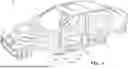
FIG. 1 is a perspective view of a vehicle structure including a bumper beam assembly and a vehicle side structure each housing a plurality of energy absorption structures in accordance with an aspect of the disclosure, and with each energy absorption structure increasing in cross-sectional profile from a second absorption end nested or pressed within an expansion hole defined by an inner side surface to a first absorption end secured to an outer side surface.
FIG. 2 is a perspective front view of the bumper beam assembly illustrating the energy absorption structure housed within a crash box and increasing in cross-sectional profile from a second absorption end nested or pressed within an expansion hole defined by a flange plate to a first absorption end secured to an outer bumper surface of a bumper beam;
FIG. 3 is a perspective rear view of the bumper beam assembly in an un-deformed condition;
FIG. 4 is a side cross-sectional view of the bumper assembly in the un-deformed condition and illustrating a first weld seam securing the first absorption end to the outer bumper surface and an optional second weld seam securing the energy absorption structure to an inner bumper surface of the bumper beam;
FIG. 5 is a perspective rear view of the bumper beam assembly in an deformed condition; and
FIG. 6 is a side cross-sectional view of the bumper assembly in the deformed condition to illustrate the increasing cross-sectional profile of the energy absorption structure being pushed through and radially deforming the expansion hole to absorb additional energy during a frontal or rear impact.
DETAILED DESCRIPTION OF THE PREFERRED EMBODIMENTS
Referring to the Figures, wherein like numerals indicate corresponding parts throughout the several views, FIG. 1 is a perspective view of a vehicle structure 10 including a bumper assembly 12 extending across the front (or rear) of the vehicle structure 10 and a vehicle side structure 14 (e.g., rocker panel) extending across the side of the vehicle 10. The vehicle structure 10 is known for providing energy absorbing characteristics, and thus as further illustrated in FIG. 1, in accordance with the subject disclosure at least one of the bumper assembly 12 or the vehicle side structure 14 (and preferably both) include at least one energy absorption structure 16 for absorbing additional energy during axial and non-axial loads on the bumper assembly 12 or the vehicle side structure 14 during a respective front, rear or side impact.
As best illustrated in FIGS. 2-3, the bumper assembly 12 includes a bumper beam 18 extending laterally across a front (or rear) of the vehicle structure 10 from a first beam end 20 to a second beam end 22 to present an outer bumper surface 24 and an inner bumper surface 26 disposed in opposing and spaced relationship to one another to define a bumper cavity therebetween. A pair of crash boxes 28 are disposed adjacent a respective one of the first or second beam ends 20, 22 and each extend from a first crash box end 30 secured to the inner bumper surface 26 to a second crash box end 32 to define a crash box cavity 34. As best illustrated in FIGS. 2-3, the crash boxes 28 can have a generally rectangular cross-sectional profile, such as defined relative to an axis A extending between the first and second crash box ends 30, 32. However, the crash boxes 28 can have other cross-sectional profiles, without departing from the scope of the subject disclosure.
The bumper assembly 12 also includes a pair of flange plates 36 each secured to the second crash box end 32 of a respective one of the crash boxes 28 for use in connecting the bumper assembly 12 to the vehicle structure 10, and in particular the body in white. The pair of flange plates 36 each define an expansion hole 38, which can be disposed in aligned relationship with the axis A extending through the crash box cavity 34. However, arrangement of the expansion hole 38 can occur anywhere along the flange plate 36, particularly if the crash boxes 28 do not extend along an axis A.
The bumper assembly 12 includes at least one energy absorption structure 16, and preferably a pair of the energy absorption structures 16 each housed within a respective one of the crash boxes 28 and extending within the crash box cavity 34 from a first absorption end 42 secured to the outer bumper surface 26 of the bumper beam 18 to a second absorption end 44 nested or pressed within the expansion hole 38 of the flange plate 36. If the crash boxes 28 extend along an axis A, the energy absorption structures 16 can also extend along this axis A. However, the energy absorption structures 16 can be housed within any location of the crash boxes 28 without departing from the scope of the subject disclosure. As best illustrated in FIG. 4, the first absorption end 42 can be secured to the outer bumper surface 24 via a first weld seam 46. As further shown in FIG. 4, the energy absorption structure 16 also extends through the bumper beam 18 and can be secured to the inner bumper surface 26 via a second weld seam 47, either placed on an outer or inner side of the inner bumper surface 26.
As illustrated in FIGS. 2-6, a cross-sectional profile of the energy absorption structure 16 increases in size as the energy absorption structure 16 extends from the second absorption end 44 (nested within the expansion hole 38) to the first absorption end 42 (secured to the outer bumper surface 24). For example, the energy absorption structure 16 can be conical and taper radially outwardly as the energy absorption structure extends from the second absorption end 44 to the second absorption end 42. However, as will be appreciated in view of the following disclosure, the energy absorption structure 16 can have other increasing, cross-sectional profiles (e.g., a stepped drill shape), without departing from the scope of the subject disclosure and the related function of the energy absorption structure 16.
More specifically, with reference to FIGS. 5-6, during a frontal or rear crash event, the pair of crash boxes 28 start to buckle and to absorb crash loads/energy. At the same time, the energy absorption structures 16 are pushed through and radially deform (i.e., expand) their respective expansion holes 38 in the flange plate 36 as a result of the increasing cross-sectional profile of the energy absorption structure 16 being pushed and passed through the expansion hole 38 by the force of the frontal or rear impact (See FIG. 6). Put another way, as the increasing cross-sectional profile of the energy absorption structure 16 passes through the expansion hole 38, this increase in size establishes and imposes a radial force that expands the expansion hole 38. For example, if the energy absorption structure 16 has a conical cross-sectional shape, the expansion hole 38 initially has an original (un-deformed) diameter D1 (See FIG. 4) which is deformed to a larger, radially expanded diameter D2 (See FIG. 6) as the energy absorption structure 16 is pushed through the expansion hole 38. This radial expansion and deformation of the expansion hole 38 by the energy absorption structures 16 advantageously provides the absorption of additional energy over that absorbed by the buckling crash boxes 28 themselves, and provides for increased overall crash efficiency that leads to reduced barrier intrusion and a reduced crash structure size for the bumper assembly 12.
For example, the increased crash box efficiency, as a result of the inclusion of the energy absorption structure 16, provides the ability to stop the barrier earlier during the crash event (less intrusion of the crash barrier into the vehicle). This then leads to the ability to reduce a length of the crash boxes 28, while still ensuring that the components in the “safety zone”—like the cooler module, headlights, etc.—are secured in a low-speed crash event. And by reducing the length of the crash boxes 28, the bumper beam 18 can be shifted backwards as well, so the vehicle overhang (distance from front wheels to front vehicle fascia) can be reduced, leading to material, weight and cost savings.
Advantageously, a force/displacement curve representing an impact of the energy absorption device 16 on the expansion hole 38 can be easily adjusted by modifying the geometry (i.e., cross-sectional profile) of the energy absorption device 16. Put another way, the geometry of the energy absorption device 16 can be tailored to meet the desired crash performance for the crash boxes 28, and the related bumper assembly 12.
The housing of the energy absorption structure 16 within the crash box 28 also allows the energy absorption structure 16 to provide an additional guiding effect for the crash box 28 as it is collapsed or buckled during axial or non-axial loads. Put another way, the energy absorption structure 16 advantageously guides a collapse of the crash box 28 during the frontal or rear impact, providing an improved and more predictable folding behavior for the crash box 28, even under non-axial crash loads.
As best illustrated in FIGS. 2 and 4, the first end 42 of the energy absorption structure 16, when implemented in the bumper assembly 12, can also define an inner thread 48 for receiving the mounting of a towing hook.
As illustrated in FIG. 1, the energy absorption structure 16 can also be implemented in a vehicle side structure 14 for the vehicle structure 10 to provide improved crash efficiency and lead to increased battery and passenger safety during a side impact, in accordance with the aforementioned principles. More specifically, as best illustrated in FIG. 1, the vehicle side structure 14 (e.g., a rocker panel) extends from a front end 50 (to be disposed adjacent the front wheels) to a rear end 52 (to be disposed adjacent the rear wheels) to present an outer side surface 54 and an inner side surface 56 disposed in spaced relationship with one another and collectively defining a side structure cavity 58.
The inner side surface 56 defines at least one expansion hole 38, and at least one energy absorption structure 16 is disposed within the side structure cavity 58 and extends from a first absorption end 42 secured to the outer side surface 54 to a second absorption end 44 nested or pressed within the at least one expansion hole 38. Similar to the embodiment described above in relation to the bumper assembly 12, the cross-sectional profile of the energy absorption structure 16 increases in size as the energy absorption structure 16 extends from the second absorption end 44 (nested within the expansion hole 38) to the first absorption end 42 (secured to the outer side surface 54).
During a side crash event, the vehicle side structure 14 starts to collapse and to absorb crash loads/energy. At the same time, the energy absorption structure 16 gets pushed through the expansion hole 38, and due to friction and expansion of the expansion hole 38, additional energy will be absorbed. Put another way, the increasing cross-sectional profile of the energy absorption structure 16 being passed through the expansion hole 38 imposes a radial force that expands the expansion hole 38. This expansion and deformation of the expansion hole 38 by the energy absorption structure 16 advantageously provides the absorption of additional energy over that absorbed by the vehicle side structure 14 itself, and provides for increased overall crash efficiency. As can be seen by FIG. 1, the energy absorption structure 16 will then intrude into the underbody (body in white) or battery structure 60.
As best illustrated in FIGS. 1 and 6, the vehicle side structure 14 preferably includes a plurality of energy absorption structures 16 disposed within the side structure cavity 58 in spaced relationship with one another between the front and rear ends 50, 52. In this arrangement, the inner side surface 56 would define a plurality of expansion holes 38 each for receiving a second absorption end 44 of a respective one of the energy absorption structures 16. During the side impact, the energy absorption structures 16 located closest and adjacent to the area of impact would be pushed through their respective expansion holes 38 to absorb additional energy for the vehicle side structure 14.
While preferred embodiments of the present invention are shown and described, it is envisioned that those skilled in the art may devise various modifications of the present invention without departing from the spirit and scope of the invention. In other words, the subject disclosure it is not intended to be exhaustive or to limit the disclosure. Individual elements or features of a particular embodiment are generally not limited to that particular embodiment, but, where applicable, are interchangeable and can be used in a selected embodiment, even if not specifically shown or described. The same may also be varied in many ways. Such variations are not to be regarded as a departure from the disclosure, and all such modifications are intended to be included within the scope of disclosure.
Claims
What is claimed is:1. A vehicle bumper assembly comprising:
a bumper beam extending from a first beam end to a second beam end to present an outer bumper surface and an inner bumper surface disposed in opposing and generally spaced relationship to one another;
at least one crash box disposed adjacent one of said first or second beam ends and extending from a first crash box end secured to said inner bumper surface to a second crash box end to define a crash box cavity;
a flange plate secured to said second crash box end and defining an expansion hole; and
an energy absorption structure housed within said crash box cavity and increasing in cross-sectional profile from a second absorption end nested within said expansion hole to a first absorption end secured to said outer bumper surface for being pushed through and radially deforming said expansion hole during a frontal or rear impact to absorb additional energy.
2. The vehicle bumper assembly as set forth in claim 1, wherein said energy absorption structure is conical shaped and tapers radially outwardly from said second absorption end to said first absorption end.
3. The vehicle bumper assembly as set forth in claim 2, wherein said expansion hole having an original un-deformed diameter being deformed to a radially expanded diameter being larger than the original un-deformed diameter as said energy absorption structure is pushed through said expansion hole.
4. The vehicle bumper assembly as set forth in claim 1, wherein said first absorption end of said energy absorption structure is secured to said outer bumper surface via a first weld seam.
5. The vehicle bumper assembly as set forth in claim 4, wherein said energy absorption structure is secured to said inner bumper surface via a second weld seam.
6. The vehicle bumper assembly as set forth in claim 1, wherein said crash box extends along an axis between said first and second crash box ends, and said energy absorption structure and said expansion hole are aligned on the axis.
7. The vehicle bumper assembly as set forth in claim 1, wherein said at least one crash box includes a pair of crash boxes each disposed adjacent a respective one of said first and second beam ends and each housing a respective energy absorption structure.
8. A vehicle side structure comprising:
an outer side surface and an inner side surface disposed in spaced relationship with one another to define a side structure cavity;
said inner side surface defining at least one expansion hole; and
at least one energy absorption structure housed within said side structure cavity and increasing in cross-sectional profile from a second absorption end nested within said expansion hole to a first absorption end secured to said outer side surface for being pushed through and radially deforming said expansion hole during a side impact to absorb additional energy.
9. The vehicle side structure as set forth in claim 8, wherein said inner side surface defines a plurality of expansion holes, and said energy absorption structure includes a plurality of energy absorption structures housed within said side structure cavity and each extending from first absorption ends secured to said outer side surface to second absorption ends nested within a respective one of said plurality of expansion holes.
10. The vehicle side structure as set forth in claim 9, wherein each of said plurality of energy absorption structures are conical shaped and taper radially outwardly from said second absorption end to said first absorption end.
11. The vehicle side structure as set forth in claim 8, wherein the vehicle side structure is a rocker panel.
12. A vehicle structure comprising:
an outer surface and an inner surface disposed in spaced relationship with one another to define a structure cavity;
said inner surface defining at least one expansion hole; and
an energy absorption structure housed within said structure cavity and increasing in cross-sectional profile from a second absorption end nested within said expansion hole to a first absorption end secured to said outer surface for being pushed through and radially deforming said expansion hole during an impact to absorb additional energy.
13. The vehicle structure as set forth in claim 11, wherein said energy absorption structure is conical shaped and tapers radially outwardly from said second absorption end to said first absorption end.
14. The vehicle structure as set forth in claim 12, said first absorption end of said energy absorption structure is secured to said outer surface via a weld seam.
15. The vehicle structure as set forth in claim 12, wherein said expansion hole having an original un-deformed diameter being deformed to a radially expanded diameter being larger than the original un-deformed diameter as said energy absorption structure is pushed through said expansion hole.
Images & Drawings included:



Sources:
- United States Patent and Trademark Office - verify current appl. status at the USPTO↗
Recent applications in this class:
- » 20260084753 2026-03-26
CRASH-ABSORBER STRUCTURE FOR USE IN A MOTOR VEHICLE - » 20260062058 2026-03-05
SIDE MEMBER OF VEHICLE AND SUBFRAME FOR VEHICLE - » 20260042485 2026-02-12
INTEGRALLY REINFORCED SILL STRUCTURE FOR A VEHICLE, AND VEHICLE - » 20250388268 2025-12-25
VEHICLE BASE STRUCTURE - » 20250368265 2025-12-04
VEHICLE BASE STRUCTURE - » 20250360966 2025-11-27
LOWER STRUCTURE OF VEHICLE - » 20250333112 2025-10-30
ELECTRICALLY POWERED VEHICLE - » 20250319928 2025-10-16
VEHICLE LOWER PART STRUCTURE - » 20250313270 2025-10-09
SHOCK ABSORPTION STRUCTURE FOR VEHICLE BODY - » 20250313269 2025-10-09
AUTOMOTIVE BODY SIDE STRUCTURE