X-RAY FLUORESCENCE ANALYZER
US20260086050A1
2026-03-26
19/340,744
2025-09-25
Smart Summary: An X-ray fluorescence analyzer is designed to quickly analyze samples using X-rays. It has an X-ray source that sends primary X-rays to the sample, which then emits secondary X-rays. A detector measures the intensity of these secondary X-rays. The system includes a controller that calculates the expected intensity of the secondary X-rays based on the sample's assumed composition. By adjusting the calculations, the controller finds the actual composition of the sample to match the measured intensity with the theoretical one. 🚀 TL;DR
Abstract:
An objective is to perform sample analysis at high speed by incorporating optical geometrical factors of an optical system in fluorescence X-ray analysis/A fluorescence X-ray analysis apparatus includes an X-ray source that irradiates a sample with primary X-rays, a detector (measurement means) that obtains a measured intensity of secondary X-rays, a controller (theoretical intensity calculation unit) that calculates theoretical intensity of the secondary X-rays based on an assumed composition, and a controller (calculation unit) that calculate a composition by modifying calculation of the assumed composition in successive approximation so that the measured intensity matches theoretical intensity, wherein the controller calculates a theoretical intensity by multiplying by detection efficiency of the fluorescence X-rays, which depends on a sample depth from the surface of the sample irradiated with the primary X-rays to the point inside the sample where the secondary X-rays are generated.
Inventors:
- Masaki Tatsumi 3 🇯🇵 Tokyo, Japan
- Yuki KANAZAWA 2 🇯🇵 Tokyo, Japan
- Oleg SHIROKOBROD 1 🇫🇮 Espoo, Finland
- Masaki IZUMIYAMA 1 🇯🇵 Tokyo, Japan
Applicant:
Interested in similar patents?
Get notified when new applications in this technology area are published.
Classification:
G01N23/223 » CPC main
Investigating or analysing materials by the use of wave or particle radiation, e.g. X-rays or neutrons, not covered by groups – , or by measuring secondary emission from the material by irradiating the sample with X-rays or gamma-rays and by measuring X-ray fluorescence
Description
CROSS REFERENCE TO RELATED APPLICATION
The present application claims priority to Japanese Patent Applications No. JP 2024-167338, filed on Sep. 26, 2024, the entire contents of which are incorporated herein for all purposes by this reference.
BACKGROUND
Technical Field
The present disclosure relates to an X-ray fluorescence analyzer for analyzing the composition or area density of a sample by the Fundamental Parameter Method (FP method).
Description of the Related Art
In order to determine the elemental composition in a sample, an FP method that converges the assumed composition by comparing the theoretical intensity of secondary X-rays calculated based on assumed elemental composition with a measured intensity is known. The theoretical intensity is obtained by calculation using parameters such as the size of a sample and the intensity and incident angle of primary X-rays emitted onto each position on the sample surface. The theoretical intensity may also be obtained by simulation and calculation of the theoretical intensity of secondary X-rays for each optical path to incorporate geometric factors of an optical system (for example, see Patent Document 1).
PRIOR ART DOCUMENT
Patent Document
-
- (Patent Document 1) Japanese Patent Application Publication No. 2006-292399
SUMMARY
The simulation for obtaining theoretical intensity as described above is performed for each optical path of primary X-rays and is also repeatedly conducted to achieve convergence of an assumed composition. Therefore, in conventional X-ray fluorescence analyzers, the time required for analysis becomes longer.
The present disclosure has been made in view of the above points and an objective of the present disclosure is to enable high-speed sample analysis.
In order to achieve the objectives, the present disclosure provides an X-ray fluorescence analyzer for analyzing a sample that includes: an X-ray source configured to irradiate a sample with primary X-rays; a unit configured to obtain a measured intensity by measuring intensity of secondary X-rays generated from the sample; a theoretical intensity calculation unit configured to calculate theoretical intensity of secondary X-rays generated from each element in the sample based on an assumed composition; and a calculation unit configured to calculate a composition of the sample by modifying calculation of the assumed composition in successive approximation so that the theoretical intensity matches the measured intensity matches the theoretical intensity, wherein the theoretical intensity calculation unit calculates the theoretical intensity by multiplying by detection efficiency of the fluorescence X-rays depending on a sample depth that is a distance from a surface of the sample irradiated with the primary X-rays to a point inside the sample where the secondary X-rays are generated.
Accordingly, it is possible to obtain high-accuracy theoretical intensity at high speed and analyze a sample even without performing Monte Carlo simulation.
In the present disclosure, it is possible to perform sample analysis at high speed.
BRIEF DESCRIPTION OF THE DRAWINGS
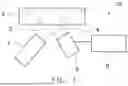
FIG. 1 is a schematic diagram showing the configuration of an X-ray fluorescence analyzer;
FIG. 2 is a flowchart showing an example of an analysis operation;
FIG. 3 is a graph showing an example of the relationship between sample depth and detection efficiency; and
FIG. 4 is an explanatory diagram showing an example of preparatory measurement.
DETAILED DESCRIPTION
(Schematic Configuration of X-Ray Fluorescence Analyzer)
Hereinafter, embodiments of the present disclosure are described with reference to drawings.
As shown in FIG. 1, an X-ray fluorescence analyzer 10 includes: an X-ray source 1, such as an X-ray tube, that irradiates a sample 3 with primary X-rays 2; a detector 5 (measurement unit) that obtains a measured intensity by measuring the intensity of secondary X-rays 4, such as fluorescence X-rays or scattered rays, generated from the sample 3; and a controller 6 (theoretical intensity calculation unit, calculation unit) that performs processing such as calculating elemental composition in the sample 3. In the X-ray fluorescence analyzer 10, for example, analysis of the sample 3 is performed as follows.
(Analysis Operation: Preparatory Process)
First, as shown in FIG. 2, the following processes are performed as preparatory steps.
-
- (S1) A relationship between a sample depth (sample height) (z), which is the distance from the surface of the sample 3 irradiated with the primary X-rays 2 to the point inside the sample 3 where the secondary X-rays 4 are generated, and detection efficiency dΩd(z) of the fluorescent X-rays, for example, the relationship shown in FIG. 3 is obtained. This relationship is specifically obtained through simulation or actual measurement, which will be described later.
- (S2) As an approximation of the above relationship, for example, an exponential function shown in the following Equation (1) or a polynomial shown in Equation 2 is obtained. Here, Ω∞, Ω0, α0, etc. in Equations (1) and (2) are adjustment coefficients.
[ Equation 1 ] d Ω d ( z ) = Ω ∞ + Ω 0 exp ( - z d ) ( 1 ) [ Equation 2 ] d Ω d ( z ) = a 0 + a 1 * z + a 2 * z 2 + ⋯ ( 2 )
The preparatory process as described above needs only to be performed once, for example, when the X-ray fluorescence analyzer 10 is introduced and used for the first time. That is, the detection efficiency of the fluorescence X-rays may be obtained in advance and stored to be used for a plurality of sample analyses.
(Analysis Operation: Quantitative Calculation Operation)
The flow of the quantitative calculation itself is the same as the typical FP method, but the operations performed at that time are carried out as described below, which enables high-speed analysis.
-
- (S3) First, a measured intensity of the secondary X-rays is measured for the sample 3.
- (S4) Further, as in the typical FP method, the composition of the sample 3 is assumed.
- (S5) Theoretical intensity of the secondary X-rays is calculated based on the assumed sample composition. Specifically, the following calculations are performed.
Here, generally, that is, the intensity I of the fluorescent X-rays, when the detection efficiency dΩd of the fluorescence X-rays according to the sample depth z is not taken into account, can be expressed by the following Equation (3). Further, in Equation (3), E is the energy of incident X-rays, p represents the density of the sample to be measured, t is the thickness of the sample to be measured, μ(E) is a physical parameter of X-rays (mass absorption coefficient with respect to the energy of the incident X-rays), μ(Ei) is a physical parameter of X-rays (mass absorption coefficient with respect to the energy of the generated fluorescent X-rays), φ1 and φ2 are the incident angle and the exit angle of the X-rays with respect to the sample 3, respectively, I0(E) is the intensity of the incident (primary) X-rays, and Qi(E) is the generation efficiency of the fluorescence X-rays for the quantitative element.
[ Equation 3 ] I i ( E ) ∝ I 0 ( E ) × Q i ( E ) × ∫ 0 t exp ( - ρ χ ( E ) x ) dz ( 3 ) χ = ( μ ( E ) sin ψ 1 + μ ( E i ) sin ψ 2 )
Here, the term in Equation (3) that depends on the sample depth is defined as g(E) as shown in Equation (4).
[ Equation 4 ] g ( E ) = ∫ 0 t exp { - ρχ ( E ) } dz ( 4 )
For the term g(E) depending on the sample depth, in the present embodiment, a expression g(E)′ is used, which is corrected by being multiplied by the detection efficiency dΩd, as shown in the following Equation (5).
[ Equation 5 ] g ( E ) ′ = ∫ 0 t exp { - ρχ ( E ) z } d Ω d ( z ) dz ( 5 )
In Equation (5), a highly accurate theoretical intensity is obtained by calculating over the sample depth z using numerical integration methods such as the trapezoidal rule or Simpson's rule with an appropriate step size.
Further, when dΩd in Equation (5) is expressed as an exponential function of the sample depth z, as in Equation (1), g(E)′ can be formulated as shown in the following Equation (6) which is the result of integration.
[ Equation 6 ] g ( E ) ′ = 1 ρ ( Ω ∞ χ ( 1 - e - ρ * χ * d ) + Ω 0 1 ρ t + χ ( 1 - e - ( 1 t + ρ + χ ) * d ) ) ( 6 )
Further, when dΩd in Equation (5) is expressed as polynomial of the sample depth z, as in Equation (2), g(E)′ can be formulated as shown in the following Equation (7) which is the result of integration).
[ Equation 7 ] g ( E ) ′ = a 0 * I 0 + a 1 * I 1 + a 2 * I 2 ( 7 )
-
- where I0, I1, and I2 in Equation (7) are the following Equations (8) to (10).
[ Equation 8 ] I 0 = ∫ 0 d e - ρ * χ * x dx = 1 ρ * χ ( 1 - e - ρ * χ * t ) ( 8 ) [ Equation 9 ] I 1 = 1 ρ * χ ( I 0 - de - ρ * χ * t ) ( 9 ) [ Equation 10 ] I 2 = 1 ρ * χ ( 2 I 1 - d 2 e - ρ * χ * t ) ( 10 )
By obtaining theoretical intensity through such an algebraic expression developed from integration, it is possible to obtain a highly accurate theoretical intensity that considers detection efficiency depending on the sample depth z at high speed compared to cases involving Monte Carlo simulations.
-
- (S6) The theoretical intensity and the measured intensity are compared, and the assumed sample composition is modified to match them in successive approximation, after which the steps following (S3) are repeated.
Detailed Example 1 of Preliminary Preparation
An example of obtaining the relationship between the sample depth z, which is the distance from the surface of sample 3 to the point where the secondary X-rays 4 are generated inside sample 3, and the fluorescence X-ray detection efficiency dΩd(z), as shown in FIG. 3 by Monte Carlo simulation, is explained.
For the irradiation region of the primary X-rays generated from the tube of the X-ray source 1, the detection region observable by the detector 5 (where secondary X-rays can enter the detector 5), or an observable region in which both regions overlap, at each plane of the sample depth z with a predetermined interval (step), the position where the secondary X-rays are generated and their propagation angles are determined using random numbers, and if the secondary X-rays enter the detection window of the detector 5 and can be observed, they are counted. The determination of such positions and counting are repeated a sufficient number of times to calculate the total count. Further, the above process is repeated at step intervals for each sample depth z.
Accordingly, the relationship between the sample depth (sample height) and the detection efficiency (detector solid angle), as shown in FIG. 3, is obtained.
Detailed Example 2 of Preliminary Preparation
The relationship between the sample depth z and the fluorescence X-ray detection efficiency dΩd(z) can also be obtained by actual measurement. For example, as shown in FIG. 4, the intensity of the secondary X-rays incident on the detector 5 is measured at each sample depth z while varying the distance between the fluorescence X-ray analysis apparatus 10 and the surface of the sample 3 with predetermined step intervals, for example, by installing a spacer 7 between the target fluorescence X-ray analysis apparatus 10 and sample 3. Here, the sample 3 may differ from the actual sample to be actually analyzed, but it is preferable to use elements with large X-ray absorption coefficients, such as copper (Cu) or zinc (Zn), because it is easier to measure secondary X-rays mainly from the surface of the sample 3 (short analysis depth). Further, it is necessary to select fluorescence X-rays with energy that allows neglecting absorption by air.
Even by such actual measurement, the relationship between the sample depth (sample height) and the detection efficiency (detector solid angle), as shown in FIG. 3, is obtained.
The simulation as described above only needs to be performed once for the fluorescence X-ray analysis apparatus 10 and does not need to be performed for each actual analysis of the sample 3, so it is possible to facilitate faster analysis.
Claims
What is claimed is:1. An X-ray fluorescence analyzer for analyzing a sample, comprising:
an X-ray source configured to irradiate a sample with primary X-rays;
a unit configured to measure intensity of secondary X-rays generated from the sample;
a theoretical intensity calculation unit configured to calculate theoretical intensity of secondary X-rays generated from each element in the sample based on an assumed composition; and
a calculation unit configured to calculate a composition of the sample by modifying calculation of the assumed composition in successive approximation so that the theoretical intensity matches the intensity of the secondary X-rays that was measured,
wherein the theoretical intensity calculation unit calculates the theoretical intensity based on a product of detection efficiency of the fluorescence X-rays depending on a sample depth, intensity of the primary X-rays, and X-ray generation efficiency of quantitative elements, the sample depth being a distance from a surface of the sample irradiated with the primary X-rays to a point inside the sample where the secondary X-rays are generated; and
detection efficiency of the fluorescence X-rays is obtained in advance and stored to be used for a plurality of sample analyses.
2. The X-ray fluorescence analyzer according to claim 1, wherein the detection efficiency is approximated with an exponential function or a polynomial, and the theoretical intensity is calculated based on an integral of a product of the approximated exponential function or polynomial, intensity of primary X-rays, and X-ray generation efficiency of quantitative elements.
3. The X-ray fluorescence analyzer according to claim 1, wherein the theoretical intensity is obtained by calculating an integral of the product of detection efficiency of fluorescence X-rays, intensity of primary X-rays, and X-ray generation efficiency of quantitative elements over the sample depth using a numerical integration method.
4. The X-ray fluorescence analyzer according to claim 1, wherein the detection efficiency is obtained based on intensity, obtained through Monte Carlo simulation or actual measurement, of fluorescence X-rays generated from respective points inside the sample.
5. The X-ray fluorescence analyzer according to claim 2, wherein the detection efficiency is obtained based on intensity, obtained through Monte Carlo simulation or actual measurement, of fluorescence X-rays generated from respective points inside the sample.
6. The X-ray fluorescence analyzer according to claim 3, wherein the detection efficiency is obtained based on intensity, obtained through Monte Carlo simulation or actual measurement, of fluorescence X-rays generated from respective points inside the sample.
Images & Drawings included:





Sources:
- United States Patent and Trademark Office - verify current appl. status at the USPTO↗
Similar patent applications:
- » 20060215810
Fluorescent X-ray analyzer, fluorescent X-ray analysis method, and fluorescent X-ray analysis program - » 20160146745
X-ray fluorescence analyzer and X-ray fluorescence analyzing method - » 20120051507
X-ray fluorescence analyzer and X-ray fluorescence analysis method - » 20210161493
X-ray fluorescence analyzer and X-ray fluorescence analysis method - » 20240385130
X-RAY FLUORESCENCE ANALYZER AND X-RAY APERTURE MEMBER - » 20210255123
X-ray fluorescence analyzer, and a method for performing X-ray fluorescence analysis - » 20050232393
Sample retainer for x-ray fluorescence analysis, x-ray fluorescence analyzing method using the same and x-ray fluorescence spectrometer therefor - » 20210255121
X-ray fluorescence analyzer and a method for performing an x-ray fluorescence analysis - » 20210325321
X-ray fluorescence analyzer system and a method for performing X-ray fluorescence analysis of an element of interest in slurry - » 20070269003
X-ray fluorescence analyzer having means for producing lowered pressure, and an X-ray fluorescence measurement method using lowered pressure
Recent applications in this class:
- » 20260071979 2026-03-12
METHOD OF FORMING SI/SIGE SUPERLATTICE STRUCTURES USING XRF MEASUREMENTS AND PROCESS CONTROL TECHNIQUES - » 20260056152 2026-02-26
Sample Container, Fluorescent X-Ray Analyzer, and Measurement Method - » 20260016428 2026-01-15
INTELLIGENT STOPPING CRITERIA FOR ENERGY DISPERSIVE X-RAY ACQUISITION - » 20250389677 2025-12-25
DEVICE AND METHOD FOR DETECTING FOREIGN SUBSTANCES IN ELECTRODE ACTIVE MATERIAL - » 20250369905 2025-12-04
SYSTEM AND METHOD FOR XRF INSPECTION - » 20250354943 2025-11-20
Analysis of Low-energy X-ray Fluorescence Emitted from Sample in Atmospheric Environment - » 20250334531 2025-10-30
METHOD AND MEASURING DEVICE FOR MEASURING A TEST OBJECT BY MEANS OF X-RAY FLUORESCENCE - » 20250305971 2025-10-02
X-RAY METHODS AND SYSTEMS FOR SEMICONDUCTOR SUBSTRATE ALIGNMENT - » 20250290877 2025-09-18
METHOD AND APPARATUS FOR CHEMICAL ANALYSIS - » 20250290876 2025-09-18
FLUORESCENT X-RAY ANALYSIS DEVICE