ULTRASOUND PROBE
US20260090789A1
2026-04-02
19/340,469
2025-09-25
Smart Summary: An ultrasound probe is designed to keep the part that emits ultrasound waves clean and working properly. It has a housing with a front end where the ultrasound waves come out and a rear end where controls are located. The rear end has a wall that goes around the center line of the probe, helping to protect it. Inside this wall, there is a recessed area that allows for an operation button to be placed conveniently. This design helps prevent contamination and ensures the probe functions correctly when placed on a surface. 🚀 TL;DR
Abstract:
Provided is an ultrasound probe that can prevent contamination of an ultrasound emission surface of a transducer array and malfunction of a functional element in a case in which the ultrasound probe is placed on a placement surface.
An ultrasound probe includes a housing that has a front end portion and a rear end portion; and a transducer array that is disposed inside the front end portion of the housing and that has an ultrasound emission surface exposed from the housing, in which the rear end portion of the housing has a peripheral wall portion that surrounds a periphery of a center line extending from the front end portion of the housing to the rear end portion of the housing and that extends along a plane perpendicular to the center line, and a recess portion that is recessed in a direction toward the front end portion along the center line on an inner side of the peripheral wall portion, and an operation button is disposed in the recess portion.
Assignee:
- FUJIFILM CORPORATION 21,769 🇯🇵 Tokyo, Japan
Applicant:
Interested in similar patents?
Get notified when new applications in this technology area are published.
Classification:
A61B8/4472 » CPC main
Diagnosis using ultrasonic, sonic or infrasonic waves; Constructional features of the ultrasonic, sonic or infrasonic diagnostic device related to the probe Wireless probes
A61B8/4488 » CPC further
Diagnosis using ultrasonic, sonic or infrasonic waves; Constructional features of the ultrasonic, sonic or infrasonic diagnostic device characterised by features of the ultrasound transducer the transducer being a phased array
A61B8/00 IPC
Diagnosis using ultrasonic, sonic or infrasonic waves
Description
CROSS-REFERENCE TO RELATED APPLICATIONS
The present application claims priority under 35 U.S.C. § 119 to Japanese Patent Application No. 2024-170122, filed on Sep. 30, 2024. The above application is hereby expressly incorporated by reference, in its entirety, into the present application.
BACKGROUND OF THE INVENTION
1. Field of the Invention
The present invention relates to an ultrasound probe, and particularly to a wireless-connection ultrasound probe.
2. Description of the Related Art
In related art, an ultrasound diagnostic apparatus using ultrasound images is put into practical use in the medical field. In general, such an ultrasound diagnostic apparatus comprises an ultrasound probe in which a transducer array is built and an apparatus body connected to the ultrasound probe, in which an ultrasound image is generated by transmitting an ultrasound beam from the ultrasound probe toward a subject, receiving an ultrasound echo from the subject by the ultrasound probe, and electrically processing the received signal, for example, in the apparatus body.
In recent years, as disclosed in JP2022-164871A and JP2013-009829A, an ultrasound diagnostic apparatus in which a battery is built in an ultrasound probe, and the ultrasound probe and an apparatus body are wirelessly connected to each other by wireless communication has been developed.
In such an ultrasound diagnostic apparatus, a cable for connecting the ultrasound probe and the apparatus body is not required, so that the operability and mobility of the ultrasound probe by a user in a case performing ultrasound diagnosis can be improved.
SUMMARY OF THE INVENTION
However, in the wireless-connection ultrasound probe as described above, since the cable for connecting the ultrasound probe and the apparatus body is not provided, the ultrasound probe that is not performing a scan can be freely placed at any place close to the user.
As a result, there is a concern that an ultrasound emission surface of the transducer array of the ultrasound probe that performs a scan along a body surface of the subject in a case of performing the ultrasound diagnosis is contaminated by being in contact with an object present in the periphery of a placement surface or the periphery of the placement surface. In addition, there is a concern that a functional element such as an operation switch disposed on an outer surface of the ultrasound probe malfunctions due to the ultrasound probe freely placed on the placement surface.
The present invention has been made in order to solve such a problem in the related art, and an object of the present invention is to provide an ultrasound probe that can prevent contamination of an ultrasound emission surface of a transducer array and malfunction of a functional element in a case in which the ultrasound probe is placed on a placement surface.
The above object can be achieved with the following configurations.
-
- [1] An ultrasound probe as a wireless-connection ultrasound probe, the ultrasound probe comprising: a housing that has a front end portion and a rear end portion; and a transducer array that is disposed inside the front end portion of the housing and that has an ultrasound emission surface exposed from the housing, in which the rear end portion of the housing has a peripheral wall portion that surrounds a periphery of a center line extending from the front end portion of the housing to the rear end portion of the housing and that extends along a plane perpendicular to the center line, and a recess portion that is recessed toward the front end portion along the center line on an inner side of the peripheral wall portion, and a functional element is disposed within the recess portion.
- [2] The ultrasound probe according to [1], in which the functional element is an operation button disposed in the recess portion without protruding to an outer side of the recess portion from the peripheral wall portion.
- [3] The ultrasound probe according to [1], in which the functional element is a communication hole penetrating a bottom surface of the recess portion to allow an inner portion and an outer portion of the housing to communicate with each other.
- [4] The ultrasound probe according to [1], in which the peripheral wall portion continuously surrounds the periphery of the center line without interruption.
- [5] The ultrasound probe according to [1], in which the peripheral wall portion has at least one groove formed to cross the peripheral wall portion.
- [6] The ultrasound probe according to [1], in which an outer side surface of the rear end portion of the housing has a first curved portion and a second curved portion that are disposed on both sides of a reference surface extending in a transducer arrangement direction of the transducer array and passing through the rear end portion along the center line of the housing, and the first curved portion and the second curved portion have asymmetric curved shapes.
- [7] The ultrasound probe according to [6], in which the first curved portion and the second curved portion have different curvatures.
- [8] The ultrasound probe according to any one of [1] to [7], in which, in a case in which the ultrasound probe is disposed on a horizontal placement surface such that the front end portion of the housing faces upward and the rear end portion of the housing faces downward, a vertical line passing through a centroid of the ultrasound probe passes through the inner side of the peripheral wall portion.
The ultrasound probe comprises: the housing that has the front end portion and the rear end portion; and the transducer array that is disposed inside the front end portion of the housing and that has the ultrasound emission surface exposed from the housing, the rear end portion of the housing has the peripheral wall portion that surrounds the periphery of a center line extending from the front end portion of the housing to the rear end portion of the housing and that extends along the plane perpendicular to the center line, and the recess portion that is recessed in the direction toward the front end portion along the center line on an inner side of the peripheral wall portion, and the functional element is disposed in the recess portion, so that it is possible to provide the ultrasound probe that can prevent the contamination of the ultrasound emission surface of the transducer array and the malfunction of the functional element in a case in which the ultrasound probe is placed on the placement surface.
BRIEF DESCRIPTION OF THE DRAWINGS
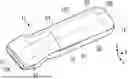
FIG. 1 is a perspective view showing an ultrasound probe according to a first embodiment of the present invention.
FIG. 2 is a plan view showing the ultrasound probe according to the first embodiment of the present invention.
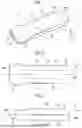
FIG. 3 is a side view showing the ultrasound probe according to the first embodiment of the present invention.
FIG. 4 is a cross-sectional view showing an internal configuration of the ultrasound probe according to the first embodiment of the present invention.
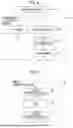
FIG. 5 is a block diagram showing a configuration of an ultrasound diagnostic apparatus comprising the ultrasound probe according to the first embodiment of the present invention.
FIG. 6 is a block diagram showing an internal configuration of a transmission/reception circuit of the ultrasound probe according to the first embodiment of the present invention.
FIG. 7 is a block diagram showing an internal configuration of an image generation unit of the ultrasound probe according to the first embodiment of the present invention.
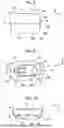
FIG. 8 is a side view showing a vicinity of a rear end portion of a housing of the ultrasound probe according to the first embodiment of the present invention.
FIG. 9 is a view of the rear end portion of the housing of the ultrasound probe according to the first embodiment of the present invention as viewed from a direction along a center line.
FIG. 10 is a cross-sectional view showing the rear end portion of the housing of the ultrasound probe according to the first embodiment of the present invention.
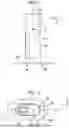
FIG. 11 is a diagram showing the ultrasound probe according to the first embodiment, which is disposed on a horizontal placement surface such that a front end portion of the housing faces upward and a rear end portion of the housing faces downward.
FIG. 12 is a view of a rear end portion of a housing of an ultrasound probe according to a modification example of the first embodiment as viewed from a direction along a center line.
FIG. 13 is a block diagram showing a configuration of an ultrasound diagnostic apparatus comprising an ultrasound probe according to a second embodiment of the present invention.
DESCRIPTION OF THE PREFERRED EMBODIMENTS
Hereinafter, embodiments of the present invention will be described with reference to the drawings.
The following configuration requirements are described based on representative embodiments of the present invention, but the present invention is not limited to the embodiment.
In the present specification, a numerical range represented by “to” means a range including numerical values described before and after “to”, both ends inclusive, as lower limit and upper limit values.
In the present specification, “same” and “identical” include an error range which is generally allowed in the technical field.
First Embodiment
FIGS. 1 to 3 show an ultrasound probe 11 according to a first embodiment of the present invention. The ultrasound probe 11 comprises a housing 12, and the housing 12 extends in a predetermined direction as a whole and has a flat and wide shape. The housing 12 has a front end portion 12A disposed at one end portion in an extending direction, a rear end portion 12B disposed at the other end portion, and a grip portion 12C disposed between the front end portion 12A and the rear end portion 12B. The grip portion 12C is a portion gripped by a user in a case in which ultrasound diagnosis is performed using the ultrasound probe 11.
Here, for convenience, a direction from the front end portion 12A toward the rear end portion 12B will be referred to as a +Y direction, a width direction of the flat and wide housing 12 that is perpendicular to a Y direction will be referred to as an X direction, and a direction perpendicular to both the X direction and the Y direction will be referred to as a Z direction.
The housing 12 is made of, for example, an insulating resin, and the grip portion 12C has a tubular shape surrounded by four side plate portions extending along a center line C1 extending from the front end portion 12A to the rear end portion 12B. The four side plate portions are composed of a first side plate portion S1 directed in a −Z direction, a second side plate portion S2 directed in a +Z direction on a side opposite to the first side plate portion S1, a third side plate portion S3 connecting the first side plate portion S1 and the second side plate portion S2 and directed in a +X direction, and a fourth side plate portion S4 connecting the first side plate portion S1 and the second side plate portion S2 and directed in a −X direction.
As shown in FIG. 3, the housing 12 has an outer shape in which a thickness in the Z direction gradually decreases from a vicinity of a center portion in the Y direction toward the front end portion 12A along the center line C1, although there is a slight protrusion portion in a case of being viewed in the X direction.
In addition, a protrusion 13 for indicating an orientation of the ultrasound probe 11 is formed to protrude on the +X direction side of the front end portion 12A, and a light-emitting unit 14 extending in the Y direction along the center line C1 is disposed on an outer surface of the third side plate portion S3.
FIG. 4 shows an internal configuration of the ultrasound probe 11.
The transducer array 15 is disposed inside the front end portion 12A of the ultrasound probe 11 at a position through which the center line C1 passes. The transducer array 15 includes a plurality of transducers arranged in the X direction, and an ultrasound emission surface 15A of the transducer array 15 is exposed from the housing 12 and directed in the −Y direction.
A flat plate-shaped battery 16 is disposed inside the housing 12 at a position offset toward the front end portion 12A side from the grip portion 12C so as to lie along an inner surface of the housing 12. The battery 16 is disposed to be offset toward the −Z direction side with respect to the center line C1.
As described above, since the housing 12 has the outer shape in which the thickness in the Z direction gradually decreases from the vicinity of the center portion in the Y direction toward the front end portion 12A along the center line C1, the battery 16 is disposed at a position offset toward the front end portion 12A side from the grip portion 12C so as to lie along the inner surface of the housing 12, so that the battery 16 is in a state of being inclined relative to the center line C1.
A power receive coil 17 is disposed on the +Y direction side of the battery 16 at a position offset toward the −Z direction side with respect to the center line C1. The power receive coil 17 has a thinner flat plate shape than the battery 16 and is disposed along an inner surface of the first side plate portion S1 of the grip portion 12C. Here, at least a region of the first side plate portion S1 in which the power receive coil 17 is disposed has a planar inner surface and a planar outer surface, and the power receive coil 17 is disposed in a state of being in contact with the inner surface of the first side plate portion S1 or being extremely close to the inner surface of the first side plate portion S1.
In addition, inside the housing 12, a circuit board 18 is disposed at a position offset toward a side opposite to the battery 16 and the power receive coil 17 with respect to the center line C1, that is, inside the second side plate portion S2 of the grip portion 12C. The circuit board 18 extends from the grip portion 12C to the vicinity of the transducer array 15 of the front end portion 12A along an XY plane, and two integrated circuits 19 and 20 and a wireless communication circuit 21 are sequentially mounted on a front surface of the circuit board 18 on the +Z direction side along the center line C1 in the +Y direction.
Furthermore, two temperature sensors 22 connected to the circuit board 18 are disposed inside the housing 12. Among the two temperature sensors 22, one temperature sensor 22 is located between the two integrated circuits 19 and 20, and the other temperature sensor 22 is located between the integrated circuit 20 and the wireless communication circuit 21, and each of the temperature sensors 22 is disposed close to an inner surface of the second side plate portion S2 of the grip portion 12C.
In addition, a sheet-like heat dissipation member 23 is disposed between the circuit board 18 and the inner surface of the second side plate portion S2 of the grip portion 12C, and the two integrated circuits 19 and 20 and the wireless communication circuit 21 mounted on the circuit board 18 are covered with the heat dissipation member 23. The heat dissipation member 23 consists of, for example, a resin sheet in which the thermal conductivity is improved by encapsulating a high thermal conductive filler, and efficiently absorbs heat from the integrated circuits 19 and 20 and the wireless communication circuit 21, which are heat generating bodies during operation, to prevent malfunction and failure of the integrated circuits 19 and 20 and the wireless communication circuit 21 from occurring in advance.
However, the heat dissipation member 23 has two opening portions 23A formed corresponding to positions at which the two temperature sensors 22 are disposed, and the two temperature sensors 22 face the inner surface of the second side plate portion S2 through the corresponding opening portions 23A of the heat dissipation member 23.
Hereinafter, FIG. 5 shows a configuration of an ultrasound diagnostic apparatus comprising the ultrasound probe 11 according to the first embodiment. The ultrasound diagnostic apparatus comprises the ultrasound probe 11 and an apparatus body 41 according to the first embodiment, and the ultrasound probe 11 and the apparatus body 41 are connected to each other by wireless communication.
The ultrasound probe 11 has a transmission/reception circuit 31 connected to the transducer array 15, and an image generation unit 32 and the wireless communication circuit 21 are sequentially connected to the transmission/reception circuit 31. In addition, an ultrasound transmission/reception controller 33 is connected to the transmission/reception circuit 31. Further, a communication controller 34 is connected to the wireless communication circuit 21, a light emission controller 35 is connected to the light-emitting unit 14, and a charging controller 36 is connected to the power receive coil 17. In addition, a probe controller 37 is connected to the temperature sensors 22, the ultrasound transmission/reception controller 33, the communication controller 34, the light emission controller 35, and the charging controller 36. The power receive coil 17 is connected to the battery 16. Here, the wireless communication circuit 21 and the probe controller 37 are connected to each other so as to enable bidirectional exchange of information.
Further, a processor 38 on the ultrasound probe 11 side is formed by the transmission/reception circuit 31, the image generation unit 32, the ultrasound transmission/reception controller 33, the communication controller 34, the light emission controller 35, the charging controller 36, and the probe controller 37.
The apparatus body 41 comprises a wireless communication circuit 42, and a display controller 43 and a monitor 44 are sequentially connected to the wireless communication circuit 42. In addition, a communication controller 45 is connected to the wireless communication circuit 42, and a body controller 46 is connected to the wireless communication circuit 42, the display controller 43, and the communication controller 45. In addition, an input device 47 is connected to the body controller 46. Here, the wireless communication circuit 42 and the body controller 46 are connected to each other so as to enable bidirectional exchange of information.
Further, a processor 48 on the apparatus body 41 side is formed by the display controller 43, the communication controller 45, and the body controller 46.
In addition, the wireless communication circuit 21 of the ultrasound probe 11 and the wireless communication circuit 42 of the apparatus body 41 are connected to each other so as to enable bidirectional exchange of information, so that the ultrasound probe 11 and the apparatus body 41 are connected to each other by wireless communication.
The transducer array 15 of the ultrasound probe 11 includes a plurality of transducers arranged in a one-dimensional or two-dimensional manner. Each of these transducers transmits ultrasound waves in accordance with a drive signal supplied from the transmission/reception circuit 31, receives an ultrasound echo from a subject, and outputs a received signal. Each transducer is formed by, for example, forming electrodes on both ends of a piezoelectric body consisting of a piezoelectric single crystal represented by lead zirconate titanate (PZT), a polymeric piezoelectric element represented by poly vinylidene di fluoride (PVDF), or a piezoelectric single crystal represented by lead magnesium niobate-lead titanate (PMN-PT) solid solution.
The ultrasound transmission/reception controller 33 controls the transmission/reception circuit 31 to transmit an ultrasound beam and receive the ultrasound echo based on an instruction from the probe controller 37.
The transmission/reception circuit 31 transmits the ultrasound waves from the transducer array 15 and generates a sound ray signal based on the received signal acquired by the transducer array 15, under the control of the ultrasound transmission/reception controller 33. The transmission/reception circuit 31 includes, as shown in FIG. 6, a pulser 51 connected to the transducer array 15, and an amplifying unit 52, an analog-digital (AD) conversion unit 53, and a beam former 54 which are sequentially connected in series to the transducer array 15.
The pulser 51 includes, for example, a plurality of pulse generators, and supplies each of drive signals to the plurality of transducers by adjusting a delay amount such that the ultrasound waves transmitted from the plurality of transducers of the transducer array 15 form an ultrasound beam based on a transmission delay pattern selected in response to a control signal from the ultrasound transmission/reception controller 33. As described above, in a case in which a pulsed or continuous wave voltage is applied to the electrodes of the transducers of the transducer array 15, the piezoelectric body expands and contracts to generate a pulsed or continuous wave ultrasound wave from each transducer, and the ultrasound beam is formed from the combined wave of these ultrasound waves.
The transmitted ultrasound beam is reflected by a target, for example, a part of the subject, and an ultrasound echo propagates toward the transducer array 15 of the ultrasound probe 11. The ultrasound echo propagating toward the transducer array 15 in this manner is received by each of the transducers constituting the transducer array 15. In such a case, each transducer constituting the transducer array 15 expands and contracts by receiving the propagating ultrasound echo to generate the received signal that is an electric signal, and outputs the received signal to the amplifying unit 52.
The amplifying unit 52 amplifies the signal input from each of the transducers constituting the transducer array 15 and transmits the amplified signal to the AD conversion unit 53. The AD conversion unit 53 converts the signal transmitted from the amplifying unit 52 into digital reception data, and transmits the reception data to the beam former 54. The beam former 54 performs so-called reception focus processing by giving and adding delay with respect to each reception data converted by the AD conversion unit 53, in accordance with a sound velocity or a sound velocity distribution set based on a reception delay pattern selected in accordance with a control signal from the ultrasound transmission/reception controller 33. By the reception focus processing, each reception data, which is converted by the AD conversion unit 53, is phase-added, and the sound ray signal in which the focus of the ultrasound echo is narrowed down is generated. The sound ray signal generated in this way is sent to the image generation unit 32.
As shown in FIG. 7, the image generation unit 32 has a configuration in which a signal processing unit 55, a digital scan converter (DSC) 56, and an image processing unit 57 are sequentially connected in series.
The signal processing unit 55 performs correction of attenuation due to a distance in accordance with a depth of a reflection position of the ultrasound waves on the sound ray signal sent from the transmission/reception circuit 31, and then performs envelope detection processing to generate an image signal (B-mode image signal) which is tomographic image information related to a tissue in the subject.
The DSC 56 converts (raster-converts) the image signal generated by the signal processing unit 55 into an image signal in accordance with a normal television signal scanning method.
The image processing unit 57 performs various types of necessary image processing, such as brightness correction, gradation correction, sharpness correction, and color correction, on the image signal input from the DSC 56, to generate an ultrasound image signal. The ultrasound image signal generated by the image generation unit 32 in this way is sent to the wireless communication circuit 21.
The wireless communication circuit 21 includes an antenna for transmitting and receiving radio waves, and performs wireless communication with the wireless communication circuit 42 of the apparatus body 41. In this case, the wireless communication circuit 21 modulates a carrier based on the image signal sent from the image generation unit 32 to generate a transmission signal, and wirelessly transmits the generated transmission signal to the wireless communication circuit 42 of the apparatus body 41. As the carrier modulation method, for example, amplitude shift keying (ASK), phase shift keying (PSK), quadrature phase shift keying (QPSK), 16 quadrature amplitude modulation (16QAM), or the like is used.
The communication controller 34 controls the wireless communication circuit 21 such that the ultrasound image signal is transmitted with a transmission radio field intensity set by the probe controller 37.
The light emission controller 35 controls the light emission of the light-emitting unit 14 disposed on the outer surface of the third side plate portion S3 of the housing 12 such that various states of the ultrasound probe 11 are represented, under the control of the probe controller 37.
In a case in which the ultrasound probe 11 is disposed in a charger described later, the charging controller 36 controls charging of the battery 16 via the power receive coil 17 with respect to the battery 16 and the power receive coil 17 built in the housing 12.
The temperature sensors 22 disposed inside the housing 12 detect a temperature inside the housing 12, particularly, a temperature in the vicinity of the inner surface of the second side plate portion S2 of the grip portion 12C, and sends the detected temperature to the probe controller 37.
The battery 16 supplies the power to each unit in the ultrasound probe 11.
The probe controller 37 performs control of each unit in the ultrasound probe 11 based on a program or the like stored in advance.
The wireless communication circuit 42 of the apparatus body 41 includes an antenna for transmitting and receiving radio waves, and performs wireless communication with the wireless communication circuit 21 of the ultrasound probe 11. In this case, the wireless communication circuit 42 of the apparatus body 41 receives, for example, a transmission signal wirelessly transmitted from the wireless communication circuit 21 of the ultrasound probe 11 through the antenna, demodulates the received transmission signal, and outputs the ultrasound image signal. The wireless communication circuit 42 of the apparatus body 41 sends the ultrasound image signal output in this way to the display controller 43.
The display controller 43 performs predetermined processing on the ultrasound image signal sent from the wireless communication circuit 42 under the control of the body controller 46, and displays the ultrasound image on the monitor 44.
The monitor 44 displays the ultrasound image under the control of the display controller 43, and includes, for example, a display device such as a liquid crystal display (LCD) or an organic electroluminescence display (organic EL display).
The communication controller 45 controls the wireless communication circuit 42 of the apparatus body 41 such that the wireless communication circuit 42 receives the transmission signal from the wireless communication circuit 21 of the ultrasound probe 11.
The body controller 46 controls each unit of the apparatus body 41 based on a program stored in advance and an operation by the user via the input device 47.
The input device 47 is an input device for the user to perform an input operation, and is configured by, for example, a device such as a keyboard, a mouse, a trackball, a touchpad, and a touch sensor disposed in a state of being superimposed on the monitor 44.
Here, each of the processor 38 on the ultrasound probe 11 side including the transmission/reception circuit 31, the image generation unit 32, the ultrasound transmission/reception controller 33, the communication controller 34, the light emission controller 35, the charging controller 36, and the probe controller 37, and the processor 48 on the apparatus body 41 side including the display controller 43, the communication controller 45, and the body controller 46 may be configured by one or a plurality of types of hardware, and the type of the hardware is not limited. For example, the processor can be configured by hardware such as a central processing unit (CPU), a micro processing unit (MPU), a dedicated circuit such as an application specific integrated circuit (FPGA) for executing specific processing, a graphic processing unit (GPU), or a neural processing unit (NPU). Further, the processor includes each unit or each means that executes various types of processing in the present embodiment. Moreover, the type of hardware may be a combination of different types of hardware. In a case in which a plurality of types of hardware are configured to execute one or a plurality of types of processing of a certain processor, the plurality of types of hardware may exist in devices physically separated from each other or may exist in the same device. Further, in any embodiment, the order of each processing executed by the processor is not limited to the above-described order, and may be changed as appropriate. The hardware is configured by an electric circuit (circuitry) in which circuit elements, such as semiconductor elements, are combined, or the like.
In the first embodiment, the processor 38 on the ultrasound probe 11 side is configured by two integrated circuits 19 and 20 shown in FIG. 4.
Furthermore, the present embodiment may be implemented by hardware, software, firmware, microcode, or a combination thereof. Software, firmware, and microcode are implemented by programs. The program may be, for example, a program module group, and each function thereof may be implemented by a processor configured to execute each function. The program may be a program code or a plurality of code segments stored in one or a plurality of non-transitory computer-readable media (for example, a storage medium and other storages). The program may be stored in the plurality of non-transitory computer-readable media present in devices physically separated from each other. The program code or the code segment can represent any combination of procedures, functions, subprograms, routines, subroutines, modules, software packages, classes, instructions, data structures, or program statements. The program code or the code segment may be connected to another code segment or a hardware circuit by transmitting and receiving information, data, arguments, parameters, or contents in the memory.
In a case in which ultrasound diagnosis is performed by the ultrasound diagnostic apparatus shown in FIG. 5, first, under the control of the ultrasound transmission/reception controller 33 of the ultrasound probe 11, ultrasound beams are transmitted into the subject from the plurality of transducers of the transducer array 15 in accordance with the drive signal from the transmission/reception circuit 31. The ultrasound echo from the subject is received by the plurality of transducers of the transducer array 15, and the received signal, which is an analog signal, is output from the plurality of transducers to the transmission/reception circuit 31. The received signal is amplified by the amplifying unit 52 of the transmission/reception circuit 31, is subjected to AD conversion by the AD conversion unit 53, and is subjected to reception focus processing by the beam former 54, so that the sound ray signal is generated, and the sound ray signal is sent from the transmission/reception circuit 31 to the image generation unit 32.
Further, the image generation unit 32 generates the image signal, which is the tomographic image information related to the tissue in the subject, by performing correction of attenuation of the sound ray signal by the distance in accordance with the depth of the reflection position of the ultrasound waves and the envelope detection processing by the signal processing unit 55, the image signal is converted into the image signal in accordance with the normal television signal scanning method by the DSC 56, and the ultrasound image signal is generated by the image processing unit 57 further performing various types of necessary image processing such as gradation processing.
The ultrasound image signal generated in this way is wirelessly transmitted from the wireless communication circuit 21 of the ultrasound probe 11 to the apparatus body 41 and is received by the wireless communication circuit 42 of the apparatus body 41, and then the ultrasound image is displayed on the monitor 44 via the display controller 43.
Here, the housing 12 of the ultrasound probe 11 has the front end portion 12A, the rear end portion 12B, and the grip portion 12C disposed between the front end portion 12A and the rear end portion 12B, but, as shown in FIG. 8, the outer surface of the housing 12 in the rear end portion 12B has a shape that is asymmetrical between the +Z direction side and the −Z direction side.
That is, the outer peripheral surface 61 of the rear end portion 12B has a first curved portion 62 and a second curved portion 63 that are disposed on both sides, that is, the +Z direction side and the −Z direction side of a reference surface P1 extending in the X direction which is the transducer arrangement direction of the transducer array 15 and passing through the rear end portion 12B along the center line C1 of the housing 12, and the first curved portion 62 and the second curved portion 63 have asymmetric curved shapes. The outer peripheral surface 61 of the rear end portion 12B refers to the outer surface of the housing 12 in a region of a distance L1 in the Y direction from the end portion of a tubular grip portion 12C in the +Y direction to the end portion of the housing 12 in the +Y direction.
The entire first curved portion 62 is formed of a curved surface, and the second curved portion 63 has a planar portion 63A connected to the end portion of the grip portion 12C in the +Y direction and a curved portion 63B connected to the planar portion 63A. The planar portion 63A of the second curved portion 63 has a planar shape along the XY plane such that the same surface as the planar outer surface of the first side plate portion S1 of the grip portion 12C is formed. The inner surface of the planar portion 63A forms the same surface as the planar inner surface of the first side plate portion S1, and a portion in the +Y direction of the flat plate-shaped power receive coil 17 accommodated in the housing 12 as shown in FIG. 4 is disposed along the inner surface of the planar portion 63A.
Since the second curved portion 63 has the planar portion 63A and the curved portion 63B, the curved portion 63B of the second curved portion 63 has a curvature smaller than a curvature of the first curved portion 62.
FIG. 9 is a view of the rear end portion 12B of the housing 12 of the ultrasound probe 11 as viewed from a direction along the center line C1, and FIG. 10 is a cross-sectional view of the rear end portion 12B. In FIG. 9, it is also shown that the first curved portion 62 and the second curved portion 63 of the outer peripheral surface 61 of the rear end portion 12B have asymmetric curved shapes.
The rear end portion 12B of the housing 12 has a peripheral wall portion 64 that surrounds the periphery of the center line C1 and that extends along an XZ plane perpendicular to the center line C1. The peripheral wall portion 64 continuously surrounds the periphery of the center line C1 without interruption, and a recess portion 65 that is recessed in the −Y direction toward the front end portion 12A along the center line C1 is formed on the inner side of the peripheral wall portion 64.
An operation button 24 is disposed in the recess portion 65. The operation button 24 constitutes a functional element that is operated by the user to execute a predetermined function of the ultrasound probe 11. For example, a power supply switch of the ultrasound probe 11 can be used as the operation button 24, and the power is supplied from the battery 16 to each unit in the ultrasound probe 11 by turning on the operation button 24. In addition, for example, a changeover switch for switching a mode of the ultrasound imaging can be used as the operation button 24.
Furthermore, as another functional element, a communication hole 25 that penetrates a bottom surface of the recess portion 65 in the Y direction along the center line C1 to allow an inner portion and an outer portion of the housing 12 to communicate with each other is formed in the recess portion 65. The communication hole 25 also constitutes the functional element, and the presence of the communication hole 25 makes it possible to adjust an atmospheric pressure between the inner portion and the outer portion of the housing 12, that is, to equalize the atmospheric pressure.
As shown in FIG. 10, the operation button 24 and the communication hole 25 constituting the functional element are accommodated inside the recess portion 65 without protruding to the outer side of the recess portion 65 in the +Y direction from the peripheral wall portion 64.
It should be noted that only one of the operation button 24 or the communication hole 25 may be disposed in the recess portion 65 as the functional element.
The ultrasound probe 11 according to the first embodiment is a probe that is wirelessly connected to the apparatus body 41 and does not have a cable extending from, for example, the rear end portion 12B of the housing 12 to the apparatus body 41 as in a case of a wired-connection probe, the rear end portion 12B has the peripheral wall portion 64 extending along the XZ plane, and the operation button 24 and the communication hole 25 disposed in the recess portion 65 formed inside the peripheral wall portion 64 are accommodated inside the recess portion 65 without protruding to the outer side of the recess portion 65.
Since the ultrasound probe 11 has such a configuration, as shown in FIG. 11, the ultrasound probe 11 can be placed upright on a horizontal placement surface PS in a state in which the peripheral wall portion 64 extending along the XZ plane is in contact with the placement surface PS, the front end portion 12A faces upward, and the rear end portion 12B faces downward.
In this way, in a case in which the ultrasound probe 11 is placed upright on the horizontal placement surface PS, the center line C1 of the housing 12 is in a state of extending along the vertical direction. In addition, in this case, a vertical line passing through the centroid G of the ultrasound probe 11 is configured to pass through the inside of the peripheral wall portion 64 extending along the XZ plane, and the ultrasound probe 11 can be stably placed on the placement surface PS in a state in which the front end portion 12A faces upward and the rear end portion 12B faces downward.
Therefore, in a case in which the transducer array 15 is placed on the placement surface PS, the ultrasound emission surface 15A of the transducer array 15 is prevented from being contaminated by being in contact with the object present in the periphery of the placement surface PS.
In addition, since the operation button 24 and the communication hole 25 are accommodated inside the recess portion 65, in a case in which the ultrasound probe 11 is freely placed on any place close to the user, the operation button 24 is prevented from malfunctioning regardless of the posture of the ultrasound probe 11, and thus the communication hole 25 is prevented from being blocked by object present in the periphery of the place due to the contact with the object.
Since at least a part of the outer surface of the second side plate portion S2 disposed on the side opposite to the first side plate portion S1 with the center line C1 interposed therebetween among the first side plate portion S1 to the fourth side plate portion S4 that surround the grip portion 12C has a curved shape, the ultrasound probe 11 in which the grip portion 12C of the housing 12 is easily gripped by the user is realized. Furthermore, since the housing 12 has the outer shape in which the thickness in the Z direction gradually decreases from the vicinity of the center portion in the Y direction toward the front end portion 12A in which the transducer array 15 is disposed along the center line C1, the user can easily perform a scan using the ultrasound emission surface 15A of the transducer array 15 along the body surface of the subject in a state of gripping the grip portion 12C with one hand, and the ultrasound probe 11 has excellent operability.
In addition, since the protrusion 13 is formed to protrude on the +X direction side of the front end portion 12A of the ultrasound probe 11, the user can easily grasp the orientation of the ultrasound probe 11 due to the presence of the protrusion 13 in a case in which the user grips the grip portion 12C, and the operability is improved.
Further, since the ultrasound probe 11 has the light-emitting unit 14 disposed on the outer surface of the third side plate portion S3 of the grip portion 12C, various states of the ultrasound probe 11 can be notified by changing a way of emitting light from the light-emitting unit 14 under the control of the light emission controller 35.
For example,
-
- Activation state of ultrasound probe 11,
- Wireless connection state between ultrasound probe 11 and apparatus body 41,
- Remaining capacity of battery 16,
- Charging state of battery 16,
- Error state, and
- Update state of software installed in ultrasound probe 11
- are notified by changing the light emission color, the light emission pattern, and the like.
In addition, the temperature of the vicinity of the inner surface of the second side plate portion S2 of the grip portion 12C detected by the two temperature sensors 22 is transmitted to the probe controller 37, and the notification of a heat generation state of the ultrasound probe 11 can be performed by the light emitted from the light-emitting unit 14 under the control of the light emission controller 35.
In general, the surface temperature of the ultrasound probe is limited to a temperature equal to or lower than a temperature predetermined by a safety standard, but, in a case in which the way of the light emission of the light-emitting unit 14 is changed in accordance with the temperature detected by the temperature sensor 22, the user can easily and sensuously grasp the surface temperature of the ultrasound probe 11. In addition, the user may grasp a fact that the surface temperature of the ultrasound probe 11 exceeds a predetermined temperature based on the way of the light emission of the light-emitting unit 14, and may use the fact as a guide for temporarily suspending the use of the ultrasound probe 11.
In a case in which the temperature detected by the temperature sensors 22 has reached a predetermined threshold value, the surface temperature of the ultrasound probe 11 can be lowered by performing a treatment such as adjusting the drive signal supplied from the transmission/reception circuit 31 to the transducer array 15 by the ultrasound transmission/reception controller 33 to lower the frame rate of the ultrasound imaging or stopping the ultrasound imaging.
In the first embodiment described above, the protrusion 13 is formed to protrude on the +X direction side of the front end portion 12A of the ultrasound probe 11, but the present invention is not limited to this, and the protrusion 13 can also be formed to protrude on the −X direction side of the front end portion 12A of the ultrasound probe 11.
Similarly, in the first embodiment described above, the light-emitting unit 14 is disposed on the outer surface of the third side plate portion S3 of the grip portion 12C facing the +X direction, but the present invention is not limited to this, and the light-emitting unit 14 may be disposed on the outer surface of the fourth side plate portion S4 of the grip portion 12C facing the −X direction.
In addition, in the first embodiment, the peripheral wall portion 64 extending along the XZ plane at the rear end portion 12B of the housing 12 continuously surrounds the periphery of the center line C1 without interruption, but the present invention is not limited to this, and as shown in FIG. 12, the peripheral wall portion 64 may have at least one groove 66 formed to cross the peripheral wall portion 64.
Due to the presence of the groove 66 formed in this way, even in a case in which the ultrasound probe 11 is placed upright on the horizontal placement surface PS, the inner portion of the recess portion 65 and the outer portion of the ultrasound probe 11 communicate with each other through the groove 66, and the atmospheric pressure between the inner portion and the outer portion of the housing 12 can be adjusted by the communication hole 25 formed in the recess portion 65.
Second Embodiment
The ultrasound probe 11 according to the first embodiment includes the image generation unit 32, and the ultrasound image signal generated by the image generation unit 32 is wirelessly transmitted from the wireless communication circuit 21 of the ultrasound probe 11 to the apparatus body 41 as shown in FIG. 5, but the present invention is not limited to this.
FIG. 13 shows a configuration of an ultrasound diagnostic apparatus comprising an ultrasound probe 11A according to a third embodiment. The ultrasound diagnostic apparatus comprises the ultrasound probe 11A and an apparatus body 41A according to the third embodiment, and the ultrasound probe 11A and the apparatus body 41A are connected to each other by wireless communication.
The ultrasound probe 11A is obtained by deleting the image generation unit 32 in the ultrasound probe 11 according to the first embodiment shown in FIG. 5, directly connecting the wireless communication circuit 21 to the transmission/reception circuit 31, and using a probe controller 37A instead of the probe controller 37, and other configurations of the ultrasound probe 11A are the same as those of the ultrasound probe 11 according to the first embodiment. In addition, the ultrasound probe 11A has the same housing 12 as the housing 12 in the ultrasound probe 11 according to the first embodiment.
The apparatus body 41A is obtained by newly connecting the image generation unit 32 between the wireless communication circuit 42 and the display controller 43 in the apparatus body 41 according to the first embodiment shown in FIG. 5, and connecting the body controller 46A to the display controller 43, the communication controller 45, and the image generation unit 32 instead of the body controller 46, and other configurations of the apparatus body 41A are the same as those of the apparatus body 41 according to the first embodiment.
In the ultrasound probe 11A, the transmission/reception circuit 31, the ultrasound transmission/reception controller 33, the communication controller 34, the light emission controller 35, the charging controller 36, and the probe controller 37A form a processor 38A on the ultrasound probe 11A side.
In addition, in the apparatus body 41A, the image generation unit 32, the display controller 43, the communication controller 45, and the body controller 46A form a processor 48A on the apparatus body 41A side.
The sound ray signal generated in the transmission/reception circuit 31 of the ultrasound probe 11A is wirelessly transmitted from the wireless communication circuit 21 to the apparatus body 41A, the image generation unit 32 performs attenuation correction and envelope detection processing on the sound ray signal received by the wireless communication circuit 42 of the apparatus body 41A to generate the ultrasound image signal, and the ultrasound image is displayed on the monitor 44 via the display controller 43.
In this way, in the ultrasound diagnostic apparatus comprising the ultrasound probe 11A according to the third embodiment as well, the ultrasound image can be displayed on the monitor 44 in the same manner as the ultrasound diagnostic apparatus comprising the ultrasound probe 11 according to the first embodiment.
In addition, the ultrasound probe 11A has the same housing 12 as the housing 12 in the ultrasound probe 11 according to the first embodiment, and the battery 16 is disposed at a position offset toward the front end portion 12A side from the grip portion 12C and disposed to be inclined relative to the center line C1 in the housing 12. Therefore, in the ultrasound probe 11A according to the third embodiment, it is possible to reduce the size of the ultrasound probe 11A while a large number of components are accommodated in the housing 12, similarly to the ultrasound probe 11 according to the first embodiment.
Furthermore, since at least a part of the outer surface of the grip portion 12C of the housing 12 has a curved shape, the grip portion 12C of the housing 12 is easily gripped by the user, and the ultrasound probe 11A having excellent operability is realized.
As the apparatus body 41 used in the first embodiment and the apparatus body 41A used in the second embodiment, for example, a portable thin computer commonly referred to as a tablet or a stationary computer can be used.
EXPLANATION OF REFERENCES
-
- 11, 11A: ultrasound probe
- 12: housing
- 12A: front end portion
- 12B: rear end portion
- 12C: grip portion
- 13: protrusion
- 14: light-emitting unit
- 15: transducer array
- 15A: ultrasound emission surface
- 16: battery
- 17: power receive coil
- 18: circuit board
- 19, 20: integrated circuit
- 21, 42: wireless communication circuit
- 22: temperature sensor
- 23: heat dissipation member
- 23A: opening portion
- 24: operation button
- 25: communication hole
- 31: transmission/reception circuit
- 32: image generation unit
- 33: ultrasound transmission/reception controller
- 34, 45: communication controller
- 35: light emission controller
- 36: charging controller
- 37, 37A: probe controller
- 38, 38A, 48, 48A: processor
- 41, 41A: apparatus body
- 43: display controller
- 44: monitor
- 46, 46A: body controller
- 47: input device
- 51: pulser
- 52: amplifying unit
- 53: AD conversion unit
- 54: beam former
- 55: signal processing unit
- 56: DSC
- 57: image processing unit
- 61: outer peripheral surface
- 62: first curved portion
- 63: second curved portion
- 63A: planar portion
- 63B: curved portion
- 64: peripheral wall portion
- 65: recess portion
- 66: groove
- C1: center line
- S1: first side plate portion
- S2: second side plate portion
- S3: third side plate portion
- S4: fourth side plate portion
- P1: reference surface, L1: distance
- PS: placement surface
- G: centroid
Claims
What is claimed is:1. An ultrasound probe as a wireless-connection ultrasound probe, the ultrasound probe comprising:
a housing that has a front end portion and a rear end portion and has a center line extending from the front end portion to the rear end portion; and
a transducer array that is disposed inside the front end portion of the housing and that has an ultrasound emission surface exposed from the housing,
wherein the rear end portion of the housing comprises a peripheral wall portion that surrounds a periphery of the center line and extends along a plane perpendicular to the center line, and a recess portion that is recessed toward the front end portion along the center line on an inner side of the peripheral wall portion, and
wherein a functional element is disposed within the recess portion.
2. The ultrasound probe according to claim 1,
wherein the functional element is an operation button disposed in the recess portion without protruding to an outer side of the recess portion from the peripheral wall portion.
3. The ultrasound probe according to claim 1,
wherein the functional element is a communication hole penetrating a bottom surface of the recess portion to allow an inner portion and an outer portion of the housing to communicate with each other.
4. The ultrasound probe according to claim 1,
wherein the peripheral wall portion continuously surrounds the periphery of the center line without interruption.
5. The ultrasound probe according to claim 2,
wherein the peripheral wall portion continuously surrounds the periphery of the center line without interruption.
6. The ultrasound probe according to claim 3,
wherein the peripheral wall portion continuously surrounds the periphery of the center line without interruption.
7. The ultrasound probe according to claim 1,
wherein the peripheral wall portion has at least one groove formed to cross the peripheral wall portion.
8. The ultrasound probe according to claim 2,
wherein the peripheral wall portion has at least one groove formed to cross the peripheral wall portion.
9. The ultrasound probe according to claim 3,
wherein the peripheral wall portion has at least one groove formed to cross the peripheral wall portion.
10. The ultrasound probe according to claim 1,
wherein an outer side surface of the rear end portion of the housing has a first curved portion and a second curved portion that are disposed on both sides of a reference surface extending in a transducer arrangement direction of the transducer array and passing through the rear end portion along the center line of the housing, and
the first curved portion and the second curved portion have asymmetric curved shapes.
11. The ultrasound probe according to claim 2,
wherein an outer side surface of the rear end portion of the housing has a first curved portion and a second curved portion that are disposed on both sides of a reference surface extending in a transducer arrangement direction of the transducer array and passing through the rear end portion along the center line of the housing, and
the first curved portion and the second curved portion have asymmetric curved shapes.
12. The ultrasound probe according to claim 3,
wherein an outer side surface of the rear end portion of the housing has a first curved portion and a second curved portion that are disposed on both sides of a reference surface extending in a transducer arrangement direction of the transducer array and passing through the rear end portion along the center line of the housing, and
the first curved portion and the second curved portion have asymmetric curved shapes.
13. The ultrasound probe according to claim 10,
wherein the first curved portion and the second curved portion have different curvatures.
14. The ultrasound probe according to claim 1,
wherein, in a case in which the ultrasound probe is disposed on a horizontal placement surface such that the front end portion of the housing faces upward and the rear end portion of the housing faces downward, a vertical line passing through a centroid of the ultrasound probe passes through the inner side of the peripheral wall portion.
15. The ultrasound probe according to claim 2,
wherein, in a case in which the ultrasound probe is disposed on a horizontal placement surface such that the front end portion of the housing faces upward and the rear end portion of the housing faces downward, a vertical line passing through a centroid of the ultrasound probe passes through the inner side of the peripheral wall portion.
16. The ultrasound probe according to claim 3,
wherein, in a case in which the ultrasound probe is disposed on a horizontal placement surface such that the front end portion of the housing faces upward and the rear end portion of the housing faces downward, a vertical line passing through a centroid of the ultrasound probe passes through the inner side of the peripheral wall portion.
17. The ultrasound probe according to claim 4,
wherein, in a case in which the ultrasound probe is disposed on a horizontal placement surface such that the front end portion of the housing faces upward and the rear end portion of the housing faces downward, a vertical line passing through a centroid of the ultrasound probe passes through the inner side of the peripheral wall portion.
18. The ultrasound probe according to claim 7,
wherein, in a case in which the ultrasound probe is disposed on a horizontal placement surface such that the front end portion of the housing faces upward and the rear end portion of the housing faces downward, a vertical line passing through a centroid of the ultrasound probe passes through the inner side of the peripheral wall portion.
19. The ultrasound probe according to claim 10,
wherein, in a case in which the ultrasound probe is disposed on a horizontal placement surface such that the front end portion of the housing faces upward and the rear end portion of the housing faces downward, a vertical line passing through a centroid of the ultrasound probe passes through the inner side of the peripheral wall portion.
20. The ultrasound probe according to claim 13,
wherein, in a case in which the ultrasound probe is disposed on a horizontal placement surface such that the front end portion of the housing faces upward and the rear end portion of the housing faces downward, a vertical line passing through a centroid of the ultrasound probe passes through the inner side of the peripheral wall portion.
Images & Drawings included:



Sources:
- United States Patent and Trademark Office - verify current appl. status at the USPTO↗
Similar patent applications:
- » 20220327735
ULTRASOUND PROBE POSITION REGISTRATION METHOD, ULTRASOUND IMAGING SYSTEM, ULTRASOUND PROBE POSITION REGISTRATION SYSTEM, ULTRASOUND PROBE POSITION REGISTRATION PHANTOM, AND ULTRASOUND PROBE POSITION REGISTRATION PROGRAM - » 20230263508
METHOD FOR DRIVING AN ULTRASOUND PROBE, ULTRASOUND PROBE AND ULTRASOUND SYSTEM COMPRISING SAID ULTRASOUND PROBE - » 20210007718
Ultrasound probe, control method of ultrasound probe, and ultrasound probe inspection system - » 20230014965
Wireless ultrasound probe using wirelessly supplied power, ultrasound diagnosis apparatus wirelessly connected to wireless ultrasound probe, operating method of ultrasound diagnosis apparatus, and operating method of wireless ultrasound probe - » 20200100767
Wireless ultrasound probe using wirelessly supplied power, ultrasound diagnosis apparatus wirelessly connected to wireless ultrasound probe, operating method of ultrasound diagnosis apparatus, and operating method of wireless ultrasound probe - » 20140323861
Wireless ultrasound probe using wirelessly supplied power, ultrasound diagnosis apparatus wirelessly connected to wireless ultrasound probe, operating method of ultrasound diagnosis apparatus, and operating method of wireless ultrasound probe - » 20190365352
Wireless ultrasound probe, ultrasound diagnostic apparatus connected to wireless ultrasound probe, and operating method of ultrasound diagnostic apparatus - » 20220133272
Wireless ultrasound probe, ultrasound diagnostic apparatus connected to wireless ultrasound probe, and operating method of ultrasound diagnostic apparatus - » 20240335179
WIRELESS ULTRASOUND PROBE, ULTRASOUND DIAGNOSTIC APPARATUS CONNECTED TO WIRELESS ULTRASOUND PROBE, AND OPERATING METHOD OF ULTRASOUND DIAGNOSTIC APPARATUS - » 20140221841
Ultrasound probe, ultrasound diagnostic imaging apparatus and manufacturing method of ultrasound probe
Recent applications in this class:
- » 20260033806 2026-02-05
ULTRASONIC MEASUREMENT METHOD, SYSTEM, WIRELESS PROBE AND STORAGE MEDIUM - » 20260007388 2026-01-08
COORDINATING SCANNERS IN AN ULTRASOUND CART - » 20250352179 2025-11-20
METHODS AND SYSTEMS FOR COHERENCE IMAGING IN OBTAINING ULTRASOUND IMAGES - » 20250352178 2025-11-20
ULTRASOUND SYSTEM AND METHOD OF CONTROLLING ULTRASOUND SYSTEM - » 20250325251 2025-10-23
ULTRASOUND PROBE WITH THERMAL MANAGEMENT - » 20250195039 2025-06-19
ULTRASOUND DIAGNOSIS APPARATUS CONNECTED TO WIRELESS ULTRASOUND PROBES AND METHOD OF OPERATING THE SAME - » 20250152136 2025-05-15
WIRELESS ULTRASOUND PROBE AND CONTROL METHOD THEREOF - » 20250009339 2025-01-09
ULTRASOUND PROBE - » 20240398379 2024-12-05
AN ULTRASOUND SCANNER THAT SUPPORTS HANDSET WIRELESS NETWORK CONNECTIVITY - » 20240335179 2024-10-10
WIRELESS ULTRASOUND PROBE, ULTRASOUND DIAGNOSTIC APPARATUS CONNECTED TO WIRELESS ULTRASOUND PROBE, AND OPERATING METHOD OF ULTRASOUND DIAGNOSTIC APPARATUS
Recent applications for this Assignee:
- » 20260095645 2026-04-02
INFORMATION PROCESSING APPARATUS, INFORMATION PROCESSING METHOD, INFORMATION PROCESSING PROGRAM, AND IMAGING APPARATUS - » 20260094616 2026-04-02
MAGNETIC TAPE, MAGNETIC TAPE CARTRIDGE, AND MAGNETIC TAPE APPARATUS - » 20260094333 2026-04-02
LEARNING APPARATUS, METHOD, AND PROGRAM, AND IMAGE PROCESSING APPARATUS, METHOD, AND PROGRAM - » 20260094331 2026-04-02
IMAGE PROCESSING APPARATUS, METHOD, AND PROGRAM - » 20260094323 2026-04-02
INFORMATION PROCESSING APPARATUS, INFORMATION PROCESSING METHOD, AND PROGRAM - » 20260093061 2026-04-02
OPTICAL LOW-PASS FILTER, IMAGING APPARATUS, AND IMAGING SYSTEM - » 20260093021 2026-04-02
ULTRASOUND PROBE - » 20260093020 2026-04-02
ULTRASOUND PROBE - » 20260093001 2026-04-02
MAGNETIC RESONANCE IMAGING APPARATUS AND MAGNETIC RESONANCE IMAGE GENERATION METHOD - » 20260092903 2026-04-02
ULTRASOUND PROBE