COSMETIC COMPOSITION, COMPRISING COLORANT AND CROSSLINKED POLYESTER COMPONENT
US20260090974A1
2026-04-02
19/342,141
2025-09-26
Smart Summary: A new cosmetic product includes a colorant that gives it color. It also has a special ingredient called crosslinked polyester, which helps improve the product's texture and stability. There may be additional ingredients that are safe for use on the skin. This combination aims to enhance the overall performance of the cosmetic. The product is designed to be effective and appealing for cosmetic use. 🚀 TL;DR
Abstract:
The present invention provides a cosmetic composition, comprising at least one colorant (A), at least one crosslinked polyester component (B), optionally at least one cosmetically acceptable carrier (C), and optionally one or more other components commonly used in the cosmetic field (D).
Inventors:
- Benjamin Falk 45 🇺🇸 Yorktown Heights, NY, United States
- Amar Pawar 9 🇺🇸 Briarcliff Manor, NY, United States
- Ashitha KANDIKKAL 6 🇮🇳 Bangalore, India
- Xu QIN 5 🇺🇸 Northvale, NJ, United States
- Polina TSUPKO 5 🇺🇸 Bronx, NY, United States
- Sarah Peeler Black 2 🇺🇸 New York, NY, United States
- Yan Ling Lee 2 🇺🇸 Elmwood Park, NJ, United States
- Gianna Villani 2 🇺🇸 Bronx, NY, United States
Applicant:
Interested in similar patents?
Get notified when new applications in this technology area are published.
Classification:
A61K8/85 » CPC main
Cosmetics or similar toilet preparations characterised by the composition containing organic macromolecular compounds obtained by reactions otherwise than those involving only carbon-carbon unsaturated bonds Polyesters
A61K8/042 » CPC further
Cosmetics or similar toilet preparations characterised by special physical form; Dispersions; Emulsions Gels
A61Q1/06 » CPC further
Make-up preparations; Body powders; Preparations for removing make-up; Preparations containing skin colorants, e.g. pigments for lips Lipsticks
A61Q1/08 » CPC further
Make-up preparations; Body powders; Preparations for removing make-up; Preparations containing skin colorants, e.g. pigments for cheeks, e.g. rouge
A61Q1/10 » CPC further
Make-up preparations; Body powders; Preparations for removing make-up; Preparations containing skin colorants, e.g. pigments for eyes, e.g. eyeliner, mascara
A61K2800/43 » CPC further
Properties of cosmetic compositions or active ingredients thereof or formulation aids used therein and process related aspects; Chemical, physico-chemical or functional or structural properties of particular ingredients; Colour properties Pigments; Dyes
A61K8/04 IPC
Cosmetics or similar toilet preparations characterised by special physical form Dispersions; Emulsions
Description
The present invention provides a cosmetic composition, comprising at least one colorant (A), at least one crosslinked polyester component (B), optionally at least one cosmetically acceptable carrier (C), and optionally one or more other components commonly used in the cosmetic field (D). The crosslinked polyester component (B) comprises a crosslinked polyester which is reaction product of at least one compound selected from a polycarboxylic acid, a poly-carboxylic acid ester, and combinations thereof, at least one polyol, and optionally one or more monofunctional component selected from a mono-carboxylic acid and a mono-alcohol. These crosslinked polyester or polyester elastomers can be provided as powders or gels. These polyester elastomers, polyester elastomer powders, and polyester elastomer gels can be biodegradable and produced from biorenewable raw materials, and provide advantageous properties when used in color cosmetic applications.
Statement of the Problem
Crosslinked polymers are added to manipulate the sensory, texture, rheology, and optical performance of a variety of cosmetic products. Traditional silicone elastomers have limited versatility in terms of compatibility with certain ingredients. Therefore, although the performance of silicone elastomers is unparalleled, there is a demand for alternatives to silicone elastomers for use in color cosmetics and other beauty and personal care formulations.
STATE OF THE ART
The personal care industry thrives on being able to deliver multiple performance products based on mixtures of several components, with each having performance characteristics important to or desirable in the final formulation. Silicone gels are commonly added in a variety of personal care formulations to enhance their aesthetics with respect to sensory, texture, rheology, and optical performance. See for example, U.S. Pat. Nos. 4,987,169; 5,654,362; 5,760,116; 6,423,322; and 5,811,487.
Crosslinked polymers are added to manipulate the sensory, texture, rheology, and optical performance of a variety of cosmetic products. Silicone elastomers are particularly important because they can form elastic particles of three-dimensional polymeric dimethicone and provide a beneficial sensory, texture, and optical effect to cosmetic products. However, traditional silicone elastomers have limited versatility in terms of compatibility with polar solvents or emollients such as hydrocarbon oils, plant-based oils, glycerin, and water. Therefore, although the performance of silicone elastomers is unparalleled, there is a demand for alternatives to silicone elastomers. In particular, there is a demand in the marketplace for non-silicone based elastomer materials.
US20210059924A1 disclosed a polyurethane elastomeric rubber composition containing a bio-based polyol cross-linked with a bio-based isocyanate. The cross-linked polyurethane elastomer rubber is in further aspect of the invention included in a gel after being milled in the presence of a bio-based emollient or mixture of bio-based emollients. The polyurethane elastomeric gel has good compatibility with cosmetic and natural oils and can be used as a gelling agent for these oils among other desirable cosmetic formulary roles.
Polyesters are a class of compounds that contain an ester functional group in their polymer chain. The ester group can be hydrolyzed when treated with certain biological catalysts or certain mixed cultures of microorganisms which renders a large number of polyesters biodegradable. There is a growing interest in recent years to design and develop biobased polyesters from renewable resources as emollients, emulsifiers, film formers, or other functional ingredients for personal care applications. See for example, U.S. Pat. Nos. 8,414,906; 9,334,358; 6,540,987; and 7,820,758. However, no polyester elastomer or polyester elastomer gel has yet been reported that provides multiple benefits to consumers as a substitute to silicone gel in particular in color cosmetic applications.
DETAILED DESCRIPTION OF THE INVENTION
The present invention provides a composition, comprising:
-
- (A) at least one colorant, and
- (B) at least one crosslinked polyester component, comprising a crosslinked polyester which is reaction product of
- (i) at least one compound selected from a polycarboxylic acid, a poly-carboxylic acid ester, and combinations thereof,
- (ii) at least one polyol, and
- (iii) optionally one or more monofunctional component selected from
- (a) a mono-carboxylic acid; and
- (b) a mono-alcohol.
In an aspect, the composition comprises
-
- (B) at least one crosslinked polyester component, comprising a crosslinked polyester which is reaction product of
- (i) at least one compound selected from a polycarboxylic acid, a poly-carboxylic acid ester, and combinations thereof,
- (ii) at least one polyol, and
- (iii) (a) at least one mono-carboxylic acid; and
- optionally (iii) (b) one or more a mono-alcohol.
In an aspect, the composition is a cosmetic composition which may further comprise:
-
- (C) at least one cosmetically acceptable carrier, and
- (D) optionally one or more other components commonly used in the cosmetic field, different from components (A), (B) or (C).
In aspect, the composition is a coloured cosmetic composition.
In an aspect, the colorant (A) is selected from the group consisting of cosmetically acceptable colorants as will be exemplified below.
In an aspect, the colorant (A) is preferably selected from the group consisting of
-
- 1) untreated pigments,
- 2) treated pigments,
- 3) dyes,
- 4) pearls
- and combinations thereof.
In an aspect, the cosmetically acceptable carrier (C) is preferably selected from the group consisting of water, solvents, emollients, fatty acids, fatty alcohols, film formers, emulsifiers, thickeners and combinations thereof.
The present disclosure provides a crosslinked polyester component (B), comprising a crosslinked polyester (sometimes referred to as polyester elastomer) which is preferably the reaction product of at least one di-carboxylic acid or tri-carboxylic acid, at least one mono-carboxylic acid, and at least one polyol. In an aspect, these polyester elastomers are prepared by an esterification reaction between at least one di-carboxylic acid or tricarboxylic acid, at least one mono-carboxylic acid, and at least one polyol forming a crosslinked polymer structure.
As will be described in more detail below the crosslinked polyester component (B) can be used as dry powder or as a gel which is obtained by swelling the crosslinked polyester e.g. under shear force in a solvent (such as a low molecular weight emollient) to form a uniform polyester gel or paste having a wide viscosity range. The gel is usually a semi-solid colloid formed by suspending the crosslinked polyester in the solvent. The solid particles of the crosslinked polyester in the gel are supposed to form a three-dimensional network that captures and holds the solvent. The crosslinked polyester gel is usually a stable, jelly-like substance that is soft and flexible. These crosslinked polyester components (B) in particular provided as gels in a solvent are expected to deliver superior performance benefits such as improved sensory, structuring, and rheological performance and improved compatibility with the colorants (A) to the cosmetic compositions compared to other elastomers disclosed previously. As will be explained in more detail below the crosslinked polyester component (B), in particular provides or improves the dispersibility or suspendability of colorants (A) in cosmetic formulations, stabilizes the dispersion or suspension of colorants (A) in cosmetic formulations, improves the masking of wrinkles and blemishes on the skin in cosmetic formulations, comprising one or more colorants (A), improves the skin smoothness and/or matte finish in cosmetic formulations, comprising one or more colorants (A), improves the shear-thinning behavior of cosmetic formulations, comprising one or more colorants (A), enhances the viscosity (thickening effect) of cosmetic formulations, comprising one or more colorants (A), and improves the duration of colorants (A) in cosmetic formulations.
In an aspect the crosslinked polyester is reaction product of
-
- at least one poly-carboxylic acid, at least one poly-carboxylic acid
- ester, or a combination thereof, and
- at least one polyol; and/or
- at least one monofunctional-carboxylic acid; and/or
- at least one monofunctional-alcohol.
In an aspect, the crosslinked polyester component (B) is a reaction product of
-
- compound (i) selected from the group consisting of
- (1) one or more poly-carboxylic acids of formula (I)
wherein
-
- R1 is selected from the group consisting of C2-C52 alkyl group, C2-C52 heteroalkyl group, C2-C52 alkene group, C2-C52 heteroalkene group, C3-C52 cyclic group, or C2-C52 heterocyclic group, and
- a is an integer from 2 to 10, or
- (2) one or more carboxylic acid esters of formula (II)
wherein
-
- R2 is selected from the group consisting of C2-C200 alkyl group, C2-C200 heteroalkyl group, C2-C200 alkene group, C2-C200 heteroalkene group, C2-C200 alkyne group, C2-C200 heteroalkyne group, C2-C200 cyclic group, or C2-C200 heterocyclic group; and
- R3 is selected from the group consisting of C1-C22 alkyl group, C2-C22 alkylene group, or C3-C22 cyclic group, and
- b is an integer from 2 to 10, and
- (3) a combination (1) and (2) thereof,
- compound (ii) selected from one or more polyols of formula (III)
wherein
-
- R4 is C2-C200 alkyl group, C2-C200 heteroalkyl group, C2-C200 alkene group, C2-C200 heteroalkene group, C2-C200 alkyne group, C2-C200 heteroalkyne group, C3-C200 cyclic group, or C2-C200 heterocyclic group; and
- c is an integer from 2 to 10, and
- optional compound (iii) selected from the group consisting of
- (a) one or more mono-carboxylic acids of formula (IV)
wherein
-
- R5 is C2-C52 alkyl group, C2-C52 heteroalkyl group, C2-C52 alkene group, C2-C52 heteroalkene group, C3-C52 cyclic group, or C2-C52 heterocyclic group,
- (b) one or more mono-alcohols of formula (V)
wherein
-
- R6 is C2-C52 alkyl group, C2-C52 heteroalkyl group, C2-C52 alkene group, C2-C52 heteroalkene group, C3-C52 cyclic group, or C2-C52 heterocyclic group.
In an aspect, the method of preparing a polyester elastomer (B) comprising reacting:
-
- (i) at least one poly-carboxylic acid, at least one poly-carboxylic acid ester, or a combination thereof, and
- (ii) at least one polyol; and/or
- (iii) at least one mono-carboxylic acid; and/or
- (iv) at least one mono-alcohol.
In an aspect, the crosslinked polyester elastomer (B) is the reaction product of
-
- (i) at least one polycarboxylic acid, at least one polycarboxylic acid ester, or a combination thereof, and
- (ii) at least one polyol; and/or
- (iii) at least one mono-carboxylic acid; and/or
- (iv) at least one mono-alcohol.
In an aspect, the crosslinked polyester component (B) is reaction product of
-
- (i) one or more poly-carboxylic acids selected from di-carboxylic acids, tri-carboxylic acids and combinations thereof,
- (ii) one or more polyols selected from diols, triols and combinations thereof, and
- (iii) optionally one or more monofunctional carboxylic acids.
In an aspect, the crosslinked polyester (B) is reaction product of
-
- (i) one or more dicarboxylic acids
- (ii) one or more triols, and
- (iii) optionally one or more monofunctional carboxylic acids.
In an aspect, the preparation of crosslinked polyester component (B) is without solvent or emollient. In an aspect, the preparation of crosslinked polyester component (B) is with solvent or emollient as defined herein.
In an aspect, crosslinked polyester component (B) is only comprised of polyester. In an aspect, polyester elastomer is only comprised of crosslinked polyester. In an aspect, crosslinked polyester component (B) is comprised of crosslinked polyester and non-crosslinked polyester.
In an aspect, crosslinked polyester component (B) is comprised of polyester and solvent or emollient. In an aspect, crosslinked polyester component (B) is comprised of crosslinked polyester and solvent or emollient. In an aspect, the crosslinked polyester component (B) is comprised of crosslinked polyester, non-crosslinked polyester, and solvent or emollient.
In an aspect, the crosslinked polyester component (B) is a powder.
The crosslinked polyester component (B) form crosslinked polymer networks. As is well-known to a skilled person in the art such crosslinked polymer are not (completely) soluble and certain methods are available to characterize them, including for example sol-gel analysis determination of the gel fraction), swelling ratio analysis (determination of the swelling ratio), and mechanical analysis (e.g. determination of the modulus) (see e.g. Polym. Chem., 2024, 15, 219-247).
In an aspect, the fraction of the crosslinked polyester component (B) which is not soluble in ethyl acetate (gel fraction) is greater than or equal to 20%. In an aspect, the fraction of polyester elastomer which is not soluble in ethyl acetate (gel fraction) is greater than or equal to 40%. In an aspect, the fraction of the polyester elastomer which is not soluble in ethyl acetate (gel fraction) is greater than or equal to 50%. In an aspect, the fraction of the polyester elastomer which is not soluble in ethyl acetate (gel fraction) is greater than or equal to 60%. In an aspect, the fraction of the polyester elastomer which is not soluble in ethyl acetate (gel fraction) is greater than or equal to 70%. The gel fraction is suitably defined as
Gel fraction ( % ) = 100 × weight of dried gel ( insoluble residue of the extraction ) total weight of the polyester elstomer used in the extraction .
In an aspect, the gel fraction can be determined with an extraction method such as the Soxhlet extraction described herein.
In an aspect, crosslinked polyester component (B) is comprised of polyester elastomer and solvent or emollient as defined herein. In an aspect, polyester elastomer composition is comprised of polyester elastomer without solvent or emollient as defined herein. In an aspect, crosslinked polyester component (B) is a gel or a powder.
In an aspect, the crosslinked polyester component (B) is a polyester elastomer combined with one or more solvents or emollients, which can be converted to a polyester elastomer gel (the swollen polyester elastomer), for example, by applying a shear force to the composition.
In an aspect, the present disclosure provides for the use of a gel, or a powder prepared from a polyester elastomer described herein, in the manufacture of coloured cosmetic or personal care formulations.
DETAILED DESCRIPTION
I. Definitions
Unless otherwise indicated, any atom with unsatisfied valences is assumed to have hydrogen atoms sufficient to satisfy the valences.
It is to be noted that the term “a” or “an” entity refers to one or more of that entity; for example, “a nucleic acid sequence,” is understood to represent one or more nucleic acid sequences, unless stated otherwise. As such, the terms “a” (or “an”), “one or more,” and “at least one” can be used interchangeably herein.
Furthermore, “and/or” where used herein, is to be taken as specific disclosure of each of the two specified features or components with or without the other. Thus, the term “and/or” as used in a phrase such as “A and/or B” herein is intended to include “A and B,” “A or B,” “A” (alone), and “B” (alone). Likewise, the term “and/or” as used in a phrase such as “A, B, and/or C” is intended to encompass each of the following aspects: A, B, and C; A, B, or C; A or C; A or B; B or C; A and C; A and B; B and C; A (alone); B (alone); and C (alone).
It is understood that wherever aspects are described herein with the language “comprising,” otherwise analogous aspects described in terms of “consisting of” and/or “consisting essentially of” are also provided.
The term “about” is used herein to mean approximately, roughly, around, or in the regions of. When the term “about” is used in conjunction with a numerical range, it modifies that range by extending the boundaries above and below the numerical values set forth. In general, the term “about” can modify a numerical value above and below the stated value by a variance of, e.g., 10 percent, up or down (higher or lower).
As used herein, the following definitions shall apply unless otherwise indicated. For purposes of the present disclosure, the chemical elements are identified in accordance with the Periodic Table of the Elements, CAS version, and the Handbook of Chemistry and Physics, 75th Ed. 1994. Additionally, general principles of organic chemistry are described in “Organic Chemistry,” Thomas Sorrell, University Science Books, Sausalito: 1999, and “March's Advanced Organic Chemistry,” 6th Ed., Smith, M. B. and March, J., eds. John Wiley & Sons, New York: 2007, the entire contents of which are hereby incorporated by reference.
The term “hydrocarbon”, as used herein by itself or as part of a group, refers to a straight- or branched-chain aliphatic series of one to two hundred carbon atoms, i.e., a C1-C200 hydrocarbon, or the number of carbon atoms designated, e.g., a C1 hydrocarbon such as a methyl, a C2 hydrocarbon such as ethyl, etc. In one embodiment, the hydrocarbon is a C2-C200 hydrocarbon group. In an embodiment, the hydrocarbon is a C6-C60 hydrocarbon group. In an embodiment, the hydrocarbon is a C6-C60 hydrocarbon group. In an embodiment, the hydrocarbon is a C2-C60 hydrocarbon group. In an embodiment, the hydrocarbon is a C5-C22 hydrocarbon group. Examples of hydrocarbon groups include butyl, octyl, decyl, lauryl, cetyl (palmityl), and stearyl.
The term “alkyl”, as used herein by itself or as part of a group, refers to a straight or branched-chain aliphatic hydrocarbon containing one to two hundred carbon atoms, i.e., a C2-C200 alkyl, or the number of carbon atoms designated, e.g., a C1 alkyl such as methyl, a C2 alkyl such as ethyl, etc. In one embodiment, the alkyl is a C2-C200 alkyl group. In another embodiment, the alkyl is a C6-C60 alkyl group. In another embodiment, the alkyl is a C2-C60 alkyl group. In another embodiment, the alkyl is a C5-C22 alkyl group. Examples of alkyl group include butyl, octyl, decyl, lauryl, cetyl (palmityl), and stearyl.
The term “alkene”, as used herein by itself or as part of a group, refers to an alkyl group containing one, two, three, or more carbon-to-carbon double bonds. In one embodiment, the alkene group is a C2-C200 alkylene group. In another embodiment, the alkene group is a C6-C60 alkene group. In another embodiment, the alkene group is a C6-C60 alkene group. In another embodiment, the alkene group is a C2-C60 alkene group. In another embodiment, the alkene group is a C5-C22 alkene group.
The term “alkyne”, as used herein by itself or as part of a group, refers to an alkyl group containing one, two, three, or more carbon-to-carbon triple bonds. In another embodiment, the alkyne is a C2-C200 alkyne group.
The term “cyclic”, as used herein by itself or as part of a group, refers to a stable cyclic compound containing three or more atoms. In an embodiment, the cyclic is a C3-C200 cyclic group. In an embodiment, the cyclic is a C6-C60 cyclic group. In an embodiment, the cyclic is a C5-C22 cyclic group. Examples of cyclic compound include benzene, cyclopentane, and cyclohexane.
The term “heteroalkyl”, as used herein by itself or as part of a group, refers to a stable straight or branched chain alkyl radical containing two to two hundred carbon atoms and at least one heteroatom, which can be the same or different, selected from O, N, or S, wherein the sulfur atom(s) can optionally be oxidized. The heteroatoms can be placed at any interior position of the heteroalkyl group or at a position at which the heteroalkyl group is attached to the remainder of the molecule. In an embodiment, the heteroalkyl is a C6-C60 heteroalkyl group. In an embodiment, the heteroalkyl is a C2-C60 heteroalkyl group. Examples of heteroalkyl compound include succinyl, adipoyl, and sebacoyl.
The term “heteroalkene”, as used herein by itself or as part of a group, refers to a stable straight or branched chain alkene radical containing two to two hundred carbon atoms and at least one heteroatom, which can be the same or different, selected from O, N, or S, wherein the sulfur atom(s) can optionally be oxidized. The heteroatoms can be placed at any interior position of the heteroalkyl group or at a position at which the heteroalkyl group is attached to the remainder of the molecule. In an embodiment, the heteroalkene is a C6-C60 heteroalkene group. In an embodiment, the heteroalkene is a C2-C60 heteroalkene group. Examples of heteroalkene compound include oleoyl, ricinolyl, and linoleoyl.
The term “heteroalkyne”, as used herein by itself or as part of a group, refers to a stable straight or branched chain alkyne radical containing two to two hundred carbon atoms and at least one heteroatom, which can be the same or different, selected from O, N, or S, wherein the sulfur atom(s) can optionally be oxidized. The heteroatoms can be placed at any interior position of the heteroalkyl group or at a position at which the heteroalkyl group is attached to the remainder of the molecule. The term “heterocyclic”, as used herein by itself or as part of a group, refers to a stable cyclic compound containing three or more atoms and at least one heteroatom, which can be the same or different, selected from O, N, or S. In an embodiment, the heterocyclic is a C2-C200 heterocyclic group. In an embodiment, the heterocyclic is C6-C60 heterocyclic group.
The term “heterocyclic”, as used herein by itself or as part of a group, refers to a stable cyclic compound containing two or more carbons atoms and at least one heteroatom, which can be the same or different, selected from O, N, or S, wherein the sulfur atom(s) can optionally be oxidized. In an embodiment, the heterocyclic is a C2-C200 heterocyclic group. In an embodiment, the heterocyclic is a C6-C60 heterocyclic group. In an embodiment, the heterocyclic is a C5-C22 heterocyclic group. Examples of heterocyclic compounds include furan, oxolane, and thiophene.
As used herein, the term “olefin” refers to any species having at least one ethylenic double bond such as normal and branched chain aliphatic olefins, cycloaliphatic olefins, aryl substituted olefins, and the like. An olefin can comprise terminal double bond(s) (“terminal olefin”) and/or internal double bond(s) (“internal olefin”) and can be cyclic or acyclic, linear or branched, optionally substituted. The total number of carbon atoms can be from 1 to 100, or from 1 to 40; the double bonds can be unsubstituted or mono-, bi-, tri- or tetrasubstituted.
As used herein, the term “polyolefin” refers to a homopolymer or copolymer of ethylene, propylene, butenes and other unsaturated aliphatic hydrocarbons, vinyl esters (e.g. vinyl acetate), or (meth)acrylics (e.g. butyl acrylate, acrylic acid). Generally, the polyolefin will be a polymer of ethylene, propylene or copolymer thereof, or a copolymer of ethylene or propylene with one or more C4-C12 α-olefin aliphatic comonomers.
A gel is a disperse system comprising at least two components: a solid component and a liquid component. The solid component forms a sponge-like, three-dimensional network whose pores are filled by a liquid. The liquid component is thus immobilized in the solid. In the gel of the invention the solid component is a three-dimensional network formed of the cross-linked polyester elastomer, and the liquid component is formed of one or more solvents or emollients as defined herein. A gel is a semi-solid that can have properties ranging from soft and weak to hard and tough. Gels are also defined as a substantially dilute cross-linked system.
An elastomer gel is thus made from the elastomer powders or particles swelled or dispersed in a liquid, such as a solvent or an emollient, to form a gel. The ability to swell is commonly expressed by the swelling ratio as explained herein.
The term “colorant (A)” preferably refers to the group including:
-
- 1) untreated pigments,
- 2) treated pigments,
- 3) dyes,
- 4) pearls
- and combinations thereof.
The term “pigment” refers to white or colored, mineral or organic particles, insoluble in aqueous medium, intended to color and/or opacify the composition. Since they are insoluble, they remain suspended and contribute color through dispersion and suspension rather than solvation. Pigments are often used in cosmetic compositions such as foundations, concealers, lipsticks, lip stains, lip liners, blushes, eyeshadows, mascara, eyeliners, brow gels, sunscreens, and more. Pigments often contribute to cosmetic compositions' long-lasting properties and minimal migration.
In one embodiment, cosmetic compositions contain one or more pigments, which are typically present in a different phase from the gel phase. The colorant such as pigment used herein can be inorganic and/or organic. Cosmetic compositions according to the invention preferably comprise greater than or equal to 0.1% colorants such as pigments by weight of the cosmetic composition to provide a coloring or pigmenting effect. Typically, the colorants such as pigments may be present from about 0.1% to 25%, preferably from about 0.5 to 15%, and most preferably from about 1 to 10% by weight.
Pigments can be selected from the group consisting of titanium oxides such as rutile titanium dioxide, anatase titanium dioxide, Zinc oxide, Zirconium oxide, iron oxides such as ferric oxide, ferrous oxide, yellow iron oxide, red iron oxide, bismuth oxychlorides, black iron oxide, acyl glutamate iron oxides, chromium oxide, chromium hydroxide, manganese violet, cerium oxide, ultramarine blue, car mine, and derivatives and mixtures thereof. More preferably, the pigment is titanium oxide, yellow iron oxide, red iron oxide, black iron oxide, and mixtures thereof. The pigments can be surface modified to render them either hydrophobic or hydrophilic to interact synergistically with the particle network.
The term “pearls” refers to pearlescent agents in a cosmetic composition that add optical shimmer and luster or for tactile silkiness to the touch. They are often used in eyeshadows, nail polishes, and highlighters to add sparkle and shine.
Pearls can be selected from the group consisting of synthetic fluorphlogopite, including synthetic fluorphlogopite (and) titanium dioxide (and) iron oxides (and) tin oxide, iron oxides (and) synthetic fluorphlogopite, synthetic fluorphlogopite (and) titanium dioxide (and) tin oxide, synthetic fluorphlogopite (and) iron oxides (and) tin oxide, synthetic fluorphlogopite (and) titanium dioxide (and) tin oxide, calcium sodium borosilicate (and) titanium dioxide (and) tin oxide, calcium sodium borosilicate (and) iron oxides (and) tin oxide, calcium sodium borosilicate (and) titanium dioxide (and) tin oxide.
The term “dyes” refers to colorants that are soluble in water or other organic solvents. Dyes can be selected from the group consisting of oil-soluble dyes such as green 6, violet 2, and red 17, or water-soluble dyes such as orange 4, red 28 lake, red 33, yellow 10, blue 1, and yellow 8.
The term “colorant dispersion” such as “pigment dispersion”, in beauty and personal care, refers to the process of distributing pigments, often insoluble, into a liquid-based formulation, in order to make colored cosmetic products. Dispersion is extremely important and requires more than simple mixing, such as wetting, separating, and distributing the pigments.
The term “colorant suspension” such as “pigment suspension”, in beauty and personal care, refers to the stabilization of insoluble pigments in a formulation once they have been dispersed.
The term “wrinkle-masking” refers to the optical benefit of cosmetic formulations which blurs blemishes and crevices on the skin and is often referred to as a “soft-focus effect.”
The term “skin smoothness” refers to the optical benefit of cosmetic formulations which reduces texture of the skin surface, leaving it looking more smooth, soft, and matte. This is a desirable quality in beauty and personal care products.
The term “shear-thinning” refers to the behavior of non-Newtonian fluids in which they become less viscous with applied shear. This is especially important in the beauty and personal care industry because it indicates the way product will spread and distribute across the skin when a consumer rubs it in, and/or the ease with which a product, such as a foundation or lotion, will pump out from its container.
The term “increased viscosity” as it applies herein refers to the natural gel elastomer's ability to thicken the oil phase in a formulation due to its tendency to swell when mixed with solvents. This is a significant benefit in beauty and personal care products that take on the shape of thick gels, creams, mousses, sticks, etc.
Various aspects of the disclosure are described in greater detail below.
DESCRIPTION OF THE FIGURES
FIG. 1 is SEM imaging showing dispersion of pigments in formulations such as those in Example 16, that contain a polyester gel (B) and a silicone elastomer gel Velvesil DM LC.
FIG. 2 is imaging of a lipstick formulation, such as that in Example 7, which highlights the difference in the suspension and dispersion of pigments with a polyester gel (B), with Bentone Gel GTCC V, and with a silicone elastomer gel Velvesil DM LC. Images (a), (c), and (e) are the top surface of the lipsticks, while images (b) and (d) show the layer underneath the top, and image (f) shows the bottom of the lipstick.
FIG. 3 is a comparison of SEM images of skin before and after the application of a neat polyester gel (B) such as that in Example 5 and a silicone elastomer gel Velvesil DM LC.
FIG. 4 is a line graph showing the particle size distribution (determined by laser diffraction particle size analyzer as described herein) of the polyester elastomer gel, such as that in Example 5.
FIG. 5. is a comparison of SEM images of skin before and after the application of a skin blurring balm formulation, such as that in Example 8, with a polyester gel (B), a silicone elastomer gel Velvesil DM LC, and a control formulation without elastomer gel.
FIG. 6. is a bar graph of the wrinkle reduction of a skin blurring balm formulation, such as that in Example 8, with a polyester gel (B), a silicone elastomer gel Velvesil DM LC, and a control formulation without elastomer gel.
FIG. 7. is a bar graph of the skin smoothness of a skin blurring balm formulation, such as that in Example 8, with a polyester gel (B), a silicone elastomer gel Velvesil DM LC, and a control formulation without elastomer gel.
FIG. 8. is a viscosity curve of silicone elastomer gels (Velvesil DM LC and one additional benchmark silicone elastomer gel) and a polyester gel (B) such as that in Example 5.
FIG. 9. is a viscosity curve of four concealer formulations, such as that in Example 15, that contain a polyester gel (B), a blank concealer formulation without elastomer, a silicone elastomer gel Velvesil DM LC, and an additional benchmark silicone elastomer gel.
A. COMPONENTS OF THE CROSSLINKED POLYESTER COMPONENT (B)
1. Poly-Carboxylic Acids (i)
In some aspects, the at least one poly-carboxylic acid may be a compound of formula (VI)
wherein
-
- R7 is C2-C200 alkyl group, C2-C200 heteroalkyl group, C2-C200 alkene group, C2-C200 heteroalkene group, C2-C200 alkyne group, C2-C200 heteroalkyne group, C3-C200 cyclic group, or C2-C200 heterocyclic group; and
- d is an integer from 2 to 10.
In a further aspect, the compound is formula (I), wherein R1 is C6-C60 alkyl group, C6-C60 heteroalkyl group, C6-C60 alkene group, C6-C60 heteroalkene group, C6-C60 cyclic group, or C6-C60 heterocyclic group; and a is an integer from 2 to 10. In an aspect, the compound is formula (I), wherein a is 2, 3, 4, 5, 6, 7, 8, 9, or 10. In an aspect, the compound is formula (I), wherein a is an integer from 2 to 6. In another aspect, the compound is formula (I), wherein a is 2, 3, 4, 5, or 6.
In an aspect, the polycarboxylic acid is a product of a compound of formula (I), and/or a compound of formula (III) with a compound of formula (V).
In an aspect, the at least one polycarboxylic acid may be selected from the group consisting of citric acid, isocitric acid, aconitic acid, propane-1,2,3-tricarboxylic acid, trimesic acid, carballylic acid, C54 trimer acid, mellitic acid, and combinations thereof. In a further aspect, the at least one polycarboxylic acid may be selected from the group consisting of citric acid, C54 trimer acid, and combinations thereof.
In an aspect, C36 dimer acid is a dicarboxylic acid prepared by dimerizing unsaturated linoleic fatty acid from plant oil.
In an aspect, C54 trimer acid is a polycarboxylic acid prepared by trimerizing unsaturated fatty acids from plant oil.
In some aspects, the unsaturated fatty acids are palmitoleic acid, oleic acid, elaidic acid, vaccenic acid, linoleic acid, linoelaidic acid, or linolenic acid.
In some aspects, the plant oils are soybean oil, safflower oil, linseed oil, corn oil, sunflower oil, olive oil, canola oil, sesame oil, cottonseed oil, palm oil, rapeseed oil, tung oil, peanut oil, or milkweed oil.
In an aspect, the at least one carboxylic acid may be a dicarboxylic acid. In an aspect, the dicarboxylic acid is a compound of formula (VII)
wherein
-
- R8 is C2-C200 alkyl group, C2-C200 heteroalkyl group, C2-C200 alkylene group, C2-C200 heteroalkylene group, C2-C200 alkyne group, C2-C200 heteroalkyne group, C3-C200 cyclic group, or C2-C200 heterocyclic group; and
- e is 2.
In another aspect, the compound is formula (VII), wherein R8 is C2-C200 alkyl group, C2-C200 heteroalkyl group, C2-C200 alkene group, or C2-C200 heteroalkene group and e is 2. In a further aspect, the compound is of formula (VII), wherein R8 is C2-C60 alkyl group, C2-C60 heteroalkyl group, C2-C60 alkene group, or C2-C60 heteroalkene group and e is 2. In an aspect, the compound is of formula (VII), wherein R8 may be succinyl, adipoyl, sebacoyl, dilinoleyl, or trilinoleyl.
In an aspect, the compound is formula (VII), wherein e may be 1 or 2.
In some aspects, the dicarboxylic acid may be selected from the group consisting of malonic acid, succinic acid, fumaric acid, glutaric acid, adipic acid, pimelic acid, suberic acid, azelaic acid, sebacic acid, undecanedioic acid, dodecanedioic acid, tridecanedioic acid, hexadecanedioic acid, C21 dimer acid, C36 dimer acid, hydrogenated C36 dimer acid, aspartic acid, glutamic acid, tartaric acid, malic acid, and combinations thereof. In a further aspect, the dicarboxylic acid may be selected from the group consisting of malonic acid, succinic acid, adipic acid, azelaic acid, sebacic acid, undecanedioic acid, dodecanedioic acid, C21 dimer acid, C36 dimer acid, hydrogenated C36 dimer acid, and combinations thereof. In one aspect, the dicarboxylic acid is selected from the group consisting of succinic acid, adipic acid, azelaic acid, sebacic acid, undecanedioic acid, dodecanedioic acid, C21 dimer acid, C36 dimer acid, hydrogenated C36 dimer acid, and combinations thereof.
In an aspect, the poly-carboxylic acid is biobased or naturally derived.
2. Polycarboxylic Acid Ester (i)
In an aspect, the at least one polycarboxylic acid ester may be a compound of formula (VIII)
wherein
-
- R9 is C1-C22 alkyl group, C2-C22 alkylene group, or C3-C22 cyclic group;
- R10 is C2-C200 alkyl group, C2-C200 heteroalkyl group, C2-C200 alkene group, C2-C200 heteroalkene group, C2-C200 alkyne group, C2-C200 heteroalkyne group, C2-C200 cyclic group, or C2-C200 heterocyclic group; and
- f is an integer from 2 to 10.
In another aspect, the compound is formula (VIII), wherein R9 is C1-C22 alkyl group or C2-C22 alkene group; R10 is C2-C200 alkyl group, C2-C200 heteroalkyl group, C2-C200 alkene group, or C2-C200 heteroalkene group; and f is an integer from 3 to 10.
In a further aspect, the compound is formula (VIII), wherein R9 is C1-C10 alkyl group; R10 is C2-C60 alkyl group, C2-C60 heteroalkyl group, C2-C60 alkene group, or C2-C60 heteroalkene group; and f is an integer from 3 to 10.
In an aspect, the compound is formula (VIII), wherein f is an integer from 3 to 6. In an aspect, the compound is formula (VIII), wherein f is 3, 4, 5, or 6.
In an aspect, the polycarboxylic acid ester is a product of a compound of formula (I), and/or a compound of formula (III) with a compound of formula (V).
In some aspects, the polycarboxylic acid ester may be selected from the group consisting of triethyl citrate, triethyl isocitrate, aconitic acid triethyl ester, propane-1,2,3-tricarboxylic acid triethyl ester, trimesic acid triethyl ester, carballylic acid triethyl ester, C54 trimer acid triethyl ester, mellitic acid hexaethyl ester, and combinations thereof. In a further aspect, the polycarboxylic acid ester may be selected from the group consisting of triethyl citrate, C54 trimer acid triethyl ester, and combinations thereof.
In an aspect, the at least one polycarboxylic acid ester may be a dicarboxylic acid ester. In some aspects, the dicarboxylic acid ester may be a compound of formula (IX)
wherein
-
- R11 is C1-C22 alkyl group, C2-C22 alkene group, or C3-C22 cyclic group;
- R12 is C2-C200 alkyl group, C2-C200 heteroalkyl group, C2-C200 alkylene group, C2-C200 heteroalkene group, C2-C200 alkyne group, C2-C200 heteroalkyne group, C3-C200 cyclic group, or C2-C200 heterocyclic group; and
- g is 2.
In an aspect, the compound is formula (IX), wherein R11 is C1-C22 alkyl group or C2-C22 alkylene group; R12 is C2-C200 alkyl group, C2-C200 heteroalkyl group, C2-C200 alkene group, or C2-C200 heteroalkene group; and g is 2. In a further aspect, the compound is formula (IX), wherein R11 is C1-C10 alkyl group; R12 is C2-C60 alkyl group, C2-C60 heteroalkyl group, C2-C60 alkene group, or C2-C60 heteroalkene group; and g is 2.
In some aspects, the dicarboxylic acid may be selected from the group consisting of diethyl malonate, diethyl succinate, diethyl fumarate, diethyl adipate, diethyl pimelate, diethyl suberate, diethyl azelate, diethyl sebacate, diethyl undecanedioate, diethyl dodecanedioate, diethyl tridecanedioate, diethyl hexadecanedioiate, C21 dimer acid diethyl ester, C36 dimer acid diethyl ester, hydrogenated C36 dimer acid diethyl ester, diethyl aspartate, diethyl glutamate, diethyl tartrate, diethyl malate, and combinations thereof. In a further aspect, the dicarboxylic acid ester may be selected from the group consisting of diethyl malonate, diethyl succinate, diethyl adipate, diethyl pimelate, diethyl azelate, diethyl sebacate, diethyl undecanedioate, C21 dimer acid diethyl ester, C36 dimer acid diethyl ester, hydrogenated C36 dimer acid diethyl ester, and combinations thereof.
In an aspect, the poly-carboxylic acid ester is biobased or naturally derived.
3. Polyol (ii)
In an aspect, the at least one polyol is a compound of formula (X)
wherein
-
- R13 is C2-C200 alkyl group, C2-C200 heteroalkyl group, C2-C200 alkene group, C2-C200 heteroalkene group, C2-C200 alkyne group, C2-C200 heteroalkyne group, C3-C200 cyclic group, or C2-C200 heterocyclic group; and
- h is an integer from 2 to 10.
In an aspect, the compound is formula (X), wherein R13 is C2-C200 alkyl group, C2-C200 heteroalkyl group, C2-C200 alkene group, or C2-C200 heteroalkene group; and h is an integer from 2 to 10. In a further aspect, the compound is formula (X), wherein R13 is C2-C60 alkyl group, C2-C60 heteroalkyl group, C2-C60 alkene group, or C2-C60 heteroalkene group; and h is an integer from 2 to 10.
In an aspect, the compound is formula (X), wherein h is an integer from 2 to 6. In an aspect, the compound is formula (X), wherein h is 2, 3, 4, 5, or 6.
In an aspect, the polyol is a product of a compound of formula (I), and/or a compound of formula (III) with a compound of formula (V).
In an aspect, the C36 dimer diol is the diol produced from a C36 dimer acid.
In some aspects, the polyol may be selected from the group consisting of glycerol, diglycerol, polyglycerol, sorbitan, castor oil, hydrogenated castor oil, sugar alcohol, monosaccharide, disaccharides, oligosaccharide, polysaccharides, tannin, gallic acid, gluconic acid, lactobionic acid, gluconolactone, and combinations thereof. In a further aspect, the polyol may be selected from the group consisting of glycerol, diglycerol, polyglycerol, castor oil, hydrogenated castor oil, sorbitol, gallic acid, and combinations thereof. In another aspect, the alcohol may be selected from the group consisting of glycerol, diglycerol, polyglycerol, castor oil, hydrogenated castor oil, sorbitol, and combinations thereof.
In some aspects, the at least one polyol is a diol. In some aspects, the diol is a compound of formula (XI)
wherein
-
- R14 is C2-C200 alkyl group, C2-C200 heteroalkyl group, C2-C200 alkene group, C2-C200 heteroalkene group, C2-C200 alkyne group, C2-C200 heteroalkyne group, C3-C200 cyclic group, or C2-C200 heterocyclic group; and
- i is 2.
In an aspect, the compound is formula (XI), wherein R14 is C2-C200 alkyl group, C2-C200 heteroalkyl group, C2-C200 alkene group, or C2-C200 heteroalkene group; and i is 2. In a further aspect, the compound is formula (XI), wherein R14 is C2-C60 alkyl group, C2-C60 heteroalkyl group, C2-C60 alkene group, or C2-C60 heteroalkene group; and i is 2.
In some aspects, the diol may be selected from the group consisting of ethyleneglycol, 1,2-propanediol, 1,3-propanediol, 1,3-butanediol, 1,4-butanediol, 1,2-pentanediol, 1,3-pentanediol, 1,4-pentanediol, 1,5-pentanediol, 1,2-hexanediol, 1,5-hexanediol, 1,6-hexanediol, C36 dimer diol, and combinations thereof. In a further aspect, the diol may be selected from the group consisting of 1,3-propanediol, 1,3-butanediol, 1,4-butanediol, 1,5-pentanediol, 1,6-hexanediol, C36 dimer diol, hydrogenated C36 dimer diol, and combinations thereof. In one aspect, the diol may be selected from the group consisting of 1,3-propanediol, 1,3-butanediol, 1,4-butanediol, 1,5-pentanediol, 1,6-hexanediol, C36 dimer diol, hydrogenated C36 dimer diol, and combinations thereof.
In an aspect, the polyol is biobased or naturally derived.
4. Mono-Carboxylic Acids (iii)(a)
In an aspect, the at least one mono-carboxylic acid is a compound of formula (XII)
wherein
-
- R15 is C2-C52 alkyl group, C2-C52 heteroalkyl group, C2-C52 alkene group, C2-C52 heteroalkene group, C3-C52 cyclic group, or C2-C52 heterocyclic group.
In an aspect, the mono-carboxylic acid is a compound of formula (XII), wherein R11 is C5-C21 alkyl group, C5-C21 heteroalkyl group, C5-C21 alkene group, C5-C21 heteroalkene group, C5-C21 cyclic group, or C5-C21 heterocyclic group.
In an aspect, the mono-carboxylic acid is selected from the group consisting of caprylic acid, capric acid, lauric acid, myristic acid, palmitic acid, stearic acid, isostearic acid, behenic acid, oleic acid, linoleic acid, linolenic acid, and combinations thereof. In an aspect, the mono-carboxylic acid is oleic acid. In an aspect, the mono-carboxylic acid is isostearic acid.
In an aspect, R15 is C2-C52 alkyl group with at least one hydroxyl (—OH) group.
In an aspect, the mono-carboxylic acid is selected from the group consisting of hydroxylstearic acid, ricinoleic acid, isoricinoleic acid, lesquerolic acid, densipolic acid, auricolic acid, dimorphecolic acid, and combinations thereof. In an aspect, the mono-carboxylic acid is hydroxylstearic acid, ricinoleic acid, and combinations thereof.
In an aspect, the mono-carboxylic acid is biobased or naturally derived.
5. Mono-Alcohols (iii)(b)
In an aspect, the at least one mono-alcohol is a compound of formula (XIII)
wherein
-
- R16 is C2-C52 alkyl group, C2-C52 heteroalkyl group, C2-C52 alkene group, C2-C52 heteroalkene group, C3-C52 cyclic group, or C2-C52 heterocyclic group.
In an aspect, the mono-alcohol is a compound of formula (XIII), wherein R16 is C5-C21 alkyl group, C5-C21 heteroalkyl group, C5-C21 alkene group, C5-C21 heteroalkene group, C5-C21 cyclic group, or C5-C21 heterocyclic group.
In an aspect, the mono-alcohol is selected from the group consisting of octanol, decanol, lauryl alcohol, myristyl alcohol, cetyl alcohol, stearyl alcohol, isostearyl alcohol, behenyl alcohol, oleyl alcohol, linoleyl alcohol, linolenyl alcohol, and combinations thereof. In an aspect, the mono-alcohol is oleyl alcohol. In an aspect, the mono-alcohol is isostearyl alcohol.
In an aspect, the mono-alcohol is biobased or naturally derived.
B. RATIO OF COMPONENTS FOR THE PREPARATION OF CROSSLINKED POLYESTER COMPONENT (B)
In an aspect, the elastomer comprises a defined molar ratio of carboxyl functional groups (—COOH) from mono-carboxylic acid to hydroxyl functional groups (—OH) from polyol, and from hydroxyl functional groups (—OH) from mono-alcohol to carboxyl functional groups
(—COOH) from poly-carboxylic acid. It has been found that the molar ratio of carboxyl functional groups (—COOH) from mono-carboxylic acid to hydroxyl functional groups (—OH) from the polyol and the molar ratio of hydroxyl functional groups (—OH) from mono-alcohol to carboxyl functional groups (—COOH) from poly-carboxylic acid influences the performance of the polyester elastomer and the performance of the gel made from the polyester elastomer.
In an aspect, the molar ratio of carboxyl functional groups (—COOH) from monocarboxylic acid to hydroxyl functional groups (—OH) from polyol is from about 1:2 to about 1:16. In an aspect, the molar ratio of carboxyl functional groups (—COOH) from mono-carboxylic acid to hydroxyl functional groups (—OH) from polyol is from about 1:2 to about 1:14. In an aspect, the molar ratio of carboxyl functional groups (—COOH) from mono-carboxylic acid to hydroxyl functional groups (—OH) from polyol is from about 1:2 to about 1:10. In an aspect, the molar ratio of carboxyl functional groups (—COOH) from mono-carboxylic acid to hydroxyl functional groups (—OH) from polyol is from about 1:2 to about 1:8. In an aspect, the molar ratio of carboxyl functional groups (—COOH) from mono-carboxylic acid to hydroxyl functional groups (—OH) from polyol is from about 1:2 to about 1:5. In an aspect, the molar ratio of carboxyl functional groups (—COOH) from mono-carboxylic acid to hydroxyl functional groups (—OH) from polyol is about 1:16, about 1:15, about 1:14, about 1:13, about 1:12, about 1:11, about 1:10, about 1:9, about 1:8, about 1:7, about 1:6, about 1:5, about 1:4, about 1:3, or about 1:2.
In an aspect, the molar ratio of hydroxyl functional groups (—OH) from mono-alcohol to carboxyl functional groups (—COOH) from poly-carboxylic acid is from about 1:2 to about 1:16. In an aspect, the molar ratio of hydroxyl functional groups (—OH) from mono-alcohol to carboxyl functional groups (—COOH) from poly-carboxylic acid is from about 1:2 to about 1:14. In an aspect, the molar ratio of hydroxyl functional groups (—OH) from mono-alcohol to carboxyl functional groups (—COOH) from poly-carboxylic acid is from about 1:2 to about 1:10. In an aspect, the molar ratio of hydroxyl functional groups (—OH) from mono-alcohol to carboxyl functional groups (—COOH) from poly-carboxylic acid is from about 1:2 to about 1:8. In an aspect, the molar ratio of hydroxyl functional groups (—OH) from mono-alcohol to carboxyl functional groups (—COOH) from poly-carboxylic acid is from about 1:2 to about 1:5. In an aspect, the molar ratio of hydroxyl functional groups (—OH) from mono-alcohol to carboxyl functional groups (—COOH) from poly-carboxylic acid is about 1:16, about 1:15, about 1:14, about 1:13, about 1:12, about 1:11, about 1:10, about 1:9, about 1:8, about 1:7, about 1:6, about 1:5, about 1:4, about 1:3, or about 1:2.
In an aspect, the molar ratio of carboxyl functional groups (—COOH) from poly-carboxylic acid to hydroxyl functional groups (—OH) from polyol is from about 1.5:1 to about 1:4. In an aspect, the ratio of carboxyl functional groups (—COOH) from poly-carboxylic acid to hydroxyl functional groups (—OH) from polyol is from about 1.5:1 to about 1:2. In an aspect, the ratio of carboxyl functional groups (—COOH) from poly-carboxylic acid to hydroxyl functional groups (—OH) from polyol is from about 1.5:1 to about 1:1.5. In an aspect, the ratio of carboxyl functional groups (—COOH) from poly-carboxylic acid to hydroxyl functional groups (—OH) from polyol is from about 1.5:1 to about 1:1.25. In an aspect, the ratio of carboxyl functional groups (—COOH) from poly-carboxylic acid to hydroxyl functional groups (—OH) from polyol is about 1.5:4, about 1.5:3, about 1.5:2, about 1:1, about 1:2, about 1:3, or about 1:4.
In an aspect, the conversion of carboxylic acid functional groups (—COOH) to ester functional groups (—CO(O)—) is no less than 80% by mole. The percent conversion is calculated by titration of carboxylic acid functional groups (—COOH) with 0.1 N KOH in isopropanol.
C. METHODS OF PREPARING THE POLYESTER ELASTOMER (B)
1. Esterification Reaction
In one aspect, the present disclosure is directed to a method of preparing an elastomer component (B) comprising reacting:
-
- (i) at least one poly-carboxylic acid, at least one poly-carboxylic acid ester, or a combination thereof, and
- (ii) at least one polyol; and/or
- (iii) at least one mono-carboxylic acid; and/or
- (iv) at least one mono-alcohol.
In an aspect, the elastomer prepared is a polyester elastomer (B). In an aspect, the elastomer prepared is a crosslinked polyester elastomer.
In an aspect, the preparation of the elastomer (B) is under nitrogen protection, is under vacuum, or is a combination thereof.
In an aspect, the elastomer is prepared by reacting:
-
- (i) at least one poly-carboxylic acid, at least one poly-carboxylic acid ester, or a combination thereof, and
- (ii) at least one polyol; and/or
- (iii) at least one mono-carboxylic acid; and/or
- (iv) at least one mono-alcohol.
In an aspect, wherein the reaction comprised an activated di-carboxylic acid or tricarboxylic acid, the preparation of the elastomer further comprises addition of water to quench the activating agent from the reaction.
In an aspect, esterification is conducted in solvent or emollient. In another aspect, esterification is conducted in more than one solvent or emollient.
In an aspect, esterification is carried out in the absence of a solvent or emollient.
In an aspect the crosslinked polyester component (B) is obtained by a process comprising the steps of
-
- (a) reacting compounds (i), (ii) and optionally (iii) as defined in the claims,
- optionally in the presence of one or more solvents, and
- optionally in the presence of one or more colorants (A) (which option is less preferred),
- to obtain a cross-linked polyester or a mixture thereof with the optional components,
- b) optionally subjecting the crosslinked polyester or a mixture thereof with the optional components obtained in step (a) to a mechanical comminution process to obtain a cross-linked polyester component (B), or
- c) optionally adding one or more solvents to the crosslinked polyester or a mixture thereof with the optional components obtained in step (a), allowing the resulting mixture to swell in said solvent, subjecting said swollen mixture to a mechanical comminution process and/or homogenization process in a reactor with planetary mixers to obtain a cross-linked polyester component (B) as a gel. In an aspect step (b) is carried out by mechanical stirring. In an aspect the mechanical comminution process step (c) is carried out with a three-roll mill.
- (a) reacting compounds (i), (ii) and optionally (iii) as defined in the claims,
In an aspect, the at least one di-carboxylic acid is a compound of formula (IA)
wherein
-
- R1A is C2-C52 alkyl group, C2-C52 heteroalkyl group, C2-C52 alkene group, C2-C52 heteroalkene group, C3-C52 cyclic group, or C2-C52 heterocyclic group.
In an aspect, the di-carboxylic acid is a compound of formula (IA), wherein R1A is C4-C34 alkyl group, C4-C34 heteroalkyl group, C4-C34 alkene group, C4-C34 heteroalkene group, C4-C34 cyclic group, or C4-C34 heterocyclic group.
In an aspect, the di-carboxylic acid is a compound of formula (IA), wherein R1A is C4-C34 alkyl group.
In an aspect, the di-carboxylic acid is selected from the group consisting of succinic acid, glutaric acid, adipic acid, pimelic acid, suberic acid, azelaic acid, sebacic acid, brassylic acid, dodecanedioic acid, C21 dimer acid, C36 dimer acid, maleic acid, fumaric acid, traumatic acid, and combinations thereof. In an aspect, the di-carboxylic acid is dilinoleic acid. In an aspect, the di-carboxylic acid is a C36 dimer acid. In an aspect, the di-carboxylic acid is a hydrogenated C36 dimer acid.
In an aspect, the di-carboxylic acid is biobased or naturally derived.
In an aspect, the at least one tri-carboxylic acid is a compound of formula (IB)
wherein
R1B is C2-C52 alkyl group, C2-C52 heteroalkyl group, C2-C52 alkene group, C2-C52 heteroalkene group, C3-C52 cyclic group, or C2-C52 heterocyclic group.
In an aspect, the tri-carboxylic acid is a compound of formula (IB), wherein R1B is C4-C34 alkyl group, C4-C34 heteroalkyl group, C4-C34 alkene group, C4-C34 heteroalkene group, C4-C34 cyclic group, or C4-C34 heterocyclic group.
In an aspect, the tri-carboxylic acid is a compound of formula (IB), wherein R1B is C4-C34 alkyl group.
In an aspect, the tri-carboxylic acid is selected from the group consisting of citric acid, C54 trimer acid, and hydrogenated C54 trimer acid. In an aspect, the tri-carboxylic acid is a C54 trimer acid.
In an aspect, the di-carboxylic acid is biobased or naturally derived.
In an aspect, the at least one mono-carboxylic acid is a compound of formula (IIB)
wherein
-
- R2B is C2-C52 alkyl group, C2-C52 heteroalkyl group, C2-C52 alkene group, C2-C52 heteroalkene group, C3-C52 cyclic group, or C2-C52 heterocyclic group.
In an aspect, the mono-carboxylic acid is a compound is formula (II), wherein R2B is C5-C21 alkyl group, C5-C21 heteroalkyl group, C5-C21 alkene group, C5-C21 heteroalkene group, C5-C21 cyclic group, or C5-C21 heterocyclic group.
In an aspect, the mono-carboxylic acid is selected from the group consisting of caprylic acid, capric acid, lauric acid, myristic acid, palmitic acid, stearic acid, isostearic acid, behenic acid, oleic acid, linoleic acid, linolenic acid, and combinations thereof. In an aspect, the mono-carboxylic acid is oleic acid. In an aspect, the mono-carboxylic acid is isostearic acid.
In an aspect, the mono-carboxylic acid is biobased or naturally derived.
In an aspect, the at least one polyol is a compound of formula (IIIB)
wherein
-
- R3B is C3-C50 alkyl group, C3-C50 heteroalkyl group, C3-C50 alkene group, C3-C50 heteroalkene group, C3-C50 cyclic group, or C3-C50 heterocyclic group; and
- n is an integer from 2 to 10.
In an aspect, the polyol is a compound of formula (IIIB), wherein R3B is C3-C50 alkyl group, C3-C50 heteroalkyl group, C3-C50 alkene group, or C3-C50 heteroalkene group; and n is an integer from 2 to 10.
In an aspect, the polyol is a compound of formula (IIIB), wherein R3B is C3-C20 alkyl group, C3-C20 heteroalkyl group, C3-C20 alkene group, or C3-C20 heteroalkene group; and n is an integer from 2 to 10.
In an aspect, the polyol is a compound of formula (IIIB), wherein n is an integer from 2 to 6. In an aspect, the polyol is a compound of formula (IIIB), wherein n is 2, 3, 4, 5, or 6. In an aspect, the polyol is a compound of formula (IIIB), wherein n is an integer from 3 to 10. In an aspect, the polyol is a compound of formula (IIIB), wherein n is an integer from 3 to 6.
In an aspect, the polyol is selected from the group consisting of glycerol, diglycerol, polyglycerol, polyglycerol-3, sorbitol, castor oil, hydrogenated castor oil, sugar alcohol, monosaccharide, disaccharides, oligosaccharide, polysaccharides, tannin, gallic acid, 1,2-propanediol, 1,3-propanediol, 1,4-butanediol, 1,2-pentanediol, 1,3-pentanediol, 1,4-pentanediol, 1,5-pentanediol, 1,2-hexanediol, 1,5-hexanediol, 1,6-hexanediol, C36 dimer diol, hydrogenated C36 dimer diol, and combinations thereof. In an aspect, the polyol is hydrogenated castor oil. In an aspect, the polyol is diglycerol. In an aspect, the polyol is polyglycerol-3. In an aspect, the polyol is polyglycerol-4.
In an aspect, the polyol is biobased or naturally derived.
In principle, there are several options to making the compositions of the invention include for example:
-
- 1. Mixing (A)+(B), where component (B) is made in the presence of a colorant (A) (less preferred).
- 2. Mixing (A)+(B), where component (B) is made in the absence of a solvent (preferred).
- 3. Mixing (A)+(B), where component (B) is made in the presence of a solvent and in the absence of colorant (A) (preferred).
- 4. Preparing (B) in the presence of a suitable colorant (A) (no solvent—less preferred).
- 5. Preparing (B) in the presence of a colorant (A) and a solvent (less preferred).
- 6. Preparing (B) in the presence of a colorant (A) and another ingredient(s) commonly used in cosmetics (D) (no solvent—less preferred).
- 7. Preparing (B) in the presence of a colorant (A), a solvent and another ingredient(s) commonly used in cosmetics (D) (less preferred).
2. Ratio of Components
In an aspect, the preparation of the elastomer comprises a defined ratio of poly-carboxylic acid, poly-carboxylic acid ester or a combination thereof (i) to polyol (ii), a defined ratio of monocarboxylic acid (iii)(a) to polyol (ii), and a defined ratio of mono-alcohol (iii)(b) to poly-carboxylic acid, poly-carboxylic acid ester, or a combination thereof (i). It has been found that the ratio of (i)/(iii)(a), (ii)/(iii)(a), and (iii)(b)/(i) influences the performance of the polyester elastomer and the performance of the gel made from the polyester elastomer.
In an aspect, the molar ratio of carboxyl functional groups (—COOH) from monocarboxylic acid (iii)(a) to hydroxyl functional groups (—OH) from polyol (ii) is from about 1:2 to about 1:16. In an aspect, the molar ratio of carboxyl functional groups (—COOH) from mono-carboxylic acid (iii)(a) to hydroxyl functional groups (—OH) from polyol (ii) is from about 1:2 to about 1:14. In an aspect, the molar ratio of carboxyl functional groups (—COOH) from mono-carboxylic acid (iii)(a) to hydroxyl functional groups (—OH) from polyol (ii) is from about 1:2 to about 1:10. In an aspect, the molar ratio of carboxyl functional groups (—COOH) from mono-carboxylic acid (iii)(a) to hydroxyl functional groups (—OH) from polyol (ii) is from about 1:2 to about 1:8. In an aspect, the molar ratio of carboxyl functional groups (—COOH) from mono-carboxylic acid (iii)(a) to hydroxyl functional groups (—OH) from polyol (ii) is from about 1:2 to about 1:5. In an aspect, the molar ratio of carboxyl functional groups (—COOH) from mono-carboxylic acid (iii)(a) to hydroxyl functional groups (—OH) from polyol (ii) is about 1:16, about 1:15, about 1:14, about 1:13, about 1:12, about 1:11, about 1:10, about 1:9, about 1:8, about 1:7, about 1:6, about 1:5, about 1:4, about 1:3, or about 1:2.
In an aspect, the molar ratio of carboxyl functional groups (—COOH) from poly-carboxylic acid, poly-carboxylic acid ester or a combination thereof (i) to hydroxyl functional groups (—OH) from polyol (ii) is from about 1.5:1 to about 1:4. In an aspect, the ratio of carboxyl functional groups (—COOH) from poly-carboxylic acid, poly-carboxylic acid ester or a combination thereof (i) to hydroxyl functional groups (—OH) from polyol (ii) is from about 1.5:1 to about 1:2. In an aspect, the ratio of carboxyl functional groups (—COOH) poly-carboxylic acid, poly-carboxylic acid ester or a combination thereof (i) to hydroxyl functional groups (—OH) from polyol (ii) is from about 1.5:1 to about 1:1.5. In an aspect, the ratio of carboxyl functional groups (—COOH) poly-carboxylic acid, poly-carboxylic acid ester or a combination thereof (i) to hydroxyl functional groups (—OH) from polyol (ii) is from about 1.5:1 to about 1:1.25. In an aspect, the ratio of carboxyl functional groups (—COOH) poly-carboxylic acid, poly-carboxylic acid ester or a combination thereof (i) to hydroxyl functional groups (—OH) from polyol (ii) is about 1.5:4, about 1.5:3, about 1.5:2, about 1:1, about 1:2, about 1:3, or about 1:4.
In an aspect, the molar ratio of hydroxyl functional groups (—OH) from mono-alcohol (iii)(b) to carboxyl functional groups (—COOH) from poly-carboxylic acid (i) is from about 1:2 to about 1:16. In an aspect, the molar ratio of hydroxyl functional groups (—OH) from mono-alcohol (iii)(b) to carboxyl functional groups (—COOH) from poly-carboxylic acid (i) is from about 1:2 to about 1:14. In an aspect, the molar ratio of hydroxyl functional groups (—OH) from mono-alcohol (iii)(b) to carboxyl functional groups (—COOH) from poly-carboxylic acid (i) is from about 1:2 to about 1:10. In an aspect, the molar ratio of hydroxyl functional groups (—OH) from mono-alcohol (iii)(b) to carboxyl functional groups (—COOH) from poly-carboxylic acid (i) is from about 1:2 to about 1:8. In an aspect, the molar ratio of hydroxyl functional groups (—OH) from mono-alcohol (iii)(b) to carboxyl functional groups (—COOH) from poly-carboxylic acid (i) is from about 1:2 to about 1:5. In an aspect, the molar ratio of hydroxyl functional groups (—OH) from mono-alcohol (iii)(b) carboxyl functional groups (—COOH) from poly-carboxylic acid (A) is about 1:16, about 1:15, about 1:14, about 1:13, about 1:12, about 1:11, about 1:10, about 1:9, about 1:8, about 1:7, about 1:6, about 1:5, about 1:4, about 1:3, or about 1:2.
In an aspect, the conversion of carboxyl functional groups (—COOH) to ester functional groups (—CO(O)—) is no less than 80% by mole. The percent conversion is calculated by titration of carboxylic acid functional groups (—COOH) with 0.1N KOH in isopropanol.
In an aspect, esterification is carried out in the absence of a solvent or emollient.
In an aspect, esterification is conducted in solvent or emollient. In another aspect, esterification is conducted in more than one solvent or emollient.
In an aspect, the percentage of solvent or emollient in total raw materials of the esterification reaction is in the range of 0% to 80% by weight. In an aspect, the percentage of solvent or emollient in total raw materials of the esterification reaction is in the range of 0% to 60% by weight. In an aspect, the percentage of solvent or emollient in total raw materials of the esterification reaction is in the range of 0% to 50% by weight. In an aspect, the percentage of solvent or emollient in total raw materials of the esterification reaction is in the range of 0% to 40% by weight. In an aspect, the percentage of solvent or emollient in total raw materials of the esterification reaction is in the range of 0% to 30% by weight. In an aspect, the percentage of solvent or emollient in total raw materials of the esterification is in the range of 0% to 20% by weight. In an aspect, the percentage of solvent or emollient in total raw materials of the esterification reaction is in the range of 0% to 10% by weight. In an aspect, the percentage of solvent or emollient in total raw materials of the esterification reaction is in the range of 10% to 20% by weight. In an aspect, the percentage of solvent or emollient in total raw materials of the esterification reaction is in the range of 20% to 30% by weight.
3. Activating Agent
In an aspect, the preparation of the elastomer further comprises an activating agent. In an aspect, the preparation of the elastomer does not comprise an activating agent.
In an aspect, the activating agent is selected from the group consisting of dimethyl dicarbonate, diethyl dicarbonate, dipropyl dicarbonate, di-tertiary-butyl dicarbonate, and combinations thereof.
4. Catalyst
In an aspect, the preparation of the elastomer further comprises a catalyst. In an aspect, the preparation of the elastomer does not comprise a catalyst. However, it has been found that when no catalyst is used the reaction times are protracted.
In an aspect, the catalyst is selected from the group consisting of methanesulfonic acid, p-toluenesulfonic acid, benzene sulfonic acid, sulfuric acid, amidosulfonic acid, sulfamic acid, sodium bisulfate, phosphoric acid, hydrochloric acid, hydrobromic acid, nitric acid, sodium hydroxide, potassium hydroxide, sodium methoxide, sodium ethoxide, potassium methoxide, potassium ethoxide, bismuth(III) neodecanoate, bismuth(III) citrate, bismuth(III) chloride, bismuth(III) acetate, bismuth(III) phosphate, tin chloride, tin-pyrone, dibutyltin dilaurate, di-n butyl-oxo-stannane, butyl stannoic acid, zinc chloride, zinc bromide, zinc carboxylic salt, zinc oxide, zinc hydroxy nitrate salt, zinc hydroxy acetate, triethylamine, tripropylamine, cocamidopropyl dimethylamine, stearamidopropyl dimethylamine, isostearamidopropyl dimethylamine, and combinations thereof. In an aspect, the catalyst is p-toluenesulfonic acid, methanesulfonic acid, phosphoric acid, bismuth neodecanoate, or a combination thereof. In an aspect, the catalyst is methanesulfonic acid.
In an aspect, the catalyst is a salt. In an aspect, the catalyst is a salt selected from the group consisting of Yb(OTf)3, Sc(OTf)3, Hf(OTf)4, Bi(OTf)3, Al(OTf)3, Zn(OTf)2, Mg(ClO4)2, Cu(OTf)2, Ti(OCH(CH3)2)4, and combinations thereof.
5. Emollient or Solvent
In an aspect the cosmetically acceptable carrier (C) is preferably selected from the emollients or solvents as described herein below. The cosmetically acceptable carrier (C) can be present in the preparation of the crosslinked polyester component (B) and/or can be added after the preparation of the crosslinked polyester component (B).
In an aspect, the preparation of the polyester elastomer (B) can occur in the presence of a solvent. The solvent can also act as an emollient, preferably a cosmetic emollient. When the solvent acts also as an emollient it also provides a softening, protecting, moisturizing, and/or lubricating effect to the skin. In an aspect, the solvent or emollient is preferably a biobased or naturally derived. In an aspect, the solvent or emollient is a triglyceride solvent, a mono-ester solvent, a di-ester solvent, a citrate ester solvent, an ether solvent, a carbonate solvent, a hydrocarbon solvent, a silicone solvent, or a combination thereof.
In an aspect, the solvent is a triglyceride solvent of formula (XIV)
wherein
each R16, R17, and R18 are independently C1-C35 alkyl group, C1-C35 heteroalkyl group, C2-C35 alkene group, or C2-C35 heteroalkene group.
In an aspect, the solvent is of formula (XIV), wherein R16, R17, and R18 are independently C2-C17 alkyl group or C2-C17 alkylene group.
In an aspect, the solvent is a triglyceride solvent selected from the group consisting of caprylic/capric triglyceride, triheptanoin, corn oil, soybean oil, olive oil, rape seed oil, cotton seed oil, coconut oil, almond oil, argon oil, rosehip oil, black seed oil, grape seed oil, avocado oil, apricot kernel oil, geranium oil, lavender oil, rosehip oil, macadamia oil, eucalyptus oil, sardine oil, herring oil, safflower oil, linseed oil, sunflower oil, olive oil, canola oil, sesame oil, cottonseed oil, palm oil, rapeseed oil, tung oil, fish oil, peanut oil, cuphea oil, milkweed oil, salicornia oil, whale oil, castor oil, and combinations thereof. In an aspect, the triglyceride solvent is selected from the group consisting of caprylic/capric triglyceride, triheptanoin, and combinations thereof.
In an aspect, the solvent is a mono-ester solvent of formula (XV)
wherein
-
- R19 is C1-C35 alkyl group, C1-C35 heteroalkyl group, C2-C35 alkene group, or C2-C35 heteroalkene group; and
- R20 is C1-C35 alkyl group, C1-C35 heteroalkyl group, C2-C35 alkene group, or C2-C35 heteroalkene group.
In an aspect, the solvent is a mono-ester solvent of formula (XV), wherein R19 is C5-C17 alkyl group or C5-C17 alkene group and R20 is C2-C17 alkyl group or C2-C17 alkene group.
In an aspect, the solvent is a mono-ester solvent selected from the group consisting of coco-caprylate, coco-caprate, jojoba oil, jojoba esters, isopropyl jojobate, ethyl macadamiate, isoamyl laurate, heptyl undecylenate, methylheptyl isostearate, isostearyl isostearate, glyceryl ricinoleate, isostearyl palmitate, myristyl myristate, octyldodecyl myristate, octyldodecyl hydroxystearate, butyl myristate, ethylhexyl cocoate, ethylhexyl palmitate, ethylhexyl stearate, butyl stearate, decyl oleate, isocetyl behenate, isocetyl myristate, isocetyl palmitate, isocetyl stearate, isodecyl oleate, isopropyl isostearate, isopropyl myristate, isopropyl palmitate, oleyl oleate, propylene glycol laurate, octyldodecyl erucate, C12-C13 alkyl lactate, C12-C15 alkyl lactate, isostearyl lactate, glycereth-5-lactate, lauryl lactate, myristyl lactate, oleyl lactate, laureth-2-benzoate, C12-C15 alkyl benzoate, C12-C15 pareth-3-benzoate, dipropylene glycol benzoate, isodecyl salicylate, C12-C15 alkyl salicylate, tridecyl salicylate, ethylhexyl isononanoate, cetyl ethylhexanoate, isononyl isononanoate, isodecyl ethylhexanoate, isodecyl isononanoate, tridecyl ethylhexanoate, isotridecyl isononanoate, isostearyl isononanoate, cetearyl isononanoate, laureth-2-ethylhexanoate, cetearyl ethylhexanoate, isodecyl neopentanoate, isostearyl neopentanoate, nyristyl neopentanoate, isostearyl behenate, octyldodecyl neopentanoate, tridecyl neopentanoate, and combinations thereof. In an aspect, the mono-ester solvent is selected from the group consisting of cococaprylate/caprate, coco-caprylate, jojoba oil, isoamyl laurate, methylheptyl isostearate, C12-C13 alkyl lactate, C12-C15 alkyl lactate, lauryl lactate, ethylhexyl isononanoate, cetyl ethylhexanoate, isononyl isononanoate, isodecyl ethylhexanoate, isodecyl isononanoate, tridecyl ethylhexanoate, isotridecyl isononanoate, isostearyl isononanoate, cetearyl isononanoate, and combinations thereof. In an aspect, the mono-ester solvent is selected from the group consisting of coco-caprylate/caprate, coco-caprylate, isoamyl laurate, isononyl isononanoate, heptyl undecylenate, jojoba oil, jojoba esters, and combinations thereof.
In an aspect, the solvent is:
-
- (a) a di-ester solvent of formula (XVI)
wherein
-
- R21 is C1-C35 alkyl group, C1-C35 heteroalkyl group, C2-C35 alkene group, or C2-C35 heteroalkene group; and
- R22 and R23 are independently C1-C35 alkyl group, C1-C35 heteroalkyl group, C2-C35 alkene group, or C2-C35 heteroalkene group; or
- (b) a di-ester solvent of formula (XVII)
wherein
-
- R24 is C1-C35 alkyl group, C1-C35 heteroalkyl group, C2-C35 alkene group, or C2-C35 heteroalkene group; and
- R25 and R26 are independently H, C1-C35 alkyl group, C1-C35 heteroalkyl group, C2-C35 alkene group, or C2-C35 heteroalkene group; or
- (c) a di-ester solvent of formula (XVIII)
wherein
-
- R27 and R28 are independently C1-C35 alkyl group, C1-C35 heteroalkyl group, C2-C35 alkene group, or C2-C35 heteroalkene group; and
- R29 is H, C1-C35 alkyl group, C1-C35 heteroalkyl group, C2-C35 alkene group, or C2-C35 heteroalkene group.
In an aspect, the solvent is a di-ester solvent of formula (XVI), formula (XVII), or formula (XVIII), wherein R23, R26, and R29 is C2-C10 alkyl group or C2-C10 alkene group and R21, R24, R27, and R22, R25, and R28 are independently C1-C12 alkyl group or C2-C12 alkene group.
In an aspect, the di-ester solvent is selected from the group consisting of diethyl succinate, dibutyl succinate, diethyhexyl succinate, diisopropyl sebacate, dimethyl sebacate, diethyl sebacate, dibutyl sebacate, diisostearyl dimer, diisostearyl malate, isostearyl stearoyl stearate, isocetyl stearoyl stearate, octyldodecyl stearoyl stearate, diethylhexyl malate, diethylhexyl maleate, dipropylene glycol dibenzoate, dicapryl adipate, dicaprylyl maleate, diisopropyl dimer, diisopropyl adipate, diisobutyl adipate, diisopropyl sebacate, diisostearyl dimer, diethyhexyl succinate, diethylene glycol diethylhexanoate, neopentyl glycol dicaprate, propylene glycol dicaprylate/dicaprate, neopentyl glycol diisostearate, neopentyl glycol diethylhexanoate, neopentyl glycol diheptanoate, and combinations thereof. In an aspect, the di-ester solvent is selected from the group consisting of dicapryl adipate, dicaprylyl maleate, diisopropyl adipate, diisobutyl adipate, diethyl succinate, dibutyl succinate, diethyhexyl succinate, diisopropyl sebacate, dimethyl sebacate, diethyl sebacate, dibutyl sebacate, neopentyl glycol diethylhexanoate, neopentyl glycol diheptanoate, and combinations thereof.
In an aspect, the solvent is a citrate ester solvent of formula (XVIII)
wherein
-
- R30, R31, R32, and R33 are independently H, C1-C35 alkyl group, C1-C35 heteroalkyl group, C2-C35 alkene group, or C2-C35 heteroalkene group, wherein at least one of R30, R31, R32, and R33 is not H.
In an aspect, the solvent is a citrate ester solvent of formula (XVIII), wherein R30, R31, and R32 are independently C1-C10 alkyl group or C2-C10 alkene group and R33 is an acetyl group.
In an aspect, the solvent is a citrate ester solvent selected from the group consisting of tricaprylyl citrate, triisostearyl citrate, triisocetyl citrate, trioctyldodecyl citrate, triethyl citrate, tributyl citrate, acetyl triethyl citrate, acetyl tributyl citrate, trioctyldodecyl citrate, triisocetyl citrate, and combinations thereof.
In an aspect, the solvent is an ether solvent of formula (XIX)
wherein
-
- R34 and R35 are independently H, C2-C20 alkyl group, C2-C20 heteroalkyl group, C2-C20 alkene group, or C2-C20 heteroalkene group, wherein at least one of R34 and R35 is not H.
In an aspect, the solvent is an ether solvent of formula (XIX), wherein R34 and R35 are independently C2-C20 alkyl group.
In an aspect, the solvent is an ether solvent selected from the group consisting of dicaprylyl ether, didecyl ether, panthenyl ethyl ether, dicetyl ether, dimyristyl ether, distearyl ether, dilauryl ether, and combinations thereof. In an aspect, the ether solvent is selected from the group consisting of dicaprylyl ether, didecyl ether, and combinations thereof.
In an aspect, the solvent is a carbonate solvent of formula (XX)
wherein
-
- R36 and R37 are independently H, C2-C20 alkyl group, C2-C20 heteroalkyl group, C2-C20 alkene group, or C2-C20 heteroalkene group.
In an aspect, the solvent is a carbonate solvent of formula (XX), wherein R36 and R37 are independently C2-C20 alkyl group.
In an aspect, the solvent is a carbonate solvent selected from the group consisting of dicaprylyl carbonate, diethyl hexyl carbonate, and combinations thereof.
In an aspect, the solvent is a hydrocarbon with number of carbon atoms from C4 to C60. In an aspect, the solvent is a hydrocarbon with a number of carbon atoms from C10 to C50. In an aspect, the solvent is a hydrocarbon with a number of carbon atoms from C20 to C40.
In an aspect, the solvent is a hydrocarbon solvent selected from the group consisting of farnesene, hydrogenated farnesene, coconut alkanes, coconut/palm kernel alkanes, C9-C12 alkane, C10-C13 alkane, C12-C17 alkane, C13-C14 alkane, C13-C15 alkane, C14-C17 alkane, C14-C19 alkane, C14-C20 alkane, C14-C22 alkane, C15-C19 alkane, C21-C28 alkane, C17-C23 alkane, C9-C12 isoalkane, C9-C13 isoalkane, C9-C14 isoalkane, C9-C16 isoalkane, C10-C11 isoalkane, C10-C12 isoalkane, C10-C13 isoalkane, C11-C12 isoalkane, C11-C13 isoalkane, C11-C14 isoalkane, C12-C14 isoalkane, C12-C15 isoalkane, C12-C20 isoalkane, C13-C14 isoalkane, C13-C16 isoalkane, C14-C16 isoalkane, C15-C19 isoalkane, C10-C16 olefin, C12-C18 olefin, C18-C26 olefin, C20 olefin, C20-C24 olefin, C24-C30 olefin, C26-C28 olefin, C26-C54 olefin, C28-C36 olefin, C28-C52 olefin, C30-C38 olefin, C30-C45 olefin, C4-C12 olefin, C4-C6 olefin, C5-C6 olefin, hydrogenated poly(C6/C10/C14 olefin), hydrogenated poly(C6-C12 olefin), hydrogenated poly(C6-C14 olefin), hydrogenated poly(C6-C20 olefin), hydrogenated poly(C8/C12 olefin), poly(C20-C28 olefin), poly(C30-C45 olefin), poly(C4-C12 olefin), poly(C6-C14 olefin), hexadecene, C32 alkane, C32 isoalkane, C54 alkane, C54 isoalkane, diethylhexylcyclohexane, undecane, tridecane, tetradecane, pentadecane, hexadecane, octadecane, docosane, squalane, hydrogenated polyisobutene, polybutene, hydrogenated polydecene, hydrogenated didecene, mineral oil, liquidum, petrolatum, dodecane, isohexadecane, isododecane, isoeicosane, and combinations thereof. In an aspect, the hydrocarbon solvent is selected from the group consisting of squalane, farnesene, hydrogenated farnesene, coconut alkanes, C9-C12 alkane, C13-C15 alkane, C14-C19 alkane, C14-C20 alkane, C14-C22 alkane, C15-C19 alkane, C13-C16 isoalkane, dodecane, undecane, tridecane, tetradecane, pentadecane, hexadecane, hexadecene, octadecane, squalane, isododecane, isohexadecane, C32 alkane, C32 isoalkane, C54 alkane, C54 isoalkane, and combinations thereof. In an aspect, the hydrocarbon solvent is selected from the group consisting of squalane, hydrogenated farnesene, coconut alkanes, C9-C12 alkane, C13-C15 alkane, C13-C16 isoalkane, C14-C19 alkane, dodecane, tetradecane, isododecane, hexadecane, octadecane, hexadecene, C32 alkane, C32 isoalkane, C54 alkane, C54 isoalkane, and combinations thereof.
In an aspect, the hydrocarbon solvent is selected from the group consisting of squalane, C32 alkane, C32 isoalkane, C54 alkane, C54 isoalkane, and combinations thereof.
In an aspect, the solvent is a silicone solvent selected from the group consisting of dimethicone, phenyl dimethicone, caprylyl methicone, ethyl trisiloxane, cyclotetrasiloxane, cyclopentasiloxane, cyclohexasiloxane, and combinations thereof.
In an aspect, a defined amount of solvent is used in the preparation of the polyester elastomer. In an aspect, the amount of solvent is from 0% to 70% of the total weight of poly-carboxylic acid (i), polyol (ii), mono-carboxylic acid (iii)(a) and mono-alcohol (iii)(b). In an aspect, the amount of solvent is from 0% to 50% of the total weight of poly-carboxylic acid (i), polyol (ii), mono-carboxylic acid (iii)(a) and mono-alcohol (iii)(b). In an aspect, the amount of solvent is from 0% to 40% of the total weight of poly-carboxylic acid (i), polyol (ii), mono-carboxylic acid (iii)(a) and mono-alcohol (iii)(b). In an aspect, the amount of solvent is from 0% to 30% of the total weight poly-carboxylic acid (i), polyol (ii), mono-carboxylic acid (iii)(a) and mono-alcohol (iii)(b). In an aspect, the range of solvent is from 0% to 20% of the total weight of poly-carboxylic acid (i), polyol (ii), mono-carboxylic acid (iii)(a) and mono-alcohol (iii)(b). In an aspect, the amount of solvent is from 10% to 50% of the total weight of poly-carboxylic acid (i), polyol (ii), mono-carboxylic acid (iii)(a) and mono-alcohol (iii)(b). In an aspect, the amount solvent is 50%, 40%, 30%, 20%, or 10% of the total weight of poly-carboxylic acid (i), polyol (ii), mono-carboxylic acid (iii)(a) and mono-alcohol (iii)(b).
In an aspect, the amount of solvent is from 0% to 30% of the total weight of poly-carboxylic acid (i) and mono-carboxylic acid (iii)(a). In an aspect, the amount of solvent is from 0% to 20% of the total weight of poly-carboxylic acid (i) and mono-carboxylic acid (iii)(a). In an aspect, the amount of solvent is from 0% to 10% of the total weight of poly-carboxylic acid (i) and mono-carboxylic acid (iii)(a). In an aspect, the amount of solvent is from 10% to 30% of the total weight of poly-carboxylic acid (i) and mono-carboxylic acid (iii)(a). In an aspect, the solvent is 30%, 20%, or 10% of the total weight of poly-carboxylic acid (i) and mono-carboxylic acid (iii)(a).
In an aspect, no solvent is used to prepare the elastomer (B).
In an aspect, a solvent is used to prepare the polyester elastomer (B), which is removed after preparing the polyester elastomer (B) to form a polyester elastomer (B) powder. In an aspect, to the polyester elastomer powder a solvent/emollient can be added again to form a polyester elastomer (B) gel, optionally applying a shear force as described below.
In an aspect, polyester elastomer (B) is made from C36 dimer acid, diglycerol, and isostearic acid with about 10% to about 40% by weight squalane based on the total weight of the polyester elastomer (B) and the squalane. That is, in an aspect the invention relates to a composition of a polyester elastomer made from C36 dimer acid, diglycerol, isostearic acid, and squalane, comprising about 10% to about 40% by weight squalane.
In an aspect, polyester elastomer (B) is made from hydrogenated C36 dimer acid, diglycerol, and oleic acid without any solvent or emollient.
6. Temperature
In an aspect, the method of preparing the elastomer comprises reacting at least one poly-carboxylic acid, poly-carboxylic acid ester, or combination thereof, at least one polyol, and/or at least one mono-carboxylic acid, and/or at least one mono-alcohol with mixing at a pre-determined temperature until an elastomer is formed. In an aspect, the method of preparing the elastomer comprises reacting at least one poly-carboxylic acid, poly-carboxylic acid ester, or combination thereof, at least one polyol, and/or at least one mono-carboxylic acid, and/or at least one mono-alcohol, optionally at least one solvent or emollient, and optionally a catalyst with mixing at a pre-determined temperature until an elastomer is formed. In an aspect, the temperature range is from 30° C. to 250° C.
In an aspect, the reaction occurs at a temperature from about 30° C. to about 250° C. In an aspect, the reaction occurs at a temperature from about 60° C. to about 250° C. In an aspect, the reaction occurs at a temperature from about 30° C. to about 125° C. or about 40° C. to about 100° C. In an aspect, the reaction occurs at a temperature of about 30° C., about 35° C., about 40° C., about 45° C., about 50° C., about 55° C., about 60° C., about 65° C., about 70° C., about 75° C., about 80° C., about 85° C., about 90° C., about 95° C., about 100° C., about 105° C., about 110° C., about 115° C., about 120° C., about 125° C., about 130° C., about 135° C., about 140° C., about 145° C., about 150° C., about 155° C., about 160° C., about 165° C., about 170° C., about 175° C., about 180° C., about 185° C., about 190° C., about 195° C., about 200° C., about 205° C., about 210° C., about 215° C., about 220° C., about 225° C., about 230° C., about 235° C., about 240° C., about 245° C., or about 250° C.
7. Time
In an aspect, the reaction time is from about 12 hours to about 150 hours. In an aspect, the reaction time is from about 6 hours to about 24 hours. In an aspect, the reaction time is from about 8 hours to about 27 hours. In an aspect, the reaction time is about 6 hours, about 6.5 hours, about 7 hours, about 7.5 hours, about 8 hours, about 8.5 hours, about 9 hours, about 9.5 hours, about 10 hours, about 10.5 hours, about 11 hours, about 11.5 hours, about 12 hours, about 12.5 hours, about 13 hours, about 13.5 hours, about 14 hours, about 14.5 hours, about 15 hours, about 15.5 hours, about 16 hours, about 16.5 hours, about 17 hours, about 17.5 hours, about 18 hours, about 18.5 hours, about 19 hours, about 19.5 hours, about 20 hours, about 20.5 hours, about 21 hours, about 21.5 hours, about 22 hours, about 22.5 hours, about 23 hours, about 23.5 hours, about 24 hours, about 24.5 hours, about 25 hours, about 25.5 hours, about 26 hours, about 26.5 hours, about 27 hours, about 28 hours, about 29 hours, about 30 hours, about 31 hours, about 32 hours, about 33 hours, about 34 hours, about 35 hours, about 36 hours, about 37 hours, about 38 hours, about 39 hours, about 40 hours, about 41 hours, about 42 hours, about 43 hours, about 44 hours, about 45 hours, about 46 hours, about 47 hours, about 48 hours, about 49 hours, about 50 hours, about 55 hours, about 60 hours, about 65 hours, about 70 hours, about 75 hours, about 80 hours, about 85 hours, about 90 hours, about 95 hours, about 100 hours, about 105 hours, about 110 hours, about 115 hours, about 120 hours, about 125 hours, about 130 hours, about 135 hours, about 140 hours, about 145 hours, or about 150 hours.
The reaction time can be adjusted by determination of the gel fraction achieved, and preferably the reaction time is such that the gel fraction of the polyester elastomer is greater than 60%. A method to measure the gel fraction in the polyester elastomer is described below.
8. By-Product Removal
In an aspect, the method further comprises removing water and alcohol by-product from the reaction. In a further aspect, the water and alcohol by-products are removed from the reaction by mixing and heating the reaction. In an aspect, the reaction is heated to above about 120° C. to remove the water and alcohol by-products. In an aspect, the water and alcohol by-products are removed from the reaction by nitrogen flow, by vacuum, or a combination thereof. In an aspect, water is removed by nitrogen stripping and vacuum, which have an impact on the reaction time.
As mentioned above in an aspect, the polyester elastomer (B) is provided as a (at room temperature (23° C.) flowable or fluid) gel or a (dry) powder.
In an aspect, the polyester elastomer (B) is processed into a gel as described herein.
In an aspect, polyester elastomer (B) used is only comprised of crosslinked polyester without solvent or emollient. In an aspect, polyester elastomer (B) used is comprised of polyester without solvent or emollient. In an aspect, polyester elastomer (B) used is comprised of crosslinked polyester with solvent or emollient. In an aspect, polyester elastomer (B) used is comprised of polyester with solvent or emollient.
Solvents or emollients that can be used to prepare the polyester elastomer composition (B) are as described herein above and can be selected from the solvents or emollients as defined herein. In another aspect, the polyester elastomer in polyester elastomer composition (B) used is in the range of 5 wt % to 100 wt %. In another aspect, the polyester elastomer in polyester elastomer composition (B) used is in the range of 5 wt % to 70 wt %. In another aspect, the polyester elastomer in polyester elastomer composition (B) used is in the range of 10 wt % to 60 wt %. In another aspect, the polyester elastomer in polyester elastomer composition (B) used is in the range of 20 wt % to 50 wt %.
In another aspect, the crosslinked polyester in polyester elastomer composition (B) used is in the range of 5 wt % to 50 wt %. In another aspect, the crosslinked polyester in polyester elastomer composition (B) used is in the range of 5 wt % to 30 wt %. In another aspect, the crosslinked polyester in polyester elastomer composition (B) used is in the range of 10 wt % to 30 wt %. Solvents or emollients that can be used to prepare the polyester elastomer composition are described herein and can be selected from the solvents or emollients as defined herein.
In an aspect, the polyester elastomer composition (B) used comprises at least one solvent or emollient added to the polyester elastomer during the shearing force process to form a gel. Solvents or emollients that can be used to prepare the polyester elastomer composition are described herein and can be selected from the solvents as defined herein. In an aspect, the solvent or emollient is from about 20% to about 95% weight by weight of the composition. In an aspect, the solvent or emollient is from about 20% to about 50% weight by weight of the composition. In an aspect, the solvent or emollient is from about 50% to about 90% weight by weight of the composition. In an aspect, the solvent or emollient is from about 70% to about 90% weight by weight of the composition. In an aspect, the polyester elastomer composition (B) comprises from about 50% to about 90% weight by weight of solvent or emollient, from about 50% to about 80% weight by weight of solvent or emollient, from about 50% to about 70% weight by weight of solvent or emollient, or from about 50% to about 60% weight by weight of solvent or emollient. In some embodiments, the polyester elastomer composition (B) comprises about 20%, about 30%, about 40%, about 50%, about 60%, about 70%, about 80%, or about 90% weight by weight of solvent or emollient.
Process to Prepare the Polyester Elastomer Component (B) as a Gel Composition
In an aspect, the polyester elastomer obtained by the esterification process is crumbled or processed to form a polyester elastomer powder. In another aspect, the polyester elastomer is processed by a three-roll mill to form a polyester elastomer powder.
The polyester elastomer composition (B) can be also obtained as a powder if it still comprises a solvent or emollient added to the reaction mixture.
In an aspect, polyester elastomer composition (B) is prepared by combining the polyester elastomer with one or more solvents or emollients to form a polyester elastomer gel.
In an aspect, polyester elastomer and solvent/emollient mixture are processed with a homogenizer to produce a gel optionally applying a shear force, e.g. by a high-shear disperser mixer.
In an aspect to prepare the polyester elastomer composition (B) as gel, a polyester elastomer is swelled in a solvent or emollient before being processed to make a gel at a temperature under 23° C. In an aspect, the time of polyester elastomer swelling in a solvent or emollient is from 1 hour to 1 week. In an aspect, the elastomer is subject to swelling in a solvent or emollient from 10 minutes to 1 week, from 10 minutes to 4 days, from 10 minutes to 3 days, from 10 minutes to 2 days, from 10 minutes to 1 day, from 10 minutes to 12 hours, from 10 minutes to 6 hours, from 10 minutes to 3 hours, from 10 minutes to 2 hours, from 10 minutes to 1 hour, or from 10 minutes to 30 minutes.
Once the initially produced polyester elastomer is prepared, it can be mixed with an additional quantity of at least one solvent or emollient that can be different from the solvent emollient used to prepare the initially produced elastomer. In some aspects, the at least one solvent or emollient used to prepare the elastomer is the same as the at least one solvent or emollient used to prepare the elastomer composition. The addition of an additional quantity of at least one solvent or emollient dilutes the gel composition and thereby adjusts its viscosity.
The method of preparing the polyester elastomer composition (B) as gel, suitably comprises:
-
- (i) combining a polyester elastomer with at least one solvent or emollient thereby forming a swollen polymer elastomer; and
- (ii) subjecting the swollen polyester elastomer to shear force thereby forming a polyester elastomer composition.
In an aspect, the polyester elastomer composition is a powder, a gel, or a paste.
In an aspect, the at least one solvent or emollient is selected from the solvents or emollients described herein.
Synthesis of the Polyester Elastomer Composition (B) in Biobased or Naturally Derived Solvent
Polyester elastomer (B) can be synthesized in a biobased or naturally derived solvent, which requires a reaction vessel that is equipped with Nitrogen flow, heating capacity, high viscosity mixing, and the ability to distill off water.
For example, to the vessel, 1.1 equivalents of dimer acid are added, along with 1 equivalent of diglycerol and 0.75 equivalents of isostearic acid. The raw materials are followed by the addition of 10-70 wt % of a biobased or naturally derived solvent, which may be a triglyceride solvent, a mono-ester solvent, a di-ester solvent, a citrate ester solvent, an ether solvent, a carbonate solvent, a hydrocarbon solvent, a silicone solvent, and combinations thereof. After all ingredients are charged under agitation, the temperature of the mass is raised to 160° C., and water is stripped off as it forms. The temperature is held until gelation takes place and the polymer elastomer rubber is formed, which occurs between 20 and 150 hours. Thereafter, the elastomer is broken into a powder by mechanical stirring. This elastomer rubber powder is then characterized by its swell value and % crosspolymer value, which are determined by the swell test and Soxhlet extraction, described below. On average, the natural elastomer rubber is composed of 65-95% crosslinked polymer.
Characterization of the Crosslinked Polyester Components (B)
In an aspect, the solubility of polyester elastomer (B) is measured by mixing 1 gram of polyester elastomer with 100 gram of test solvent with magnetic stirring in a sealed glass container for 24 hours under room temperature (23° C.). Afterward the polyester elastomer (B) and test solvent is passed through filtration and the solid on filter is obtained and dried under 80° C. for 20 hours or dried to constant weight, optionally in vacuo. The dried solid is considered as the fraction of polyester elastomer (B) which is not soluble in the test solvent.
In an aspect, the fraction of the polyester elastomer (B) which is not soluble in the ethyl acetate by weight is greater than or equal to 40% of the total weight of the polyester elastomer (B).
In another aspect, the fraction of the polyester elastomer (B) which is not soluble in ethyl acetate is 40% to 90% of the total weight of the polyester elastomer (B). In another aspect, the fraction of the polyester elastomer (B) which is not soluble in ethyl acetate is 50% to 90% of the total weight of the polyester elastomer (B).
A sample of polyester elastomer (B) without solvent or emollient, or a sample of polyester elastomer (B) with solvent or emollient can be used. In case a sample of polyester elastomer (B) with solvent or emollient is used, the weight of the solvent or emollient in the composition is considered and subtracted from the total composition weight to determine the weight percentage of the fraction of the polyester elastomer (B) which is not soluble in the ethyl acetate.
The method of Soxhlet extraction can be used to determine the % by weight of crosslinked polyester (gel fraction) in the polyester elastomer (B). The basis for the test is to extract soluble low Mw components (and optionally present solvents or emollients) from the high Mw and crosslinked insoluble components through an extraction test. The percentage of the crosslinked polyester is defined as the ratio of the weight of insoluble residue (dried gel) to the initial weight of the polyester elastomer sample.
The gel fraction of the polyester elastomers (B), defined as
Gel fraction ( % ) = 100 × weight of dried gel ( insoluble residue of the extraction ) total weight of the polyester elstomer used in the extraction .
is determined as follows.
A sample of polyester elastomer without solvent or emollient, or a sample of polyester elastomer with solvent or emollient can be used. In case a sample of polyester elastomer with solvent or emollient is used, the weight of the solvent or emollient in the polyester elastomer is considered and subtracted from the sample weight to determine the total weight of the polyester elastomer (B) used in the extraction in the formula above.
A cellulose extraction thimble is weighed. 3.0-3.5 grams of a sample of a polyester elastomer is weighed and placed in the cellulose extraction thimble. About 125-150 mL of ethyl acetate (EtOAc) are placed in a 250 mL round bottom flask. The thimble with the sample is placed into the Soxhlet extraction column. The EtOAc solution is heated to 80° C. (Reflux, bp 77° C.) and maintained at reflux for 1 hour to extract the polymer sample solubles and the optional present solvent or emollient. After 2 hours the EtOAc solution is allowed to cool to room temperature (about 23° C.). The thimble containing the polymer residue is removed from the Soxhlet apparatus. The thimble is placed in a desiccator under vacuum, a vacuum oven, or a vented oven (50° C.) to remove the residual EtOAc (24 hours). After the EtOAc has been removed, the weight of the thimble containing the dried gel is determined. The weight of the dried gel is calculated by subtraction of the weight of the cellulose extraction thimble. The gel fraction is calculated from the above equation. Any amount of solvent or emollient in the sample is subtracted from the “total weight of the polyester elastomer (B) used in the extraction”.
In an aspect, the gel fraction of the polyester elastomer (B) is greater than 20%. In an aspect, the gel fraction of the polyester elastomer (B) is greater than 40%. In an aspect, the gel fraction of the polyester elastomer (B) is greater than 50%. In an aspect, the gel fraction of the polyester elastomer is greater than 60%. In an aspect, the gel fraction of the polyester elastomer (B) is greater than 70%.
Swelling test for the polyester elastomer (B) is to determine the swelling capacity of the polyester elastomer (B) through a weight of solvent or emollient retained by the polyester elastomer. The swelling ratio (SR—sometimes called swelling value) is determined according to the equation:
SR = Ws - Wi Wi
where:
-
- Ws is the weight of the swollen polyester elastomer, and
- Wi is the weight of the initial (dry polymer).
The swelling ratio of the polyester elastomer (B) is suitably determined as follows.
A sample of polyester elastomer (B) without solvent or emollient, or a sample of polyester elastomer with solvent or emollient can be used. In case a sample of polyester elastomer (B) with solvent or emollient is used, the weight of the solvent or emollient already present in the composition is considered and subtracted from the initial sample weight Wi.
The swelling procedure is carried out at ambient temperature (23° C.).
About 1.9-2.1 grams of the polyester elastomer is placed in a 25 mL beaker. In the same beaker the polyester elastomer is mixed with 24.9-25.1 grams of coco-caprylate/caprate as solvent. The polyester elastomer is allowed to disperse and absorb (swell) the solvent for 30 minutes. The weight of the filter component (such as Thermo Scientific™ Nalgene™ Rapid-Flow™ Sterile Disposable Filter Units) is determined. After the polyester elastomer has swelled, the mixture in the beaker is mixed and poured into the filter. The beaker is rinsed with about 4.9-5.1 grams of coco-caprylate/caprate solvent to complete transfer of the swelled polyester elastomer. The excess solvent in the gel mixture is allowed to pass through the filter. The filter with swollen polyester elastomer is weighed when no excess solvent is observed on its surface (which can take about 4-18 hours) to give Ws.
The swelling ratio (SR) is calculated by the equation above.
In an aspect, the swelling ratio of the elastomer (B) is from about 1 gram/gram to about 15 gram/gram, from about 1 gram/gram to about 5 gram/gram, from about 1 gram/gram to about 4 gram/gram, from about 1 gram/gram to about 2 gram/gram. In some embodiments, the swelling value of the elastomer is about 15 gram/gram, about 14 gram/gram, about 13 gram/gram, about 12 gram/gram, about 11 gram/gram, about 10 gram/gram, about 9 gram/gram, about 8 gram/gram, about 7 gram/gram, about 6 gram/gram, 5 gram/gram, about 4.8 gram/gram, about 4.6 gram/gram, about 4.4 gram/gram, about 4.2 gram/gram, about 4 gram/gram, about 3.8 gram/gram, about 3.6 gram/gram, about 3.4 gram/gram, about 3.2 gram/gram, about 3 gram/gram, about 2 gram/gram, or about 1 gram/gram.
Swelling of Polyester Elastomer (B) in Biobased or Naturally Derived Solvent
After synthesis, the polyester elastomer (B) is evaluated by determining its swell value in various types of solvents such as triglyceride solvents, mono-ester solvents, di-ester solvents, citrate ester solvents, ether solvents, carbonate solvent, hydrocarbon solvents, silicone solvents, and combinations thereof. The elastomer synthesized in a biobased or naturally derived solvent was swelled in homosalate, isododecane, squalane, dodecane, C9-12 alkane, undecane (and) tridecane, dicaprylyl ether, jojoba oil, isoamyl laurate, heptyl undecylenate, and coco-caprylate/caprate to better understand its optimal swelling solvent. It was observed that the natural elastomer rubber swells most in ester solvents, and least in hydrocarbon solvents.
Swelling of Polyester Elastomer (B)
After synthesis, the polyester elastomer rubber is evaluated by determining its swell value in various types of solvents such as triglyceride solvents, mono-ester solvents, di-ester solvents, citrate ester solvents, ether solvents, carbonate solvent, hydrocarbon solvents, silicone solvents, and combinations thereof. The elastomer synthesized in a biobased or naturally derived solvent was swelled in isododecane, squalane, dodecane, C9-12 alkane, undecane (and) tridecane, dicaprylyl ether, jojoba oil, isoamyl laurate, heptyl undecylenate, and coco-caprylate/caprate to better understand its optimal swelling solvent. It was found that the natural elastomer rubber swells most in ester solvents, and least in hydrocarbon solvents.
Polyester Elastomer Component (B) Used as a Gel
As mentioned before in an aspect, a polyester elastomer composition (B) is prepared by shearing the polyester elastomer with a solvent or emollient, as described herein, to form a sheared polyester elastomer gel. In another aspect, a polyester elastomer gel is prepared by combining the polyester elastomer, as described herein, with a solvent or emollient, as described herein, thereby forming a mixture and shearing the mixture.
In an aspect, the shear force is provided by any type of mixing and shearing equipment. In an aspect, the mixing and shearing equipment is batch mixer, planetary mixer, single or multiple screw extruder, dynamic or static mixer, colloid mill, homogenizer, sonolator, three roll mill, or a combination thereof.
Subjecting these polyester elastomer compositions to a shearing force produces a polyester elastomer gel (B) which is particular suitable for use in the personal care or cosmetic applications that has an improved spreadability and an improved substance or feel. The claimed cosmetic or personal care applications where this property is most desirable included, but is not limited to, can have for example the form of skin creams, facial creams, hair care products such as shampoos, mousses, and styling gels, protective creams, color cosmetics such as lipsticks, foundations, blushes, makeup, and mascara, and other cosmetic formulations, each comprising colorants (A).
In an aspect, the viscosity of the polyester elastomer (B) used in gel form is from about 10 cp to about 1,000,000 cp as measured by rheometer at a shear rate of 0.1 s-1. In an aspect, the viscosity of the gel at 25° C. is from about 30,000 cp to about 900,000 cp. In an aspect, the viscosity of the gel is about 10 cp, about 1,000 cp, about 5,000 cp, about 10,000 cp, about 15,000 cp, about 20,000 cp, about 25,000 cp, about 30,000 cp, about 35,000 cp, about 40,000 cp, about 45,000 cp, about 50,000 cp, about 55,000 cp, about 60,000 cp, about 65,000 cp, about 70,000 cp, about 75,000 cp, about 80,000 cp, about 85,000 cp, about 90,000 cp, about 95,000 cp, about 100,000 cp, about 150,000 cp, about 200,000 cp, about 250,000 cp, about 300,000 cp, about 350,000 cp, about 400,000 cp, about 450,000 cp, −40-about 500,000 cp, about 550,000 cp, about 600,000 cp, about 650,000 cp, about 700,000 cp, about 750,000 cp, about 800,000 cp, about 850,000 cp, about 900,000 cp, about 950,000 cp, or about 1,000,000 cp.
The viscosity of the polyester elastomer gel is measured by Anton Paar rheometer MCR 301, with probe PP25/S at gap 1 mm. The measuring profile is to use flow curve with shear rate 0.01-100/s under temperature 25° C. In measurement, a sample is loaded onto the rheometer stage, the probe is lowered, and the sample is allowed to equilibrate for 3 minutes, after which the test is performed. The viscosity at 10/s is reported.
In an aspect, the polyester elastomer (B) used as gel is comprised of particles of size from about 1 μm to about 500 μm as measured by a laser diffraction particle size analyzer. In an aspect, the gel is comprised of particles of size from about 20 μm to about 400 μm. In an aspect, the gel is comprised of particles of size of about 1 μm, about 5 μm, about 10 μm, about 15 μm, about 20 μm, about 25 μm, about 30 μm, about 35 μm, about 40 μm, about 45 μm, about 50 μm, about 75 μm, about 100 μm, about 125 μm, about 150 am, about 175 μm, about 200 μm, about 225 μm, about 250 μm, about 275 μm, about 300 am, about 325 μm, about 350 μm, about 375 μm, or about 400 am.
In an aspect, the polyester elastomer (B) used as gel is comprised of particles of size with D10 between 10 μm to 50 μm, D50 between 20 μm to 100 μm, and D90 between 30 μm to 200 am.
The size of particles in polyester elastomer (B) used as gel is measured by HORIBA Scientific Partica LA-960 Laser Scattering Particle Size Analyzer. The sample is prepared by blending 0.3 g of elastomer gel (B) with 15 g of coco-caprylate/caprate and mixing thoroughly at 23° C. A few drops of the diluted gel sample are transferred into the cuvette containing neat coco-caprylate/caprate while constantly stirring. Once the transmittance reaches the acceptable range, the measurement is performed at 23° C. Particle size values of D10, D50 and D90 are reported. The parameter D10 signifies the point in the size distribution, up to and including which, 10% of the total volume of material in the sample is ‘contained’. The parameter D50 signifies the point in the size distribution, up to and including which, 50% of the total volume of material in the sample is ‘contained’. The parameter D90 signifies the point in the size distribution, up to and including which, 90% of the total volume of material in the sample is ‘contained’.
Polyester elastomer (B) as a gel according to the present invention are characterized by the oscillation amplitude as well as oscillation frequency-dependent rheology tests at 25° C. In the linear viscoelastic region within the frequency range from 0.01-100 Hz, a gel has a storage modulus G′ which is always greater than the loss modulus G″. G′ and G″ here are rheological parameters known to the person skilled in the art. The elastic or storage modulus, designated as G′, is an indicator of how elastic the material is i.e., how much mechanical energy is being stored per cycle of deformation whereas, the viscous or loss modulus, namely G″, is the measure of the lost or dissipated mechanical energy as heat and/or other form per cycle of deformation and they collectively quantify the elastic or viscous fraction of viscoelastic solids and/or liquids and are described for example in Ferry, J. D., Viscoelastic Properties of Polymers, John Wiley & Sons, Inc. New York, 1980.
The polyester elastomer (B) as gels used according to the invention have an excellent yield point which, for example, has an advantageous effect on their thickening properties and also their ability to stabilize dispersed constituents of personal care formulations. For dynamic oscillation rheology tests, for example a MCR 301 Rheometer (Anton Paar, Graz, Austria) equipped with a 25 mm parallel plate steel geometry can be used.
Polyester elastomer (B) used as gels are notable for the fact that, at a shear rate of 1 l/s and a temperature of 25° C., they have a viscosity of less than 100,000,000 cp and at the same time satisfies G′>G″; Tan−δ<1 within the linear viscoelastic region demonstrating a frequency nearly invariant characteristics. The polyester gels prepared by the methods described herein are characterized by good flowability, which has an advantageous effect on their handleability and processability, but nevertheless have a pronounced yield point and therefore good thickening and stabilizing properties.
In an aspect, the storage modulus (G′) of the polyester elastomer (B) used as gel is from about 10 Pa to about 100,000 Pa as measured by rheometer within linear viscoelastic region using dynamic—42—rheology. In an aspect, the storage modulus (G′) of the gel is from about 100 Pa to about 50,000 Pa. In an aspect, the storage modulus (G′) of the gel is from about 500 Pa to about 30,000 Pa, In an aspect, the storage modulus (G′) of the gel is about 10 Pa, about 100 Pa, about 500 Pa, about 700 Pa, about 800 Pa, about 1,000 Pa, about 1,500 Pa, about 2,000 Pa, about 2,500 Pa, about 5,000 Pa, about 10,000 Pa, about 15,000 Pa, about 25,000 Pa, about 50,000 Pa, or about 100,000 Pa.
In an aspect, the loss modulus (G″) of the polyester elastomer (B) used as gel is from about 10 Pa to about 100,000 Pa as measured by rheometer within linear viscoelastic region using dynamic rheology. In an aspect, the loss modulus (G″) of the gel is from about 100 Pa to about 50,000 Pa. In an aspect, the loss modulus (G″) of the gel is from about 500 Pa to about 30,000 Pa, In an aspect, the loss modulus (G″) of the gel is about 10 Pa, about 100 Pa, about 500 Pa, about 700 Pa, about 800 Pa, about 1,000 Pa, about 1,500 Pa, about 2,000 Pa, about 2,500 Pa, about 5,000 Pa, about 10,000 Pa, about 15,000 Pa, about 25,000 Pa, about 50,000 Pa, or about 100,000 Pa.
The storage modulus G′ and loss modulus G″ of the polyester elastomer (B) used as gel are measured by Anton Paar rheometer MCR 301, with probe PP25/S at gap 1 mm. The measuring profile is to use flow curve with shear rate 0.01-100/s under temperature 25° C. The measuring profile is to use amplitude sweep with oscillatory strain 0.001-100%, with frequency 1 Hz and under temperature 25° C. In measurement sample is loaded onto the rheometer stage, the probe is lowered and the sample is allowed to equilibrate for 3 minutes after which the amplitude sweep test is performed. The LVR region is determined and the respective G′ value is reported.
In an aspect, the polyester elastomer composition is prepared using the methods described herein.
In an aspect, the polyester elastomers described herein are produced using the principles of green chemistry. In an aspect, the polyester elastomers described herein are produced by a simple, efficient environmentally friendly process, with no toxic raw materials used, and no toxic side products generated.
In an aspect, the polyester elastomer gels described herein are produced using the principles of green chemistry.
In an aspect, the polyester elastomer gels described herein are produced by a simple, efficient environmentally friendly process, with no toxic raw materials used, and no toxic side products generated.
Cosmetic or Personal Care Formulations
The present disclosure relates preferably to cosmetic, i.e. personal care formulations comprising at least one colorant (A), at least one crosslinked polyester component (B), optionally at least one cosmetically acceptable carrier (C) each as described above, and optionally one or more other components commonly used in the cosmetic field, different from components (A), (B) or (C).
In some aspects, the other components commonly used in the cosmetic field (D) are selected from the group consisting of UV filter compounds, humectant, vitamin, moisturizer, conditioner, oil, suspending agent, surfactant, emulsifier, preservative, rheology modifier, pH adjustor, reducing agent, anti-oxidant, foaming agents, de-foaming agents, chelating agents, gums or thickeners, oils, waxes, a fragrances, essential oils, and combinations thereof.
In an aspect, the personal care formulation can be a personal care application, such as a deodorant, an antiperspirant, a skin cream, a facial cream, a hair shampoo, a hair conditioner, a mousse, a hair styling gel, a hair spray, a protective cream, a lipstick, a facial foundations, lushes, makeup, and mascara, a skin care lotion, a moisturizer, a facial treatment, a personal cleanser, a facial cleanser, a bath oil, a perfume, a shaving cream, a pre-shave lotion, an after-shave lotion, a cologne, a sachet, or a sunscreen. Preferred coloured cosmetic compositions such as those selected from foundation, balms, such as skin blurring balms, concealer, highlighter, bronzer, blush, eye shadow, make-up, mascara, eyeliner, lip liner, lip stick, lip stain, and other cosmetic formulations comprising one or more colorants (A).
In an aspect the cosmetic compositions can comprise:
-
- 0.1 to 85% by weight, preferably from 1 to 70% by weight, and more preferably from 2 to 60% by weight of one or more colorants (A),
- 1.0 to 80% by weight of one or more crosslinked polyester components (B),
- 0 to 90%, preferably 1.0 to 60% by weight of one or more cosmetically acceptable carriers (C),
- 0 to 60% by weight of one or more other components commonly used in the cosmetic field (D),
- each based on the total weight of the composition.
In an aspect the cosmetic compositions may consist of only (A), (B) and optionally (C), and preferably such compositions can comprise:
-
- 0.1 to 85% by weight, preferably from 1 to 70% by weight, and more preferably from 2 to 60% by weight of one or more colorants (A),
- 1.0 to 80% by weight of one or more crosslinked polyester components (B),
- 0 to 60% by weight of one or more cosmetically acceptable carriers (C),
- each based on the total weight of the composition.
Benefits of Using the Crosslinked Polyester Component (B), in Particular, when Used as a Gel in One or More Solvents or Emollients as Described Herein in Color Cosmetic Formulations
1. Colorant or Pigment Dispersion
In color cosmetic formulations, homogeneous dispersion of pigments, dyes, and other colorants is critical to the color and brilliance of the formulation. For instance, pigments which are insoluble in their medium cannot be simply mixed into the formulation, instead they must be fully dispersed. This involves wetting the pigments, de-agglomerating the pigments, and finally distributing the pigments in a medium. If not dispersed homogeneously, the color of the product will be uneven, and the customer will experience color variance throughout their use of the product. In addition, if unevenly dispersed, pigments tend to accumulate at the bottom of formulations, and thus the color of the product may be duller and less vibrant than intended. Uneven pigment dispersion also leads to more difficulty incorporating pigments into a range of different formulations and may require more involved processing or specialized equipment. Finally, the even dispersion of pigments contributes to longer lasting color, giving maximum life to color cosmetics for the consumer.
Thus, it is important to evenly disperse pigments, dyes, and other colorants into color cosmetic formulations such as foundation, concealer, highlighter, bronzer, blush, eye shadow, mascara, eyeliner, lip liner, lip stick, and lip stain. The structure and particle size of a natural elastomer gel facilitates thorough pigment dispersion in color cosmetics without agglomeration of pigments, thus making it possible to incorporate the material into a range of formulations without the need for processes or specialized equipment. FIG. 1 displays SEM images of formulations with 10% of the following pigments: Untreated Red Iron Oxide, Untreated Black Iron Oxide, Stearic Acid Treated Red Iron Oxide, Stearic Acid Treated Black Iron Oxide, and Red 7 Lake. Formulations with a polyester gel (B) are compared to those with a silicone elastomer gel Velvesil DM LC. The dark/black regions shown in the images are the pigments, and the lighter regions are media without pigments. As seen in the images of FIG. 1, a polyester gel (B) shows better dispersion of pigments, dyes, and other colorants across all colorants studied when compared to Velvesil DM LC.
2. Colorant or Pigment Suspension
In addition to dispersion, suspension of pigments, dyes, and other colorants is also critical in color cosmetics. Once pigments are dispersed in a formulation, suspension refers to the uniform stabilization of pigments throughout the formulation. Certain color cosmetic products are produced in various physical forms such as creams, sticks, balms, etc. which require even suspension of the pigment throughout the physical product. In lipsticks, for example, pigments must be distributed evenly throughout the stick and thus appear as the same color and vibrancy at the top of the lipstick, throughout the bulk, and at the bottom.
Polyester gel (B) contributes to enhanced suspension of pigment, dyes, and other colorants in formulations due to its thickening effect, thus keeping color evenly distributed and suspended. For instance, a lipstick formulation was tested with and without a polyester gel (B) (FIG. 2). The suspension ability of a polyester gel (B) was tested against a silicone elastomer Velvesil DM LC and a “blank” formulation that included no elastomer gel, but instead another suspending agent, Bentone Gel GTCC V. The lipstick formulation with Bentone Gel GTCC V shows pigments settling down to the bottom of the pan; the lipstick appears with a clear pink layer on top (FIG. 2 (c)), while the “true” color lays beneath (FIG. 2 (d)). In contrast, the lipstick formulation with the natural elastomer gel shows a more even and better pigment dispersion and suspension, shown by the same color on the top layer of the lipstick (FIG. 2 (a)) as well as underneath the surface throughout the bulk of the lipstick (FIG. 2 (b)). By comparison, Velvesil DM LC was added to the lipstick formulation, and it showed some incompatibility on the surface of the bulk and throughout. Undispersed gel particles are sitting on top of the bulk which causes some spotting, and the top layer of the bulk (FIG. 2 (e)) is a lighter color compared to the bottom of the bulk (FIG. 2 (f)). Overall, as seen in FIG. 2, a polyester gel (B) shows better pigment suspension when compared to Bentone Gel GTCC V and Velvesil DM LC.
3. Wrinkle Masking
Masking wrinkles is a major benefit in color cosmetics, and often a selling point for products. However, due to the insoluble nature of pigments, they can sometimes contribute to more visible wrinkles by migrating to skin crevices, instead of distributing evenly. Thus, it is very important for color cosmetics to improve the masking of wrinkles and blemishes on the skin, as opposed to worsening their appearance. One type of color cosmetics that is intended to improve the appearance of skin texture is a skin burring balm, which reduces visible skin texture, boosts coverage of wrinkles and blemishes, and balances oils throughout wear.
It was observed that a skin blurring balm formulation with a polyester gel (B) contributes to more wrinkle masking than that of a “control” formulation without an elastomer gel (FIGS. 5 and 6). The blurring balm formulation with a polyester gel (B) provides an equivalent level of wrinkle reduction as the blurring balm with Velvesil DM LC. The neat natural elastomer gel also provides wrinkle blurring benefits when applied on skin, at equivalent levels to that of Velvesil DM LC (FIG. 3).
4. Enhancement of Skin Smoothness
Skin smoothness refers to the overall texture and appearance of the skin's surface. It is characterized by its softness, uniformity and absence of roughness or irregularities. Smooth skin reflects light more evenly, giving it a youthful appearance. In addition to wrinkle masking, skin smoothness is a key optical benefit of many cosmetic products, including skin blurring balms. Color cosmetics can improve skin smoothness by better pigment dispersion and are amplified by a matte finish. When added to color cosmetic formulations, a polyester gel (B) shows better colorant dispersion, a more matte finish, and enhanced skin smoothness. FIG. 7 compares the measured skin smoothness from a skin blurring balm with a polyester gel (B), silicone elastomer gel Velvesil DM LC, and a “control” skin blurring balm formulation without any elastomer. The skin blurring balm with a polyester gel (B) improved skin smoothness compared to both the control and Velvesil DM LC. Measurements were recorded by VD 300 (Courage+Khazaka), ˜1 mg/cm2 skin.
5. Shear-Thinning
Shear-thinning behavior is a common property of personal and beauty care formulations, in which formulation viscosity decreases with applied force. This is important for cosmetic products, as shear-thinning contributes to the product's ease of spreading on the skin when the consumer is applying it. All gel samples are expected to exhibit a shear thinning behavior; thus a viscosity curve is supposed to have a certain shape and slope. The viscosity of neat silicone gel samples and a polyester gel (B) was measured over a range of shear rates from 0.01/s to 100/s. The viscosity at the shear rate of 10/s is considered to be the beginning of an application window and would provide a better insight into the gel behavior during the rubout phase. The results of the viscosities values obtained for the neat gel samples are presented in FIG. 8 and Table 1.
| TABLE 1 |
| Viscosity values of two silicone gels and a polyester gel (according |
| to the invention) at the shear rates of 10/s and 25/s. |
| Viscosity | Viscosity | ||
| at shear | at shear | ||
| Sample | rate of 10/s | rate of 25/s | Slope |
| Velvesil DM LC | 21,582 | 11,194 | −693 |
| Silicone Elastomer Gel 2 | 61,062 | 28,463 | −2,173 |
| Polyester Gel (B) | 77,572 | 36,563 | −2,734 |
The polyester gel (B) exhibits the highest viscosity value when compared to the two silicone gels, which is an indication of an improved sensory profile, i.e. cushioning feel. In addition, the natural elastomer gel has the steepest slope of the viscosity curve. Such efficient shear thinning behavior is an indication of an improved spreading during application and a decrease in drag.
Pigment Containing Formulations
A water in oil concealer formulation containing a silicone gel or a natural elastomer gel was prepared with the pigment load of 10% and a respective gel at 10%. A blank formulation was prepared using a commonly used in personal care ester instead of a gel. The resulting viscosity at the shear rate of 10/s was used as a reference value to track down the effect of a gel on the viscosity during the rubout phase. The obtained results are presented in FIG. 9 and Table 2 below.
| TABLE 2 |
| Viscosity values of the four concealer formulations |
| at the shear rates of 10/s and 25/s. |
| Viscosity | Viscosity | ||
| at shear | at shear | ||
| Formulation | rate of 10/s | rate of 25/s | Slope |
| Concealer-Blank | 3,264 | 1,542 | −115 |
| Concealer-Velvesil DM LC | 6,111 | 2,835 | −218 |
| Concealer-Silicone | 5,165 | 2,506 | −177 |
| Elastomer Gel 2 | |||
| Concealer-Polyester Gel (B) | 14,035 | 6,224 | −521 |
The blank sample containing no elastomer gel had the lowest viscosity values, while the sample containing polyester gel (B) had the highest viscosity values. The two formulations containing silicone gels had similar viscosity and were positioned in between the blank sample and the polyester gel containing sample.
While all samples exhibit shear-thinning behavior, the formulation containing a polyester gel (B) outperformed silicone-containing concealers and the blank sample. A higher viscosity value in the beginning of the application window is an indication of an improved cushioning feel of a formulation. The formulation containing a polyester gel (B) also has the steepest slope when compared to the other samples which would indicate better spreading of the formulation during the rubout phase and less drag.
6. Enhanced Viscosity
Viscosity is a critical factor in the quality and consistency of personal care and beauty products. Viscosity affects how a product feels and behaves upon initial application as well as after it is on the skin, and it also impacts how it is dispensed from its bottle or container. Viscosity is an important element in maintaining consistency of formulations, and to help stabilize formulations, especially emulsions, which can become unstable if too thin. In addition, more viscous materials are perceived as “rich” or “luxurious” in beauty and personal care products, often described as a “cushioning effect.” The polyester gel (B), due to its tendency to swell when mixed with solvents, enriches the viscosity of formulations, including color cosmetics. FIG. 9 and Table 2 exhibit concealer formulations with a polyester gel (B), a silicone elastomer gel Velvesil DM LC, another benchmark silicone elastomer gel, and a “blank” concealer without an elastomer gel. These formulations are all water in oil-based emulsions. The higher viscosity value of the concealer with a polyester gel (B) in the beginning of the application window is an indication of an improved cushioning feel of the formulation.
In accordance with the above benefits the invention further relates to the use of at least one crosslinked polyester component (B), comprising a crosslinked polyester which is reaction product of
-
- (i) at least one compound selected from a polycarboxylic acid, a poly-carboxylic acid ester, and combinations thereof,
- (ii) at least one polyol, and
- (iii) optionally one or more monofunctional component selected from
- (a) a mono-carboxylic acid; and
- (b) a mono-alcohol,
- for providing or improving dispersibility or suspendability of colorants (A) in cosmetic formulations, and/or
- for stabilizing the dispersion or suspension of colorants (A) in cosmetic formulations, and/or
- for improving the masking of wrinkles and blemishes on the skin in cosmetic formulations, comprising one or more colorants (A), and/or
- for improving the skin smoothness and/or matte finish in cosmetic formulations, comprising one or more colorants (A), and/or
- for improving the shear-thinning behavior of cosmetic formulations, comprising one or more colorants (A), and/or
- for enhancing the viscosity or for the thickening of cosmetic formulations, comprising one or more colorants (A), and/or
- for improving the duration of colorants (A) in cosmetic formulations, and
- To a method
- for providing or improving dispersibility or suspendability of colorants (A) in cosmetic formulations, and/or
- for stabilizing the dispersion or suspension of colorants (A) in cosmetic formulations, and/or
- for improving the masking of wrinkles and blemishes on the skin in cosmetic formulations, comprising one or more colorants (A), and/or
- for improving the skin smoothness and/or matte finish in cosmetic formulations, comprising one or more colorants (A), and/or
- for improving the shear-thinning behavior of cosmetic formulations, comprising one or more colorants (A), and/or
- for enhancing the viscosity or for the thickening of cosmetic formulations, comprising one or more colorants (A), and/or
- for improving the duration of colorants (A) in cosmetic formulations,
- comprising the step of adding at least one crosslinked polyester component (B), comprising a crosslinked polyester which is reaction product of
- (i) at least one compound selected from a polycarboxylic acid, a poly-carboxylic acid ester, and combinations thereof,
- (ii) at least one polyol, and
- (iii) optionally one or more monofunctional component selected from
- (a) a mono-carboxylic acid; and
- (b) a mono-alcohol,
- to cosmetic formulations, comprising one or more colorants (A), or
- of adding a mixture comprising said at least one crosslinked polyester component (B), one or more colorants (A), and optionally one or more cosmetically acceptable carriers, such as solvents, to a cosmetic composition.
Types of Colorants (A)
The following tables 3 to 6 show four categories of colorants used in beauty and personal care; 1) untreated pigments 2) treated pigments 3) dyes and 4) pearls. These are not fully comprehensive lists of all available pigments/dyes but they include examples of each type of pigment and dye used in the industry.
1 Untreated Pigments
| TABLE 3 | ||||||||
| Colour Index | Max | Restricted | Regions | Dye | ||||
| INCI | (CI) | % | Use Area | Allowed | Trade Name | % | Supplier | |
| Organic | Blue 1 | 42090 | N/A | N/A | Global | SunCROMA ® | 12 | Sun |
| Lake | FD&C Blue 1 | Chemical | ||||||
| Al Lake C39- | ||||||||
| 4433 | ||||||||
| Red 21 | 453380 | N/A | Eye | Global | SunCROMA ® | 98 | Sun | |
| D&C Red 21 | Chemical | |||||||
| C14-032 | ||||||||
| Red 21 Al | 15850 | N/A | Eye | Global | SunCROMA ® | 18 | Sun | |
| Lake | except | D&C Red 21 | Chemical | |||||
| Japan | Al Lake C14- | |||||||
| 034 | ||||||||
| Red 22 | 45380 | N/A | Eye | Global | SunCROMA ® | 17 | Sun | |
| Lake | D&C Red 22 | Chemical | ||||||
| Al Lake C14- | ||||||||
| 6634 | ||||||||
| Red 27 | 45410 | N/A | Eye | Global | SunCROMA ® | 20 | Sun | |
| Lake | except | D&C Red 27 | Chemical | |||||
| Japan | Al Lake C14- | |||||||
| 023 | ||||||||
| Red 28 | 45410 | N/A | N/A | Global | SunCROMA ® | 22 | Sun | |
| Lake | D&C Red 28 | Chemical | ||||||
| Al Lake C14- | ||||||||
| 6623 | ||||||||
| Red 30 | 73360 | N/A | Eye | Global | SunCROMA ® | 37 | Sun | |
| Lake | D&C Red 30 | Chemical | ||||||
| Al Lake C37- | ||||||||
| 038 | ||||||||
| Red 33 | 17200 | 3% | Eye | Global | SunCROMA ® | 16 | Sun | |
| Lake | (US, | D&C Red 33 | Chemical | |||||
| lip) | Al Lake C17- | |||||||
| 6444 | ||||||||
| Red 34 | 15880 | N/A | N/A | Global | SunCROMA ® | 71 | Sun | |
| Lake | D&C Red 34 | Chemical | ||||||
| Ca Lake C24- | ||||||||
| A518 | ||||||||
| Red 36 | 12085 | 3% | Eye | Global | SunCROMA ® | 95 | Sun | |
| (US, | D&C Red 36 | Chemical | ||||||
| EU) | C23-009 | |||||||
| Red 40 | 16035 | N/A | N/A | Global | SunCROMA ® | 37 | Sun | |
| except | FD&C Red 40 | Chemical | ||||||
| Japan | Al Lake C37- | |||||||
| 6340 | ||||||||
| Red 6 | 15850 | N/A | Eye | Global | SunCROMA ® | 63 | Sun | |
| Lake | except | D&C Red 6 | Chemical | |||||
| Japan | Ba Lake C19- | |||||||
| 008 | ||||||||
| Red 6 | 15850 | N/A | Eye | Global | SunCROMA ® | 95 | Sun | |
| Lake | D&C Red 6 | Chemical | ||||||
| Sodium Salt | ||||||||
| C19-6619 | ||||||||
| Red 7 | 15850 | N/A | Eye | Global | SunCROMA ® | 60 | Sun | |
| Lake | D&C Red 7 | Chemical | ||||||
| Ca Lake C19- | ||||||||
| 003 | ||||||||
| Yellow 10 | 47005 | N/A | Eye | Global | SunCROMA ® | 19 | Sun | |
| except | D&C Yellow | Chemical | ||||||
| EU | 10 Al Lake | |||||||
| C71-5171 | ||||||||
| Yellow 5 | 19140 | N/A | N/A | Global | SunCROMA ® | 36 | Sun | |
| Lake | FD&C Yellow | Chemical | ||||||
| 5 Al Lake | ||||||||
| C69-4537 | ||||||||
| Yellow 6 | 15985 | N/A | Eye | Global | SunCROMA ® | 36 | Sun | |
| Lake | FD&C Yellow | Chemical | ||||||
| 6 Al Lake | ||||||||
| C70-5270 | ||||||||
| Inorganic | Black Iron | 77499 | N/A | N/A | Global | SunCROMA ® | Sun | |
| Oxide | Black Iron | Chemical | ||||||
| Oxide C33- | ||||||||
| 5198 | ||||||||
| Red Iron | 77491 | N/A | N/A | Global | SunCROMA ® | Sun | ||
| Oxide | Red Iron | Chemical | ||||||
| Oxide C33- | ||||||||
| 8075 | ||||||||
| Yellow Iron | 77492 | N/A | N/A | Global | SunCROMA ® | Sun | ||
| Oxide | Yellow Iron | Chemical | ||||||
| Oxide C33- | ||||||||
| 8073 | ||||||||
| Titanium | 77891 | N/A | N/A | Global | SunCROMA ® | Sun | ||
| Dioxide | Titanium | Chemical | ||||||
| Dioxide C47- | ||||||||
| 088 | ||||||||
| Chromium | 77288 | N/A | Lip | Global | SunCROMA ® | Sun | ||
| Oxide | Chrome Oxide | Chemical | ||||||
| Green | Green C61- | |||||||
| 1245 | ||||||||
| Manganese | 77742 | N/A | N/A | Global | SunCROMA ® | Sun | ||
| Violet | Manganese | Chemical | ||||||
| Violet C43- | ||||||||
| 001 | ||||||||
| Ultramarine | 77007 | N/A | Lip | Global | SunCROMA ® | Sun | ||
| Blue | Ultramarine | Chemical | ||||||
| Blue C43- | ||||||||
| 1810 | ||||||||
| Ultramarine | 77007 | N/A | Lip | Global | SunCROMA ® | Sun | ||
| Pink | Ultramarine | Chemical | ||||||
| Pink C43- | ||||||||
| 4875 | ||||||||
| Ultramarine | 77007 | N/A | Lip | Global | SunCROMA ® | Sun | ||
| Violet | Ultramarine | Chemical | ||||||
| Violet C43- | ||||||||
| 4888 | ||||||||
2. Treated Pigments
| TABLE 4 | ||||||
| Regions | ||||||
| INCI Name | Treated With | Blend With | Natural? | approved | Trade Name | Supplier |
| Iron Oxides | Stearoyl Glutamic | Polyhydroxystearic | Yes | Global | BWRO- | Kobo |
| (CI77491) (And) | Acid | acid | except | ASGP3 | ||
| Stearoyl Glutamic | Australia | |||||
| Acid (And) | ||||||
| Polyhydroxystearic | ||||||
| Acid | ||||||
| Titanium Dioxide (And) | Stearoyl Glutamic | Polyhydroxystearic | Yes | Global | BTD-100- | Kobo |
| Stearoyl Glutamic | Acid | acid | except | ASGP4 | ||
| Acid (And) | Australia | |||||
| Polyhydroxystearic | ||||||
| Acid | ||||||
| Blue 1 Lake (And) | Stearoyl Glutamic | Yes | Global | BLUE | Kobo | |
| Stearoyl Glutamic | Acid | except | 1AL- | |||
| Acid | Australia | ASG4 | ||||
| Iron Oxides | Stearoyl Glutamic | Yes | Global | BRO- | Kobo | |
| (CI77491) (And) | Acid | except | ASG3 | |||
| Stearoyl Glutamic | Australia | |||||
| Acid | ||||||
| Iron Oxides | Hydrogenated | Yes | Global | BRO- | Kobo | |
| (CI77491) (And) | Olive Oil | NOE4 | ||||
| Hydrogenated | Stearyl Esters | |||||
| Olive Oil | ||||||
| Stearyl Esters | ||||||
| Titanium Dioxide | Hydrogenated | Yes | Global | BTD- | Kobo | |
| (And) Hydrogenated | Olive Oil | NOE2 | ||||
| Olive Oil | Stearyl Esters | |||||
| Stearyl Esters | ||||||
| Iron Oxides | Jojoba Esters | Polyhydroxystearic | Yes | Australia | BRO- | Kobo |
| (CI77491) (And) | acid | NJEP3 | ||||
| Jojoba Esters (And) | ||||||
| Polyhydroxystearic | ||||||
| Acid | ||||||
| Titanium Dioxide | Jojoba Esters | Polyhydroxystearic | Yes | Australia | TTO- | Kobo |
| (And) Alumina (And) | acid | NJEP8 | ||||
| Jojoba Esters (And) | ||||||
| Polyhydroxystearic | ||||||
| Acid | ||||||
| Iron Oxides | Jojoba Esters | Yes | Global | BBO- | Kobo | |
| (CI77499) (And) | NJE2 | |||||
| Jojoba Esters | ||||||
| Titanium Dioxide | Jojoba Esters | Yes | Global | BTD- | Kobo | |
| (And) Jojoba Esters | NJE2 | |||||
| Iron Oxides | Magnesium | Yes | Global | BRO/MM3 | Kobo | |
| (CI77491) | Myristate | |||||
| (And) Magnesium | ||||||
| Myristate | ||||||
| Chromium | Magnesium | Yes | Global | BHG/MM3 | Kobo | |
| Hydroxide Green | Myristate | |||||
| (And) Magnesium | ||||||
| Myristate | ||||||
| Titanium Dioxide | Magnesium | Yes | Global | BTD-V- | Kobo | |
| (And) Magnesium | Myristate | MM3 | ||||
| Myristate | ||||||
| Iron Oxides | Silica | Yes | US & | SIH-2 | Kobo | |
| (CI77499) (And) | Canada | BLACK | ||||
| Silica | No. 710P | |||||
| Titanium Dioxide | Silica | Aluminum Hydroxide | Yes | US & | SIH-5 | Kobo |
| (And) Silica | Canada | TiO2 | ||||
| (And) Aluminum | R250 | |||||
| Hydroxide | ||||||
| Iron Oxides | Isopropyl Titanium | Triethoxysilylethyl | No | Global | BGRO- | Kobo |
| (CI77491) (And) | Triisostearate | Polydimethylsiloxyethyl | TTB2 | |||
| Isopropyl Titanium | Dimethicone | |||||
| Triisostearate (And) | ||||||
| Triethoxysilylethyl | ||||||
| Polydimethylsiloxyethyl | ||||||
| Dimethicone | ||||||
| Titanium Dioxide (And) | Isopropyl Titanium | Triethoxysilylethyl | No | Global | BTD- | Kobo |
| Isopropyl Titanium | Triisostearate | Polydimethylsiloxyethyl | TTB2 | |||
| Triisostearate (And) | Dimethicone | |||||
| Triethoxysilylethyl | ||||||
| Polydimethylsiloxyethyl | ||||||
| Dimethicone | ||||||
| Iron Oxides | Triethoxycaprylylsilane | Polyhydroxystearic | No | Global | BWRO- | Kobo |
| (CI77491) (And) | acid | 11SP | ||||
| Triethoxycaprylylsilane | (C33- | |||||
| (And) Polyhydroxystearic | 8001) | |||||
| Acid | ||||||
| Titanium Dioxide (And) | Triethoxycaprylylsilane | Polyhydroxystearic | No | Global | BTD- | Kobo |
| Triethoxycaprylylsilane | acid | 11SP | ||||
| (And) Polyhydroxystearic | ||||||
| Acid | ||||||
| Iron Oxides | Isopropyl Titanium | No | Global | BRO-12 | Kobo | |
| (CI77491) (And) | Triisostearate | |||||
| Isopropyl Titanium | ||||||
| Triisostearate | ||||||
| Titanium Dioxide (And) | Isopropyl Titanium | No | Global | BTD-100- | Kobo | |
| Isopropyl Titanium | Triisostearate | I2 | ||||
| Triisostearate | ||||||
| Red 7 Lake (And) | Isopropyl Titanium | No | Global | RED 7CA | Kobo | |
| Isopropyl Titanium | Triisostearate | K-I2 | ||||
| Triisostearate | ||||||
| Iron Oxides | Isopropyl Titanium | Sodium Lauroyl | No | US & | ASI | Kobo |
| (CI77499) (And) | Triisostearate | Aspartate (And) | Canada | BLACK | ||
| Isopropyl Titanium | Zinc Chloride | BL-100P | ||||
| Triisostearate | ||||||
| (And) Sodium | ||||||
| Lauroyl Aspartate | ||||||
| (And) Zinc Chloride | ||||||
| Titanium Dioxide | Isopropyl Titanium | Sodium Lauroyl | No | US & | ASI TiO2 | Kobo |
| (And) Aluminum | Triisostearate | Aspartate (And) | Canada | CR-50 | ||
| Hydroxide (And) | Zinc Chloride | |||||
| Isopropyl Titanium | ||||||
| Triisostearate | ||||||
| (And) Sodium | ||||||
| Lauroyl Aspartate | ||||||
| (And) Zinc Chloride | ||||||
| Iron Oxides | Triethoxycaprylylsilane | No | Global | BRO- | Kobo | |
| (CI77491) (And) | except | 11S2 | ||||
| Triethoxycaprylylsilane | Japan | |||||
| Titanium Dioxide (And) | Triethoxycaprylylsilane | No | Global | BTD-100- | Kobo | |
| Triethoxycaprylylsilane | 11S3 | |||||
| Iron Oxides | Methicone | No | Global | BXRO- | Kobo | |
| (CI77491) (And) | MS2 | |||||
| Methicone | ||||||
| Titanium Dioxide | Methicone | No | Global | BTD-MS2 | Kobo | |
| (And) Methicone | ||||||
| Iron Oxides | Dimethicone | No | Global | BBO-DS3 | Kobo | |
| (CI77499) (And) | ||||||
| Dimethicone | ||||||
| Titanium Dioxide | Dimethicone | No | Global | BTD-DS4 | Kobo | |
| (And) Dimethicone | ||||||
| Titanium Dioxide (And) | Perfluorohexylethyl | No | Global | BTD-FS | Kobo | |
| Perfluorohexylethyl | Triethoxysilane | |||||
| Triethoxysilane | ||||||
| Ultramarines (And) | Perfluorohexylethyl | No | Global | BEUB-FS | Kobo | |
| Perfluorohexylethyl | Triethoxysilane | |||||
| Triethoxysilane | ||||||
| Titanium Dioxide | Algin | Aluminum | Yes | MiyoAQUA | Miyoshi | |
| (and) Aluminum | Hydroxide | Whte TSR | ||||
| Hydroxide | ||||||
| (and) Algin | ||||||
| Iron Oxides (and) | Algin | Yes | MiyoAQUA | Miyoshi | ||
| Algin | Red | |||||
| Iron Oxides (and) | Isostearic Acid | Yes | MiyoNAT | Miyoshi | ||
| Isostearic Acid | ISA | |||||
| Yellow-2 | ||||||
| Titanium Dioxide (and) | Isostearic Acid | Yes | MiyoNAT | Miyoshi | ||
| Isostearic Acid | ISA | |||||
| White A2 | ||||||
| Titanium Dioxide | Hydrogenated | Magnesium Chloride | Yes | MiyoNAT | Miyoshi | |
| (and) Hydrogenated | Lecithin | VLS- | ||||
| Lecithin (and) | White A2 | |||||
| Magnesium Chloride | ||||||
| Iron Oxides (and) | Hydrogenated | Magnesium Chloride | Yes | MiyoNAT | Miyoshi | |
| Hydrogenated | Lecithin | VLS- | ||||
| Lecithin (and) | Red-2 | |||||
| Magnesium Chloride | ||||||
| Iron Oxides | Isopropyl Titanium | Bis-PEG-15 | No | APAC | UNIPURE | Sensient |
| (CI77499) (and) | Triisostearate | Dimethicone/IPDI | BLACK | |||
| Isopropyl Titanium | Copolymer (and) | LC990 | ||||
| Triisostearate | PEG-2 Soyamine | ADT-3 | ||||
| (and) Bis-PEG-15 | ||||||
| Dimethicone/IPDI | ||||||
| Copolymer (and) | ||||||
| PEG-2 Soyamine | ||||||
| Iron Oxides | Isopropyl Titanium | Bis-PEG-15 | No | APAC | UNIPURE | Sensient |
| (CI77491) (and) | Triisostearate | Dimethicone/IPDI | RED | |||
| Isopropyl Titanium | Copolymer (and) | LC389 | ||||
| Triisostearate | PEG-2 Soyamine | ADT-3 | ||||
| (and) Bis-PEG-15 | ||||||
| Dimethicone/IPDI | ||||||
| Copolymer (and) | ||||||
| PEG-2 Soyamine | ||||||
| Iron Oxides | Persea Gratissima | Hydrogenated | Yes | Global | UNIPURE | Sensient |
| (CI77492) (and) | (Avocado) Oil | Vegetable Oil | YELLOW | |||
| Persea Gratissima | (and) Tocopherol | LC182 | ||||
| (Avocado) Oil (and) | BA | |||||
| Hydrogenated | ||||||
| Vegetable Oil | ||||||
| (and) Tocopherol | ||||||
| Iron Oxides | Persea Gratissima | Hydrogenated | Yes | APAC | UNIPURE | Sensient |
| (CI77491) (and) | (Avocado) Oil | Vegetable Oil | RED | |||
| Persea Gratissima | (and) Tocopherol | LC389 | ||||
| (Avocado) Oil (and) | BA | |||||
| Hydrogenated | ||||||
| Vegetable Oil | ||||||
| (and) Tocopherol | ||||||
| Iron Oxides | Cocos Nucifera | Aloe Barbadensis | Yes | APAC | UNIPURE | Sensient |
| (CI77491) (and) | (Coconut) Oil | Leaf Extract | RED | |||
| Cocos Nucifera | LC389 | |||||
| (Coconut) Oil (and) | ALOE | |||||
| Aloe Barbadensis | ||||||
| Leaf Extract | ||||||
| Iron Oxides | Phytic Acid | Sodium Hydroxide | Yes | APAC | UNIPURE | Sensient |
| (CI77491) (and) | RED | |||||
| Phytic Acid (and) | LC389 | |||||
| Sodium Hydroxide | PHY | |||||
| Iron Oxides | Phytic Acid | Sodium Hydroxide | Yes | APAC | UNIPURE | Sensient |
| (CI77492) (and) | YELLOW | |||||
| Phytic Acid (and) | LC186 | |||||
| Sodium Hydroxide | PHY | |||||
| Iron Oxides | Hydrogenated | Yes | Global | UNIPURE | Sensient | |
| (CI77491) (and) | Lecithin | RED | ||||
| Iron Oxides | LC381 | |||||
| (CI77499) (and) | HLC | |||||
| Hydrogenated | ||||||
| Lecithin | ||||||
| Iron Oxides (and) | Stearyl | No | Global | Gelest | Gelest | |
| Stearyl | Triethoxysilane | Red Iron | ||||
| Triethoxysilane | Oxide SS | |||||
| Titanium Dioxide | Stearyl | No | Global | Gelest | Gelest | |
| (and) Stearyl | Triethoxysilane | Titanium | ||||
| Triethoxysilane | Dioxide | |||||
| SS | ||||||
| Iron Oxides (and) | Disodium | No | Global | Red Iron | Gelest | |
| Disodium | Carboxyethyl | Oxide HS | ||||
| Carboxyethyl | Siliconate | |||||
| Siliconate | ||||||
| Titanium Dioxide | Disodium | No | Global | Gelest | Gelest | |
| (and) Disodium | Carboxyethyl | Titanium | ||||
| Carboxyethyl | Siliconate | Dioxide | ||||
| Siliconate | HS | |||||
| Iron Oxides (and) | Dimethicone | No | Global | Gelest | Gelest | |
| Dimethicone | PEG-3 Laurate | Red Iron | ||||
| PEG-3 Laurate | Oxide ML | |||||
| Iron Oxides (and) | Trimethylsiloxysilicate | No | Global | Gelest | Gelest | |
| Trimethylsiloxysilicate | Red Iron | |||||
| Oxide SR | ||||||
| Iron Oxides (and) | Triethoxysilylpropyl | No | Global | Gelest | Gelest | |
| Triethoxysilylpropyl | Acetyl | Red Iron | ||||
| Acetyl | Hydroxyprolinate | Oxide SF | ||||
| Hydroxyprolinate | ||||||
| Iron Oxides | Triethoxysilylethyl | No | Global | KTP-09R | ShinEtsu | |
| (CI77491) (and) | Polydimethylsiloxyethyl | |||||
| Triethoxysilylethyl | Hexyl | |||||
| Polydimethylsiloxyethyl | Dimethicone | |||||
| Hexyl Dimethicone | ||||||
| Titanium Dioxide | Triethoxysilylethyl | No | Global | KTP-09W | ShinEtsu | |
| (and) Aluminum | Polydimethylsiloxyethyl | |||||
| Hydroxide (and) | Hexyl | |||||
| Triethoxysilylethyl | Dimethicone | |||||
| Polydimethylsiloxyethyl | ||||||
| Hexyl Dimethicone | ||||||
3. Dyes
| TABLE 5 | |||||||
| Colour Index | Max | Restricted | Regions | Oil Soluble/ | |||
| INCI | (CI) | % | Use Area | Allowed | Trade Name | Water Soluble | Supplier |
| Green 6 | 61565 | N/A | External | Global | Unicert Green | Oil | Sensient |
| use only | K7016-J | Beauty | |||||
| (US) | |||||||
| Hair (CN) | |||||||
| Violet 2 | 60725 | N/A | External | Global | Unicert Violet | Oil | Sensient |
| use only | K7014-J | Beauty | |||||
| (US) | |||||||
| Hair (CN) | |||||||
| Red 17 | 26100 | N/A | External | Global | D&C RED 17 | Oil | Sensient |
| use only | except | K7007 | Beauty | ||||
| (US, EU, | CN | ||||||
| ASEAN) | |||||||
| Orange 4 | 15510 | N/A | External | Global | SunCROMA ® | Water | Sun |
| use only | D&C Orange 4 | Chemical | |||||
| (US) Eye | C76-A208 | ||||||
| (EU, CN, | |||||||
| ASEAN) | |||||||
| Red 28 | 45410 | N/A | Eye (US) | Global | SunCROMA ® | Water | Sun |
| Lake | D&C Red 28 | Chemical | |||||
| C14-A238 | |||||||
| Red 33 | 17200 | 3% | Eye, Lip | Global | SunCROMA ® | Water | Sun |
| 3% (US) | D&C Red 33 | Chemical | |||||
| C17-A201 | |||||||
| Yellow 10 | 47005 | N/A | Eye (US) | Global | SunCROMA ® | Water | Sun |
| except | D&C Yellow 10 | Chemical | |||||
| EU & | C71-A213 | ||||||
| CN | |||||||
| Blue 1 | 42090 | N/A | N/A | Global | SunCROMA ® | Water | Sun |
| FD&C Blue 1 | Chemical | ||||||
| C39-A220 | |||||||
| Yellow 8 | 45350 | 6% | External | Global | SunCROMA ® | Water | Sun |
| use only | D&C Yellow 8 | Chemical | |||||
| (US) 6% | C77-A210 | ||||||
| (EU, ASEAN, | |||||||
| Brazil, CN) | |||||||
| Hair (CN) | |||||||
4. Pearls
| TABLE 6 | ||||||
| Particle | ||||||
| Size D50 | Restricted | Regions | ||||
| INCI | Base | (μm) | Use Area | Allowed | Trade Name | Supplier |
| Synthetic | Synthetic | 20-25 | SynCrystal | Eckart | ||
| Fluorphlogopite | Flurophlogopite | Rose Opal | ||||
| (and) Titanium | ||||||
| Dioxide (and) | ||||||
| Iron Oxides (and) | ||||||
| Tin Oxide | ||||||
| Iron Oxides (and) | Synthetic | 20-23 | SynCrystal | Eckart | ||
| Synthetic | Flurophlogopite | Garnet | ||||
| Fluorphlogopite | ||||||
| Synthetic | Synthetic | 20-25 | SynCrystal | Eckart | ||
| Fluorphlogopite | Flurophlogopite | Turquoise | ||||
| (and) Titanium | ||||||
| Dioxide (and) Tin | ||||||
| Oxide | ||||||
| Synthetic | Synthetic | 20-25 | SynCrystal | Eckart | ||
| Fluorphlogopite | Flurophlogopite | Supernova | ||||
| (and) Iron Oxides | Red | |||||
| (and) Tin Oxide | ||||||
| Synthetic | Synthetic | 54-68 | SYNCRYSTAL | Eckart | ||
| Fluorphlogopite | Flurophlogopite | Sparkling | ||||
| (and) Titanium | Silver | |||||
| Dioxide (and) Tin | ||||||
| Oxide | ||||||
| Calcium Sodium | Calcium | 23-35 | MIRAGE | Eckart | ||
| Borosilicate (and) | Sodium | Bright | ||||
| Titanium Dioxide | Borosilicate | Luminous | ||||
| (and) Tin Oxide | Red | |||||
| Calcium Sodium | Calcium | 50-60 | MIRAGE | Eckart | ||
| Borosilicate (and) | Sodium | Sparkling | ||||
| Iron Oxides (and) | Borosilicate | Champagne | ||||
| Tin Oxide | ||||||
| Calcium Sodium | Calcium | 70-90 | MIRAGE | Eckart | ||
| Borosilicate (and) | Sodium | Glamour | ||||
| Titanium Dioxide | Borosilicate | Silver | ||||
| (and) Tin Oxide | ||||||
| Mica (and) | Mica | 5-25 | Global | KTZ ® | KOBO | |
| Titanium Dioxide | FINE | |||||
| WHITE | ||||||
| Mica (and) | Mica | 10-60 | Global | KTZ ® | KOBO | |
| Titanium Dioxide | CLASSIC | |||||
| WHITE | ||||||
| Titanium Dioxide | Mica | 1-15 | Global | KTZ ® | KOBO | |
| (and) Mica | EXTRAFINE | |||||
| RED | ||||||
| Mica (And) | Mica | 10-125 | Global | KTZ ® | KOBO | |
| Titanium Dioxide | SHIMMER | |||||
| GREEN | ||||||
| Titanium Dioxide | Mica | 10-60 | Global | KTZ ® | KOBO | |
| (And) Mica | COLORSET | |||||
| (And) Carmine | RedGold | |||||
| Titanium Dioxide | Mica | 10-60 | Lip | Global | KTZ ® | KOBO |
| (And) Mica | COLORSET | |||||
| (And) Ferric | BlueGold | |||||
| Ferrocyanide | ||||||
| Mica (And) | Mica | 20-200 | Global | KTZ ® | KOBO | |
| Titanium Dioxide | SUNBURST | |||||
| (And) Iron | GOLD | |||||
| Oxides (CI 77491) | ||||||
| Rayon (and) Glycerin | Rayon | Global | Cosmetic | Blue Sun | ||
| (and) Aqua (and) | Bio- | International | ||||
| Urea (and) | Glitter ® | |||||
| Styrene/Acrylates | SPARKLE - | |||||
| Copolymer (and) | Dark Rose | |||||
| Blue 1 Lake (and) | 8345/006H | |||||
| Pigment Red 57:1 | ||||||
| (and) CI 77000 | ||||||
| Synthetic | Synthetic | 200-260 | Global | Blondiee ® | CQV | |
| Fluorphlogopite | Flurophlogopite | Ultra | ||||
| (and) Iron Oxides | Sparkle | |||||
| (and) Titanium | Gold | |||||
| Dioxide | ||||||
EXAMPLES
The following examples are included to demonstrate various aspects of the present disclosure. It should be appreciated by those of skill in the art that the techniques disclosed in the examples that follow represent techniques discovered by the inventors to function well in the practice of the disclosure, and thus can be considered to constitute preferred modes for its practice. However, those of skill in the art should, in light of the present disclosure, appreciate that many changes can be made in the specific examples which are disclosed and still obtain a like or similar result without departing from the spirit and scope of the disclosure.
Example 1: Esterification to Prepare Polyester Elastomer
In a suitable vessel equipped with agitation, heat, and an ability to distill off water, 130 g dimer acid was added along with 190 g hydrogenated castor oil. Next 50 g squalane was added as solvent. After all ingredients were charged under agitation, the temperature of the mass was raised to 180° C., and water was stripped off as formed. The temperature was held until gelation took place and polymer elastomer was formed. Thereafter the elastomer was broken into a powder by mechanical stirring.
Example 2: Esterification to Prepare Polyester Elastomer
In a suitable vessel equipped with agitation, heat, and an ability to distill off water, 200 g dimer acid was added along with 35 g diglycerol and 30 g oleic acid. Next 30 g squalane was added as solvent. After all ingredients were charged under agitation, the temperature of the mass was raised to 160° C., and water was stripped off as formed. The temperature was held until gelation took place and polymer elastomer was formed. Thereafter the elastomer was broken into a powder by mechanical stirring.
Example 3: Esterification to Prepare Polyester Elastomer
In a suitable vessel equipped with agitation, heat, and an ability to distill off water, 130 g hydrogenated dimer acid was added along with 190 g hydrogenated castor oil. Next 75 g squalane was added as solvent. After all ingredients were charged under agitation, the temperature of the mass was raised to 180° C., and water was stripped off as formed. The temperature was held until gelation took place and polymer elastomer was formed. Thereafter the elastomer was broken into a powder by mechanical stirring.
Example 4: Esterification to Prepare Polyester Elastomer
In a suitable vessel equipped with agitation, heat, and an ability to distill off water, 200 g dimer acid was added along with 35 g diglycerol and 30 g isostearic acid. After all ingredients were charged under agitation, the temperature of the mass was raised to 160° C., and water was stripped off as formed. The temperature was held until gelation took place and polymer elastomer was formed. Thereafter the elastomer was broken into a powder by mechanical stirring.
Example 5: Preparation of Polyester Gel from Polyester Elastomer
After an elastomer powder was produced, such as that made in Example 4, which did not separate upon standing, 32.5 g coco-caprylate/caprate was added to 175 g elastomer. After the elastomer and solvent mixture sit and swell for 1 hour, it was milled with a 3-roll mill, and then diluted with 300 g coco-caprylate/caprate. The milled elastomer solvent mixture was then homogenized in the reactor vessel to produce a creamy, translucent gel of very smooth consistency, suitable for use in personal care formulations.
Example 6: Preparation of Polyester Gel from Polyester Elastomer
After an elastomer powder was produced, such as that made in Example 3, which did not separate upon standing, 330 g coco-caprylate/caprate was added to 175 g elastomer. After the elastomer and solvent mixture sit and swell for 1 hour, it was mixed via homogenizer to produce a creamy, translucent gel of very smooth consistency, suitable for use in personal care formulations.
Example 7: Lipstick Formulation
| Component | Wt (g) | |
| Phase | Helianthus Annuus (Sunflower) Seed Oil | 18.00 | |
| A | Ricinus Communis (Castor) Seed Oil | 15.00 | |
| Titanium Dioxide | 7.00 | ||
| Red 7 Lake (CI 15850) | 2.00 | ||
| Yellow Iron Oxide | 0.50 | ||
| Black Iron Oxide | 0.50 | ||
| Phase | Silica | 10.00 | |
| B | Euphorbia Cerifera (Candelilla) Wax | 10.00 | |
| Helianthus Annuus (Sunflower) Seed Wax | 5.00 | ||
| Hydrogenated Jojoba Oil | 4.00 | ||
| Butyrospermum Parkii (Shea) Butter | 5.00 | ||
| Polyester Gel (B) such as that in Example 5 | 23.00 | ||
Protocol for Example 7 is as follows. Combine Phase A together and homogenize until pigments have been fully dispersed. Once homogeneous, heat to 90° C. Add Phase B (except the gel) to the main beaker with Phase A and continue to heat and mix. Once fully melted and homogeneous, add the gel slowly and mix. Once homogeneous, pour into the packaging.
Example 8: Skin Blurring Balm Formulation
| Phase | Component | Wt (g) | |
| Phase | Caprylic/Capric Triglyceride (CCTG) | 20.00 | |
| A | Ricinus Communis (Castor) Seed Oil | 15.00 | |
| Titanium Dioxide | 3.35 | ||
| Red 7 Lake | 8.00 | ||
| Yellow Iron Oxide | 0.50 | ||
| Black Iron Oxide | 0.15 | ||
| Phase | Silica | 10.00 | |
| B | Euphorbia Cerifera (Candelilla) Wax | 4.00 | |
| Ozokerite | 4.00 | ||
| Copernicia Cerifera Cera (Carnauba wax) | 4.00 | ||
| Coco-Caprylate/Caprate | 16.00 | ||
| Polyester Gel (B) such as that in Example 5 | 15.00 | ||
Protocol for Example 8 is as follows. Combine all of Phase A until homogeneous. Heat to 90° C., add Phase B and mix until homogeneous.
Example 9: Velvet Glow Highlighter Formulation
| Component | Wt (g) | |
| Phase | Dicaprylyl Carbonate | 43.50 |
| A | Mica (And) Iron Oxide (CI 77491) (CI774491) | 10.00 |
| Synthetic Fluorphlogopite (And) Silica (And) | 5.00 | |
| Titanium Dioxide (And) Iron Oxides (CI 77491) | ||
| Phase | Polyester Gel (B) such as that in Example 5 | 9.95 |
| B | Candelilla Cera (Candelilla) Wax) | 0.61 |
| Copernicia Cerifera (Carnauba) Wax | 1.25 | |
| Dicaprylyl Carbonate | 0.19 | |
| Phase | Silica | 11.00 |
| C | Boron Nitride | 5.50 |
Protocol for Example 9 is as follows. Heat Phase B to 80° C. and mix until homogeneous. Add Phase A one by one and mix until homogeneous. Add Phase C one by one and mix until homogeneous. Pour straight into packaging.
Example 10: Mousse Foundation Formulation
| Component | Wt (g) | |
| Phase | Polyester Gel (B) such as that in Example 5 | 43.50 |
| A | Diisooctyl Succinate | 10.00 |
| Glyceryl Hydrogenated Rosinate (And) Caprylic/Capric | 5.00 | |
| Triglyceride | ||
| Dicaprylyl Carbonate | 8.85 | |
| Coco-Caprylate/Caprate | 8.85 | |
| Phase | Titanium Dioxide | 9.95 |
| B | Iron Oxides [CI 77491] (and) Iron Oxides [CI 77499] | 0.61 |
| (and) Hydrogenated Lecithin | ||
| Iron Oxides [CI 77492] (and) Hydrogenated Lecithin | 1.25 | |
| Iron Oxides [CI 77499] (and) Hydrogenated Lecithin | 0.19 | |
| Oryza Sativa Hull Powder | 1.80 | |
| Silica | 10.00 | |
Protocol for Example 10 is as follows. Combine all of Phase A into a beaker and mix until homogeneous. Slowly add Phase B one by one and mix until homogeneous.
Example 11: Glow Beauty Natural Liquid Foundation (w/o)
| Component | Wt (g) | |
| Phase | Water | 34.00 |
| A | Sodium Chloride | 1.00 |
| Caprylhydroxamic Acid (and) Caprylyl Glyceryl Ether | 2.00 | |
| (and) Propanediol | ||
| Glycerin | 5.00 | |
| Phase | Caprylic/Capric Triglyceride | 5.00 |
| B | Coco - Caprylate/Caprate | 15.00 |
| Titanium Dioxide (and) Stearoyl Glutamic Acid (and) | 8.50 | |
| Polyhydroxystearic Acid | ||
| Iron Oxide (CI 77491) (and) Stearoyl Glutamic Acid | 0.15 | |
| (and) Polyhydroxystearic Acid | ||
| Iron Oxide (CI 77492) (and) Stearoyl Glutamic Acid | 1.30 | |
| (and) Polyhydroxystearic Acid | ||
| Iron Oxide (CI 77499) (and) Stearoyl Glutamic Acid | 0.05 | |
| (and) Polyhydroxystearic Acid | ||
| Polyglyceryl - 3 Diisostearate | 5.00 | |
| Silica | 3.00 | |
| C13-15 Alkane (and) Disteardimonium Hectorite (and) | 5.00 | |
| Polyglyceryl - 3 Polyricinoleate | ||
| Polyester Gel (B) such as that in Example 5 | 15.00 | |
Protocol for Example 11 is as follows. Mix all of Phase A in the main beaker and mix until homogeneous. Combine all of Phase B together and mix until homogeneous. Slowly add Phase A to Phase B and homogenize until homogeneous.
Example 12: Nourishing Skin Tint (o/w)
| Component | Wt (g) | |
| Phase | Water (Aqua) | 58.55 |
| A | Xanthan Gum | 0.20 |
| Glycerin | 1.20 | |
| Caprylhydroxamic Acid (and) Glyceryl Caprylate (and) | 1.00 | |
| Glycerin | ||
| Disodium EDTA | 0.05 | |
| Phase | Titanium Dioxide | 6.63 |
| B | Iron Oxides [CI 77491] (and) Iron Oxides [CI 77499] | 0.41 |
| (and) Hydrogenated Lecithin | ||
| Iron Oxides [CI 77492] (and) Hydrogenated Lecithin | 0.83 | |
| Iron Oxides [CI 77499] (and) Hydrogenated Lecithin | 0.13 | |
| Sodium Stearoyl Glutamate | 0.50 | |
| Glyceryl Stearate Citrate | 4.00 | |
| Cetearyl Alcohol | 1.50 | |
| Coco-Caprylate/Caprate | 10.00 | |
| Caprylic/Capric Triglyceride | 5.00 | |
| Polyester Gel (B) such as that in Example 5 | 10.00 | |
Protocol for Example 12 is as follows. Combine all of Phase A into a beaker and heat to 70° C. Mix until homogeneous. Combine all of Phase B into a separate beaker and heat to 70° C. Mix until homogeneous. Slowly add Phase B into Phase A under homogenization. Homogenize for 2 minutes.
Example 13: Alter Hue Jelly Stain
| Component | Wt (g) | |
| Phase A | Pentaerythrityl Tetra-di-t-butyl | 0.10 |
| Hydroxyhydrocinnamate | ||
| Dibutyl Ethylhexanoyl Glutamide (and) Dibutyl | 25.00 | |
| Lauroyl Glutamide (and) Octyldodecanol | ||
| Glyceryl Hydrogenated Rosinate (and) Caprylic/Capric | 4.50 | |
| Triglyceride | ||
| Octyldodecanol | 24.40 | |
| Phase B | CI45380 (and) Octyldodecanol | 20.00 |
| Citric Acid (and) Butylene Glycol | 3.00 | |
| Phase C | Polyester Gel (B) such as that in Example 5 | 20.00 |
| Phase D | Silica | 2.00 |
| Phase E | Fragrance | 1.00 |
Protocol for Example 13 is as follows. In the main beaker, combine and heat Phase A to 85° C. Mix until fully homogeneous. Add phase B while stirring. Mixture should be clear with orange tint. Slowly add Phase C and homogenize until uniform. Add Phase D and homogenize until uniform. Add Phase E and mix until uniform. Pour straight into packaging.
Example 14: Cushioning Lip Cream
| Component | Wt (g) | |
| Phase | Caprylic/Capric Triglyceride | 10.00 |
| A | Iron Oxide [CI 77491] (and) Stearoyl Glutamic Acid | 5.00 |
| (and) Polyhydroxystearic Acid | ||
| Iron Oxide [CI 77492] (and) Stearoyl Glutamic Acid | 0.40 | |
| (and) Polyhydroxystearic Acid | ||
| Titanium Dioxide (and) Stearoyl Glutamic Acid (and) | 6.00 | |
| Polyhydroxystearic Acid | ||
| Iron Oxide [CI 77499] (and) Stearoyl Glutamic Acid | 0.60 | |
| (and) Polyhydroxystearic Acid | ||
| Diisooctyl Succinate | 5.00 | |
| Glyceryl Hydrogenated Rosinate (And) Caprylic/Capric | 5.00 | |
| Triglyceride | ||
| Phase | Caprylic/Capric Triglyceride (and) Stearalkonium | 5.00 |
| B | Hectorite (and) Propylene Carbonate | |
| Copernicia Cerifera (Carnauba) wax | 2.00 | |
| Oryza Sativa (Rice) Bran Wax | 2.00 | |
| Phase | Polyester Gel (B) such as that in Example 5 | 40.00 |
| C | Silica (Oryza Sativa Hull Powder) | 0.50 |
| Coco-Caprylate/Caprate | 10.00 | |
| Silica | 6.50 | |
| Caprylhydroxamic Acid (and) Glyceryl Caprylate (and) | 2.00 | |
| Glycerin | ||
Protocol for Example 14 is as follows. Combine all of Phase A and mix until the pigments are fully dispersed. Add Phase B and heat to 90° C. Mix until homogeneous. Add Phase C one by one in the order shown. Mix until homogeneous.
Example 15: WIG Concealer Formulation
| Phase | Component | Wt g) |
| A | Water (Aqua) | 34.00 |
| Sodium Chloride | 1.00 | |
| Caprylhydroxamic Acid (and) Caprylyl Glyceryl Ether | 2.00 | |
| (and) Propanediol | ||
| Glycerin | 5.00 | |
| B | Caprylic/Capric Triglyceride | 5.00 |
| Coco-Caprylate/Caprate | 18.00 | |
| Titanium Dioxide (and) Stearoyl Glutamic Acid (and) | 8.50 | |
| Polyhydroxystearic Acid | ||
| Iron Oxide [CI 77491] (and) Stearoyl Glutamic Acid | 0.15 | |
| (and) Polyhydroxystearic Acid | ||
| Iron Oxide [CI 77492] (and) Stearoyl Glutamic Acid | 1.30 | |
| (and) Polyhydroxystearic Acid | ||
| Iron Oxide [CI 77499] (and) Stearoyl Glutamic Acid | 0.05 | |
| (and) Polyhydroxystearic Acid | ||
| C13-15 Alkane (and) Disteardimonium Hectorite (and) | 10.00 | |
| Polyglyceryl-3 Polyricinoleate | ||
| Glyceryl Stearate | 5.00 | |
| Polyester Gel (B) such as that in Example 5 | 10.00 | |
Protocol for Example 15 is as follows. Combine oils, elastomer and pigments in Phase B and homogenize until uniform. Once uniform, add in the Glyceryl Stearate and heat to 75° C. Once waxes are melted, remove from heat and add C13-15 Alkane (and) Disteardimonium Hectorite (and) Polyglyceryl-3 Polyricinoleate to Phase B and homogenize. Combine Phase A, the aqueous phase, and mix until dissolved completely. Adjust the pH to 4.5-5.5 if needed and heat it to 75° C. Add Phase A to Phase B slowly, while homogenizing until uniform. Homogenize for five minutes after the water has been completely incorporated.
Example 16: Pigment Dispersion Formulations
| #1 | #2 | #3 | #4 | #5 | #6 | #7 | #8 | #9 | #10 | ||
| Wt | Wt | Wt | Wt | Wt | Wt | Wt | Wt | Wt | Wt | ||
| Component | (g) | (g) | (g) | (g) | (g) | (g) | (g) | (g) | (g) | (g) | |
| Phase | Heptyl | 80 | 80 | 80 | 80 | 80 | 80 | 80 | 80 | 80 | 80 |
| A | Undecylenate | ||||||||||
| Polyester Gel | 10 | 10 | 10 | 10 | 10 | 0 | 0 | 0 | 0 | 0 | |
| (B) such as that | |||||||||||
| in Example 5 | |||||||||||
| Velvesil | 0 | 0 | 0 | 0 | 0 | 10 | 10 | 10 | 10 | 10 | |
| DM LC | |||||||||||
| Untreated | 10 | 0 | 0 | 0 | 0 | 10 | 0 | 0 | 0 | 0 | |
| Red Iron | |||||||||||
| Oxide | |||||||||||
| Untreated | 0 | 10 | 0 | 0 | 0 | 0 | 10 | 0 | 0 | 0 | |
| Black Iron | |||||||||||
| Oxide | |||||||||||
| Polyhy- | 0 | 0 | 10 | 0 | 0 | 0 | 0 | 10 | 0 | 0 | |
| droxystearic | |||||||||||
| Acid Treated | |||||||||||
| Red Iron | |||||||||||
| Oxide | |||||||||||
| Polyhy- | 0 | 0 | 0 | 10 | 0 | 0 | 0 | 0 | 10 | 0 | |
| droxystearic | |||||||||||
| Acid Treated | |||||||||||
| Black Iron | |||||||||||
| Oxide | |||||||||||
| Red 7 Lake | 0 | 0 | 0 | 0 | 10 | 0 | 0 | 0 | 0 | 10 | |
Protocol for Example 16 is as follows. For trials #1-10, combine all of Phase A and homogenize for 10 minutes at 5000 rpm.
Claims
1. A composition comprising:
(A) at least one colorant, and
(B) at least one crosslinked polyester component, wherein the at least one crosslinked polyester component comprises a crosslinked polyester which is a reaction product of:
(i) at least one compound selected from the group consisting of poly-carboxylic acids, poly-carboxylic acid esters, and combinations thereof, and
(ii) at least one polyol.
2. The composition of claim 1,
wherein the crosslinked polyester of (B) is further the reaction product of:
(iii) at least one mono-carboxylic acid; or
(iii) at least one mono-carboxylic acid and (iv) one or more mono-alcohol.
3. The composition of claim 1, further comprising
(C) at least one cosmetically acceptable carrier; or
(C) at least one cosmetically acceptable carrier and (D) one or more other components commonly used in the cosmetic field: wherein the one or more components commonly used in the cosmetic field (D) are different than (A), (B), and (C).
4. The composition of claim 1, wherein the composition is a coloured cosmetic composition.
5. (canceled)
6. The composition of claim 1, wherein the at least one colorant (A) is selected from the group consisting of untreated pigments, treated pigments, dyes, pearls, and combinations thereof.
7. The composition of claim 3, wherein the at least one cosmetically acceptable carrier (C) is selected from the group consisting of water, solvents, emollients, fatty acids, fatty alcohols, film formers, emulsifiers, thickeners, and combinations thereof.
8. The composition of claim 1, wherein:
the at least one compound (i) is selected from the group consisting of
(1) one or more poly-carboxylic acids of formula (I)
wherein
R1 is selected from the group consisting of C2-C52 alkyl group, C2-C52 heteroalkyl group, C2-C52 alkene group, C2-C52 heteroalkene group, C3-C52 cyclic group, and C2-C52 heterocyclic group; and
a is an integer from 2 to 10;
(2) one or more poly-carboxylic acid esters of formula (II)
wherein
R2 is C1-C22 alkyl group, C2-C22 alkylene group, or C3-C22 cyclic group;
R3 is C2-C200 alkyl group, C2-C200 heteroalkyl group, C2-C200 alkene group, C2-C200 heteroalkene group, C2-C200 alkyne group, C2-C200 heteroalkyne group, C3-C200 cyclic group, or C2-C200 heterocyclic group; and
b is an integer from 2 to 10; and
(3) combinations thereof; and
the at least one polyol (ii) is
a polyol of formula (III)
wherein
R4 is C2-C200 alkyl group, C2-C200 heteroalkyl group, C2-C200 alkene group, C2-C200 heteroalkene group, C2-C200 alkyne group, C2-C200 heteroalkyne group, C3-C200 cyclic group, or C2-C200 heterocyclic group; and
c is an integer from 2 to 10.
9. The composition of claim 1, wherein:
the at least one compound of (i) is one or more poly-carboxylic acids selected from the group consisting of di-carboxylic acids, tri-carboxylic acids, and combinations thereof; and
the at least one polyol of (ii) is selected from the group consisting of diols, triols, and combinations thereof.
10. (canceled)
11. The composition of claim 1, wherein the at least one crosslinked polyester component (B) has a gel fraction which is greater than 20%.
12. The composition of claim 1, wherein the at least one crosslinked polyester component (B) has a swelling ratio of from about 1 gram/gram to about 15 gram/gram.
13. The composition of claim 1, wherein the crosslinked polyester component (B) is comprised of particles of a size from about 1 μm to about 500 μm as measured by a laser diffraction particle size analyzer.
14. The composition of claim 1, wherein the at least one crosslinked polyester component (B) is obtained by:
(a) reacting the at least one compound (i) and the at least one polyol (ii) to obtain the crosslinked polyester component (B); and
(b) subjecting the crosslinked polyester component (B) obtained in (a) to shear force to obtain the crosslinked polyester component (B); or
(c) adding one or more solvents, one or more emollients, or a combination thereof to the crosslinked polyester component (B) obtained in (a), allowing the resulting mixture to swell in the one or more solvents, and subjecting the swollen mixture to shear force to obtain the at least one crosslinked polyester component (B) as a gel.
15. (canceled)
16. The composition of claim 14, wherein the shear force in (b) and (c) is carried out with a batch mixer, planetary mixer, single or multiple screw extruder, dynamic or static mixer, colloid mill, homogenizer, sonolator, three roll mill, or a combination thereof.
17. (canceled)
18. The composition of claim 14, wherein the amount of the one or more solvents added in (c) is such that the resulting crosslinked polyester component (B) comprises from about 10% to about 95 weight by weight of the one or more solvents.
19. The composition of claim 1,
wherein the reaction to form the at least one crosslinked polyester component (B) is carried out in the presence of the at least one colorant (A).
20.-21. (canceled)
22. The composition of claim 3, wherein the one or more other components commonly used in the cosmetic field (D) are selected from the group consisting of UV filter compounds, humectant, vitamin, moisturizer, conditioner, oil, suspending agent, surfactant, emulsifier, preservative, rheology modifier, pH adjustor, reducing agent, anti-oxidant, foaming agents, de-foaming agents, chelating agents, gums, thickeners, oils, waxes, fragrances, essential oils, and combinations thereof.
23. The composition of claim 1, comprising:
0.1 to 85% by weight of the at least one colorant (A),
1.0 to 80% by weight of the at least one crosslinked polyester component (B),
0 to 90% by weight of at least one cosmetically acceptable carrier (C),
0 to 60% by weight of one or more other components commonly used in the cosmetic field (D),
based on the total weight of the composition.
24. (canceled)
25. A personal care formulation comprising the composition of claim 1, wherein the personal care formulation is selected from the group consisting of foundation, balms, concealer, highlighter, bronzer, blush, eye shadow, make-up, mascara, eyeliner, lip liner, lip stick, lip stain, and other cosmetic formulations.
26. A composition consisting of:
(A) at least one colorant, and
(B) at least one crosslinked polyester component, wherein the at least one crosslinked polyester component comprises a crosslinked polyester which is a reaction product of:
(i) at least one compound selected from the group consisting of poly-carboxylic acids, poly-carboxylic acid esters, and combinations thereof, and
(ii) at least one polyol; or
(A) at least one colorant,
(B) at least one crosslinked polyester component, wherein the at least one crosslinked polyester component comprises a crosslinked polyester which is a reaction product of:
(i) at least one compound selected from the group consisting of poly-carboxylic acids, poly-carboxylic acid esters, and combinations thereof, and
(ii) at least one polyol, and
(C) at least one cosmetically acceptable carrier.
27.-29. (canceled)
30. A coloured cosmetic composition comprising:
(A) at least one colorant, and
(B) at least one crosslinked polyester component, wherein the at least one crosslinked polyester component comprises a crosslinked polyester which is a reaction product of:
(i) at least one compound selected from the group consisting of poly-carboxylic acids, poly-carboxylic acid esters, and combinations thereof, and
(ii) at least one polyol;
wherein the coloured cosmetic composition comprising the at least one crosslinked polymer component (B) provides a benefit compared to a coloured cosmetic formulation without the at least one crosslinked polymer component (B), wherein the benefit is selected from the group consisting of:
an increase in dispersibility or suspendability of the least one colorant (A),
an increase in stability,
an increase in masking of wrinkles and blemishes on skin,
an increase in skin smoothness and/or matte finish,
an improvement in shear-thinning behavior,
enhanced viscosity or thickening,
improved duration of the at least one colorant (A),
or combinations thereof.
31. The composition of claim 2, wherein,
the at least one mono-carboxylic acid of formula (IV)
wherein
R5 is C2-C52 alkyl group, C2-C52 heteroalkyl group, C2-C52 alkene group, C2-C52 heteroalkene group, C3-C52 cyclic group, or C2-C52 heterocyclic group; and
the one or more mono-alcohol of (iv) is a mono-alcohol of formula (V)
wherein
R6 is C2-C52 alkyl group, C2-C52 heteroalkyl group, C2-C52 alkene group, C2-C52 heteroalkene group, C3-C52 cyclic group, or C2-C52 heterocyclic group.
Images & Drawings included:

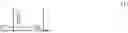


Sources:
- United States Patent and Trademark Office - verify current appl. status at the USPTO↗
Recent applications in this class:
- » 20260090975 2026-04-02
COSMETIC COMPOSITION, COMPRISING UV FILTER COMPOUND AND CROSSLINKED POLYESTER COMPONENT - » 20250381127 2025-12-18
COSMETIC COMPOSITION COMPRISING A POLYHYDROXYALKANOATE COPOLYMER BEARING A(N) (UN)SATURATED HYDROCARBON-BASED CHAIN AND A SILICONE POLYMER - » 20250367105 2025-12-04
Makeup and/or Care Composition Comprising a Volatile Solvent, a Particular Polyester, an Alkylcellulose and a Dyestuff, and Process Using Same - » 20250352453 2025-11-20
COMPOSITION COMPRISING A POLYHYDROXYALKANOATE COPOLYMER WITH A LONG HYDROCARBON-BASED CHAIN BEARING IONIC GROUP(S), AND METHOD FOR TREATING KERATIN MATERIALS USING THE COMPOSITION - » 20250281384 2025-09-11
POLYESTER, VISCOUS MIXTURE, PROCESS FOR PREPARING SAME AND COSMETIC COMPOSITION - » 20250248918 2025-08-07
BIODEGRADABLE POLYESTERS FOR WATER-RESISTANT ANHYDROUS SUNCARE FORMULATIONS - » 20250235395 2025-07-24
COSMETIC COMPOSITION COMPRISING SPECIFIC HYPERBRANCHED COPOLYMERS AND OILS - » 20250177281 2025-06-05
COSMETIC COMPOSITION COMPRISING A POLYHYDROXYALKANOATE COPOLYMER BEARING A (UN)SATURATED HYDROCARBON-BASED CHAIN AND AN OLIGO/POLYESTER - » 20250144003 2025-05-08
POLYHYDROXYALKANOATE COPOLYMER BEARING AN ACETOACETATE GROUP, COMPOSITION CONTAINING SAME AND COSMETIC USE THEREOF - » 20250127706 2025-04-24
COSMETIC COMPOSITION COMPRISING A POLYHYDROXYALKANOATE COPOLYMER BEARING A(N) (UN)SATURATED HYDROCARBON-BASED CHAIN AND A POLYSACCHARIDE