BOW MODULE FOR A MODULAR WATERCRAFT, MODULAR WATERCRAFT, AND USE OF AN INFLATABLE AND DIMENSIONALLY STABILISABLE FLOAT
US20260091853A1
2026-04-02
19/410,358
2025-12-05
Smart Summary: A bow module is designed for a modular watercraft that can be easily connected to other parts. This watercraft consists of different modules, including a stern module and the bow module, which can be attached using a special connection mechanism. The bow module features a connection element that links it to the stern module and has a space to hold an inflatable float. The float can be filled with compressed air and is made to stay stable in shape. When inflated, the float fits securely into the designated space in the bow module. 🚀 TL;DR
Abstract:
The invention relates, inter alia, to a bow module (30) for a modular watercraft (20). The watercraft (20) includes interconnectable modules including a stern module (22) and a bow module (30), which can be releasably connected by means of a first connection mechanism (26). The stern module (22) is connectable to a jet-propulsion module (24). The bow module (30) has a connection element (40) and a float (50). The connection element (40) is connectable to the stern module (22) by means of the first connection mechanism (26) and a dimensionally stable float receptacle (42) for receiving the float (50). The float (50) is inflatable by means of compressed air and is dimensionally stabilizable and, in an inflated state, is clampable or clamped into a recess (48) of the float receptacle (42).
Applicant:
Interested in similar patents?
Get notified when new applications in this technology area are published.
Classification:
B63B32/53 » CPC main
Water sports boards; Accessories therefor; Boards characterised by their constructional features Sectionalised boards, e.g. modular, dismountable or foldable boards
B63B32/10 » CPC further
Water sports boards; Accessories therefor Motor-propelled water sports boards
B63B32/51 » CPC further
Water sports boards; Accessories therefor; Boards characterised by their constructional features Inflatable boards, e.g. drop-stitch inflatable boards
Description
PRIORITY CLAIM
This application is a continuation-in-part of PCT/EP2024/065301, filed Jun. 4, 2024, and claims priority to DE 10 2023 114 731.5, filed Jun. 5, 2023.
BACKGROUND OF INVENTION
Field of Invention
The invention relates to a bow module for a modular watercraft, to a modular watercraft, and to the use of an inflatable and dimensionally stabilizable float for a modular watercraft having a jet-propulsion module.
Brief Description of Related Art
In DE 10 2019 116 689 A1, the present applicant disclosed a watercraft having a jet-propulsion module, the watercraft comprising interconnectable modules, a stern module and a bow module being provided which can be releasably connected by means of a first connection mechanism, and additionally a jet-propulsion module and a power supply module being provided which can be releasably connected to the stern module.
On account of the modular watercraft design, it is easy to operate a wide range of watercraft using the same jet-propulsion module and the same power supply module. For example, the stern module may be designed as a stern of a surfboard or boogie board or canoe and the bow module may be designed as a corresponding bow of the relevant watercraft.
The variety of different modules and the ability to flexibly combine them allows for different watercraft and numerous application possibilities. This entails particular requirements, in particular with regard to stability and secureness, for connections between modules and for connections of components of a module. For example, permanent bonds are known as a connection, but these do not provide much flexibility and may require the use of environmentally harmful adhesives.
This then gives rise to the object of making the connections between modules or within modules of a modular watercraft more stable, more secure, and more environmentally friendly.
BRIEF SUMMARY OF THE INVENTION
The object is achieved by a bow module for a modular watercraft, the watercraft comprising interconnectable modules, a stern module and a bow module being provided which can be releasably connected by means of a first connection mechanism, the stern module being connectable to a jet-propulsion module, the bow module being further developed in that the bow module comprises a connection element and a float, the connection element being connectable to the stern module by means of the first connection mechanism, and a dimensionally stable float receptacle for receiving the float, the float being inflatable by means of compressed air and being dimensionally stabilizable and, in an inflated state, being clampable or clamped into a recess of the float receptacle.
The basic concept of the invention is that the bow module has a float and a connection element having a float receptacle, the float being designed to be inflatable by means of compressed air. The float is releasably connectable or connected to the stern module in a stable manner by clamping the float into a recess of the float receptacle. Due to the low transport volume and weight of a float when same is not filled with compressed air, transportation of a bow module is simplified considerably. This allows a user of a modular watercraft, for example, to take with them different bow modules or at least different floats for different applications. A clamping connection provides a stable and secure connection between the float and connection element which does not require any adhesive and is thus ecologically advantageous.
The modular watercraft is, in particular, an electrically motorized surfboard or bodyboard.
Preferably, the float is connected in the float receptacle by means of a force-fitting connection. In particular, the float is clampable in the recess of the float receptacle by being inflated by means of compressed air. In this embodiment, the float is clamped in the recess by being inflated. It is advantageous here if a clamping effect is achieved in the recess by increasing the volume of the float by filling same with compressed air.
Advantageously, the connection element and/or the float receptacle is produced at least in part, in particular predominantly or completely, from plastics material. The plastics material is, in particular, dimensionally stable plastics material. For example, the plastics material is polyethylene, polypropylene, polyester, fiberglass-reinforced polyester, or epoxy resin. Preferably, the connection element is produced from polyethylene. In one embodiment, the connection element is designed to be hollow. Due to the low weight, a connection element of this kind is, in particular, floating and/or capable of floating. This is useful when assembling a modular watercraft in the water. Advantageously, the connection element is produced by means of a rotational molding process or rotational casting.
In particular, the float and connection element, in particular the float receptacle, are produced from different materials, for example different plastics materials.
The stability of the bow module is increased if the float and the connection element are releasably connectable or releasably connected by means of at least one bolt connection. A bolt connection as a supplement to a clamping connection improves the stability of the connection point between the float and connection element, and therefore a bow module of this kind allows for flexible applications and can be mounted very securely and precisely.
Advantageously, a bow module is further developed in that the float receptacle has an upper-side receiving portion and a lower-side receiving portion and in that the float has a float upper side and a float lower side as well as float side surfaces, the bow module having at least one bolt receptacle for receiving a bolt, the at least one bolt receptacle comprising an upper-side bolt opening in the upper-side receiving portion of the float receptacle and a lower-side bolt opening in the lower-side receiving portion of the float receptacle as well as a float bolt opening in the float, the float bolt opening being arranged in a stern-side part of the float and extending through the float from the float upper side to the float lower side, the upper-side bolt opening and the lower-side bolt opening being arranged so as to be aligned with one another, the float bolt opening being arranged or arrangeable so as to be aligned with the upper-side bolt opening and lower-side bolt opening, the bow module having a bolt for connecting the float and connection element for each of the at least one bolt receptacle, in particular each bolt being sized so as to be adapted to the relevant bolt receptacle and being insertable into the relevant bolt receptacle. A geometry of this kind yields a strong bolt connection between the connection element and float.
In particular, the float and the connection element are releasably connectable or releasably connected by means of at least one bolt connection, the at least one bolt receptacle and the at least one bolt producing the bolt connection.
Advantageously, the recess of the float receptacle in which the float is clampable or clamped in an inflated state is arranged between the upper-side receiving portion and the lower-side receiving portion. In this embodiment, clamping in the recess equates to insertion between the upper-side receiving portion and lower-side receiving portion, the compressed air in the float exerting an outwardly directed force onto the inner sides of the upper-side receiving portion and lower-side receiving portion.
Providing substantially round upper-side bolt openings and/or lower-side bolt openings and/or float bolt openings allows for a simple design for the components as well as favorable force effects for a stable connection.
Preferably, the upper-side receiving portion has two walls, an upper-side wall and a lower-side wall being provided which are connected by means of at least one bolt opening side surface. Preferably, the bolt opening side surfaces are a separation between the upper-side receiving portion and upper-side bolt opening. In particular, the upper-side receiving portion is manufactured so as to be hollow. In this case, the bolt opening side surfaces provide additional stability for the upper-side bolt opening.
Preferably, the lower-side receiving portion has two walls with an upper-side wall and a lower-side wall which are connected by means of at least one bolt opening side surface. Preferably, the bolt opening side surfaces are a separation between the lower-side receiving portion and lower-side bolt opening. In particular, the lower-side receiving portion is manufactured so as to be hollow. In this case, the bolt opening side surfaces provide additional stability for the upper-side bolt opening.
In particular, a bolt inserted into a float bolt opening produces a form-fitting connection. In one embodiment, the walls of a bolt opening exert a force against the associated bolt in the inflated state of the float and the walls of a bolt opening exert no force on the associated bolt in the uninflated state. In another embodiment, the diameter of at least one bolt opening is less than the diameter of at least one bolt, such that the at least one bolt increases the diameter of the bolt opening in the uninflated state when being driven through the bolt opening. The float is produced, in particular, from resilient material, such that the float, in particular the bolt openings, can be adapted to a bolt in certain embodiments. An inflated state of the float is, in particular, a state in which the float is filled with compressed air.
Advantageously, a nut or a sleeve nut is releasably fastened or fastenable, for example screwed or screwable, to at least one end of the bolt.
The reliability of the connection within the bow module is further increased if the bow module has at least two bolt receptacles, each comprising one upper-side bolt opening, each comprising one lower-side bolt opening, and each comprising one float bolt opening and at least two bolts.
In some embodiments, at least two bolt receptacles and/or at least two bolts are each designed to be identical. This simplifies the design. In another embodiment, each bolt is adapted to the relevant bolt receptacle.
It is advantageous that at least one bolt is designed as a fitted bolt, in particular the at least one bolt designed as a fitted bolt forming a form-fitting connection with a bolt receptacle. A fitted bolt here is a bolt with little or no play in the bolt opening. For example, a fitted bolt is a fitted screw with a head and partial thread. In another embodiment, the bolt is designed to be resilient and has a slightly larger diameter than a bolt receptacle, in particular a float bolt opening, such that the bolt is additionally securely held in the bolt receptacle, in particular in the float bolt opening, by means of a force-fitting connection.
Preferably, each bolt is produced at least in part, in particular predominantly from plastics material. This allows for a low weight for the bolts and thus for the bow module while also allowing for a high level of stability. For example, the plastics material is polyethylene, polypropylene, polyester, fiberglass-reinforced polyester, or fiberglass-reinforced epoxy resin.
In particular, the bolt is designed as a hollow bolt. In another embodiment, it is manufactured from solid material. In particular, the bolt is produced from dimensionally stable plastics material.
Preferably, each bolt has a diameter of at least 5 cm, at least 8 cm, at least 10 cm, or at least 12 cm. In a particularly preferred range, each bolt has a diameter of at least 5 cm and at most 15 cm.
Furthermore, each float bolt opening is advantageously spaced apart from the float side surfaces by at least 5 cm, at least 8 cm, at least 10 cm, or at least 12 cm. In a particularly preferred range, each float bolt opening is spaced apart from the float side surfaces by at least 10 cm and at most 25 cm.
In particular, each bolt has a first end and a second end, a releasably fastened first securing bolt plate for securing the bolt being provided at the first end, a releasably fastened or non-releasably fastened second securing bolt plate being provided at the second end.
In one embodiment, the first and second securing bolt plates are components of the bolt. Advantageously, the bolt and the second securing bolt plate are integrally formed. For example, a first securing bolt plate is disc-shaped or a first securing bolt plate is a sleeve nut or a sleeve with a collar.
A particularly convenient use is made possible if the first securing bolt plate is arranged or arrangeable so as to be flush with an upper side of the upper-side receiving portion or with a lower side of the lower-side receiving portion. Here, “flush” means, in particular, that the outer surface of the securing bolt plate is arranged in a plane spanned by the upper side or lower side of the float receptacle. A flat surface is thus produced from the surface of the connection element including the securing bolt plate or plates.
Advantageously, the float receptacle comprises at least one recess into which a securing bolt plate can be inserted and, in particular, is sized so as to fit therewith. Preferably, in the mounted state, a securing bolt plate exerts a force against an upper side of the upper-side receiving portion and/or a lower side of the lower-side receiving portion.
Particularly simple mounting is possible if the first securing bolt plate has a hexagon socket, the first securing bolt plate being fastenable by means of the hexagon socket. For example, a hexagon socket is arranged in a sleeve nut. In another embodiment, the second securing bolt plate has a hexagon socket, the second securing bolt plate being fastenable by means of the hexagon socket.
Furthermore, the object is achieved by a modular watercraft, comprising an above-described bow module and a stern module as well as a jet-propulsion module, the stern module being releasably connectable to the jet-propulsion module, in particular the stern module having a recess that complements the shape of the jet-propulsion module.
A modular watercraft of this kind has the same advantages as the above-described bow module, and therefore reference is expressly made to the above description in order to avoid repetitions.
Preferably, the jet-propulsion module can be received and/or integrated in the stern module. In particular, the modular watercraft has features of a modular watercraft according to DE 10 2019 116 689 A1, which is hereby incorporated by reference in its entirety.
In order to provide a power supply for the jet module with simple design effort, the watercraft has a power supply module that can be releasably connected to the stern module, the power supply module providing the power supply for the jet-propulsion module.
Finally, the object is achieved by the use of an inflatable and dimensionally stabilizable float of the like described above for a modular watercraft having a jet-propulsion module.
The use combines the same advantages as the above-described bow module and the above-described modular watercraft, and therefore repetitions are avoided at this point.
Further features of the invention will become evident from the description of embodiments according to the invention, together with the claims and the appended drawings. Embodiments according to the invention can fulfill individual features or a combination of multiple features.
Within the framework of the invention, features which are labeled with “in particular”or “preferably”are to be understood to be optional features.
The foregoing and other features of the invention are hereinafter more fully described below, the following description setting forth in detail certain illustrative embodiments of the invention, these being indicative, however, of but a few of the various ways in which the principles of the present invention may be employed.
BRIEF DESCRIPTION OF THE DRAWINGS
The invention will be described below, without restricting the general concept of the invention, based on exemplary embodiments and with reference to the drawings, reference being expressly made to the drawings regarding all of the details according to the invention which are not explained in greater detail in the text. In the figures:
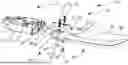
FIG. 1 is a schematic, perspective exploded view of a first embodiment of a modular watercraft having a bow module according to the invention,
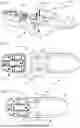
FIG. 2 is a schematic exploded plan view of the upper side of the first embodiment of a modular watercraft,
FIG. 3 is a schematic plan view of the upper side of an assembled first embodiment of a modular watercraft,
FIG. 4 is a schematic exploded side view of the first embodiment of a modular watercraft,
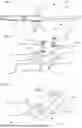
FIG. 5 is a schematic, perspective exploded view of a first embodiment of a connection element with bolts,
FIG. 6 is a schematic, perspective view of an assembled first embodiment of a connection element with bolts,
FIG. 7 is a schematic side view of an assembled first embodiment of a connection element with bolts, and
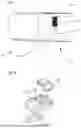
FIG. 8 shows an exploded schematic perspective view of an exemplary stern module.
In the drawings, the same or similar elements and/or parts are, in each case, provided with the same reference signs, and therefore they are not introduced again in each case.
DETAILED DESCRIPTION OF THE INVENTION
FIG. 1 is a schematic, perspective exploded view of a first embodiment of a modular watercraft 20 having an embodiment of a bow module 30. The watercraft 20 has a bow module 30 and a stern module 22. The stern module 22 (see, e.g., FIG. 8) is designed to receive a jet-propulsion module 24 and a power supply module 28. The stern module 22 has a recess 29 for arranging the power supply module 28. The stern module 22 can be connected to the bow module 30 by means of a first connection mechanism 26. The first connection mechanism 26 is not presented in more detail.
The bow module 30 has a connection element 40 and a float 50. The two components are interconnected by means of the float receptacle 42 of the connection element 40. Furthermore, a bolt connection 60 stabilizes the connection. The float receptacle 42 has an upper-side receiving portion 46 and a lower-side receiving portion 47. A recess 48 in which the float 50 can be inserted is arranged between said receiving portions.
In the mounted state, the upper-side bolt openings 66 in the upper-side receiving portion 46 are arranged so as to be aligned with the lower-side bolt openings 67 in the lower-side receiving portion 47 and with the float bolt openings 52. On account of the resulting alignment, bolts 64 having sleeve nuts 72 as securing bolt plates 70 are guided as a counterpart.
FIG. 2 is a schematic exploded plan view of the upper side of the first embodiment of a modular watercraft 20 shown in FIG. 1. FIG. 2 thus substantially shows the same components from a different perspective. The bolts 64 are introduced into the bolt receptacles 62 of the float receptacle 42. On account of the viewing direction shown, only the upper-side receiving portion 46 of the float receptacle 42 and the float upper side 56 are depicted.
FIG. 3 shows the modules of a modular watercraft 20 depicted individually in FIG. 2 in an assembled form. The connection element 40 is connected to the stern module 22 by means of the first connection mechanism 26. The float 50 is pushed into the float receptacle 42 of the connection element 40 and additionally fastened by means of a bolt connection 60. The bolt connection 60 of the bolts 64 connects the upper-side receiving portion 46, the float bolt opening 52, and the lower-side receiving portion 47.
For example, the float bolt openings 52 are designed such that, in the inflated state, the diameter of the float bolt openings 52 is designed to be somewhat smaller than the diameter of the bolts 64, such that the bolts 64 displace the resilient material of the float bolt openings 52 by application of force and temporarily increase the diameter of the float bolt openings 52. This produces a form-fitting and force-fitting connection.
FIG. 4 shows a schematic exploded side view of the first embodiment of a modular watercraft 20, which is shown in another view in a similar form in FIG. 1. It is clearly visible from FIG. 4 that the float 50 can be pushed into the connection element 40.
In some embodiments, the float 50 is introduced into the float receptacle 42 in the uninflated state and filled with compressed air in this arrangement. Such clamping of the float in the float receptacle can be sufficient for stably holding the two components together. To this end, it is advantageous if the float receptacle has at least one side receiving portion in addition to an upper-side receiving portion and a lower-side receiving portion. A side receiving portion of this kind is not shown in FIG. 4. In other embodiments, the connection of the float 50 and float receptacle 42 is stabilized further by a bolt connection 60 by means of bolts 64.
FIG. 5 and FIG. 6 are schematic, perspective views of a first embodiment of a connection element 40 together with bolts 64. Whereas FIG. 5 shows an exploded view, FIG. 6 is a view of an assembled embodiment.
A bolt 64 with a non-releasably fastened securing bolt plate 70 is introduced into the upper-side bolt opening 66 from the outside. Each bolt 64 is joined with a securing bolt plate 70 designed as a sleeve nut 72, which is introduced through the lower-side bolt opening 67 from the outside. The bolt 64 is screwed into the sleeve nut 72 by means of a hexagon socket in the securing bolt plate 70 of the bolt 64.
Furthermore, the upper-side bolt openings 66 have a cutout into which the securing bolt plate 70 can be inserted. The securing bolt plate 70 is sized so as to fit with the cutout. A flat surface is thus produced from the upper side of the upper-side receiving portion 46 and the securing bolt plates 70. In the mounted state, the securing bolt plates 70 of the bolts 64 exert a force against the upper-side receiving portion 46 and the securing bolt plates 70 designed as sleeve nuts 72 exert a force against the lower-side receiving portion 47.
A schematic side view of such an assembled first embodiment of a connection element 40 with a bolt 64 and a securing bolt plate 70 in the form of a sleeve nut 72 is shown in FIG. 7. A float 50, which is inserted into the recess 48 of the float receptacle 42 from the right in the drawing plane, is not shown herein. Subsequently, the float 50 is further secured by means of the bolt connection 60 shown in order to mount a bow module 30. The upper side of the upper-side receiving portion 46 is substantially flush with the securing bolt plate 70 of the bolt 64 and the lower side of the lower-side receiving portion 47 is substantially flush with the sleeve nut 72 as the securing bolt plate 70.
FIG. 8 shows an exploded schematic perspective view of a stern module 22 according to an embodiment of the invention. The jet-propulsion module 24 and the power supply module 28 can be inserted into the recesses 29 as shown by the arrows.
All of the indicated features, including those which are to be inferred from the drawings alone, and individual features which are disclosed in combination with other features, are deemed to be essential to the invention both alone and in combination. Embodiments according to the invention can be fulfilled by individual features or a combination of multiple features.
LIST OF REFERENCE CHARACTERS APPEARING IN THE DRAWING FIGURES The following reference characters appear in the accompanying drawing figures:
-
- 20 Watercraft
- 22 Stern module
- 24 Jet-propulsion module
- 26 First connection mechanism
- 28 Power supply module
- 29 Recess
- 30 Bow module
- 40 Connection element
- 42 Float receptacle
- 46 Upper-side receiving portion
- 47 Lower-side receiving portion
- 48 Recess
- 50 Float
- 52 Float bolt opening
- 56 Float upper side
- 57 Float lower side
- 58 Float side surface
- 60 Bolt connection
- 62 Bolt receptacle
- 64 Bolt
- 66 Upper-side bolt opening
- 67 Lower-side bolt opening
- 70 Securing bolt plate
- 72 Sleeve nut
Claims
What is claimed is:1: A bow module that is releasably connectable to a stern module by means of a first connection mechanism to form a modular watercraft, the stern module being connectable to a jet-propulsion module, said bow module comprising:
a connection element; and
a float;
wherein the connection element is connectable to the stern module by means of the first connection mechanism,
wherein the connection element has a dimensionally stable float receptacle for receiving the float,
wherein the float is inflatable by means of compressed air to become dimensionally stabilized, and
wherein the float, in an inflated state, is clampable or clamped into a recess of the float receptacle.
2: The bow module according to claim 1, wherein the float and the connection element are releasably connectable or releasably connected by means of at least one bolt connection.
3: The bow module according to claim 1, wherein the float receptacle has an upper-side receiving portion and a lower-side receiving portion and wherein the float has a float upper side and a float lower side as well as float side surfaces, the bow module having at least one bolt receptacle for receiving a bolt, the at least one bolt receptacle comprising an upper-side bolt opening in the upper-side receiving portion of the float receptacle and a lower-side bolt opening in the lower-side receiving portion of the float receptacle as well as a float bolt opening in the float, the float bolt opening being arranged in a stern-side part of the float and extending through the float from the float upper side to the float lower side, the upper-side bolt opening and the lower-side bolt opening being arranged so as to be aligned with one another, the float bolt opening being arranged or arrangeable so as to be aligned with the upper-side bolt opening and lower-side bolt opening, the bow module having a bolt for connecting the float and connection element for each of the at least one bolt receptacle, each bolt being sized so as to be adapted to the relevant bolt receptacle and being insertable into the relevant bolt receptacle.
4: The bow module according to claim 1, wherein the bow module has at least two bolt receptacles, each comprising one upper-side bolt opening, each comprising one lower-side bolt opening, and each comprising one float bolt opening (52) and at least two bolts.
5: The bow module according to claim 3, wherein at least one bolt is designed as a fitted bolt forming a form-fitting connection with a bolt receptacle.
6: The bow module according to claim 3, wherein each bolt is produced at least in part from plastic material.
7: The bow module according to claim 3, wherein each bolt has a diameter of at least 5 cm.
8: The bow module according to claim 3, wherein each float bolt opening is spaced apart from the float side surfaces by at least 5 cm.
9: The bow module according to claim 3, wherein each bolt has a first end and a second end, and wherein a releasably fastened first securing bolt plate for securing the bolt is provided at the first end and a releasably fastened or non-releasably fastened second securing bolt plate is provided at the second end.
10: The bow module according to claim 9, wherein the first securing bolt plate is arranged or arrangeable so as to be flush with an upper side of the upper-side receiving portion or with a lower side of the lower-side receiving portion.
11: The bow module according to claim 9, wherein the first securing bolt plate has a hexagon socket, and the first securing bolt plate is fastenable by means of the hexagon socket.
12: A modular watercraft comprising a bow module according to claim 1 and a stern module as well as a jet-propulsion module, the stern module being releasably connectable to the jet-propulsion module, the stern module having a recess that complements the shape of the jet-propulsion module.
13: The modular watercraft according to claim 12, wherein the watercraft has a power supply module that is releasably connectable to the stern module, the power supply module providing the power supply for the jet-propulsion module.
14: A method for operating the modular watercraft according to claim 12, the method comprising using the jet-propulsion module to propel the modular watercraft on water such that the modular watercraft functions as an electrically motorized surfboard or bodyboard.
Images & Drawings included:
Sources:
- United States Patent and Trademark Office - verify current appl. status at the USPTO↗
Recent applications in this class:
- » 20250128791 2025-04-24
Folding Sports Board, System and Method - » 20240417039 2024-12-19
MULTI-SEGMENT RECREATIONAL BOARDS - » 20230365234 2023-11-16
Wave Riding Vehicle - » 20230264791 2023-08-24
Transportable waterboards, and associated systems and methods - » 20230202621 2023-06-29
MODULAR HYDROFOIL WATERCRAFT - » 20230129414 2023-04-27
Multi-segment recreational boards - » 20210394871 2021-12-23
Releasable fastening system and articles using same - » 20120216389 2012-08-30
Sectional sportboard system - » 20110207376 2011-08-25
Sectionalized sports board - » 20100173545 2010-07-08
ELEMENT OF CHANGING A SURFBOARD TAIL AND METHOD TO SET IT UP