ASEPTIC FILLING SYSTEM, AND FILLING AND PACKAGING METHOD
US20260091902A1
2026-04-02
19/413,277
2025-12-09
Smart Summary: An aseptic filling system is designed to package processed food safely. It uses a temperature-controlled thermal conduit connected to an extruder to sterilize the food as it flows through. The food must have a low water activity of less than 0.94 before packaging. It is filled into containers at a high temperature between 65 to 99°C. Finally, the oxygen level in the sealed containers is kept very low, at 1% or less, to help preserve the food. 🚀 TL;DR
Abstract:
Provided is an aseptic filing system, in which, in filling and packaging a processed food processed using an extruder in an aseptic environment, a thermal conduit that is capable of being temperature-controlled to a predetermined sterilization temperature is connected to a discharge port of a barrel portion of the extruder, and the processed food is sterilized according to residence time during which the processed food discharged from the extruder flows through the thermal conduit. Also provided is a filling and packaging method, in which a processing condition is adjusted so that water activity of the processed food discharged from the extruder is less than 0.94, the processed food discharged from the extruder is filled and packaged in a sealable container at a temperature of 65 to 99° C., and an oxygen concentration in the container with the processed food filled and packaged is set to 1% or less.
Inventors:
- Shinji Yamamoto 18 🇯🇵 Yokohama-shi, Japan
- Makoto Sawada 6 🇯🇵 Yokohama-shi, Japan
- Masashi Atsugi 2 🇯🇵 Yokohama-shi, Japan
Assignee:
- Toyo Seikan Co., Ltd. 184 🇯🇵 Tokyo, Japan
Applicant:
Interested in similar patents?
Get notified when new applications in this technology area are published.
Classification:
B65B55/14 » CPC main
Preserving, protecting or purifying packages or package contents in association with packaging; Sterilising, e.g. of complete packages; Sterilising contents prior to, or during, packaging by heat
B65B1/04 » CPC further
Packaging fluent solid material, e.g. powders, granular or loose fibrous material, loose masses of small articles, in individual containers or receptacles, e.g. bags, sacks, boxes, cartons, cans, or jars Methods of, or means for, filling the material into the containers or receptacles
B65B55/027 » CPC further
Preserving, protecting or purifying packages or package contents in association with packaging; Sterilising, e.g. of complete packages Packaging in aseptic chambers
B65B55/02 IPC
Preserving, protecting or purifying packages or package contents in association with packaging Sterilising, e.g. of complete packages
Description
CROSS-REFERENCE TO RELATED APPLICATIONS
This application is a continuation application of International Application No. PCT/JP2024/021554 filed on Jun. 13, 2024, which claims the benefit of priority from Japanese Patent Application No. 2023-127271 filed on Aug. 3, 2023, Japanese Patent Application No. 2023-196747 filed on Nov. 20, 2023, and Japanese Patent Application No. 2024-022952 filed on Feb. 19, 2024, and designating the U.S., the contents of all of which are incorporated herein by reference in their respective entireties.
TECHNICAL FIELD
The disclosure relates to an aseptic filling system, and a filling and packaging method.
BACKGROUND
JP 2022-160947 A, for example, discloses a technique of kneading a raw material containing a protein derived from a plant, such as soybean or wheat, while heating the raw material with an extruder to produce a meat-like processed food as an alternative food to meat. Such a meat-like processed food is preferably delivered in a dried state to be able to be distributed at normal temperature. An example of the form of distribution is a form of distribution in which a food material is supplied to a food manufacturer, rehydrated, cooked, and then provided to an end consumer as a cocked food.
In a case where distribution at normal temperature is demanded, it is considered that the cocked food is filled in a sealed container, sterilized by heating under pressure, and distributed as a retort food.
SUMMARY
However, in such a form of distribution, the flavor of the material to be processed may be lost because the material to be processed is subjected to a thermal history in the extruder and many other thermal histories. As a result of intensive studies to enable distribution of a processed food processed by using an extruder at normal temperature while reducing the thermal history to which a material to be processed is subjected, the present inventors completed the disclosure.
The aseptic filling system according to an embodiment of the disclosure has a configuration in which in filling and packaging a processed food processed by using an extruder in an aseptic environment, a thermal conduit that is capable of being temperature-controlled to a predetermined sterilization temperature is connected to a discharge port of a barrel portion of the extruder, and the processed food is sterilized according to residence time during which the processed food discharged from the extruder flows through the thermal conduit.
The filling and packaging method according to an embodiment of the disclosure is a filling and packaging method including: in filling and packaging a processed food processed by using an extruder; adjusting a processing condition so that water activity of the processed food discharged from the extruder is less than 0.94; filling and packaging the processed food that is discharged from the extruder and has a temperature of 65 to 99° C. into a sealable container; and setting an oxygen concentration in the container in which the processed food is filled and packaged to 1% or less.
The filling and packaging method according to an embodiment of the disclosure may also be a filling and packaging method including: in filling and packaging a processed food processed by using an extruder; adjusting a processing condition so that water activity of the processed food discharged from the extruder is less than 0.94; filling and packaging the processed food that is discharged from the extruder and has a temperature of 60 to 99° C. into a sealable container made of an oxygen absorbing packaging material; and setting an oxygen concentration in the container in which the processed food is filled and packaged to 1% or less.
The aseptic filling system according to an embodiment of the disclosure enables, by filling and packaging a processed food discharged from an extruder in an aseptic environment after theoretically confirming that the processed food has been necessarily and sufficiently sterilized, distribution of a processed food processed by using an extruder at normal temperature while reducing the thermal history to which a material to be processed is subjected.
The filling and packaging method according to an embodiment of the disclosure enables distribution of a processed food processed by using an extruder at normal temperature while reducing the thermal history to which a material to be processed is subjected.
BRIEF DESCRIPTION OF DRAWINGS
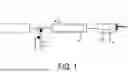
FIG. 1 is an explanatory view illustrating an outline of an exemplary aseptic filling system according to an embodiment of the disclosure.
FIGS. 2A to 2E are explanatory views each illustrating an example of operation of the aseptic filling system according to an embodiment of the disclosure.
DESCRIPTION OF EMBODIMENTS
Hereinafter, preferred embodiments of the disclosure will be described with reference to the accompanying drawings.
Aseptic Filling System
First, an aseptic filling system according to the present embodiment will be described. An aseptic filling system 1 illustrated in FIG. 1 as an example is for enabling distribution of a processed food processed by using an extruder 2 at normal temperature.
The specific configuration of the extruder 2 is not limited as long as the extruder 2 is configured to process a material to be processed by extrusion-molding the material to be processed as a raw material by compression, shearing, pulverization, heating, kneading, or the like while conveying the material to be processed, so-called extrusion cooking. The extruder 2 may be either of a single screw type or a twin screw type. The extruder 2 of a twin screw type may be either of a co-rotating type and a counter-rotating type and may be any of a non-fully intermeshing type, a partially intermeshing type, and a fully intermeshing type.
The processed food processed by using the extruder 2 is finally introduced to a cooling die 4, is cut at predetermined intervals while being extruded into any shape such as a sheet shape, and is then filled and packaged in a sealable container. These series of processes are performed in an aseptic environment. For this purpose, for example, the cooling die 4 is extended into an aseptic chamber (not illustrated) in which equipment for filling and packaging, such as a filling sealing machine or a form-fill-seal machine, is installed, allowing for the filling and packaging may be performed in an aseptic environment.
In an example illustrated in FIG. 1, the aseptic filling system 1 includes a thermal conduit 3 that is capable of being temperature-controlled to a predetermined sterilization temperature disposed between the extruder 2 and the cooling die 4, and the thermal conduit 3 is connected to a discharge port of a barrel portion of the extruder 2 via a three-way valve 5. In this way, the thermal conduit 3 is connected to the discharge port of the barrel portion of the extruder 2, and the processed food can be sterilized according to residence time during which the processed food discharged from the extruder 2 flows through the thermal conduit 3.
The thermal conduit 3 can be made temperature-controllable, for example, by having a double pipe structure configured such that steam or warm water circulates around a conduit for flowing the processed food discharged from the extruder 2. The conduit for flowing the processed food discharged from the extruder 2 is a straight pipe having a circular cross section with a constant diameter and can be configured to change the sterilization effect exerted on the processed food by adjusting the pipe length.
The cross-sectional shape of the conduit for flowing the processed food discharged from the extruder 2 is not limited to a circular shape as long as the cross-sectional area is constant.
In the current Food Sanitation Act of Japan, a standard for production of retort pouch foods excluding nonalcoholic-beverages and the like specifies that a food having pH of greater than 4.6 and water activity of greater than 0.94 is sterilized by heating under pressure according to a method in which the central portion of the food is heated at 120° C. for 4 minutes or a method having an effect equal to or higher than that of the above-mentioned method. Therefore, in order to distribute a food having pH of greater than 4.6 and water activity of greater than 0.94 at normal temperature, it is considered that sterilization having an effect equal to or higher than that of the above-mentioned standard (that is, an F0 value of 3.1 or more) needs to be performed.
Here, the F0 value is an index of intensity of heat sterilization, and is an F value obtained from the following equation, where the reference temperature (T0) is 121.1° C. and the z value (z) is 10° C.
F value = ? × 10 ? ( ( T - T 0 ) / z ) [ Math . 1 ] ? indicates text missing or illegible when filed
-
- T: Temperature during heat sterilization (° C.)
- T0: Reference temperature (° C.)
- t: Time (min)
- Z: Temperature difference required to increase the D value (heating time for reducing the number of surviving bacteria to 1/10) by 10 times (° C.)
The F0 value is a time converted to the number of minutes of heating at 121.1° C., and can be obtained from the following equation as an integrated value of the holding time at a certain temperature and the sterilization rate at that temperature.
F 0 value = ∑ L ? · Δ t = ∫ 10 ? ( ( T ( t ) - 121.1 ) / 10 ) dt [ Math . 2 ] ? indicates text missing or illegible when filed
-
- Li: Sterilization rate at temperature of i° C.
- t: Time point
- T(t): Temperature at time point t
For example, adjusting the temperature of the thermal conduit 3 so that the sterilization temperature is 140° C. and adjusting the pipe length of the thermal conduit 3 so that the residence time during which the processed food discharged from the extruder 2 flows through the thermal conduit 3 is 10.00 seconds allows the average F0 value to be 12.94 (10{circumflex over ( )}((140 [° C.]−121.1 [° C.])/10)×(10.0 [sec]/60.0 [sec])), allowing the sterilization effect to be necessarily and sufficiently exerted on the processed food.
At this time, when the throughput of the extruder 2, that is, the amount of the processed food discharged from the extruder 2 is 0.14 kg/sec and the specific weight of the processed food is 1200 kg/m3, the pipe length of the thermal conduit 3 can be adjusted as follows. That is, to set the residence time during which the processed food flows through the thermal conduit 3 to 10.00 seconds in such a case, the volume of the pipe is set to 1.16×10⁻³ m3 ((0.14 [kg/sec]/1200 [kg/m3])×10.00 [sec]). Therefore, for example, the conduit for flowing the processed food discharged from the extruder 2 having a diameter of 30 mm allows the above-mentioned F0 value to be achieved by adjusting the pipe length of the conduit to 1.64 m (1.16×10⁻³ [m3]/((30 [mm]/2)2×π)).
In this way, according to the present embodiment in which the processed food discharged from the extruder 2 is sterilized according to the residence time during which the processed food flows through the thermal conduit 3 adjusted to the predetermined sterilization temperature, the sterilization effect exerted on the processed food can be theoretically confirmed. Therefore, appropriately adjusting the set temperature and the pipe length of the thermal conduit 3 and filling and packaging the processed food discharged from the extruder 2 in an aseptic environment after theoretically confirming that the processed food has been necessarily and sufficiently sterilized enables distribution of the processed food at normal temperature. As a result, for example, the drying treatment in the form of distribution exemplified as the background art can be omitted, and the thermal history to which the material to be processed is subjected can be reduced.
Next, operation of the aseptic filling system according to the present embodiment will be described.
FIGS. 2A to 2E are explanatory views each illustrating an example of operation of the aseptic filling system according to the present embodiment.
SIP (Equipment Sterilization)
In order to sterilize a path through which the processed food discharged from the extruder 2 flows in the order of the thermal conduit 3 and the cooling die 4, the three-way valve 5 is switched as illustrated in the drawing to supply steam from a steam introduction pipe 6. At this time, the outlet temperature of the thermal conduit 3 and the outlet temperature of the cooling die 4 are monitored while circulating steam or warm water in temperature control circuits each provided in the thermal conduit 3 and the cooling die 4. Then, while confirming that the outlet temperatures have reached the set temperatures, the supply of steam is continued until a predetermined time is elapsed (see FIG. 2A).
[SIP Cooling]
After the sterilization treatment is completed, the supply of steam from the steam introduction pipe 6 is stopped, and at the same time, the three-way valve 5 is switched as illustrated in the drawing. At the same time, a drain valve 8 on a CIP cap 7 side is closed to close the above-mentioned path. At this time, the temperature control circuit provided in the thermal conduit 3 is made to keep circulating steam or warm water, and cooling water is circulated in the temperature control circuit provided in the cooling die 4 (see FIG. 2B).
[Initial Ejection]
After the operation of the extruder 2 is started, the three-way valve 5 and the like are switched as illustrated in the drawing until the temperature and pressure rise to predetermined values, and the processed food discharged from the extruder 2 is ejected via a back pressure valve 9. At this time, steam is supplied from the steam introduction pipe 6 as necessary, and the processed food is ejected under back pressure. At the same time, a sterilized gas such as sterile nitrogen or steam is supplied from the CIP cap 7 side to apply a back pressure to the thermal conduit 3 and the cooling die 4 (see FIG. 2C).
Transition to Production
When it is confirmed that the temperature of the thermal conduit 3 has reached the sterilization temperature, the three-way valve 5 is switched as illustrated in the drawing so that the processed food discharged from the extruder 2 flows through the thermal conduit 3 and the cooling die 4 in this order. Then, when the internal pressure of the cooling die 4 starts to rise, the CIP cap 7 is removed from the cooling die 4 and retracted (see FIG. 2D).
Production
After the CIP cap 7 is retracted, a cutter 10 is immediately operated to start production (see FIG. 2E).
Filling and Packaging Method
Next, the filling and packaging method according to the present embodiment will be described. The method is for enabling distribution of a processed food processed by using an extruder at normal temperature.
The specific configuration of the extruder is not limited as long as the extruder is configured to process a material to be processed by extrusion-molding the material to be processed as a raw material by compression, shearing, pulverization, heating, kneading, or the like while conveying the material to be processed, so-called extrusion cooking. The extruder 2 may be either of a single screw type or a twin screw type. The extruder 2 of a twin screw type may be either of a co-rotating type and a counter-rotating type and may be any of a non-fully intermeshing type, a partially intermeshing type, and a fully intermeshing type.
The processed food processed by using the extruder is cut at predetermined intervals while being extruded into any shape such as a sheet shape from a die attached to a discharge port of a barrel portion, and then filled and packaged in a sealable container. These series of processes are preferably performed in an aseptic environment. For this purpose, for example, the die is extended in an aseptic chamber in which equipment for filling and packaging, such as a filling sealing machine or a form-fill-seal machine, is installed, allowing for the filling and packaging in an aseptic environment.
The water activity at which many food poisoning bacteria can grow is 0.94 or more, while the lower limit of the water activity at which molds can grow is defined as 0.60. From such a viewpoint, in the present embodiment, the processing condition are adjusted so that the water activity of the processed food discharged from the extruder is less than 0.94, preferably 0.90 or less, and more preferably 0.85 or less to create an environment in which the growth of food poisoning bacteria is inhibited and suppress entry of molds, allowing for distribution of the processed food processed by using an extruder at normal temperature.
Molds are weak against heat, and it is said that most of the molds are killed by heating at 60° C. for about 10 minutes. From such a viewpoint, to suppress entry of molds in filling and packaging the processed food processed by using an extruder, the processed food that is discharged from the extruder and has a temperature of 65 to 99° C. is filled and packaged into a sealable container. This maintains the temperature at the temperature at which molds are killed until the predetermined time elapses after the processed food is filled and packaged to more reliably kill the molds, allowing for suppressing entry of molds into the container. Reducing the oxygen concentration in the container to 1% or less, preferably 0.1% or less, allows, even if molds enter the container, the growth of molds to be suppressed.
In order to reduce the oxygen concentration in the container, filling and packaging may be performed by gas replacement packaging in which the processed food is filled and packaged while the air in the container is replaced with an inert gas such as nitrogen. It is also effective to use a container made of an oxygen absorbing packaging material (for example, OXDEC (registered trademark) manufactured by Toyo Seikan Co., Ltd.) or to enclose an oxygen-absorbing agent in the container in order to reduce the oxygen concentration in the container.
Using a container made of an oxygen absorbing packaging material absorbs oxygen remaining in the container after the processed food is filled and packaged, allowing the oxygen concentration in the container to be further reduced with time. Accordingly, the growth of molds is inhibited in an environment with a lower oxygen concentration, and thus the growth of molds can be controlled even in the case where the temperature of the processed food discharged from the extruder when being filled and packaged in a container is set to 60 to 99° C.
The present embodiment enables distribution of a processed food processed by using an extruder at normal temperature. As a result, for example, the drying treatment in the form of distribution exemplified as the background art can be omitted, and the thermal history to which the material to be processed is subjected can be reduced.
EXAMPLES
Hereinafter, the filling and packaging method according to an embodiment of the disclosure will be described in more detail with reference to specific examples.
Example 1
A soybean processed food was processed by using a twin screw extruder while the processing condition was adjusted so that the water activity was 0.85, and the soybean processed food discharged from the extruder was filled in an aluminum laminated pouch at a food temperature of 65° C. Then, the pouch was sealed with gas replacement using nitrogen gas so that the oxygen concentration in the pouch was 1%, thereby preparing a sample containing the soybean processed food filled and packaged in the pouch. The sample thus prepared was isothermally stored at normal temperature (25° C.), the filled and packaged soybean processed food was observed after a lapse of one month, but no growth of molds was observed.
Example 2
A soybean processed food was processed by using a twin screw extruder while the processing condition was adjusted so that the water activity was 0.85, and the soybean processed food discharged from the extruder was filled in a pouch made of an oxygen absorbing packaging material and having an oxygen absorbing function at a food temperature of 60° C. Then, the pouch was sealed with gas replacement using nitrogen gas so that the oxygen concentration in the pouch was 1%, thereby preparing a sample containing the soybean processed food filled and packaged in the pouch. The sample thus prepared was isothermally stored at normal temperature (25° C.), the filled and packaged soybean processed food was observed after a lapse of one month, but no growth of molds was observed.
Example 3
A soybean processed food was processed by using a twin screw extruder while the processing condition was adjusted so that the water activity was 0.85, and the soybean processed food discharged from the extruder was filled in an aluminum laminated pouch at a food temperature of 65° C. in an aseptic environment in a clean bench. Then, the pouch was sealed with gas replacement using nitrogen gas so that the oxygen concentration in the pouch was 1%, thereby preparing a sample containing the soybean processed food filled and packaged in the pouch. The sample thus prepared was isothermally stored at normal temperature (25° C.), the filled and packaged soybean processed food was observed after a lapse of one month, but no growth of molds was observed.
Comparative Example 1
A soybean processed food was processed by using a twin screw extruder while the processing condition was adjusted so that the water activity was 0.85, and the soybean processed food discharged from the extruder was filled in an aluminum laminated pouch at a food temperature of 25° C. Then, the pouch was sealed without adjustment of the oxygen concentration by gas replacement, thereby preparing a sample containing the soybean processed food filled and packaged in the pouch. The sample thus prepared was isothermally stored at normal temperature (25° C.), the filled and packaged soybean processed food was observed after a lapse of one month, and growth of molds was observed.
Comparative Example 2
A soybean processed food was processed by using a twin screw extruder while the processing condition was adjusted so that the water activity was 0.85, and the soybean processed food discharged from the extruder was filled in an aluminum laminated pouch at a food temperature of 60° C. Then, the pouch was sealed with gas replacement using nitrogen gas so that the oxygen concentration in the pouch was 1%, thereby preparing a sample containing the soybean processed food filled and packaged in the pouch. The sample thus prepared was isothermally stored at normal temperature (25° C.), the filled and packaged soybean processed food was observed after a lapse of one month, and growth of molds was observed.
Although the disclosure has been described above with reference to the preferred embodiments, the disclosure is not limited only to the embodiments described above, and it goes without saying that various modifications can be made within the scope of the disclosure.
The disclosure can be suitably applied to meat-like processed foods made of plant-derived proteins, but is not limited thereto. The disclosure can be applied to various processed foods processed by extrusion cooking.
While preferred embodiments of the disclosure have been described above, it is to be understood that variations and modifications will be apparent to those skilled in the art without departing from the scope and spirit of the disclosure. The scope of the disclosure, therefore, is to be determined solely by the following claims.
Claims
1. An aseptic filling system, in which
in filling and packaging a processed food processed by using an extruder in an aseptic environment,
a thermal conduit that is capable of being temperature-controlled to a predetermined sterilization temperature is connected to a discharge port of a barrel portion of the extruder, and
the processed food is sterilized according to residence time during which the processed food discharged from the extruder flows through the thermal conduit.
2. A filling and packaging method comprising:
in filling and packaging a processed food processed by using an extruder,
adjusting a processing condition so that water activity of the processed food discharged from the extruder is less than 0.94;
filling and packaging the processed food that is discharged from the extruder and has a temperature of 65 to 99° C. into a sealable container; and
setting an oxygen concentration in the container in which the processed food is filled and packaged to 1% or less.
3. The filling and packaging method according to claim 2, wherein the container is made of an oxygen absorbing packaging material.
4. A filling and packaging method comprising:
adjusting a processing condition so that water activity of the processed food discharged from the extruder is less than 0.94;
filling and packaging the processed food that is discharged from the extruder and has a temperature of 60 to 99° C. into a sealable container made of an oxygen absorbing packaging material; and
setting an oxygen concentration in the container in which the processed food is filled and packaged to 1% or less.
5. The filling and packaging method according to claim 2, wherein the processed food discharged from the extruder is filled and packaged in the container in an aseptic environment.
Images & Drawings included:


Sources:
- United States Patent and Trademark Office - verify current appl. status at the USPTO↗
Similar patent applications:
- » 20140215969
Method and system for aseptically filling a package - » 20190192359
Method and system for aseptically filling a package - » 20210220192
Method and system for aseptically filling a package - » 20230062914
Method and system for aseptically filling a package - » 20240342020
METHOD AND SYSTEM FOR ASEPTICALLY FILLING A PACKAGE - » 20140087035
METHODS AND SYSTEMS FOR COORDINATION OF ASEPTIC STERILIZATION AND ASEPTIC PACKAGE FILLING RATE
Recent applications in this class:
- » 20200247570 2020-08-06
Thermal method for sterilizing poloxamer comprising liquid drugs - » 20190270533 2019-09-05
Packaging method to enable re-sterilization of medical device - » 20180251250 2018-09-06
Container for use in food processing - » 20160355287 2016-12-08
Magnetron control system and associated methodology - » 20160347492 2016-12-01
Packaging method to enable re-sterilization of medical device - » 20160311566 2016-10-27
Package containing a cosmetic product - » 20150013272 2015-01-15
Heat-treatment device capable of receiving loose products - » 20140335248 2014-11-13
Food processing in metal cans - » 20140303254 2014-10-09
Process Of Manufacturing A Stable, Ready To Use Infusion Bag For An Oxidation Sensitive Formulation - » 20140298752 2014-10-09
METHOD FOR PRESERVING FOODSTUFFS
Recent applications for this Assignee:
- » 20260062586 2026-03-05
METHOD FOR MANUFACTURING SEAMLESS CAN - » 20260062585 2026-03-05
POLYESTER-RESIN-COATED SEAMLESS CAN AND METHOD FOR MANUFACTURING THE SAME - » 20260062584 2026-03-05
POLYESTER-RESIN-COATED SEAMLESS CAN AND METHOD FOR MANUFACTURING THE SAME - » 20260042588 2026-02-12
SIDE-GUSSETED POUCH - » 20260008257 2026-01-08
OLEFIN RESIN PACKAGING MATERIAL - » 20260001695 2026-01-01
PACKAGING FILM - » 20250387963 2025-12-25
SEALANT FILM - » 20250320392 2025-10-16
MULTILAYER FILM USING SOLVENTLESS ADHESIVE, METHOD FOR PRODUCING SAME, AND PACKAGING CONTAINER - » 20250256317 2025-08-14
METHOD FOR MANUFACTURING SEAMLESS CAN - » 20250206504 2025-06-26
GUSSETED POUCH