Pipe Cleaning Device
US20260092437A1
2026-04-02
19/411,753
2025-12-08
Smart Summary: A pipe cleaning device has a long rod with two ends, one for connecting to a rotary motion tool and the other for attaching a special tip. The tip has several small parts that stick out to help clean the inside of pipes. When the device is used, it can rotate to effectively remove clogs. Additionally, a cleaning kit is available that includes this device along with a powder or liquid that helps break up blockages in pipes. Together, they make it easier to keep pipes clear and functioning properly. 🚀 TL;DR
Abstract:
In one embodiment, a pipe cleaning device includes an elongated rod section having a first end, a second end, and a rod axis, the first end of the elongated rod section being oppositely disposed relative to the second end of the elongated rod section; a rotary motion input section connected to the first end of the elongated rod section by a crimped connection; and a tip section connected to the second end of the elongated rod section, the tip section including a plurality of protruding elements projecting outwardly from the tip section, the plurality of protruding elements being disposed along at least a portion of a length of the tip section. In another embodiment, a pipe cleaning kit includes a pipe cleaning device and a powder-based or liquid-based drain clog remover, the powder-based or liquid-based drain clog remover configured to dislodge debris inside an interior cavity of a pipe.
Inventors:
- Stephen S. Turner 18 🇺🇸 Edelstein, IL, United States
- Scott I. Turner 19 🇺🇸 Chillicothe, IL, United States
Applicant:
Interested in similar patents?
Get notified when new applications in this technology area are published.
Classification:
E03C1/302 » CPC main
Domestic plumbing installations for fresh water or waste water; Sinks; Plumbing installations for waste water; Basins or fountains connected thereto ; Sinks; Devices to facilitate removing of obstructions in waste-pipes or sinks using devices moved through the pipes
Description
CROSS-REFERENCE TO RELATED APPLICATIONS
This patent application is a continuation-in-part of U.S. Nonprovisional patent application Ser. No. 18/117,462 , entitled “Pipe Cleaning Device”, filed on Mar. 5, 2023, which claims priority to U.S. Provisional Patent Application No. 63/316,995 , entitled “Pipe Cleaning Device”, filed on Mar. 5, 2022, all of the disclosures of which are herein expressly incorporated by reference in their entireties.
This patent application also claims priority to U.S. Provisional Patent Application No. 63/740,907, entitled “Drain Cleaning Device”, filed on Dec. 31, 2024, and U.S. Provisional Patent Application No. 63/866,224, entitled “Drain Cleaning Device”, filed on Aug. 18, 2025, the disclosure of each of which is hereby incorporated by reference as if set forth in their entireties herein.
STATEMENT REGARDING FEDERALLY SPONSORED RESEARCH OR DEVELOPMENT
Not Applicable.
NAMES OF THE PARTIES TO A JOINT RESEARCH AGREEMENT
Not Applicable.
INCORPORATION BY REFERENCE OF MATERIAL SUBMITTED ON A COMPACT DISK
Not Applicable.
BACKGROUND OF THE INVENTION
1. Field of the Invention
The invention generally relates to a pipe cleaning device. More particularly, the invention relates to a pipe cleaning brush for cleaning an interior wall of a pipe. In addition, the invention relates to a pipe cleaning device and a powder-based or liquid-based drain clog remover that are provided as part of a pipe cleaning kit.
2. Background
Residential bathroom and kitchen plumbing drain pipes can accumulate debris along the inside surfaces of the pipe through every day use. If not maintained, over time, the drain becomes restricted as the interior pipe opening becomes narrower and narrower.
The average homeowner will find the quickest and easiest maintenance for this type of problem is to pour caustic chemicals down the pipe in an attempt to disintegrate the build-up with the caustic chemical. This method is often effective for the areas of the pipe that the chemical can reach and hopefully accumulate on the interior pipe scum with enough quantity and for a long enough time period to break down and erode the scum. However, vertical pipes and the top half of lateral pipes may not receive enough of the chemical, as the chemical flows by gravity down the line and out of the house as the plumbing system is designed to operate.
As an alternative, homeowners will use more affordable do-it-yourself plumbing snakes with cutter-type ends which mechanically abrade the scum buildup by moving the snake back-and-forth in the drain or attaching the snake to a power drill to create a spinning action and therefore scraping the pipe walls as the tool is moved through the pipe drain. A disadvantage of this type of snake with cutter head is that the drain may need to be disassembled to allow the cutter head to get past drain stopper mechanisms or to navigate tight initial pipe bends, such as a “P” trap.
When all else fails, the homeowner calls a plumber or rents a commercial grade power snake with varying power and cutter/abrading heads which is driven by its own rotating power system but capable of driving the snake with more power than a simple power drill. These methods are costly and sometimes dangerous to use depending upon the spinning power and speed of the unit and shape of the sometimes sharp, spinning head of the snake.
Therefore, what is needed is a pipe cleaning device that is configured to dislodge and grab debris from an interior wall of a pipe.
BRIEF SUMMARY OF EMBODIMENTS OF THE INVENTION
Accordingly, the present invention is directed to a pipe cleaning device and a pipe cleaning kit that substantially obviates one or more problems resulting from the limitations and deficiencies of the related art.
In accordance with one or more embodiments of the present invention, there is provided a pipe cleaning device that includes an elongated rod section having a first end, a second end, and a rod axis, the first end of the elongated rod section being oppositely disposed relative to the second end of the elongated rod section; a rotary motion input section connected to the first end of the elongated rod section by a crimped connection; and a tip section connected to the second end of the elongated rod section, the tip section including a plurality of protruding elements projecting outwardly from the tip section, the plurality of protruding elements being disposed along at least a portion of a length of the tip section. In these one or more embodiments, upon rotation of the plurality of protruding elements of the tip section, the plurality of protruding elements are configured to dislodge and grab debris from an interior wall of a pipe.
In a further embodiment of the present invention, the rotary motion input section comprises a hollow shaft portion with a cylindrical hole for receiving the first end of the elongated rod section, the hollow shaft portion of the rotary motion input section being connected to the first end of the elongated rod section by the crimped connection.
In yet a further embodiment, the elongated rod section further comprises a central core portion and an outer covering bonded to the central core portion, the outer covering formed from a hook material strip, the hook material strip comprising the plurality of protruding elements of the elongated rod section, and the hook material strip being made from a hook side of a hook-and-loop fastener material.
In still a further embodiment, the central core portion is formed from a semi-flexible cable, the semi-flexible cable comprising a plurality of inner wires surrounded by an outer sheathing, the hook material strip being bonded to the outer sheathing of the semi-flexible cable.
In yet a further embodiment, the central core portion is formed from a plastic core.
In still a further embodiment, the pipe cleaning device is configured to be discarded after being used to dislodge and grab debris from the interior wall of the pipe.
In yet a further embodiment, the pipe cleaning device is provided as part of a kit that includes the pipe cleaning device and a powder-based or liquid-based drain clog remover, the powder-based or liquid-based drain clog remover configured to dislodge debris inside an interior cavity of the pipe.
In accordance with one or more other embodiments of the present invention, there is provided a pipe cleaning kit that includes a pipe cleaning device and a powder-based or liquid-based drain clog remover. The pipe cleaning device includes an elongated rod section having a first end, a second end, and a rod axis, the first end of the elongated rod section being oppositely disposed relative to the second end of the elongated rod section; and a tip section connected to the second end of the elongated rod section, the tip section including a plurality of protruding elements projecting outwardly from the tip section, the plurality of protruding elements being disposed along at least a portion of a length of the tip section. In these one or more embodiments, upon rotation of the plurality of protruding elements of the tip section, the plurality of protruding elements are configured to dislodge and grab debris from an interior wall of a pipe. Also, in these one or more embodiments, the powder-based or liquid-based drain clog remover is configured to dislodge debris inside an interior cavity of the pipe.
In a further embodiment of the present invention, the elongated rod section of the pipe cleaning device further comprises a central core portion and an outer covering bonded to the central core portion, the outer covering formed from a hook material strip, the hook material strip comprising the plurality of protruding elements of the elongated rod section, and the hook material strip being made from a hook side of a hook-and-loop fastener material.
In yet a further embodiment, the central core portion of the elongated rod section is formed from a semi-flexible cable, the semi-flexible cable comprising a plurality of inner wires surrounded by an outer sheathing, the hook material strip being bonded to the outer sheathing of the semi-flexible cable.
In still a further embodiment, the central core portion of the elongated rod section is formed from a plastic core.
In yet a further embodiment, the pipe cleaning device is configured to be discarded after being used to dislodge and grab debris from the interior wall of the pipe.
In still a further embodiment, a composition forming the powder-based or liquid-based drain clog remover comprises at least one of: (i) a strong acid, and (ii) a surfactant.
In yet a further embodiment, the composition forming the powder-based or liquid-based drain clog remover further comprises a fragrance.
It is to be understood that the foregoing general description and the following detailed description of the present invention are merely exemplary and explanatory in nature. As such, the foregoing general description and the following detailed description of the invention should not be construed to limit the scope of the appended claims in any sense.
BRIEF DESCRIPTION OF THE SEVERAL VIEWS OF THE DRAWINGS
The invention will now be described, by way of example, with reference to the accompanying drawings, in which:
FIG. 1 is a perspective view of a pipe cleaning device, according to an illustrative embodiment of the invention, wherein the pipe cleaning device includes a power tool adapter for attaching the pipe cleaning device to a power tool;
FIG. 2 is an enlarged top view of a tip section of the pipe cleaning device of FIG. 1;
FIG. 3 is an enlarged side view of the tip section of the pipe cleaning device of FIG. 1;
FIG. 4 is an enlarged perspective view of a portion of the tip section in FIG. 2, wherein the hook elements on the protruding fingers of the tip section are illustrated in more detail (Detail “A”);
FIG. 5 is an exploded perspective view of the pipe cleaning device of FIG. 1;
FIG. 6 is a perspective view of a pipe cleaning device attached to a power tool, according to another illustrative embodiment of the invention;
FIG. 7 is a perspective view illustrating the manner in which the pipe cleaning device of FIG. 1 may be used to clean the interior of a pipe;
FIG. 8A is a perspective view of a drain cleaning device, according to an illustrative embodiment of the invention, wherein the elongated shaft of the drain cleaning device is formed from a cable;
FIG. 8B is an enlarged broken perspective view of the drain cleaning device of FIG. 8A depicting details of the first and second ends of the drain cleaning device;
FIG. 9 is a front elevational view of the drain cleaning device of FIG. 8A;
FIG. 10 is a rear elevational view of the drain cleaning device of FIG. 8A;
FIG. 11 is a first side elevational view of the drain cleaning device of FIG. 8A;
FIG. 12 is a second side elevational view of the drain cleaning device of FIG. 8A;
FIG. 13 is a first end view of the drain cleaning device of FIG. 8A;
FIG. 14 is a second end view of the drain cleaning device of FIG. 8A;
FIG. 15 illustrates an exemplary wire configuration for the elongated shaft of the drain cleaning device of FIG. 8A, wherein the section is generally cut along the cutting-plane line A-A in FIG. 8B;
FIG. 16 is an enlarged perspective view of the distal end portion of the drain cleaning device (Detail “B” from FIG. 8B);
FIG. 17 is a perspective view illustrating the manner in which the drain cleaning device of FIG. 8A may be used to clean a drain pipe of a sink drain;
FIG. 18 is an enlarged broken perspective view of a drain cleaning device, according to another illustrative embodiment of the invention, wherein the elongated shaft is provided with an extended hook material strip at the end thereof;
FIG. 19 is a longitudinal sectional view cut through the distal end portion of the elongated shaft so as to illustrate the extended hook material strip at the end thereof, wherein the section is generally cut along the cutting-plane line B-B in FIG. 18;
FIG. 20 is an overall perspective view of a drain cleaning device, according to still another illustrative embodiment of the invention, wherein the drain cleaning device is provided with an elongated shaft that is extendable;
FIG. 21 is a first enlarged partial perspective view of the drain cleaning device of FIG. 20;
FIG. 22 is a second enlarged partial perspective view of the drain cleaning device of FIG. 20;
FIG. 23 is an overall perspective view of a drain cleaning device, according to yet another illustrative embodiment of the invention, wherein various types of tips that can be used with the drain cleaning device are depicted;
FIG. 24 is an enlarged broken perspective view of the drain cleaning device of FIG. 23 depicting details of the connection fitting and the various types of tips that can be used with the drain cleaning device;
FIG. 25 is an enlarged broken perspective view of a drain cleaning device, according to still another illustrative embodiment of the invention, wherein the drain cleaning device is provided with a different type of connection fitting and various types of tips that can be used with the drain cleaning device are depicted;
FIG. 26A is a longitudinal sectional view cut through the connection fitting that connects the removable tip section to the elongated rod section, wherein the removable tip section has not yet been inserted into the connection fitting, and the section is generally cut along the cutting-plane line C-C in FIG. 25;
FIG. 26B is a longitudinal sectional view similar to that depicted in FIG. 26A, except that the cylindrical end tip of the removable tip section has now been inserted into the connection fitting, and the removable tip section of the drain cleaning device has been locked in place by the connection fitting; and
FIG. 27 is a perspective view of a powder-based drain clog remover, according to an illustrative embodiment of the invention.
Throughout the figures, the same parts are always denoted using the same reference characters so that, as a general rule, they will only be described once.
DETAILED DESCRIPTION OF EMBODIMENTS OF THE INVENTION
A first illustrative embodiment of a pipe cleaning device is seen generally at 10 in FIGS. 1-5 and 7. The pipe cleaning device 10 is used for removing pipe scaling from an interior wall of a pipe. With initial reference to FIGS. 1 and 2, it can be seen that the pipe cleaning device 10 generally comprises an elongated rod section 32 having a first end, a second end, and a rod axis, the first end of the elongated rod section 32 being oppositely disposed relative to the second end of the elongated rod section 32; and a tip section 38 connected to the second end of the elongated rod section 32, the tip section 38 including a plurality of textile fingers 40 extending radially outward from a central tip portion, each of the plurality of textile fingers 40 including a plurality of protruding elements 42 projecting outwardly from a textile finger surface. In the illustrative embodiment, the first end of the elongated rod section 32 is configured to be coupled to a rotary motion input device (e.g., a drill 46—see FIG. 6) that is sufficient to rotate the plurality of textile fingers 40 of the tip section 38 about the rod axis. In the illustrative embodiment, when the plurality of textile fingers 40 of the tip section 38 are rotated by the rotary motion input device (e.g., the drill 46), the plurality of protruding elements 42 on each of the plurality of textile fingers 40 are configured to dislodge and grab debris from an interior wall of a pipe.
Now, with combined reference to FIGS. 1-4, the tip section 38 of the pipe cleaning device 10 will be described in more detail. In the illustrative embodiment, the plurality of protruding elements 42 on the plurality of textile fingers 40 comprise a plurality of micro-hooks. In the illustrative embodiment, the plurality of textile fingers 40 are formed from a hook side of a hook-and-loop fastener textile material that comprises the plurality of micro-hooks 42 (e.g., the plurality of textile fingers 40 may be made from the hook portion of Velcro®). Referring particularly to FIG. 2, it can be seen that, in the illustrative embodiment, the plurality of textile fingers 40 are arranged on opposed sides of the central tip portion of the tip section 38. More specifically, in FIG. 2, the plurality of textile fingers 40 are arranged in a generally rectangular configuration on the opposed sides of the central tip portion of the tip section 38. Also, as shown in FIG. 2, the distal end 44 of the tip section 38 is substantially V-shaped (i.e., generally V-shaped with a flattened base). In the illustrative embodiment, the plurality of textile fingers 40 are resilient and bendable so as to allow the tip section 38 to fold over for insertion into a sink drain alongside the drain stopper.
The illustrative pipe cleaning device 10 described herein includes a novel use of a textile material (commercially known as Velcro®) cut into a rectangular and formed with a chevron shaped leading edge, which is attached to the end of a cable, having protruding fingers 40 cut into both sides and extending laterally from the cable. When the cable is rotated with a common power drill 46, the tiny nylon micro-hooks 42 of the textile fingers 40 strike and clean the drain pipe wall of a typical domestic household plumbing drain system. The micro-hook fingers 40 are resilient and bendable allowing the novel textile cleaning head to fold over for insertion into a drain alongside the drain stopper, or if the drain stopper has only a small opening, then after removal of the drain stopper. The cable may be of any suitable diameter of stranded-type coated wire, but in the illustrative embodiment, consists of vinyl coated aircraft wire with a diameter of 3/16 inch.
Advantageously, in the illustrative embodiment, the ⅛ inch wide fingers 40 of the tip section 38 are covered on both sides with tiny micro-hooks 42 which act as spinning scratcher pads when the cable is placed in a drill and ran at speed. Pipe wall debris is thereby scratched and dislodged from the pipe wall into small pieces, which can then be washed down the pipe and out into the waste system allowing water to flow freely again within the household drainage lines.
The illustrative pipe cleaning device 10 described herein thereby uses a textile material in a new and unexpected way to clean drain pipe wall debris in a manner that is safer and less expensive than do-it-yourself (DIY) or commercial units with sharp cutter heads, while also being safer than caustic chemical drain cleaners and able to reach all interior surfaces of drain pipes that chemicals fail to clean, including vertical pipes and the tops of lateral pipes.
In the illustrative embodiment, pipe cleaning device 10 comprises two (2) rectangular pieces of the hook side of hook and loop textile material and is coated with adhesive on the back side. The rectangle pieces may be any width or length but in the illustrative embodiment is a rectangle which is approximately 1.5 inches wide and approximately 2.0 inches long. The 1.5 inch width being determined to match the interior dimension of a typical domestic sink or tub drain. Larger widths may be created for larger household drain pipes. The two (2) rectangular pieces of the hook portion of hook and loop material is attached to the cable with one piece upside down and situated below the cable end while the other rectangular piece is laid on top of the cable, but aligned with the rectangular piece of hook material below the cable. The two pieces are clamped together under timed pressure and attached to each other while also forming them around the curvature of the cable, and are held together by the cured adhesive. After the adhesive has cured, the rectangular end piece is placed in a stamping press with cutter blades which make lateral cuts which are perpendicular to the cable, creating splayed hook and loop pieces of approximately ⅛ inch width by approximately ¾ inch length in the illustrative embodiment. These individual fingers 40 act like the needles on a Christmas tree branch which can bend and lay down when a hand is run down the branch. The leading edge of the rectangular piece is die-cut in a chevron shape to make the pipe wall cleaning head more easily insertable into a tight drain opening. By cutting and splaying the one combined, larger rectangular hook and loop piece into these ⅛ inch fingers 40, the end of the cable becomes more easily collapsible and can be bent to be pushed past a tight drain stopper openings or similar drain apparatus.
In one or more exemplary embodiments, the tip section 38 may have a width between approximately one inch and approximately four inches so as to substantially correspond to an interior dimension of common sanitary pipe sizes (e.g., common sanitary pipe sizes include 1-½ inch diameter, 2 inch diameter, 2-½ inch diameter, 3 inch diameter, and 4 inch diameter).
Referring again to FIG. 1, it can be seen that, in the illustrative embodiment, the elongated rod section 32 has a sleeve member 36 rotatably disposed on a longitudinal portion of the elongated rod section 32. In the illustrative embodiment, the sleeve member 36 may be formed from a piece of thin extruded plastic with a slit, or from a thin molded plastic sleeve.
Next, with combined reference to FIGS. 1-3, additional features of the illustrative pipe cleaning device 10 will be explained. As shown in these figures, the elongated rod section 32 further includes a plurality of protruding elements 34 projecting outwardly from the elongated rod section 32. In the illustrative embodiment, the plurality of protruding elements 34 are disposed around the outer periphery of the elongated rod section 32 and along the length of the elongated rod section 32 between the first end and the second end. Also, in the illustrative embodiment, the elongated rod section 32 of the pipe cleaning device 10 further comprises a central core portion and an outer covering bonded to the central core portion. In the illustrative embodiment, the outer covering is formed from a hook material strip. More specifically, in the illustrative embodiment, the hook material strip is made from a hook portion of a hook-and-loop fastener material (e.g., made from the hook portion of Velcro®). As such, in the illustrative embodiment, the hook elements of the hook material strip (e.g., the hook portion of Velcro®) form the plurality of protruding elements 34 of the elongated rod section 32 of the pipe cleaning device 10.
In one or more embodiments, the central core portion of the elongated rod section 32 of the pipe cleaning device 10 is formed from a semi-flexible cable. In these one or more embodiments, the semi-flexible cable comprises a plurality of inner metal wires surrounded by an outer plastic sheathing. In the illustrative embodiment, the hook material strip is bonded to the outer plastic sheathing of the semi-flexible cable (e.g., the hook portion of Velcro® is glued onto the outer plastic sheathing of the cable). One or more ends of the central core portion of the pipe cleaning device 10 may be terminated by soldering the inner metal wires of the central core portion so as to avoid loose protruding wires, and to give a more finished appearance to the pipe cleaning device 10. In these one or more embodiments, the semi-flexible cable, which is used for the central core portion of the elongated rod section 32 of the pipe cleaning device 10, may comprise a plastic-coated aircraft cable with a 7/32 inch diameter and a 7×19 wire configuration. In other embodiments, other types of cable are used for the central core portion of the elongated rod section 32 of the pipe cleaning device 10. For example, the semi-flexible cable that is used for the central core portion of the elongated rod section 32 of the pipe cleaning device 10 may have a different wire configuration (e.g., a 1×19 wire configuration), which results in a stiffer wire core portion with fewer strands of wires.
In one or more other embodiments, the central core portion of the elongated rod section 32 of the pipe cleaning device 10 is formed from a plastic core, rather than the semi-flexible cable described above. For example, the plastic core version of the pipe cleaning device 10 may be used for applications where a more rigid elongated rod section 32 is needed. In these one or more embodiments utilizing a plastic core, the hook material strip is bonded to the outer periphery of the plastic core (e.g., the hook portion of Velcro® is glued onto the outer periphery of the plastic core). One or more ends of the plastic core of the elongated rod section 32 of the pipe cleaning device 10 may be terminated by dipping the end of the elongated rod section 32 in glue or plastic so as to avoid sharp edges, and to give a more finished appearance to the pipe cleaning device 10.
Referring again to the illustrative embodiment of FIG. 1, it can be seen that the pipe cleaning device further includes a reusable power tool adapter configured to couple the first end of the elongated rod section 32 to the rotary motion input device (e.g., a drill 46—see FIG. 6), the power tool adapter includes an adapter body 12 with a shank section 18 for being inserted into a recess of the rotary motion input device (e.g., the drill 46). The elongated rod section 32 is attached to the power tool adapter by engagement of the proximal end portion (i.e., the end that is closest to the person when operating the device) of the elongated rod section 32 fully engaged with the distal end portion 16 of the power tool adapter 10. A slidable sleeve member 20 is shown in the engaged position and the elongated rod section 32 of the pipe cleaning device 10, as shown in FIG. 1, is in the fully engaged configuration. The sleeve member 20 in this engaged position ensures that the elongated rod section 32 and power tool adapter are fully engaged, i.e., interlocked at their corresponding ends, and the device is ready for use, such as for clearing a clogged drain pipe or for other similar pipe-cleaning functions.
In the illustrative embodiment, as shown in FIG. 1, the power tool adapter generally comprises an adapter body 12 having a proximal end portion 14 and a distal end portion 16, the proximal end portion 14 of the adapter body 12 being oppositely disposed relative to the distal end portion 16 of the adapter body 12. In FIG. 1, it can be seen that the distal end portion 16 of the adapter body 12 is configured to be coupled to the proximal end portion of the elongated rod section 32. The proximal end portion 14 of the adapter body 12 is configured to be coupled to a rotary motion input device (e.g., a drill 46—see FIG. 6) that is sufficient to rotate the plurality of textile fingers 40 of the tip section 38 about the rod axis of the elongated rod section 32 so as to dislodge and grab debris from an interior wall of a pipe.
In the illustrative embodiment, as shown in FIG. 1, it can be seen that the proximal end portion 14 of the adapter body 12 of the power tool adapter 10 comprises a shank section 18 for being inserted into a recess of the rotary motion input device (e.g., the drill 46). For example, the rotary motion input device for rotating the pipe cleaning device 10 may comprise a drill, a screwdriver, a power drill, or a power screwdriver. In the illustrative embodiment, the power tool adapter is configured for use with a drill, and the shank section at the proximal end portion of the adapter body is in a form of a drill bit shank section 18 for being inserted into a drill chuck recess. In the illustrative embodiment of FIG. 1, the drill bit shank section 18 has a generally hexagonal cross-sectional shape for being inserted into the drill chuck recess. In another embodiment, the drill bit shank section may have a generally circular cross-sectional shape for being inserted into the drill chuck recess.
In the illustrative embodiment, as will be described in further detail hereinafter, a user inserts the drill bit shank section 18 into a drill and tightens the chuck in the same fashion as using a drill bit. The slidable sleeve member 20 moves axially along the center of the power tool adapter between an engaged position (i.e., a locking position) and a disengaged position (i.e., a release position). This sliding action of the sleeve member 20 fully engages or releases the replaceable elongated rod section 32 and the tip section 38, which attaches to the distal end portion 16 of the power tool adapter body 12. Once the drill bit shank section 18 of the power tool adapter is locked into the drill chuck, the user grasps the drill in one hand and the spinning sleeve member 20 with the other hand, and inserts the attached pipe cleaning device 10 into a sink or tub drain to clean the pipe scaling off the walls of the drain pipe. Then, the user simply runs the drill on slow speed and allows the drill to power the pipe cleaning device 10. The user can then detach the removable elongated rod section 32 and the tip section 38 of the pipe cleaning device 10 by sliding the spinning sleeve 20 of the power tool adapter up toward the proximal drill end, exposing the mated, interlocking ends of both the adapter and removable portion of the pipe cleaning device 10, thereby allowing for removal and replacement of the elongated rod section 32 and the tip section 38 of the pipe cleaning device 10.
In the illustrative embodiment, the sleeve member 20 of the power tool adapter can be moved back and forth between two possible positions along the adapter body 12: (i) a disengaged position where the elongated rod section 32 and the tip section 38 of the pipe cleaning device 10 is able to be released from the power tool adapter, and (ii) an engaged position where the distal end portion 16 of the adapter body 12 is locked into engagement with the proximal end portion of the elongated rod section 32. The sleeve member 20 of the power tool adapter has a proximal end 24 and a distal end 26.
After use, the elongated rod section 32 and the tip section 38 of the pipe cleaning device 10 is disengaged from the power tool adapter (as described below) and can be discarded in an appropriate disposal receptacle, or in an appropriate recycling collection container.
In the illustrative embodiment, the sleeve member 20 of the power tool adapter has a generally cylindrical shape, but may include a notch 22 at its proximal end 24 (see FIG. 1). When the sleeve member 20 is moved backward to its disengaged position, the interlocking ends of the elongated rod section 32 and the power tool adapter are exposed and can be detached.
In the illustrative embodiment, the pipe cleaning device 10 is preferably disposable and can be made of any suitable disposable, recyclable or biodegradable material (e.g., a suitable plastic), such as polyethylene, polystyrene, polycarbonate, acrylic polymer, or nylon. The power tool adapter is preferably reusable and can be made of a suitably durable material (e.g., a suitable plastic) to withstand repeated engagement and disengagement with elongated rod sections 32 and the tip sections 38 and repeated use.
Now, with reference to the illustrative embodiment of FIG. 1, the manner in which the pipe cleaning device 10 is attached to a driving power tool (e.g., a drill 46) will be explained. First of all, the drill bit shank section 18 of the power tool adapter is inserted into the chuck 48 of the battery-powered drill 46 by a user, and then the user tightens the jaws of the drill chuck 48 onto the drill bit shank section 18 of the power tool adapter using the tightening collar of the chuck 48. Secondly, the user slides the sleeve member 20 of the power tool adapter into its disengaged position. Then, the user engages the proximal end portion 28 of the elongated rod section 32 of the pipe cleaning device 10 with the connector section 27 at the distal end portion 16 of the power tool adapter. Finally, once the proximal end portion 28 of the elongated rod section 32 of the pipe cleaning device 10 is engaged with the connector section 27 at the distal end portion 16 of the power tool adapter 10, the user slides the sleeve member 20 into its engaged position so as to secure the elongated rod section 32 of the pipe cleaning device 10 to the power tool adapter.
When the pipe cleaning device 10 is in the fully engaged configuration, the pipe cleaning device 10 is ready for use. The distal tip section 38 of the pipe cleaning device 10 can be inserted into a drain pipe to clean the scaling therefrom. The user then places one hand on the sleeve member 36 of the elongated rod section 32 or the sleeve member 20 of the power tool adapter and uses the other hand to hold the drill 46. Pressing the trigger on the drill 46 causes the pipe cleaning device 10 to rotate inside the clogged drain or obstructed pipe, thereby removing obstructing materials. The power tool adapter can be turned indefinitely to rotate the pipe cleaning device 10, thereby continuously collecting debris at the distal end of the pipe cleaning device 10.
Another illustrative embodiment of the pipe cleaning device is seen generally at 10′ in FIG. 6. Referring to this figure, it can be seen that, in many respects, the illustrative embodiment of FIG. 6 is similar to that of the illustrative embodiment of FIGS. 1-5. Moreover, many elements are common to both such embodiments. For the sake of brevity, the elements that the illustrative embodiment of FIG. 6 has in common with the embodiment of FIGS. 1-5 will not be discussed in detail because these components have already been described above.
Like the pipe cleaning device 10 described above, the pipe cleaning device 10′ of the illustrative embodiment of FIG. 6 generally comprises an elongated rod section 32 having a first end, a second end, and a rod axis, the first end of the elongated rod section 32 being oppositely disposed relative to the second end of the elongated rod section 32; and a tip section 38 connected to the second end of the elongated rod section 32, the tip section 38 including a plurality of textile fingers 40 extending radially outward from a central tip portion, each of the plurality of textile fingers 40 including a plurality of protruding elements 42 projecting outwardly from a textile finger surface. In the illustrative embodiment of FIG. 6, the first end of the elongated rod section 32 is coupled to a rotary motion input device (e.g., a drill 46) that is sufficient to rotate the plurality of textile fingers 40 of the tip section 38 about the rod axis. However, unlike the pipe cleaning device 10 of the first illustrative embodiment, the pipe cleaning device 10′ of the illustrative embodiment in FIG. 6 does not include the power tool adapter. Rather, the proximal end portion 30 of the elongated rod section 32 is connected directly to the drill 46.
In FIG. 7, an exemplary application of the pipe cleaning device 10 is illustrated. More specifically, FIG. 7 shows the inventive pipe cleaning device 10 being used in a pipe 50. As described above, the pipe cleaning device 10 is used to remove pipe scaling from the interior walls of a pipe. Referring again to FIG. 7, after insertion of the tip section 38 into the pipe 50, the pipe cleaning device 10 is rotated by a drill, thus scrubbing the interior wall of the pipe 50. The particular construction of the hook elements 42 on the tip section 38 allows the debris to be collected and grabbed by the pipe cleaning device 10. After grabbing the debris from the pipe interior wall, the device 10 is removed from the pipe. Advantageously, the spinning of the tip section 38 with the grappling micro-hooks 42 by the drill produces an abrasion power that is much greater than conventional straight brush bristles.
In one or more embodiments, the pipe cleaning device 10 is configured to be discarded after being used to remove the debris from the interior wall of the drain pipe. In other words, the elongated rod section 32 and tip section 38 of the pipe cleaning device 10 is disposable, and is designed for single cleaning of a drain. The used elongated rod section 32 and tip section 38 of the pipe cleaning device 10 with the collected debris can be safely and environmentally discarded. Then, a new pipe cleaning device 10 can be attached to the power tool adapter, and used to remove pipe scaling from the drain pipe.
It is readily apparent that the aforedescribed pipe cleaning device 10 offers numerous advantages. For example, the pipe cleaning device 10 enables a user to utilize the power of a power tool for rotating the pipe cleaning device 10 to dislodge and grab debris from an interior wall of a pipe. The pipe cleaning device 10 may be used for cleaning drains by removing pipe scaling and other debris that is collected on the interior wall of the pipe.
A first illustrative embodiment of a drain cleaning device is seen generally at 100 in FIGS. 8A-17. FIG. 8A shows a perspective view of the illustrative drain cleaning device 100 that includes an elongated shaft 120 having a first end, a second end, and a shaft axis, the first end of the elongated shaft 120 being oppositely disposed relative to the second end of the elongated shaft 120, the elongated shaft 120 further including a plurality of protruding elements projecting outwardly from the elongated shaft 120, the plurality of protruding elements being disposed around a periphery of the elongated shaft 120 at the distal end of the elongated shaft 120. The first end of the elongated shaft 120 is configured to be coupled to a rotary motion input device (e.g., a drill or detachable handle section) that is sufficient to rotate the plurality of protruding elements of the elongated shaft 120 about the shaft axis whereby, upon the elongated shaft 120 being rotated by the rotary motion input device, the plurality of protruding elements are configured to grab and collect debris from a drain pipe.
With combined reference to FIGS. 8A and 8B, it can be seen that the drain cleaning device 100 includes a power tool adapter 110. In the illustrative embodiment, the power tool adapter 110 comprises a drill adapter with a hex-shaped end portion (i.e., a shank section) that goes into the user-provided drill. The drill adapter may be machined or cast from a metal, such as aluminum. For example, the drill adapter may be machined from aluminum and non-anodized. Alternatively, rather than using aluminum, the drill adapter could alternatively be made from a tough plastic, such as polycarbonate or nylon. As shown in FIG. 8B, in the illustrative embodiment, the drill adapter 110 has a cylindrical hole 119 in the bottom thereof where the elongated shaft 120 is inserted. As will be described hereinafter, the elongated shaft 120 (e.g., the snake body) may be formed from multi-strand wire.
Referring collectively to FIGS. 8A and 27, the drain cleaning device 100 may be provided in a kit together with a powder-based drain clog remover 160. In the illustrative embodiment, a plurality of individual tubular pouches containing the powder-based drain clog remover may be provided in a bag-type package 160. In order to unclog a drain or pipe (e.g., a toilet drain pipe), a user inserts one of the tubular pouches containing the powder-based drain clog remover into the drain or pipe. In the illustrative embodiment, the powder-based drain clog remover may comprise: (i) a main ingredient (e.g., a strong acid in a form of sodium bisulfate that forms approximately 90 to 95% (or 90 to 95%) of the composition), (ii) surfactant (e.g., sodium lauryl sulfate that forms approximately 5 to 10% (or 5 to 10%) of the composition), (iii) a fragrance that forms approximately 1% (or 1%) of the composition (e.g., a lemon fragrance), and (iv) other ingredients that form approximately 3 to 5% (or 3 to 5%) of the composition. In another embodiment, the drain cleaning device 100 may be provided in a kit together with a liquid-based drain clog remover, rather than the powder-based drain clog remover.
Referring to the enlarged view of FIG. 8B, it can be seen that the power tool adapter 110 comprises a first hex-shaped end portion 112 configured to be inserted into a drill chuck recess, an annular recess 116, a second hex-shaped portion 114, and circular hollow shaft portion 118 with the cylindrical hole 119 formed therein. In an example embodiment, the power tool adapter 110 has an overall length of approximately 55.4 millimeters (mm) and the circular hollow shaft portion 118 of the power tool adapter 110 has an overall length of approximately 30.0 millimeters (mm).
In the illustrative embodiment, referring to FIG. 15, the elongated shaft 120 may be formed from a multi-strand, braided wire (e.g., aviation wire or wire rope). The stiffness of the multi-strand wire is dependent upon the makeup of the stranded wires. There are many types of wire rope, but in one illustrative embodiment, the multi-strand wire is a 7×7 construction (seven (7) bundles of wire 121 of seven (7) wires each wound in either a RHL right hand direction or a LHL (left hand lay) direction. In the illustrative embodiment, the multi-strand wire will be a 7×7 galvanized wire with no plastic coating (to reduce diameter for access to drains with tight stoppers). The multi-strand wire may also in other embodiments be plastic coated to encapsulate the stranded wires and provide additional stiffness and wire protection.
In the illustrative embodiment, referring to the detail in FIG. 16, the plurality of protruding elements at the tip of the drain cleaning device 100 may comprise a hook material strip 130 (e.g., a fabric covering made from the hook portion of Velcro®). Advantageously, the micro-hook tip of the illustrative embodiment formed by the fabric material with myriads of formed hooks 132 (see FIG. 16) is ideal for grappling drain hair and similar fibrous material when the snake is rotated. Alternatively, rather than the hook material strip, the tip of the drain cleaning device 100 could have barbs, a spring, or other grabbing means.
In the illustrative embodiment, during manufacturing, the 7×7 wire cable or rope forming the elongated shaft 120 is cut to length, inserted into the hole 119 in the aluminum drill adapter 110 and then swaged, crimped, or pressed onto the proximal end of the wire cable. For example, as shown in FIG. 8B, the drill adapter 110 may be in a form of a metal hexagonal ferrule fitting that gets crimped onto the first end of the elongated shaft 120 (e.g., as depicted by the crimping indentations 123 in the circular hollow shaft portion 118 of the drill adapter 110). In the illustrative embodiment, because LHL (left hand lay) wire cable is used, the drill 150 (see FIG. 17) is ideally run only in a forward direction (i.e. in a direction that would “tighten” the strands rather than “unwind” the strands in the event the snake gets stuck and the user continues to run the drill-similar to spring auger tools directions to run in forward direction to avoid cable damage). Alternatively, a 7×19 wire cable may form the elongated shaft 120. Advantageously, because the wire cable has the feature of wanting to uncoil or spring back like a spring versus staying bent like a single wire snake, the wire cable more easily makes pipe bends than a single wire. The shaft could also be a spring. Advantageously, the wire cable is very strong and flexible in a small diameter to fit down a drain without taking the stopper apart. In the illustrative embodiment, the wire cable forming the elongated shaft 120 may have an approximately ⅛″ outside diameter.
In FIG. 17, an exemplary operation of the drain cleaning device 100 is illustrated.
More specifically, FIG. 17 shows the inventive drain cleaning assembly 100 being used in a sink 156 to remove clogging debris from the drain pipe 158 of the sink 156. The sink 156 has an associated faucet for dispensing water into the sink 156. In the illustrative embodiment, the diameter of the elongated shaft 120 of the device 100 is sufficiently narrow to be easily inserted through openings in a typical drain cover all the way to the drain trap, often found in older residential bathrooms or modern drains having pop-up stoppers. Referring again to FIG. 17, after insertion of the elongated shaft 120 into the drain 154, the drain cleaning device 100 is rotated by the drill 150 held by a hand 152 of the user, thus winding into and capturing the clogging debris. The particular construction of the hook elements on the fabric tip section 130 allows the debris to be collected and grabbed by the drain cleaning device 100. After grabbing the clogging debris, the device 100 is removed from the drain 154.
In the illustrative embodiment, a user may insert the elongated shaft 120 of the device 100 into the drain 154 by hand until a pipe bend or obstruction is encountered. Then, the drill 150 is used in a slow to medium speed to spin the elongated shaft 120 of the device 100, which helps “walk” the fabric tip section 130 of the elongated shaft 120 around pipe bends or else winds the tip 130 into the encountered clog for retrieval. While running the drill 150 with one hand, the user may grasp the excess shaft body (glove suggested but not necessary) and provide pressure to push the tip 130 further down the drain 154 or engage the clog. If the device 100 gets “stuck” (i.e. going down one side of the stopper versus the other side) or does not want to advance, the user can withdraw the device 100 and make additional attempts in the same fashion.
In the illustrative embodiment, the drill 150 is used secondarily for its easy rotational ability when needed, but otherwise the device 100 is inserted into the drain and pushed forward with the user's free hand in a manual fashion. Advantageously, in the illustrative embodiment, the elongated shaft 120 of the device 100 is sufficiently thin and flexible so as to have the ability to fit past drain stoppers without drain disassembly, but still have enough stiffness such that the free hand of the user can push it further down the drain.
Advantageously, the drain cleaning device 100 fulfills a need in the market for a mid-range length do-it-yourself (DIY) tool that is not a cumbersome auger and does not require drain disassembly like most augers with ¼″ or larger diameter spring snake bodies.
In the illustrative embodiment, the drain cleaning device 100 may also be rotated using a detachable handle section instead of a drill 150. The detachable handle section may allow the insertion of the same adapter end 110 into the bottom thereof, and the handle may include a sleeve that snaps down over the inserted hex drill adapter end of the device 100 locking the inserted hex drill head into place and allowing the user to manually crank the device 100. In the illustrative embodiment, the user will have to feed the elongated shaft 120 into the drain then pick up the handle and use both hands to hold and spin the elongated shaft 120 of the device 100. In the illustrative embodiment, the detachable handle section is formed from plastic. In other embodiments, the detachable handle section may be formed from metal, such as aluminum.
In the illustrative embodiment, the drain cleaning device 100 comprises a multi-strand wire shaft 120 (in a non-typical LHL direction) with a longer length (e.g., 36 inches, approximately 36 inches, or longer than 36 inches) and crimped drill adapter 110, does not typically require drain disassembly, allows the interchangeable use of a drill or a handle for producing rotary motion, and uses an effective micro-hook tip. In an alternative embodiment, the multi-strand wire shaft 120 could have a length longer than 36 inches.
In alternative embodiments, the drain cleaning device 100 could include removable tips by using a collet-like (e.g., Dremel) tip holder which is swaged onto the wire rope and allows various types of tips to be utilized or else simply being able to dispose of a removable hook material instead of an entire wand.
A second illustrative embodiment of a drain cleaning device is seen generally at 200 in FIGS. 18 and 19. Referring to these figures, it can be seen that, in many respects, the illustrative embodiment of FIGS. 18 and 19 is similar to that of the first illustrative embodiment of the drain cleaning device described above. Moreover, many elements are common to both of these embodiments. For the sake of brevity, the elements that the illustrative embodiment of FIGS. 18 and 19 has in common with the first illustrative embodiment will not be discussed in detail because these components have already been described above.
Similar to that described above for the first illustrative embodiment, the drain cleaning device 200 includes an elongated shaft 220 having a first end, a second end, and a shaft axis, the first end of the elongated shaft 220 being oppositely disposed relative to the second end of the elongated shaft 220, the elongated shaft 220 further including a plurality of protruding elements projecting outwardly from the elongated shaft 220, the plurality of protruding elements being disposed around a periphery of the elongated shaft 220 at the distal end of the elongated shaft 220. The first end of the elongated shaft 220 is configured to be coupled to a rotary motion input device (e.g., a drill or detachable handle section) that is sufficient to rotate the plurality of protruding elements of the elongated shaft 220 about the shaft axis whereby, upon the elongated shaft 220 being rotated by the rotary motion input device, the plurality of protruding elements are configured to grab and collect debris from a drain pipe.
In the second illustrative embodiment, similar to the first illustrative embodiment described above, the plurality of protruding elements at the tip of the drain cleaning device 200 may comprise a hook material strip 230 (e.g., a fabric covering made from the hook portion of Velcro®). Advantageously, the micro-hook tip of the illustrative embodiment formed by the fabric material with myriads of formed hooks is ideal for grappling drain hair and similar fibrous material when the snake is rotated. Alternatively, rather than the hook material strip, the tip of the drain cleaning device 200 could have injection-molded micro-hooks, barbs, a spring, or other grabbing means.
Referring to the enlarged view of FIG. 18, similar to the first illustrative embodiment of the drain cleaning device described above, it can be seen that the power tool adapter 210 comprises a first hex-shaped end portion 212 configured to be inserted into a drill chuck recess, an annular recess 216, a second hex-shaped portion 214, and circular hollow shaft portion 218 with the cylindrical hole 219 formed therein. In an example embodiment, the power tool adapter 210 has an overall length of approximately 55.4 millimeters (mm) and the circular hollow shaft portion 218 of the power tool adapter 210 has an overall length of approximately 30.0 millimeters (mm).
However, unlike the first illustrative embodiment described above, the hook material strip 230 of the drain cleaning device 200 in FIGS. 18 and 19 has an extended length portion (i.e., a flopped over end portion 234 with void 232 defined therein) that ends beyond the distal end of the elongated shaft 220 (e.g., the hook material strip 230 may extend approximately ½″ beyond the end of the wire cable of the drain cleaning device 200). Advantageously, extended length portion of the hook material strip 230 that is unsupported by the elongated shaft 220 makes the end of the drain cleaning device 200 more flexible so that it jumps over obstructions in the drain and helps navigate bends easier.
A third illustrative embodiment of a drain cleaning device is seen generally at 300, 300′ in FIGS. 20-22. Referring to these figures, it can be seen that, in many respects, the illustrative embodiment of FIGS. 20-22 is similar to that of the preceding illustrative embodiments. Moreover, many elements are common to all of these embodiments. For the sake of brevity, the elements that the illustrative embodiment of FIGS. 20-22 has in common with the preceding embodiments will not be discussed in detail because these components have already been described above.
Similar to that described above for the preceding illustrative embodiments, the drain cleaning device 300 includes an elongated shaft 320a, 320b, 320c having a first end, a second end, and a shaft axis, the first end of the elongated shaft 320a, 320b, 320c being oppositely disposed relative to the second end of the elongated shaft 320a, 320b, 320c, the elongated shaft 320a, 320b, 320c further including a plurality of protruding elements projecting outwardly from a tip of the elongated shaft 320a, 320b, 320c, the plurality of protruding elements being disposed around a periphery of the elongated shaft 320a, 320b, 320c at the distal end of the elongated shaft 320a, 320b, 320c. The first end of the elongated shaft 320a, 320b, 320c is configured to be coupled to a rotary motion input device (e.g., a drill or detachable handle section) that is sufficient to rotate the plurality of protruding elements of the elongated shaft 320a, 320b, 320c about the shaft axis whereby, upon the elongated shaft 320a, 320b, 320c being rotated by the rotary motion input device, the plurality of protruding elements are configured to grab and collect debris from a drain pipe.
In the third illustrative embodiment, similar to the preceding illustrative embodiments described above, the plurality of protruding elements at the tip of the drain cleaning device 300, 300′ may comprise a hook material strip 330 (e.g., a fabric covering made from the hook portion of Velcro®). Advantageously, the micro-hook tip of the illustrative embodiment formed by the fabric material with myriads of formed hooks is ideal for grappling drain hair and similar fibrous material when the snake is rotated. Alternatively, rather than the hook material strip, the tip of the drain cleaning device 300, 300′ could have injection-molded micro-hooks, barbs, a spring, or other grabbing means.
Referring to the perspective view of FIG. 20, similar to the preceding illustrative embodiments described above, the power tool adapter 310 comprises a first hex-shaped end portion configured to be inserted into a drill chuck recess, an annular recess, a second hex-shaped portion, and a circular hollow shaft portion with the cylindrical hole formed therein. In an example embodiment, the power tool adapter 310 has an overall length of approximately 55.4 millimeters (mm) and the circular hollow shaft portion of the power tool adapter 310 has an overall length of approximately 30.0 millimeters (mm).
However, unlike the preceding illustrative embodiments described above, the drain cleaning device 300, 300′ has an elongated shaft formed from longitudinal sections 320a, 320b, 320c that connect together using extension couplers or connection fittings 350 in order to increase the overall length of the drain cleaning device 300, 300'. Like the first illustrative embodiment described above, the elongated shaft 320a, 320b, 320c of the drain cleaning device 300, 300′ is formed from wire cable or rope (e.g., aircraft cable), but may include several longitudinal sections (e.g., longitudinal sections having a three (3) foot length or approximately three (3) foot length) that screw or otherwise connect together to increase the overall length of the drain cleaning device 300, 300′. In the illustrative embodiment, the tip longitudinal section 320c comprising the hook material strip 330 may be disposable, while the other longitudinal sections 320a, 320b may be reusable. The tip longitudinal section 320c screws or otherwise connects onto the end in the same manner as the other longitudinal sections 320a, 320b. In the illustrative embodiment, the drain cleaning device 300, 300′ may be provided as part of a kit that includes two (2) or three (3) tip longitudinal sections 320c.
In the illustrative embodiment of FIGS. 20-22, the extension couplers 350 that connect the longitudinal section 320a to longitudinal section 320b, and that connect the longitudinal section 320a, 320b to the tip longitudinal section 320c, are threaded so that the longitudinal sections 320a, 320b, 320c simply screw together using the threads of the extension couplers 350. For example, as shown in FIG. 22, the extension coupler female portion 350a may comprise internal threads that threadingly engage with corresponding external threads on the extension coupler male portion 350b. In another embodiment, as an alternative to the threads, the extension couplers 350 may use a spring and pin type locking arrangement for connecting the longitudinal sections 320a, 320b, 320c to one another.
Similar to the preceding illustrative embodiments described above, the adapter 310 of the drain cleaning device 300, 300′ is configured to be selectively attached to either a manual handle or a power drill (see FIG. 17) by a user. In the illustrative embodiment, the longitudinal sections 320a, 320b, 320c connect together in order to achieve an overall length desired by a user of the drain cleaning device 300, 300′. In the illustrative embodiment, the tip longitudinal section 320c may be removable and disposable so that the tip longitudinal section 320c may be removed and thrown away after the drain cleaning device 300, 300′ is used to clean a drain and/or pipe. Then, a new tip longitudinal section 320c can be installed on the remainder of the drain cleaning device 300, 300′ that is reusable. Advantageously, the drain cleaning device 300, 300′ does not contain any heavy and/or unwieldy spring canister that is present in traditional augers. Rather, when using the drain cleaning device 300, 300′, a user initially feeds one section down the drain, and then installs the next section, and feeds the next section down the drain (and so on and so forth). Like the first illustrative embodiment described above, the elongated shaft 320a, 320b, 320c of the drain cleaning device 300, 300′ is formed from wire cable or rope (e.g., aircraft cable) because of its small diameter and high strength. Alternatively, the drain cleaning device 300, 300′ could be formed from a spring. Advantageously, the small cross-sectional diameter of the drain cleaning device 300, 300′ obviates the need for taking apart the drain when using the device 300, 300′.
A fourth illustrative embodiment of a drain cleaning device is seen generally at 400 in FIGS. 23 and 24. Referring to these figures, it can be seen that, in many respects, the illustrative embodiment of FIGS. 23 and 24 is similar to that of the preceding illustrative embodiments.
Moreover, many elements are common to all of these embodiments. For the sake of brevity, the elements that the illustrative embodiment of FIGS. 23 and 24 has in common with the preceding embodiments will not be discussed in detail because these components have already been described above.
Similar to that described above for the preceding illustrative embodiments, referring to FIGS. 23 and 24, the drain cleaning device 400 includes a power tool adapter 410 and an elongated shaft 420 having a first end, a second end, and a shaft axis, the first end of the elongated shaft 420 being oppositely disposed relative to the second end of the elongated shaft 420, the elongated shaft 420 further including a plurality of protruding elements projecting outwardly from a tip of the elongated shaft 420, the plurality of protruding elements being disposed around a periphery of the elongated shaft 420 at the distal end of the elongated shaft 420. The first end of the elongated shaft 420 is configured to be coupled to a rotary motion input device (e.g., a drill or detachable handle section) that is sufficient to rotate the plurality of protruding elements of the elongated shaft 420 about the shaft axis whereby, upon the elongated shaft 420 being rotated by the rotary motion input device, the plurality of protruding elements are configured to grab and collect debris from a drain pipe.
In the fourth illustrative embodiment, referring to FIGS. 23 and 24, it can be seen that various types of tips 431 can be used with the drain cleaning device 400. Similar to the preceding illustrative embodiments described above, the first tip type 430 may comprise a hook material strip (e.g., a fabric covering made from the hook portion of Velcro®) that forms the plurality of protruding elements on the tip. Advantageously, the micro-hook tip of the illustrative embodiment formed by the fabric material with myriads of formed hooks is ideal for grappling drain hair and similar fibrous material when the snake is rotated. Alternatively, rather than the hook material strip, the tip of the drain cleaning device 400 could have injection-molded micro-hooks, barbs, a spring, or other grabbing means.
With reference again to FIGS. 23 and 24, it can be seen that the second tip type 432 may comprise a steel brush tip with bristles, while the third tip type 434 may comprise a spiral spring-shaped tip. In the illustrative embodiment, the drain cleaning device 400 may be provided as part of a kit that includes the three (3) different types of tips 430, 432, 434. In the illustrative embodiment, one or more of the tips 430, 432, 434 may be disposable, while the remainder of the drain cleaning device 400 may be reusable.
Referring to FIG. 24, similar to the preceding illustrative embodiments described above, the power tool adapter 410 of the drain cleaning device 400 comprises a first hex-shaped end portion configured to be inserted into a drill chuck recess, an annular recess, a second hex-shaped portion, and a circular hollow shaft portion with the cylindrical hole formed therein. In an example embodiment, the power tool adapter 410 has an overall length of approximately 55.4 millimeters (mm) and the circular hollow shaft portion of the power tool adapter 410 has an overall length of approximately 30.0 millimeters (mm).
In the fourth illustrative embodiment, similar to the preceding illustrative embodiments described above, the elongated shaft 420 of the drain cleaning device 400 may be formed from a wire cable or rope (e.g., aircraft cable). Alternatively, the elongated shaft 420 of the drain cleaning device 400 may be in a form of a plastic shaft, rather than a wire cable shaft.
With reference again to FIGS. 23 and 24, in the fourth illustrative embodiment, the connection fittings that connect the tips 430, 432, 434 to the elongated shaft 420 are threaded so that the tips 430, 432, 434 threadingly engage with the distal end of the elongated shaft 420. For example, as shown in FIG. 24, the connection fitting female portion 450 on the distal end of the elongated shaft 420 may comprise internal threads 439 that threadingly engage with corresponding external threads 433, 435, 437 on a respective one of the connection fitting male portions on the tips 430, 432, 434. In another embodiment described hereinafter, as an alternative to the threads, the connection fitting may be in a form of a push-style connection fitting for connecting the tips 430, 432, 434 to the distal end of the elongated shaft 420.
Similar to the preceding illustrative embodiments described above, the adapter 410 of the drain cleaning device 400 is configured to be selectively attached to either a manual handle or a power drill by a user.
A fifth illustrative embodiment of a drain cleaning device is seen generally at 500 in FIGS. 25-26B. Referring to these figures, it can be seen that, in many respects, the illustrative embodiment of FIGS. 25-26B is similar to that of the preceding illustrative embodiments. Moreover, many elements are common to all of these embodiments. For the sake of brevity, the elements that the illustrative embodiment of FIGS. 25-26B has in common with the preceding embodiments will not be discussed in detail because these components have already been described above.
Similar to that described above for the preceding illustrative embodiments, referring to FIG. 25, the drain cleaning device 500 includes a power tool adapter 510 and an elongated shaft 520 having a first end, a second end, and a shaft axis, the first end of the elongated shaft 520 being oppositely disposed relative to the second end of the elongated shaft 520, the elongated shaft 520 further including a plurality of protruding elements projecting outwardly from a tip of the elongated shaft 520, the plurality of protruding elements being disposed around a periphery of the elongated shaft 520 at the distal end of the elongated shaft 520. The first end of the elongated shaft 520 is configured to be coupled to a rotary motion input device (e.g., a drill or detachable handle section) that is sufficient to rotate the plurality of protruding elements of the elongated shaft 520 about the shaft axis whereby, upon the elongated shaft 520 being rotated by the rotary motion input device, the plurality of protruding elements are configured to grab and collect debris from a drain pipe.
In the fifth illustrative embodiment, referring to FIG. 25, it can be seen that various types of tips 530, 532, 534 can be used with the drain cleaning device 500. Similar to the preceding illustrative embodiments described above, the first tip type 530 may comprise a hook material strip (e.g., a fabric covering made from the hook portion of Velcro®) that forms the plurality of protruding elements on the tip. Advantageously, the micro-hook tip of the illustrative embodiment formed by the fabric material with myriads of formed hooks is ideal for grappling drain hair and similar fibrous material when the snake is rotated. Alternatively, rather than the hook material strip, the tip of the drain cleaning device 500 could have injection-molded micro-hooks, barbs, a spring, or other grabbing means.
With reference again to FIG. 25, it can be seen that the second tip type 532 may comprise a steel brush tip with bristles, while the third tip type 534 may comprise a spiral spring-shaped tip. In the illustrative embodiment, the drain cleaning device 500 may be provided as part of a kit that includes the three (3) different types of tips 530, 532, 534. In the illustrative embodiment, one or more of the tips 530, 532, 534 may be disposable, while the remainder of the drain cleaning device 500 may be reusable.
Referring again to FIG. 25, similar to the preceding illustrative embodiments described above, the power tool adapter 510 of the drain cleaning device 500 comprises a first hex-shaped end portion configured to be inserted into a drill chuck recess, an annular recess 511, a second hex-shaped portion, and a circular hollow shaft portion with the cylindrical hole formed therein. In an example embodiment, the power tool adapter 510 has an overall length of approximately 55.4 millimeters (mm) and the circular hollow shaft portion of the power tool adapter 510 has an overall length of approximately 30.0 millimeters (mm).
In the fifth illustrative embodiment, similar to the preceding illustrative embodiments described above, the elongated shaft 520 of the drain cleaning device 500 may be formed from a wire cable or rope (e.g., aircraft cable). Alternatively, the elongated shaft 520 of the drain cleaning device 500 may be in a form of a plastic shaft, rather than a wire cable shaft.
However, unlike the preceding illustrative embodiments described above, the connection fittings that connect the tips 530, 532, 534 to the elongated shaft 520 are not threaded. Rather, referring initially to FIG. 25 of the fifth illustrative embodiment, it can be seen that the connection fitting that connects the tips 530, 532, 534 to the elongated shaft 520 is in a form of a push-style connection fitting. For example, as shown in FIG. 25, a non-threaded connection fitting female portion 550 is provided on the distal end of the elongated shaft 520 that engages with a respective one of the non-threaded connection fitting male portions 533, 535, 537 on the tips 530, 532, 534. In the illustrative embodiment, the non-threaded connection fitting female portion 550 on the distal end of the elongated shaft 520 is in a form of a quick-release connector head, and the non-threaded connection fitting male portions 533, 535, 537 of the tips 530, 532, 534 are in a form of cylindrical tip end portions.
Similar to the preceding illustrative embodiments described above, the adapter 510 of the drain cleaning device 500 is configured to be selectively attached to either a manual handle or a power drill (see e.g., FIG. 17) by a user.
Now, turning to FIG. 26A, the quick-release connector head 550 on the distal end of the elongated shaft 520 will be described in further detail. As shown in the illustrative embodiment of FIG. 26A, the quick-release connector head 550 comprises a displaceable collar member 552, a housing portion 554, a plurality of locking barb members 556 (e.g., small metal barbs), and an internal cavity 558. The displaceable collar member 552 is able to be longitudinally displaced along a longitudinal axis of the elongated shaft 520. When pressed inwardly towards the housing portion 554 by a user, the wedge-shaped end of the displaceable collar member 552 is configured to displace the plurality of locking barb members 556 radially outward so that a connection fitting male portion 533, 535, 537 is able to be inserted into the internal cavity 558 of the quick-release connector head 550 (see FIG. 26B). When the displaceable collar member 552 is released by the user, the plurality of locking barb members 556 engage with an outer periphery of the connection fitting male portion 533, 535, 537 so as to lock the tip 530, 532, 534 in place on the elongated shaft 520. For example, the locking barb members 556 may dig into, or partially embed within the outer periphery of the connection fitting male portion 533, 535, 537 so as to prevent the tip 530, 532, 534 from being pulled out of the distal end of the elongated shaft 520, as well as prevent the connection fitting male portion 533, 535, 537 of the tip 530, 532, 534 from spinning within the internal cavity 558 of the quick-release connector head 550. For example, in the illustrative embodiment, the connection fitting male portion 533, 535, 537 of each tip 530, 532, 534 may be formed from a deformable plastic material that allows the locking barb members 556 (e.g., small metal barbs) to dig into the outer periphery of the connection fitting male portion 533, 535, 537. In the illustrative embodiment, if a user tries to pull the tip 530, 532, 534 out of the distal end of the elongated shaft 520 when the locking barb members 556 are engaged, the locking barb members 556 will dig into the outer periphery of the connection fitting male portion 533, 535, 537 even more to prevent the removal of the tip 530, 532, 534 from the elongated shaft 520.
In the illustrative embodiment, to release the tip 530, 532, 534 from the distal end of the elongated shaft 520, a user simply presses the displaceable collar member 552 inwardly towards the housing portion 554, thereby releasing the plurality of locking barb members 556 from the outer periphery of the connection fitting male portion 533, 535, 537, and allowing the tip 530, 532, 534 to be removed from the elongated shaft 520.
Advantageously, in the fifth illustrative embodiment, the non-threaded barbed connection fitting described above allows a drill driving the drain cleaning device 500 to be operated in either direction (i.e., in either forward or reverse) without resulting in disengaging the tips 530, 532, 534 from the distal end of the elongated shaft 520.
It is readily apparent that the aforedescribed drain cleaning device 100, 200, 300, 300′, 400, 500 offers numerous advantages. For example, the ultra-slim design allows the drain cleaning device 100, 200, 300, 300′, 400, 500 to fit down tight drain openings. Using either a detachable handle or a power drill, the tiny micro hooks of the tip of the drain cleaning device 100, 200, 300, 300′, 400, 500 are spun 360 degrees, thus “locking”them into tough hair clogs. Advantageously, the two-hundred (200) or more micro-hooks of the illustrative drain cleaning device 100, 200, 300, 300′, 400, 500 do not get caught on drain parts. Also, advantageously, the drain cleaning device 100, 200, 300, 300′, 400, 500 is suitable for non-professional DIY users that do not want to use a cumbersome “auger” type drain snake but would like a lighter, easier to use, and cheaper device that is longer (e.g., 36 inches long) than typical inexpensive stick-like plastic devices that are available in the market.
Any of the features or attributes of the above described embodiments and variations can be used in combination with any of the other features and attributes of the above described embodiments and variations as desired.
Although the invention has been shown and described with respect to a certain embodiment or embodiments, it is apparent that this invention can be embodied in many different forms and that many other modifications and variations are possible without departing from the spirit and scope of this invention.
Moreover, while exemplary embodiments have been described herein, one of ordinary skill in the art will readily appreciate that the exemplary embodiments set forth above are merely illustrative in nature and should not be construed as to limit the claims in any manner. Rather, the scope of the invention is defined only by the appended claims and their equivalents, and not, by the preceding description.
Claims
The invention claimed is:1. A pipe cleaning device, comprising:
an elongated rod section having a first end, a second end, and a rod axis, the first end of the elongated rod section being oppositely disposed relative to the second end of the elongated rod section;
a rotary motion input section connected to the first end of the elongated rod section by a crimped connection; and
a tip section connected to the second end of the elongated rod section, the tip section including a plurality of protruding elements projecting outwardly from the tip section, the plurality of protruding elements being disposed along at least a portion of a length of the tip section;
whereby, upon rotation of the plurality of protruding elements of the tip section, the plurality of protruding elements are configured to dislodge and grab debris from an interior wall of a pipe.
2. The pipe cleaning device according to claim 1, wherein the rotary motion input section comprises a hollow shaft portion with a cylindrical hole for receiving the first end of the elongated rod section, the hollow shaft portion of the rotary motion input section being connected to the first end of the elongated rod section by the crimped connection.
3. The pipe cleaning device according to claim 1, wherein the elongated rod section further comprises a central core portion and an outer covering bonded to the central core portion, the outer covering formed from a hook material strip, the hook material strip comprising the plurality of protruding elements of the elongated rod section, and the hook material strip being made from a hook side of a hook-and-loop fastener material.
4. The pipe cleaning device according to claim 3, wherein the central core portion is formed from a semi-flexible cable, the semi-flexible cable comprising a plurality of inner wires surrounded by an outer sheathing, the hook material strip being bonded to the outer sheathing of the semi-flexible cable.
5. The pipe cleaning device according to claim 3, wherein the central core portion is formed from a plastic core.
6. The pipe cleaning device according to claim 1, wherein the pipe cleaning device is configured to be discarded after being used to dislodge and grab debris from the interior wall of the pipe.
7. The pipe cleaning device according to claim 1, wherein the pipe cleaning device is provided as part of a kit that includes the pipe cleaning device and a powder-based or liquid-based drain clog remover, the powder-based or liquid-based drain clog remover configured to dislodge debris inside an interior cavity of the pipe.
8. A pipe cleaning kit, comprising:
a pipe cleaning device that includes:
an elongated rod section having a first end, a second end, and a rod axis, the first end of the elongated rod section being oppositely disposed relative to the second end of the elongated rod section; and
a tip section connected to the second end of the elongated rod section, the tip section including a plurality of protruding elements projecting outwardly from the tip section, the plurality of protruding elements being disposed along at least a portion of a length of the tip section;
whereby, upon rotation of the plurality of protruding elements of the tip section, the plurality of protruding elements are configured to dislodge and grab debris from an interior wall of a pipe; and
a powder-based or liquid-based drain clog remover, the powder-based or liquid-based drain clog remover configured to dislodge debris inside an interior cavity of the pipe.
9. The pipe cleaning kit according to claim 8, wherein the elongated rod section of the pipe cleaning device further comprises a central core portion and an outer covering bonded to the central core portion, the outer covering formed from a hook material strip, the hook material strip comprising the plurality of protruding elements of the elongated rod section, and the hook material strip being made from a hook side of a hook-and-loop fastener material.
10. The pipe cleaning kit according to claim 9, wherein the central core portion of the elongated rod section is formed from a semi-flexible cable, the semi-flexible cable comprising a plurality of inner wires surrounded by an outer sheathing, the hook material strip being bonded to the outer sheathing of the semi-flexible cable.
11. The pipe cleaning kit according to claim 9, wherein the central core portion of the elongated rod section is formed from a plastic core.
12. The pipe cleaning kit according to claim 8, wherein the pipe cleaning device is configured to be discarded after being used to dislodge and grab debris from the interior wall of the pipe.
13. The pipe cleaning kit according to claim 8, wherein a composition forming the powder-based or liquid-based drain clog remover comprises at least one of: (i) a strong acid, and (ii) a surfactant.
14. The pipe cleaning kit according to claim 13, wherein the composition forming the powder-based or liquid-based drain clog remover further comprises a fragrance.
Images & Drawings included:
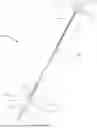
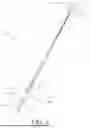


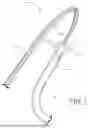
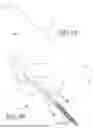

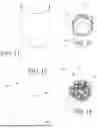


Sources:
- United States Patent and Trademark Office - verify current appl. status at the USPTO↗
Similar patent applications:
- » 20140190516
Drain pipe cleaning device and method - » 20180056342
PIPE CLEANING DEVICE - » 20110167585
Stove Pipe Cleaning Device - » 20100005603
APPARATUS FOR DELIVERING OR WITHDRAWING A FLEXIBLE TUBULAR CASING OF A PIPE CLEANING DEVICE - » 20180015512
Pipe cleaning device with camera - » 20050274415
Multiple valve drain and pipe-cleaning device - » 9959003
Pipe cleaning device - » 20060042032
Pipe-cleaning device - » 12686782
Pipe cleaning device - » 20180111174
Drain pipe cleaning device and method of cleaning
Recent applications in this class:
- » 20260055587 2026-02-26
PIPE RODDING GUIDE TOOL - » 20260049466 2026-02-19
DRAIN CLEANERS - » 20260015845 2026-01-15
DRAIN AUGER - » 20250369215 2025-12-04
METHOD OF AND APPARATUS FOR REDUCING THE RISK OF CLOGGING AND WATER OVERFLOW FROM WATER-BASED FLUSHING-TYPE TOILET SYSTEMS - » 20250297469 2025-09-25
PIPE CLEANOUT SYSTEM - » 20250237047 2025-07-24
DRAIN CLEANER WITH CABLE COUNTING - » 20250188724 2025-06-12
DRAIN CLEANING MACHINE - » 20250171993 2025-05-29
Drain Cleaning Device - » 20250154753 2025-05-15
DRAIN CLOG REMOVER - » 20250092652 2025-03-20
DRAIN CLEANING DEVICE